Chocolate Wedding Cake Style: Finish, Shape, and Shine
Introduction
There’s a particular kind of glow that happens when a chocolate wedding cake enters the reception space—soft candlelight catching on glossy ganache, fresh florals drifting over deep cocoa tones, metallic accents turning a “dessert table” into a design moment. Chocolate reads instantly romantic in photos: rich, dimensional, and a little dramatic, like velvet at midnight. And yet it’s also comfort-forward, the kind of flavor that feels familiar in the best way when guests are settling into dinner and the speeches begin.
This is why chocolate wedding cakes have become a style language of their own. Some couples want a brown wedding cake that feels modern and minimalist—naked layers, exposed crumb, barely-there buttercream. Others lean into pure glamour with gold leaf, a high-shine drip cake finish, and florals that climb the tiers like a bouquet frozen mid-toss. Wherever your wedding falls—garden ceremony, modern loft reception, classic ballroom—wedding cake chocolate can be tuned to the mood with frosting choices, finishes, and tiered presentation.
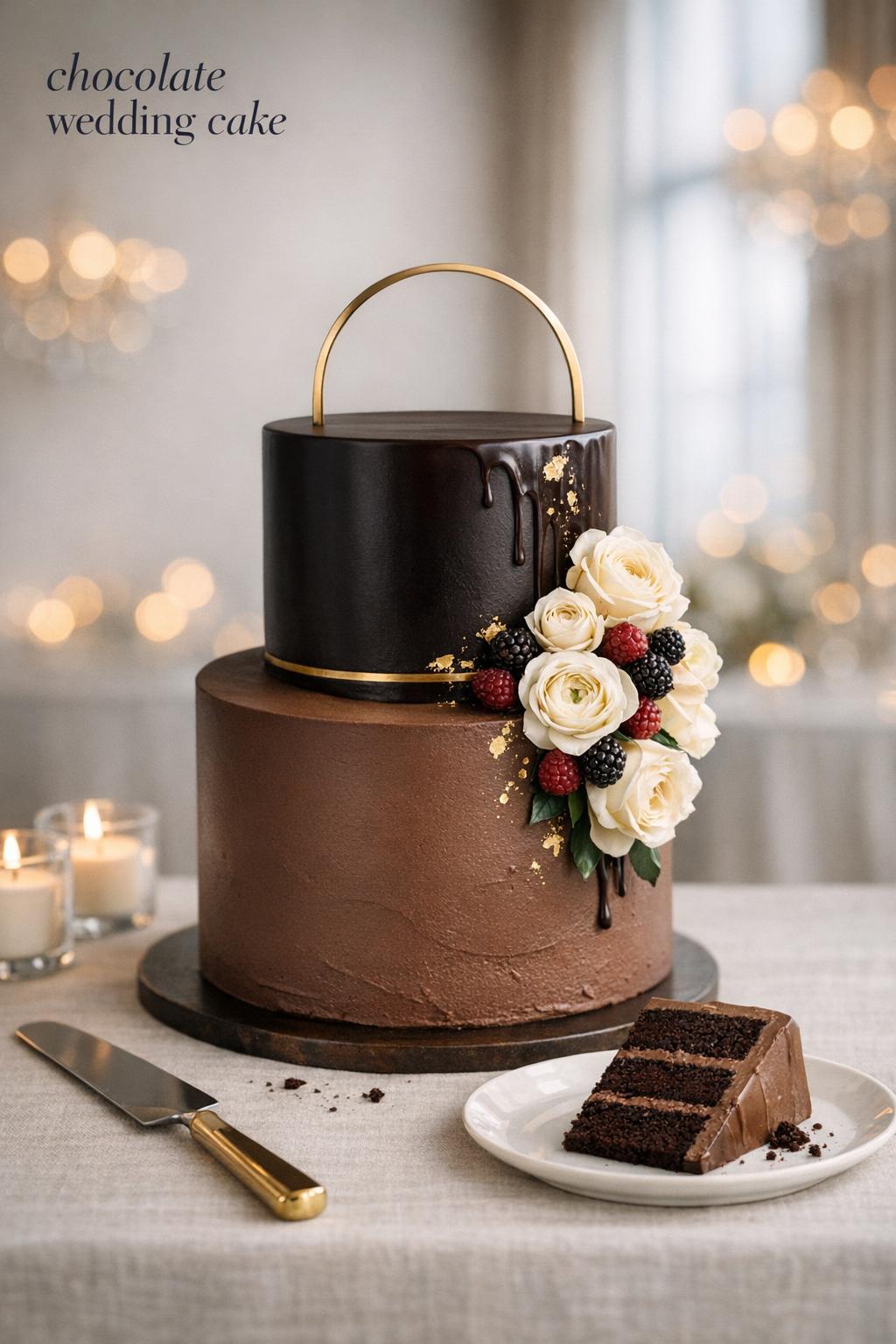
Below, you’ll find a curated set of “looks” for chocolate wedding cake styling—each one a distinct interpretation of the same aesthetic: romantic, polished, and camera-ready. Think of them as outfit changes for your dessert moment: different silhouettes (single-tier to three-tier), different textures (buttercream, ganache, fondant), and different accessories (florals, toppers, berries, metallics), all designed to help you choose with confidence.
The chocolate wedding cake aesthetic: a capsule wardrobe of flavor, finish, and flowers
Before choosing a design, it helps to name the “core pieces” that show up across almost every chocolate wedding cake that photographs beautifully and slices well. In the same way a signature outfit relies on silhouette, fabric, and accessories, chocolate wedding cakes rely on structure, frosting, and finish.
Turn wedding inspiration into a plan you can actually follow.
Zarellea brings your guest list, budget, vendors, and day-of details into one shared space — so no beautiful idea gets lost in the shuffle.
Chocolate cake is the anchor: it can read as dark and moody, milk-chocolate warm, or cocoa-forward and classic. Around it, frosting types become your textiles: ganache is your high-shine satin, buttercream is your matte silk, and fondant is your tailored, seamless sheath. Then come the accessories—florals, greenery, sugar flowers, berries, toppers, metallic accents like gold leaf—which turn “chocolate cake” into “wedding cake.”
Finally, there’s the silhouette: single-tier minimal, stacked tiers, or a classic three-tier presentation. That tiered shape isn’t just tradition—it’s visual balance for photos, a practical way to serve a room, and a styling tool that lets you mix finishes (for example, a smooth top tier with a textured buttercream bottom).
- Silhouette: single tier, stacked tiers, three-tier wedding cake
- Finish: naked cake, drip cake, textured buttercream, smooth fondant, glossy ganache
- Accessories: florals and greenery, sugar flowers, cake toppers, berries/fruit, gold leaf and metallic accents
With those foundations in place, let’s move into the looks—each one designed to feel like a cohesive wedding style story, not just a cake on a stand.
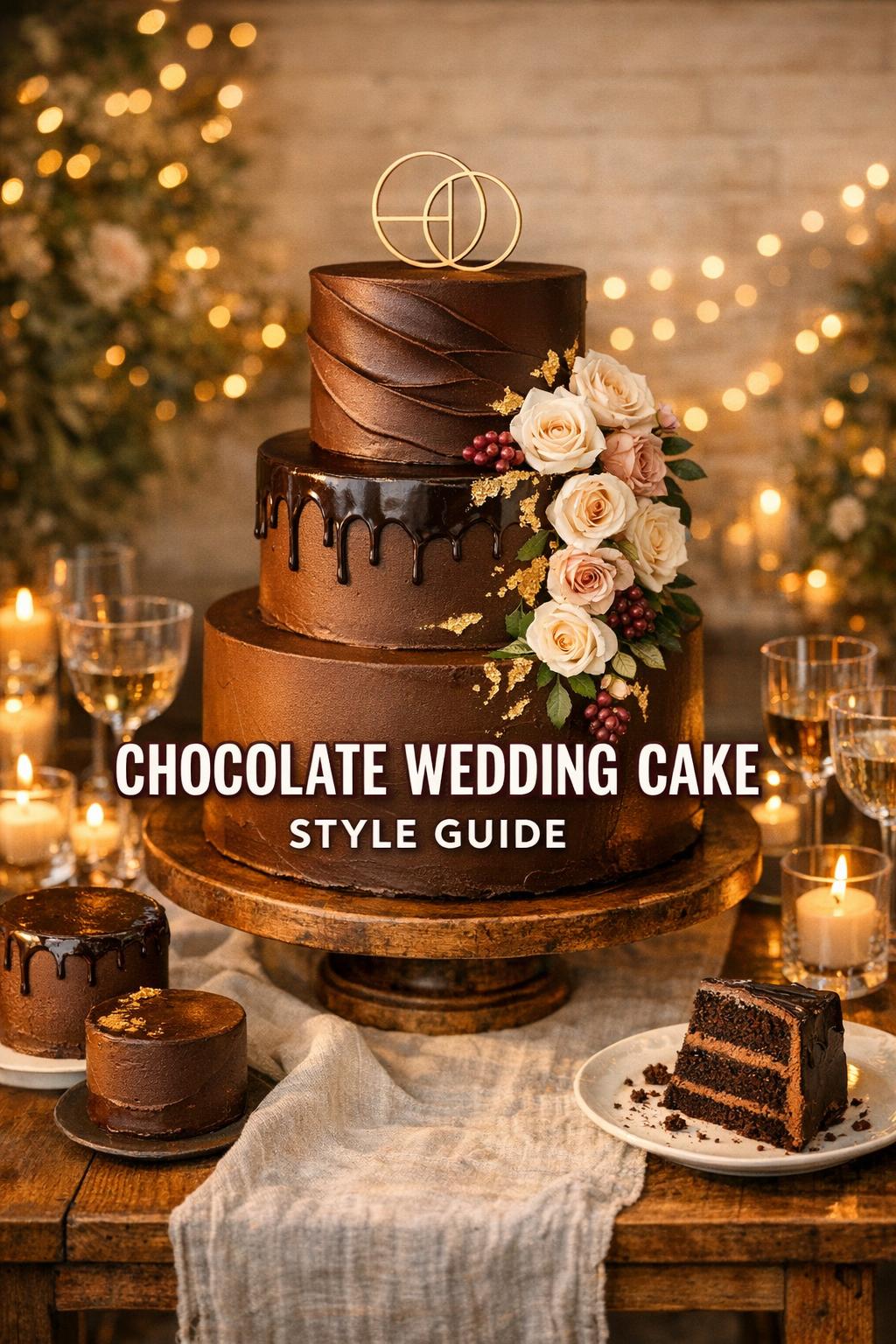
Look: Sweet and simple satin—classic chocolate layers with clean buttercream
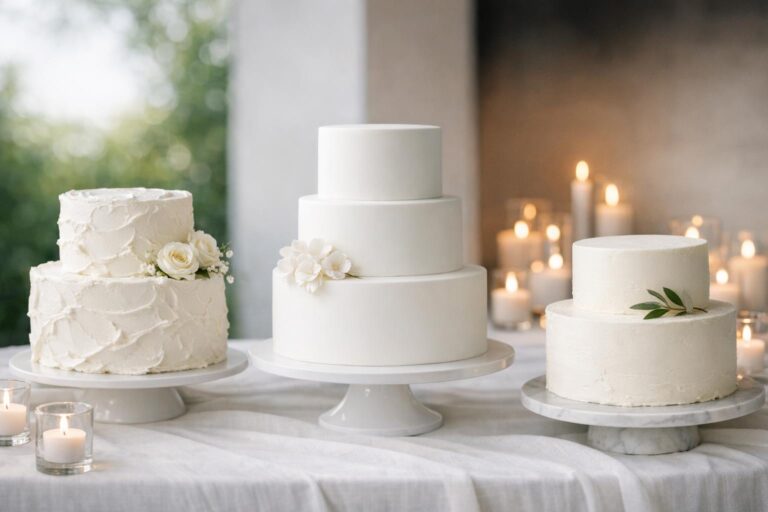
This look is the bridal equivalent of a timeless gown: structured, flattering, and quietly confident. It’s for couples who want their chocolate wedding cake to feel elegant rather than trendy—still romantic, but with restraint. The silhouette tends to be tall and balanced, often a multi-tier design that reads beautifully from across the room.
The finish is usually buttercream, chosen for its soft, photo-friendly matte texture and its ability to hold gentle piping. Many couples love the contrast of a dark cake interior with a lighter exterior—think a refined “white frosting” moment over deep cocoa layers. This is also a natural fit if you’re drawn to a three-layer or three-tier approach: the structure looks formal without feeling heavy.
- Key style notes: smooth buttercream, minimal piping, clean tier lines
- Color palette: cocoa brown + soft ivory/white frosting
- Best for: classic ceremonies and receptions where the cake should feel timeless
Why it works: buttercream gives you that “soft-focus” romance in photos, and the design leaves space for your venue styling—whether you’re leaning into candlelight, a floral arch, or crisp modern decor.
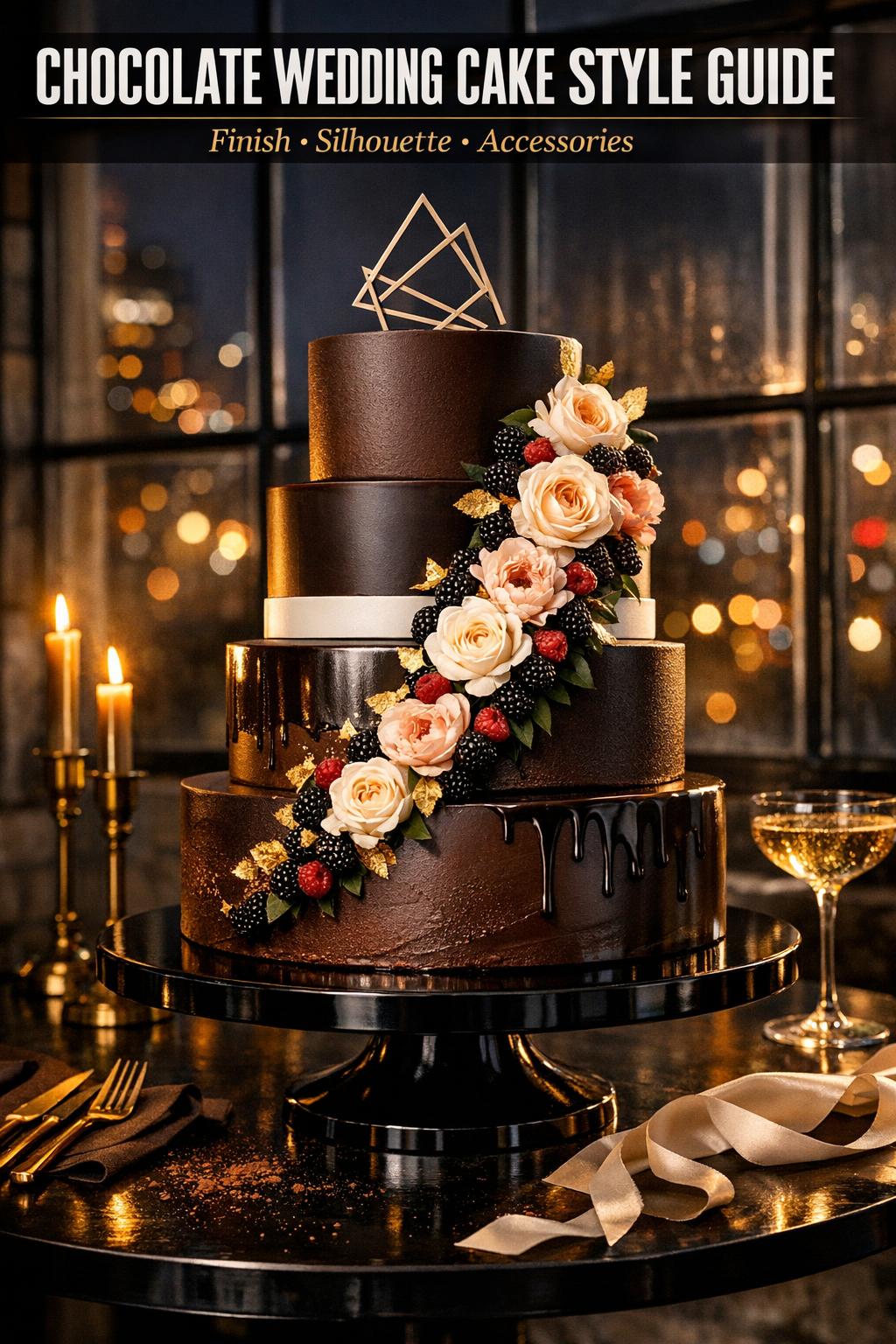
Look: Layers exposed—naked chocolate wedding cake with effortless romance
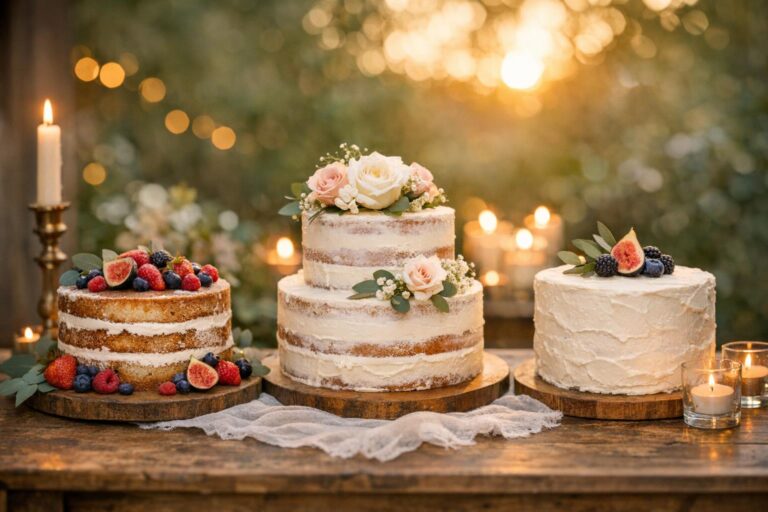
If your wedding mood is relaxed and intimate—more “soft vows under string lights” than “grand ballroom entrance”—the naked cake look feels like the right kind of undone. A naked chocolate wedding cake keeps the focus on the cake itself: the rich brown crumb, the natural edges, and the honest, handcrafted vibe.
This finish uses a minimal layer of buttercream or a light veil that lets the cake show through. It pairs beautifully with florals for a garden feel, or with seasonal fruit for a fresh, lived-in look. Many couples love a single-tier or two-tier version for smaller weddings, while a taller stacked option can still hold its own in a larger reception without losing that rustic softness.
Why it works: the exposed layers create visual texture without extra decoration. And when the cake is cut, guests immediately see what they’re getting—a generous, chocolate-forward slice that feels abundant and welcoming.
Style tip: keep naked cakes intentional, not unfinished
The difference between “effortless” and “underdressed” is detail. Ask for clean edges, consistent layer height, and a deliberate placement of florals or fruit. Even a simple naked design can look elevated when the tiers are aligned and the styling is concentrated in one graceful sweep.
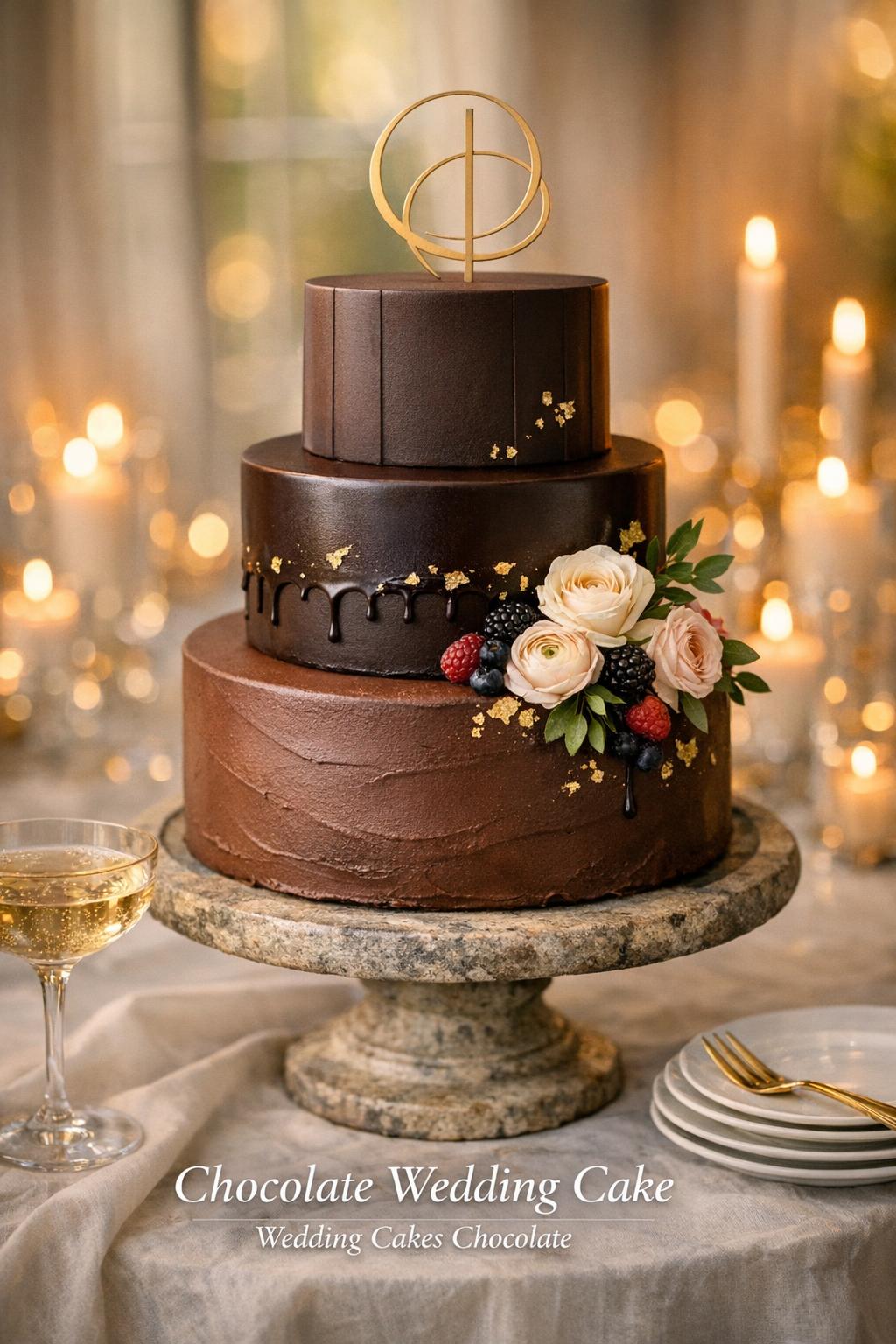
Look: Dipped in chocolate—ganache-gloss drama for a modern reception
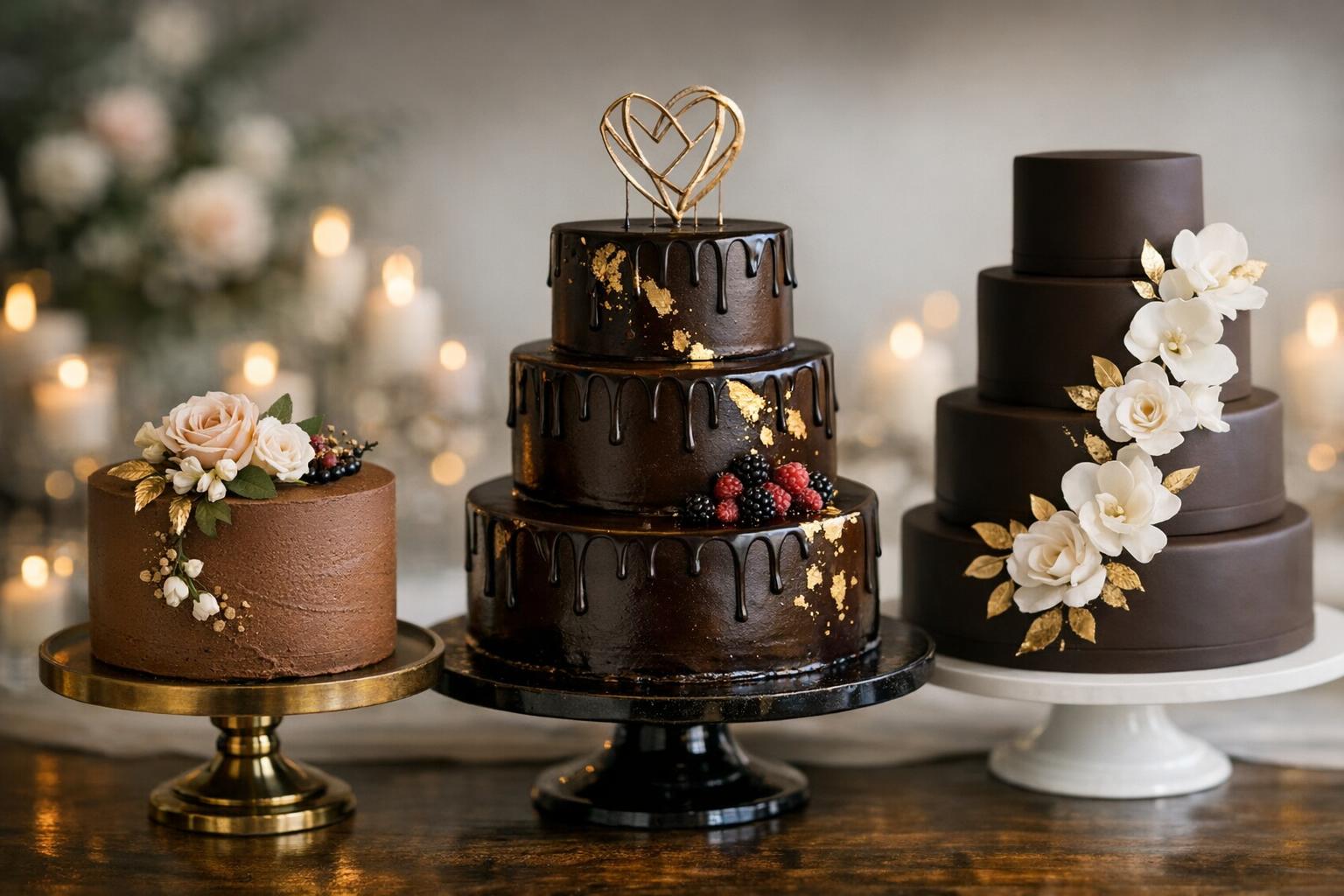
This is the sleek, eveningwear version of wedding cake chocolate: glossy, reflective, and undeniably bold. A ganache-coated chocolate wedding cake reads luxurious under reception lighting, especially in venues with a modern edge—think clean architectural lines, minimalist tablescapes, or a city-view backdrop.
Ganache brings a lacquered finish that makes the cake look almost sculptural. It can be used as a smooth coating or as part of a drip cake design where chocolate cascades over the edges in a controlled, fashion-forward way. Florals become even more striking against this finish, especially when they’re placed asymmetrically to keep the look contemporary.
- Key style notes: glossy ganache coat or controlled chocolate drip
- Texture focus: shine against soft florals and matte cake stands
- Best for: modern weddings, evening receptions, couples who want drama without clutter
Why it works: ganache is the visual statement, so the rest can stay minimal. When done well, this look feels like a designer piece—simple lines, intentional sheen, and a striking silhouette.
Look: A golden touch—brown wedding cake with gold leaf and metallic accents
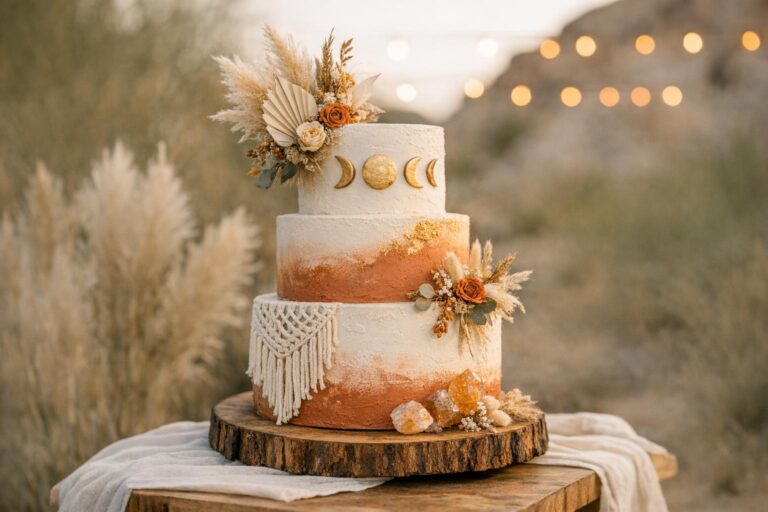
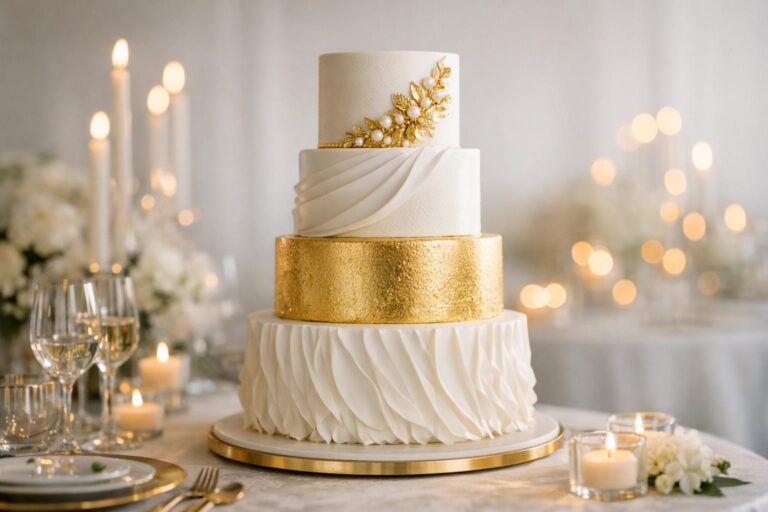
For couples who want their dessert moment to feel like jewelry, metallic styling is the shortcut to “luxury” without changing your entire floral plan or venue design. A brown wedding cake becomes instantly elevated with gold leaf or metallic accents that catch the light as guests move around the room.
This look can be executed across finishes: smooth fondant for a seamless canvas, buttercream for a softer romance, or ganache for a deeper, moodier shine. Gold can be delicate—small flecks placed like stardust—or bold, concentrated in a sweeping pattern across tiers. It pairs beautifully with florals, especially when the flowers are placed to frame the metallic details instead of competing with them.
Why it works: metallics create dimension in photos. On chocolate tones, gold reads warm rather than harsh, which makes it flattering in both daylight ceremonies and candlelit receptions.
Tips for keeping metallic styling elegant
Metallic accents look most expensive when they’re used with restraint. Choose one hero moment—gold leaf on the middle tier, a light metallic edge, or a single sweeping accent—and let the rest of the cake stay clean. If you’re also using a topper or bold florals, keep the metallic application lighter so the cake doesn’t feel over-accessorized.
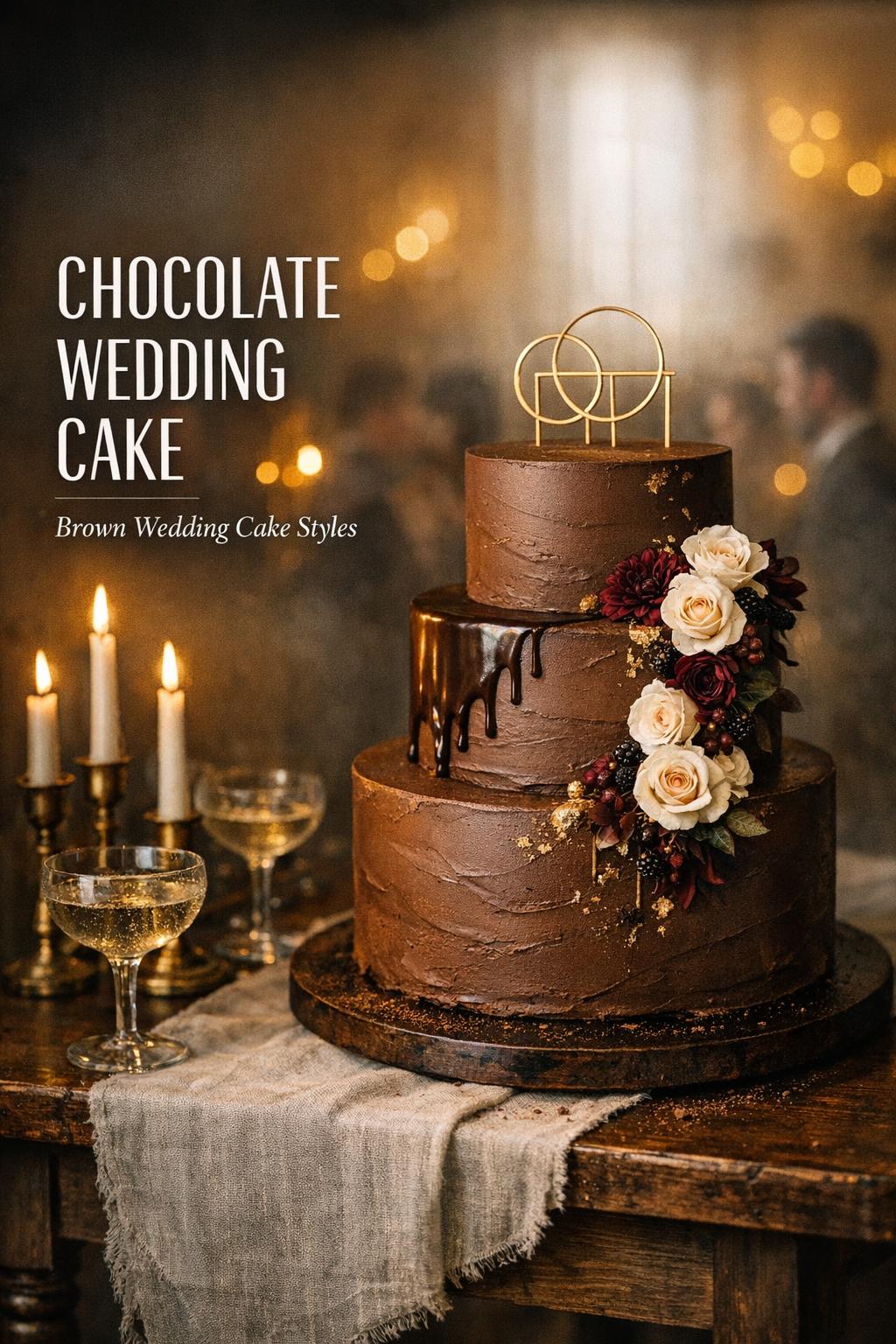
Look: Ascending florals—chocolate wedding cake styled like a bouquet
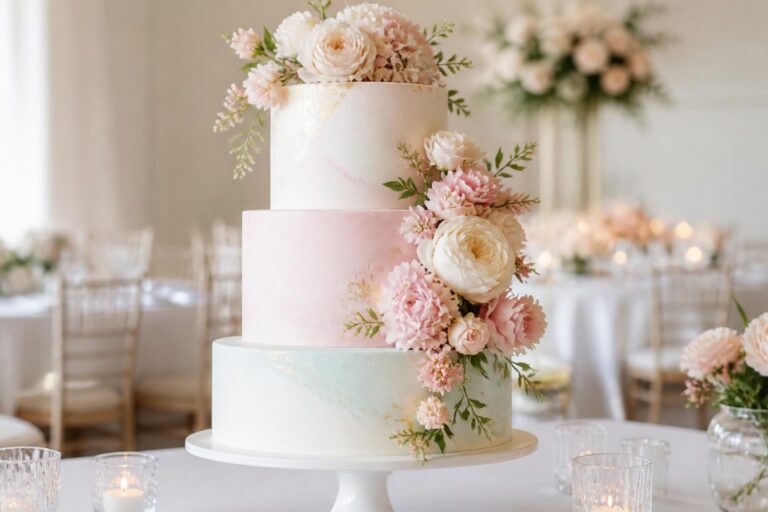
This look is pure romance: florals climbing upward across tiers as if the cake itself is blooming. It’s especially moving in ceremony-to-reception transitions, when the cake is revealed like a second centerpiece—part dessert, part floral installation. Whether your wedding is garden-inspired or softly classic, florals create a sense of occasion without requiring complicated icing work.
Because chocolate wedding cakes tend to be visually deep in color, flowers stand out with dramatic clarity. You can keep the finish simple—buttercream, ganache, or fondant—and let the flowers do the storytelling. Sugar flowers can mimic that couture look when you want permanence and precision, while fresh florals create a just-picked softness that feels effortless in photos.
- Key style notes: floral cascade, partial wrap, or crown placement
- Finish options: buttercream for softness, fondant for a clean canvas, ganache for contrast
- Best for: garden weddings, romantic venues, couples who want the cake to echo bouquet styling
Why it works: florals bridge your cake into the rest of the wedding design, tying it to centerpieces, arches, and the bouquet without forcing a perfect “match.” It’s cohesive in the way a well-chosen accessory completes an outfit.
Look: Chocolate and berries—fresh contrast for a bright, guest-pleasing finish
Chocolate and fruit is a classic pairing for a reason: it feels celebratory, it cuts sweetness, and it photographs beautifully. This look leans into that contrast—deep cocoa layers with berries placed like edible decor. It’s especially charming for receptions that begin in late afternoon and stretch into evening, when guests appreciate something that feels rich but not heavy.
The styling can be as simple as a naked chocolate cake with berries tucked between tiers, or a buttercream-finished cake with fruit clustered at the base. The vibe is naturally romantic and slightly playful—perfect if you want your wedding cake chocolate to feel welcoming and abundant rather than formal.
Why it works: berries add color and shape, and they naturally soften the edges of structured tiers. They also cue flavor expectations—guests can almost “taste” the pairing before the first slice is served.
Look: Over the topper—graphic cake toppers and clean chocolate styling
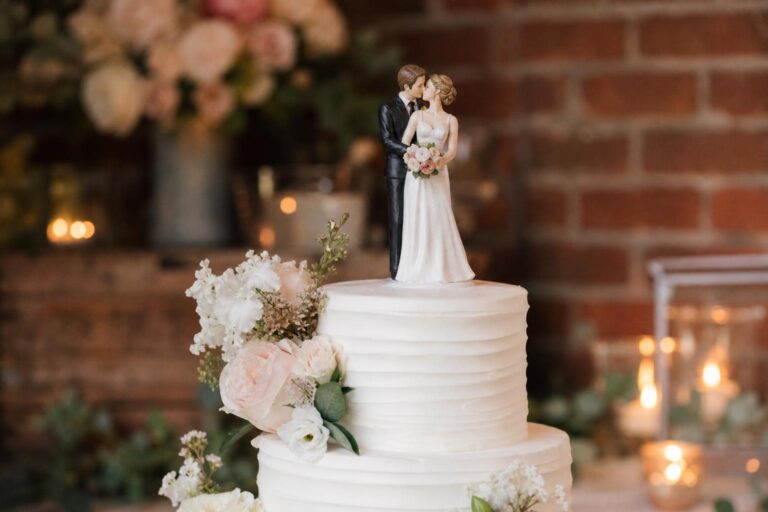
Sometimes the most memorable style move is a single, intentional accessory. A topper-forward chocolate wedding cake is about clarity: clean tiers, minimal decoration, and one focal point that reflects the couple. This look feels especially fitting for modern receptions where decor is edited and purposeful.
A smooth buttercream or fondant finish keeps the canvas calm, while the topper brings personality. If you love the idea of a geometric twist, keep other details pared back—no competing florals, no heavy piping, no busy textures. If you prefer a softer mood, pair a topper with a delicate floral crown on the top tier for a balanced, romantic silhouette.
Why it works: toppers create a strong vertical focal point, which is helpful in photos—especially when the cake table is styled simply. It’s the wedding equivalent of choosing one standout piece of jewelry and letting everything else be quiet.
Look: Textured buttercream couture—ruffles, swirls, and a tactile chocolate moment
This look is for couples who love detail up close—the kind of cake that invites guests to step nearer before they even taste it. Textured buttercream turns chocolate wedding cakes into a tactile design object: soft ridges, romantic ruffles, or painterly swirls that catch highlights and shadows across the tiers.
Because texture already adds visual movement, the palette can stay neutral: chocolate tones, soft ivory, or a subtle color accent that coordinates with the wedding’s overall scheme. Florals can be added sparingly—one cluster, one side sweep—so the buttercream work remains the star.
Why it works: texture is flattering in photos and forgiving in real life. It creates interest from every angle, which matters during a long reception when the cake becomes part of the room’s backdrop.
Look: Mini moments and intimate tiers—chocolate wedding cake styling for smaller celebrations
Not every wedding needs a towering centerpiece, and many couples are embracing smaller formats that still feel special. Mini cakes and scaled-down tiers can be styled with the same romance as a traditional three-tier cake—sometimes even more, because the details are easier to appreciate up close.
A small chocolate cake with a ganache glaze and a single floral accent can feel like a jewel on the table. Or, if you love the look of tiers but don’t need a large serving count, a petite stacked design with buttercream and a delicate topper keeps the classic silhouette without excess.
Why it works: intimate styling gives you flexibility. You can be bolder with finishes (a high-gloss ganache, a dramatic drip, a strong metallic accent) because the scale keeps it refined rather than overwhelming.
Choosing your “fabric”: buttercream vs. ganache vs. fondant
When couples ask what makes one chocolate wedding cake feel modern and another feel classic, the answer is usually the finish. Frosting is your cake’s fabric, and each type behaves differently in both styling and overall effect.
- Buttercream: Soft, romantic, and versatile. It suits smooth minimal designs, textured finishes, and classic piping. It’s a natural choice when you want a light exterior over a rich chocolate interior.
- Ganache: Glossy and dramatic. It creates a sleek coat or a drip cake finish that feels modern and evening-ready. Ganache styling pairs beautifully with florals and metallic accents because it amplifies contrast.
- Fondant: Clean and tailored. It’s ideal when you want crisp edges and a seamless look across tiers, especially for geometric styling or a refined backdrop for gold leaf and florals.
A practical note from real-world planning: your choice isn’t only aesthetic. It also shapes how detailed your design can be (smooth fondant versus textured buttercream), and how your cake reads at a distance (matte buttercream versus reflective ganache).
Flavor and texture pairings: building a chocolate wedding cake that eats as beautifully as it looks
Design gets the first glance; flavor wins the memory. The most beloved chocolate wedding cakes balance richness with lift—either through fillings, subtle aromatics, or texture changes from layer to layer.
If you’re leaning into dark chocolate, you can create contrast with espresso notes (often expressed as coffee in the cake ecosystem) or creamy elements like mousse. If you prefer a brighter finish, fruit pairings like raspberry naturally cut through chocolate’s depth, and they mirror the “chocolate and berries” styling guests already recognize visually.
A romantic pairing wardrobe (choose one core + one accent)
- Core chocolate direction: rich dark chocolate, classic cocoa profile
- Filling texture: ganache, mousse, buttercream
- Accent notes: raspberry, caramel, coffee/espresso, mint, pistachio, lavender
The goal isn’t to pack every flavor into one cake. It’s to choose a “signature” that matches your wedding mood: lavender can feel soft and romantic, caramel reads warm and indulgent, mint brings a fresh, crisp edge, and pistachio feels quietly luxurious.
Design templates you can hand to a baker: from classic three-tier to chocolate drip wedding cake
When you’re making decisions quickly—between venue meetings, dress fittings, and guest list edits—having a clear template helps. These are planning-ready designs that translate easily into real conversations with a bakery or a DIY plan, while still leaving room for your personal style.
Template: classic three-tier with fresh florals
This is the timeless option: a three-tier chocolate cake finished in smooth buttercream or fondant, with a floral cascade that echoes bouquet styling. It’s ideal when you want your cake to feel like part of the ceremony-to-reception visual story, not a separate “dessert moment.”
Template: naked chocolate with seasonal fruit
A naked cake finish with berries or fruit clustered between tiers creates a relaxed elegance. This template feels especially natural for smaller weddings or receptions that lean garden, rustic, or softly minimalist—where texture and natural color are the décor.
Template: chocolate drip wedding cake with metallic accents
This is for the couple who wants one show-stopping detail: a controlled ganache drip over smooth tiers, finished with gold leaf or subtle metallic accents. Keep florals minimal so the drip remains the focal point, and let the cake read like modern art under reception lighting.
Template: chocolate tower styling with toppers
A tower presentation (whether tiered or stacked as a vertical statement) becomes even more personal with a topper-forward design. Choose a simple finish—clean buttercream, sleek ganache, or smooth fondant—then let the topper be the signature, supported by a small floral crown or a single accent cluster.
DIY vs. professional: a calm decision framework for wedding cake chocolate
There’s a special kind of pride in serving a cake you made yourself—especially for an intimate wedding. Recipe-focused approaches often lean on a three-layer build and practical frosting guidance, with buttercream frequently favored for a stable, wedding-ready finish. But it’s also one of the few wedding details where time pressure and transport can turn a romantic idea into a stressful day.
DIY can be a beautiful choice when your guest count is smaller, your design is intentionally simple (like “sweet and simple” buttercream or a minimal naked cake), and you have a calm space to assemble. A professional is often the safer path when you want a multi-tier centerpiece, intricate finishes like flawless fondant, or a highly glossy ganache look that needs precision.
Tips: a practical DIY checklist before you commit
- Choose a design with forgiving styling (textured buttercream or naked cake)
- Decide early on your frosting “fabric” (buttercream is often the most flexible)
- Keep toppers and florals minimal so you’re not styling under time pressure
- Plan for transport and a calm assembly window before guests arrive
If you’re on the fence, consider a hybrid approach: keep the main chocolate wedding cake professionally made, and add a personal touch through topper styling or a small companion mini cake for the couple’s private cutting moment.
Common styling mistakes with chocolate wedding cakes (and the easy fixes)
Chocolate is forgiving in flavor and beloved by guests, but visually it can become “flat” if the styling is too uniform. The solution is contrast—shine against matte, floral softness against sleek tiers, or metallic accents against a deep brown surface.
- Mistake: Too many statement elements at once (drip + heavy florals + bold topper + metallics). Fix: Choose one hero feature and let the rest be quiet.
- Mistake: Naked cake that looks accidental. Fix: Ask for clean edges and intentional styling placement (a single floral cascade or fruit cluster).
- Mistake: Chocolate-on-chocolate with no contrast. Fix: Add white buttercream details, florals, berries, or gold leaf for dimension.
- Mistake: A beautiful cake that doesn’t match the wedding mood. Fix: Align silhouette and finish to your venue: sleek ganache for modern, buttercream florals for romantic, fondant for tailored formality.
These adjustments don’t require a new cake—just a clearer styling point of view. Think like a wedding stylist: one silhouette, one texture story, one accessory statement.
How to talk about your cake like a stylist: the language that gets you the look
Whether you’re speaking with a bakery, a planner, or coordinating florals for the cake table, clarity is everything. Instead of asking for “a chocolate cake with flowers,” describe the silhouette and finish first, then the accessories.
- Silhouette: single tier, stacked tiers, three-tier
- Finish: smooth buttercream, textured buttercream, ganache coat, chocolate drip, fondant
- Accessories: floral cascade, floral crown, berries/fruit, gold leaf/metallic accents, topper
- Mood words: sweet and simple, modern, rustic, glam, romantic
This approach also helps when you’re gathering inspiration from galleries. You begin to recognize patterns—like how florals soften glossy ganache, or how gold leaf turns a brown wedding cake into a glamorous centerpiece.
A brief inspiration gallery in words: chocolate wedding cakes as “outfits” for different wedding settings
Picture the moments: a quiet cake-cutting during golden hour, a grand reception reveal as guests find their seats, a mini cake presented at an intimate dinner with close family. Chocolate wedding cakes can be styled to suit each scene without losing cohesion. The trick is to treat your cake like part of the overall wedding wardrobe—designed to harmonize with flowers, lighting, and the tone of the day.
For a classic wedding, lean into a three-tier silhouette with smooth buttercream and a floral cascade. For a modern ceremony, choose glossy ganache with a minimalist topper and a restrained golden touch. For a garden celebration, go naked with fresh fruit and soft florals. And for couples who want something playful yet polished, consider chocolate and berries with a slightly exposed layer look—romantic, delicious, and approachable.
No matter which direction you choose, remember that chocolate is a powerful base. It can carry the calm of minimal styling or the drama of metallic accents. Your job is simply to decide what kind of statement feels like you.
Conclusion
The best chocolate wedding cake doesn’t just taste wonderful—it belongs to the wedding the way a perfectly chosen outfit belongs to the occasion. When you choose your silhouette (single tier to three-tier), your frosting finish (buttercream, ganache, fondant), and your accessories (florals, toppers, berries, gold leaf), you’re designing a moment your guests will see, photograph, and remember. Start with the mood you want—sweet and simple, modern and glossy, romantic with ascending florals, or glam with metallic accents—then edit until the cake feels effortless, intentional, and unmistakably yours.
FAQ
What’s the best frosting for wedding photos on a chocolate wedding cake?
Buttercream tends to photograph with a soft, romantic matte finish, while ganache creates a sleek, reflective shine that looks dramatic under reception lighting; fondant offers the cleanest, most tailored look with crisp edges, especially when you want a seamless canvas for florals or gold leaf.
What’s the difference between a naked chocolate wedding cake and a fully frosted one?
A naked cake uses minimal frosting so the chocolate layers show through, creating an intentionally relaxed, textured look, while a fully frosted cake (buttercream, ganache, or fondant) creates a more finished, formal surface that supports smooth styling, piping, metallic accents, and sharply defined tiers.
How can I make a brown wedding cake feel more “wedding” and less like an everyday chocolate cake?
Elevate the look with clear wedding styling cues—tiered presentation (especially three-tier), floral styling (a cascade or crown), refined finishes like smooth buttercream or glossy ganache, and intentional accents such as gold leaf, metallic touches, or a statement topper.
Are chocolate drip wedding cakes still a good choice for a modern wedding?
Yes, a controlled chocolate drip reads modern and design-forward, especially when paired with a clean silhouette and restrained accessories; it looks most polished when you choose one hero detail (the drip, metallic accents, or florals) and keep the rest minimal.
What flavors pair well with wedding cake chocolate without overwhelming it?
Popular pairing directions include berries (such as raspberry for bright contrast), coffee/espresso notes for depth, caramel for warmth, and accent flavors like mint, pistachio, or lavender when you want a distinctive signature that still feels romantic and guest-friendly.
Should I choose ganache, buttercream, or fondant for a chocolate wedding cake with florals?
All three work, but they create different moods: buttercream feels soft and romantic, ganache creates high-contrast drama with glossy depth behind the flowers, and fondant gives a clean, tailored backdrop that highlights floral shapes and supports crisp, modern styling.
Is it realistic to DIY a chocolate wedding cake for my wedding?
DIY can be realistic when you keep the design simple—like a three-layer chocolate cake with buttercream, a minimal naked finish, or light decoration—while multi-tier centerpieces, flawless fondant, and high-gloss ganache finishes often benefit from professional execution because timing, assembly, and transport add pressure close to the event.
How do toppers fit into chocolate wedding cake designs without looking cluttered?
Toppers look most intentional when the cake styling stays clean—smooth buttercream, fondant, or a simple ganache coat—then the topper becomes the focal point, supported by a small floral crown or a single accent cluster rather than multiple competing elements.