Wedding Cake Inspo for an Editorial, Photo-Ready Reception
Introduction
The moment a wedding cake arrives in the reception space, it behaves a little like couture: it sets a tone, catches the light, and quietly tells your guests what kind of celebration they’ve stepped into. The best wedding cake inspo isn’t just “pretty”—it’s a visual identity built from shape, texture, florals, and color palette, designed to live in the same world as your venue, your flowers, and the way the day feels in photos.
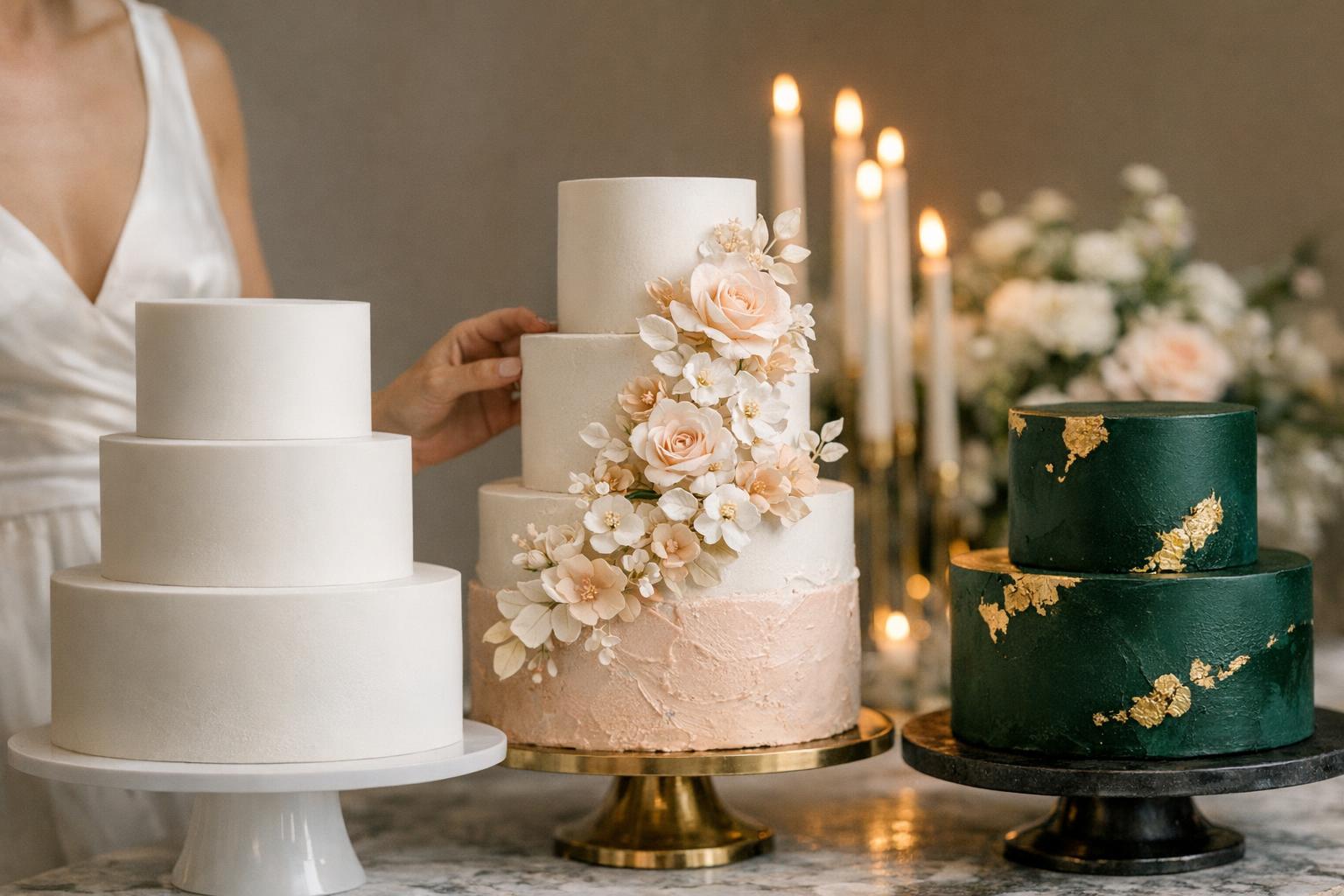
Think of this guide like an aesthetic wardrobe, but for cake design ideas. You’ll see multiple “looks” that interpret the same romantic goal—an unforgettable cake moment—through different silhouettes: sculpted and architectural, floral and botanical, minimalist and modern, rustic and organic, or glam with metallic accents. Each look is meant to help you refine your taste, then translate that taste into a real order your cake designer or bakery can execute with confidence.
These styles show up everywhere weddings happen—ballrooms, vineyards, beaches, outdoor ceremonies—because wedding cakes sit at the intersection of tradition and modern creativity. They’re also one of the few design elements that guests interact with directly, which makes the “inspo to reality” process worth doing thoughtfully, from mood boards and sketches to tastings and timelines.
The cake as an aesthetic anchor (and how to use wedding cake inspo well)
Most couples collect wedding cake inspiration the way they collect fashion references: one photo for the silhouette, another for the texture, another for the color story. That’s the right instinct. A successful cake design usually has one hero idea (like sculpted tiers, sugar flowers, or a clean minimalist finish) and two supporting ideas (like a floral accent and a subtle pattern, or a monochrome palette and a modern topper). When a cake tries to do everything—multiple textures, multiple metallics, multiple floral styles—it can feel less “editorial” and more accidental.
Turn wedding inspiration into a plan you can actually follow.
Zarellea brings your guest list, budget, vendors, and day-of details into one shared space — so no beautiful idea gets lost in the shuffle.
It helps to define a few terms the way a stylist would. “Texture-first design” means the finish is the focal point—ribbed patterns, piping, ruffles, or pattern play across tiers—rather than a heavy reliance on color. “Sculpted” or “architectural” cakes use form and negative space like modern design, often reading as gallery-worthy before you even notice the details. “Floral-adorned” cakes lean into botanical storytelling, echoing bouquet vibes and venue florals. And “minimalist” cakes treat restraint as luxury: clean lines, monochrome or near-monochrome palettes, and subtle finishes.
As you move through the looks below, imagine each one in a real wedding context: a ceremony, a reception, a photo moment, and the lived reality of cutting and serving. Wedding cakes aren’t just objects; they’re part of the event rhythm.
- Choose one primary style identity (architectural, floral, minimalist, rustic, or glam).
- Choose one primary texture (buttercream feel, fondant-smooth finish, ribbing, ruffles, or pattern play).
- Choose a color palette that matches your broader wedding aesthetics (pastels, monochrome, jewel tones, or metallic accents).
- Decide whether florals are fresh or sugar flowers (both photograph beautifully, but read differently up close).
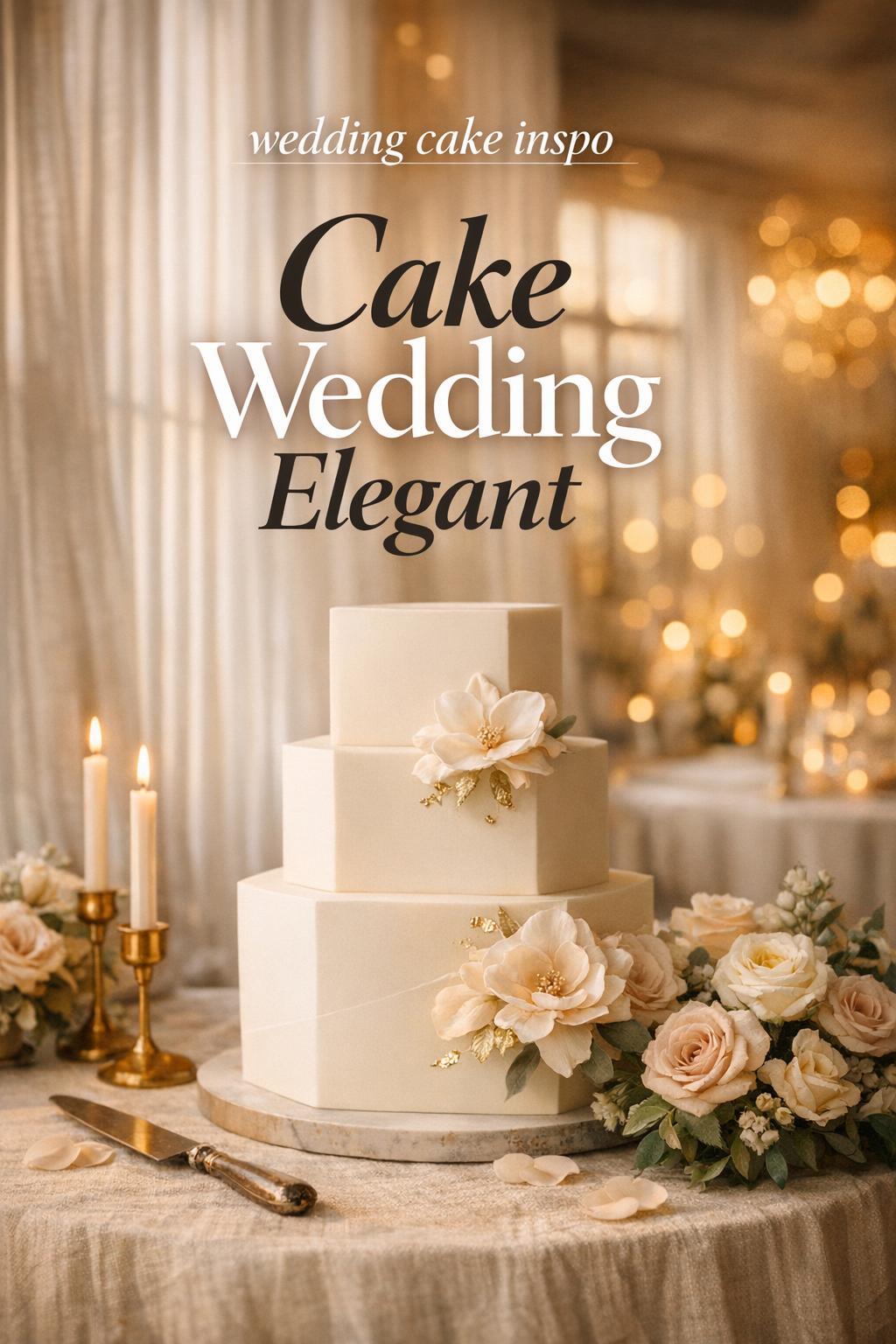
Look: sculpted & architectural wedding cake inspo for the design-forward couple
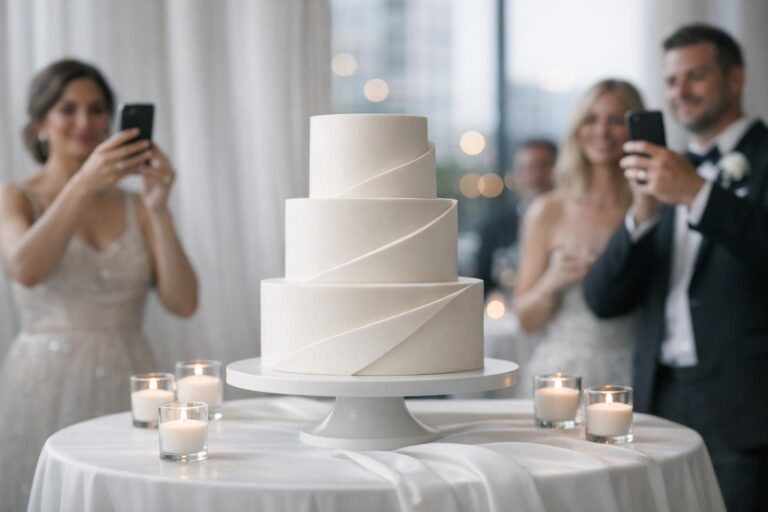
This look is all about silhouette. Imagine tiers that feel carved rather than stacked—curves, unexpected edges, negative space, and sculptural forms that echo architecture-inspired cake design. The mood is editorial and modern, the kind of cake you’d place in a clean corner of a reception and let guests discover like an art piece.
Color stays disciplined: soft whites, creams, or a controlled monochrome story that lets light and shadow do the decorating. Texture and pattern play are welcome, but they’re deliberate—think ribbed patterns, smooth planes, or a single statement detail that repeats across tiers. Materials like fondant and gumpaste are often used when the goal is sharp structure and crisp edges, while a controlled buttercream finish can soften the feel without losing the architectural vibe.
Why it works: sculpted wedding cake ideas feel “high-end” because the artistry is in proportion and restraint. It’s the cake equivalent of a minimal gown with impeccable tailoring—nothing distracts from the design itself, and every photo reads intentional.
Style tip: making sculptural cakes feel warm, not cold
If you love architectural cake design but worry it will feel stark, bring warmth through a small botanical accent or a soft-toned palette. Even a single floral-adorned moment—fresh or sugar flowers—can bridge modern structure and romantic wedding styling without diluting the sculpted concept.
Look: floral & botanical romance (where sugar flowers meet bouquet vibes)
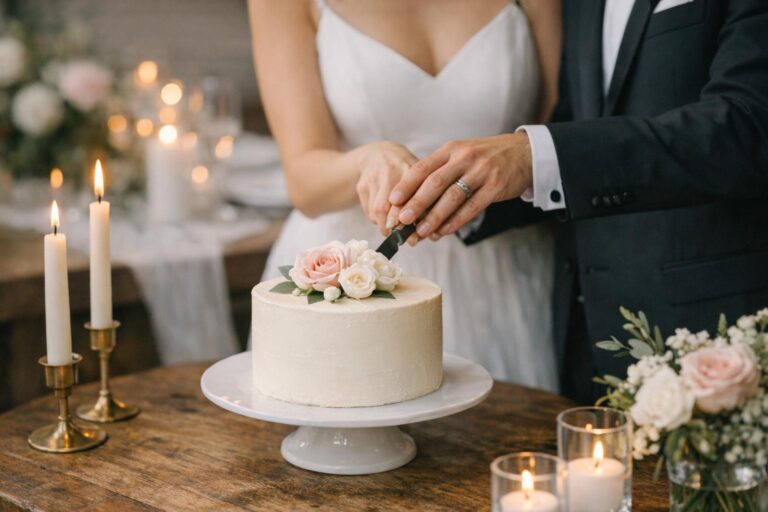
This look is the love story in full color. Floral wedding cake inspiration works because it connects the cake to the rest of the day instantly—centerpieces, ceremony arrangements, and the bouquet all feel like part of the same chapter. The silhouette can be classic tiered cake elegance or slightly more relaxed, but the mood is always romantic and alive.
Design choices here revolve around florals: fresh blooms placed with intention or edible sugar flowers crafted to look impossibly delicate. Botanical motifs—either painted, piped, or formed—pair beautifully with soft pastels, airy neutrals, and gentle gradients. This is also where texture can whisper rather than shout: a smooth finish becomes a canvas, while subtle piping or pattern play can echo lace, petals, or garden movement.
Why it works: floral design on a wedding cake doesn’t just decorate—it “locates” your celebration. A garden ceremony, a vineyard reception, or an outdoor cake moment instantly feels cohesive when the cake visually belongs to that landscape.
- Best for: garden weddings, vineyards, outdoor ceremonies, and romantic receptions.
- Pairs well with: pastel palettes, soft neutrals, and gentle texture-first finishes.
- Signature details: sugar flowers, botanical motifs, floral-adorned tiers.
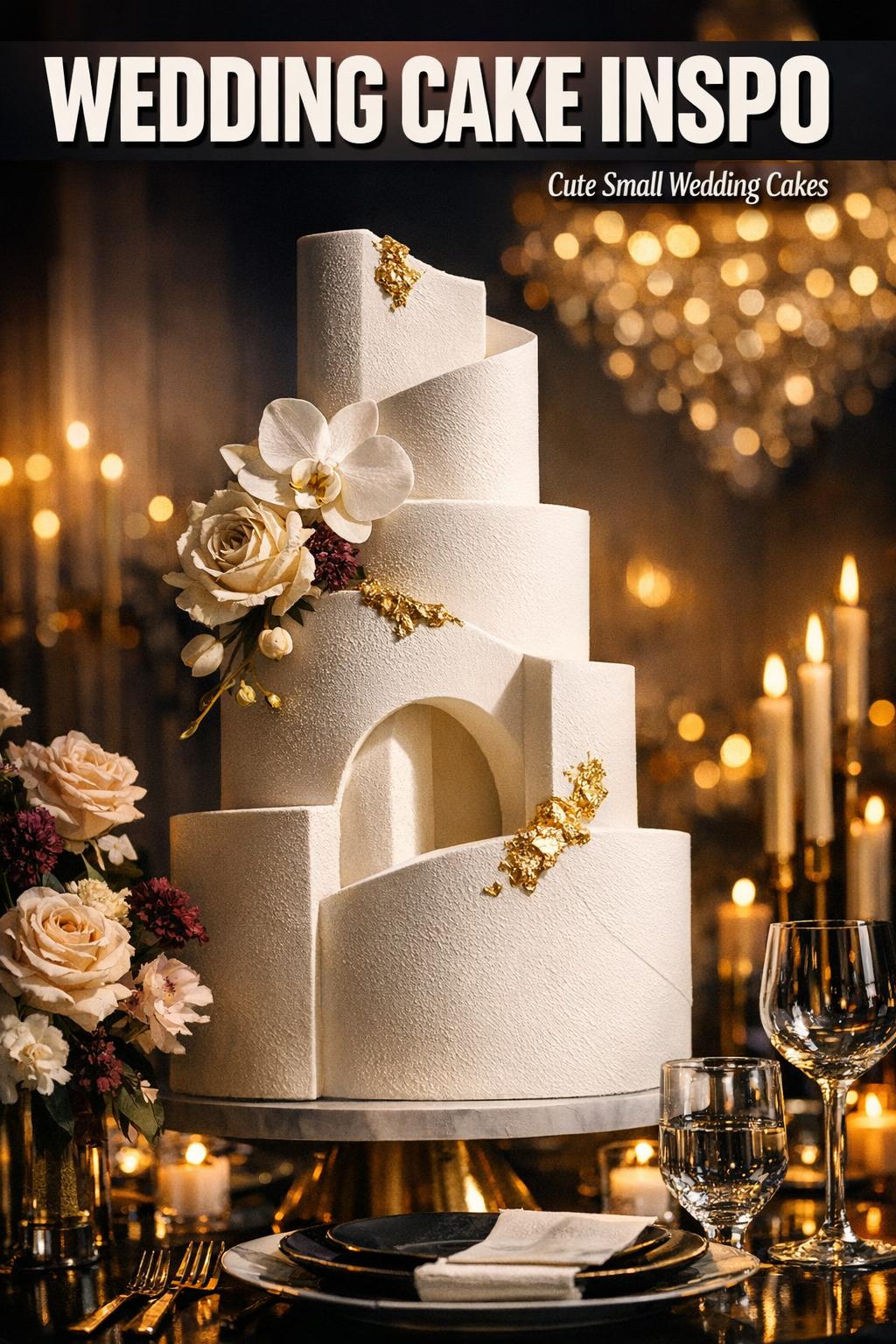
Look: minimalist & modern—the quiet luxury wedding elegant cake
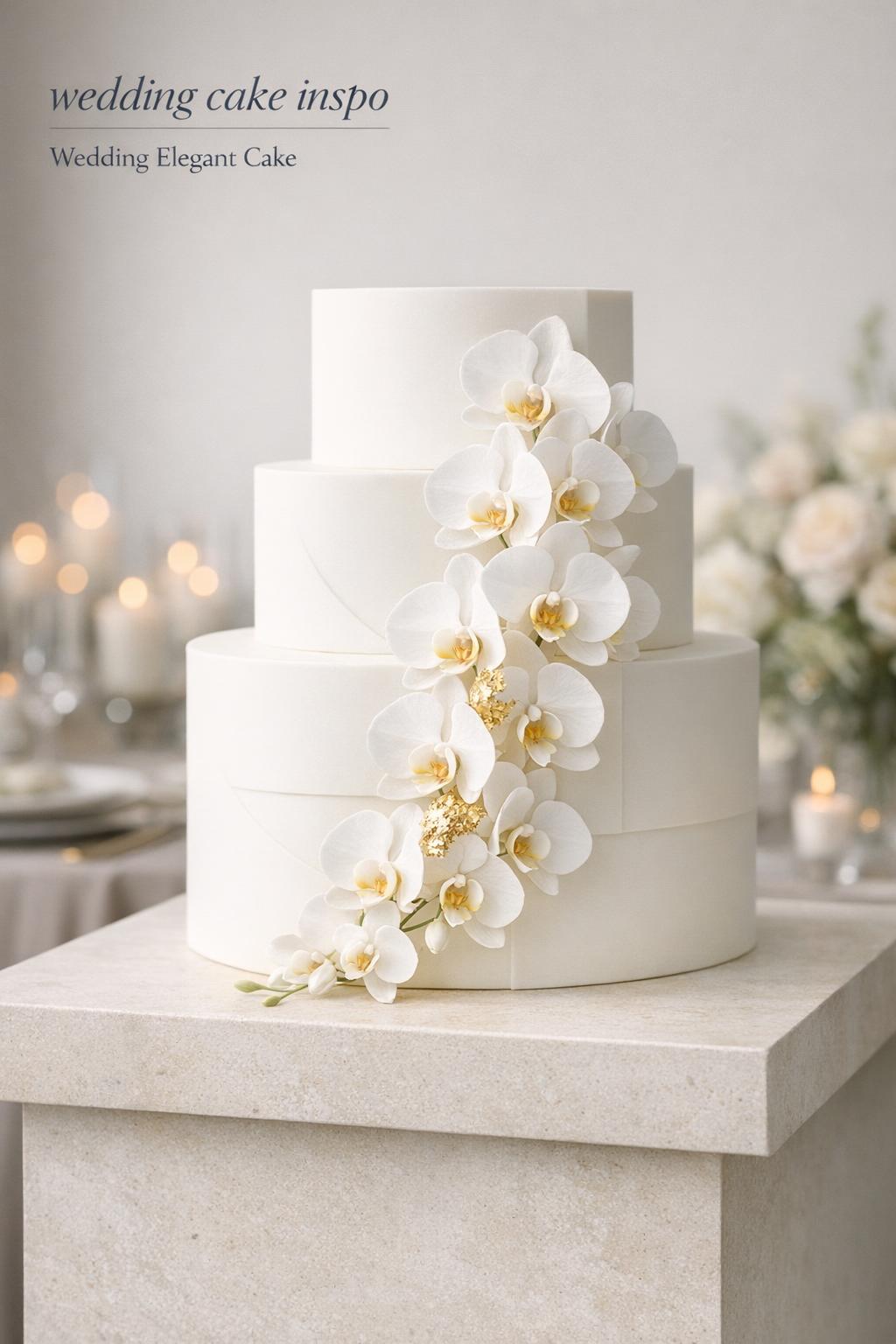
Minimalist and modern wedding cake inspo is for couples who want their cake to feel like a clean exhale—calm, composed, and undeniably chic. The silhouette is precise: tidy tiers, thoughtful spacing, and proportions that feel balanced from every angle. This is “wedding elegant cake” energy: not loud, not overly adorned, just confident.
The palette stays controlled—creams, whites, and soft monochrome variations—while the finishing details do the work. A subtle textured finish, delicate piping, or a single modern topper can be enough. Minimalist cakes also photograph beautifully in modern venues and ballrooms, where clean lines and intentional styling turn the cake table into a focal vignette.
Why it works: minimalism gives your other wedding aesthetics room to breathe. If your florals are abundant or your venue is visually rich, a modern cake keeps the overall styling from feeling crowded.
How to recreate a “cake wedding elegant” look without it feeling plain
Go minimal on color, not on craft. Ask your cake designer to propose two to three subtle texture options—fine ribbing, soft ruffles, or clean pattern play—then choose one. A single, intentional detail (like a delicate floral accent or a quiet metallic line) reads elevated, not busy.
Look: rustic & organic—the relaxed beauty of texture-first finishes
Rustic and organic wedding cake inspiration feels like the golden hour of weddings: soft, welcoming, and naturally romantic. The silhouette is often less “perfect,” but more soulful—cakes that lean into natural texture, gentle edges, and a sense of handcrafted ease. This is where a cake table at a vineyard or an outdoor reception can feel especially intimate.
Color palettes tend toward warm neutrals, soft whites, and earth-adjacent tones, sometimes accented by fresh florals for movement. Texture is the main character—whether it’s a semi-smooth finish, visible strokes, or tactile pattern play that feels inspired by nature. Rustic looks can still be refined; the key is intentionality, not messiness.
Why it works: rustic wedding cake ideas are forgiving in the best way. They blend into farm-to-table menus, outdoor ceremonies, and relaxed wedding weekends while still delivering a photo-ready moment.
Practical tip: rustic cakes and outdoor venues
If your cake will be displayed outdoors, keep the decor elements secure and cohesive with the venue-aligned design. A rustic finish paired with floral accents can look effortless in an outdoor setting, but it still needs a clear plan for presentation and timing so the cake looks as fresh at cake-cutting as it did at first reveal.
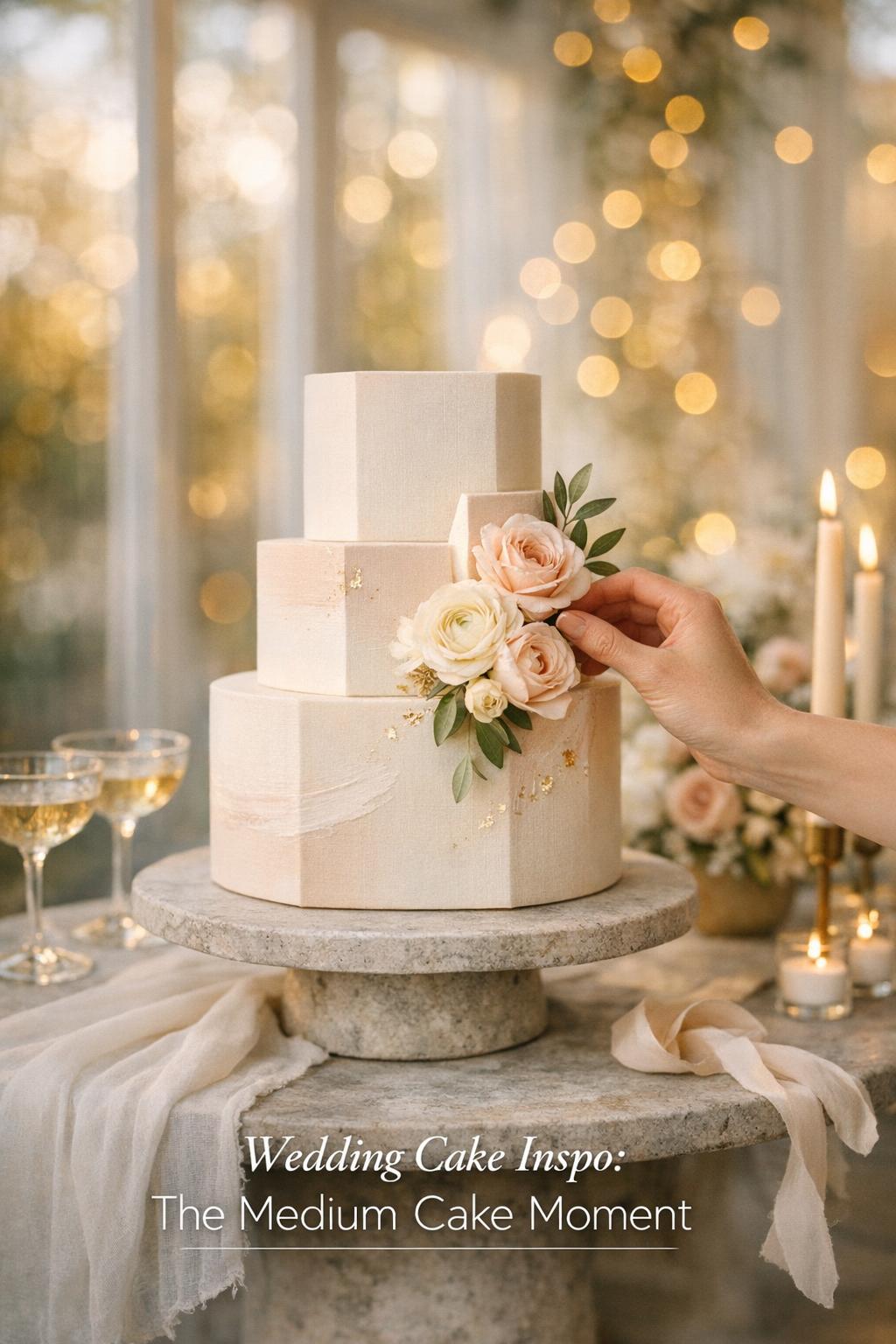
Look: glam & metallic accents—gold leaf moments and jewel-tone drama
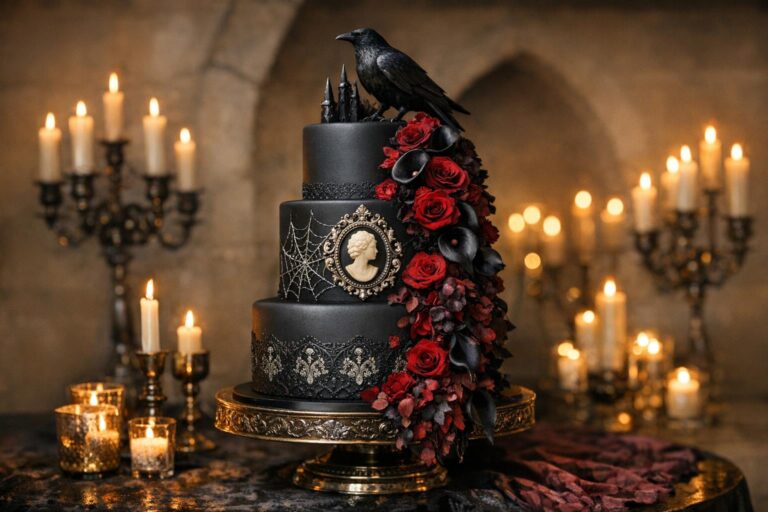
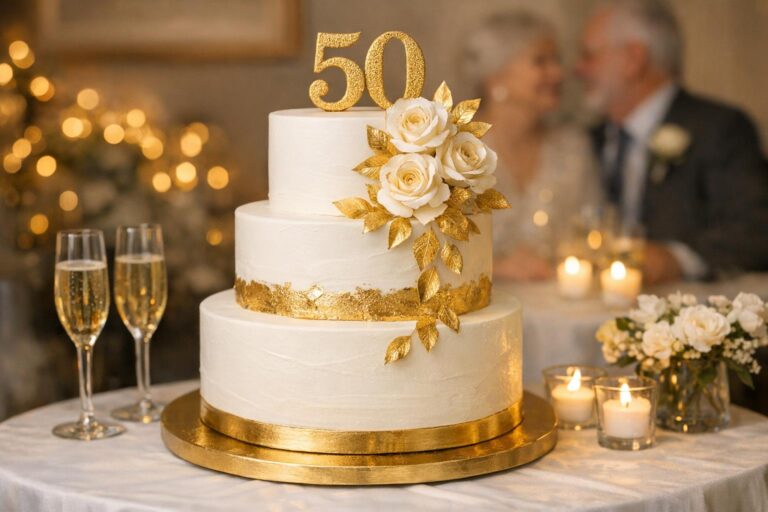
This look is for couples who want their cake to feel like an entrance. Glam wedding cake inspo leans into richness: metallic accents, gold leaf details, and jewel tones that glow under reception lighting. The silhouette can be classic tiered elegance, but the mood is unapologetically luxe—perfect for a ballroom wedding or an evening reception where candlelight and music carry the night.
Metallic wedding cake details work best when they’re treated like jewelry, not confetti. Gold leaf can trace an edge, highlight a texture, or frame a floral-adorned focal point. Even when color is deeper, the design still benefits from a disciplined approach: one primary hue, one metallic, and one texture choice that ties everything together.
Why it works: metallic accents read instantly celebratory. They also bridge modern and classic styling—especially when paired with clean lines or minimal florals so the shimmer stays intentional.
- Best for: ballrooms, evening receptions, modern luxury styling.
- Signature details: gold leaf, metallic piping, jewel-tone palettes.
- Keep it elevated: choose one metallic finish and repeat it sparingly.
Scale matters: cute small wedding cakes, a medium wedding cake, and cake designs two tier
Not every wedding needs a towering cake, and some of the most stylish moments come from a smaller silhouette. Cute small wedding cakes can feel intimate and fashion-forward, especially in minimalist or sculptural styles where proportion is part of the charm. A medium wedding cake often becomes the sweet spot for many celebrations: enough presence to anchor the room, without feeling oversized for the guest count and venue scale.
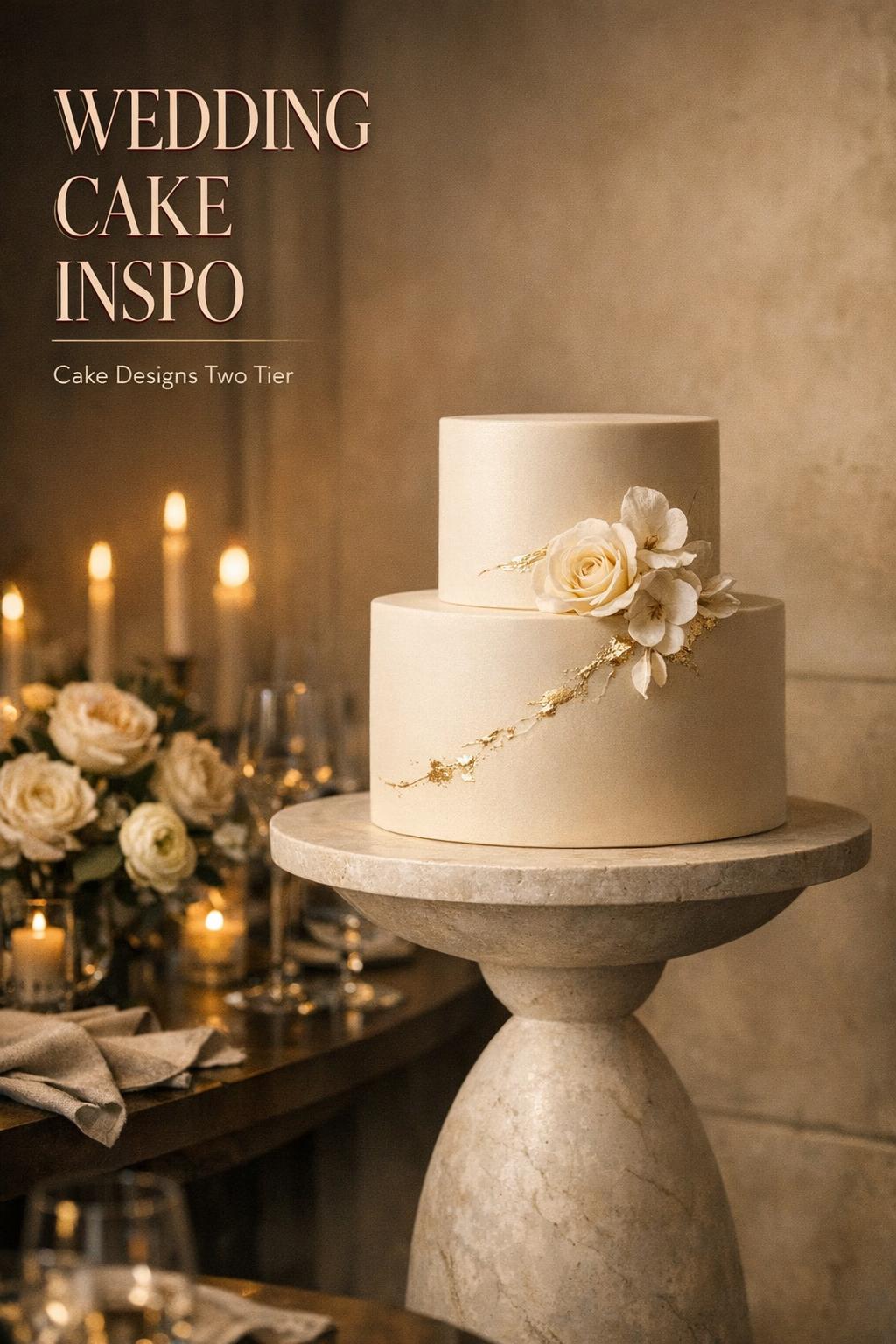
If you love the tiered look but want something refined and manageable, cake designs two tier can be incredibly versatile. Two tiers allow for shape, texture, and a focal floral moment—without the engineering or visual weight of multiple stacked tiers. In a modern venue, a two-tier silhouette can feel like quiet luxury; in a garden setting, it can look romantic and intentional, especially when paired with botanical accents.
Why it works: scaling the cake to the celebration keeps the design feeling authentic. The goal is a cake that feels like it belongs in your wedding story, not one that competes with it.
Tips for choosing the right size without sacrificing the “wow” factor
- If your venue is visually grand (ballroom, dramatic architecture), a medium wedding cake with strong texture or metallic accents will read beautifully without needing extreme height.
- If your wedding is intimate, cute small wedding cakes look most elevated when the finish is impeccable—clean lines, intentional piping, or a sculpted silhouette.
- For cake designs two tier, consider a bolder focal detail (like sugar flowers or pattern play) so the design still photographs as a centerpiece.
Seasonal & venue-driven inspiration (because the setting shapes the cake)
Seasonal wedding cake ideas aren’t about rigid rules—they’re about harmony. A cake that feels perfect in spring may look out of place in winter if the palette and textures don’t match the atmosphere. The same goes for venue alignment: beach, vineyard, ballroom, or outdoor ceremony settings each create a different “lighting and styling reality,” and your cake should be designed to thrive in it.
Spring & summer: light palettes, florals, and airy textures
Warm-weather weddings often pair naturally with floral-forward designs, soft pastels, and botanical motifs. In bright daylight—especially outdoors—subtle texture reads beautifully in photos. This is also where a minimalist cake with a delicate floral accent can feel especially romantic: it doesn’t fight the season; it lets the surroundings shine.
Fall & winter: richer contrast, deeper mood, and glam finishes
Cooler seasons invite deeper color palettes and bolder contrast. Metallic accents, gold leaf moments, and strong texture-first finishes feel at home in evening receptions and indoor venues. A sculpted cake can look especially striking in winter styling—clean silhouette against candlelight—while a floral-adorned approach can still work when the botanical story feels intentional and curated rather than overly summery.
Venue-aligned designs: beach, vineyard, ballroom, outdoor ceremony
Venue alignment is one of the most practical ways to narrow wedding cake inspo. Beach weddings often call for lighter palettes and calm, modern finishes that won’t feel too heavy. Vineyard celebrations welcome rustic and organic textures, often with floral accents that echo the landscape. Ballrooms can carry glam—metallics, jewel tones, and clean tiered drama—while outdoor ceremonies tend to favor designs that look natural in daylight and integrate seamlessly with florals and décor.
Flavor-first inspo: when your design hints at what the first bite feels like
Wedding cake inspiration is usually visual, but the most memorable cakes connect design and flavor so they tell one cohesive story. A botanical design feels even more intentional when the flavor direction supports that mood. Likewise, a glam cake with metallic accents often pairs beautifully with a richer, more decadent flavor experience. You don’t need to over-explain this to guests; you just want the overall impression to feel aligned.
In practical planning, flavor decisions often come down to tastings and guest preferences. Many couples choose a crowd-pleasing flavor profile for the main cake, then personalize with a second option if they’re serving multiple tiers or supplementing with dessert tables. The key is to treat flavor like part of the design brief, not an afterthought.
Dietary-friendly options that still match the aesthetic
Inclusivity matters, and couples increasingly ask about dietary-friendly options like gluten-free or vegan selections. The design priority stays the same: a cake should look and feel like it belongs to the wedding aesthetic. If you’re offering dietary options, ask your bakery how they handle separate preparation, labeling, and presentation so guests feel considered and the dessert moment stays seamless.
From mood board to cake table: the process stylists rely on
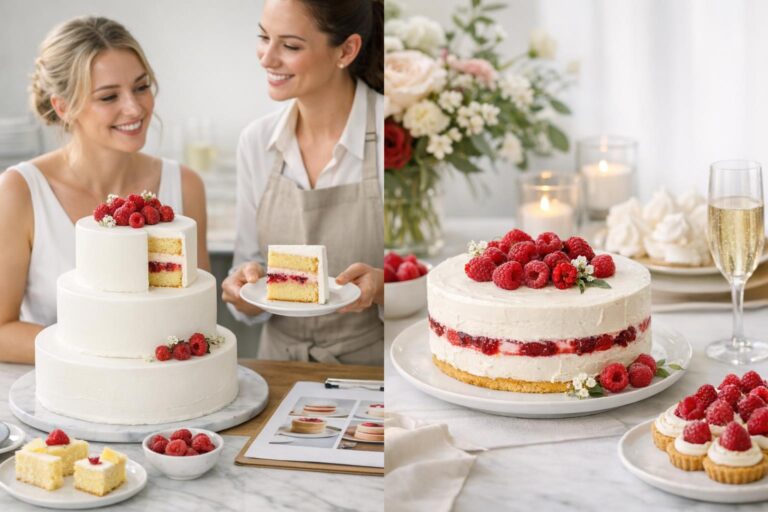
The smoothest cake outcomes happen when inspiration becomes a clear, practical plan. In my experience curating wedding aesthetics, couples feel most confident when they move through a simple workflow: mood boards first, then a narrowed design direction, then tastings, then a final design brief that covers finishes, florals, palette, and presentation.
Start with images that clearly show what you mean by “texture,” “modern,” or “rustic,” because those words can mean different things to different people. Then translate your favorites into specifics: tier count (including cake designs two tier), finish (fondant-smooth or buttercream texture), and décor (sugar flowers, fresh florals, metallic accents, or a topper).
- Mood board: collect 8–12 images that share a consistent silhouette or texture.
- Shortlist: choose 2–3 images that best match your venue and overall wedding styling.
- Tasting: decide flavor direction early enough that design details don’t outpace what’s realistic.
- Design brief: write down palette, finish, floral approach, and the “one hero detail.”
- Presentation plan: confirm cake table styling and when the cake will be placed for the best photos.
Budgeting and timelines (a calm way to avoid last-minute stress)
Cake planning tends to feel easier when you separate “must-haves” from “nice-to-haves.” If your must-have is a wedding elegant cake with a flawless minimalist finish, invest in craftsmanship and keep décor restrained. If your must-have is floral-adorned impact, you may simplify the tier structure or keep the palette minimal so the florals do the storytelling. Timeline-wise, the earlier you align on style, the more smoothly your designer can guide you through tastings, sketches, and final details without rushing decisions that deserve care.
Real-wedding energy: where the cake lives in the day (and why photos matter)
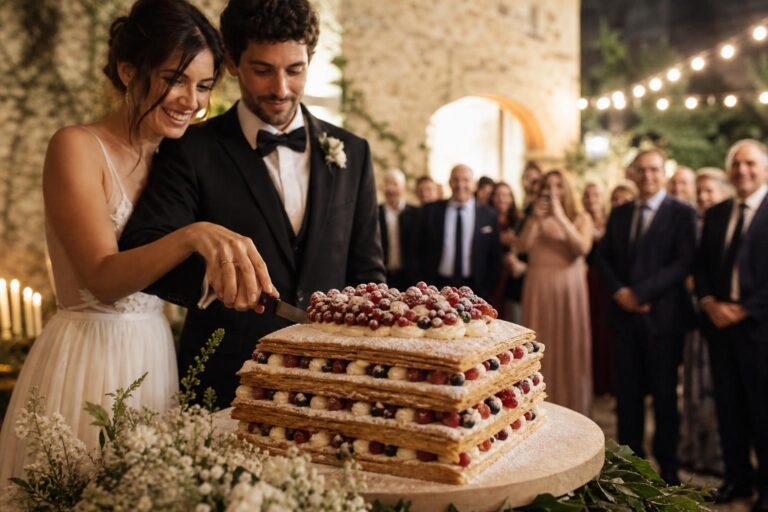
Many couples fall in love with wedding cake inspiration in galleries because the cake is shown the way it’s meant to be experienced: styled, lit, and part of a complete wedding scene. That real-wedding context is valuable. A sculpted cake against a modern venue backdrop reads differently than the same cake in a rustic barn setting. A floral wedding cake beside abundant arrangements can look cohesive—or overwhelmed—depending on scale and palette.
Plan for a “cake moment” the way you plan for other high-impact moments: where it will sit, what’s behind it, and whether it will be photographed in daylight, candlelight, or both. Even cute small wedding cakes can feel dramatic when the presentation is intentional—thoughtful linens, a clean surface, and space around the cake so the silhouette stands out.
Tips for cake presentation and reception flow
- Give the cake visual breathing room; crowded décor can hide texture and sculptural form.
- Coordinate florals with your florist so the cake’s botanical accents match the bouquet vibe, not fight it.
- If metallic accents are part of the design, place the cake where reception lighting will catch the shimmer.
- Confirm timing so the cake looks fresh when guests first see it and again at cake cutting.
Regional US cake design trends: letting place shape your palette
Even when you’re planning from a Pinterest board or a gallery, wedding cakes still reflect local taste. In the United States, couples often notice subtle regional differences in styling—how modern minimalism shows up, how rustic textures are interpreted, how bold metallic moments feel, and how floral design is used to connect cake and venue. Thinking in regions can help you refine your direction and communicate clearly with local vendors.
West Coast, East Coast, Midwest: three easy style lenses
A West Coast lens often pairs naturally with botanical styling and modern minimalism—cakes that feel fresh, light, and intentional in bright venues or outdoor settings. An East Coast lens can lean more fashion-forward, where minimalist cakes read like quiet luxury and sculpted forms feel editorial. A Midwest lens can highlight warmth and approachability, where rustic and organic textures and dessert tables feel especially at home in community-centered celebrations. These aren’t rules; they’re a helpful way to describe the mood you want when you’re speaking with bakeries and designers in your area.
Choosing a cake designer or bakery: what to ask (and what to watch for)
Most top wedding cake ideas become reality through collaboration: you bring inspiration, your cake designer brings technique, and together you decide what’s achievable for your venue, season, and timeline. Many inspiration sources feature designers and bakeries through credits and galleries, which is a reminder to value artistry—and to choose a partner who can execute the details you love, whether that’s sugar flowers, sculpted tiers, or pattern play in piping.
When you’re evaluating portfolios, look for consistency in the specific style you want. A bakery that excels at minimalist finishes may not be the best match for complex sculpted work, and a designer known for floral-adorned cakes may have a distinct approach to color palette and texture. The goal isn’t to find “the best” in an abstract sense—it’s to find the best fit for your aesthetic identity.
- Ask how they approach your chosen style (sculpted, floral, minimalist, rustic, or glam) and what finishes they recommend.
- Request guidance on texture options: fondant-smooth, buttercream texture, piping, ruffles, or patterned finishes.
- Discuss presentation: cake table styling, toppers, florals, and how the design will photograph at your venue.
- If you need dietary-friendly options, ask about process and how they keep those servings clear and safe.
Common styling missteps (and the gentle fixes that keep your cake cohesive)
The most frequent cake styling issues aren’t dramatic failures—they’re small mismatches that make a cake feel slightly “off” against the wedding’s overall aesthetic. A modern minimalist cake can look lost if the cake table is overly busy. A floral-adorned cake can feel chaotic if the florals don’t match the bouquet vibe. A glam cake with metallic accents can tip into “too much” if metallics are layered without a clear plan.
The fix is almost always editing. If your inspiration folder includes sculpted tiers, rustic finishes, and heavy metallic accents all together, choose one direction and keep the other ideas as subtle references rather than equal partners. And if you’re torn between styles, consider using scale to help: a two-tier cake can carry a bold detail without feeling overdesigned, while a medium wedding cake can handle more texture if the palette stays calm.
Quick tips for editing your inspiration into one clear design
Choose one silhouette identity (classic tiered, sculpted, or small/two-tier), one dominant texture, and one accent category (florals, metallics, or topper). When you keep those three choices consistent, your wedding cake inspo translates into a cake that looks intentional in every photo and feels true to your day.
Bringing it all together: your cake should feel like you
The most beautiful wedding cake isn’t the one with the most detail—it’s the one that looks like it belongs in your celebration. Whether you’re drawn to sculpted wedding cake ideas, soft floral design, minimalist calm, rustic texture, or a glam gold leaf moment, your best choice is the one that aligns with your venue, your color palette, and the way you want the day to feel. Start with mood, edit with intention, and trust that a clear design brief is the most romantic kind of planning: it lets your cake designer craft something that feels effortless when the moment finally arrives.
FAQ
What are current wedding cake trends in 2026?
Current trends center on sculpted and architectural forms, floral-adorned cakes with sugar flowers or botanical motifs, texture-first finishes (including piping, ribbing, and pattern play), minimalist and modern silhouettes, and glam details like metallic accents and gold leaf paired with disciplined color palettes.
How early should you start planning a wedding cake?
Start once your venue and overall wedding aesthetics are defined, because those decisions shape cake style, palette, and presentation; beginning early also gives you time to build a mood board, schedule tastings, and collaborate on sketches and a final design brief without last-minute pressure.
How do I choose between buttercream texture and a smooth fondant finish?
Choose buttercream when you want an organic, rustic, or texture-forward look with visible movement, and choose a smooth fondant finish when you want crisp edges, clean lines, and a more architectural or minimalist feel; your cake designer can also suggest subtle texture options that suit either direction.
What cake styles work best for an outdoor ceremony or outdoor reception?
Outdoor settings pair especially well with floral and botanical cakes and rustic or organic textures because they visually echo the environment; for a more modern outdoor wedding, a minimalist cake with a controlled palette and a single floral accent can look striking in daylight and remain cohesive with natural surroundings.
Are cake designs two tier enough for a formal wedding?
Yes—cake designs two tier can look distinctly formal when the proportions are balanced and the finish is refined, especially with intentional details like delicate piping, sugar flowers, or a controlled metallic accent; a two-tier silhouette often reads like quiet luxury rather than “small.”
How can cute small wedding cakes still feel like a statement?
Cute small wedding cakes feel most impactful when the design is edited and the presentation is styled: choose one hero detail (a sculpted form, a flawless minimalist finish, or a floral-adorned focal point) and give the cake visual breathing room on a well-composed cake table so it photographs as a centerpiece.
How do I make sure the cake matches my wedding color palette?
Match the cake to your palette by choosing one primary base tone and one accent direction (florals, metallic accents, or subtle pattern play), then repeating that choice in a restrained way across tiers; this approach keeps the cake aligned with your wedding styling without looking overly themed.
How can design reflect flavor without getting overly complicated?
Keep it simple by letting the visual mood guide the flavor direction during tastings: botanical designs pair naturally with lighter, fresh-feeling flavor profiles, while glam and metallic looks often suit richer, more decadent flavors; you don’t need to “announce” the connection—just let the overall experience feel cohesive.
What should I ask a bakery or cake designer before booking?
Ask how they’ll execute your preferred style (sculpted, floral, minimalist, rustic, or glam), what textures and finishes they recommend, how they handle florals and toppers, how the cake will be presented and photographed at your venue, and—if needed—how they accommodate dietary-friendly options like gluten-free or vegan selections within the same cohesive design.