White Wedding Flowers: A Modern Guide to All-White Style
White wedding flowers are having a useful reset. The all-white palette is still timeless, but the most compelling designs no longer depend on making every arrangement look identical. Instead, florists are using warm ivory beside bright white, smooth petals beside ruffled ones, airy stems beside dense blooms, and small details beside one memorable floral gesture. The result feels intentional rather than overly matched.
That shift matters because white flowers are beautiful and demanding at the same time. Against a white dress or pale linen, a flat arrangement can disappear. In strong sun, warm ivory can look cream; under reception lighting, a cool white can look blue. This guide explains how to build a modern white wedding flower plan that has texture, movement, and contrast while staying flexible for your season, venue, guest count, and budget.
What is changing in white wedding flowers
The current direction is less about one specific flower and more about a thoughtful range of scale. A petite bouquet of lily of the valley or small orchids can feel just as fashion-forward as a dramatic cascade of white orchids. A low table arrangement may be built from several little vessels instead of one oversized centerpiece. Ceremony flowers may outline an arch with open space rather than covering every inch of it.
This is not a reason to chase every trend. It is a reason to ask what kind of contrast your wedding needs. If your venue is architectural, a restrained white design may highlight its lines. If the room is plain, a larger installation can create a focal point. If your dress is ivory, bright white flowers can frame it beautifully, but a bouquet made entirely from cool white blooms may make the gown appear warmer by comparison.
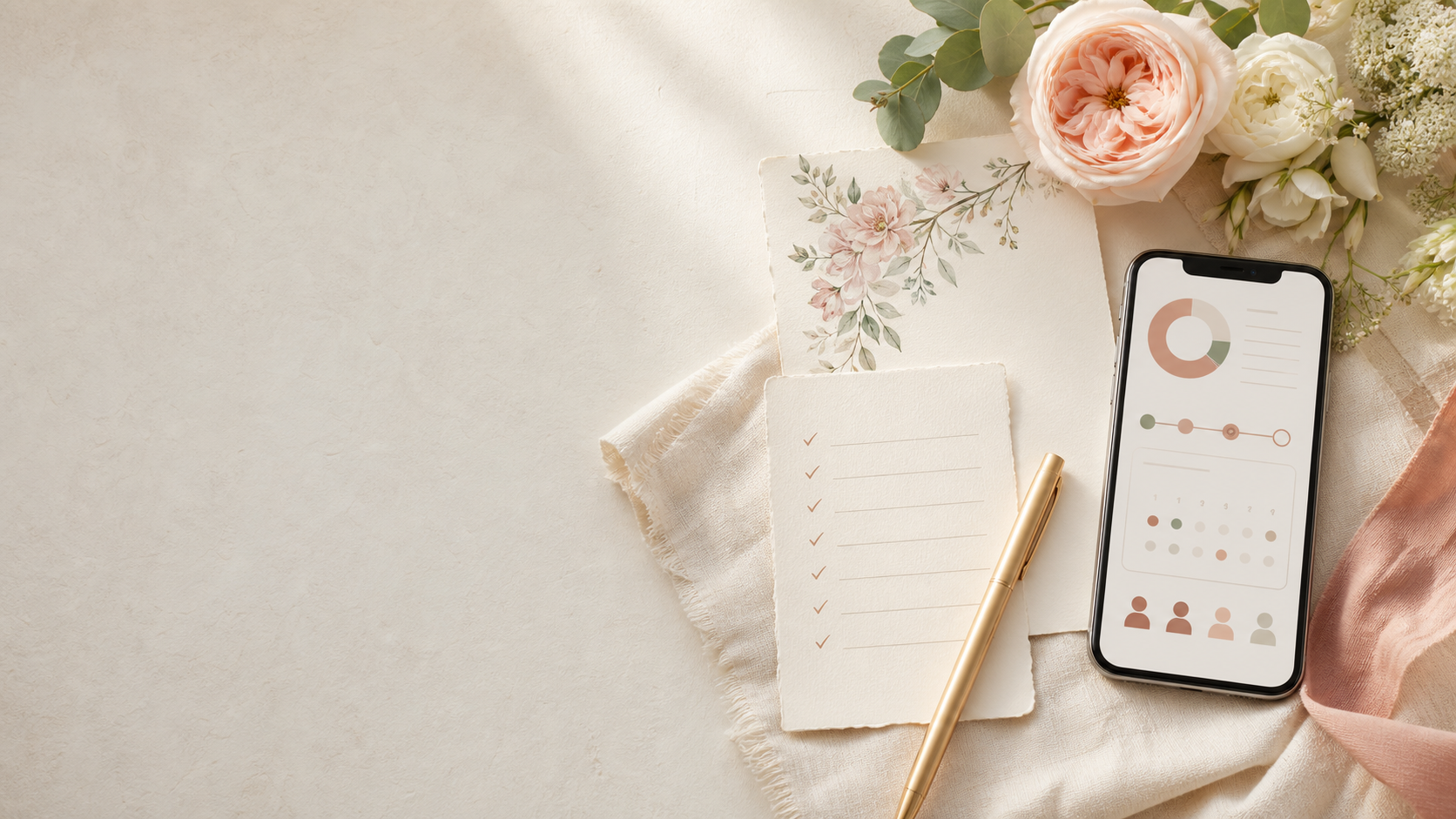
Turn wedding inspiration into a plan you can actually follow.
Zarellea brings your guest list, budget, vendors, and day-of details into one shared space — so no beautiful idea gets lost in the shuffle.
Texture is replacing color as the main source of interest
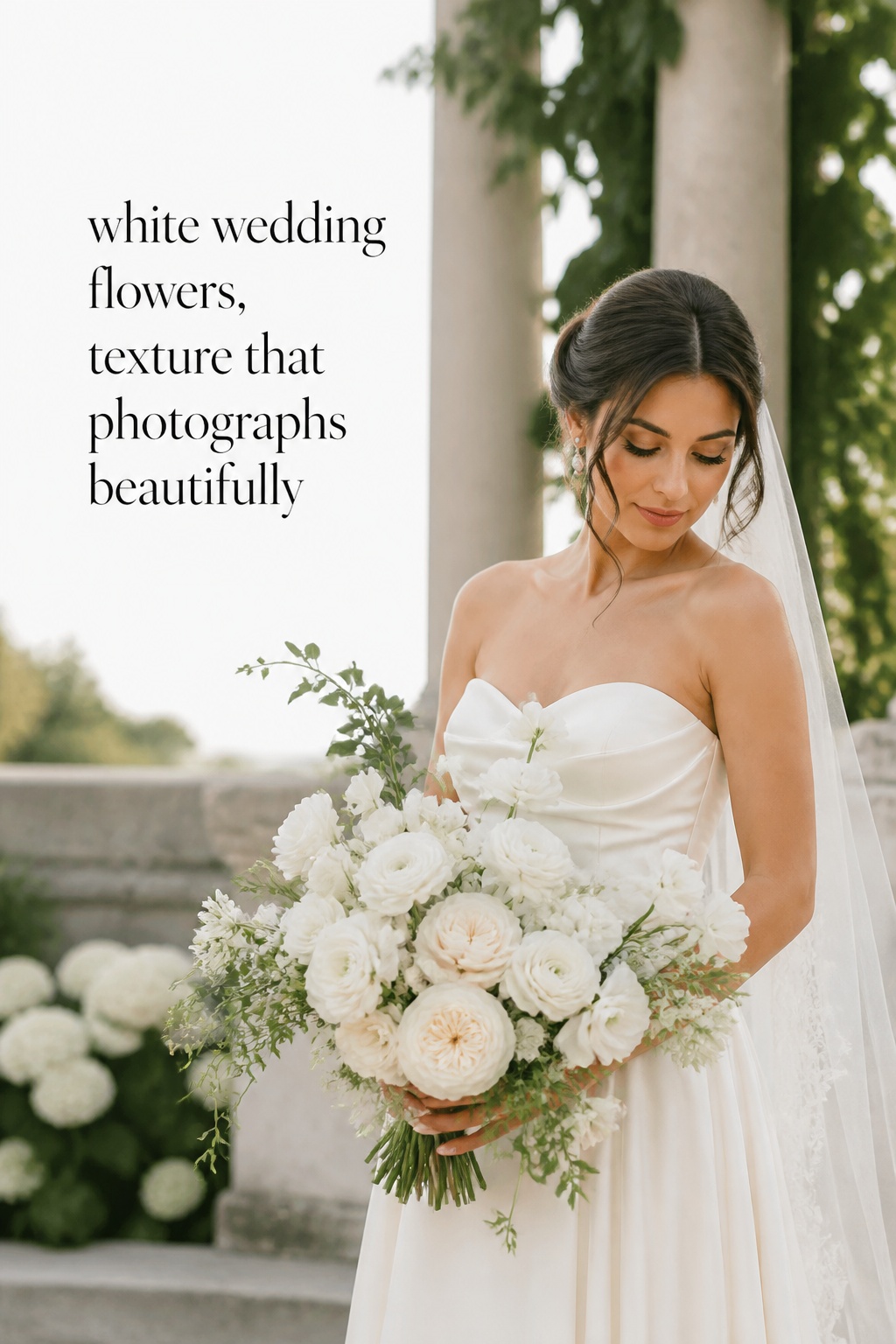
When the palette is narrow, the eye reads shape and surface more carefully. Garden roses bring fullness and layered petals. Ranunculus adds a tightly folded center. Anemones create a graphic focal point. Sweet peas and orchids introduce movement. Hydrangeas provide mass, while baby’s breath, jasmine vine, and delicate foliage keep a design from feeling heavy.
Try combining three distinct textures rather than collecting ten flower types. For example, pair a rounded focal flower with a flatter supporting bloom and one airy ingredient. White garden roses, anemones, and sweet peas create a romantic but edited mix. White tulips, orchids, and ruscus feel cleaner. Hydrangea, ranunculus, and chamomile feel softer and more garden-like.
Scale is becoming a design decision
A white wedding can be quiet, dramatic, or somewhere in between. The difference often comes from scale. A hand-sized bouquet and single-stem boutonniere create intimacy. A wide ceremony installation or trailing floral runner creates spectacle. You do not need to choose one scale for every moment. In fact, moving from restrained ceremony details to a more generous head table can make the day feel layered.
Choose one place where you want abundance to be photographed and remembered. It might be the bouquet, the ceremony altar, the sweetheart table, or the dance-floor entrance. Let the remaining floral moments support that feature. This creates a more convincing design than spreading a small amount of flowers thinly across every possible surface.
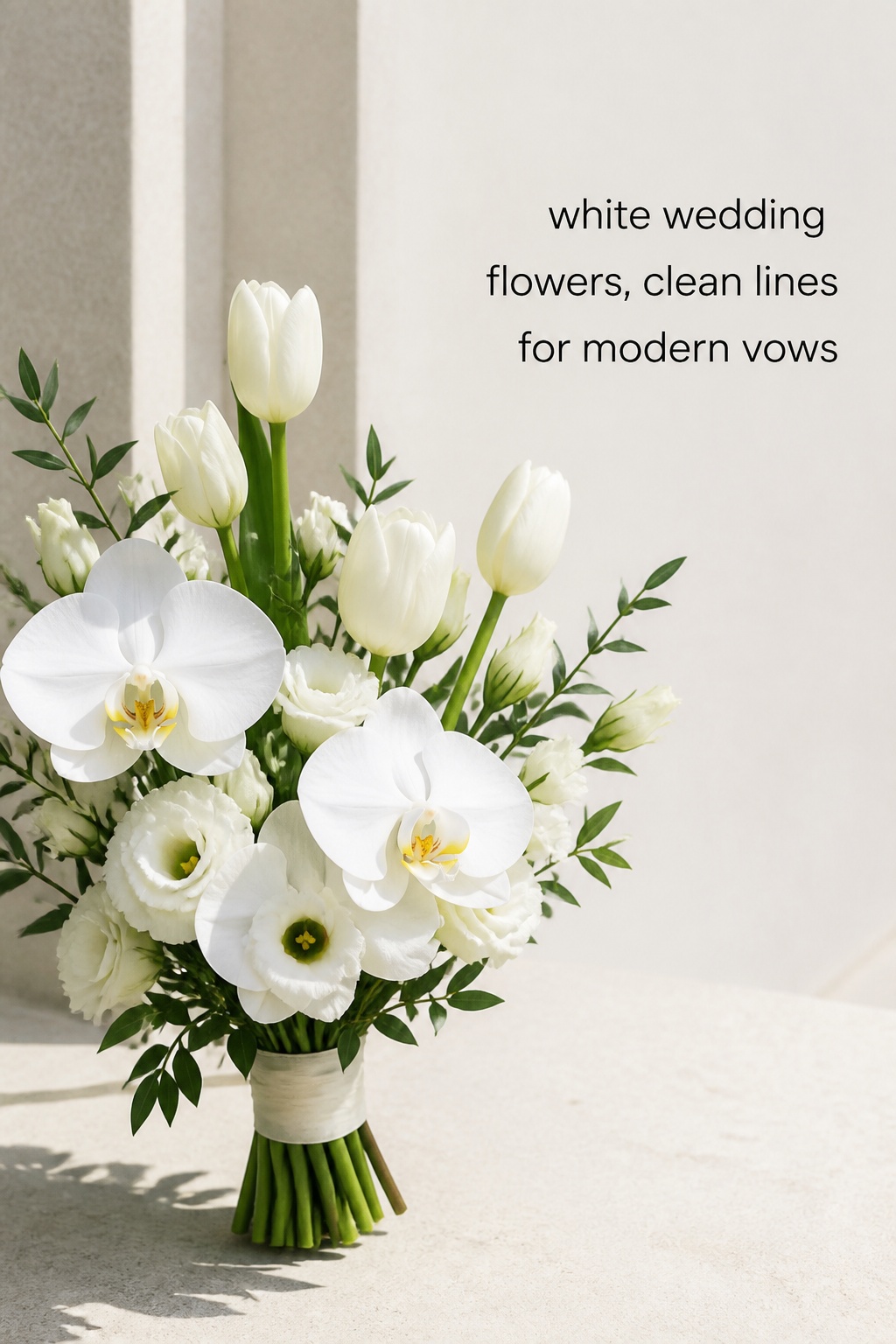
Build dimension with a white flower formula
A useful white wedding flower plan has four jobs: a focal bloom, a supporting bloom, an airy or textural accent, and a structural element. The exact varieties can change with the month and region. The roles are what keep the design coherent when a florist recommends a substitution.
Choose a focal flower with a recognizable shape
Garden roses and peonies are classic choices when you want lush, rounded romance. Calla lilies and tulips are more linear. Orchids feel sculptural and slightly unexpected. Ranunculus gives you intricate detail at a smaller scale, while hydrangea offers volume and a soft cloud-like silhouette. For a minimalist wedding, one strong flower repeated with confidence can look more expensive than a crowded mixture.
Use your focal flower where it will be seen most clearly. A delicate sweet pea may be beautiful in the bridal bouquet but too easily lost in a large outdoor arch. A durable rose may work in both. A florist can help you decide which blooms should be reserved for personal flowers and which can withstand heat, wind, transport, or a long reception.
Add a supporting bloom in a different scale
Supporting flowers bridge the focal bloom to the rest of the arrangement. If your main flower is large and rounded, choose something smaller or more open. White spray roses, lisianthus, stock, feverfew, carnations, and seasonal tulips can fill spaces without making the design look crowded. A supporting flower can also soften a more formal focal choice, such as pairing orchids with airy white blossoms.
Do not treat the word supporting as a synonym for unimportant. It is often the supporting layer that makes an all-white arrangement feel natural. Use it to repeat a shape from the venue, echo a detail in the stationery, or connect the bridal bouquet to the reception tables without copying the bouquet exactly.
Use airy accents to create breathing room
Airy accents keep white flowers from becoming a solid mass. Baby’s breath, Queen Anne’s lace, chamomile, sweet peas, jasmine vine, and delicate grasses can extend beyond the main outline. Their movement is especially helpful in outdoor ceremonies and relaxed garden receptions, where a perfectly round design may feel disconnected from the setting.
Airy does not have to mean rustic. A few carefully placed stems of white orchids or trailing greenery can give a modern arrangement a sense of motion. The key is to use negative space on purpose. Ask your florist where the design should look open and where it should feel full from the aisle, the guest tables, and the camera angle.
Finish with greenery or branches that add architecture
Greenery is not merely filler. It can set the temperature of the palette. Olive branches and eucalyptus feel muted and calm. Ruscus and glossy leaves feel cleaner. Ferns and herbs feel relaxed. White branches such as dogwood or cherry blossom can add height and seasonal character without introducing another flower color.
Use greenery to create contrast against white blooms, especially when the background is pale. A little green can make a bouquet photograph more clearly and help white flowers stand apart from an ivory gown. If your goal is a nearly monochrome look, choose foliage with a soft gray or silvery cast rather than mixing every green available.
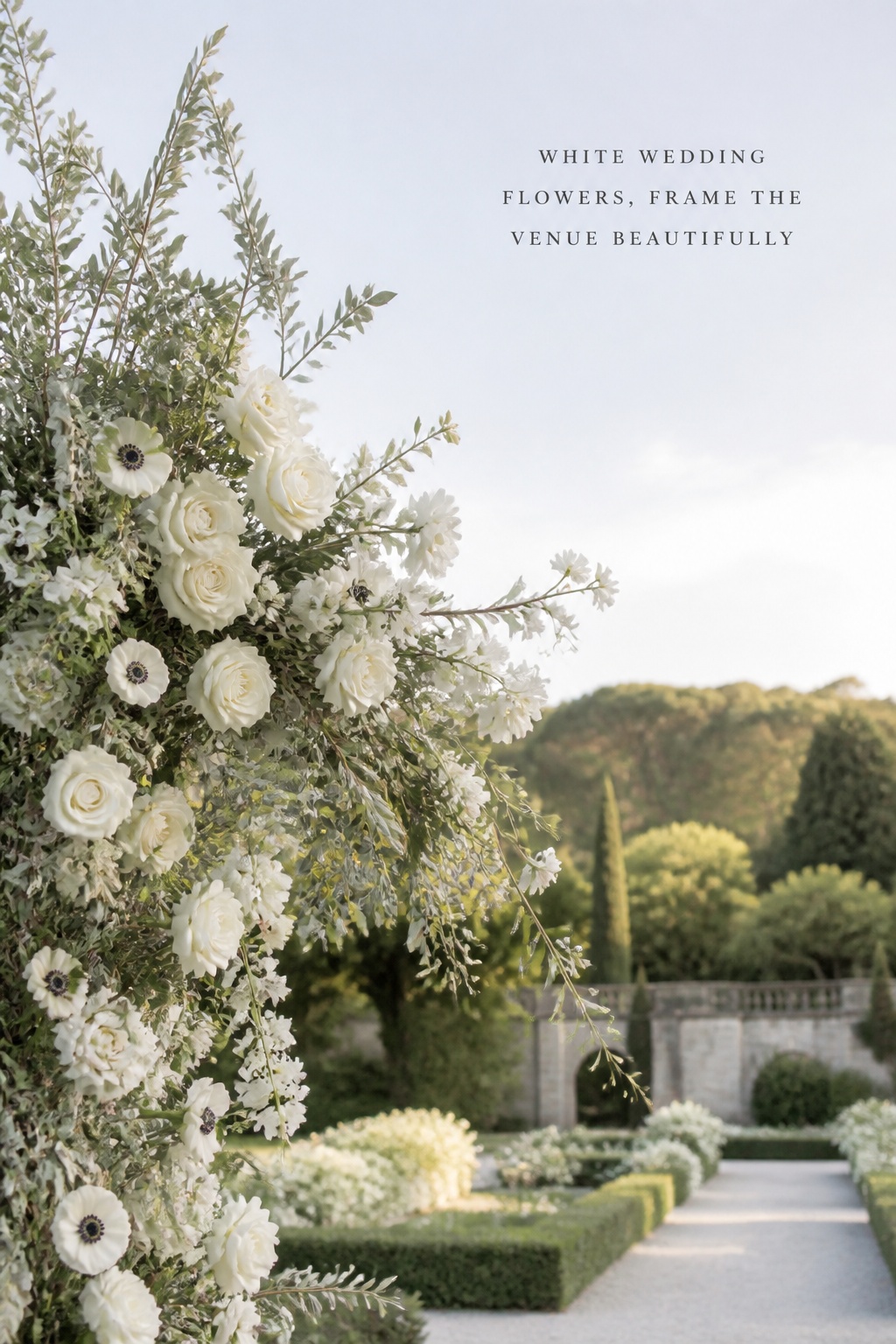
Apply white wedding flowers across the day
The most polished floral plans repeat a visual language without repeating the exact arrangement. Let the bouquet be the most personal expression, let the ceremony frame the setting, and let the reception translate the same ingredients into shapes that work with tables and conversation. This approach also makes it easier to repurpose flowers when the ceremony ends.
Make the bouquet the texture reference
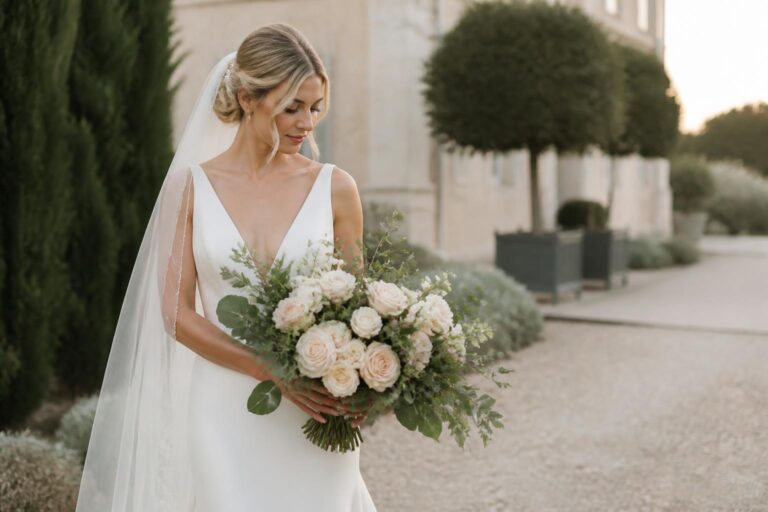
Start with the bridal bouquet because it will be photographed close to the dress and carried through many parts of the day. A loose garden bouquet can combine white roses, ranunculus, sweet peas, and soft greenery. A modern bouquet can use calla lilies, orchids, tulips, or one variety of rose in a clean silhouette. A petite bouquet can make a simple dress feel more editorial, while a generous cascade can balance a dramatic train or a large ceremony backdrop.
Compare the flowers with your dress in the actual lighting if possible. Bright white flowers beside an ivory gown can create a deliberate tonal contrast, but the effect should be visible in photographs. Ask for a small sample or a digital mockup that includes the gown, ribbon, and expected background. Also remember the handle. A silk ribbon, raw-edge ribbon, or narrow velvet wrap gives the bouquet a finished detail when the flowers are held at waist height.
Use ceremony flowers to frame, not hide, the venue
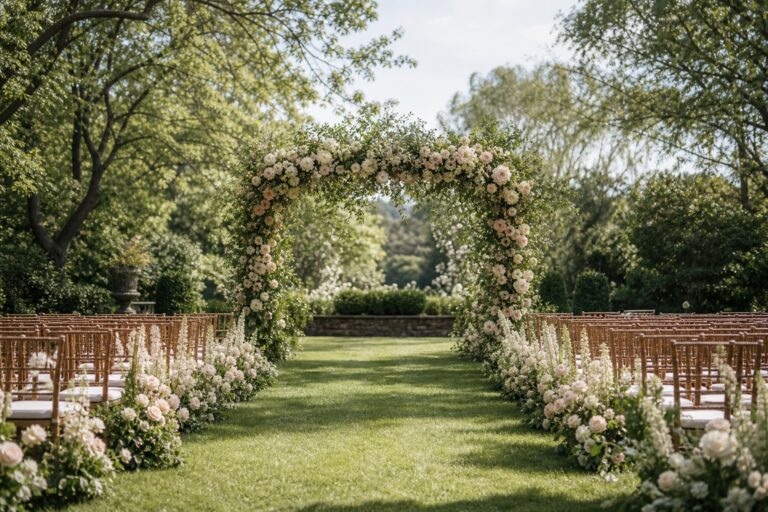
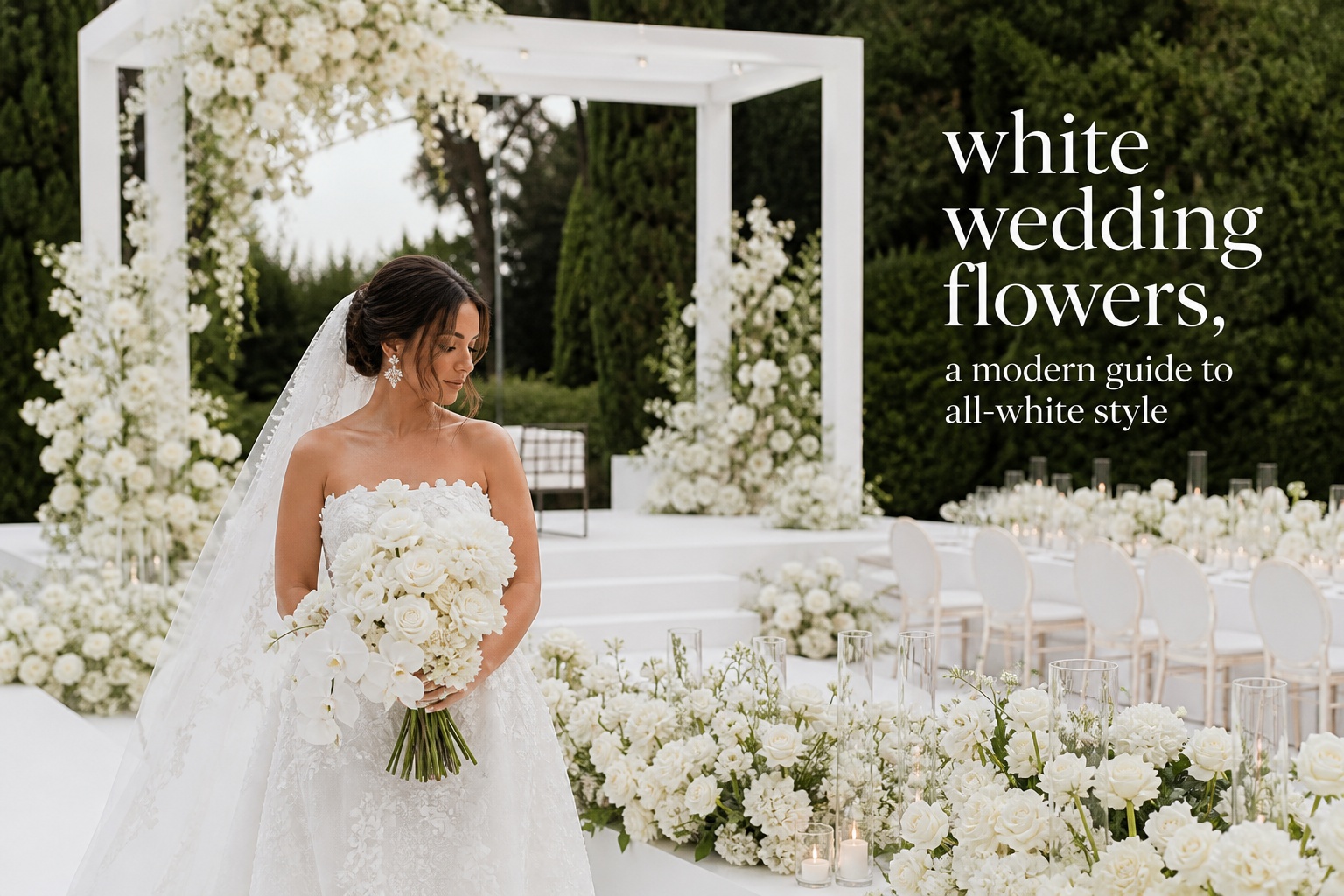
For an arch, decide whether the design should be asymmetrical, grounded at the base, or distributed across the top. An open structure with flowers concentrated on one side can feel modern and lets the venue remain visible. A fuller installation is useful when you need to soften a plain wall or create a strong ceremony photograph.
Aisle flowers do not have to appear at every chair. Clusters at the entrance, the first few rows, and the ceremony focal point can create rhythm with fewer arrangements. Tie small white posies to selected chairs, place low flowers along the aisle edges, or use petals and candlelight when the venue already has enough visual interest. Make sure the flowers will not narrow the walkway or create a tripping hazard.
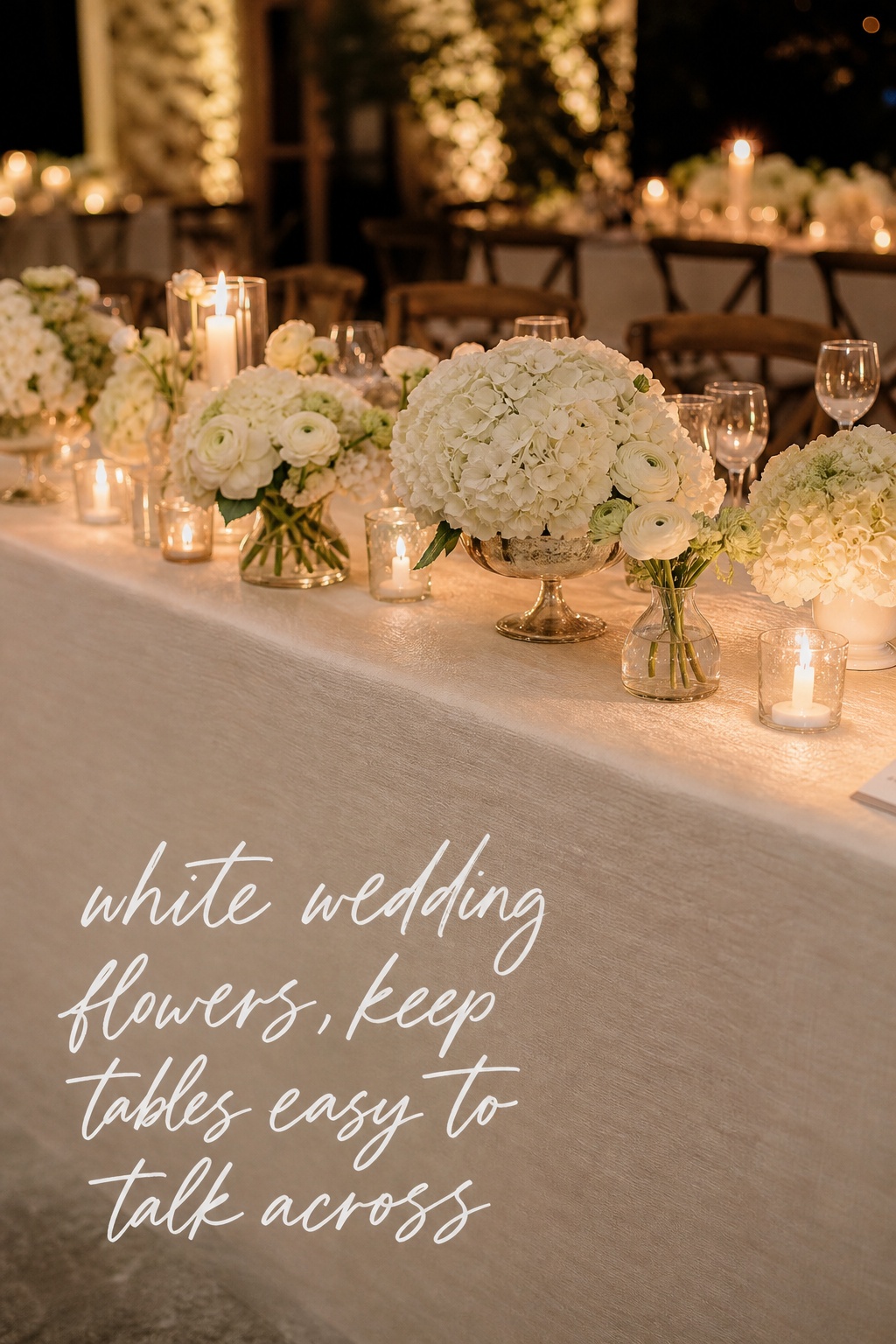
Keep reception flowers low enough for conversation
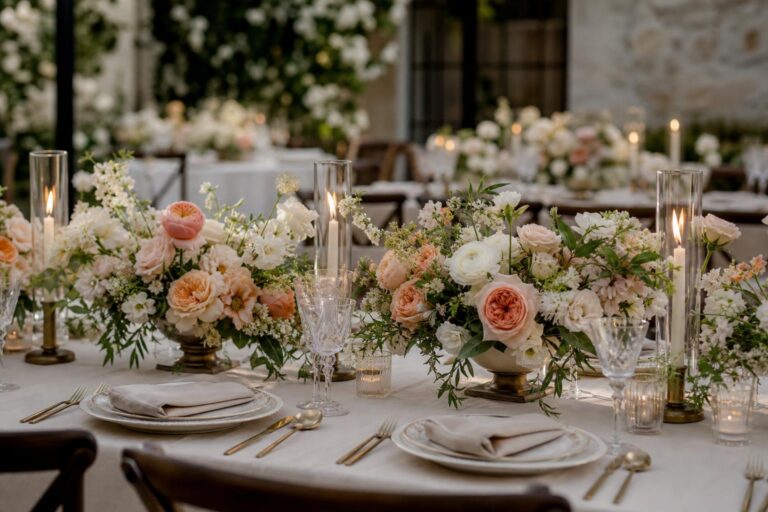
White centerpieces look especially elegant with a mix of compotes, bud vases, and low arrangements. The variation gives the room a collected feeling while keeping sightlines open. On long tables, a loose floral runner can be interrupted by candles and small vessels. On round tables, one low arrangement or a cluster of bud vases is often easier for guests to see around.
Use linens and glassware as part of the contrast. White flowers can disappear on white cloth, so add texture with stoneware, clear glass, warm wood, a pale gray linen, or a small amount of greenery. Dark linen can make white flowers look dramatic, while candlelight adds warmth to a cool palette. Test the arrangement after sunset if your reception will rely on candles or low artificial light.
Repeat one detail in personal flowers and cake design
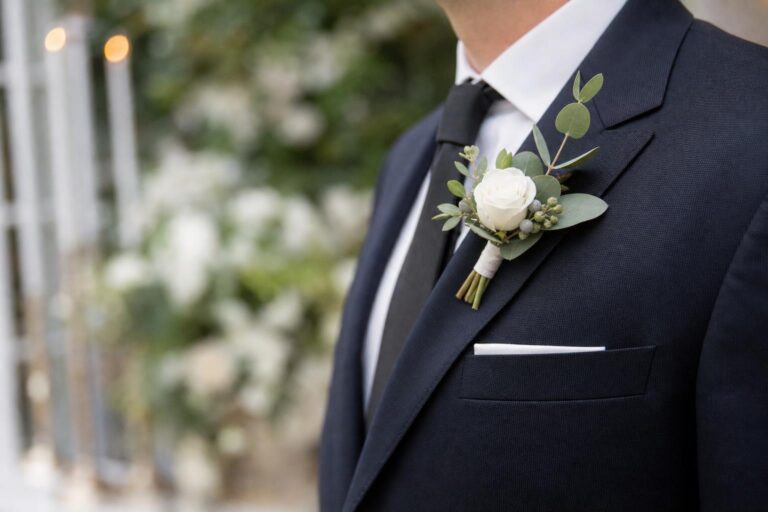
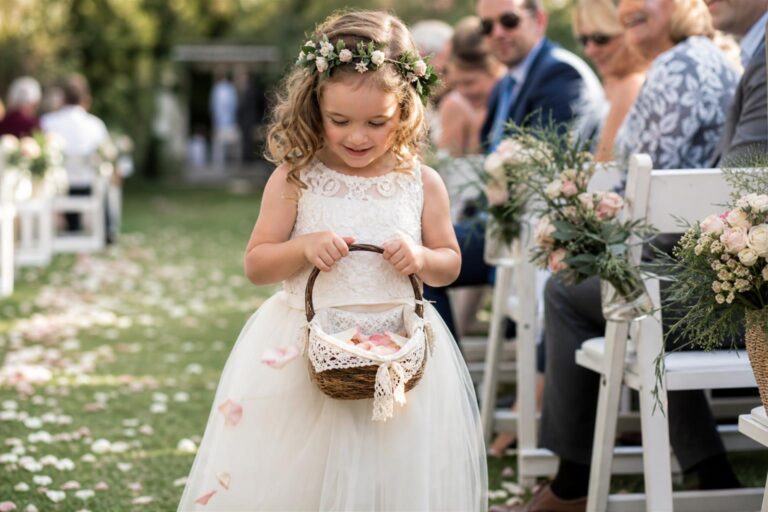
Boutonnieres, corsages, flower-girl posies, and cake flowers are small, but they help the whole plan feel deliberate. Repeat one flower or foliage detail from the bouquet rather than building miniature versions of every arrangement. A single white ranunculus with a narrow leaf can be enough for a boutonniere. A few delicate blooms on a white cake can echo the bouquet without making the cake compete with the tables.
Ask your baker and florist to coordinate the white tones. A bright white sugar finish, ivory buttercream, and warm white flowers may be beautiful together, but they should look like a considered palette. If the cake will sit near a large floral arrangement, keep the cake flowers lighter and more open so the display remains balanced.
Choose the direction by season, venue, and budget
White wedding flowers are not a single look. A spring garden wedding, summer ballroom celebration, autumn estate dinner, and winter city ceremony may all use white blooms, but the supporting ingredients should change. Seasonal availability also affects freshness and cost. Build a flexible brief around color, shape, and mood, then allow your florist to select the best available stems.
Spring: emphasize delicate movement
Spring can support tulips, ranunculus, sweet peas, anemones, hyacinths, lilacs, and other delicate flowers depending on your date and region. These blooms are lovely for a garden-inspired bouquet, but some are more fragile or fragrant than couples expect. Use sturdy roses or seasonal greenery in installations that need to last, and reserve the most delicate flowers for bouquets or sheltered tables.
Summer: protect the palette from heat
Summer white flowers can look crisp and luminous, but heat changes the practical plan. Ask about hydration, shade, transport, and the time between delivery and the ceremony. Choose a few heat-tolerant foundation flowers and use delicate accents in protected areas. If the event is outdoors, a smaller bouquet and compact arrangements may stay fresher than a large loose cascade.
Autumn: add depth without abandoning white
For fall, texture can come from pods, branches, dried elements, herbs, and deeper greenery rather than colored flowers. White roses, orchids, dahlias, mums, and anemones can look sophisticated beside taupe linen, wood, stone, or candlelight. If you want a warmer feeling, choose ivory and cream flowers instead of adding a large contrasting color.
Winter: use contrast and candlelight
Winter is an ideal season for sculptural white flowers, evergreen foliage, bare branches, and reflective details. White orchids, roses, amaryllis, anemones, and hellebores can feel formal without being predictable. Deep green foliage, black taper candles, silver vessels, or dark linen help the flowers stand out in photographs and evening light.
Put the budget into visible moments
Instead of asking for a price on an entire list, rank the moments. The bridal bouquet, ceremony focal point, and sweetheart table are usually seen in close photographs. Guest tables affect the atmosphere of the whole reception, but they can often be designed with a mix of low arrangements, bud vases, candles, and repurposed flowers. Personal flowers can be simple and still feel connected.
Ask your florist about flower substitutions, local sourcing, larger blooms that provide volume, and designs that can be moved after the ceremony. A flower that is expensive per stem may be worthwhile in the bouquet but unnecessary in every centerpiece. A less expensive flower can look elevated when its shape, vessel, and placement are right.
Make the final plan durable and florist-ready
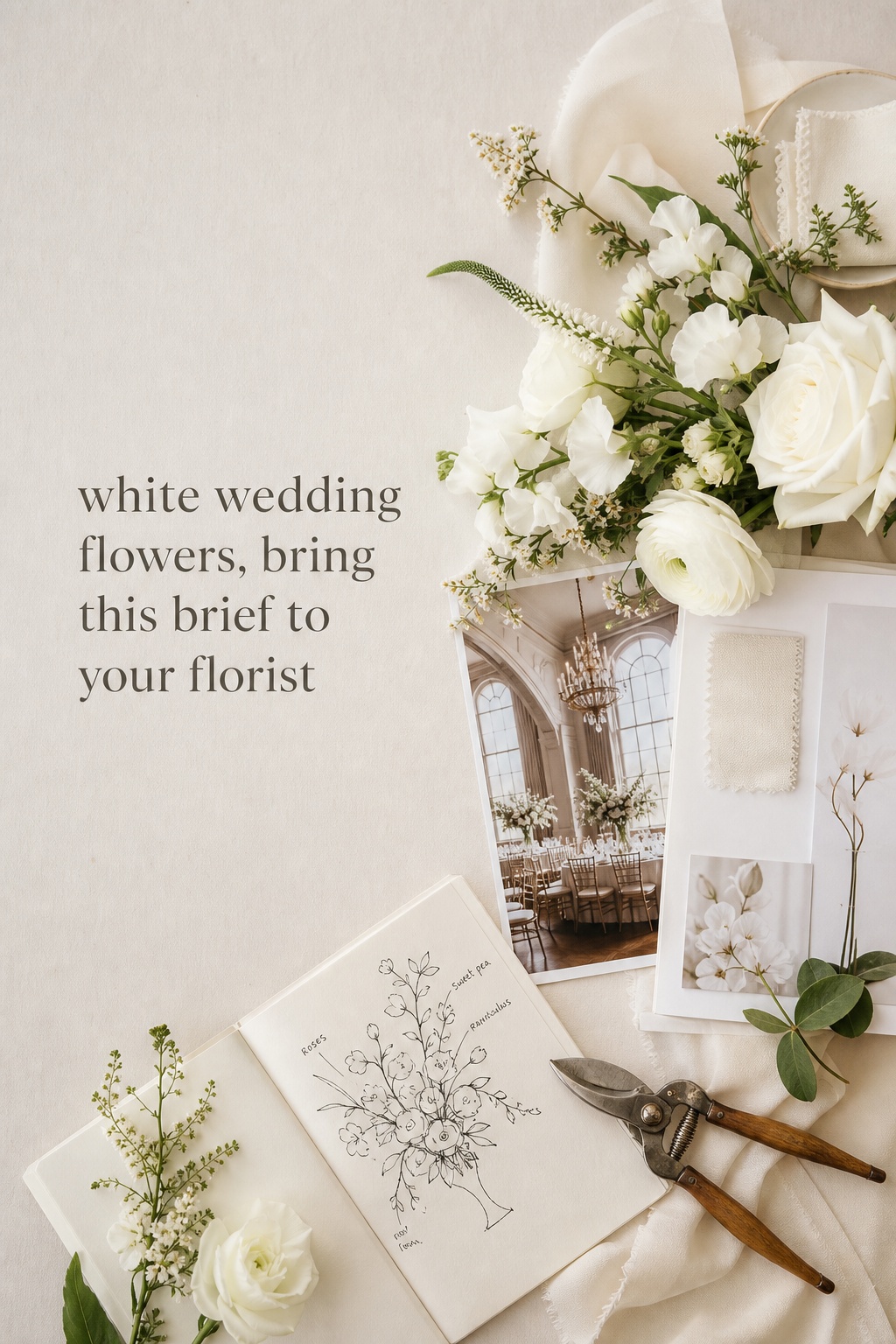
The best white wedding flower brief describes what the flowers should do, not only what they should be called. Bring a small moodboard with the venue, dress, linens, favorite arrangements, and one or two examples that show what you do not want. Then explain the feeling in plain language: airy and architectural, soft and garden-like, minimal and sculptural, or abundant and romantic.
Ask about white temperature and photography
Use the words bright white, ivory, cream, or warm white intentionally. Ask your florist how the flowers will read beside the dress, table linens, stationery, and venue walls. If you are planning a candlelit dinner, request images of similar designs in low light. A white arrangement needs enough tonal variation to remain visible without looking busy.
Confirm seasonality, substitutions, and care
Ask which flowers are reliably available on your date, which are imported or weather-sensitive, and what the closest alternatives would be. A useful substitution has a similar role, shape, and scale. Also confirm fragrance. Hyacinth, lily of the valley, stock, and some lilies can be strong in a small room or near dinner tables. Your florist should provide a care plan for heat, transport, refrigeration, setup, and repurposing.
Use this short consultation checklist
- Share your exact wedding date, venue, guest count, ceremony location, and reception layout.
- Name one or two focal flowers and describe the texture you want around them.
- Choose whether the palette is bright white, ivory, cream, white and green, or tonal white.
- Identify the one floral moment that deserves the largest share of the budget.
- Ask for seasonal alternatives with similar shape, color, and durability.
- Confirm delivery, setup, hydration, candle safety, teardown, and ceremony-to-reception reuse.
- Review the plan in the venue’s expected daylight and evening lighting.
White wedding flowers feel modern when the choices are edited, not when they are complicated. Start with the atmosphere, build contrast through texture and scale, and let the season guide the final varieties. Once the roles are clear, your florist can create a design that looks abundant where it matters, stays practical where it needs to, and remains unmistakably yours.
FAQ
Which white wedding flowers are the most timeless?
Roses, garden roses, ranunculus, tulips, orchids, hydrangeas, and seasonal greenery are adaptable and photograph well in many styles. The most timeless choice is usually a clear combination of shape and texture rather than one specific flower.
How do I keep an all-white wedding from looking flat?
Mix warm and cool whites carefully, combine different petal shapes, add greenery or branches, vary arrangement height, and use textured linens or vessels. Candlelight and a little negative space can also help white flowers remain visible.
Should white flowers match an ivory wedding dress?
They do not need to match exactly. Bright white flowers can create a clean contrast with ivory, while cream and warm white flowers create a softer blend. View the bouquet beside the dress in similar lighting before making the final choice.
Are white wedding flowers available in every season?
White roses, carnations, chrysanthemums, orchids, and some greenery are commonly available year-round, but exact availability varies by region and date. Seasonal flowers such as sweet peas, tulips, peonies, or lily of the valley may have shorter windows or higher costs.
What white flowers are good for a summer outdoor wedding?
Your florist can recommend the most reliable varieties for your climate, but roses, lisianthus, orchids, carnations, and sturdy greenery are often useful foundations. Protect every arrangement from direct heat and confirm the hydration plan before the wedding day.
How can I save money on white wedding flowers?
Choose seasonal flowers, limit the number of focal varieties, use larger blooms for volume, mix bud vases with larger arrangements, repurpose ceremony flowers, and spend most on the bouquet and one or two highly visible moments. Ask for substitutions before the quote is finalized.
Can white ceremony flowers be reused at the reception?
Often, yes, if the designs are made for safe movement and the timing allows it. Ask your florist whether aisle clusters, welcome arrangements, or arch flowers can be moved to the sweetheart table, bar, entrance, or lounge after the ceremony.
What should I bring to a white wedding flower consultation?
Bring the venue photos, dress or fabric details, linen and stationery colors, your wedding date, guest count, layout, favorite floral references, and a realistic budget range. Describe the mood and the desired level of fullness so the florist can propose flexible options.