Simple Bridesmaid Bouquets That Look Intentional
Simple bridesmaid bouquets sound easy until you have to choose the flowers, size, ribbon, color, and level of coordination for several people. Too much detail can make the wedding party look busy. Too little structure can make the flowers feel like last-minute bunches from a grocery store. The sweet spot is a bouquet with a clear idea, a manageable ingredient list, and enough texture to look intentional in photographs.
This guide is for couples who want simple bridesmaid bouquets that are beautiful, practical, and easy to explain to a florist or DIY team. You will find formulas for one-flower bouquets, greenery-forward designs, two-flower recipes, single stems, and small mixed posies. You will also learn how to adapt each option to different dresses, wedding settings, seasons, and budgets.
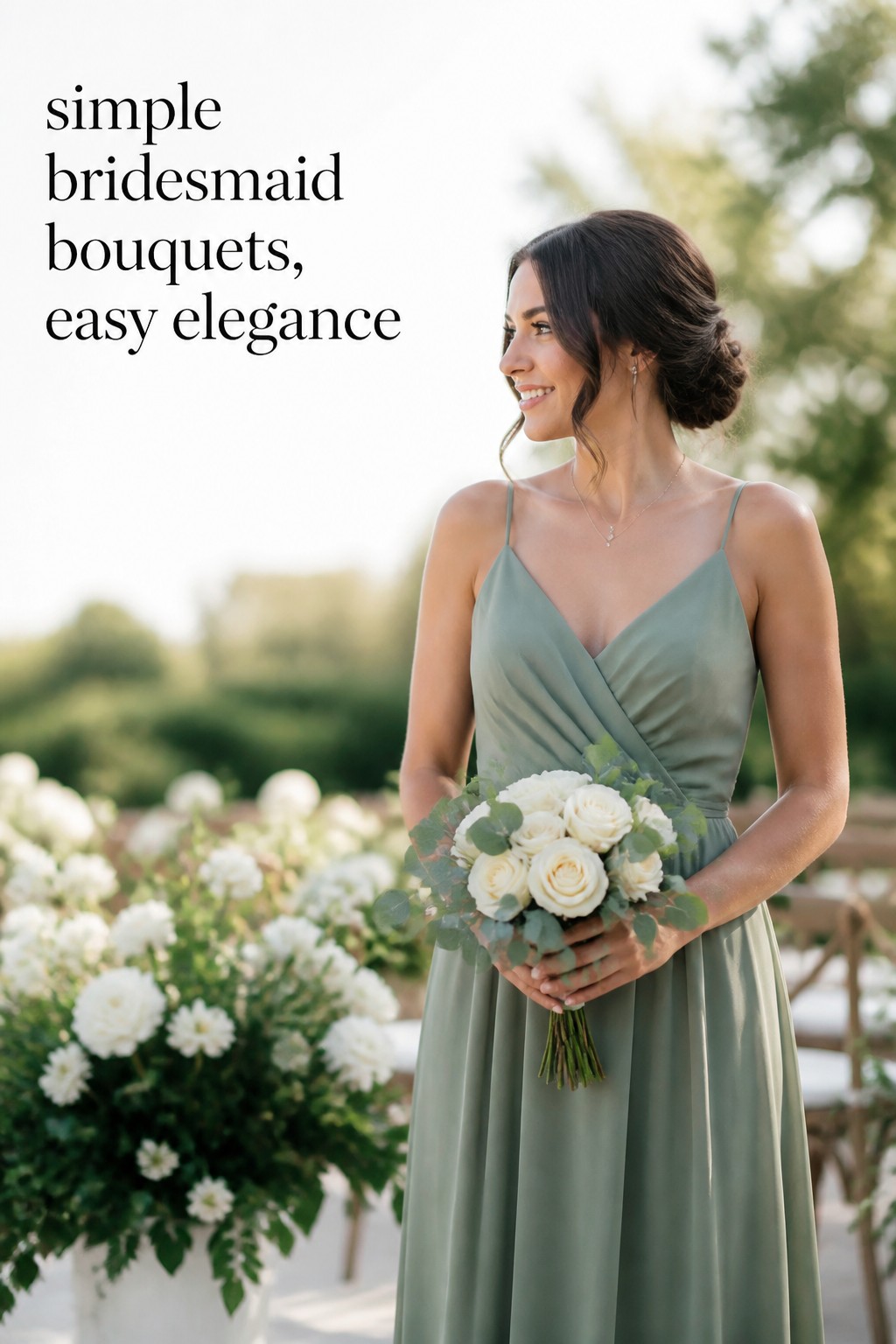
Why simple bridesmaid bouquets are harder than they look
A simple bouquet is not simply a smaller version of a complicated one. It needs its own proportions and visual logic. When there are only a few ingredients, every choice becomes more visible. The flower shape, stem length, wrapping, and amount of greenery all affect the final result.
Simplicity should feel edited, not empty
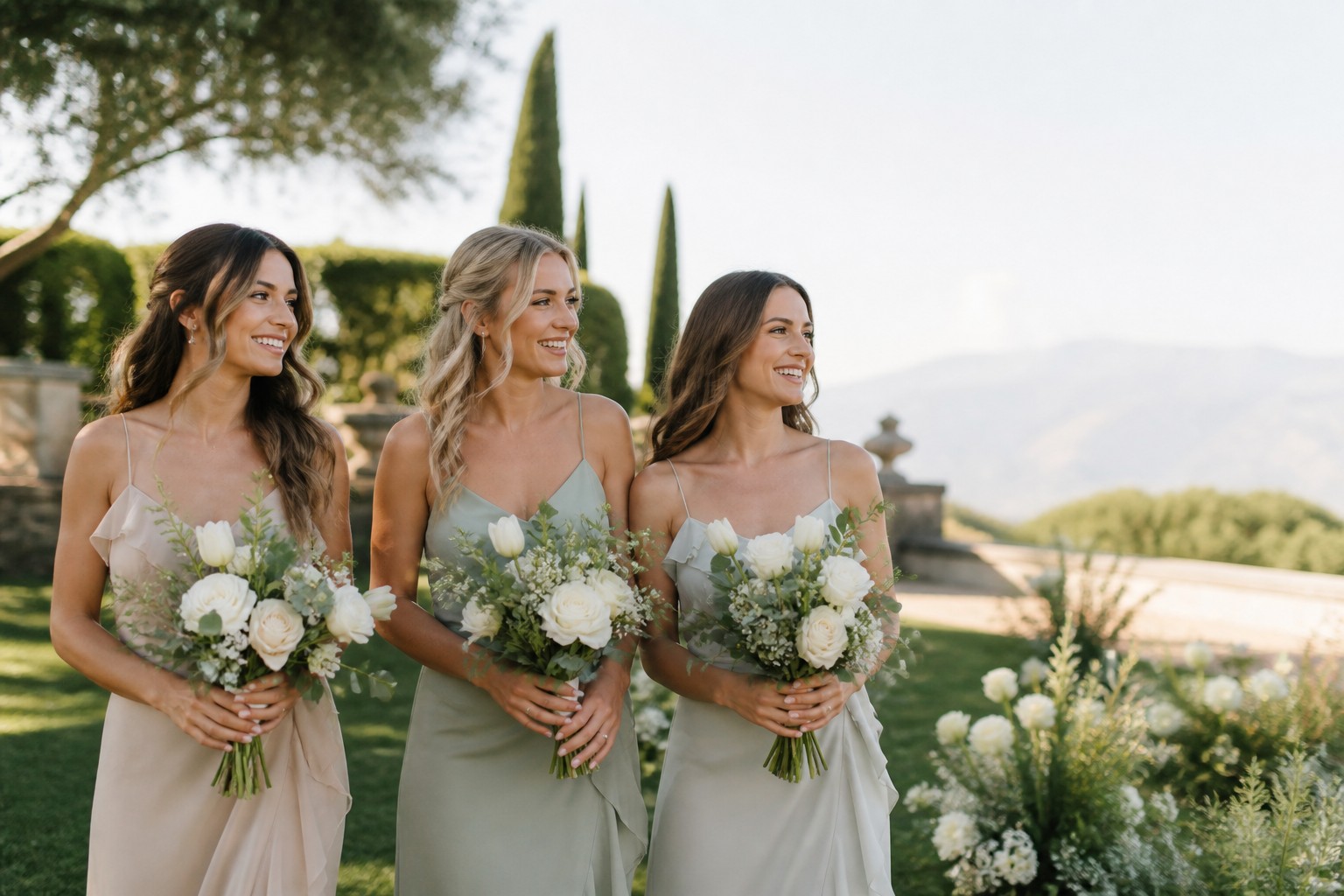
The easiest way to keep a simple bouquet polished is to limit the number of decisions, not the amount of beauty. Start with one main idea: a single color, one flower, one texture, or one seasonal mood. Then add only what supports that idea. White tulips with a narrow ribbon feel deliberate because the shape and color are consistent. A loose bundle of baby’s breath feels intentional when the stems are gathered at an even height and wrapped neatly.
Turn wedding inspiration into a plan you can actually follow.
Zarellea brings your guest list, budget, vendors, and day-of details into one shared space — so no beautiful idea gets lost in the shuffle.
A useful rule is to choose one focal flower, one supporting flower or greenery, and one finishing detail. The finishing detail might be silk ribbon, natural twine, a visible stem wrap, or a small amount of dried texture. If you add a fourth idea, ask whether it improves the design or only fills space.
Proportion matters more than flower count
Bridesmaid bouquets are usually smaller than the bridal bouquet, often around half the size or slightly less, but they should still have enough presence to read clearly from a distance. A tiny bundle may disappear against a full skirt, while an oversized arrangement can compete with the bride and become tiring to hold.
Think about the height and width of the dresses, the height of the attendants, and the shape of the ceremony space. A compact round posy works well with structured dresses and an indoor ceremony. A slightly loose, elongated bouquet balances flowing fabric and an outdoor setting. The goal is not mathematical matching. It is visual balance across the whole wedding party.
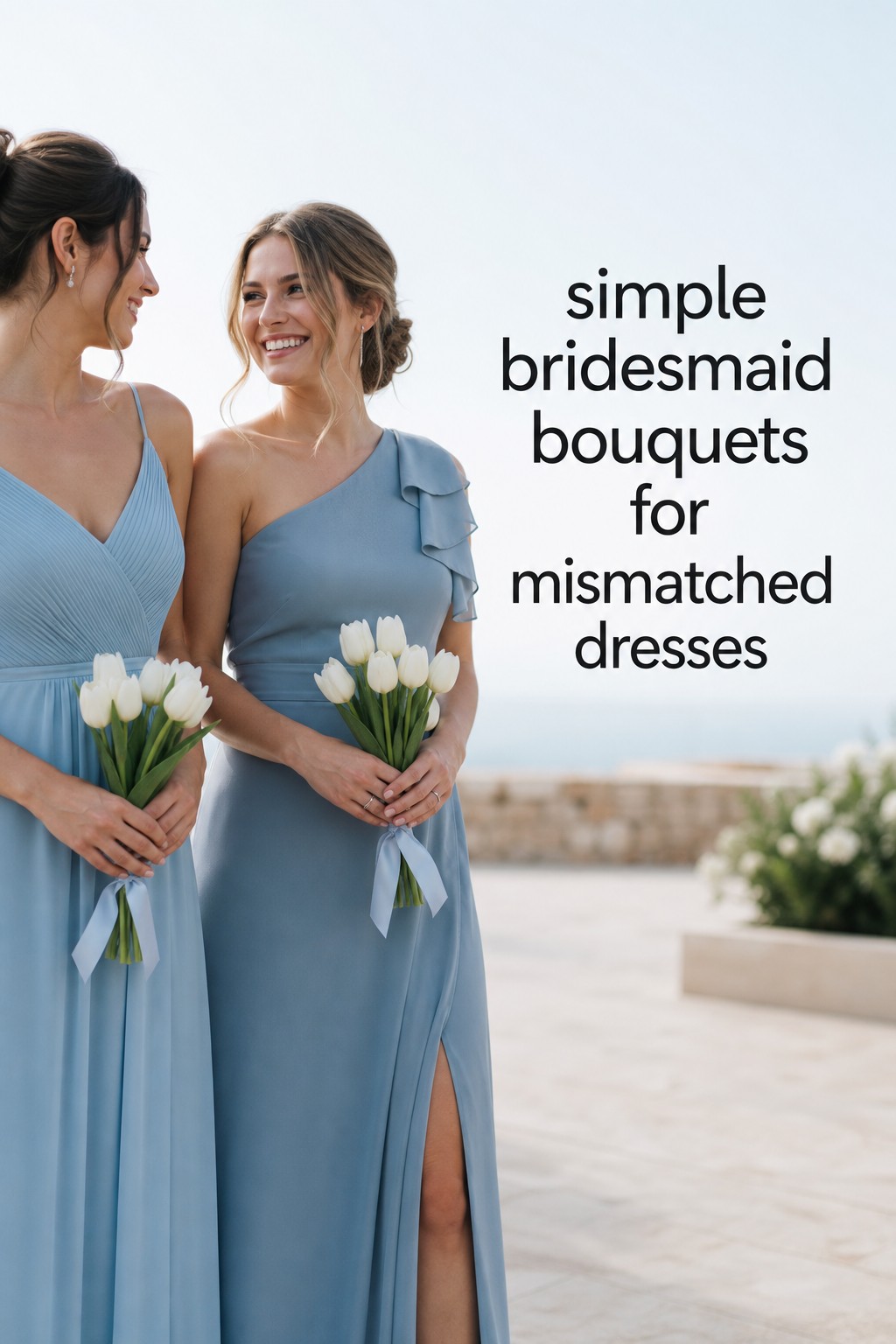
Choose the right simple formula for your wedding
Once you know the look you want, choose a repeatable formula. A repeatable formula makes it easier to order flowers, create several matching bouquets, and explain your preferences to a florist. It also protects the design when a particular flower is unavailable.
One flower in one color
This is the cleanest choice for a modern, classic, or formal wedding. White roses, blush roses, ivory tulips, lavender, dahlias, or baby’s breath can all work on their own. The important thing is to give the single flower enough room to be the point. Use a consistent stem length and a wrap that complements the dresses rather than competing with them.
For a more refined result, vary the bloom stage slightly or let the natural shape of the flower create movement. A tight round rose bouquet looks formal. A loose group of tulips feels contemporary. A generous bundle of baby’s breath feels airy and romantic. The same one-flower idea can therefore suit very different wedding styles.
One flower plus greenery
Adding greenery is a good solution when a single flower feels too plain or when you need more volume without purchasing many additional blooms. Silver dollar eucalyptus gives a soft, rounded look. Seeded eucalyptus adds tiny points of texture. Italian ruscus creates a more architectural silhouette, while fern feels relaxed and garden-inspired.
Keep the greenery controlled. A few stems should frame the focal flower rather than swallowing it. If the bouquet starts to look like a foliage bundle with flowers hidden inside, remove leaves from the center and place the longest stems at the edges. This creates movement while preserving a clear focal point.
A two-flower recipe
Two flowers give you more texture while keeping the design easy to repeat. Try blush roses with carnations, white tulips with baby’s breath, ranunculus with eucalyptus, or daisies with chamomile. One flower should lead in size or color, and the second should act as a supporting note.
When working with two flowers, avoid giving each one an equal visual role unless you want a deliberately mixed look. Instead, use a ratio such as two-thirds focal flower to one-third supporting flower. This keeps the bouquet simple even when the blooms have different shapes.
Greenery-forward or single-stem design
Greenery-forward bouquets are especially useful for couples who want a lower-cost, less floral look. Ruscus, eucalyptus, olive branches, fern, or herbs can be gathered into a small hand-tied bundle. Add a single flower at the center if you want a little softness without changing the character of the arrangement.
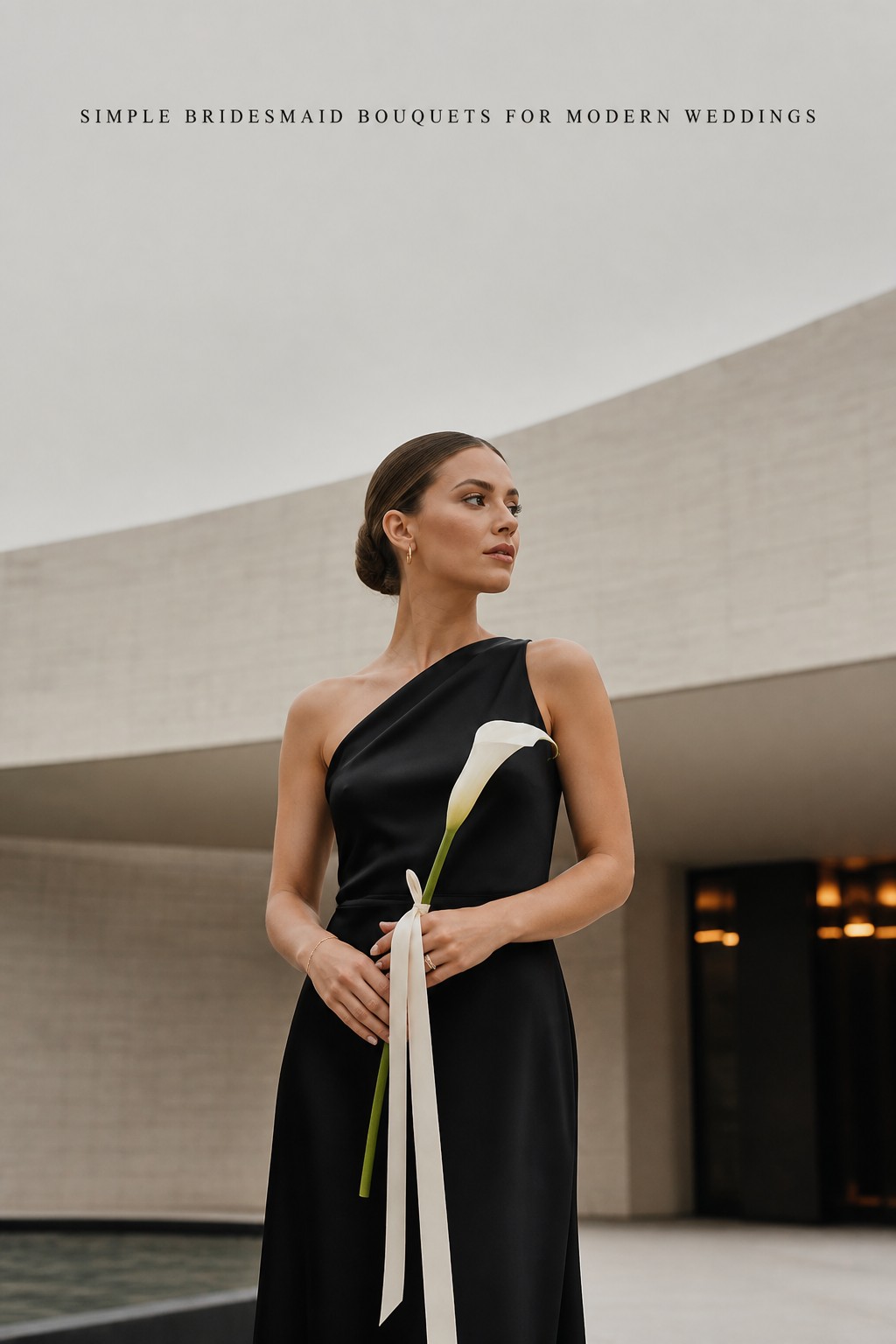
A single-stem design is even more minimal. One calla lily, tulip, rose, protea, or sunflower can look striking when the stem is wrapped beautifully. This works best when the choice is repeated consistently and the stem is sturdy enough to survive the ceremony. It is a thoughtful option for a small wedding party, a courthouse celebration, or attendants who prefer to keep their hands free.
Solutions by situation
The right simple bridesmaid bouquets depend on more than personal taste. Dresses, weather, venue, photography, and the amount of preparation time all change what will work. Use the following situations to narrow the options before you discuss exact flower varieties.
When the bridesmaid dresses are different colors
If your attendants are wearing mismatched dresses, a shared bouquet is one of the easiest ways to create visual unity. Choose one neutral palette such as white, ivory, blush, soft peach, or pale green. Keep the flower recipe identical for everyone unless the dresses vary dramatically in tone.
For jewel tones, try ivory roses with dark greenery or blush flowers with a muted ribbon. For pastel dresses, use white flowers with fresh green stems. If the dresses include both warm and cool colors, choose a bridge shade such as cream, soft pink, or dusty lavender. Avoid forcing every bouquet to match each dress individually. That can make the group look fragmented rather than coordinated.
For an outdoor garden or summer wedding
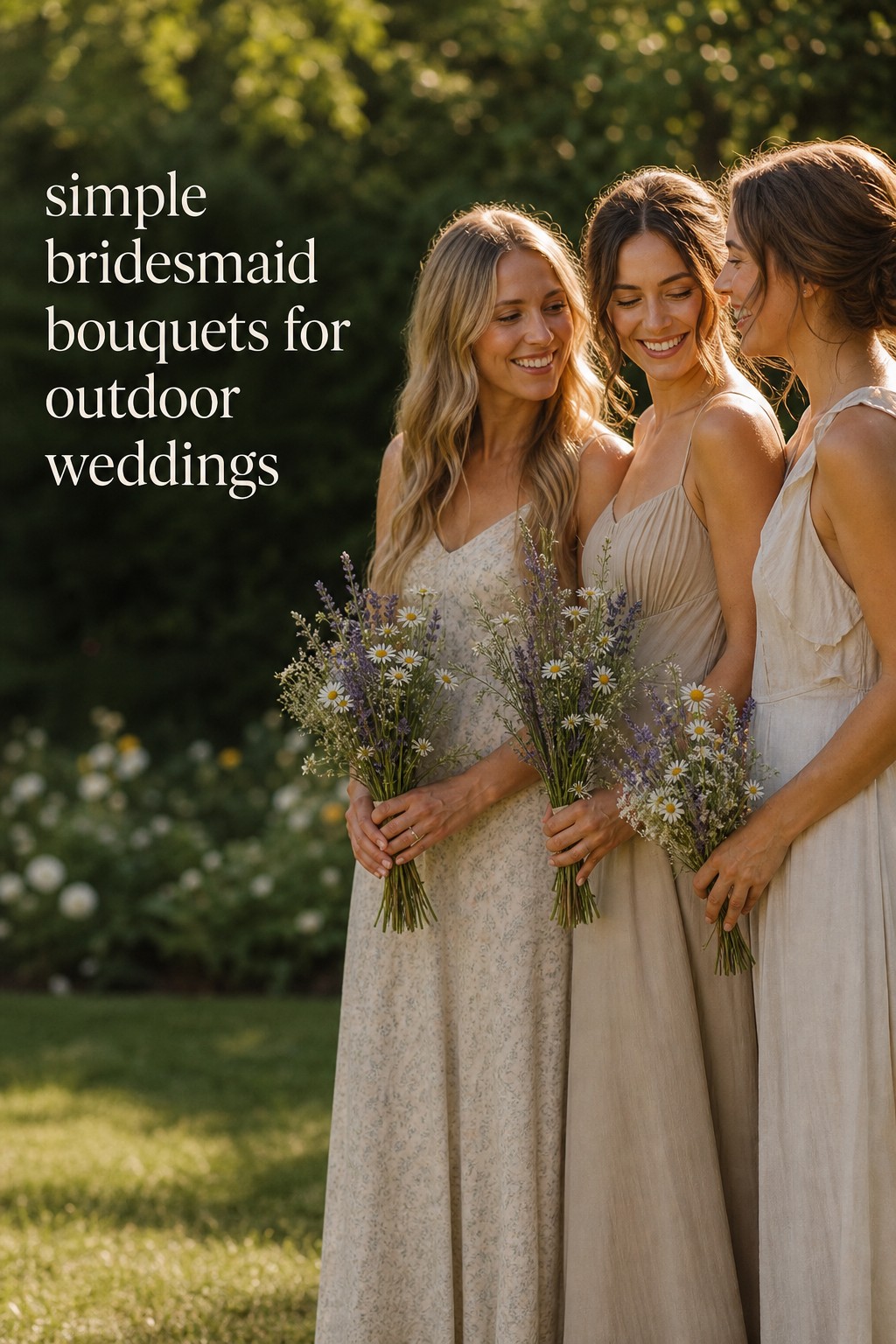
Outdoor weddings benefit from flowers that look natural in changing light. Small wildflower bundles, chamomile, lavender, baby’s breath, daisies, cosmos, and airy greenery can feel at home in a garden, meadow, or backyard setting. Choose a loose shape with a little movement instead of a perfectly compressed ball.
Heat changes the practical side of the decision. Ask your florist which flowers can tolerate the expected temperature, and keep bouquets in clean water or floral hydration wraps until they are needed. Avoid leaving delicate stems in a hot car. If you are making the bouquets yourself, designate one person to monitor water, shade, and transport rather than asking every bridesmaid to manage her own flowers.
For a modern city or black-tie wedding
Modern venues usually reward clean shapes and restrained color. White tulips, calla lilies, orchids, sculptural greenery, or compact roses can look polished against a city skyline, hotel interior, gallery, or black-tie reception. Use a smooth ribbon wrap in ivory, black, taupe, or a shade taken from the stationery.
Keep the silhouette intentional. Long stems can look elegant when the flowers have a strong architectural shape, while round posies suit classic satin or crepe dresses. A little asymmetry can feel editorial, but random unevenness usually reads as unfinished. Ask for clean lines, one dominant color, and a finish that looks good from both the front and the side.
For a small budget or DIY team
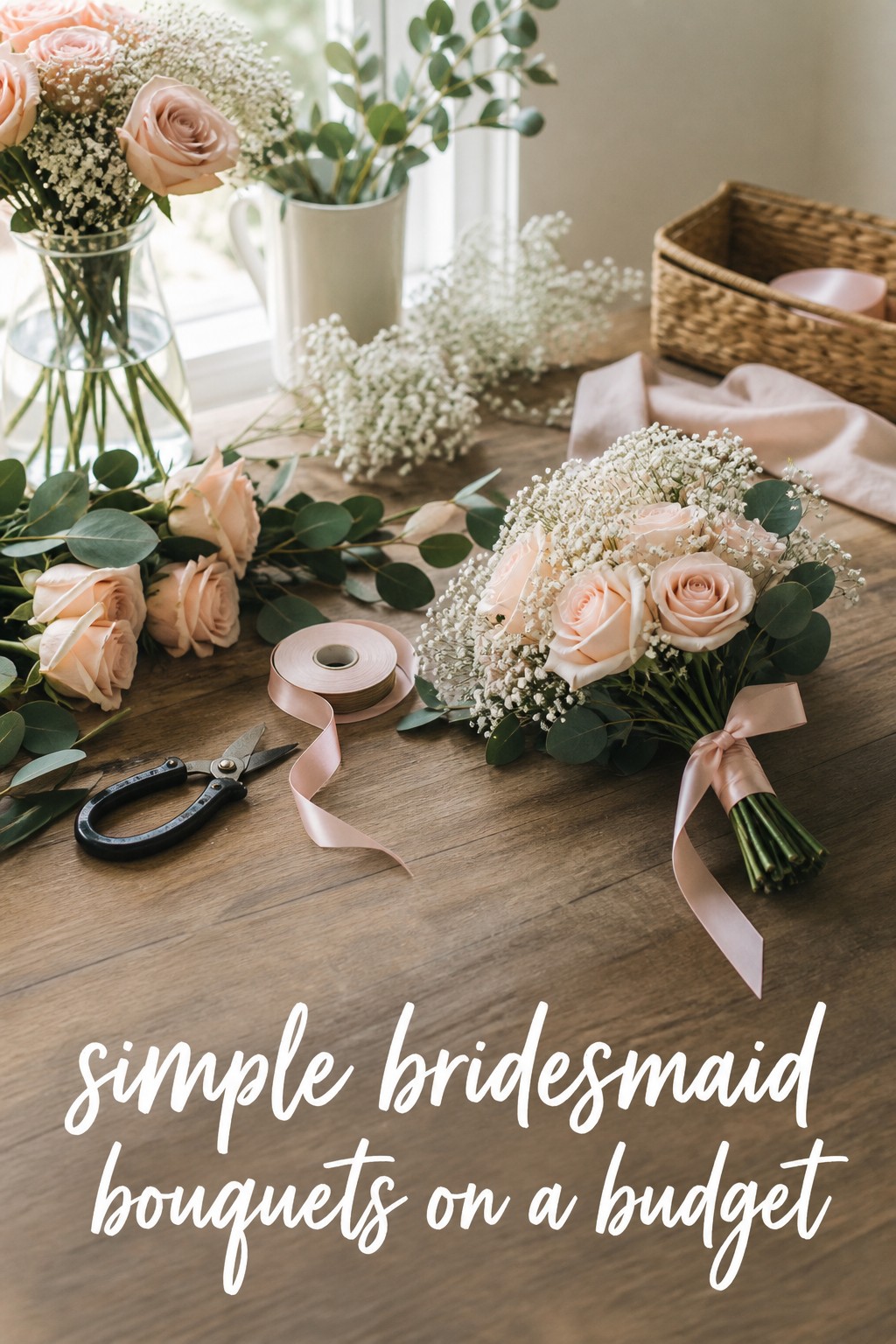
Budget-friendly simple bridesmaid bouquets start with a limited recipe. Choose flowers that are available in bulk and do not require complex wiring or delicate conditioning. Carnations, chrysanthemums, alstroemeria, baby’s breath, eucalyptus, ruscus, daisies, and seasonal roses can all be useful depending on your color palette and local availability.
For a group of five attendants, a simple plan might use one focal flower, one filler, and one greenery type. Buy a few extra stems for breakage and practice one bouquet before purchasing the final amount. Strip leaves below the binding point, cut stems at an angle, build the bouquet in your hand, secure it with floral tape, and finish with ribbon. Keep the stems in water until the last practical moment.
Quick fixes and mistakes to avoid
Most bouquet problems can be solved without changing the entire concept. The first fix is usually scale. If the bouquet looks weak, add a little width or one more focal stem rather than adding five new flower types. If it looks too busy, remove one layer of greenery or simplify the ribbon.
Do not make every bouquet a different experiment
Individuality is lovely, but completely different bouquets can distract from the wedding party. If you want variation, keep two elements consistent, such as the color palette and ribbon, while allowing the flower mix to change slightly. This works well for a garden wedding or a relaxed mismatched look.
Do not forget the back and the handle
Guests and photographers will see bouquets from multiple angles. Check the back so that stems, tape, and leaves look neat. A well-wrapped handle makes even an inexpensive bouquet look finished. Keep the binding comfortable, especially if attendants will hold the flowers during a long ceremony.
Do not let the ribbon compete with the flowers
Ribbon is an easy place to add personality, but a wide patterned ribbon can make a small bouquet feel crowded. Choose a texture that supports the wedding style: satin for formal celebrations, raw silk for an editorial look, velvet for fall or winter, and cotton or twine for a relaxed outdoor wedding. If the flowers are already distinctive, keep the wrap quiet.
Do not ignore flower availability
A photograph is a starting point, not a promise that the exact flower will be available on your date. Ask your florist for substitutes with a similar color, size, and texture. A strong design formula can survive a flower change. A design based on one rare variety may not. Build your plan around the role each flower plays rather than its name alone.
Finally, decide who is responsible for care and delivery. Bouquets should arrive cool, hydrated, and protected from crushing. On the wedding day, place them somewhere shaded and easy to access. A simple bouquet still deserves a simple logistics plan.
FAQ
What flowers are best for simple bridesmaid bouquets?
Roses, tulips, baby’s breath, carnations, daisies, lavender, eucalyptus, ruscus, and seasonal wildflowers are flexible choices. The best option depends on your date, climate, color palette, and whether a florist or DIY team will prepare them.
How big should simple bridesmaid bouquets be?
A practical starting point is about half the size of the bridal bouquet or slightly smaller. Adjust the size for the dresses, the attendants’ proportions, the ceremony setting, and how long the flowers must be carried.
Can bridesmaids carry a single flower instead of a bouquet?
Yes. A single sturdy flower can look modern and elegant, especially for a small wedding, courthouse ceremony, or minimalist design. Repeat the same flower and finish the stem neatly so the choice feels intentional.
Are simple bridesmaid bouquets less expensive?
They can be, because smaller arrangements and limited flower recipes usually require fewer stems and less labor. The final price still depends on the flower variety, season, location, delivery, and florist’s design fee.
How do I coordinate bridesmaid bouquets with the bridal bouquet?
Repeat one or two elements, such as a flower color, greenery type, or ribbon, while keeping the bridesmaid bouquets smaller or simpler. The bouquets should belong to the same visual family without being identical.
Can I make simple bridesmaid bouquets the day before?
Many sturdy flower recipes can be made the day before if the stems are freshly cut and the bouquets are kept hydrated in a cool place. Ask your florist about the specific flowers, and avoid heat, direct sun, and overcrowded storage.
What is the easiest DIY bouquet formula?
Start with one focal flower, one filler or texture flower, and one greenery type. Use consistent stem lengths, bind the stems firmly, wrap the handle neatly, and make one practice bouquet before preparing the full group.
How can simple bouquets look fuller without adding many flowers?
Use shape and spacing instead of a large number of blooms. Place the focal flowers at slightly different heights, add a few airy stems such as baby’s breath or seeded eucalyptus, and let some greenery extend beyond the outline. A soft, open silhouette can look generous while using fewer stems than a tightly packed round bouquet. The wrap also matters: a narrow, clean handle keeps the arrangement visually light, while a bulky wrap can make it feel smaller and heavier.
Should every bridesmaid have the same bouquet?
Not necessarily. Identical bouquets are the easiest choice for a polished ceremony, but coordinated variations can feel more personal. Keep the same size, ribbon, or color family while changing one flower according to each attendant’s preference. This approach works especially well when the dresses are mismatched or the wedding has a relaxed garden mood. Ask the florist to keep the silhouettes comparable so the group still looks unified in photographs.
What should I ask a florist about simple bridesmaid bouquets?
Ask which flowers are reliable for your wedding date, how large the bouquets will be, what substitutions are possible, and how they will be transported and hydrated. Confirm whether ribbon wrapping, delivery, setup, and tax are included in the quote. You can also ask for a simpler version of the bridal bouquet, a price for fewer focal stems, and advice about flowers that will photograph well beside the dresses and in the ceremony lighting.