Spring Pink Wedding Flowers That Feel Fresh and Refined
Pink wedding flowers seem simple at first: choose a romantic shade, build a bouquet, repeat the color through the day. In real wedding planning, that is rarely how it feels. Pink can drift from soft blush to bold hot pink very quickly, and what looks airy in inspiration images can become overly sweet, visually flat, or disconnected from the venue once bouquets, bridesmaid flowers, boutonnieres, and ceremony decor are all involved.
The stress usually comes from trying to make pink feel intentional rather than accidental. Couples want floral choices that look refined in photographs, work with the season, and still feel practical when speaking with a florist about availability, shape, and budget. This is where many decisions get tangled: one person loves peonies, another wants orchids, the venue needs stronger color, and the ceremony backdrop starts competing with the bouquet instead of supporting it.
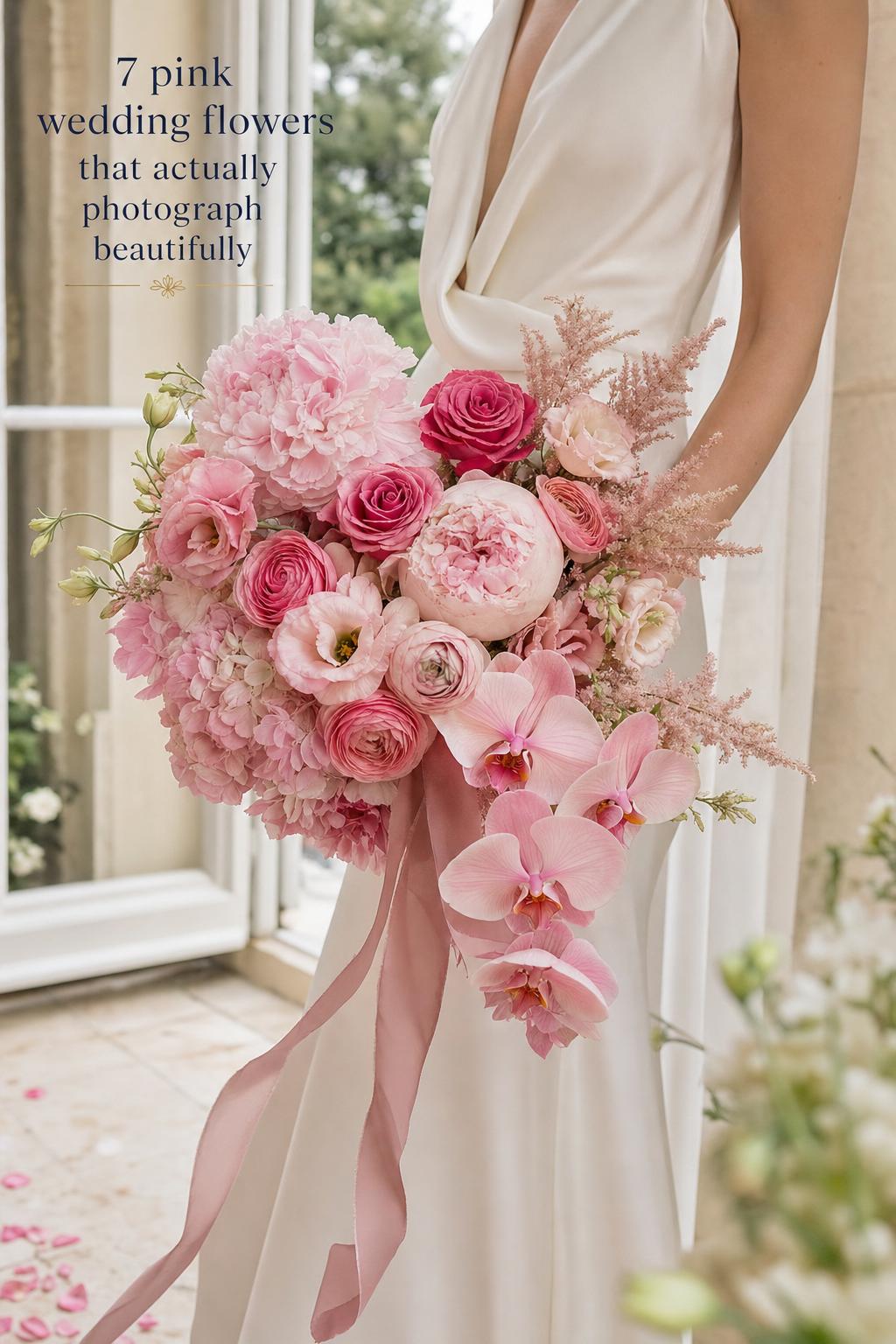
This guide is designed to solve that problem. Instead of treating pink wedding flowers as a vague theme, it breaks them into workable decisions: which blooms create which mood, how bouquet styles behave visually, where seasonality matters, and how to build a pink floral story that feels cohesive from the bride’s bouquet to ceremony decor. The goal is not more ideas for the sake of ideas. It is to help you choose pink with clarity and use it beautifully.
Why this wedding challenge happens
Pink is one of the most flexible wedding colors, which is also what makes it difficult. A blush rose bouquet can feel classic and understated, while a hot pink arrangement with proteas or tropical elements can feel modern and bold. Both are pink, but they tell very different visual stories. Without a clear plan, couples often mix flower types, tones, and shapes that do not fully belong together.
Turn wedding inspiration into a plan you can actually follow.
Zarellea brings your guest list, budget, vendors, and day-of details into one shared space — so no beautiful idea gets lost in the shuffle.
Seasonality adds another layer. Some flowers are closely associated with specific times of year, and availability affects not only price but also the overall look of the arrangements. A bouquet built around pink peonies creates one expectation. A florist may need to suggest roses, ranunculus, or lisianthus if the timing shifts, and that substitute can change the silhouette, texture, and mood if it is not discussed carefully.
Wedding logistics also complicate floral choices more than most couples expect. The bouquet has to look beautiful in close-up photography, read well from a distance during the ceremony, coordinate with bridesmaid flowers, and not overwhelm a boutonniere or backdrop. The same pink that looks delicate in a hand-tied bouquet may disappear against bright outdoor light or become too dominant in a smaller indoor venue. The challenge is not simply choosing pink wedding flowers. It is designing pink so it works across the full event.
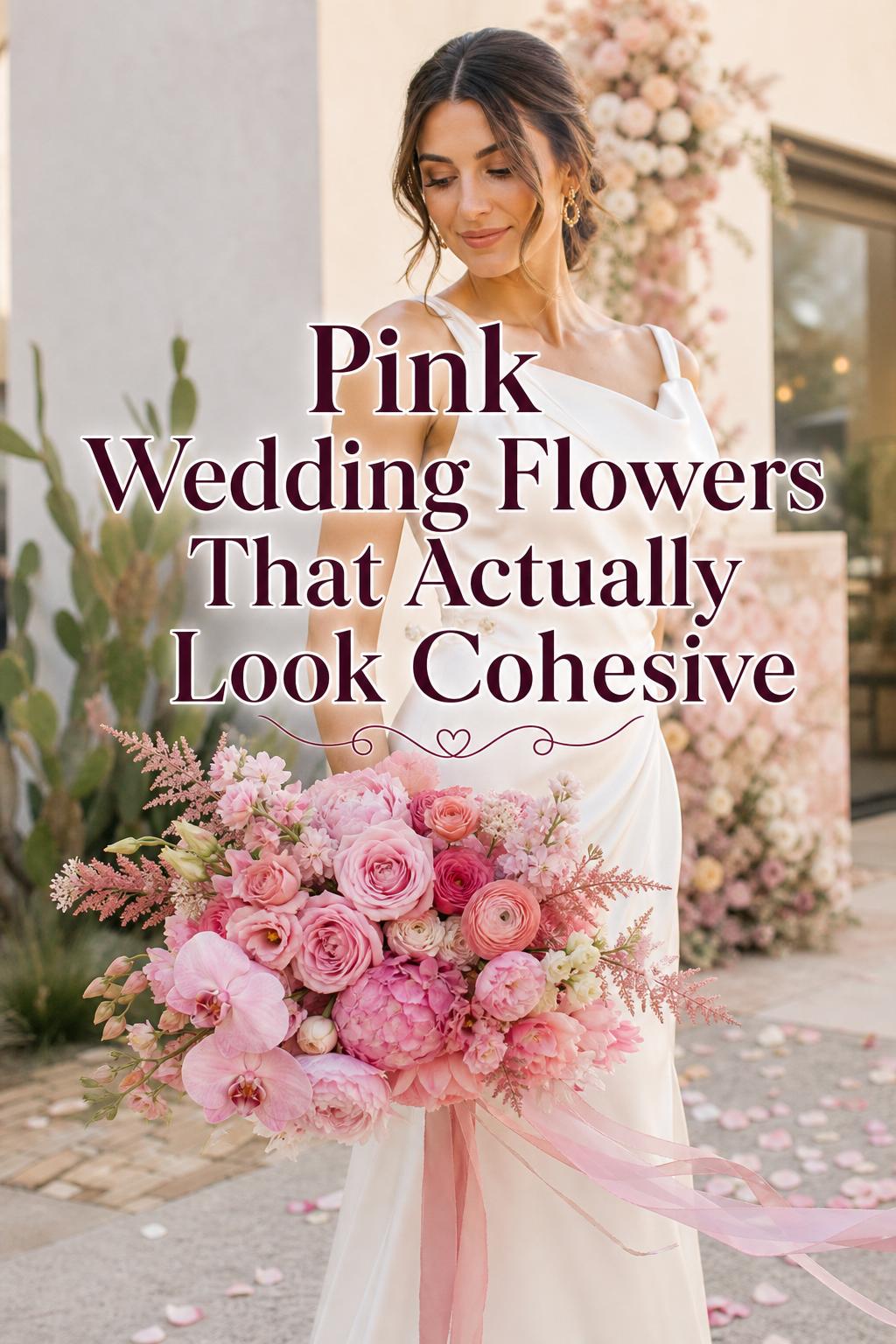
The styling principles that make pink look elevated
Start with the mood before the flower list
Before deciding between peonies, roses, hydrangeas, or orchids, define the feeling you want. Romantic blush flowers create a very different impression from a dramatic ombré bouquet or a tropical monstera leaf arrangement. Couples often do better when they begin with a clear mood such as classic, whimsical, modern, garden-inspired, or bold rather than collecting favorite blooms without a larger direction.
Choose a lead bloom and let the supporting flowers support
The most cohesive pink florals usually have a clear focal flower or floral family. Pink roses can anchor a timeless bouquet. Peonies can create softness and fullness. Ranunculus add refined texture. Hydrangeas shape larger ceremony pieces differently than lisianthus or astilbe. When everything tries to be the star, bouquets can feel crowded. A lead bloom gives structure, while supporting flowers and greenery add movement and depth.
Use shape as carefully as color
Couples understandably focus on shades of pink, but bouquet shape influences the final effect just as much. A compact rose bouquet feels more formal. A looser design with orchids, astilbe, and blush roses can feel more romantic or whimsical. An ombré concept depends on smooth color transition, but it also depends on arrangement control so the gradient reads clearly rather than looking random. Shape is the part many couples overlook until they see mockups or real wedding photos.
Create one palette, not several competing pinks
Pink works best when it is edited. Blush, pale pink, mauve, burgundy accents, hot pink, and red-pink combinations can all be beautiful, but they need a defined relationship. A palette built around blush and greenery feels different from one that includes purple, burgundy ribbons, or tropical anthurium. The most elegant results come from selecting a narrow pink range and repeating it intentionally across bouquets, boutonnieres, and ceremony decor.
How to choose the right pink flower varieties for your wedding
Not every pink flower solves the same design problem. Some blooms are best for softness, some for structure, some for statement color, and some for airy texture. Knowing what each one contributes helps couples talk with florists more confidently and avoid arrangements that feel mismatched.
- Peonies: ideal when you want lush, romantic volume and a classic soft pink feeling.
- Roses: the most versatile option for timeless bouquets, ceremony decor, and boutonnieres.
- Ranunculus: useful for elegant layered texture and refined, garden-inspired bouquets.
- Hydrangeas: best when larger shapes or fuller ceremony arrangements are needed.
- Lisianthus: helpful for softness and movement, especially in blush designs.
- Proteas: effective when a bouquet needs a more fashion-forward or bold focal point.
- Orchids: strong for modern, tropical, or mixed-media arrangements, including dried combinations.
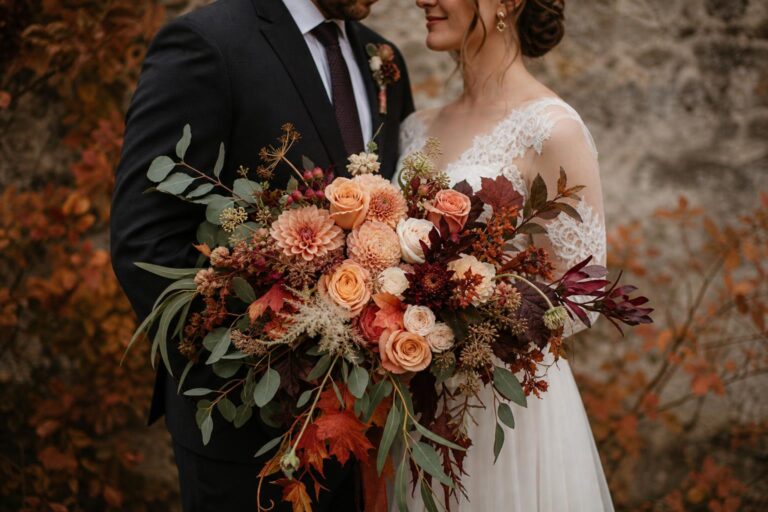
- Dahlias: suitable for richer, more dimensional seasonal color stories, including mauve fall palettes.
- Astilbe: adds feathery texture and a looser, whimsical finish.
There is also a practical reason this matters. If your florist understands whether you are chasing fullness, movement, drama, or softness, they can suggest substitutions more accurately when a preferred flower is less available. That preserves the design logic even if the exact bloom changes.
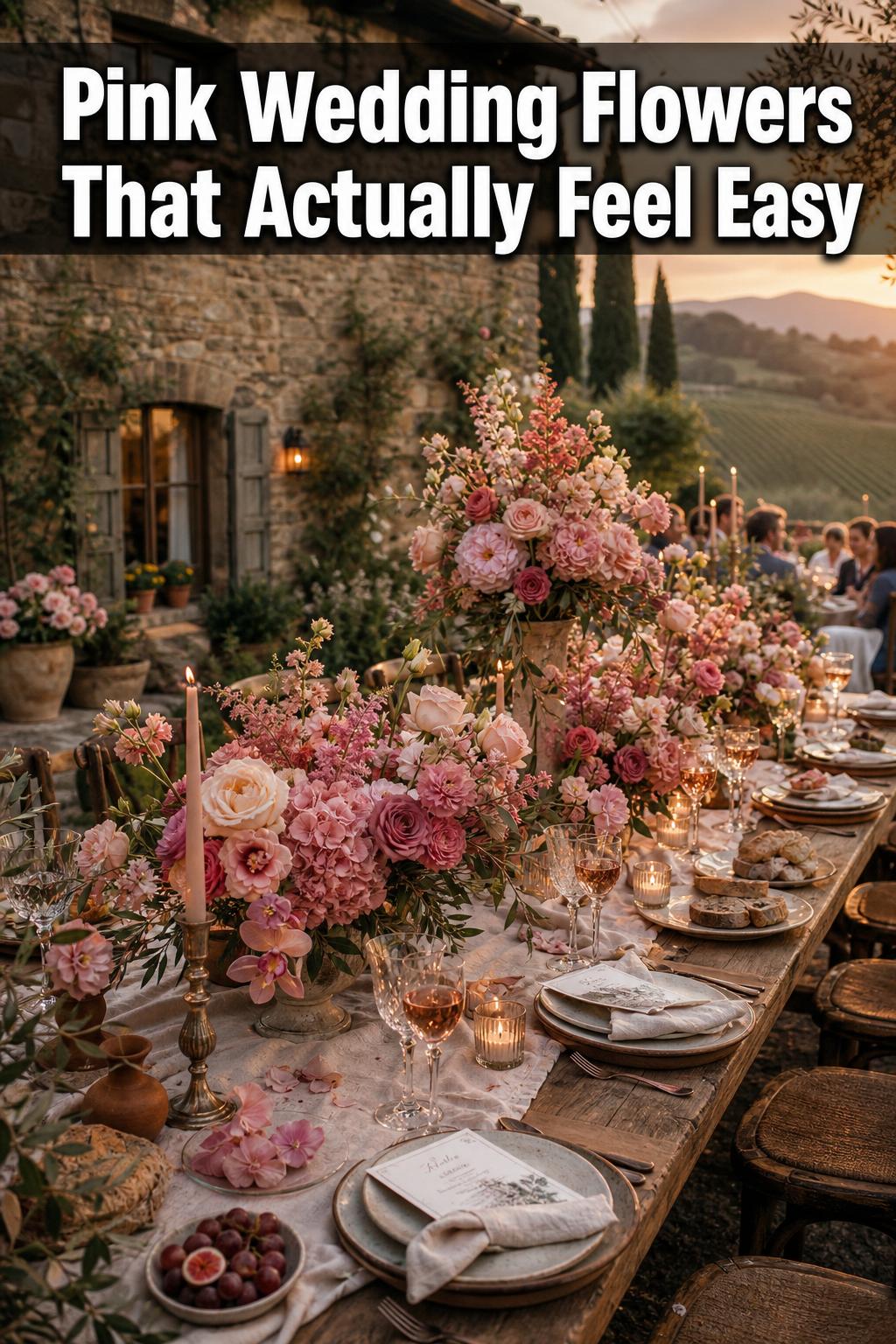
Wedding solution: the classic blush bouquet that does not fade into the background
Many couples are drawn to blush because it feels timeless, romantic, and easy to live with visually. The frustration comes when a blush bouquet looks beautiful up close but reads too faintly during the ceremony or in bright daylight. It can also start to feel indistinct if every floral element uses the same pale tone without contrast or shape.
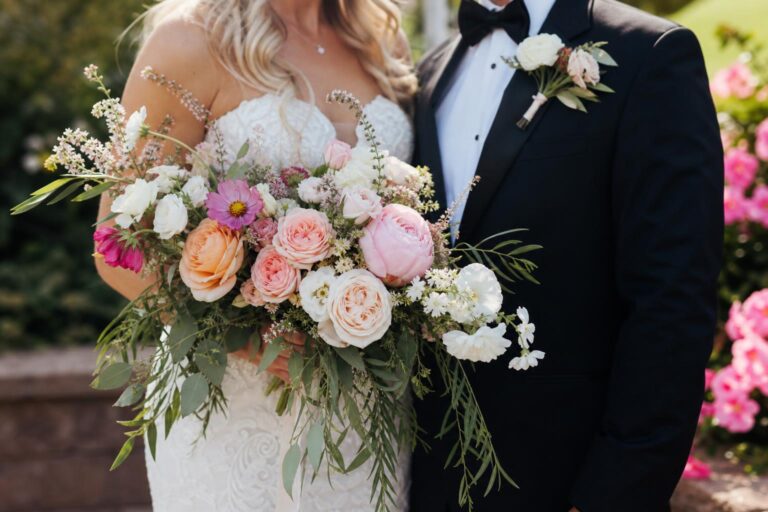
The strongest solution is to build the bouquet around flowers that naturally hold soft color while creating enough structure to be seen. Pink roses, peonies, ranunculus, and lisianthus are especially helpful here. Add greenery thoughtfully rather than heavily, so the bouquet keeps definition. If you love an airy look, texture from astilbe or looser stems can soften the edges without making the arrangement disappear. This same blush palette can then carry through to bridesmaid bouquets and hydrangea-and-rose ceremony decor in a way that feels coordinated rather than repetitive.
The result is a bouquet that still feels gentle but looks intentional in real life and in photos. It supports a calm, romantic atmosphere without becoming overly sweet, and it gives the whole wedding a more polished visual rhythm. Couples often feel less second-guessing once blush has enough definition to hold its own in the space.
Wedding solution: using hot pink without making the florals feel chaotic
Hot pink wedding flowers can be thrilling, but they are easy to mishandle. The most common problem is intensity without control. A vivid bouquet can dominate the couple, clash with bridesmaid styling, or feel disconnected from a venue that calls for a more balanced palette. Strong color needs stronger editing.
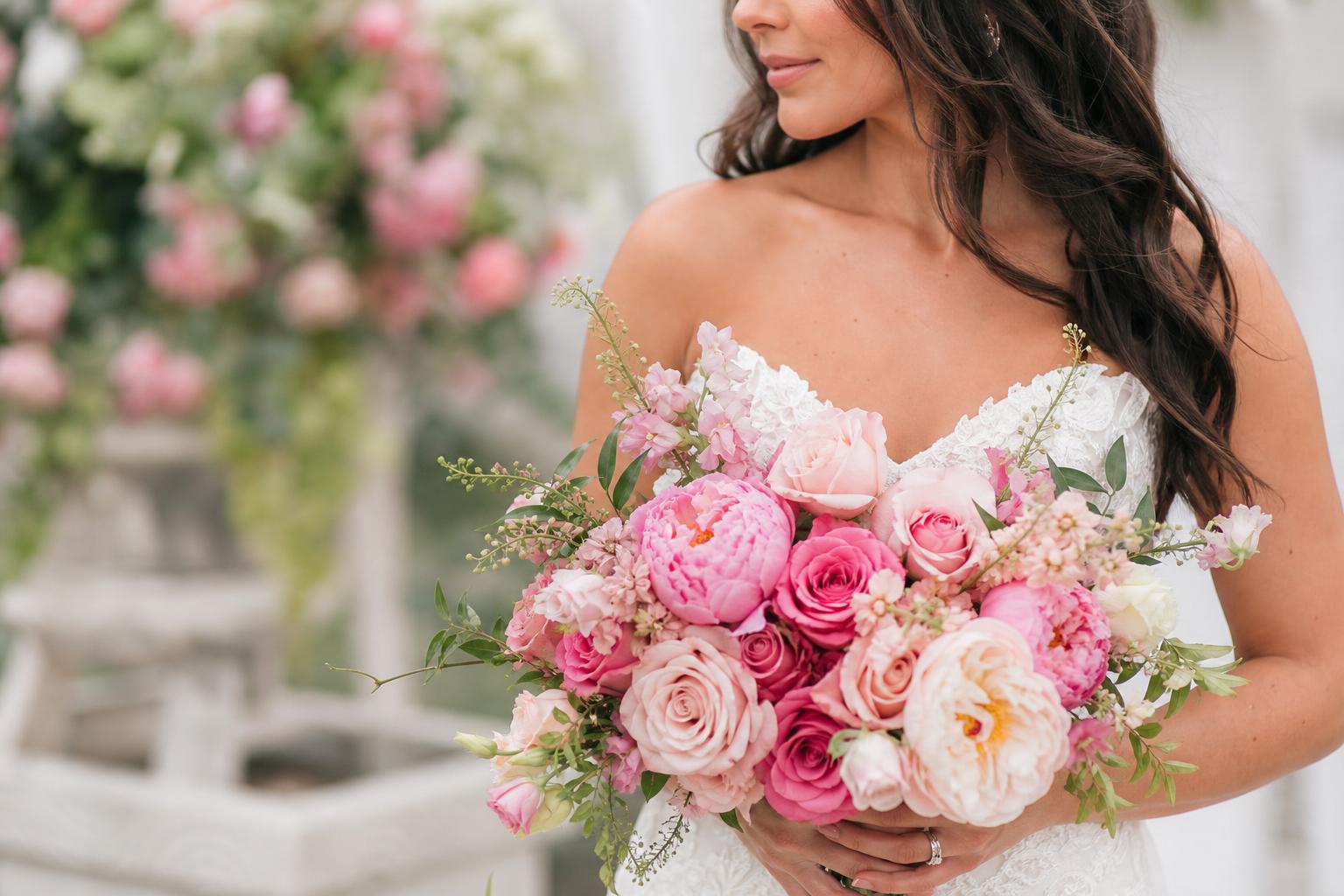
To make hot pink work, concentrate the intensity in one or two major elements. A hot pink wedding bouquet can be the focal point, with softer bridesmaid bouquets or more restrained boutonnieres to support it. Floral designers often create impact more elegantly when they keep the bouquet shape clean and avoid too many unrelated accent colors. If you want a bolder composition, pair hot pink with a clear supporting direction such as green foliage or a red-and-pink story rather than layering in every bright flower you love.
When handled this way, hot pink feels celebratory, modern, and self-assured instead of overwhelming. Guests notice the confidence of the color, and the wedding still feels cohesive. This kind of palette often works especially well when the couple wants energy and personality but does not want to lose refinement.
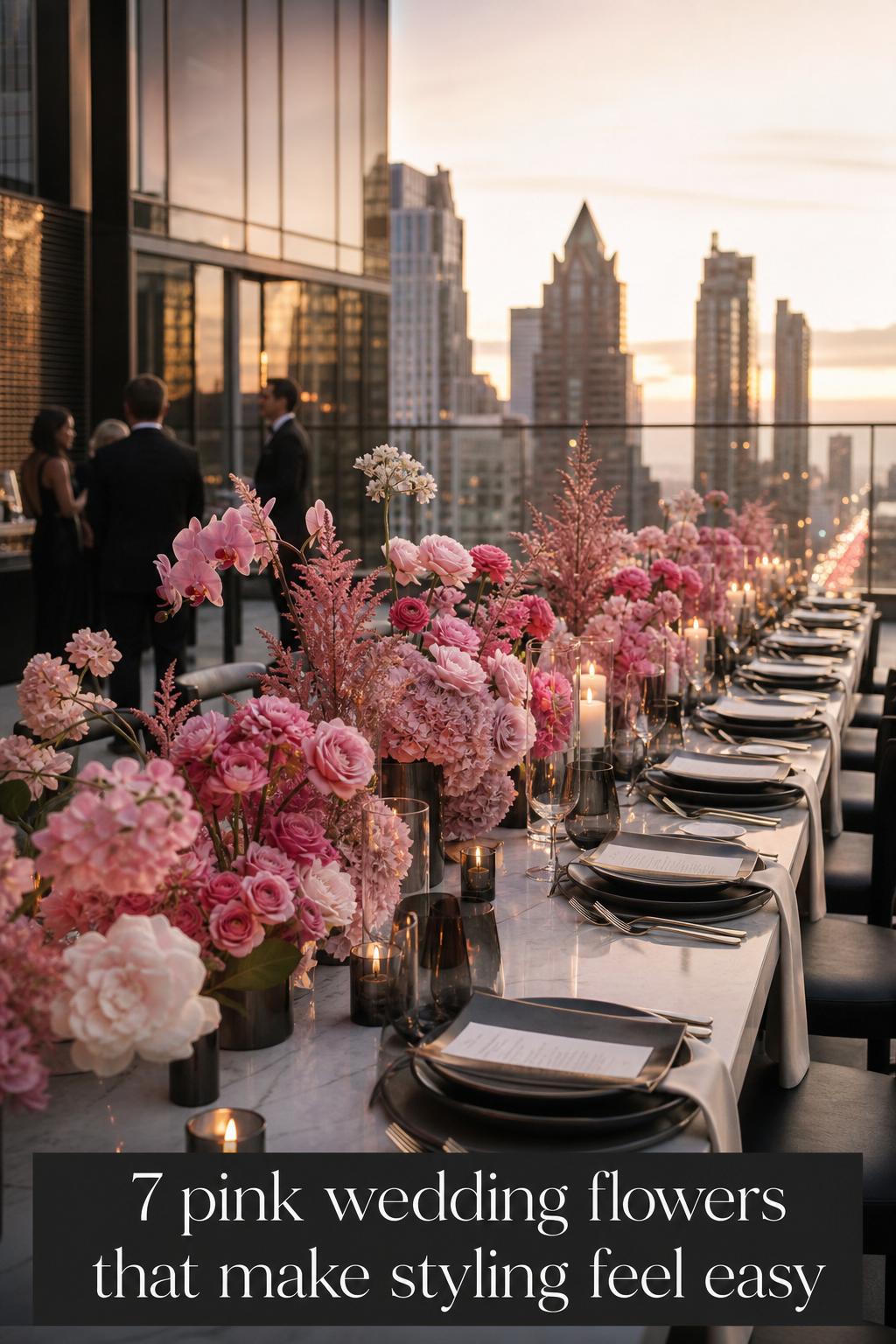
Wedding solution: making an ombré pink bouquet look intentional
An ombré bouquet is one of the easiest floral concepts to admire and one of the harder ones to execute well. The problem is that a color gradient can quickly look accidental if the flower selection is inconsistent or the transition between shades is too abrupt. Instead of a smooth design, the bouquet can appear patchy.
The practical fix is to treat ombré as both a color and placement decision. Build from pale pink into deeper tones gradually, using flowers that blend visually rather than fight for attention. Roses, ranunculus, peonies, and lisianthus can all support this approach because they give enough surface area for the color story to read clearly. Keep the bouquet style relatively disciplined, and make sure the bridesmaid flowers and ceremony pieces reference the same tonal family, even if they are simpler. That keeps the gradient from feeling isolated.
When the transition is controlled, an ombré bouquet feels artistic and romantic rather than trendy for its own sake. It gives photographs movement, helps the bouquet stand out against the dress, and often becomes the most memorable floral feature of the wedding without demanding excess elsewhere.
Wedding solution: combining orchids, dried elements, and tropical details without losing romance
Modern couples often want florals that feel fresh and individual, but mixed-media bouquets can become visually confusing. A dried wedding bouquet with orchids, tropical foliage, or anthurium has a strong editorial personality. The issue comes when that personality is not repeated anywhere else, making the bouquet feel disconnected from the ceremony and reception.
The best solution is to decide what role the unconventional element plays. If orchids are the modern accent, let blush roses or peonies carry the romantic foundation. If dried pieces are included, use them as texture rather than allowing them to dominate every arrangement. Tropical touches such as monstera leaf details should echo the larger wedding mood, not arrive as a surprise. Couples can ask their florist to show how the bouquet silhouette will relate to ceremony decor, especially if there is a dramatic crescent moon backdrop or other statement installation.
This balance makes the florals feel curated rather than experimental. The wedding still feels romantic, but with sharper personality and a more contemporary point of view. That is often exactly the right answer for couples who want pink wedding flowers that do not look predictable.
What photographs best in pink floral design
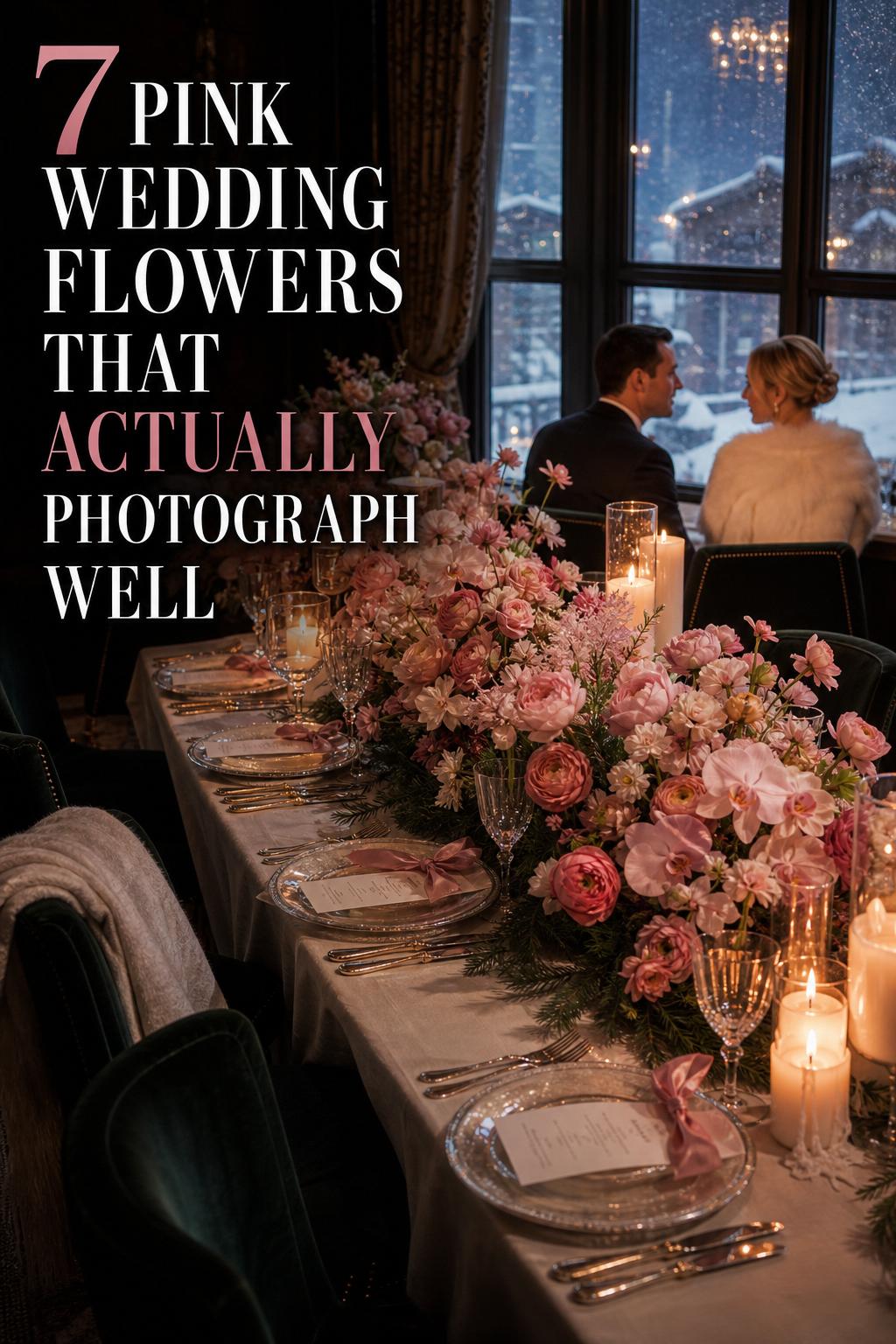
Photography changes how pink is perceived. Very pale flowers may look soft and luminous in one setting and nearly blend away in another. Deep pink tones can read beautifully from a distance but appear heavy if every arrangement uses the same saturation. This is why credited imagery from wedding publications and photographers such as Nicole Gatto Photography and Deven Ashley Photography often feels so compelling: the flowers are not only pretty, they are built with scale, contrast, and shape in mind.
For most couples, the easiest way to improve floral photography is to prioritize contrast and dimension. Light pink wedding bouquets with greenery tend to hold their shape well on camera. Orchid, peony, and blush rose combinations offer visible layering. Hydrangea-and-rose ceremony decor gives fullness that reads clearly in wider ceremony shots. Even a boutonniere benefits from this thinking, because small pieces need enough color definition to show up in close-ups.
- Choose at least one element of contrast, whether that is greenery, a deeper pink, or shape variation.
- Match bouquet scale to the dress and venue so flowers neither disappear nor overpower.
- Repeat the floral language in the ceremony setup so portraits feel connected.
- Remember that pale pink often needs texture to remain visible in bright conditions.
Wedding solution: extending the bouquet into bridesmaid flowers and boutonnieres
A beautiful bridal bouquet can unintentionally create problems when the rest of the wedding party florals are treated as an afterthought. Bridesmaid bouquets may look unrelated, or boutonnieres may feel too busy when scaled down from a larger design. This weakens visual cohesion and can make the floral budget feel less effective.
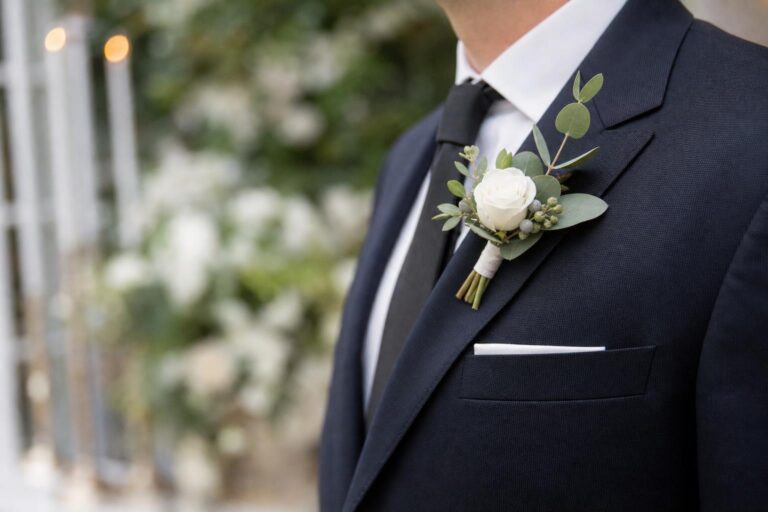
The practical answer is to think in tiers rather than duplicates. The bridal bouquet should lead the floral story. Bridesmaid bouquets can borrow the same flower families or tonal range in a simpler silhouette. Pink wedding boutonnieres should be even more edited, using one or two key flowers or accents that echo the palette without becoming miniature bouquets. This is especially helpful when the main bouquet includes feathers, orchids, or stronger focal blooms that would not translate cleanly at a smaller scale.
Once each floral piece has the right level of detail, the wedding party looks more coordinated and less costume-like. The flowers feel chosen for each role, which is exactly what makes the overall look appear more luxurious and calm.
Seasonality and the calmest way to handle substitutions
One of the most practical floral conversations you can have is about seasonality before you become attached to a very specific arrangement. Couples often fall in love with one image, but weddings happen in real calendars, not in inspiration galleries. Seasonal timing influences which pink flower varieties are easiest to source and how naturally a palette comes together.
That does not mean giving up on your favorite look. It means understanding the design reason behind it. If the dream bouquet depends on lush fullness, your florist may guide you toward flowers that create a similar effect when peonies are less ideal. If the goal is softness with movement, lisianthus, ranunculus, or astilbe may preserve the feeling. If your palette leans into mauve fall tones or dried textures, the seasonal story itself may become the strength of the design.
This mindset reduces disappointment because the conversation shifts from replacing a flower to protecting an aesthetic. It also makes florist communication smoother, especially when discussing regional availability in U.S. markets and planning around event timing.
Tips for florist conversations
- Name the flowers you love, but also describe the mood you want them to create.
- Ask which blooms are carrying color and which are carrying shape.
- Discuss ceremony decor, bridesmaid bouquets, and boutonnieres at the same time so the palette stays coherent.
- If a substitute is suggested, ask what visual quality it is replacing: fullness, texture, softness, or drama.
Venue compatibility notes: where pink works differently
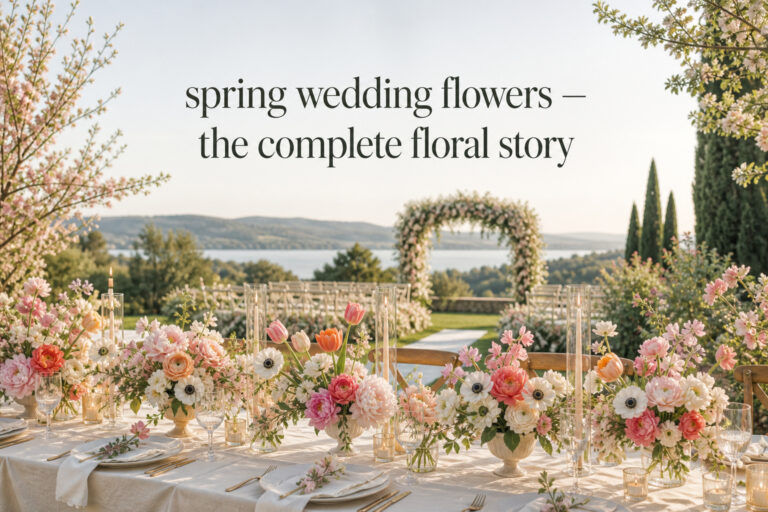
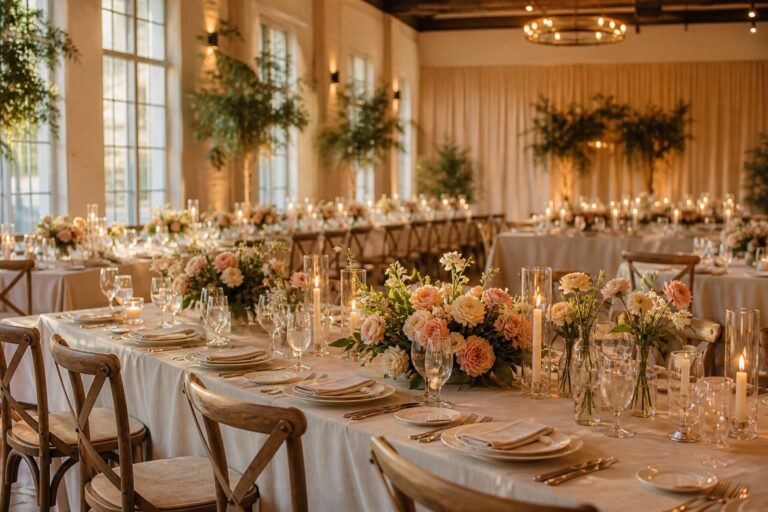
Pink does not behave the same way in every setting. In a garden wedding, blush and pale pink can feel seamless because the environment already supports softness and natural movement. In a more modern venue, stronger floral structure or a cleaner bouquet shape often helps the flowers feel deliberate instead of overly delicate. Rustic spaces may benefit from texture, dried elements, or mauve depth, while a bold tropical palette can suit a location where monstera leaf details and orchids feel natural rather than forced.
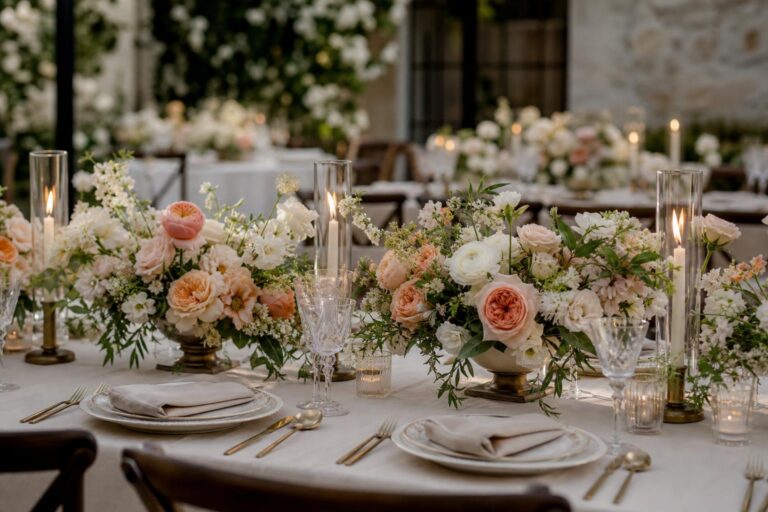
This is where couples often make a subtle but important mistake: choosing flowers as isolated objects rather than as part of venue styling. A crescent moon ceremony backdrop, for example, already introduces a sculptural statement. The bouquet should relate to that language, not compete with it. Similarly, hydrangea-and-rose ceremony decor can support a romantic aisle beautifully, but it should be scaled to the space so it frames the couple rather than overtaking the moment.
The most successful pink wedding flowers always look as though they belong in the room, on the day, and with the couple. That sense of belonging matters more than following a single trend.
Common mistakes that make pink florals harder to get right
Most floral missteps happen because couples are trying to solve too many design desires at once. Pink feels friendly and flexible, so it becomes easy to keep adding more ideas without noticing that the floral story is losing clarity.
- Mixing blush, hot pink, purple, burgundy, and tropical accents without a clear hierarchy.
- Falling in love with one bouquet image without considering seasonality or substitutions.
- Treating ceremony decor separately from bouquet design, which creates a disconnected look.
- Using overly detailed flowers in boutonnieres where simpler shapes would look cleaner.
- Choosing every favorite bloom instead of identifying a lead flower and supporting flowers.
- Ignoring venue context, especially when delicate pinks need more contrast to read clearly.
If any of these sound familiar, it does not mean your vision is wrong. It simply means your flowers need editing. Cohesion nearly always looks more expensive and more personal than excess.
What couples usually overlook when planning pink wedding flowers
They focus on bouquet beauty but not bouquet language. A bouquet does not sit alone. It teaches the eye how to read the rest of the wedding. If the bridal bouquet is loose and whimsical, sharply formal centerpieces or unrelated ceremony florals can feel out of step. If the bouquet is bold and modern, tiny traditional boutonnieres may feel disconnected. The floral story should move from person to space with the same visual accent.
Another overlooked detail is how florists and media references help translate your vision. Credits such as Idlewild Floral, EVL Events, and floral designers featured in wedding coverage matter because they show that professionals often build pink around combinations, not single blooms. Couples can borrow that mindset: think in layers of color, texture, and purpose rather than searching for one perfect flower that does everything.
How to keep pink wedding flowers timeless
Timeless does not mean plain. It means your choices still feel coherent when the wedding day moves from ceremony to portraits to reception. The safest path is often a controlled palette, a clear floral lead, and one memorable detail. That detail might be a romantic blush peony-and-rose bouquet, a modern orchid accent, a mauve fall note, or a soft ombré transition.
What makes pink timeless is restraint with personality. You do not need every shade or every trend. You need enough consistency that the flowers feel like part of one emotional atmosphere. That is what guests notice, even if they cannot name the individual blooms.
A simple planning framework for pink floral decisions
If you feel overwhelmed, reduce the floral plan to a few calm decisions. This can help whether you are working with a wedding media inspiration source such as The Knot, reviewing florist galleries, or preparing for a consultation.
- Choose your pink direction: blush, pale pink, hot pink, mauve, or ombré.
- Select your lead flowers: roses, peonies, ranunculus, hydrangeas, orchids, or another clear focal choice.
- Define the bouquet style: classic, whimsical, modern, tropical, dried, or mixed-media.
- Carry that style into bridesmaid bouquets, boutonnieres, and ceremony decor with simpler variations.
- Confirm how seasonality may affect availability and discuss substitutions by look, not just by flower name.
- Review how the flowers will appear in your venue and in photography, especially if your pink palette is very soft.
This framework keeps the process grounded. It turns pink from a broad aesthetic idea into a design system that is easier to execute and easier to trust.
FAQ
What are the best pink wedding flowers for a romantic look?
For a romantic look, couples often gravitate toward pink peonies, pink roses, ranunculus, lisianthus, and hydrangeas because these flowers create softness, fullness, and gentle texture. The most successful romantic bouquets usually combine a lead bloom such as roses or peonies with supporting flowers that add movement rather than competing for attention.
How do I keep blush pink wedding flowers from looking too faint?
Blush flowers usually need definition through shape, texture, or greenery so they do not fade into bright light or large spaces. A light pink wedding bouquet with greenery, or a blush design layered with roses, peonies, ranunculus, or astilbe, tends to photograph better and feel more intentional than a flat arrangement in one pale tone.
Can hot pink wedding flowers still feel elegant?
Yes, but they need editing. Hot pink works best when it is used as a focal statement rather than repeated at full intensity in every arrangement. A hot pink bridal bouquet paired with softer bridesmaid flowers or restrained boutonnieres often feels far more elegant than a wedding where every floral element competes at the same visual volume.
What flowers work well in a pink ombré wedding bouquet?
Roses, peonies, ranunculus, and lisianthus are especially useful for an ombré bouquet because they allow a smooth transition from pale pink to deeper tones. The key is not only choosing the right flowers but arranging them in a controlled gradient so the bouquet looks intentionally layered rather than randomly mixed.
How should pink wedding flowers be used for bridesmaids and boutonnieres?
The bridal bouquet should lead, while bridesmaid bouquets and boutonnieres should echo the same palette more simply. Bridesmaid flowers can borrow the same pink range or flower families in a smaller silhouette, and boutonnieres usually look cleaner when they reference the bouquet with one or two elements instead of trying to copy it in miniature.
Are orchids and dried elements a good match for pink wedding flowers?
They can be, especially for couples who want a modern or mixed-media floral look. Orchids and dried elements work best when they are balanced with softer romantic flowers such as blush roses or peonies so the bouquet keeps warmth and cohesion instead of feeling visually disconnected from the rest of the wedding.
How do I talk to a florist about pink wedding flowers if I am worried about seasonality?
Start by describing both the flowers you love and the feeling you want, such as lush, airy, bold, or classic. Then ask which flowers are shaping the bouquet and which are carrying the color. This makes it easier for your florist to suggest substitutes that protect the overall look if a specific bloom is less available at your wedding date.
What ceremony decor works best with pink wedding bouquets?
Hydrangea-and-rose ceremony decor, floral installations, and statement backdrops such as a crescent moon design can all work beautifully with pink bouquets when they share the same palette and design language. The most important factor is scale: ceremony flowers should frame the moment and support the bouquet, not compete with it.
How can I make pink wedding flowers feel timeless instead of trendy?
Keep the palette controlled, choose a clear lead flower, and let one memorable detail carry the personality. Timeless pink floral design usually comes from consistency and restraint, whether that means a classic blush rose bouquet, a soft ombré arrangement, or a mauve seasonal accent used with intention.