Corsage and Boutonniere: A Wedding Flower Capsule
A corsage and boutonniere may be small, but together they do an outsized job on a wedding day. They quietly identify the people closest to you, bring a suit or dress into the floral story, and create lovely close-up moments in photographs. The challenge is that they are often ordered late, after the bouquet and centerpieces have taken all the attention. That is how a thoughtful detail becomes a last-minute count of ‘one for Dad, one for Grandma’ with no clear plan for style, comfort, or who actually wants to wear one.
The easiest way to avoid that scramble is to think of personal flowers as a capsule: a small set of coordinated pieces with a few repeatable rules. Rather than making everyone wear an identical flower, decide who is being honored, what they are wearing, how active they will be, and which floral details should connect them to the wedding. This guide gives you a practical system for choosing, ordering, and handing out a corsage and boutonniere collection that feels personal instead of prescribed.
Build the personal-flower capsule before choosing stems
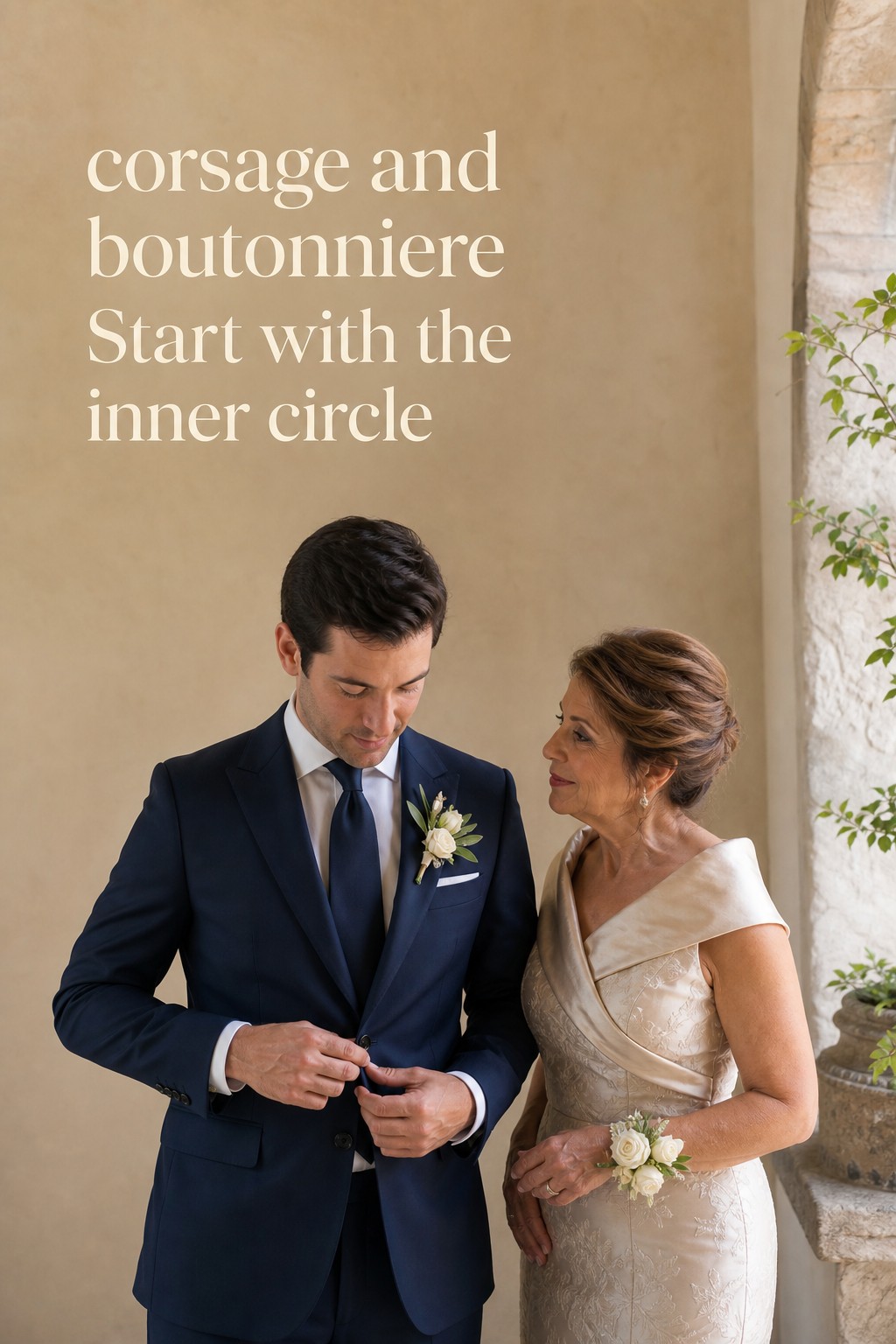
Start with purpose, not a flower recipe. A boutonniere is a compact floral piece worn on a jacket, usually on the left lapel. A corsage is a slightly fuller wearable arrangement, commonly pinned to clothing or secured at the wrist. Both are traditional wedding markers of honor, but neither needs to be assigned by gender. A guest in a tailored suit may prefer a boutonniere; someone in a gown may prefer a wrist corsage; another VIP may politely prefer no flowers at all. Asking is more useful than assuming.
Turn wedding inspiration into a plan you can actually follow.
Zarellea brings your guest list, budget, vendors, and day-of details into one shared space — so no beautiful idea gets lost in the shuffle.
Make three short lists. The first is your ‘must honor’ list: the couple, wedding party, parents, stepparents, grandparents, and anyone with a visible ceremony role. The second is your ‘nice to honor’ list: readers, ushers, greeters, godparents, and close family friends. The third is a no-pressure list for people who may receive a personal flower only if it suits your budget and their comfort. This prevents an emotional conversation from happening while your florist is waiting for a final count.
Then give each person a role level. The couple’s pieces should be the most distinctive. Wedding-party pieces can repeat a shared formula. Parent and grandparent flowers can use the same palette but a softer scale or different attachment. This creates a visible family resemblance without making the groom’s boutonniere indistinguishable from every groomsman’s. It also gives a florist a clear hierarchy to design from, which is much more helpful than asking for ‘all matching flowers.’
- Anchor pieces: the couple; use the strongest focal bloom, texture, or ribbon detail.
- Core pieces: wedding party; use a repeatable, sturdy design.
- Honor pieces: parents and grandparents; coordinate with their attire and comfort first.
- Role pieces: officiant, readers, ushers, or greeters; keep these simple and optional.
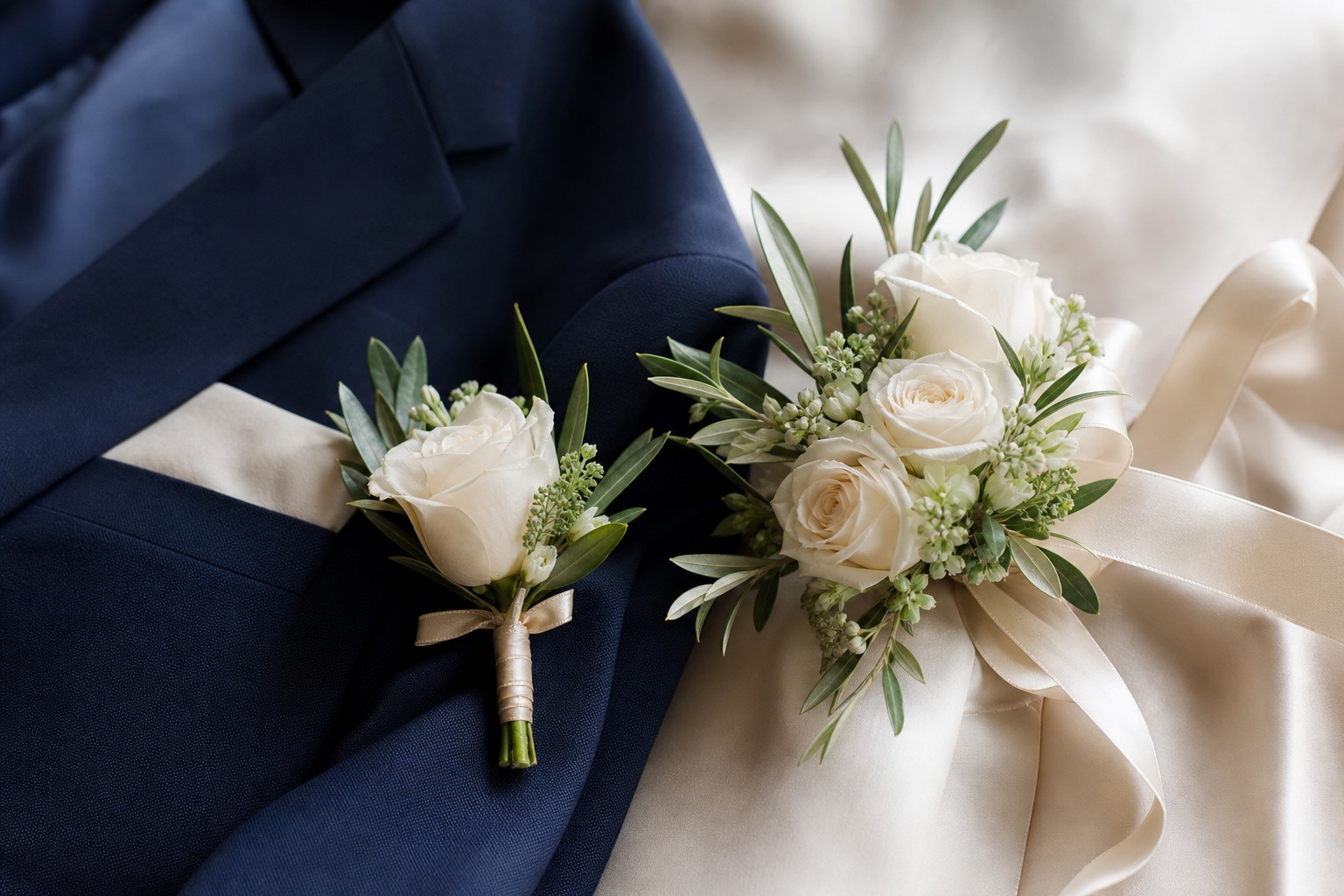
Keep the capsule deliberately small. One focal-flower family, one supporting texture, one foliage or ribbon note, and one accent color are often enough. For example, a late-summer celebration might use cream spray roses, olive foliage, and a dusty blue ribbon detail. The groom could wear a cream garden rose with an olive sprig; attendants could wear smaller spray-rose buds; mothers could have wrist corsages with the same blue ribbon. The pieces relate immediately, yet each is appropriate to its wearer.
A capsule system also makes substitutions less stressful. Tell your florist what characteristic matters most: a small ivory flower, a ruffled texture, a warm rust accent, or a trailing herb. If a specific bloom is unavailable, they can protect the look instead of chasing an exact stem that may arrive tired or overpriced. This is particularly useful for personal flowers, where scale and freshness matter more than a long list of varieties.
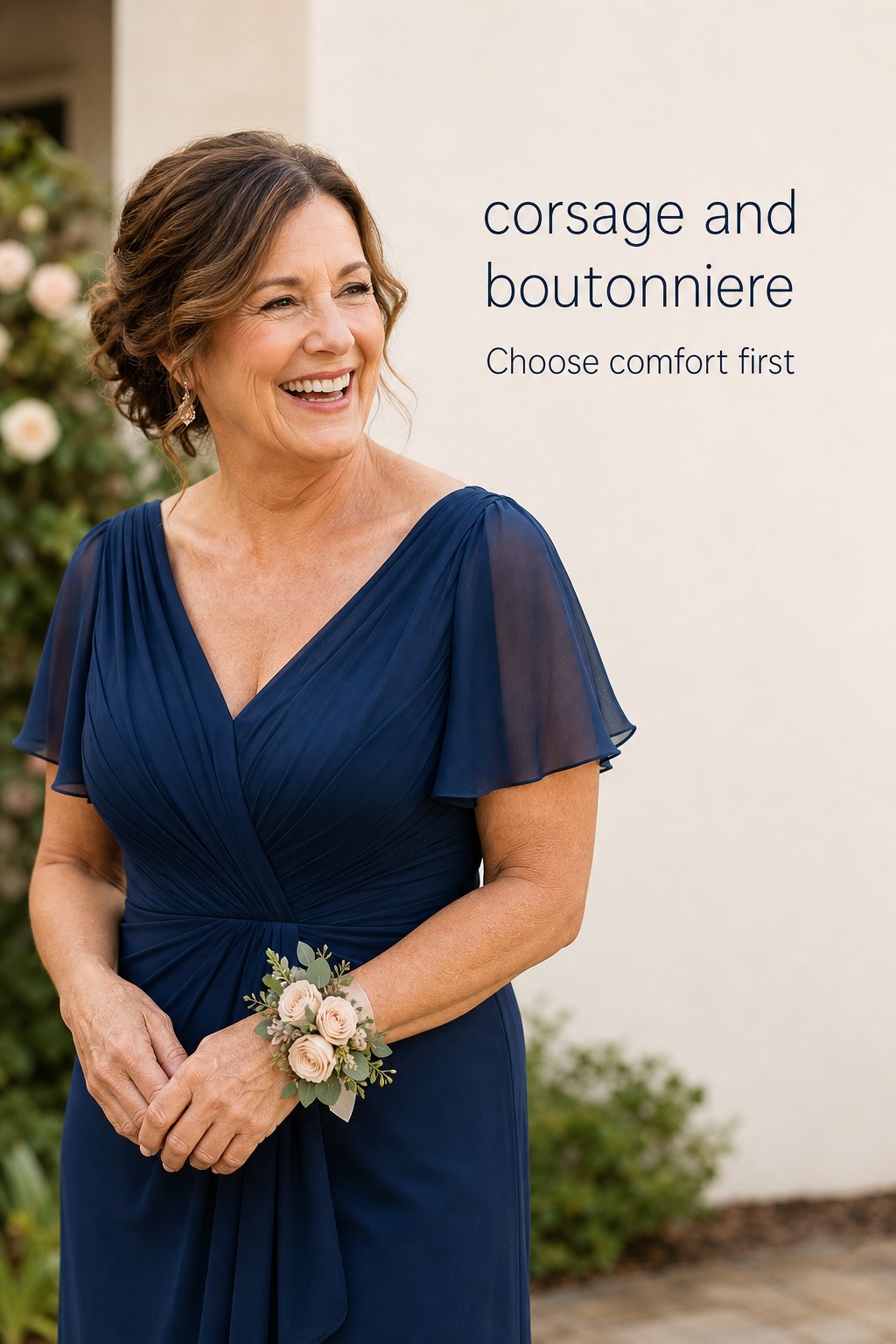
Choose corsage and boutonniere recipients by attire and comfort
Tradition can be a helpful starting point, not a rulebook. Couples often choose boutonnieres for the groom, groomsmen, fathers, grandfathers, ushers, and readers in suits. Corsages are often offered to mothers, stepmothers, grandmothers, and dress-wearing attendants. But the better modern question is: what will this person be comfortable wearing? A boutonniere works beautifully with a lapel. A wrist corsage can be the safer choice for delicate fabric. A pin-on corsage may suit a structured jacket, while a pocket arrangement can make sense for someone who does not want a pin.
Ask VIPs early, especially parents, grandparents, and the officiant. A wrist corsage can feel cumbersome to someone using their hands often, while a pin can feel risky on silk, chiffon, beading, or a favorite vintage garment. If a grandparent has sensitive skin or limited dexterity, a lightweight pin-on piece, clip, or simply no wearable flower may be the kindest choice. The honor is in the invitation, not in insisting on a particular accessory.
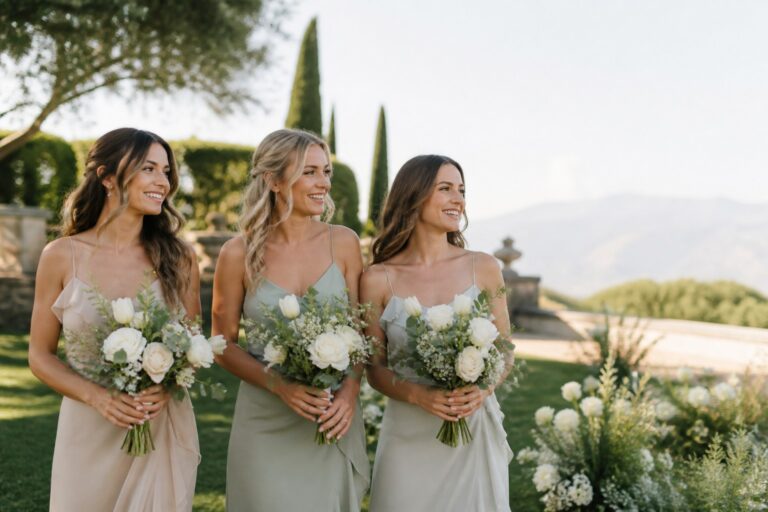
For a wedding party with mixed attire, organize by silhouette rather than title. Give anyone wearing a jacket the option of a boutonniere. Give anyone wearing a dress, jumpsuit, or soft fabric the choice between wrist and pin-on corsage. If someone is carrying a bouquet, a corsage may be unnecessary; if someone has no bouquet, a small personal flower can help them feel visibly included. This approach looks coherent in photos because the flowers complement the clothing rather than fight it.
- Structured lapel or suit jacket: boutonniere, placed on the left side.
- Delicate gown, beading, or sheer fabric: wrist corsage, or no pin at all.
- Tailored dress, blazer, or sturdy bodice: ask whether a small pin-on corsage feels comfortable.
- Young attendants: use a very lightweight piece and confirm comfort and supervision.
Remember the practical moments around the ceremony. Parents may be hugging constantly. An officiant may gesture with both hands. A reader may wear a microphone pack or a formal robe. A ring bearer may run, sit, and be picked up. Share these realities with the florist so they can simplify a stem, adjust the attachment, or recommend an alternative. A personal flower that stays neat is far more elegant than an elaborate piece that turns sideways before the processional begins.
If your guest list is large, you do not need to solve that by handing out flowers to everyone. Personal flowers work best as an inner-circle signal. Make the count intentional, then give the florist an extra one or two boutonnieres only if you have a genuine reason: a forgotten VIP, a damaged piece, or a last-minute change in attire. Avoid ordering a generic pile ‘just in case,’ which makes the honor feel vague and wastes a delicate product.
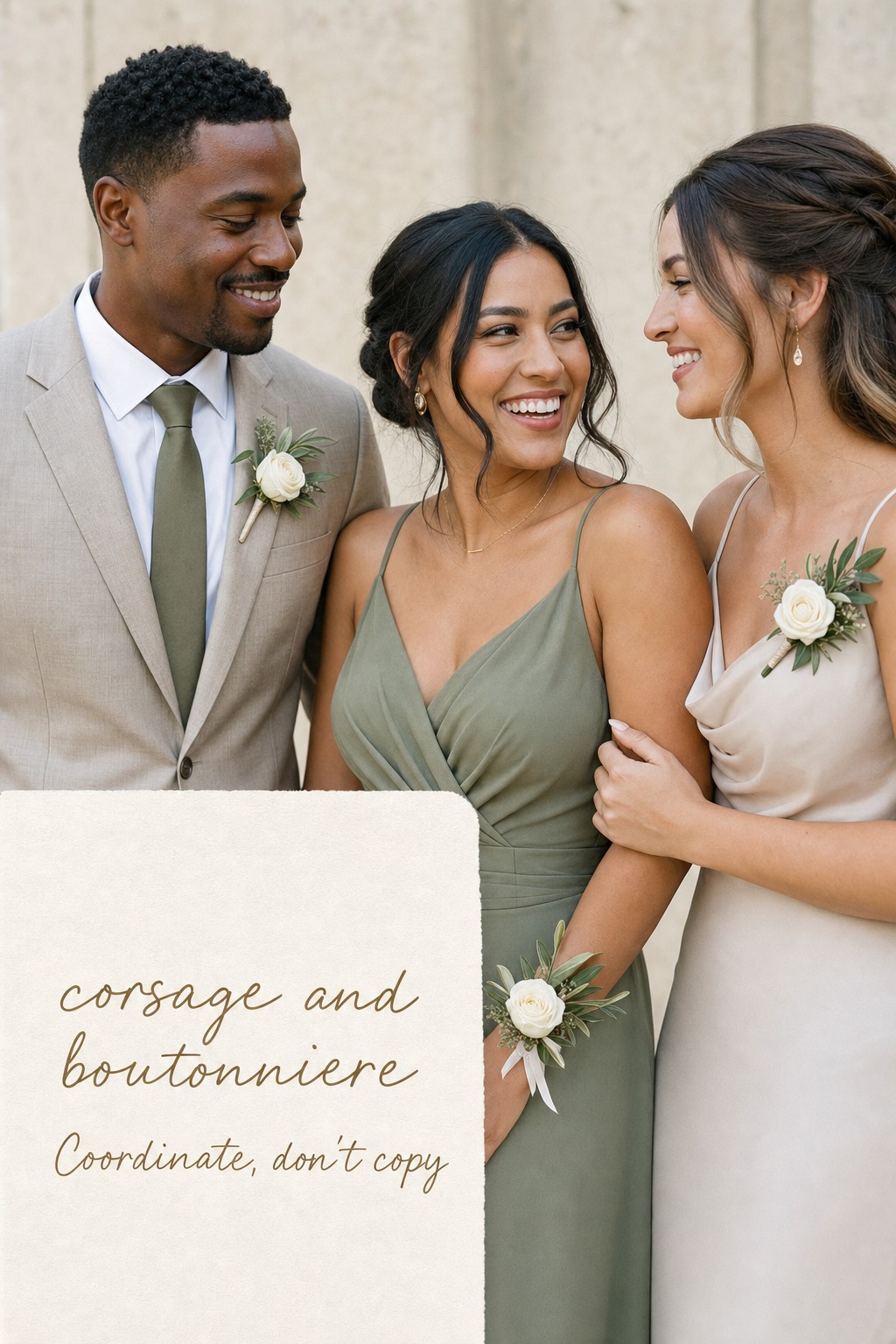
Create a coordinated look without exact matching
The best corsage and boutonniere set does not copy the bridal bouquet at miniature scale. It repeats a visual idea. That might be one flower shape, one color family, a ribbon finish, or a texture such as herbs, berries, or airy filler. Exact matching can look flat when every suit, dress, and skin tone is different. Coordination allows the collection to belong together while leaving room for proportion and individual style.
Choose one hero detail for the couple. The groom’s boutonniere could use a more special bloom, a small piece of the bouquet’s foliage, or a more refined wrap. The partner carrying a bouquet does not need a corsage, but may want a flower detail elsewhere depending on their outfit. Let the wedding party use a simpler version. For parents and grandparents, pull from a secondary color so their pieces sit beautifully against their clothes rather than competing with the couple.
Scale is your most powerful styling tool. A boutonniere should be compact enough to sit flat on a lapel. Heavy flowers can pull fabric forward, especially on a slim suit. A wrist corsage should read as floral jewelry, not as a miniature bouquet that covers the entire hand. Choose durable blooms and keep the mechanics hidden but secure. Spray roses, orchids, ranunculus, small calla lilies, carnations, and seasonal foliage often work well because they offer shape without excessive weight.
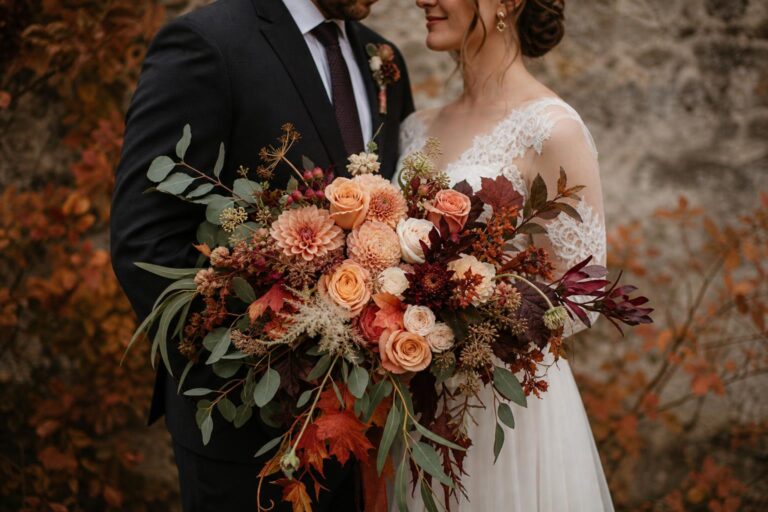
Use color in different roles. If the bouquet is colorful, select one quiet tone from it for most personal flowers, then reserve a brighter accent for the couple. With a neutral wedding, personal flowers can provide the color thread: white and green for attendants, a tiny rust ranunculus for the groom, and champagne ribbon on the mothers’ corsages. This feels intentional in photographs and allows each garment to remain the main character.
- Repeat one element in every piece: a flower family, foliage, ribbon, or color note.
- Make the couple’s flowers more distinctive through scale or detail, not bulk.
- Use clothing color as a design input, especially for corsages.
- Choose durability over novelty for the people who will wear flowers longest.
Do a quick garment check before the florist finalizes the recipe. A pale corsage can disappear against an ivory dress; a dark boutonniere can vanish against a black jacket; a bright stem can clash with a patterned tie. A phone photograph of each key outfit is enough. Your florist does not need a formal mood board for every person, but they do need to know whether the father is wearing navy, the mothers are wearing jewel tones, or a grandparent plans to wear a floral print.
Do not forget scent. Personal flowers sit close to the face, particularly wrist corsages during hugs and dancing. If anyone is scent-sensitive, ask for lower-fragrance blooms and avoid heavily perfumed herbs. A good capsule feels beautiful at close range as well as on camera; comfort is a design decision, not an afterthought.
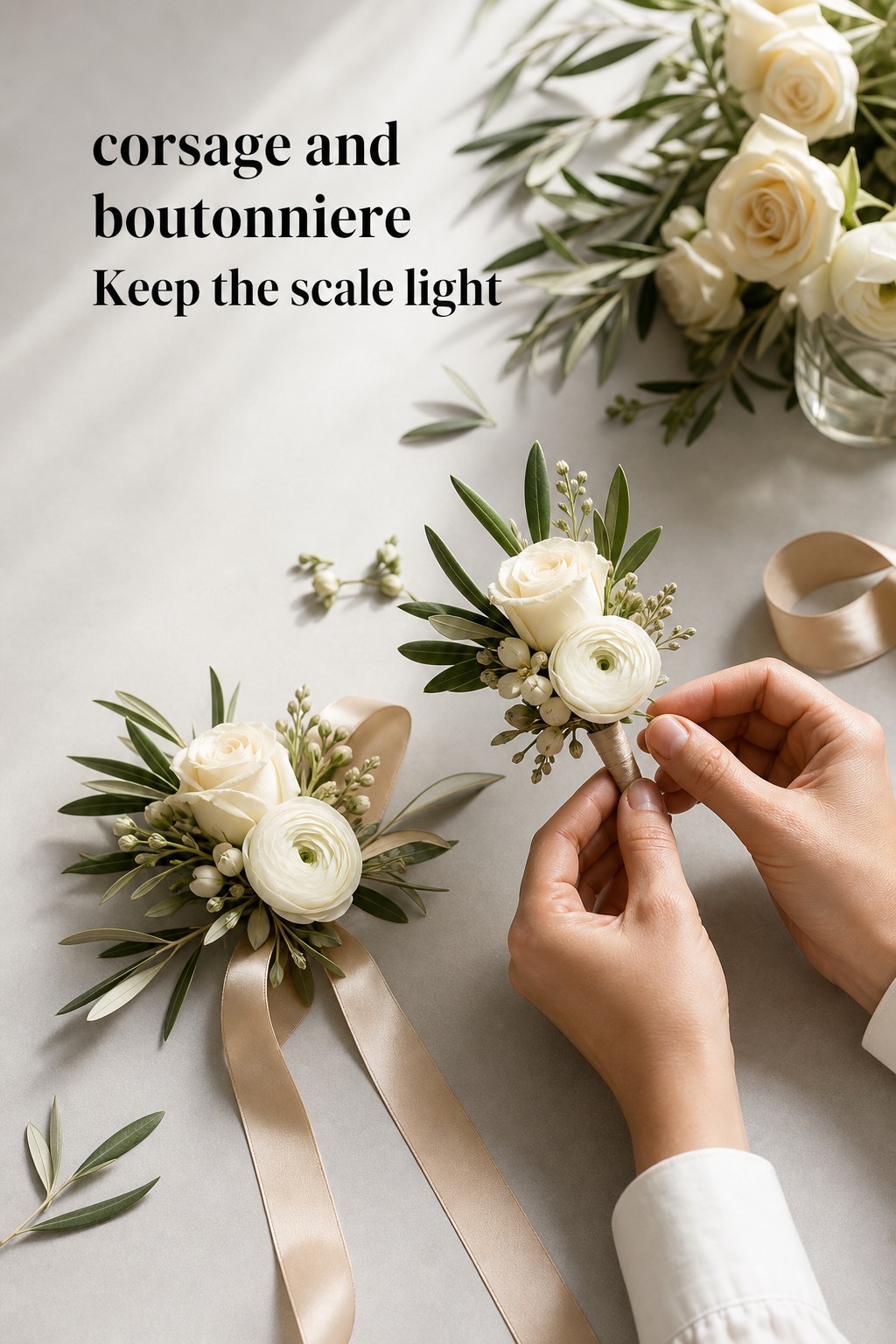
Order, distribute, and protect your personal flowers
Give your florist a final personal-flower list alongside names, roles, garment notes, and attachment preferences. Do this before the final payment date, not during the week of the wedding. A useful order is specific but flexible: ‘One groom boutonniere with a garden-rose focal, five smaller attendant boutonnieres, two wrist corsages for mothers, two lightweight pin-on choices for grandmothers, and one optional boutonniere for the officiant.’ That brief tells the florist what matters without micromanaging every stem.
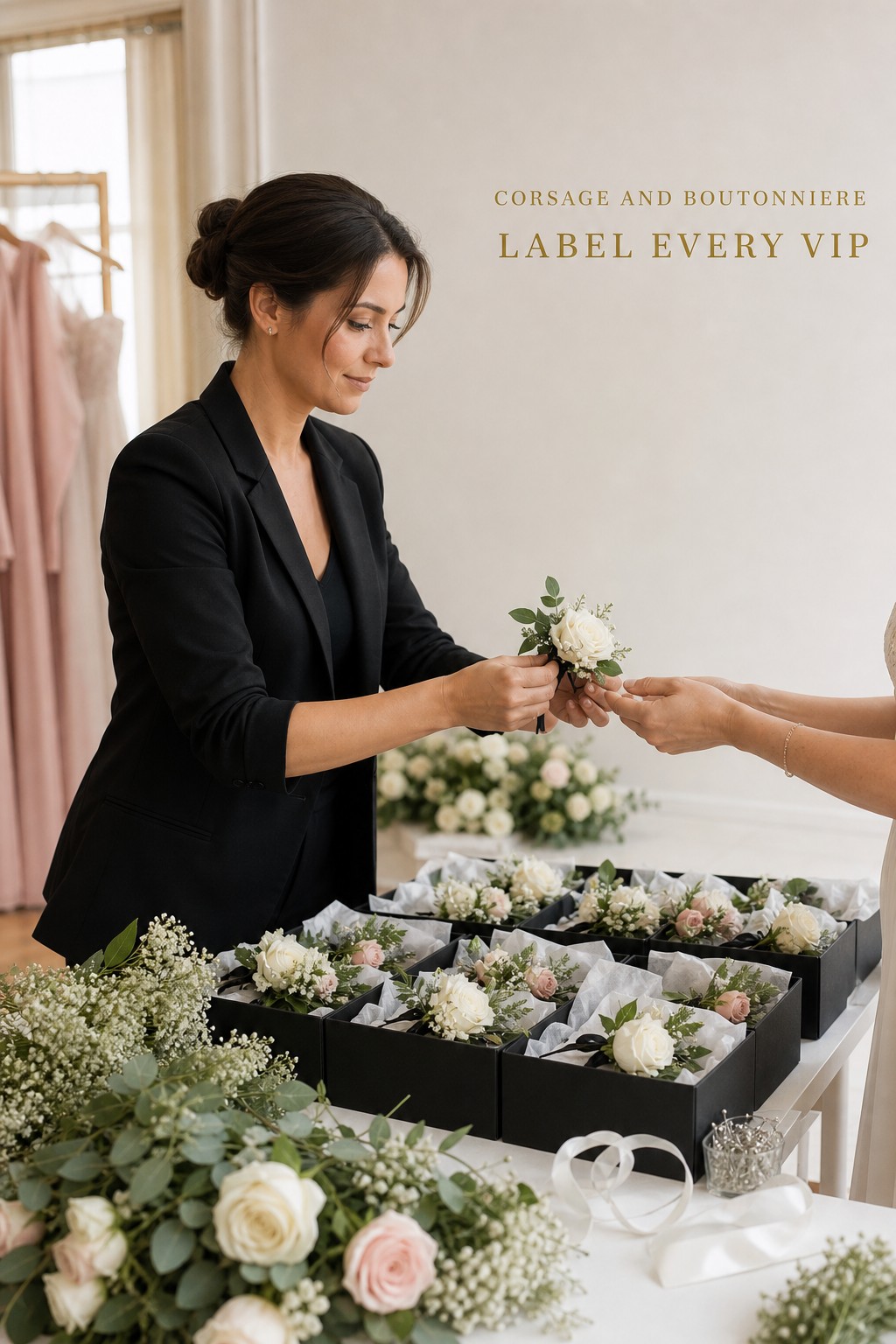
Ask when and how pieces will arrive. Fresh personal flowers should stay cool and protected until they are worn. Identify one calm, flower-aware person—a planner, coordinator, sibling, or trusted friend—to receive the boxes, read the labels, and distribute them. This person should know who gets what, where pins are stored, and who can help attach a boutonniere. The couple should not be pinning flowers while trying to finish portraits.
Build five minutes into the schedule for attachment. Boutonnieres are usually secured through the lapel fabric with a pin positioned to keep the stem stable and the point away from the wearer. Wrist corsages should be checked for comfort before the wearer starts greeting guests. Take a few photos immediately after the pieces are on, when every bloom is fresh and every ribbon is straight. Those are often the close-ups families treasure most.
Plan for weather and movement. In heat, ask the florist for hardy stems and shaded delivery. At a windy outdoor venue, choose compact designs with secure mechanics. At a destination wedding, avoid relying on a fragile flower that cannot travel well. If the ceremony and reception are far apart, keep a small emergency kit with extra pins, a tiny towel, floral tape only for the florist or coordinator, and a labeled water vessel for any spare flowers.
- Finalize recipient names, attire, and preferences before the florist locks the count.
- Label boxes by person or role; do not rely on memory during a busy morning.
- Assign one person to distribute and attach flowers.
- Store personal flowers in the florist-approved cool location until it is time to wear them.
- Photograph the pieces early, then let people enjoy them without constant adjustment.
Finally, be willing to simplify. If your budget is under pressure, protect the flowers that carry meaning: the couple, wedding party, parents, and grandparents. Reduce the number of varieties, choose seasonal stems, or skip optional role flowers before making every personal piece smaller and less durable. A concise collection with a clear point of view always feels more generous than a large collection that looks improvised.
A corsage and boutonniere capsule succeeds when it lets people feel recognized, comfortable, and connected to the day. With a short recipient list, attire-first choices, a shared design language, and a simple distribution plan, these little flowers become a polished part of the wedding rather than one more morning-of problem.
FAQ
Who usually gets a corsage and boutonniere at a wedding?
The couple, wedding party, parents, stepparents, and grandparents are common recipients. Ushers, readers, ring bearers, and officiants may also receive a personal flower. Use roles and relationships as a starting point, then ask each person what feels comfortable.
Does a corsage and boutonniere have to match exactly?
No. They should share a visual thread, such as color, flower family, foliage, or ribbon, but can differ in scale and form. Coordinated pieces usually look more natural than exact miniatures of the same arrangement.
Which side does a boutonniere go on?
A boutonniere is traditionally worn on the left lapel, above the heart. The florist, planner, or a prepared helper can secure it so the stem sits flat and the pin is comfortable for the wearer.
Is a wrist corsage better than a pin-on corsage?
A wrist corsage is often a good option for delicate, beaded, or sheer clothing because it avoids pinholes. A pin-on corsage can work well on structured fabric. Ask the wearer first; comfort and how they will move through the day matter most.
What flowers hold up best in personal wedding flowers?
Small roses, spray roses, orchids, ranunculus, carnations, mini calla lilies, and hardy seasonal foliage are common choices. Your florist can recommend the best options for the season, climate, and time the flowers must stay fresh.
Should bridesmaids wear corsages if they have bouquets?
Usually, no. A bouquet is already a personal floral statement. Corsages can be a useful alternative for attendants who are not carrying bouquets or for a more minimal wedding-party look.
How far in advance should I order wedding corsages and boutonnieres?
Include them in the main floral order and finalize the count before your florist’s stated deadline. Collect attire notes and attachment preferences early so the final order is based on real garments and roles, not assumptions.