Modern Bridal Bouquets: 9 Fresh Ideas That Feel Like You
Modern bridal bouquets are not defined by one flower, color, or trend. They feel modern because every detail has a job: the silhouette supports the dress, the scale works with the bride, the palette belongs to the venue, and the flowers still look beautiful in motion and photographs. That is why a small calla lily bouquet can feel just as contemporary as a dramatic orchid cascade.
If you are saving inspiration but struggling to turn it into a florist brief, start with architecture rather than a shopping list. Decide whether you want an edited, sculptural, asymmetrical, or linear shape, then choose flowers and finishing details that reinforce it. The nine modern bridal bouquets below are designed to help you make that decision with confidence.
Why modern bridal bouquets look different
A traditional bouquet often begins with a familiar outline: a round dome, an even edge, and a balanced mix of flowers. There is nothing wrong with that approach, but modern design asks a more personal question: what should the bouquet add to the bride’s overall image? The answer might be a clean vertical line, a little negative space, one unexpected color, or a sculptural shape that echoes the gown.
Contemporary florists also think in terms of editing. A bouquet can contain several varieties, but they should not all compete. One flower may provide the focal shape, another may add texture, and greenery or trailing stems may create movement. When the visual hierarchy is clear, the arrangement looks intentional instead of busy.
Turn wedding inspiration into a plan you can actually follow.
Zarellea brings your guest list, budget, vendors, and day-of details into one shared space — so no beautiful idea gets lost in the shuffle.
- Shape: the outline seen from the aisle and in full-length photographs.
- Line: whether the bouquet feels rounded, vertical, horizontal, diagonal, or cascading.
- Texture: the contrast between smooth petals, ruffles, berries, pods, grasses, and foliage.
- Editing: the discipline to remove a flower that does not improve the design.
This is also why modern does not automatically mean minimalist. A large free-form arrangement can be modern when it has controlled asymmetry and a purposeful palette. A tiny posy can look dated if it is chosen only because it is small. The modern effect comes from clarity: the bride, dress, and flowers read as one considered composition.
Choose the bouquet architecture before the flowers
Before you choose between roses, orchids, tulips, or ranunculus, choose the way you want the bouquet to occupy space. This prevents a common planning problem: falling in love with a flower and only later realizing that its natural shape does not support the look you want. Share a full-length dress photograph with your florist, then discuss one of these four design directions.
Edited and compact
An edited bouquet uses fewer varieties, a controlled outline, and enough air between elements to keep the dress visible. Think petite posy, single-flower cluster, or a small hand-tied group with a clean ribbon wrap. This direction is especially effective for city hall ceremonies, slip dresses, heavily detailed gowns, and brides who want the bouquet to feel like a fashion accessory.
Organic and asymmetrical
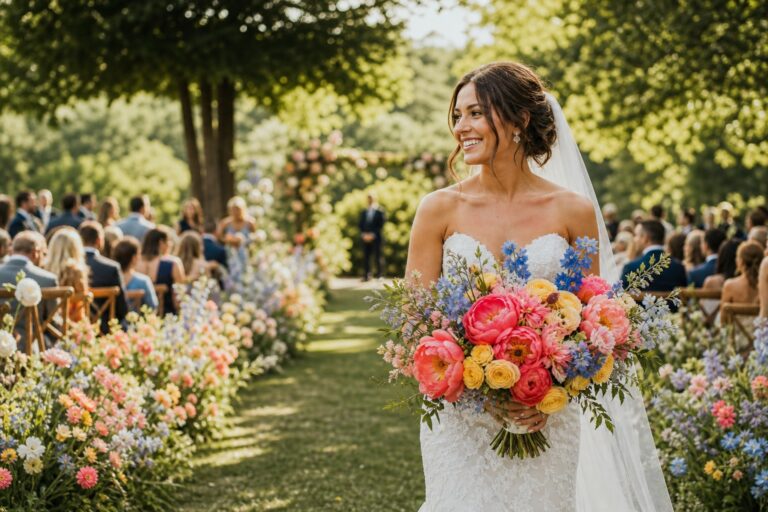
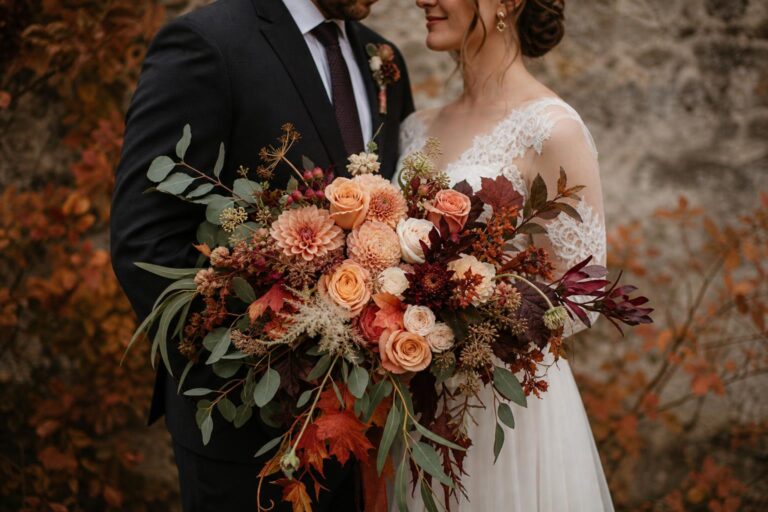
An organic bouquet has movement rather than a perfect perimeter. Stems may sit at different heights, flowers can turn in different directions, and foliage may escape on one side. The trick is to keep a visual center so the bouquet feels relaxed but not accidental. This architecture suits outdoor ceremonies, garden venues, textured fabrics, and couples who want a natural result without a rustic theme.
Sculptural and artistic
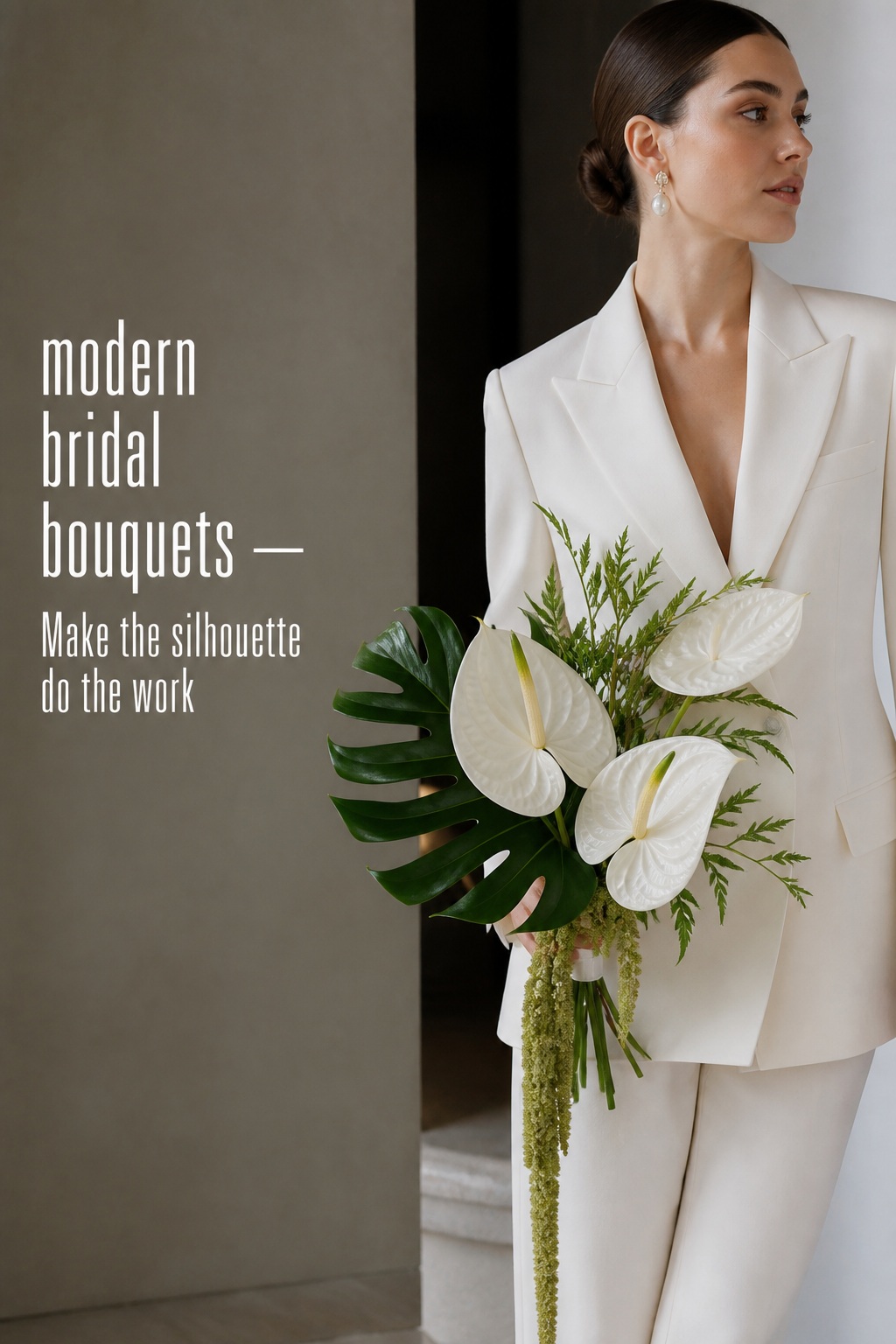
Sculptural bouquets use shape as the main statement. Calla lilies, orchids, anthuriums, bent stems, unusual foliage, and clustered blooms can create a graphic silhouette. Negative space matters as much as the flowers, so ask your florist to show the arrangement from the front, side, and three-quarter view. A sculptural bouquet is an excellent match for a clean gown, architectural venue, or bridal suit.
Linear and dramatic
Linear bouquets emphasize direction: long stems held in the crook of the arm, a gentle horizontal crescent, or a soft cascade that draws the eye downward. They make a strong editorial impression while still feeling elegant. Because the design relies on proportion, the length should be tested against the bride’s height and the hemline of the dress.
Modern bridal bouquets to show your florist
Use these ideas as starting points, not rigid recipes. A florist can substitute blooms for season, availability, color, or budget while keeping the same underlying architecture. The most useful reference image is one that shows the shape you love, even if the exact flowers are unavailable.
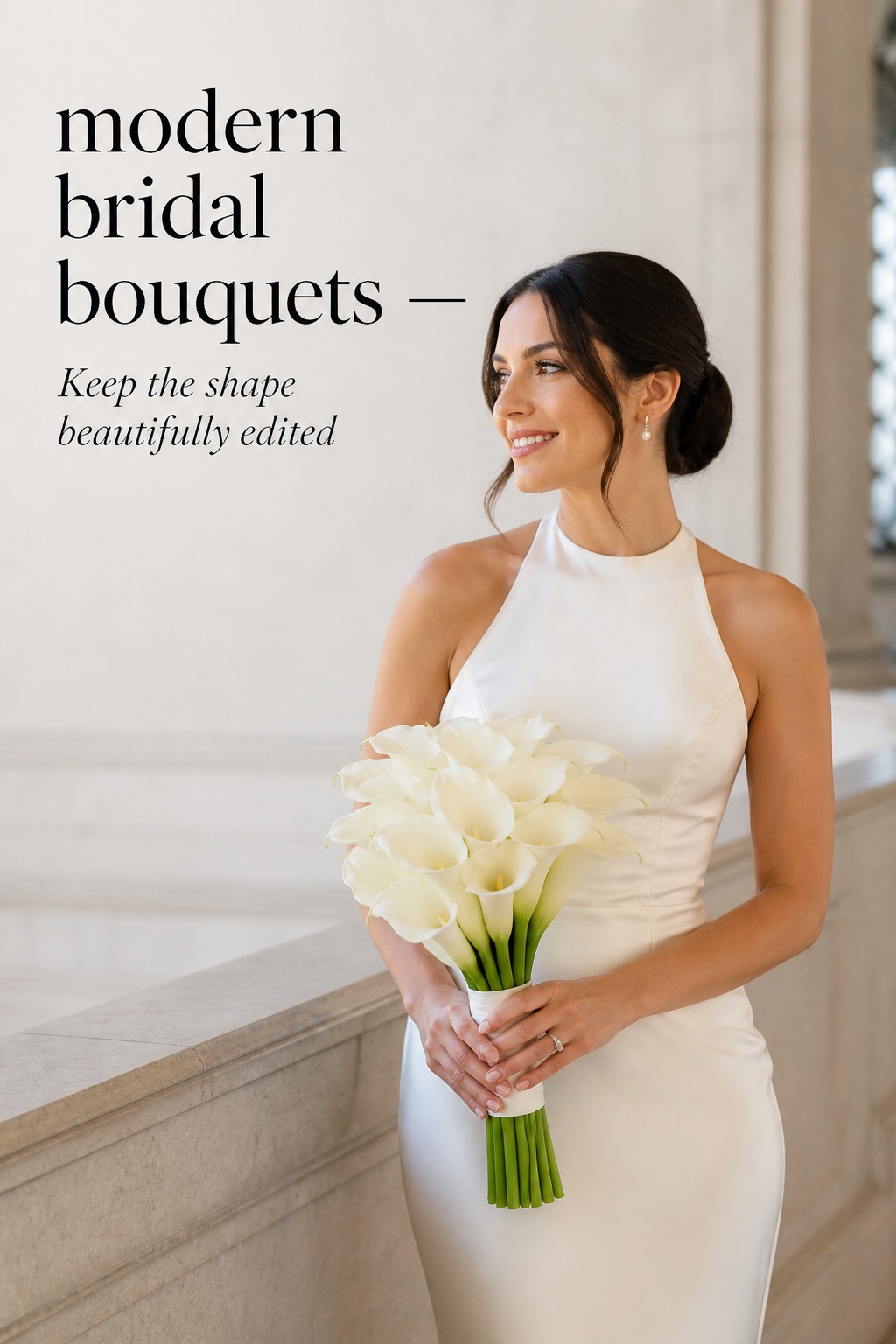
1. Tonal calla lily hand-tie
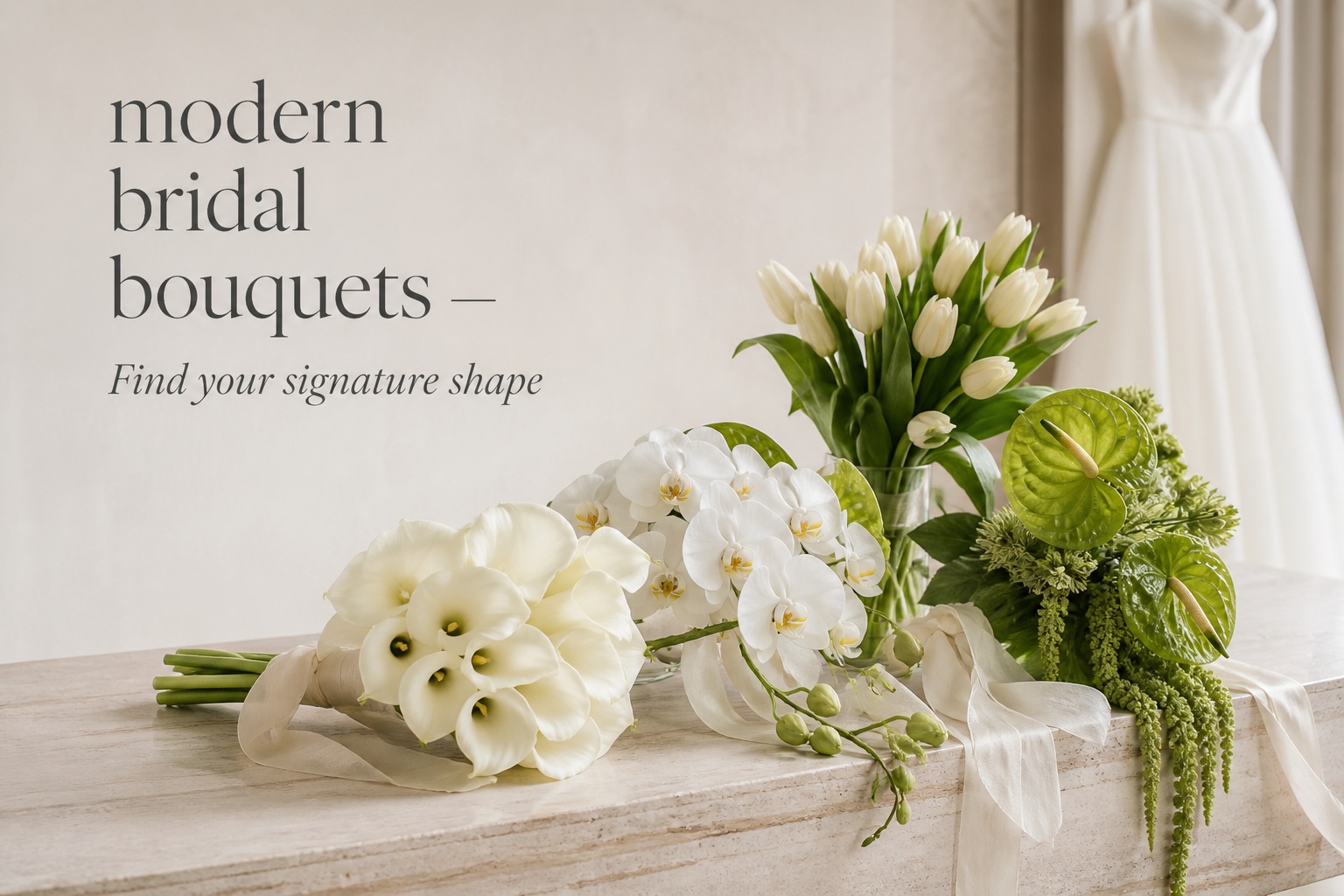
Gather calla lilies in ivory, soft blush, butter yellow, or a single deeper shade and bind their stems close together. The result is clean, graphic, and naturally elegant without needing filler flowers. A narrow silk ribbon keeps the finish fashion-forward; a raw silk wrap adds softness. This works beautifully with a sheath, column, or minimalist satin gown. Ask for a slight variation in stem height if you want the bouquet to feel less formal.
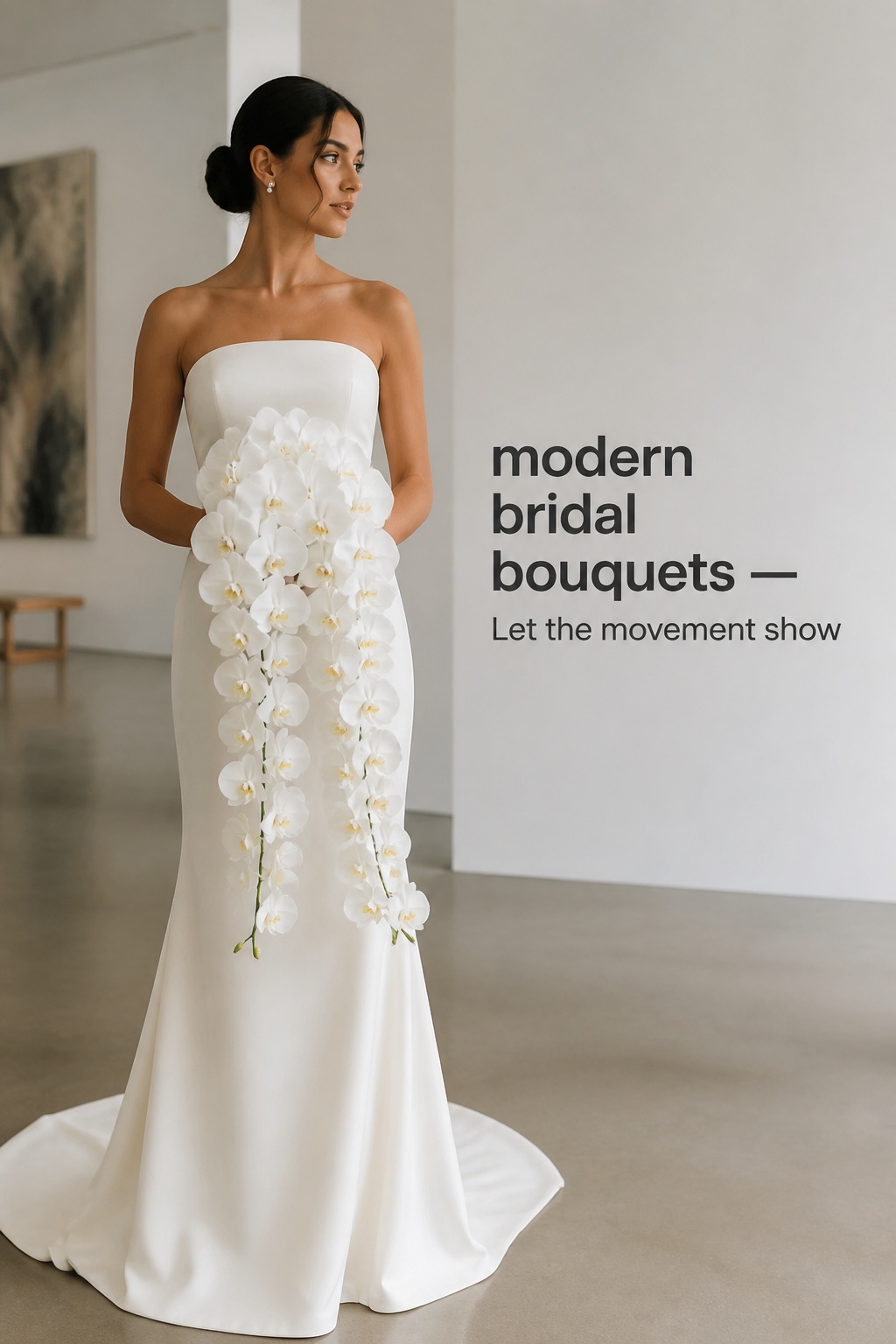
2. Orchid cascade with negative space
Instead of a dense waterfall, use a few strong orchid trails and leave visible air around them. Pair phalaenopsis or dendrobium orchids with one supporting bloom and restrained greenery. The modern version is lighter than a traditional cascade, so it does not hide the bodice or overpower the bride. It is particularly effective with a V-neck, open back, or simple gown where the vertical movement can be seen.
3. Single-flower color study
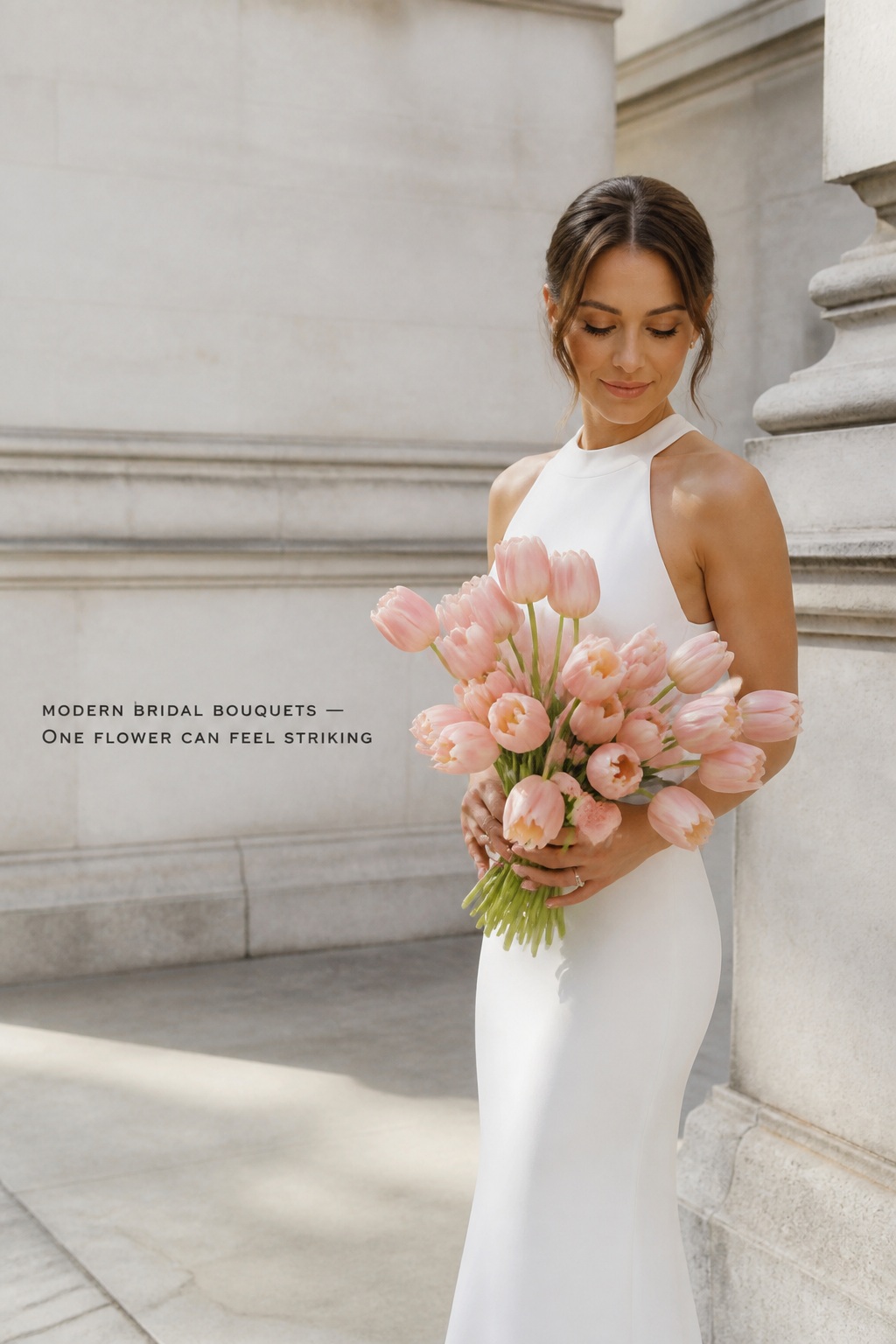
Choose one flower and let its natural character carry the design. A bouquet of tulips feels springlike and directional; roses feel classic when gathered tightly; dahlias bring graphic texture; sweet peas create a delicate, fluttering edge. You can keep the color monochromatic or move through three neighboring tones. The important detail is repetition: when every stem belongs to the same visual family, the bouquet feels curated rather than unfinished.
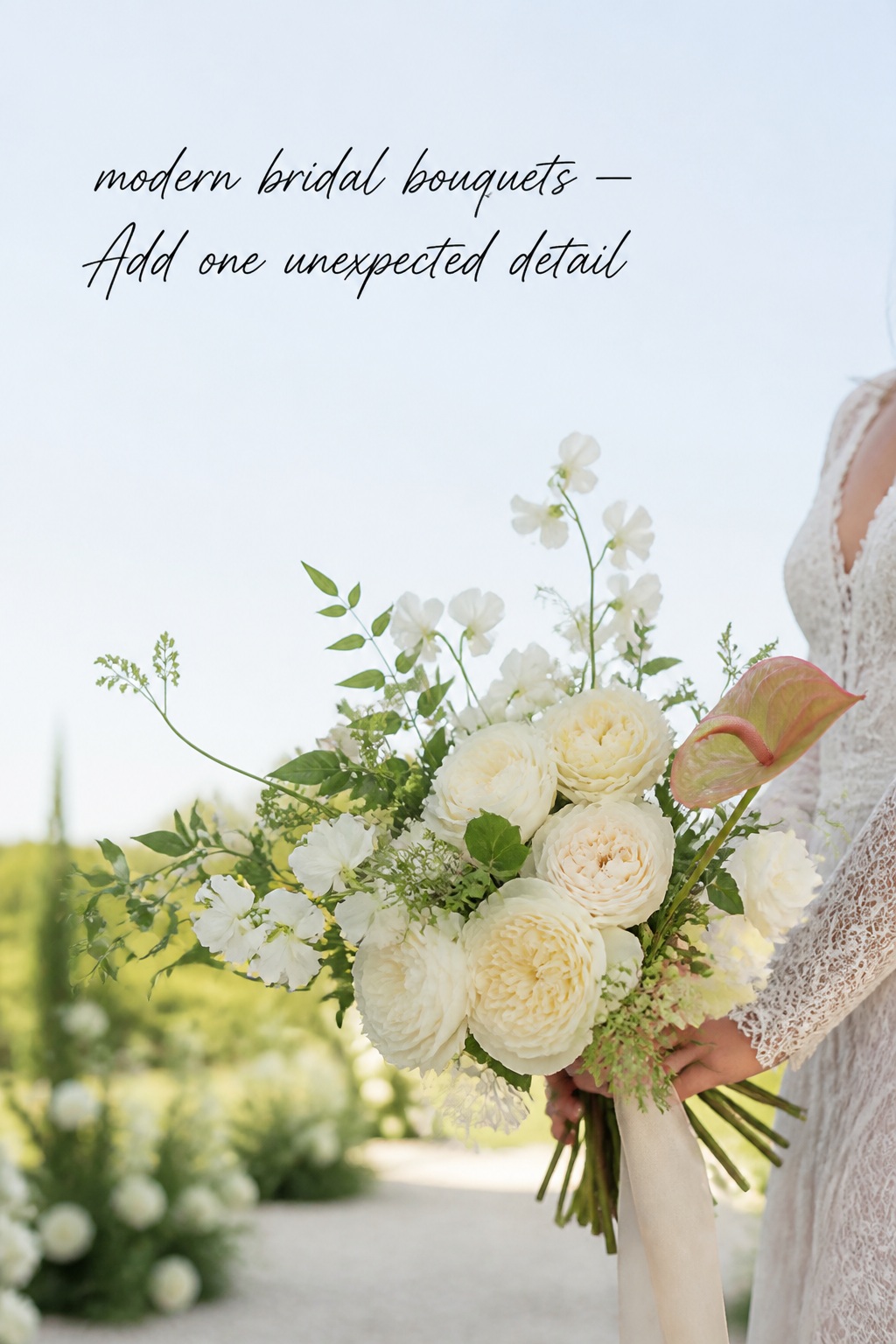
4. Airy garden bouquet with one modern accent
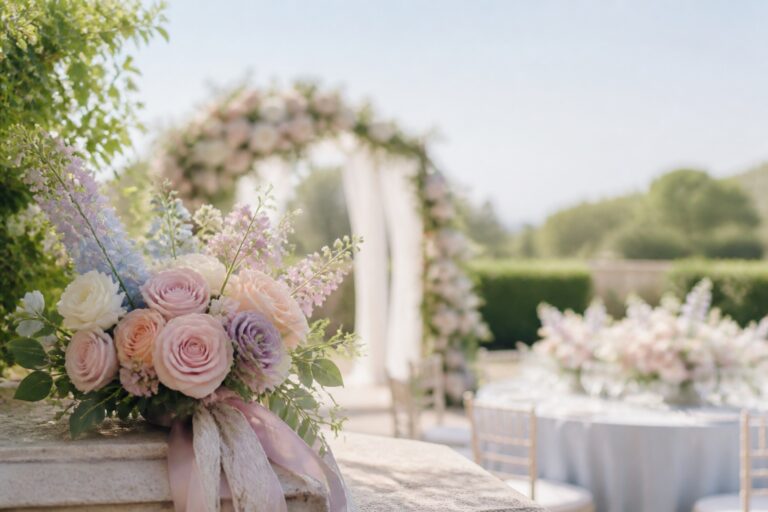
Start with garden roses, seasonal flowers, and light foliage, then add one unexpected element such as a curved branch, anthurium, berry stem, or long line of delphinium. Keep the accent visible instead of burying it inside the arrangement. This formula gives you the romance of a garden bouquet with a sharper point of view. It pairs naturally with lace, chiffon, outdoor settings, and venues with stone, wood, or abundant greenery.
5. Sculptural anthurium and foliage bouquet
Anthuriums bring a glossy, architectural shape that instantly changes the mood of a bouquet. Combine a few blooms with split leaves, palms, ruscus, or another clean-lined foliage rather than surrounding them with many small flowers. A restrained palette of white, green, or burgundy feels especially modern. This is a confident choice for a courthouse wedding, destination celebration, contemporary gallery, or tailored bridal look.
6. Crescent bouquet with a soft asymmetrical edge
A crescent curves around the hand or body instead of forming a centered ball. One side can be fuller, with the other tapering into a few stems or leaves. Use flowers with flexible movement, such as orchids, sweet peas, tulips, or delicate branches. This shape is modern because it feels designed and directional, but it remains romantic. It also echoes a one-shoulder neckline or an asymmetrical skirt particularly well.
7. Long-stem presentation bouquet
Carry long-stem roses, calla lilies, delphinium, or tulips in the crook of your arm. The bouquet should be narrow enough to preserve the body line and bound at a comfortable point. This look is striking with a bridal suit, tea-length dress, or minimalist gown because it creates a deliberate vertical gesture. Photograph the bouquet in motion before the wedding; a design that looks beautiful resting on a table may feel awkward if the stems are too long to hold naturally.
8. Textured neutral bouquet
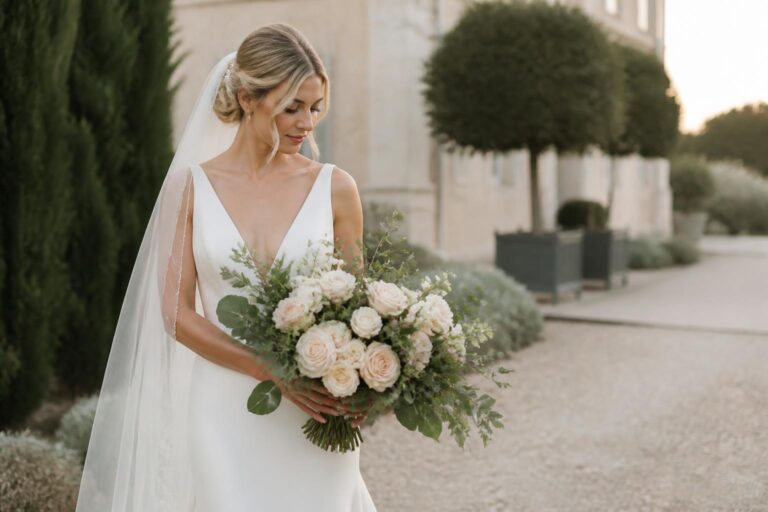
Make neutral modern bridal bouquets interesting through texture rather than high contrast. Combine ivory blooms with sand, taupe, pale green, champagne, or stone-colored accents. Add a few tactile elements—seed pods, bleached foliage, grasses, berries, or a ruffled petal—while keeping the palette quiet. This is a strong option for a bride who wants understated color but still wants her bouquet to feel layered in close-up images.
9. Petite bouquet with a bold ribbon
Keep the flowers small and let the wrap provide the personality. A petite cluster of ranunculus, anemones, tulips, or seasonal stems can be finished with a wide silk ribbon, a trailing velvet tie, or a fabric that repeats a detail from the gown. This creates a modern contrast between a restrained floral shape and a memorable finish. It is practical for a city ceremony, second look, or bride who wants to move easily between portraits and dinner.
Match modern bridal bouquets to the complete wedding look
The bouquet should be judged in context, not on a florist’s worktable alone. Bring a photograph of the dress, note the venue’s scale and lighting, and explain how you want the bouquet to appear in photographs. A modern design becomes much easier to choose when you connect those three pieces.
Dress silhouette and neckline
Large skirts can carry a fuller bouquet, while a slim dress often benefits from an edited shape or clear line. A V-neck can be echoed by a gentle cascade; a sweetheart neckline works naturally with rounded petals; a high neckline may look better with a lower, airier arrangement. If your gown has extensive beading, lace, or appliqué, choose fewer competing details in the bouquet. If the dress is simple, let the flowers take more creative space.
Venue and photography
A city hall bouquet can be compact, directional, and easy to carry. A garden ceremony can support a looser outline and seasonal movement. A ballroom usually rewards polish and stronger scale, while a small dinner may call for something intimate. Also consider the background: pale flowers can disappear against a white aisle, while dark or saturated blooms need enough light to retain detail. Ask your photographer whether the bouquet will be photographed against the dress, greenery, architecture, and close-up portrait light.
Season, color, and substitutions
Give your florist a color direction and a priority list rather than insisting on one unavailable flower. For example: “Ivory and pale green, sculptural, no filler, with one trailing line.” That brief leaves room for seasonal substitutions while protecting the visual goal. Seasonal flowers may also look more convincing in the setting and reduce the need for long-distance sourcing. If a favorite flower is delicate, ask whether it can be used as a focal detail rather than the entire bouquet.
Budget, comfort, and the florist-ready checklist
Modern design can be budget-friendly because it rewards editing, but labor and mechanics still matter. Wired orchids, a precise glamelia, a complex cascade, or a long installation may cost more even when the bouquet does not look large. Ask for the price of the design as a whole, not only the price of individual stems. You can often keep the shape and lower the cost by reducing varieties, using more seasonal flowers, or reserving a premium bloom for the center.
- What is the maximum comfortable weight for carrying during portraits and the ceremony?
- Which flowers are reliably available for the wedding date?
- Will the bouquet be photographed from the front, side, and back?
- How will the stems be wrapped, and can the ribbon coordinate with the dress or stationery?
- Does the bouquet need wiring, a water source, extra refrigeration, or special transport?
- Can bridesmaid flowers or ceremony flowers be repurposed after the vows?
- What is the backup plan if a delicate flower arrives damaged or unavailable?
Finally, practice holding the proposed bouquet. Keep your hands relaxed, hold it low enough to show the waistline, and make sure you can walk, hug, sit, and greet people without constantly adjusting it. The best modern bridal bouquets are beautiful because they look like a natural extension of the bride—not because they demand perfect handling all day.
FAQ
What makes a bridal bouquet look modern?
A modern bridal bouquet has a clear shape, edited flower choices, intentional negative space, or a directional detail such as a long stem or gentle asymmetry. It does not need to be minimal or unusual; it simply needs to feel connected to the dress, bride, and setting.
Which flowers work best in modern bridal bouquets?
Calla lilies, orchids, anthuriums, tulips, roses, ranunculus, dahlias, sweet peas, and seasonal garden flowers can all look modern when their natural shape supports the chosen architecture. Shape and editing matter more than a fixed list of trendy flowers.
How do I choose a modern bouquet for my wedding dress?
Compare the bouquet’s scale and direction with the dress silhouette, neckline, visual detail, and hemline. Use a fuller arrangement for a large skirt, an edited shape for a detailed gown, and a linear or crescent design for tailored or asymmetrical looks.
Can a modern bridal bouquet still feel romantic?
Yes. Soft movement, garden roses, sweet peas, delicate foliage, muted color, and silk ribbon can make an architectural or asymmetrical bouquet feel romantic. Modern style controls the composition; it does not remove softness.
Are smaller bouquets always more modern?
No. A small bouquet can be modern, but so can an oversized free-form arrangement or a dramatic cascade. The deciding factors are proportion, visual hierarchy, negative space, and how intentionally the design relates to the bride’s full look.
How can I keep modern bridal bouquets within budget?
Choose a simple architecture, limit the number of flower varieties, prioritize seasonal blooms, and use premium flowers only where they will be seen most. Ask your florist for substitutions that preserve shape, color, and texture instead of asking for a cheaper version without a design brief.