Fall Wedding Flowers: A Practical Planning Checklist
Fall wedding flowers can feel warm, abundant and completely personal, but the best designs are planned as a system rather than chosen from one beautiful bouquet photo. Start with the wedding date, venue, light, guest experience and floral priorities. Then build a short list of focal flowers, supporting blooms, foliage and textural details that your florist can source, substitute and repeat across the day.
This practical checklist will help you move from vague autumn inspiration to a workable floral plan. You will decide which colors feel right, identify flowers that suit the season, map designs to each wedding moment, protect the budget and prepare for weather or availability changes. The goal is not to force every arrangement into pumpkin orange. The goal is a cohesive celebration that feels like fall because of its color, texture, movement and sense of place.
Preparation: Set the Conditions Before You Choose Flowers
The first stage is simple: collect the information a florist needs before recommending stems. A late September wedding in coastal California may have a very different flower plan from a November wedding in New England. Even within one region, a protected indoor venue, an exposed farm and a windy rooftop create different requirements.
1. Write down the date, location and climate risks
Record the wedding date, ceremony start time, reception end time and whether flowers will spend time outdoors. Note expected temperatures, direct sun, wind, rain, early sunset and the distance between the preparation room, ceremony and reception. Your florist does not need a perfect weather forecast months in advance, but they do need to know which risks deserve a contingency.
Turn wedding inspiration into a plan you can actually follow.
Zarellea brings your guest list, budget, vendors, and day-of details into one shared space — so no beautiful idea gets lost in the shuffle.
For an outdoor fall ceremony, ask where bouquets will wait, whether arrangements can be shaded and how quickly delicate flowers will be moved inside. For a cold-weather date, ask whether flowers will be transported through unheated spaces. A design that looks perfect in a studio may need sturdier mechanics when it must survive a long aisle, a chilly loading dock or a warm tent filled with guests.
2. Choose a color direction before naming every flower
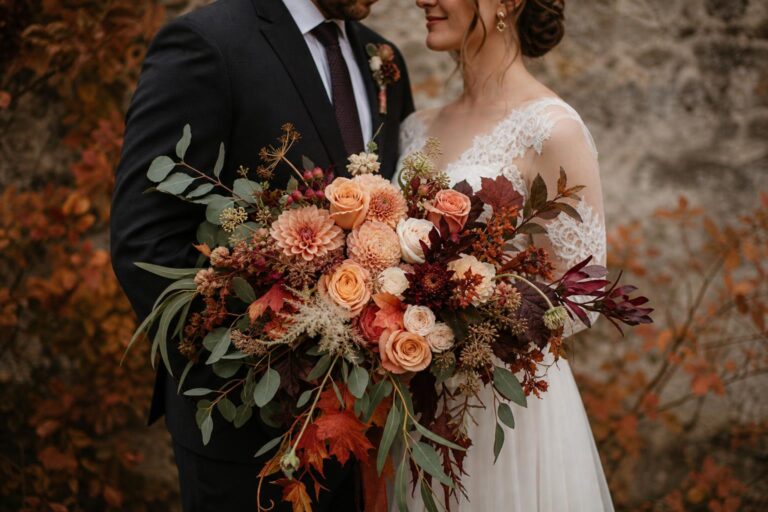
Fall wedding flowers do not have to be orange, rust and brown. You can create an autumn feeling with burgundy and blush, plum and dusty blue, cream and caramel, olive and terracotta, or deep red with soft peach. A useful starting point is two principal colors, one light balancing color and one green or neutral connector. Metallic accents such as copper, antique gold or brushed bronze can support the palette without turning every arrangement into a themed display.
Test the palette beside the venue, attire and stationery. A dark burgundy flower may look rich beside warm wood but heavy beside black linens. Pale peach may glow in afternoon light and disappear in a dim ballroom. Take fabric swatches, invitation samples or a photo of the venue to the florist so color decisions are made in context.
3. Decide what deserves the largest share of the floral budget
Most couples cannot maximize every floral category at once. Choose your top two or three priorities. You may care most about the bridal bouquet, ceremony backdrop and reception tables. Another couple may prefer a small bouquet, dramatic aisle arrangements and a flower-filled sweetheart table. Write the priorities down before you meet the florist, because this makes trade-offs much easier.
- High-impact focal points: the ceremony backdrop, head table, escort-card display or dance-floor installation.
- Personal flowers: the bridal bouquet, partner’s boutonniere, attendants’ bouquets, corsages and flower-girl petals.
- Guest-facing details: centerpieces, bar flowers, cake flowers, welcome-table arrangements and restroom accents.
- Practical costs: delivery, setup, breakdown, vessels, candles, mechanics, taxes and rental returns.
Ask for a proposal that separates flower ingredients from labor, rentals, delivery and installation. That breakdown shows where a change will actually save money. Replacing an expensive focal bloom may help, but reducing an elaborate installation or reusing ceremony pieces can have an even larger effect.
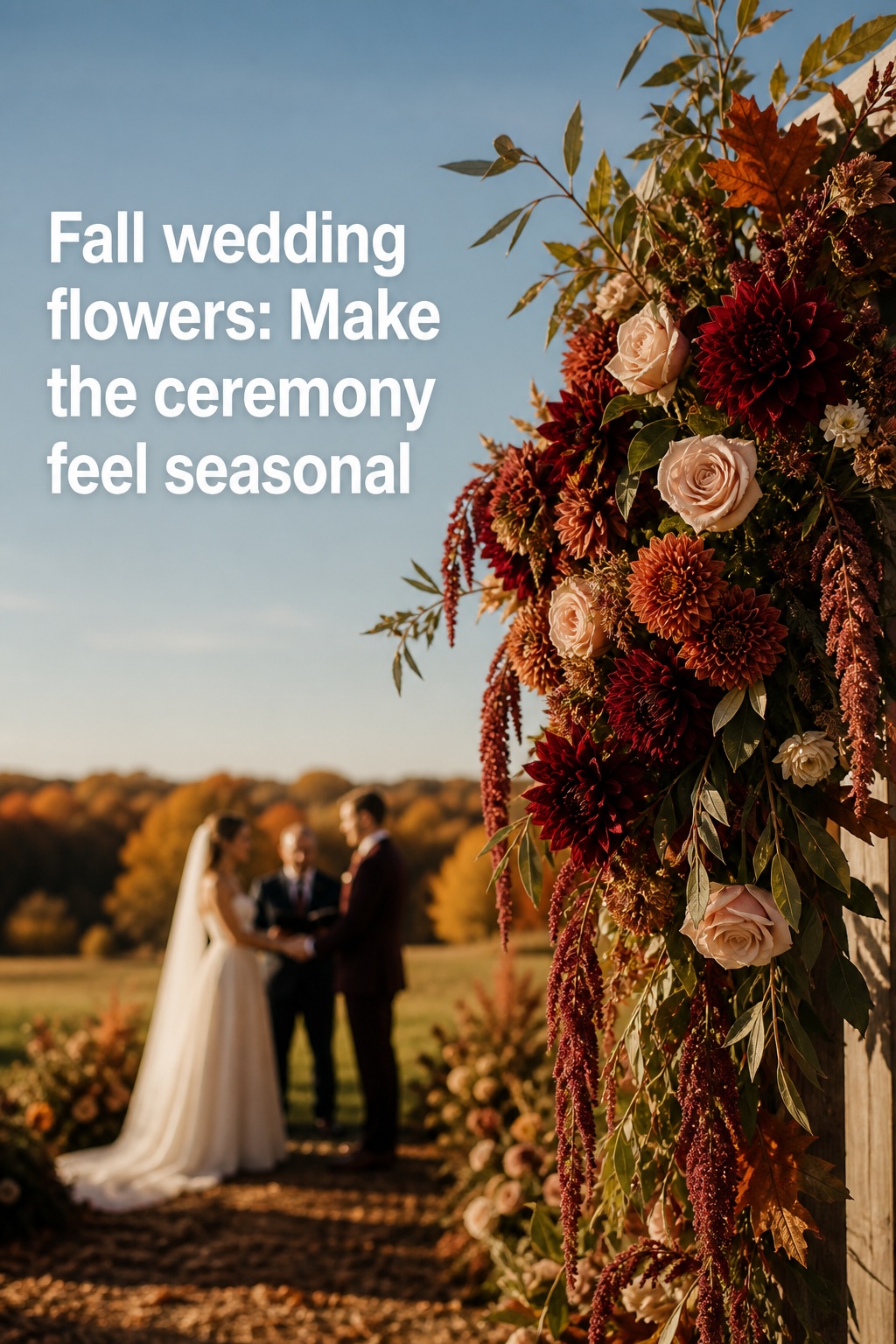
Decision Checklist: Build a Fall Flower Recipe
Once the conditions are clear, choose flowers by role instead of choosing a long list of names. This makes the design easier to repeat and gives your florist room to work with the market. A strong recipe usually includes a focal flower, a volume flower, a line or movement flower, a texture element and foliage. You do not need all five categories in every small arrangement, but the framework helps you avoid a flat or chaotic result.
4. Pick one to three focal flowers
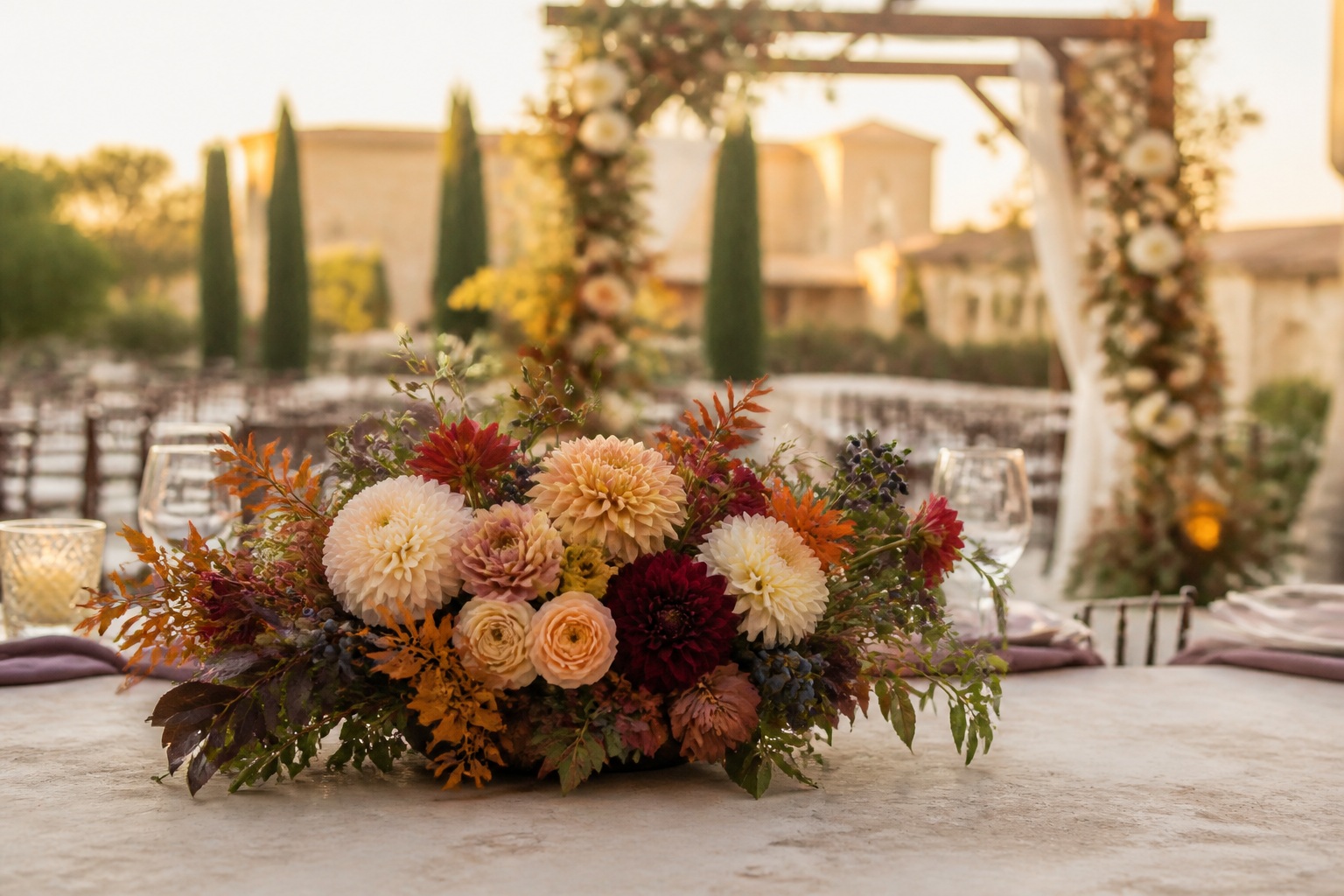
Dahlias are a natural fall focal because their layered petals create scale and drama. Cafe au lait dahlias can soften a palette, while burgundy, rust, plum and deep pink varieties create a moodier statement. Roses are dependable and flexible, with options ranging from garden-style shapes to classic hybrid tea blooms. Calla lilies, protea, orchids or large chrysanthemums can create a more sculptural direction.
Use focal flowers where guests will notice them first, such as the bridal bouquet, ceremony arrangement or sweetheart table. A focal flower does not need to appear everywhere. Repeating its color or silhouette through smaller details often creates better cohesion than filling every vase with the most expensive bloom.
5. Add volume flowers that make the plan practical
Chrysanthemums, mums, carnations, spray roses and standard roses can provide fullness while giving the florist a wider range of colors and price points. Mums are especially useful when you want dense texture in a fall palette. Modern carnations can read as refined when paired with elegant foliage, restrained color and well-designed vessels.
Volume flowers are not filler in the dismissive sense. They establish the visual weight of a centerpiece and help a bouquet look finished from every angle. Ask your florist which varieties are locally available near your date, how they open and whether they are sturdy enough for your venue conditions.
6. Use line, texture and movement to make the arrangement feel seasonal
Amaranthus, grasses, vines and branching stems create movement and help an arrangement feel less like a round ball of flowers. Ranunculus, scabiosa, berries, seed pods and yarrow add smaller points of interest. Hypericum, rose hips, crab apple branches and other berried elements can bring a harvest note without requiring literal pumpkins in every design.
Foliage can do as much seasonal work as the flowers. Eucalyptus, olive, dusty miller, oak leaves, maple leaves, gingko leaves, Italian ruscus and autumn branches each produce a different effect. Ask whether the foliage will be fresh, dried, preserved or artificial, and confirm that any botanical material is safe for the venue and easy to remove after the event.
7. Create a substitution rule before the wedding week
Flower availability changes with weather, farms, imports and crop timing. Instead of asking for one exact flower at any cost, give your florist a hierarchy. For example, your first choice may be cafe au lait dahlias, your color requirement may be warm blush, and your shape requirement may be a large layered focal bloom. If the dahlia is unavailable, another blush dahlia, garden rose or specialty chrysanthemum may satisfy the design.
Write down what must not change and what can change. Your non-negotiables may be a mostly neutral palette, no strong fragrance, locally grown flowers where possible and a loose garden shape. Flexible details may include the exact shade of peach, the filler flower or whether the arrangement includes berries. This protects the overall look while allowing professional sourcing decisions.
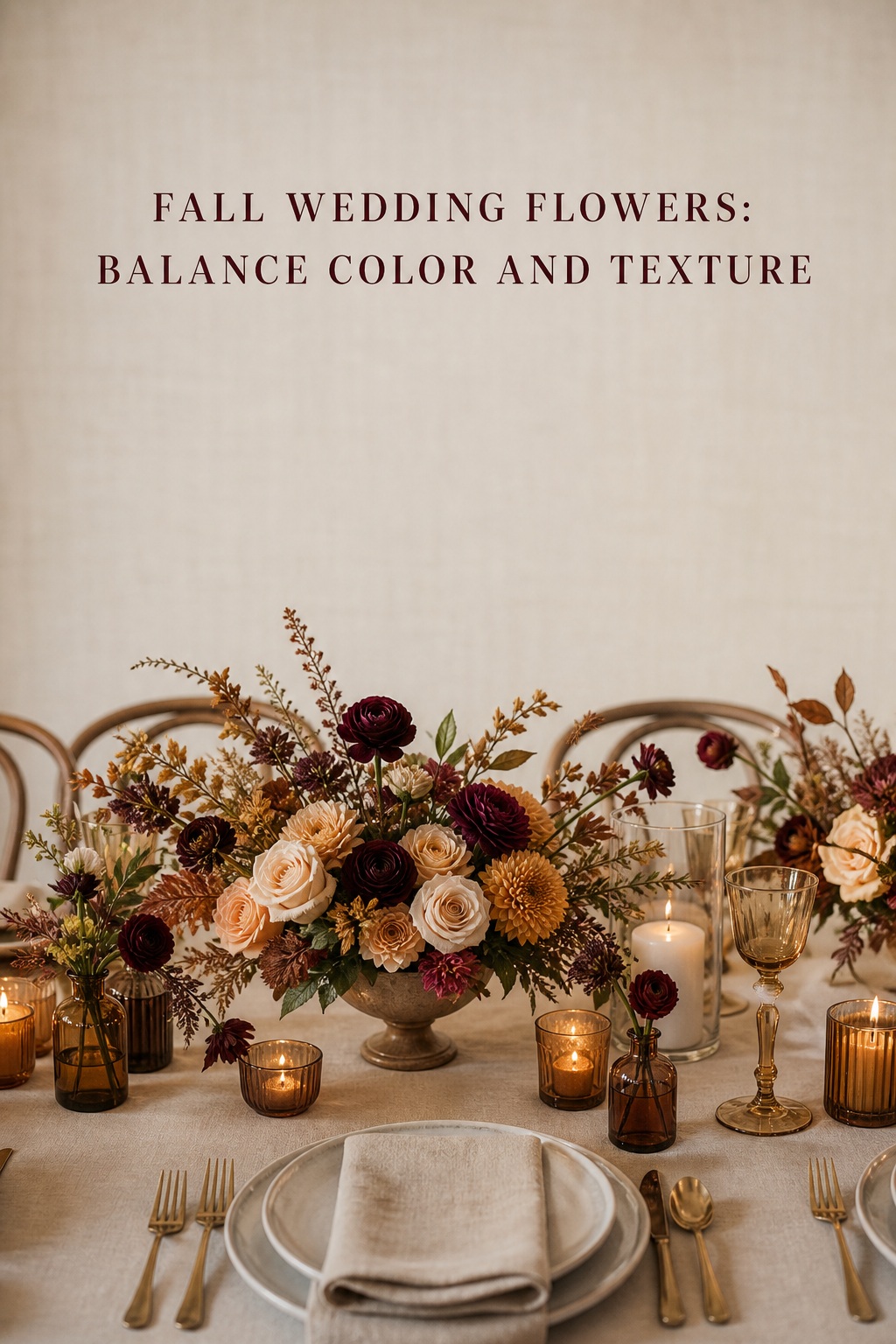
Worked Examples: Match Fall Wedding Flowers to Each Moment
A floral plan feels cohesive when every part has a job. The following examples are not fixed recipes. Use them as starting points, then adjust the scale, color and flower roles for your venue and priorities.
8. Bridal bouquet: combine one focal idea with a clear silhouette
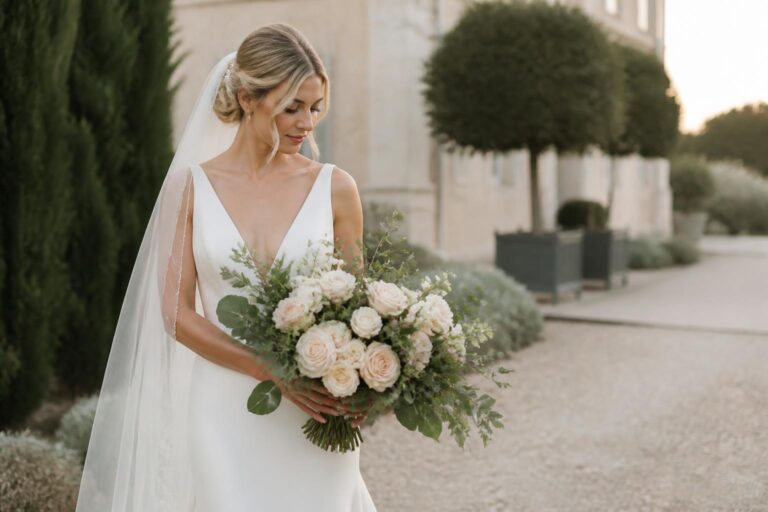
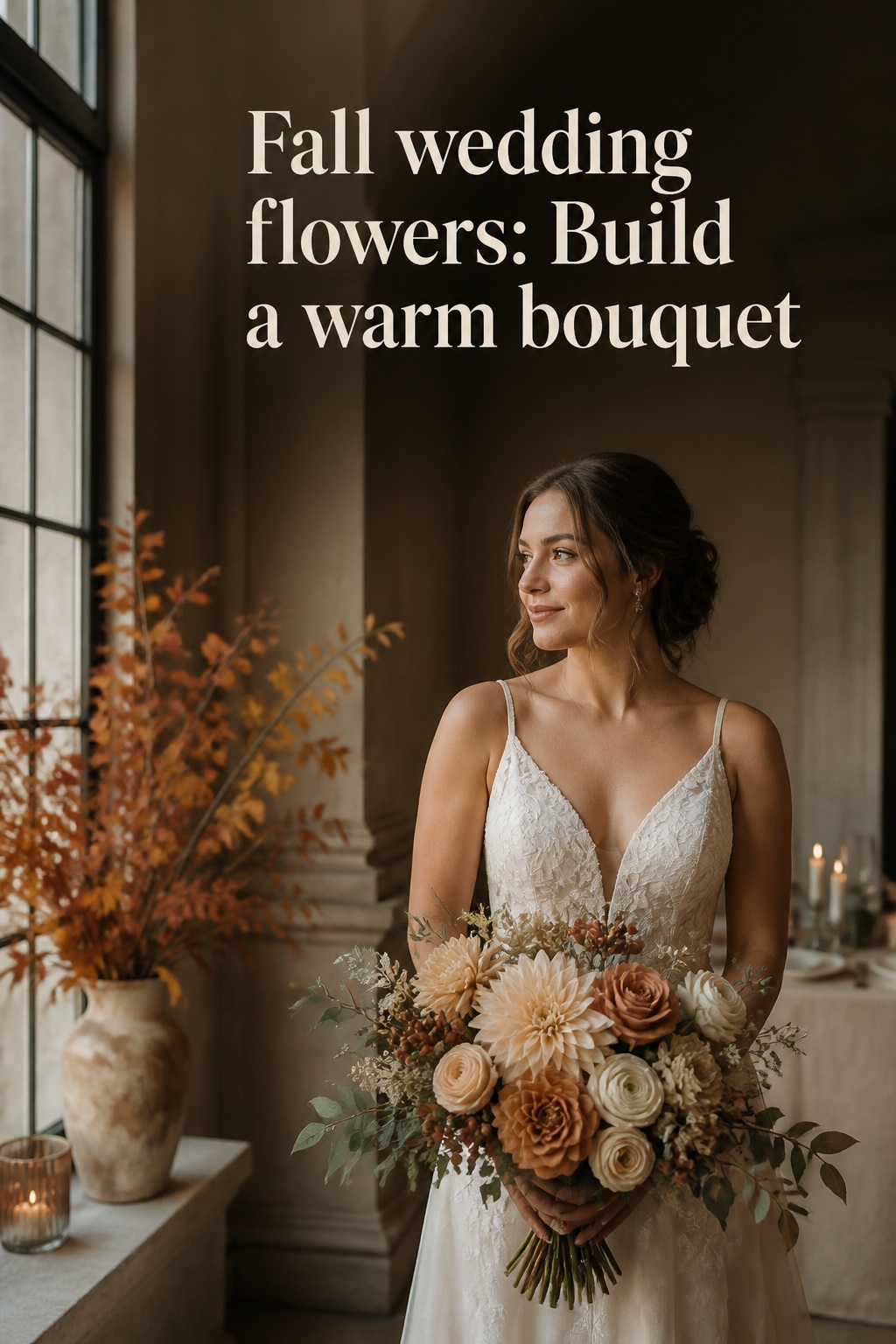
For a soft autumn bouquet, combine blush or cafe au lait dahlias with caramel roses, ivory ranunculus, muted berries and airy foliage. For a dramatic version, use burgundy dahlias, dark red roses, plum accents and trailing amaranthus. For a modern neutral bouquet, pair cream roses, bleached foliage, dried textures and a restrained ribbon. The fall message comes from the balance of tones and textures, not from the number of seasonal objects included.
Choose the shape with your dress and photography in mind. A compact hand-tied bouquet works well with a clean gown and formal portraits. A loose asymmetrical bouquet can suit a garden venue, flowing fabric or a relaxed ceremony. A cascade or trailing shape needs secure mechanics and enough clearance that it does not catch on the dress, chairs or transportation.
9. Ceremony: spend on the frame guests will remember
For a ceremony arch, a partial installation often gives better value than covering every inch. Place flowers where they will frame faces in photos and where the structure is visible from guest seating. A broken arch with one grounded floral cluster can feel more intentional than a thin garland spread across the entire frame.
On an aisle, use small clusters at the first few rows, meadow-style ground arrangements or reusable arrangements at the entrance. If the ceremony and reception share a venue, design pieces that can be moved safely. Confirm who moves them, when the move happens, what vessels are needed and whether the venue allows candles, petals, branches or installation hardware.
10. Reception tables: protect sightlines and meal service
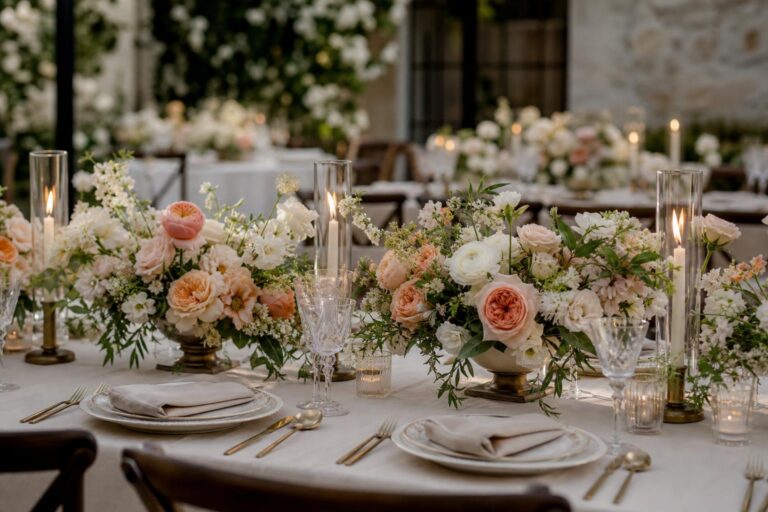
Centerpieces should support conversation, not compete with it. For round tables, use a low compote, clustered bud vases or a compact arrangement that leaves room for plates and glasses. For long tables, repeat a rhythm of low vessels, candles and small foliage moments, or use a grounded installation between place settings. Check the exact table width and whether chargers, menus, water glasses and serving dishes will share the surface.
Fall texture can come through vessels as well as flowers. Amber glass, warm ceramic, stoneware, dark wood, brushed metal and clear glass each change the impression of the same blooms. If the venue already has patterned carpet, ornate chairs or strong wall color, simpler vessels may keep the overall room calm.
11. Personal flowers and small details: repeat, do not duplicate
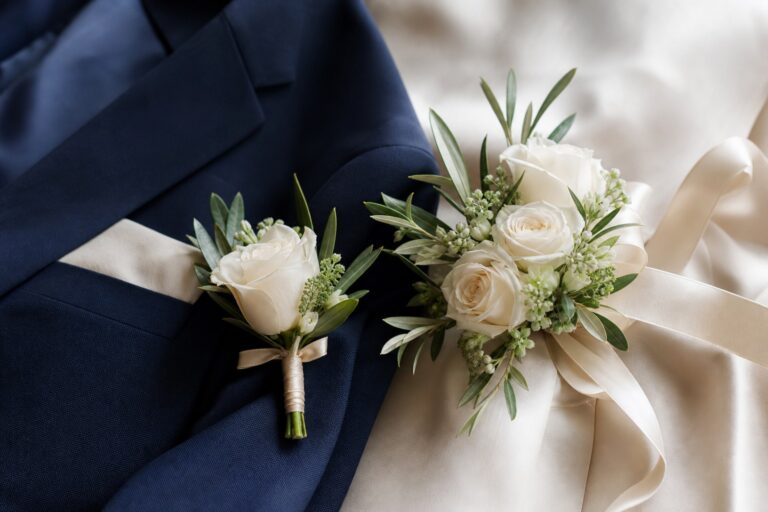
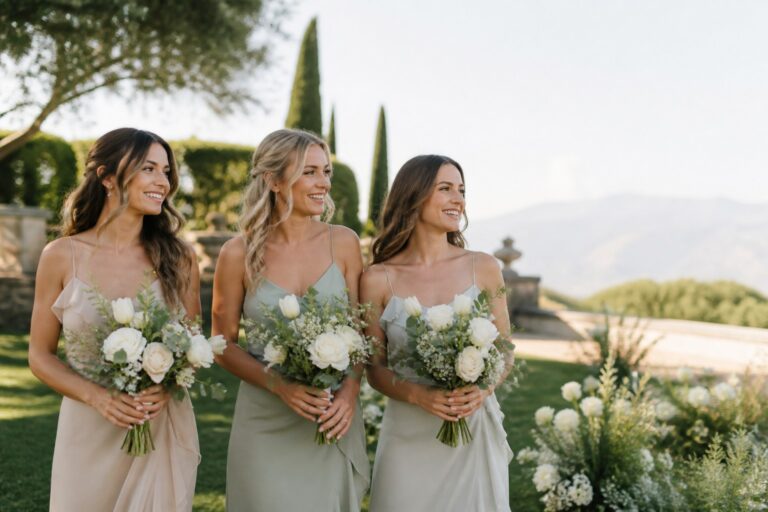
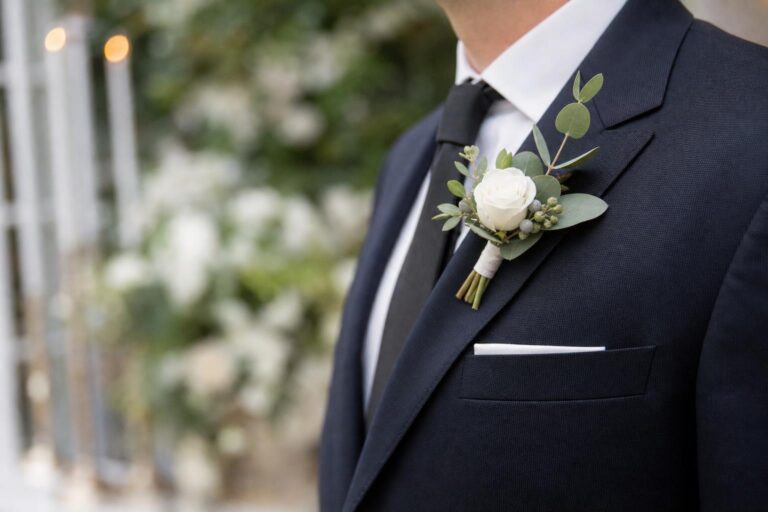
Attendant bouquets do not need to be identical copies of the bridal bouquet. Give them the same palette and one or two repeated elements, then vary the size or flower balance. Boutonnieres can use a single sturdy bloom, a small berry detail, foliage or a dried accent. Corsages should be light enough to wear comfortably and secure enough for movement.
Small arrangements work best when they solve a visual or practical need. A bar arrangement can add color at eye level. A welcome-table design can introduce the palette. Cake flowers can echo the bouquet without overwhelming the cake. If a detail will be seen by very few guests and adds a separate delivery or setup cost, place it lower on the priority list.
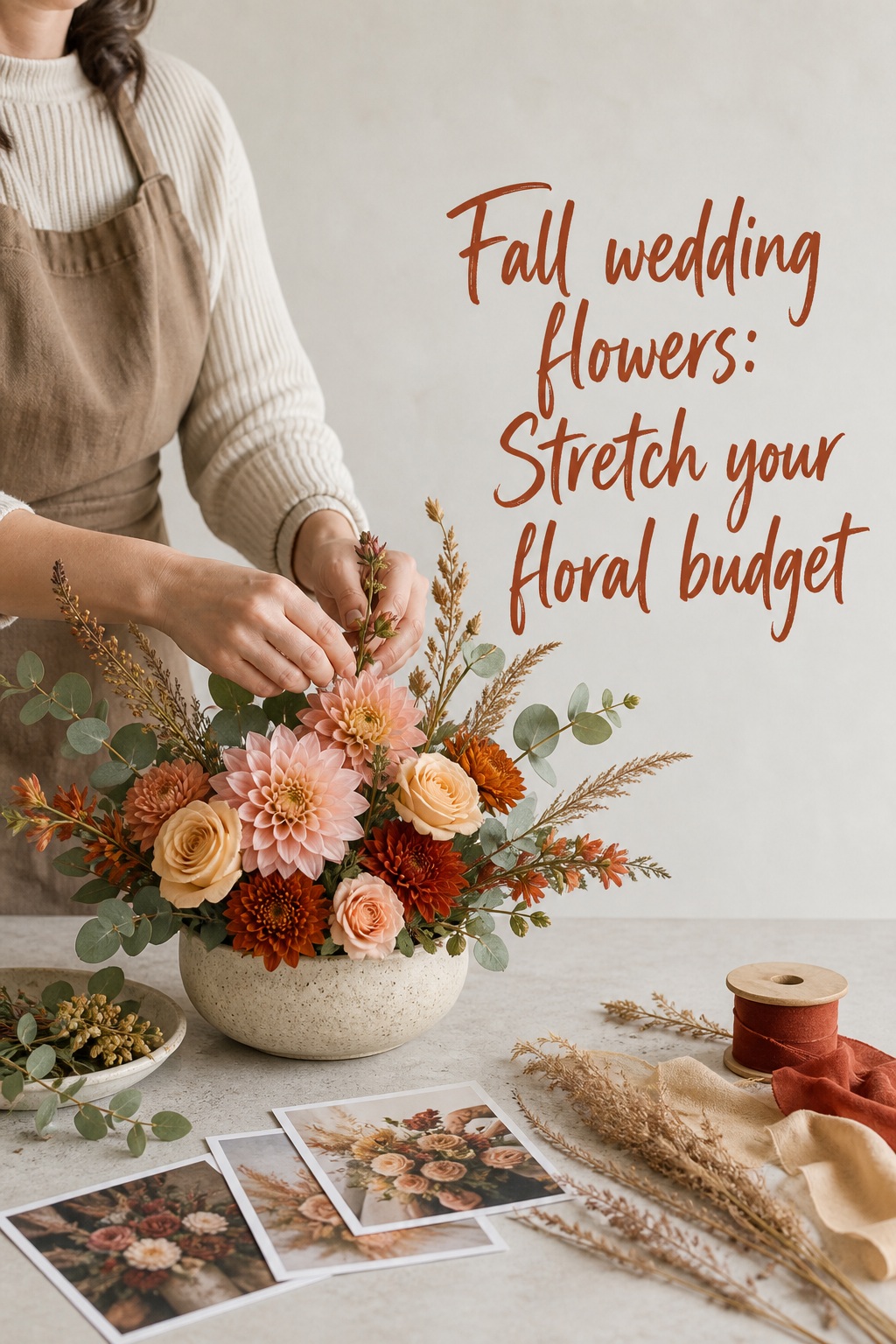
Final Review: Budget, Reuse, Weather and Delivery
The final review is where a beautiful concept becomes a reliable wedding plan. Read the proposal line by line and ask practical questions. The most useful floral conversations are specific: who installs the arch, what happens if the preferred flower is unavailable, when bouquets arrive, where arrangements are stored, who moves ceremony flowers and who collects rental vessels?
12. Reuse the pieces that can travel safely
Ask the florist to identify pieces that can move from ceremony to reception without being redesigned. A pair of aisle arrangements may become sweetheart-table flowers. A ceremony pedestal arrangement may move to the bar or welcome table. Bridesmaid bouquets can decorate a cake table or lounge area after the ceremony. Reuse is not always free because it requires labor and timing, but it can help one design serve several guest-facing moments.
Do not assume every installation can be moved. Large arches, foam-based mechanics, water-filled vessels and arrangements placed outdoors may be too risky. Decide in advance which pieces are reusable, who handles the move and what happens if the timeline becomes compressed.
13. Build a weather and transport plan
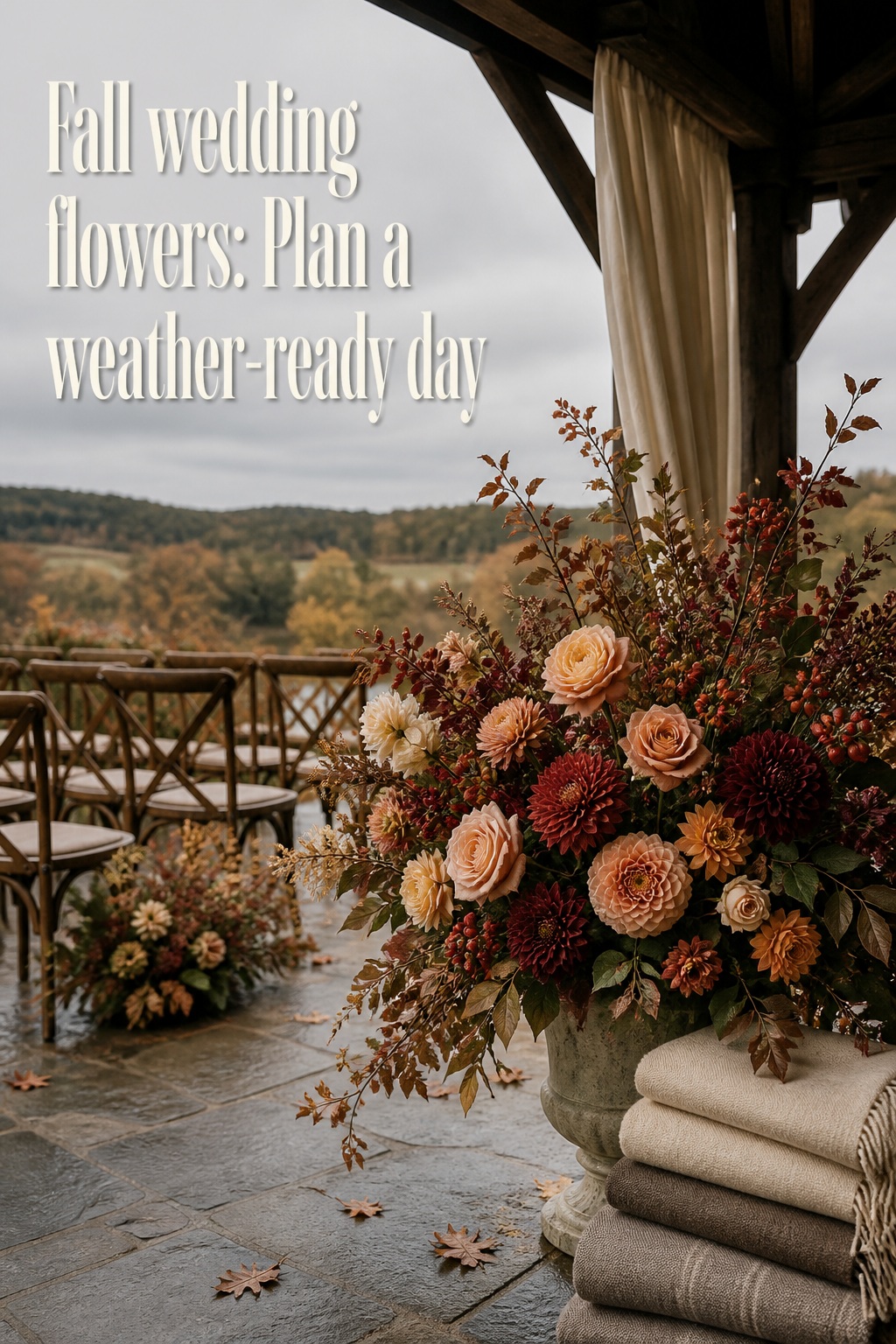
For outdoor fall weddings, prepare for sun, wind, rain and temperature swings. Ask about water sources, shade, weighted vessels, wind-resistant mechanics and a protected storage area. Keep delicate flowers out of direct heat, and do not leave bouquets in a car while the wedding party takes photos. If the ceremony is outside and the reception is indoors, confirm the handoff time rather than leaving the move to the last minute.
Have a practical rain plan that preserves the floral design. A covered ceremony location may need different installation dimensions. A tent may require attachment approval. A late-season sunset may mean the flowers are photographed in cooler, dimmer light than expected, so include a few lighter tones or reflective details if photography matters more than a deeply moody palette.
14. Ask about sourcing and responsible disposal
If locally grown or lower-impact flowers matter to you, say so early. Your florist can explain which flowers are available from nearby growers, which need to be imported and which dried or reusable materials make sense. Local does not automatically mean every stem will be available on your date, but the conversation can lead to a more flexible and seasonally honest design.
Ask whether vases, mechanics and packaging can be returned, reused or recycled. If you want to donate flowers after the reception, confirm the pickup plan before the wedding. Some venues have restrictions on composting, water disposal, confetti, leaves or floral foam, so include those details in the final vendor notes.
15. Use a final florist brief instead of a giant inspiration board
Your final brief should fit on a few clear pages. Include the date, venue, guest count, palette, attire references, must-have flowers, acceptable substitutions, floral priorities, arrangement quantities, delivery times, setup locations, reuse instructions and budget ceiling. Add a short sentence describing the desired feeling, such as “warm garden texture with burgundy accents and clean modern vessels.”
Limit inspiration photos to examples that communicate the shape, color, texture or scale you actually want. Label what you like in each image. “I like the airy spacing and trailing line” is much more useful than “make it like this.” A clear brief gives the florist creative room while protecting the decisions that matter most to you.
FAQ
What flowers are best for a fall wedding?
Dahlias, chrysanthemums, roses, ranunculus, sunflowers, calla lilies, asters, marigolds and zinnias are useful fall choices, depending on your region and wedding date. Add foliage, berries, branches and seed pods for seasonal texture. Ask your florist which varieties are reliably available locally rather than treating a general seasonal list as a guarantee.
Do fall wedding flowers have to be orange?
No. Fall wedding flowers can use burgundy, plum, navy, dusty blue, blush, peach, cream, sage, caramel or neutral tones. To make a less traditional palette feel autumnal, add deeper contrast, textured foliage, berries, branches, dried elements or warm vessels.
How can I save money on fall wedding flowers?
Choose two or three floral priorities, use seasonal volume flowers, keep guest tables simple, reuse ceremony pieces and allow substitutions within a clear color and shape brief. Compare proposals by labor, delivery, rentals and installation as well as flower ingredients. A smaller number of intentional focal designs often creates more impact than many undersized arrangements.
Can I use my favorite spring or summer flower for a fall wedding?
Often, yes. Your florist can check availability, import timing and cost, then make the flower feel seasonal through color, foliage and supporting blooms. You can also use the favorite flower in the bouquet or one focal arrangement while choosing more available fall flowers for tables and larger installations.
What should I ask about flowers for an outdoor fall wedding?
Ask how the team will protect flowers from wind, rain, direct sun and temperature changes. Confirm shaded storage, weighted vessels, delivery timing, water access, installation hardware and the rain-plan location. Also ask who moves the arrangements if the ceremony and reception use different spaces.
Are dried or faux flowers a good option for fall wedding flowers?
They can be useful for arches, signage, keepsakes, rentals or designs that must be installed early. Fresh flowers may still be preferable for the bouquet and close-up portraits. Combine materials carefully, and check whether the venue permits dried botanicals, loose petals, foam, candles or materials that shed.