White and Gold Wedding Cake Styling That Feels Couture-Luxe
The white-and-gold moment: a cake that dresses the whole wedding
You see it right after the vows—when the room softens into candlelight, when cameras tilt toward the dessert table, when your reception look shifts from “ceremony” to “celebration.” A white and gold wedding cake isn’t just a centerpiece; it’s a style signature. It reads like an elegant outfit in dessert form: crisp white as the base layer, gold as the jewelry, and texture as the fabric that makes it feel personal.
The mood is timeless but not stiff. White brings calm, clarity, and a bridal glow; gold adds warmth, ceremony, and that unmistakable “this is the main event” energy. Together they create an aesthetic that fits modern ballrooms, intimate garden receptions, and minimalist venues where every detail has to earn its place.
Part of the appeal is how adaptable it is. A white wedding cake can lean romantic, sleek, vintage, or quietly luxe—then gold decides the volume. Subtle gold accents whisper; bold gold detailing sings. That’s why couples keep returning to this palette when they want something elevated, photo-ready, and easy to coordinate across florals, stationery, attire, and tablescape styling.
How to think like a stylist: building a “white and gold wedding cake elegant” aesthetic
To plan a cake with the ease of styling a cohesive wardrobe, start with three decisions: the base finish (your “fabric”), the gold treatment (your “accessories”), and the silhouette (your “cut”). When those three align with your venue and the formality of the day, the cake looks intentional—never like an afterthought placed on a pretty stand.
Turn wedding inspiration into a plan you can actually follow.
Zarellea brings your guest list, budget, vendors, and day-of details into one shared space — so no beautiful idea gets lost in the shuffle.
In practical terms, this means choosing whether your white reads as clean and architectural or soft and romantic, then deciding whether your gold feels like a fine highlight or a statement. Finally, you pick a tiered shape that suits your guest count and your photo angles. The goal isn’t to chase a single “perfect” look; it’s to create a gold and white wedding cake elegant enough to belong naturally in your wedding album.
Style logic: base, shine, and silhouette
A white base sets the tone—smooth for modern minimalism, textured for romance, or sculpted for a couture feel. Gold then becomes the finishing layer: delicate edging, hand-painted brushwork, or ornate detailing that feels like heirloom jewelry. Silhouette is the quiet power move: tall tiers feel formal and grand; shorter, wider tiers feel intimate and contemporary while still photographing beautifully.
- Base finish: smooth, textured, or sculpted
- Gold accents: subtle highlights or bold focal points
- Silhouette: tall and classic, or low and modern
Look: Clean minimal tiers with a fine-gold edge
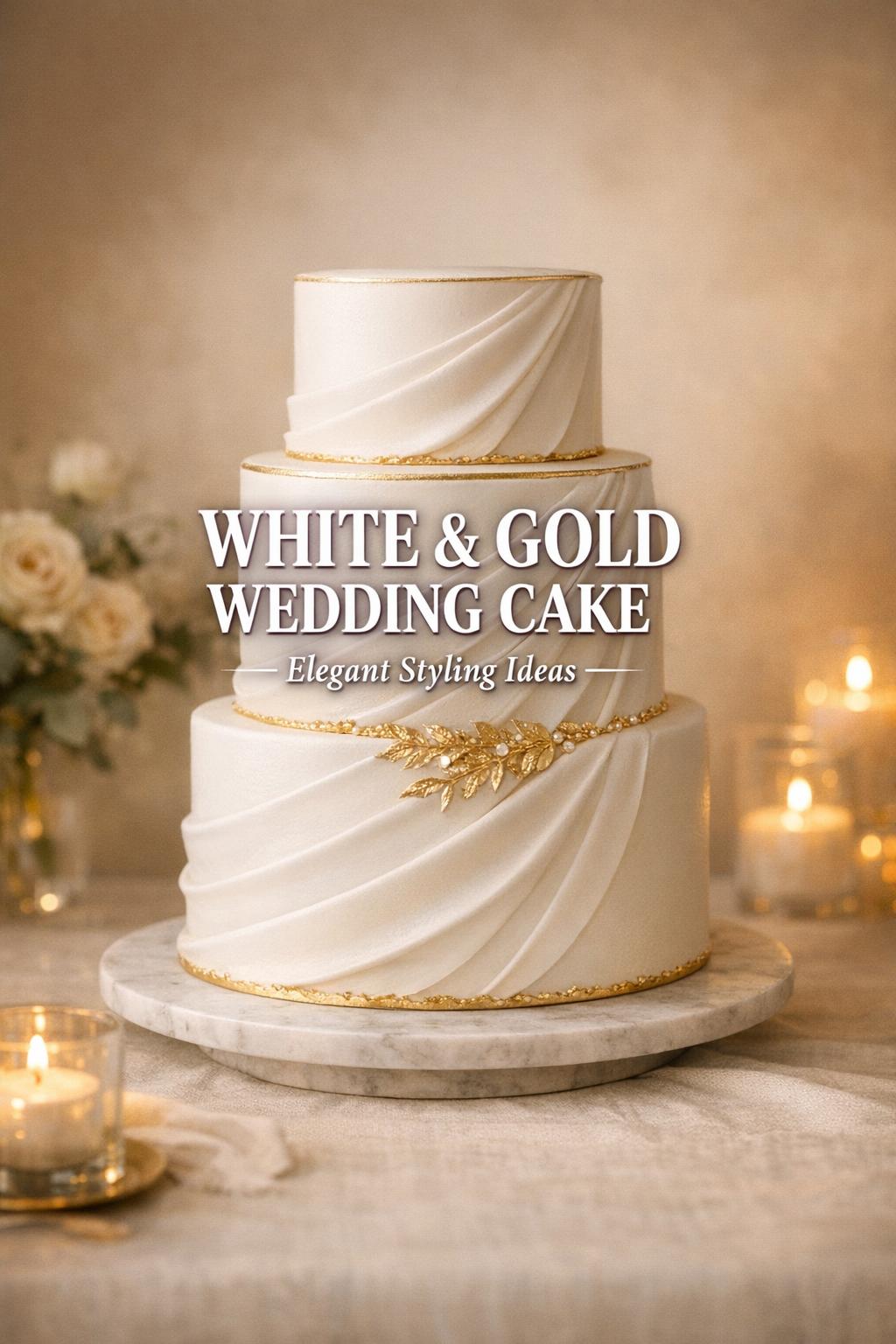
This look is the bridal equivalent of a perfectly tailored dress with a single, gleaming accessory. The silhouette feels calm and intentional—clean tiers that let the room breathe, especially in modern venues or receptions where your flowers and lighting are doing quiet, cinematic work.
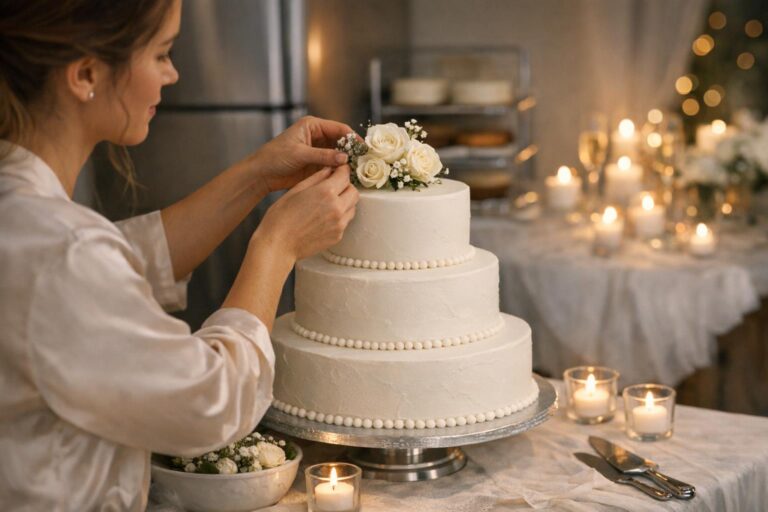
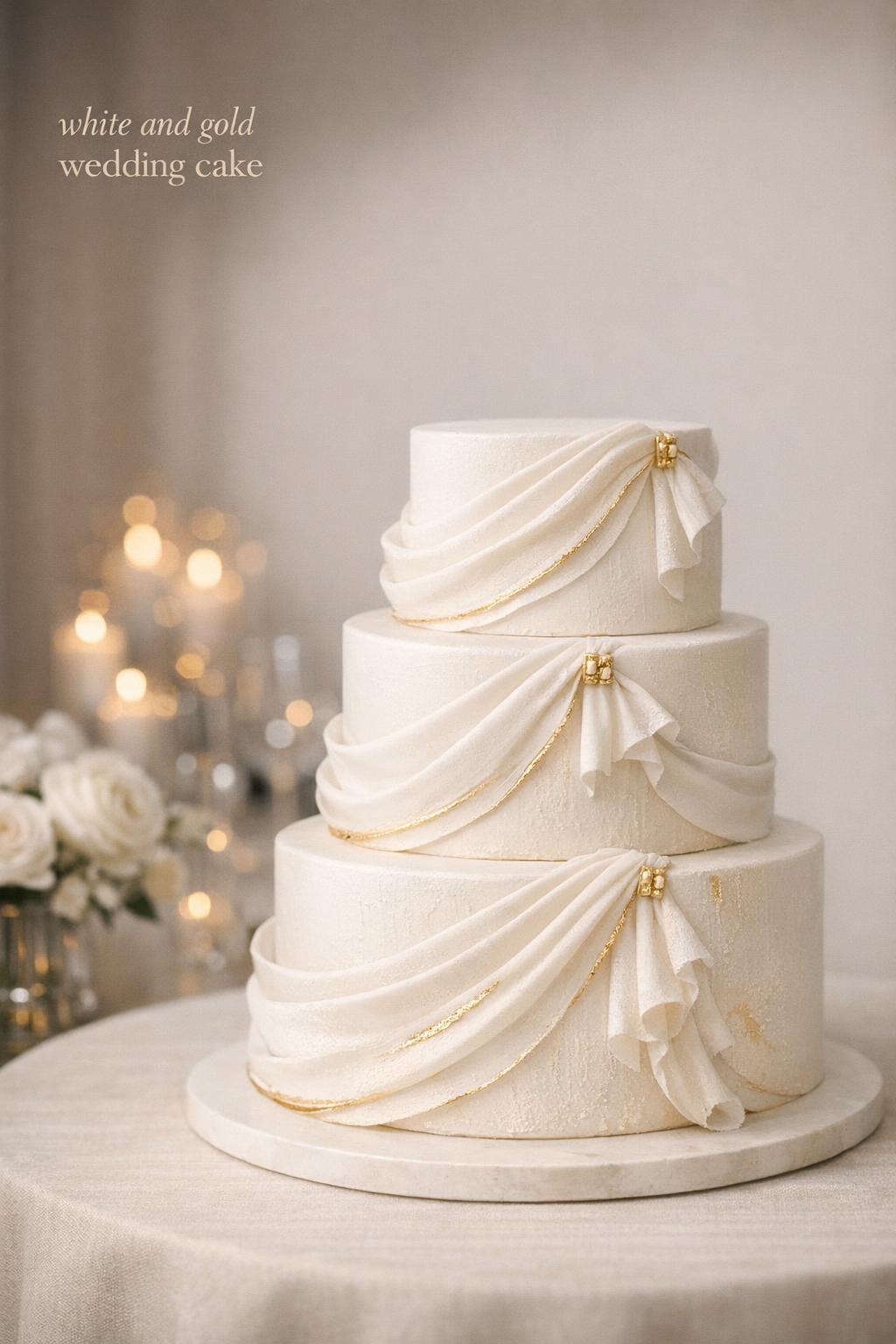
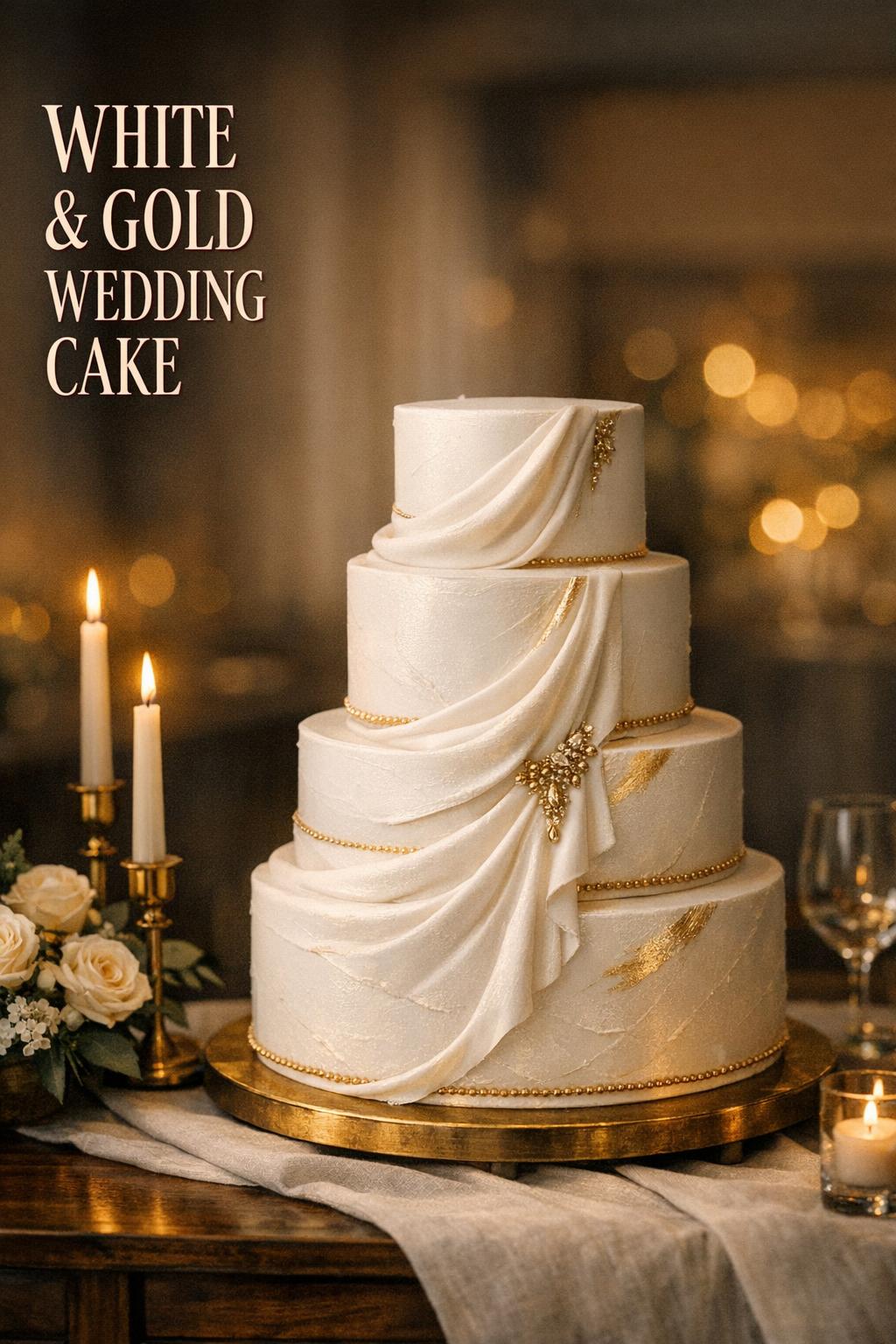
Think of a white wedding cake with a smooth finish, then a fine gold edge that traces each tier like delicate piping in metallic. The palette stays disciplined: bright white and restrained gold, with minimal extra texture so the gold reads crisp in photos from every distance.
Why it fits the aesthetic: it delivers “white and gold wedding cake elegant” without leaning ornate. If your gown, suit, or décor already has detail—lace, sparkle, statement florals—this cake balances the visual weight and keeps the overall wedding style refined.
Look: Romantic texture with soft gold highlights
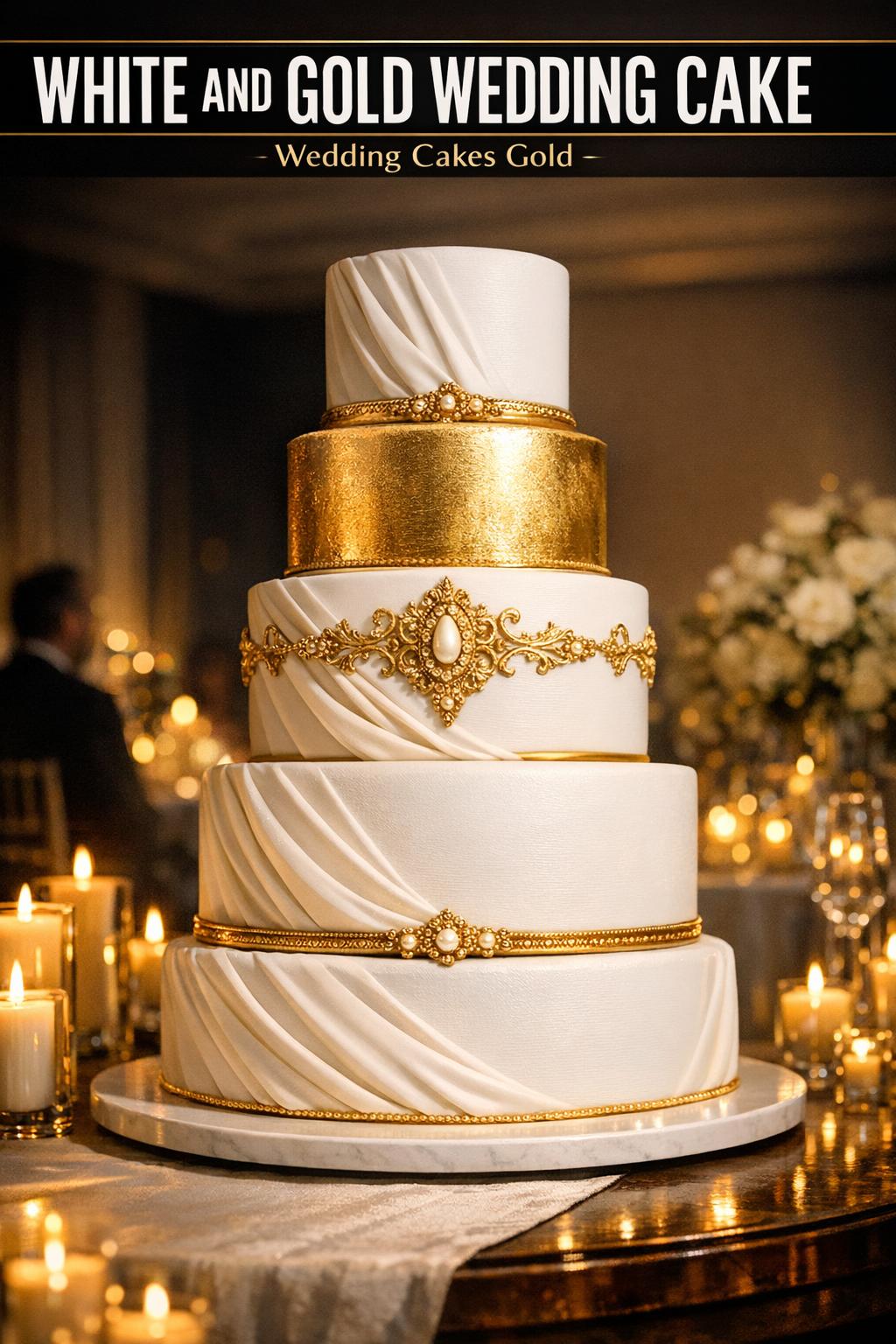
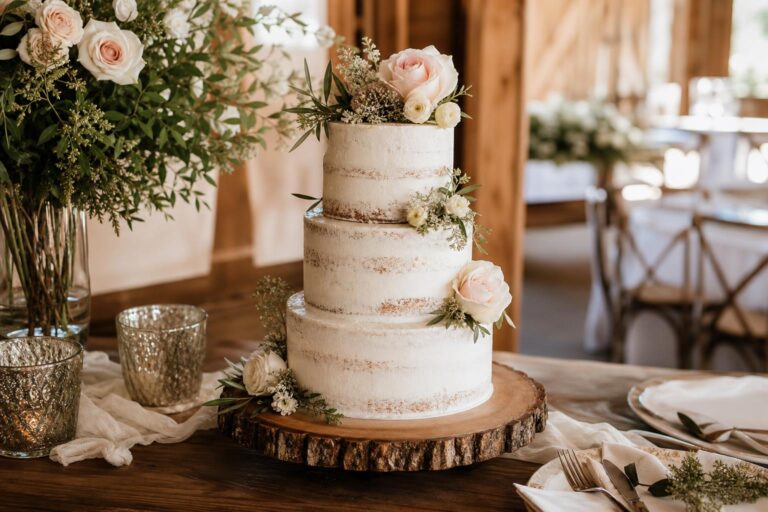
For couples who want warmth and emotion, this look leans into texture—like a dress with dimensional fabric that catches light when you move. It feels especially at home in intimate receptions, garden-inspired settings, or any wedding design that prioritizes softness over shine.
The white base is still the star, but the finish isn’t perfectly flat; it has gentle movement—subtle ridges, a textured pattern, or handcrafted detail that reads artisanal. Gold appears like a glow: light accents that kiss the texture rather than covering it, keeping the cake romantic instead of flashy.
Why it fits the aesthetic: it keeps the “gold” in wedding cakes gold feeling like candlelight rather than a spotlight. The result is a gold and white wedding cake elegant enough for a formal wedding, but emotionally soft enough for a personal, story-driven celebration.
A quick reality check: what makes gold look luxe (and what makes it look loud)
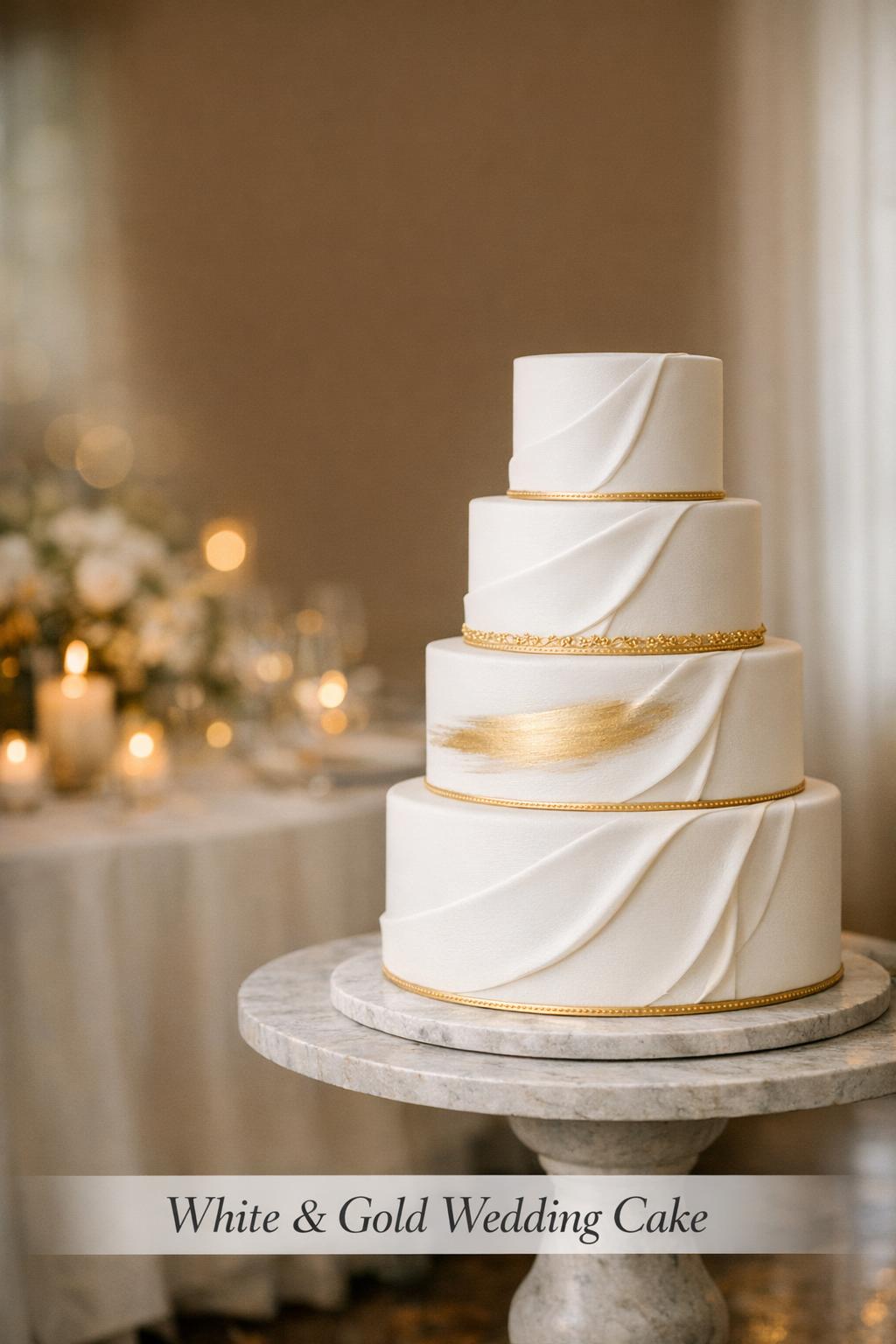
Gold is powerful because it’s instantly readable from across the room. That’s also why it can overwhelm a design if it’s applied without a plan. The difference between luxe and loud often comes down to placement, spacing, and whether the gold supports the shape of the cake or competes with it.
As a stylist, I think of gold like statement earrings: they’re stunning when they frame the face, but too much everywhere can blur the whole look. On a cake, gold is most flattering when it has room to breathe—either concentrated in one focal area or repeated in small, consistent details.
- Luxe gold feels intentional: it traces edges, frames tiers, or highlights a specific texture.
- Loud gold feels accidental: it appears in multiple competing styles (different patterns, random placement) without a clear rhythm.
- Most timeless approach: choose one “hero” gold technique and one supporting detail.
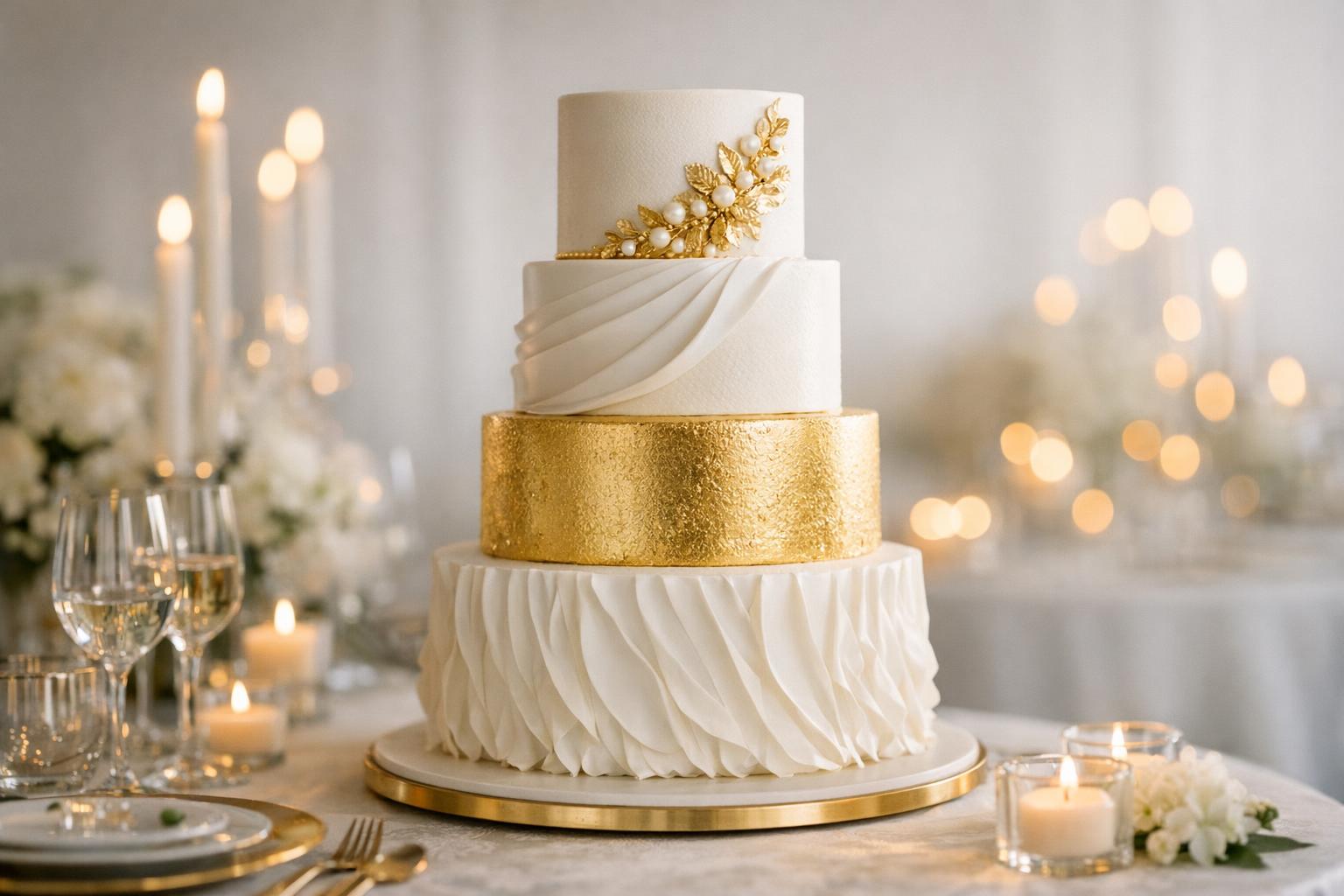
Look: Statement gold detailing over a classic white wedding cake
This is the reception equivalent of a clean white gown paired with heirloom jewelry—confident, luminous, and undeniably formal. The cake becomes the jewel box moment of the room, perfect when your venue already feels grand or when you want the dessert table to feel like a focal installation.
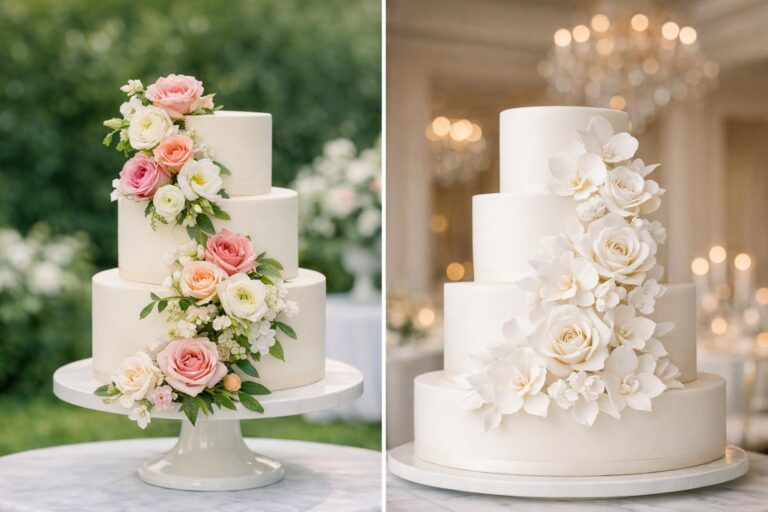
The silhouette can stay classic, but the gold becomes more assertive—ornate detailing, bold patterning, or a concentrated gold feature that creates immediate impact. The white base keeps everything bridal and bright, while the gold gives the structure depth and celebration.
Why it fits the aesthetic: it answers the desire for wedding cakes gold that feel special enough for the occasion. If your wedding style leans luxury or black-tie, this look holds its own next to elevated tablescapes and formal attire without feeling out of place.
Look: Modern monochrome white with gold “jewelry” accents
This look is sleek and editorial—like a monochrome outfit where the accessories are the entire point. It’s ideal if you love clean lines and want a cake that photographs like design rather than decoration.
Start with a white-on-white approach: smooth tiers, subtle tonal detail, or understated structure. Then add gold in a way that feels like jewelry placement—precise accents, a deliberate motif, or a refined outline that draws the eye to the silhouette rather than distracting from it.
Why it fits the aesthetic: it’s “white and gold wedding cake elegant” with a modern edge, perfect for couples who want romance, but prefer it tailored and uncluttered.
Key pieces that complete the cake “outfit” (beyond the frosting)
A cake doesn’t live alone; it lives in a scene. The stand, the table linen, the backdrop, and the lighting function like shoes and accessories—quiet details that either elevate the look or dilute it. When couples feel like their cake looked different in person than in their inspiration photos, it’s often because the surrounding styling didn’t match the cake’s mood.
If your cake is clean and minimal, give it negative space and a refined stand so the silhouette reads. If your cake is ornate with wedding cakes gold detail, keep the table styling calmer so the gold stays intentional. If your cake has soft texture, lean into romantic surroundings so the look feels cohesive rather than mixed-message.
How to recreate the look at your venue
- Backdrop: keep it simple so white stays bright and gold stays crisp in photos.
- Table linen: choose a clean base so the cake reads as the focal point rather than one detail among many.
- Lighting: warm, flattering light helps gold feel rich; harsh light can make metallic details read flat.
- Spacing: give the cake room—crowding it with décor can hide the very details you paid for.
Look: Soft-glam reception styling with a gold-and-white wedding cake elegant centerpiece
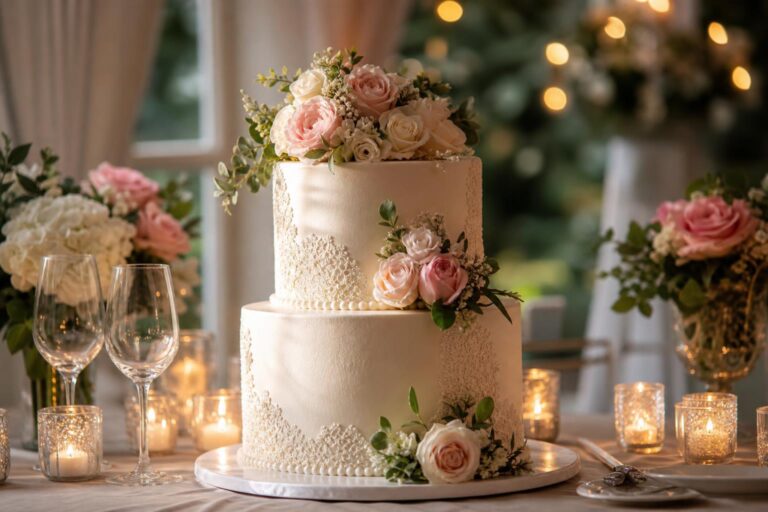
This look is made for that late-evening reception shift—music up, lights low, and the cake glowing like the last golden hour of the day. The feeling is romantic and celebratory, with enough shine to match the energy of the dance floor without stepping into over-the-top territory.
The cake keeps a white base for bridal clarity, but the gold is placed where it can catch ambient light—edges, small motifs, or a focal tier that becomes the “necklace” of the design. The overall impression is polished, flattering, and endlessly photographable.
Why it fits the aesthetic: it bridges modern and classic. If your wedding day includes multiple visual moments—ceremony calm, cocktail glow, reception sparkle—this cake transitions beautifully through all of them.
Tips from the planning side: making the design feel effortless on a real wedding timeline
Designing a white and gold wedding cake is a creative project, but it also has to survive a real day: transport, room temperature shifts, photography timing, and the pace of your reception. The most beautiful cakes are the ones planned with reality in mind—so they look just as intentional when it’s time to cut them as they did in the inspiration stage.
Tips to keep white looking crisp and gold looking refined
White reads every shadow and every smudge, and gold reads every uneven edge—so clean execution matters. If you’re drawn to heavy gold detailing, consider placing it where it’s easiest to control visually (a border, a defined section, a single tier) rather than scattering it across the entire cake. If you love a minimal look, make sure the finish is intentional—smooth and polished rather than “plain.”
- Choose one primary gold moment (edge, motif, or focal tier) and let everything else support it.
- Keep the white base consistent in tone so the cake photographs cleanly from different angles.
- Make sure the cake’s styling matches the reception mood—minimal cake in a minimal scene, ornate cake in a more formal scene.
Common design missteps (and how to avoid them with confidence)
Most “regrets” around a white wedding cake with gold accents aren’t about the idea—they’re about the mismatch between inspiration and execution. The fix is usually simple: clarify the mood, simplify the gold choices, and make sure your cake’s silhouette matches the formality of your event.
One frequent misstep is mixing too many gold styles at once—an ornate pattern plus random highlights plus multiple border treatments. Another is selecting a very minimal cake while styling the surrounding table with busy décor, which can make the cake disappear. Finally, couples sometimes choose bold gold without considering how it will read under reception lighting, where it can either glow beautifully or dominate the frame.
Style tip: treat gold like a signature, not a scatter
If you want the cake to feel “designed,” decide what the gold is doing: is it outlining the shape, highlighting texture, or creating a focal tier? Once you name the role, it becomes much easier to say no to extra details that don’t support the vision—just like editing accessories for a bridal look.
Choosing the right vibe for your venue: a setting-first approach
A white and gold wedding cake can live in nearly any wedding setting, but the most successful designs respect the room. A modern venue often rewards clean lines and restrained gold. A more traditional, formal space can support richer gold detailing. Outdoor celebrations tend to favor softer texture so the cake feels romantic and natural rather than overly polished against a bright sky.
When you plan from the venue outward, the design choices become simpler: silhouette to match scale, gold intensity to match lighting, and white finish to match the overall styling temperature of your day.
Tips for aligning cake style with the rest of your wedding
- Minimal venue, modern décor: choose a smooth white base with fine gold edges for a tailored feel.
- Formal reception, classic styling: choose a more pronounced gold detail so the cake feels appropriately celebratory.
- Romantic mood, softer design: add texture to the white base and keep gold as a highlight rather than a full pattern.
Making it personal: subtle ways to own the “wedding cakes gold” trend
The white-and-gold palette is popular because it’s timeless, but your cake should still feel like you. Personalization doesn’t have to mean novelty; often the most memorable cakes are the ones that feel quietly specific—like a bridal look that’s classic at first glance, then full of thoughtful details up close.
Consider what you want guests to feel when they see it: calm elegance, romantic warmth, modern minimalism, or formal grandeur. Once you choose that emotional direction, your white and gold wedding cake elegant design choices—texture, gold placement, silhouette—start to fall into place naturally.
A final styling note: let the cake match the moment you want to remember
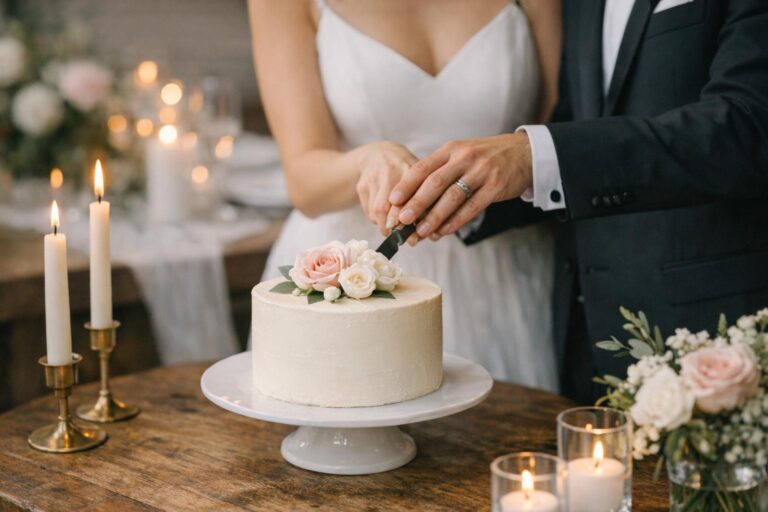
The best white and gold wedding cake doesn’t just match your color palette—it matches your story. Whether you want a white wedding cake with the slightest gold whisper or a gold and white wedding cake elegant enough to anchor a formal reception, aim for a design that feels coherent with the rest of your day: your venue, your lighting, your attire, and the atmosphere you’re creating for the people you love. When it all aligns, the cake-cutting doesn’t feel like a scheduled tradition—it feels like a scene from your own wedding film.
FAQ
What makes a white and gold wedding cake look elegant instead of overly flashy?
Elegance usually comes from restraint and clarity: a clean white base, one primary gold technique (like a fine edge or a focal tier), and enough negative space so the gold reads as intentional rather than scattered.
How do I choose between subtle gold accents and bold gold detailing?
Use your venue and formality as the guide: minimal spaces and modern styling tend to suit subtle gold, while formal receptions can support more pronounced wedding cakes gold detailing without overwhelming the room.
Will a white wedding cake with gold details photograph well in different lighting?
It can, but lighting changes how gold reads; warm, flattering light tends to make gold glow, while harsher light can flatten metallic detail, so it helps to keep gold placement clean and deliberate for consistent photos.
How can I make a white and gold wedding cake elegant if my overall wedding style is minimalist?
Choose a smooth white finish and a precise gold detail—like a thin edge or a refined motif—then style the cake table simply so the silhouette and gold “jewelry” remain the focal point.
What’s the easiest way to keep a gold and white wedding cake elegant when I love texture?
Let texture carry the romance and keep gold as a highlight that follows the texture’s rhythm—this prevents the design from feeling busy while still delivering that warm, celebratory finish.
How do I avoid common design mistakes with a white and gold wedding cake?
Avoid mixing multiple gold styles at once, keep the white tone consistent, and make sure the surrounding cake-table styling doesn’t compete; a cohesive scene is what makes the cake look polished in real life.
Can a white and gold wedding cake work for both intimate weddings and larger receptions?
Yes—adjust the silhouette and gold intensity to scale: intimate celebrations often look best with softer texture and restrained gold, while larger receptions can handle bolder gold placement that reads from across the room.