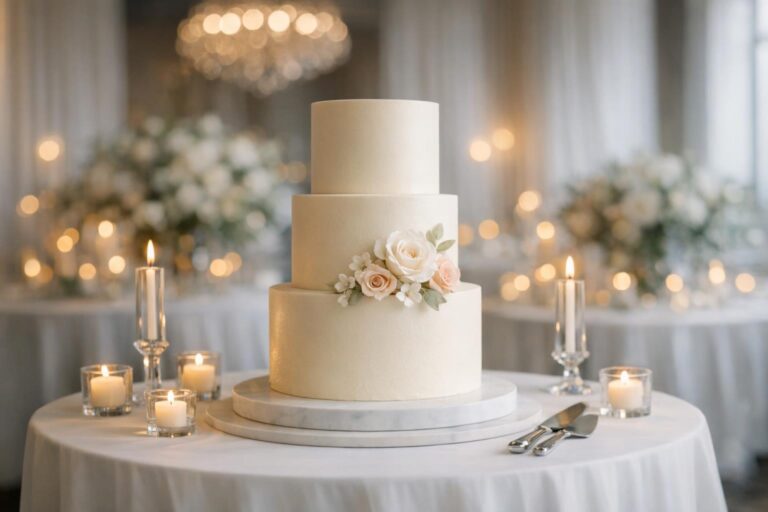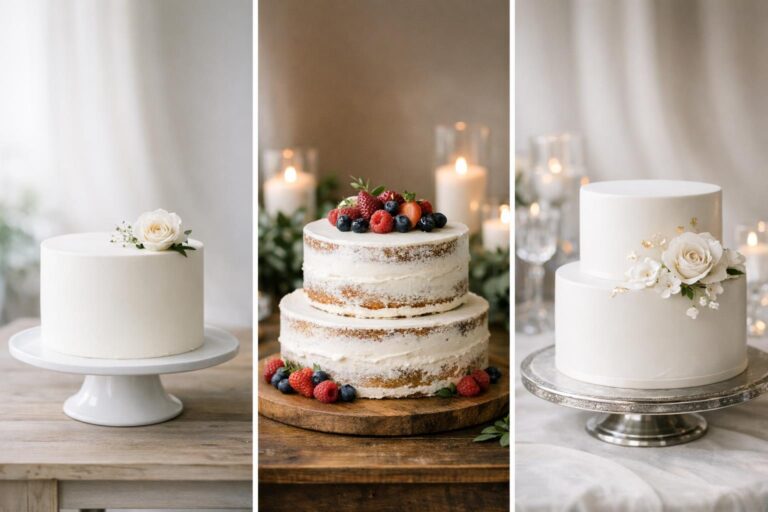
One Tier Wedding Cake Ideas for an Intimate Celebration
There is something quietly striking about a one tier wedding cake. It carries the same sense of ceremony as a grand display, yet its beauty feels more intimate, more edited, and often more personal. For couples planning a smaller celebration, a city dinner reception, a garden gathering, or a modern minimalist wedding, a single-tier cake can look less like a compromise and more like the most intentional detail in the room.
The aesthetic is part of the appeal. A simple one tier wedding cake can feel sculptural in smooth fondant, romantic in soft buttercream, or effortlessly relaxed with semi-naked texture and fresh flowers. It suits candlelit tables, courthouse weddings, rooftop receptions, elegant restaurant venues, and refined backyard celebrations alike. Instead of filling space with extra tiers, the focus shifts to finish, floral accents, color palette, and presentation.
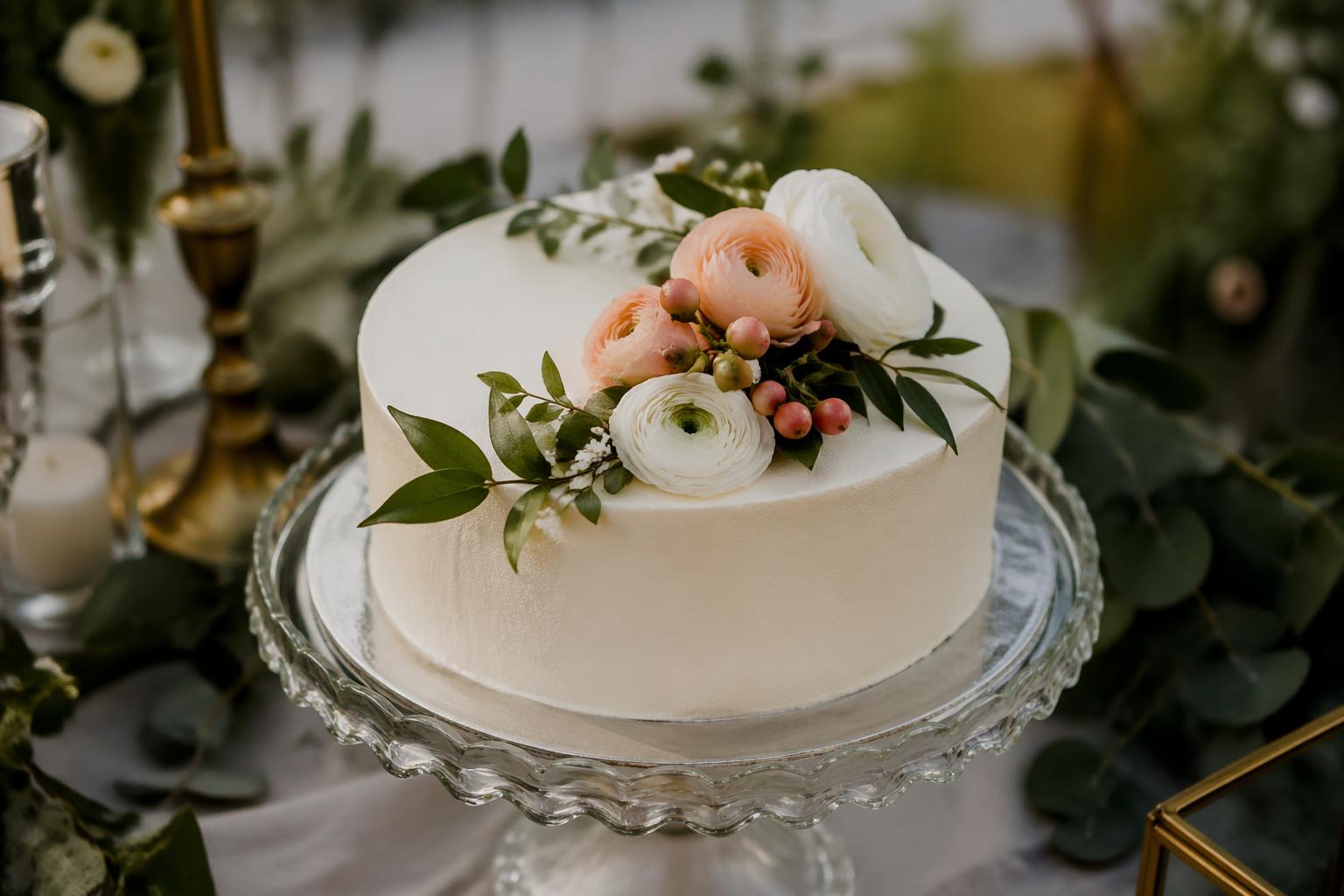
That is why the small one tier wedding cake has become such a compelling choice. It works beautifully for couples who want a dessert moment that still feels styled, celebratory, and meaningful, while also making room for practical decisions around budget, servings, and display. The most memorable examples are not just small; they are beautifully resolved.
The quiet luxury of choosing a one tier wedding cake
A one-tier wedding cake often feels most at home in weddings where the atmosphere matters as much as the guest count. Think intimate ceremonies followed by a long dinner, soft floral tablescapes, carefully chosen linens, and a reception that favors conversation over spectacle. In these settings, a towering cake is not always necessary. A single tier, especially on a thoughtfully chosen cake stand, can command attention in a more understated way.
Turn wedding inspiration into a plan you can actually follow.
Zarellea brings your guest list, budget, vendors, and day-of details into one shared space — so no beautiful idea gets lost in the shuffle.
It is also a practical choice. A smaller wedding cake can suit tighter budgets, compact venues, and celebrations where dessert is only one part of a larger sweets display. Many couples pair the main cake with cupcakes, plated desserts, or a dessert table, keeping the ceremonial cake elegant and manageable. That balance is one reason terms like sweetheart cake, single-tier wedding cake, and small wedding cake appear so naturally in modern wedding planning conversations.
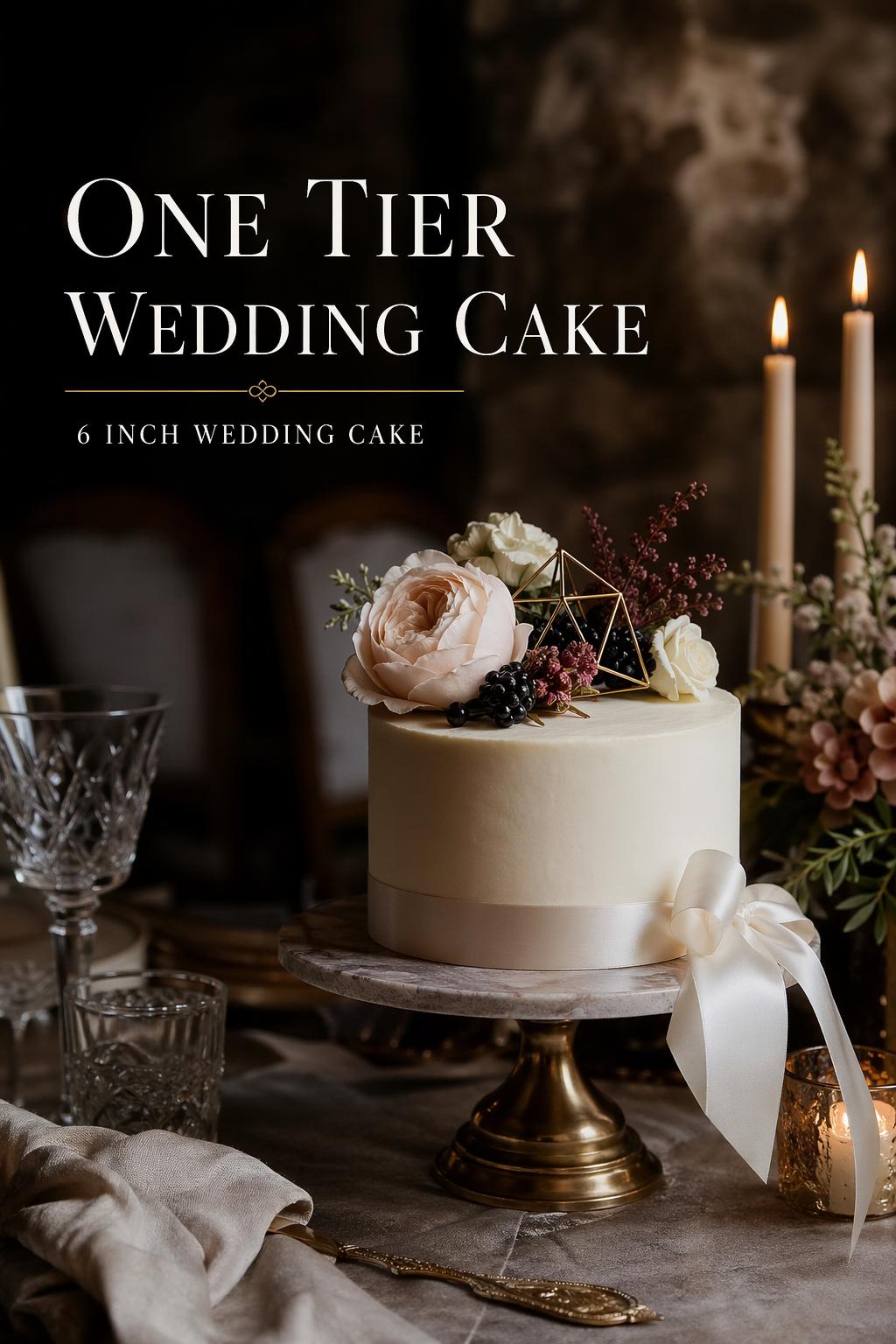
For planning purposes, the most commonly implied sizes in this style conversation are 6-inch and 8-inch cakes. That makes a 6 inch wedding cake especially relevant for intimate events, private elopement dinners, and micro weddings where every detail is visible up close. A cake this size has to be beautifully finished, because there is nowhere for weak design to hide.
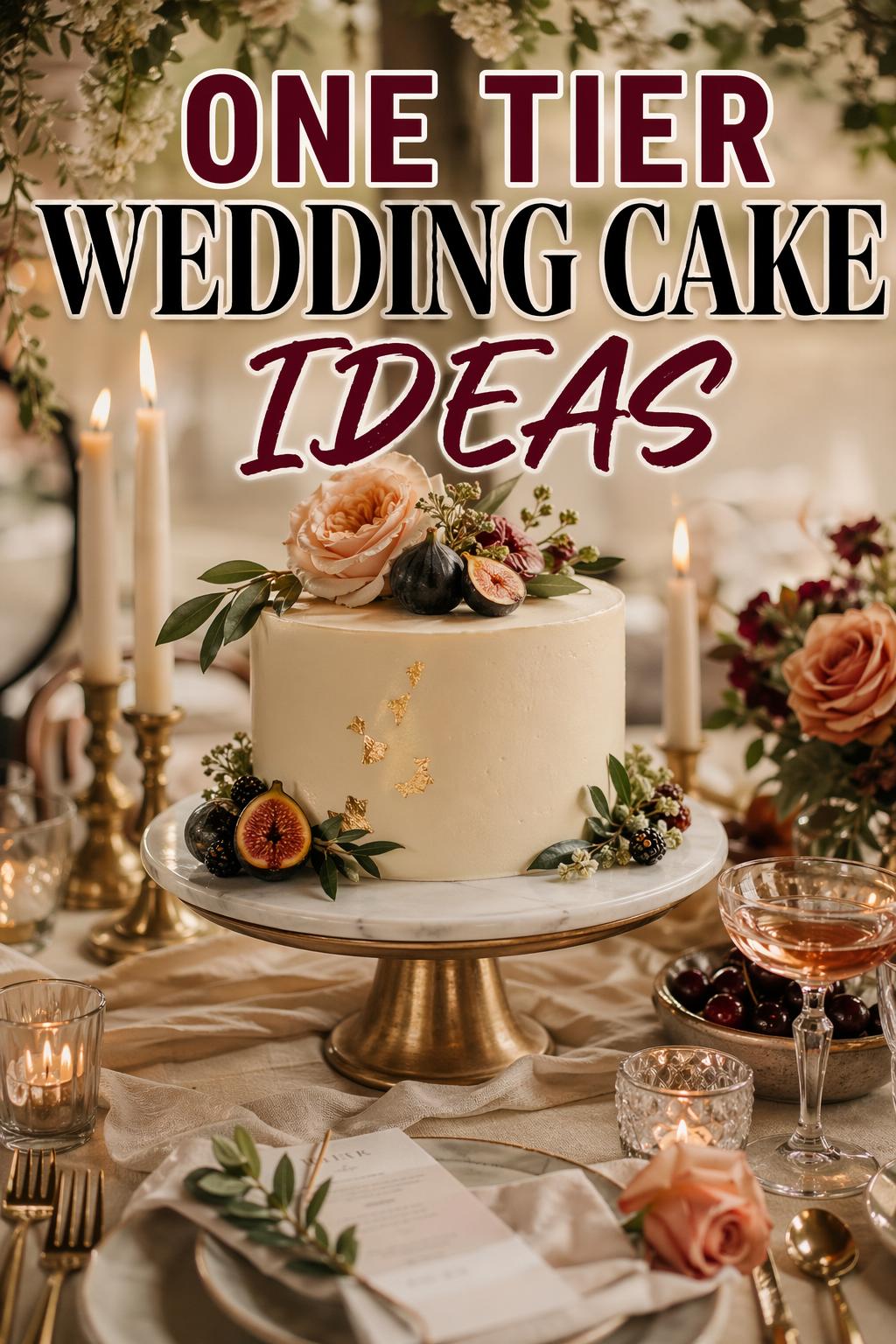
Look: classic white romance with buttercream softness
This is the one tier wedding cake style that never loses its place. The mood is timeless and luminous: a white cake, softly finished, with just enough texture to catch candlelight and photography beautifully. It feels right at home in ballroom weddings, garden receptions, and traditional celebrations where elegance matters more than novelty.
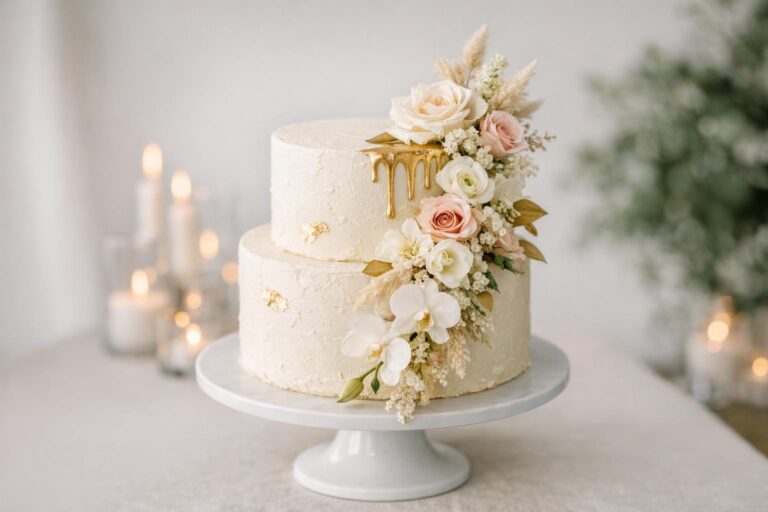
Buttercream is the heart of this look. It can be smoothly applied for a clean silhouette or left with gentle ridges, ruffles, or subtle palette-knife movement. Add floral accents for romance, whether they read as delicate and airy or full and abundant. This style also works beautifully with a ribbon detail, especially when couples want a classic wedding note without moving into a heavily formal design language.
The reason this look works so well is proportion. On a small one tier wedding cake, classic white buttercream keeps the cake from feeling visually heavy. It photographs beautifully, complements almost any floral palette, and gives bakers room to create detail through texture rather than excess. If you want a cake that will still feel elegant years from now in your wedding album, this is one of the safest and most beautiful directions.
- Best for: classic, romantic, garden, and formal weddings
- Finish focus: smooth or textured buttercream
- Decorative accents: fresh flowers, sugar flowers, ribbon, soft neutrals
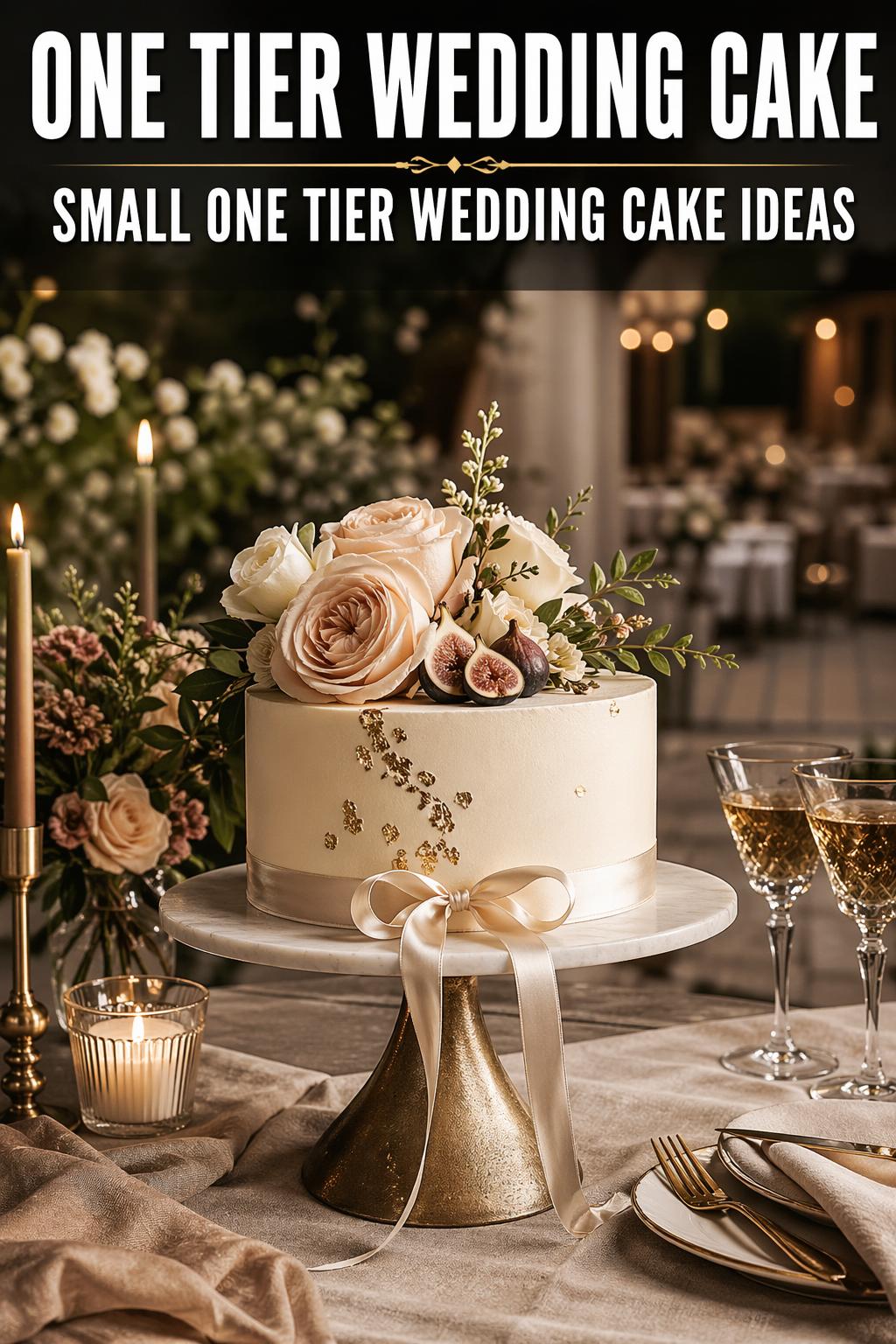
Look: sleek fondant minimalism for a modern venue
Some weddings call for a cleaner line. In a contemporary loft, rooftop, gallery-like venue, or minimalist hotel reception, a fondant-covered one-tier wedding cake can feel especially polished. The silhouette is smooth, architectural, and quietly dramatic, even when the decoration is restrained.
Fondant gives this look its precision. A white or neutral base paired with ribbon accents, geometric details, or a single clean topper creates a style that feels modern without trying too hard. Because there is only one tier, every choice becomes more visible: the edge must be crisp, the palette intentional, and the accents scaled carefully so the cake feels designed rather than decorated.
This approach is ideal for couples who prefer contemporary interiors, monochromatic styling, or a less floral-forward reception. It also works beautifully when the broader wedding design already includes strong visual elements such as sculptural centerpieces, clean tablescapes, or dramatic venue architecture. A simple one tier wedding cake in fondant does not compete with those surroundings; it echoes them.
Style tip: keep modern cakes edited
Minimal design still needs contrast. If the fondant is perfectly smooth, add interest through a fine ribbon, metallic accent, geometric motif, or a carefully chosen stand. Without one point of emphasis, a modern cake can fade into the background instead of feeling intentional.
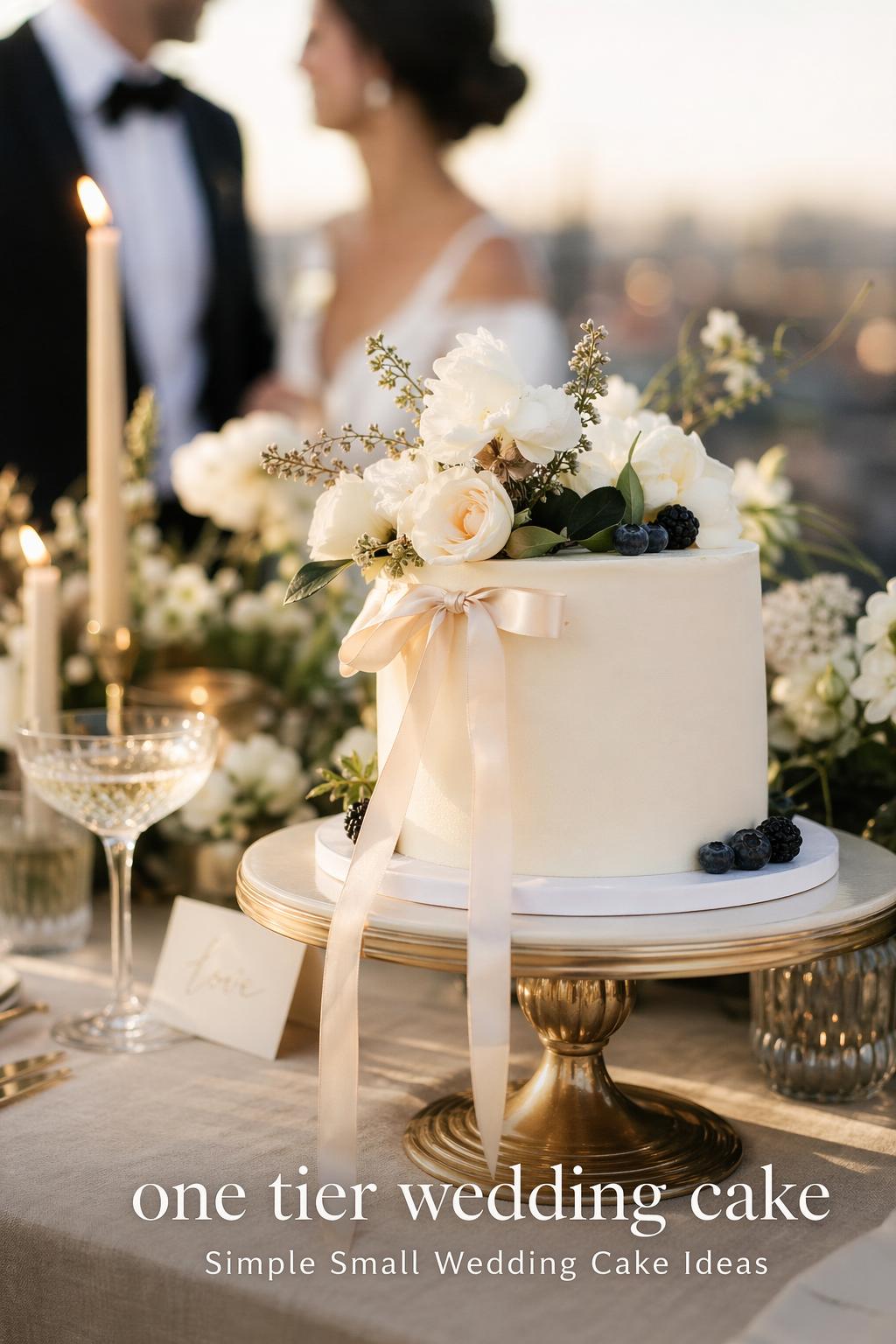
Look: the soft naked and semi-naked countryside mood
For barn weddings, vineyard dinners, backyard ceremonies, and relaxed outdoor receptions, the naked or semi-naked one-tier cake brings in a different energy. The silhouette is less polished and more organic, with frosting that reveals a little of the cake beneath. It feels warm, romantic, and slightly undone in the most appealing way.
Texture matters here. Semi-naked frosting, fresh berries, figs, citrus, or understated florals can make the cake feel connected to the season and the table setting. This is one of the most natural styles for couples who want dessert to feel artisanal rather than formal. It can also be one of the most charming simple small wedding cake ideas, particularly for intimate receptions where guests are seated close enough to appreciate those details.
There is a practical consideration, though. Naked and semi-naked cakes tend to look best when they are fresh and properly cared for, especially in warm weather or long outdoor receptions. If your venue is exposed to heat or direct sun, ask your baker whether this finish will hold as beautifully through the full event timeline. The relaxed look should still feel intentional, not vulnerable.
- Best for: rustic, vineyard, backyard, and boho-leaning weddings
- Finish focus: naked or semi-naked buttercream
- Decorative accents: berries, figs, citrus, garden flowers
Look: floral-forward elegance with fresh blooms or sugar flowers
Few design elements feel more naturally bridal than flowers on cake. On a one-tier wedding cake, floral accents often become the primary design story, which makes scale and placement especially important. The result can lean soft and botanical, fashion-forward and sculptural, or classic and romantic depending on the floral shape and color palette.
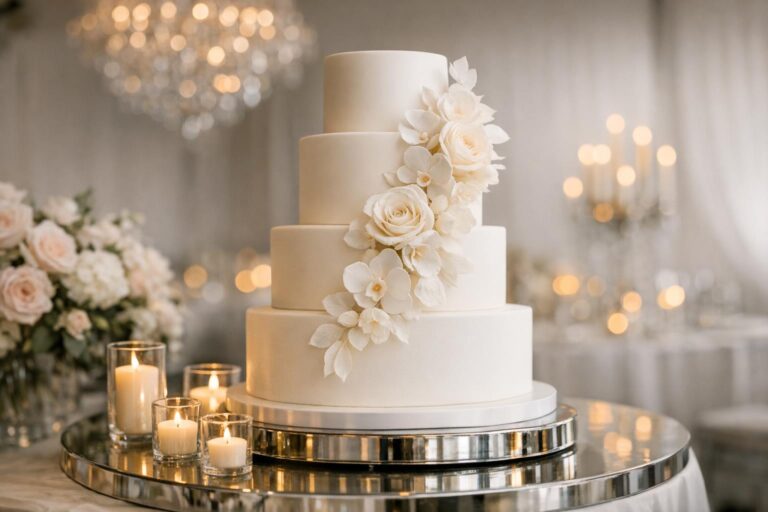
Fresh flowers create movement and softness, especially when they visually connect to the bouquet, reception arrangements, or ceremony florals. Sugar flowers, by contrast, can feel more crafted and couture. Both approaches are seen across wedding inspiration from brands like The Knot and Zola, where flowers repeatedly appear as one of the strongest visual motifs for single-tier cakes.
This style works particularly well when the cake is part of a larger decor story. If your wedding leans botanical, romantic, or garden-inspired, the floral cake can become a bridge between dessert and design. A florist and baker working from the same color palette usually creates the most cohesive result. Even on a 6 inch wedding cake, one exquisite floral placement can feel more luxurious than an entire tier of extra decoration.
How to recreate the look
Start with the flowers already shaping the wedding aesthetic. If your ceremony features soft neutrals, let the cake reflect that. If the reception uses bold contrast, allow a smaller group of deeper blooms to make a stronger statement. The most successful floral cakes rarely feel random; they feel woven into the larger event.
Look: artful details for couples who want personality
Not every one tier wedding cake needs to be quiet. Some of the most memorable designs rely on a single expressive detail: a chocolate drip, hand-painted flowers, celestial accents, metallic touches, macarons, or fruit placed with a painterly eye. The mood shifts from timeless to distinctive, but the cake can still remain refined.
These decorative choices work best when they are anchored by a clear base style. A white buttercream cake with a dramatic drip feels modern and celebratory. A fondant cake with hand-painted florals reads artistic and elevated. A celestial design can suit an evening wedding with moody lighting and a more imaginative visual direction. Because there is only one layer to work with, strong motifs need restraint to remain elegant.
This is a smart option for couples who want their cake to reflect a themed aesthetic without committing the whole wedding to that theme. A modern white cake with geometric accents, a romantic cake with edible gold, or a fruit-topped design with citrus and berries can introduce personality while keeping the broader reception design balanced.
- Creative motifs that suit single-tier cakes especially well include hand-painted details, drips, macarons, metallic accents, fruit garnish, and celestial styling.
- The strongest results usually combine one statement motif with one quiet supporting element, such as smooth fondant plus painted flowers or buttercream texture plus berries.
- If you love multiple ideas, let one lead and let the rest support. Small cakes can feel crowded more quickly than larger tiered designs.
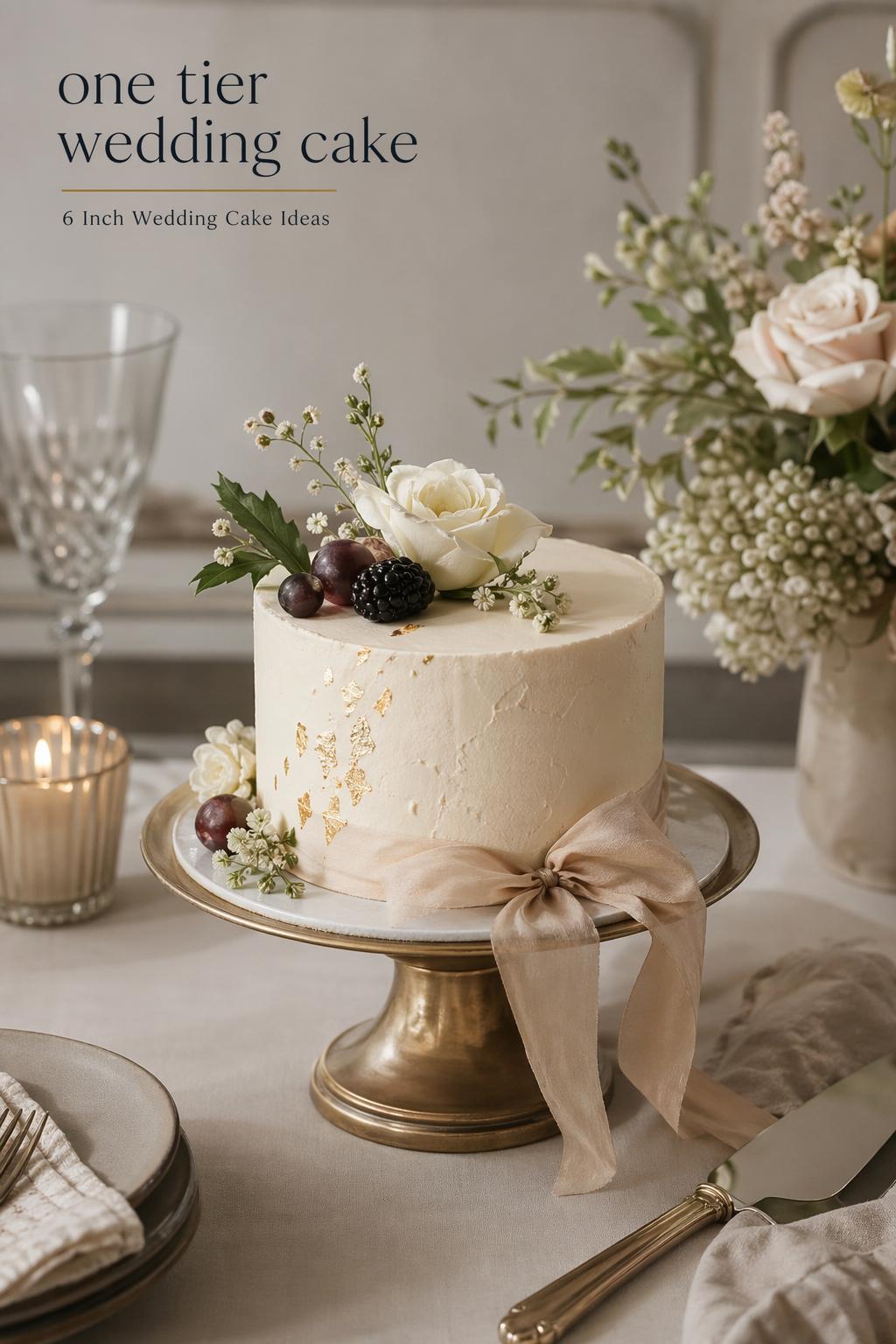
Look: 6 inch wedding cake ideas for intimate celebrations
The 6 inch wedding cake has its own aesthetic language. It is petite, highly visible, and best when every surface is intentional. For a micro wedding, private ceremony, courthouse reception, or dinner party-style celebration, this size can feel incredibly chic. It is less about abundance and more about concentration.
The most successful 6 inch wedding cake ideas lean into detail and proportion. A smooth buttercream finish with one floral cluster can feel graceful. A fondant cake with a fine ribbon can feel polished and modern. A semi-naked version with berries can look charming and relaxed. Because the scale is smaller, oversized decorations can overwhelm it, while delicate touches feel elevated.
Couples are often drawn to this size when they want the cake-cutting moment without a large dessert commitment. It is also a beautiful choice when the main cake shares the table with cupcakes or other sweets. In that setting, the 6 inch wedding cake becomes the ceremonial centerpiece, and the surrounding desserts handle additional servings. That approach keeps the visual romance while supporting practical planning.
Key pieces for this aesthetic
- A refined cake stand that adds height and gives the cake presence
- A finish with visible craftsmanship, such as smooth fondant or textured buttercream
- One focal decoration, like florals, berries, ribbon, or a subtle topper
- A display table styled to match the venue and tablescape
Where this cake style shines in the U.S.
One of the most interesting things about the single-tier wedding cake is how naturally it adapts to different city aesthetics. In New York, a one-tier cake often feels right for intimate restaurant receptions, gallery-like spaces, and fashion-forward celebrations where clean design matters. In Los Angeles, a softer contemporary look with fresh flowers, fruit accents, or modern white styling can suit outdoor light and relaxed-luxury venues. In Dallas, couples may lean into polished elegance, where buttercream, fondant, and romantic floral details feel especially at home.
These are not rigid rules, but they do reflect a useful planning insight: your cake should feel aligned with the venue and atmosphere around it. A rustic semi-naked cake may feel perfect at a vineyard and out of place in a sleek rooftop setting. A crisp geometric fondant cake may look stunning in a modern city space but too stark in a soft botanical garden wedding. The cake does not need to mimic the venue exactly, but it should feel like it belongs in the same visual conversation.
This is one reason major wedding platforms such as The Knot, Zola, Daily Mom, Wedding Fanatic, and Confetti & Roses repeatedly feature a broad range of one-tier designs rather than a single formula. The style is versatile. What changes is the mood, the context, and the details around it.
Flavor, fillings, and why smaller cakes benefit from restraint
Once the exterior style is chosen, flavor becomes part of the experience rather than an afterthought. A one-tier wedding cake invites close attention, and that includes how it slices, holds its shape, and feels during service. Smaller cakes often benefit from flavor pairings that are elegant and crowd-pleasing rather than overly complex, especially when the reception includes other desserts.
Seasonal flavor pairings are especially useful here because they help the cake feel connected to the overall celebration. Fruit accents on the outside can mirror fruit-forward notes inside. A romantic buttercream cake can support softer flavor profiles, while a dramatic chocolate drip design can make richer pairings feel natural. The key is cohesion. The inside does not have to literally match the decoration, but it should feel compatible with it.
Practicality matters too. A small cake with a very soft filling may be harder to present cleanly during the cutting moment. If the cake is on display for part of the reception, ask your baker how the chosen finish and filling behave together. A beautiful design loses some of its impact if it does not slice neatly or hold up through the ceremony-to-dinner timeline.
Tips for choosing flavors on a smaller tier
- Choose flavors that suit the formality and season of the wedding.
- Make sure the filling works well with the selected exterior finish, especially for warmer venues.
- If you are serving additional desserts, let the cake flavor be elegant and broadly appealing rather than overly niche.
- Ask how the cake will taste and look at the time it is actually served, not just when it leaves the bakery.
Display is part of the design, not an afterthought
A small cake asks more from its display. Without multiple tiers creating instant height, the stand, table, linens, florals, and surrounding negative space all influence whether the cake feels important. This is especially true for a simple one tier wedding cake. The more minimal the design, the more the presentation has to carry.
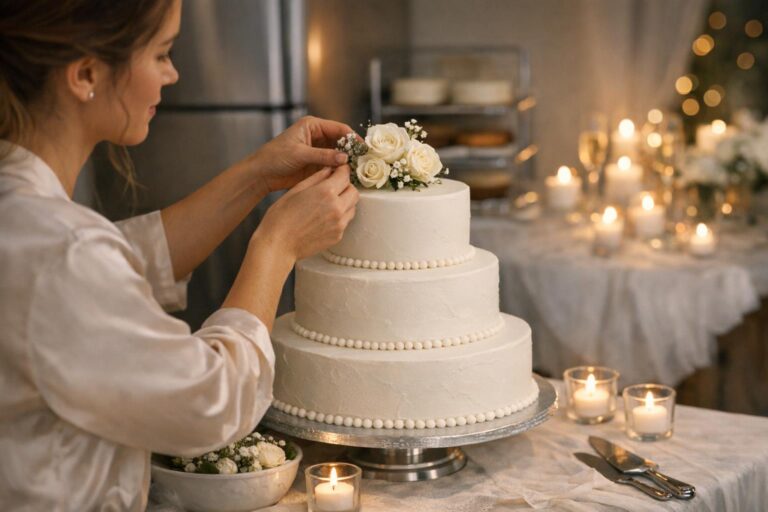
A cake stand is often the easiest way to elevate the entire look. Height gives the cake presence and helps it read as a focal point in photographs. A carefully styled display table can also help the cake connect visually to the rest of the reception design. In intimate weddings, the cake is often placed near escort cards, candles, or the sweetheart table, so its styling should feel integrated rather than isolated.
For the cutting ceremony, think about movement and access. Even a small wedding cake needs enough room around it for the couple, the photographer, and a few clean frames. Many featured examples across wedding publications rely on strong photography to show detail, and credits from photographers such as Ruth Eileen Photography and Elizabeth Wells Photo remind couples how much the visual setup matters. The cake should not be hidden in a corner if you want that moment to feel memorable.
Look: paired desserts and faux-scale styling
One of the most useful ways to make a one-tier wedding cake work for a larger event is to let it lead visually while other sweets support the guest count. The mood remains elegant and curated, but the pressure on the cake itself becomes smaller. This is a particularly smart choice for couples who love the look of a small ceremonial cake but expect more guests than one tier can comfortably serve.
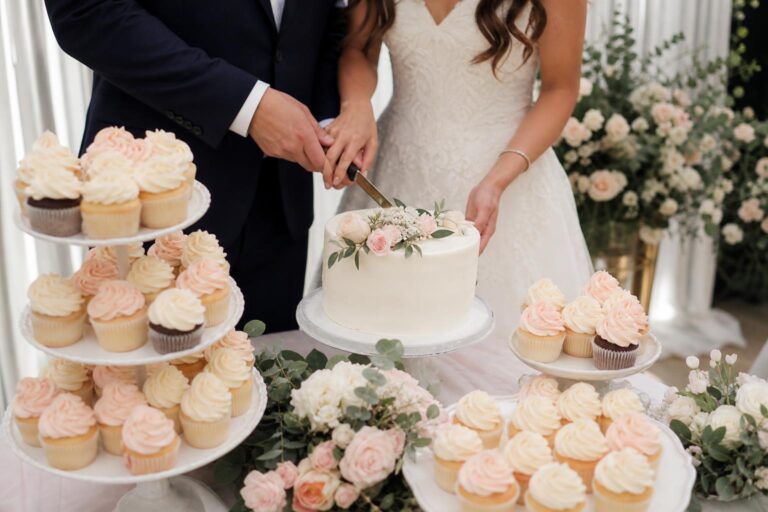
Matching cupcakes, dessert displays, or styled sweets can extend the aesthetic without requiring a larger central cake. Faux-tier displays and stacked stands can also create the impression of scale if the celebration calls for more drama on the dessert table. The key is to keep the one-tier cake visually central and let the supporting desserts echo its finish, color palette, or decorative motif.
This approach works especially well for modern weddings where the couple values design cohesion over tradition. The cake-cutting moment remains intact, the display feels generous, and the overall setup can still look highly polished. It is one of the most practical ways to balance style, servings, and budget.
Common mistakes that make a small wedding cake feel smaller than it is
A one-tier cake can look refined and important, but it can also disappear if the design choices are not balanced. The most common issue is scale. Decorations that are too large can dwarf the cake, while a display table that is too wide or empty can make the centerpiece look lost. A small cake needs proportional styling around it.
Another mistake is mixing too many motifs. On larger cakes, multiple design ideas can sometimes coexist. On a single tier, drips, florals, metallics, macarons, bold color, and toppers all at once can create clutter instead of character. Couples who feel torn between styles often do better by choosing one dominant mood and one supporting detail.
Finally, couples sometimes underestimate the importance of finish quality. With a small cake, guests and cameras see everything up close. Smooth fondant needs to be truly smooth. Buttercream texture should look intentional rather than unfinished. Naked cake edges should feel soft and crafted, not hurried. Smaller scale brings more intimacy, but it also reveals more.
A practical planning note on budget and expectations
Choosing one tier can help with budget, but the final cost still depends on finish, decorative detail, and vendor expertise. A tiny cake with hand-painted work or intricate sugar flowers may require as much artistic labor as a larger, simpler design. It is wise to think of pricing in terms of craftsmanship, not only size.
How to choose the right one tier wedding cake for your wedding mood
The easiest way to narrow your options is to begin with the atmosphere of the wedding rather than the cake itself. If the day feels formal, candlelit, and classic, white buttercream or sleek fondant will probably feel most natural. If the mood is relaxed, outdoorsy, or rustic, semi-naked finishes and fruit or floral accents may suit it better. If the celebration is contemporary and design-led, geometric, minimalist, or artful details can make more sense.
Then consider the venue. A compact restaurant reception may benefit from a highly finished 6 inch wedding cake on a dramatic stand. A garden ceremony can support a floral-forward style with softer texture. A city rooftop may call for clean lines and stronger contrast. This sequence matters because it keeps the cake connected to the wedding, rather than treating it as a separate design puzzle.
Finally, think through the practical side: guest count, whether you want additional desserts, how visible the cake display will be, and how much personality you want the cake to carry. Couples planning intimate celebrations often find that the best simple small wedding cake ideas are the ones that make one beautiful promise and keep it well. A buttercream cake with flowers. A fondant cake with ribbon. A semi-naked cake with berries. A modern white cake with a geometric accent. Clear direction almost always looks more elegant than over-design.
- Start with the wedding mood: romantic, modern, rustic, minimalist, or artistic.
- Match the finish to the venue and decor style.
- Choose one focal motif and let it lead the design.
- Plan the display early so the cake has visual presence.
- Decide whether the cake will serve everyone or act as the ceremonial centerpiece alongside other desserts.
Look: the curated gallery of enduring one-tier styles
Across wedding inspiration sources like The Knot, Zola, AdoroEvents, OneFabDay, Wedding Unite, Party Gleam, Bells of Joy, Confetti & Roses, Daily Mom, and Wedding Fanatic, several single-tier styles appear again and again for good reason. They are adaptable, photogenic, and strong enough to hold their own as the wedding cake moment.
The enduring favorites include classic white buttercream with flowers, modern white cakes with geometric accents, rustic naked cakes with berries, fondant cakes with ribbon, hand-painted floral cakes, chocolate drip styles, and more fashion-forward details like macarons or metallic touches. Each one represents a different interpretation of the same core idea: a small cake can still feel complete, celebratory, and visually rich.
If you are collecting inspiration, it helps to save images by mood rather than by isolated detail. Group together the cakes that feel soft and romantic, the ones that feel clean and modern, the ones that feel organic and rustic, and the ones that feel expressive and artistic. Patterns emerge quickly, and that clarity makes vendor conversations much easier.
FAQ
What size should a one-tier wedding cake be?
The most commonly referenced sizes for a one-tier wedding cake are 6-inch and 8-inch cakes. A 6 inch wedding cake is especially suited to very intimate celebrations, while an 8-inch cake may give you a bit more flexibility for servings. The right size depends on guest count, whether you are also serving other desserts, and how much you want the cake to function as a visual centerpiece.
Can a one-tier wedding cake work for a larger wedding?
Yes, especially if the cake is used as the ceremonial centerpiece and paired with cupcakes, plated desserts, or a fuller dessert display. This allows you to keep the elegance of a single-tier cake for the cutting moment while making sure guests still have dessert. Faux-tier displays and styled stands can also help create more visual impact on a larger dessert table.
What is the difference between buttercream, fondant, and semi-naked finishes?
Buttercream usually gives a softer, more romantic feel and can be smooth, textured, or ruffled. Fondant creates a sleek, polished finish with crisp lines, making it ideal for modern or formal designs. Semi-naked and naked cakes reveal some of the cake layers beneath the frosting, creating a more relaxed, rustic, and organic look that works beautifully for outdoor or informal settings.
Are floral accents a good choice for a small one tier wedding cake?
Floral accents are one of the best design choices for a small one tier wedding cake because they add romance and visual movement without requiring a larger structure. Fresh flowers can connect the cake to the bouquet and reception florals, while sugar flowers can create a more crafted and couture look. On a smaller cake, one well-placed floral cluster often looks more elegant than too many competing decorations.
Is a simple one tier wedding cake too plain for a wedding reception?
Not at all. A simple one tier wedding cake can feel incredibly elegant when the finish is refined and the display is thoughtfully styled. Smooth buttercream, crisp fondant, a beautiful cake stand, and one intentional design detail can make even a minimal cake feel special. Simplicity tends to look strongest when it is paired with high-quality execution and a display that gives the cake presence.
What are the best 6 inch wedding cake ideas for intimate weddings?
The strongest 6 inch wedding cake ideas usually rely on clean proportion and one focal detail. Popular options include white buttercream with flowers, sleek fondant with ribbon, semi-naked cake with berries, and modern white designs with subtle geometric accents. Because the cake is small, delicate details usually work better than oversized decorations.
How should a one-tier wedding cake be displayed?
A one-tier wedding cake looks best when display is treated as part of the design. A cake stand adds height, while candles, florals, linens, and a well-placed table help the cake feel important in the room. Make sure there is enough space for the cutting moment and for photographs, especially if the cake will be one of the visual highlights of the reception.
What are some simple small wedding cake ideas that still feel special?
Some of the most effective simple small wedding cake ideas include a classic white buttercream cake with fresh flowers, a fondant cake with a ribbon accent, a semi-naked cake with fruit, or a smooth monochromatic cake on a dramatic stand. These styles feel special because they focus on finish, proportion, and presentation instead of relying on too many decorative elements.
How do I decide which one-tier cake style matches my venue?
Start by looking at the overall mood of the venue and wedding decor. Garden and romantic spaces often suit buttercream and floral details, rustic venues pair naturally with naked or semi-naked finishes, and modern city venues tend to work well with sleek fondant or geometric styling. The best cake choice usually feels like an extension of the room rather than a separate design statement.