Wedding Thank You Cards for a Graceful Final Touch
Long after the flowers are gone and the seating chart has been folded away, wedding thank you cards become one of the last visible expressions of the day you created. They seem simple from a distance, yet many couples find this part unexpectedly stressful. The challenge is not only what to say. It is how to sound sincere, stay organized, acknowledge different kinds of gifts, and choose a format that still feels beautiful when you are already tired from the pace of wedding planning.
What usually goes wrong is a mix of timing pressure and emotional hesitation. Couples delay because they want every note to feel personal, then the list gets longer, the wording becomes harder, and the card design itself can feel like one more decision competing with budget, printing, and guest logistics. A handwritten note may feel more heartfelt, but digital options are faster. A photo card may look elegant, but only if the tone of the message matches the design. This is where aesthetics and practicality often pull in opposite directions.
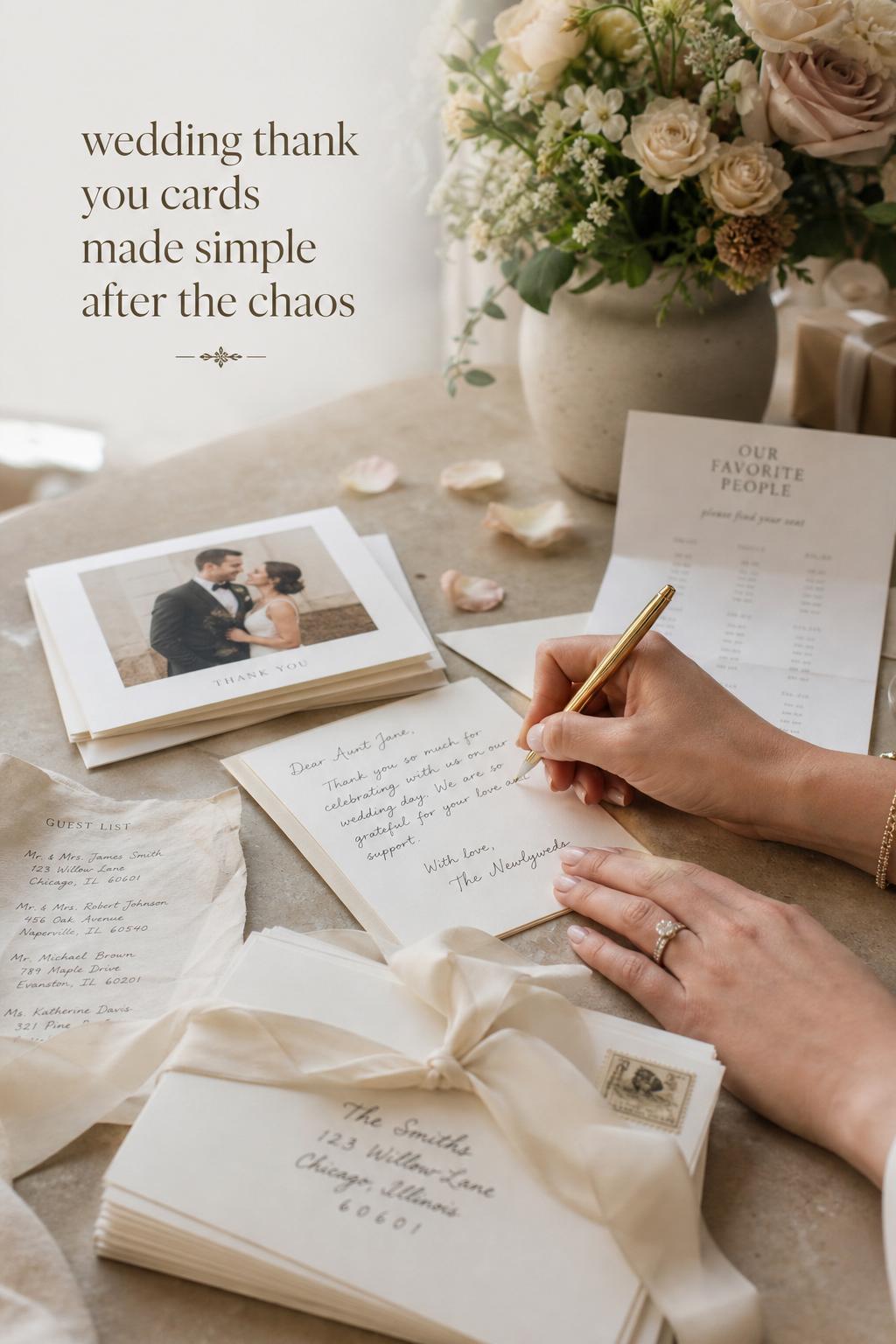
This guide is designed to solve that problem with clarity. You will find realistic etiquette guidance, flexible thank you card wording, design direction for printed cards, photo cards, and ecards, and practical ways to personalize your message without making the process overwhelming. The goal is not perfection. It is to send wedding thank you cards that feel thoughtful, cohesive, and truly reflective of your wedding and the people who shared it with you.
Why this wedding challenge happens
Wedding thank you cards sit at the intersection of emotion and administration. They are deeply personal, yet they depend on details: who attended, who sent a registry item, who contributed a cash gift, who gave to a honeymoon fund, who traveled, and who was present even without bringing a physical gift. That combination is why this task feels heavier than couples expect. You are not just writing notes. You are closing the wedding experience with care.
Turn wedding inspiration into a plan you can actually follow.
Zarellea brings your guest list, budget, vendors, and day-of details into one shared space — so no beautiful idea gets lost in the shuffle.
There is also a visual and logistical layer that often gets overlooked. The card itself becomes part of your wedding stationery story. A flat card, folded card, or photo-based design sends a different message before anyone reads a word. Brands such as Shutterfly, Inkifi, WHCC, and Paperlust all reflect this reality in different ways, whether through wording guidance, card formats, or photo personalization. The challenge is choosing an approach that still suits your tone, timeline, and budget after the wedding has already demanded so much attention.
For many couples, the pressure comes from trying to make every note unique while also meeting the widely expected three-month guideline. Add destination weddings, travel-related gestures, group gifts, family expectations, and varying relationship categories such as friends, coworkers, or wedding party members, and the process quickly becomes complicated. Understanding this complexity is helpful because it explains why thank you cards often stall. The problem is not lack of gratitude. It is lack of a system.
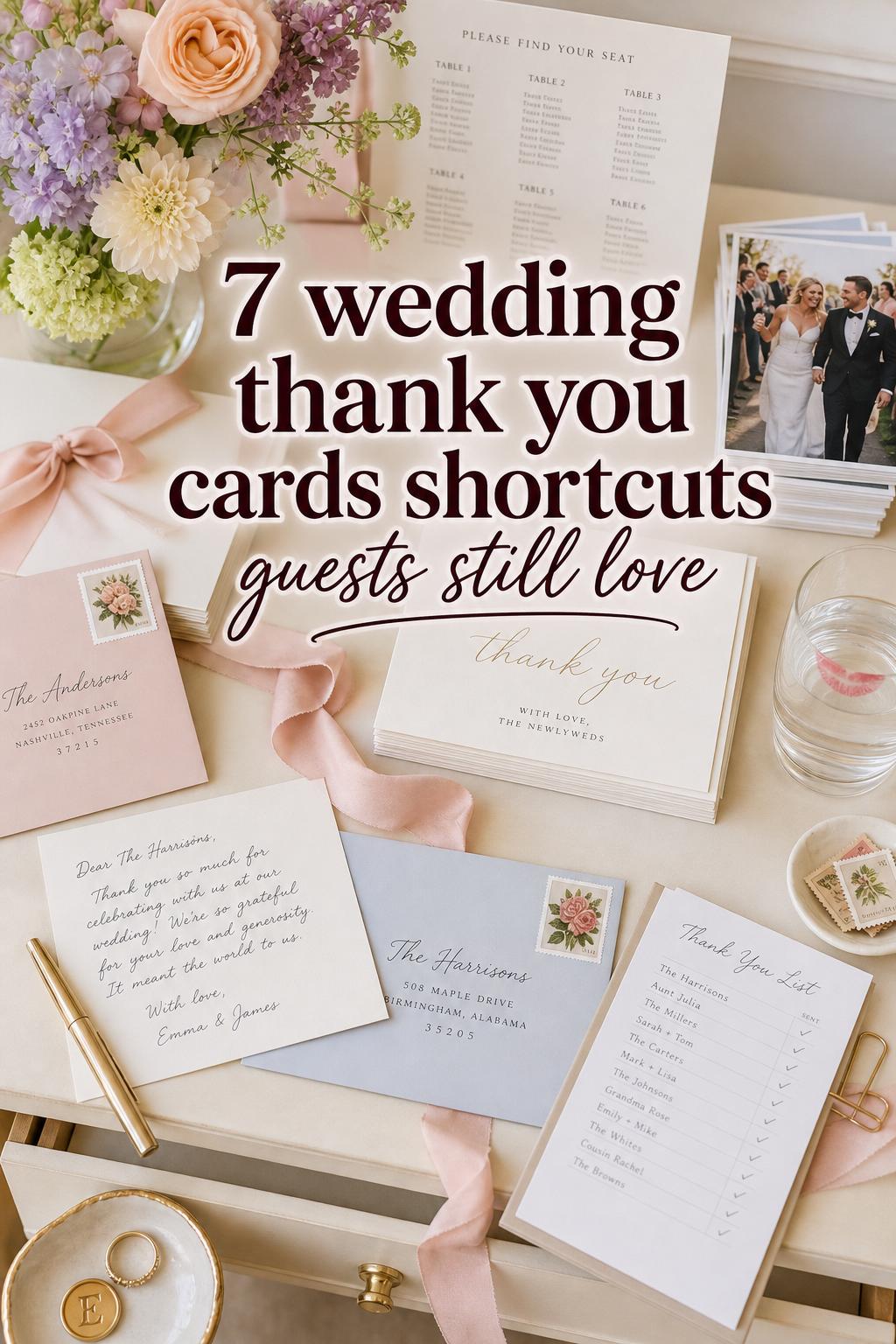
The principles that make thank you cards feel elegant and manageable
The most effective wedding thank you cards balance three things: specificity, warmth, and consistency. Specificity matters because a note feels more sincere when it names the gift, the gesture, or the recipient’s presence. Warmth matters because even a short card can feel deeply personal if the tone is generous and genuine. Consistency matters because once you decide on a structure, the entire process becomes easier to complete without losing quality.
A practical formula helps. Several strong wedding resources lean on a simple three-sentence structure for a reason: it reduces decision fatigue while still leaving room for personality. In practice, that means thanking the person directly, naming the gift or gesture specifically, and adding one personal line about how it will be used, remembered, or appreciated. This works for registry gifts, cash gifts, honeymoon fund contributions, travel effort, and attendance.
Design should support the message rather than compete with it. If you choose a photo card, the wording can stay concise because the image already carries emotional weight. If you choose a classic folded card on refined card stock, a slightly fuller message often feels natural. If you choose digital ecards through a platform such as Punchbowl or Evite, clarity and directness matter more than long prose. The card format shapes the ideal tone.
What couples usually overlook
Many couples think the hardest part is writing, but the real friction often comes from incomplete information. Missing gift details, vague memory, and an unorganized guest list make wording more difficult than it needs to be. A simple tracker that links guest names, relationship categories, attendance, and gift type can save hours and prevent awkward omissions.
Start with etiquette, but use it as a framework rather than a source of panic
The clearest timing guidance is straightforward: send wedding thank you cards within three months of the wedding date. That benchmark matters because it sets a respectful rhythm and helps couples complete the final stage of the celebration before it starts to feel neglected. It also gives structure to a task that can otherwise drift indefinitely.
The stress begins when couples treat timing like a pass-or-fail test instead of a planning tool. If you are behind schedule, the best approach is still to send the cards. A sincere late thank-you is better than a perfect note that never gets written. Guests usually respond to thoughtful acknowledgment, not flawless timing. The visual polish of the card matters, but gratitude matters more.
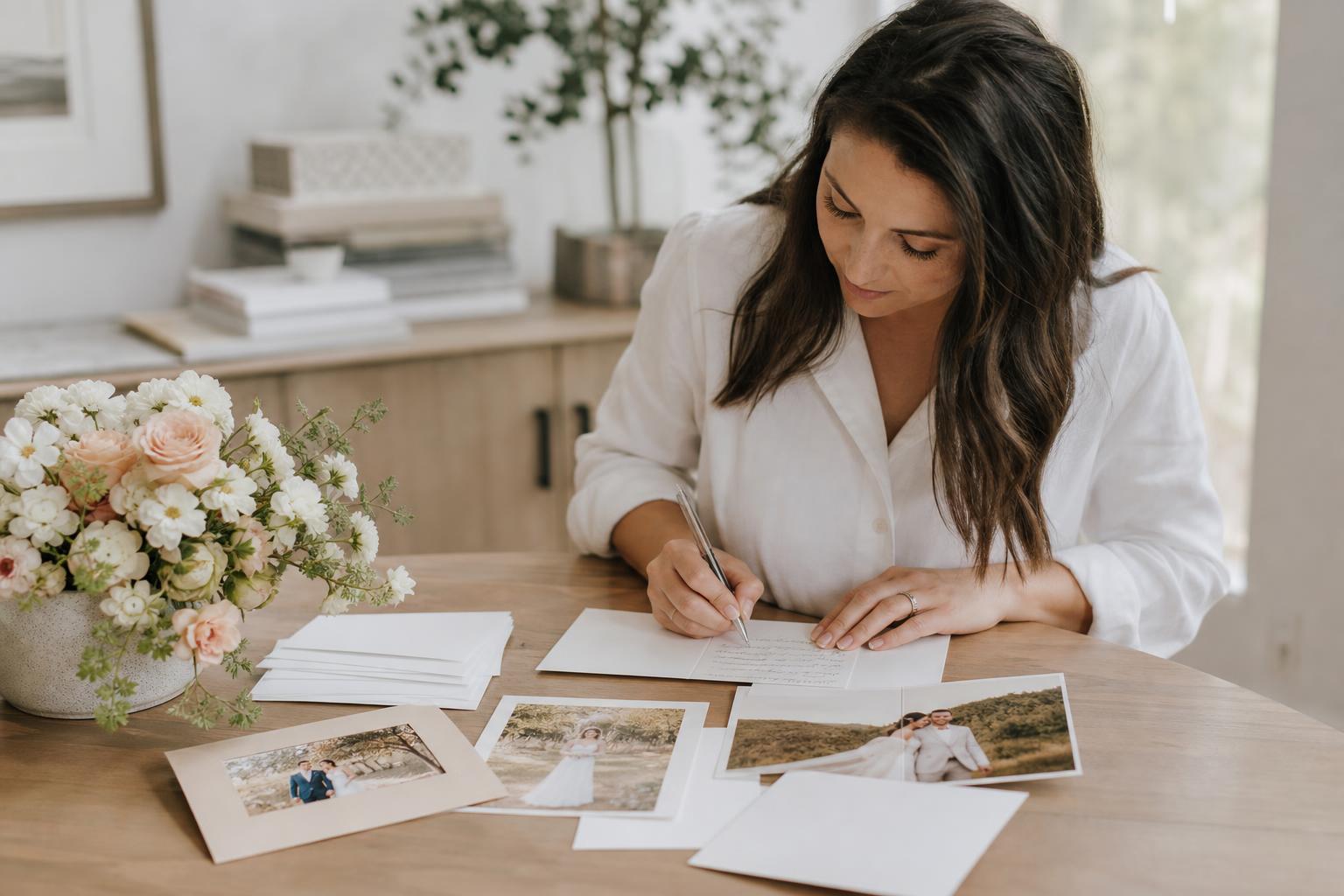
Handwritten notes are consistently associated with sincerity, especially for traditional wedding thank-you cards. That said, handwritten does not have to mean elaborate. A neat, brief note in your own hand often feels more intimate than a long, overworked message. If your guest count is large, a hybrid approach can be realistic: printed or photo-based cards with handwritten messages inside, or printed cards for close family and wedding party members paired with digital cards for broader guest acknowledgments where appropriate.
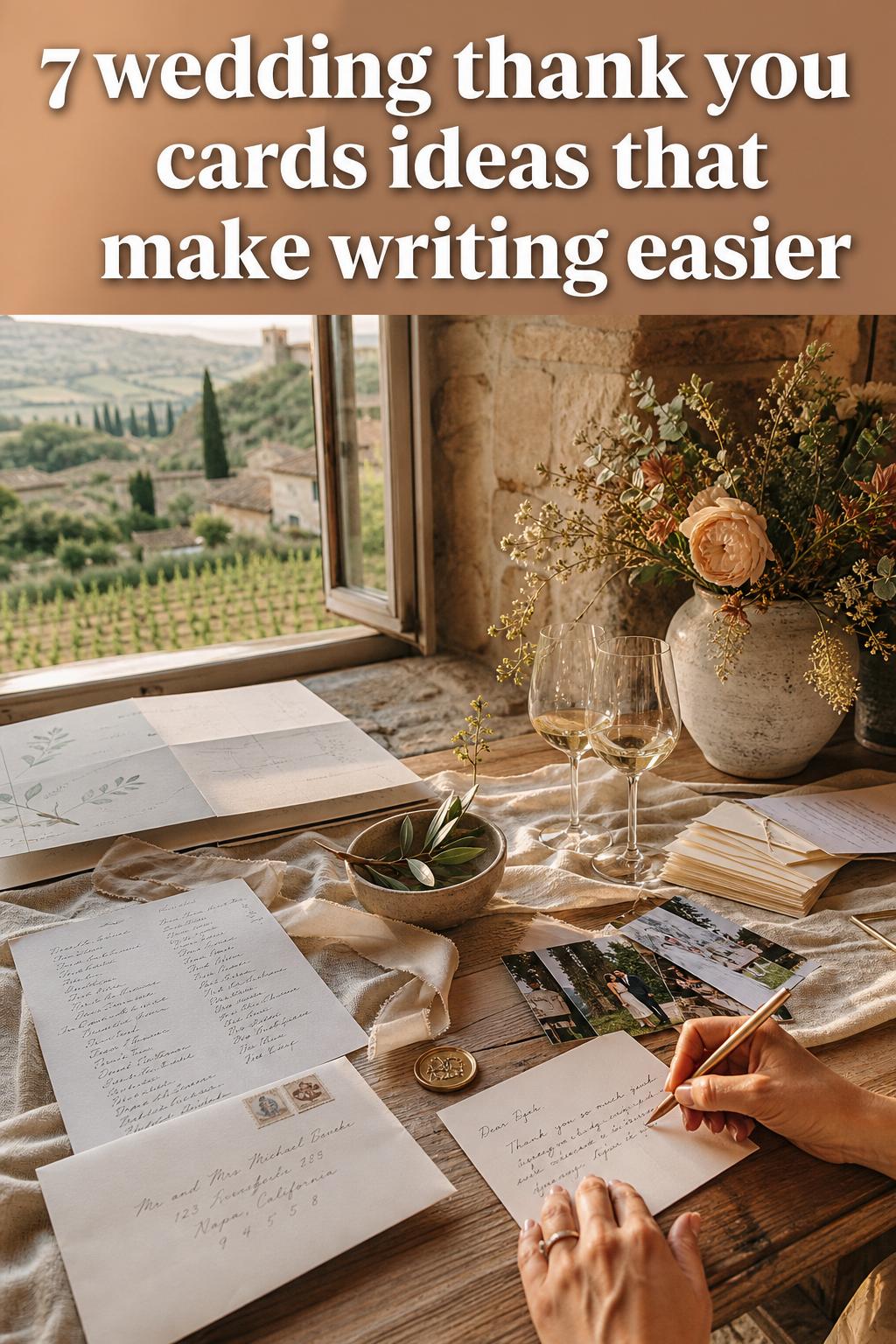
Timing tips that reduce pressure
- Group your list by relationship and gift type before writing anything.
- Write the most emotionally significant cards first, such as family and wedding party notes.
- Use one core structure for every note, then personalize the middle line.
- Choose your card format early so wording and design stay aligned.
- If you are late, acknowledge warmly and move forward instead of overexplaining.
Wedding solution: build each note around people, gifts, and relationships
The reason many wedding thank you cards sound generic is that couples try to write from emotion alone, without anchoring the note in specific details. That usually leads to broad phrases that feel polite but forgettable. The card may look beautiful, especially if it includes a wedding photo or refined typography, but the message can feel detached if it never mentions the person’s actual role in your wedding story.
A stronger solution is to build every note around three points: the recipient, the gift or gesture, and the relationship context. For example, a registry item deserves different wording from a honeymoon fund contribution. A note to a coworker will likely sound slightly different from one sent to a sibling or member of the wedding party. This is why relationship-based wording works so well. It keeps the message personal without requiring every card to be written from scratch.
When you write this way, the result feels natural and emotionally coherent. Guests feel seen, not processed. Family members feel their closeness reflected. Friends who traveled feel their effort acknowledged. Even a short card can create a lasting impression when it names the actual gift, recognizes attendance, or references a shared wedding moment. This is what makes a thank-you card feel complete.
The simplest wording formula
- Sentence one: thank the person directly.
- Sentence two: mention the specific gift, contribution, or presence.
- Sentence three: add a personal line about how it will be used, remembered, or why it mattered.
This structure adapts easily whether you are thanking relatives for a registry gift, friends for a group gift, or guests who attended a destination wedding in Lisbon, Mallorca, Algarve, or Sydney and helped make the celebration feel special.
Wedding solution: tailor wording by gift type so every note feels sincere
One of the biggest sticking points is that different gifts require different language. Couples often freeze because they know a thank-you for cash should not sound identical to one for a serving set from the registry, and a honeymoon fund contribution carries a different emotional tone again. If every card uses the same vague phrasing, guests may feel the note was copied without much thought.
The practical fix is to sort your wedding thank you cards by gift type first. Registry gifts benefit from specificity because naming the item immediately makes the note more personal. Cash gifts sound most graceful when you emphasize generosity and intended use without sounding transactional. Honeymoon fund wording works best when it connects the contribution to a memory, experience, or shared future. Group gifts should recognize collective generosity while still addressing the named sender clearly.
This approach creates both emotional accuracy and visual coherence. Once cards are grouped by scenario, your writing rhythm improves, and the process feels calmer. It also protects the tone of the card design itself. A minimalist card with soft typography can carry a concise message elegantly, while a folded card with more interior space can support a richer note. Matching message length to card style is a subtle detail, but it makes the finished set feel considered rather than rushed.
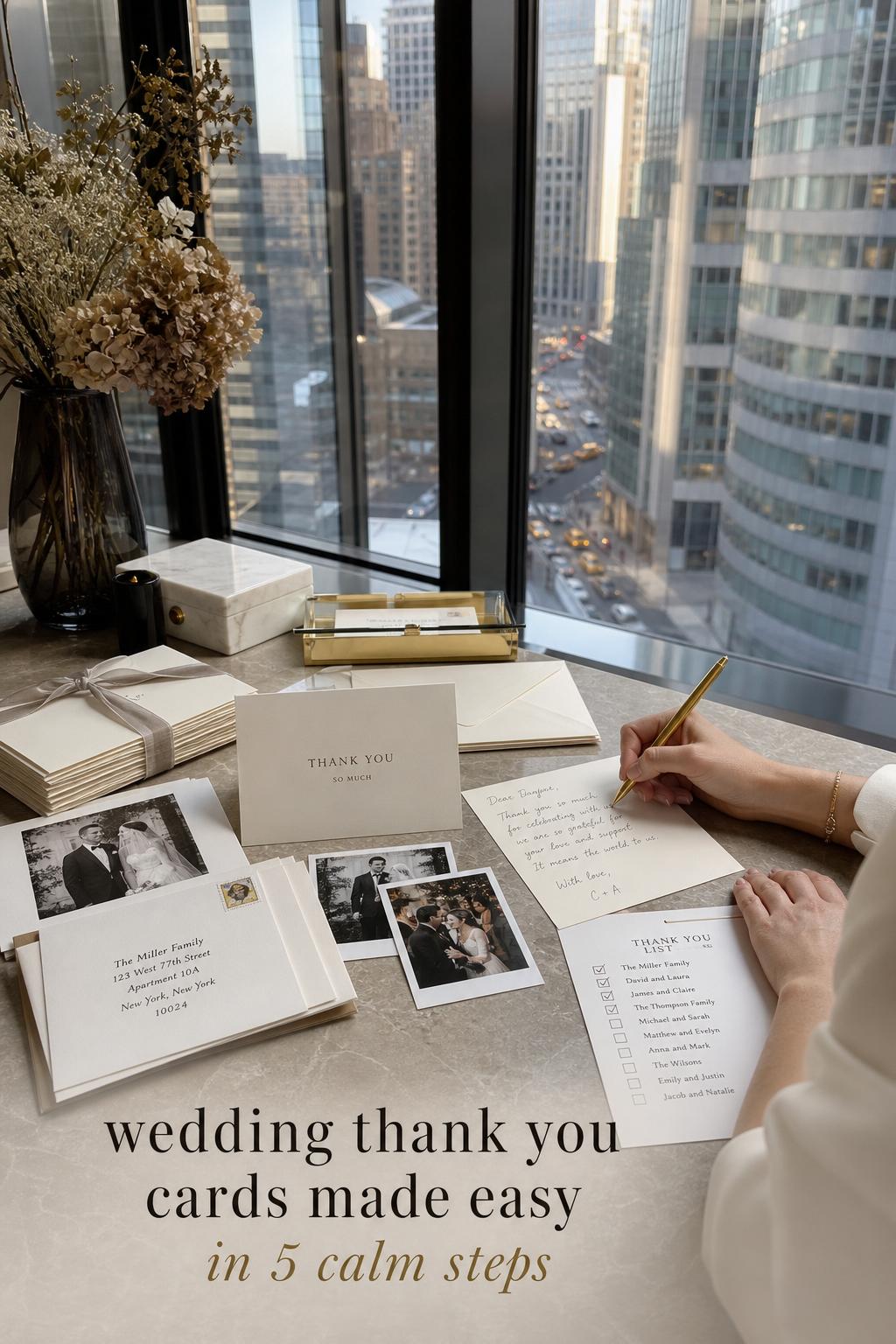
Wording examples by gift type
For a registry item: “Thank you so much for the beautiful serving set. It was such a thoughtful gift, and we are excited to use it when we host family dinners in our new home. We loved celebrating with you and are so grateful for your kindness.”
For a cash gift: “Thank you for your generous wedding gift. Your support means so much to us, and we truly appreciate your thoughtfulness as we begin this next chapter together. We were so happy to celebrate with you.”
For a honeymoon fund contribution: “Thank you for your generous contribution to our honeymoon fund. It helped make our trip even more memorable, and we will think of your kindness when we look back on that special time. We are so grateful you were part of our wedding.”
For a group gift: “Thank you so much for the generous group gift. We were incredibly touched by your thoughtfulness and feel lucky to have such supportive friends around us. It meant a great deal to celebrate together.”
For attendance without a gift: “Thank you for celebrating our wedding with us. Having you there meant so much, and your presence made the day feel even more joyful. We are so grateful for your support and love.”
Wedding solution: use relationship-based wording to avoid cards that feel flat
Even when the gift has been acknowledged properly, a note can still feel slightly impersonal if it does not reflect who the person is to you. This is especially true with family, wedding party members, close friends, or coworkers. A one-size-fits-all message may be efficient, but it often misses the emotional texture that makes gratitude believable.
A better approach is to create a few relationship categories and adjust your tone accordingly. Family notes can carry warmth and closeness. Wedding party notes can mention support, presence, or the role they played throughout the day. Friends can be thanked for both the gift and the celebration itself. Coworker notes often work best when they are polished, kind, and concise. This kind of segmentation is simple to implement and makes a visible difference in quality.
The result is a set of wedding thank you cards that feel emotionally calibrated. Instead of sounding mechanically varied, they sound naturally right for the recipient. That matters because guests do notice tone. They may not analyze the card stock or compare the message line by line, but they can tell when a note sounds genuinely directed to them.
Templates by relationship
For family: “Thank you so much for your generous gift and for all the love you brought to our wedding. Having you there meant so much to us, and we are deeply grateful for your support during such an important moment in our lives.”
For the wedding party: “Thank you for standing by us on our wedding day and for your thoughtful gift. Your support, time, and kindness meant more than we can say, and we are so grateful you were such an important part of the celebration.”
For friends: “Thank you for your wonderful gift and for celebrating with us. It meant so much to share the day with you, and we are so grateful for your friendship and generosity.”
For coworkers: “Thank you very much for your thoughtful wedding gift. We truly appreciate your kindness and support, and it was so meaningful to feel celebrated by you during this special time.”
Design and tone should feel like the same conversation
One reason wedding thank you cards can feel disjointed is that couples choose design and wording separately. They pick a card because the color palette is pretty or because the wedding photo looks beautiful, then struggle to fit the message into a format that does not support the tone they want. A highly formal message can feel stiff on a casual photo card. A very brief message can feel sparse on a folded card with generous interior space.
The practical solution is to let the design guide the voice. Flat cards tend to suit shorter, cleaner wording. Folded cards support more layered messages, especially for family or the wedding party. Photo cards work beautifully when the image already carries warmth and personality, which allows the wording to stay concise. Brands such as Inkifi emphasize photo-based personalization, while WHCC leans into printed formats, colors, and layout choices. Shutterfly and Paperlust often sit at the intersection of wording and product selection, which is useful when you want both design and message to feel connected.
When the tone and format align, the whole experience feels more luxurious without becoming excessive. Guests perceive a polished card more as a feeling than a technical achievement. Cohesion is what creates that feeling: the visual style, message length, and emotional tone all working together quietly.
What photographs best
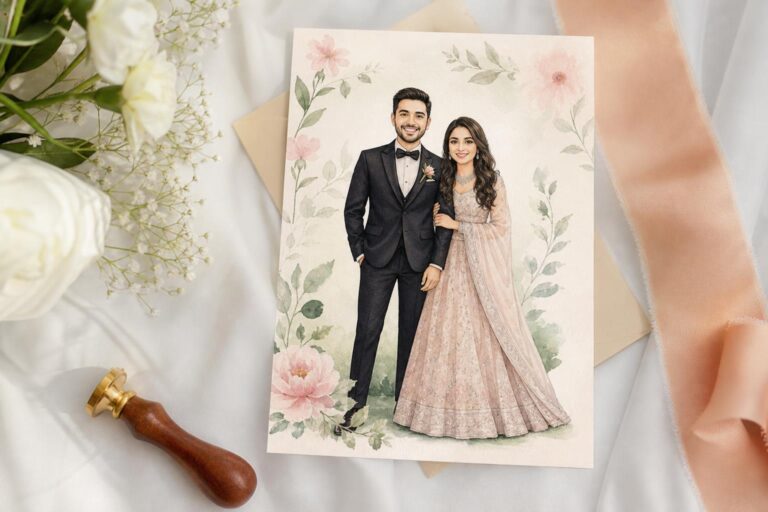
Photo cards tend to feel strongest when the image is clear, warm, and emotionally legible at a small size. A quiet portrait, a candid just after the ceremony, or a joyful walking shot often works better than a visually busy group image. If the card includes a photo, keep the wording slightly tighter so the design can breathe.
Card formats worth considering
- Flat cards for concise, modern thank-you notes.
- Folded cards for more traditional or detailed handwritten messages.
- Photo cards for couples who want the visual memory to do part of the storytelling.
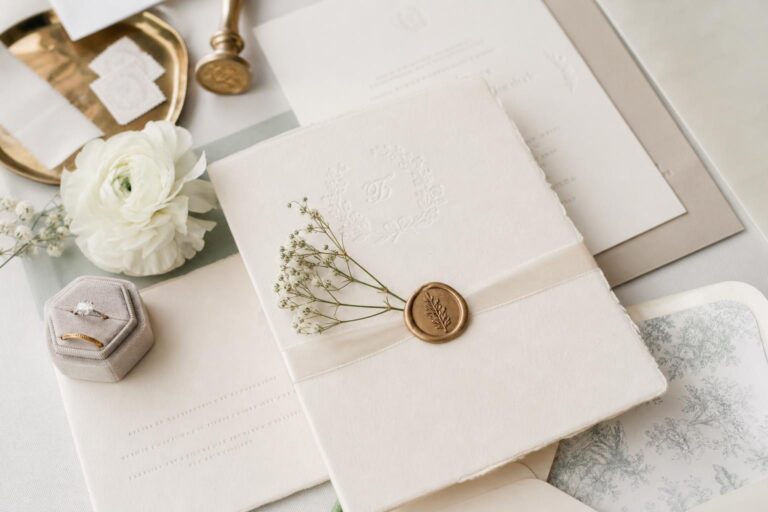
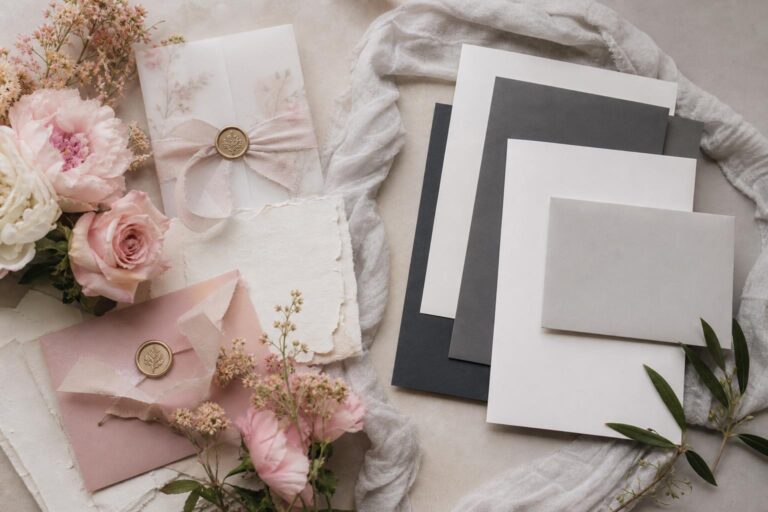
- Layered or finish-focused printed cards when the stationery itself is part of the wedding aesthetic.
Wedding solution: decide between print, digital, and hybrid based on real-life logistics
Couples often feel torn between traditional etiquette and practical reality. Printed wedding thank you cards feel timeless and personal, especially when handwritten. But they also require address management, printing time, and more effort after an already demanding event. Digital ecards, on the other hand, are efficient and easy to send, yet some couples worry they may feel less meaningful.
The most useful solution is to choose the format according to context rather than guilt. Printed cards are often ideal for close family, relatives, the wedding party, and meaningful gift acknowledgments. Digital options through Punchbowl or Evite can be useful when speed matters, when you want to reach a broad guest list efficiently, or when your wedding style already embraced digital communication. A hybrid approach can also work well: printed cards for your inner circle and digital cards for wider guest acknowledgment or follow-up messaging.
This approach lowers stress while preserving intention. Instead of forcing one format to solve every need, you build a system that fits your wedding size, timeline, and energy level. Practical choices do not diminish gratitude. In many cases, they make gratitude more likely to be delivered well and on time.
Budget-conscious alternatives
If you want the feeling of printed wedding stationery without a large post-wedding expense, choose a simpler flat card, limit embellishment, and put your energy into the handwritten note itself. Guests are more likely to remember the sincerity of the wording than an elaborate finish.
Real-world examples that make personalization easier
The most reassuring part of writing thank-you notes is seeing how small shifts in wording create a more personal result. You do not need a dramatic story in every card. Often, one grounded detail is enough. A note can mention a relative’s presence, a friend’s travel effort, or the way a gift fits into daily life after the wedding.
Imagine a couple who hosted a destination wedding and had guests travel from different cities. A generic note would thank everyone for coming. A stronger note would acknowledge the travel itself: “Thank you for making the trip to celebrate with us. Having you with us in Mallorca meant so much, and we are deeply grateful for your kindness and generous gift.” That slight adjustment feels much more human because it reflects what the guest actually did.
Or consider a honeymoon fund gift. Saying only “thank you for your contribution” can sound distant. Connecting it to experience improves the tone: “Thank you for your generous contribution to our honeymoon fund. Your gift helped make that time even more memorable, and we felt so grateful for your support as we celebrated this new beginning.” The note still stays simple, but it carries more emotional depth.
How to make the wedding feel more personal
- Mention the exact gift when possible.
- Reference attendance, travel, or support if it mattered to the experience.
- Use your natural speaking tone rather than overly formal language.
- Let the relationship shape the warmth of the message.
- Keep it concise enough that sincerity does not get buried in too many sentences.
International and multicultural etiquette deserves a thoughtful touch
Most wedding thank you card guidance is rooted in U.S. etiquette, especially the emphasis on sending notes within three months and the preference for handwritten acknowledgment. For many couples, that framework is useful and familiar. But weddings are often multicultural, international, or shaped by guests from different places, and that can influence how gratitude is expressed and received.
The practical takeaway is not to overcomplicate the process, but to stay aware of your audience. If your wedding included guests from the U.S., the UK, Australia, or other regions, the exact expectations around timing, formality, or card style may vary. What remains consistent is the value of clear gratitude, personal reference, and respectful tone. If your family culture is more formal, a classic printed card may feel most appropriate. If your wedding style was modern and digitally connected, a hybrid approach may better reflect the celebration honestly.
This sensitivity helps the cards feel inclusive rather than generic. It also reminds couples that etiquette is meant to support relationships, not create anxiety. A message that reflects your actual wedding community will always feel stronger than one that follows a formula with no room for context.
Practical tools that keep the process calm
Organization is what turns wedding thank you cards from a lingering obligation into a manageable project. Even the most elegant wording templates become hard to use if you cannot quickly see who gave what, who attended, and which cards have already been sent. This is especially important after large weddings, destination weddings, or events where gifts arrived across several dates.
A simple spreadsheet or gift tracker can support the entire process. Include the guest name, relationship category, attendance status, gift type, exact item if known, address, and sent date. This kind of structure is quietly powerful. It prevents duplicate thanks, missed cards, and the awkwardness of forgetting whether someone contributed to the registry, sent cash, or supported the honeymoon fund.
It also helps when comparing product options. If your tracker shows a large guest list and limited time, that may point you toward digital cards on Punchbowl or Evite, or a simpler printed format from Shutterfly, WHCC, Inkifi, or Paperlust. Choosing the right platform or format becomes easier when it is anchored in your real workload rather than wishful planning.
Tips for a smoother workflow
- Collect gift details as they arrive rather than after the wedding.
- Keep wording templates in one document and customize from there.
- Write cards in short batches so the process stays sustainable.
- Match card format to message length before ordering.
- Save your most formal or emotionally important notes for moments when you have more focus.
Common mistakes that make this harder
A frequent mistake is overvaluing originality and undervaluing completion. Couples sometimes believe every thank-you note has to sound entirely different, which leads to delay and unnecessary pressure. In reality, repetition is not the problem. Vagueness is. A consistent structure with a few personalized details usually reads better than a highly original message written in a rush.
Another common issue is choosing a card style that does not suit the practical task. A beautiful but cramped format can make handwriting stressful. A highly decorative design can compete with the message. On the other hand, a very casual digital format may feel at odds with a formal wedding if it is used without thought. The design should make the writing easier, not harder.
Finally, couples often underestimate how much guests value acknowledgment of presence, not just presents. Someone who traveled, attended, or supported the day emotionally may feel especially appreciated when your card recognizes more than the gift itself. This is one of the simplest ways to make your wedding thank you cards feel generous rather than transactional.
What guests actually notice
Guests usually remember whether the note sounded personal, whether it arrived within a reasonable time, and whether the card felt in keeping with the wedding. They rarely need elaborate wording. They do notice warmth, specificity, and effort.
A calm checklist for your next step
If this task has been sitting in the background, the best next move is not to chase the perfect template. It is to create momentum. Wedding thank you cards become much easier once the decision-making is reduced to a few consistent steps.
- Choose your format: printed cards, photo cards, ecards, or a hybrid approach.
- Organize your guest list by relationship and gift type.
- Use a three-sentence structure for every note.
- Personalize with one concrete detail: the gift, the travel, the attendance, or the support.
- Send within three months when possible, but send them even if you are behind.
The most memorable wedding details are often the ones that feel intentional rather than excessive. That is true for florals, lighting, and wedding stationery, and it is just as true for thank-you notes. A clear message, a thoughtful format, and a manageable system can turn one of the most postponed post-wedding tasks into a graceful final chapter.
FAQ
When should wedding thank you cards be sent?
A widely accepted guideline is to send wedding thank you cards within three months of the wedding date. If that timeline slips, it is still better to send a thoughtful note late than to leave a gift or gesture unacknowledged.
Do wedding thank you cards need to be handwritten?
Handwritten notes are often seen as the most personal option, especially for traditional wedding etiquette, but they do not need to be long. A concise handwritten message on a printed or photo card is usually enough to feel sincere and polished.
What should I write in wedding thank you cards for cash gifts?
Thank the guest directly, acknowledge their generosity, and mention how meaningful their support is as you begin married life. It is usually best to avoid overly transactional language and keep the note warm, specific, and gracious.
How do I word a thank-you note for a honeymoon fund contribution?
The strongest wording connects the contribution to the experience it supported. Thank the guest for their generosity, mention that it helped make your honeymoon more memorable, and express appreciation for their role in your celebration.
Should I send wedding thank you cards to guests who did not give a gift?
Yes, if they attended your wedding or played an important role in your celebration, it is thoughtful to thank them for being there. A note that acknowledges their presence and support can feel very meaningful.
Is it acceptable to send digital wedding thank you cards?
Digital cards can be a practical option, especially for large guest lists or faster follow-up, and platforms such as Punchbowl and Evite make that process easier. Printed cards still tend to feel more traditional, so many couples choose a hybrid approach depending on the recipient and situation.
How can I make my wedding thank you cards feel personal without writing completely different notes?
Use one consistent structure, then personalize a single line with the gift, the guest’s attendance, travel effort, or your relationship to them. That small detail is often enough to make the note feel genuine without turning the process into a major writing project.
What is the best format for wedding thank you cards: flat, folded, or photo cards?
Flat cards are ideal for shorter messages, folded cards work well for longer handwritten notes, and photo cards add emotional impact through imagery. The best choice depends on your wording style, wedding aesthetic, and how much writing space you want.
What if I am late sending my wedding thank you cards?
If you are behind, keep the message simple and sincere and send it as soon as possible. You do not need a dramatic explanation; what matters most is acknowledging the gift or gesture with warmth and respect.