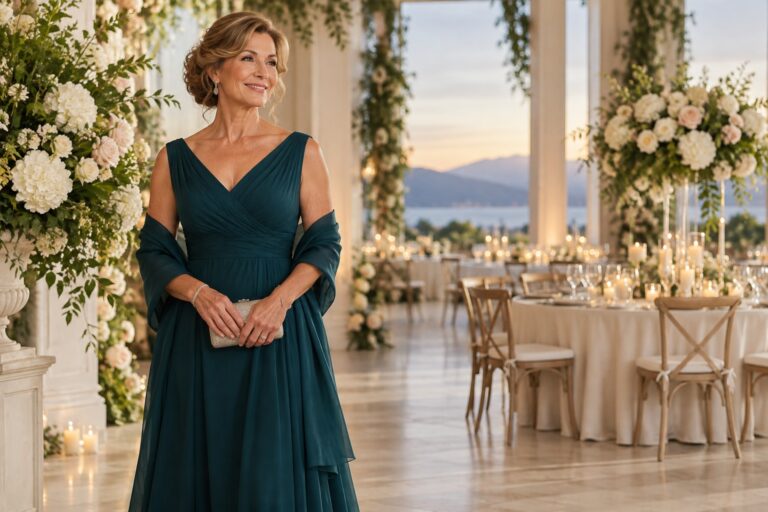
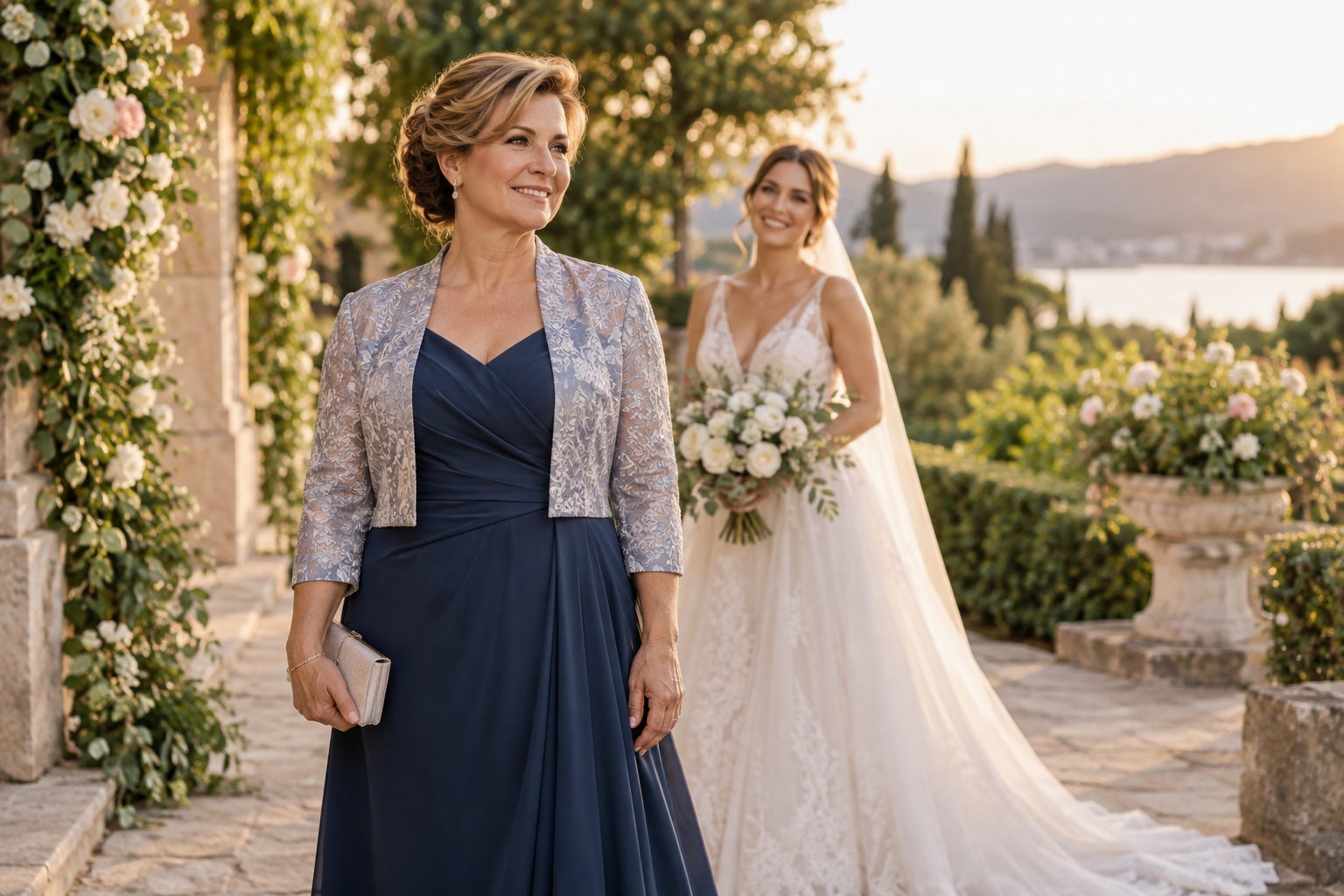
Mother of the Bride Dresses: A Smart Shopping Guide
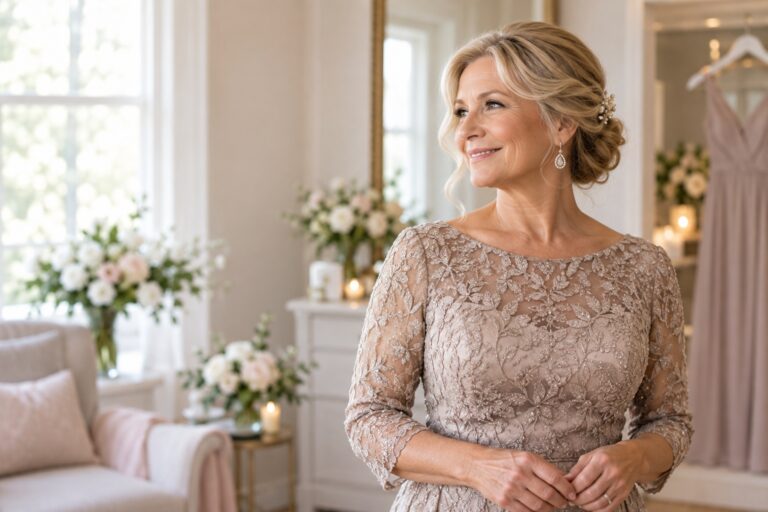
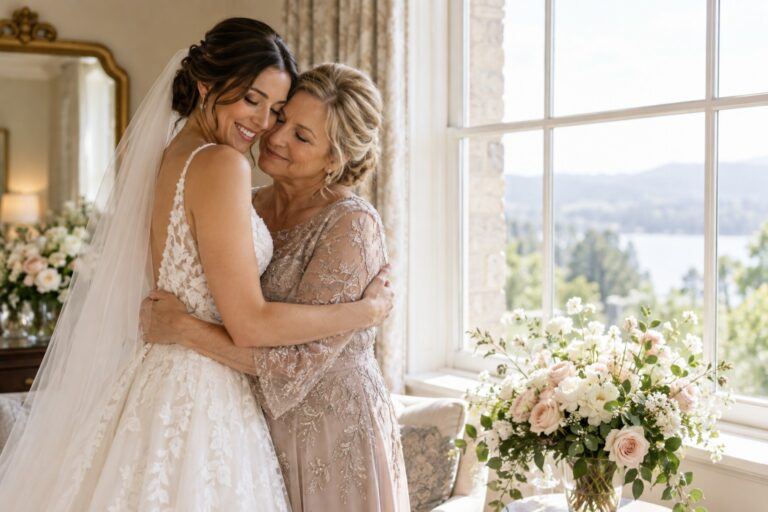
Shopping for mother of the bride dresses can feel surprisingly complicated. You are choosing an outfit for a meaningful role, but you are also dressing for a long day of photographs, greetings, walking, sitting, and celebration. The dress needs to respect the wedding’s tone without turning you into a copy of the bridesmaids, and it needs to feel like your style rather than a costume borrowed for one occasion.
The easiest way to make the search calmer is to decide in the right order. Start with the invitation and venue, create a short brief, narrow the silhouette and neckline, then check fabric, color, coverage, fit, shoes, and alterations. This guide gives you that sequence, including the questions to ask at a boutique or online, the try-on tests that reveal hidden problems, and a final wedding-day plan you can trust.
Start with a shopping brief, not a dress screenshot
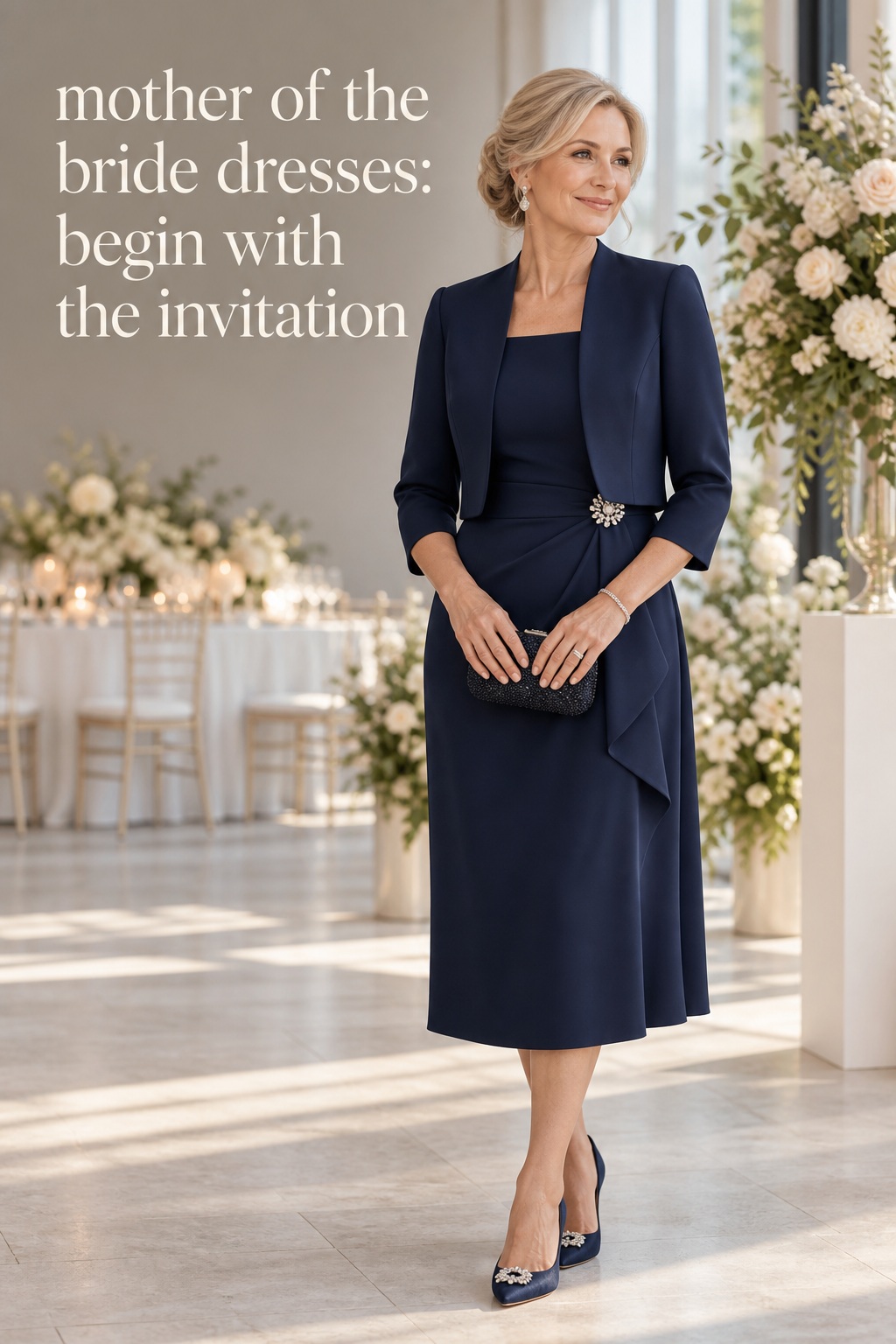
Before you save another image, write down the facts that will shape the outfit. A screenshot is useful for showing a sleeve or color you like, but it rarely tells you whether the dress suits the ceremony time, the floor surface, the temperature, or the number of hours you will wear it. A brief turns inspiration into useful information for a stylist, tailor, or search filter.
Read the invitation and the clock
Record the dress code in the invitation’s own language. Cocktail, semi-formal, formal, black tie optional, and black tie each suggest a different level of finish. Time of day adds another clue. A daytime wedding may welcome a print, soft color, matte texture, or lighter layer, while an evening celebration can carry deeper color, shine, velvet, satin, or more dramatic jewelry.
Turn wedding inspiration into a plan you can actually follow.
Zarellea brings your guest list, budget, vendors, and day-of details into one shared space — so no beautiful idea gets lost in the shuffle.
Do not treat these categories as rigid uniforms. A formal daytime wedding can absolutely suit a floor-length dress when the fabric and setting support it. A relaxed outdoor event may make a shorter hem and breathable material more sensible. The goal is to read the entire event rather than deciding that length alone determines whether a dress is appropriate.
Let the venue reveal the practical demands
Write the venue beside the dress code: ballroom, hotel, church, garden, vineyard, beach, barn, restaurant, private home, or city space. Then imagine the route through the day. Will you walk over grass or gravel? Climb stairs? Stand outside before the ceremony? Sit on a low chair? Move between air-conditioned rooms and warm sunlight? A beautiful dress that ignores those details can become a distraction.
- For grass, sand, gravel, or cobblestones, plan the hem and shoes together.
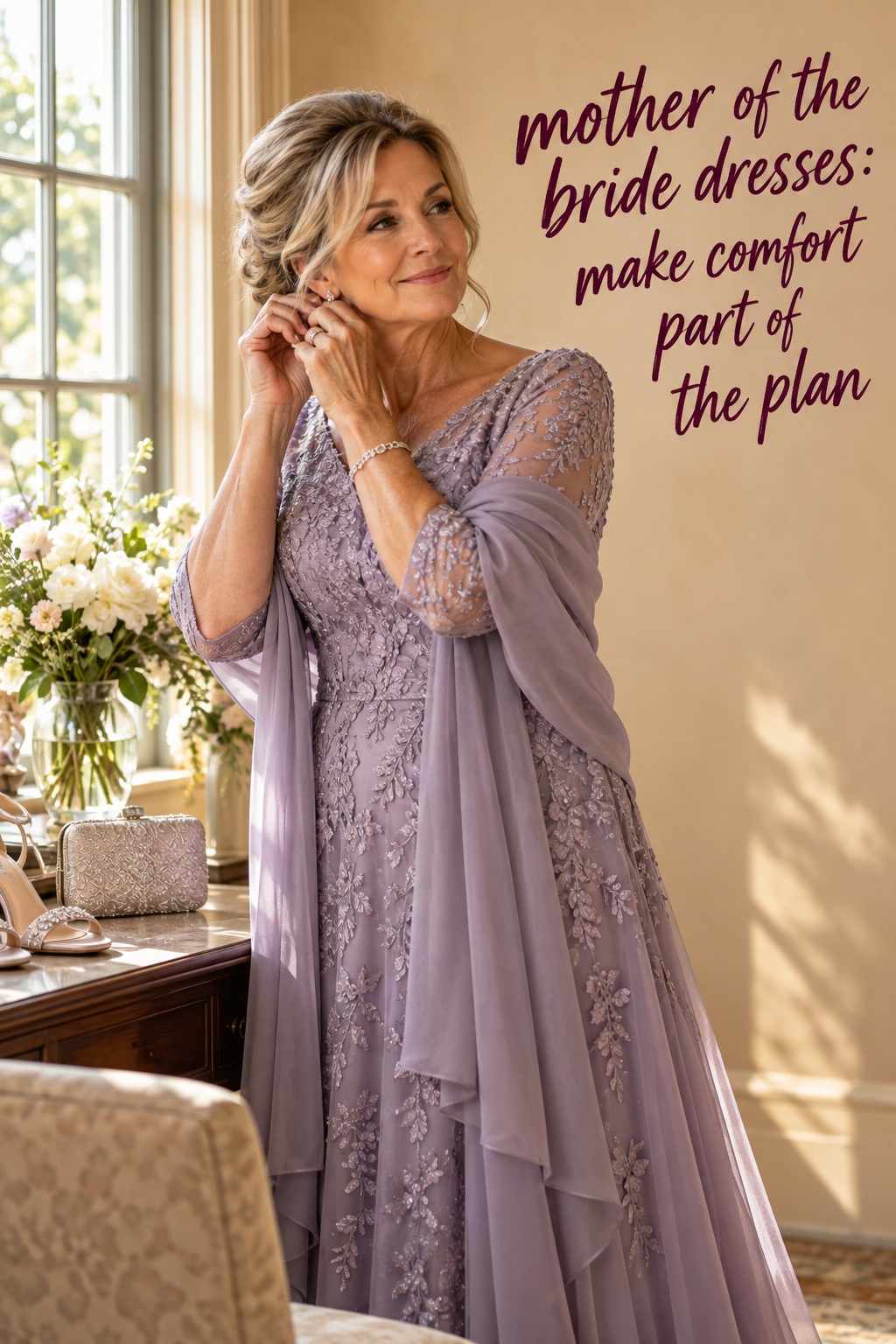
- For changing temperatures, decide whether you need a jacket, cape, shawl, or wrap.
- For a long reception, test sitting, walking, hugging, and dancing before the final purchase.
- For a house of worship, check whether you want a shoulder or neckline coverage option.
- For bright outdoor photographs, check whether pale fabric becomes transparent or reads as white.
Have one clear conversation with the couple
You do not need approval for every detail, but a short conversation can prevent avoidable stress. Ask about the overall formality, the bridesmaid color family, the expected photograph groupings, and any colors the couple would rather keep away from the bridal look. Show them two or three directions if you want input, not twenty screenshots that make the decision harder.
Coordination does not mean exact matching. If the attendants wear dusty blue, navy, slate, silver, or a print with a small amount of blue can create harmony without making you look like another member of the line-up. The same principle works with florals, ties, invitations, and flowers. Build a related color story while preserving a distinct outfit.

Use a silhouette and neckline decision map
Once the event brief is ready, choose the job you want the dress to perform. Do you want a long, graceful line? A defined waist? Easy movement? Shoulder coverage? A strong modern shape? There is no universally flattering silhouette, because the right choice depends on the way you want to feel and move. A decision map is more useful than a list of rules about age or body type.
Choose the silhouette by the outcome you want
Choose an A-line when you want a defined bodice with a skirt that moves away from the body. It can feel polished without feeling restrictive and can work in chiffon, crepe, lace, satin, or a printed fabric. Check where the skirt begins to widen. The right point gives you shape without creating more volume than you want.
Choose a column or sheath when you prefer a clean, streamlined line. It can be especially effective at a modern hotel, restaurant, gallery, or city venue. Look for lining, a little walking ease, and gentle draping if you do not want the fit to feel rigid. Test the back view and the way the dress behaves when you sit, not just the front view in a mirror.
Choose a fit-and-flare when you like waist definition with more movement through the lower half. Choose a tea-length or midi shape when the wedding is daytime, cocktail, garden, or otherwise suited to a shorter hem. Choose a pants set or jumpsuit when mobility and a modern tailored line matter more to you than a skirt. These alternatives can look fully occasion-ready when the fabric, fit, and accessories are elevated.
Let the neckline support your comfort
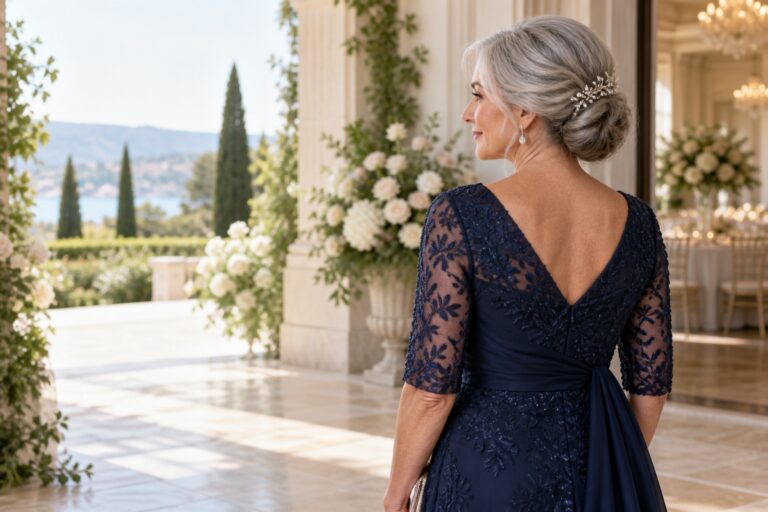
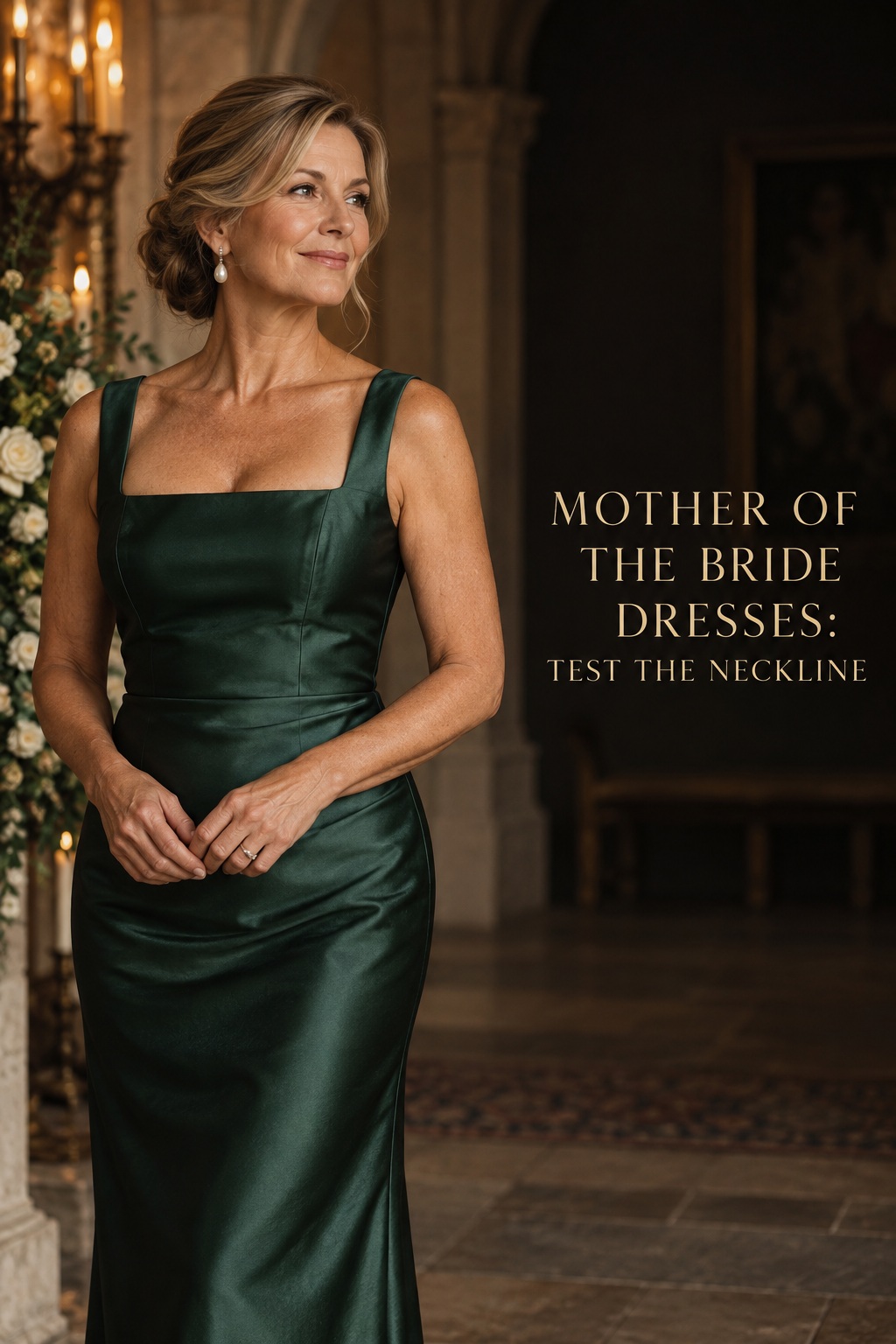
A neckline changes the visual balance of the outfit and the way you move through the day. A V-neck can create a long, open line. A boat neck can frame the shoulders with a more contained shape. A square neck can give structure. A scoop neck can feel soft and easy. A high neckline or illusion panel can offer coverage without making the dress look heavy. The best option is the one that stays in place when you bend, turn, hug, and look down at a bouquet.
Check the armhole as carefully as the neckline. Raise both arms, reach forward, and rotate your shoulders. If the dress cuts into the underarm or the sleeve twists, the problem may become more noticeable after several hours. If you want a layer, try it over the dress and move again. A jacket should stay centered after a hug, while a wrap should not slip every time you stand.
Use a simple three-question fitting test
- Can I sit comfortably for a full meal without pulling the waist or skirt?
- Can I lift my arms, greet people, and carry a small bag without the neckline shifting?
- Can I walk at a normal pace and dance briefly without guarding the hem?
If the answer is no, do not dismiss the issue as something you will get used to. Some problems can be solved by tailoring, a different undergarment, or a small closure adjustment. Others are built into the cut and will keep asking for attention. Occasionwear succeeds when the garment supports your day quietly.
Build the dress around color, fabric, and the day ahead
Color and fabric are often where the outfit begins to feel personal. Instead of starting with a rule about what a mother should wear, start with the colors you already know make you feel good. Then test those colors against the wedding palette, the venue, and the light in which most photographs will be taken.
Choose a color family with room to move
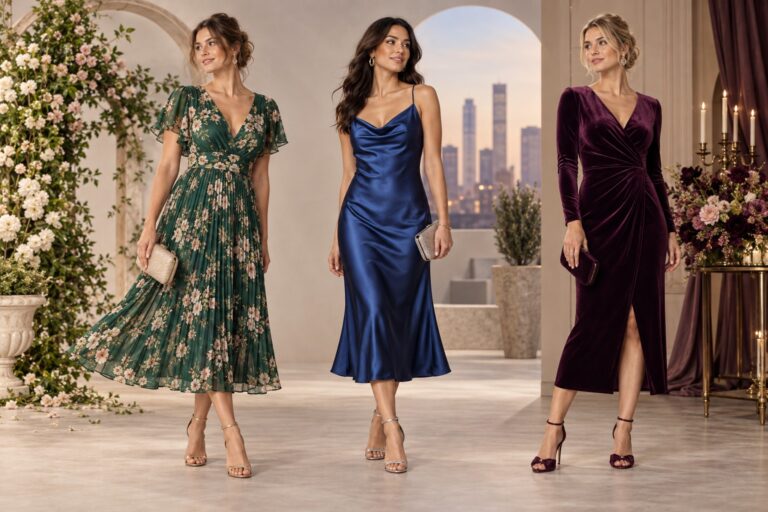
Pull three color families from your wardrobe: one you wear often, one you would enjoy for a celebration, and one neutral that feels polished. Compare them with the bridesmaid swatches or wedding palette if those are available. You can sit beside a coordinated color without matching it exactly. Navy, deep green, muted berry, rose, slate, plum, warm taupe, and metallic neutrals can all create a distinct but connected look.
Take special care with white, ivory, cream, and very pale champagne unless the couple has specifically welcomed them. A color that looks beige in a shop may photograph much closer to white. Black can be elegant at many weddings, but the venue, time, cultural context, and couple’s preferences matter. Texture, jewelry, a lighter layer, or a celebratory shoe can change how a dark dress reads.
Choose fabric by movement and temperature
Crepe gives a smooth, matte line and can support a column or softly draped dress. Chiffon creates movement in a skirt, sleeve, or overlay and can suit warm outdoor settings when it is lined well. Satin reflects light and can look formal with a simple cut, but wrinkles and pulling may show on its surface. Lace brings texture, while velvet adds depth for a cooler celebration. A beaded or sequined fabric can be beautiful, but it should not make the dress heavy or scratchy.
Ask what the dress feels like after ten minutes, not only in the first thirty seconds. Check the lining, seams, closure, and areas where the fabric touches your neck or arms. If you tend to feel warm, look for airflow and a stable neckline. If the day may be cool, a well-cut layer can be more useful than choosing a dress with heavy embellishment throughout.
Make the outfit look like you
A mother of the bride dress does not need to erase your normal style. If you usually wear tailored clothes, try a structured sheath, a refined jumpsuit, or a dress with a clean jacket. If you prefer softness, consider chiffon, pleats, a floral, or a gently draped sleeve. If jewelry is your favorite part of an outfit, choose a quieter neckline and let earrings or a brooch lead. Personal style is often what keeps an occasion outfit from looking over-planned.
- One strong detail is usually enough: an architectural sleeve, a beautiful neckline, a special texture, or an expressive color.
- If the dress is patterned, keep the bag and shoes calm enough to let the print breathe.
- If the dress is simple, use jewelry, a layer, or a polished shoe to make the look feel intentional.
- Choose a bag that holds what you need without requiring both hands during greetings and photographs.
Turn a promising dress into a reliable wedding-day outfit
The shopping decision is only half complete when you say yes to the dress. The final result depends on measurements, tailoring, shoes, undergarments, layers, accessories, and a rehearsal of the movements the wedding will require. Treat the final weeks as a practical quality check rather than a last-minute styling scramble.
Order with enough time to solve problems
Start early enough to compare dresses, read the measurement chart, receive the order, and arrange alterations. Made-to-order pieces, coordinated jackets, custom sizing, and busy wedding seasons may require more time. If you shop online, check the return policy, final-sale language, delivery estimate, lining details, and care instructions before paying. A size label is not a universal measurement, so compare your measurements with that specific brand’s chart.
When a dress is between sizes, choose based on the largest measurement and ask a tailor what can realistically be adjusted. It is usually easier to refine a seam or hem than to rebuild a complex neckline, heavily embellished sleeve, or structured bodice. Keep the packaging and order details until the fit is confirmed.
Bring the complete look to the fitting
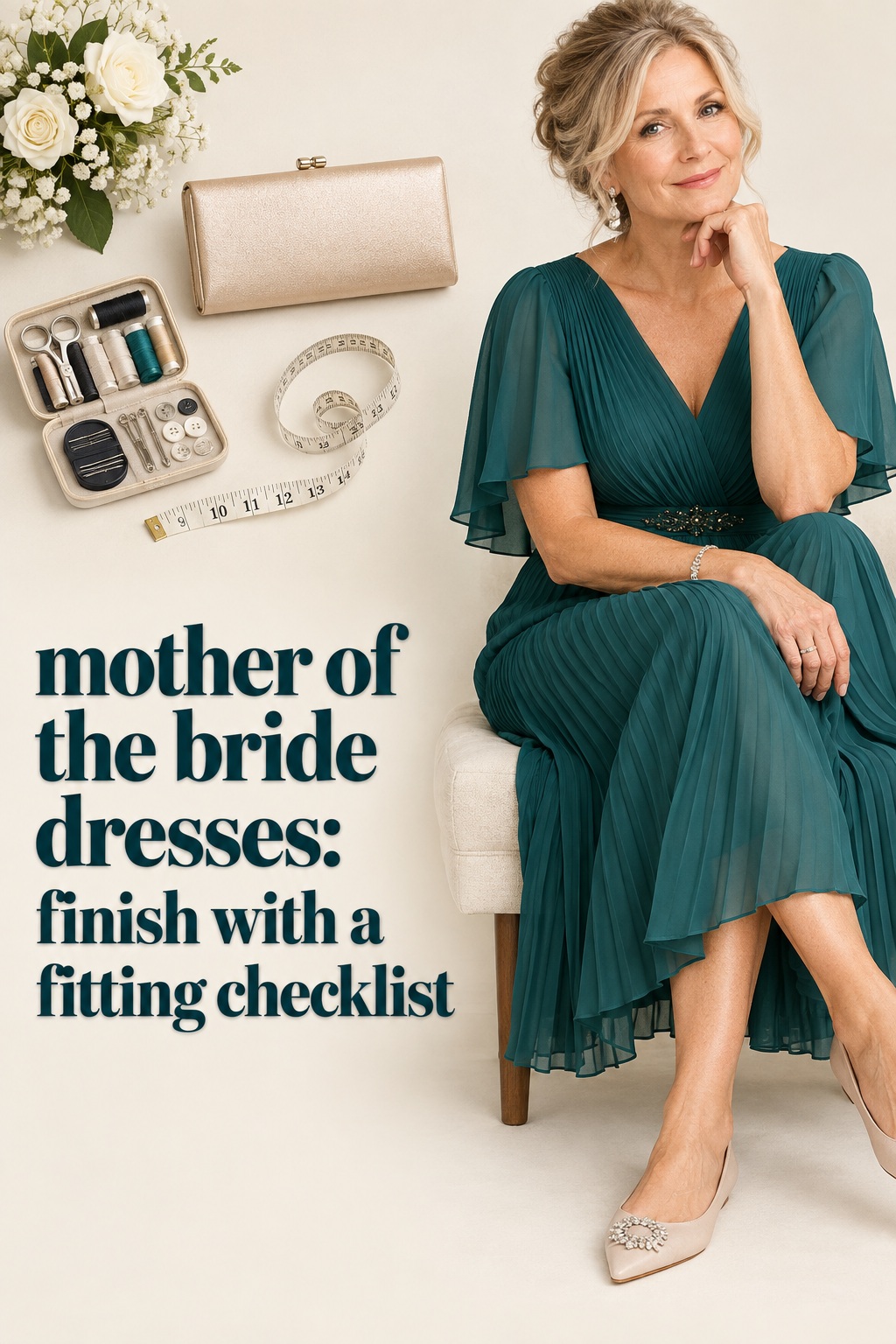
Bring the actual shoes, bra, shapewear if you plan to wear it, jewelry, layer, and handbag. A hem can look correct with one shoe and awkward with another. A neckline can behave differently with a different bra. A jacket may catch on a necklace. These details are much easier to correct while you are still at the fitting.
Walk quickly, sit in a dining chair, step up if possible, reach forward, hug someone, and raise both arms. Turn around so the back can be checked in photographs. If the dress is long, practice lifting it with one hand. If it has a slit, check how it behaves while walking. If it is a jumpsuit, practice the closure without assistance. You are not being fussy; you are testing the outfit’s real job.
Prepare a small comfort and repair kit
Ask one trusted person to keep a compact kit nearby. Include fashion tape, safety pins, a small sewing kit, stain treatment, blister protection, tissues, and any personal items you may need. Pack a backup pair of flats only if they work with the hem. If the outfit requires a wrap or jacket, decide when you will wear it rather than leaving the choice until you are already cold.
Press or steam the dress according to its care instructions and hang it where it will not be crushed. Put the shoes, jewelry, bag, layer, and repair kit together before the wedding morning. A calm setup helps you be present for the emotional parts of the day, which is the real reason the outfit deserves this much care.
Sources and Methodology
This guide is based on a US search review of editorial roundups, retailer guidance, fabric information, neckline references, and venue-focused wedding attire advice. The research was used to identify recurring decision points, while the shopping sequence, fitting tests, and wedding-day preparation plan are original editorial guidance. For additional context on fabric behavior, see Azazie’s fabric guide, and for venue and season examples, see Jovani’s venue guide. Product availability, prices, delivery times, and retailer policies can change, so confirm those details before ordering.
FAQ
When should you start shopping for mother of the bride dresses?
Start several months before the wedding so you have time to compare styles, order the dress, receive it, schedule alterations, and find a backup if the fit or delivery is not right. Begin earlier for made-to-order dresses, coordinated layers, custom sizing, or a wedding during a busy shopping season. The exact timeline depends on the retailer and the complexity of the outfit.
Does the mother of the bride have to match the bridesmaids?
No. Coordination usually looks more natural than exact matching. Use the wedding palette as a conversation, then choose a related shade, texture, or print that gives you a distinct outfit. Ask the couple about their preferences, especially if they have specific plans for family photographs or colors they want to reserve for the bridal look.
Can the mother of the bride wear a short or midi dress?
Yes, a short or midi dress can be excellent for a daytime, cocktail, garden, restaurant, or less formal wedding. Let the dress code, venue, fabric, and styling determine the level of polish. For a strict black-tie celebration, a floor-length gown is generally the safer starting point unless the invitation or couple indicates otherwise.
What colors should the mother of the bride avoid?
White and bridal-looking ivory are the clearest colors to approach carefully unless the couple has invited them. Very pale champagne, cream, or blush may also photograph as white. Black can be appropriate in many settings, but consider the venue, time, cultural context, and couple’s preferences. When uncertain, ask directly rather than relying on a universal rule.
What is the most comfortable fabric for a mother of the bride dress?
Comfort depends on the fabric’s weight, lining, stretch, construction, temperature, and how you move. Chiffon can feel light and mobile, crepe can offer a smooth line, and a lined stretch fabric can make sitting and dancing easier. Satin, velvet, lace, and embellishment can also be comfortable when properly constructed. Try the dress for several minutes and test the movements you will make during the wedding.
Should mother of the bride dresses have sleeves?
No. Sleeves are a personal choice influenced by coverage, temperature, support, style, and venue expectations. Sleeveless, cap-sleeve, three-quarter, sheer, and long-sleeve options can all work. If you like a sleeveless dress but want flexibility, try a matching jacket, cape, shawl, or wrap and make sure it stays in place while you move.
How do you know whether a mother of the bride dress fits correctly?
The dress should stay comfortable while you sit, walk, raise your arms, reach forward, hug, and dance briefly. Check the neckline, armholes, bust, waist, back, hem, lining, and closure. Try it with your actual shoes, undergarments, jewelry, layer, and bag. If you keep adjusting one area, ask whether tailoring can solve it or whether another dress has a better starting fit.
Can a mother of the bride wear a jumpsuit instead of a dress?
Yes. A formal jumpsuit or tailored pants set can be a polished choice when it reflects your style and suits the wedding’s formality. Choose an occasion fabric, check the hem with the intended shoes, test the closure, and use jewelry or a layer to complete the look. The outfit should read as deliberate formalwear rather than everyday separates.