Unique Mother of the Bride Dresses: Modern Ideas
Unique mother of the bride dresses do not need to be loud, heavily embellished or difficult to wear. The most memorable looks usually have one clear point of view: an unexpected color, an architectural neckline, a beautiful print, a fresh fabric or a silhouette that feels more like you than a traditional occasion uniform. The result is distinctive without competing with the bride.
There is also a practical reason to look beyond the familiar jacket-and-dress set. As the mother of the bride, you may be greeting guests, appearing in photographs, walking outdoors, helping with last-minute details and dancing late into the evening. Your outfit should make those moments easier, not turn them into a costume. Use the wedding brief as a guardrail, then build a look around your own style, proportions and comfort.
Start with the wedding brief and your personal style
Before you fall for a dramatic dress online, collect the information that determines whether it will feel right on the day. Read the invitation, ask the couple about the level of formality and check the venue. A floor-length sequined gown can be perfect for black tie, while the same idea may feel out of place at a daytime garden celebration. Originality works best when it is anchored to context.
Use the dress code as a creative boundary
Black tie and formal evening weddings invite length, richer materials and more dramatic detail. Think velvet, silk, fluid crepe, all-over beadwork, a strong jewel tone or a simple gown with an artful cape. You do not need to copy the bridal party. You do need to look intentionally dressed for the same level of event.
Turn wedding inspiration into a plan you can actually follow.
Zarellea brings your guest list, budget, vendors, and day-of details into one shared space — so no beautiful idea gets lost in the shuffle.
Cocktail and semi-formal weddings create room for a modern midi, a sculptural tea-length dress, a refined jumpsuit or a tailored pantsuit. Here, the interesting element can be a bold sleeve, a halter neckline, a strong waist detail, a graphic print or a pair of statement earrings. For a daytime or dressy-casual wedding, consider a polished printed dress, elegant separates or a lightweight fabric with a distinctive shape.
Ask what makes your everyday style feel like yours
Do you usually feel best in clean tailoring, fluid dresses, color, romantic details or minimal neutrals? Your answer is more useful than a generic age rule. A woman who lives in trousers may feel more confident in a jumpsuit or suit. Someone who loves prints may prefer a floral or abstract pattern with simple accessories. If your wardrobe is quiet, a sculptural sleeve or an unusual texture can add personality without requiring a complete change of identity.
Take a photograph of three outfits you have worn and genuinely enjoyed. Look for repeated clues: open necklines, defined waists, covered arms, movement at the skirt, strong shoulders or saturated color. Your wedding outfit can be more polished than your daily clothes while still using those familiar proportions. This is one of the most reliable ways to look unique rather than merely trendy.
Coordinate with the couple without becoming a duplicate
It is considerate to know the wedding palette, bridesmaid colors and the mother of the groom’s plans. Coordination does not mean wearing the same shade or the same dress. You might choose a deeper version of a bridesmaid color, a complementary color on the wheel or a neutral that lets the flowers and setting remain visible. The bride should have a chance to flag a color that feels too close to her own outfit, especially white, ivory or pale champagne.
- Ask about formality, location and any requested colors before shopping.
- Choose a related shade rather than copying the bridesmaids exactly.
- Avoid white or bridal-looking ivory unless the couple has clearly approved it.
- Let the bride know your final direction, but keep the final fit and style decision yours.
Six unique dress directions that still feel elegant
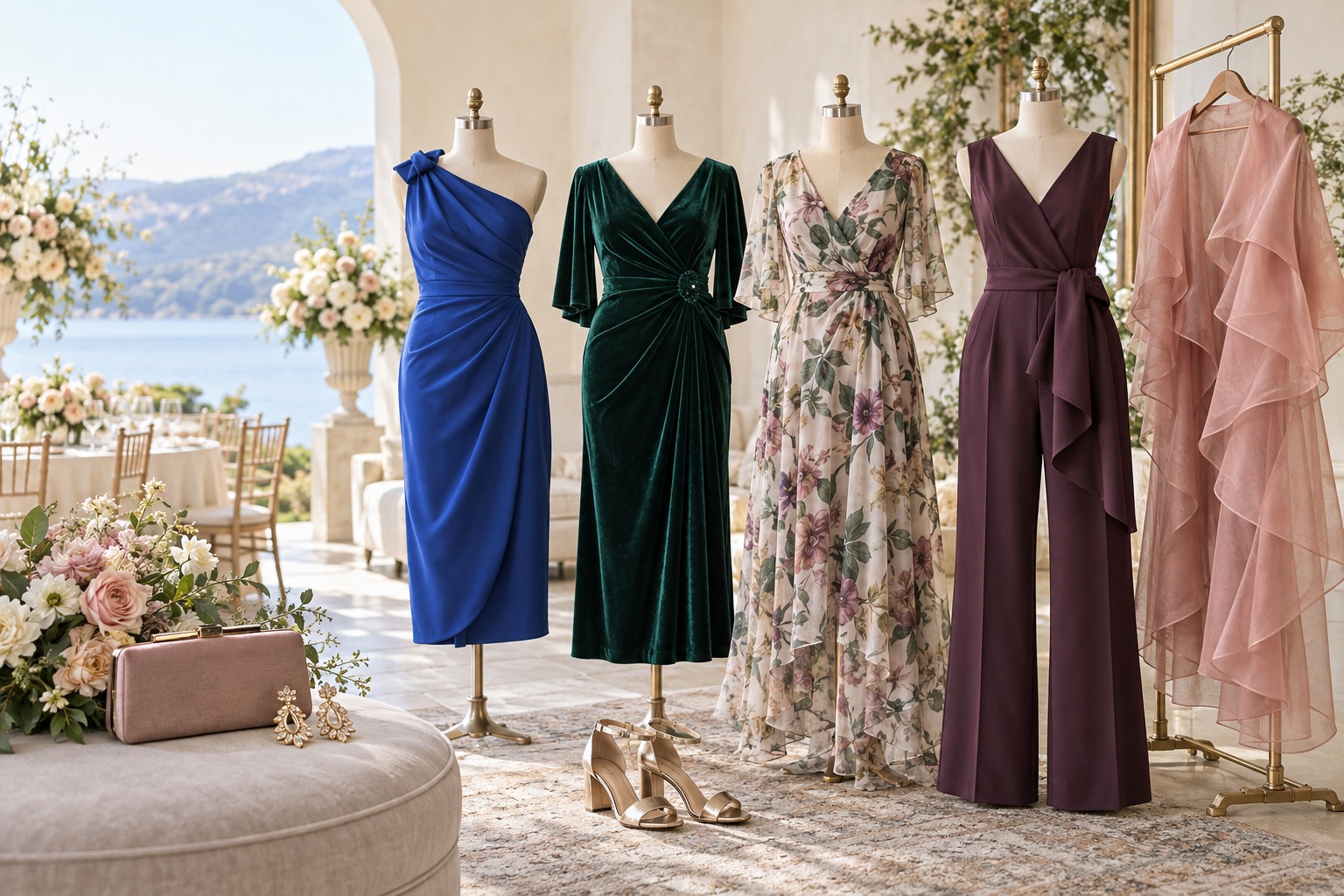
If you want a dress that feels individual, start with the design element that will carry the look. One memorable decision is usually more sophisticated than several competing statements. The following directions can be adapted to different levels of formality and different personal styles.
1. Choose an architectural neckline
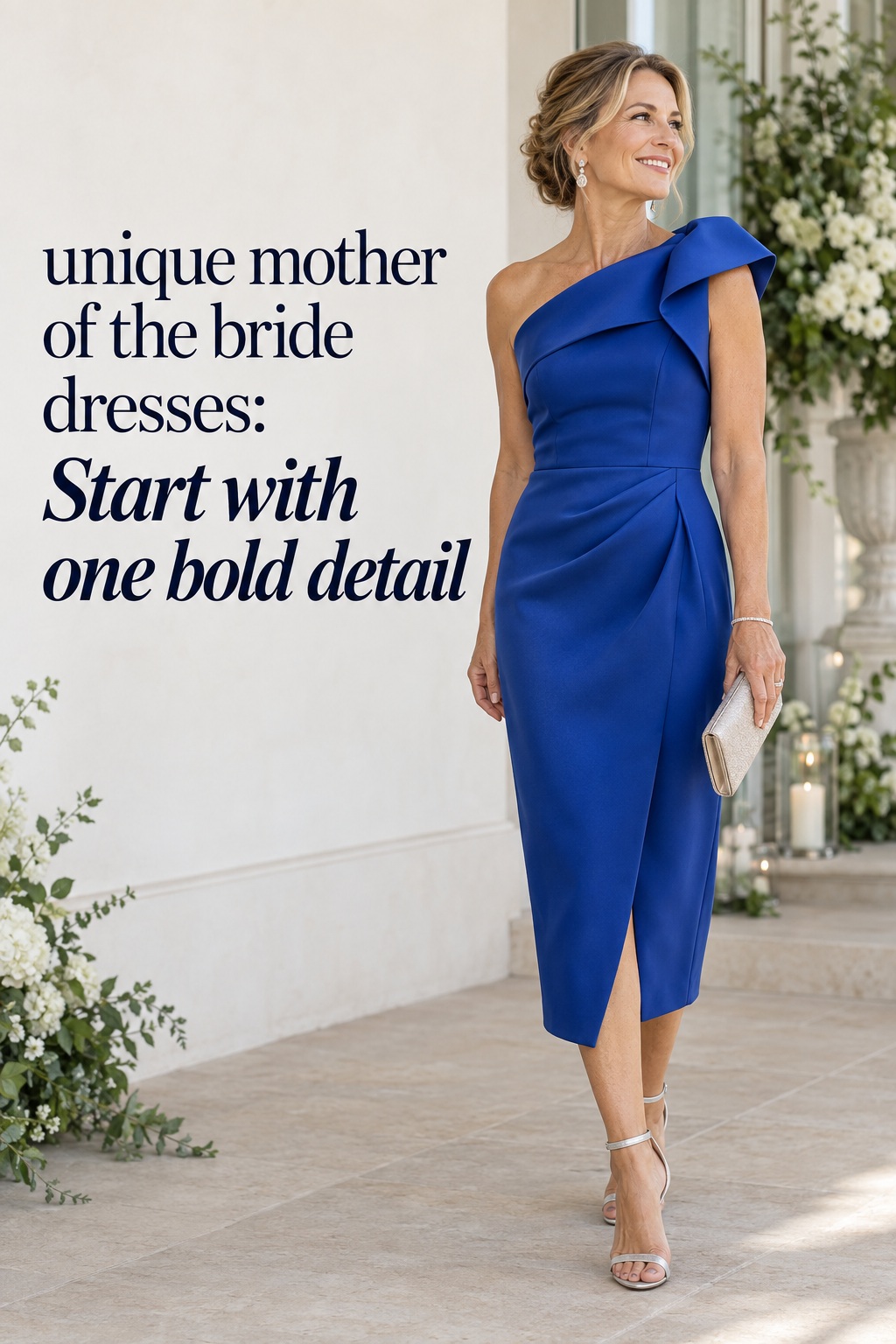
A halter, one-shoulder, bateau, square or high neckline can change the entire impression of a familiar silhouette. A halter brings the eye to the face and shoulders, while a bateau neckline creates a long, graceful line. One shoulder supplies asymmetry without needing sequins or a large print. If you prefer more coverage, a high neck with an open back, keyhole or sheer overlay can feel modern and intentional.
Match the neckline to what you want to wear near your face. A strong neckline often looks best with restrained jewelry. Before committing, sit, lift your arms and turn your head. The most beautiful neckline is not a success if you spend the ceremony adjusting it.
2. Let a rich color do the memorable work
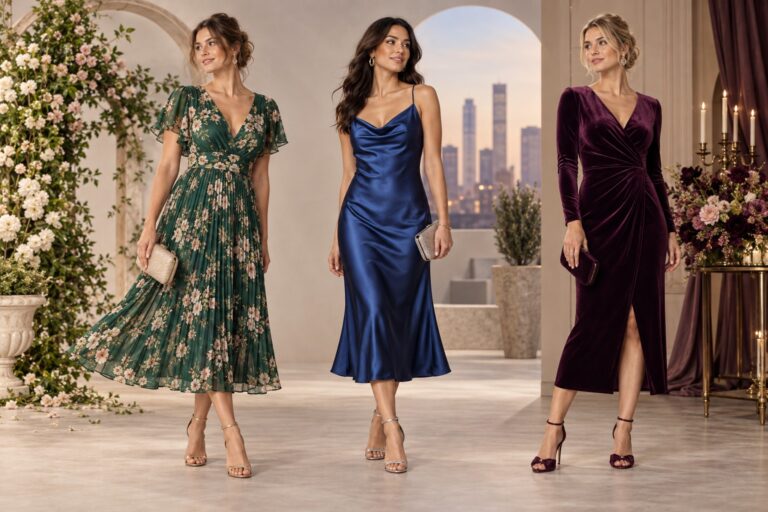
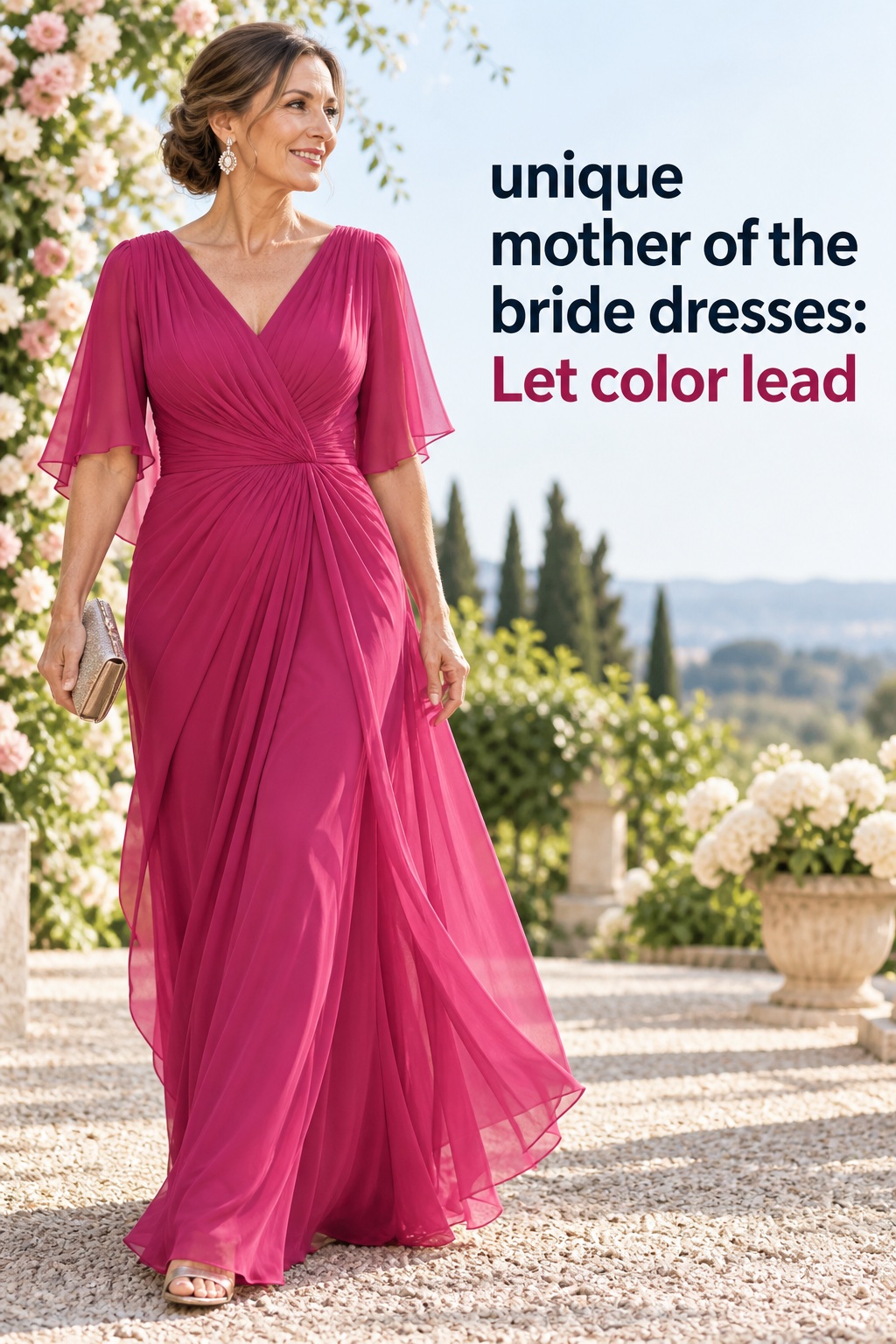
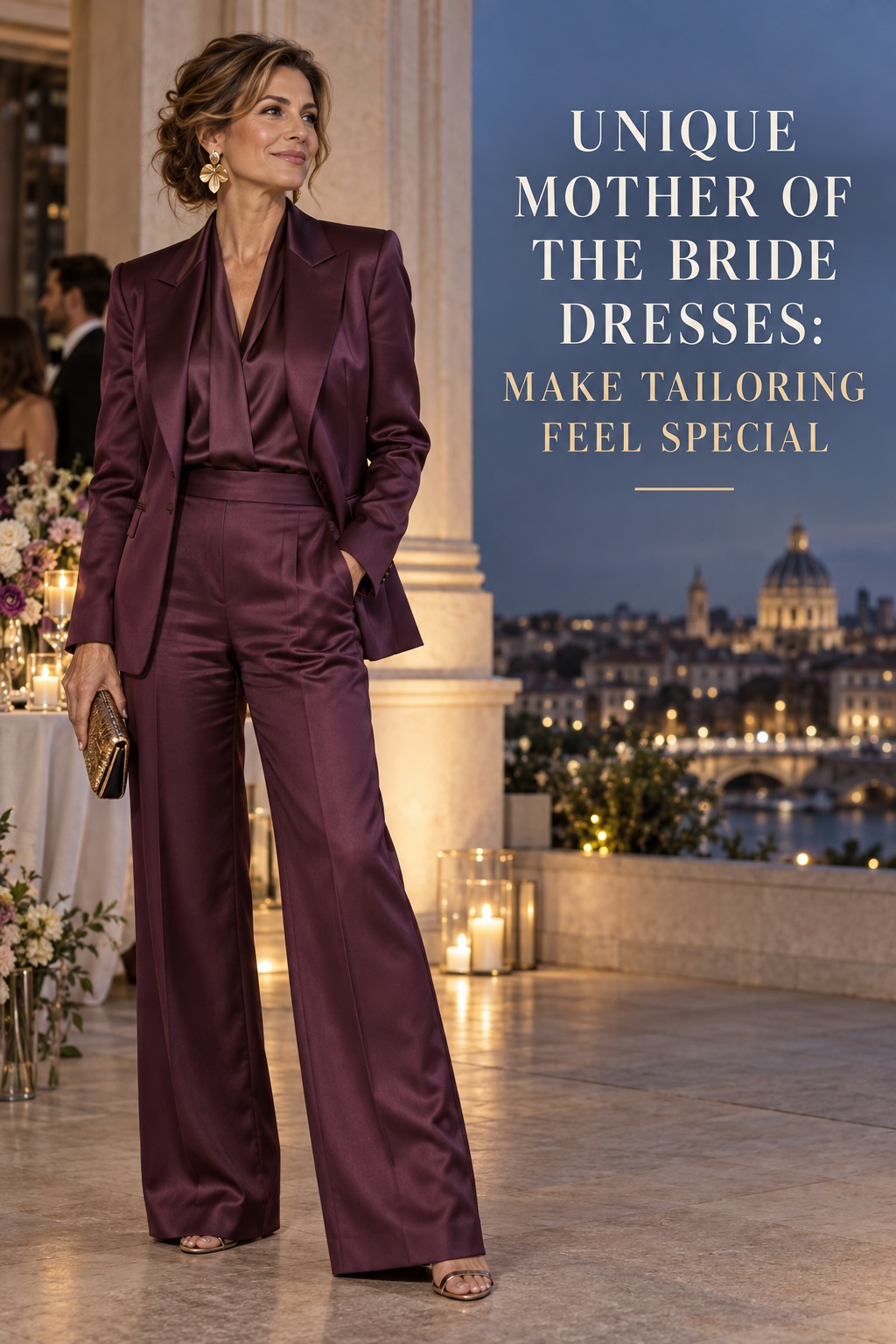
Color is one of the simplest ways to make a mother-of-the-bride look feel personal. Navy, burgundy, forest green, aubergine, cobalt, rust and deep teal can look sophisticated across many seasons. For a spring or summer wedding, consider raspberry, fuchsia, coral, soft blue or a clear botanical green. A single saturated color can feel more modern than a conventional pale pastel, especially in a clean silhouette.
Use the venue and lighting as a filter. A dramatic dark color can be striking in a candlelit room, while a bright shade can sing in daylight. Request fabric swatches if you are shopping online because satin, crepe, velvet and chiffon reflect color differently. If you want the color to be the hero, keep the shoes, bag and jewelry in a quiet metallic, neutral or tonal family.
3. Try an artful print instead of standard embellishment
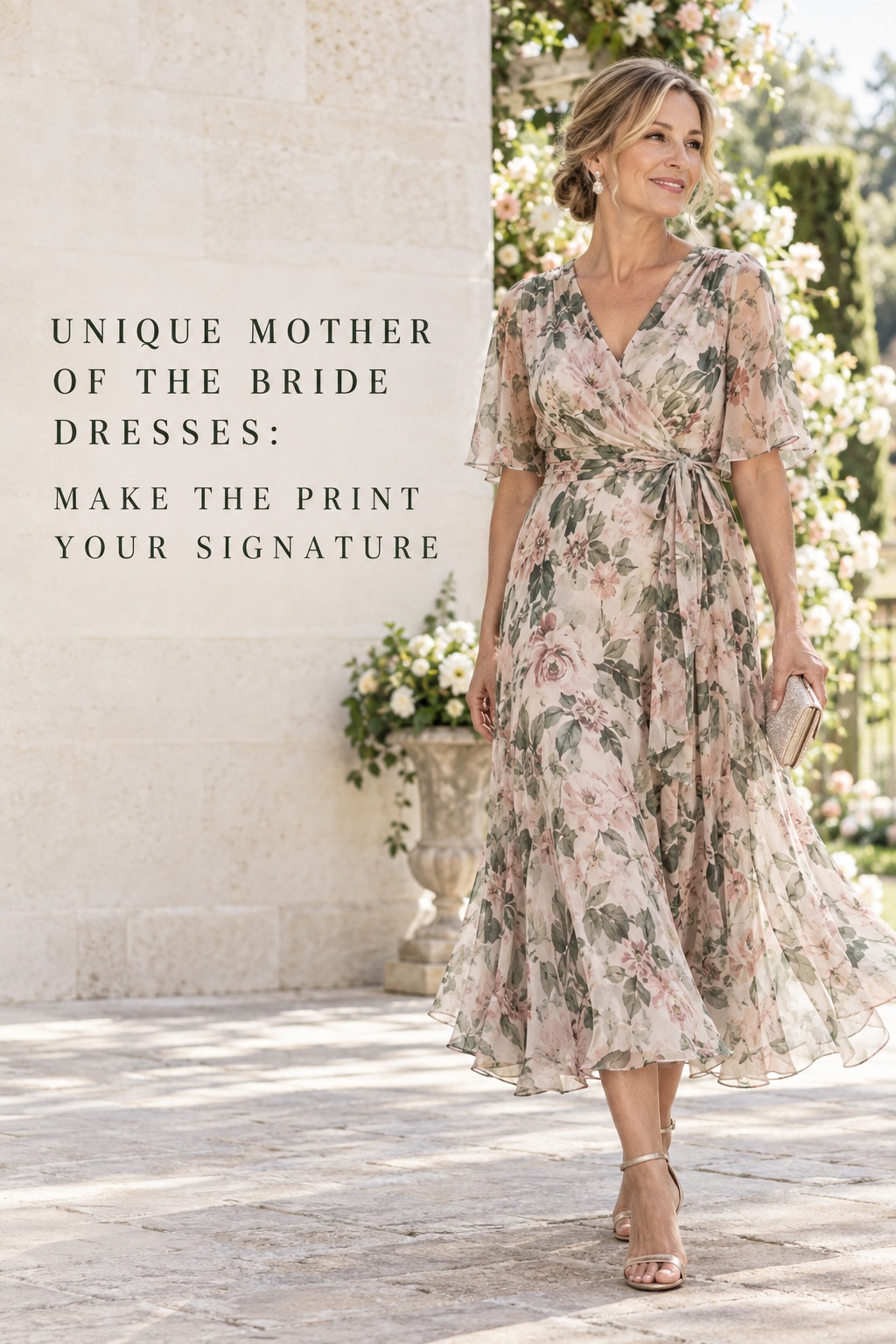
A floral, painterly or geometric print can make a dress feel one-of-a-kind without the weight of all-over beading. Look for scale that suits the silhouette. A large print can be beautiful on a long, simple dress, while a smaller pattern can work on a fitted midi or a flowing tea-length shape. A print with two or three key colors also gives you a ready-made accessory palette.
To keep a patterned dress polished, repeat only one color in your shoes or bag. Avoid adding a competing statement necklace if the print already draws attention upward. For a garden wedding, a botanical print can echo the setting. For a city or evening celebration, an abstract pattern in silk or satin may feel more appropriate than a traditional floral.
4. Use modern texture: chiffon, organza, velvet or lace
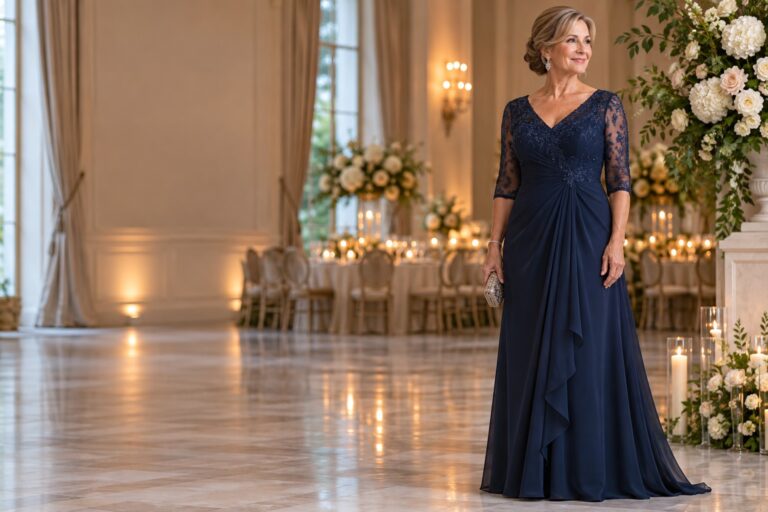
Texture creates visual interest even when the color is restrained. Lightweight chiffon can gather, pleat or float around the body, making it a strong choice for an outdoor wedding or a long day. Organza can create a crisp sleeve, a sculptural overlay or controlled volume without feeling heavy. Velvet gives fall and winter looks depth, while lace can add romance when it is used as a panel, sleeve or overlay rather than a full costume effect.
Think about temperature and movement. A stiff, heavily layered fabric may look impressive on a hanger but feel exhausting in warm weather. Soft materials should still have enough lining and structure to photograph well. Walk in the dress, test the hem in a breeze and check whether the fabric catches on your jewelry.
5. Choose an asymmetric or unexpected detail
Asymmetry gives a classic dress a fresh point of view. Consider a draped shoulder, a high-low hem, a diagonal pleat, a gathered hip, an off-center bow or a cape that falls from one side. These details are especially effective when the rest of the dress is clean. They create a memorable outline in photographs and allow you to express personality without adding visual noise.
Check the detail from every angle. A statement sleeve may look perfect from the front but obstruct a hug. A long cape can be wonderful for an indoor ceremony but awkward on a crowded dance floor. Ask a friend to take photographs while you walk and sit so you can see what the detail actually does in motion.
6. Add refined shine instead of maximum sparkle
Metallic fabric, subtle sequins, beaded cuffs and foil-like leaf patterns can make an outfit feel festive without turning it into a stage costume. For black tie, an all-over sequin gown can be beautiful when the shape is simple. For a daytime event, a softly shimmering bodice, metallic accessories or a satin finish may be enough.
Consider how the surface reacts to flash photography and indoor lighting. Very reflective fabric can create bright patches, while matte fabrics photograph more softly. If the dress shines, simplify the jewelry. If the dress is matte, a metallic shoe, sculptural earring or jeweled bag can supply the light.
Consider the non-dress alternatives
Some of the most unique mother-of-the-bride outfits are not dresses at all. A non-dress option can feel more authentic, offer better movement or solve a practical concern such as wind, stairs or a long outdoor ceremony. The same dress-code logic applies: the cut, fabric and accessories should communicate the right level of occasion.
The elegant jumpsuit
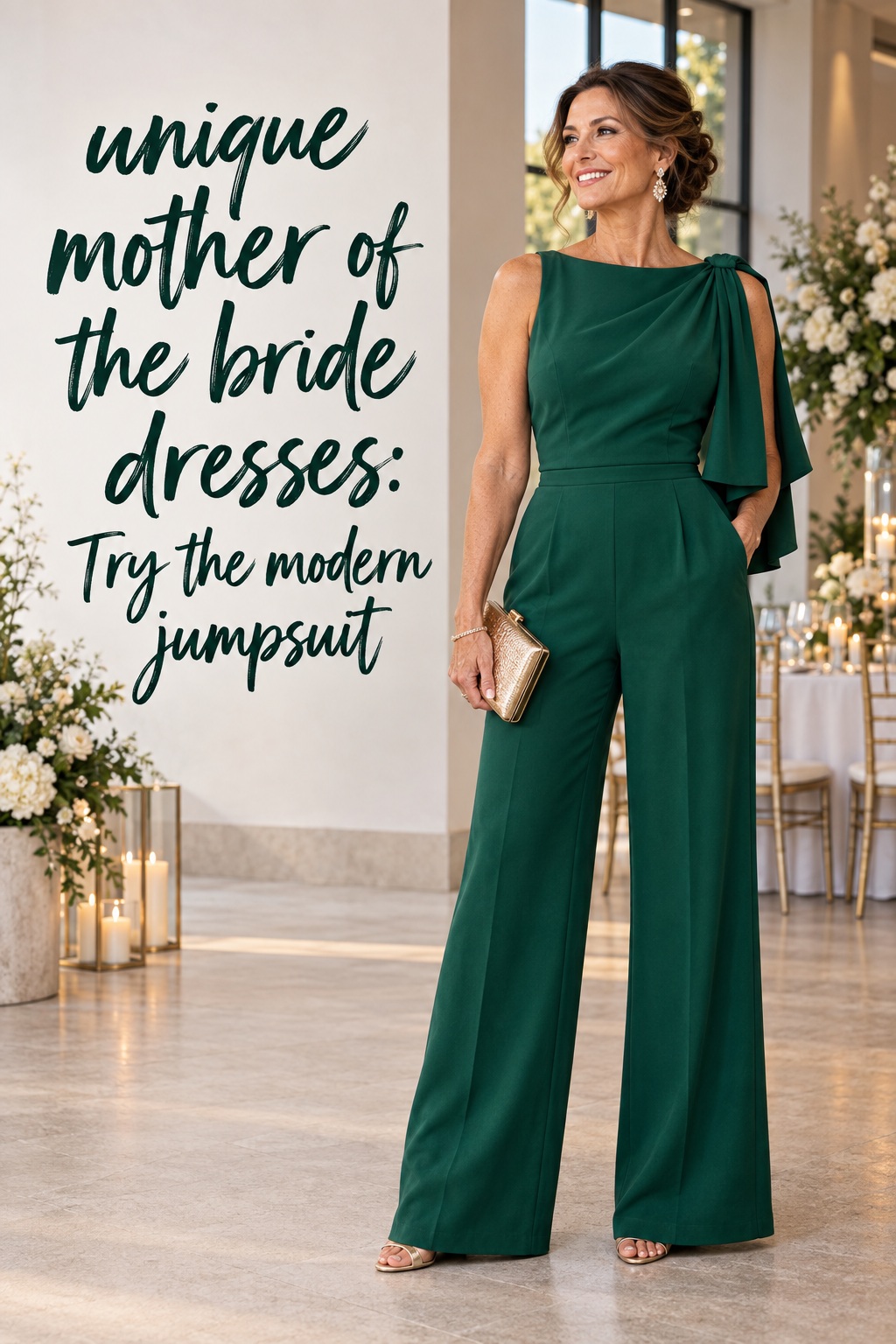
A jumpsuit is a strong choice for someone who likes a sleek line and wants to move easily. Wide-leg trousers can feel as formal as a gown in crepe, satin or fluid silk. A fitted waist, wrap bodice, draped shoulder or embellished belt gives the look definition. Choose a length that works with your shoes and check the fastening before the wedding day, especially if you expect to use a small restroom during a long reception.
The polished pantsuit
A pantsuit can be quietly dramatic in a saturated color, velvet, jacquard or a luminous fabric. A tonal camisole, silk blouse or embellished shell lets you control how much coverage and shine the outfit has. Make sure the jacket allows comfortable arm movement and that the trousers are hemmed for your event shoes. A brooch, sculptural earring or special clutch can replace the traditional corsage as the focal point.
Modern separates
A pleated skirt with a fitted top, a draped blouse with tailored trousers or a matching top and skirt can be more versatile than a single dress. Separates are useful when your proportions require different sizes or when you want to wear the pieces again. Keep the relationship between the pieces intentional through a shared color, texture or level of polish. The outfit should read as one look, not as a collection of unrelated items.
Make the outfit work for the venue, season and photographs
A unique design still has to survive the real wedding day. Build a quick test around the venue, weather and schedule before you order alterations. If the ceremony is outdoors, think about sun, wind, grass, stairs and temperature. If the reception is formal indoors, consider how the fabric looks under evening light and whether the shoes will carry you across a hard floor.
Garden and outdoor weddings
Lightweight layers, sleeves, a stable heel and a hem that does not drag are helpful outside. Chiffon, organza and fluid crepe can move beautifully in photographs, but secure the outfit so wind does not become the main story. Choose shoes that will not sink into grass and bring a wrap if the celebration continues after sunset. A floral print or botanical color can feel connected to the setting without becoming overly themed.
Beach and destination weddings
For a warm destination, prioritize breathable materials, a comfortable lining and movement. A silk maxi, airy jumpsuit, halter dress with a secure fit or polished separates can feel special without being heavy. If part of the ceremony is on sand, plan shoes separately from the dress. Pack the outfit in a garment bag, carry a stain pen and test how easily the fabric steams after travel.
Black-tie and evening celebrations
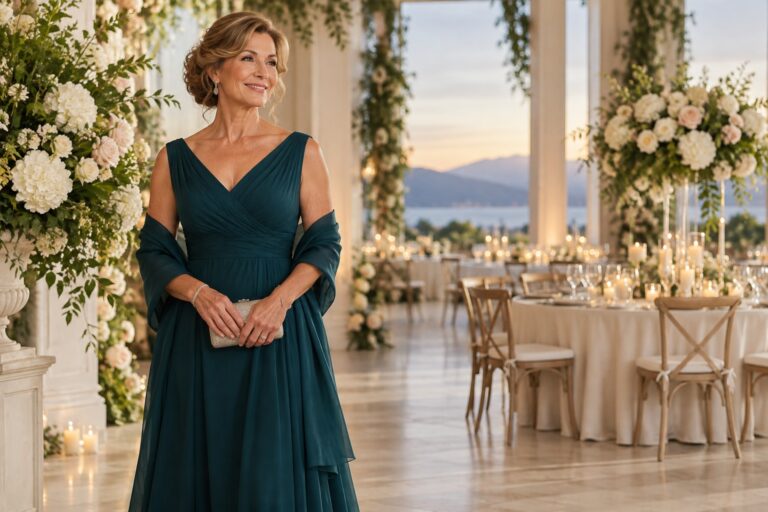
Evening is the right moment for velvet, sequins, dark jewel tones, liquid satin, dramatic sleeves and a cape. Keep the outline clean if the surface is highly decorated. A simple gown in an unusual shade can be more distinctive than a conventional gown covered in every available detail. Photograph the fabric with flash if possible so you know whether it looks rich or overly reflective.
Design for the photograph and the hug
As the mother of the bride, you will be seen from close range and from across the room. The face-framing area matters, as does the back of the outfit during the ceremony. Choose a neckline that photographs well, a sleeve that lets you embrace people and a waist or shoulder detail that remains visible when you hold a bouquet or clutch. Practice standing naturally rather than holding the fabric in place.
- Take front, side and back photographs in daylight and indoor light.
- Test sitting, walking, hugging, stairs and raising your arms.
- Wear the exact undergarments, shoes and jewelry you expect to use.
- Check the hem and sleeves after alterations, not only before them.
- Pack a wrap, comfortable backup shoes and a small repair kit.
Common mistakes to avoid
Originality is easier to achieve when you know which shortcuts tend to make an outfit feel less personal. The goal is not to remove all tradition. It is to choose tradition selectively and make the final result look deliberate.
- Chasing a trend that does not feel like you: Borrow a color, texture or proportion, but keep your familiar style language.
- Using too many statement details: Choose one hero element and let the rest support it.
- Ignoring the invitation: A unique look still needs to match the formality, venue and season.
- Choosing a beautiful but restrictive fabric: You should be able to sit, walk, hug and dance.
- Skipping the conversation with the couple: Coordinate around colors and expectations without giving up your final say.
- Leaving tailoring until the last week: Order early enough for fittings, shoe changes and realistic movement tests.
The best unique mother of the bride dresses feel memorable because they are specific. They reflect the woman wearing them, respect the wedding around them and make room for the full day. Start with one detail you love, test it against the dress code and venue, then edit everything else until the outfit feels confident and easy.
FAQ
What makes a mother of the bride dress unique?
A unique dress usually has one memorable design decision, such as an unexpected color, architectural neckline, artful print, modern texture, asymmetric detail or refined shine. It should still fit the wedding’s dress code and feel natural for the person wearing it.
Can the mother of the bride wear a colorful dress?
Yes. Jewel tones, rich red, fuchsia, cobalt, botanical green, burgundy and other saturated shades can look elegant. Check the wedding palette with the couple and avoid white, ivory or bridal-looking champagne unless you have clear approval.
Does the mother of the bride have to match the bridesmaids?
No. Her outfit can coordinate through a related shade, complementary color or shared level of formality without matching exactly. The priority is a cohesive wedding party and a look that reflects her own style.
Are jumpsuits appropriate for the mother of the bride?
A dressy jumpsuit is appropriate when its fabric, cut and accessories suit the event. Crepe, satin, silk and tailored wide-leg styles can work for cocktail, formal and even black-tie weddings when the invitation allows that interpretation.
What dress length is best for the mother of the bride?
Choose length based on formality, venue and personal comfort. Floor-length is common for black tie, while midi, tea-length and sophisticated knee-length options can suit cocktail, semi-formal and daytime weddings. The hem should allow comfortable movement.
How can I look distinctive without overshadowing the bride?
Use one strong element rather than several competing ones. A rich color, special sleeve, unusual neckline or beautiful print can create personality while a clean silhouette and thoughtful accessories keep the look respectful and balanced.
When should I buy and alter my outfit?
Buy early enough to allow delivery, a first try-on, at least one fitting and a final movement test with your shoes. The exact timing depends on the designer and season, but leaving alterations until the final week creates unnecessary pressure.