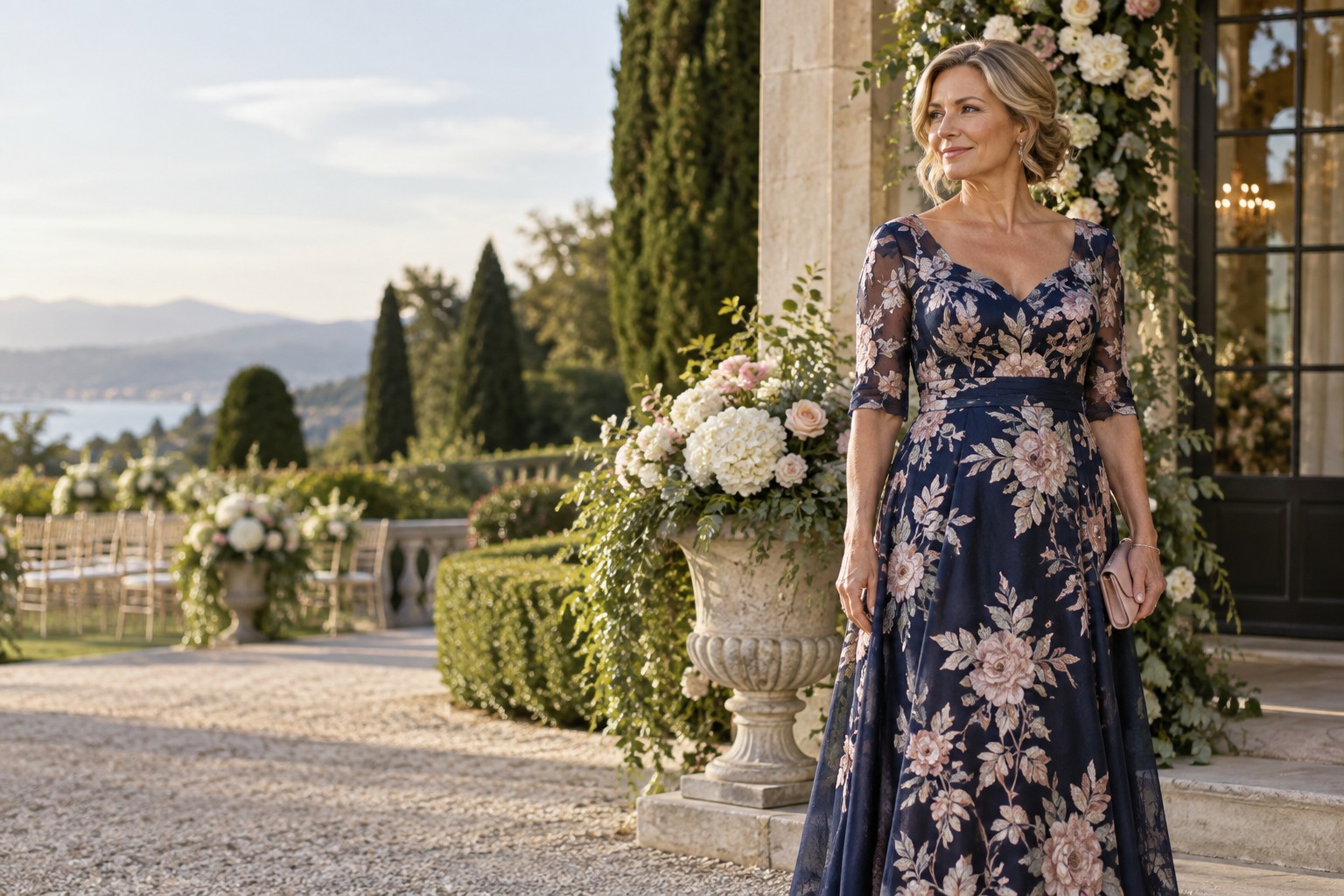
Floral Mother of the Bride Dresses: Fixes for Every Wedding
Finding a beautiful outfit for your daughter’s wedding can become surprisingly complicated when you want a floral dress. You may love the color and movement of a print, yet worry that it will look too casual, compete with the bridesmaids, or feel wrong for the venue. The good news is that the issue is rarely the flowers themselves. The real question is whether the print, fabric, silhouette, and styling speak the same formality language as the wedding.
This problem-solution guide will help you diagnose what is not working and make a better choice. You will learn how to use print scale, color, fabric, neckline, sleeves, fit, accessories, and timing to find floral mother of the bride dresses that look intentional in person and in photographs. The goal is not to disappear into the wedding palette. It is to look like yourself, elevated for a meaningful day.
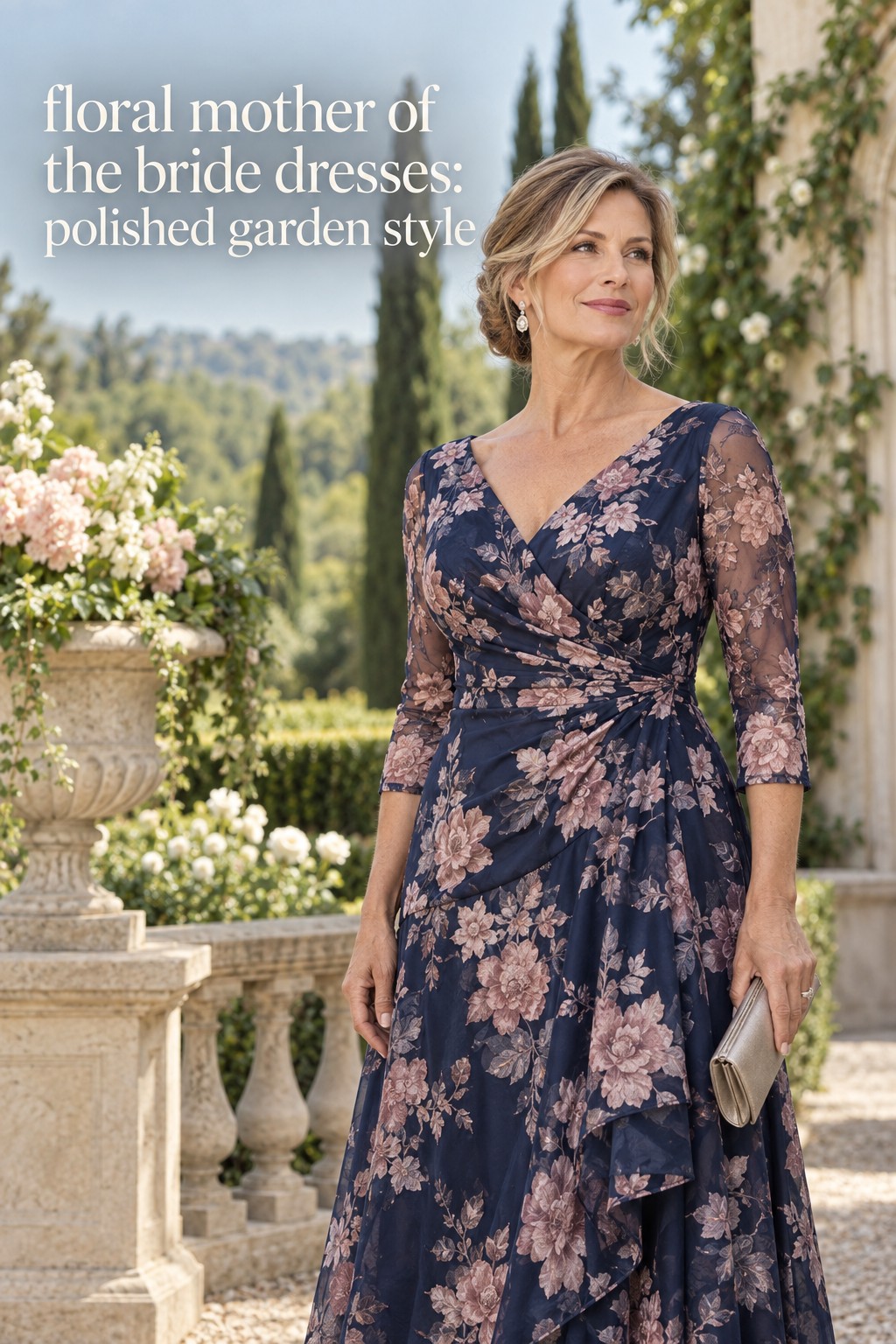
Diagnose why a floral dress feels wrong
When a floral dress looks beautiful online but disappointing in your fitting room, resist the urge to blame your body or the entire idea of wearing a print. Start with the variables you can adjust. A dress can feel too informal because the flowers are tiny and scattered, because the fabric is thin, because the colors are beachy, or because the shape resembles a daytime sundress. Another dress with a similar flower motif may feel completely appropriate when it has a richer ground color, more structure, or a more deliberate hemline.
Problem: the print looks too busy
Busy does not always mean bold. A small, high-contrast print repeated across a lightweight fabric can create more visual noise than a large, thoughtfully placed bloom. Look at the dress from several feet away, because that is how many wedding photographs will read it. If your eye cannot find a calm area, consider a larger floral with more background space, a border print, or a dress where the flowers are concentrated on the skirt, sleeves, or bodice instead of everywhere at once.
Turn wedding inspiration into a plan you can actually follow.
Zarellea brings your guest list, budget, vendors, and day-of details into one shared space — so no beautiful idea gets lost in the shuffle.
Use the wedding palette as a filter, not a strict matching exercise. A print with one or two tones related to the bridesmaids can connect you to the group while a contrasting background keeps you distinct. If the bridal party is in dusty blue, a floral dress with blue, sage, rose, or warm taupe may photograph beautifully without making you look like another attendant. Ask to see the actual color swatches in daylight before making a final decision.
Problem: the dress feels too casual
Floral chiffon, cotton poplin, and jersey can all be lovely, but the same flower print reads differently depending on construction. For a formal wedding, look for lined fabric, a defined waist or drape, a polished neckline, and a length that supports the dress code. Embroidery, jacquard texture, satin sheen, beading, or a structured jacket can add occasion presence without requiring sequins from neckline to hem.
Check the invitation and venue together. A floor-length floral gown may be right for an evening ballroom, while a refined midi or tea-length dress may be more natural for a daytime garden celebration. The most elegant choice is the one that belongs in its setting. If you are unsure, ask the couple about the expected formality and whether the mother of the groom has selected a general color direction. You are asking for useful coordination, not requesting permission to enjoy your outfit.
Problem: the flowers emphasize the wrong area
Print placement changes the visual focus. A large flower across the bust, waist, or hip will attract attention there, while a solid bodice with a floral skirt creates a different balance. There is no universally flattering print size. The best choice depends on the area you want to highlight and the amount of contrast you enjoy wearing. If you prefer a quieter line through the middle, choose smaller motifs or a darker ground there and let the floral detail appear on the sleeves or lower skirt.
Try the dress with the undergarments and shoes you expect to wear. A print can appear to shift when the hem, bra line, or waist seam is altered. Take photographs from the front, side, and a few steps away. Also sit down, walk, lift your arms, and turn. A mother of the bride often moves through greetings, portraits, dinner, and dancing, so a dress that only works while standing still is not finished.
Solve the choice by wedding situation
Once you understand the source of the hesitation, match the floral dress to the actual day. Season and venue should influence fabric weight, sleeve coverage, color depth, and length. They should not force you into a costume version of the setting. A garden wedding does not require a tiny rose print, and a winter wedding does not require a dark dress covered in metallic flowers. Think about what will feel comfortable and credible for the full schedule.
For a formal evening or black-tie wedding
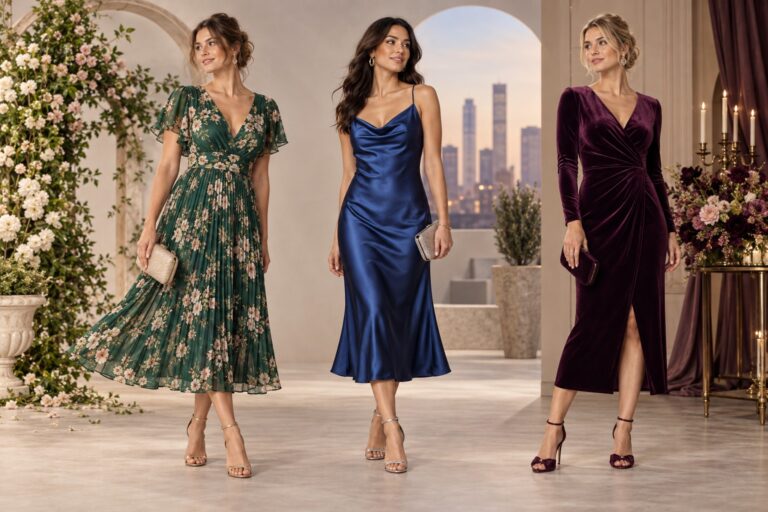
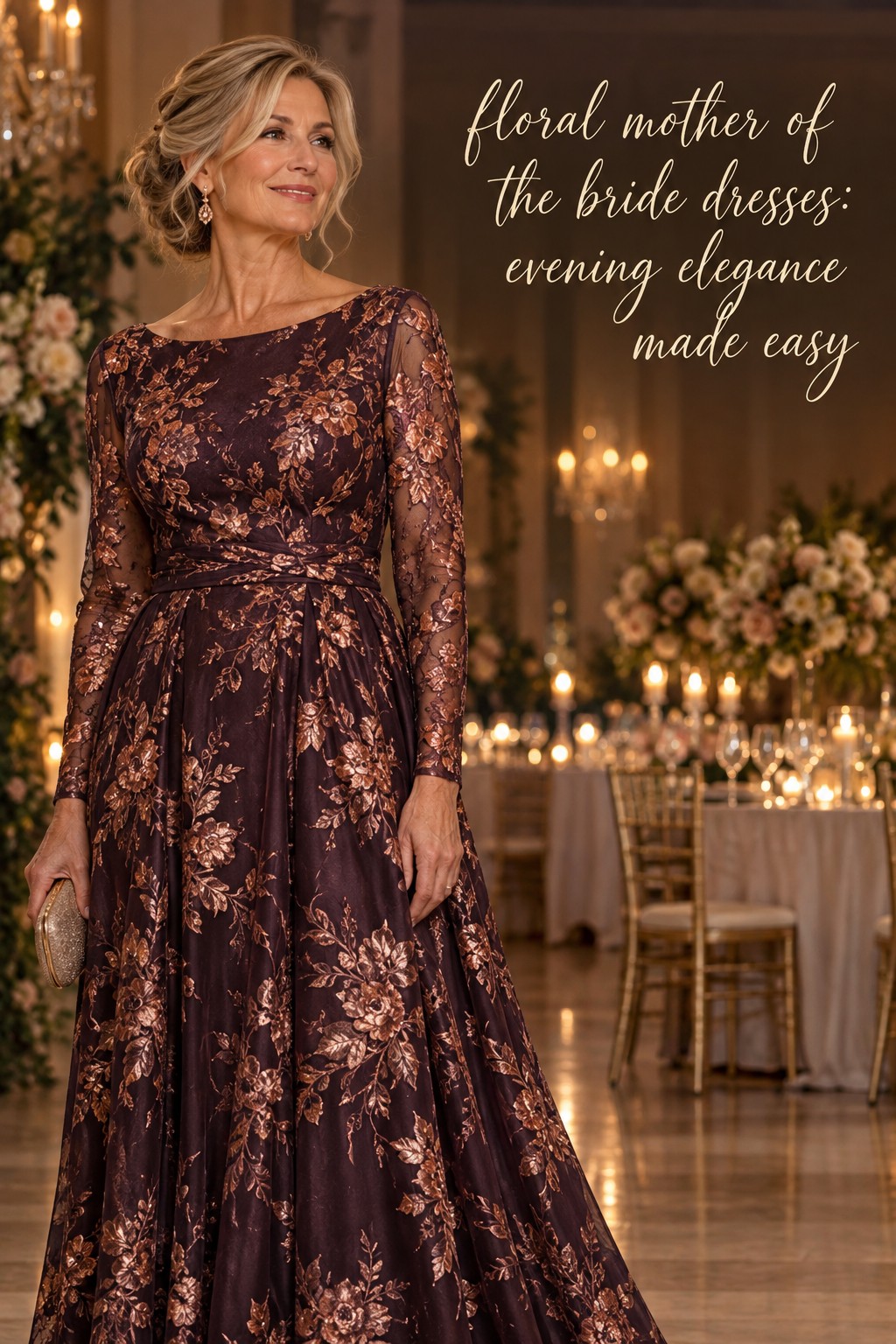
Start with a longer silhouette, a luxurious surface, or a refined layer. Deep navy, ink, plum, burgundy, forest, charcoal, and dark teal create a grounded background for florals. Metallic embroidery, a subtle burnout pattern, velvet-inspired texture, satin, or beading can make the print feel evening-ready. If you prefer a lighter dress, choose a sophisticated silhouette and use accessories to give it enough visual weight.
A column gown looks sleek with a restrained floral, while an A-line shape gives more movement and room through the hip. A matching jacket or capelet can add coverage for the ceremony and become a polished layer for portraits. Keep the shoes and bag simple if the dress has shine. The objective is a clear focal point, not a competition among flowers, jewelry, metallic shoes, and a decorated clutch.
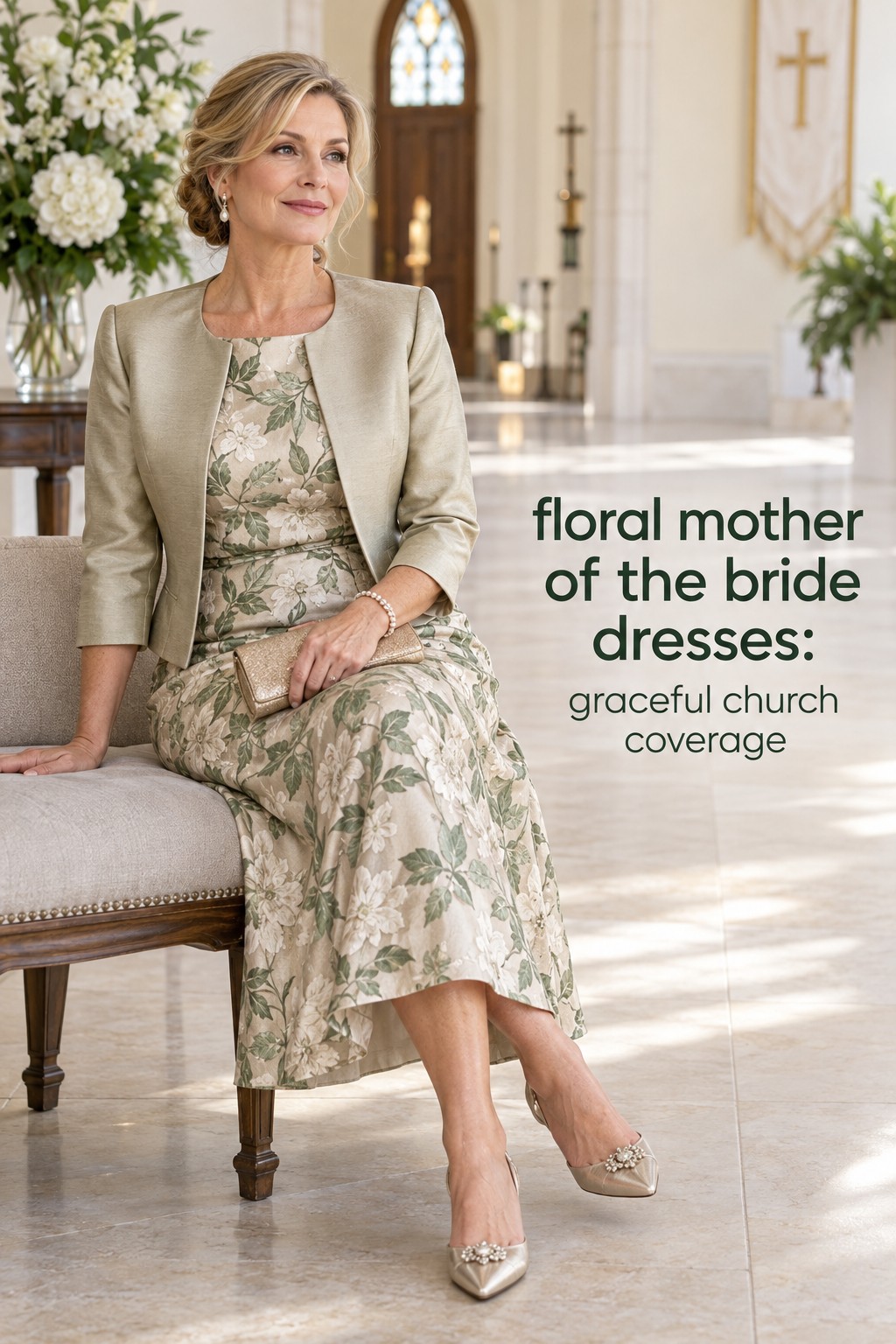
For a church, estate, or garden wedding
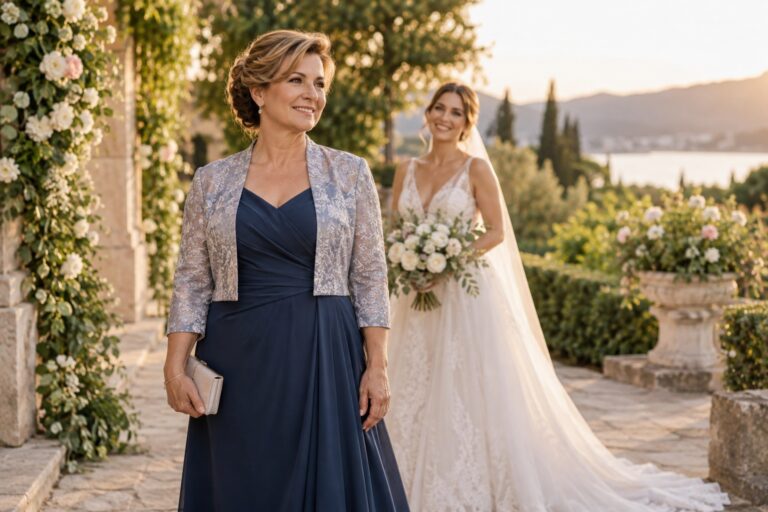
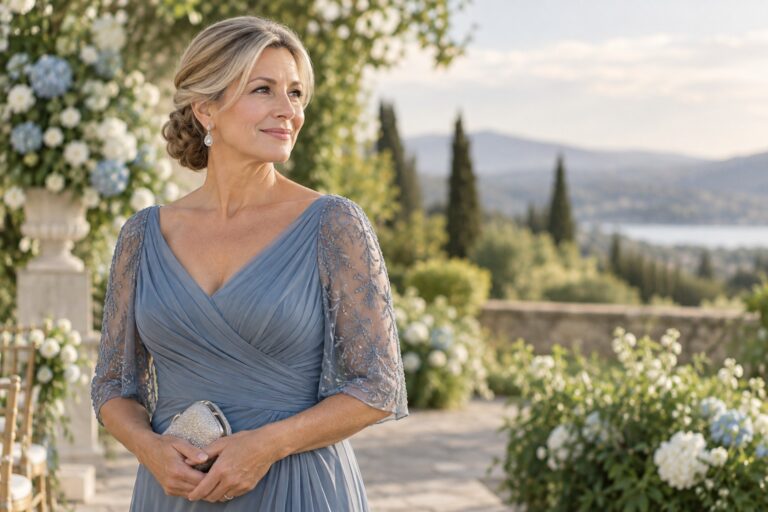
These settings support floral dresses especially well, but the right version depends on time of day. Pastels, watercolor florals, soft greens, rose, blue, and champagne can work for spring or daytime. A cap sleeve, three-quarter sleeve, tea-length hem, or elegant wrap can provide coverage without making the look severe. For a historic estate, a floral jacquard or textured fabric may feel more appropriate than a very thin casual print.
If the ceremony is in a church, consider how the neckline and shoulders will look while seated and whether you need a layer. A matching jacket creates a complete outfit and can be removed for the reception. In a garden, test the shoes on grass, gravel, or stone before the event. A block heel, dressy flat, or supportive low heel can be more elegant than a shoe that makes every step difficult.
For a beach or destination wedding
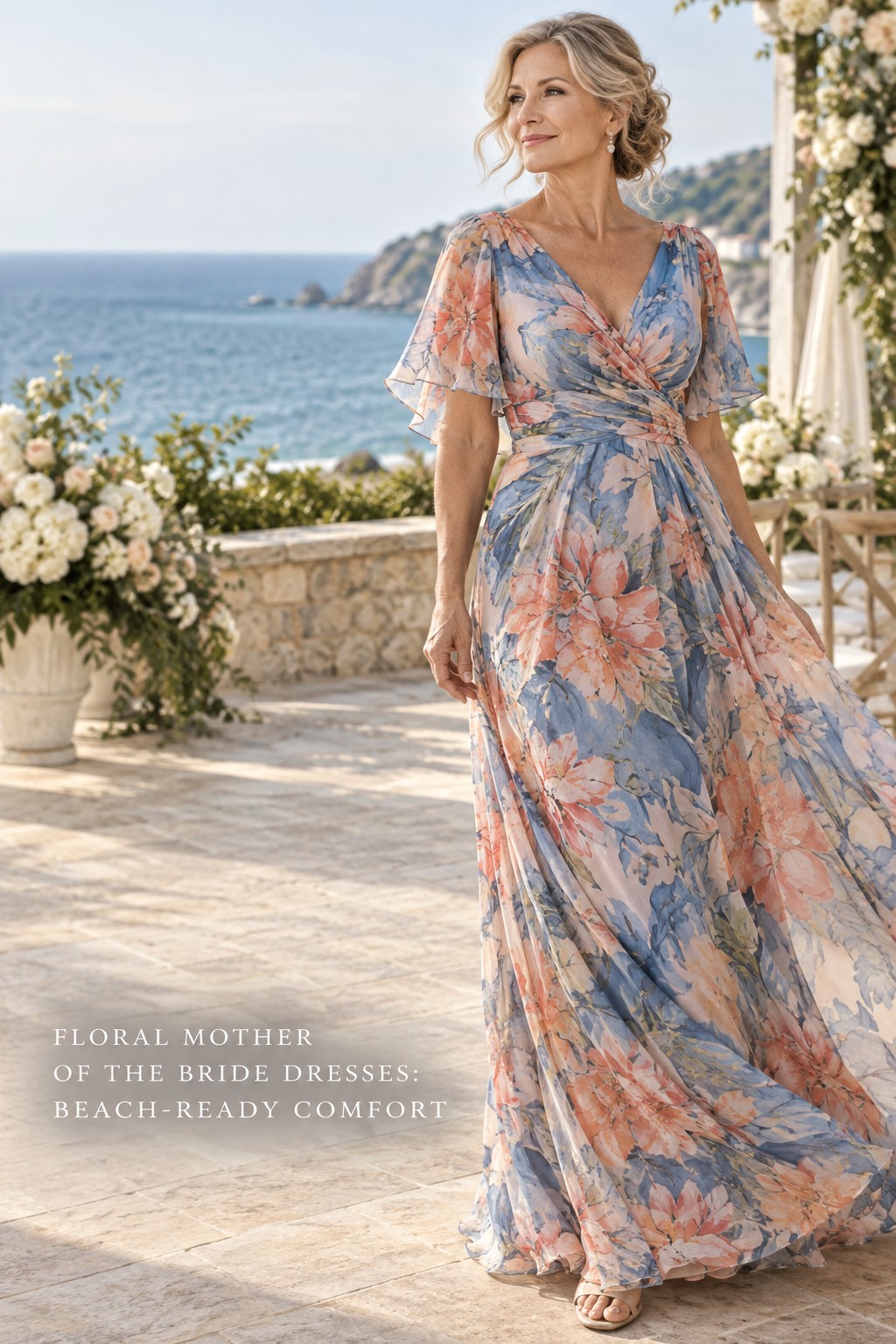
At the coast, prioritize breathability, movement, and travel practicality. Chiffon, crepe, linen blends, and fluid matte fabrics can be easier in humidity than heavy brocade or thick lining. Choose a print that feels connected to the location without becoming a literal theme. Coral, sea glass, blue, sand, soft green, and sunset tones can work, but a restrained navy or berry floral can be just as beautiful beside the water.
Destination clothing must survive transportation. Avoid a dress that creases badly, requires complicated steaming, or has delicate embellishment you cannot safely pack. Bring the exact shoes, undergarments, and jewelry to your try-on. Walk in the dress and sit in it. If the ceremony includes a long path, stairs, wind, or sand, a manageable hem and secure neckline matter more than a dramatic train.
For a city, courthouse, or daytime wedding
A tailored floral midi, sheath, fit-and-flare dress, or elegant jumpsuit can work well in a city setting. Look for clean lines, a controlled print, and accessories that feel modern rather than overly themed. A cropped jacket, longline blazer, sleek pump, or refined loafer can make the outfit feel intentional for a courthouse, restaurant, gallery, or rooftop celebration.
City weddings often involve more transitions than people expect. You may walk between locations, stand for group photographs, ride in a car, or sit at a narrow restaurant table. Choose a shape that accommodates movement and a bag that leaves your hands free when possible. A floral dress that can later be worn with a cardigan and flats is a smart investment, especially when the print is not tied to one season.
For fall and winter celebrations
Cooler weather gives florals more depth. Try jewel-toned blooms, a dark floral ground, brocade, velvet texture, heavier crepe, long sleeves, or a dress with a coordinated coat. Rust, aubergine, wine, moss, sapphire, copper, and midnight blue can feel seasonal without looking like a holiday costume. Metallic thread is effective when it is balanced with a matte background and simple jewelry.
Plan the outer layer at the same time as the dress. A beautiful floral gown under a bulky unrelated coat can lose its shape in arrival photographs. Ask whether a wrap, tailored coat, cape, or jacket will cover the important details. Also check the temperature inside the reception venue. Sleeves and layers should keep you comfortable during outdoor portraits without making dinner and dancing miserable.
Fix fit and comfort before styling the details
The strongest floral print cannot rescue a dress that pinches, slips, pulls, or needs constant adjustment. Mothers of the bride are highly visible throughout the day, and comfort affects posture, expression, and energy in every photograph. Fit should be treated as a design decision, not a final repair.
Choose the silhouette for movement first
An A-line shape offers ease through the lower body and works across many venues. A sheath can look polished when the fabric has enough structure and the slit or back vent allows walking. A fit-and-flare silhouette creates shape while keeping the skirt mobile. A wrap or faux-wrap can offer adjustability, but inspect the closure carefully so it stays secure while greeting guests and sitting down.
Do not shop by age-based rules. Shop by the proportions, coverage, and movement you prefer. A sleeve may be useful because it balances a large floral, provides comfort in a church, or helps you feel secure, not because a certain age requires it. The same is true for a neckline. V-neck, boat neck, square, scoop, and high neck shapes can all look elegant when their depth and construction suit you.
Use alterations to sharpen the floral look
Alterations are especially important with prints because a small fit problem can interrupt the visual flow. A hem that is too long may hide the intended border, while an uneven waist can pull flowers out of alignment. Bring the shoes and undergarments to the fitting. Ask the tailor to check bust placement, shoulder width, sleeve comfort, hem balance, lining, and whether the print remains attractive after adjustments.
Schedule the final fitting close enough to the wedding that the dress reflects your current measurements, but not so late that a repair becomes an emergency. If the dress is made to order, confirm the size chart, delivery date, return rules, and alteration budget before purchase. The advertised price is only part of the cost. Include tailoring, shoes, foundation garments, jewelry, bag, layer, steaming, and possible shipping.
Make the outfit feel like you
A floral dress should not turn you into a different person. If you usually wear clean neutrals, choose a floral with a calm ground and controlled color. If you enjoy color, let the dress be expressive and keep the accessories edited. If you prefer coverage, seek a sleeve or layer that looks intentional rather than adding a last-minute cardigan that changes the proportions.
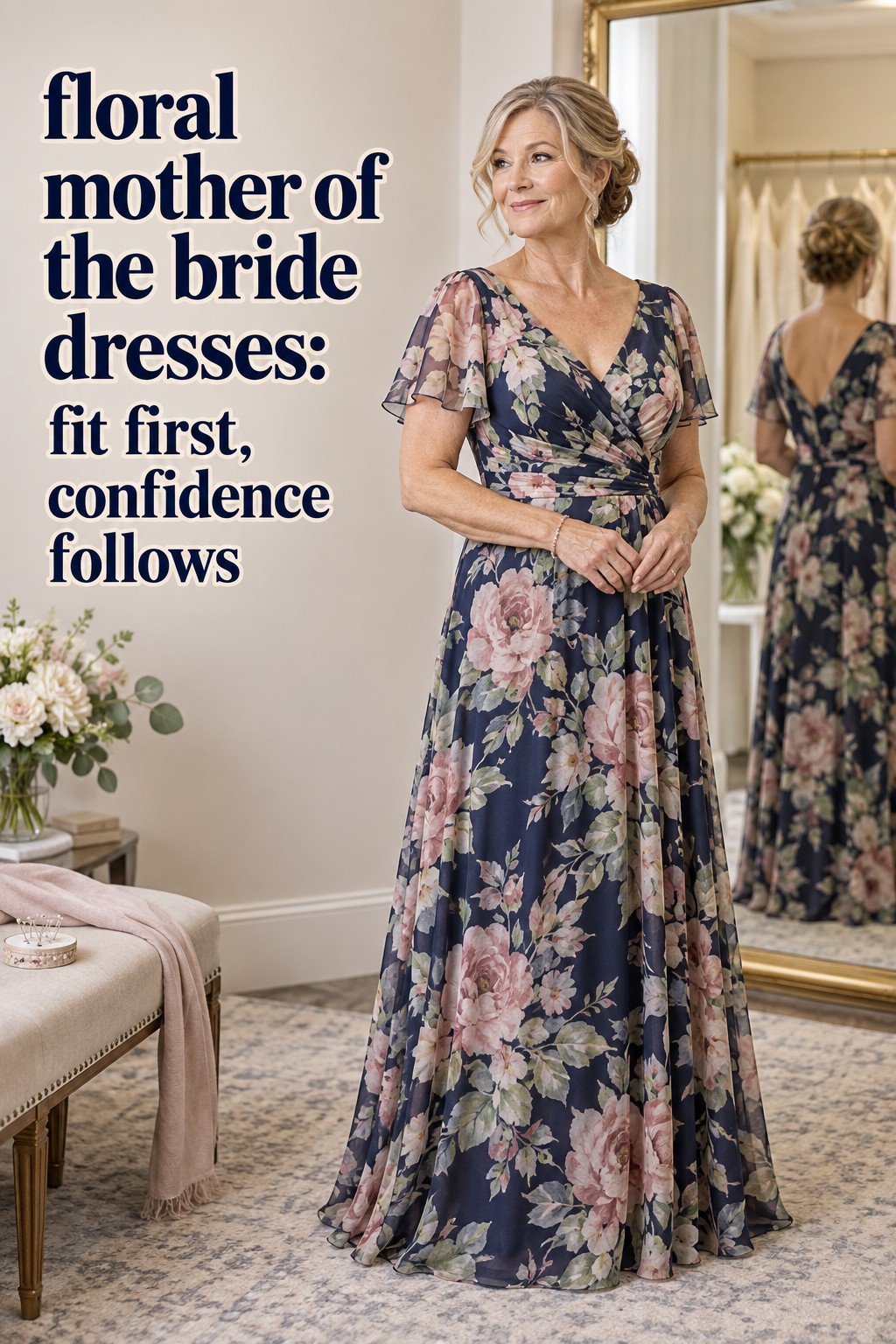
Test the outfit in a full-length mirror and in photographs. Check whether the print competes with your face, whether the neckline sits correctly, and whether the accessories repeat a color without copying the flowers. You want people to see you first, then notice the beautiful pattern. That is the difference between wearing a floral dress and being overwhelmed by one.
Coordinate the complete look without overmatching
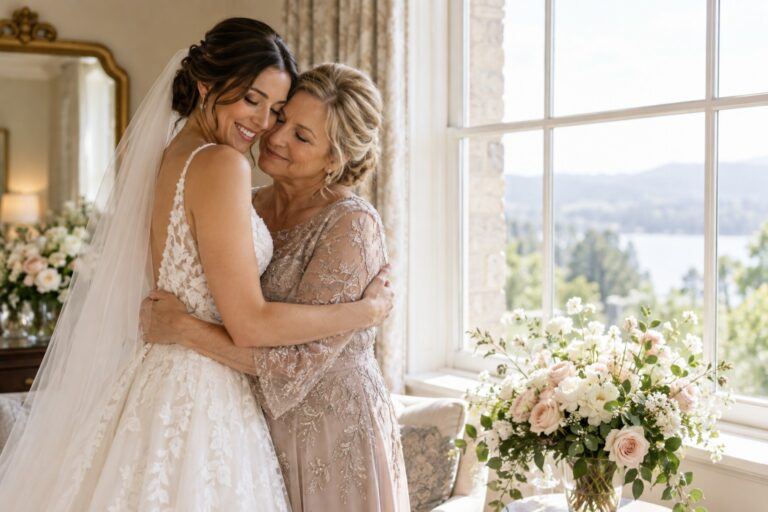
Coordination is about relationship, not uniformity. The mother of the bride should look connected to the wedding while retaining a clear role and personal style. Share a photo of the dress with the bride once you are seriously considering it, especially if the print includes ivory, champagne, or a shade close to the bridal party. Then choose accessories that finish the outfit rather than adding another competing pattern.
Coordinate color, not every flower
Pick one or two tones from the print for shoes, jewelry, a wrap, or a bag. Metallics can bridge colors when the floral includes warm and cool shades. A navy floral may work with silver, pewter, or soft gold depending on the background. A rose and sage print might look elegant with nude shoes and gold earrings. Avoid matching your accessories to every color in the dress. Repetition should be quiet enough that the dress remains the focal point.
Think about the other mother as well. You do not need identical dresses, but photographs look more considered when both mothers understand the level of formality and general color direction. One person can wear a floral print and the other a solid dress in a related tone. This creates variety while keeping the family portraits visually balanced.
Choose accessories according to print intensity
With a bold floral, use a simple shoe, a clean clutch, and one strong jewelry detail. With a delicate print, you may have room for pearl earrings, a textured bracelet, or a more distinctive shoe. A jacket or capelet can make a soft dress feel more formal, while a belt can clarify the waist on a relaxed shape. Keep the accessory scale proportional to the flowers and the formality of the event.
Hair and makeup should support the neckline and mood. A high neck can benefit from an updo or swept-back hair, while a simple neckline gives you more freedom. You do not need a floral hair accessory simply because the dress has flowers. In many cases, a polished hairstyle and luminous, comfortable makeup give the outfit more sophistication than extra decoration.
Use a purchase and approval checklist
- Confirm the dress code, venue, ceremony time, and expected outdoor exposure.
- Compare the dress with the bridesmaid palette without trying to match it exactly.
- Check the print from a distance, in daylight, and in a phone photograph.
- Test sitting, walking, stairs, dancing, reaching, and wearing the planned undergarments.
- Price alterations, shoes, foundation garments, accessories, outerwear, steaming, and shipping.
- Confirm size availability, delivery timing, return rules, and the final fitting date.
- Choose one focal point and edit accessories that compete with the floral pattern.
When all seven checks work, stop searching. Endless browsing can make a strong decision feel uncertain. Your dress does not need to satisfy every possible wedding aesthetic. It needs to fit this couple, this setting, your body, and the experience you want to have as the mother of the bride.
FAQ
Are floral mother of the bride dresses appropriate for a formal wedding?
Yes. Choose a refined print, richer fabric, polished silhouette, and formal accessories. Dark florals, jacquard, satin, embroidery, beading, and floor-length gowns can all work for an evening or black-tie celebration.
Should a floral mother of the bride dress match the bridesmaids?
It does not need to match exactly. Coordinate through related undertones or one shared color while keeping your silhouette and overall look distinct. Ask the couple for the palette so your choice feels connected without looking like a bridesmaid dress.
What floral print is most flattering for the mother of the bride?
The most flattering print is the one whose scale, contrast, and placement make you feel comfortable. Smaller motifs create a quieter effect, while larger blooms can make a deliberate statement. Try the dress in photographs and consider where the flowers draw the eye.
Can I wear a floral dress to an evening wedding?
Absolutely. Select a dark or saturated background, an elevated fabric, and a silhouette with evening presence. Add refined jewelry and a simple clutch, then keep the shoes and outer layer polished enough for the dress code.
When should I buy my floral mother of the bride dress?
Begin after the bride has chosen her gown and the wedding formality is clear. Shop several months before the wedding when possible, allowing time for ordering, alterations, accessories, and a final fitting. Made-to-order dresses may need additional lead time.
What accessories work with a floral mother of the bride dress?
Choose accessories that repeat one color or finish from the print. Simple metallic jewelry, a structured clutch, a matching jacket, a wrap, and comfortable dress shoes are dependable choices. Keep the accessories edited when the floral is bold.
Can the mother of the groom wear a floral dress too?
Yes. The same principles apply: coordinate the wedding palette, respect the dress code, choose a print scale that suits the setting, and communicate with the other mother so the outfits complement rather than clash.