Mother of the Bride Gown: How to Choose the Right One
Choosing a mother of the bride gown becomes much easier when you stop treating it as a search for one universally perfect dress. The right gown is the one that fits the wedding’s level of formality, supports the way you want to move, works with the couple’s color conversation, and still feels like you. A floor-length gown may be ideal for a black-tie evening, while a tea-length dress, jacket set, or polished pants set may make more sense for a daytime garden celebration.
This comparison guide gives you a practical way to narrow the choice. Start with the wedding itself, compare five formal directions, then check color, fabric, coverage, alterations, and comfort. You will be able to bring a clear brief to a bridal salon or tailor instead of collecting dozens of unrelated screenshots.
1. Read the Wedding Before You Shop
The wedding is the first filter for a mother of the bride gown. Before you focus on neckline or beading, write down the ceremony time, venue, dress code, expected weather, floor surface, and how much of the day you will spend standing or walking. These details turn a vague wish for something elegant into a useful clothing brief.
Start with the dress code and time of day
A formal evening wedding can support a full-length gown in satin, crepe, chiffon, velvet, lace, or a controlled amount of embellishment. A black-tie or black-tie optional invitation usually points toward a longer, more polished silhouette, but the finish does not have to be heavily sequined. A clean column with beautiful earrings can feel just as intentional as a beaded style.
Turn wedding inspiration into a plan you can actually follow.
Zarellea brings your guest list, budget, vendors, and day-of details into one shared space — so no beautiful idea gets lost in the shuffle.
For a daytime wedding, look at the space before assuming that a gown is too formal. A long dress in matte crepe, fluid chiffon, a soft print, or a restrained floral can work beautifully in a refined daytime setting. If the invitation suggests cocktail attire, a midi or tea-length dress may feel more natural than a floor-length skirt. The important distinction is not whether the hem is long. It is whether the total look belongs to the event.
Let the venue answer practical questions
A ballroom, hotel, historic house, church, garden, beach, barn, and restaurant each create different clothing demands. In a ballroom, a sweeping skirt or subtle shine can look at home. In a garden, a narrower hem, shorter length, or lighter fabric may be easier to manage on grass and uneven paths. At a beach, movement, wind, and sand matter more than an elaborate train. A long gown can still work, but it should not require constant lifting or careful guarding.
Think through the route you will actually take. Will you walk from a parking area to an outdoor ceremony? Will you climb stairs? Will you sit in a low chair? Will you help with photographs, greet guests, or dance for several hours? These are not reasons to choose an ordinary outfit. They are reasons to select a mother of the bride gown with a hem, lining, closure, and amount of structure that support the day.
- Write the dress code in plain language, such as formal evening, cocktail garden, or relaxed destination.
- Note the venue surfaces, stairs, temperature, wind, and likely seating.
- Ask whether the couple has requested a color family or asked guests to avoid a shade.
- Decide whether you want sleeves, a jacket, a wrap, or another layer from the beginning.
- Set a comfort requirement, such as a bra-friendly neckline, a secure strap, or a waist that does not need constant adjustment.
Have one useful conversation with the couple
You do not need formal approval for every detail, but a short conversation prevents avoidable surprises. Ask about the overall formality, the bridesmaid color family, the wedding-party photographs, and any shades the couple would rather keep away from the bridal look. White, ivory, and colors that read very close to the bride’s gown deserve special care unless the couple specifically welcomes them.
Bring your own point of view to that conversation. You can coordinate without matching the bridesmaids, and you can honor the palette without wearing the exact wedding color. A navy gown, for example, may sit comfortably beside blue-gray attendants without becoming a uniform. A muted berry, sage, or metallic neutral can create harmony while giving you a distinct role in the photographs.
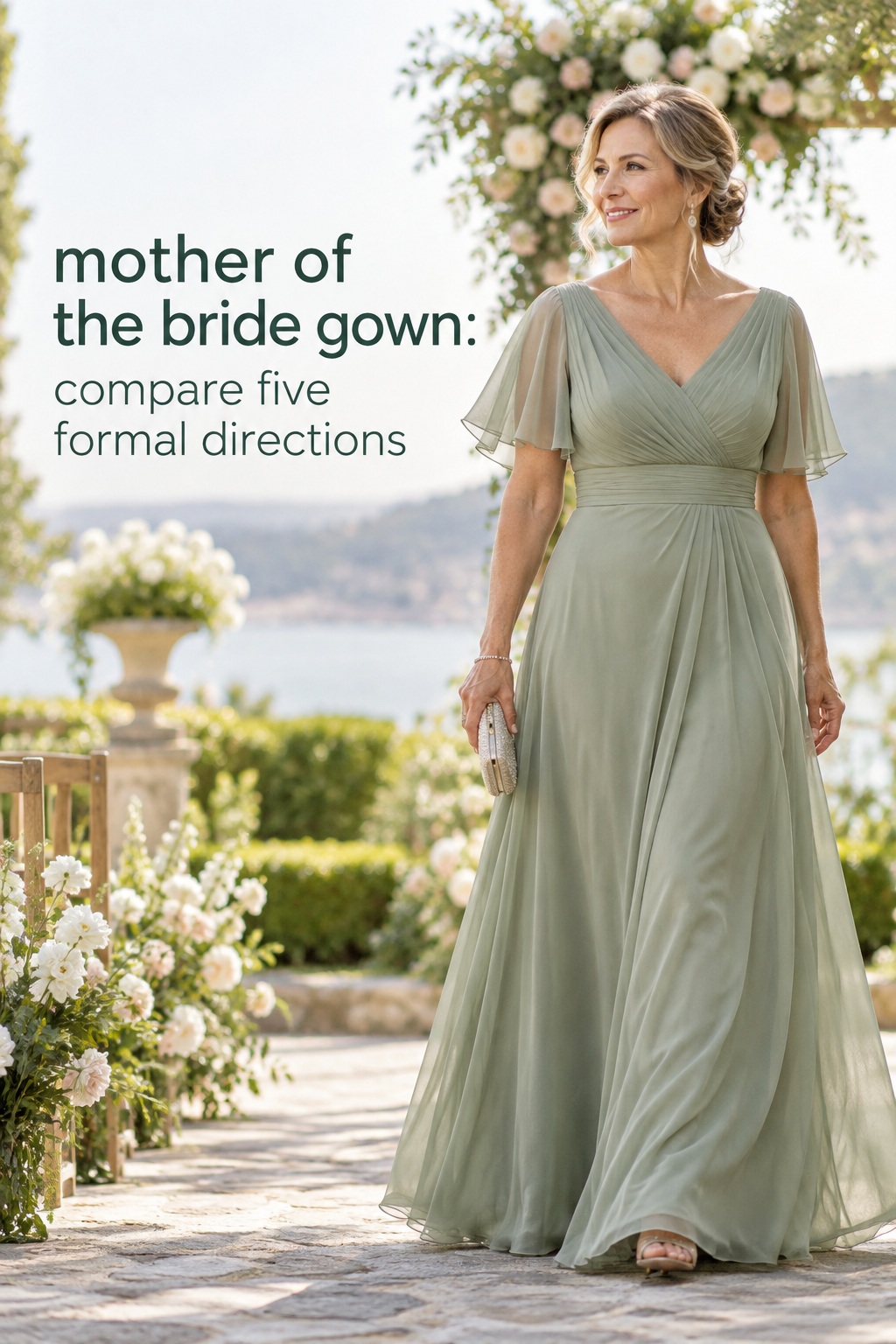
2. Compare Five Formal Directions for the Mother of the Bride
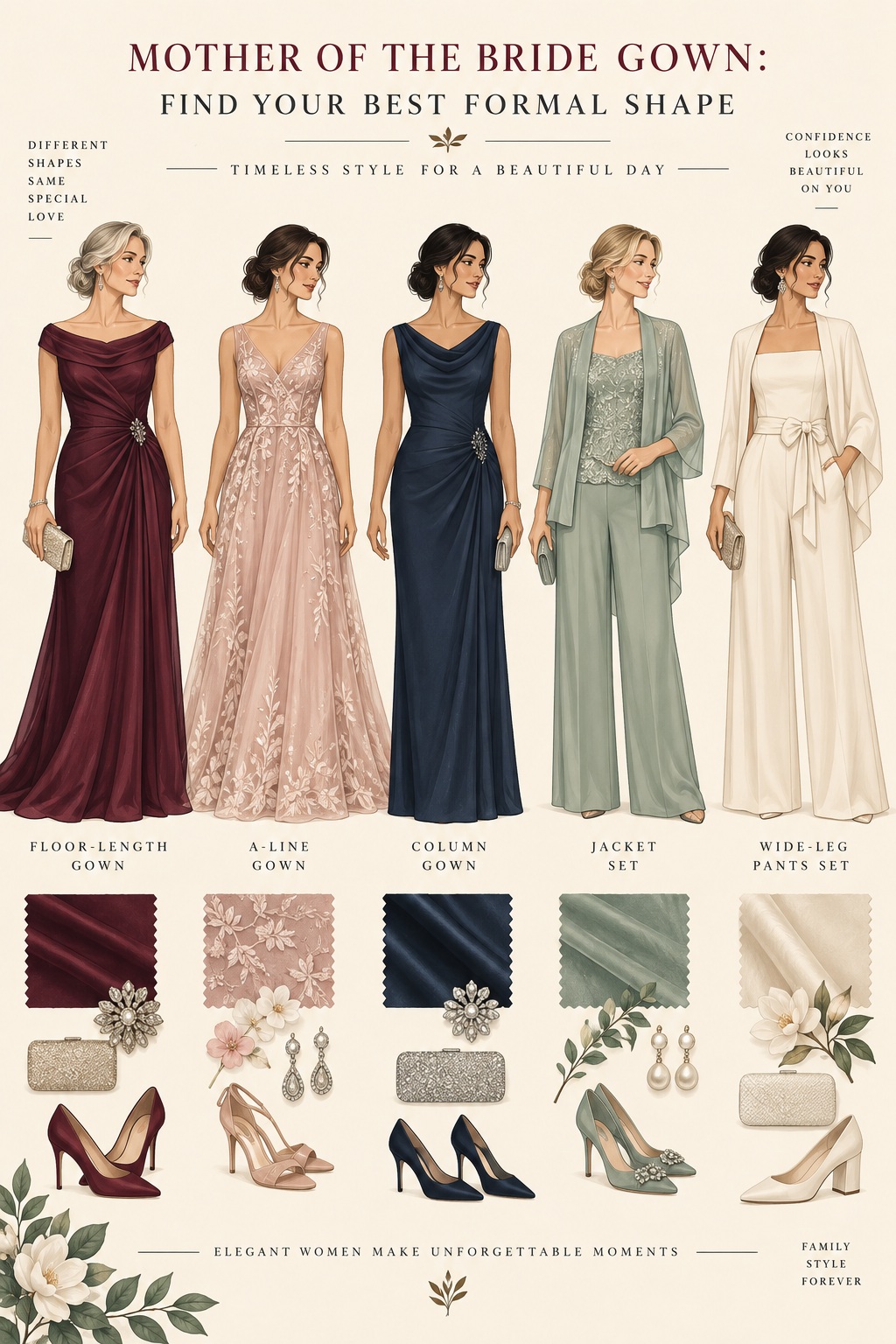
There is more than one elegant answer to the search for a mother of the bride gown. Use the five directions below as a decision table in prose. Each one has a different strength, and each has a trade-off worth understanding before you order or book alterations.
Option one: the floor-length evening gown
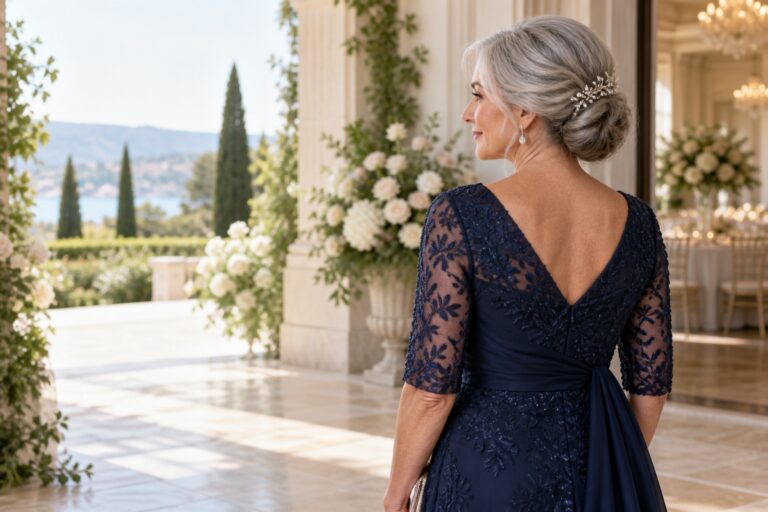
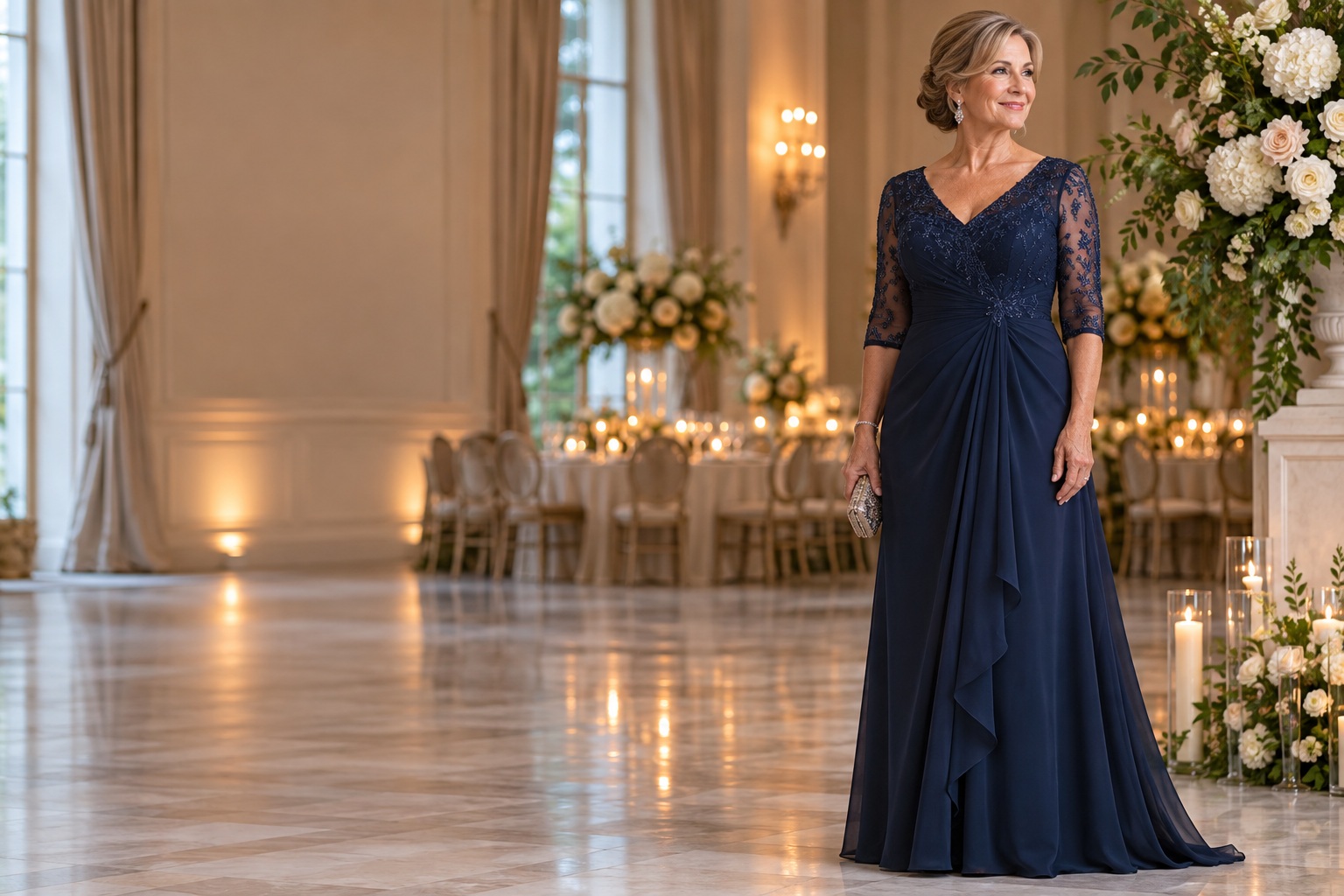
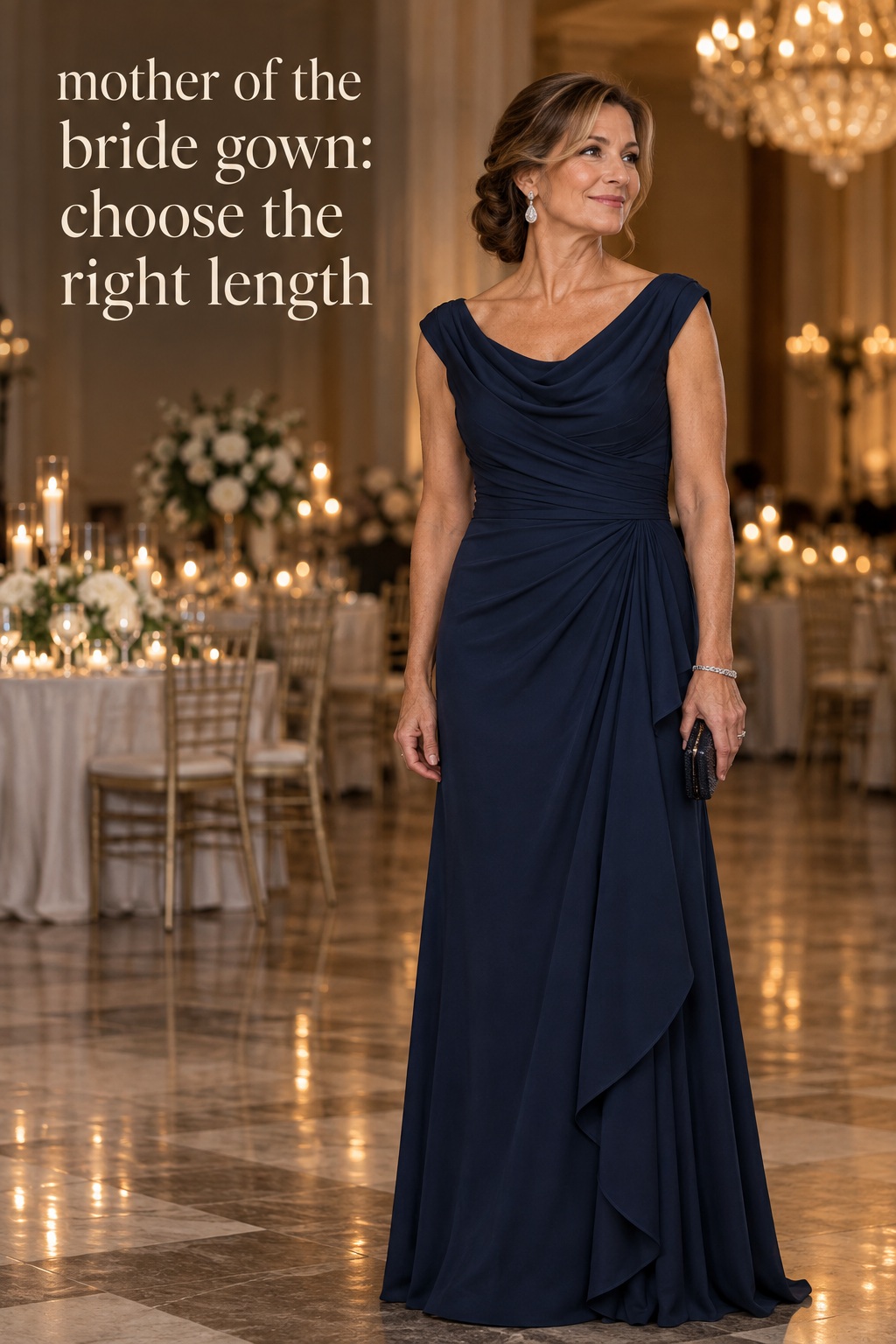
A floor-length evening gown is the clearest choice for a formal night wedding, ballroom reception, or celebration where the guests are expected to dress up. The silhouette can be a soft A-line, a column, a fit-and-flare shape, or a controlled ball gown. Look for one strong feature rather than every formal detail at once: a beautiful sleeve, a sculptural neckline, a subtle beaded bodice, a draped waist, or a skirt that moves when you walk.
The advantage is visual presence. A long gown immediately communicates occasion and can create a graceful line in full-length photographs. The trade-off is practical. It needs a hem that works with your shoes, a bustle or lifting plan if the skirt is generous, and enough ease for sitting and walking. If you love the drama of a long gown but dislike fuss, choose a clean shape with a manageable hem instead of a train.
Option two: an A-line or fit-and-flare gown
An A-line or fit-and-flare gown creates definition through the bodice and allows the skirt to widen below the waist. It can feel formal without being stiff, which makes it useful when the day includes ceremony photographs, a seated dinner, and dancing. Chiffon, lace, crepe, and structured satin can all produce different versions of the same general idea.
Choose this direction when you want a visible waist and room through the skirt. A softer skirt can make walking feel easy, while a more structured version can hold its shape in photographs. Pay attention to where the flare begins. If it starts too high, the gown may feel overly full; if it starts too low, the shape may lose the ease you wanted. Try the gown while sitting, turning, and lifting your arms, not only while standing in front of a mirror.
Option three: the sleek column or sheath
A column or sheath gown gives the mother of the bride a long, clean line with less volume. It is a strong choice for a modern hotel, city venue, gallery, or formal dinner where a streamlined outfit feels more natural than a wide skirt. Crepe, satin, jersey, and matte stretch fabrics can all work, provided the garment is lined and the fit allows comfortable movement.
The strength of a column is restraint. You can add impact through color, earrings, a cape, a jacket, or a carefully chosen texture. Its trade-off is that the fit carries more responsibility. Check the back view, the armhole, and the way the fabric behaves when you sit. A side slit may help you walk, but it should be tested with the shoes and undergarments you intend to wear. If you want a sleek gown with more forgiveness, look for gentle draping or a shaped overlay instead of a completely rigid cut.
Option four: a gown with a jacket, cape, or coordinated layer
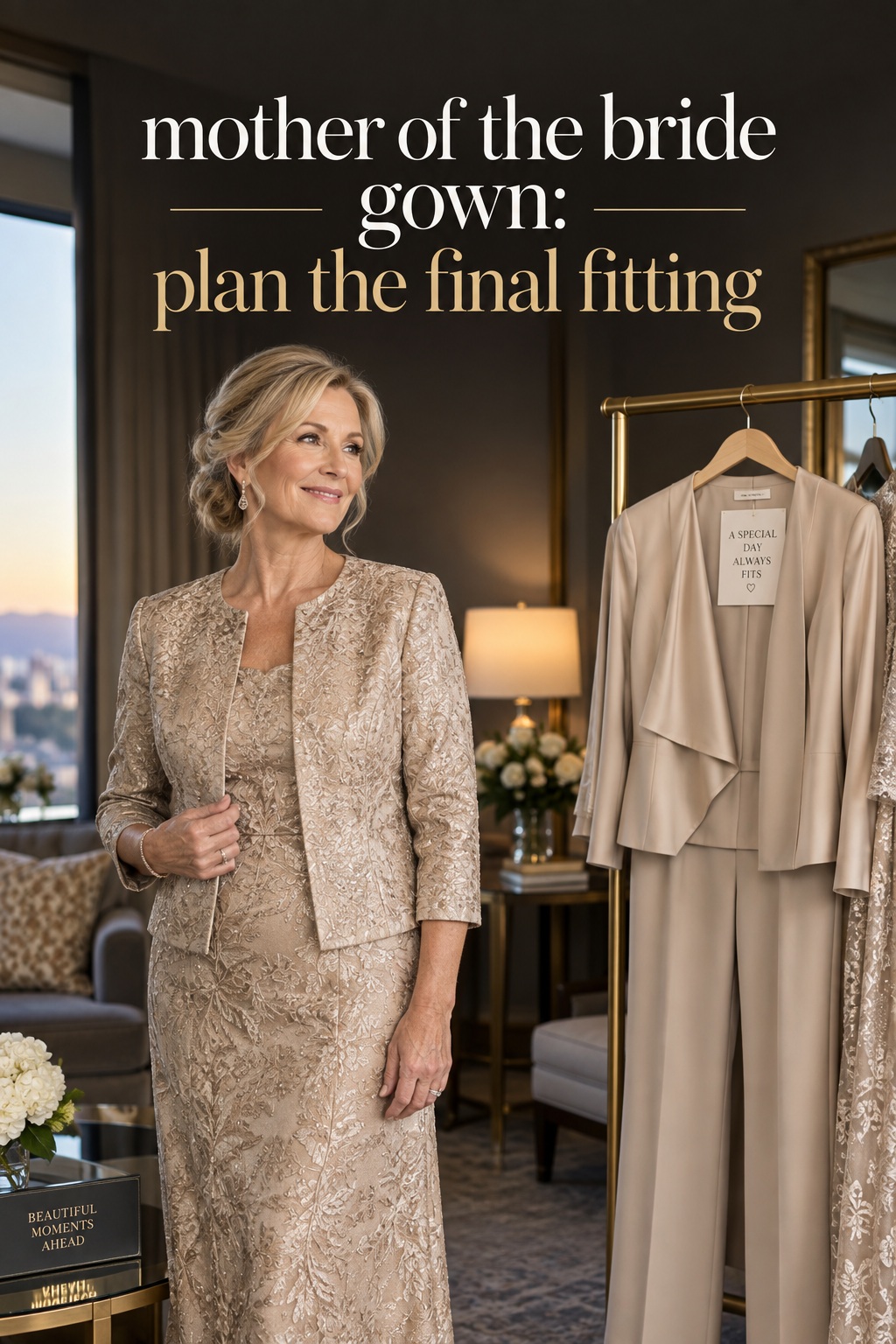
A jacket or coordinated layer solves several needs at once. It can add ceremony coverage, give a simple dress more structure, and create a second look for the reception when removed. A beaded jacket, lace bolero, tailored jacket, sheer cape, or fluid wrap can make a plain gown feel complete without requiring a complicated dress underneath.
Choose this direction when the temperature may change, you prefer covered shoulders, or you want the option to adjust the level of formality. The important test is proportion. A cropped layer usually changes the visual waist, while a longer jacket creates a column. Make sure the sleeve does not catch on your jewelry and that the closure stays in place while you hug people. A layer that looks beautiful on a hanger but needs constant fixing will reduce your enjoyment of the day.
Option five: a formal pants set or jumpsuit
A formal pants set or jumpsuit is a credible alternative when a traditional skirt does not feel like you. Wide-leg trousers with a tailored jacket, a lace overlay, or a monochrome top can be as polished as a gown. This choice is especially useful when you want a strong, modern line, more leg coverage, or an outfit that feels practical for greeting guests and moving around the venue.
The trade-off is the bathroom and dressing-room plan. A jumpsuit needs a secure closure that is still manageable, and a pants set needs trousers hemmed to the actual shoes. Avoid ordering the pieces separately without checking their color and fabric together. If the wedding is very traditional, add formal accessories and an elevated fabric so the look reads as intentional occasionwear rather than office clothing.
When you cannot decide between these directions, identify the problem you want the outfit to solve. Choose the long gown for maximum ceremony presence, the A-line for movement and waist definition, the column for modern simplicity, the layered look for coverage and flexibility, or the pants set for confident mobility. That question is usually more useful than asking which silhouette is most flattering in general.
3. Choose Color, Fabric, and Coverage With Intention
Once the silhouette is clear, color and material make the gown feel personal. Start with shades you already enjoy wearing, then check them against the wedding palette and the lighting you expect. A color that looks soft in a store may appear stronger outdoors, while a metallic or beaded fabric can catch reception light more dramatically than expected.
Build a color conversation, not a matching rule
Ask the couple for the palette, but do not assume you need an exact match. The goal is visual harmony. If the attendants wear dusty blue, you might choose navy, slate, silver, soft lavender, or a print that includes a small amount of blue. If the flowers are burgundy, a muted rose, plum, espresso, or deep green can sit beside them without copying the arrangement.
Be cautious with white, ivory, cream, and very pale champagne because cameras may read them as part of the bridal look. Black can be elegant, but its suitability depends on the couple, venue, time, and overall mood. If you love a dark color, soften it with texture, metallic accessories, a floral motif, or a lighter layer when that fits the celebration. The couple’s preferences and the actual dress code matter more than a rigid internet rule.
Match fabric to movement and the season
Crepe has a clean, matte appearance and can support a modern column or draped gown. Chiffon brings softness and movement, especially in a skirt, sleeve, or overlay. Satin reflects light and can look formal with a simple cut, but it deserves a careful fit because surface tension and wrinkles show easily. Lace adds texture and can make a sleeve, jacket, or bodice feel special without relying on heavy shine. Velvet suits a cooler setting and brings depth, while embellishment works best when the amount matches the rest of the wedding.
Use the venue and weather to decide how much fabric you can enjoy. A lined gown with a breathable layer may be more comfortable than a heavy, unlined style. For a cool evening, a jacket or cape can be more useful than a dress with a high amount of beading. For heat, look for airflow, a stable neckline, and a skirt that does not cling when you sit. Your fabric choice should support the hours you will spend in the outfit, not only the first photograph.
Choose coverage that lets you forget the outfit
Coverage is personal. You may prefer sleeves, a high back, a boat neckline, a jacket, or a shawl. Another mother may feel most comfortable in a sleeveless V-neck or an off-the-shoulder shape. None of these choices is automatically more appropriate than another. The useful question is whether you can move, sit, hug, and stand for photographs without thinking about adjusting the garment.
- Test the neckline while bending slightly, turning your head, and looking down at a bouquet.
- Raise both arms to see whether sleeves or armholes restrict you.
- Check whether a jacket stays centered after a hug.
- Wear the bra, shapewear, or support garment you expect to use at the wedding.
- Photograph the outfit from the front, side, and back in daylight and indoor light.
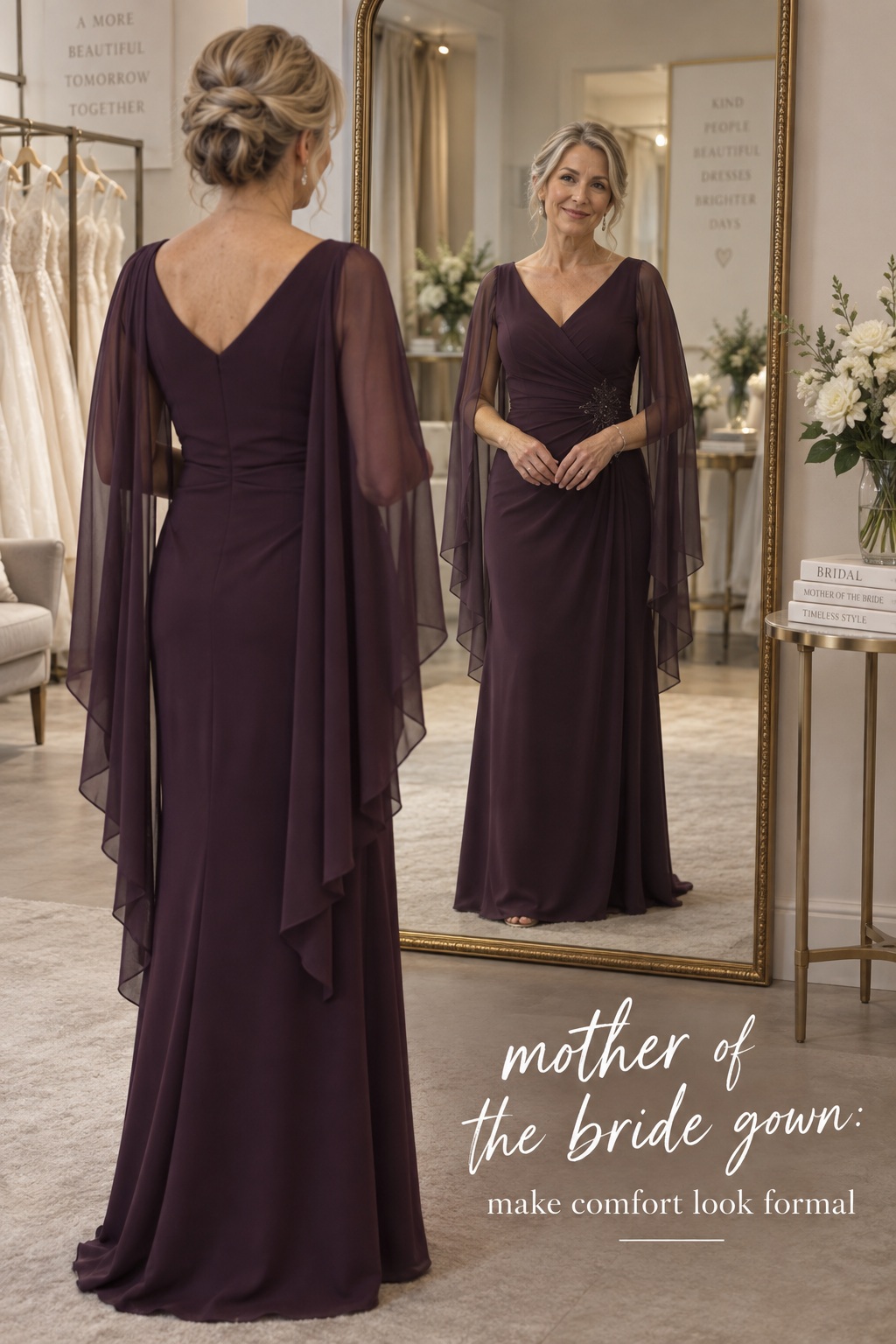
4. Fit, Alterations, and Wedding-Day Comfort
A beautiful mother of the bride gown becomes a successful choice through fitting. Plan for the possibility that the hem, straps, bust, waist, sleeves, or closure will need adjustment. A dress that fits in one place may still need tailoring elsewhere, especially when you want to wear a particular heel or add a layer.
Shop early enough for a calm alteration plan
Give yourself time to compare options, order the size that fits the largest measurement, and schedule fittings. A practical planning guide recommends shopping months ahead and allowing more than one fitting, which is useful because formal gowns often need changes beyond a simple hem. Start earlier if the gown is made to order, if you are coordinating a jacket, or if the wedding falls during a busy season.
Do not make major body or wardrobe assumptions from a size label. Measure according to the retailer’s instructions, keep the receipt and order details, and ask what can realistically be altered. It is often easier to take in a seam or adjust a hem than to change a complicated neckline or heavily embellished area.
Bring the whole look to the final fitting
Bring the actual shoes, undergarments, jewelry, layer, and handbag you plan to use. Walk across the room, sit in a dining chair, step up and down if possible, and practice greeting someone with both hands occupied. Check the gown after ten minutes rather than removing it as soon as the mirror view looks good. This reveals slipping straps, pressure points, scratchy seams, and a hem that catches under the shoe.
If you are wearing a long gown, practice lifting the skirt with one hand while holding a clutch or bouquet with the other. If you choose a jumpsuit, practice the closure. If you choose a jacket, decide whether you will wear it for the ceremony, photographs, dinner, or only when the room cools. A small decision made in advance keeps you present on the wedding day.
Make a short emergency plan
Pack a small kit with fashion tape, a few safety pins, stain remover, a sewing kit, blister protection, and any approved touch-up product. Ask one trusted person to keep it nearby. You do not need to carry a full repair station, but you should know who can help if a strap shifts or a hem catches.
Comfort also includes the accessories. Choose shoes you can stand in, earrings that will not pull, and a handbag that leaves your hands free when you need to greet guests. If a gown is perfect except for one uncomfortable element, fix that element before the wedding. Confidence rarely comes from ignoring a practical problem and hoping it disappears.
Sources and Methodology
This guide combines a US search review of retailer assortments, editorial dress roundups, and planning guidance with an original comparison framework. Current product pages were used for vocabulary and option patterns, not as permanent price or availability claims. For additional context on silhouettes and planning, see Macy’s mother of the bride outfit guide and the BrideAtlas mother of the bride dress guide. Always confirm the couple’s preferences and the retailer’s current fit, delivery, and alteration information before ordering.
FAQ
What length should a mother of the bride gown be?
Choose the length that fits the dress code, venue, and way you need to move. Floor length suits formal evening and black-tie optional celebrations, while midi or tea length can be excellent for daytime, garden, cocktail, or uneven outdoor settings. If you prefer a long gown for a less formal wedding, use a lighter fabric and simpler styling to keep the total look in proportion.
Should the mother of the bride wear a floor-length gown?
Not necessarily. A floor-length gown is a strong option for formal weddings, but a tea-length dress, jacket-and-dress set, or formal pants outfit may be more comfortable and appropriate for a daytime or relaxed celebration. Start with the invitation, venue, and couple’s expectations rather than assuming the role requires one specific hemline.
What colors should the mother of the bride avoid?
Ask the couple before shopping. White, ivory, cream, and very pale shades that could read as bridal are usually the most sensitive choices unless they are specifically requested. You may also want to avoid an exact bridesmaid color if the couple prefers a distinct family look. The best color is one you love that sits comfortably within the wedding palette.
When should the mother of the bride buy her gown?
Begin several months before the wedding so you have time to compare gowns, order the right size, receive the garment, and schedule fittings. Start earlier for made-to-order styles, complex embellishment, coordinated jackets, or weddings during a busy season. The final fitting should happen with the shoes and undergarments you will actually wear.
Can the mother of the bride wear a gown with sleeves?
Yes. Sleeves can provide coverage, warmth, and visual balance, but they should still allow you to raise your arms, hug guests, and move naturally. Consider lace, chiffon, sheer mesh, beaded sleeves, three-quarter sleeves, or a removable jacket. Test the sleeve with your jewelry and check that the fabric does not catch when you move.
Is a pantsuit appropriate for the mother of the bride?
A formal pantsuit or jumpsuit can be completely appropriate when it matches the wedding’s level of formality. Choose elevated fabric, polished tailoring, and accessories that make the outfit read as occasionwear. Hem trousers to the exact shoes, test the closure of a jumpsuit, and coordinate the pieces together before the final fitting.
How can I look coordinated without matching the bridesmaids?
Use the same color family, a related neutral, or a small accent that echoes the wedding palette. You can also coordinate through finish, such as matte fabrics for a daytime wedding or a shared touch of satin or metallic detail for an evening celebration. The goal is a connected photograph, not an identical outfit.