Floral Wedding Cake Styles, from Garden Romance to Couture Chic
Floral wedding cake styles: why “garden-inspired” and “luxury cascade” can look similar (but feel completely different)
At many weddings, the floral wedding cake becomes more than dessert—it’s a scene. It’s the moment guests drift toward the reception space and spot tiers dressed in roses, peonies, or blush sugar flowers, echoing the bouquet and the room’s mood. And yet, couples often run into the same planning question: do we want our cake to feel like it grew naturally out of our florals, or like a couture centerpiece built to stop the room?
Those two directions are commonly discussed together because they share a lot of surface cues: tiered silhouettes, white finishes, and flower-forward styling—sometimes with cascading florals, sometimes with delicate piping, sometimes with handcrafted sugar blooms that look real enough to fool your photographer. But under the surface, they differ in structure, placement strategy, venue pairing, and even what kind of vendor team you’ll need to pull it off.
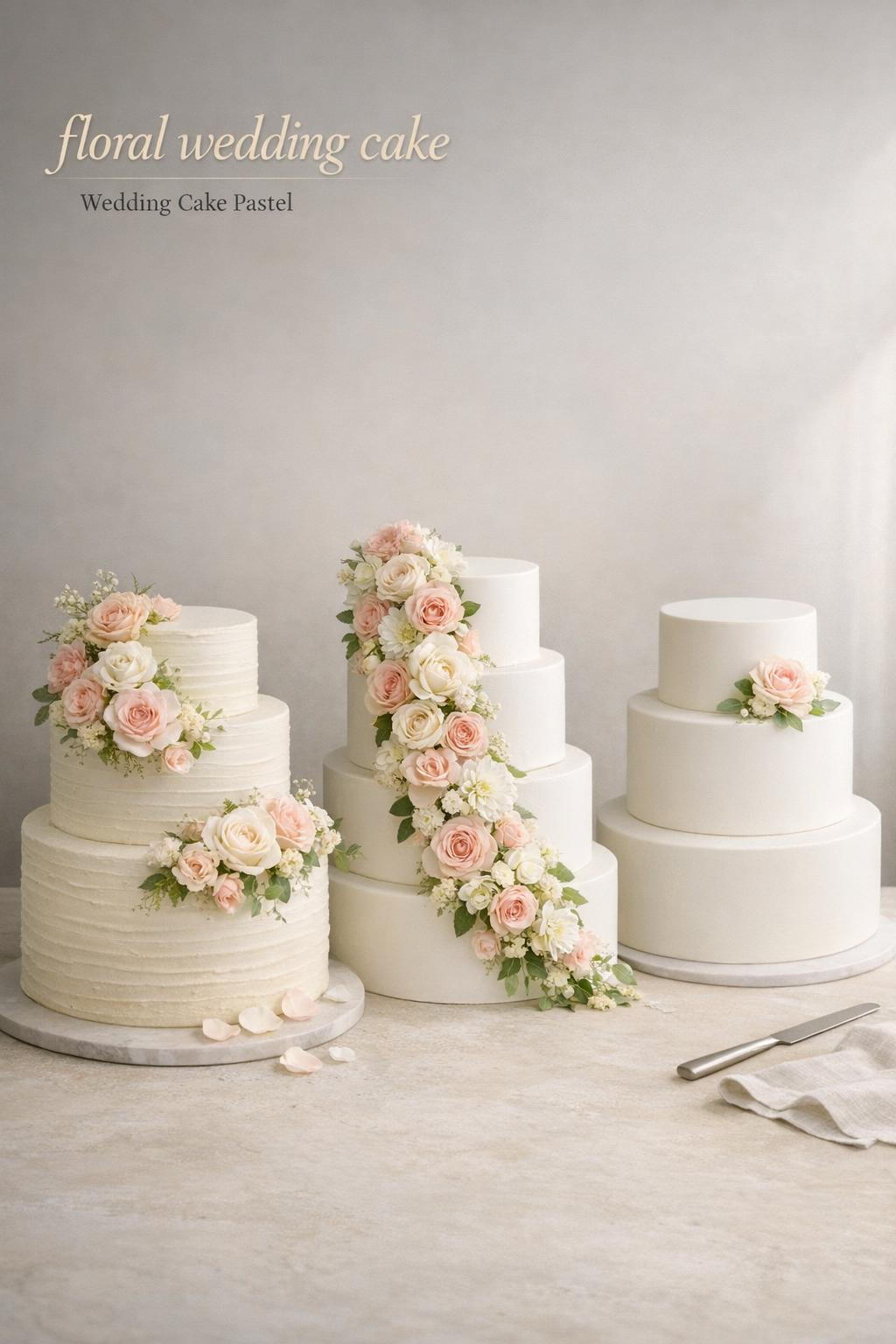
This style breakdown compares the most-requested floral cake aesthetics seen in real weddings and galleries—garden-inspired and minimalist floral cakes, fondant elegance vs. buttercream romance, sugar flowers vs. fresh flowers, pastel palettes vs. more wedding cake colorful statements—so you can choose a direction that fits your venue, your timeline, and the feeling you want when the cake is wheeled out for the reception.
Style overview: the garden-inspired floral wedding cake (romantic, layered, “just picked” energy)
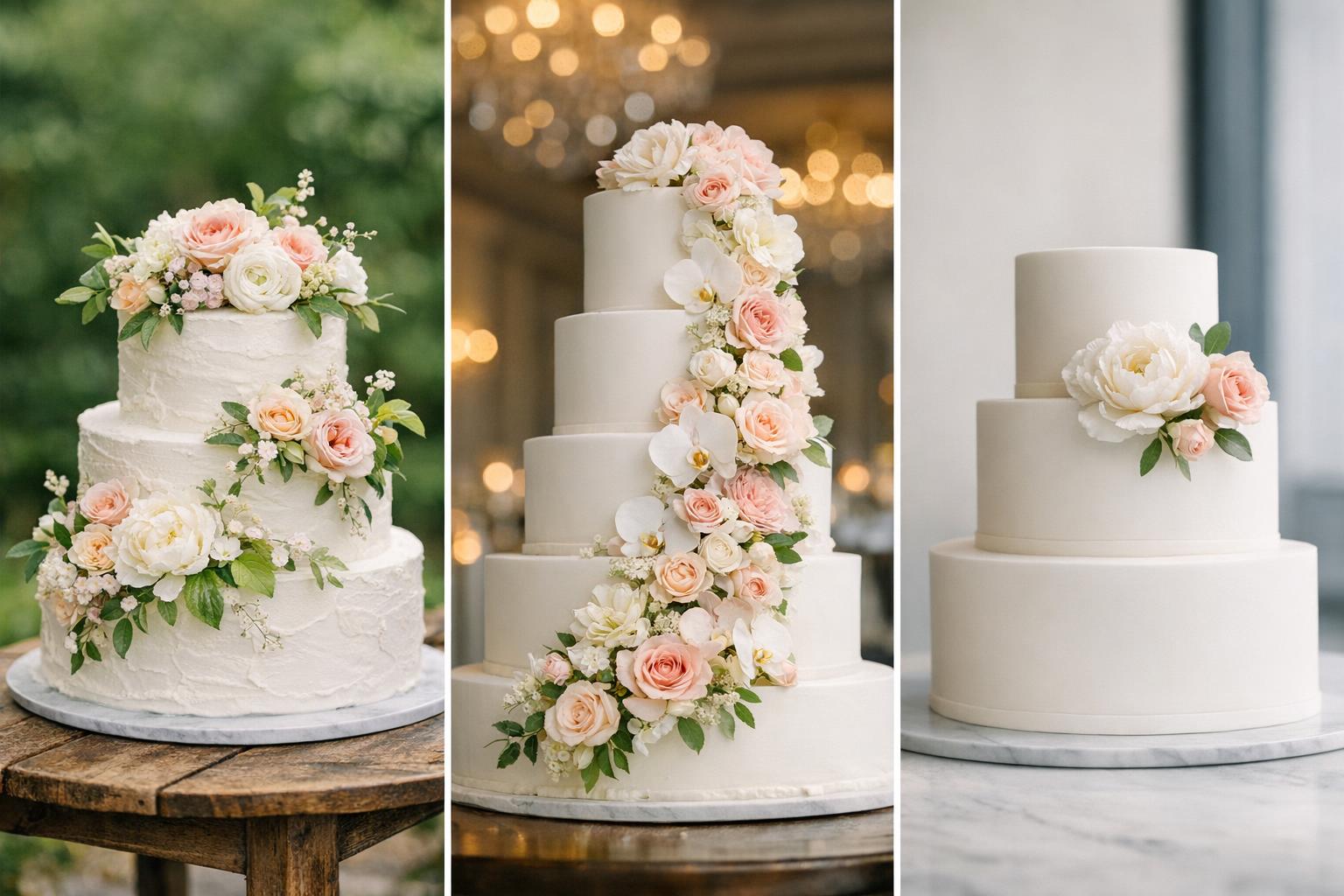
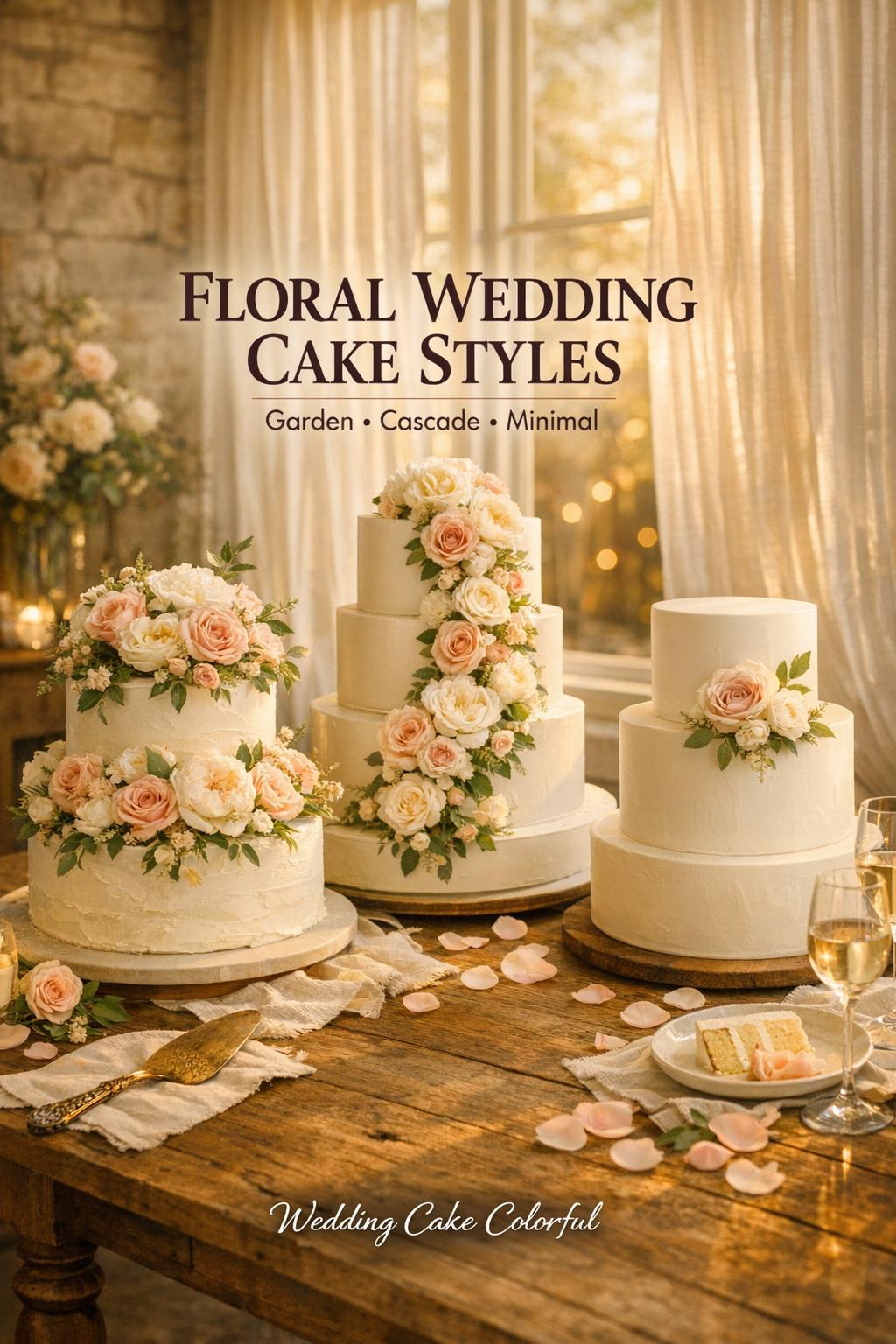
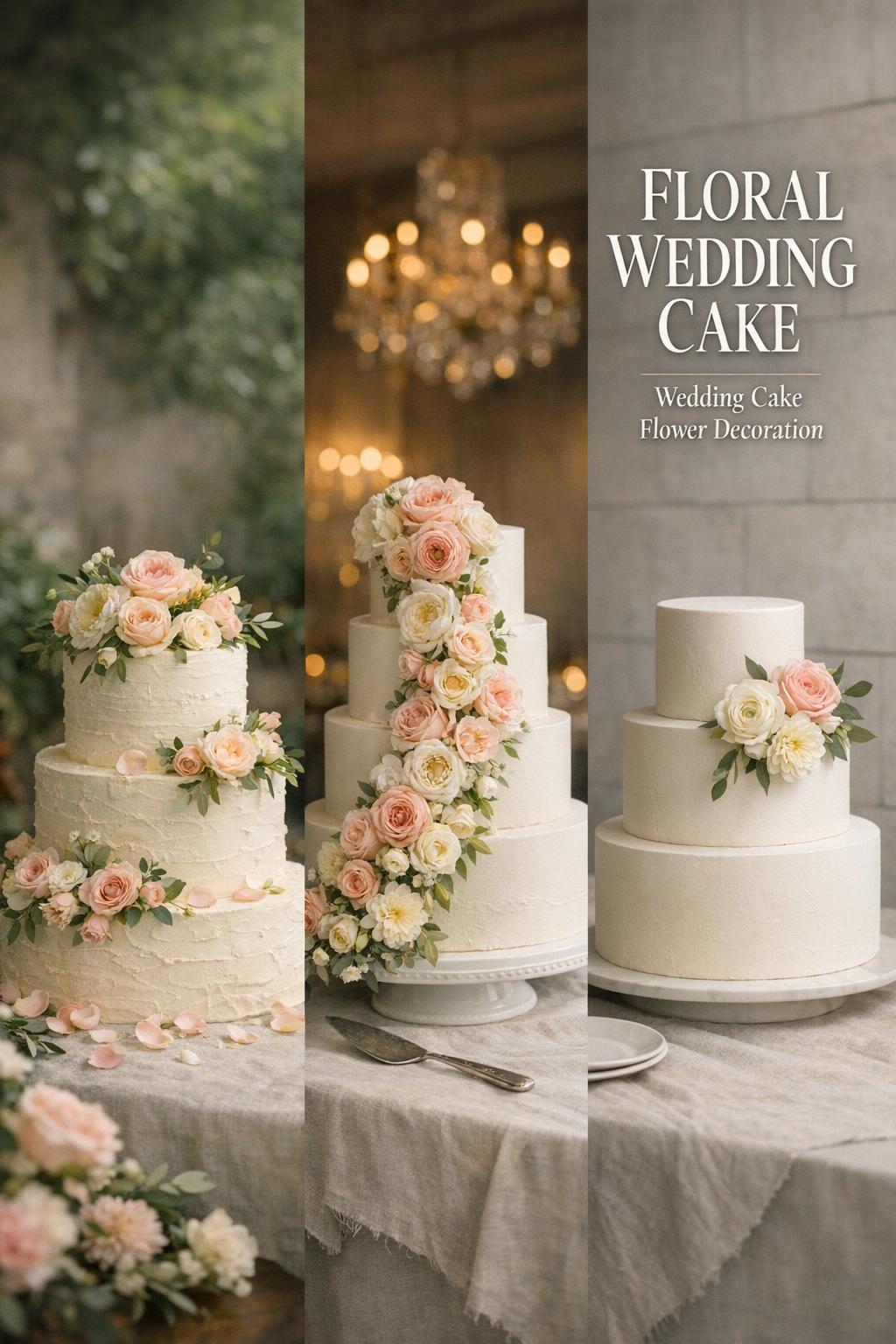
A garden-inspired floral wedding cake leans into the feeling of abundance and softness. Think of tiers that look like they belong among centerpieces—clusters of pink roses and greenery, a cascade of white and pink peonies, and accents that feel lightly arranged rather than meticulously engineered. In real-wedding imagery, this style often appears as a three-tier floral wedding cake with fresh-cut flowers (like peonies, dahlias, and roses) or as tiered cakes with piped floral details and greenery that create an airy, outdoorsy impression.
Turn wedding inspiration into a plan you can actually follow.
Zarellea brings your guest list, budget, vendors, and day-of details into one shared space — so no beautiful idea gets lost in the shuffle.
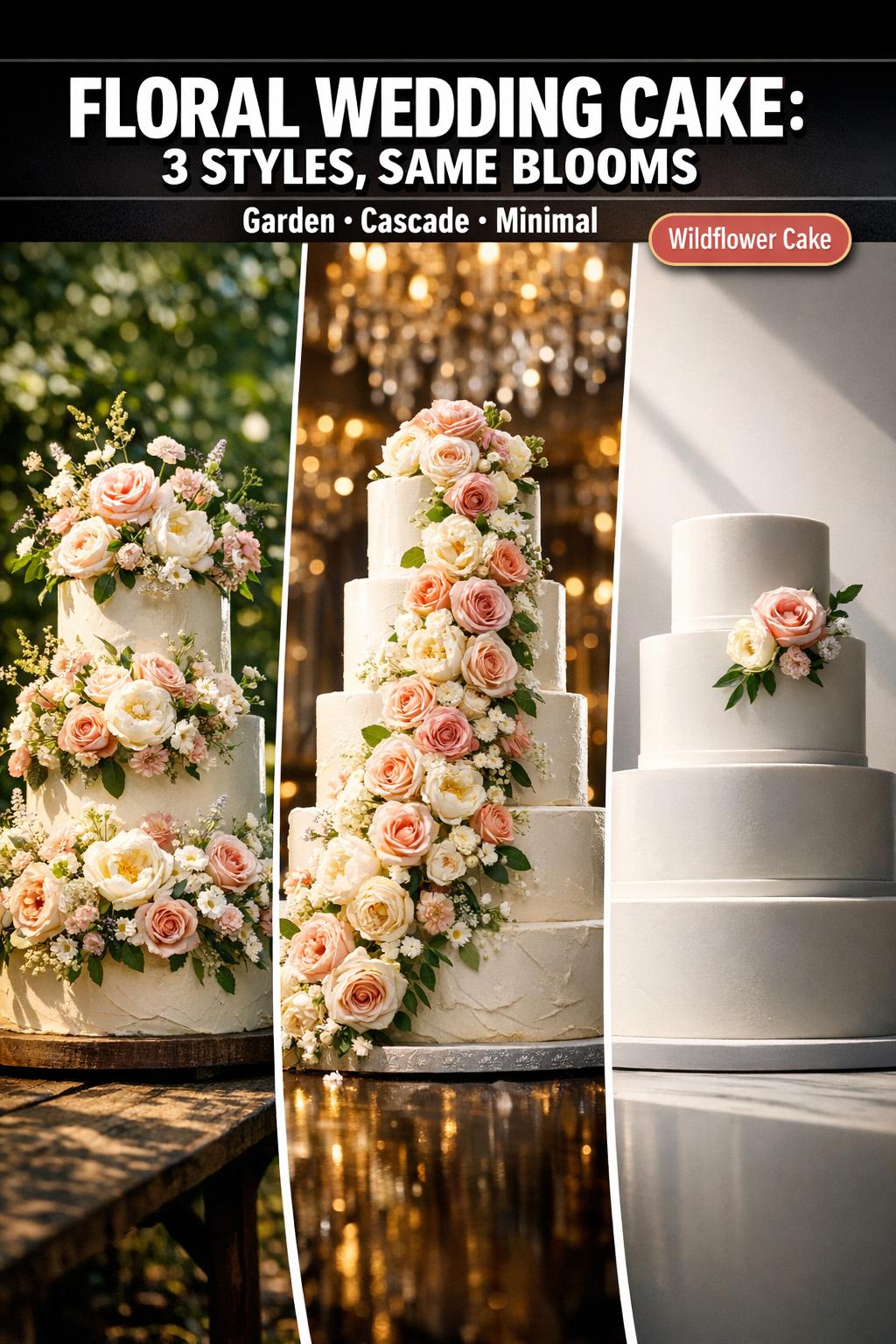
Defining characteristics are less about perfection and more about harmony: the cake looks like part of the floral design story. This is where “wildflower cake” gets mentioned in planning conversations—sometimes literally as a looser, meadow-like arrangement, and sometimes as shorthand for the relaxed, organic look couples want.
- Silhouette and structure: commonly three-tier to mid-sized tiered designs; often suited to small wedding cakes that still feel special
- Color palette: wedding cake pastel palettes (blush, ivory, soft pink) with natural greenery; can flex toward neutral or gently colorful
- Textures: frequently buttercream-forward or piped floral details; can also sit on a smooth finish when florals do the heavy lifting
- Mood: romantic, fresh, seasonal, and personal—like the cake belongs to the same “garden chapter” as the bouquet
Style overview: the luxury cascade floral wedding cake (dramatic, editorial, venue-ready)
The luxury cascade style is the floral wedding cake as centerpiece—often taller, more structured, and designed to read clearly from across a ballroom or museum venue. It shows up as a multi-tier statement (including five-tier and even six-tier wedding cake builds), with flowers arranged in a deliberate cascade down the tiers, or with handcrafted sugar flowers placed to feel like couture appliqué.
This is the world of high-impact venues and high-polish finishes: a reception at Cipriani 42nd Street in New York City, a celebration at Meadowood in St. Helena, California, or a wedding at Pérez Art Museum Miami where the cake needs to hold its own against modern architecture and a styled room. In these settings, the floral work is still romantic—but it’s also engineered for scale and photography.
- Silhouette and structure: taller tiered builds (four-tier, five-tier, six-tier) designed for visual presence
- Color palette: often refined (white-on-white, blush accents) but can support a wedding cake colorful approach through flower selection and placement density
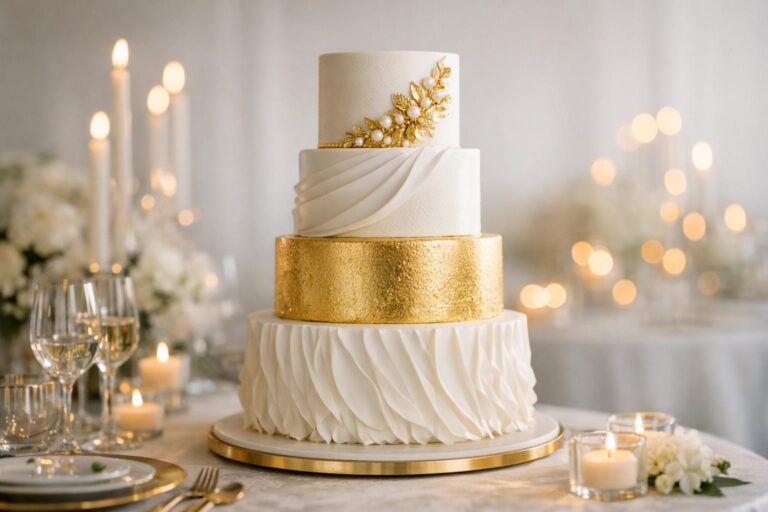
- Textures: fondant-covered tiers are common for a crisp canvas; gold fondant ribbons and smooth surfaces appear as luxury cues
- Mood: polished, dramatic, and intentional—like a couture piece placed in the reception as décor
The third style you’ll see everywhere: minimalist floral accents (clean tiers, “one perfect moment” of blooms)
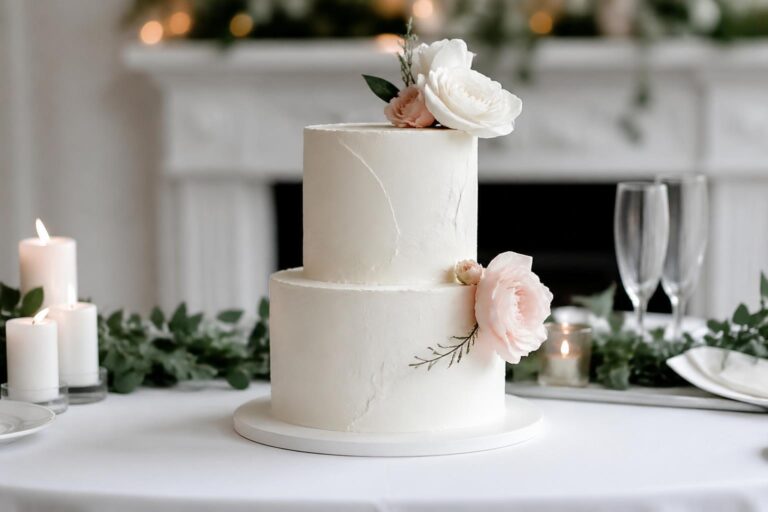
Between garden abundance and full cascade drama sits a style couples often gravitate toward for modern weddings: minimalist chic with floral accents. This approach keeps the cake clean—often white tiers with restrained floral piping or a few sugar flowers—then uses one focal placement (a cluster, a partial cascade, or a top accent) to create a romantic highlight without overwhelming the design.
This is also where “wedding cake flower decoration” becomes more about editing than adding. Instead of many blooms, you choose fewer, better-placed flowers, and let the negative space feel elevated. It’s especially popular when your venue is already visually rich, or when you want the cake to match an elegant, classic look.
Key differences: how these floral wedding cake aesthetics diverge (even if they share the same flowers)
1) Structure and scale: three-tier romance vs. four-to-six-tier statement
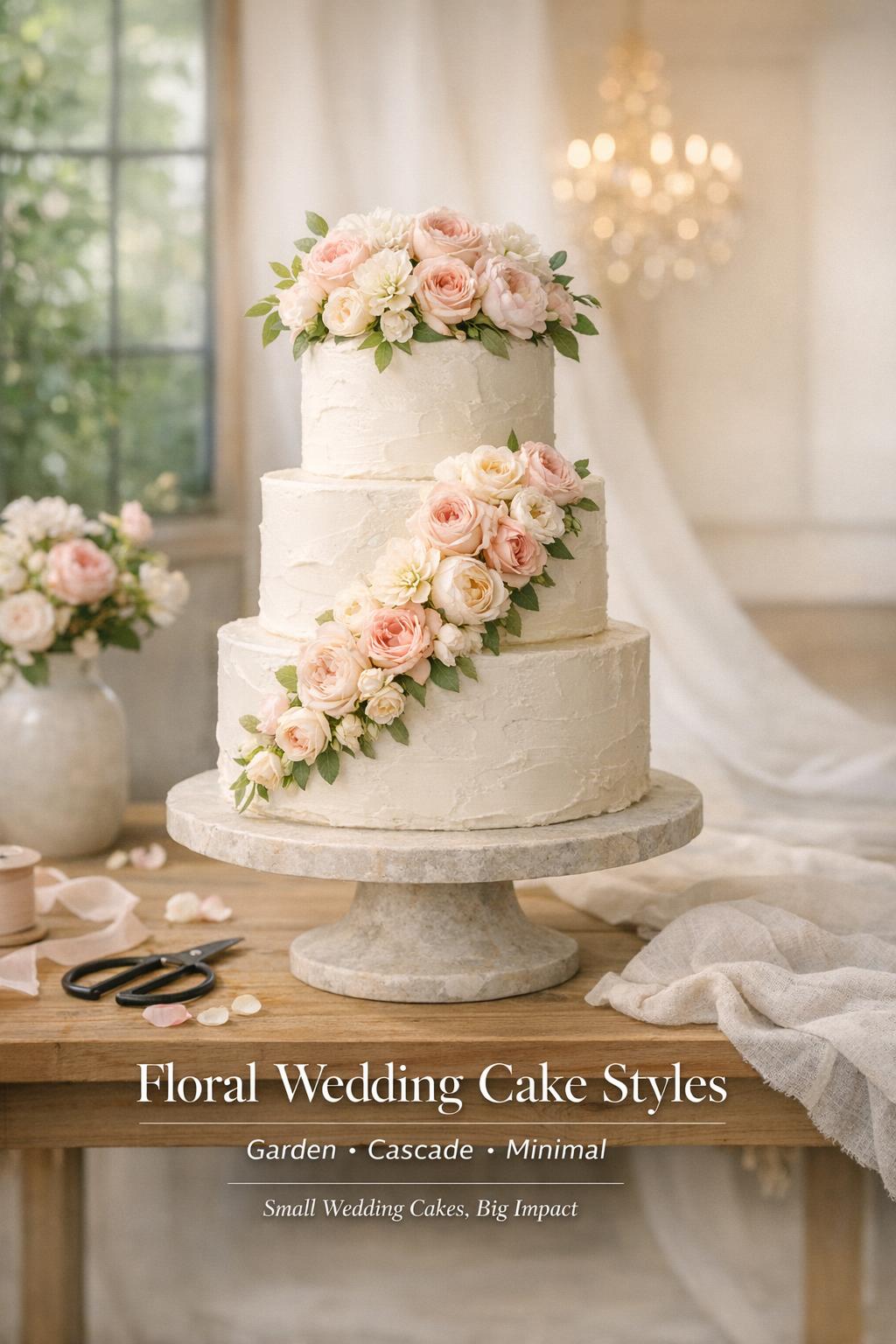
The fastest way to tell garden-inspired from luxury cascade is how the cake holds space in the room. A three-tier floral wedding cake decorated with fresh peonies and roses typically feels intimate and naturally scaled—perfect for rustic/vintage weddings like the Lake George, New York celebration where the flowers reinforced a soft, romantic theme. By contrast, a six-tier wedding cake with handcrafted sugar flowers is designed for grandeur; it’s a visual anchor in a venue like Cipriani 42nd Street, where the room itself is part of the experience.
For couples planning small wedding cakes, garden-inspired or minimalist accent styles often deliver the most impact per tier. The flowers do the storytelling without requiring extreme height. Luxury cascade can still work for smaller guest counts, but it’s most convincing when there’s enough physical space—and enough reception drama—to justify its scale.
2) Finish and canvas: fondant precision vs. softer buttercream energy
Fondant and buttercream aren’t just taste or texture choices—they change how florals “read” visually. Fondant-covered tiers create a crisp canvas where sugar flowers, floral piping, and ribbon-like details (including gold fondant ribbons) feel architectural and refined. That’s why elegant tiered fondant wedding cake with flowers designs pair naturally with venues like Meadowood in St. Helena: the overall impression is controlled, classic, and polished.
Buttercream (and buttercream-like finishes) tends to blur edges in a flattering way, which suits garden-inspired cakes where flowers are meant to feel freshly arranged. When your cake is meant to feel like part of a floral landscape—roses, greenery, peonies, dahlias—softer textures support the “living” mood.
3) Placement philosophy: cascade, cluster, or “half-mount”
Cascading flowers are the signature of the dramatic style: blooms start at the top tier and travel down, often in pink/white combinations that photograph beautifully. You see this in Santa Barbara, California designs tied to beach wedding energy (including celebrations near The Hyatt Santa Barbara), where a cascade echoes movement—like a wave of florals flowing down the cake.
Garden-inspired placement is usually more clustered and “grown,” sometimes spilling naturally but not always in a formal cascade. Minimalist placement is the most edited: a top cluster, a single side arrangement, or carefully spaced sugar flowers and piping that create a quiet luxury effect.
4) Flower medium: sugar flowers vs. real flowers (and why the choice changes your planning)
Sugar flowers bring artistry and reliability: handcrafted blooms can mirror roses, peonies, and other wedding favorites with a level of detail that feels couture. This is central to the luxury-confectionery look highlighted by Sugarflower Bake Shop and the broader idea of a sugar-flower-encrusted cake designed to match a high-end reception aesthetic. Sugar flowers also allow a consistent look across tiers, especially on large builds like a six-tier wedding cake.
Fresh flowers bring immediacy and seasonal romance. A three-tier floral wedding cake topped with fresh-cut peonies, dahlias, and roses reads as lush and current, especially in garden or rustic/vintage weddings. The trade-off is coordination: fresh flowers require careful handling and timing, and your florist’s choices need to align with the cake’s finish so blooms sit cleanly and securely.
Visual style breakdown: how each look “behaves” in the reception space
Garden-inspired: soft movement, layered detail, and a “bouquet on tiers” silhouette
Visually, garden-inspired cakes look best when guests can see texture up close—during cocktail hour wanderings, or when the cake is placed near floral installations. The flowers often mirror the bouquet’s softness: pink roses with greenery, peonies in white and blush, and touches that feel lightly arranged. The silhouette reads romantic rather than formal, which is why it pairs naturally with vintage or rustic styling cues and venues that already feel outdoorsy or regional.
If you’re drawn to a wildflower cake mood, this is the style family where it feels most authentic: you’re not trying to make the cake look “perfectly symmetrical.” You’re aiming for a lived-in floral story.
Luxury cascade: long lines, high contrast, and “photographable from across the room” impact
The cascade style is built for distance. From the far side of a ballroom, a floral waterfall creates an instant focal line: the eye moves from top tier to bottom tier without needing to read small details. This is why celebrity-style coverage tends to highlight the cascade—like Victoria Wakile’s wedding at Pleasantdale Chateau in West Orange, New Jersey, where the cake is framed as a design-led centerpiece rather than simply a dessert.
In this aesthetic, proportion matters: the cascade should feel intentional, not like flowers were “stuck on.” Couples who love this look typically want a clear statement moment at cake cutting, especially in formal receptions.
Minimalist floral accents: negative space, refined restraint, and one striking floral gesture
Minimalist floral cakes depend on balance. A white tiered cake with floral piping and a few sugar flowers can feel breathtaking when the placement is correct—especially in elegant venues where décor is already curated. Rather than competing with the room, the cake becomes an extension of it. This works well in modern spaces like a museum venue (such as Pérez Art Museum Miami), where clean lines and edited details feel natural.
This style is also a quiet way to incorporate wedding cake pastel coloring through flowers alone—blush sugar blooms on a white cake—without needing colorful frosting or heavy decoration.
Color palette comparison: wedding cake pastel vs. wedding cake colorful (and where “wildflower” fits)
Most floral wedding cakes live in a romantic palette: white tiers, blush accents, soft pink blooms, and greenery. But within that range, your color decision changes the entire impression—especially in photographs where the cake may sit near bouquets, linens, and candlelight.
Wedding cake pastel: blush sugar flowers, ivory tiers, and gentle transitions
A wedding cake pastel palette is the natural partner of sugar flower artistry and minimalist elegance. A four-tier round wedding cake with blush pink sugar flowers can feel modern romantic in a New York City setting like Chelsea Square, while still reading timeless. Pastels also suit Meadowood-style elegance, where fondant finishes and white-on-white floral accents create a serene, classic mood.
Pastel is especially forgiving when you’re coordinating many wedding elements: it tends to blend with bouquets and décor rather than demand a perfect match.
Wedding cake colorful: let the flowers carry the color story
A wedding cake colorful direction doesn’t require loud frosting. In many real weddings, the cake remains a refined neutral, and color arrives through flowers—pink and white cascades, mixed blooms, or deeper contrasts created by variety and placement. Color can be introduced in a controlled way through a cascade (high-impact) or through clustered garden arrangements (more organic).
If you’re nervous about going “too colorful,” start by choosing one color family (like pinks) and letting flower variety add dimension—roses plus peonies plus dahlias—while keeping the tiers restrained.
Wildflower cake energy: organic composition over strict matching
Wildflower cake as a concept is less about a specific flower list and more about composition: looser placement, garden spontaneity, and the feeling that the blooms could have been gathered nearby. It’s most convincing on cakes that already embrace softness—garden-inspired designs, or minimalist cakes with a single airy cluster. If your venue and overall wedding theme lean rustic/vintage or naturally romantic, this mood often feels more “you” than an ultra-structured cascade.
Venue-driven style decisions: matching your floral wedding cake to the room
The same cake can feel completely different depending on where it’s placed. Venue cues matter because they influence scale, lighting, and how formal the cake should feel compared to surrounding décor. Couples often choose a style because it looked beautiful in a photo—then discover their own venue needs a different proportion or finish to achieve that same feeling.
Cipriani 42nd Street, New York City: where six-tier sugar flowers make sense
In an iconic, high-end setting like Cipriani 42nd Street, the cake isn’t competing with nature—it’s competing with architectural grandeur and formal reception energy. A six-tier wedding cake with handcrafted sugar flowers (as seen in luxury confectionery storytelling connected to Sugarflower Bake Shop and CakeLove Couture) fits the environment because it’s designed to feel like an intentional centerpiece.
Meadowood, St. Helena, California: elegant fondant florals and classic restraint
Meadowood weddings often call for refinement: elegant tiered fondant wedding cake with flowers styling, white-on-white floral details, and a garden-inspired mood that stays polished. This is a place where floral piping and sugar flowers can be subtle yet still feel elevated—perfect for couples who want romance without visual chaos.
Pérez Art Museum Miami: modern garden-inspired with clean lines
A museum venue like Pérez Art Museum Miami rewards editing. A tiered, garden-inspired wedding cake with precise piping and restrained florals—like pink roses and greenery—feels aligned with the modern setting. This is also where a known cake designer such as Dominique’s Couture Cakes becomes part of the planning conversation, because the execution needs to be crisp enough to match the venue’s aesthetic.
The Hyatt Santa Barbara: beach romance and the logic of a cascade
In Santa Barbara, where beach weddings often lean romantic and breezy, a three-tier cascading floral cake in pink and white feels like a natural extension of the location. The cascade mimics movement and softness—especially when floral vendors like Florals Etcetera are part of the team. This is a case where the style is not just pretty; it’s contextually appropriate.
Vendor ecosystem comparison: who you need for each floral cake direction
Floral wedding cake planning is rarely a solo act. Whether your cake uses sugar blooms or fresh flowers, you’re coordinating artistry, timing, and often delivery logistics. The style you choose determines which vendor relationships matter most.
When sugar flowers are the star: cake designer-led planning
If you want handcrafted sugar flowers—especially in high volume or across many tiers—your cake designer becomes the primary lead. The designer’s ability to create consistent blooms, place them elegantly on tiered structure, and align the finish with the wedding’s formality is central. This is the world suggested by names tied to real-wedding vendor storytelling, such as Sugarflower Bake Shop and CakeLove Couture, where the cake reads as luxury confectionery rather than simply a floral garnish.
For couples who love the idea of flowers that won’t wilt and want a controlled look (especially for long receptions), sugar flowers often feel like peace of mind—provided you commit to early design decisions.
When fresh flowers are the star: florist coordination and last-mile timing
If fresh flowers will touch the cake, your florist becomes a co-architect. The cake design needs planned “landing zones” for blooms—clusters, cascade points, or top arrangements—so nothing looks improvised at the last minute. This is especially relevant for the garden-inspired aesthetic and for cascading floral wedding cake designs where bloom placement creates the silhouette.
Many couples find it helpful to treat the cake as part of the floral plan, not an afterthought: the bouquet, the centerpieces, and the cake flowers should feel like they’re from the same story.
When you want a straightforward buying path: collection-style floral cakes
If you’d rather start from a curated selection than build from scratch, a brand collection page like Freed’s Bakery’s floral wedding cakes can help you visualize designs, compare options, and think through customization. This approach can be especially useful for couples prioritizing clarity on product variants, pricing structure, or lead times—while still staying within a floral theme.
Tips: choosing the right wedding cake flower decoration without creating extra stress
Floral cakes are romantic, but they’re also logistical. The best results usually come when couples decide early what they want the flowers to do: provide color, provide drama, or provide softness. Once you know the “job” of the florals, the rest becomes easier—tier count, finish, and vendor roles naturally follow.
- If you love the look of real blooms: plan your floral placement zones (top cluster, side cluster, or cascade line) before your florist arrives on the wedding day.
- If you love handcrafted sugar flowers: finalize your flower types and palette early so the designer can create cohesive blooms across tiers.
- If you’re deciding between minimalist and lush: ask yourself where the cake will sit. A cake in a highly visible area can handle restraint; a cake tucked into a corner often needs stronger floral contrast to read in photos.
- If you’re planning small wedding cakes: invest in one exceptional floral moment—like a beautifully composed cluster of roses and greenery—instead of spreading flowers thinly over every tier.
A practical mindset shift: your cake doesn’t have to match every floral detail in the room. It needs to match the mood. A blush sugar flower cake can harmonize with many bouquet styles, and a pink-and-white cascade can still feel cohesive even if your table florals use slightly different varieties.
Comparison in action: the same wedding, three different floral cake choices
To make the differences feel real, imagine the same couple planning the same reception, but shifting the cake style to change the emotional tone of the room. The venue and vendors may be different across the U.S., but the design logic stays consistent.
Scenario: romantic city reception (New York energy, modern romance)
Garden-inspired approach: a three-tier cake with fresh-cut flowers in a soft blush-and-ivory palette, arranged in a relaxed cluster with greenery. The vibe is intimate—guests feel like they’re seeing a personal detail, not a performance.
Luxury cascade approach: a taller build, like a four-tier round cake with blush pink sugar flowers or a larger tiered statement, where the flowers create a deliberate downward line. This is the “camera-ready” version that feels right in a formal setting like Cipriani 42nd Street.
Minimalist accent approach: clean tiers with one concentrated floral placement and perhaps subtle floral piping. The cake reads refined and editorial—ideal when your tablescape is already layered and you want the cake to be calm, not busy.
Scenario: California wine-country elegance (classic, polished garden mood)
Garden-inspired approach: choose flowers that feel seasonal and soft, but keep placement organized—clusters rather than full spill. The cake will feel romantic without losing the polished tone a venue like Meadowood suggests.
Luxury cascade approach: an elegant tiered fondant wedding cake with flowers, where the finish is pristine and floral accents are intentionally spaced. Even a modest cascade looks elevated against crisp fondant.
Minimalist accent approach: white-on-white elegance—floral piping, a few sugar blooms, and restraint. This is where wedding cake pastel decisions shine, because the palette reads quietly luxurious.
Scenario: coastal reception (breezy romance with a standout cake moment)
Garden-inspired approach: a softer floral story with pink and white blooms that feel gathered and fresh, especially if your celebration echoes Santa Barbara’s relaxed elegance.
Luxury cascade approach: embrace the classic cascading floral wedding cake look—three tiers can still deliver drama when the cascade line is strong and the placement is clean, a style often associated with venues like The Hyatt Santa Barbara and coordinated florals from teams such as Florals Etcetera.
Minimalist accent approach: keep the cake sleek and let the coastal environment be the drama; a small cluster of roses and greenery becomes the finishing touch rather than the headline.
Common style missteps (and how to avoid them gracefully)
Most floral wedding cake disappointments aren’t about taste—they’re about mismatched expectations between style, scale, and setting. A cake that felt “luxury” in a ballroom photo can look oversized in an intimate venue. A cake that felt “wildflower” in your mind can read unfinished if the placement lacks intention.
- Choosing a cascade without planning the line: cascading flowers need a clear starting point and a natural finish; otherwise, the placement can look random.
- Overloading small wedding cakes: on fewer tiers, too many blooms can swallow the silhouette; one beautiful cluster often looks more editorial.
- Mixing finishes and floral styles without a bridge: an ultra-crisp fondant tier with very loose, garden placement can feel disconnected unless you add a unifying cue (like controlled spacing or complementary floral piping).
- Forgetting the venue’s “volume”: museum-modern spaces reward minimalism; grand venues can handle a six-tier moment.
The fix is usually editing, not adding: refine flower placement, clarify whether you want a bouquet-on-tiers mood or a couture cascade mood, and make sure your vendor team understands the intended aesthetic.
Planning timeline and budget thinking: what changes when flowers enter the design
Flowers increase coordination. Even when you’re working from a collection of designs—such as a floral wedding cake category page from a bakery—adding floral complexity means more decisions: placement style (cascade vs. cluster), medium (sugar flowers vs. fresh flowers), and finish (fondant vs. buttercream). The more tiers you add, the more crucial early alignment becomes.
Lead-time mindset: decide the “type” of florals first
Start by choosing your floral medium and placement strategy, then confirm the finish. A sugar-flower-forward design benefits from early approval of flower types and colors so handcrafted elements can be created consistently. Fresh-flower designs benefit from early agreement on where blooms will go, so your florist can plan the right shapes and quantities for clusters or cascading lines.
Budget anchors: tiers and floral complexity are the real drivers
Without locking you into a one-size-fits-all number, it helps to think in drivers rather than guesses: more tiers generally mean more labor, and more detailed floral work (especially handcrafted sugar flowers) typically increases complexity. A three-tier floral cake with a focused cluster often lands very differently from a six-tier cake covered in sugar flowers. If you’re trying to manage cost while still wanting the floral wedding cake moment, consider scaling down tiers and investing in one unforgettable floral arrangement on the cake.
Practical tips for buttercream vs. fondant decisions (beyond personal preference)
Couples often decide between buttercream and fondant based on look alone, but in real planning, the decision connects to your floral approach and your venue’s overall formality. In elegant, classic settings, fondant’s smoothness makes floral piping and sugar flowers feel tailored. In softer, garden-themed weddings, buttercream’s warmth helps fresh flowers feel integrated.
One grounded way to decide: ask what you want guests to notice first. If you want guests to notice the flowers first, a clean fondant canvas can make florals pop. If you want guests to notice the overall romance first, buttercream plus fresh blooms can create a cohesive, inviting impression.
Where to find inspiration without getting overwhelmed
Inspiration is everywhere—real-wedding galleries, vendor portfolios, and idea hubs that compile dozens of floral wedding cake ideas. The trick is translating inspiration into a decision that fits your venue and your wedding’s story. Instead of saving everything that looks pretty, save examples in three labeled buckets: “placement” (cascade/cluster/minimal), “finish” (fondant/buttercream), and “palette” (wedding cake pastel/wedding cake colorful).
If you’re pulled toward many styles at once, choose a single anchor: a venue mood (Cipriani 42nd Street grandeur, Meadowood elegance, Pérez Art Museum Miami modernity, or Santa Barbara coastal romance), then let the cake follow. This is how couples end up with a cake that feels inevitable on the day—like it was always meant to be there.
A gentle mixing guide: how to combine elements without losing the plot
Many of the most beautiful cakes borrow from more than one style. A garden-inspired base can borrow the precision of minimalist placement. A luxury cascade can soften with garden-like variety in the blooms. The key is choosing one dominant “grammar” for the design, then letting the other style appear as an accent.
- Garden + minimalist: keep the flower variety, but reduce the quantity and place it in one concentrated cluster.
- Luxury cascade + pastel romance: use a smooth finish and allow blush sugar flowers to form a structured cascade that still feels soft.
- Fondant elegance + garden mood: choose a crisp canvas and use floral piping to bridge the formality between smooth tiers and organic blooms.
- Small wedding cakes + statement florals: minimize tiers, maximize the floral arrangement quality—this often photographs better than scaling up structure.
If you’re working with recognizable vendors mentioned in real weddings—such as Dominique’s Couture Cakes, Cakes to Remember, Sugarflower Bake Shop, or florists like Florals Etcetera—bring one or two reference images that match your chosen grammar, then talk through how it adapts to your venue and guest experience.
FAQ
Do fresh flowers require special handling on a floral wedding cake?
Yes—fresh flowers add timing and coordination, so it’s important to plan where flowers will be placed (cluster, partial cascade, or full cascade) and coordinate with your florist and cake team so the blooms look intentional and cohesive with the cake’s finish.
Can I mix real flowers and sugar flowers on the same cake?
You can, and it often works best when one type leads the design and the other supports it—for example, using handcrafted sugar flowers for consistent focal blooms and adding a small amount of fresh greenery or accents to echo your bouquet’s natural feel.
What’s the difference between a garden-inspired cake and a cascading floral wedding cake?
A garden-inspired cake usually features softer, clustered placement that feels like a bouquet resting on tiers, while a cascading floral wedding cake is defined by a deliberate floral line that flows from the top tier down the cake for a more dramatic, statement-making effect.
Is fondant or buttercream better for wedding cake flower decoration?
Fondant creates a crisp, refined canvas that highlights sugar flowers, floral piping, and elegant tier lines, while buttercream tends to feel softer and more romantic, often pairing naturally with garden-inspired designs and fresh-flower styling.
How do I choose between a wedding cake pastel palette and a wedding cake colorful look?
If you want a timeless, softly romantic mood, pastel choices like blush sugar flowers on white tiers create gentle harmony; if you want higher impact, keep the tiers refined and let the flowers provide the color through variety, density, and placement—especially in cascade designs.
Do small wedding cakes still look impressive with floral décor?
Absolutely—small wedding cakes often look most elevated when they feature one exceptional floral moment, such as a concentrated cluster of roses and greenery or a refined, minimalist accent, rather than trying to distribute many blooms across limited tiers.
How do I find a cake designer who can execute sugar flowers well?
Look for designers and bakeries known for floral craftsmanship and real-wedding execution, and ask to see examples of tiered cakes with handcrafted sugar flowers—vendors associated with floral-forward work include Sugarflower Bake Shop, CakeLove Couture, Dominique’s Couture Cakes, and Cakes to Remember.
What floral cake style works best for a formal venue like Cipriani 42nd Street or Meadowood?
Formal venues often suit structured, refined cakes—such as elegant tiered fondant designs with sugar flowers or controlled floral placement—because the clean finish and intentional detailing feel balanced against grand or polished surroundings like Cipriani 42nd Street in New York City or Meadowood in St. Helena, California.
What’s the easiest way to make a floral wedding cake feel cohesive with the rest of the wedding?
Choose one consistent design “story” that ties your venue mood to your floral placement strategy (cascade, cluster, or minimalist accent), then align the cake’s flowers—whether fresh or sugar—with the same palette family as your bouquet and reception florals so everything feels like part of one romantic visual narrative.