Bridal Train Dresses: Build Your Perfect Wedding-Day Capsule
Bridal train dresses are easiest to choose when you treat the train as part of a complete wedding-day wardrobe rather than an isolated detail. The fabric behind you changes your ceremony entrance, portrait composition, bustle plan, footwear, veil, and the way you move once dinner and dancing begin. A short sweep can feel effortless in a garden, while a cathedral train can make a formal aisle feel cinematic. Neither is automatically better. The right choice is the one that supports the setting, the silhouette you love, and the amount of handling you are happy to plan.
This capsule-system approach gives you a simple way to compare options. Start with the mood you want, then test length, fabric, shape, accessories, and reception logistics as one outfit. Train measurements vary between designers, so use the categories as practical language, not rigid rules. When you try on a gown, walk, turn, sit, lift the front slightly, and imagine the bustle. A train that looks beautiful in a still photo should also make sense for the real schedule.
Build the core bridal train dresses capsule
The foundation is the gown silhouette. An A-line gives a train room to fan behind you without making the whole look feel heavy. A ball gown supports a fuller, more theatrical train because the skirt already has visual volume. A fit-and-flare or mermaid gown creates a narrow, graphic trail and makes the back view especially important. A sheath or column dress can take a slim sweep, a panel, or a detachable overskirt without losing its clean line. Try to judge the train from the waist, the side, and the floor, because each view reveals a different proportion.
Next choose the length category. A sweep train brushes the floor and normally extends only a modest distance beyond the hem. It is light, easy to bustle, and forgiving for grass, gravel, patios, and tight rooms. A court train creates a little more presence while staying manageable. A chapel train is the familiar classic: long enough to fill an aisle and appear clearly in portraits, but usually practical enough to bustle for the reception. Cathedral and royal trains create maximum ceremony drama, yet they need more floor space, more arranging, and more help.
Turn wedding inspiration into a plan you can actually follow.
Zarellea brings your guest list, budget, vendors, and day-of details into one shared space — so no beautiful idea gets lost in the shuffle.
Fabric is the third building block. Matte crepe gives a clean, modern line and usually photographs with controlled movement. Satin reflects light and can make a train look luxurious, but every crease and mark may show. Tulle is airy and romantic, especially when layered into a detachable skirt. Lace adds texture and can make the hem memorable, though lace borders and appliqués often make shortening or reshaping more complex. Organza offers structure with some transparency. Match the fabric weight to the season, the venue floor, and the amount of walking between locations.
- Gown silhouette: A-line, ball gown, fit-and-flare, sheath, or column.
- Train category: sweep, court, chapel, cathedral, royal, panel, or detachable.
- Fabric behavior: fluid, structured, crisp, matte, reflective, airy, or textured.
- Support plan: bustle type, helper, garment bag, and safe storage between events.
- Accessory balance: veil, earrings, shoes, gloves, cape, or statement back detail.
Choose combinations that work in real venues
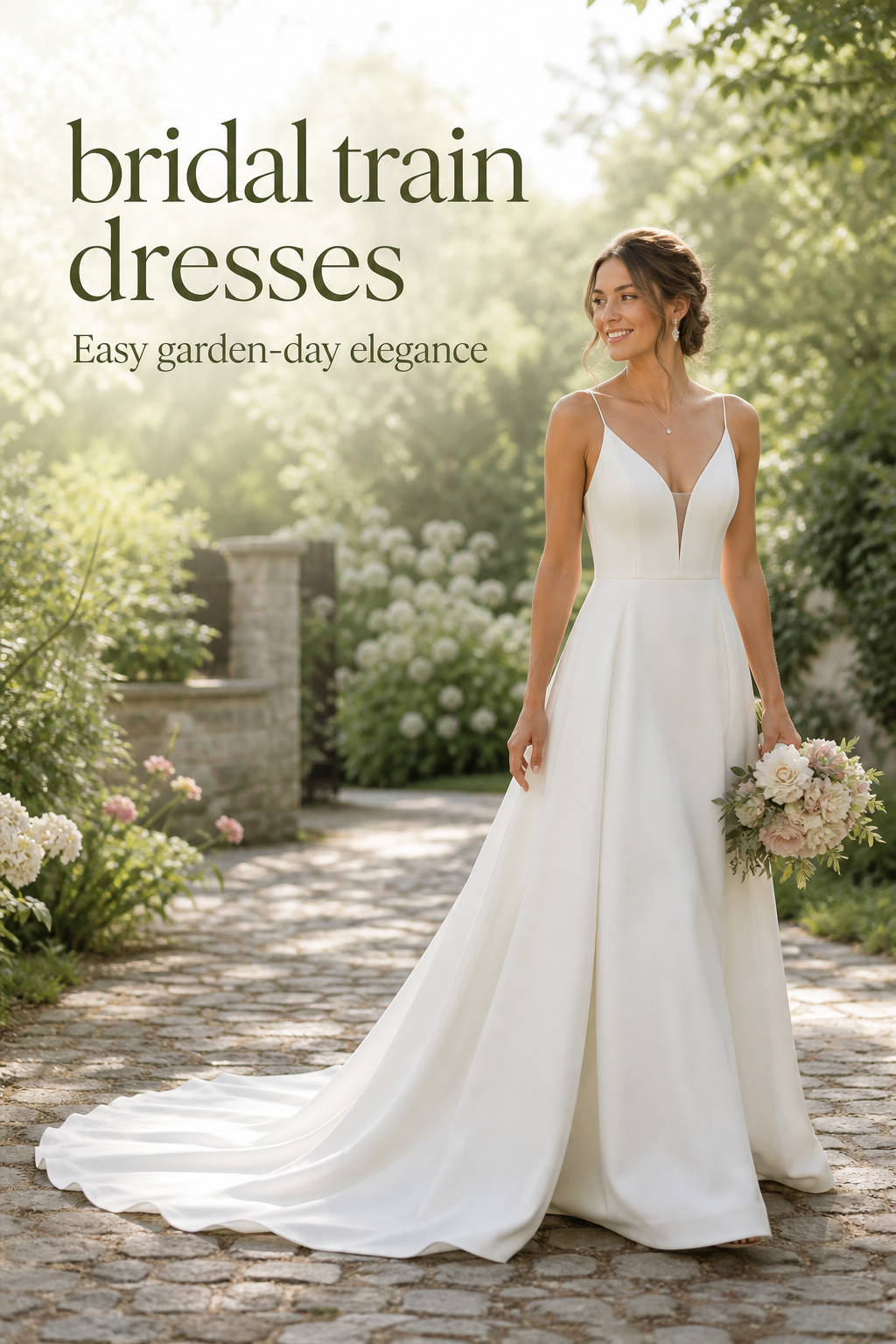
For a garden, backyard, or beach-adjacent ceremony, begin with a sweep or court train. The shorter extension keeps the hem from collecting as much grass, sand, or dust, and it lets you move between the ceremony, cocktail hour, and portraits without constant repositioning. An A-line in crepe, chiffon, or light tulle gives movement without a large support team. If you love more drama, a detachable chapel-length overskirt can create the aisle moment while the base dress remains easier for outdoor photographs.
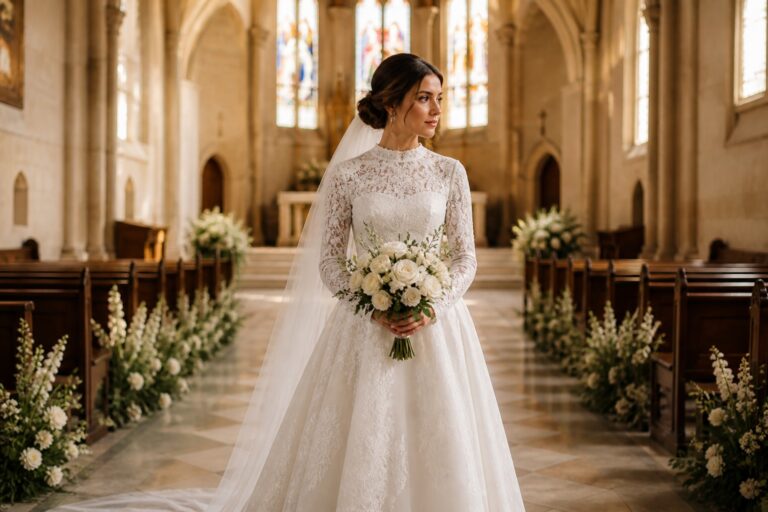
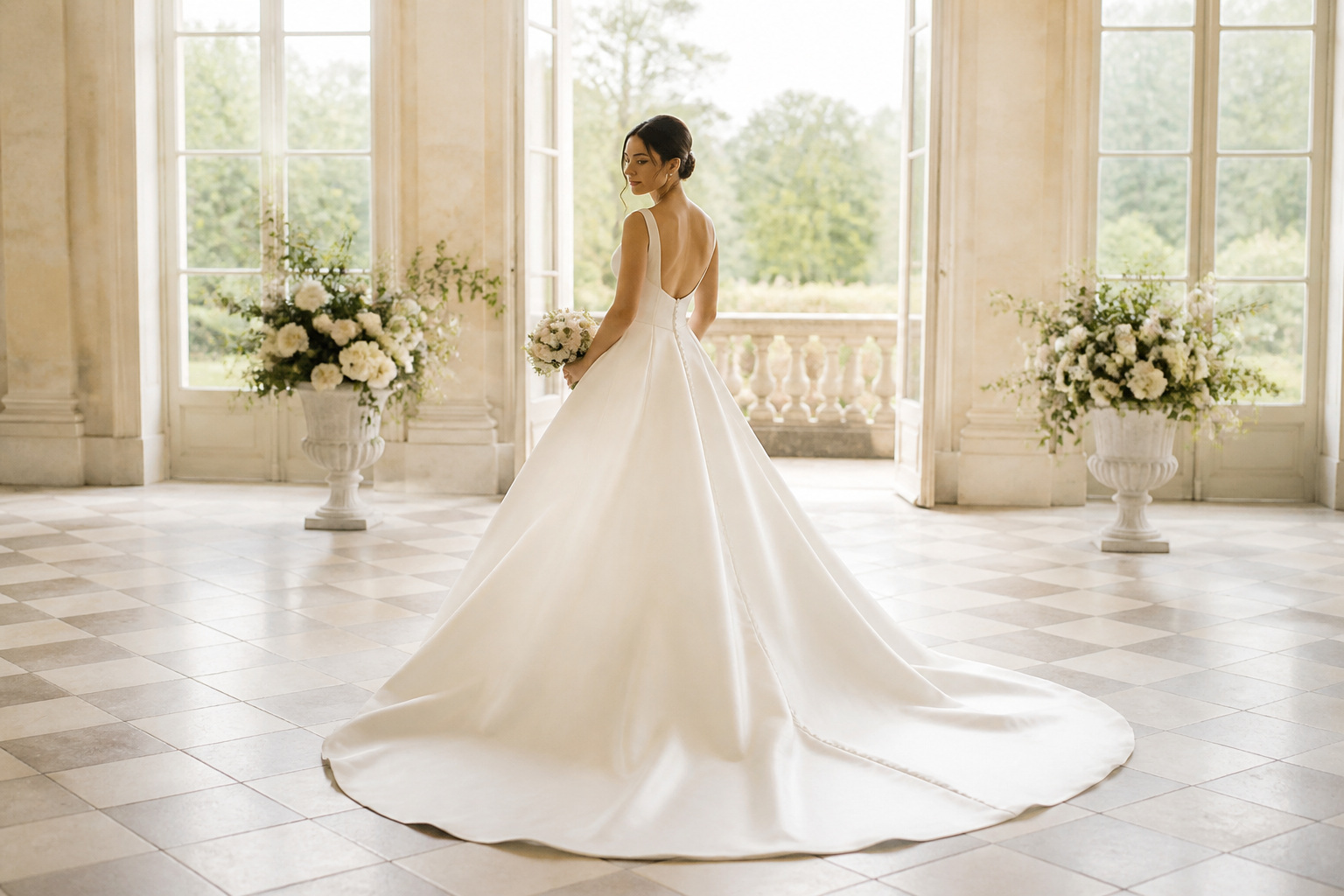
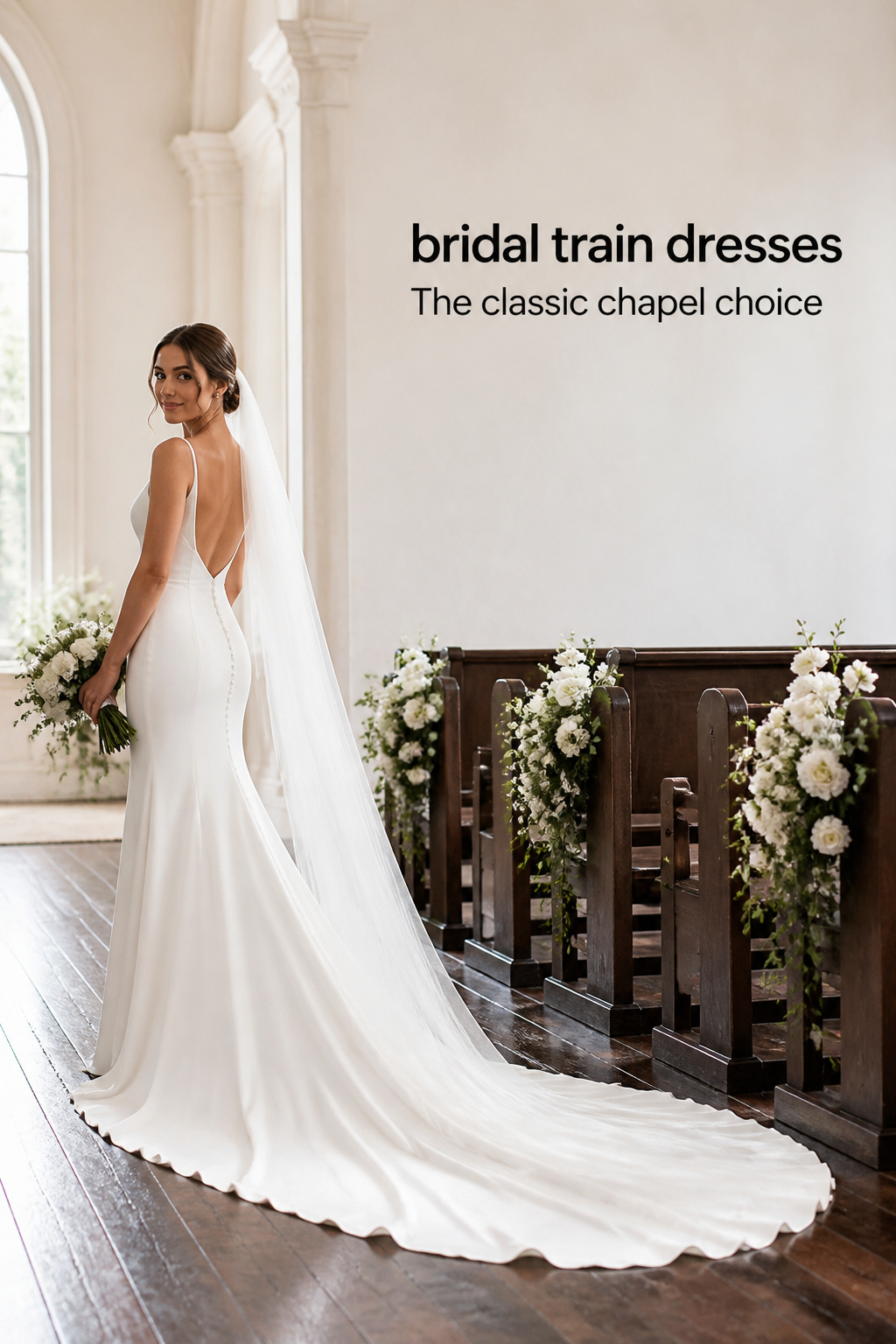
For a church, historic hall, or classic ballroom, a chapel train is the most versatile starting point. It gives the back of the gown a recognizably bridal proportion and works with A-line, fit-and-flare, and ball-gown shapes. Pair it with a veil that supports the same visual scale, but do not assume matching names require identical lengths. A chapel veil over a chapel train can feel balanced; a fingertip veil can keep a detailed back visible. Test both during the same fitting.
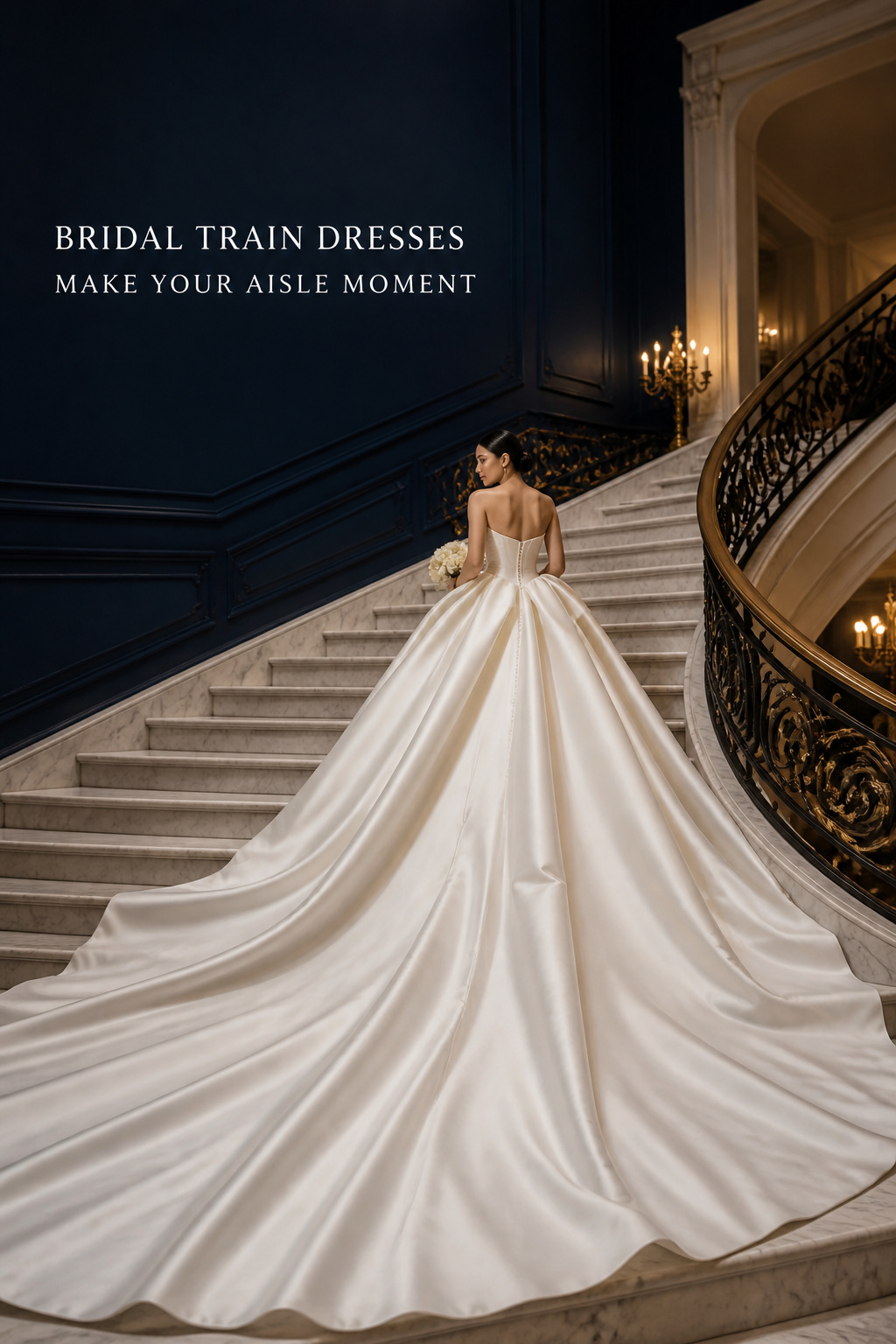
For a black-tie evening or very spacious venue, cathedral length can be compelling. The important question is not whether the train looks dramatic in the boutique, but whether it can be spread behind you at the altar and kept clear of guests, candles, chairs, and photography equipment. Ask the planner who will arrange it, where it will be placed during portraits, and how it will be bustled. If the answer depends on several people who are already managing other duties, a slightly shorter train may create a calmer day.
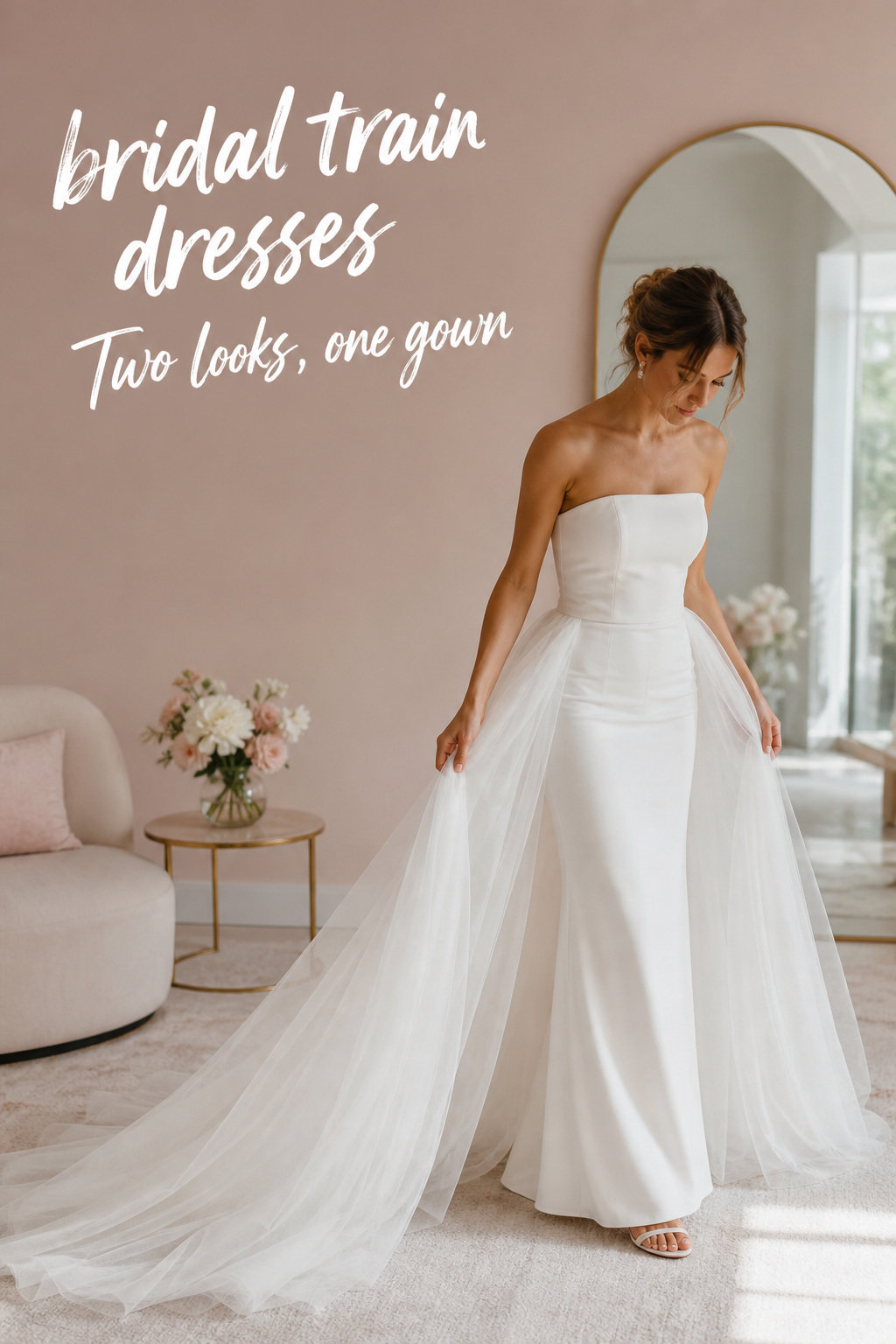
For a city ceremony, restaurant wedding, or celebration with a quick transition, build around a detachable option. A removable panel, overskirt, cape-like Watteau train, or separate tulle layer can deliver ceremony drama without asking you to dance under several feet of fabric. Check how the attachment works, whether the waistline looks finished after removal, and where the piece will be stored. A second look succeeds when the base gown looks intentional, not like a dress missing its final part.
Set buying and fitting priorities
Take your venue details to the appointment. Bring a photo of the aisle, notes about stairs and outdoor surfaces, and the approximate distance between ceremony and reception. Tell the stylist whether you want to walk freely, make a dramatic entrance, or prioritize a clean reception look. Try at least one train shorter and one longer than your first instinct. This comparison often reveals whether you love length itself or simply the feeling of movement and scale.
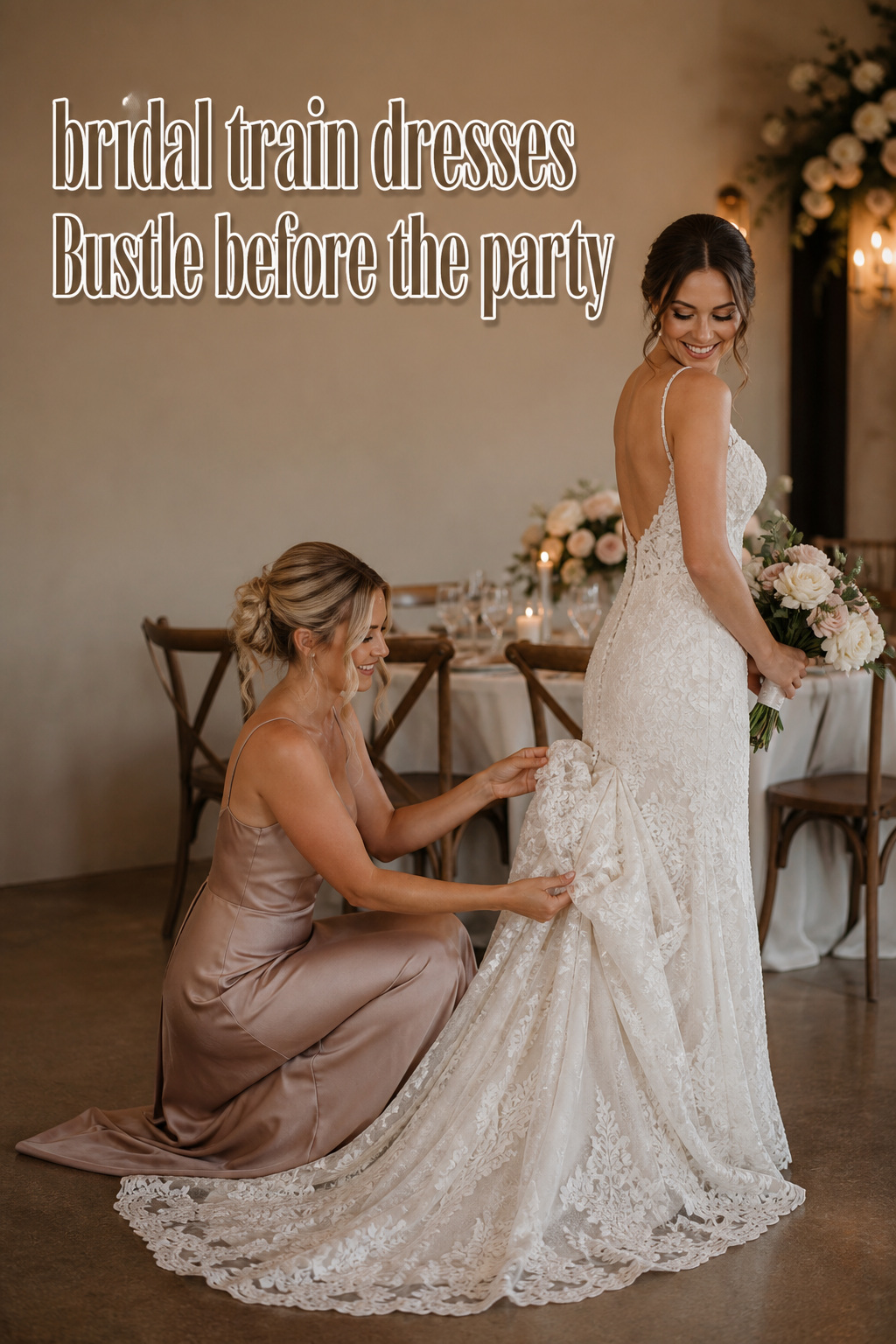
Budget for alterations as part of the gown decision. A bustle is not an optional afterthought for many medium and long trains. The seamstress may need to add hooks, loops, buttons, reinforcement, or multiple pickup points. Lace, beading, and layered fabrics can increase the work. Ask what the bustle will look like from the back and side, how quickly it can be secured, and whether someone can practice it without damaging the fabric. Include a fitting with the shoes and undergarments you plan to wear.
Make the helper plan specific. A sweep may need no assistance. A chapel train usually benefits from one person who knows how to fan it before the ceremony and lift it while you move. A cathedral or royal train may need several hands, especially on stairs or uneven ground. Put the instructions in the wedding-day timeline, and give the helper a short rehearsal. The goal is not to fuss over the dress all day; it is to make each intervention quick, confident, and predictable.
Photographs should influence the train choice without dictating it. Ask your photographer which back views, movement frames, and overhead angles they plan to make. A narrow train can look elegant in a walking photograph, while a wide chapel train shines when arranged in a fan. A detachable skirt can create a before-and-after story. Avoid choosing an enormous train only for one image if it will make every other part of the day difficult. A useful capsule earns its place repeatedly.
Adapt the system for comfort and season
Heat, humidity, wind, and rain change how a train behaves. In warm weather, lighter layers and breathable fabric reduce the weight you carry. In windy locations, a narrow train or detachable panel can be easier to control than a broad tulle spread. For a cool-weather wedding, a structured satin train, cape, or lined overskirt can add warmth and visual depth. Consider how the fabric reacts to static, moisture, and the texture of the floor. Ask for a sample or take a close look at the hem under the venue lighting.
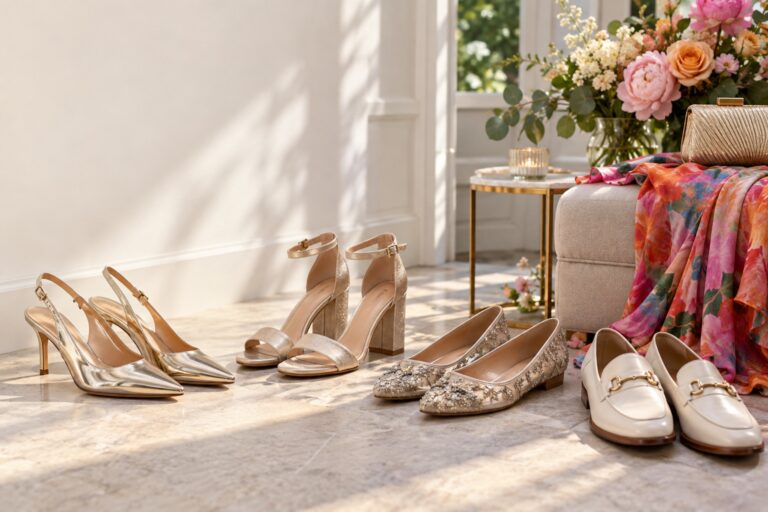
Comfort also includes the rest of the outfit. A long train can change your stride, so shoes should be stable and already broken in. Keep the front hem at the correct height for walking, and practice turning without stepping on the back. If you are petite, scale can come from a clean chapel train rather than many extra layers. If you want a longer look, a vertical back seam or a narrow panel can create length without overwhelming your frame. The best proportion is the one that still lets you see yourself.
After the ceremony, decide whether the train stays, bustles, detaches, or is carried. Put that decision into the schedule before the first reception entrance. Have a clean place for a removable piece, and keep a small emergency kit with pins, fashion tape, stain remover approved for the fabric, and a sewing kit. Do not improvise a bustle with random safety pins. A planned transition protects the gown, saves time, and lets you enjoy the people around you.
The capsule is complete when every piece supports the same day: the gown creates the base line, the train sets the ceremony scale, the veil and accessories frame the face and back, the shoes support movement, and the bustle or detachable layer handles the transition. Read the outfit as a sequence rather than a single pose. Entrance, vows, portraits, dinner, and dancing may ask for different amounts of volume. Bridal train dresses become easier to choose when the system respects all five moments.
FAQ
What is the easiest bridal train dresses style to manage?
A sweep or court train is usually easiest because it adds a visible bridal extension without much extra fabric. It works well for outdoor venues, short aisles, and celebrations where you want to move independently.
Are chapel trains a good all-purpose choice?
Yes. A chapel train gives classic ceremony presence and photographs beautifully while remaining more manageable than cathedral length. It still needs a bustle plan and a short rehearsal.
Do long bridal train dresses always need a bustle?
Most medium and long trains benefit from a bustle for the reception, although the exact design depends on the gown. Ask the seamstress to show the finished bustle from every angle.
Can I add a train to a dress that has none?
Often, yes. A designer or experienced seamstress may create a detachable panel, overskirt, or Watteau-style piece. The attachment, color, fabric, and finished waistline should be tested before committing.
Should the veil match the train length?
It can, but it does not have to. Matching lengths create a coordinated effect, while a shorter veil can keep the gown visible. Try several options with the actual train and back detail.
How many people should manage a cathedral train?
Plan for at least one trained helper and possibly more depending on the width, venue, stairs, and photography plan. Include a rehearsal so everyone knows how to arrange and bustle it.
What should I bring to a train fitting?
Bring your wedding shoes, undergarments, veil or accessory ideas, venue information, and the person who may help with the bustle. Take notes or a short private video of the fastening sequence.
Make the final decision with a five-question test
Before you order, ask whether the train suits the actual ceremony floor, whether you can walk comfortably, whether the bustle feels realistic, whether the photographs will show the detail you love, and whether the reception version still feels like you. These questions turn an emotional appointment into a useful decision. If a gown only works when a stylist holds every layer in a perfect pose, it may not be the best capsule for your day. If the answer is yes across the schedule, you have found a stronger match.
Use a simple comparison note after each appointment. Record the length category, the silhouette, the fabric, the venue fit, the estimated alteration work, the helper requirement, and the reception plan. Add one sentence about how you felt walking in it. This prevents a dramatic first impression from hiding a practical concern. It also makes it easier to compare two beautiful options that create different kinds of confidence.
Remember that a train is part of the back story of the dress. It may be the detail guests notice when you enter, the surface that fills a portrait, or the feature that carries a personal lining message. It can also be the part that touches the ground, catches a chair, or needs a careful bustle. Good design holds both truths. Beauty and logistics are not competing goals when the capsule is planned from the beginning.
Ask for clear language from the boutique. A stylist may use sweep, brush, court, chapel, cathedral, monarch, panel, or detachable to describe slightly different proportions. Request a demonstration of where the measurement begins and how the fabric is supported. The same named length can look different on a slim column gown and a full ball gown. Photos, notes, and a short walk will tell you more than a label alone.
Think about the people around you too. A ceremony with children, pets, a crowded aisle, or frequent location changes needs a train that can recover quickly. A quiet indoor ceremony with a long straight aisle can support a more elaborate spread. There is no universal amount of drama. The useful question is how much visual volume your day can absorb while keeping you relaxed and present.
Finally, choose the version you will remember wearing, not just the version you can admire on a hanger. A train should help you feel grounded when you walk toward the person you are marrying. It should look intentional when you stand still and graceful when you move. When the length, fabric, silhouette, veil, shoes, bustle, and venue all agree, bridal train dresses stop being a confusing category and become a clear, personal system.