Save the Date Photoshoot Ideas for One Great Session
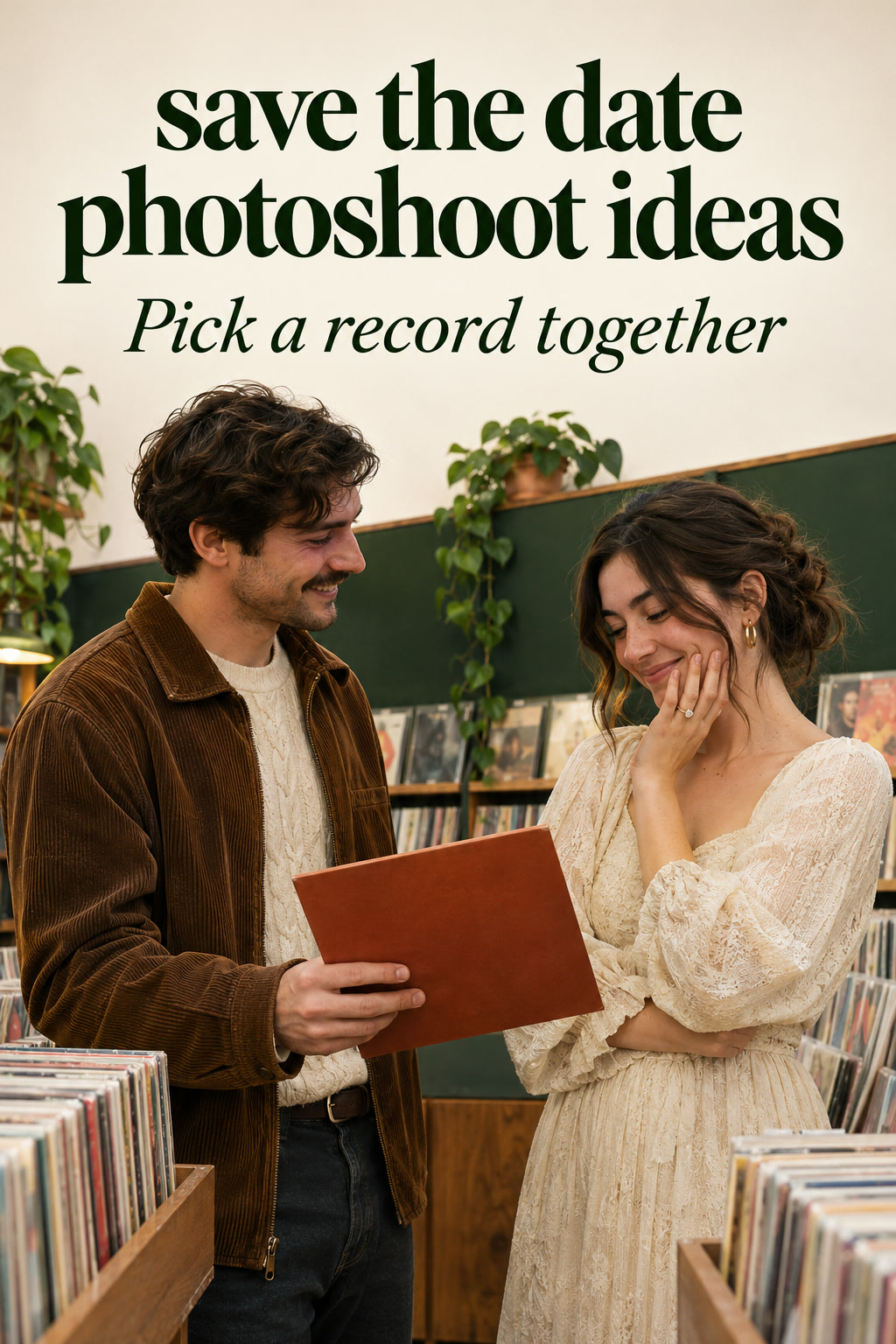
When I’m choosing among save the date photoshoot ideas, I look for a scene that gives both of you something to do. At a record shop, that could mean handing over an album sleeve and waiting for the other person to turn it around. The handoff gives the photographer time to see where both faces land. The reaction lets the couple forget, briefly, that anyone is watching. Choose one scene that gives you that kind of opening, then ask for a simple portrait while everyone is in position. You can bring both images to the announcement without booking two locations or spending the afternoon rehearsing a pose.
What the candid look asks of the shoot
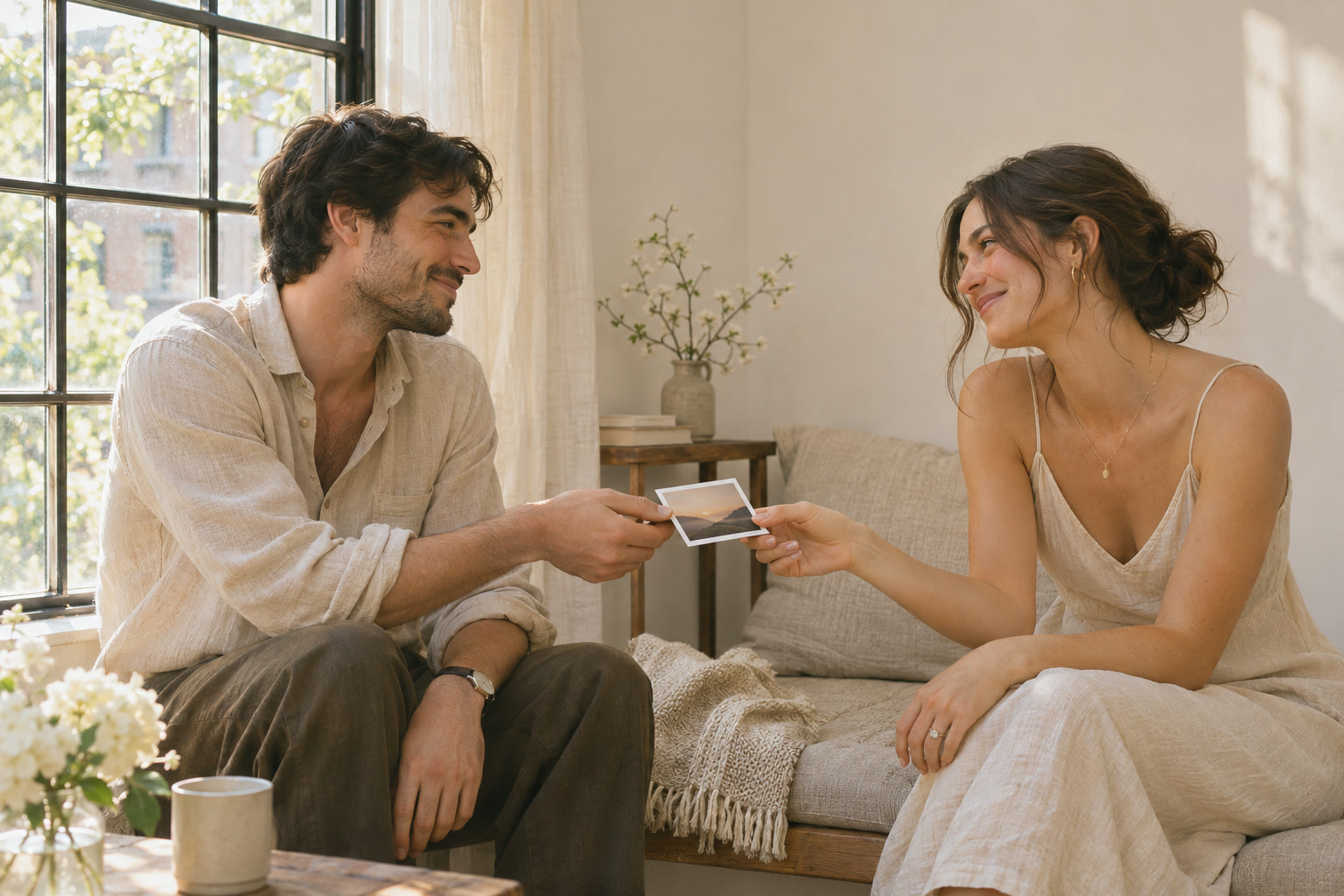
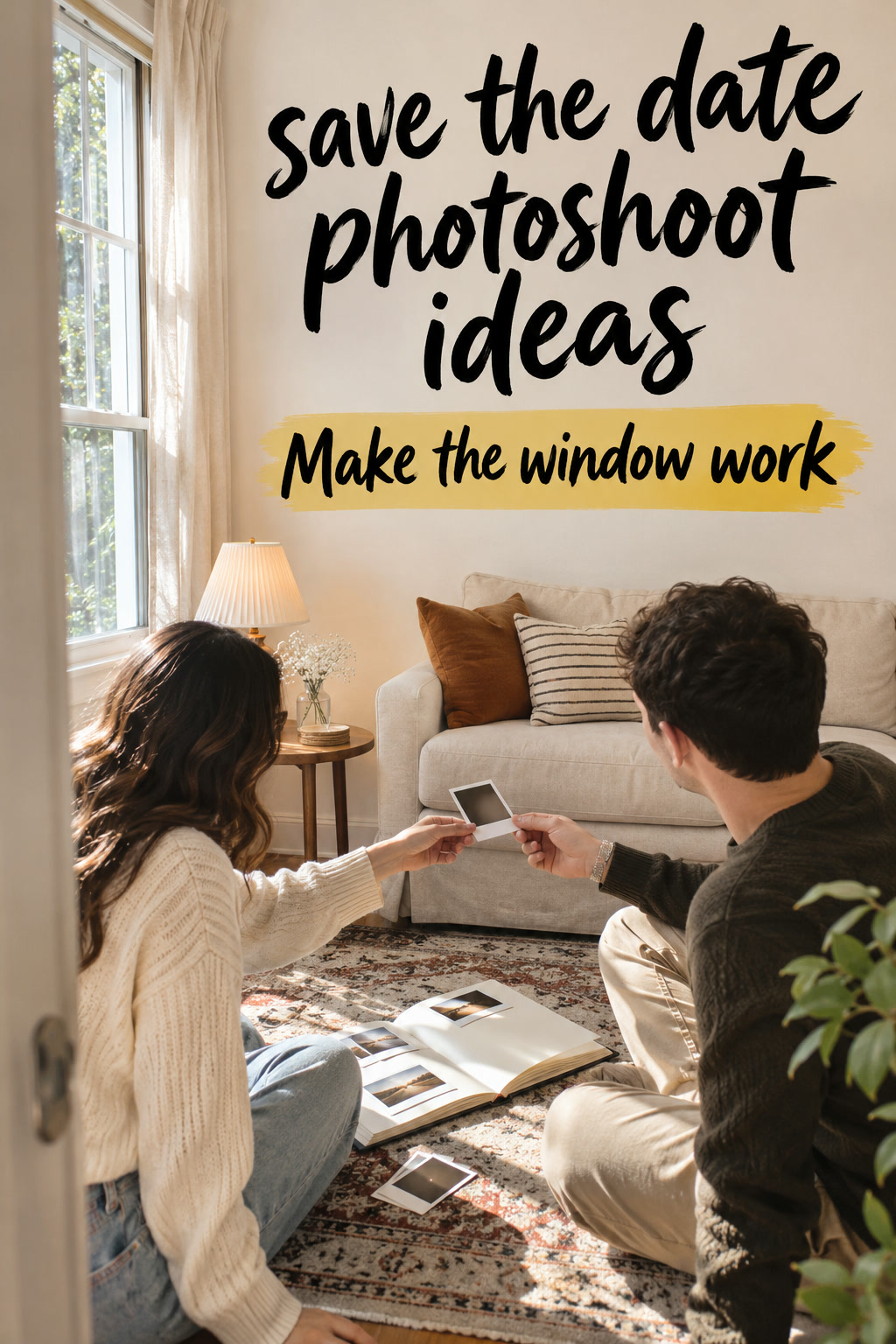
A candid-looking image can start with a direction. You can tell two people to wait by a window and ask one to show the other a snapshot. The photographer decides where you sit and catches whatever happens when you see the photo. A documentary approach starts with whatever you are already doing, which can be lovely if the photographer has time to observe. If you only have a few minutes in a spot you like, a scene you can repeat makes better use of the time.
The galleries and guides show couples in motion alongside the quieter moments of a session. Before you copy a picture, figure out what you like about it. If the appeal of a reference is how close the couple gets, find an action that naturally puts their heads near each other. If it’s a flash photo with dark surroundings, talk about how your photographer makes that light.
Turn wedding inspiration into a plan you can actually follow.
Zarellea brings your guest list, budget, vendors, and day-of details into one shared space — so no beautiful idea gets lost in the shuffle.
Describe the subject and the action in a sentence you can say out loud. I like “We’ll share a pair of headphones and take turns picking a song” because an actual choice can lead to a look or a laugh. “We want a fun editorial photo” leaves both people waiting for direction. If one of you dislikes being teased on camera, pick a quiet task. Someone who freezes while walking toward the lens may be comfortable staying in one place and leaning over to look at a sleeve or an old picture.
A short loop is easier to work with. Start in the same spot and bring the action to a pause you can recognize. Give the person behind the camera a chance to say what they saw before you do it again. If one person kept disappearing behind the other, it may take only a small change in how you stand. If the action itself feels awkward the second time, keep the location and change what you’re doing.
Why the first ten minutes matter
Agree on where you’ll meet the photographer, then find one patch of light you can return to. You can do that even if the whole idea depends on moving. In an unfamiliar lobby, stand far enough from the door that you can talk without stepping into anybody’s path. Outside, have each person turn toward the light and look at a test frame. Check for a stripe of sun across one person’s eyes, a bright fixture directly behind a head, or a reflection one of you will spend the whole shoot trying to avoid.
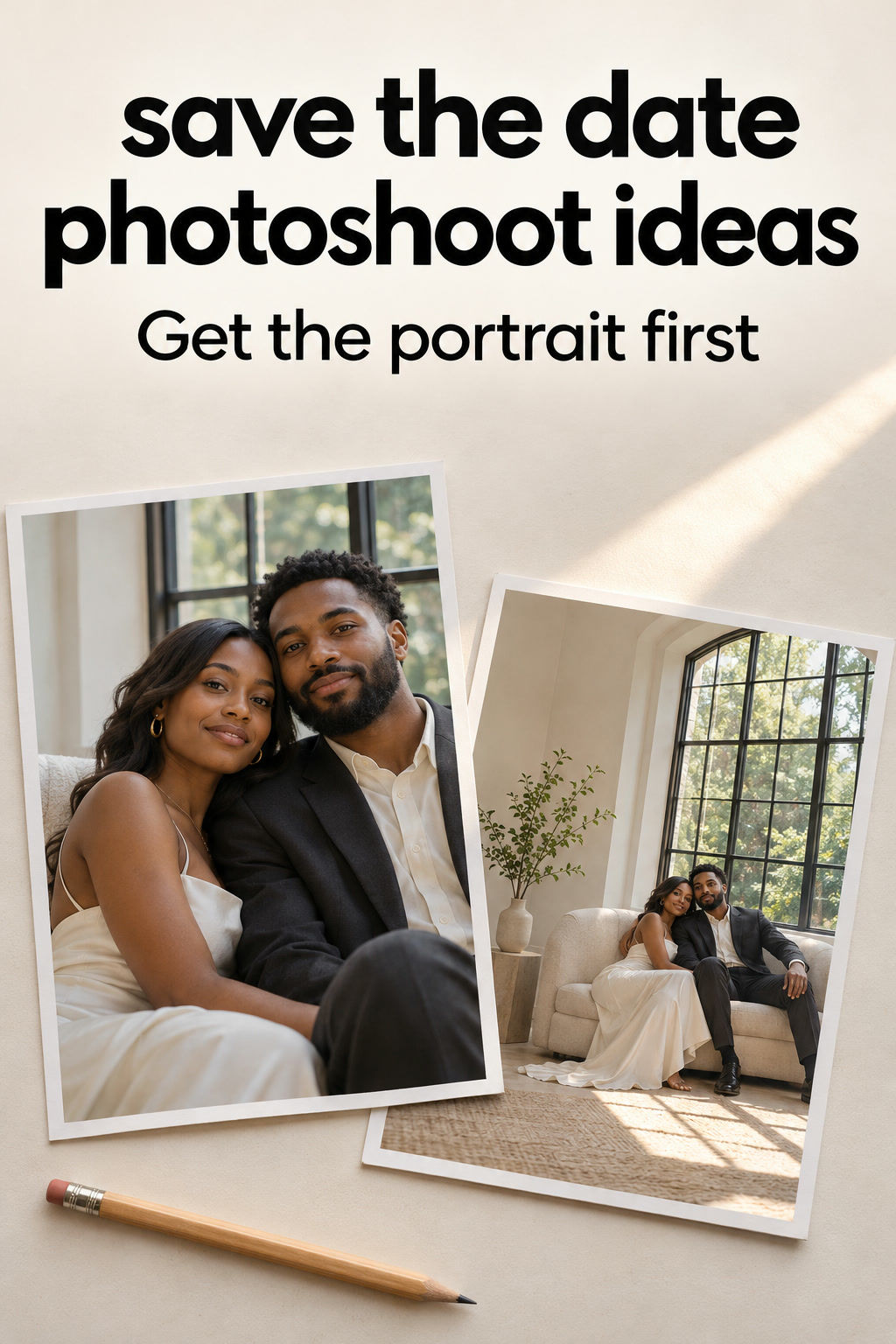
Start with a portrait you could use if the session ended there. Stand side by side, or sit if it lets you both relax your shoulders. Look at the lens once if you’re both happy to, then let the photographer step back for a view that includes more of the room. Try keeping the conversation going between frames so each picture doesn’t start with another countdown. In a professional session, tell the shooter ahead of time which of you needs a moment before a direct portrait.
Use the next few minutes to rehearse the action at its ordinary speed. If the handoff always comes up over someone’s chin, move it down and try once more. It can help to agree on what happens immediately afterward. One person can leave their hand in place until the other glances up. That gives the photographer a second expression from the same tiny scene. You can also begin with the task if looking at a lens makes everyone too aware of the camera, then pick up the portrait in the same light after you’ve warmed up.
Keep the test review brief. Look for both faces, useful expressions and a clean edge around heads and hands. When you’re using a phone with a friend as the shooter, show them which gap you want to keep open if text will sit by the couple. If a doorframe runs straight through the space between your faces, try stepping sideways before you shoot again. Finish the first scene before you move furniture, change clothes or walk to the second entrance.
Four shoots you can brief in one sentence
Pick a record for each other
Ask a shop about photos before you plan around its bins. Choose a short stretch where you can stand in the same aisle and leave room for people to pass. Each person picks an album, holds it below chest height and shows the cover to the other. Let the photographer see both from the open end of the aisle. When the sleeve changes hands, the person doing the choosing can stay facing the other long enough for a look of recognition. The wide view can keep the bins in the frame, while a closer view can leave the lettering on the sleeve out of the picture entirely.
If the shop is too crowded, move to a record shelf or cabinet at home. A window at one side of you and a plain wall behind you will still give the small exchange some room. Pick music you actually disagree about if you want a reaction. Otherwise take turns offering a sleeve you already know the other person loves. The person receiving it can just look at the cover. A good photographer will see when their face changes.
Wait under the theater overhang
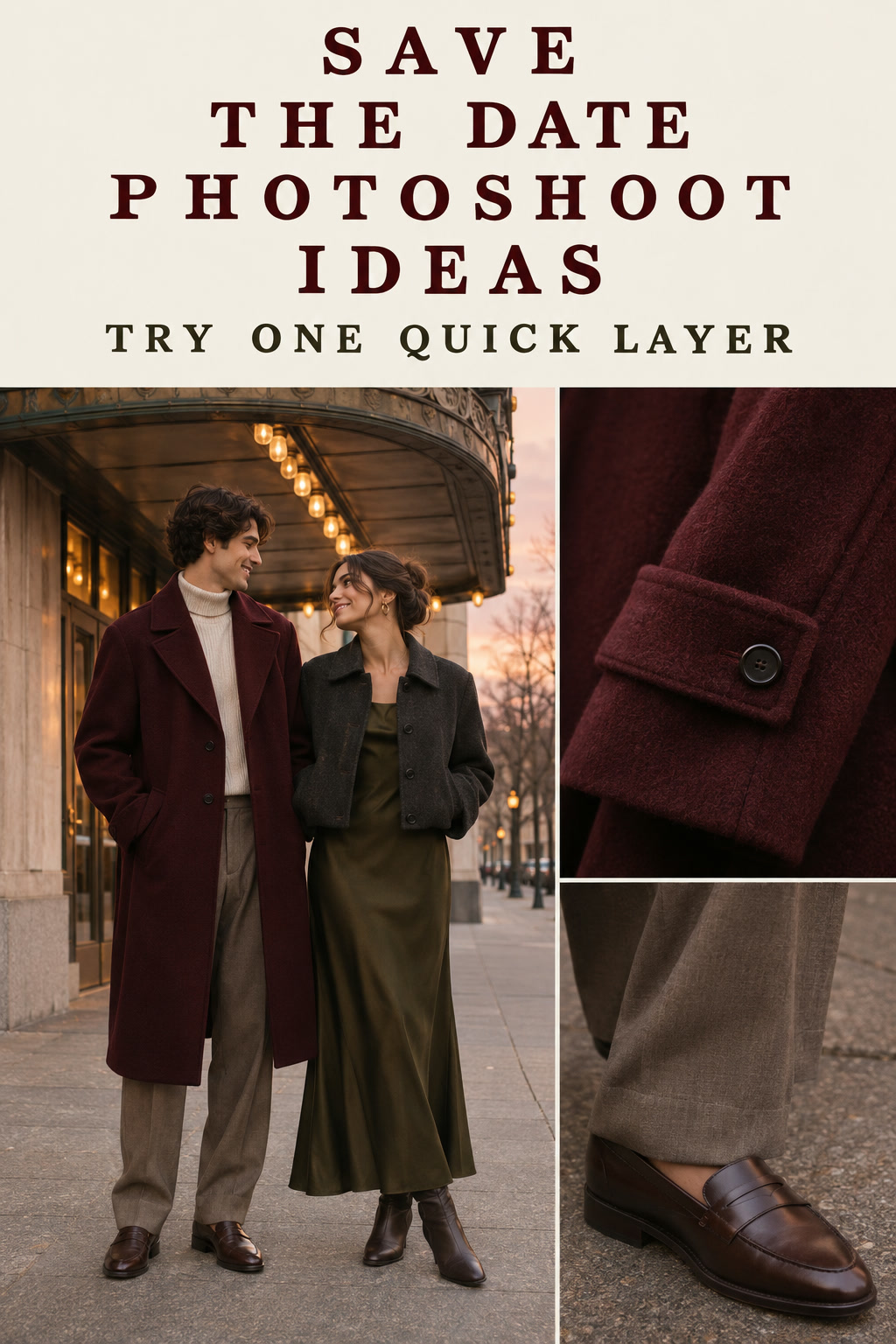
Start side by side near the edge of a covered entrance, with an unobstructed patch of sidewalk ahead. Walk a few steps together until you’re both inside the frame, then stop where you agreed and turn toward each other. Ask the photographer for one look from near the entrance and one further out that includes the building. If the marquee itself is too busy or spectators are queued up, the same move works against a side wall, provided you can stand there safely and have permission where it’s required.
Decide in advance whether the shoot should feel like an ordinary night out or a dressier occasion, based on how you would use that entrance together. A coat that’s easy to take off gives you a quick change without a second outfit or a place to change. If you take it off for a still, put it where it can stay out of sight and remain easy to reach. Before ending the setup, ask for a full-length frame at a pause to catch the clothes and a tighter one with the exterior lights soft in the background.
Put a small lamp on the living room floor
If the two of you often sit on the rug, start there with a stack of snapshots or a spare photo album. Stage the setup in daylight first so you can see what’s behind you. Set a small lamp off to one side and set up the phone or camera at about the height of your seated faces. Pass an image between you, pause while the other person looks, then leave the album open for the direct portrait. Pick a spot that lets you both sit comfortably for several minutes. A low couch works if the floor doesn’t.
If the lamp is the most interesting part of the mood, try a frame with it visible and one with it outside the edge. Check how much light is falling on the farther face. When it gets too dark, move both of you nearer a window and keep the lamp as part of the room. A smartphone frame made by a friend from the doorway can give you a second view without rearranging the setup. Before you share a close frame, look for addresses or faces in the old photos that should stay private.
Meet at the table after the game
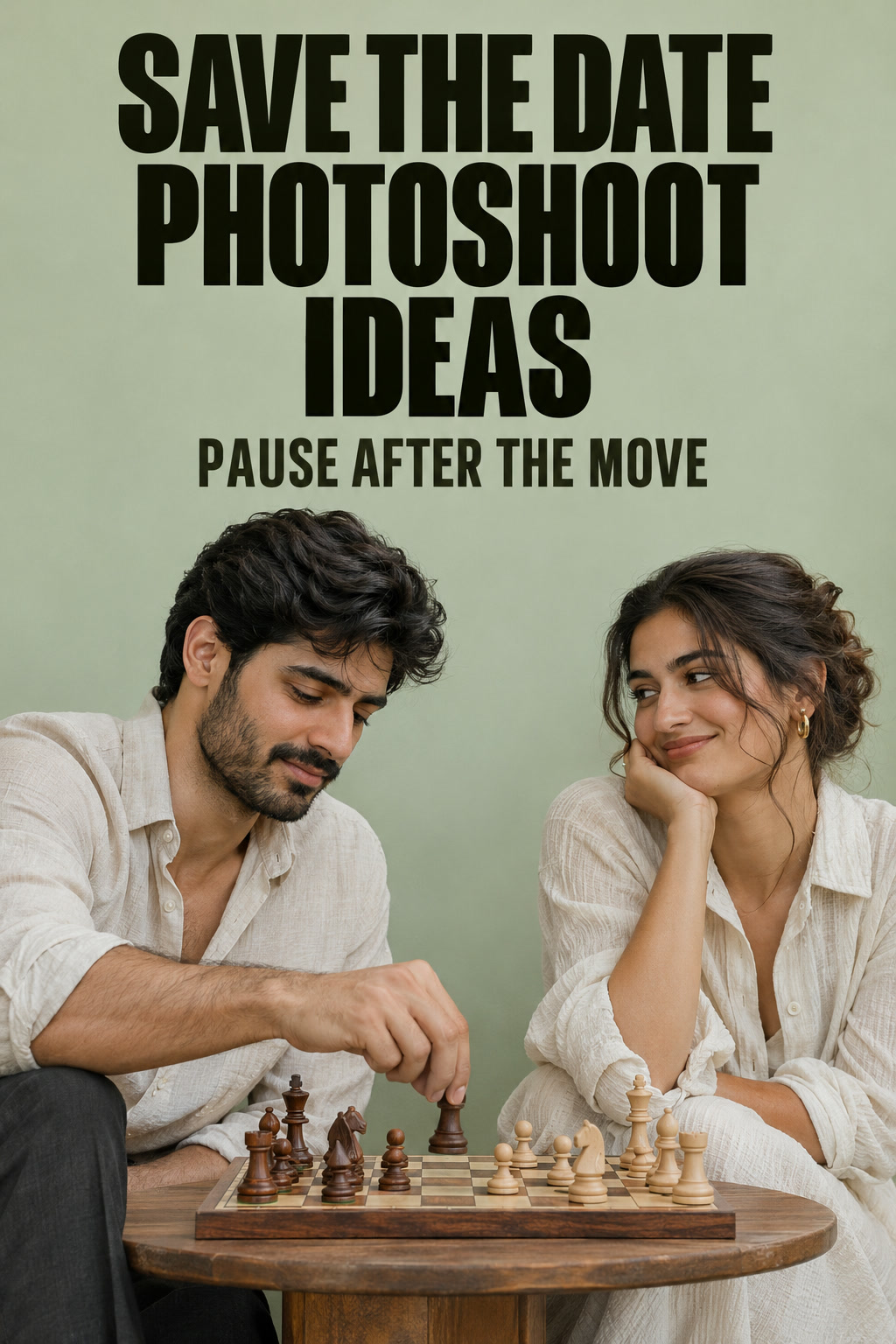
If you both play a tabletop game, take one turn each at a small table with enough room for the camera to see the person across from you. Pick a game you both know. In the photo, someone watching a move can tell the viewer what’s happening even if the board is unfamiliar. Have the player hold their piece just over the board, set it down, then meet the other person’s eye. The photographer can shift from the hand to the player who is waiting.
Use a plain table or clear away dishes and phones before bringing the game out. Set the board where both of you can reach it without hunching. If the best angle hides one of you, slide your chairs around the same corner and play diagonally. At a noisy venue or an outdoor table where the pieces keep moving, ask for the quiet end of the setup first. Put your hands on the table and let the game sit in the lower part of the picture while the photographer makes a portrait.
Which effects are worth committing to on set
Give movement a stopping point
A walk is most useful when you know where it ends. Choose a small mark in the surroundings, such as the seam between two paving stones, so the person taking the photo knows where you’ll be. Have whoever takes shorter steps set the pace. Finish the turn and pause together with both feet settled. A photographer can aim for the movement and still know when they will get the quieter version. If you’re shooting yourselves, place a phone tripod where you can repeat that route without reaching over it or leaving it in anybody’s way. Check one timed frame before doing several takes.
Make the light deliberate
If the reference has bright faces against a dark background, ask the photographer whether they would use direct flash and what an example from their work looks like. Try the effect after a normal portrait in the same outfit, since it may look sharper than you expect on shiny fabric. If you shoot at dusk, pick the first location so you have time to work there before it gets dark. For a window or lamp shoot, see whether the two faces have light you like when you sit naturally. If one person has to lean farther into the light than feels natural, move both seats before you change the mood of the room.
Keep the date easy to change
If holding a date sign is part of the concept, check the date aloud and get a matching frame with the sign lowered. A clean frame from the same spot means you can add the date to the announcement separately or use a favorite photo on your wedding site with different wording. Give the actual sign a purpose in the scene. If one person slips a note to the other, it can be a small moment with or without legible lettering. A big printed date is harder to handle discreetly in traffic, in gusty weather or near other customers, so decide whether you’ll still like the scene if the sign stays in the bag.
Reserve a little time to change course
A backup location should let you keep the scene or get the portrait without rebuilding the session. Look for a sheltered place you can reach in the clothes you’re wearing. When a venue is part of the photograph, ask about access and a quiet time on the same message where you ask whether you can shoot there. On a short booking, finish one variation at your first location before you decide whether the second is worth the walk. It’s easier to stop for a change of shoes when you already have the photos you came for.
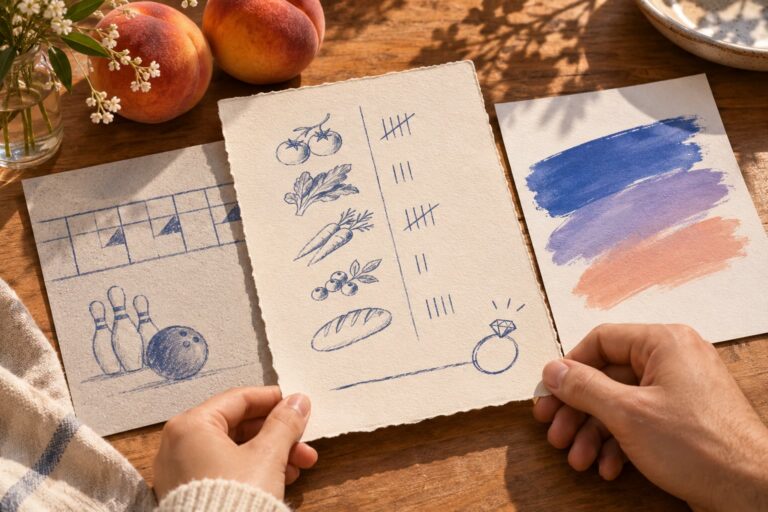
Four props for shots you already planned
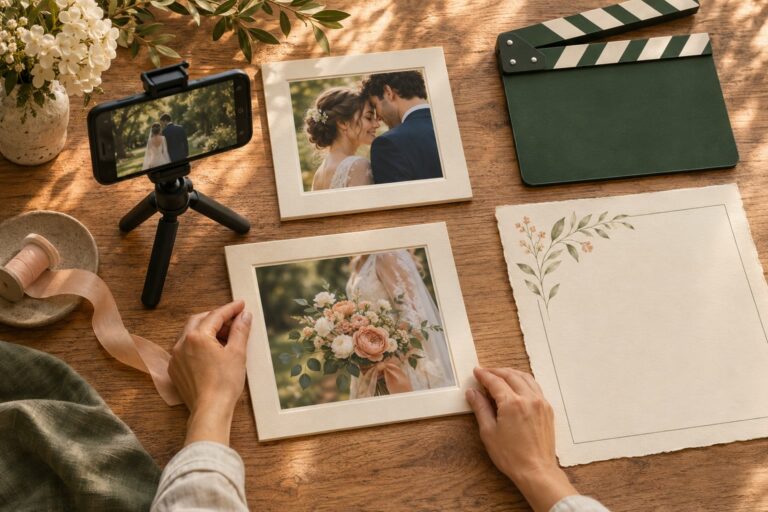
Frame both of you
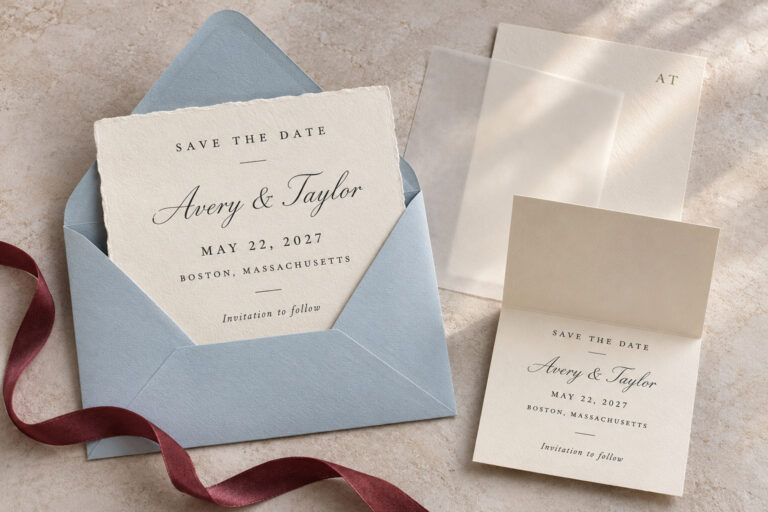
Make the date easy to read
Give the seated scene an action
Catch a reaction across the board
Editor’s take
I would spend the best light on one interaction you can do twice and give yourselves enough time for a portrait in the same place. I like the record-shop idea for couples who really argue about music. If the room will be busy or you have to ask one partner to perform an emotion, choose the quieter home setup and bring one object you both want to talk about. That is my editorial judgment based on the photographer and stationery guides and the examples they show. Before you book, write down the action you want photographed and where it comes to a stop. Show that sentence to whoever will hold the camera.
Sources and methodology
The posed and reflective examples in Truly Engaging’s engagement photo guide helped distinguish the frames to request from a single scene. The phone photography and movement examples in Paperless Post’s photo ideas informed the DIY approach. Search also showed date props and edited social posts alongside conventional portraits. The shoot sequences are examples you can adapt. The results show a range of current styles, with no reliable measure of their popularity.
FAQ
Can we take save the date pictures without a photographer?
Yes. Set your phone on a stable tripod or ask a friend to hold it while you try a short sequence in one place. Start with the phone at face height and take a test photo of both of you before changing positions. A seated setup near a window is a sensible place to begin because you can see the results without running back and forth across a wide scene.
How many setups should we plan for a short photoshoot?
Plan one setup that you would be happy to use on its own. Get a portrait and a version of the action there. If you have time, build a second version by changing distance or the direction you’re facing. Reserve a second location for a session long enough to cover the move and still let you settle in once you arrive.
What should we send our photographer before the session?
Send a sentence about the main action, the location or lighting you want and the kind of picture you need to come away with. If you include a reference image, name the part you like. Tell them about any access limits or directions you want to avoid. Ask when you can expect finished files, especially if you need to send your announcement by a particular date.
Can we use the photos from our engagement session?
Yes. If the session is coming up, tell the photographer you want one photo to use for the announcement and agree on what to capture while you’re in the best spot. If you already have the gallery and both of you like a usable image, try it in your design before booking a separate shoot. A new session makes sense when you want an image the original gallery genuinely doesn’t contain.
What can we do if it rains on the shoot day?
Move the same short interaction under cover if you have an accessible place and enough room for the photographer. A record handoff indoors or a conversation in a covered entry still works in rain. If you’re moving inside from a bright location, take a new test frame to see whether both faces are lit before you begin the sequence.
How can we prepare a second look without losing shoot time?
Wear a layer that changes the silhouette and comes off quickly, or bring a single accessory you’ll actually want in the picture. Take the portrait in the first look before you switch. If the new piece shifts or needs adjusting every time you move, use it for a still and return to the comfortable look for the action.