Creative Save the Date Ideas From Your Everyday Life
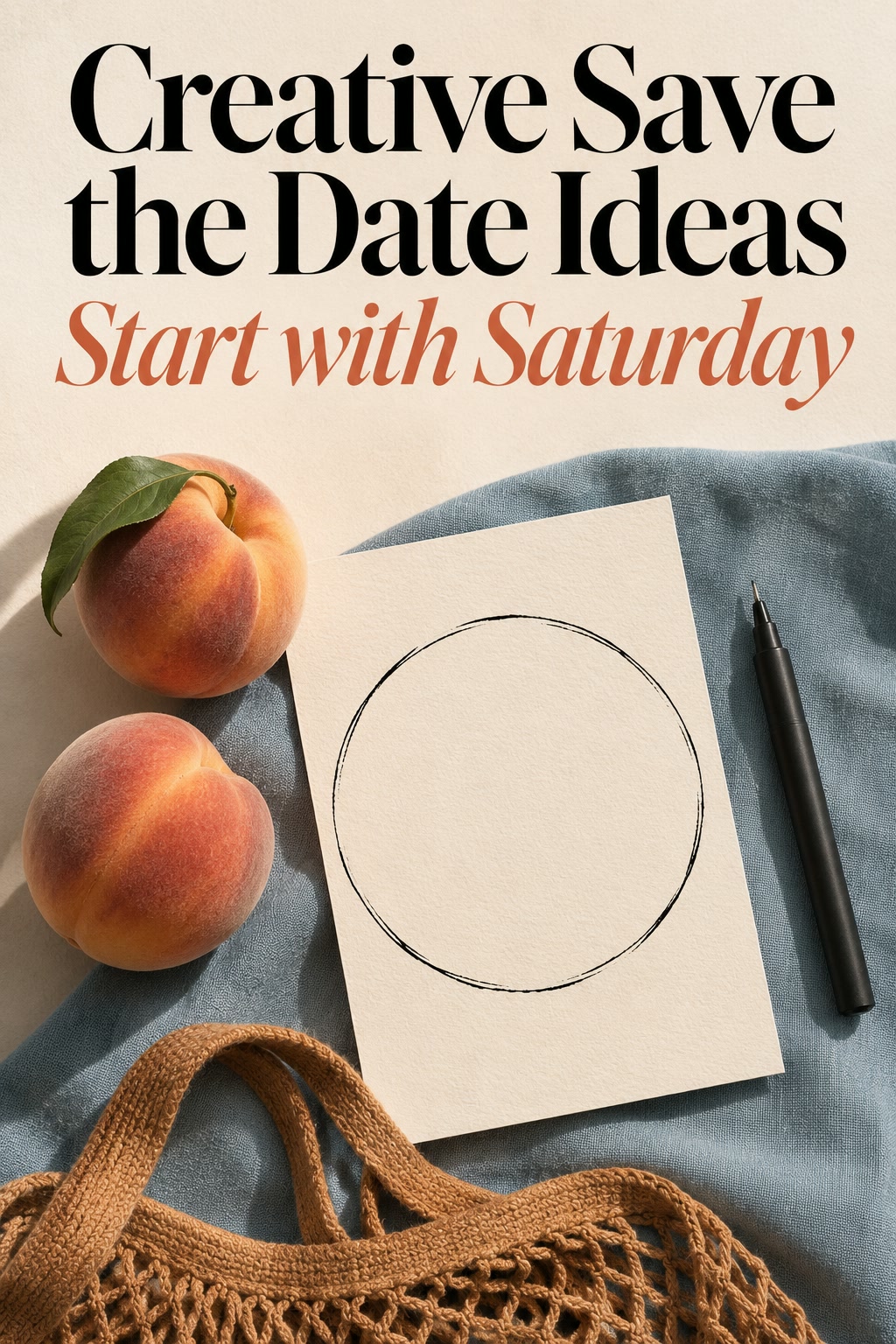
At the produce stand on Saturday, one of you orders peaches while the other checks whether the corn is in. At the register, the vendor circles the total on a little paper slip. By the time you get home, the slip is folded inside a bag with a damp spot from the herbs. I’d build the save-the-date around that folded slip. It comes from a morning you know by heart, right down to the circled number.
The creative save the date ideas below start with things two people already have in common. A score sheet, for instance, can supply the little grid that makes the announcement feel like yours. The part worth keeping is the one that still makes sense when you hand the paper to somebody else. Imagine the person opening it at the kitchen counter. They should know whose wedding it is and when to put it on the calendar, even if they’ve never been to your produce stand.
The Saturday that gives you the idea
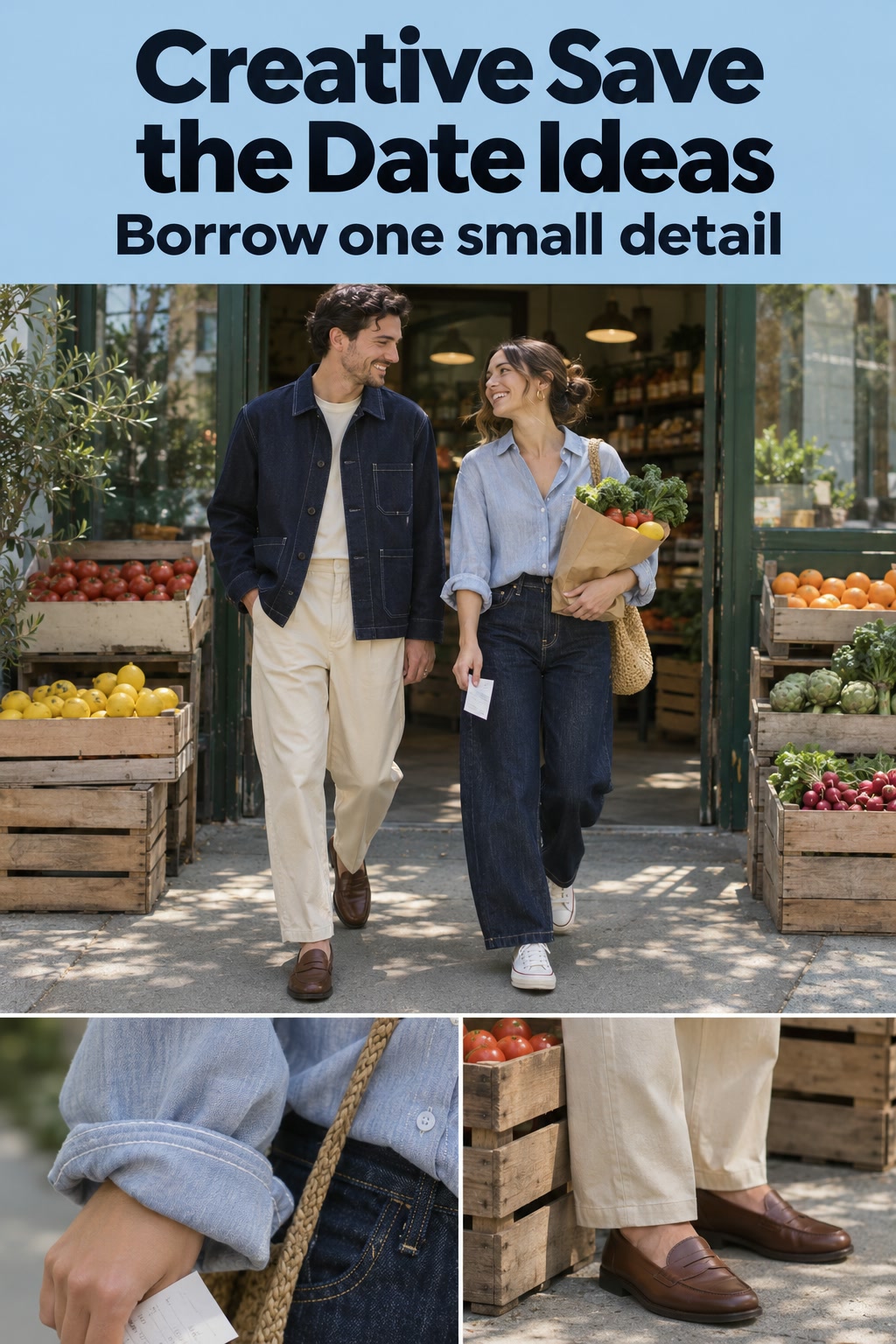
Picture the walk back from the stand. What would your other half describe if someone asked about it? Maybe one of you would mention the good peaches and the other would remember the two crooked pencil lines the vendor drew on the bag so you could tell the ripe fruit from the fruit to save for later. That mark is small enough to draw and specific enough to make both of you laugh when it shows up again on the card. A wide photograph of the street would tell a different story about the same morning.
Think back over the last week. Did you leave a slip by the record player to settle whose turn it was to choose an album? Is the grocery list with one person’s penciled additions still on the fridge? Pull out whatever survived the week. Bring two objects to the same table. Each of you gets to say what you notice before you say what it should look like. If you both point to the sideways mark on the shopping list, you’ve found a detail you can work with. If you remember different parts of the same outing, see if both stories lead back to something you can draw.
Turn wedding inspiration into a plan you can actually follow.
Zarellea brings your guest list, budget, vendors, and day-of details into one shared space — so no beautiful idea gets lost in the shuffle.
The story can also come from work you do together at home. Say the two of you are fixing an old dresser for the apartment and you’ve started saving the pieces of painter’s tape with the paint names written on them. A strip of cool blue with a penciled color name could become a rule across the top of a card. The strip gives you a bit of color and your actual lettering. You can leave out the dresser, the apartment, and the story about the drawer that kept sticking.
One useful question is how the detail would look across a table. A smudge or torn edge can be legible as an image even from that distance. An unexplained string of initials may need a sentence beside it. I’d leave the torn edge visible and give any initials a spot beside a readable name. Then people who recognize your handwriting have something extra to notice.
Borrow the detail that tells the story
Put the object beside a blank sheet. Draw the piece you noticed first at roughly the size you’d want it on the announcement. On the produce slip, the ring around a number might matter more than the columns. Write the wedding date inside that ring and use a small ruled line for the city and state. Give the top of the announcement a clear line that says “Save our wedding date” followed by both names. If the card uses a particular term like “harvest tally,” it can sit in small print where it supplies context without competing for attention.
Leave off the subtotal and tax. An order number could make the recipient think they’ve opened an actual receipt. A score sheet with a brand logo and league dates can look like paperwork. Draw a ring that resembles the one on the slip, or make one box out of a score grid. Your sketch can leave a little evidence of its origin in a heading like “Saturday stand,” as long as the wedding line reads as an announcement.
Use a narrow column if the neat row of little numbers is what you like about the slip. If your favorite part is a hurried pencil stroke, let the wedding details sit in comfortable type beside it. You can scan one handwritten mark and use it on every printed copy. It only needs to be big enough to keep its shape at the final size. I would keep the full date in upright type if the date written by hand makes a seven look like a one.
The imitation can live in the words as well. A guest may enjoy a tiny printed “Two for Saturday” as a nod to the way you order, followed by a line that gives the full date. I would only keep that wording if Saturday is the day you’re asking people to save. If the wedding falls on a Friday, use the real weekday or keep the reference in the drawing. Look for dates left over from the object you borrowed. If you can still read the issue date on a photographed ticket, crop it out or label it as the day you went. The wedding date needs its own unmistakable spot.
Four ordinary things worth turning into an announcement
The produce tally with a hand-drawn circle
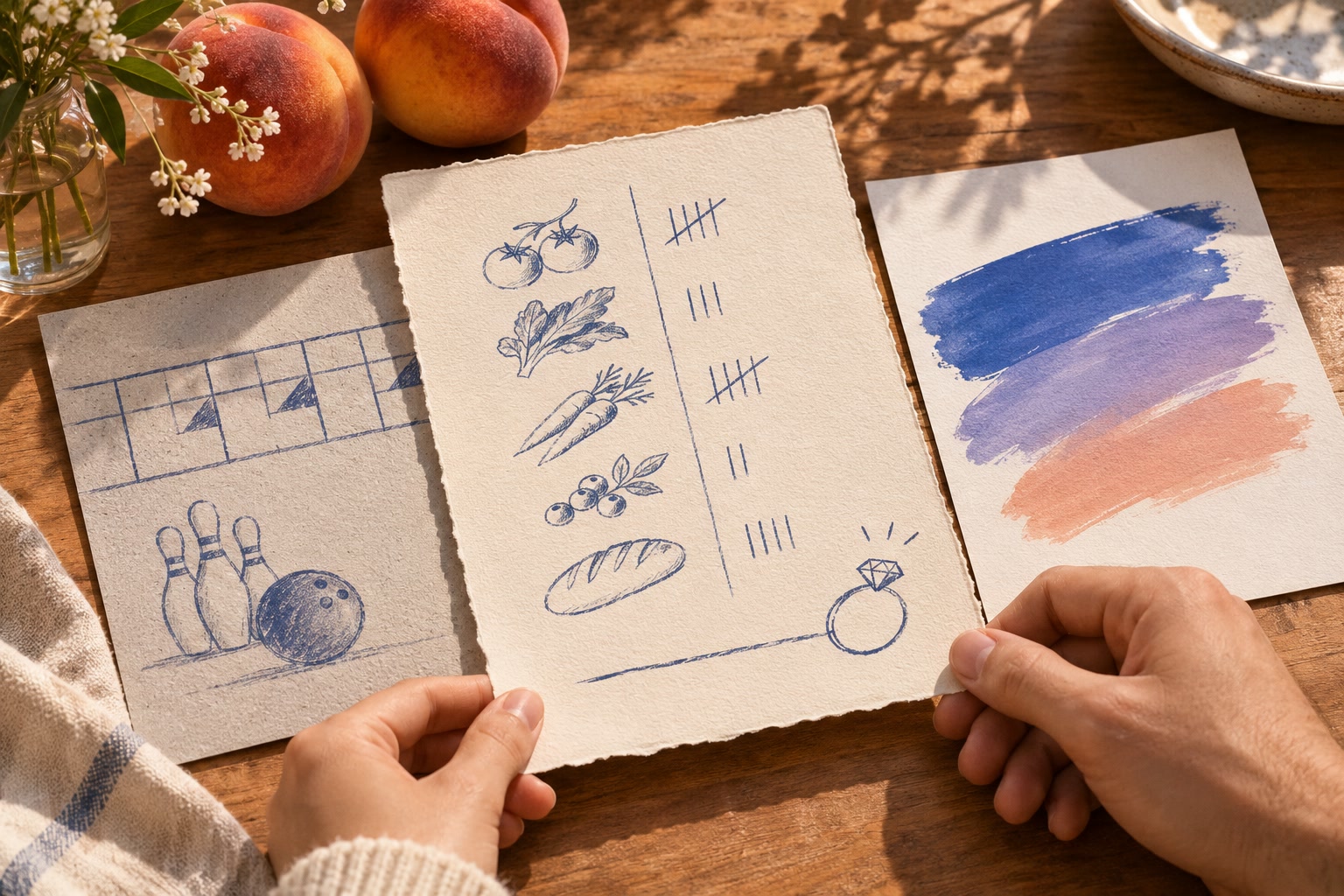
Say your routine is walking to the same stand and choosing whatever is in the front crate. On a cream card, make two small drawings down one side, such as the little paper bag and a peach with a leaf still attached. Put your names and the wedding line in the central column. Circle the spelled-out month, day, and year with the same quick stroke that caught your eye on the slip. A small line at the bottom can say “From our Saturday market walks” if you want to give friends who’ve moved away a clue to the reference.
To make it your own, draw the item you buy when its season comes, even if it will be out of season by the wedding. I’d keep the drawings in the margin and reserve the location line for the actual wedding city. That way an illustration of an outdoor stand can sit comfortably beside the details for a hotel reception. I’d choose a cream cardstock sample and try a black fine-tip pen on it to see whether the tone of the ink works with the type. For the mailed run, print that one mark with the design if it looks right in a proof.
A bowling score sheet with one open frame
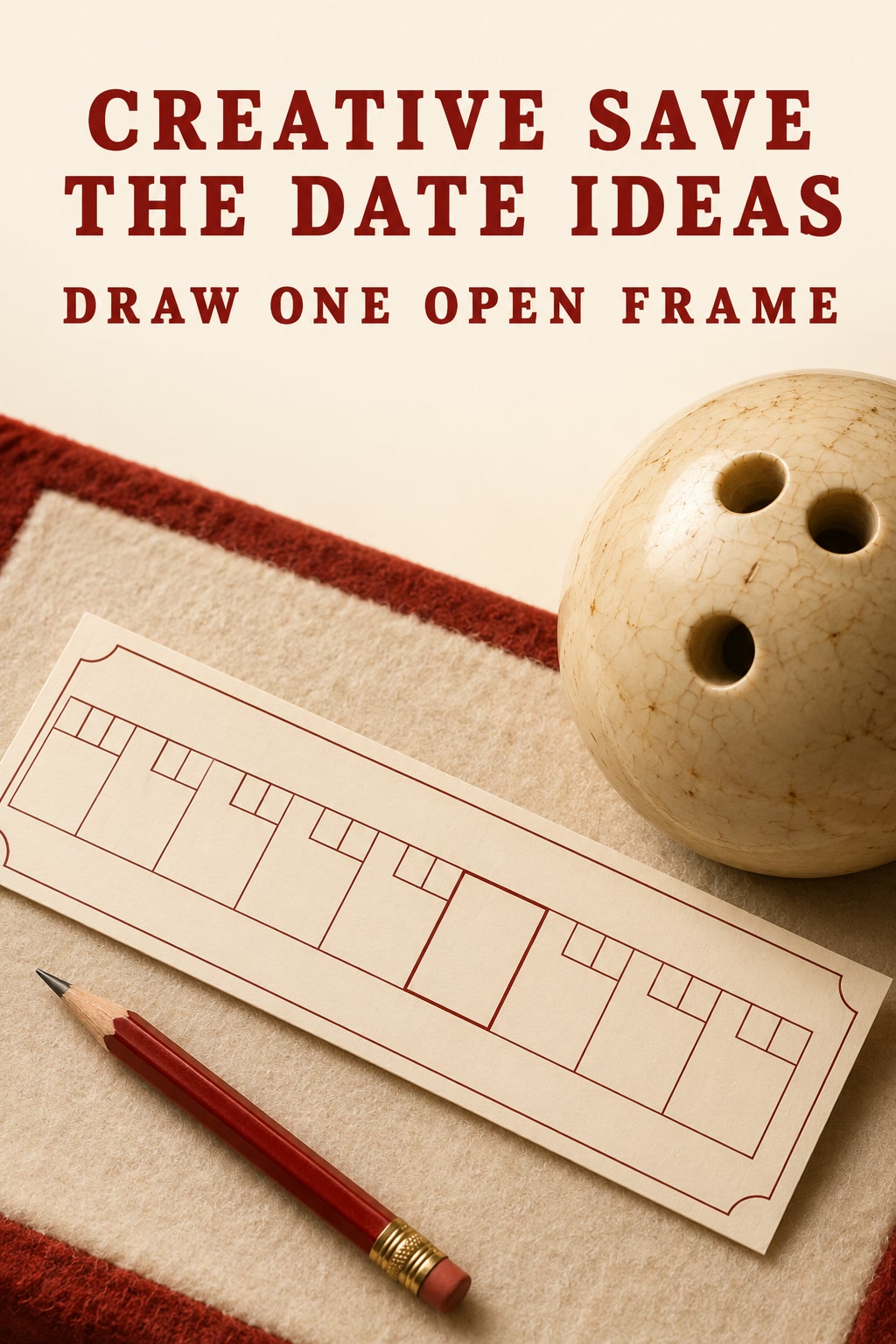
The visual reference here could be a score sheet you started filling in long before either of you played well. Draw a row of frame boxes with just a few marks and let the last one open up into white space. Set the wedding date in that open space as words a guest can read straight through. One short note in the margin can say “Our standing Thursday game.” If your wedding falls on another day, keep that note close to the illustration so it reads as a caption and put the actual weekday right with the date.
Choose the mark each of you recognizes. A little x written above a spare-looking box might be enough decoration if the sketched grid is already recognizable. If the drawn numbers look like a second date, use two initials in the first frame and keep the other boxes visibly empty. For a slim card with long lines, a paper trimmer can cut several trial widths before you commit to one. Put the narrowest trial aside until tomorrow. On a fresh read, see whether your eye follows the full date comfortably or catches on the edge of the grid.
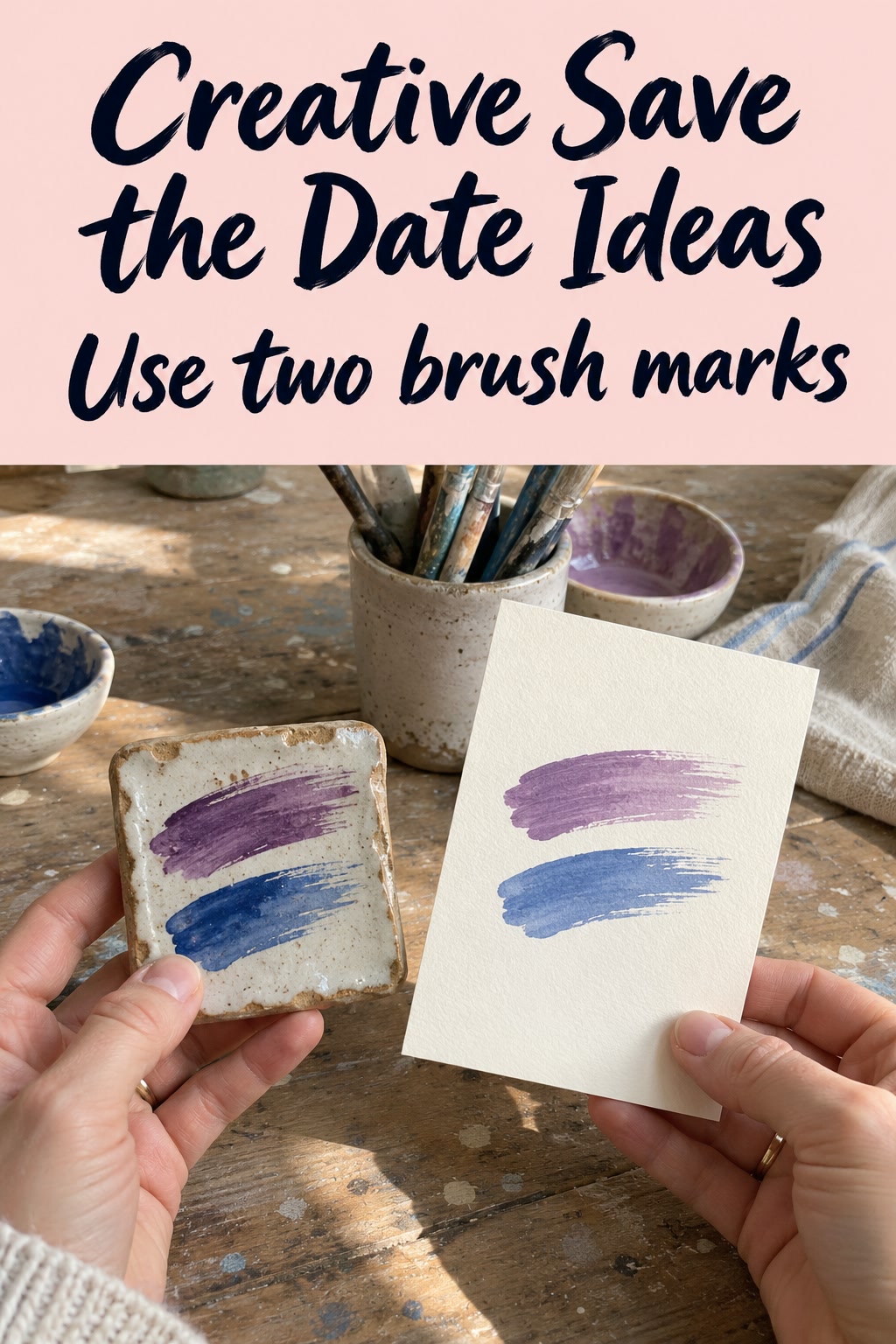
A pottery glaze test with two brush marks
Think about what winds up on a shared studio shelf. A tile with two strokes of glaze and a pencil mark at the edge can hold more of your time there than a drawing of a finished vase. You could scan a mark you painted on scrap paper, then put a second mark next to it in your partner’s color. Place an unobstructed date line below the marks. A little “Glaze notes” printed beside them can make the idea clear to the person who has never set foot in the studio.
Give every piece of lettering an area of clean paper. A white date across a painted patch can lose parts of the letters if an edge gets thin. If you were hoping to use the texture of a brush mark through the whole card, try placing the mark just outside the wording like the edge of a test swatch. Print an actual sample to judge the two colors together. If the purple looks nearly black on your sample, separate the strokes a little. You can also lighten one so the colors both show up as intended.
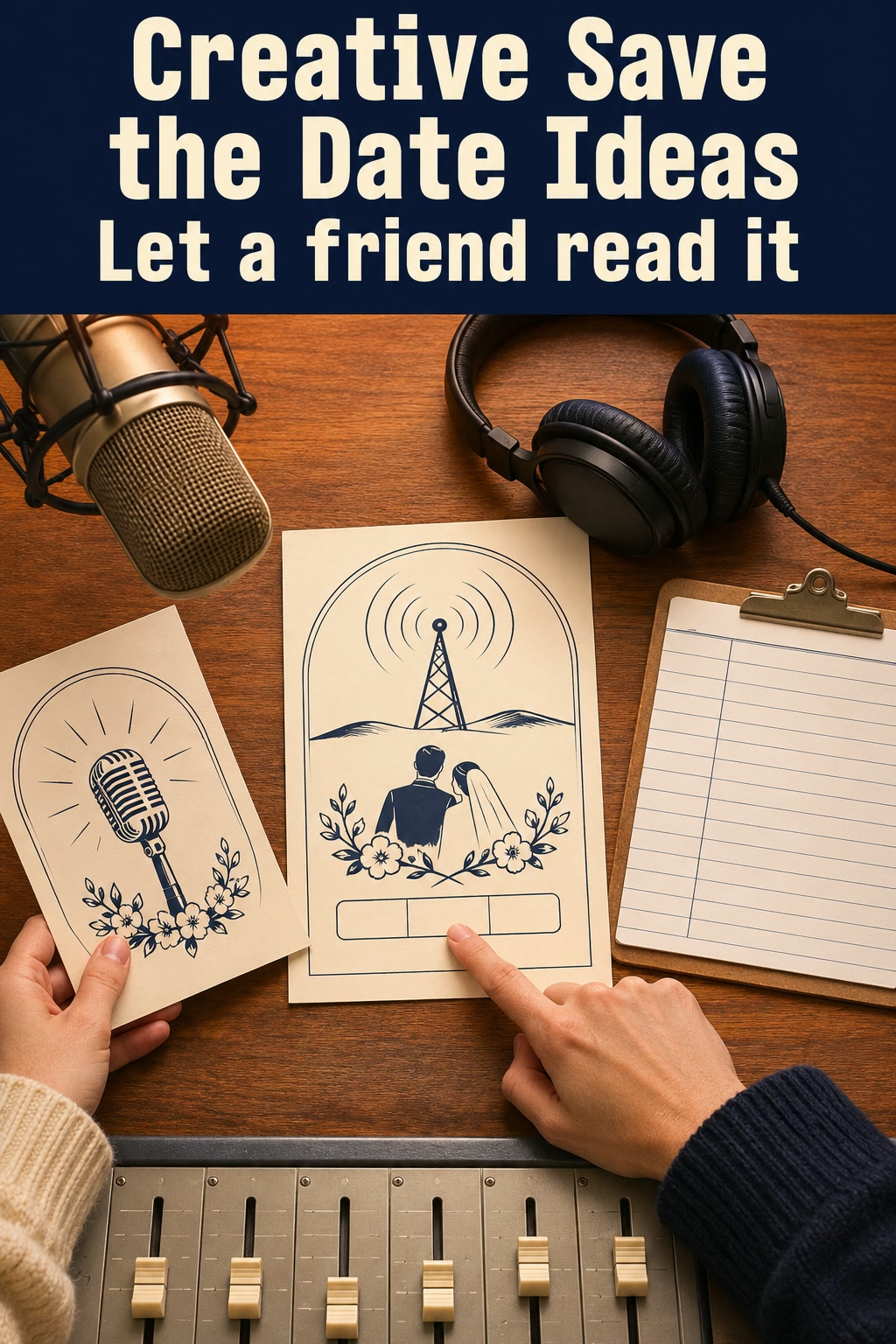
A community radio log with a slot for the date
If you met taking turns on a small station’s weekend show, your reference might be the record where you write down what played and in what order. A fine ruled line, small typed capitals, and an empty slot can bring that feeling to the card. Put “Wedding date” above the slot, let the day and city run on their own lines, and give the sketch a title that makes clear it describes the two of you. A made-up station code would add another label for guests to decode, so I’d use the spare room for a short line about the show you shared.
If your ritual is listening in the car, build a similar version from a handwritten list of tracks to play. Show two little check marks and a spare round dot for the next line. Leave broadcast times and song titles out of the date area. For the envelope you could use plain address labels and print a small sound-wave mark on the card itself. Leave room for both lines of the street address when you set up the label, especially for guests in apartments.
Supplies for your first sample
Try the tally on cream stock
Draw the circle by hand
Compare two card widths
Keep the envelope simple
Make the design recognizable to someone outside the story
Put one finished sketch in front of somebody who knows the two of you well. Ask what in it reminds them of you. If they spot the bowling grid before they can name the place, you may already have enough context. If you have to explain why a shape was chosen, ask yourself whether the shape needs a better caption. The next reader can be somebody who has never seen the original reference. Ask them to tell you what kind of event it announces and read the wedding date back. Wait to see where they point on the page before explaining any of it.
Fix whatever made the reader pause. If they read a bare number as the month, spell the month out. If they look in the corner for the date, try moving it there before adding another instruction. A reference that goes unnoticed can be fine if you like it as a little private mark. If a reader thinks your card doubles as a ticket, swap the words “Admit one” for the plain wedding line, and remove the seat number. A wedding that will have its own ticketed ceremony or reception arrangement can put those details in the formal invitation when they’re ready.
If you’re hand-making the card, put the sample beside a small stack of blanks and repeat only the part you can do consistently. Try drawing the pencil curve on each copy and printing the background if you want to keep some of the work by hand. Try a few with a timer so you can decide what the work will look like for your list. If you like the slight shifts that come from doing it by hand, leave a wider blank margin around the detail and make sure every version keeps the date clear. For a digital send, photograph or scan just the mark and combine it with the same type. Include the written date and place in the message itself so a guest can copy them as text.
Editor’s take
I’d choose the trace of a habit that still happens. If you are at the market most Saturdays, one mark from the slip will make sense to you on a day when choosing wedding stationery feels abstract. I would give that mark a small area of the announcement and leave enough space for the wedding details to read naturally around it. I’d drop any part of the reference that sends the reader looking for a price or makes them turn the card over to find out what the event is. A single mark can feel plenty familiar when it comes from a real habit. As a first step, put one familiar object on the table tonight and sketch only the part each of you noticed first.
Sources and methodology
The research included the design examples and print categories in Minted’s stationery guide and wedding communication advice from Matthew Shaw in ELLE’s save-the-date article. The market, bowling, studio, and radio stories are original fictional examples. The recommendations are editorial judgments based on the research and design choices described here.
FAQ
What makes a save-the-date feel personal without a photo?
A distinctive mark from an activity you both know can carry the idea, such as a ring around a handwritten tally or the color strokes from a shared studio session. Give the mark space and use both names alongside the date. Guests who know the activity can recognize it, and everyone can read the announcement.
Should we explain the reference on the card?
Use a short caption if the design seems like an instruction or a code on its own. “From our Saturday market walks” gives a guest a place to start. If the mark reads as a simple illustration and the wedding line is clear, you can let friends ask about it when they get the chance.
Does the invitation have to look like our save-the-date?
You can carry over a color, a single mark, or a small line of type if it fits the invitation. An announcement about your bowling night can look casual even if you later send a formally worded invitation. Keep any literal venue, date, or occasion wording consistent with what you want guests to expect.
What if we have two different ideas from the same activity?
Sketch them both next to the same wedding wording at the same size. One version may make the date easier to see and still carry the detail you like. You can keep the second mark for the envelope flap or a note on the wedding site. Use that extra detail where it has room to stand on its own.
How do we keep our design from looking like a real receipt or ticket?
Start with “Save our wedding date” and give the city and state a visible line of their own. Keep enough of the original shape to establish the idea, and remove any marks that look like a barcode, balance due, or seat assignment. Ask a person outside the story what they think the card is for.
Can we send the handmade design digitally?
Scan the artwork, place it next to legible type, and open the resulting image at the size your guest will see. Put the full wedding date and location in the message so they can copy the details. A clean scan of a single mark can keep the original texture with very little visual clutter on the phone.