Bridesmaid Hairstyles for Saree: A Practical Guide
The best bridesmaid hairstyles for saree are the ones that work with the way you will wear the saree, not just the hairstyle photo you saved. A low bun can keep a pallu and necklace from competing, while a soft half-up shape leaves movement around the shoulders. Before choosing, check your drape, blouse back, hair texture, jewelry, and the length of the event. That short list turns a vague inspiration image into a look you can actually wear through photos, rituals, and dancing.
This guide helps you solve the common styling snags: hair caught beneath a pallu, accessories crowding a detailed blouse, curls that lose their shape, and a bridal-party look that feels too uniform. You will compare practical hairstyle families, adapt them to different hair lengths and textures, and leave with a simple brief for your stylist.
Start With the Saree, Not the Saved Hairstyle
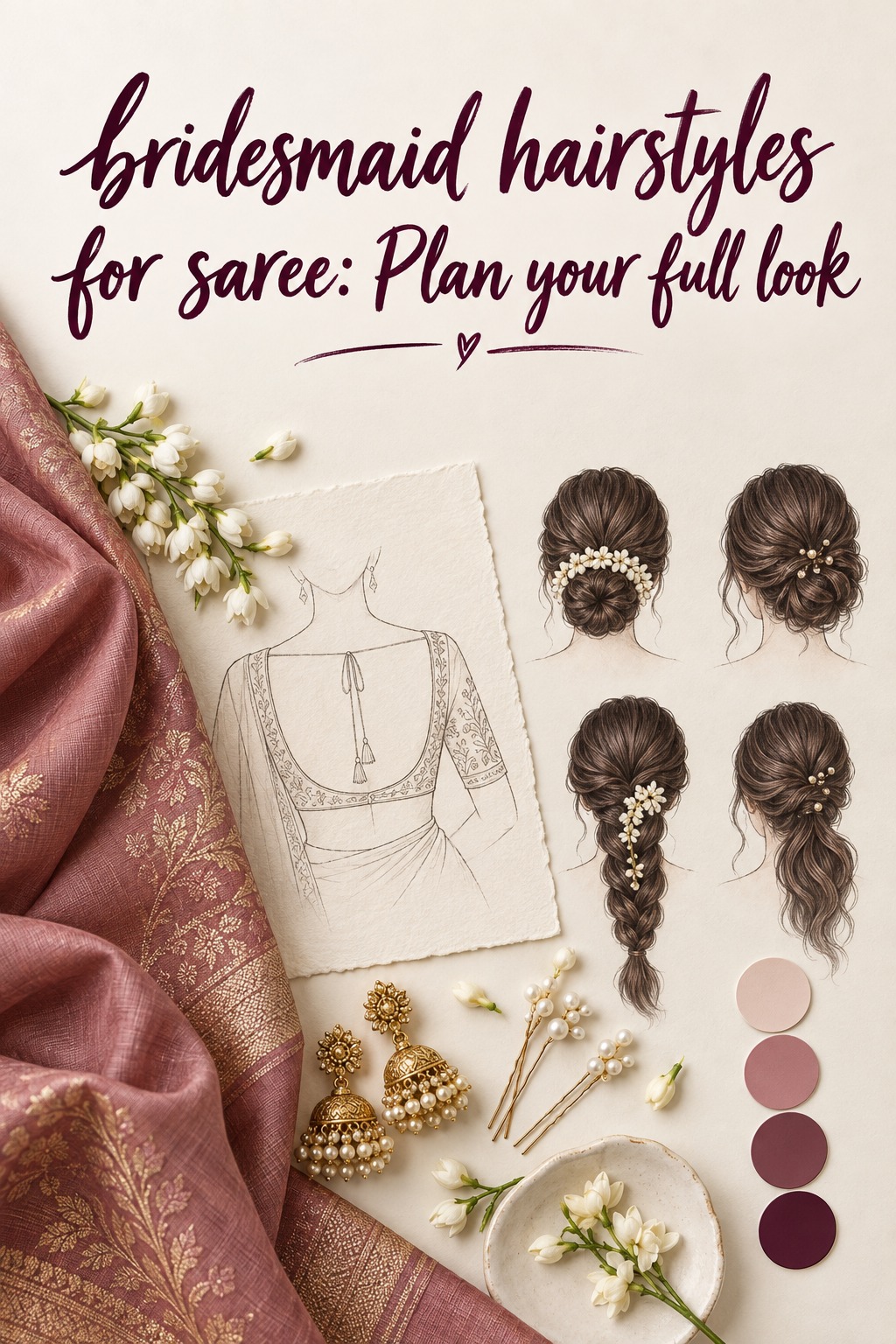
Lay out the full look before settling on hair. Include the saree, blouse, jewelry, and the pallu drape you expect to wear. A hairstyle changes the visible balance of all four. A high, elaborate bun may work beautifully with a simple blouse, but it can feel busy beside a heavily embroidered back and statement earrings. A low shape might look understated from the front while providing a clear view of a dramatic blouse back.
Check where the pallu will sit
The pallu is the first practical constraint. If it crosses a shoulder and rests near the nape, long loose hair can become trapped or rub against the fabric. A low bun, braid, or low ponytail moves most of the hair away from that contact point. If the pallu is pinned securely and falls forward, a half-up style can keep the crown neat while leaving some length visible. Ask whoever is draping you to show the intended placement before the hair trial. Small changes in the shoulder fold may alter which strands get caught.
Turn wedding inspiration into a plan you can actually follow.
Zarellea brings your guest list, budget, vendors, and day-of details into one shared space — so no beautiful idea gets lost in the shuffle.
For a pallu worn over the head, keep the crown smooth enough for the fabric to rest without snagging, and tell the stylist where the edge will be pinned. Avoid placing a hard accessory exactly where a pin or fold needs to sit. If the pallu will move between the head and shoulder during different rituals, tell the stylist that too. The style should accommodate the actual drape sequence, rather than one still photograph.
Use the blouse back and neckline as design cues
A low or twisted updo opens the back when the blouse has embroidery, ties, or an interesting cutout. A braid can create a clean line down the back, but it may cover a central motif. A half-up look leaves the upper back partly visible while keeping some movement. Try the hairstyle with the blouse or a close-fitting top that gives a similar neckline, then take a back-view photo. The photo makes it easier to spot a braid or curl that hides a feature you wanted to show.
Consider the front neckline as well. With a high neckline or a collar, hair swept away from the shoulders can create a lighter outline. With a strapless or open neckline, soft waves can frame the face and shoulders if the pallu will not press them flat. These are options, not rules: personal comfort and the event matter more than a formula about face shape or neckline.
Give jewelry its own space
Choose the largest or most important accessory first. If you plan to wear a maang tikka, leave a clean parting and secure the chain without pulling the hair uncomfortably. Jhumkas or shoulder-grazing earrings may catch in loose side pieces, so test turning your head and tucking hair behind an ear. A necklace that sits high can look crowded beside hair resting on the collarbone; pinning one side back or choosing an updo may create clearer separation.
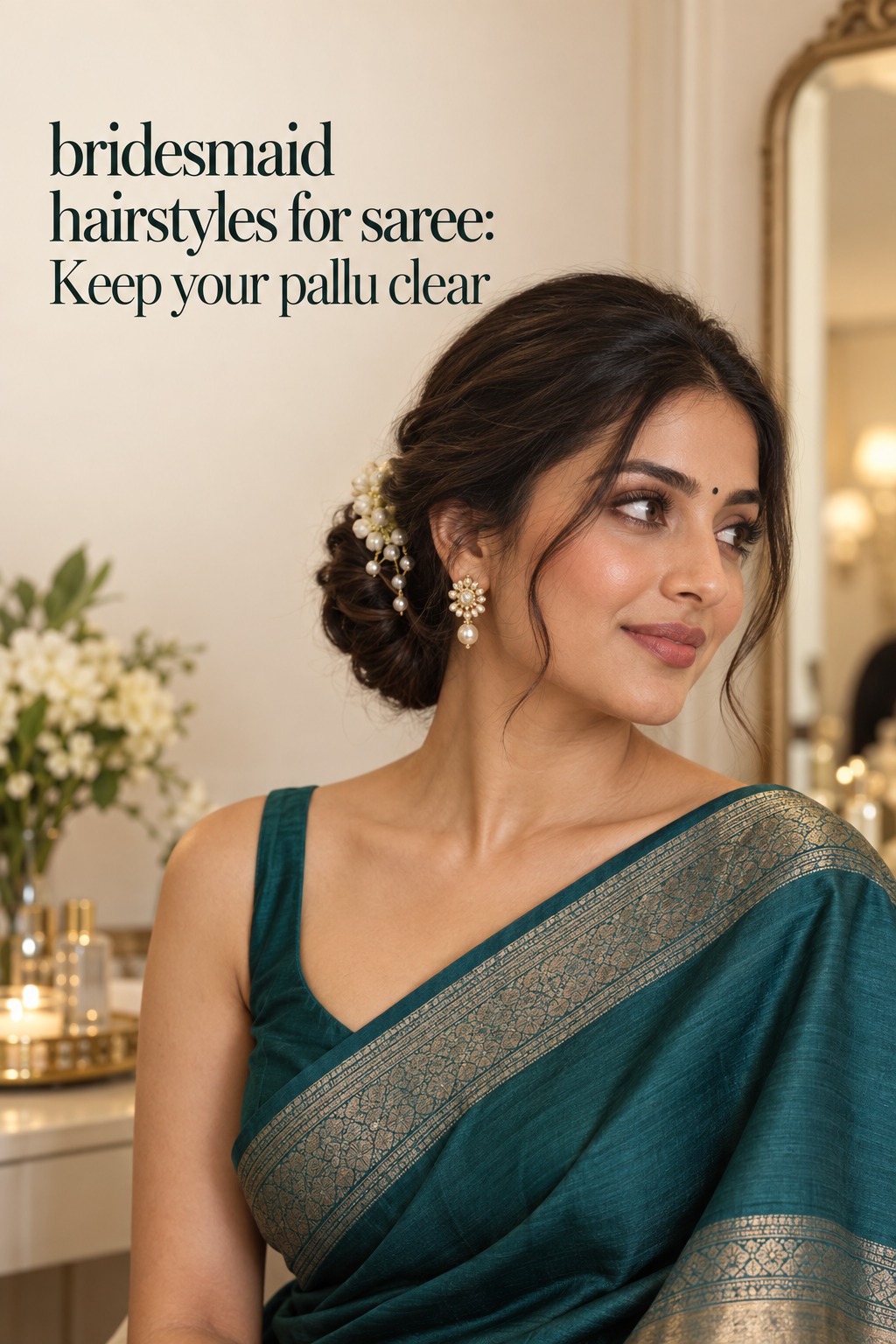
Flowers and hair jewelry should support the saree, not compete with its border. A small jasmine curve, a few buds, pearl pins, or one ornamental comb can be enough. If the saree already has a bright border or the jewelry is intricate, repeat one color or material in the hair rather than adding another focal point. For a bridesmaid, a lighter floral detail can echo the wedding palette while keeping the bride’s styling distinct.
Choose the Shape That Solves Your Main Styling Problem
Instead of asking only which hairstyle looks prettiest, ask what you need the hair to do. Does it need to stay off a pallu? Show the blouse back? Hold an accessory? Feel comfortable while dancing? The answer points toward a useful shape. Saree hairstyle galleries commonly show buns, braids, curls, and ponytails; the practical difference is how each handles your particular outfit and schedule (saree hairstyle ideas).
Choose a low bun when fabric and jewelry need room
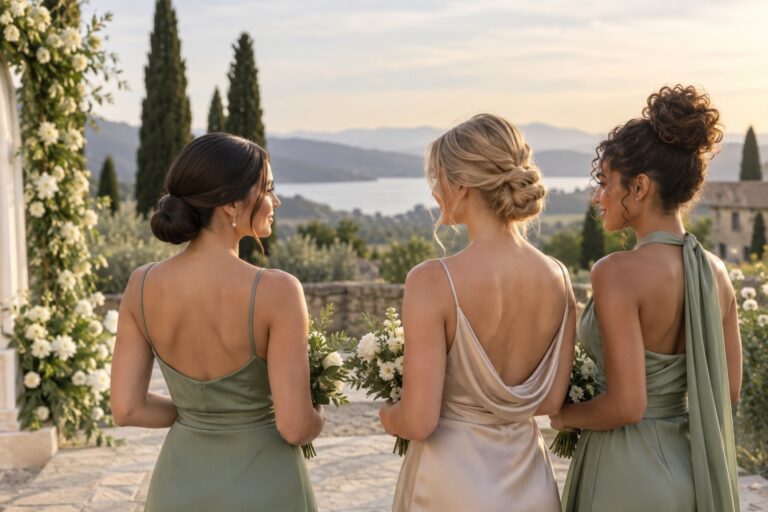
A low bun or chignon gathers hair at the nape and keeps the shoulders relatively clear. It is a dependable option when a pallu sits near the neck, when you are wearing long earrings, or when the blouse back deserves attention. The finish can be sleek, softly twisted, braided, or intentionally textured. A smooth center part feels formal; loose face-framing pieces can make the same basic shape feel softer.
Ask the stylist to secure the bun with pins that do not press against the head when you lean back. If you will sit through a long ceremony, test the shape against a chair back. A very tight bun can become uncomfortable, while a loose one may shift. A small accessory placed on one side can be easier to coordinate than a large piece centered directly beneath the pallu.
Choose a braid when you want a secure line of detail
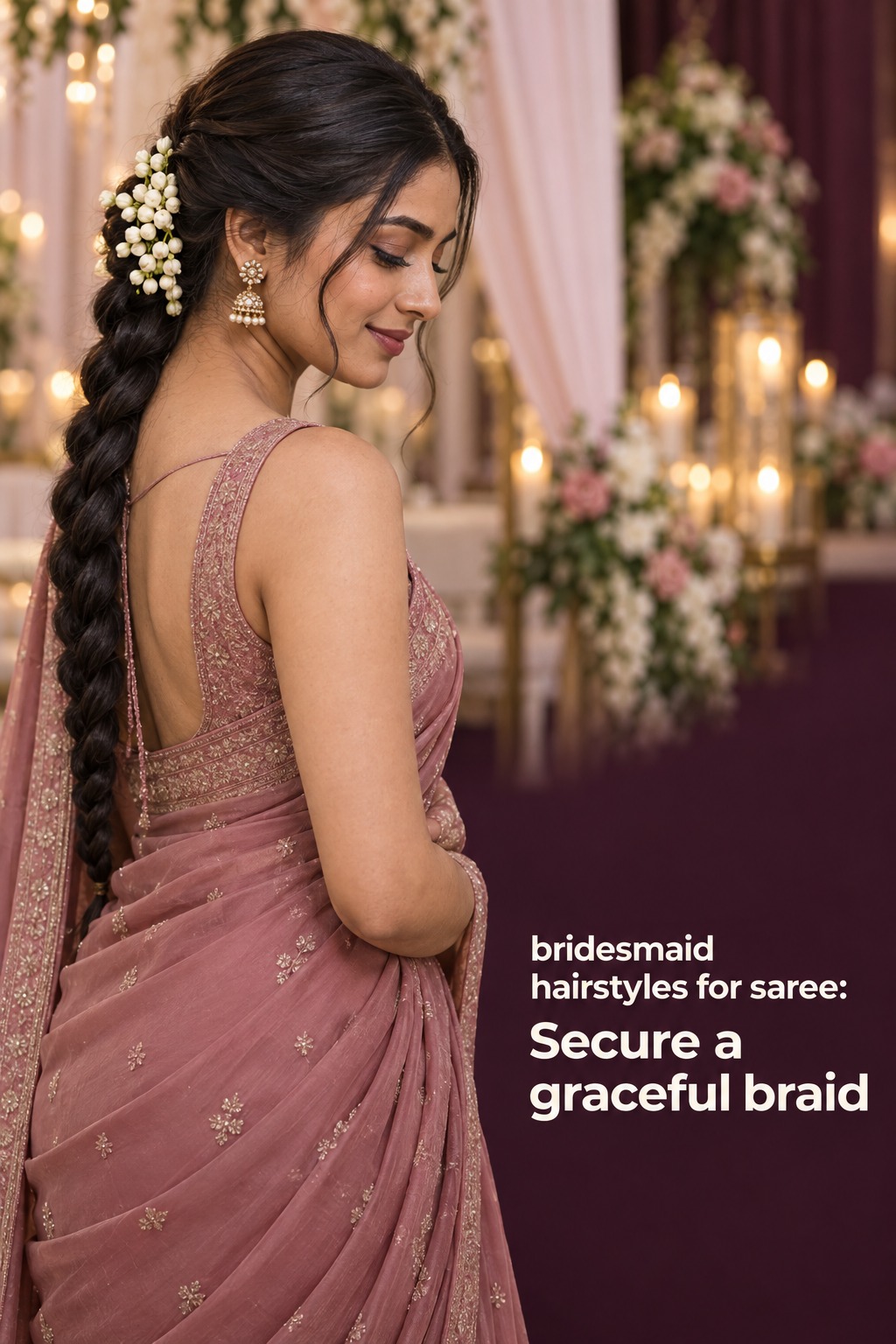
A braid keeps the lengths contained and gives a saree look a clear vertical line. A classic three-strand braid, a softer fishtail, or a braid gathered into a bun can each feel different without requiring a completely new silhouette. Braids work well when the group wants a coordinated direction with individual variations, such as matching placement but different textures or small accessories.
Think about where the braid will land. A braid over one shoulder may cover a border or interfere with a necklace. A braid down the back may obscure blouse detail. For a long function, ask for a secure base and a comfortable finish at the end; tight tension at the hairline can feel distracting. If adding flowers, attach them so they cannot snag the pallu during a quick turn.
Choose half-up hair when you want movement with a clear face
A half-up style combines some structure at the crown with loose lengths. It can work when you want to keep hair away from the face but still enjoy waves or curls around the shoulders. A small crown braid, a twist, or a pinned-back section offers a simple place for a vine or clip. This shape is especially useful when a full updo feels unlike you, but completely loose hair seems impractical.
Check whether the loose section will sit under the pallu or against the blouse. If so, reduce the amount left down or direct it to the side that stays clear. Ask for a soft hold rather than a stiff, oversized crown, particularly if you will wear a tikka or another headpiece. Test the accessory while seated and standing so the pinned sections do not pull.
Choose waves or a ponytail when the shoulders can stay open
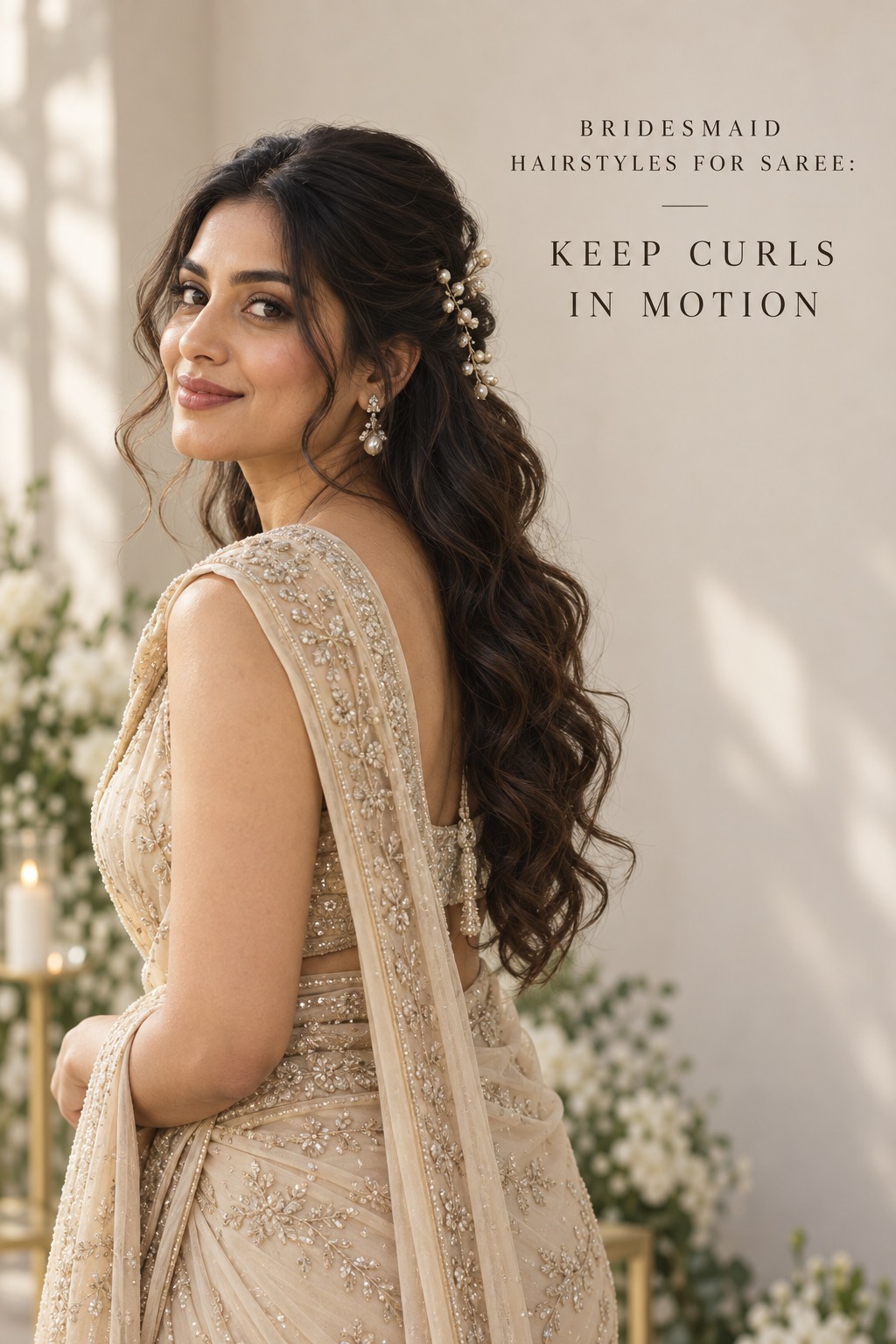
Soft waves feel relaxed and photograph well from several angles, but they need room to move. They are a better fit when the pallu is secure and will not flatten or tangle the lengths. A low ponytail gives a similar sense of movement with more control; a wrapped section or a modest accessory can make it feel occasion-ready. Both can be adapted to a polished or relaxed finish.
For open waves, consider how often you will be outside, dancing, or changing outfits. Bring a reference that shows the texture you actually want, not only the front view. If your hair usually loses curl quickly, ask your stylist what preparation and realistic touch-up options suit your own hair. Avoid promising all-night hold based on a photograph alone; a trial is a better way to learn what works for you.
Adapt the Look to Your Hair Length and Natural Texture
A style should be adapted to the hair you have. Wedding inspiration often shows extensions, padding, and professional finishing, so a reference image may not translate directly to your length or density. Tell the stylist what your hair does on an ordinary day, how it responds to pins or heat, and what you are comfortable adding. The goal is a recognizable version of the idea, not a forced copy.
Short hair and bobs
A bob can be styled with brushed waves, a side part, or a small half-up twist if the front layers reach far enough to secure. Decorative pins or a headband can add a festive point of interest without requiring a full bun. For a saree with a highly detailed blouse, keeping the shape close to the head may let the outfit remain visible. If you want a longer silhouette, ask about clip-in pieces and how they will attach to your haircut; they are optional, not necessary.
Bring a photo of your haircut from the back, especially if the nape is cropped or layered. Ask the stylist to show where pins will go and whether they will be visible. A small accessory should be tested for weight and grip. If a headband presses behind the ears, try it for a few minutes before committing, since earrings may occupy the same area.
Medium-length hair
Shoulder-length hair can support a compact low bun, a tucked twist, a half-up look, or a ponytail with curled ends. A stylist can use the shape of the cut to create fullness without hiding the entire length. If layers escape from an updo, decide whether you like a softly undone finish or prefer the hair smoothed and pinned. A trial helps distinguish a deliberate tendril from a strand that keeps falling across your face.
Ask how the back will look with the pallu and blouse together. A small bun may sit exactly at the point where the saree folds, so move your head and shoulders during the trial. If the outfit includes a high collar, check for friction between the hair and fabric. Comfortable placement can matter more than adding extra height.
Long or thick hair
Long hair offers many possibilities, but a large style can feel heavy after several hours. A braid, low bun, or ponytail can distribute the weight more comfortably than a very high structure. Ask the stylist to anchor the shape securely and tell them if you are sensitive to tight pins. If the hair is dense, a braid can be built in sections so its width looks intentional instead of overpowering the saree.
For an updo, discuss how much length will be tucked away and whether the accessory will add weight. For open hair, decide how it will be kept away from the pallu. A few strategically pinned sections can retain movement while reducing tangles. You do not have to use all of your length to make the hairstyle feel special.
Curly, coily, fine, or straight hair
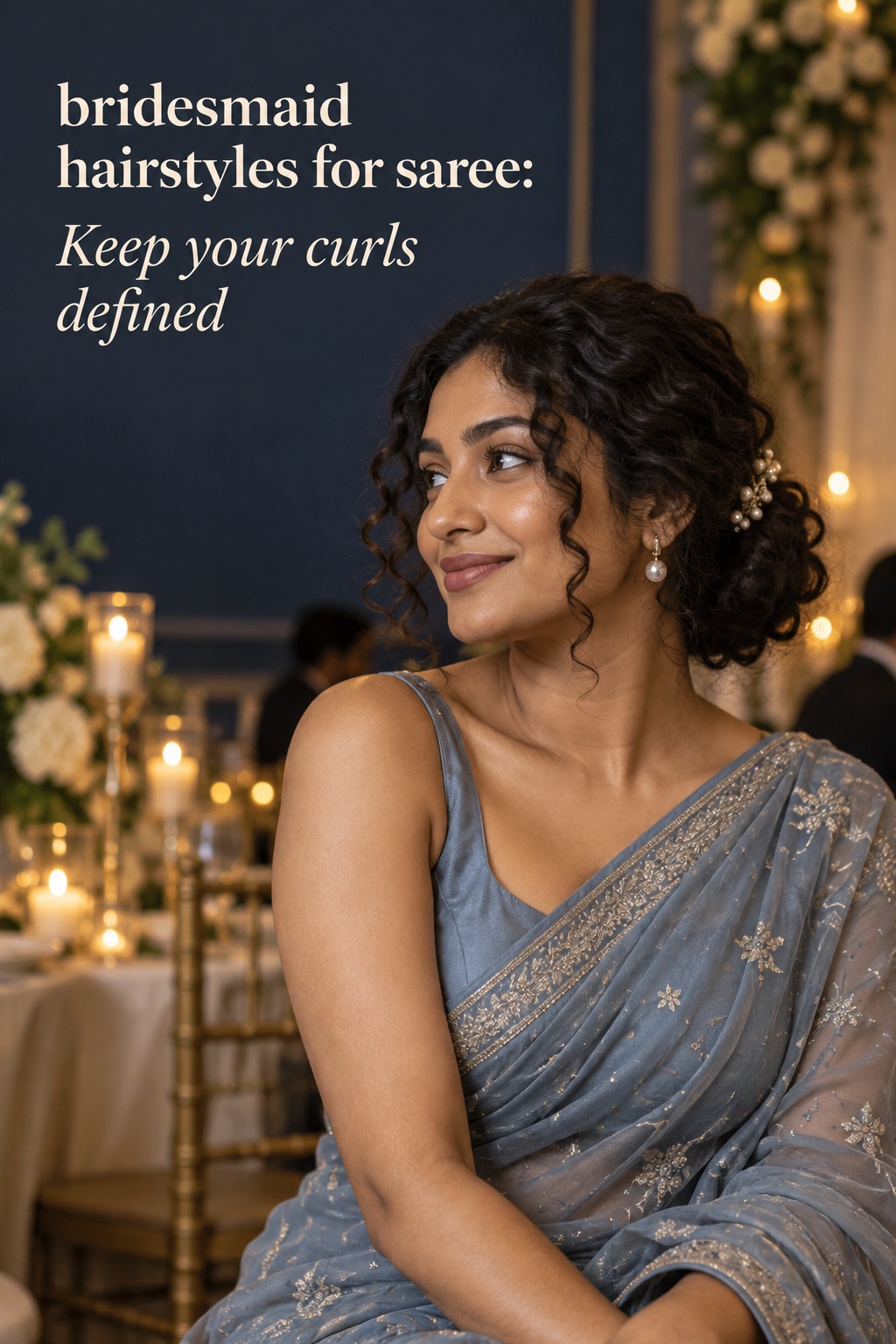
Natural texture is part of the look. For curls and coils, bring references that show the finish you want on hair with a similar texture. Ask how the stylist will preserve definition and avoid creating unnecessary tension at the edges. A gathered puff, braided detail, pinned side, or defined loose shape can all work with a saree. For straight hair, a braid or twist can add visible texture, while a sleek finish can look deliberate beside ornate fabric.
Fine hair may benefit from a smaller accessory and a shape designed around its natural volume rather than a heavy arrangement. If you are considering padding or extensions, ask to see and feel them before the event. A shared bridesmaid look should not require every person to change their natural texture. Agree on a common element such as a low placement, a color accent, or a floral detail, then allow each person to choose a suitable finish.
Coordinate as a Bridal Party Without Looking Identical
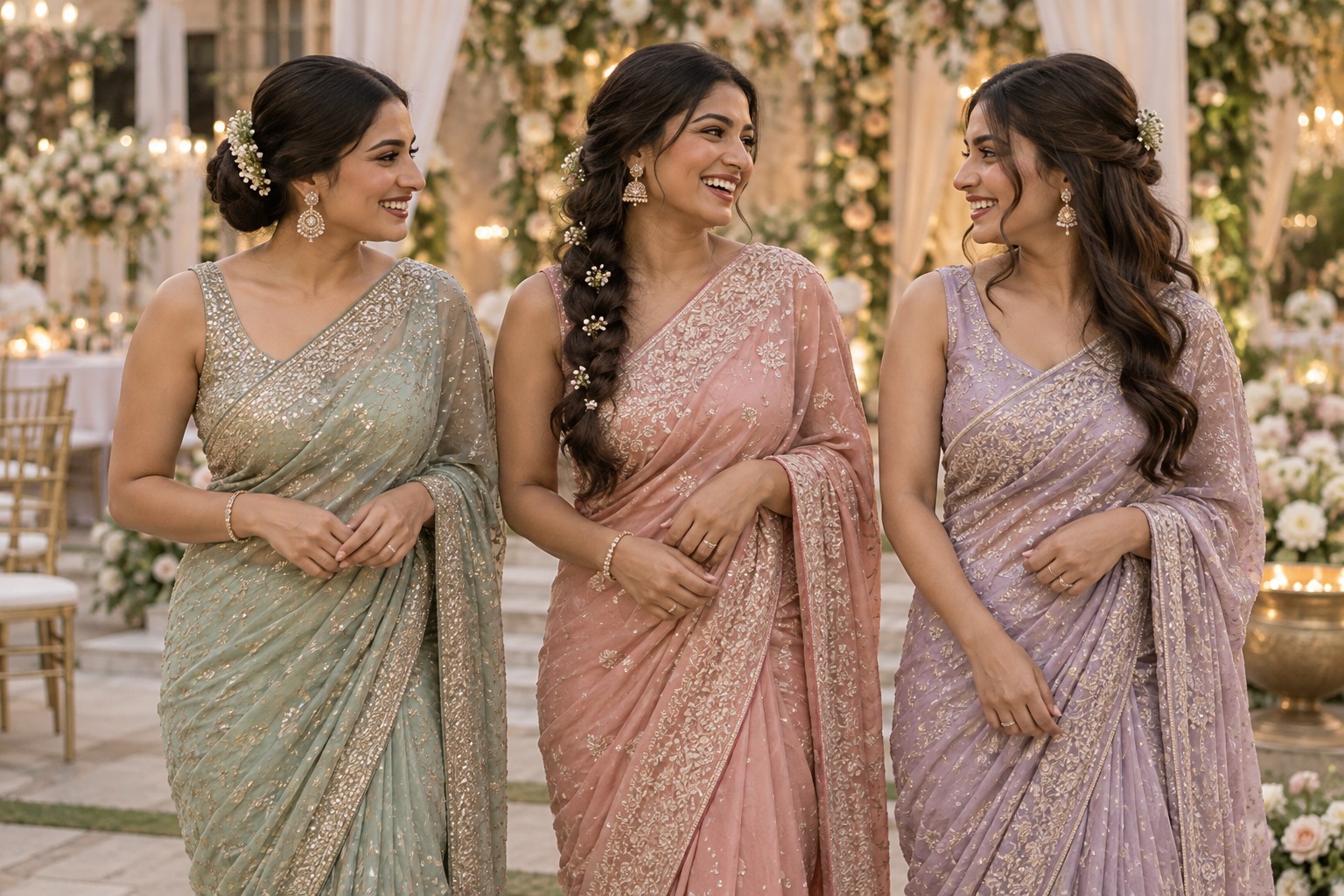
Bridal-party coordination is easier when you agree on a visual direction instead of one exact hairstyle. You might choose soft, low shapes; polished braids; or movement around the shoulders. That shared idea creates cohesion in group photos while leaving room for different hair lengths, textures, comfort needs, and saree details. Hairstylist guidance for bridesmaids similarly favors a common direction tailored to the individual rather than identical results.
Share the wedding palette, saree colors, and any requested accessories with the group. Decide whether flowers should be fresh or faux, whether gold or pearl details fit the jewelry, and how prominent the bride’s hair adornments will be. A smaller or simpler detail for bridesmaids can feel connected without imitating the bride’s full look. There is no need for every person to wear the same flower or parting.
One useful coordination plan might be: choose a low or mid-height silhouette, keep the face visible, and select either a small floral accent or a metallic pin. Then let each person pick a bun, braid, or half-up adaptation. Send reference images that show the back and side, and label what should match and what can vary. This prevents a broad note like “make it traditional” from being interpreted in several conflicting ways.
Also check the saree itself. If everyone wears a similar border or blouse, hairstyles can differ more. If sarees vary widely, a shared accessory color may be enough. The objective is a connected group, not a row of identical heads. The bride can set the overall formality and accessory scale; each bridesmaid can then choose the version that feels secure and familiar.
Make the Style Last Through the Wedding Function
A good plan includes the hours after the first photograph. Think through when you will dress, who will pin the pallu, whether there is a separate ceremony and reception, and whether you will dance. Build these details into a stylist brief. Advice from bridal stylists emphasizes trying a look in advance and considering venue and weather; a trial also lets you identify pressure points and accessory snags before the event.
Run a useful hair trial
Bring the saree or a fabric sample, blouse, jewelry, and pallu reference. Show the stylist at least two images: one for the overall shape and another for the back or accessory placement. Explain what you dislike as clearly as what you like. For example, “keep the crown soft, but make sure the sides stay off my earrings” gives more direction than “make it pretty.”
Wear the look long enough to notice whether pins press, the headpiece shifts, or loose strands fall into your eyes. Sit in a chair, turn your head, and lift your arms as you would when greeting guests or dancing. Take front, side, and back photos with the pallu in its intended position. If a problem appears, change one thing at a time so you know which adjustment helped.
Plan the order of dressing
Ask the stylist and saree draper to agree on the order. Some hairstyles need to be finished before the blouse or jewelry goes on; other accessories are easier to place after the saree is draped. Confirm who will pin the pallu and where the pin will go. If the fabric must pass over the head, the hairstyle should not rely on a fragile decoration in its path. A quick coordination conversation can prevent last-minute handling of finished hair.
Keep the final plan simple enough to repeat. Note the parting, bun or braid placement, accessory position, and any pieces left around the face. If a different stylist is doing the event look, send the trial photos and notes in advance. Include the exact hair accessory rather than a similar substitute, because differences in weight and clasp can change how it sits.
Pack a small refresh kit
Ask your stylist what is appropriate for your hair and chosen finish. A small kit might include a few matching pins, a comb, and the product already used during the trial. Assign one person to keep it nearby. Avoid trying a new product or tool on the wedding day if you have not tested it. The point is to handle a loose pin or flyaway calmly, not to rebuild the style between events.
Mistakes That Make a Saree Hairstyle Harder to Wear
Several avoidable choices cause more trouble than the hairstyle itself. Catching them during the trial is easier than fixing them in a crowded getting-ready room.
- Choosing from a front-facing photo only: Ask for back and side references so you can see how hair meets the blouse and pallu.
- Adding every accessory: Select a focal detail, then leave enough visual space for the saree border, earrings, and neckline.
- Ignoring the pallu until the final minute: Rehearse the real drape and pin placement with the hairstyle in place.
- Copying a style that depends on different hair: Adapt the idea to your length, texture, density, and comfort instead of expecting an identical copy.
- Making the bridal party match exactly: Coordinate a direction or accent and let each person choose a secure variation.
- Skipping movement checks: Sit, turn, and lift your arms during the trial to catch tight pins and snagging strands.
- Assuming a heavy updo is more formal: A smaller, well-secured shape may be easier to wear and can still look polished.
A Simple Stylist Brief to Save
Before the appointment, collect the information that changes the hairstyle decision. Write down the pallu position, blouse back, jewelry, hair length and texture, ceremony schedule, and the detail you most want to show. Add one reference for the overall silhouette and one for the finish. This gives the stylist room to create a look that fits you rather than forcing a screenshot onto a different outfit.
You can use this short brief: “I am wearing a [saree fabric or style] with the pallu [placement]. My blouse has [back or neckline detail], and I will wear [earrings, necklace, or headpiece]. I want a [bun, braid, half-up, wave, or ponytail] that keeps [specific area] clear. My hair is [length and texture], and I need it to feel comfortable through [ceremony, photos, dancing, or multiple events]. I prefer [finish] and would like to test [accessory or pallu placement] during the trial.”
That brief gives you a starting point, not a rigid prescription. If the stylist suggests a different shape, ask how it solves the same practical needs. The strongest choice should feel like you, complement the saree, and stay manageable for the role you will play throughout the celebration.
Sources and Methodology
This guide draws on a review of ten Google US organic results covering saree hairstyles, bridesmaid hair, and South Asian wedding styling. The recommendations are practical styling options, not guarantees about hold or suitability. Choose and test a look with your own pallu, blouse, accessories, and hair before the event.
FAQ
Which hairstyle works best with a saree for a bridesmaid?
There is no single best option. A low bun is useful when the pallu rests near the neck or you want to show the blouse back. A braid keeps long hair contained, while half-up hair or soft waves provide more movement. Choose according to your drape, jewelry, hair texture, and event schedule.
Should bridesmaids wear the same hairstyle?
They can share a direction without wearing identical styles. Agree on details such as a low placement, soft finish, or small accessory, then adapt the shape to each person’s hair and saree. This creates a coordinated group while keeping the styles comfortable and individual.
Can I wear my hair down with a saree?
Yes, if the pallu will not press, trap, or tangle the loose lengths. Soft waves or curls can work when the drape is secure and the shoulders have room. A half-up style or low ponytail is a useful compromise if you want movement with more control.
What hairstyle suits a heavy saree and statement jewelry?
A simple low bun, neat braid, or controlled half-up shape can leave space for detailed fabric and jewelry. Choose one focal accessory and check that earrings, necklace, and hair detail do not compete. The right balance depends on where the pallu and blouse details sit.
What can bridesmaids with short hair wear with a saree?
Short hair can be styled in brushed waves, a side part, or a small pinned-back twist. Decorative pins or a comfortable headband can add a festive detail. If you are considering clip-in extensions, discuss attachment, weight, and appearance with the stylist during a trial.
How do I keep a hairstyle comfortable during a long wedding?
Test the hairstyle for pressure and movement before the event. Sit, turn your head, wear the planned earrings, and rehearse the pallu placement. Tell the stylist promptly if pins feel tight, and ask what small refresh items are suitable for your finish.
Should I choose flowers or hair jewelry?
Choose the option that complements your saree and existing jewelry. A few flowers can soften a traditional look, while pearl or metallic pins may fit a simpler, more modern direction. Keep the scale modest if the saree border or earrings already make a strong statement.
When should I have a bridesmaid hairstyle trial?
Schedule it early enough to make adjustments before the wedding. Bring the blouse, jewelry, accessory, and a clear pallu reference. Wear the style long enough to notice discomfort or movement, then take front, side, and back photos to share with the event stylist.