Romantic Nail Art: 4 Wedding Styles to Compare
Romantic nail art does not have to mean one predictable set of pink hearts. For a wedding, romance can look like a sheer floral French, a soft glazed finish, a tiny heart detail, or a pearl accent that catches the light when you hold your bouquet. The better question is not which design is the most romantic. It is which version fits your dress, nail shape, jewelry, ceremony mood, and comfort level.
This comparison guide breaks the choice into four clear directions. You will see what each style communicates, where it works best, what can go wrong, and how to describe it to your nail artist. The goal is a manicure that feels personal in close-up photographs and still looks polished when you see it years later.
The Real Choice Behind Romantic Nail Art
Romance in nail design usually comes from a balance of softness and intention. Sheer color, curved lines, small flowers, bows, hearts, pearls, and reflective finishes can all create that feeling. What makes a set look refined is not the number of details. It is the relationship between the base color, the shape of the nail, the scale of the decoration, and the rest of your wedding look.
Start with five comparison questions. Do you want your nails to disappear into the full look or become a small focal point? Will your dress be clean and minimal, lace-covered, beaded, or heavily embellished? Are your natural nails short, medium, or long? Do you prefer a glossy, pearly, metallic, or mostly non-shiny finish? Finally, how much maintenance will you enjoy before the wedding?
Turn wedding inspiration into a plan you can actually follow.
Zarellea brings your guest list, budget, vendors, and day-of details into one shared space — so no beautiful idea gets lost in the shuffle.
- Softness: sheer pink, milky white, blush, and translucent nude usually feel gentler than saturated color.
- Motif: flowers and tiny hearts read immediately as romantic, while bows, lace lines, and pearls make the mood more specific.
- Shine: gloss keeps the look classic, pearl chrome adds light, and mirror chrome creates a stronger fashion statement.
- Scale: micro details suit a quiet manicure; large 3D flowers or crystals need more visual space and attention.
- Practicality: a simple design is easier to recreate, repair, and coordinate with your engagement ring and wedding band.
Wedding nail artists often describe the manicure as the finishing punctuation of the look. That is a useful way to think about it. Your nail art should complete the sentence created by your gown, hair, makeup, and flowers, not compete with every part at once. Professional bridal references also repeatedly favor personal style and subtle, deliberate accents over copying a trend without adapting it to the wearer. Vogue’s bridal nail guide is a helpful example of that approach.
Four Romantic Nail Art Directions to Compare
1. Sheer floral French: the softest classic
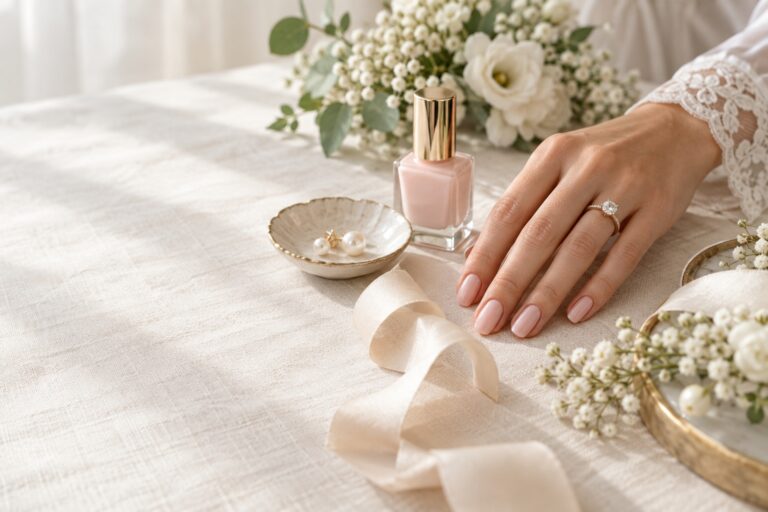
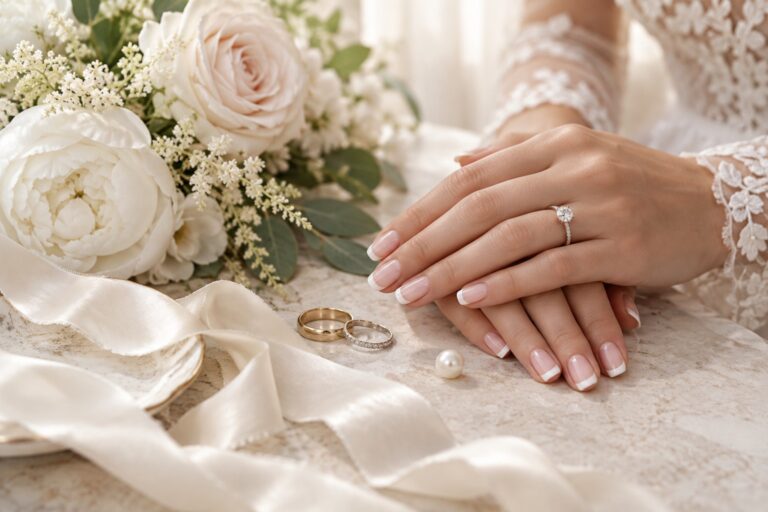
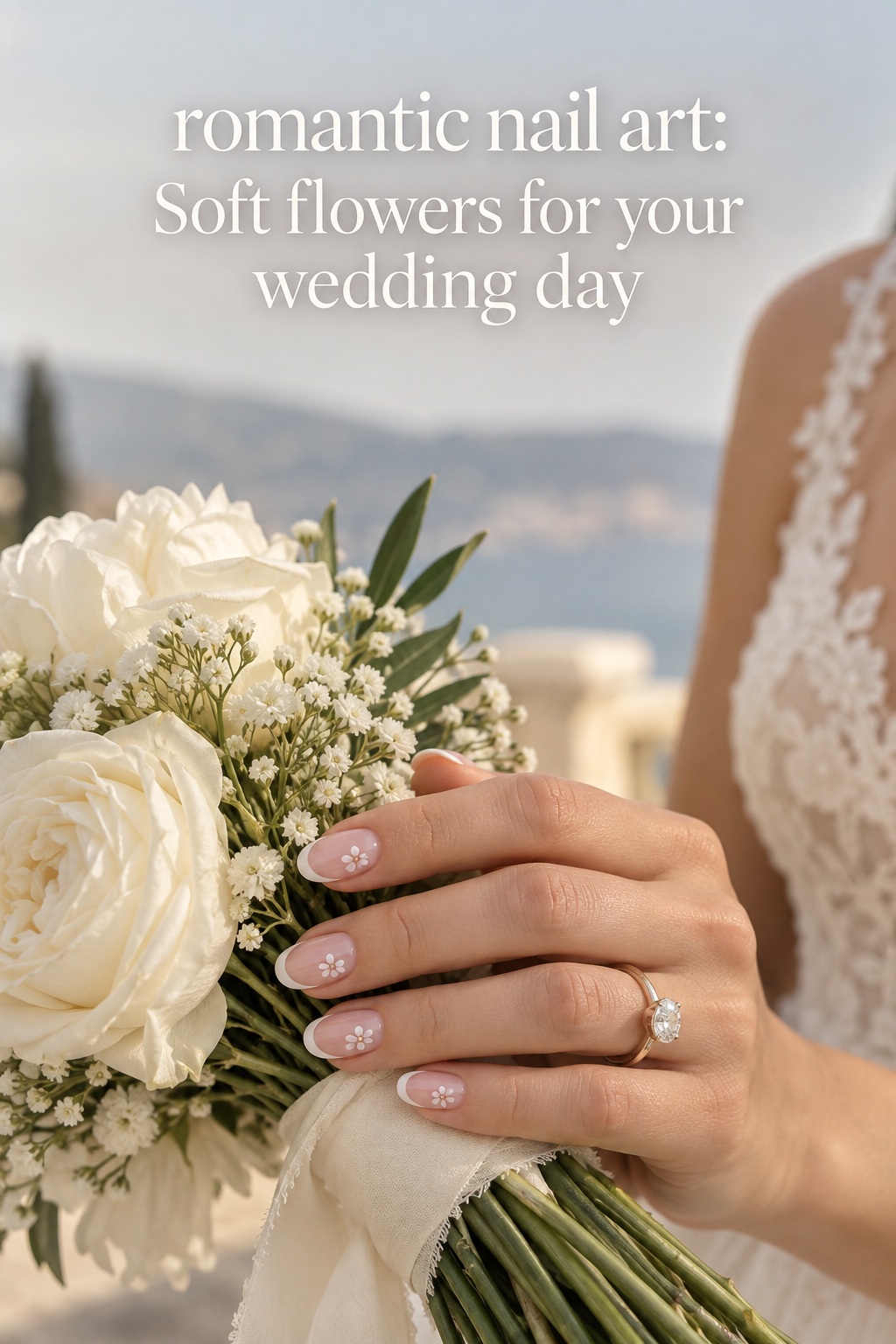
A sheer floral French combines a translucent pink, nude, or milky base with a fine French tip and small flower details. The flowers can sit along the smile line, appear on one or two accent nails, or drift toward the side of the nail like tiny pressed petals. White, blush, pale rose, and soft lavender are natural choices, but a muted blue or butter yellow can work when it repeats a wedding color.
This is the strongest choice when you want romance without losing a clean bridal feeling. It works especially well with lace, chiffon, floral embroidery, garden ceremonies, and bouquets that have small blooms. The design also photographs gently because the eye sees the overall shape first and the flowers second.
The trade-off is that delicate art needs enough room to remain legible. On very short nails, a full floral scene can become crowded. Ask for micro flowers, a partial French tip, or one accent nail instead of trying to fit five different motifs on every finger. If your dress is already very detailed, keep the tip thin and the flowers sparse.
- Best for: garden, classic, romantic, and soft editorial weddings.
- Try with: almond, oval, or short rounded nails.
- Ask for: a sheer base, a narrow tip, and flowers scaled to your nail length.
- Avoid: dense blossoms that hide the base or compete with lace and embroidery.
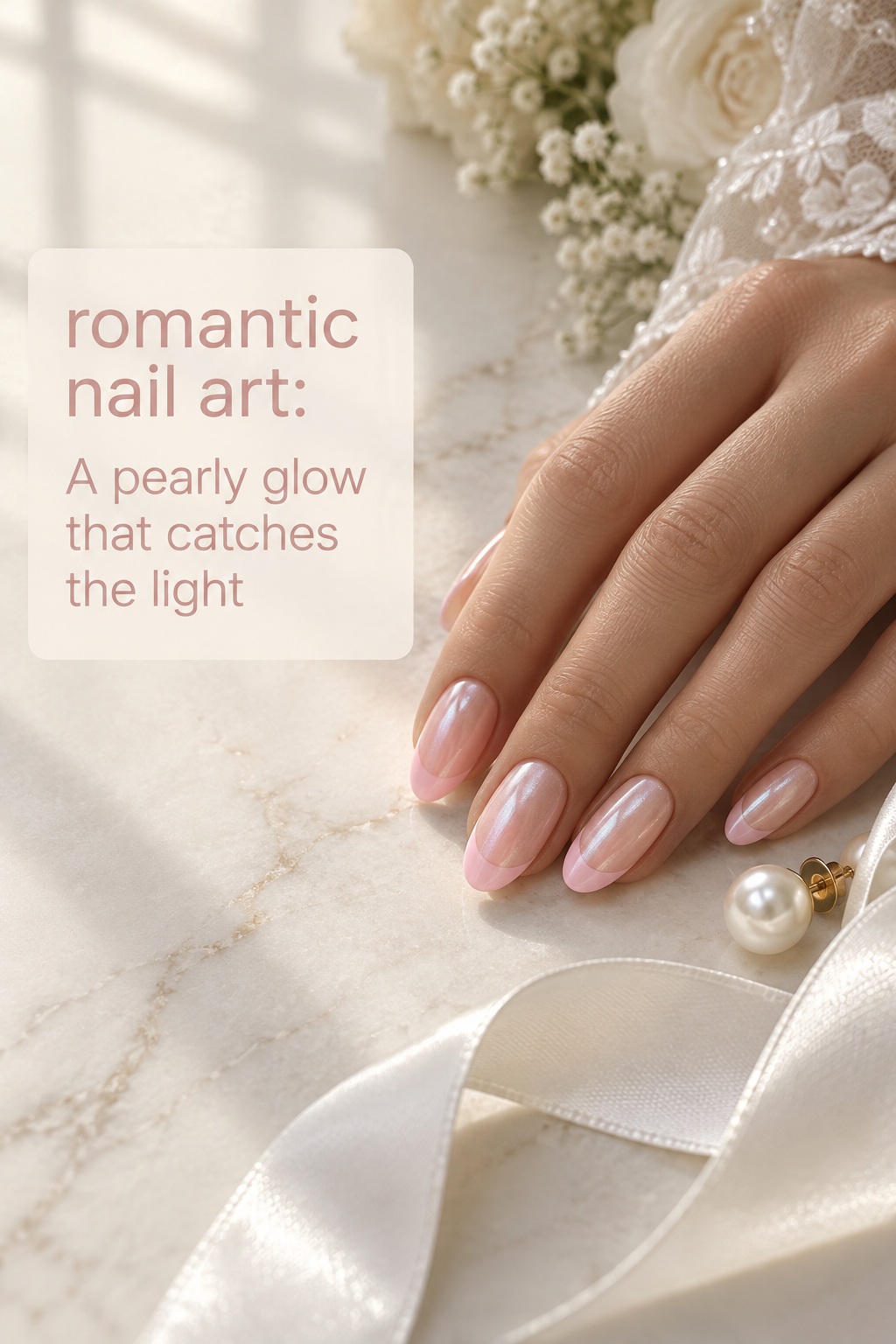
2. Glazed pink or pearl chrome: romance with light
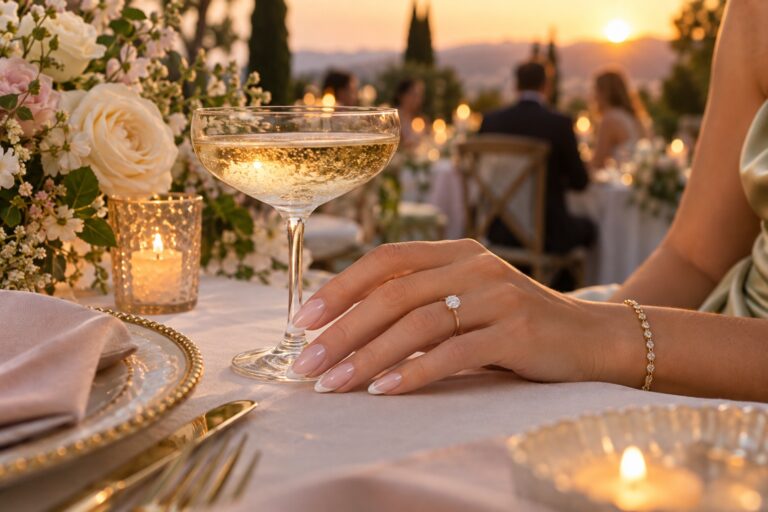
Glazed romantic nail art starts with a soft base and adds a pearly or pink chrome finish. The result is not necessarily a mirror-metal manicure. It can be a milky wash that reflects light when you turn your hand, a rose-gold tip over a sheer base, or a soft chrome layer over a traditional French. This option feels modern because the design stays simple while the surface does more of the visual work.
Choose this direction when your dress is sleek, satin, crepe, or otherwise free of heavy surface decoration. It is also a good bridge between traditional bridal nails and a more fashion-conscious look. Pearl chrome can echo earrings or a luminous veil, while pink-gold chrome can warm a blush bouquet or champagne-toned accessories. A recent chrome French overview from Who What Wear demonstrates how a milky base, soft pink, and reflective powder can stay delicate while adding dimension.
The main decision is how visible you want the shine to be. Pearl and opalescent finishes are forgiving and softly bridal. Pink mirror chrome or a highly reflective edge reads more editorial and may become the first thing people notice. If you are uncertain, ask to see the powder over a sample nail before committing. Lighting in the salon can make chrome look quieter or louder than it will in daylight.
- Best for: modern, minimalist, city, and evening celebrations.
- Try with: almond, oval, tapered square, or medium-length nails.
- Ask for: pearl, pink, or rose-gold chrome and a finish that stays soft in daylight.
- Avoid: combining mirror chrome with several large charms if your dress already has sparkle.
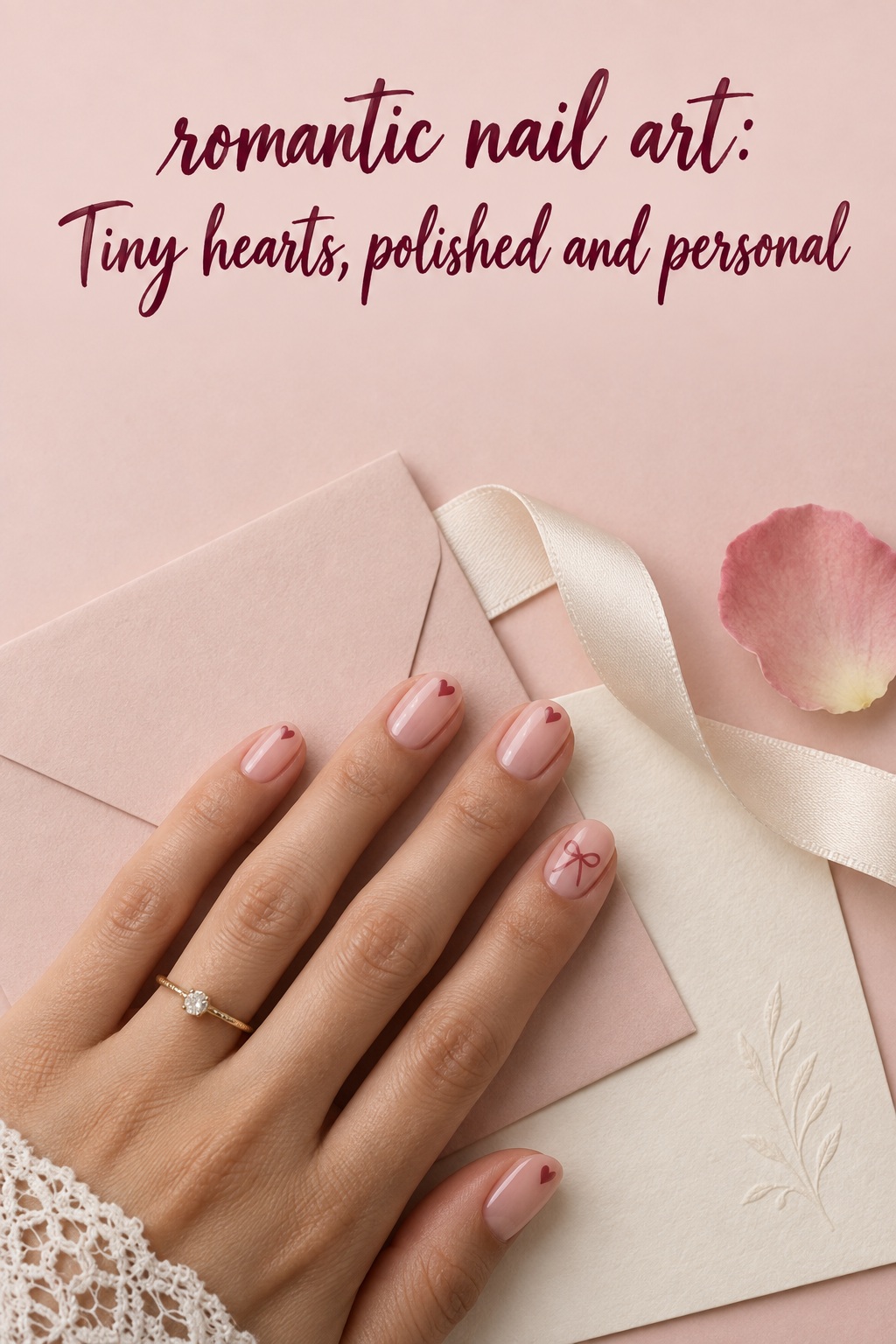
3. Heart, bow, or ribbon details: a clear romantic message
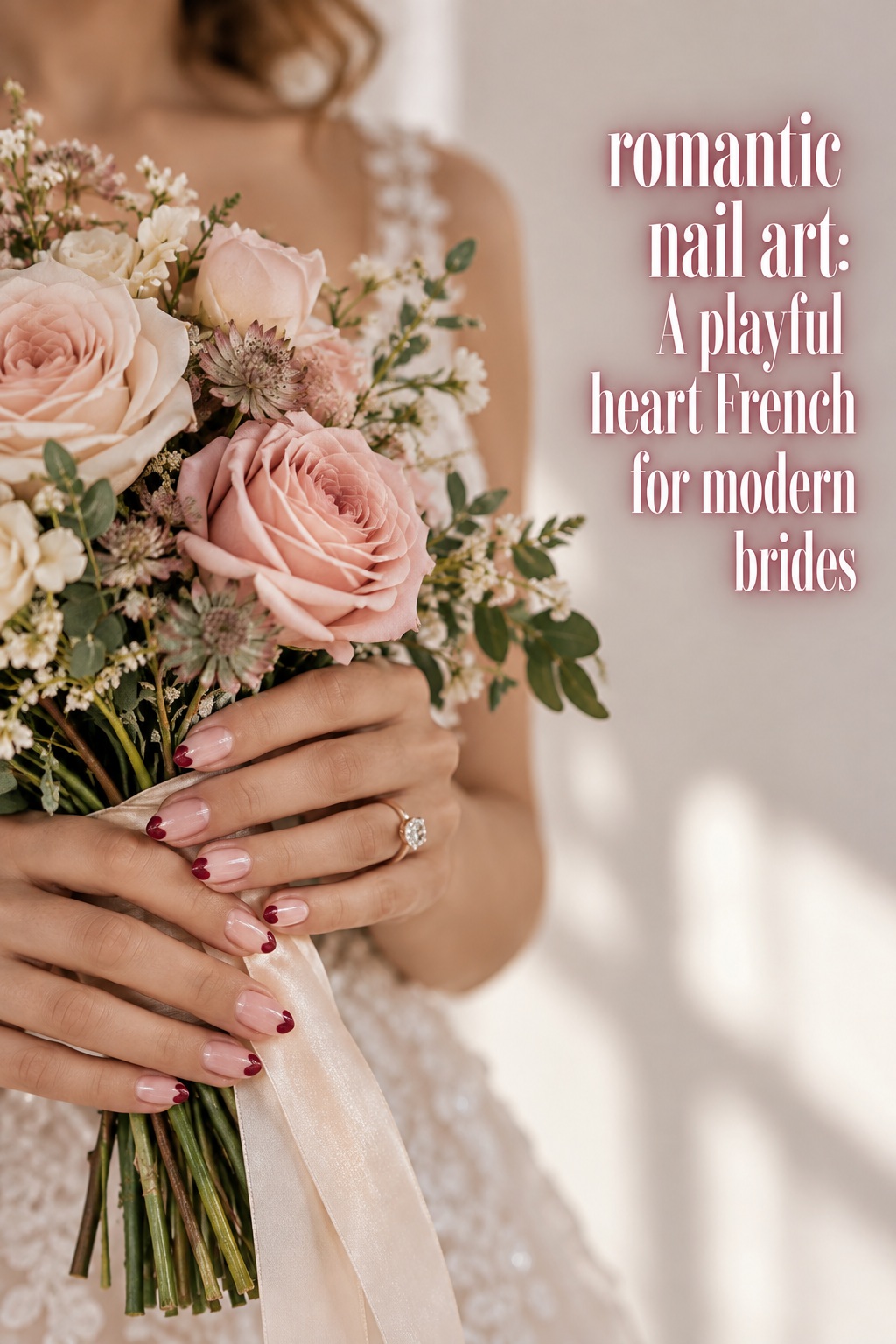
Heart and bow details make the romantic theme unmistakable. They can be tiny and almost hidden, such as one red or rose heart on a neutral nail, or more graphic, such as heart-shaped French tips. Ribbons can curve across the nail, appear as a small bow near the cuticle, or be rendered with a thin line that echoes the ties on a dress or bouquet.
This direction is ideal when you want the manicure to express personality rather than blend into the background. It works well for a playful bride, a courthouse ceremony, a Valentine-season wedding, or a dress with a bow, corset detail, or softly feminine silhouette. The design can also be made sophisticated by using only two shades, such as ivory and muted rose, instead of a high-contrast candy palette.
Use placement to keep the look grown-up. One or two accent nails can feel intentional, while a different heart on every nail may become visually busy. A tiny heart at the tip or a tone-on-tone heart over a sheer base is a good compromise. If you love a more playful set, keep the shapes consistent and let the base color stay calm.
- Best for: playful, personal, courthouse, and fashion-forward weddings.
- Try with: short oval, almond, or medium square nails.
- Ask for: small hearts, a single ribbon accent, or a tone-on-tone motif.
- Avoid: too many competing symbols, especially when the bouquet and jewelry are already ornate.
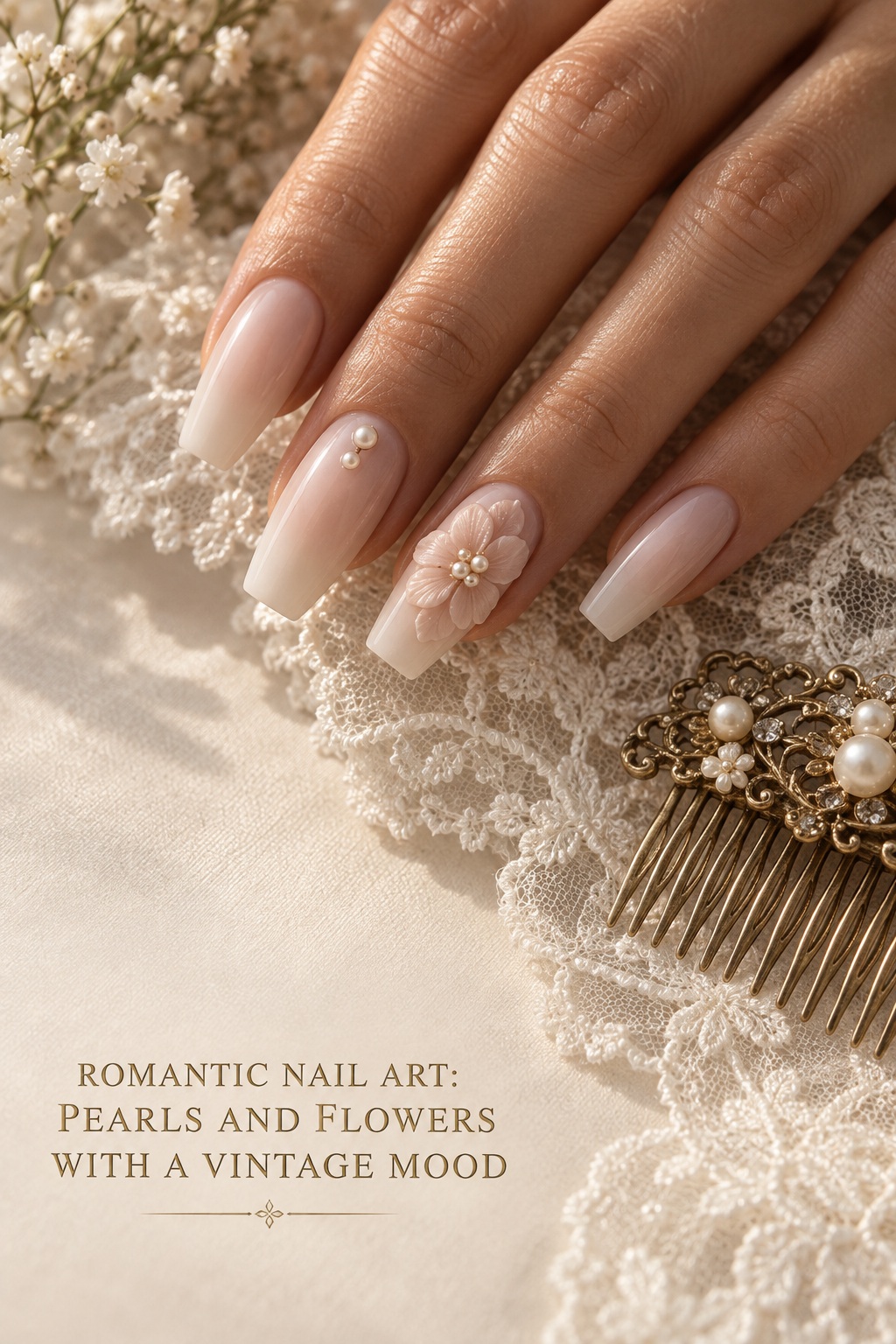
4. Pearls, lace lines, and 3D flowers: touchable romance
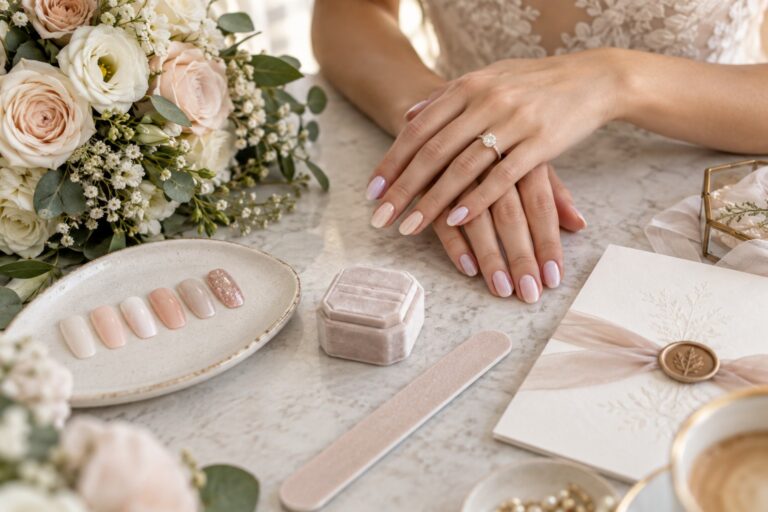
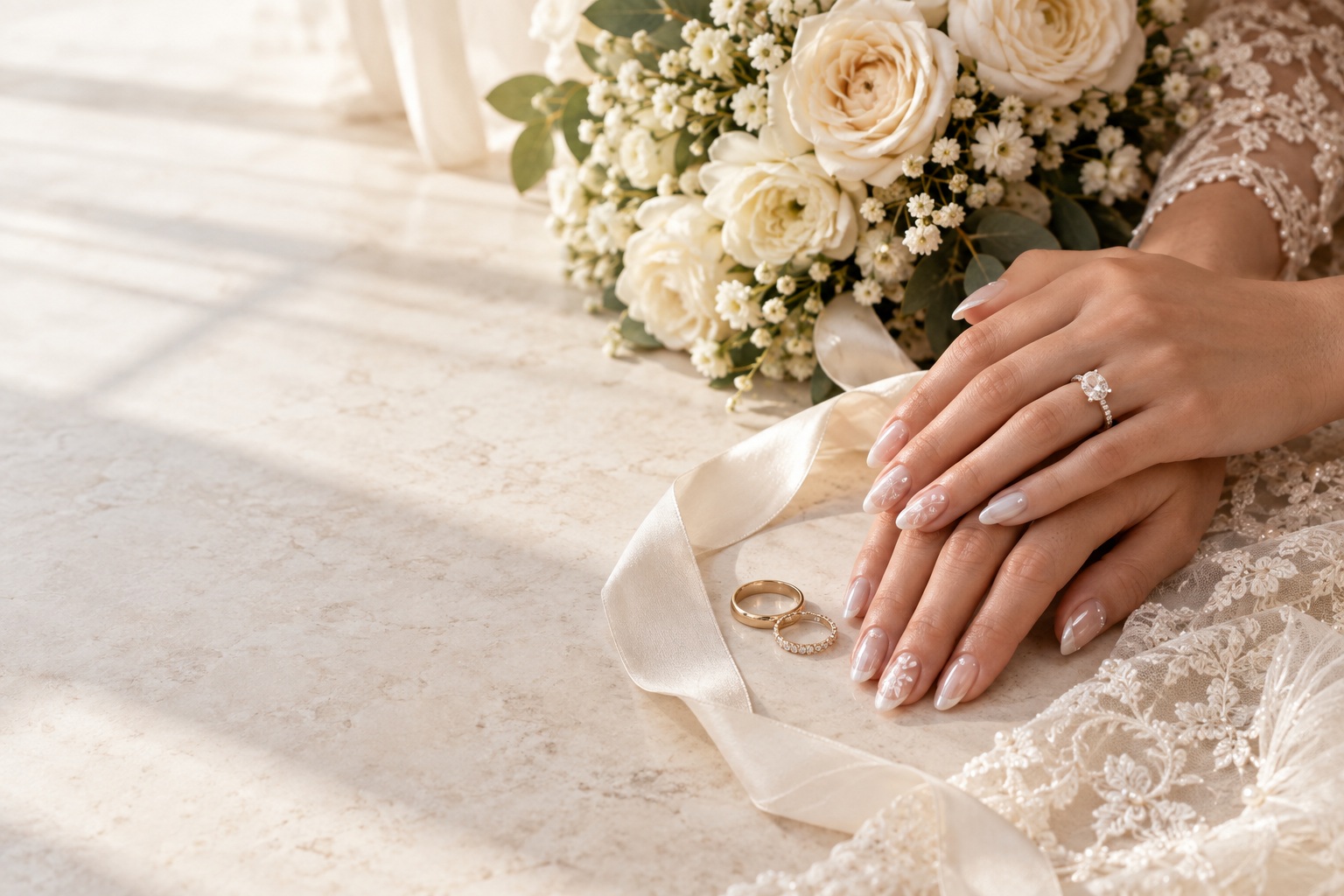
Textural romantic nail art uses raised details to make the manicure feel almost tactile. Think tiny pearls, lace-like lines, raised gel flowers, delicate bows, or a single crystal. These details catch shadows as well as light, which can look beautiful in close-up ring photographs. They are especially effective when your wedding style includes pearl jewelry, lace, vintage details, or a floral design that you want to echo rather than copy literally.
The advantage is personality. A plain blush base becomes distinctive with one small pearl or a sculpted flower. The limitation is comfort and durability. Raised details can catch on hair, veil fabric, or clothing, and they may feel less practical if you work with your hands immediately before the wedding. Ask how the element will be secured, whether it will snag, and how easy it is to repair.
Keep the base simple when using texture. A milky nude, clear pink, or soft French gives the eye a place to rest. For shorter nails, use a single pearl or a very small raised petal rather than a large sculpture. For longer almond or coffin shapes, you have more space, but balance is still more elegant than covering every nail.
- Best for: vintage, romantic, editorial, and detail-focused celebrations.
- Try with: medium or long almond, oval, or tapered square nails.
- Ask for: one repeated texture and a restrained base.
- Avoid: tall embellishments that could snag or distract from the ring.
Match the Design to Nail Shape, Length, and Outfit
The same romantic idea can look completely different on a short square nail and a long almond nail. Shape does not decide what you are allowed to wear, but it changes scale, line, and balance. Start with the nails you can comfortably maintain, then adapt the art rather than forcing a shape that makes you self-conscious.
Short nails
Short nails suit sheer color, micro-French tips, tiny flowers, small hearts, and a glossy or pearly finish. Keep the tip narrow and avoid placing the strongest detail at the very edge if it makes the nail look shorter. A single accent on the ring finger can give you a romantic story without overcrowding the set.
Almond and oval nails
Almond and oval shapes naturally support curved French lines, floral arcs, heart tips, and softly placed chrome. The tapered sides create a graceful frame for romantic motifs. If you want the most classic version, pair an almond shape with a sheer pink base and a fine white or blush tip. If you want more personality, add a small flower or pearl to one or two nails.
Square and tapered square nails
Square shapes make romantic art feel more graphic and modern. They are a good home for straight French lines, ribbon curves, block-color hearts, and pearl accents placed with deliberate spacing. Soften the geometry with a milky base, rounded floral details, or a glossy finish. If you choose a dark red or stronger rose, keep the art minimal so the shape remains crisp.
Let the outfit set the volume
A clean gown can support a more visible nail idea, such as pink chrome, a heart French, or a small 3D flower. A lace or beaded gown usually benefits from restraint: sheer color, a pearl glaze, or a delicate French keeps the full look from becoming crowded. If your bouquet has a distinctive flower, borrow its color or one simple shape rather than painting a literal garden across every nail.
Jewelry offers another useful filter. Pearl earrings pair naturally with pearl chrome or one tiny pearl accent. Yellow gold jewelry can make warm blush, champagne, or rose-gold details feel cohesive. Silver jewelry can support cool pink, white chrome, or icy lavender. You do not need to match metals perfectly, but repeating one finish makes the choice look intentional.
A Salon-Ready Decision Plan
Once you know which direction appeals to you, make the appointment easier by bringing one reference image and a short written brief. Do not send a folder of unrelated designs and expect the nail artist to combine them all. Choose the base, shape, finish, motif, and level of detail first.
- Name the mood: say soft bridal, modern romantic, playful, vintage, or editorial rather than only saying pretty.
- Describe the base: request sheer pink, milky nude, translucent blush, or another specific starting point.
- Choose one main feature: floral French, chrome, hearts, bows, pearls, or 3D flowers.
- Set the scale: explain whether you want micro accents on every nail or a feature on one or two nails.
- Show the outfit: bring a dress or bouquet photo so the color and visual volume can be judged together.
- Confirm the technique: ask whether the look needs gel, chrome powder, builder gel, hand painting, or embellishments.
- Schedule a test: if the design is intricate or unfamiliar, try one nail or a full test set before the wedding week.
Plan the final manicure close enough to the ceremony that it looks fresh, but not so close that a small repair becomes a crisis. Your artist can recommend timing based on the service and your nails. Avoid trying a new length, shape, or product for the first time immediately before the wedding. Comfort matters because your hands will appear in ring exchanges, bouquet portraits, invitations, cake cutting, and hugs.
Take a few phone photos in daylight after the set is finished. Check whether the base looks too opaque, whether the textural details snag, whether the French line is even, and whether the art still feels like you without the salon lighting. If one element feels too loud, it is easier to simplify one accent nail than to regret the entire design.
Sources and Methodology
This comparison was informed by ten US-oriented organic search results covering bridal manicure guidance, romantic nail design taxonomies, French tips, chrome finishes, floral art, and heart or bow details. The article treats subjective style choices as advice rather than fact. Technique and trend references were checked against page-level notes, while the recommendations for shape, scale, outfit, and comfort are editorial guidance for choosing among viable looks.
FAQ
What is the most romantic nail art for a wedding?
There is no single best design, but a sheer base with a fine French tip and tiny floral, pearl, or heart accents is an easy romantic starting point. Choose the version that fits your dress and the amount of detail you normally enjoy wearing.
Can romantic nail art work on short nails?
Yes. Short nails look polished with micro-French lines, sheer pink, tiny flowers, small hearts, and pearly gloss. Keep the decoration scaled to the nail and use one or two accent nails if a full design feels crowded.
Are chrome nails too trendy for a wedding?
Not necessarily. A soft pearl or blush chrome over a simple base can look timeless because the design remains restrained. If you are concerned about longevity in photographs, choose a subtle glaze rather than a high-contrast mirror finish.
What romantic nail design looks best with a lace dress?
A sheer pink or milky base with a thin French tip, small pearls, or a few delicate floral details usually complements lace without competing with it. Avoid covering every nail with dense art unless the dress itself is very simple.
Should every nail have the same romantic design?
No. Repeating the same base and using one or two accent nails often looks more intentional than placing a different motif on every finger. Consistency in color, line weight, or finish will keep a mixed set cohesive.
How do I explain romantic nail art to my nail artist?
Bring one reference image and describe the mood, base color, shape, finish, main motif, and detail level. Mention your dress, bouquet, jewelry, preferred length, and anything you do not want, such as large crystals or a strong red. This gives the artist useful boundaries instead of a vague theme.