Wedding Nails for Bride Classy Bridal
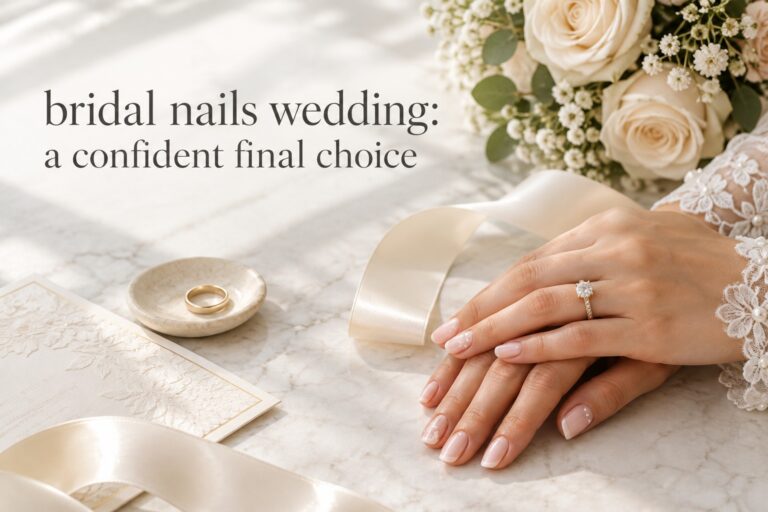
Classy wedding nails for a bride are not limited to one shade of pale pink or one perfect French tip. The most polished manicure is the one that feels connected to your personal style, works beside your dress and jewelry, stays comfortable through the day, and looks clear in close-up photographs. It may be barely there, softly luminous, finely detailed, or quietly modern. The common thread is control: every choice has a reason, and no single detail has to compete with the ring, bouquet, or gown.
Current bridal coverage points toward understated but deliberate choices. Professional nail artists are describing wedding manicures as an extension of the whole look rather than a separate trend exercise, while milky finishes, micro French tips, delicate chrome, pearls, and fine lace details keep appearing in refined inspiration. The useful lesson is not to copy a named trend. It is to choose a foundation you would still like in your photographs, then add only the amount of detail that suits you.
What classy bridal nails are changing right now
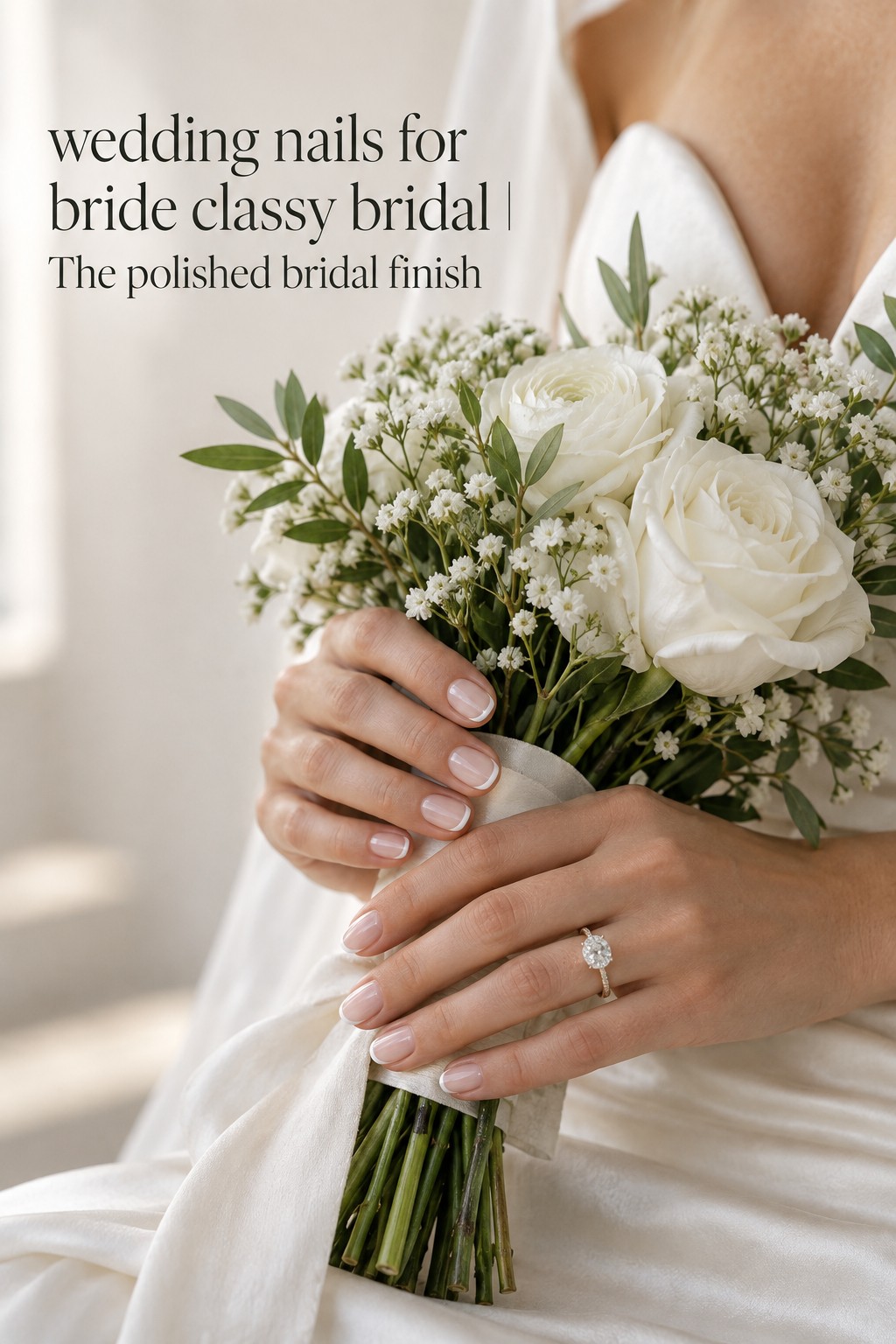
Classy bridal nails are moving toward edited design. That does not mean every bride needs a short, plain, neutral manicure. It means the visual idea is easy to understand at a glance. A sheer base may be paired with a very thin tip. A pearl finish may be used across every nail with no extra decoration. A lace accent may appear on two fingers instead of becoming a full illustrated pattern. The result has enough personality to feel chosen, but enough breathing room to remain elegant.
The base is doing more work
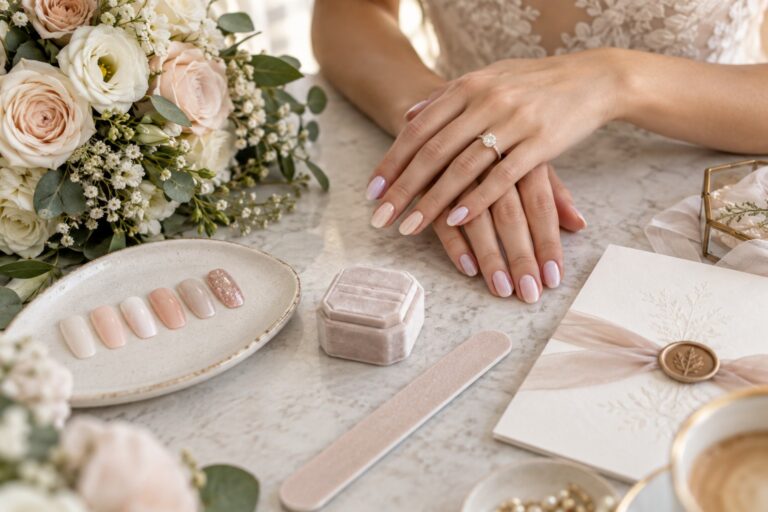
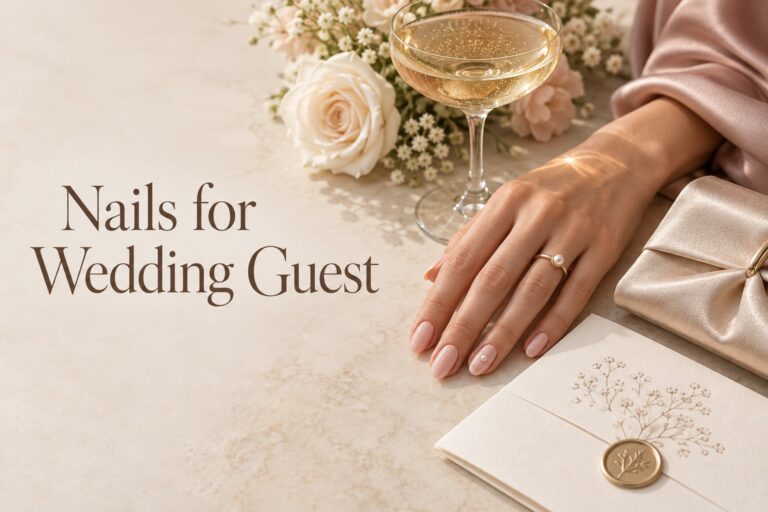
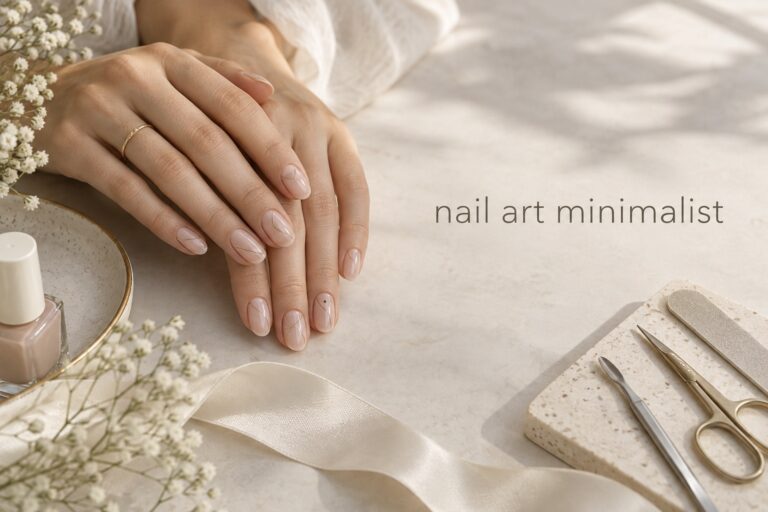
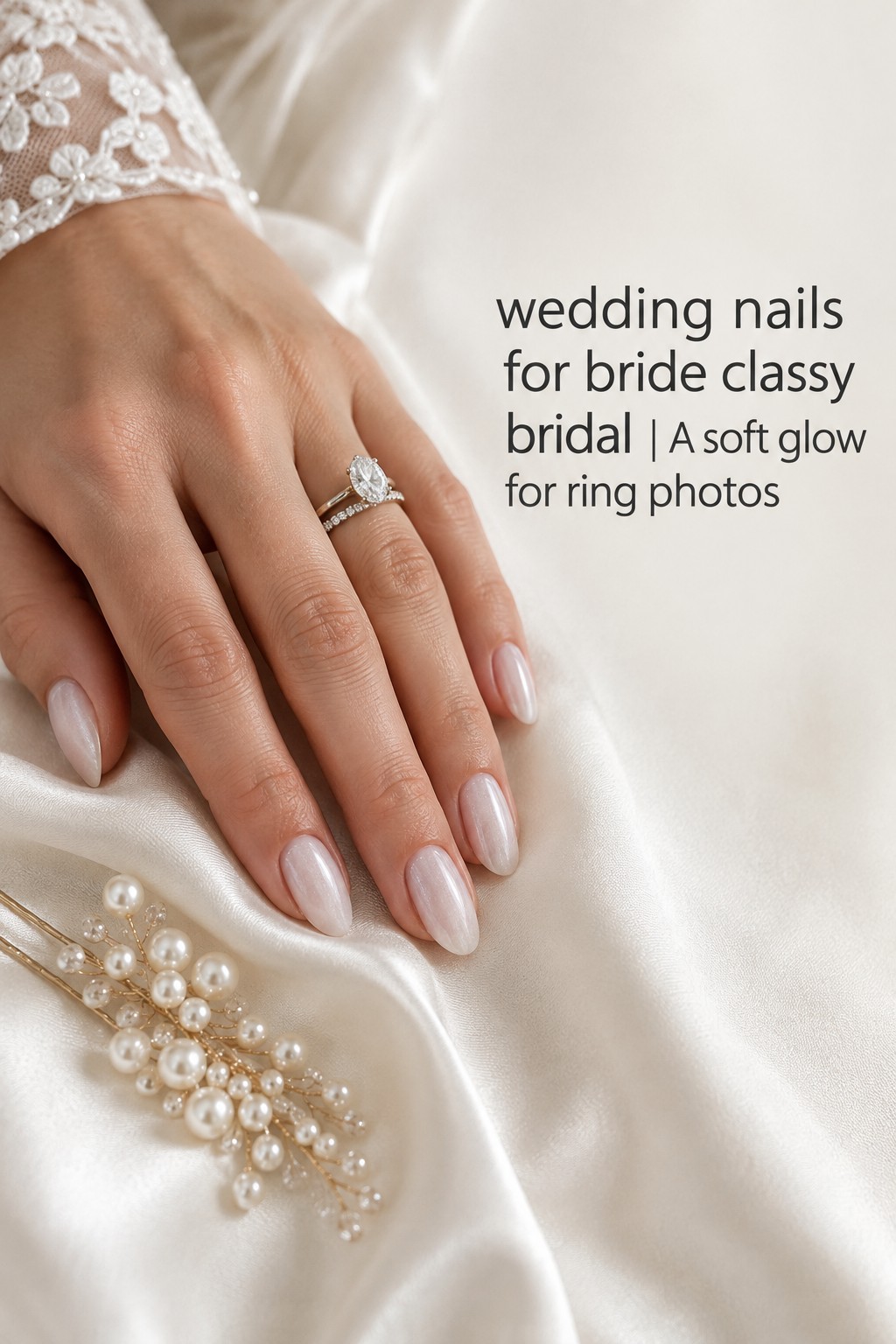
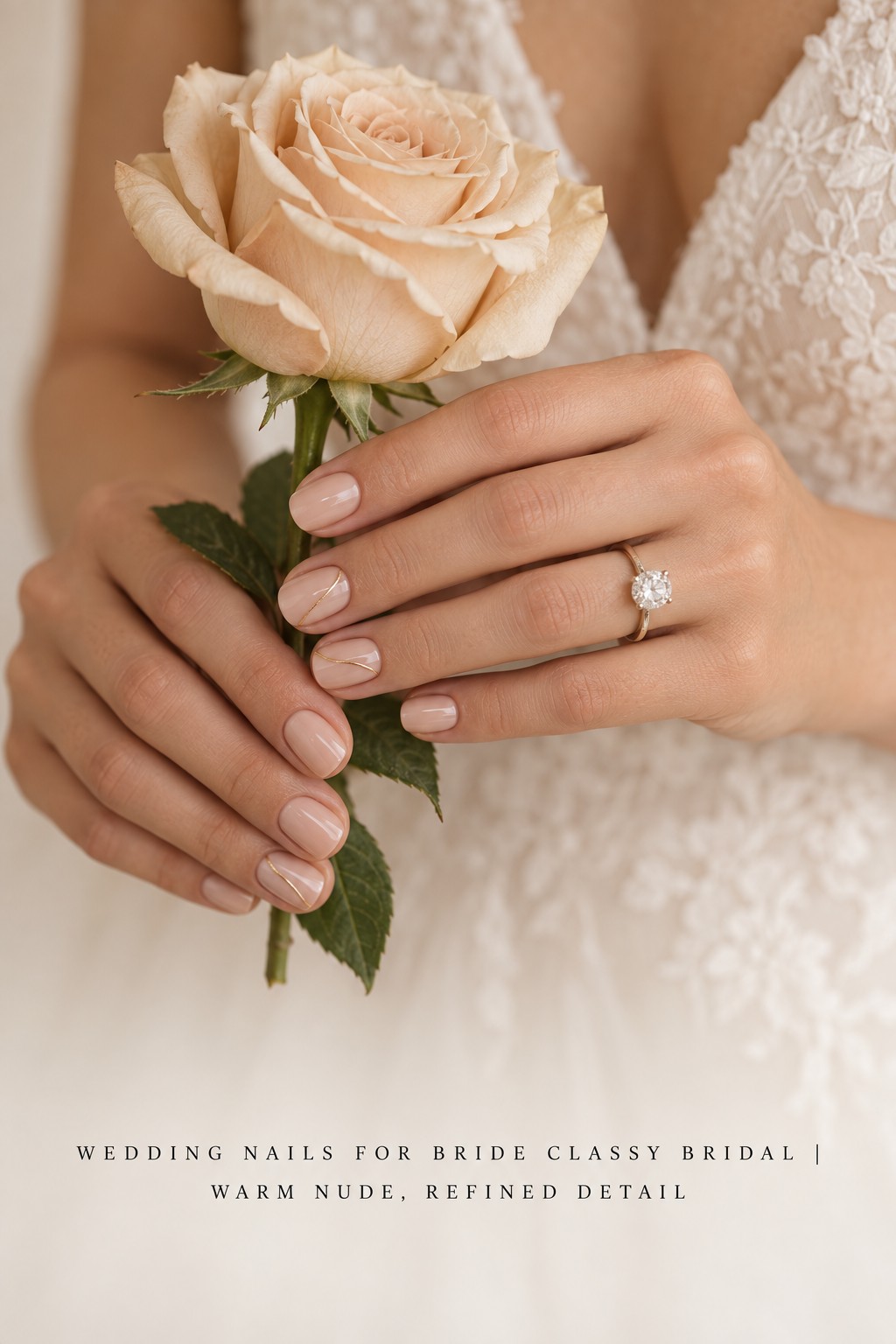
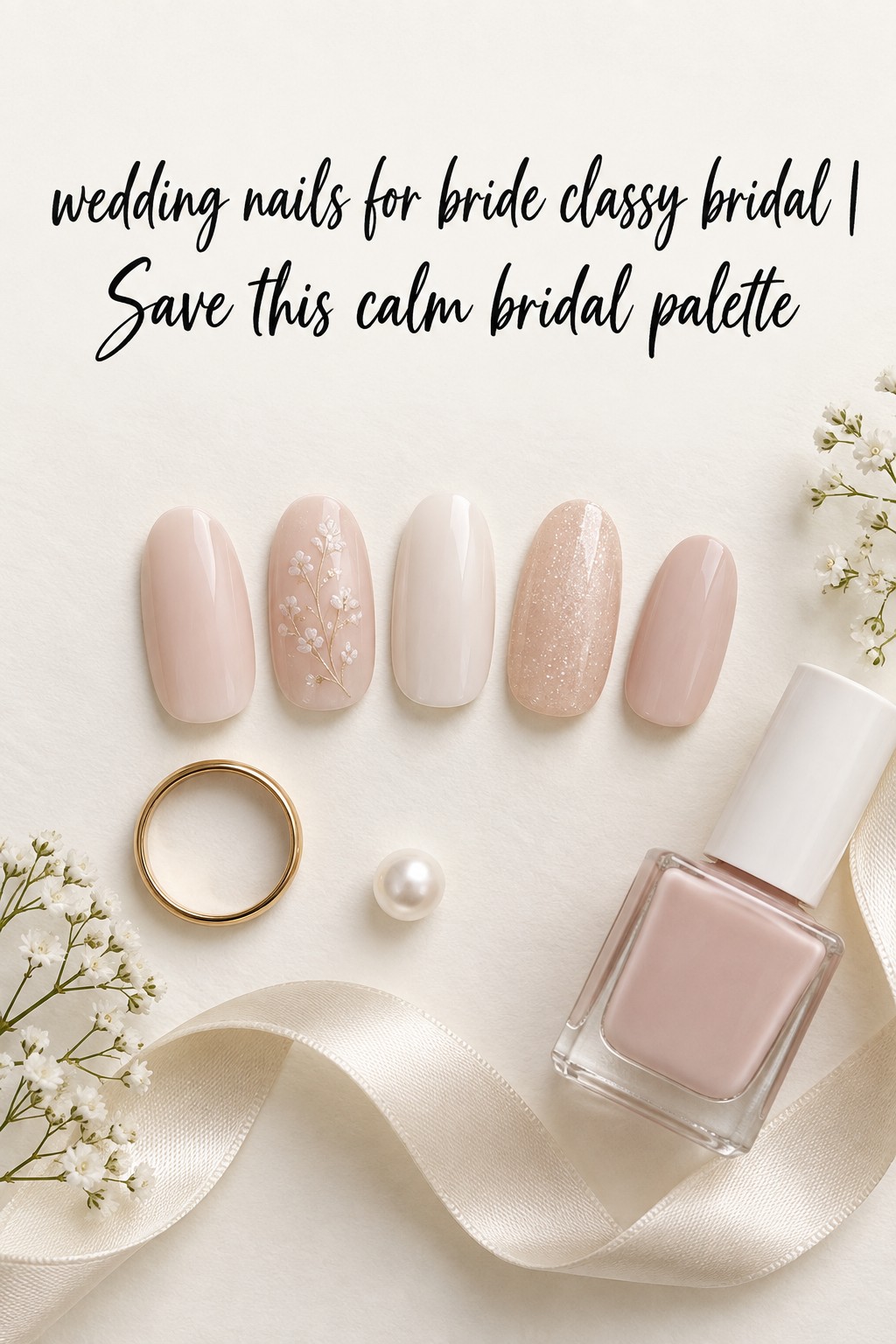
A refined base can make a simple manicure look expensive and intentional. Sheer blush lets your natural nail show through and works well when you want softness. Milky white creates a clean veil of color without the hard contrast of bright white. A warm nude can echo champagne, gold, or beige details. A cool pink may suit silver jewelry and a blue-white gown. Instead of beginning with nail art, ask which base makes your hands look rested and your rings easy to see.
Turn wedding inspiration into a plan you can actually follow.
Zarellea brings your guest list, budget, vendors, and day-of details into one shared space — so no beautiful idea gets lost in the shuffle.
Modern details are smaller and more specific
When a bridal manicure feels current, the update is often concentrated in one technique. Think of a micro French line, a soft glazed sheen, a single pearl, a narrow metallic curve, or a translucent lace accent. These details work because they give the eye a focal point while leaving the rest of the hand calm. If your dress already has beading, embroidery, or a dramatic silhouette, a quiet detail can make the manicure feel considered rather than unfinished.
Timeless does not mean anonymous
A manicure can be timeless and still look like you. If you normally wear red, a deep cherry accent on a short rounded nail may feel more bridal than a long nude extension you cannot stop noticing. If you love sparkle, a fine pearl chrome or a small amount of reflective shimmer can preserve that pleasure without covering every nail in crystals. Classy is a decision about proportion and finish, not a rule that removes your personality.
Choose the foundation before the decoration
Make the main decisions in this order: comfort and length, nail shape, base color, finish, then decoration. Changing all five at once makes it difficult to tell why a reference image feels wrong on your hand. It also gives a nail technician an unclear brief. A foundation-first approach lets you choose one variable at a time and keeps the final manicure easy to edit.
Start with the length you can actually wear
Wedding days involve more hand movement than a posed photograph suggests. You may fasten jewelry, hold a bouquet, lift a glass, adjust a veil, hug guests, use your phone, and pack for the next morning. Choose a length that lets you perform those tasks without thinking about your nails. Short or medium nails can look especially polished with a clean oval, soft square, or squoval shape. Almond extensions create a longer line, but they need to feel secure and familiar before the wedding.
Use shape to guide the mood
- Soft oval: gentle, classic, and forgiving when you want a natural-looking silhouette.
- Almond: elegant and lengthening, especially with a sheer base or slim French tip.
- Squoval: neat and practical, with enough flat edge for a graphic micro French.
- Short round: understated and comfortable, particularly good for a clean glossy or pearly finish.
- Coffin or tapered square: more fashion-forward, best when the length is already part of your style and the dress can support the stronger line.
There is no universally bridal shape. Look at your fingers, nail beds, daily habits, and usual manicure history. A shape that looks graceful in a saved image may feel awkward if it changes your grip or catches on fabric. Bring the reference, but ask your technician to translate its proportion to your hands rather than duplicate it literally.
Match the undertone, not just the color name
White, ivory, cream, blush, beige, and pink can look completely different under salon lights, daylight, and flash. If your dress is warm ivory, a very blue white may look stark beside it. If your gown is bright white, a yellowed nude may look dull. Hold polish swatches beside the dress fabric, veil, and jewelry whenever possible. A neutral that disappears into your skin can look sophisticated, while the wrong undertone can make a carefully designed manicure feel disconnected.
Choose the finish for the photograph you want
Gloss gives a traditional polished look and makes a clean shape read clearly. A milky finish softens the hand and suits a romantic, airy gown. Pearl or glazed chrome catches light in ring photographs, but it should be tested so the reflection does not overwhelm the stone. Fine shimmer can add movement to a matte or satin dress. A velvet or magnetic effect may be beautiful, yet the direction of the light matters, so ask to see it in both bright and low lighting before committing.
Match the manicure to the dress, jewelry, and photographs
Your manicure does not have to match the dress. It needs to belong in the same visual conversation. Start with the strongest feature of the outfit and decide whether the nails should echo it, soften it, or provide a calm pause. This keeps the result coordinated without turning every wedding detail into the same motif.
For a white or ivory gown
With bright white, try a sheer pink, translucent white, or crisp micro French if you want contrast that stays light. With ivory or champagne, warm blush, almond nude, creamy white, and soft gold can create a more harmonious bridge. You can still wear a cool shade, but make it intentional by repeating that coolness in silver jewelry, a hair accessory, or a bouquet detail. The closer the dress is to your chosen base, the more important the undertone becomes.
For lace, embroidery, or beading
Use the dress detail as a scale reference, not a pattern to copy across every nail. A lace gown may pair beautifully with a single lace accent over a sheer base, while a heavily beaded bodice may need a plain glossy manicure to prevent visual overload. If you borrow a line from the dress, simplify it. One fine curve or a soft texture is usually more elegant than reproducing an entire motif in miniature.
For gold, silver, or mixed-metal jewelry
Metal does not have to dictate your entire color palette, but it can guide the accent. Gold jewelry works naturally with warm nude, champagne shimmer, peachy blush, and a thin gold line. Silver or platinum can sit beside cool pink, translucent white, pearl, and icy shimmer. Mixed metals give you permission to keep the base neutral and choose one bridge detail. A narrow metallic accent on two nails can connect the ring, earrings, and bracelet without becoming a metallic theme.
For ring and bouquet photographs
Think about how your hands will be seen, not only how they look flat on a manicure table. Clean edges, even shaping, and a finish without visible chips matter more than tiny details that disappear at a distance. Ask your photographer to check a few hand positions during the engagement session or pre-wedding shoot. Practice holding the bouquet, resting your hand over your partner’s, and turning the ring toward the light. A manicure that looks lovely in those positions is a better choice than one that only works in a straight-on close-up.
Add one modern detail that still feels timeless
Once the foundation works, choose one detail family. The goal is not to collect every bridal technique. It is to make the manicure personal while protecting the calm quality that makes it classy. If you want two details, make one the finish and one the accent, such as a milky base with a pearl sheen or a sheer pink base with a fine French line.
Micro French for a sharper classic
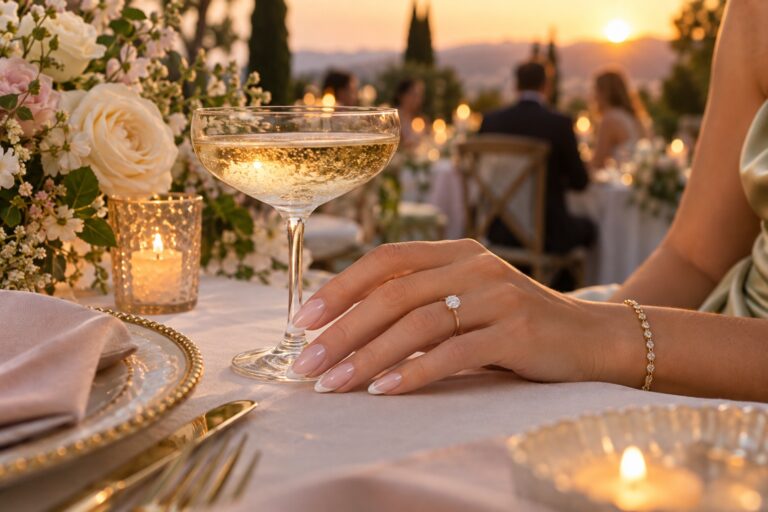
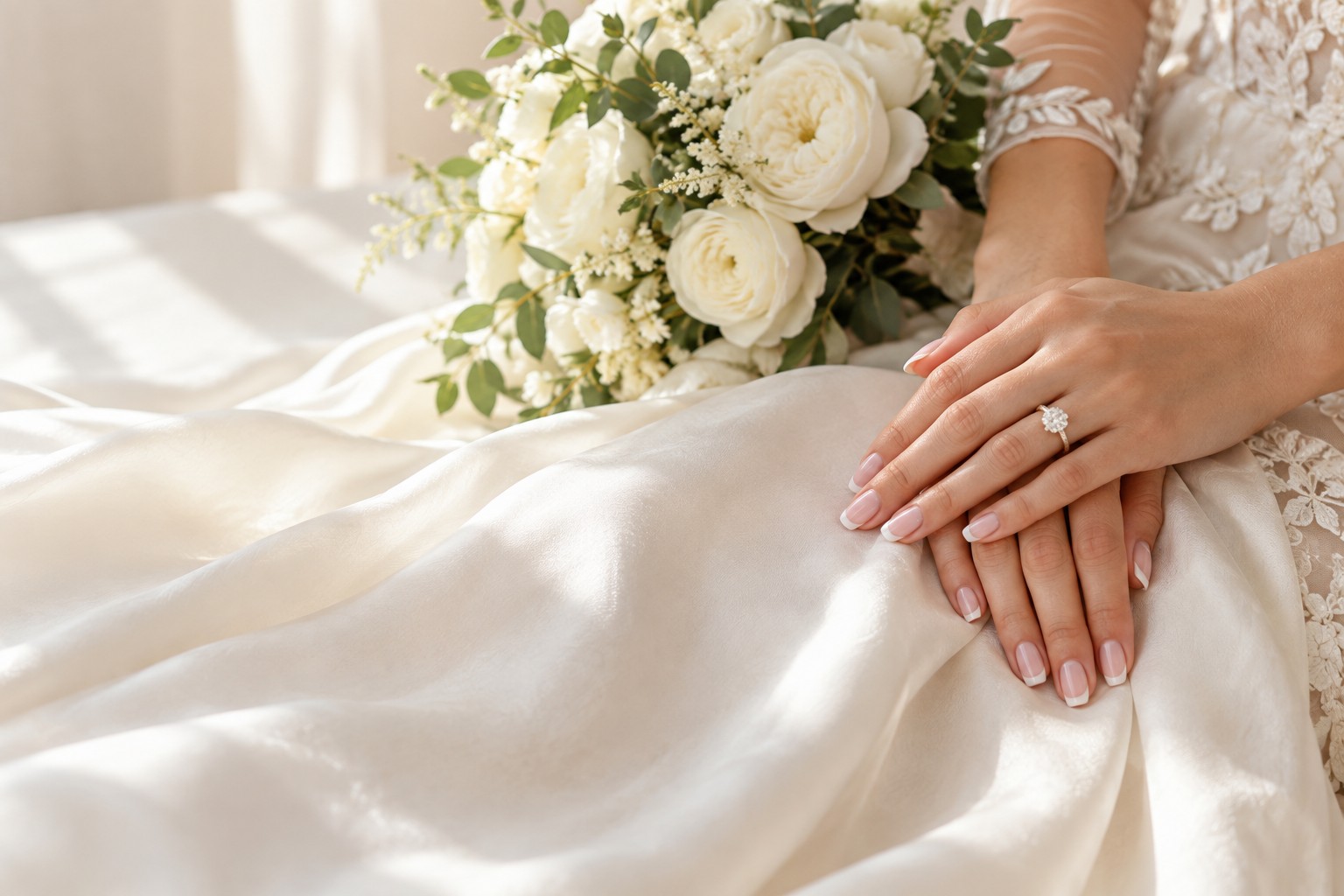
A very thin tip is an easy way to make a familiar French manicure feel current. Keep the base close to your natural nail or choose a soft pink. The tip can be white, ivory, metallic, or a muted color taken from the bouquet. The line should follow the shape rather than look pasted across it. On short nails, a narrow curved tip often feels cleaner than a thick traditional band.
Pearls for texture without heavy sparkle
A pearl finish or one tiny pearl accent gives dimension in soft light. It works especially well with satin, silk, tulle, and romantic photography. Keep the surface smooth enough that it will not catch on lace or a veil. If you use raised pearls, place them where they will not interfere with rings, gloves, or the hand that carries the bouquet.
Chrome for a luminous, not futuristic, result
Soft pearl chrome is more versatile for a bride than a strongly mirrored silver. Ask for a translucent base underneath so the shine has warmth and depth. You can use the effect on every nail for a clean statement or reserve a subtle chrome line for two accents. Check the finish beside your ring because strong reflection can compete with a faceted stone in close-up images.
Lace and botanical details for a personal connection
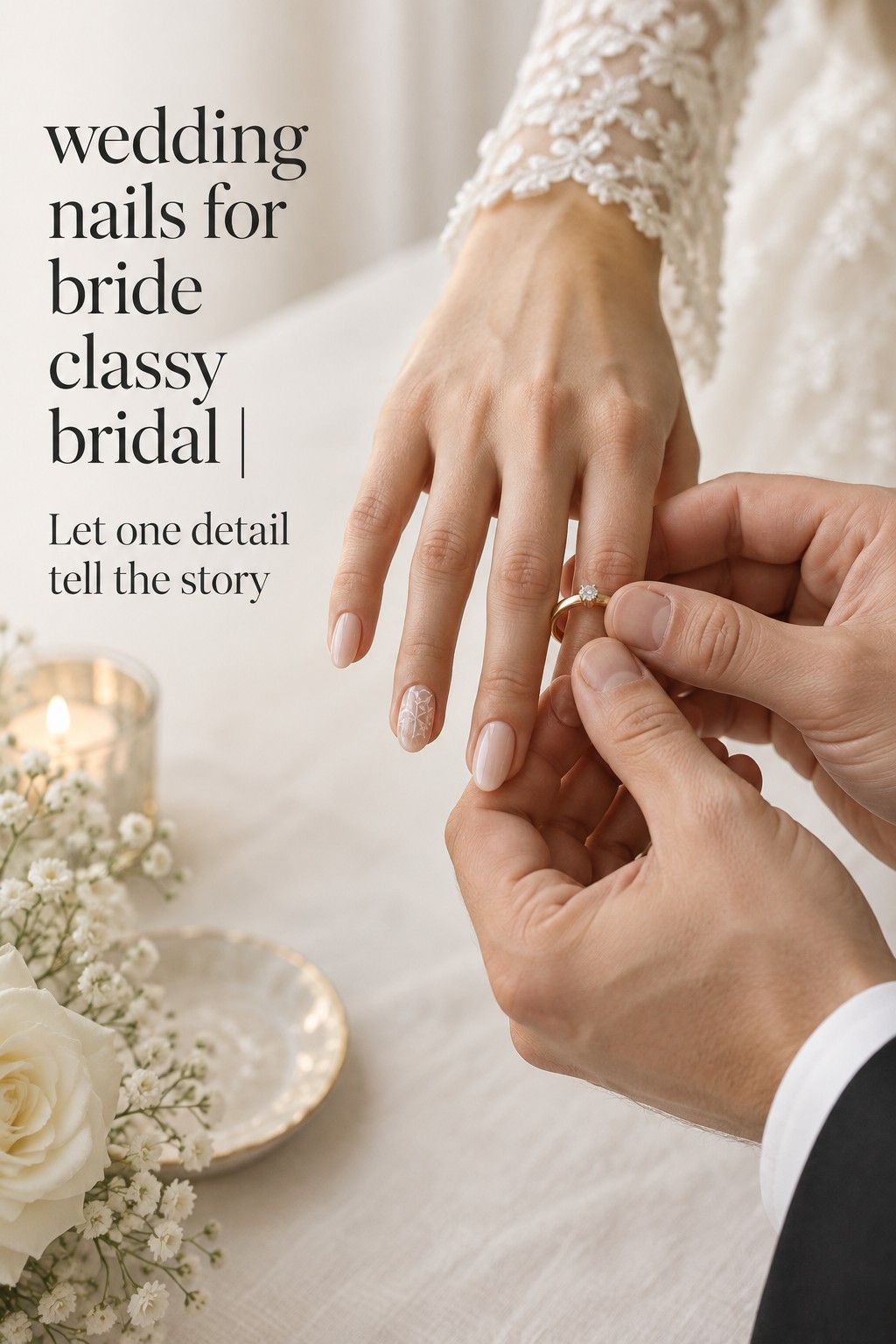
Fine lace lines, a tiny flower, or a leaf can connect the manicure to your dress or bouquet without turning the hand into a pattern board. Choose one motif and repeat it lightly on one or two nails. A technician will work more accurately if you bring a crop of the actual lace or a photograph of the flowers, then explain what should be simplified. The goal is an impression of the detail, not a miniature copy.
A personal color accent
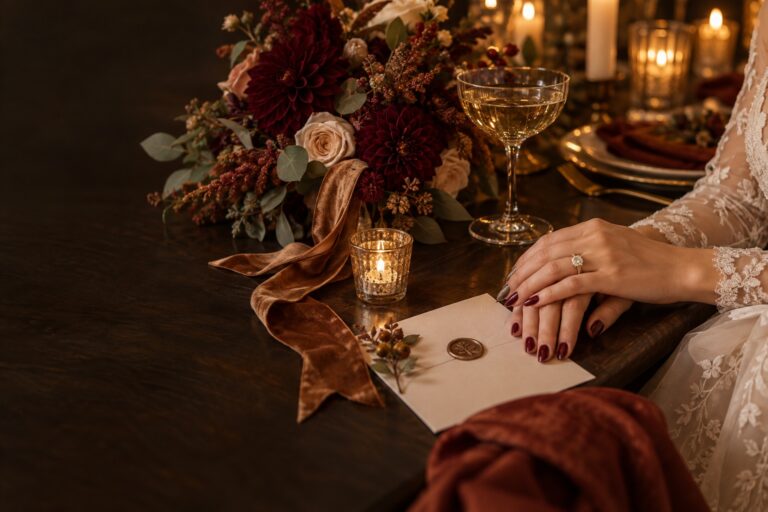
A muted blue, berry, green, or red can be classy when it is treated as an intentional accent. Repeat the shade somewhere small, such as a ribbon, shoe, bouquet stem, or stationery detail, so it feels connected. Keep the rest of the manicure quiet and decide whether one nail, a tip, or a thin line is enough. The best color accent looks like a signature, not a surprise that happened to be added at the appointment.
Plan the trial and wedding-week appointment
A classy result is easier when the service is tested before the final week. Book a trial early enough to learn how your nails respond and to decide whether you like the length, product, and finish. Wear or bring a similar ring, show the dress fabric or veil, and take photographs in daylight. If you are considering extensions, gel, dip, press-ons, or a new shape, test that method before the wedding appointment rather than discovering its feel on the day before.
Write a salon brief
Describe the manicure in a sequence your technician can execute: “I want a medium soft almond, sheer warm blush base, glossy finish, and a very thin ivory French line on all ten nails.” If you want a detail, name its scale and placement: “Please add a fine pearl accent on the ring fingers, flush enough not to catch.” Bring one main reference and one backup, not a folder of contradictory images. Explain what you do not want as clearly as what you do want.
Schedule for reliability, not just freshness
The right timing depends on the product, your nail growth, the service provider, and your comfort. Many brides prefer the final manicure close to the wedding so the finish is fresh, but the exact day should leave room for a repair or adjustment. Ask your technician how long the chosen system normally looks its best and what to do if a nail chips. Do not schedule an untested treatment immediately before the ceremony simply because it photographs beautifully online.
Check comfort and aftercare
Practice the hand movements that matter to you. Can you fasten your shoes, close a clasp, type a message, hold a glass, and handle the bouquet? Keep cuticle oil and a small repair plan available if your technician recommends them. Avoid using your nails as tools during the final days, and tell the salon about sensitivities or previous reactions before the service begins. Confidence is part of the finished look, and comfort makes it visible.
Mistakes that make classy bridal nails feel less polished
- Choosing from the photo alone: the reference may rely on lighting, filters, or a hand shape unlike yours. Test the color and finish in real light.
- Ignoring the undertone: a white or nude that clashes with the dress can look harsher than expected. Compare swatches beside the fabric.
- Adding detail to solve uncertainty: more pearls, glitter, and art will not fix a base color or shape that feels wrong. Return to the foundation.
- Trying a new length too late: unfamiliar extensions can change how you move and hold the ring. Wear the length during a trial.
- Copying lace literally: miniature patterns can become busy. Ask for a simplified line, texture, or single accent.
- Forgetting the rest of the look: consider the jewelry metal, bouquet, sleeves, veil, and photographs before locking the design.
- Bringing too many references: a technician needs a clear direction. Choose one primary image and explain the non-negotiable parts.
The most useful final check is to look at the manicure as a complete sentence. Does the base flatter your hands? Does the shape let you move? Does the finish support the dress fabric? Is the accent visible without becoming the headline? Will you recognize yourself in a close-up photograph? If the answer is yes, the design is probably doing its job. You do not need to prove that the manicure is special by making it complicated.
Sources and methodology
This guide was developed from a US-focused review of ten organic results for the target query and related bridal manicure searches. The research compared professional advice, current editorial examples, practical wedding guidance, and classy bridal galleries. Vogue’s professional bridal manicure round-up was used for the principle of understated personal style, while Who What Wear’s bridal manicure guide informed the discussion of milky finishes, photography, and appointment planning. Design recommendations in this article are editorial guidance, not claims of personal testing or professional nail services.
FAQ
What are the classiest wedding nails for a bride?
The classiest choice is usually a comfortable shape, an even base in a flattering undertone, and one controlled detail. Sheer blush, milky white, soft French, pearl, and fine chrome can all look polished when they suit your dress, jewelry, and personal style.
Are milky nails good for a bridal manicure?
Yes. Milky nails create a soft, luminous veil of color that works with many white and ivory gowns. Ask to see the shade beside your dress because the balance of pink, cream, and white can change the final effect.
What nail shape is best for a bride?
The best shape is the one you can wear comfortably and that complements your nail bed. Oval and almond look soft and lengthening, squoval is neat and practical, and short round nails can look very refined with a glossy or pearly finish.
Should bridal nails match the wedding dress?
They do not need to match exactly. Coordinate the undertone, finish, or one small detail with the dress, jewelry, or bouquet. A manicure usually looks more elegant when it belongs to the same visual palette without repeating every motif.
How far before the wedding should a bride have a nail trial?
Schedule the trial early enough to test the shape, product, length, color, and comfort before the final appointment. If you are considering extensions or a technique you have never worn, allow enough time to change direction without wedding-week pressure.
Can a bride wear chrome or glitter and still look classy?
Yes, especially when the effect is soft and intentional. Pearl chrome, fine shimmer, a narrow glitter line, or one reflective accent can add light without overwhelming the hand. Test the reflection beside your ring and in the lighting where your photographs will be taken.
What should I tell my nail technician for classy bridal nails?
Give the technician the shape, length, base color or undertone, finish, accent, and placement in that order. Bring one clear reference, the dress or a fabric swatch, and a similar ring. Explain what you want to avoid, such as heavy art, a stark white, or a length you cannot comfortably wear.