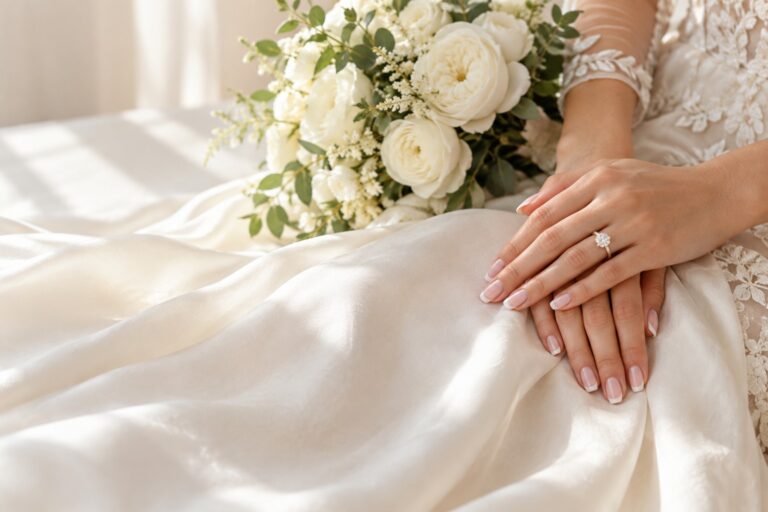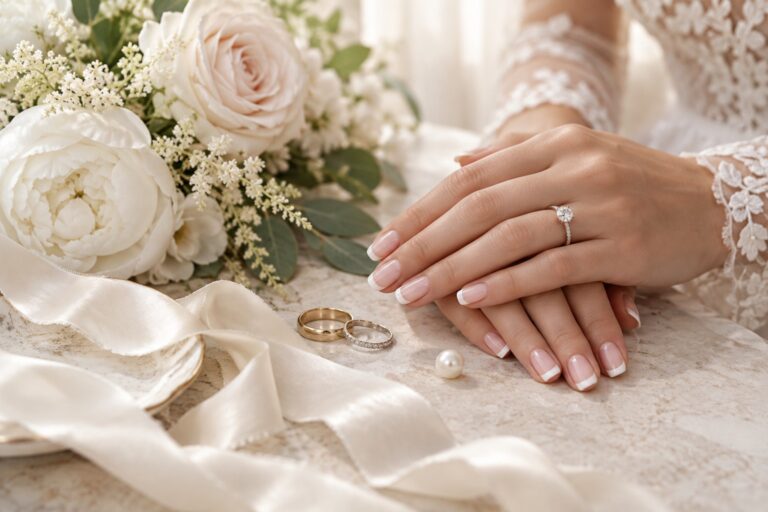
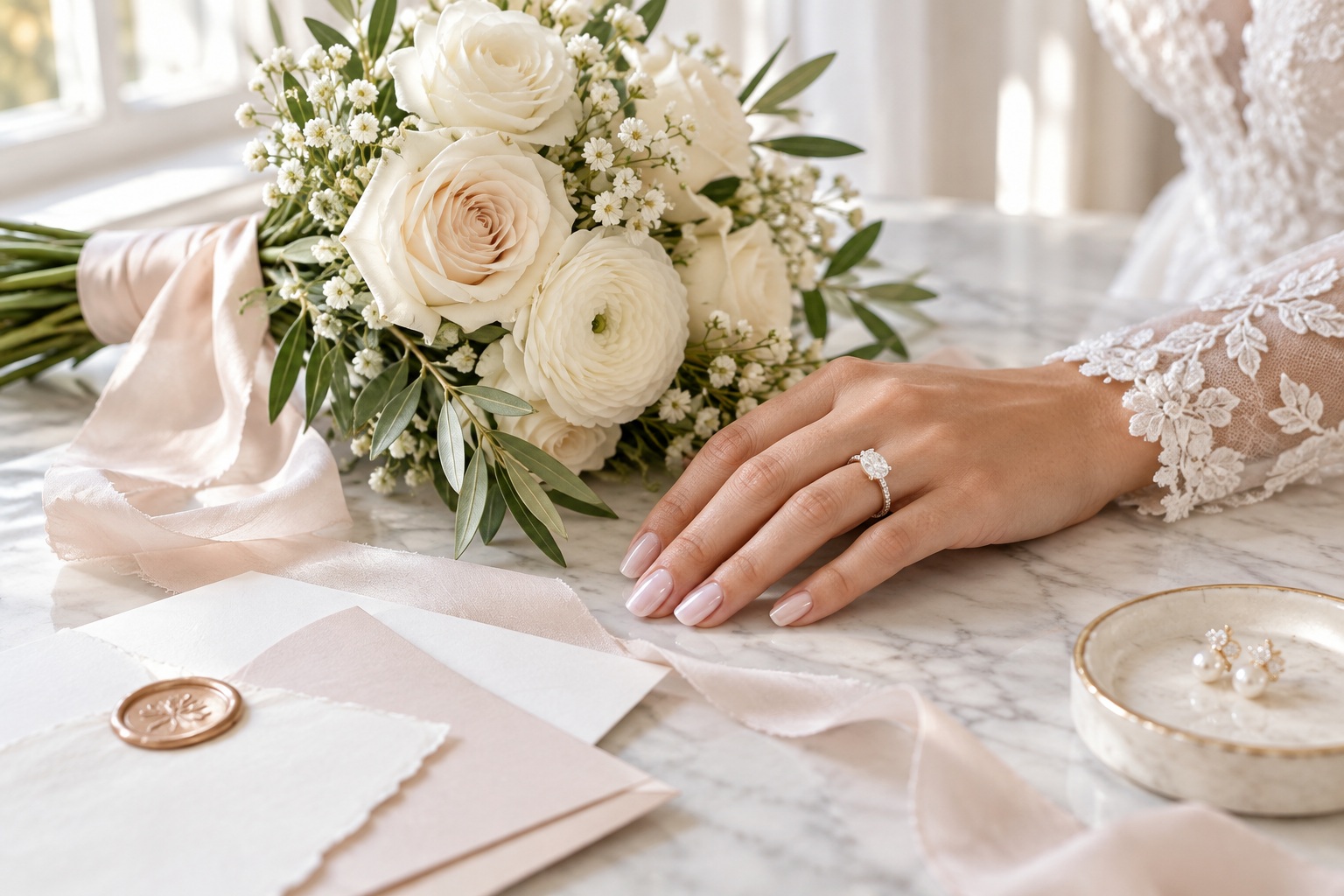
Simple Wedding Nails: Elegant Ideas for Every Bride
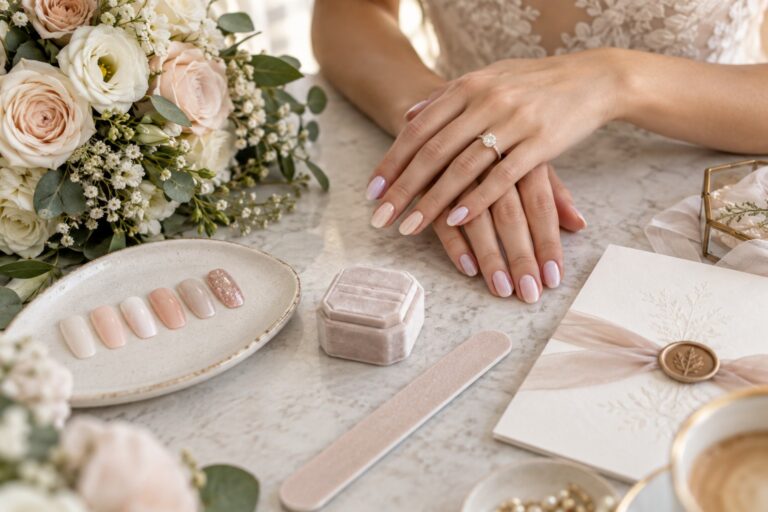
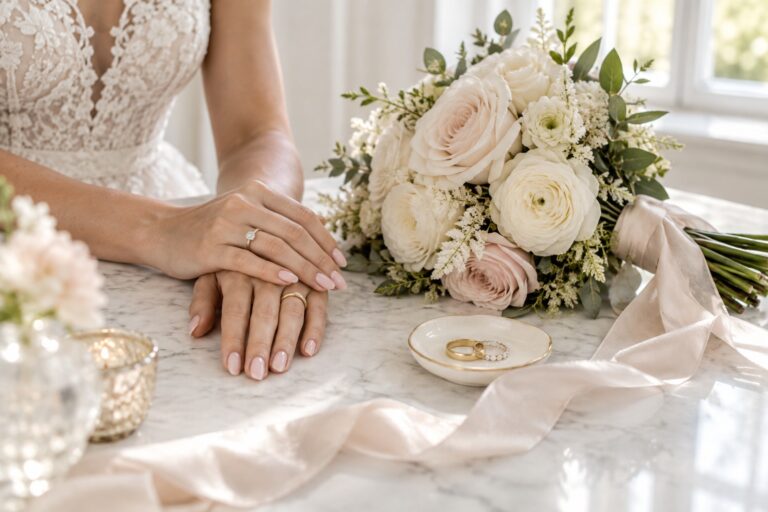
Simple wedding nails are not simply a choice between pale pink and a French manicure. They are a small styling decision that has to work during ring photographs, bouquet portraits, hugs, champagne toasts and ordinary moments that happen to be captured. The best version looks polished without asking you to wear a length, color or decoration that does not feel like you.
A useful way to choose is to separate the decision into four parts: the base color, the nail shape, the finish and the one detail that makes the manicure yours. When those parts are balanced, a simple set can feel intentional rather than unfinished. The ideas below explain what is changing in minimalist bridal nails, how to edit inspiration photos, and how to give your nail technician a brief that is realistic for your hands and your schedule.
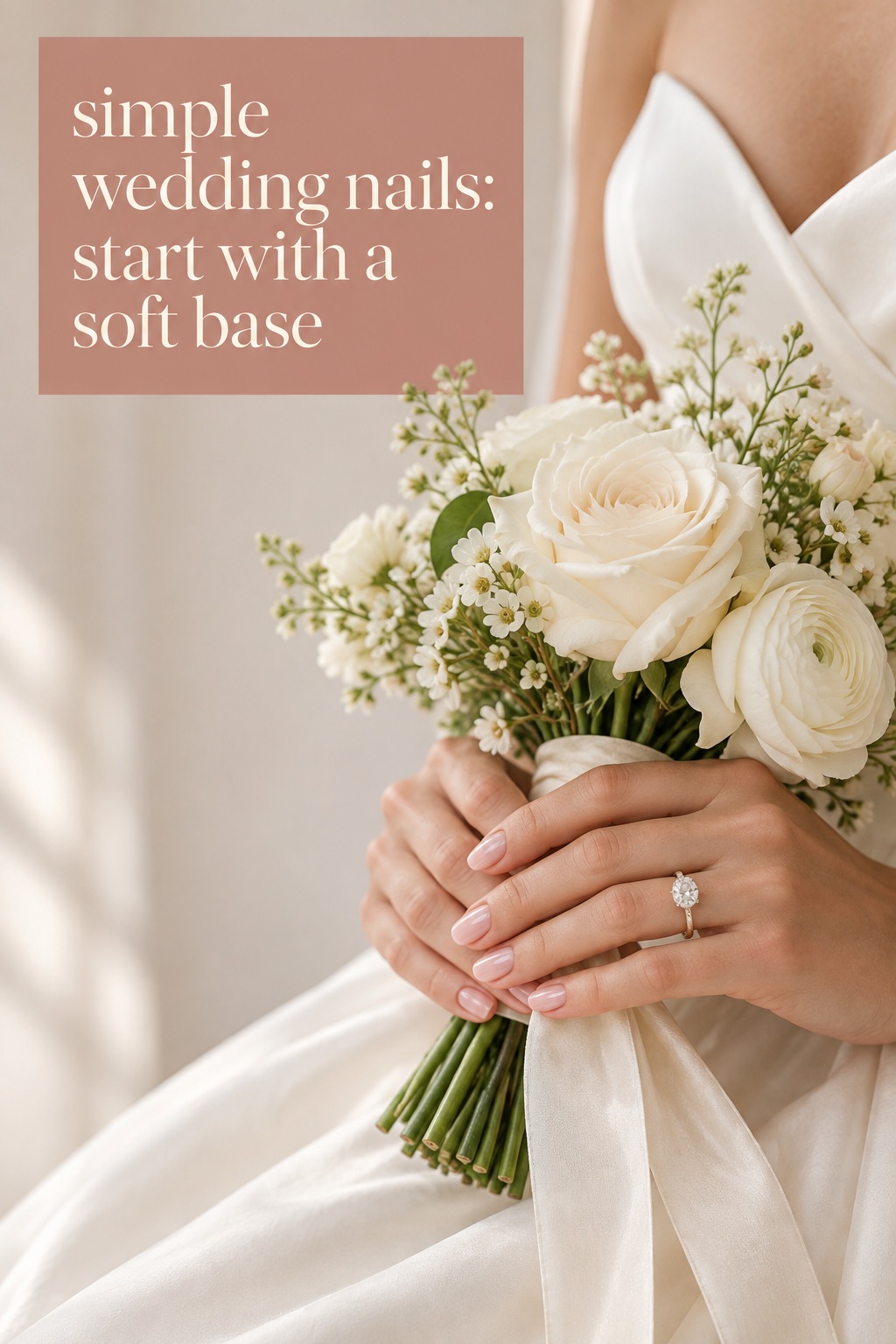
What Simple Wedding Nails Are Actually Solving
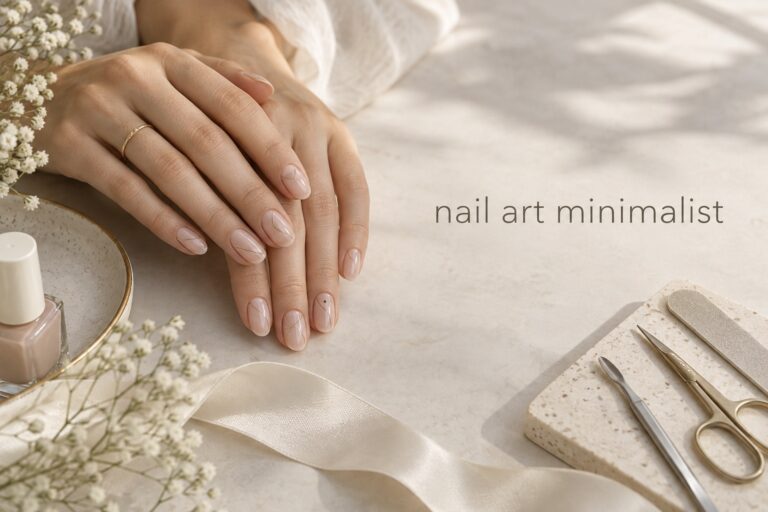
The word simple can describe a color, a shape, a technique or the overall impression. A short glossy nude is simple because it uses little decoration. A pearl chrome almond manicure can also be simple if the surface is clean and the finish is the only focal point. A micro-French with one tiny accent may take more skill but still look quiet from a distance.
That distinction matters because many inspiration galleries place very different looks under the same label. The Knot’s bridal collection moves from sheer white and short pearl chrome to milky white, tiny rhinestones and deeper red, which shows that simplicity is more about editing than one approved shade. Your job is to decide what should stay quiet and what deserves attention.
Turn wedding inspiration into a plan you can actually follow.
Zarellea brings your guest list, budget, vendors, and day-of details into one shared space — so no beautiful idea gets lost in the shuffle.
- For photographs: choose a smooth surface, even edges and a contrast level that lets the ring and bouquet remain visible.
- For personal style: keep one element that feels like you, whether that is a barely-there base, a graphic tip, a metallic line or a touch of color.
- For comfort: select a length and shape you can use while fastening clothing, holding flowers, greeting guests and carrying a clutch.
- For longevity: match the service to what your nails tolerate and leave enough time for a trial or repair.
A simple manicure usually looks strongest when it has one lead idea and no more than one supporting idea. For example, a sheer pink base can lead while a pearl finish supports it. A French tip can lead while one ring-finger detail supports it. When several finishes compete, the manicure may stop looking simple even if every individual element is delicate.
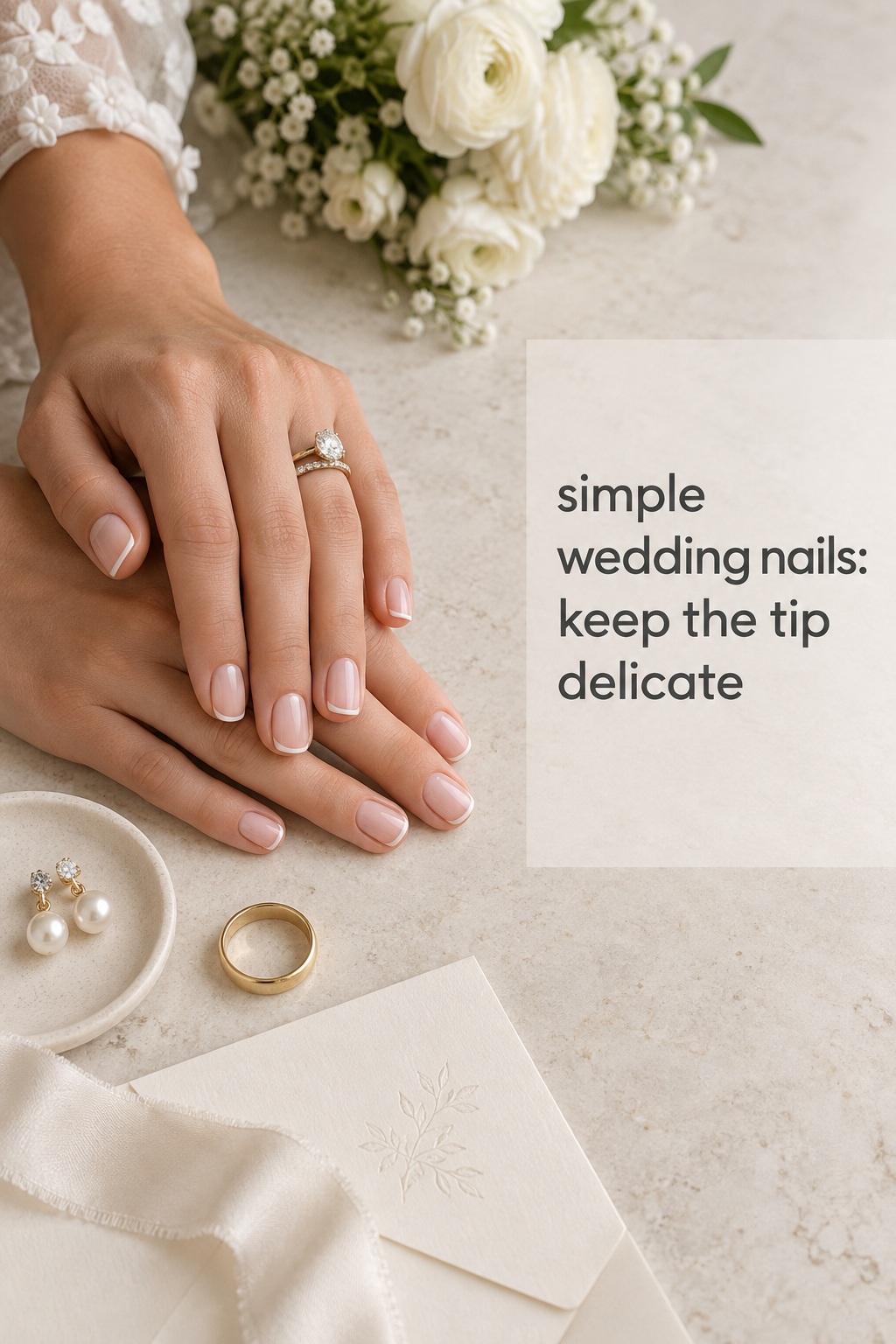
How Minimalist Bridal Nails Are Changing
Current bridal nail coverage points toward a more deliberate version of minimalism. In Vogue’s professional-led wedding nail guide, the emphasis is on an understated extension of personal style, with small metallic accents, pearls, gems and classic nude finishes used carefully rather than piled together. That point of view is useful because it treats the manicure as part of the complete look, not as a separate trend board.
The shift is visible in the details brides are saving. A traditional French may become a very thin tip, a soft ombre or an inverted line. A neutral may become milky, translucent, glossy or lightly pearlescent. A decoration may appear on one or two nails instead of all ten. These changes do not make a manicure loud. They give the eye something precise to notice in a close-up.
Quiet does not mean completely plain
If you like an uncomplicated look but still want the appointment to feel special, change the finish rather than adding lots of art. A sheer blush base with a glossy top coat feels fresh. The same base with pearl powder feels luminous. A narrow white tip gives definition. One fine champagne line connects the hands to warm jewelry. This approach keeps the silhouette familiar and makes the difference visible only when light or a photograph catches it.
Small accents are doing more work
A pearl at the cuticle, a tiny silver dot, a delicate bow or a single blue stone can carry the personal story of the manicure. The placement matters as much as the object. Details near the base can frame a ring hand, while an accent at the tip can echo a French shape. Ask your technician to keep the scale proportional to your nail bed so the detail reads as intentional instead of crowded.
Simple designs are becoming more personal
A neutral manicure does not have to look generic. You can choose a base that relates to your undertone, a tip that repeats the jewelry metal, or one accent that references a meaningful color. If your dress is heavily embellished, a clean surface may be the personal choice because it protects the overall balance. If your outfit is minimal, a tiny painted detail can give the hands a little character without changing the mood.
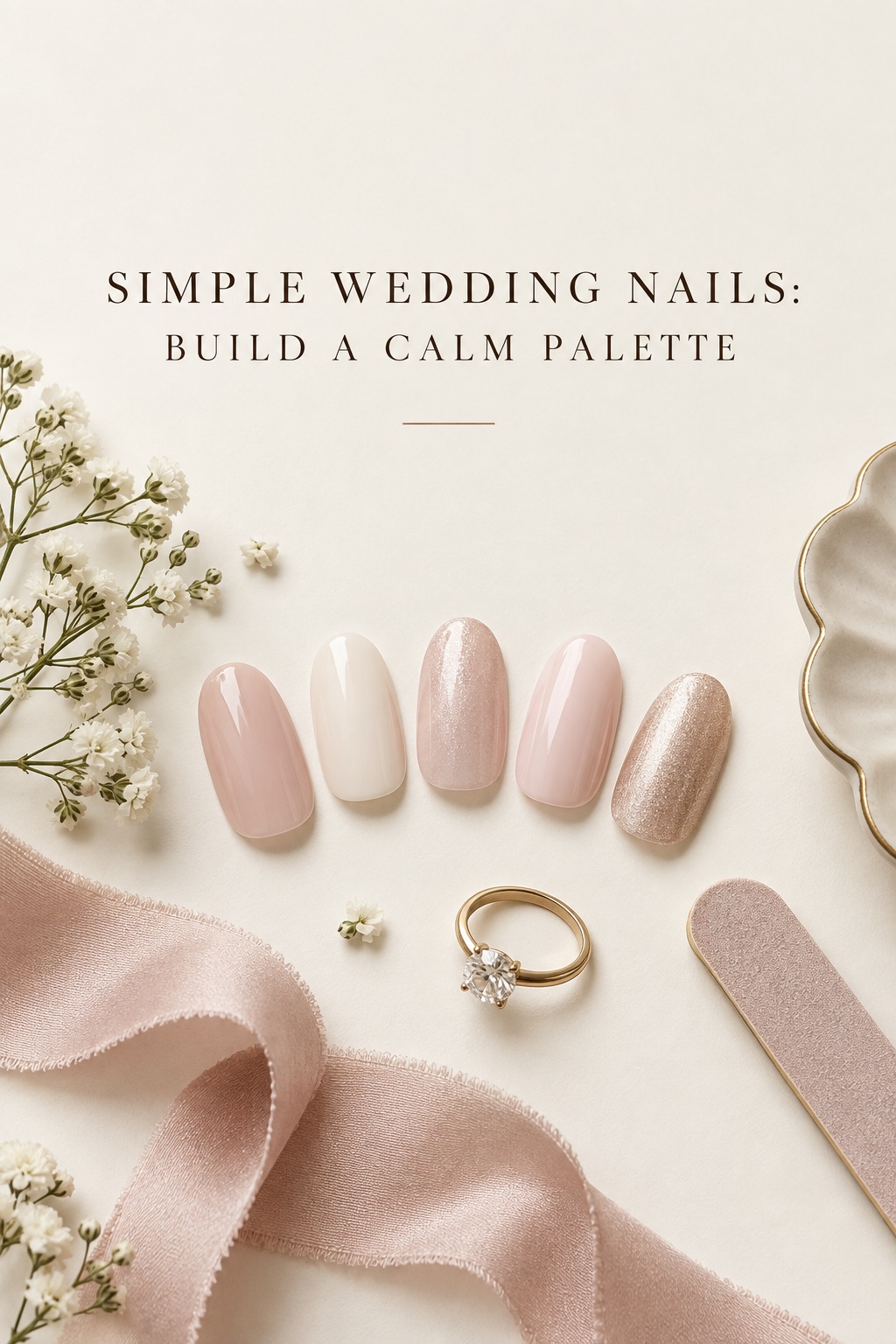
Choose the Right Base, Shape and Finish
Before saving another reference photo, choose the three building blocks that will control the final result. Think of the base as the background, the shape as the outline and the finish as the light. A technician can adjust the details, but these three decisions determine whether your simple wedding nails look soft, crisp, modern or glamorous.
Sheer pink or milky white for the most adaptable look
Sheer pink keeps the natural nail visible and can feel especially graceful when you want the hands to blend with skin, blush flowers or a soft dress. Milky white creates more contrast and reads clearly against a bouquet or darker suit. Choose sheer pink when you want flexibility across changing light. Choose milky white when you want an unmistakably bridal impression without a sharp graphic tip.
Nude and beige when you want a quiet extension of the hand
A well-matched nude can make fingers look long and the manicure look calm. The right shade is not necessarily the lightest one. Ask to compare a few undertones beside your hand in the salon’s actual light. Beige, rosy nude, peachy nude and taupe nude can all be elegant, but the wrong undertone may look gray, orange or disconnected from your skin and dress.
Short squoval for movement and practicality
Short squoval nails combine a straight edge with softened corners. They are a useful choice if you normally keep your nails short, work with your hands, or want to avoid thinking about the manicure while getting ready. This shape gives a clean canvas for sheer color, a micro-French, a single dot or a pearl finish. Keep the corners smooth so the shape looks purposeful rather than freshly cut.
Short or medium almond for a gentle lengthening effect
Almond shapes can make a simple manicure feel more elongated without needing dramatic extensions. Short almond works well with a narrow French tip or a soft ombre. Medium almond gives more space for a botanical detail, a chrome surface or a small cluster of pearls. If almond is new to you, test the length before the wedding. The shape should support your gestures, not make every task feel delicate.
Gloss, pearl, chrome or velvet light
Gloss is the easiest finish to wear with almost any dress and jewelry. Pearl adds a soft glow without looking metallic. Chrome reflects more light and can make a milky base feel modern, especially in evening photographs. Magnetic or velvet-like finishes create movement, but they are more noticeable, so keep the base quiet and let the light effect be the statement. Pick one reflective direction rather than combining chrome, glitter and foil at once.
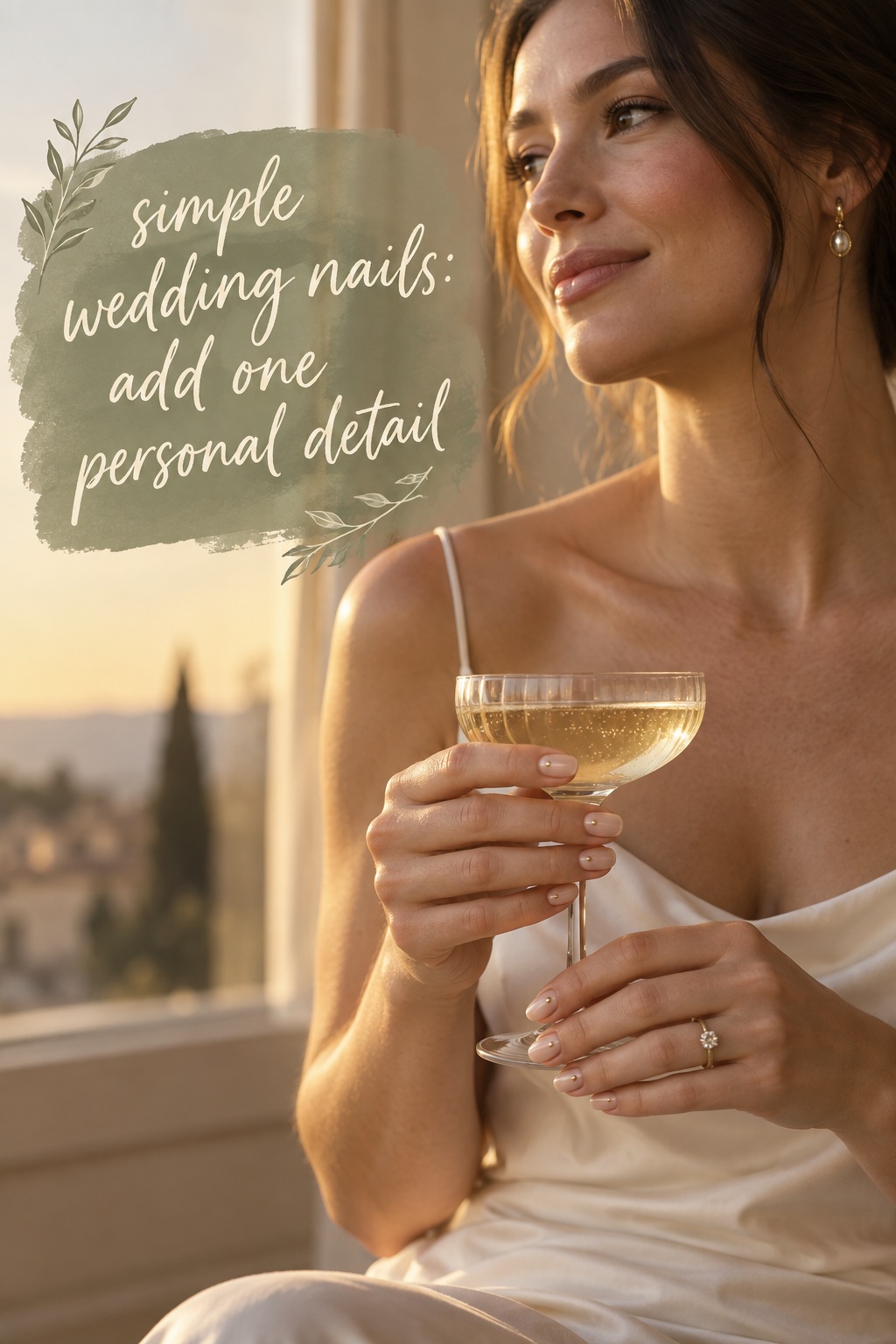
Build Simple Wedding Nails Around Your Outfit and Photos
The easiest way to personalize a simple manicure is to look at the outfit and the gestures that will appear in photographs. You do not need to match the dress exactly. Instead, decide whether the hands should blend into the look, echo one detail or offer a controlled contrast.
With a white or ivory dress
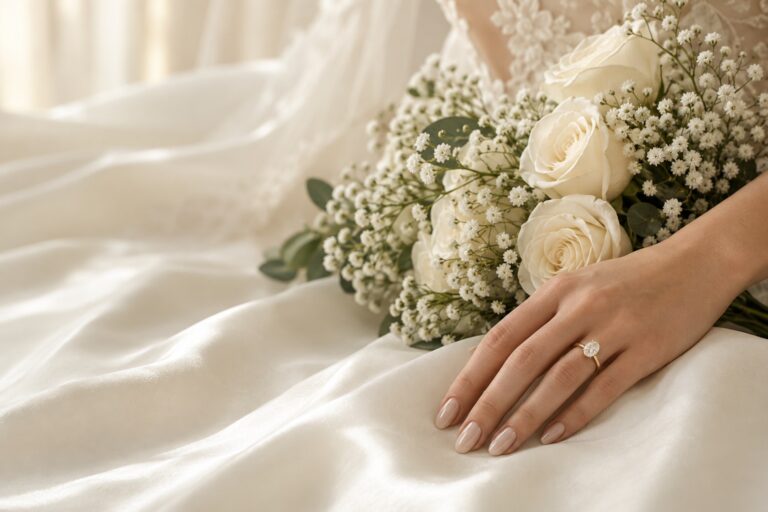
White clothing can make a manicure look warmer or cooler depending on its undertone. A sheer pink or soft beige keeps the result gentle. Milky white creates a tonal bridal effect. A silver micro-French works with cool embellishment, while a champagne line suits warm embroidery or gold jewelry. If the dress already has lace, keep the nails clean and let the texture stay on the fabric.
With a colorful or patterned outfit
Choose one color from the outfit and translate it into a softer version for the nails. A berry dress might pair with rosy nude and a tiny berry accent. A blue print could inspire pale blue tips rather than a full saturated set. When the clothing is visually busy, a glossy solid or sheer base usually photographs more cleanly than another pattern.
With gold, silver or mixed-metal jewelry
Repeat the jewelry metal only once. Gold can appear as a thin tip or tiny cuticle dot. Silver can appear as a delicate outline or a cool chrome glow. Mixed metals give you permission to choose a neutral base and one restrained accent instead of trying to place both metals on every nail. Hold your rings beside the sample because a finish that looks subtle alone may look brighter next to polished metal.
For ring and bouquet photographs
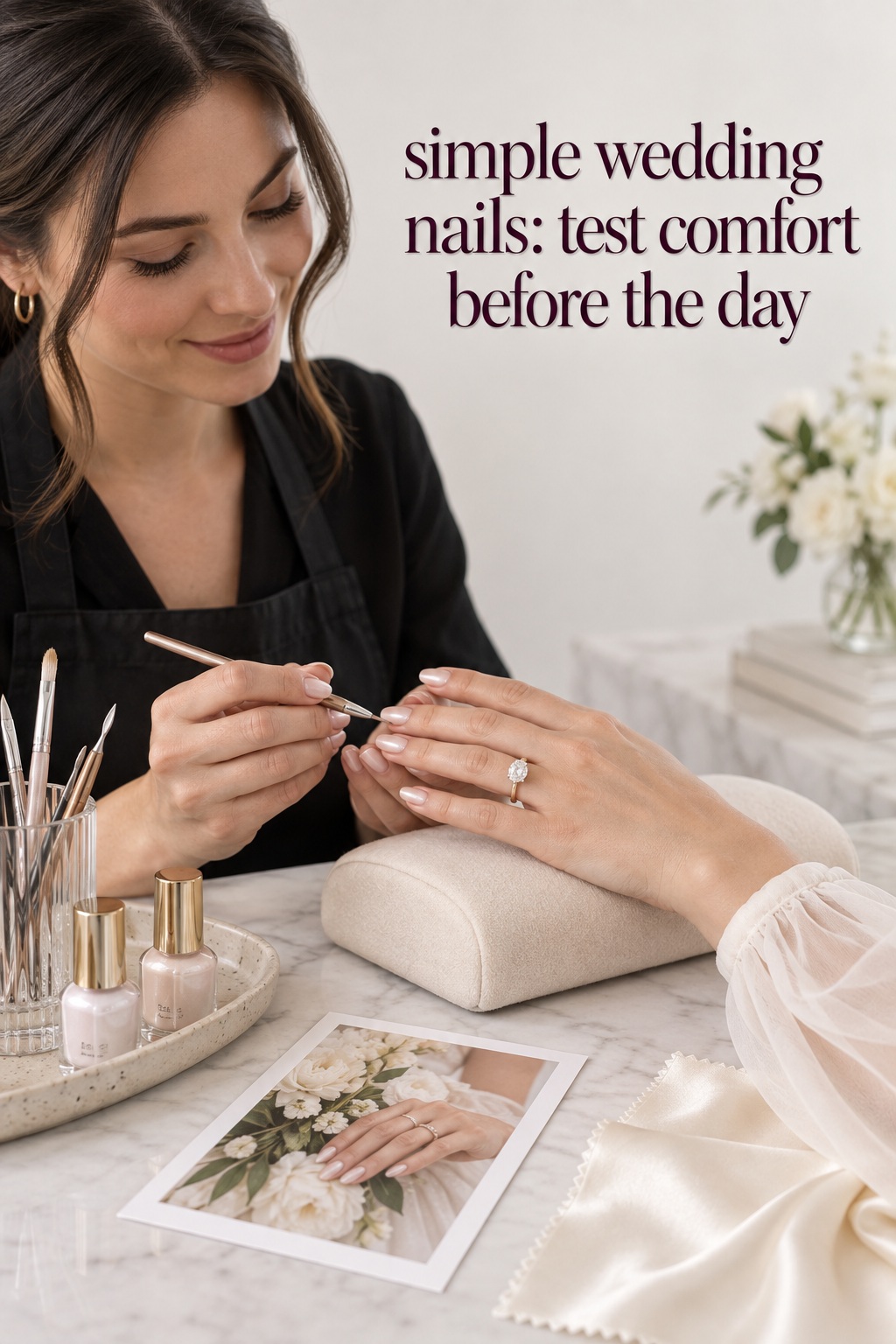
Test the manicure in the gestures your photographer will actually use. Interlace your hands, hold the bouquet, lift a glass and place the ring hand against your dress. Look for rough edges, an undertone that disappears, or decoration that competes with the stone. A tiny accent near the base may look beautiful in a ring close-up, while a large design can become visual noise when the flowers enter the frame.
For a useful professional perspective on keeping bridal nails deliberate rather than overworked, Vogue’s discussion of personal style and restrained accents is a helpful reference. Use it as a principle, then adapt the finish to your own outfit, nail length and comfort rather than copying a celebrity or editorial image.
Plan the Service and Timeline
A beautiful reference can still be the wrong plan if the service is unfamiliar or the appointment is too close to the ceremony. Simple wedding nails are easiest to enjoy when the practical decisions are made before the final visit.
Regular polish for flexibility
Regular polish is a good fit if you like changing colors, want straightforward removal, or already know how your nails respond to it. It needs enough drying time, so do not schedule the appointment immediately before a busy getting-ready window. A sheer shade can be forgiving, but an opaque tip needs clean edges and protection while it sets.
Gel for a cured finish and longer wear
Gel can make sense when you want a cured surface and do not want to worry about ordinary polish drying. If gel is new to you, test it before the wedding so you have time to notice sensitivity or lifting. Ask how the product will be removed and never peel it off. The removal plan is part of the manicure decision, not an afterthought.
Extensions when length is part of the look
Extensions can create room for almond, coffin, ombre or detailed French designs, but the length changes how you use your hands. Wear the proposed length during a trial and test buttons, jewelry, hair, a phone and a clutch. If the shape makes normal tasks awkward, shorten it before the final appointment. Photographs last longer than the extension trend, so comfort deserves a vote.
Press-ons for a planned and portable option
Press-ons can work well when you want a particular design, need a flexible schedule or prefer a removable option. Practice sizing and application first. Keep a spare nail, adhesive and a small file in your emergency kit if you choose this route. A press-on set is only simple when the fit is secure and the removal will not damage the natural nail.
- Several weeks before: choose one shape, one base and one finish, then test the color beside your dress and rings.
- At the trial: wear the proposed length through ordinary tasks and photograph your hands in daylight and indoor light.
- Before the final appointment: send one main reference, list any requested changes, confirm the service and ask how long the design will take.
- During the event week: moisturize your hands, avoid picking at cuticles, and protect the nails from unnecessary chores.
- For the emergency kit: pack hand cream, a file, matching polish or adhesive, and a spare press-on when appropriate.
Mistakes That Make a Simple Manicure Feel Unfinished
- Choosing a color by name alone: “nude,” “pink” and “white” cover many undertones. Compare swatches beside your hand and clothing.
- Using several reference photos without translating them: write down the exact base, shape, finish and detail you want instead of asking for a collage.
- Adding detail because the design feels too plain: change one variable first. A pearl finish or narrower tip may be enough.
- Trying an unfamiliar length at the last minute: the wedding day is not the right time to discover that a shape catches on fabric.
- Ignoring negative space: tiny art needs room around it. Crowding a short nail can make a delicate idea look messy.
- Forgetting the ring hand: test the design with your actual ring and the gestures that will appear in photos.
- Skipping removal planning: gel, extensions and press-ons all need a safe exit strategy.
The most successful simple wedding nails are edited, not empty. They give the hands a clean outline, a finish that catches the right amount of light, and one small decision that reflects the bride. Start with the level of contrast you want, choose a shape you can live in, and send your technician a brief that describes the whole look. That is enough to turn a saved image into a manicure that feels natural in every meaningful photograph.
FAQ
What are the best simple wedding nails for a bride?
Start with sheer pink, milky white, a soft nude, a micro-French or a glossy neutral. Add one controlled detail, such as pearl powder, a fine metallic line or a tiny accent on one or two nails, if you want a more personal finish.
Are simple wedding nails only white or nude?
No. Simple describes the amount and placement of visual information, not a fixed color family. A single pastel, soft blue tip, muted berry shade or restrained red can look simple when the shape is tidy and the design is edited.
What simple wedding nails work best on short nails?
Try sheer gloss, milky color, short squoval, short almond, a micro-French, a pearl finish or one small dot. Keep the motif proportional to the nail bed and leave enough negative space for the design to remain clear.
Should wedding nails match the dress?
They do not need to match exactly. Use the dress to choose a compatible undertone, contrast level or jewelry accent. A clean neutral can balance an embellished dress, while a thin colored tip can add interest to a simple outfit.
When should I get simple wedding nails done?
Test the service and design early enough to adjust the shape, color or length. Schedule the final visit according to the product and your technician’s advice, with enough time for drying, a small correction or an emergency repair before the ceremony.
Is chrome too dramatic for simple wedding nails?
Not necessarily. Pearl or soft chrome over a sheer or milky base can stay understated, especially on short or medium nails. Keep the base quiet and avoid combining chrome with several other reflective details if you want the result to remain simple.
How do I explain my simple wedding nail idea to a technician?
Bring one main reference and describe the base, shape, finish, tip width and accent placement. Mention your current nail length, the service you want, the date of the event and anything you need to avoid. A specific brief is more useful than saying only “make it bridal.”