Classic Wedding Nails: Timeless Ideas for Your Big Day
Classic wedding nails are not limited to one exact French tip. They are a small, polished part of the bridal look that still feels like you when you look back at the photographs years later. The best version might be a traditional pink-and-white French manicure, a sheer nude, a soft American manicure, a barely-there ombre, or a pearl finish that catches the light without taking over.
The useful decision is not simply whether your nails should be classic. It is which kind of classic will suit your hands, dress, jewelry, schedule, and comfort level. A manicure can be visually quiet but still need careful choices about length, shape, formula, and timing. Use this guide to compare the options before you book your appointment, then take one clear direction to your nail technician.
What classic wedding nails should do
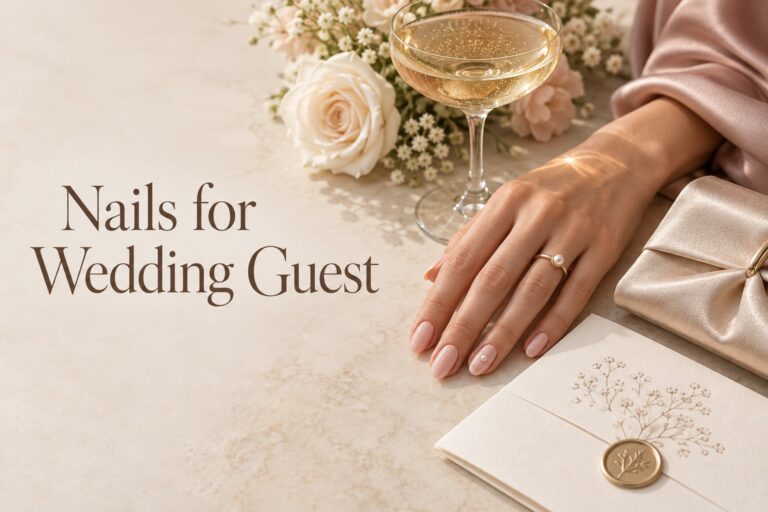
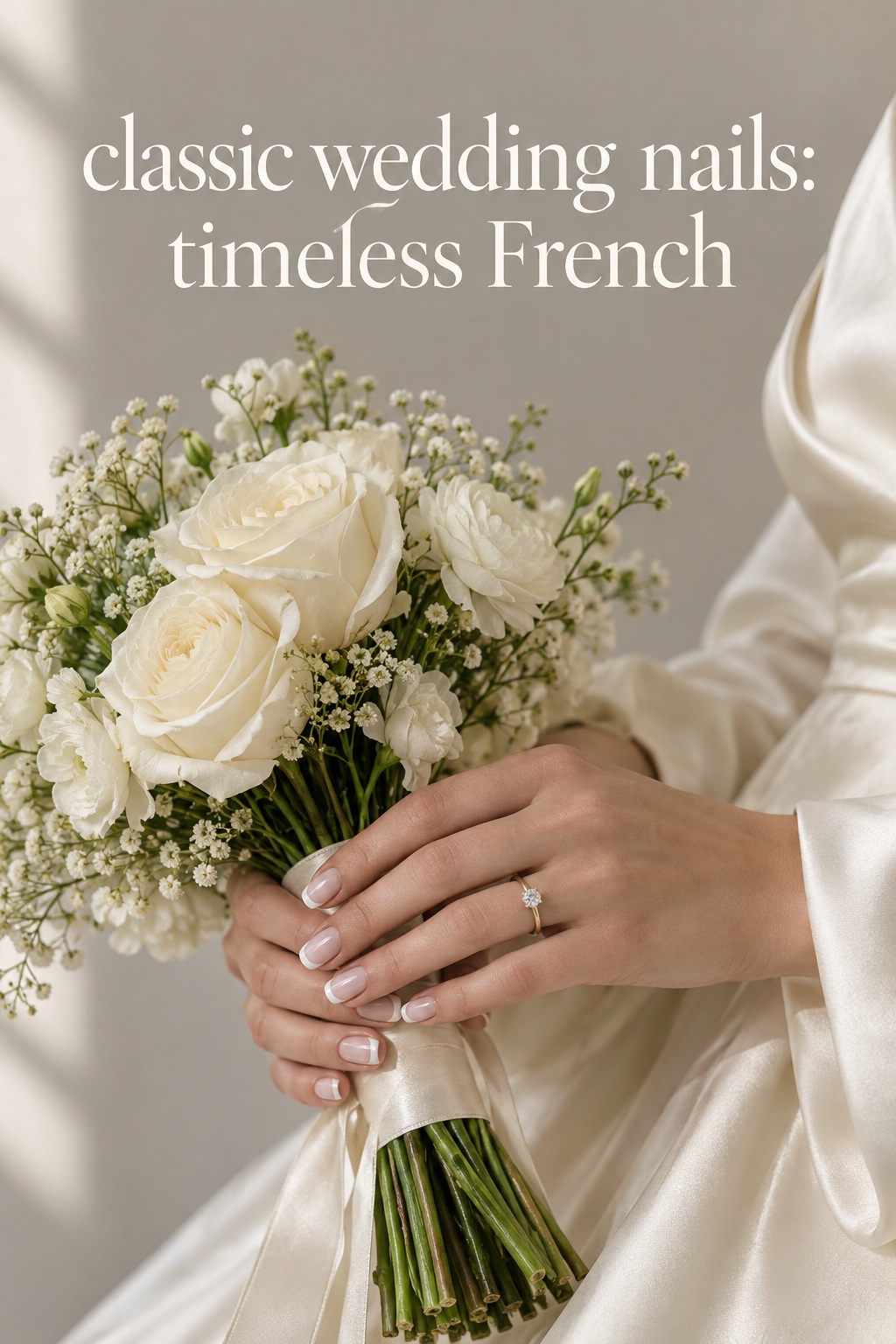
A classic bridal manicure should make close-up moments look finished without competing with them. Your hands will appear beside the ring, bouquet, invitation, champagne glass, dress buttons, and possibly a partner’s hand. That does not mean the polish must be invisible. It means the color and detail should support the story of the day instead of becoming the only thing you notice.
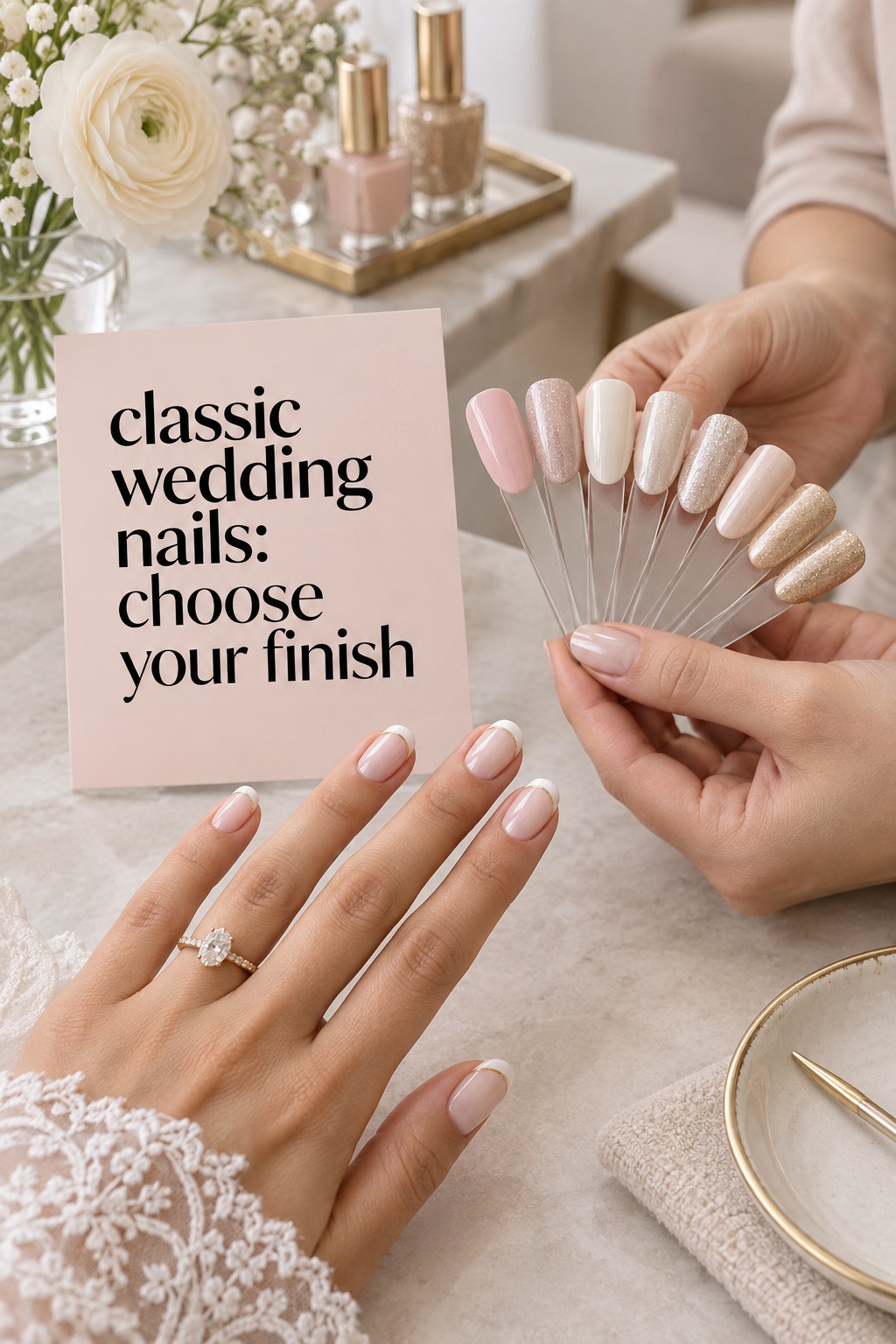
Start by choosing your preferred level of definition. Quiet classics include a sheer pink, milky nude, or natural-looking gloss. Defined classics include a traditional French tip, an American manicure, or a soft ombre. Luminous classics add pearl, fine shimmer, or a very restrained chrome finish. All three can look timeless when the edges are clean and the scale suits the nail.
Turn wedding inspiration into a plan you can actually follow.
Zarellea brings your guest list, budget, vendors, and day-of details into one shared space — so no beautiful idea gets lost in the shuffle.
- Quiet: the focus stays on your natural nail and the ring.
- Defined: the nail shape and tip are easy to see in photographs.
- Luminous: the finish catches movement and light while remaining controlled.
Think of classic as a framework, not a rule that removes personality. You can use a warmer ivory tip with an ivory dress, a blush base with pink flowers, or one tiny pearl accent if that detail has meaning. The strongest choices repeat one element from the wider look and leave the rest uncomplicated.
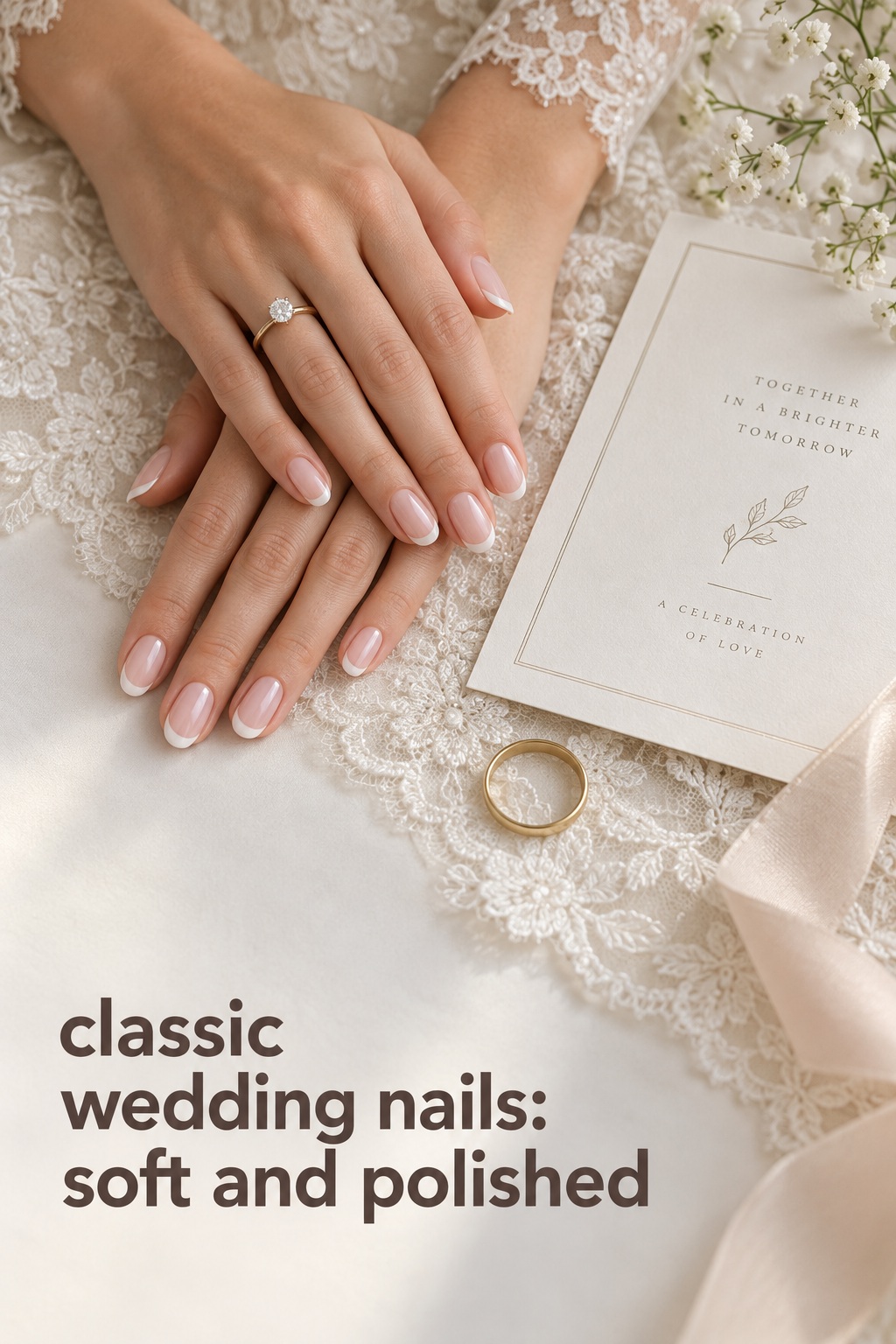
Compare the classic manicure directions
Before choosing a reference image, compare the main directions by contrast, shine, and maintenance. These options share a polished mood, but they do not create the same visual effect on the hand.
Traditional French manicure
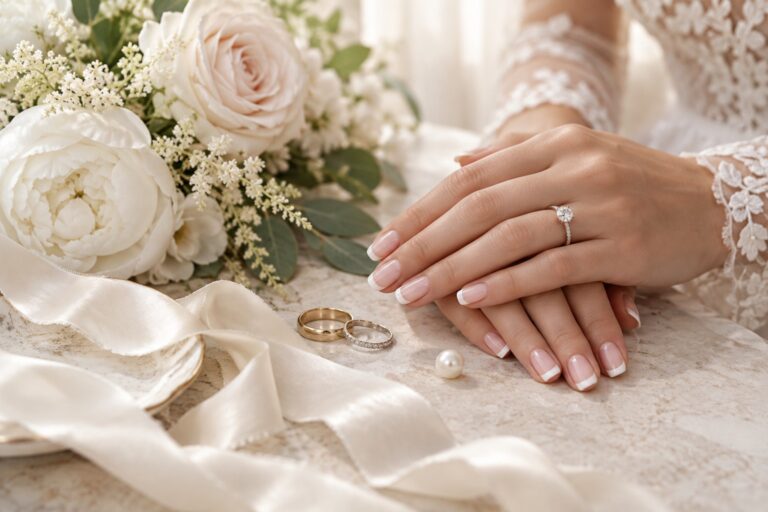
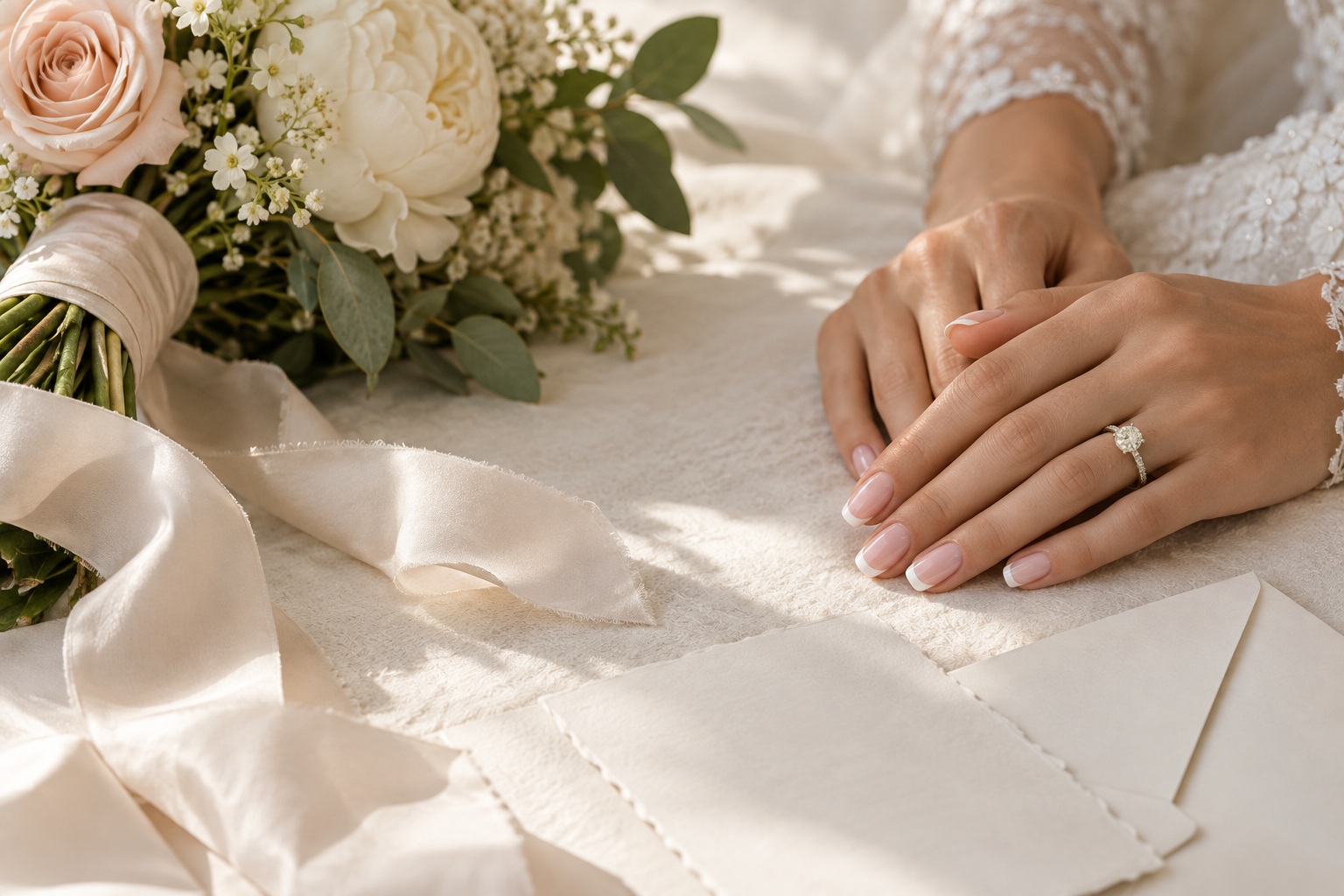
The traditional French uses a pink, nude, or sheer base with a clean white tip. It is recognizable, adaptable, and easy to coordinate with white, ivory, or blush wedding details. Ask your technician to adjust the tip width to your nail length. A thick white band can overwhelm a short nail, while an extremely thin line may disappear on a long almond shape.
Choose this direction when you want visible bridal definition and a strong connection to the classic salon manicure. It suits someone who likes a crisp finish and does not mind a little more precision at the appointment. A soft white rather than a stark bright white can make the result gentler beside an ivory gown.
American manicure
An American manicure is a softer, tone-on-tone relative of the French. The base and tip sit closer together in color, so the contrast is lower and the result can look especially natural. It is a useful choice if you want the structure of a French tip but prefer a less graphic line.
This finish works well with a modern gown, minimal jewelry, or a bride who usually wears very little polish. Tell your technician whether you want a barely visible tip or enough contrast for it to register in photographs. A reference photo taken in daylight is more useful than the name alone.
Sheer nude or blush gloss
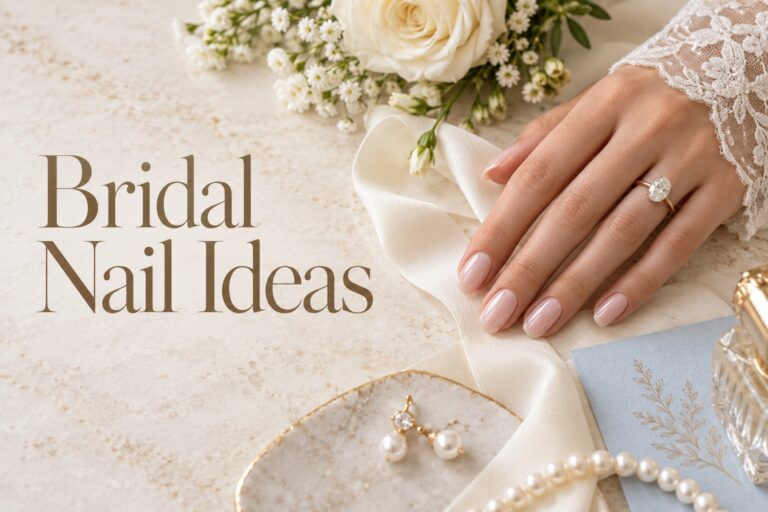
A sheer nude, pink, or blush gloss gives the hands a clean, healthy-looking finish without adding a separate tip. The right shade depends on your natural undertone and the color of the dress. Some pinks look cool and porcelain-like, while others lean peach, beige, or rose.
Choose this option when you want the least visual contrast or when the dress has lace, embroidery, sparkle, or a dramatic sleeve. It is also a strong choice for short nails because the color does not require a large canvas. Test the shade beside the dress and ring rather than selecting it only under salon lighting.
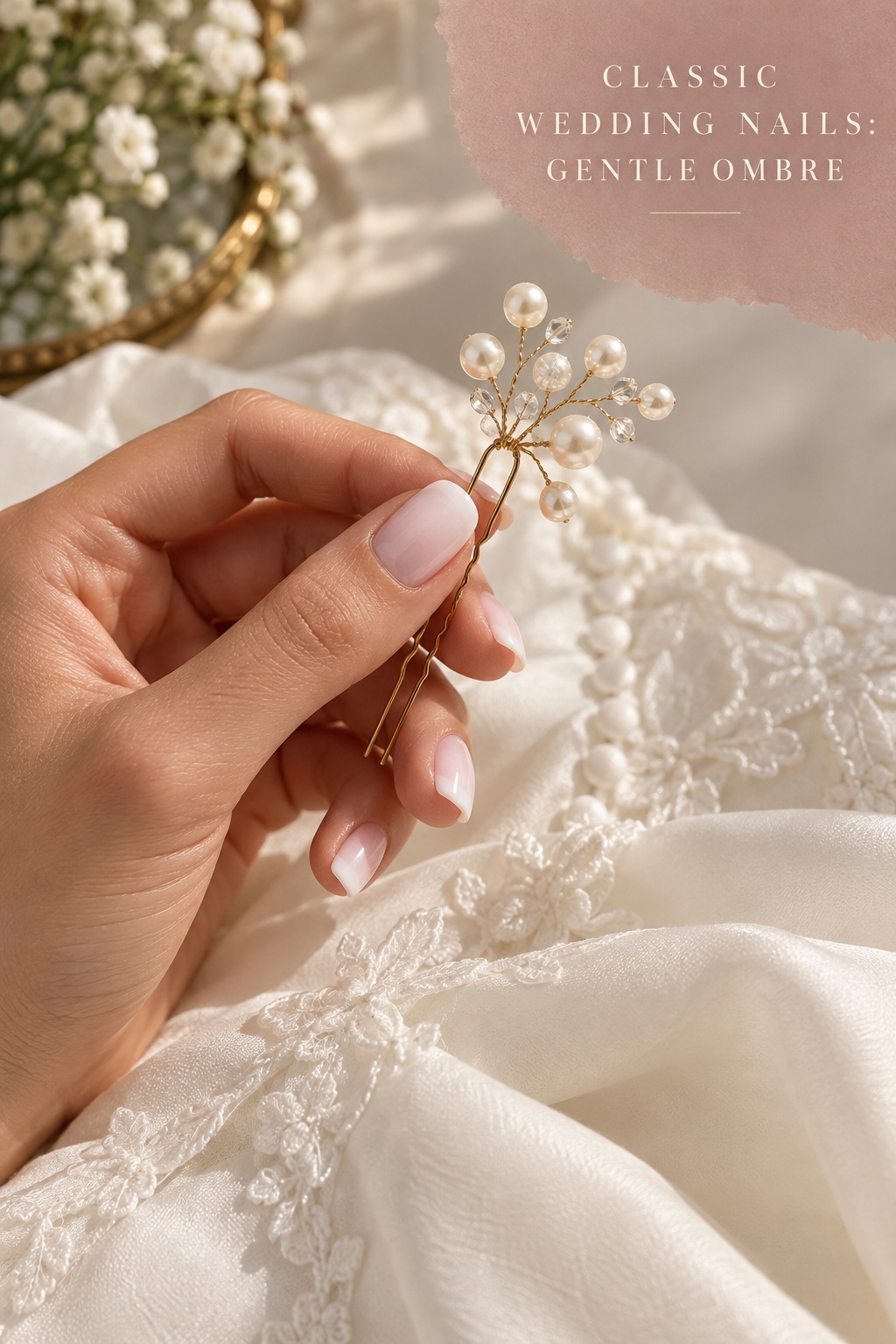
Soft French ombre
A French ombre, sometimes called a baby boomer, blends a pale base into a lighter tip rather than drawing a hard smile line. The transition feels romantic and forgiving, especially if you want a French-inspired look without a sharp white border. It can also be a practical direction when you like the idea of a tip but want regrowth to be less obvious.
Ask how opaque the white should be. A translucent haze looks soft and modern, while a brighter gradient creates more bridal contrast. Ombre is not automatically faster or easier, so bring a reference that shows the level of blending you want.
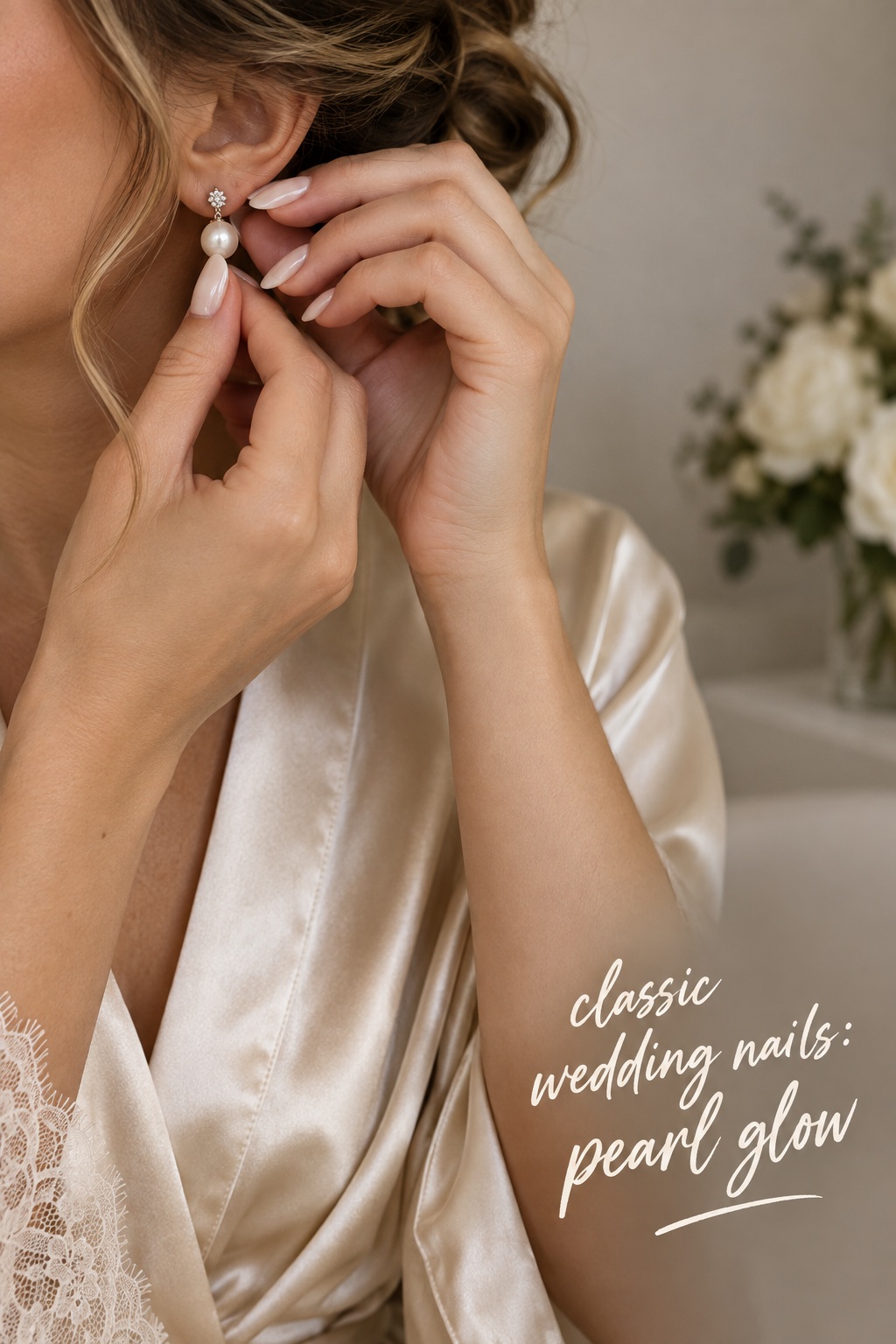
Pearl or glazed French
A pearl finish adds a soft iridescence that moves between white, pink, and champagne as the light changes. A glazed French keeps the classic tip architecture but adds reflective powder or a pearly top layer. The result is more luminous than a plain French while remaining close to the bridal color family.
Select pearl when you want a little movement in ring and bouquet photographs. Ask for a fine, diffused finish rather than a mirror effect if timelessness is your priority. One pearl accent on each ring finger can be enough. Repeating pearls on every nail may shift the look from refined to decorative, especially on a smaller nail bed.
Subtle shimmer or a warm metallic tip
Fine champagne shimmer, a thin gold line, or a rose-gold tip can personalize a classic manicure without abandoning it. Warm metallics pair naturally with gold jewelry, cream dresses, peach flowers, and candlelit receptions. Silver or cool pearl can feel sharper beside platinum jewelry, icy white, or a modern city setting.
Keep the metallic detail narrow and intentional. A single accent nail, a micro-line above the French tip, or a softly reflective tip usually has more longevity than a dense glitter design. If you are unsure, compare the manicure beside your jewelry in both daylight and warm indoor light.
Choose the nail shape and length that will live well on the day
The same classic design looks different on a short square nail and a long almond nail. Shape should be chosen with movement and comfort in mind, not only with a saved image. You will fasten clothing, hold flowers, greet guests, eat, use your phone, and possibly travel immediately after the ceremony.
Short square or squoval
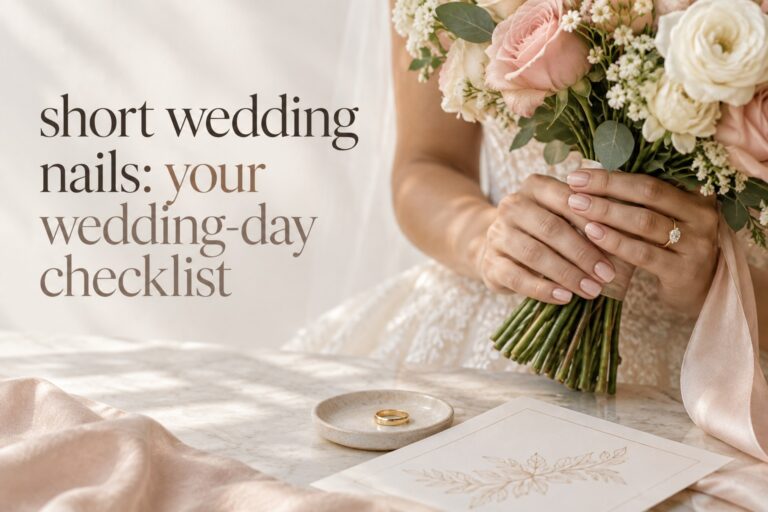
Short square and squoval nails are practical, neat, and easy to live with if you do not normally wear length. They suit sheer nude, blush, a short French tip, and small pearl or shimmer details. A squoval softens the corners while keeping the clean structure of a square.
Keep the design simple on a short canvas. Ask for a narrow tip, a thin side profile, and enough free edge to create balance. Do not let anyone convince you that a classic manicure requires extensions. Healthy natural nails with a glossy finish can look exceptionally polished.
Short or medium almond
An almond shape creates a lengthening effect and gives a French tip or soft ombre an elegant surface. Short almond is a good compromise when you want a graceful outline without the inconvenience of a long extension. Medium almond gives more room for pearl, chrome, or a slightly wider tip.
Check the point before approving the shape. A very sharp almond may catch on lace, hair, or delicate fabric. A softly tapered tip is often easier for a full wedding day. Wear the proposed length for a few days during the trial if you are not accustomed to it.
Medium coffin or long statement length
A medium coffin or longer shape gives a traditional French, ombre, or pearl design a more visible stage. It can look glamorous, but it also changes how you grip a bouquet, open buttons, and handle jewelry. Choose it because you enjoy wearing length, not because the reference photo used it.
If you are adding length for the first time, schedule the extension early enough to test it. A wedding morning is a poor time to discover that the shape is uncomfortable or that one nail catches on your veil. Bring your actual ring and try a few everyday movements before committing.
Choose the service system by strength, timing, and tolerance
Design and service are separate decisions. A beautiful French tip can be created with regular polish, gel polish, builder gel, acrylic, or press-ons. The right option depends on your natural nails, desired length, appointment access, removal plan, and comfort with maintenance.
Regular polish
Regular polish is familiar, easy to change, and suitable when your nails are already strong and you want a simple short manicure. It needs more care during drying and may be less forgiving if you need several days of heavy wear. Book close enough to the wedding that the finish is fresh, while leaving enough time for an accidental repair.
Gel polish
Gel polish offers a cured finish and can be useful for a busy schedule, provided your nails tolerate the application and removal process. Ask the salon how removal is handled and do not peel the product away yourself. Gel alone does not solve every problem if your nails are thin, peeling, or prone to breaking.
Builder gel or acrylic extensions
Builder gel and acrylic can add structure or length when natural nails need support or when you want a new shape. They require careful sizing, a technician you trust, and a planned removal or infill schedule. Ask for a conservative length first if you are not used to extensions. The best wedding set should feel secure, not heavy.
Press-ons
Press-ons can be a useful option when you want flexibility, a lower-commitment trial, or a backup set. They need correct sizing and a practice run so you know how they behave with your dress, hair, and ring. Keep a spare nail and the recommended adhesive in your emergency kit if you choose this route.
Whatever system you choose, ask about allergies, sensitivity, sanitation, and removal before the appointment. Do not test a completely new product on the wedding morning. Your manicure should reduce decisions that day, not create another source of uncertainty.
Make the manicure work with the dress, ring, and photographs
Place your dress fabric, jewelry, invitation colors, and bouquet references beside the nail swatches. Look for temperature first. A warm ivory dress can make a blue-white polish feel stark, while a cool white dress may sharpen a creamy beige. Blush, rose, peach, champagne, ivory, and white each create a different relationship with the hand.
- White or cool ivory dress: try sheer pink, cool nude, soft white, pearl, or silver detail.
- Warm ivory or champagne dress: try beige nude, peach blush, cream, champagne shimmer, or gold detail.
- Lace or detailed gown: keep the nails quiet so texture remains the focal point.
- Minimal or modern gown: use an American manicure, glazed French, or one precise metallic line.
- Gold jewelry: warm pearl, champagne, rose, and gold accents can repeat the metal.
- Silver or platinum jewelry: cool pink, white, pearl, and silver accents can keep the palette coherent.
Take photographs of the swatches beside the ring in daylight, near a window, and under the reception lighting if you can. A polish that looks neutral in the salon may read yellow, gray, or much brighter on camera. Check both hands, because the ring hand will attract the closest attention.
Keep the ring photograph in mind without designing only for it. A clean cuticle, even length, and smooth top coat matter more than a complicated detail. If you want an accent, place it where it will not compete with the stone or cover the hand’s most important lines.
A low-stress wedding nail timeline and trial plan
Plan the manicure as a small project rather than a last-minute beauty errand. Start by saving three references that show the design, shape, and finish. Then remove anything from the images that you do not actually want. A nail technician can work more accurately from one clear reference than from a collage of five conflicting sets.
- Several weeks before: decide whether you want natural nails, gel, builder gel, acrylic, or press-ons.
- At the trial: test the exact shape, length, base color, tip contrast, and finish.
- After the trial: wear the set long enough to notice lifting, discomfort, catching, or color changes.
- Before the final appointment: confirm the design, bring the dress or a fabric swatch, and check the removal plan.
- Wedding week: keep cuticles moisturized, avoid aggressive treatments, and protect the nails from unnecessary work.
- Wedding day: bring a tiny repair kit with adhesive or polish, a file, a small buffer, and hand cream.
For a regular polish manicure, many people prefer an appointment close to the event because chips are more likely with time. For gel or extensions, leave enough room for a correction if the shape or shade is not right. Your technician can advise on timing based on the formula and your nail growth, but a trial is still the best way to learn how your own nails behave.
Do not cut or aggressively push back the cuticles immediately before the service if that is not part of your normal routine. Avoid introducing a strong exfoliating treatment, new hand product, or unfamiliar adhesive right before the wedding. Calm, familiar preparation is more useful than a dramatic final intervention.
Mistakes that make classic nails look less polished
Classic designs are simple enough that small mismatches become visible. Most problems are preventable when you treat the whole manicure as part of the outfit.
- Choosing a white that fights the dress: compare soft white, ivory, and pearl beside the gown.
- Copying a shape you cannot comfortably wear: test length and movement before the final set.
- Making every detail compete: choose one accent, finish, or repeated metal.
- Skipping the trial: the shade may change in photographs and the formula may feel different after hours.
- Booking an untested technician: ask to see relevant work and communicate the exact level of contrast.
- Peeling off gel: follow a proper removal process and ask questions before application.
- Forgetting the repair plan: pack a file, adhesive or polish, and a small spare if appropriate.
- Leaving the ring out of the test: the manicure should be judged beside the jewelry it will frame.
The most timeless result is usually the one that feels deliberate but not overworked. A precise short French can be more memorable than a crowded design. A sheer pink can be more personal than a color chosen because it was labeled bridal. Let your usual taste lead, then refine it for the light and rhythm of the wedding day.
FAQ
What are the most classic wedding nails?
The most classic wedding nails include a traditional pink-and-white French manicure, a soft American manicure, sheer blush or nude gloss, and a subtle French ombre. Pearl or fine champagne shimmer can update these foundations while keeping the overall look restrained.
Are French nails still a good choice for a wedding?
Yes. French nails remain a strong choice because the base and tip can be adjusted to suit the dress, jewelry, nail length, and desired contrast. Ask for a softer tip, an American manicure, or an ombre blend if a bright graphic French feels too bold.
What nail shape looks best for classic wedding nails?
Short square, squoval, short almond, and medium almond can all look polished. Choose the shape you can comfortably wear while holding flowers, fastening clothing, and moving through the day. The design should be adapted to the shape rather than forcing your nails to copy a reference.
Should bridal nails be white or nude?
Choose white when you want visible bridal contrast and nude when you prefer a quieter finish. The best shade also depends on whether your dress is cool white, warm ivory, or champagne. Compare real swatches beside the dress and ring in daylight before deciding.
When should I get classic wedding nails?
Schedule a trial several weeks before the wedding and the final appointment close enough to the event that the finish remains fresh. The exact timing depends on the service, your nail growth, and how quickly your polish chips. Leave a small buffer for repairs or a shade adjustment.
Are gel nails good for a bridal manicure?
Gel nails can be a useful bridal option when the application and removal suit your natural nails and schedule. Test the formula first, ask how it will be removed, and do not peel it off. Gel does not replace a good fit, comfortable length, or careful preparation.
How can I make classic wedding nails feel personal?
Personalize the classic base through undertone, tip softness, nail shape, jewelry-matched shimmer, or one restrained accent. You can also choose a color that repeats the bouquet or invitation suite. Keep one main idea clear so the manicure still feels calm and timeless.