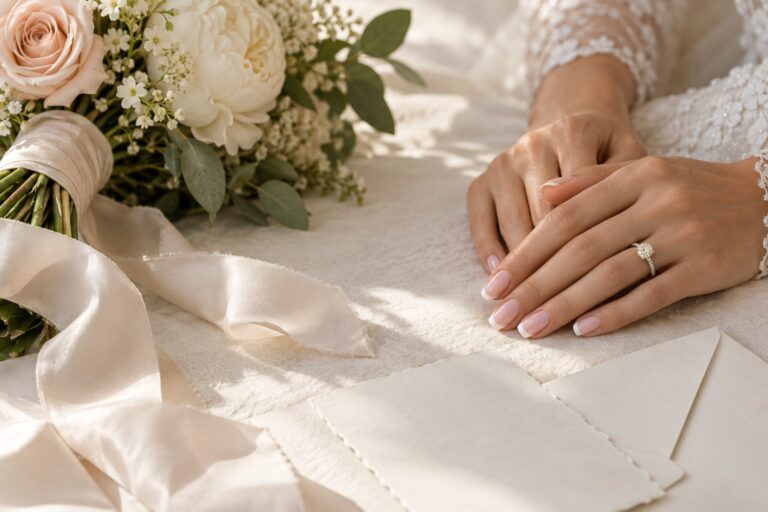
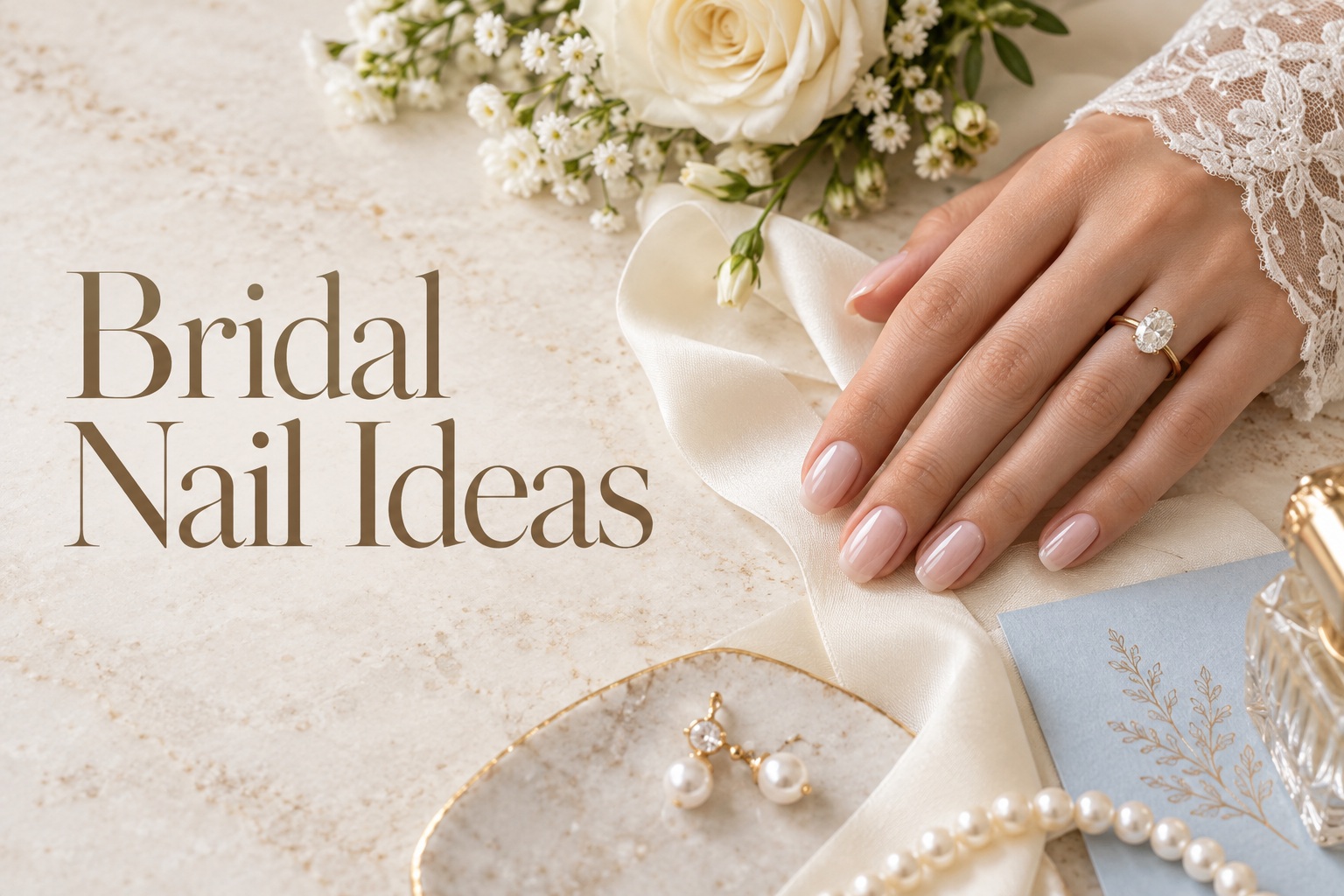
Bridal Nail Ideas for a Personal, Photo-Ready Manicure
The best bridal nail ideas do more than look pretty in a saved photo. They feel like you, make sense beside your dress and ring, stay comfortable through the ceremony and reception, and remain easy to describe when you sit down with a nail technician. That is why the right manicure is rarely about copying one perfect image. It is about translating the mood of your wedding into a shape, base, finish, and detail that your hands can actually wear.
Wedding beauty editors and nail artists are showing a broad bridal range right now, from sheer pink and milky white to cloud-like French tips, pearl chrome, delicate florals, and a single personal accent. Vogue’s expert wedding nail ideas and Who What Wear’s bridal manicure guide both make the same useful point: your nails should finish the look rather than compete with it. Use the ideas below as a way to make a confident choice, not as a list you have to complete.
Why the best bridal nail ideas pass four wedding-day tests
A manicure can be beautiful and still be wrong for your wedding. Perhaps the reference image shows a length you never wear, a bright base that changes under flash, or raised details that catch on your veil and jewelry. Before choosing a design, test every idea against four questions. The answers will narrow the field faster than scrolling through another hundred saved images.
Does it feel personal?
Your bridal manicure does not have to look traditional to look bridal. If you normally wear clean neutrals, a milky pink with a glossy finish may feel special enough. If you love color, a berry, blue, red, or soft green accent can be more authentic than a French manicure you chose only because it is expected. The useful question is not, “What would a bride wear?” It is, “What would make me happy to see in a close-up photo six months from now?”
Turn wedding inspiration into a plan you can actually follow.
Zarellea brings your guest list, budget, vendors, and day-of details into one shared space — so no beautiful idea gets lost in the shuffle.
Does it photograph clearly?
Hands appear in ring portraits, bouquet photographs, getting-ready images, vow-book details, cake cutting, and toasts. A design that looks intricate from two inches away may disappear at normal hand distance. Conversely, a thick white line or large embellishment can become the first thing the camera notices. Look for clean edges, readable contrast, and a finish that catches light without creating a harsh reflection across the entire nail.
Can you wear it comfortably?
Consider the tasks you will do with your hands. You may fasten earrings, hold a bouquet, open a compact, lift a glass, adjust a dress, hug guests, and travel the next morning. A long extension or sharp point can be gorgeous, but it should not make ordinary movements feel unfamiliar. A short oval, rounded square, or medium almond may be a better choice if comfort is part of your definition of elegance.
Does it belong with the whole look?
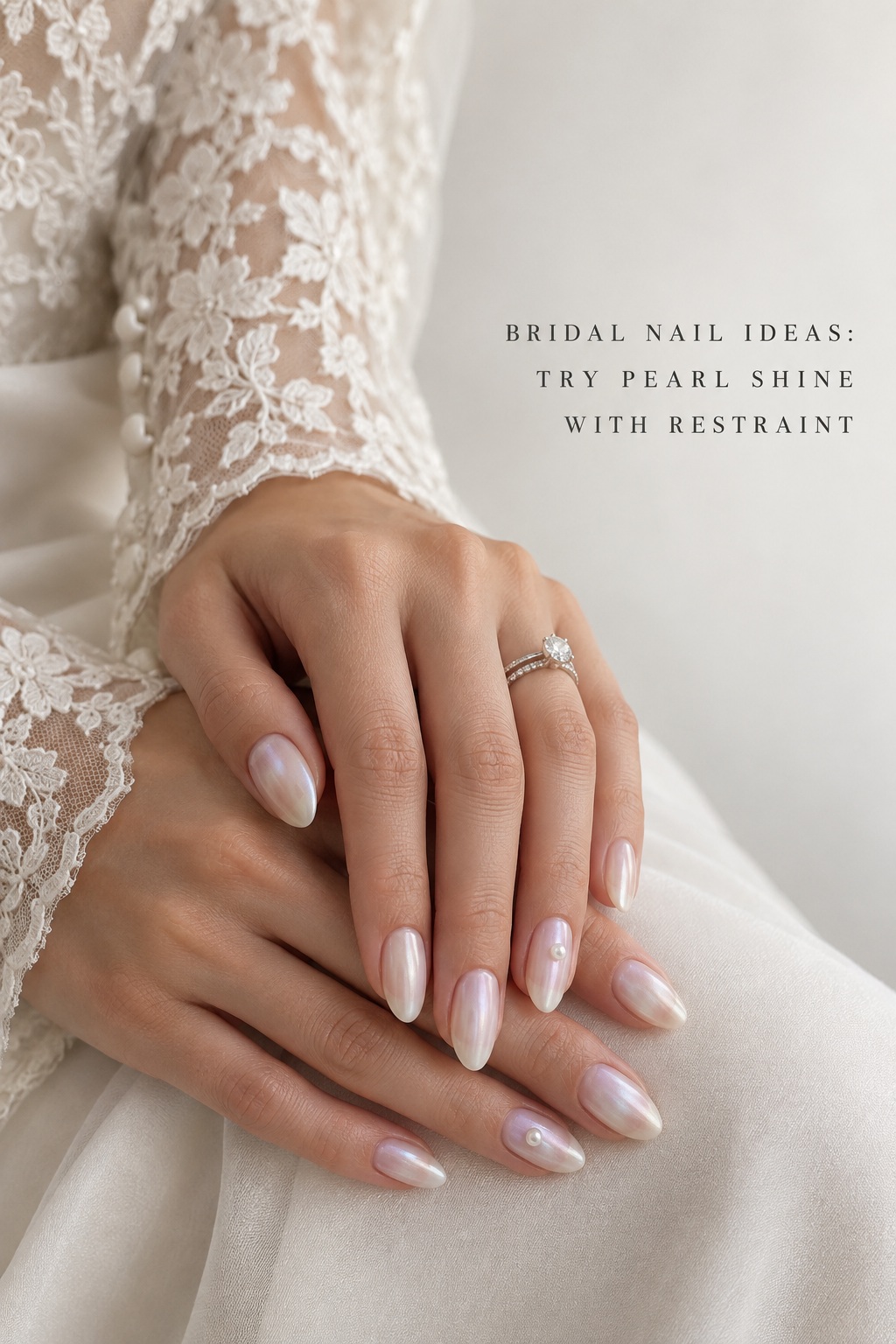
Think about the dress texture, jewelry metal, bouquet, shoes, and wedding setting as one visual conversation. Pearl details can echo buttons or earrings. A warm champagne tip may sit more naturally beside ivory satin than a stark white tip. Fine floral marks can reference the bouquet without repeating every bloom. The manicure should not match every object exactly. It only needs one or two deliberate connections.
Build your bridal manicure brief in the right order
Most manicure indecision happens because brides try to choose color, length, art, and service type all at once. Make the process calmer by deciding in layers. Save one reference for the overall mood, then write down the details that matter. Your nail technician can create a better result from a simple sentence with useful measurements than from a collage of unrelated inspiration.
Start with the canvas: natural, short, medium, or extended
Begin with the length you can realistically wear. Natural nails are ideal when you like a barely-there look and your nails are already even. Short nails can carry sheer color, a micro tip, a tiny pearl, a fine metallic line, or a glossy solid shade. Medium nails give you more room for a French smile line, a soft ombre, or one accent nail. Extensions create the most visual space, but they also change your daily routine and need to be tested before the wedding.
Then choose the shape. Oval softens the edge and works well when you want a natural impression. Squoval keeps the corners gentle while retaining a little structure. Almond tapers toward the tip and can make a French line feel elegant, but it needs enough length to show the taper. Square or coffin shapes make art feel graphic and intentional. There is no universal winner. The strongest choice is the shape that suits your nail bed and does not make you think about your nails every minute.
Choose the base before the decoration
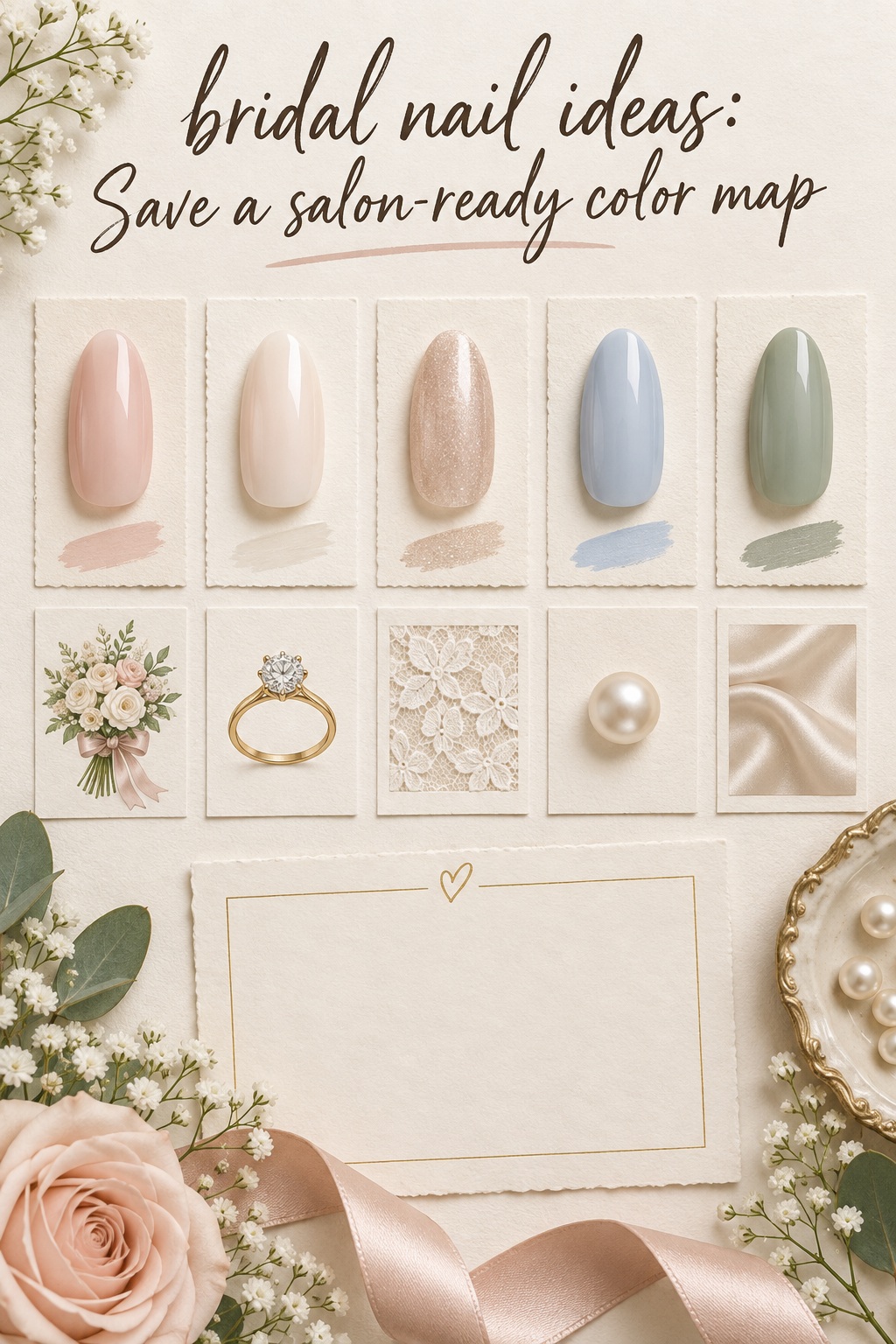
A base color sets the emotional temperature of the manicure. Sheer pink feels fresh and familiar. Milky white feels luminous and veil-like. Beige or rosy nude can make a French tip feel softer and less stark. Peach adds warmth. A translucent berry or red creates a more personal statement while still looking polished. If you are unsure, ask the technician to place two or three thin swatches against your hand and beside a dress photo taken in daylight.
Do not assume that the palest shade will be the most flattering or the most bridal. A base that is too white can flatten the appearance of the nail, while a shade that is too close to your skin may lose definition in photos. The goal is a visible but quiet relationship between the nail plate and the design. Let your skin, dress color, and jewelry guide the final adjustment rather than a product name or a trend label.
Pick one finish and one detail
Finish changes the whole personality of a simple manicure. High gloss looks crisp and makes a sheer shade feel polished. Pearl or chrome adds a soft reflection that works especially well in ring photos. Matte makes a French line or tiny dot feel modern and controlled. A fine shimmer brings movement without the visual weight of chunky glitter. If you choose a reflective finish, keep the art smaller. If you choose matte, one metallic detail can create a useful point of light.
Choose one detail with a reason. A pearl can echo the jewelry. A gold line can repeat the rings or shoes. A tiny flower can pick up the bouquet. A blue tip can become your something blue. A miniature bow, initial, star, or crystal can mark the day without covering every nail. Repetition is not the same as coherence. Ten identical decorations may look less refined than one accent nail supported by a consistent base and finish.
Bridal nail ideas organized by the result you want
Instead of choosing by trend name, choose by the feeling or practical result you want. Each group below gives you a starting formula and a way to personalize it. Take one formula to your appointment, then adjust the length, base, or accent after looking at your own hands.
For quiet polish: sheer pink, clean nude, or milky white
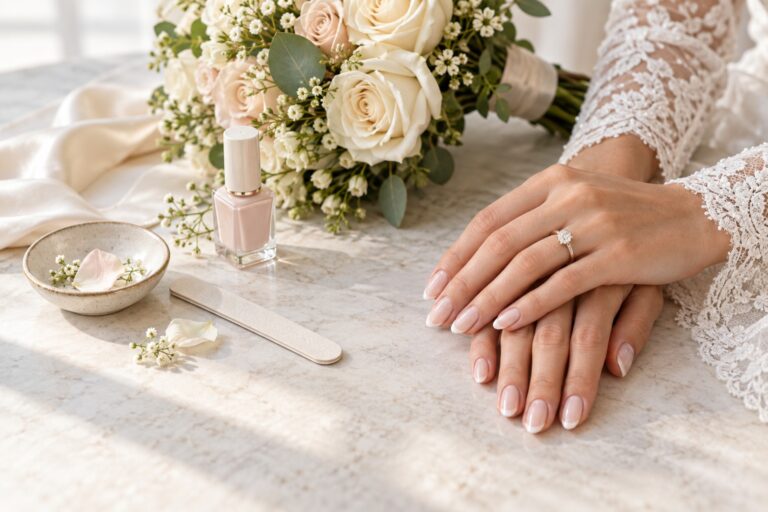
A sheer pink wash is a strong choice when your dress, veil, or jewelry already carries detail. It keeps the hand looking finished without creating a second focal point. A clean nude gives a similar effect with slightly more definition. Milky white offers more brightness and can feel especially connected to a veil or white bouquet. Ask for a thin, even application and a shape that follows your natural finger line.
For a classic with a lighter touch: micro French or baby boomer
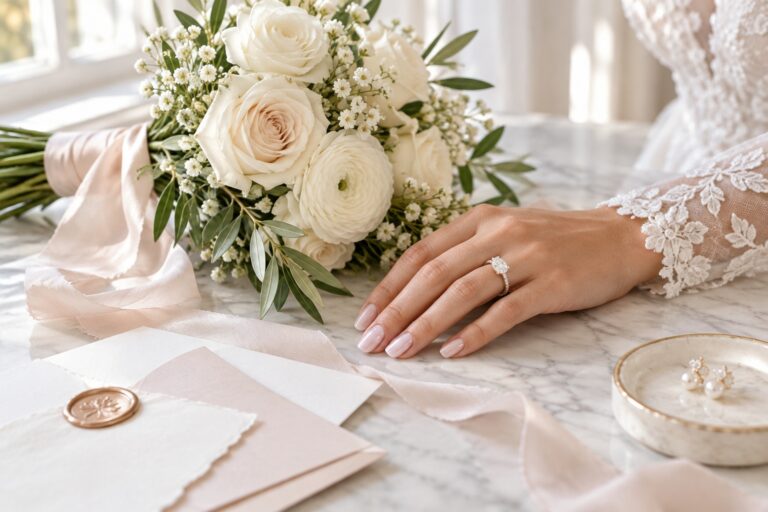
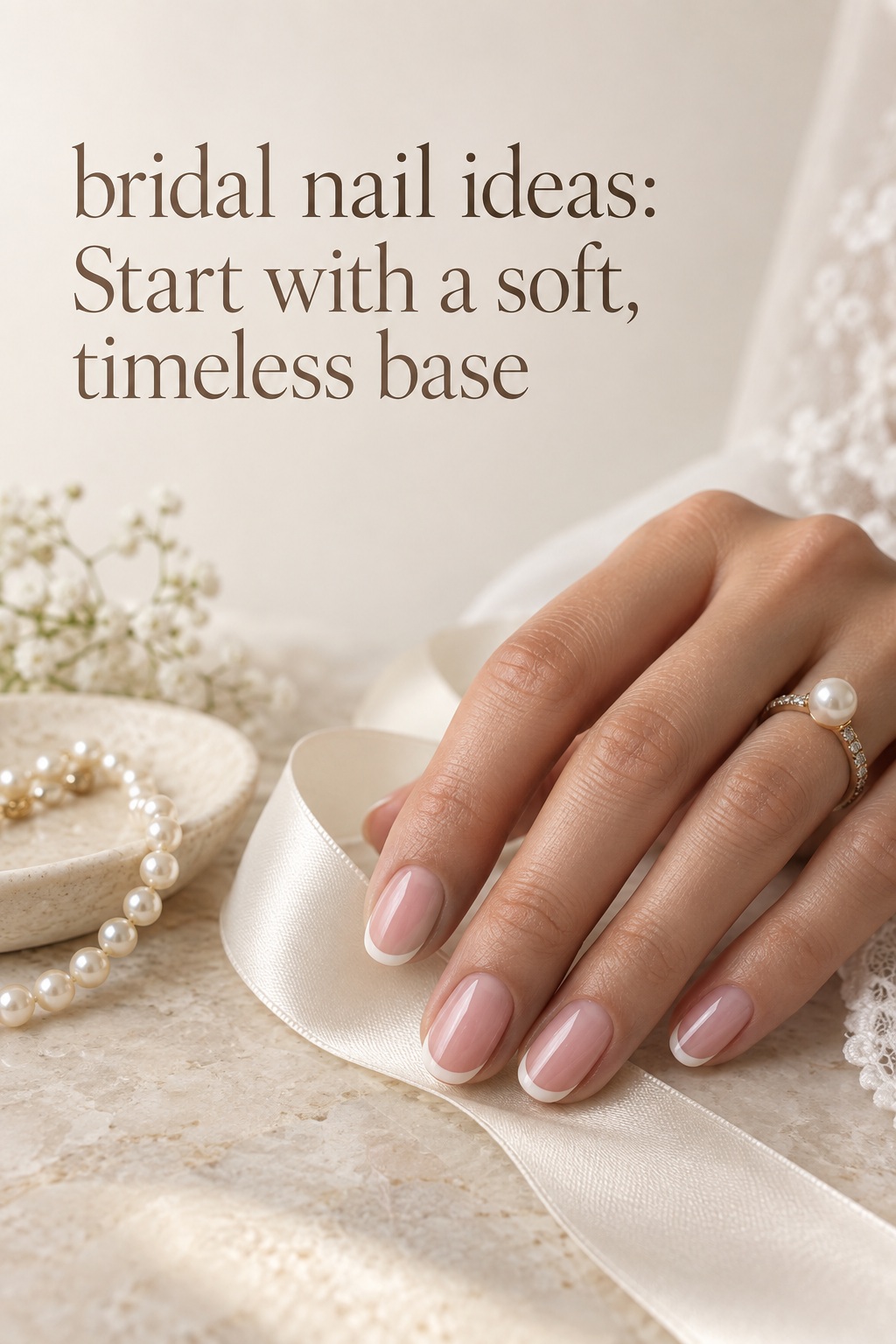
A micro French uses a narrow tip, so more of the base remains visible. It looks neat on short or medium nails and gives the classic format a modern proportion. A baby boomer blends the pink base into white without a hard smile line, creating a softer transition. Choose one when you want the idea of a French manicure but prefer less graphic contrast. A pearl sheen over the finished set can add light while keeping the design restrained.
For controlled shine: pearl, glazed, or champagne detail
Start with a sheer or milky base, then add a pearl or glazed finish across the nail. This works when you want the manicure to glow in motion but look calm in a still image. For a more defined idea, keep the base neutral and use champagne or soft gold only along the tip, cuticle, or a single line. The amount of shine matters more than the name of the finish. Show the technician whether you want a whisper of reflection or a visibly metallic result.
For romantic detail: one pearl, petal, bow, or crystal
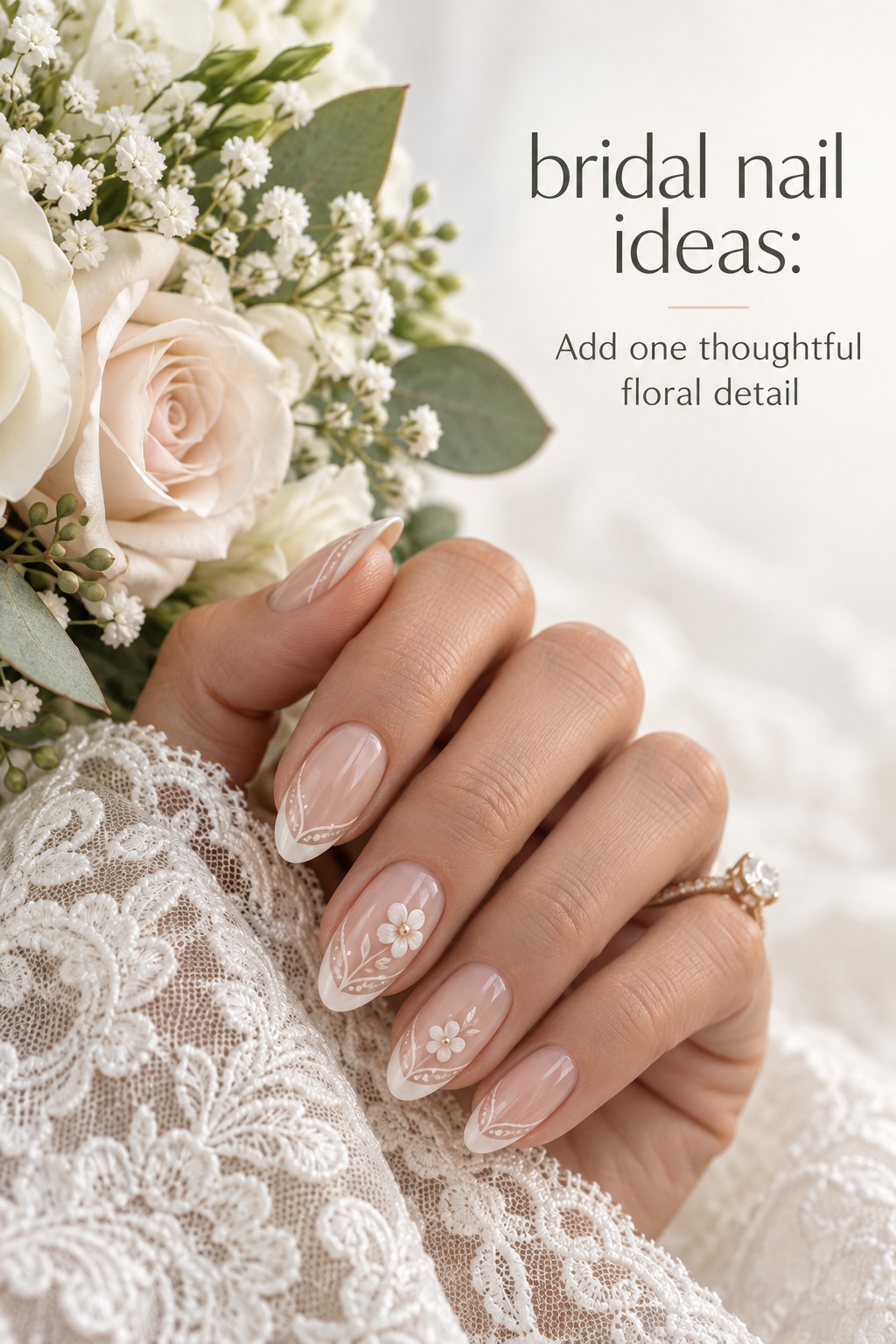
Small details feel most intentional when they have breathing room. Try one pearl at the cuticle of the ring finger, a tiny painted flower on two nails, a fine bow, or one crystal placed where it can catch the light. Keep the rest of the manicure quiet so the accent reads as a choice. If you love three-dimensional work, test whether the detail catches on clothing or feels heavy before committing to it for the wedding.
For a personal color note: blue, red, green, or a tonal tip
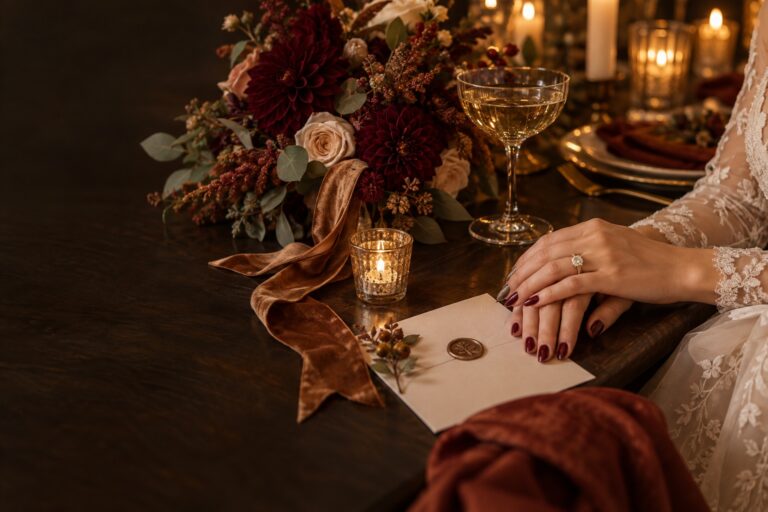
Color can look bridal when the shape and finish remain considered. A pastel blue tip can carry something blue without taking over the hand. A glossy red can feel romantic and confident, particularly with simple jewelry. Soft sage can reference a garden setting. A champagne, buttercream, or dusty rose tip may connect more naturally to an ivory or blush dress than bright white. If you want a stronger color, use it on every nail with a clean shape, or reserve it for a controlled accent rather than mixing several unrelated shades.
For an artistic bride: lace lines, clouds, florals, or asymmetry
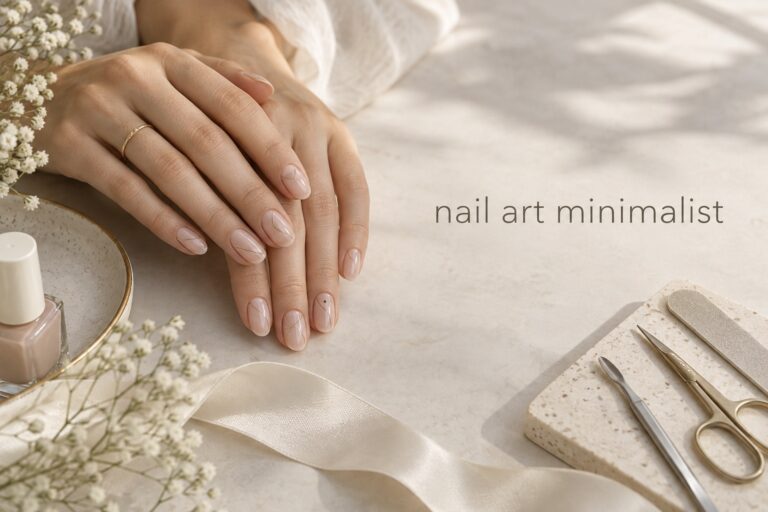
Art does not have to mean a busy set. A cloud French softens the tip with an airy edge. A lace line can echo the gown when it remains thin and selective. A few petals can bring the bouquet into the hand without recreating it. An asymmetrical French can feel fashion-forward while staying mostly neutral. Give your technician one main visual instruction, such as “soft white cloud tips on a medium almond,” rather than combining every keyword from your inspiration board.
Turn the idea into a trial and wedding-week plan
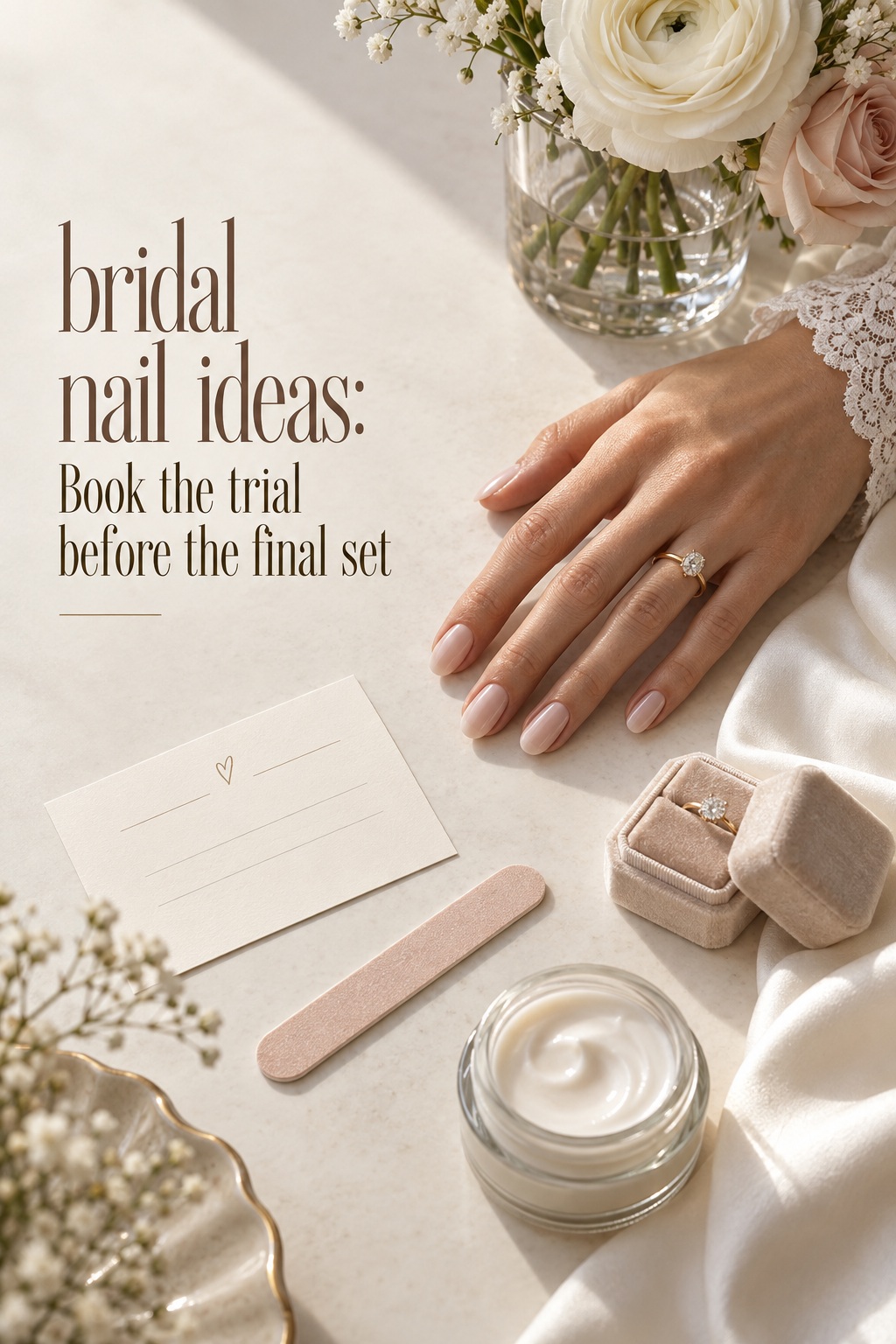
A trial is not only for deciding whether you like the color. It tells you whether the complete manicure fits your schedule, hands, photographs, and patience. Book it early enough to change the shape or service if necessary. Current bridal guidance often recommends planning well ahead, while the final appointment belongs close to the wedding so the finish is fresh. Your own nail growth, travel, and ceremony schedule should decide the exact dates.
Bring a short, complete salon brief
Write your request in this order: length, shape, base, finish, tip or art, and accent. For example: “I want short rounded-square nails with a sheer rosy nude base, high gloss, a very fine champagne French line, and one tiny pearl on the ring finger.” Add a photo of the dress, one jewelry detail, and the bouquet colors if they are known. This gives the technician context without asking them to guess which part of a reference image you love.
Test the manicure in ordinary light and movement
Take photos beside a window, under warm indoor light, and with your ring or a similar piece of jewelry. Hold a bouquet, a glass, and your phone. Check whether the tip is visible, whether the shine is too reflective, and whether any raised detail catches on fabric. If the color looks right only under salon lights, adjust it. If the shape makes you handle everything differently, shorten it before the final appointment.
Keep the final days simple
Once the final set is complete, protect it from chores that can dull or lift the finish. Follow the aftercare for the service you chose, avoid using the nails as tools, and keep hand cream available. If you are traveling, pack a small file, hand cream, and the product recommended for a minor repair. If you are using press-ons, test the fit and application before the wedding, then bring spare adhesive or tabs. A familiar, secure set is more useful than a dramatic design you are still learning to wear.
Mistakes that make good bridal nail ideas fail
Most manicure disappointments are not caused by a bad idea. They happen when the idea is copied without translating it to the bride. These checks can save you from a last-minute change.
- Copying the length exactly: a long almond reference may not suit a bride who needs to handle jewelry, travel, or a bouquet comfortably. Keep the mood and change the canvas.
- Choosing the palest possible base: white is not automatically softer in photos. Compare swatches beside the dress and ring before committing.
- Adding every favorite detail: pearls, chrome, florals, bows, crystals, and lace can compete when they share the same set. Choose a lead detail.
- Skipping the proportion check: ask to see one French tip or one accent nail before the full application. Tip width changes the entire balance.
- Trying a new service too close to the wedding: test extensions, builder gel, press-ons, or a new shape earlier so you know how they feel.
- Ignoring the actual lighting: take a daylight photo and a warm indoor photo. The manicure should make sense in both, even if it changes subtly.
- Forgetting the hands around the manicure: moisturized hands and tidy cuticles help every design look more finished, but do not turn wedding week into an experiment with unfamiliar treatments.
Your final choice can be simple enough to say in one breath: “short milky almond with pearl shine,” “sheer pink with a micro French,” or “glossy red with a rounded shape.” That sentence is the sign that your inspiration has become a plan. It leaves room for your technician’s professional adjustments while protecting the part of the idea that matters most to you.
FAQ
What are the most timeless bridal nail ideas?
Sheer pink, milky white, a soft nude, a fine French tip, and a gentle pink-to-white ombre are enduring starting points. Make them personal through the shape, finish, or one small accent rather than adding several decorations.
Are bridal nail ideas only white or pink?
No. Blue, red, green, lavender, champagne, and berry can all work when the finish and shape feel intentional. Use the dress, jewelry, bouquet, and your everyday style to decide whether the color should be a tip, an accent, or the full manicure.
What nail shape is best for a bride?
The best shape is the one that suits your nail bed and remains comfortable for the full wedding day. Oval, rounded square, almond, and square can all look bridal when the length and design are balanced.
Should I get a bridal manicure trial?
Yes, especially if you are changing your length, shape, service, or finish. A trial lets you check comfort, color in real light, ring photos, and how the design works with your dress before the final appointment.
How close to the wedding should I get my nails done?
Many brides schedule the final manicure within a few days of the wedding so it looks fresh, while leaving enough time for a small correction. The ideal window depends on your service, nail growth, travel, and wedding-week activities.
How do I explain my bridal nail ideas to a nail technician?
Describe the length, shape, base, finish, tip or art, and accent in that order. Bring one main reference image, a dress photo, and a jewelry or bouquet detail. Also say what you do not want, such as a thick tip, a very reflective chrome, or a length that feels difficult.
Can I wear bridal nail art on short nails?
Absolutely. Short nails can carry a micro French, sheer color, pearl sheen, tiny crystal, fine line, small flower, or a polished solid shade. Keep the detail scaled to the available space and let the shape stay clean.