Why The Millefoglie Wedding Cake Feels So Romantic
There is something unmistakably theatrical about a millefoglie wedding cake. It does not enter the reception as a polished, distant centerpiece alone; it feels alive in the room, layered with puff pastry, Chantilly cream or crema pasticcera, and crowned with fresh berries just before guests gather in close. For couples drawn to Italian wedding traditions, this dessert carries both elegance and warmth, creating a wedding moment that feels less staged and more shared.
The visual identity of millefoglie is romantic but not overly formal. Its soft cream, crisp pastry layers, powdered finish, and fruit-topped surface create an aesthetic that suits everything from a Tuscan celebration to a refined city reception in the United States. It is popular not simply because it looks beautiful in photographs, but because it turns dessert into an experience, especially when live assembly becomes part of the evening’s rhythm.
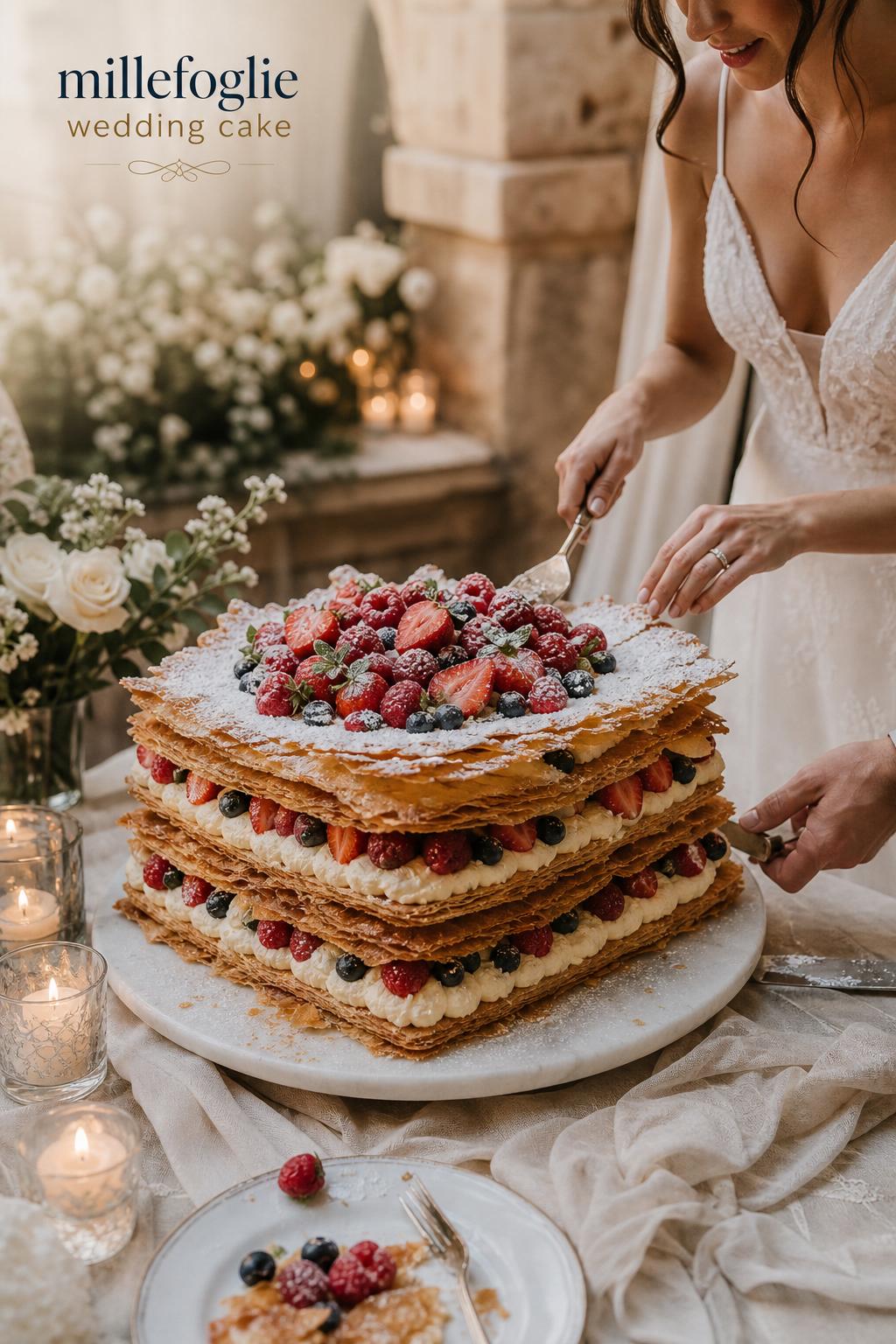
That balance of heritage, texture, and ceremony is exactly why the millefoglie wedding cake continues to capture attention. It fits couples who want an Italian wedding cake with cultural meaning, visual charm, and a guest experience that feels memorable from the first slice to the final crumb.
The romance behind a millefoglie wedding cake
Millefoglie, often connected to the French mille-feuille, is a layered pastry dessert that has become deeply associated with Italian wedding celebrations. In a wedding setting, it is typically built from sheets of puff pastry filled with cream, then finished with berries or other delicate toppings. Unlike a traditional stacked tiered cake, millefoglie feels lighter in spirit and more artisanal in presentation, which is part of its appeal for couples seeking a dessert with personality.

Turn wedding inspiration into a plan you can actually follow.
Zarellea brings your guest list, budget, vendors, and day-of details into one shared space — so no beautiful idea gets lost in the shuffle.
The mood it creates is important. A tiered cake often reads as sculptural and formal, while millefoglie reads as generous, textural, and celebratory. The contrast between crisp pastry and soft filling gives it a sense of abundance without heaviness. That is why it works so beautifully at receptions where the dessert moment is meant to feel intimate, social, and distinctly tied to the couple’s wedding vision.
Many couples are first introduced to this style through real weddings featured by The Knot, where a traditional Italian millefoglie wedding cake appears not only as dessert but as part of the evening atmosphere. In one especially evocative example, Jenna and Anthony’s wedding at Castello di Vincigliata in Fiesole, Italy, framed millefoglie within an Italian Catholic ceremony and reception, reinforcing how naturally this cake belongs within a classic Italian celebration.
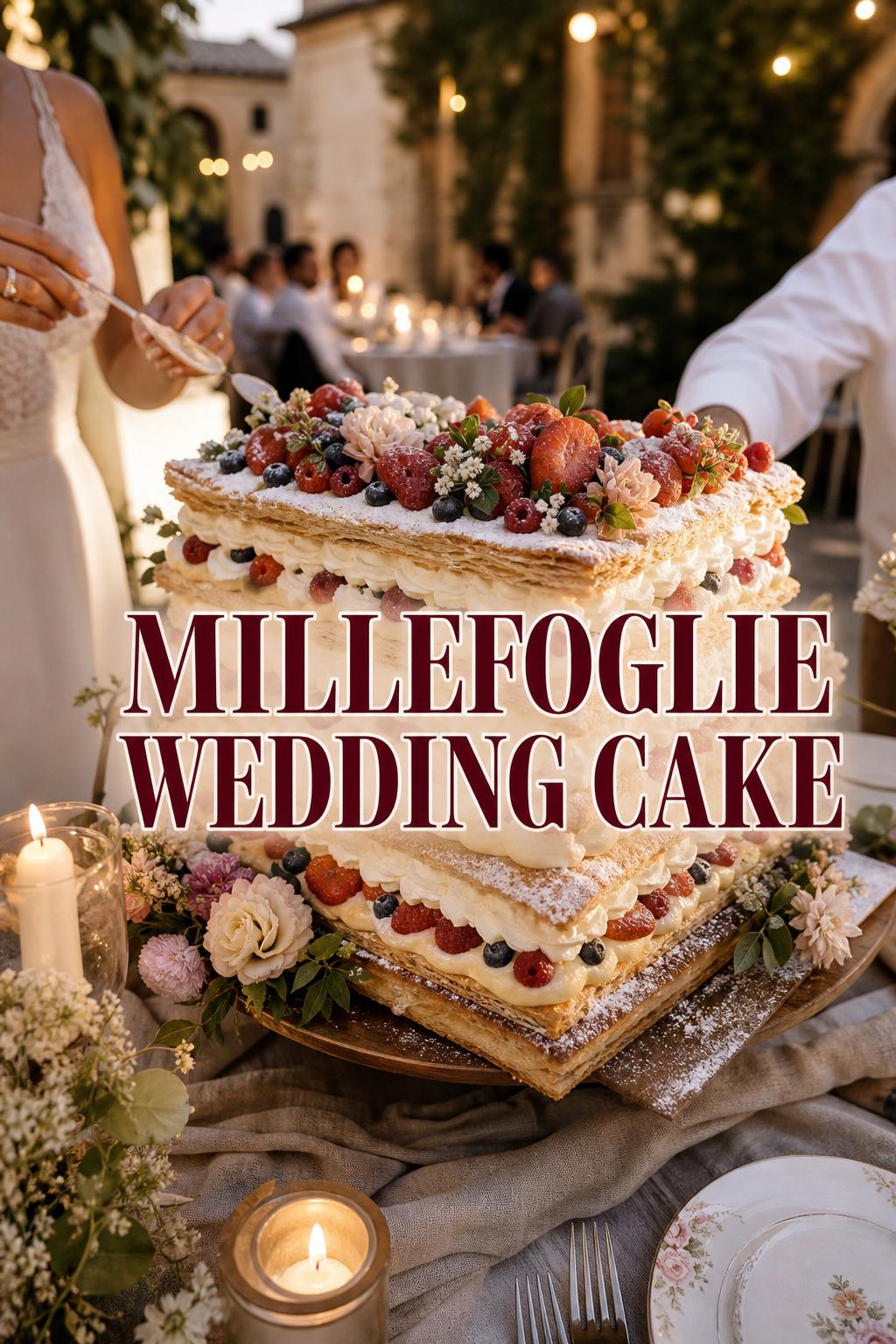
Look: the classic Italian reception statement
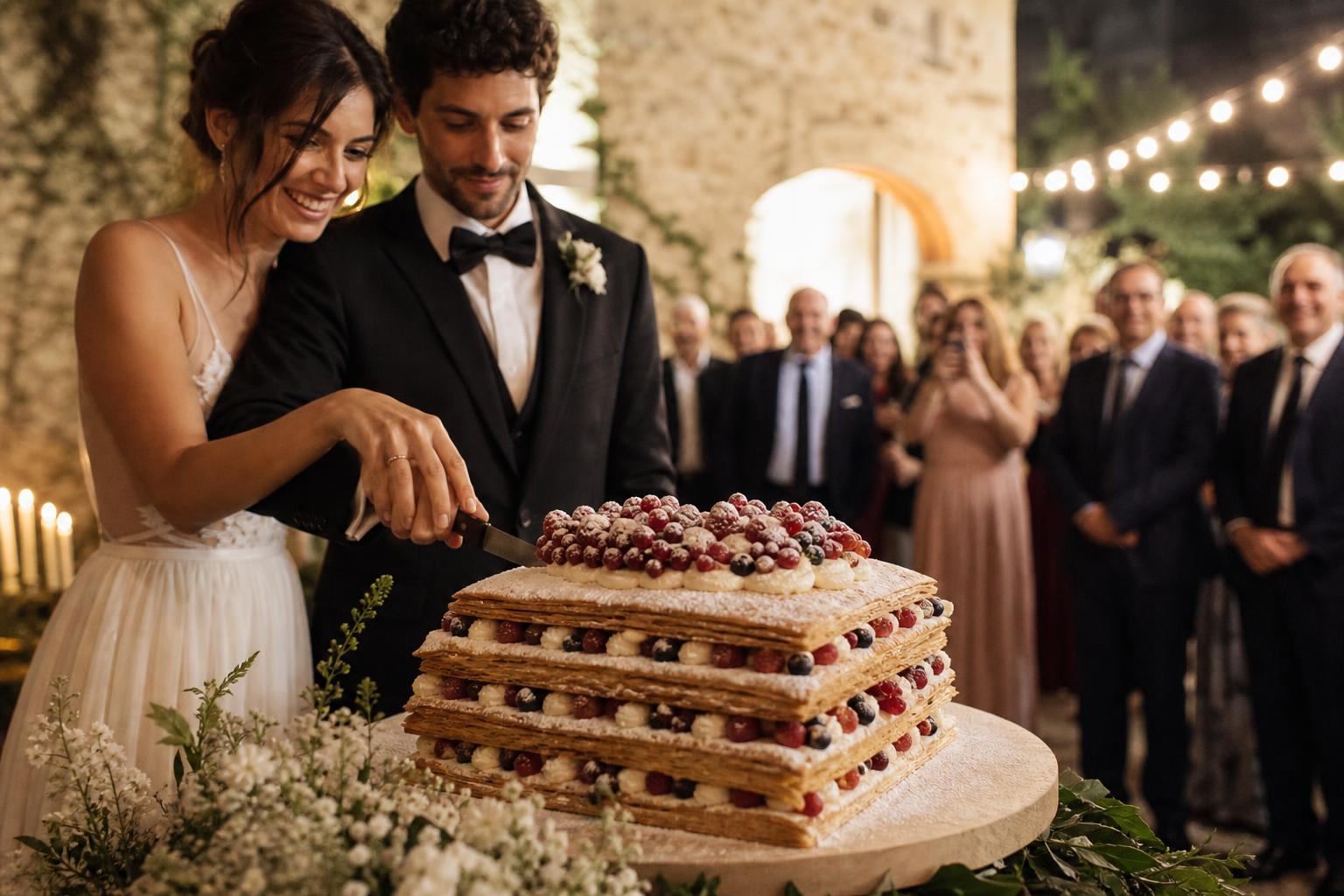
This interpretation of millefoglie is the one many couples imagine first: a live-assembled dessert brought forward late in the reception, with layers built in view of guests and finished with fresh berries. The silhouette is generous rather than towering, elegant rather than rigid. It feels especially at home in candlelit villas, stone courtyards, and refined ballroom receptions where the evening unfolds slowly and beautifully.
The visual palette here is soft gold from the pastry, ivory from the Chantilly cream, and rich red or deep berry tones from the fruit. Powdered sugar often completes the look with a gentle, cloudlike finish. This style pairs naturally with romantic wedding aesthetics because it is textured and slightly undone in the most graceful way, like a dessert version of relaxed luxury.
- Key elements: puff pastry layers, Chantilly cream or crema pasticcera, fresh berries
- Best setting: formal receptions, Italian-inspired venues, candlelit dinner celebrations
- Visual mood: timeless, refined, celebratory
Why it works so well is simple: it feels ceremonial without becoming stiff. Couples who want a signature dessert moment often find that millefoglie offers the emotional impact of a wedding cake while avoiding the more conventional look of a multi-tiered design.
Millefoglie in Italy: where heritage shapes the aesthetic
To understand the appeal of millefoglie as a wedding cake, it helps to understand the cultural frame around it. The dessert is linked to the French mille-feuille in origin, but in Italy it has developed its own identity, especially in wedding settings. That French-Italian crossover gives millefoglie a layered charm of its own: technically rooted in one tradition, emotionally embraced by another.
Italy, and especially Tuscany in the wedding imagination, gives millefoglie a sense of place. Articles and venue features repeatedly connect this dessert to Tuscan weddings, villa receptions, and open-air celebrations where the cake becomes part of the landscape of the event. Tenuta Corbinaia, for example, presents the millefoglie wedding cake as an elegant choice for Tuscany, highlighting how naturally its appearance and symbolism align with the region’s romantic wedding atmosphere.
That geographic association matters for American couples too. Even in a U.S. celebration, choosing a millefoglie wedding cake can be a way of referencing Italian culinary heritage without recreating every detail of an Italian destination wedding. It offers a strong sense of tradition while still adapting easily to different venues and planning styles.
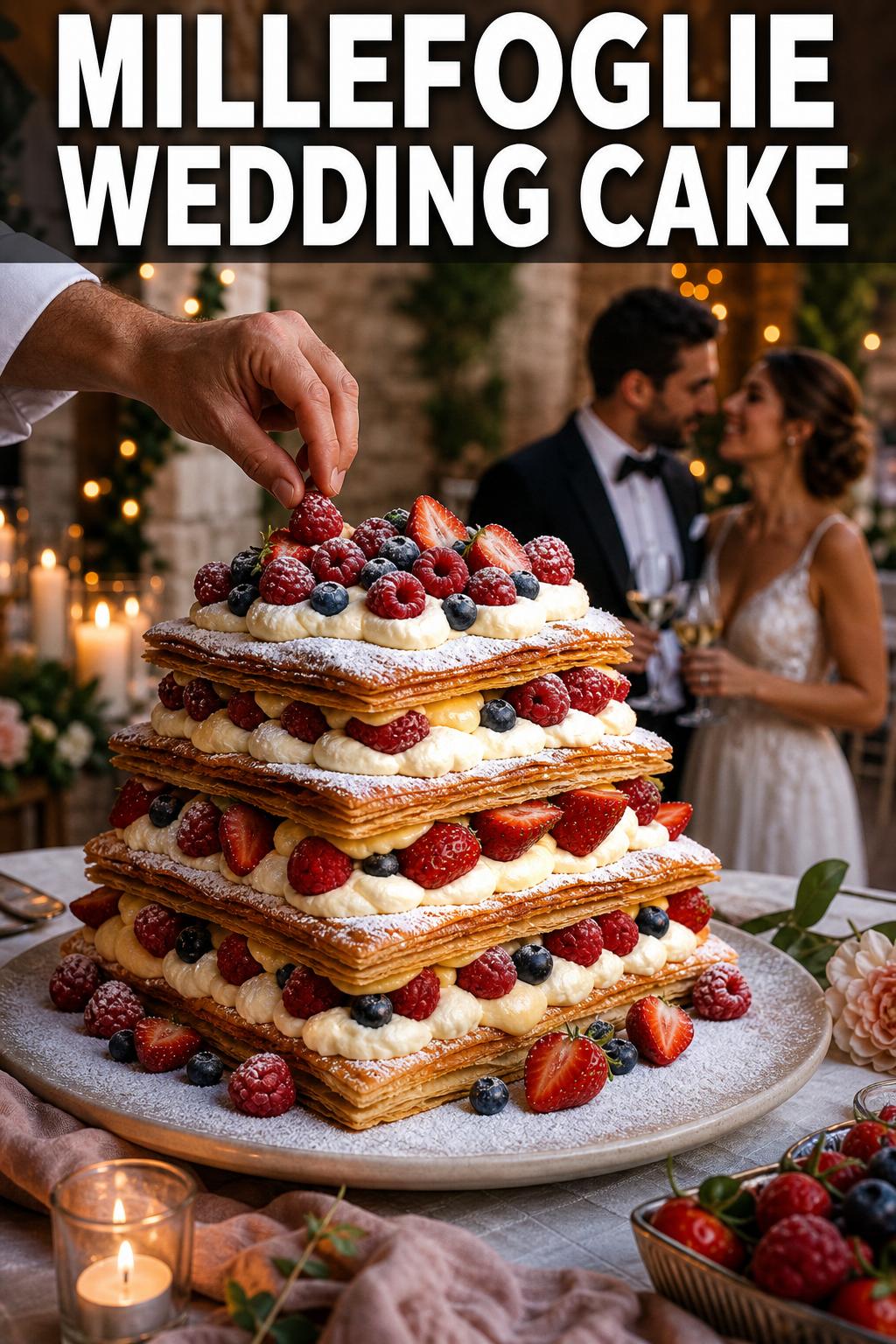
Style tip: use place as part of the dessert story
If your wedding draws inspiration from Tuscany, Fiesole, or a European villa mood, millefoglie feels especially coherent. The more the reception emphasizes long-table dining, warm light, and a sense of shared celebration, the more naturally this dessert fits into the visual and emotional story of the evening.
Look: Tuscan villa elegance with soft berry detail
This version of millefoglie leans into destination-romance styling. It is less about spectacle and more about atmosphere: pastry layers that feel artisanal, cream that looks generous instead of overly sculpted, and berries that add freshness and color without overwhelming the design. The impression is graceful, sun-warmed, and quietly luxurious.
The color story stays close to nature. Creamy whites, golden pastry edges, and jewel-like berry tones work beautifully against stone venues, garden tablescapes, or countryside settings. In a place such as Castello di Vincigliata or a venue inspired by that same mood, this cake becomes part of the scenery rather than a separate decorative object.
This look suits couples who want their cake to feel rooted in setting. It is ideal for weddings where every detail aims for softness and continuity, and where dessert should echo the beauty of the venue rather than compete with it.
What makes millefoglie so distinctive: layers, cream, and texture
A millefoglie wedding cake is special because its appeal depends on contrast. Puff pastry brings crisp structure. Chantilly cream or crema pasticcera brings softness, richness, and visual fullness. Fresh berries add brightness, color, and a finishing note that keeps the dessert from feeling too heavy. Each component has a practical role as well as an aesthetic one.
Puff pastry is the defining structural element. When couples choose millefoglie, they are choosing a cake built around layers rather than tiers. That changes how the dessert is assembled, displayed, and served. It also changes the guest experience. Instead of neat slices from a rigid center, servings often feel more immediate and pastry-like, which many people find more inviting.
The filling matters just as much. Some descriptions emphasize Chantilly cream, while others refer to crema pasticcera or simply crema. In wedding planning terms, the difference is less about deciding which label sounds better and more about discussing the texture and finish you want. A lighter cream creates a softer, airier look; a richer custard-style filling can create a fuller, more classic pastry feel.
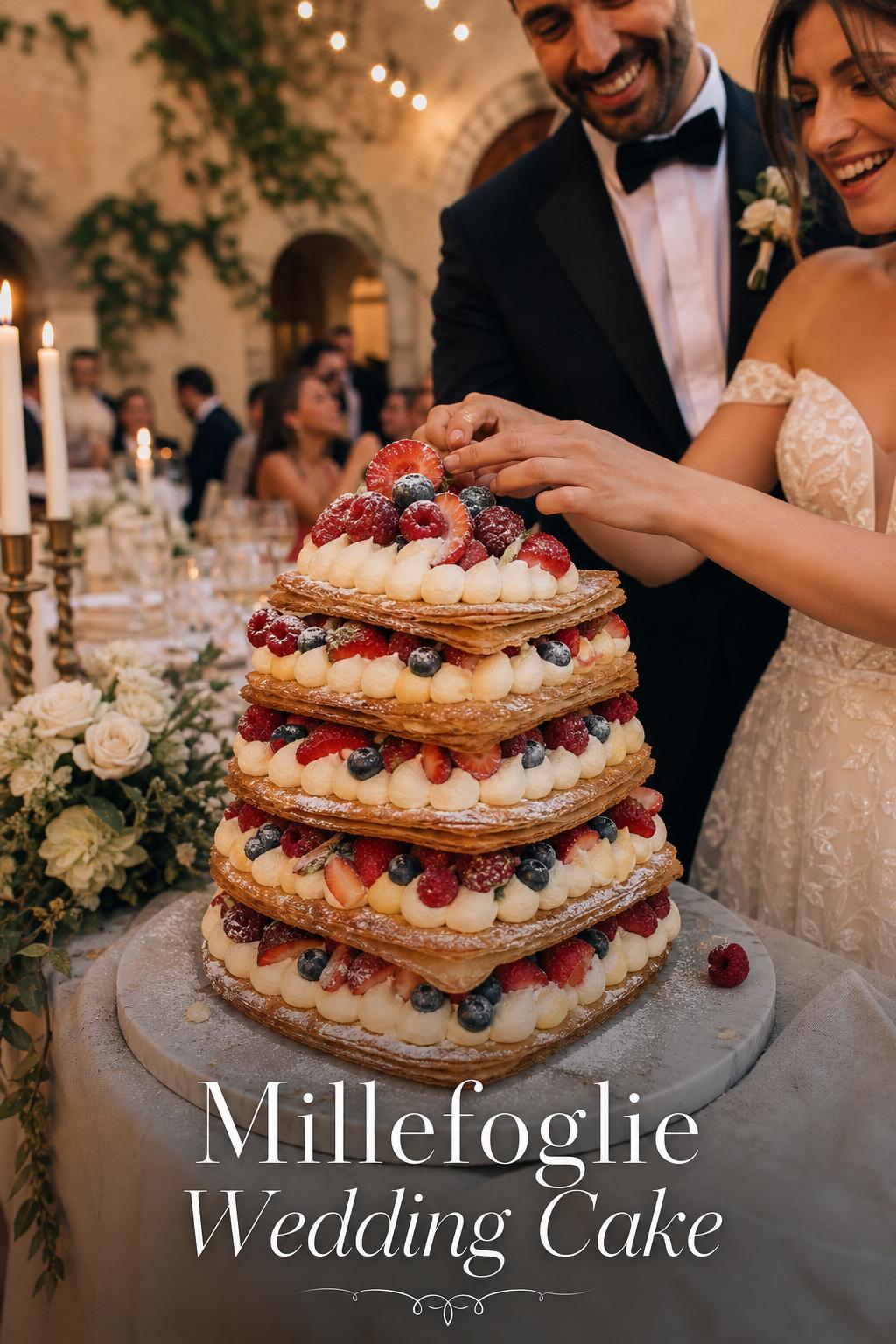
Key pieces for this aesthetic
- Puff pastry layers for crispness and visual definition
- Chantilly cream or crema pasticcera for softness and volume
- Fresh berries for color, freshness, and a wedding-ready finish
- Powdered sugar for a romantic final touch
When these elements are in balance, millefoglie feels effortless. When one dominates too strongly, the cake can lose some of its charm. Too much emphasis on decoration can make it feel fussy; too little attention to texture can make it look unfinished. The beauty lies in controlled abundance.
Look: the airy Chantilly interpretation
For couples who love softness, this interpretation centers the cream. The silhouette is cloudlike and romantic, with pastry acting as delicate structure rather than dominant architecture. It feels particularly fitting for spring and summer weddings, garden receptions, and celebrations where the overall mood is light, luminous, and welcoming.
The palette remains pale and gentle: ivory cream, light pastry tones, and a scattering of berries as color accents rather than a dense topping. This style photographs beautifully because the layers remain visible, but the finish never feels severe. It looks best when paired with floral-forward tables, soft linens, and a reception design that values movement over symmetry.
This is a strong choice for couples who want the idea of a wedding cake without the visual weight of a traditional display cake. It still feels bridal and celebratory, but with a softer mood that reads more romantic than formal.
The live assembly moment: dessert as part of the celebration
One of the strongest reasons couples choose a millefoglie wedding cake is the live assembly experience. In many wedding features, this is not treated as a minor detail but as one of the most memorable parts of the reception. Guests gather, the cake is finished in real time, berries are added, and the dessert becomes a moment of theater without feeling artificial.
From a planning perspective, live assembly changes the mood of the event. It encourages movement, conversation, and attention. Instead of a cake simply waiting in a corner, the dessert arrives with a sense of occasion. For weddings that value interaction and atmosphere, that can be a major advantage.
There are, however, practical considerations. Live assembly works best when the venue flow supports it and the timing is clear. Because millefoglie is built around texture, couples should talk with their bakery or pastry team about when assembly happens, how quickly the cake will be served, and where it should be displayed before guests receive their portions. This is especially important if you want the puff pastry to remain crisp and visually defined.
Tips for planning a live-assembled millefoglie
- Confirm whether assembly happens in front of guests or just before presentation.
- Ask how the cake will be transported and staged at the venue.
- Discuss the ideal service window so the pastry keeps its texture.
- Make sure the dessert table or presentation area suits the look of the cake.
This is where practical experience matters. Millefoglie is beautiful because it is dynamic, but that same quality means timing is part of the design. The best result comes when presentation and service are treated as one connected plan.
Look: modern reception theater with a custom millefoglie
This interpretation is ideal for couples who want their dessert to feel current and experience-driven. The visual mood is polished but lively, and the cake itself becomes part of the evening entertainment. It suits receptions where guests are expected to mingle, photograph details, and engage with the unfolding story of the event.
Design-wise, the cake remains grounded in tradition with puff pastry, cream, and berries, but the styling leans more contemporary through cleaner presentation and a stronger focus on the reveal. It fits urban venues, fashion-conscious weddings, and celebrations that blend old-world food traditions with a modern guest experience.
This look works because it turns heritage into something immediate. Rather than feeling like a historical reference, millefoglie becomes a living part of the reception, which is exactly what many couples want from their wedding details now.
Finding a millefoglie baker in the United States
For U.S.-based couples, sourcing is often the biggest practical question. Search intent around millefoglie baker USA and custom millefoglie reflects that clearly: people want to know not only what this cake is, but who can make it well and how to order it for a wedding. Because millefoglie is not the same as a standard tiered buttercream cake, the conversation with your baker should be more specific from the start.
Some visible examples in this space include Mericakes, which showcases a millefoglie wedding cake in a portfolio format, and Eden Pasticceria, which offers a signature millefoglie cake through a bakery product page. These examples are useful because they show two different approaches: one from a custom design perspective and one from a pastry-shop product perspective. Both can be relevant depending on whether you want a fully bespoke wedding moment or a bakery-led classic version.
Inspiration can also come from wedding publishers like The Knot and style-focused resources such as Love and Ventures, KitchenSterling, Flavor365, and Italian Wedding Circle. While these are not all bakeries, they can help couples refine what kind of millefoglie they are actually looking for before reaching out to vendors.
What to ask before you book
- How many layers of puff pastry are included in the final design?
- Is the filling more like Chantilly cream, crema pasticcera, or a blend?
- Will the cake be assembled live at the wedding?
- What berry toppings or finishing details are available?
- How is the cake portioned and served to guests?
These questions help avoid a common planning issue: using the same expectations you would have for a traditional wedding cake. Millefoglie requires more discussion around assembly, timing, and texture, and that extra clarity usually leads to a much better result.
Look: boutique bakery polish for a city wedding
Not every millefoglie wedding cake has to evoke a countryside villa. In a city reception, the aesthetic can become cleaner and more edited while keeping the same layered heart. The mood here is elegant and contemporary, with careful presentation and a slightly more design-forward finish.
This style is well suited to couples working with a bakery such as Eden Pasticceria or a custom cake studio approach like Mericakes, where precision and presentation are central to the result. The palette stays restrained, often relying on cream, pastry gold, and fresh fruit accents rather than heavy decoration. It is a beautiful choice for gallery-style venues, restaurants, or modern event spaces in the United States.
The reason this interpretation works is that millefoglie already has strong visual character. In a modern setting, you do not need to over-style it. Let the layers, fruit, and finish create the statement, and the cake will still feel distinctive.
Flavor direction and customization without losing the identity
Although the classic version usually centers on puff pastry, cream, and berries, couples often want some level of customization. This is where careful restraint matters. The strongest millefoglie wedding cake ideas tend to keep the structure recognizable while adjusting filling style, fruit emphasis, or subtle flavor accents. Vanilla crema remains one of the clearest reference points because it supports the pastry without distracting from it.
Chocolate-filled versions, fruit-forward interpretations, and berry-led presentations all appear as natural extensions of the core dessert. The best choice depends on the overall wedding mood. A lighter berry finish often suits spring and summer receptions. A richer cream or chocolate note may feel more aligned with an evening celebration or a more dramatic reception palette.
Dietary adaptations are an area of growing interest as well. Gluten-free, dairy-free, and vegan millefoglie are often discussed as modern opportunities, but they need thoughtful handling because the dessert relies so much on the behavior of pastry and cream. If those adaptations are important for your guest list or personal preference, discuss them early with your baker so expectations remain realistic and the visual result still fits the wedding.
How to recreate the right flavor mood
Start with the reception atmosphere rather than the filling alone. If your wedding aesthetic is airy and romantic, lean toward Chantilly-style softness and fresh berries. If the mood is richer and more classic, a fuller crema pasticcera profile may feel more harmonious. The most successful customization is the one that protects the essential identity of millefoglie while gently reflecting your event style.
Where millefoglie works best and when it may not
Millefoglie is especially compelling for weddings that prioritize shared experience, visual texture, and culinary heritage. It shines at Italian-inspired celebrations, villa weddings, romantic garden receptions, and refined dinners where dessert should feel both beautiful and conversational. It also works well for couples who prefer a pastry-forward dessert over a heavily iced cake.
At the same time, it is not automatically the right fit for every wedding. If your vision depends on a highly sculptural, very tall display cake that sits untouched for hours, a traditional tiered cake may be easier to manage. If your venue timeline leaves very little room for live presentation or quick service, millefoglie may require more coordination than you want. That does not make it difficult; it simply means the cake performs best when its strengths are understood.
This is one of the most reassuring truths for couples: choosing the right wedding cake is not about choosing the most dramatic option, but the one that fits how your celebration actually unfolds. Millefoglie rewards couples who value authenticity, timing, and a dessert moment that feels generous rather than purely decorative.
Real wedding inspiration: why featured millefoglie moments stay memorable
Real wedding coverage has played a major role in shaping how couples imagine a millefoglie wedding cake. The Knot’s features, especially those centered on traditional Italian wedding cake moments topped with fresh berries, show why this dessert translates so powerfully in photographs. It captures texture, movement, and atmosphere all at once.
The wedding of Jenna and Anthony at Castello di Vincigliata is an especially strong example because the setting in Fiesole, Italy, reinforces the cake’s cultural identity. The millefoglie there is not treated as a novelty. It appears as part of a larger wedding language that includes place, tradition, and reception experience. That is useful for couples planning elsewhere too, because it shows how the cake becomes most meaningful when it belongs to the overall event story.
Even outside Italy, that same logic applies. A millefoglie looks best when the reception styling supports it: thoughtful dessert presentation, a timing plan, and a mood of shared celebration. Those are the conditions under which the cake stops being just a trend and starts feeling timeless.
Quick planning notes for couples choosing millefoglie
Because this dessert is different from a standard wedding cake, couples usually feel more confident when they make a few decisions early. The goal is not to complicate planning, but to make sure the cake serves both the aesthetic vision and the practical flow of the reception.
- Decide whether you want a live-assembled presentation or a ready-to-serve display.
- Choose the cream style that best matches your preferred texture and visual finish.
- Use berries and powdered accents to support the wedding palette rather than overwhelm it.
- Confirm service timing so the puff pastry still feels crisp and appealing.
- Ask your baker to explain how the cake will be transported, assembled, and portioned.
These details may seem small, but they shape the final experience. With millefoglie, beauty and logistics are closely connected, which is why the most seamless receptions usually treat dessert planning with the same care as floral design or table styling.
FAQ
What is a millefoglie wedding cake?
A millefoglie wedding cake is a traditional Italian layered pastry dessert made with puff pastry and filled with cream, often Chantilly cream or crema pasticcera, then finished with fresh berries and sometimes powdered sugar. It is different from a standard tiered wedding cake because it is built around pastry layers and texture rather than stacked sponge tiers.
Is millefoglie the same as mille-feuille?
Millefoglie is closely related to mille-feuille, the French pastry often referenced as part of its roots. In wedding settings, millefoglie is generally presented through an Italian lens, especially in celebrations tied to Italian wedding traditions and venues such as those associated with Tuscany.
Why do couples choose millefoglie for weddings?
Couples often choose millefoglie because it combines cultural meaning, visual beauty, and a memorable guest experience. Its live assembly, fresh berry finish, and layered texture create a dessert moment that feels interactive and romantic, especially for Italian-inspired weddings or receptions that emphasize atmosphere and shared celebration.
What are the typical ingredients in a millefoglie wedding cake?
The most common elements are puff pastry, Chantilly cream or crema pasticcera, and fresh berries. Some versions may lean more toward a lighter cream profile while others feel richer and more pastry-forward, but those core components define the classic look and taste.
Does a millefoglie wedding cake need to be assembled live?
No, but live assembly is one of its most appealing presentation styles. Many couples choose it because it adds theater and creates a memorable reception moment. If you prefer a simpler approach, you can discuss pre-assembly and service timing with your baker so the cake still looks beautiful and the pastry remains appealing.
How is millefoglie different from a traditional tiered wedding cake?
The main difference is structure and experience. A traditional tiered cake is usually more sculptural and formal, while millefoglie is built from pastry layers and cream, giving it a more artisanal, textural, and interactive feel. It often creates a softer and more convivial dessert moment at the reception.
Can you customize a millefoglie wedding cake?
Yes, customization is possible through cream style, fruit emphasis, and subtle flavor direction such as vanilla crema or chocolate-filled variations. The best custom versions keep the recognizable puff pastry and cream identity intact so the cake still feels true to the millefoglie tradition.
Where can couples in the U.S. find a millefoglie wedding cake?
Couples in the United States can start by looking at specialty bakeries and custom cake portfolios that already feature millefoglie, such as Eden Pasticceria and Mericakes, while using wedding inspiration sources like The Knot to clarify the presentation style they want. The most important step is finding a baker who understands assembly, texture, and service timing for this specific dessert.
Does millefoglie work for all wedding styles?
It works best for weddings that value texture, heritage, and a shared dessert experience, especially Italian-inspired celebrations, romantic receptions, and venue settings with a strong atmosphere. It may be less suitable for events that require a highly sculptural cake display to remain untouched for a long period before serving.
What toppings are most common on a millefoglie wedding cake?
Fresh berries are the most commonly referenced topping, often paired with a light dusting of powdered sugar. This finish complements the cream and pastry visually and adds the bright, elegant contrast that gives a millefoglie wedding cake its signature romantic look.