Wedding Cake Display Table Styles for a Chic Reception
The wedding cake often arrives late in the planning process, yet on the day itself it becomes one of the most photographed details in the room. A thoughtfully styled wedding cake display table can turn a beautiful cake into a true reception focal point, whether the celebration leans rustic, vintage, modern, glam, or garden-inspired. Couples often compare these styles because they share many of the same core elements—cake stands, pedestals, risers, florals, greenery, linens, lighting, and backdrops—but the feeling they create is entirely different.
That is where the decision becomes both exciting and surprisingly nuanced. An antique dresser and soft floral garland tell a different story than a sleek pedestal under controlled lighting, even if both displays hold the same tiered cake. Below, you will find a style-focused comparison of the most popular approaches to a wedding cake display table, along with practical guidance on display platforms, photography-friendly setup, guest flow, indoor versus outdoor conditions, and the small details that help the dessert tableau feel intentional rather than improvised.
Style overview: rustic wedding cake display
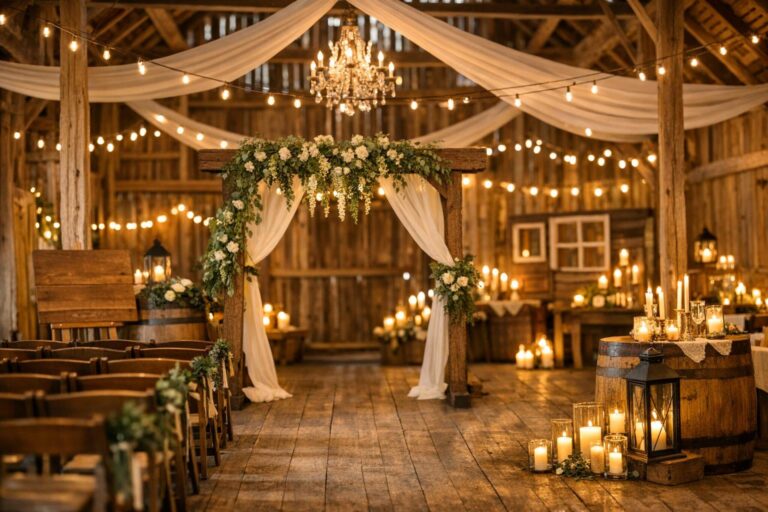
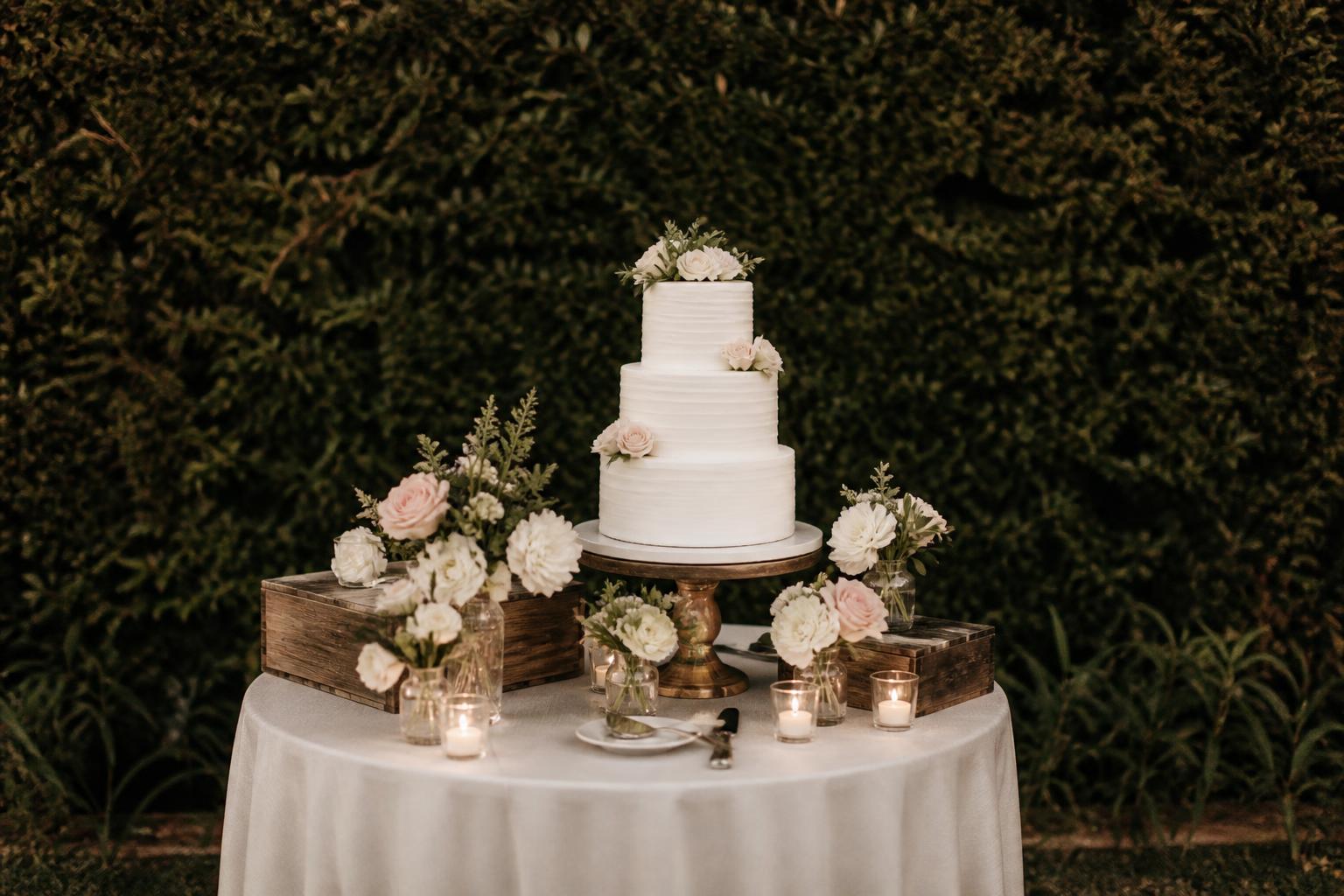
A rustic wedding cake display table feels grounded, natural, and relaxed. This style often draws on wood tones, crates, shelves, risers, and natural display options, with greenery and florals softening the structure. The overall mood is warm and organic, and the cake table decor usually looks best when it embraces slight texture variation rather than perfect symmetry.
In practical terms, rustic displays often use height variation through stacked elements, simple platforms, or pedestal groupings. Greenery, floral accents, and linen runners work especially well here because they connect the dessert display to the broader reception environment. A rustic cake table usually feels inviting and tactile, with enough visual interest to frame the cake without competing with it.
Turn wedding inspiration into a plan you can actually follow.
Zarellea brings your guest list, budget, vendors, and day-of details into one shared space — so no beautiful idea gets lost in the shuffle.
Defining visual traits
The defining characteristics are natural materials, visible texture, and a less formal sense of structure. Rustic styling tends to favor wood, soft textiles, and garden-inspired accents over polished glamour. The display is elevated, but not severe.
Style overview: vintage wedding cake display
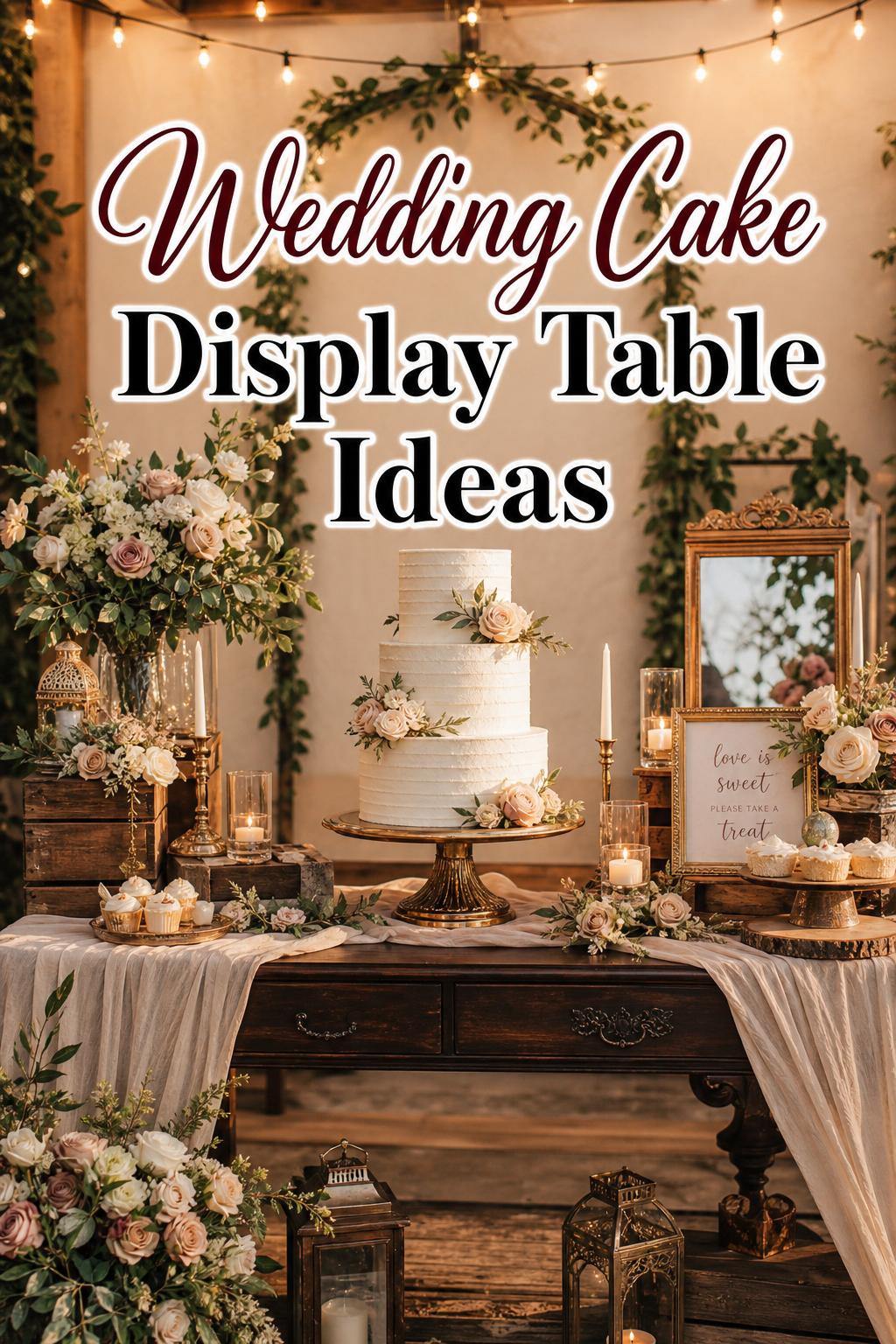
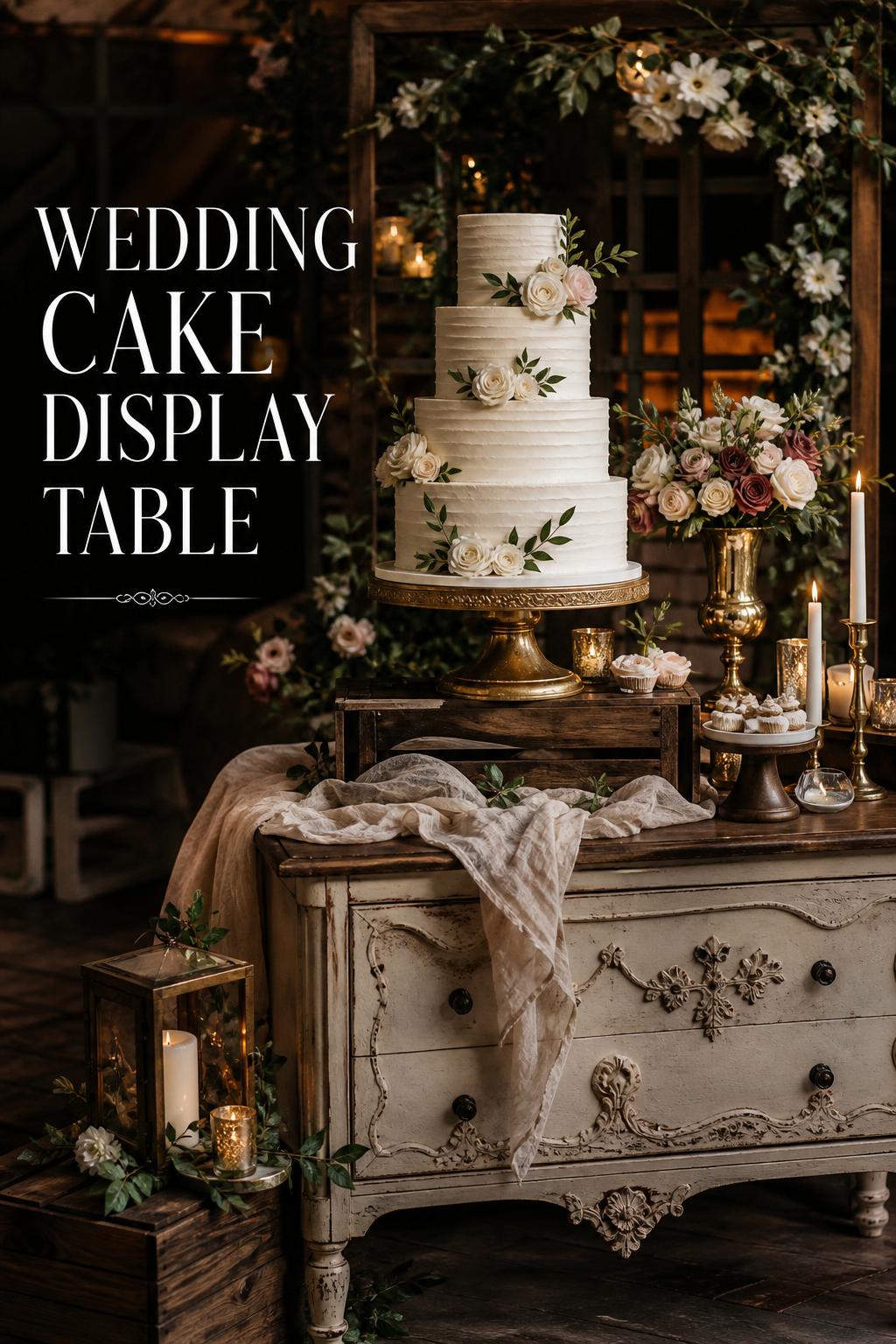
Vintage styling shares some overlap with rustic design, which is why the two are often confused. Both may use aged materials and layered decor, but a vintage wedding cake display table usually feels more curated and nostalgic. Antique furniture, especially a dresser or decorative table with character, becomes part of the design rather than simply a support surface.
Where rustic is natural and relaxed, vintage is story-driven and romantic. Cake stands, pedestals, and decorative props are chosen for their charm and personality. Florals and textiles often feel softer, and the table itself may look like it was discovered rather than rented. This style suits receptions that want a sense of history, intimacy, and quiet elegance.
Defining visual traits
Vintage displays are recognizable through antique furniture, decorative details, layered textures, and a more sentimental mood. The palette can still include greenery and florals, but the furniture style is what anchors the look. An antique dresser or table can transform the display from simple dessert station to romantic vignette.
Style overview: modern wedding cake display
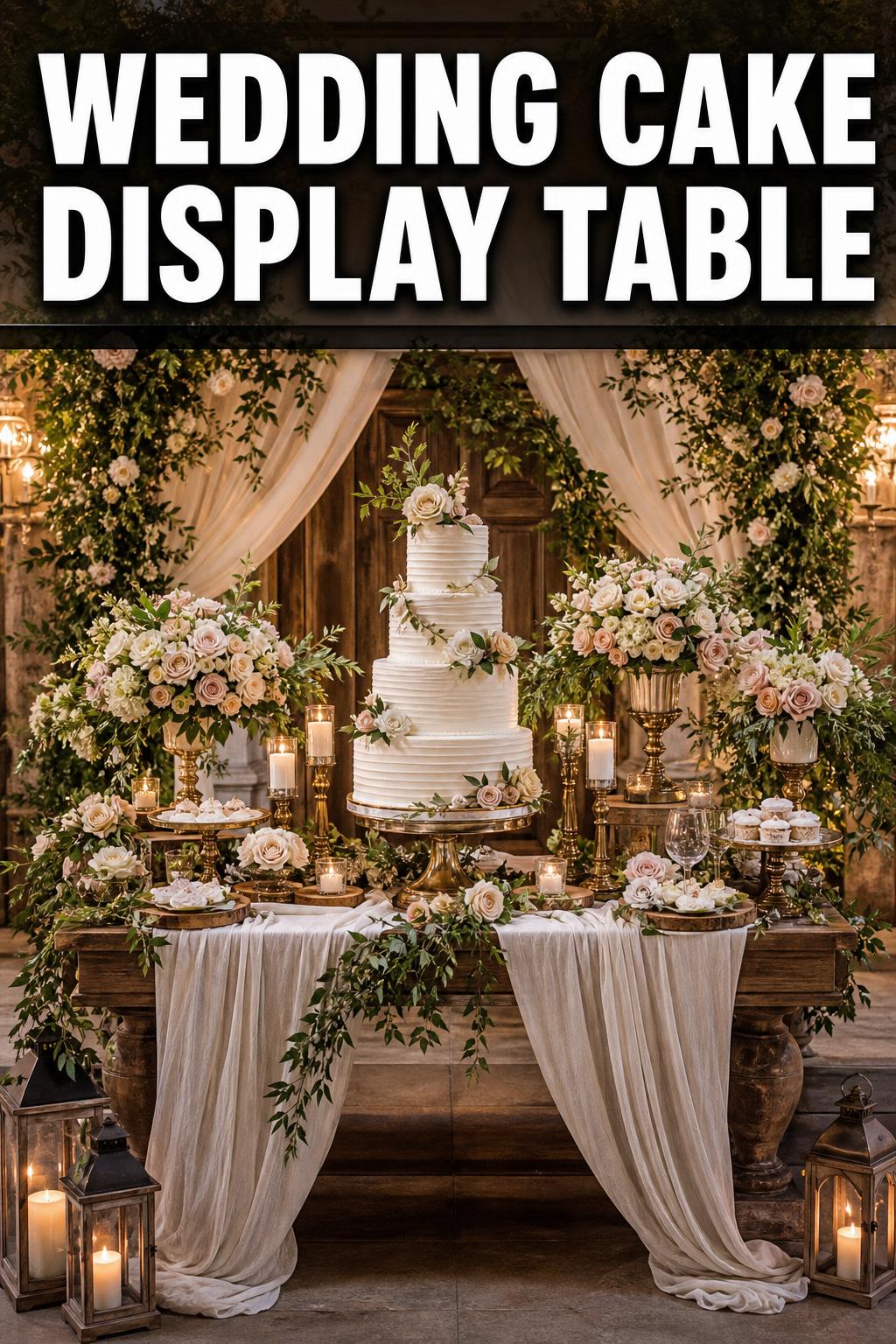
A modern wedding cake display table focuses on clarity, restraint, and strong focal-point styling. Rather than building the scene with many small props, this aesthetic relies on clean pedestals, controlled color harmony, and strategic lighting. The cake itself is often allowed to carry most of the visual impact.
Modern does not mean plain. It means every piece is intentional. A single raised platform, a clean backdrop, or a minimal arbor can frame the cake beautifully. In this style, spacing matters as much as decor. Empty space becomes part of the composition, helping the display read clearly in person and in photographs.
Defining visual traits
Modern cake table ideas tend to emphasize crisp silhouettes, limited decor, and a strong sense of order. Pedestals, risers, and streamlined display platforms are common, and lighting is especially important because it sharpens the cake’s presence without cluttering the scene.
Style overview: glam and garden interpretations
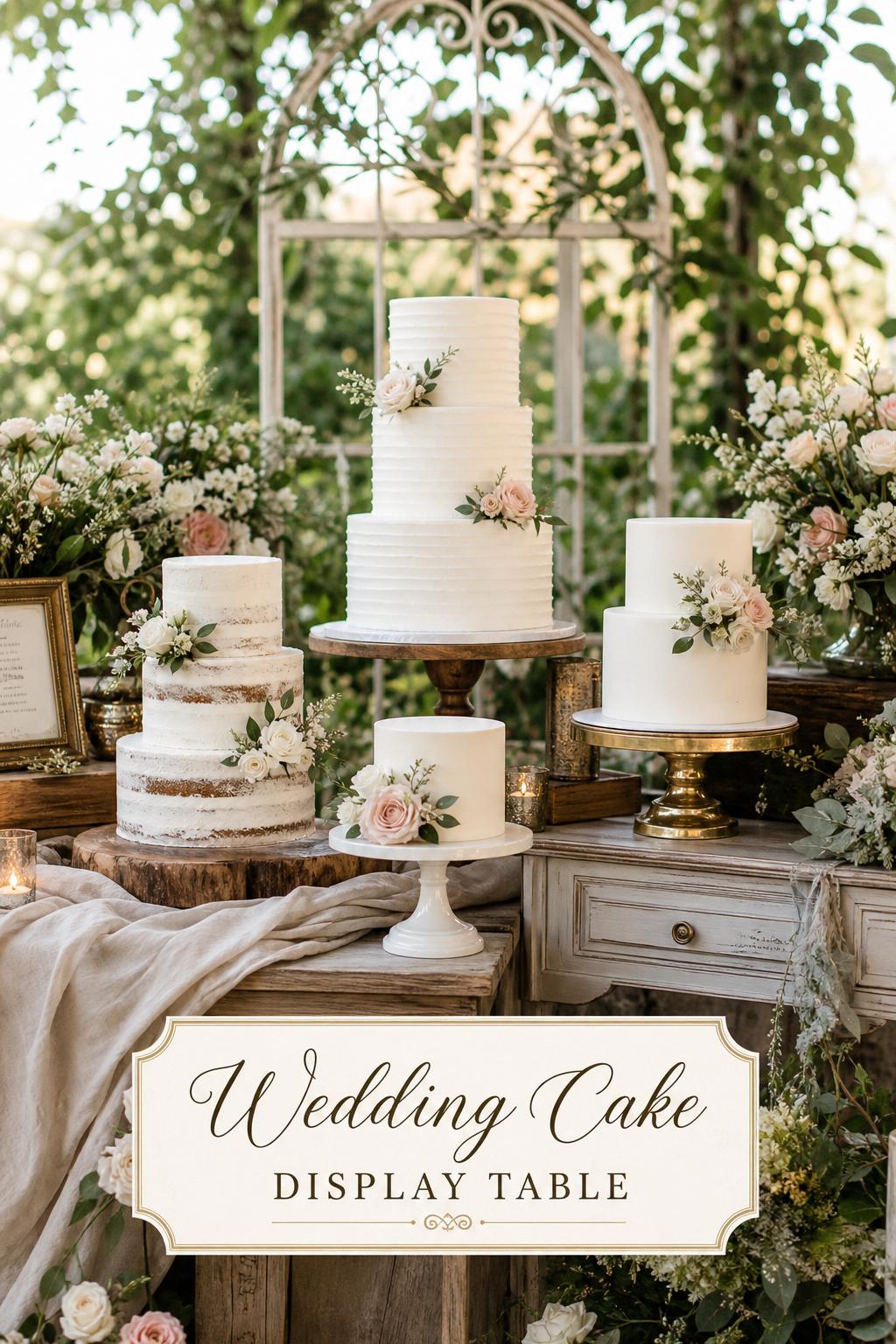
Glam and garden styles are often treated as opposites, yet both are frequent companions in wedding cake table ideas because each creates a distinct mood around the same display principles. Glam styling pushes toward polish, richness, and intentional drama. Garden styling leans into greenery, florals, and a softer, outdoor-inspired romance.
These styles can overlap with modern, vintage, or rustic foundations. A glam display may still use a pedestal and controlled lighting like a modern setup, while a garden display may borrow natural textures associated with rustic styling. The difference lies in emphasis: glam highlights elegance and finish, while garden highlights atmosphere and movement.
Defining visual traits
Glam favors refined symmetry, polished materials, and more formal styling. Garden relies on floral garlands, greenery, and softer structural choices such as arbors or natural backdrops. Both can be stunning, but they create very different emotional impressions during the reception.
Where these cake display styles really differ
The most helpful way to compare cake display styles is not by the cake itself, but by the supporting elements around it. The platform, furniture choice, texture, height variation, and lighting determine whether the cake feels rustic, vintage, modern, glam, or garden-inspired. Many couples start with a theme word, but the stronger approach is to look at how each style handles structure, color palette, and decor restraint.
Silhouette and structure
Rustic and garden displays usually feel more layered and organic, with varied heights created through crates, shelves, risers, or grouped pedestals. Vintage displays can also be layered, but the silhouette is often anchored by a single character-filled piece of furniture. Modern and glam displays are usually more controlled, favoring a cleaner stage for the cake and a more deliberate sense of spacing.
Color palette and texture
Rustic and garden styles often welcome visible texture through greenery, florals, linen runners, wood, and natural materials. Vintage adds softness and history through aged finishes and decorative details. Modern relies on fewer materials and tighter color harmony. Glam uses a polished finish and a more elevated sense of presentation, even when floral accents are included.
Level of formality
Modern and glam displays usually feel the most formal. Rustic feels the least rigid, though it can still be elegant. Vintage sits in the middle, often formal in spirit but gentle in execution. Garden styling can shift either direction depending on whether the florals and arbor details feel relaxed or highly styled.
Styling philosophy
Rustic asks the display to feel welcoming. Vintage asks it to feel personal. Modern asks it to feel composed. Glam asks it to feel polished. Garden asks it to feel romantic and atmospheric. Understanding that emotional difference is often what helps couples make the final decision.
The visual breakdown: how each style reads in real wedding spaces
On an actual wedding day, guests do not inspect your cake table decor as isolated objects. They experience the display at a distance first, then in closer detail, and finally through photographs. That is why visual balance matters. A dessert tableau that looks charming up close can still disappear in a large reception room if it lacks height, contrast, or proper lighting.
Layering approach
Rustic and vintage styling often use layered props to create a collected feeling. Crates, decorative stands, textured linens, and floral accents help build visual depth. Modern styling uses fewer layers, but stronger spatial control. Garden uses layered greenery and florals instead of many hard props. Glam typically layers selectively, prioritizing symmetry and finish over abundance.
Proportions and height variation
Across all styles, height variation is one of the most important tools. Cake stands, pedestals, risers, and display platforms help lift the cake so it remains the focal point. Rustic and garden styles may create a softer, stepped effect. Modern style often uses a single strong lift. Vintage may elevate the cake through both the table itself and an additional stand. Without this variation, even a beautiful cake can feel visually flat.
Accessories and finishing details
Accessories should support the theme rather than crowd it. Floral garlands, greenery, backdrops, arbors, and linen runners all appear across popular wedding cake table ideas, but their role changes by style. In rustic and garden displays, they soften the scene. In vintage displays, they enhance mood and charm. In modern displays, they are used sparingly. In glam displays, they are chosen for refinement rather than quantity.
Display platforms compared: stands, pedestals, risers, and arbors
If style defines the feeling, display hardware defines the success of the setup. Cake stands, cake pedestals, risers, platforms, and arbors appear repeatedly in the strongest cake table ideas because they provide structure. The right platform does more than elevate the cake physically. It gives the eye a clear place to land.
- Cake stands and pedestals: Best for creating a central focal point with clean elevation. Especially effective for modern, vintage, and glam setups.
- Risers: Useful when building height variation around the main cake or pairing the cake with dessert table elements.
- Crates and shelves: Most naturally aligned with rustic styling, where visible structure adds charm rather than distraction.
- Arbors and backdrops: Ideal when the goal is to frame the cake vertically and create a stronger visual moment, especially in garden or romantic settings.
- Antique furniture: Strongest in vintage displays, where the table itself becomes a major design element.
The comparison is less about what is trendy and more about what your room needs. In a spacious reception venue, a low cake on a standard table can disappear. In a smaller room, an oversized arbor may feel disproportionate. The best wedding cake display table is one that makes sense within the scale of the event.
A closer comparison of rustic versus vintage cake table ideas
These are the two styles couples confuse most often, largely because both use textured materials, florals, greenery, and character-driven props. Yet the atmosphere they create is distinct. Rustic styling feels naturally assembled, while vintage styling feels intentionally collected.
How rustic approaches the same moment
Picture a reception where the cake sits on a pedestal surrounded by greenery, soft florals, and a linen runner across a wood-toned table. Crates or shelves may add side height, and the overall effect is relaxed and welcoming. The cake is important, but it belongs to a broader landscape of natural decor.
How vintage interprets it differently
Now imagine that same cake displayed on an antique dresser with carefully chosen cake stands and decorative props. The floral accents are still there, but the furniture carries more emotional weight. The scene feels romantic and storied, almost as if it belongs to a treasured family setting. Vintage is less about nature and more about memory, character, and heirloom feeling.
For couples deciding between the two, the easiest question is this: do you want your cake display to feel organic or nostalgic? Rustic answers with texture and warmth. Vintage answers with charm and personality.
Modern versus glam: polished, but not identical
Modern and glam are frequently discussed together because both can look formal, composed, and elevated in reception photos. Still, they are not the same style. Modern design values restraint. Glam values finish and drama.
How modern styling works
A modern cake display often uses a single platform or pedestal with careful spacing, controlled color, and purposeful lighting. The backdrop may be simple, and florals are used minimally. The display feels architectural in the best sense: balanced, clear, and undeniably intentional.
How glam styling changes the mood
Glam uses some of the same structural discipline, but the styling is richer. The decor may be more symmetrical, the floral accents more formal, and the overall table presentation more overtly luxurious. Where modern says “less, but better,” glam says “elegant, polished, and ready to be noticed.”
This distinction matters because a couple drawn to clean design may accidentally over-decorate the cake area in pursuit of glamour, while a couple wanting drama may under-style the table by following modern minimalism too closely. The right choice depends on whether you want the cake to feel quietly refined or unmistakably grand.
Garden style and the romance of natural framing
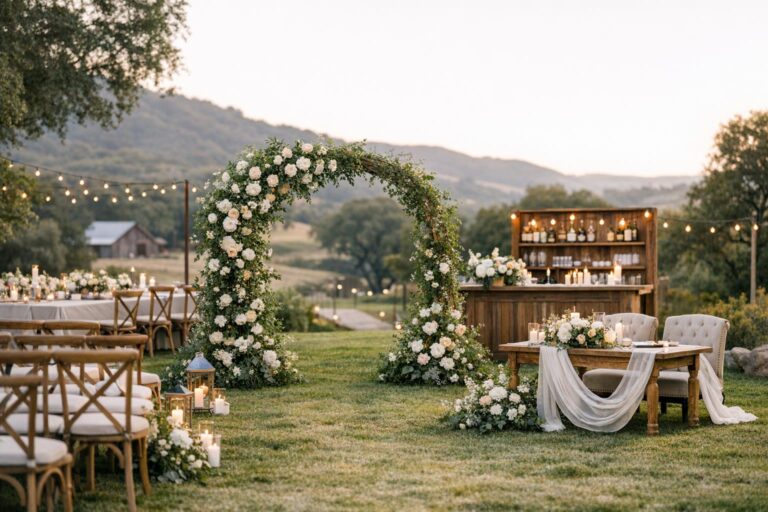
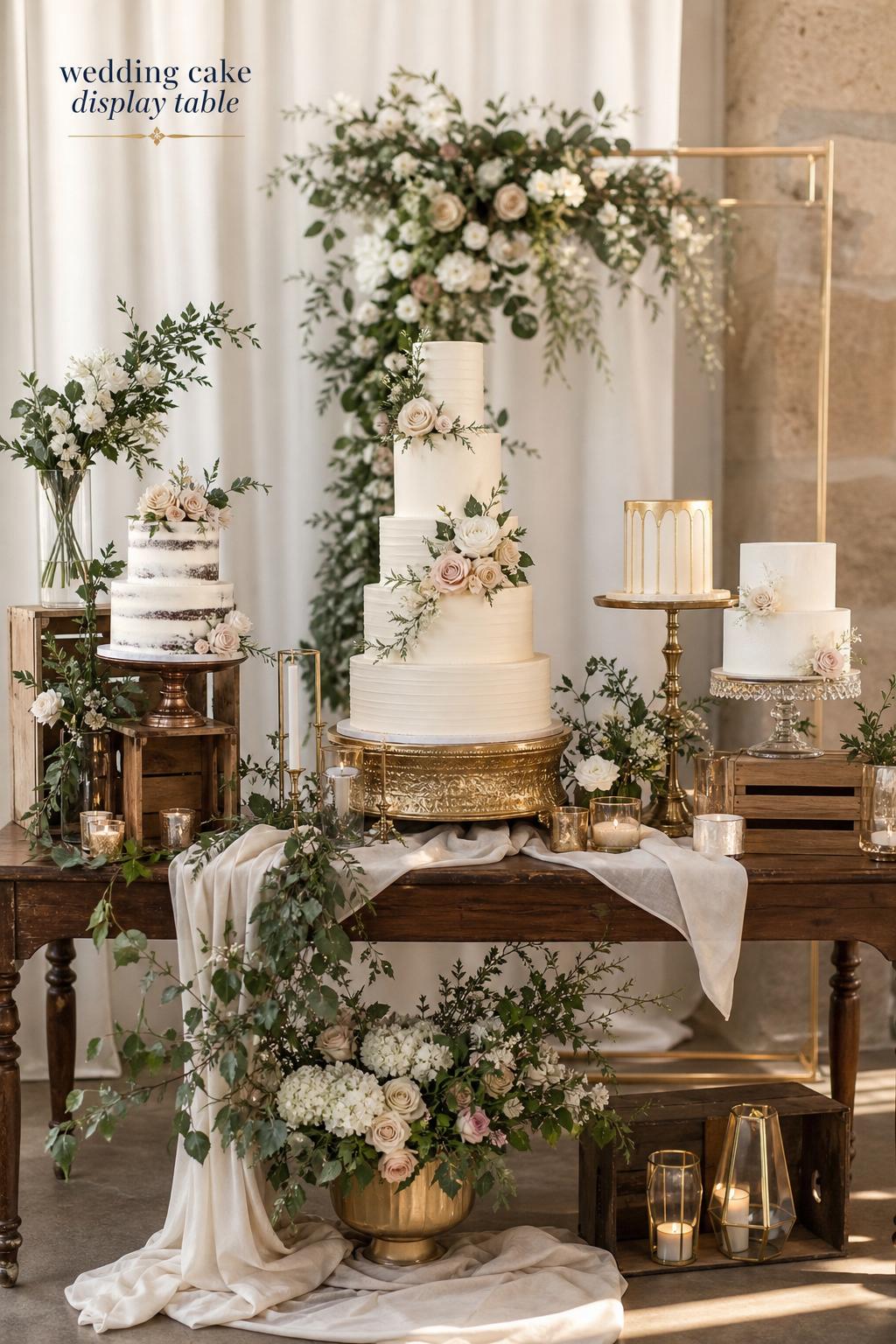
Garden styling deserves its own place because it introduces one of the most effective visual tools for a wedding cake display table: natural framing. Arbors, greenery, floral garlands, and soft backdrops help turn the cake into a scene rather than an object. This is especially powerful when the reception design already includes botanical or outdoor-inspired details.
Unlike rustic styling, which often emphasizes material texture, garden styling emphasizes atmosphere. The display can feel airy, abundant, and deeply romantic. It is also one of the easiest styles to connect with the rest of the wedding, because the florals and greenery can echo ceremony arrangements, reception centerpieces, or venue landscaping.
Where garden style works best
This approach is especially appealing when couples want the cake display to feel soft in photos and integrated with the wider décor story. It suits receptions where the cake is not just dessert, but part of the visual experience of the room. A garden-inspired dessert table display can also work indoors when an arbor or floral backdrop is used thoughtfully.
Lighting, sightlines, and the photographer’s perspective
Some of the strongest wedding cake table ideas are not the most decorated, but the best lit. Lighting considerations appear again and again for good reason: even a beautifully styled cake can lose impact if it sits in a dark corner, under harsh overhead light, or against a busy background. The display should be easy to see from the room and easy to photograph from more than one angle.
- Use height and lighting together so the cake reads clearly from across the reception.
- Avoid placing the cake directly against a chaotic visual background if the goal is a clean focal point.
- Think about photographer access and camera angles before finalizing arbors, backdrops, or side decor.
- Check sightlines around the table so guests can admire the display without creating a bottleneck.
- If the display is part of a dessert station, leave enough room for service and movement.
A useful planning mindset is to imagine the cake during three moments: before guests enter, during the reception when the room is active, and at cake-cutting time. The display should still feel composed in all three phases, not only in a styled setup photo.
Indoor versus outdoor wedding cake display table choices
This is one of the most under-discussed decisions in cake table decor, yet it changes everything. Indoor and outdoor setups may use the same theme, but the display needs are different. Weather, stability, and background conditions affect which props, platforms, and decorative elements are practical.
Indoor displays
Indoor reception spaces usually allow more control over lighting, backdrops, and table placement. This makes modern and glam displays especially effective, though rustic, vintage, and garden styles can also thrive indoors with the right furniture and floral support. The key indoor challenge is often visual competition from other décor in the room.
Outdoor displays
Outdoor displays tend to favor natural framing, greenery, and atmosphere, which makes rustic and garden styles especially appealing. But outdoor setups also require more caution. Stability matters more, decorative textiles need to stay controlled, and the display should still feel anchored even if the environment is visually busy. In these settings, a strong pedestal or platform often works better than too many lightweight decorative pieces.
For couples planning an outdoor celebration, the smartest approach is usually to simplify the structure and let florals, greenery, and the venue itself provide the romance.
Tips that make a wedding cake display table feel intentional
The difference between a cake placed on a table and a true display often comes down to editing. Many couples collect beautiful ideas—pedestals, florals, textiles, signage, backdrops, dessert walls, custom decorative plaques, monograms—but not every detail belongs in the same setup. Intentional design means choosing what supports the cake and removing what distracts from it.
- Choose one primary structural feature, such as an antique dresser, pedestal grouping, or arbor, instead of combining too many focal elements.
- Repeat materials from the rest of the wedding so the cake table feels connected to the reception design.
- Use linens and runners to add texture when the table itself is plain, but avoid covering up a beautiful vintage or rustic surface unnecessarily.
- Keep supporting decor lower or farther out from the cake so the dessert remains the visual center.
- Consider guest flow early, especially if the cake shares space with a dessert table or dessert wall.
One of the most practical decisions is whether the table is meant only for display or also for service. A purely visual setup can be more layered and delicate. A service-oriented setup needs more open space, easier access, and sturdier placement of stands and props.
Common mistakes couples make when comparing cake table decor styles
The most common issue is mixing themes without a unifying logic. A modern pedestal under a heavily nostalgic vintage backdrop can look disconnected unless there is a clear reason for the contrast. The second issue is underestimating scale. Small props often disappear around a multi-tier cake, while oversized structures can dominate a simpler design.
Another frequent problem is treating florals, greenery, and textiles as afterthoughts. These are not filler pieces. They are what help bridge the relationship between the cake, the platform, and the room. Without them, some displays feel unfinished. With too many of them, the cake itself can get lost.
Finally, many couples focus on the front view only. In reality, guests and photographers may see the display from several angles. A cake table should feel balanced in the round, especially if it sits away from a wall or serves as a major visual stop during the reception.
Faux vs real cake displays: where style meets practicality
One of the more practical comparison points in wedding cake planning is the choice between a real cake display and a faux display cake. Both can work, but they answer different priorities. A real cake offers authenticity and simplicity. A faux display can support a highly controlled visual moment when safety, timing, or presentation needs are more complex.
The right choice depends on how the cake will be presented, how long it will remain on display, and whether the setup needs to prioritize appearance over immediate service. This is also where stability and safety become important. Whatever type of cake is used, the surface should feel secure, the stand should match the weight of the cake, and the display should not wobble when guests gather nearby.
Balanced perspective
A real cake can feel more straightforward and emotionally satisfying, especially when the display is closely tied to the cake-cutting moment. A faux cake can be useful for extended display or very specific visual goals. Neither option is universally better. The best decision is the one that aligns with the reception timeline, the display design, and practical stability.
How to choose the right style for your reception vision
The easiest way to choose among wedding cake display table styles is to start with the emotional tone of the reception rather than the props. If the wedding feels intimate and natural, rustic or garden styling will usually fit more easily. If the day leans sentimental and romantic, vintage may feel more personal. If the event is clean-lined and editorial, modern is often the stronger choice. If the room calls for formality and polish, glam may be the natural fit.
For everyday planning decisions
Couples making real planning choices often benefit from asking simple questions: Will the cake table be seen from far away? Is the venue already visually rich? Do we want the furniture to be part of the moment? Will this also function as a dessert display? These questions reveal more than scrolling through inspiration images alone.
For polished or formal occasions
Modern and glam are usually easiest to manage in highly designed indoor receptions because they rely on disciplined structure, controlled lighting, and clean focal-point styling. If you want a display that photographs clearly and feels elevated without appearing busy, these styles often offer the cleanest result.
For romantic and atmospheric celebrations
Vintage and garden styles are ideal when the goal is mood. They create a softer emotional experience and often blend beautifully with florals, backdrops, and venue decor. Rustic can do the same, but with a more relaxed spirit and stronger textural presence.
Bringing multiple styles together without losing cohesion
The most memorable cake displays are not always strictly one style. A couple may love the clean structure of a modern platform, the romance of garden greenery, and the softness of vintage textiles. Combining styles can work beautifully when one element leads and the others support. Problems only arise when each style competes equally for attention.
A helpful approach is to choose a dominant identity first: rustic, vintage, modern, glam, or garden. Then layer in one secondary influence through florals, lighting, or furniture. For example, a modern display with garden framing can feel elegant and romantic. A vintage table with restrained modern spacing can feel fresh rather than overly nostalgic. This kind of blending often creates the most personal result.
A final note on creating your dessert tableau
A wedding cake display table is more than a surface for dessert. It is a visual pause in the celebration—a place where design, symbolism, and shared anticipation meet. Whether you are drawn to antique furniture, rustic crates, clean pedestals, floral garlands, an airy arbor, or a polished platform under thoughtful lighting, the strongest choice is the one that feels aligned with the rest of your day.
When the style, scale, and practical details all work together, the display does something quietly powerful: it makes the cake feel like it belongs exactly where it is. And on a wedding day filled with fleeting moments, that sense of intention is often what guests remember.
FAQ
What is the best height for a wedding cake display table?
The best height is one that keeps the cake visible and clearly framed within the room. Many displays benefit from added elevation through cake stands, pedestals, or risers because a cake placed too low can disappear visually, especially in a larger reception space.
How do I choose between a rustic and vintage cake table style?
Choose rustic if you want a natural, textured, and relaxed look built around wood tones, greenery, and simple layered props. Choose vintage if you want a more nostalgic and curated mood, especially if you love antique furniture such as a dresser or decorative table with visible character.
Do I need a backdrop or arbor behind the cake table?
A backdrop or arbor is not required, but it can be very helpful when the cake needs stronger visual framing. These elements work especially well in garden, romantic, or larger reception settings where the display needs more presence and vertical definition.
What decor works best on a wedding cake display table?
The most effective decor usually includes a few supporting elements rather than many competing ones. Florals, greenery, linens, cake stands, pedestals, risers, and carefully chosen props tend to work best when they reinforce the theme and keep the cake as the focal point.
Can a wedding cake display table also be part of a dessert table?
Yes, but the layout needs more planning. If the cake shares space with desserts, dessert walls, or a dessert station, the display should still preserve a clear focal point for the cake while allowing enough room for guest access and service flow.
What should I consider for an outdoor cake display?
Outdoor displays benefit from a simpler, more stable structure. Strong platforms, secure pedestals, and controlled textiles are usually easier to manage, while greenery and florals can provide softness without relying on too many lightweight decorative pieces.
Are faux cake displays a good option for weddings?
They can be, especially when the display needs to remain visually perfect for an extended period or when presentation is the main priority. A real cake may feel more direct and emotionally satisfying, while a faux display can offer practical flexibility, so the better option depends on your timeline and setup.
How much lighting does a cake table need?
The goal is not dramatic brightness but clear visibility and flattering presentation. Good lighting helps the cake stand out in the room and photograph well, especially if the table is placed away from natural focal points or against a visually busy background.
What is the biggest mistake to avoid with cake table decor?
The biggest mistake is adding too many decorative elements without a clear hierarchy. When props, florals, backdrops, and textiles all compete equally, the cake loses impact. A successful display gives the cake the strongest visual position and lets every other element support that role.