Winter Wedding Decorations: A Warm, Elegant Plan
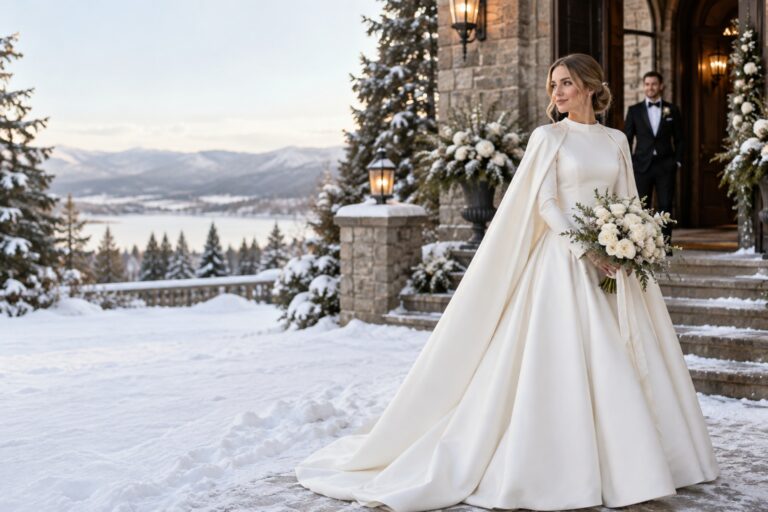
Winter wedding decorations can make a celebration feel intimate, luminous, and deeply personal, but the best results do not come from covering every surface with snowflakes or holiday ornaments. They come from understanding what the season already gives you: early darkness, rich textures, evergreen structure, reflective light, and a natural invitation to gather close. With a focused palette and a short list of high-impact decisions, you can create a winter setting that feels intentional rather than themed.
This guide will help you build the look from the ground up. You will find a practical way to choose a direction, decide where your decor budget matters most, plan ceremony and reception details, and keep guests comfortable. The ideas work for a ballroom, a restaurant, a barn, a greenhouse, a mountain lodge, or a small home celebration. The goal is not to copy one perfect photograph. It is to create a cohesive winter wedding that still feels like you.
Why winter wedding decorations work so beautifully
Winter gives you a strong atmosphere before you add a single centerpiece. The lower angle of daylight and earlier sunset make candlelight, lamps, string lights, and fireplaces more visible during the event. Fabrics also matter more in a colder season. Velvet, wool, satin, brushed cotton, and ribbon add visual softness as well as a sense of warmth. Even a simple room can feel layered when those surfaces catch light at different angles.
The season also supports a useful design principle: choose fewer elements and repeat them with purpose. A wedding can look more expensive when the same evergreen, ribbon, metal finish, and candle color appear in several places. Repeat a material at the ceremony, escort card display, bar, and tables instead of buying a different decorative object for every zone. Repetition gives the room a point of view and makes setup easier.

Turn wedding inspiration into a plan you can actually follow.
Zarellea brings your guest list, budget, vendors, and day-of details into one shared space — so no beautiful idea gets lost in the shuffle.
Another advantage is the contrast between cool outdoor air and warm indoor light. Guests notice that contrast when they enter. A dark wood welcome table illuminated by a small lamp, a candlelit aisle, or a coat check framed with greenery can make arrival feel like part of the story. If your venue already has stone, brick, wood beams, tall windows, or a fireplace, use those features as scenery. The most effective decor often works with the architecture instead of hiding it.
Choose a winter design direction before buying anything
Start with one clear direction. A palette is useful, but a mood is even more useful because it guides texture, lighting, flowers, and stationery at the same time. Four winter directions are especially flexible.
Warm jewel tones
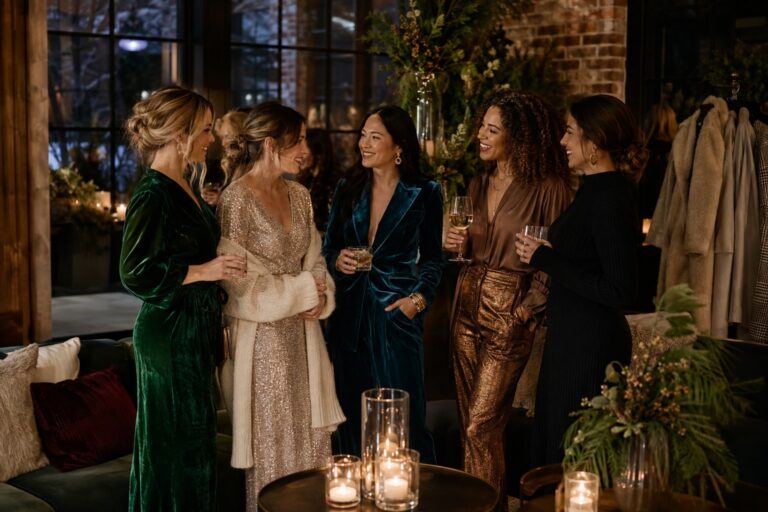
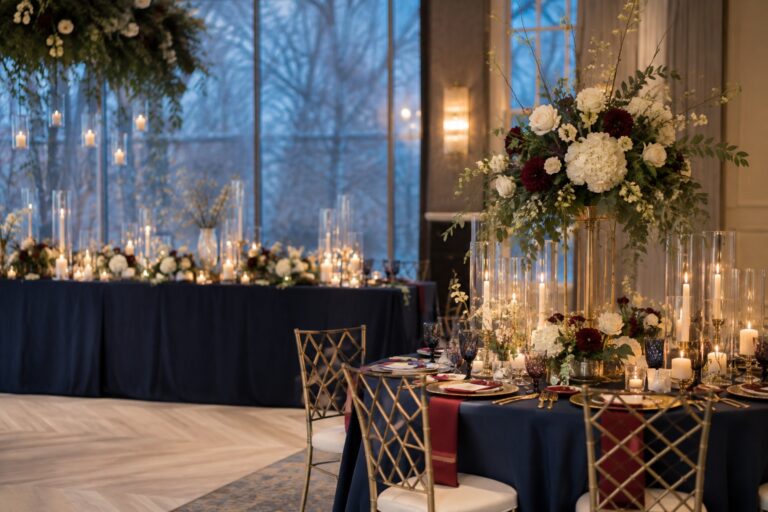
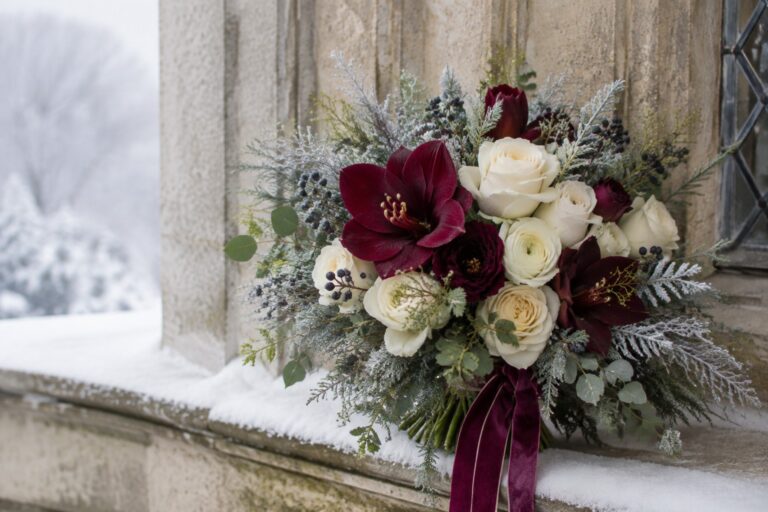
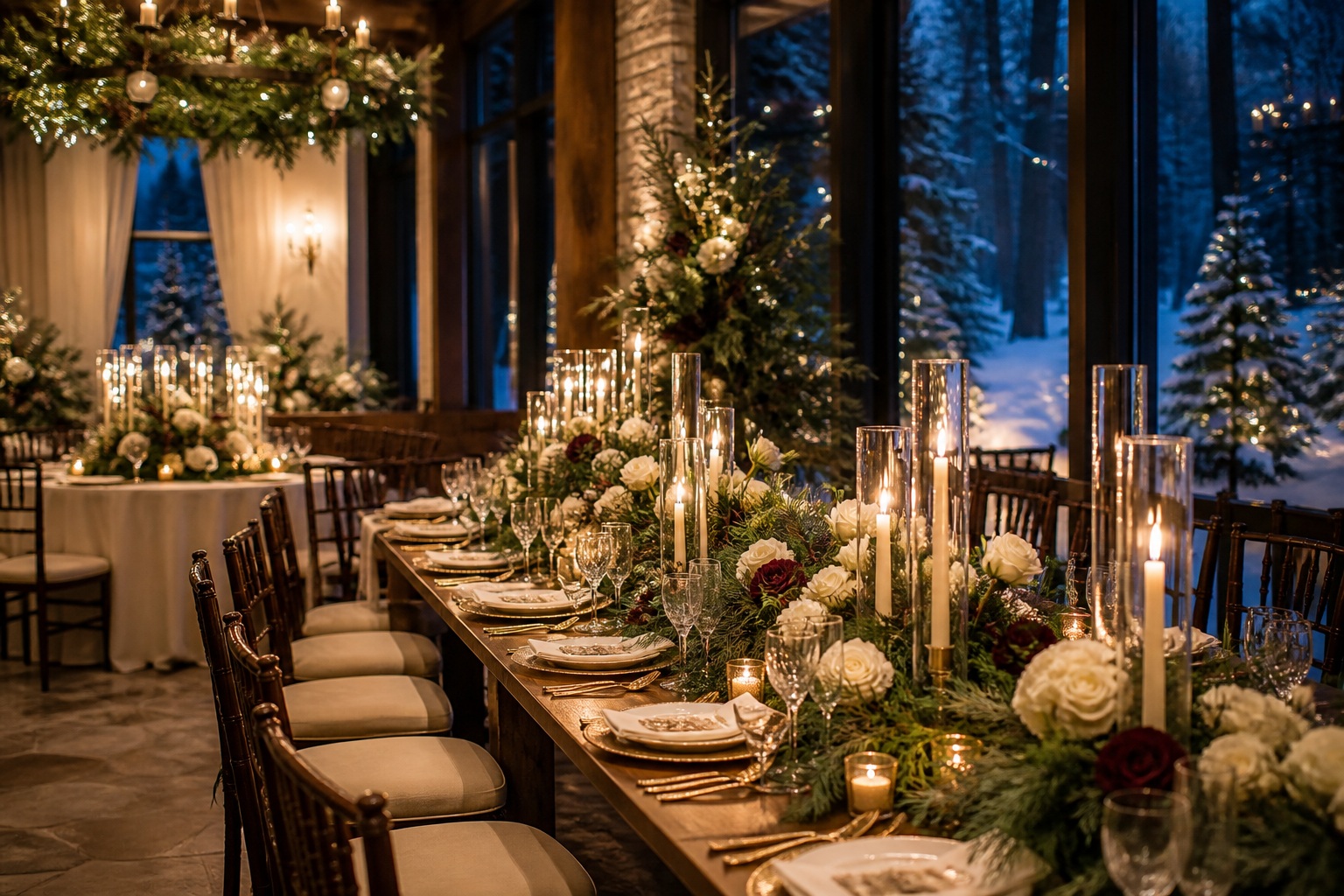
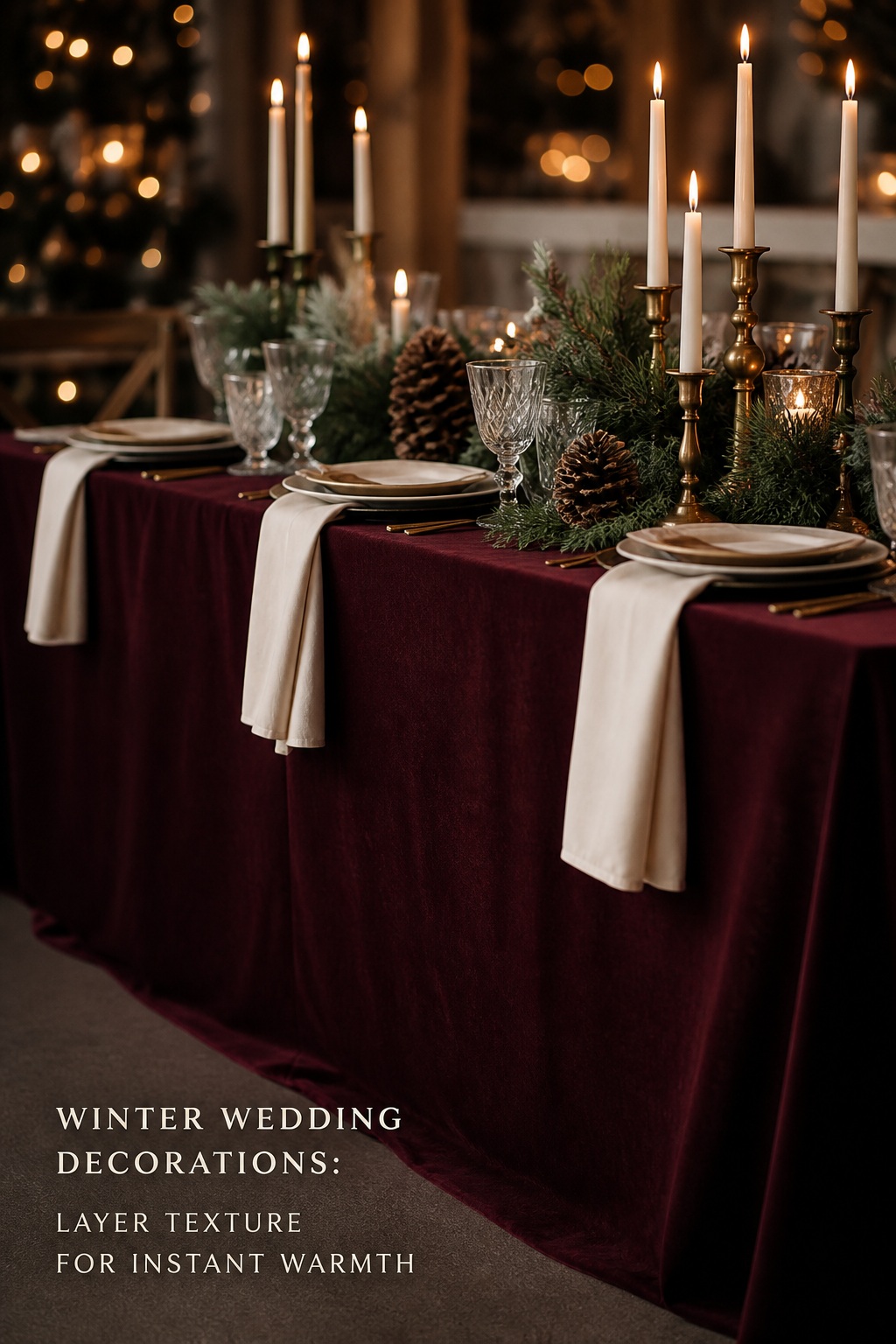
For a cozy and romantic room, combine burgundy, oxblood, forest green, navy, or plum with ivory and one warm metal such as brass or antique gold. Use deep color in linens, taper candles, ribbon, or stationery rather than forcing every flower to match. Greenery, cream blooms, dark wood, and amber glass keep the result elegant. This direction is ideal for a historic venue, candlelit dinner, restaurant reception, or winter evening wedding.
Cool winter light
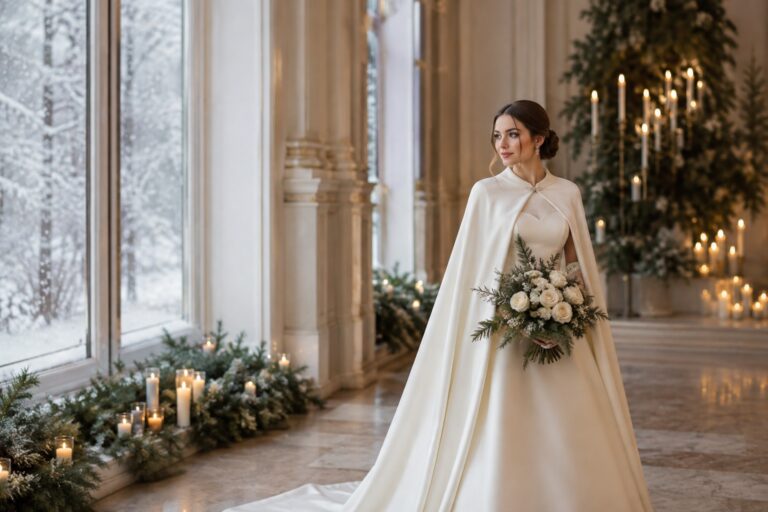
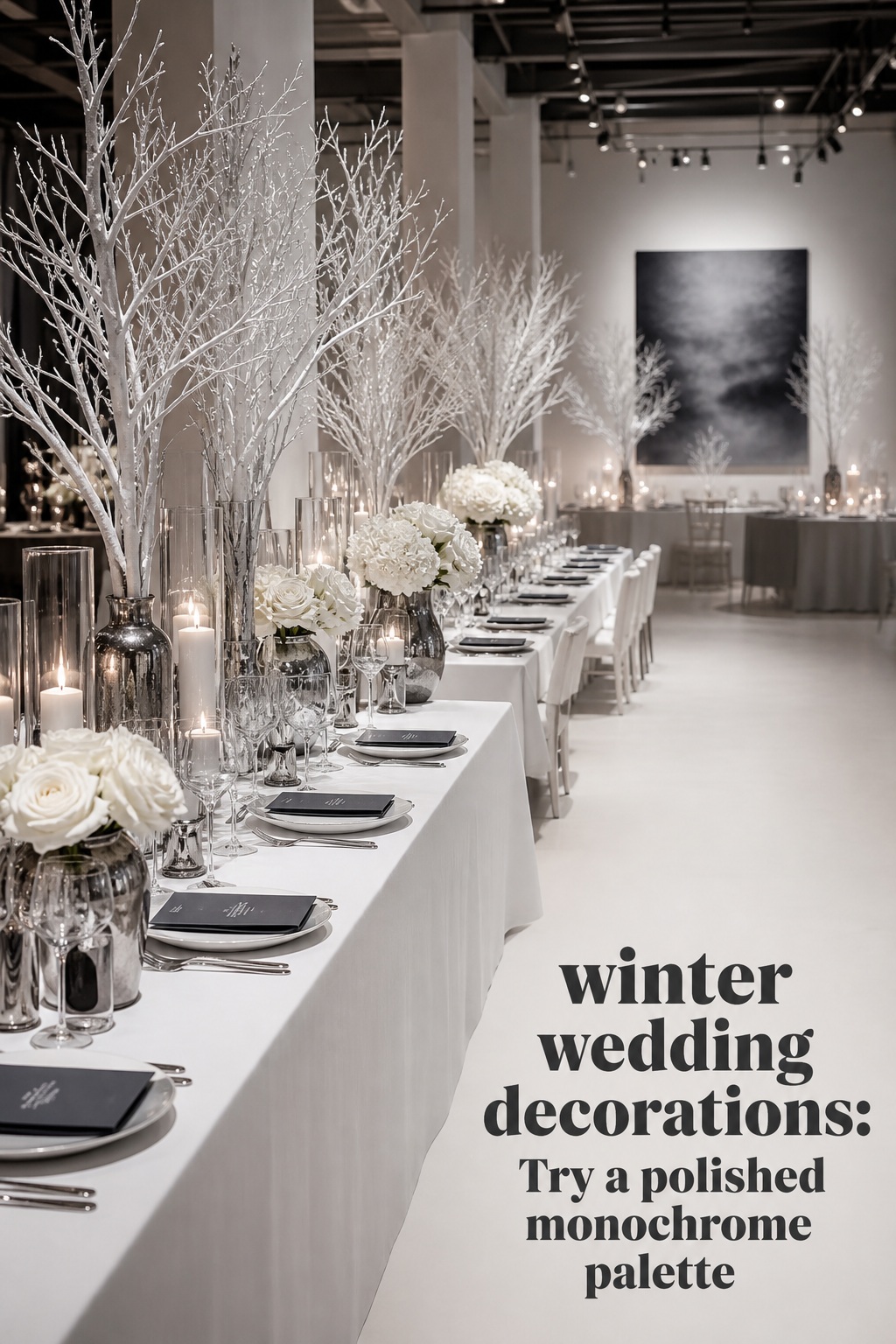
For a lighter winter wonderland mood, work with white, ivory, soft gray, dusty blue, and silver. The key is texture. Layer sheer draping with matte paper, white flowers with bare branches, and smooth glass with frosted vessels. Add warm bulbs or candlelight so the palette does not become sterile. A cool palette looks especially beautiful in a bright ballroom, glasshouse, gallery, or venue with large windows.
Rustic natural winter
Use pine, cedar, eucalyptus, dried grasses, pinecones, bark, stoneware, wool, and weathered wood for an organic look. Keep the palette grounded in cream, sage, charcoal, brown, and muted berries. This does not have to look casual. Refined glassware, one metallic accent, and consistent candleholders can lift the natural materials. It works well for a barn, lodge, backyard, or small gathering where guests will spend time close to the tables.
Modern monochrome
For a clean contemporary look, choose white, charcoal, gray, and silver, then create interest through shape and finish. Try sculptural branches, white anthuriums or roses, ribbed glass, narrow black candles, and a simple black or charcoal sign system. Avoid adding too many small decorative items. Modern winter decor is strongest when the negative space is part of the design.
To keep your winter wedding from looking like a Christmas party, decide whether you are using holiday references at all. Pine, frost, bare branches, candlelight, winter berries, and metallics can read as seasonal without being tied to December. If you do want a holiday feeling, select one recognizable accent, such as a ribbon color or a small ornament favor, and repeat it with restraint. Red and green together, glitter everywhere, and unrelated seasonal props can quickly overwhelm the bridal character.
- Choose one dominant palette, one supporting neutral, and one metal.
- Repeat two or three materials across multiple spaces.
- Use lighting to make the palette feel warm after sunset.
- Reserve literal holiday details for places where guests can enjoy them, such as favors or a drink station.
Build the high-impact foundation: light, focal points, and texture
If your budget is limited, start with the elements that appear in the most photographs and shape the room for the longest time. In many weddings, that means the ceremony sightline, the reception tables, and the lighting. A small number of strong decisions will do more than a large number of inexpensive objects spread thinly.
Make lighting your first decorative layer
Use three types of light when possible: ambient light for the room, focal light for important areas, and candlelight or small points of light for atmosphere. Ask your venue what is already included and whether you can dim overhead fixtures. Warm uplighting can bring color to blank walls, while pin spots help flowers and tables remain visible. Fairy lights can be wrapped through an arch, hung behind sheer fabric, or woven through a greenery installation.
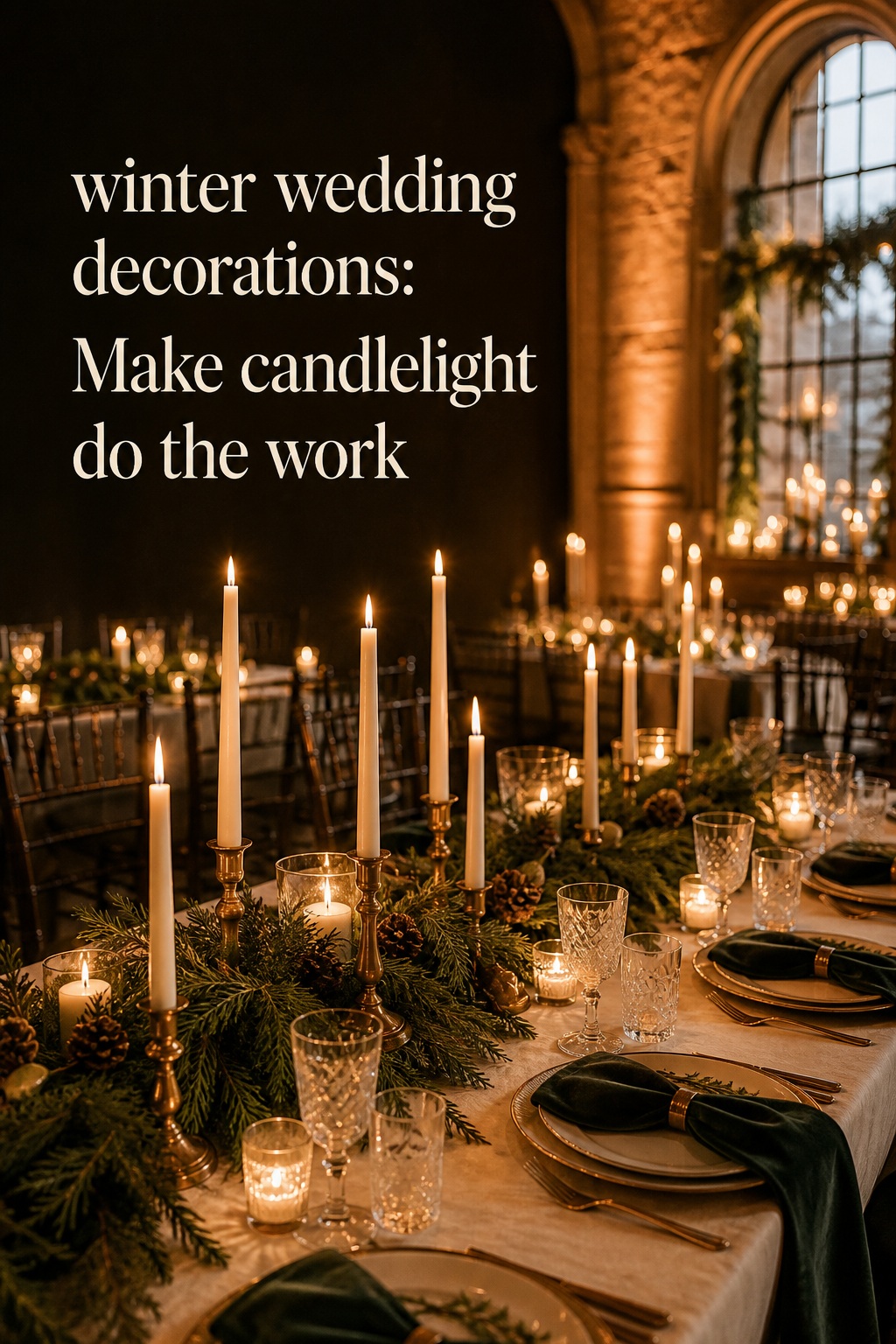
Candles work best when you vary height and group them in odd numbers. Combine tapers, votives, and a few pillars, but keep flames away from loose foliage and low hanging fabric. If open flames are not allowed, choose high-quality warm LED candles and place them in glass so the glow still has a visual home. Always confirm venue rules, fire codes, table clearances, and who will light or switch on each piece.
Give the ceremony one memorable focal point
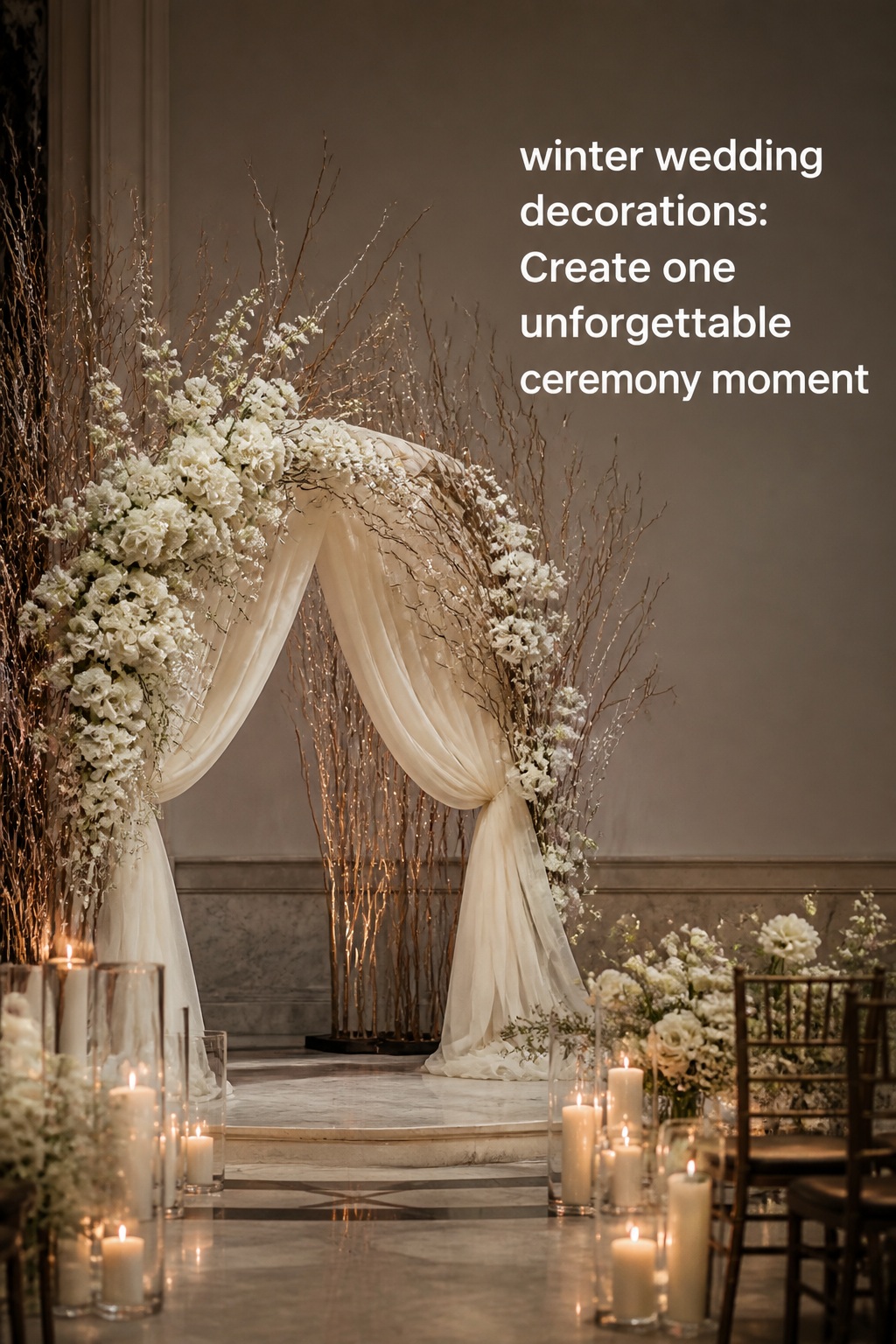
A ceremony arch, chuppah, floral installation, fireplace, window, or architectural feature can anchor the entire design. It does not need to be covered from top to bottom. A half-arch with greenery on one side, a pair of floral arrangements framing a fireplace, or a draped backdrop with a few branches can create a strong sightline while using fewer flowers.
Choose ceremony decor that can be reused. Move aisle arrangements to the bar, transfer the arch flowers to the sweetheart table, or use ceremony candles again around the cake. Tell your planner or florist this is part of the brief from the start. A reuse plan can make an installation feel more substantial without doubling the floral budget.
Layer the tablescape instead of filling it
Begin with the table surface, because linens change the entire mood. Velvet or textured fabric adds depth to a winter room, while satin creates a dressier reflection. A lace overlay can soften a solid base, but you do not need a specialty cloth on every table. Consider using the most dramatic linen on the head table or a small number of feature tables, then repeat the color through napkins or ribbon elsewhere.
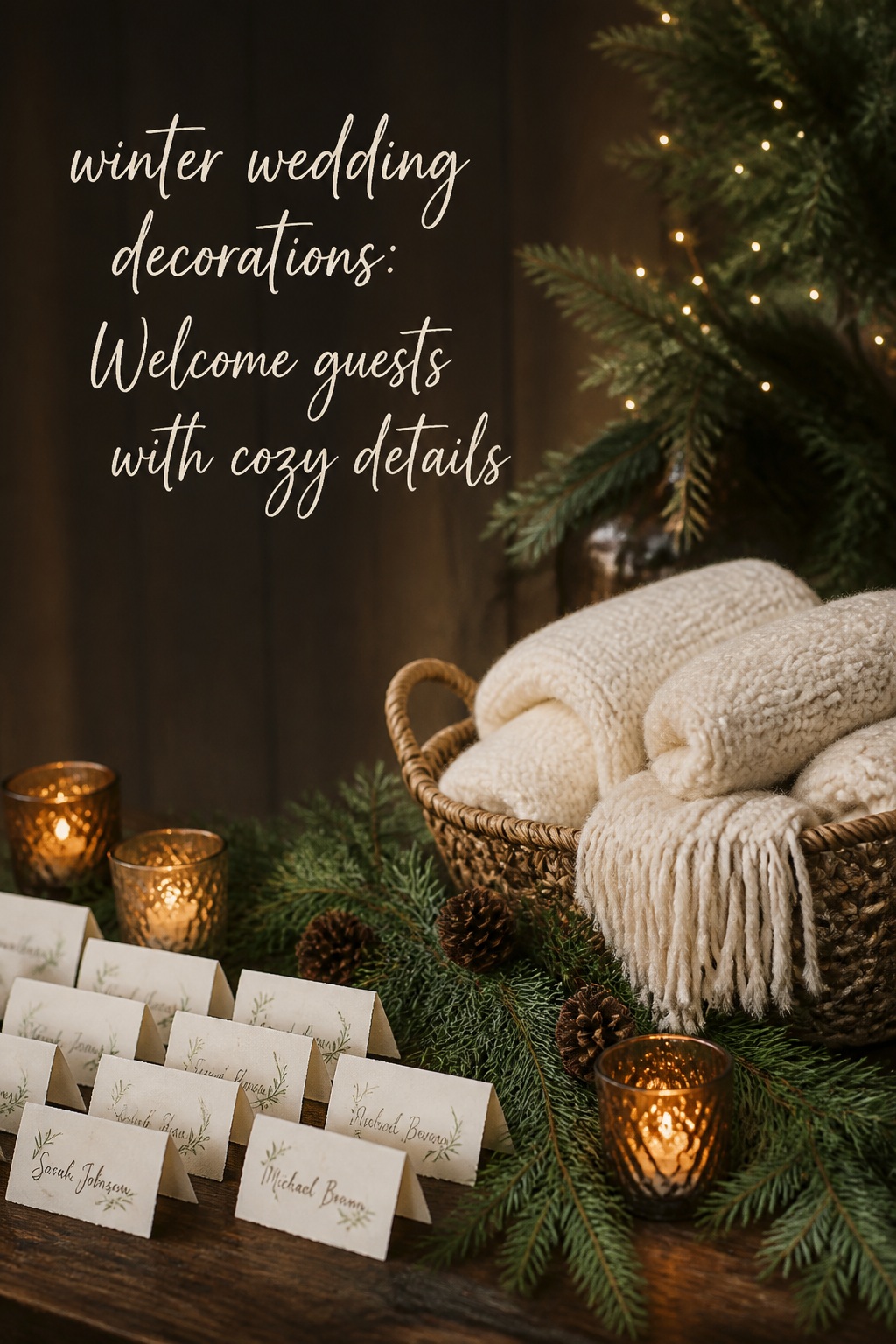
Keep centerpieces low enough for conversation unless you are deliberately using tall candelabras or a high installation. Mix candles with seasonal greenery, bare branches, white blooms, berries, fruit, or metallic vessels. Place cards can become part of the decor through pinecones, small stones, folded ribbon, or a simple paper card in your chosen palette. Make sure guests can read names and reach their settings without moving an arrangement.
Use texture to make simple decor feel intentional
Winter design becomes memorable through touch and contrast. Pair a glossy menu with a raw wood table, a soft ribbon with a metal holder, or smooth white flowers with feathery greenery. A few wool throws at an outdoor ceremony, a velvet lounge pillow, or a woven basket for favors can communicate warmth more effectively than a large themed display. Texture also photographs well because it gives flat winter palettes dimension.
Plan winter wedding decorations room by room
Once your foundation is set, carry the design through the guest journey. Think about what people see when they arrive, where they pause, what they photograph, and where they need practical support. You do not need to decorate every corner. Give each zone one clear job.
Entrance and welcome area
Use the entrance to establish warmth immediately. A small table with a welcome sign, candle cluster, greenery, and a bowl for programs may be enough. If guests are coming in from cold weather, make coat storage obvious and keep the walkway dry and clear. A mirror, framed seating chart, or simple floral arrangement can make the arrival area feel finished without blocking traffic.
Ceremony aisle and backdrop
Repeat the ceremony palette along the aisle with small clusters rather than one arrangement at every chair. Lanterns, candles in protected glass, evergreen bundles, or low floral groupings can guide the eye forward. If the ceremony is outdoors, provide a clear surface underfoot and check what snow, rain, wind, or early darkness could do to the plan. A beautiful design still needs a safe route for guests and vendors.
Cocktail hour and bar
The bar is a natural place for a winter moment. Add a small menu sign, a copper or brass accent, seasonal garnish, or a hot chocolate station with labeled toppings. If you use a fireplace, greenery, or candles nearby, keep the arrangement clear of heat sources. One statement arrangement at the bar usually has more impact than several tiny vases scattered around the room.
Reception tables and sweetheart table
Choose one table detail to repeat consistently: the napkin fold, ribbon tie, candle shape, charger, menu paper, or greenery runner. Then give the sweetheart or head table one extra layer, such as a fabric backdrop, a fuller floral arrangement, or a line of candles. This creates hierarchy and helps the couple’s table feel special without making every guest table compete.
Cake, favors, and photo moments
Winter details are easy to add to the cake table through a linen, a few branches, powdered sugar styling, berries, or a metallic cake stand. Keep edible decorations and fresh greenery separate unless your baker confirms they are food-safe. For favors, consider a small hot cocoa kit, a candle, a useful mitten or hand warmer for an outdoor event, or a personalized ornament if it fits your celebration. A photo moment can be as simple as a textured chair, a lit tree branch installation, or a framed sign that echoes your invitation design.
Budget and setup playbook for a polished result
A practical budget starts by separating visual impact from volume. Make a short list of the spaces that will be photographed most often and the details guests will interact with. Put money into the ceremony sightline, lighting, table linens, and one guest experience feature before buying extra signs, small favors, or decorative objects.
- DIY: simple place cards, ribbon ties, painted pinecones, welcome signs, table numbers, favor packaging, and candle grouping plans.
- Rent: linens, lounge furniture, candleholders, arches, lanterns, chargers, and large vessels that would be expensive to store.
- Delegate: setup, candle lighting, room flips, coat check, and end-of-night packing to a coordinator or named helper team.
- Reuse: ceremony flowers, aisle lanterns, welcome greenery, draping, and candles in later spaces.
- Skip: anything that creates a safety issue, blocks a sightline, has no clear location, or cannot be set up within the venue window.
Build a written setup plan with a photo or sketch for each zone. Label bins by destination, pack candles and glass separately, and assign one person to check the final look. If friends are helping, give them a short task list instead of asking everyone to make design decisions on site. The day will feel calmer when the creative work is finished before the first box arrives.
Book seasonal flowers and specialty rentals early enough to handle winter supply changes. Ask your florist which greenery and blooms are reliable for your date, and identify substitutes that preserve the color and shape of the design. Confirm delivery access, heating, power outlets, candle policies, ladder rules, and the location of wet umbrellas or coats. These practical details protect the atmosphere you worked to create.
Finally, create a comfort plan. For outdoor moments, provide blankets, heaters where permitted, warm drinks, non-slip paths, and a clear weather backup. For indoor celebrations, leave room for coats and avoid placing candles or low floral pieces where guests will brush against them. Comfort is part of the decor because relaxed guests stay longer, participate more, and enjoy the room you designed.
Common mistakes to avoid
- Making every detail literal: snowflakes, ornaments, red bows, and glitter are not required for a winter look. Let light, texture, and greenery carry the season.
- Using one light source: bright overhead lighting can flatten candles, flowers, and fabric. Ask for dimming and add warm points of light.
- Ignoring the venue: a plan that works in a barn may feel crowded in a ballroom. Measure aisles, tables, ceiling height, outlets, and storage areas.
- Choosing beauty over movement: guests need to see, sit, walk, eat, and talk. Keep centerpieces, signs, rugs, and cords out of circulation paths.
- Leaving the room flip undefined: decide who moves ceremony decor, where it goes, and when it happens before the wedding day.
- Forgetting daylight: view the venue at the ceremony time and after sunset. A palette that looks soft in daylight may need stronger contrast at night.
- Overcommitting to DIY: a project is only a saving if you have the time, tools, storage, and helpers to complete it reliably.
The most successful winter wedding decorations usually feel edited. They make a clear promise when guests arrive, repeat a few details through the room, and leave enough space for people to notice one another. Choose a direction, invest in light, give the ceremony and tables a strong foundation, and build comfort into the plan. That is enough to make the season feel generous, romantic, and unmistakably yours.
FAQ
What colors are best for winter wedding decorations?
Warm winter palettes include burgundy, forest green, navy, plum, ivory, and brass. Cool palettes include white, gray, dusty blue, silver, and clear glass. Choose one dominant direction and add warm lighting so the room feels inviting rather than cold.
How can I make winter wedding decor feel seasonal without looking like Christmas?
Use candlelight, evergreen, bare branches, pinecones, velvet, winter berries, frost-inspired textures, and metallic accents. Avoid combining every holiday symbol in one room. Repeat a restrained palette and let the materials suggest winter.
What is the most important winter wedding decoration?
Lighting is often the highest-impact choice because it shapes the mood of the entire room and photographs throughout the evening. After lighting, prioritize the ceremony focal point and the table surfaces where guests spend the most time.
How can I decorate a winter wedding on a budget?
Spend first on lighting, linens, and one ceremony focal point. Rent reusable vessels and candleholders, DIY small paper or ribbon details, and move ceremony flowers to the reception. Choose seasonal greenery and ask your florist for reliable alternatives before finalizing the design.
What flowers and greenery work for winter weddings?
Evergreen branches, cedar, pine, eucalyptus, bare branches, winter berries, dried grasses, roses, anemones, hellebores, and seasonal white blooms can all work depending on your location and date. Ask your florist what is reliably available and choose a flexible shape rather than one irreplaceable flower.
How do I keep guests comfortable at an outdoor winter wedding?
Provide a dry, safe walking surface, clear coat storage, blankets or wraps, warm drinks, and heaters where the venue allows them. Keep outdoor portions concise, communicate the weather plan, and make sure guests can move into a heated space quickly.
Can ceremony decorations be reused at the reception?
Yes. Plan for reuse by choosing movable arrangements, lanterns, candles, draping, and arch flowers. Assign a coordinator or helper team to move them during the room flip, and tell your florist exactly which pieces need to work in both locations.