Why Modern Wedding Cake Designs Are Trending in Weddings
The cake table often becomes one of the most photographed corners of a wedding reception, which is why choosing among modern wedding cake designs can feel surprisingly difficult. Couples want something current and personal, but they also worry about ending up with a cake that looks too plain, feels too trendy, or clashes with a beloved venue. That tension is real: a cake has to carry visual impact, suit the room, and still feel unmistakably tied to the couple’s celebration.
Today’s modern cake style moves away from heavy tradition and toward intention. Instead of relying on ornate piping or predictable shapes, contemporary designs use texture, architectural forms, asymmetry, unexpected color, and one strong focal accent to create a memorable effect. For couples planning a romantic city reception, a minimalist ballroom dinner, or a stylish celebration in a traditional space, the challenge is not finding inspiration. It is narrowing that inspiration into a design your baker can actually create beautifully.
This guide is designed to solve that problem with clear, practical direction. You will find the defining traits of a modern cake, the most useful style directions to consider, ways to match design choices to venue and mood, and straightforward advice for briefing your baker. Along the way, the emphasis stays on real wedding decisions: material choice, setup logistics, floral options, and how to create a cake that feels contemporary without losing romance.
Why modern cakes can be harder to choose than traditional ones
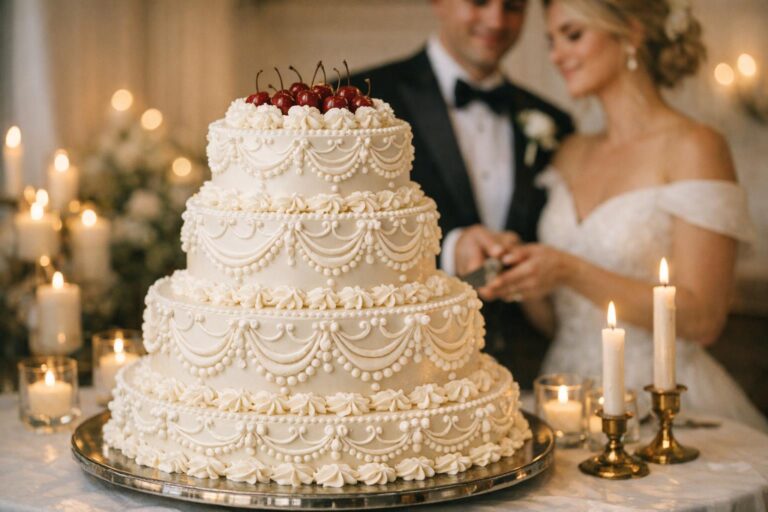
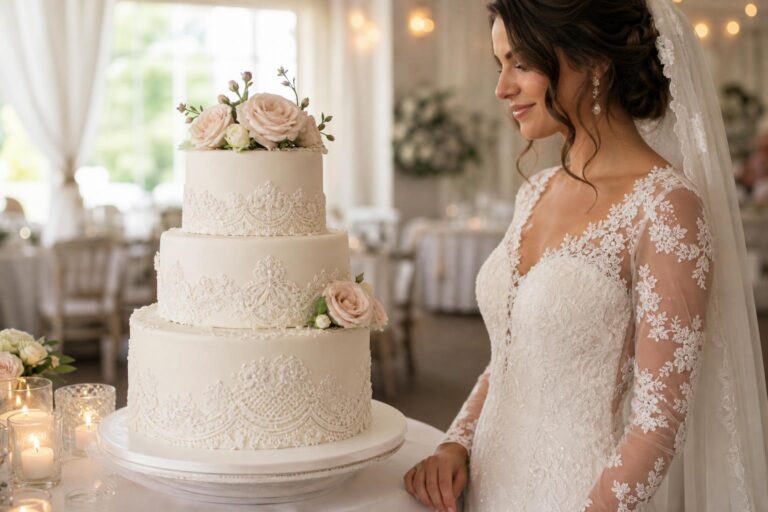
A traditional wedding cake usually comes with built-in expectations. Couples often know what it looks like before they even start shopping: symmetrical tiers, formal decoration, and a familiar palette. A modern cake asks for more active decision-making. Minimalism sounds simple, but once ornament is reduced, every remaining choice matters more. Shape, finish, color, and placement become highly visible.
Turn wedding inspiration into a plan you can actually follow.
Zarellea brings your guest list, budget, vendors, and day-of details into one shared space — so no beautiful idea gets lost in the shuffle.
This is also why modern designs can create anxiety for couples who love clean aesthetics but do not want the result to feel cold. A white cake can be breathtaking or forgettable depending on texture. An asymmetric floral arrangement can feel editorial and graceful, or disconnected if it is not scaled properly. A painted cake can look artistic and elevated, or too busy if the palette does not relate to the rest of the reception design.
Sarah Glasbergen of ThePerfectWedding.com frames the conversation around a clear shift: modern wedding cakes reject older decorative habits in favor of minimalism, architecture, texture, and more intentional accents. That perspective is especially helpful for couples planning in the U.S., where reception styles often blend classic venues with more contemporary visual tastes. The solution is not to copy a trend exactly, but to understand the logic behind it.
What defines a modern wedding cake today
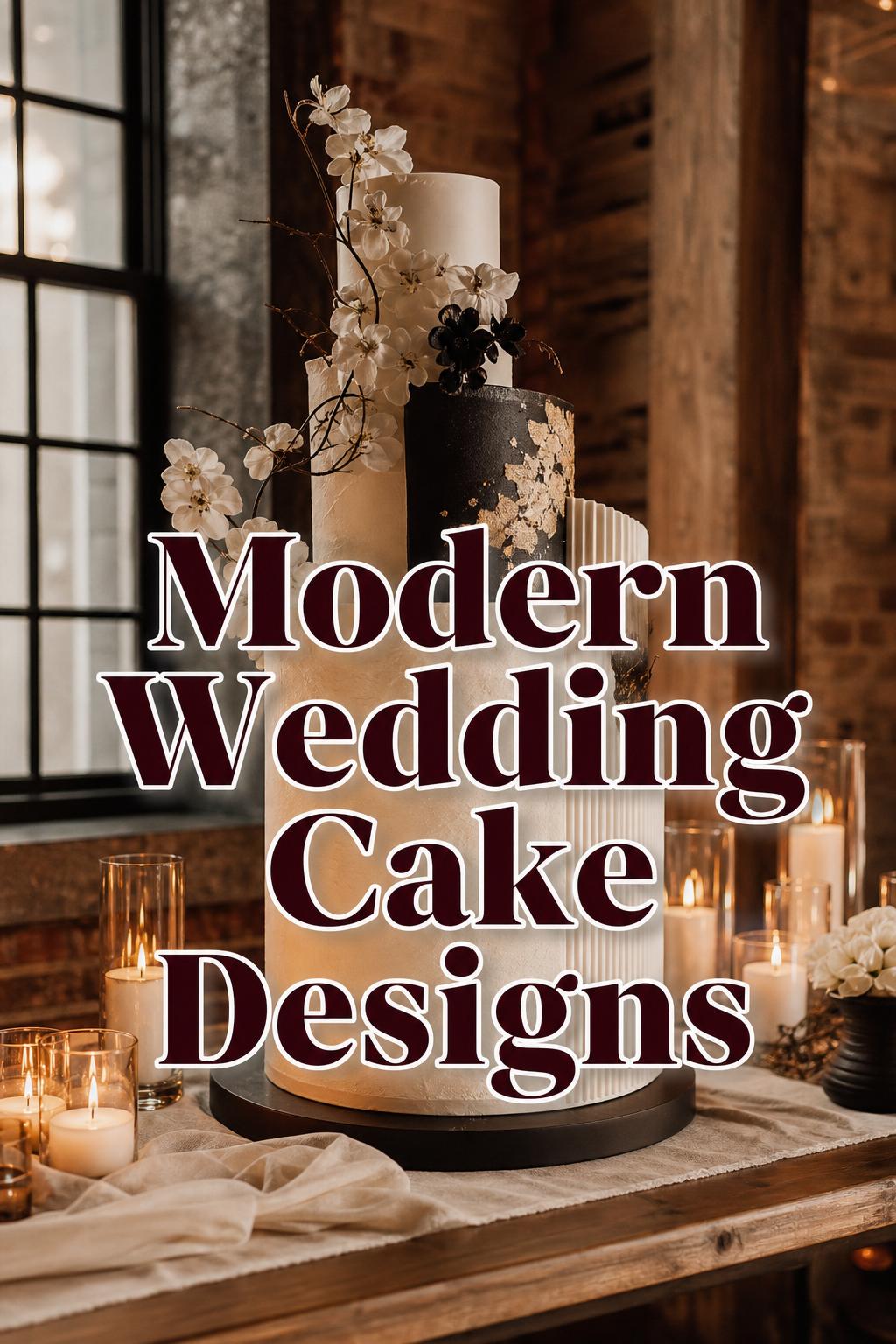
A modern wedding cake is not defined by one single look. It is defined by a design approach. The overall aesthetic tends to be more edited than traditional cakes, with a focus on silhouette, finish, and contrast rather than dense decoration. This is why two very different cakes can both feel modern: one may be all-white and heavily textured, while another may feature an unexpected palette and hand-painted details.
Minimalism over ornament
Minimalism is one of the strongest foundations of modern cake design. In practice, this means removing anything that does not contribute to the final visual message. Instead of many small decorative features competing for attention, the cake may rely on one exceptional finish, one bold flower cluster, or one sculptural moment. For couples, this solves a common planning challenge: how to create impact without making the cake feel overworked.
Architectural shapes and asymmetry
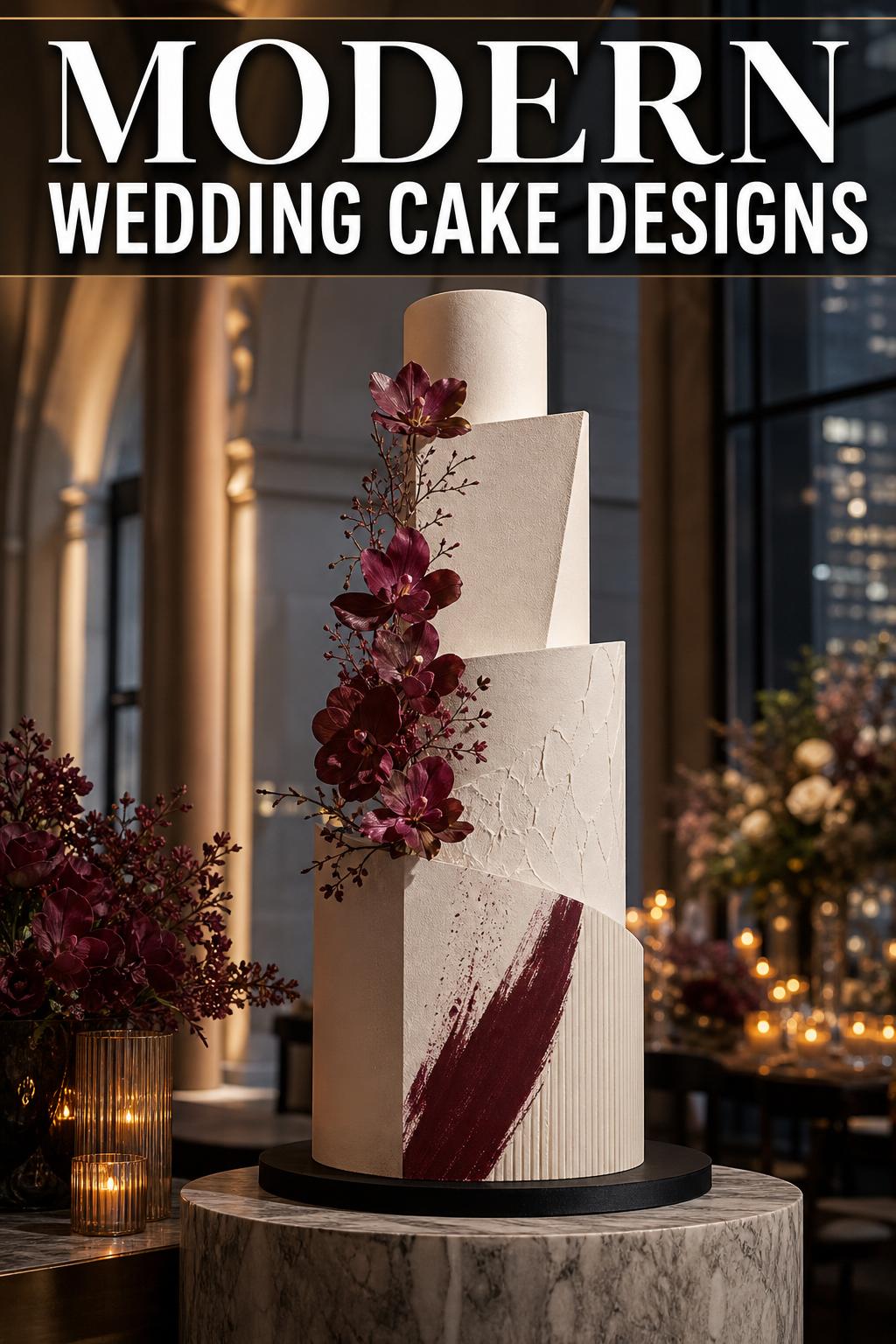
Architectural styling gives a cake its modern presence. The research points to geometric forms such as square, hexagonal, and octagonal tiers, along with asymmetry as a key design motif. These shapes immediately shift the cake away from a purely traditional profile and into something more editorial. The effect is especially strong in venues with clean lines, urban interiors, or dramatic photography setups, but it can also create a striking contrast in classic spaces.
Texture as the main visual language
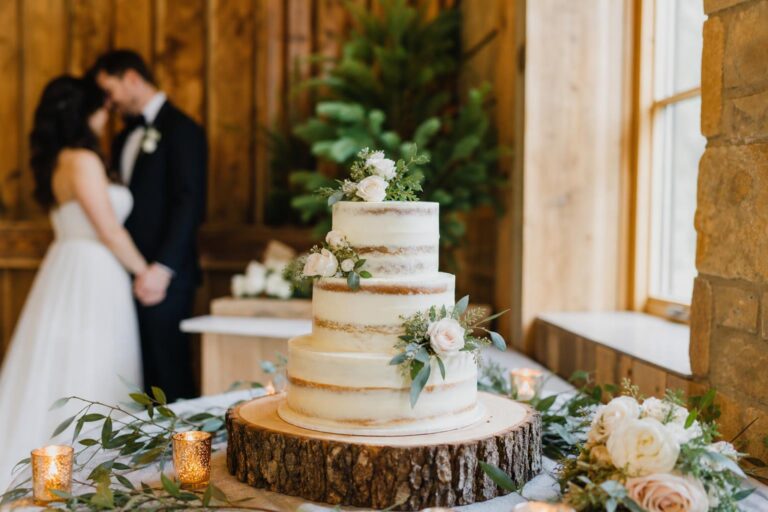
Texture is one of the clearest markers of a contemporary cake, particularly textured buttercream. Where traditional fondant often emphasizes a polished, uniform exterior, buttercream texture introduces movement and softness. It can look romantic, painterly, sculptural, or quietly dramatic depending on the finish. This is one reason the all-white textured cake remains so compelling: even without color, it still has depth.
Unexpected colors and controlled contrast
Modern design is open to non-traditional color palettes, monochrome statements, and bold accents used with restraint. The key is not simply adding color, but integrating it in a deliberate way. A color-drip cake uses contrast for energy. A painted cake may echo the palette of florals or tablescapes. Even metallic touches such as gold leaf work best when they function as a precise accent rather than a dominant decoration.
One focal accent instead of many small details
Many modern cakes are built around a single visual anchor. That might be a large sugar sculpture, a dramatic floral placement, a sculpted element, or an area of hand-painted detail. This design logic is useful because it gives the eye a place to rest. It also makes the cake easier to connect to your overall wedding vision. Rather than asking the cake to say everything at once, you let one memorable feature carry the story.
The planning principles that make a modern cake actually work
Couples often save the cake conversation until late in the planning process, then realize they have collected beautiful reference images without understanding why they like them. A more confident decision comes from using a few practical principles. These help turn inspiration into a design your baker can interpret clearly.
- Start with finish before decoration. Decide whether your cake should feel soft and textured, sleek and architectural, painterly, or sculptural.
- Choose shape according to mood. Round tiers tend to feel softer, while geometric tiers create stronger modern definition.
- Limit the palette. A monochrome or tightly controlled color direction usually reads more contemporary than several unrelated shades.
- Use asymmetry with intention. Uneven floral placement or sculptural balance should feel composed, not accidental.
- Let one feature lead. Texture, painting, florals, drips, or sculpted accents can all work, but the strongest cakes usually have a clear hierarchy.
This kind of structure helps solve a frequent wedding planning issue: too many favorite ideas that do not belong together. A geometric tier cake with an all-white textured finish can be cohesive. A painted cake with one bold single accent can be cohesive. But if you add a heavy color drip, multiple metallic areas, and several competing floral moments, the cake may lose the calm confidence that defines modern design.
Style directions worth considering for a contemporary reception
The most successful modern wedding cake designs are not only attractive in photos. They feel right in the room and within the emotional tone of the day. Below are the style directions that repeatedly stand out because they combine beauty with a clear visual logic.
The all-white textured cake for quiet drama
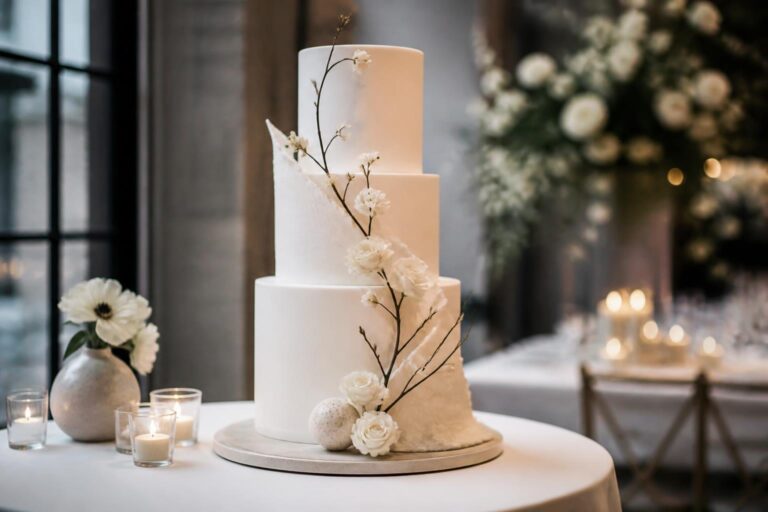
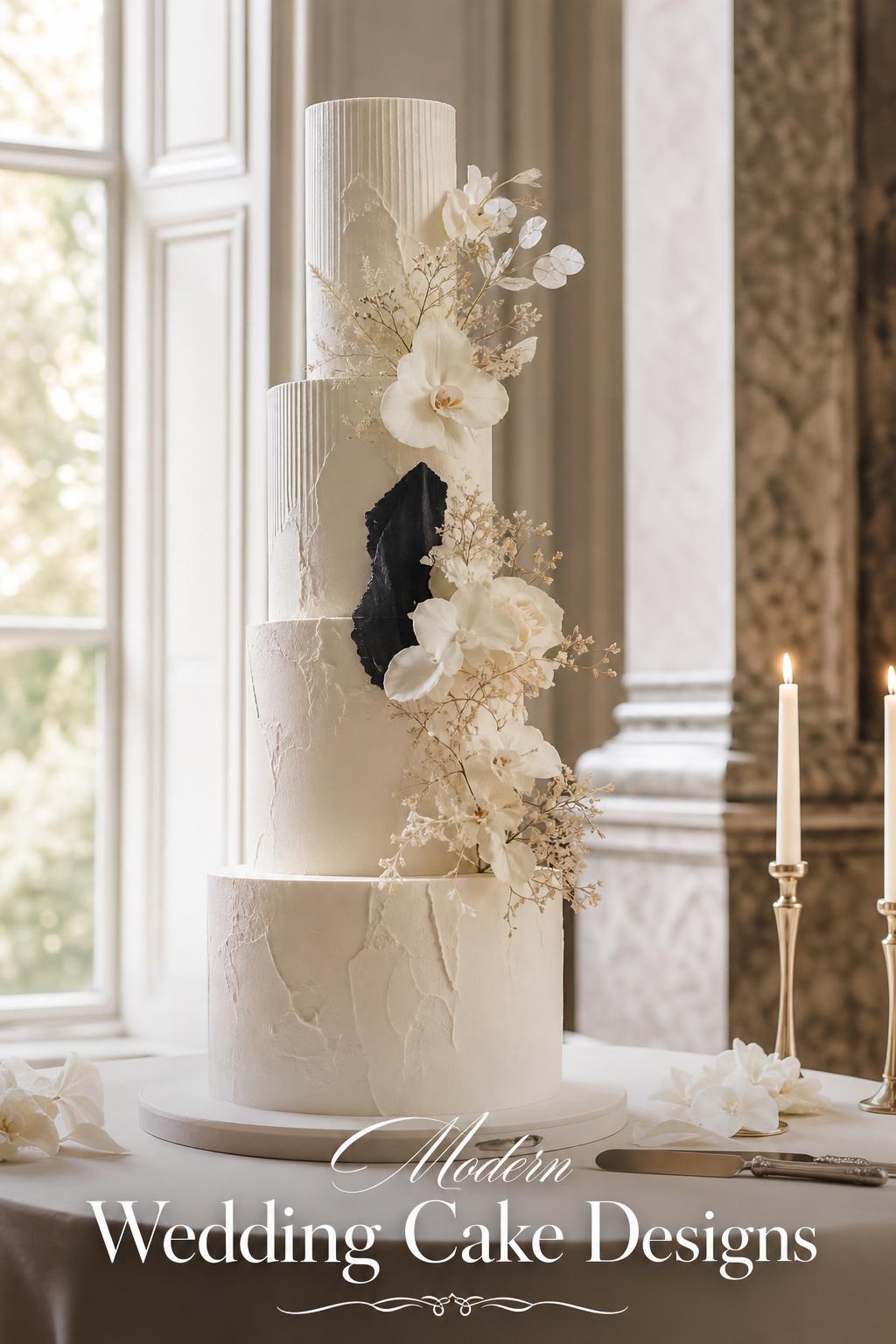
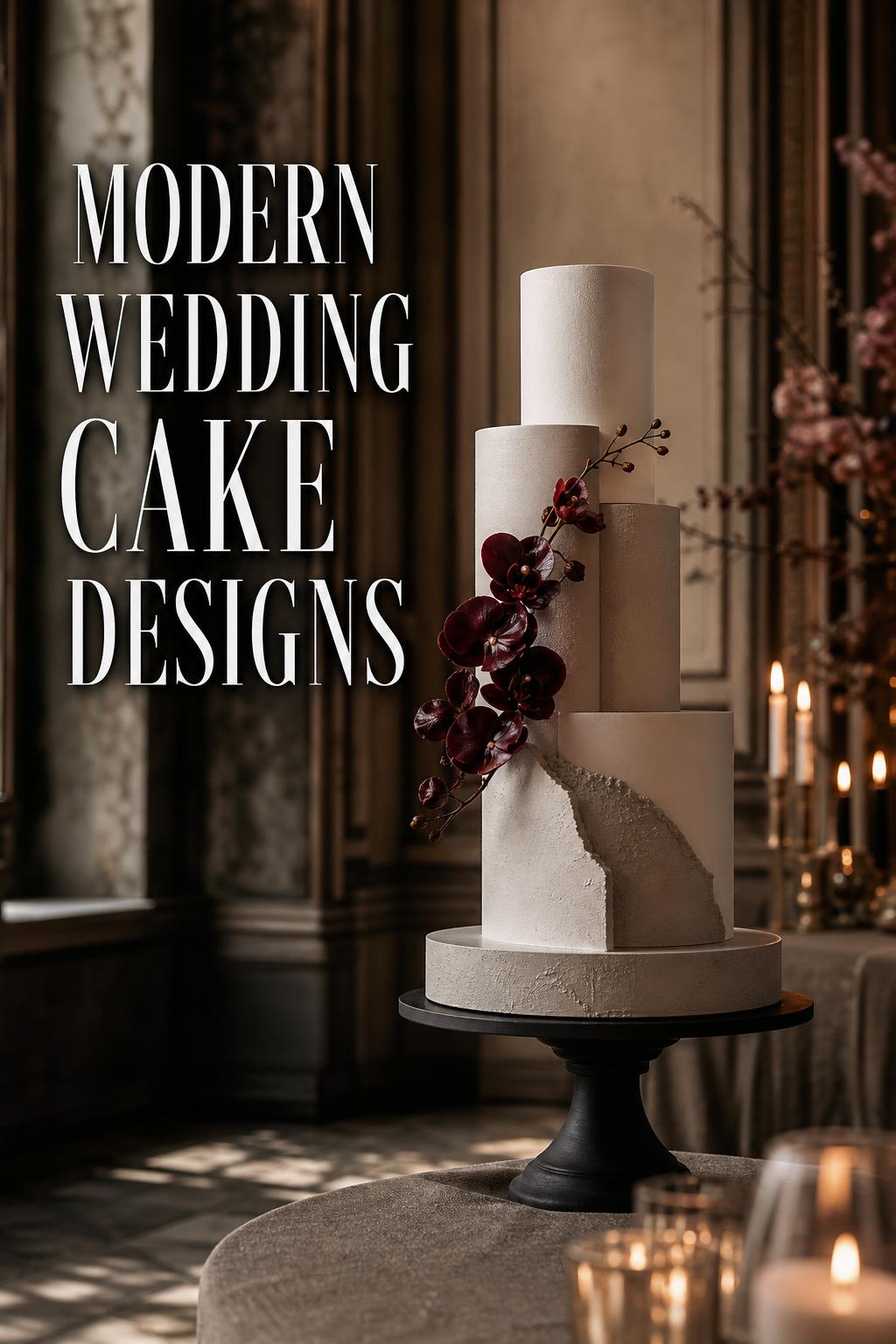
For couples drawn to romance and restraint, the all-white textured cake remains one of the strongest options. It proves that minimalism does not have to feel sparse. Texture becomes the decoration, whether expressed through ridged buttercream, soft palette-knife movement, or layered finishes that catch candlelight and photography beautifully. In a reception with elegant florals and refined table settings, this style creates calm sophistication rather than visual competition.
This approach is particularly useful if your venue already has strong character. In a traditional ballroom, historic property, or ornate room, a white textured cake prevents the dessert display from looking too busy. Instead of fighting with the architecture, it introduces a fresh contemporary note. This is one of the clearest examples of a modern cake working beautifully in a traditional venue.
The geometric tier cake for architectural elegance
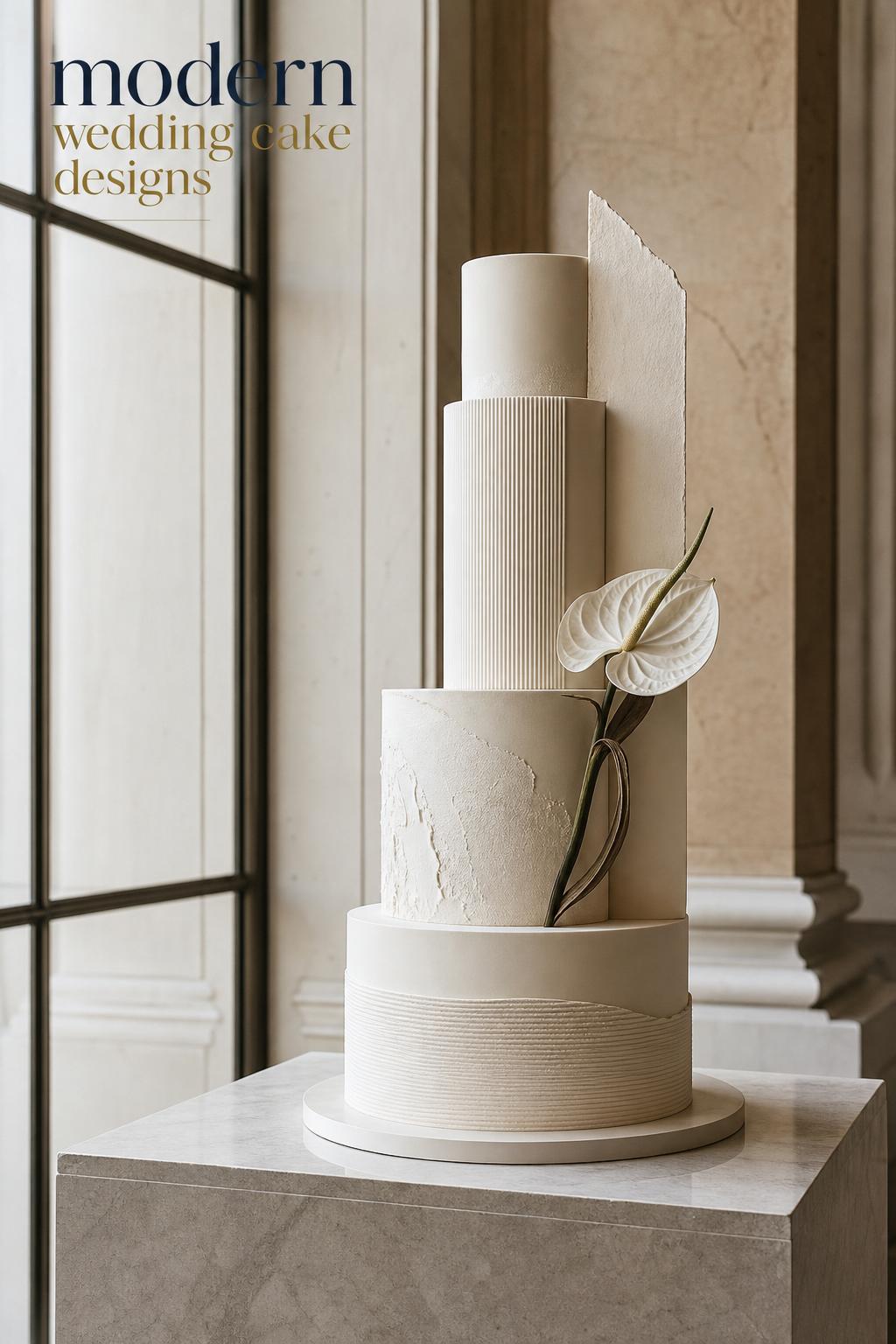
A geometric wedding cake is ideal for couples who love sharper lines and a more editorial atmosphere. Square, hexagonal, or octagonal tiers create visual strength immediately, even before color or decoration is added. The shape itself does much of the work. Because of that, these cakes often benefit from cleaner finishes and fewer added elements.
In practical terms, this style suits modern city celebrations, industrial-chic rooms, and reception spaces where furniture or architecture already has linear structure. The research also suggests strong editorial and photographic appeal, which makes sense: geometric forms read clearly in images and create a sense of deliberate design. If you want a cake that feels fashion-forward without relying on bright color, this is often the most effective route.
The asymmetric floral cake for softness with a contemporary edge
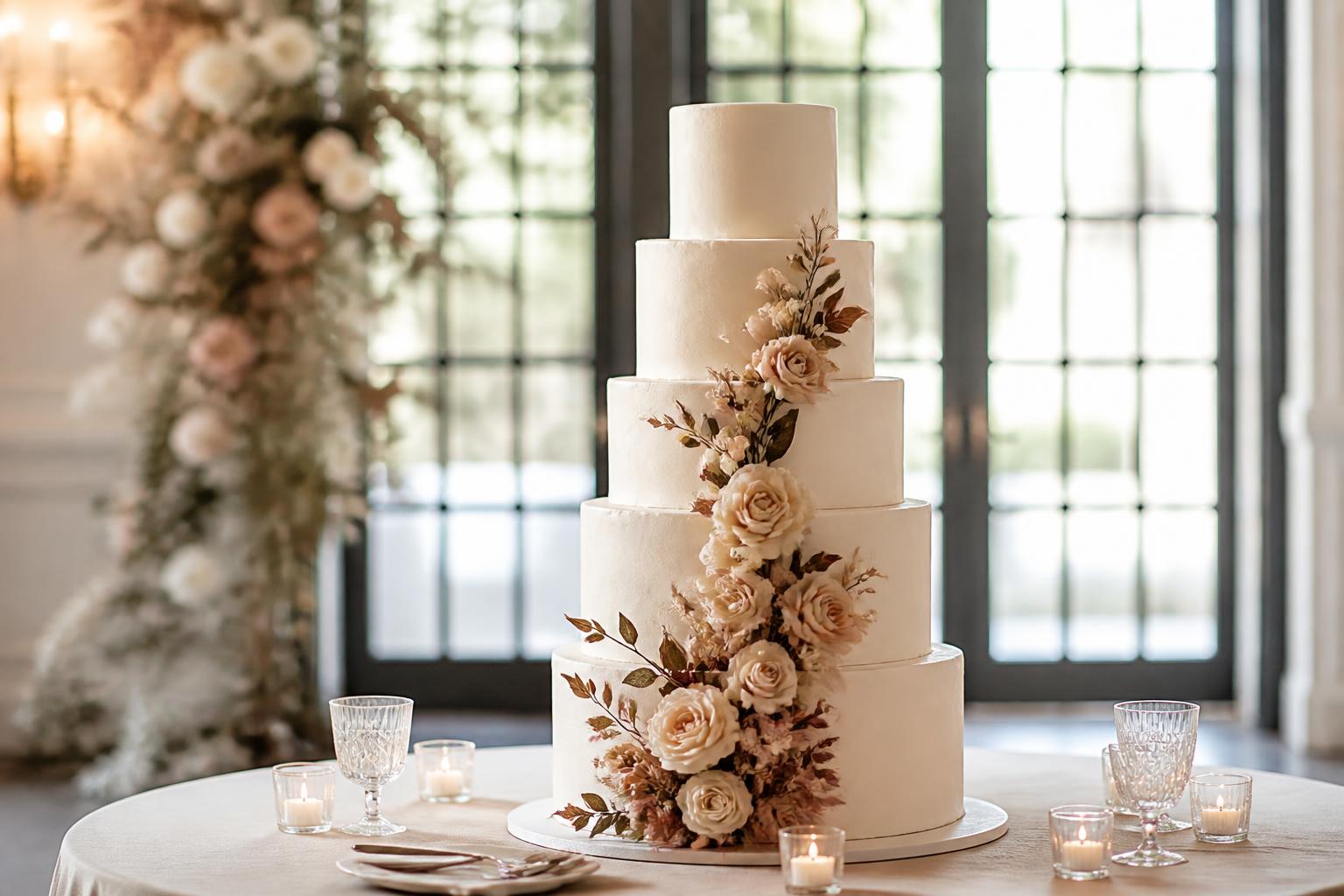
Asymmetry is one of the defining motifs of modern cakes, and floral placement is one of the most romantic ways to express it. Instead of balanced decoration on every side, florals may sweep diagonally, cluster on one tier, or trail across the design in a way that feels natural but intentional. This style solves a common problem for couples who want something modern but not stark. The flowers bring warmth and familiarity, while the layout keeps the look current.
The crucial choice here is material. Fresh flowers and sugar flowers create different effects, and the decision should be made early with your baker. Fresh flowers can feel organic and connected to the rest of the wedding florals. Sugar flowers can offer greater control, especially if the cake’s design depends on exact placement or a sculptural silhouette. Neither is universally better; the best choice depends on your priorities for realism, consistency, and design precision.
The color-drip cake for a bold focal point
A color-drip cake introduces a more expressive energy. It works especially well for couples whose reception style includes stronger palette choices or a more playful visual identity. The drip itself becomes a dramatic accent, and because modern design relies on control, it looks best when the surrounding cake remains edited. Clean tiers, limited additional decoration, and a thoughtfully chosen color keep the effect elevated rather than chaotic.
This style can be particularly effective when the cake is intended to stand out in the room rather than quietly blend in. For example, if the dessert display is set against a simple backdrop, a bold color drip creates movement and contrast. It is less suited to couples seeking a timelessly understated atmosphere, but it can be perfect for those wanting one artistic moment within an otherwise minimal reception.
The painted cake for couples who want edible art
A hand-painted wedding cake feels thoughtful, expressive, and highly individual. Brush-stroke painting can introduce color, abstract movement, or a subtle artistic finish that connects the cake to the rest of the wedding palette. Among modern styles, this one often appeals to couples who want the cake to feel curated rather than formal.
The strongest painted cakes usually avoid overexplaining themselves. One painted area, one palette story, or one directional sweep can be more elegant than full-surface decoration. This is where design discipline matters. The cake should still feel like a wedding cake first, with the painted detail enhancing the mood rather than overwhelming it.
The sculpted element cake for a statement moment
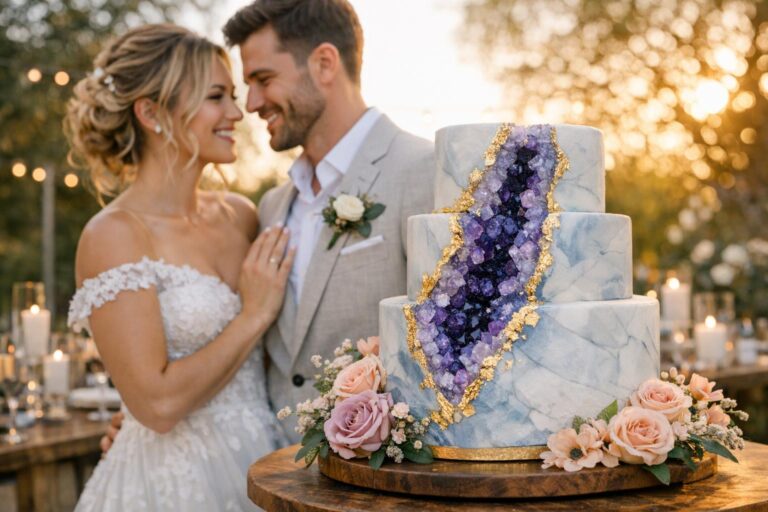
Some couples want the cake to feel less like dessert and more like a centerpiece. A sculpted element cake answers that desire by using a single pronounced feature such as a sugar sculpture, a dimensional accent, or another bold form to create a focal point. The research also references geode and crystal motifs within the broader contemporary conversation, showing how sculptural detailing can move the cake into a more artistic category.
This style requires restraint elsewhere. Once a sculptural statement is introduced, everything around it should support that feature. If you are considering this direction, ask yourself whether your wedding atmosphere calls for a quieter kind of romance or a more dramatic visual reveal. A sculptural cake can be unforgettable, but it works best when the rest of the styling allows it to breathe.
Matching the cake to your venue instead of fighting it
One of the most reassuring truths about modern wedding cake designs is that they are not limited to modern venues. A contemporary cake can look beautiful in a traditional setting if the design respects the room rather than trying to compete with it. This is often where couples hesitate, especially if they have booked a classic venue but love minimalist inspiration.
In a historic or ornate venue, an all-white textured cake or a softly asymmetric floral cake often feels most balanced. These designs bring freshness and current style, but they still retain romance. In a sleek city venue, geometric tiers, monochrome palettes, and painted details usually feel more naturally aligned with the setting. The point is not strict matching. It is visual conversation between the cake and the room.
For U.S. couples planning in markets such as New York, Los Angeles, Chicago, or the San Francisco Bay Area, this approach is especially practical because venue styles vary so widely. A designer-led mindset helps: consider whether your space is best complemented by softness, contrast, or structure. Once that answer is clear, the cake design becomes easier to narrow.
Buttercream, fondant, and finish choices that shape the final look
Material selection is not a technical footnote. It directly affects the visual language of the cake. The research highlights the contrast between textured buttercream and more traditional fondant finishes, and this comparison matters because many couples ask for “modern” while imagining very different surfaces.
Why textured buttercream feels so current
Textured buttercream has become closely associated with contemporary cake design because it combines softness with movement. It can feel romantic, painterly, and less rigid than a perfectly smooth exterior. In photographs, it catches light beautifully and adds dimension even when the palette is restricted to white or one tonal color family. If you are worried a minimalist cake may look too plain, texture is often the answer.
When a sleeker finish still makes sense
That said, not every modern cake must be visibly textured. Architectural cakes, geometric tiers, and certain painted or sculpted designs may benefit from a cleaner surface. The advantage is precision. If your design depends on line, shape, or carefully placed accents, too much texture can dilute the impact. The trade-off is that a sleek finish usually needs stronger shape or detail elsewhere to avoid looking flat.
Tips for choosing the right finish
- Choose textured buttercream if your priority is softness, romance, and visual depth with minimal ornament.
- Choose a smoother, cleaner finish if the design relies on geometry, painting, or sculptural precision.
- Ask your baker which finish best supports your chosen floral or accent placement.
- Remember that the finish affects not only style, but also how the cake photographs in the reception lighting.
How to brief your baker so your inspiration turns into a coherent cake
One of the most practical sections in the broader conversation around modern cakes is the guidance on how to brief your baker. This is where many couples either simplify their process or accidentally create confusion. A good brief does not mean showing dozens of beautiful images. It means communicating the design in clear language.
Bring reference photos, but edit them first
Pinterest can be useful, but only if you identify what you are responding to in each image. Perhaps you love the asymmetry in one cake, the all-white palette in another, and the buttercream texture in a third. Tell your baker that. Otherwise, the references may appear contradictory. The strongest cake consultations usually begin with a short set of images and a very clear description of the common thread.
Use specific design language
Words such as “modern,” “simple,” and “elegant” are useful but not precise enough on their own. More helpful terms include textured buttercream, geometric tiers, asymmetry, monochrome palette, painted detail, sculpted accent, or bold single accent. These phrases give your baker concrete direction and reduce the risk of a mismatch between what you imagined and what is delivered.
Discuss fresh flowers versus sugar flowers early
This decision influences look, coordination, and setup. Fresh flowers may tie the cake naturally to the wedding florals, while sugar flowers may offer greater consistency and control. If the floral arrangement is the central visual feature of the cake, waiting too long to decide can create unnecessary stress or compromise the original design.
Confirm delivery and setup details
Modern cakes often depend on exact placement, clean surfaces, and carefully balanced accents, so delivery and assembly matter. A dramatic asymmetrical floral installation or a sculpted statement detail should not be left to chance at the venue. Confirm how the cake will arrive, whether final elements are added on-site, and what the display conditions will be. This practical conversation protects the design you have invested in.
As an expert tip, Sarah Glasbergen’s perspective is especially useful here: couples should not assume a modern cake is easy simply because it looks pared back. Minimalist work often demands precision. The cleaner the design, the more visible every decision becomes.
Color, mood, and romantic storytelling through cake design
A wedding cake does more than complete the menu. It contributes to the emotional atmosphere of the reception. For that reason, color and texture should be chosen not only for trend value, but for mood. A monochrome cake can feel serene and luxurious. A painted cake can suggest artistry and intimacy. A single bold accent can create a modern edge within a romantic setting.
If your wedding vision leans minimalist, an all-white textured cake or geometric monochrome design will likely support that aesthetic best. If your celebration is more expressive, a painted cake or color-drip cake may offer a stronger emotional signature. Either direction can still feel romantic when the palette is integrated thoughtfully and the decorative choices remain selective.
This is also where image credits and editorial photography references, such as work associated with Alexandra Vonk Photography in visual wedding features, make intuitive sense. Modern cakes are deeply photographic objects. Their relationship to light, shadow, and profile often matters as much as the front-facing decoration. Couples choosing a contemporary cake should think in three dimensions, not just in flat inspiration images.
Practical wedding-day considerations couples often overlook
Even the most beautiful cake design has to function in a real reception environment. This is where confidence and trustworthiness matter more than trend enthusiasm. A striking cake that is impossible to set up properly, or a design that depends on delicate details without a plan for delivery, can create avoidable stress.
- Ask where the cake table will be placed and what backdrop the cake will have.
- Consider how reception lighting may affect a white cake, metallic accents, or painted detail.
- Make sure the design works from multiple angles if guests will circulate around it.
- Clarify whether floral or sculptural details are added at the bakery or assembled on-site.
- Balance labor-intensive details with your budget priorities, especially when choosing painting, sugar flowers, or sculpted elements.
Couples also often assume that a simpler appearance always means a lower price. In reality, the research makes clear that modern cakes can be more expensive depending on labor. Precision texture, hand-painting, sculptural work, and carefully executed asymmetry all require skill and time. That does not mean you should avoid them. It means your budget should reflect what actually creates the look you love.
Common mistakes that can make a modern cake miss the mark
Most cake disappointments do not come from choosing a modern style. They come from choosing one without enough clarity. A few recurring mistakes are worth avoiding.
Confusing minimalism with emptiness
Couples sometimes remove so many details that the cake loses presence altogether. Modern design still needs interest, whether that comes from texture, shape, asymmetry, or one focal accent. A plain white cake and an all-white textured cake are not the same thing.
Combining too many trend elements at once
It is easy to love color drips, painted details, geometric tiers, metallic accents, and florals all at the same time. The challenge is that each of these can be a lead element. Trying to give all of them equal attention often weakens the final result. The more modern the design direction, the more important editing becomes.
Ignoring the venue context
A cake should not feel as if it belongs to a completely different wedding. Even a statement design works better when it speaks to the room, the floral styling, and the event mood. Consider whether your cake is meant to harmonize gently or create a deliberate point of contrast.
Using vague language with the baker
Asking for something “clean and modern” without specifying texture, shape, color, or focal detail invites misinterpretation. Precision is not restrictive. It is what gives your baker the best chance to create a cake that feels personal and beautifully resolved.
A thoughtful way to decide which modern cake style is right for you
If you feel torn between several modern wedding cake designs, try making the decision through mood rather than trend. Ask which description feels most like your day: quiet and refined, architectural and editorial, romantic with a modern edge, bold and artistic, or sculptural and dramatic. Once you identify the feeling, the visual direction becomes easier.
Then narrow your choices to three design decisions: finish, shape, and accent. For example, you might choose textured buttercream, round tiers, and asymmetric fresh flowers. Or smooth geometric tiers, monochrome color, and one painted detail. This framework reduces overwhelm while still giving your baker enough creative direction.
The most memorable cake is rarely the one with the most decoration. It is the one that feels fully connected to the wedding around it. A carefully chosen modern cake can hold romance, confidence, and individuality all at once, whether it stands in a classic ballroom, a chic city venue, or an intimate reception space that simply calls for one beautiful focal point.
FAQ
Will a modern wedding cake look too plain?
Not if the design uses the core elements well. Modern cakes often replace heavy ornament with texture, architectural shape, asymmetry, or one bold focal accent. An all-white textured cake, for example, can feel far more dramatic and luxurious than a cake with many small decorations.
Can modern cakes work at traditional venues?
Yes, and they often look especially beautiful there. A contemporary cake can bring freshness to a classic setting, particularly when the design is balanced thoughtfully. Soft buttercream texture, restrained florals, and controlled color tend to work especially well in traditional venues.
Are modern wedding cakes more expensive?
They can be, depending on the labor involved. A minimalist look does not always mean simpler execution. Hand-painting, sculpted elements, detailed sugar flowers, and precise modern finishes may require significant skill and time, so it is important to discuss priorities with your baker early.
What colors work best for modern wedding cakes?
Modern cakes usually look strongest with a restrained palette. All-white, monochrome tones, or one bold accent color tend to feel more contemporary than several unrelated shades. The best color choice is one that connects naturally to your wedding palette and overall atmosphere.
What is the difference between textured buttercream and fondant for a modern cake?
Textured buttercream creates softness, movement, and visible depth, making it ideal for romantic minimalist designs. Fondant or a sleeker finish can support cleaner lines and more architectural styling. The right choice depends on whether your cake should feel painterly and organic or precise and structured.
Should I choose fresh flowers or sugar flowers for an asymmetric floral cake?
Fresh flowers can create an organic look that ties beautifully to your event florals, while sugar flowers offer greater design control and consistency. If the floral placement is central to the cake’s impact, discuss the trade-offs with your baker early so the design can be planned properly.
How many inspiration photos should I bring to my baker?
Bring a small, edited group rather than a large collection. The most helpful references show what you like about shape, texture, color, or floral placement. Clear design language matters as much as the photos themselves, because it helps your baker understand the common thread in your inspiration.
What modern cake style is best for a minimalist wedding?
An all-white textured cake or a geometric tier cake usually works best for a minimalist wedding. Both rely on form and finish rather than heavy decoration, which keeps the look clean while still giving the cake presence in the room and in photographs.