Why a Photo Wall Wedding Feels So Personal and Polished
The most memorable weddings often leave behind more than a single framed portrait. They leave a visual story: the walk down the aisle, the quiet candid glance before the ceremony, the paper invitation that started it all, the vows that still feel fresh, and even the pressed florals saved from the day. A photo wall wedding display turns those moments into something you can live with and revisit, whether you are styling a reception backdrop, building a keepsake installation at home, or planning a wedding gallery wall that grows with anniversaries.
A thoughtful wedding photo wall is not just decoration. It is part storytelling device, part design feature, and part memory keeper. The best ones balance layout, framing, spacing, lighting, and emotion. They also work in the real world: on actual walls, in real venues, within budgets, and around practical issues like hanging, color cohesion, and how guests will experience the display. That balance is what makes a photo wall feel intentional rather than crowded.
What a wedding photo wall really is
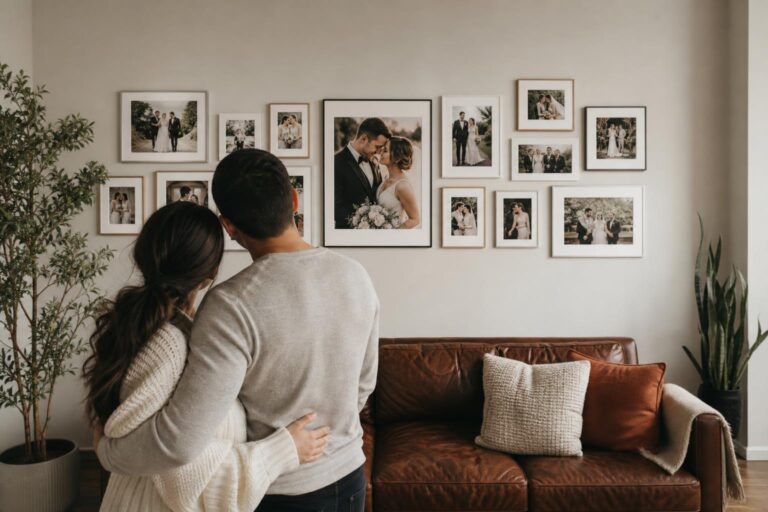
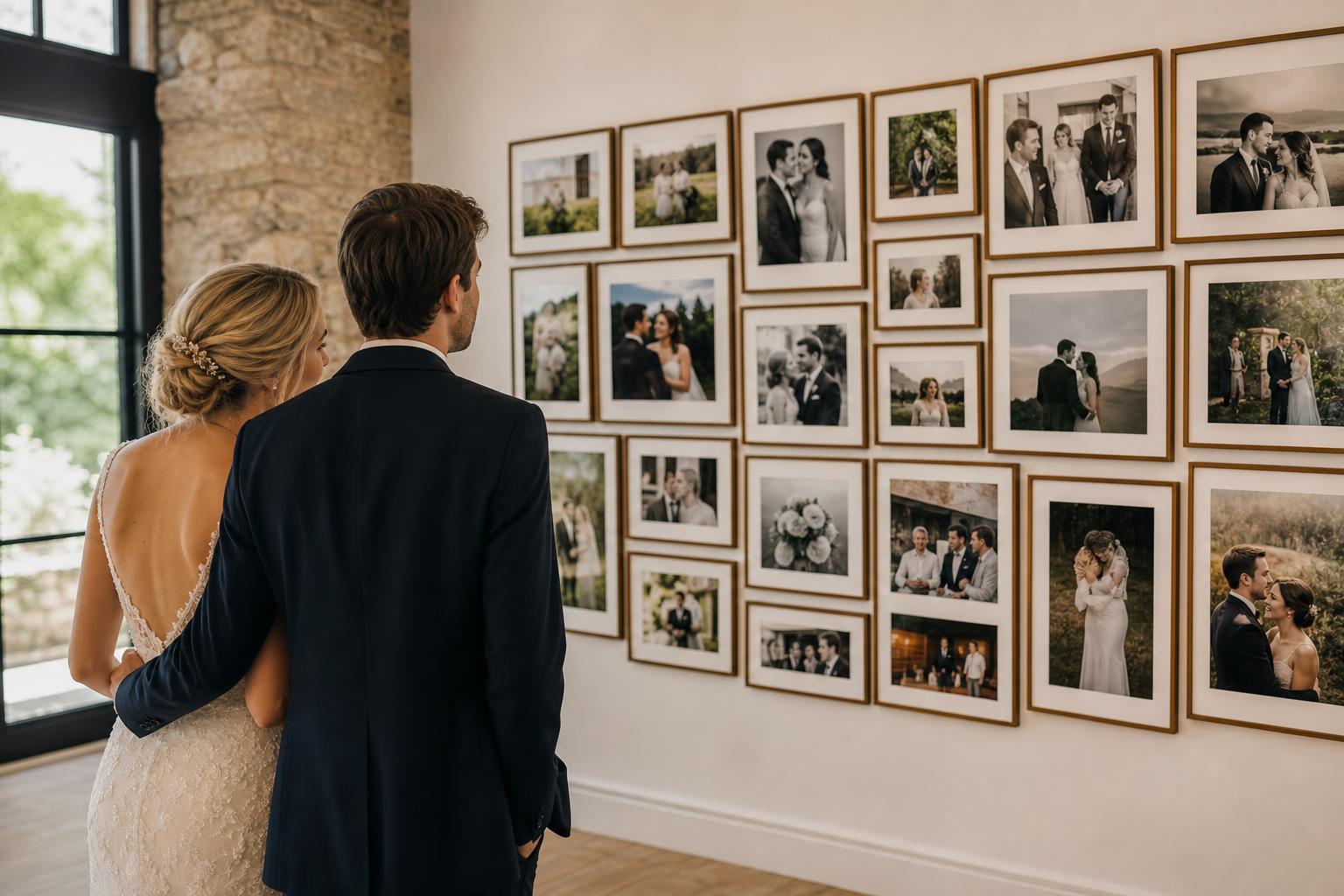
A wedding photo wall, sometimes called a wedding picture wall or wedding gallery wall, is a curated arrangement of wedding photographs and related keepsakes displayed together as one visual composition. Unlike a traditional wedding photo album, which is experienced page by page, a wall display lets the entire story exist in one glance. That is why so many couples are drawn to it for both home décor and wedding-day styling.
This kind of wall can hold portraits, candid moments, detail shots, vows excerpts, invitations, and pressed florals. Some couples use it as a memento wall after the wedding. Others adapt the idea as a photo wall backdrop during the celebration itself, especially in reception spaces where they want guests to pause, gather, and interact with the story of the day.
Turn wedding inspiration into a plan you can actually follow.
Zarellea brings your guest list, budget, vendors, and day-of details into one shared space — so no beautiful idea gets lost in the shuffle.
Best for: couples who want a highly personal display, especially if they care as much about the emotional narrative as the décor. It works well for modern, romantic, vintage, and minimalist weddings because the styling can shift with the frame choice and layout.
Why it works: a wall display gives your photos a stronger presence than an album tucked away on a shelf. It also helps connect visual memories with physical keepsakes, which makes the wedding feel more tangible long after the day is over.
Common mistake to avoid: treating every image as equally important. The strongest walls have rhythm. They need hero images, supporting photos, and breathing room.
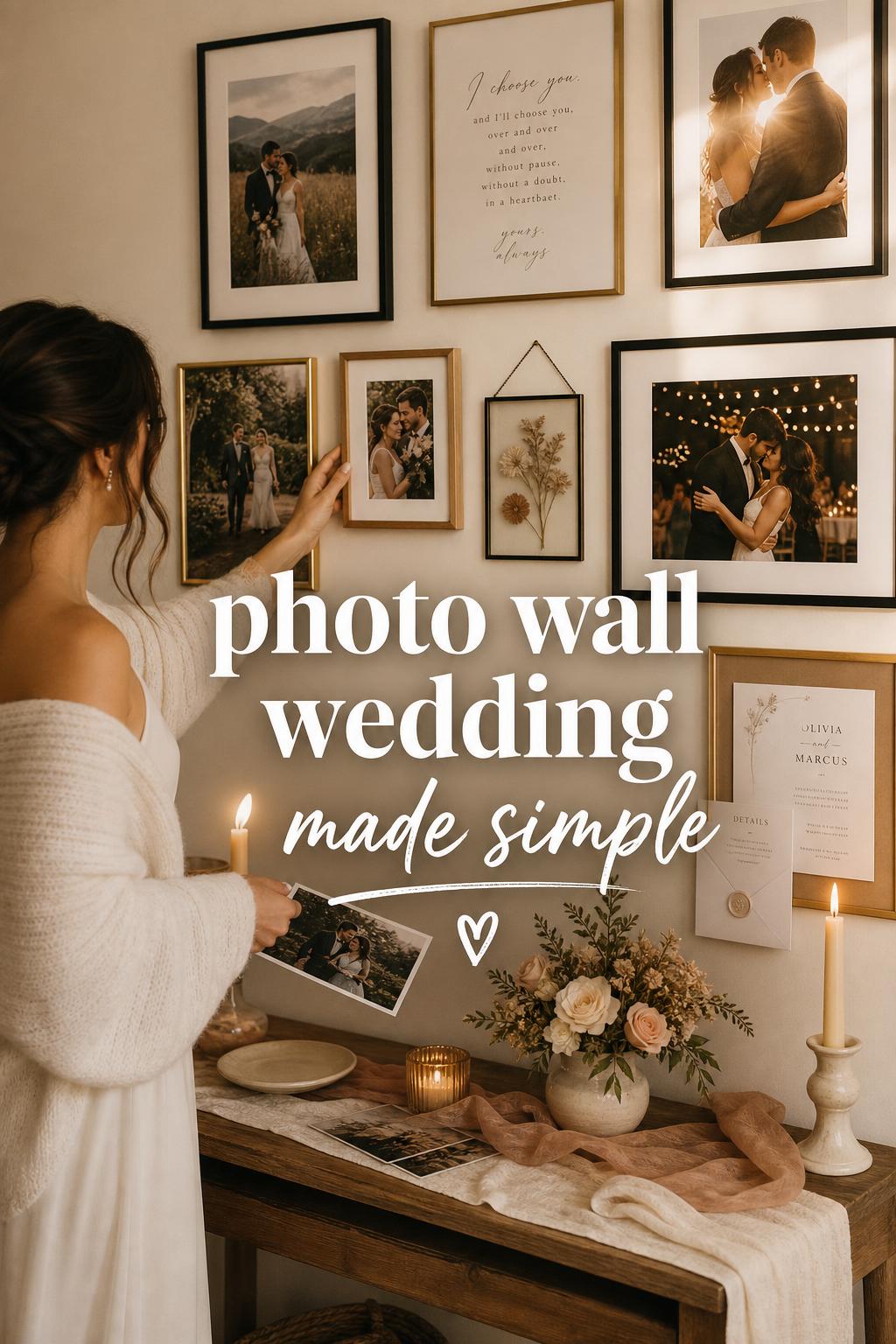
Why couples choose a photo wall wedding display instead of a simple album
A wedding photo album is intimate and sequential. A photo wall is ambient and architectural. That difference matters. If your goal is to make memories part of the room itself, a wall does that more naturally. It can become a permanent feature in an entry, above a sofa, along a stairway, or in another high-impact space. It can also be adapted for an event setup, especially where a backdrop is needed for guest photos or a decorative focal point.
The emotional appeal is also different. An album asks someone to sit down and turn pages. A wall invites repeated, casual viewing. Guests notice details they might otherwise miss: a close-up of the rings, a handwritten line from the vows, the invitation suite, or a pressed bloom from the bouquet.
For couples planning beyond the wedding day, this display style is especially useful because it can evolve. A timeline arrangement can start with the wedding and later grow with anniversary images. A digital frame such as the Aura Walden Digital Frame introduces another option for rotation, especially if you want to change images regularly without rehanging.
Budget tip: if a full framed wall feels too expensive all at once, begin with a smaller anchor arrangement and add pieces over time. This often creates a more natural, collected look anyway.
Layout styles that shape the story
The layout determines whether your wall feels calm, dramatic, playful, or deeply narrative. This is one of the biggest decisions, because the same photos can feel completely different in a clean grid than they do in a timeline or heart collage. Start with the wall shape and the mood you want before choosing frames or ordering prints.
The clean grid for a polished, modern look
A clean grid, such as a 3×3 or 4×3 arrangement, is the most structured option. It suits couples who want visual order and a refined gallery feel. This layout works especially well with matching frames from collections like Minted, Crate & Barrel, or Artifact Uprising, where consistency is part of the design.
Best for: modern weddings, minimalist homes, black-and-white editing, and couples who prefer symmetry. It is also a strong choice for smaller walls because the regular shape prevents the arrangement from feeling chaotic.
How to make it work: choose photos with a balanced mix of wide shots, portraits, and details, but keep the editing cohesive. If one image is extremely bright, saturated, or dark compared with the others, the grid will highlight that inconsistency immediately.
Real-life styling tip: before printing everything, lay your selected images out digitally or on the floor in the exact grid order. Rearranging at that stage is much easier than discovering after hanging that two similar portraits ended up side by side.
The timeline wall for a beginning-to-end narrative
A timeline or linear layout is one of the strongest storytelling formats. It leads the eye from one moment to the next, which makes it ideal for weddings with a clear emotional arc: getting ready, ceremony, portraits, reception, and final sendoff. This is the layout most closely tied to the idea of a wedding wall as narrative rather than just décor.
Best for: hallway walls, stairways, and long reception areas. It also works beautifully if you want to include mementos such as an invitation, a vow excerpt, or a floral keepsake between photos.
Why it works: guests and family members understand it instantly. There is no guesswork about where to look first. The story unfolds naturally.
Common mistake to avoid: making every image the same size. A timeline benefits from variation, especially one anchor image that acts as the emotional center.
The heart collage for a more playful and romantic expression
A heart collage is more decorative and less formal than a grid or timeline. It uses the shape itself to create impact, which means the wall becomes a statement piece from a distance as well as a memory display up close. It appears often in photo wall ideas because it is recognizable and highly sentimental.
Best for: intimate weddings, anniversary displays, or couples who want a softer, more whimsical presentation. It can also work in smaller spaces where a compact statement shape is more practical than a wide gallery spread.
Budget tip: this is one of the easiest layouts to do with simpler print formats or photo tiles. A brand such as Mixtiles, with photo tiles and gallery wall kits, can be especially practical if you want a no-nail installation or a lower-commitment arrangement.
Anchor image with supporting shots for a designer-style wall
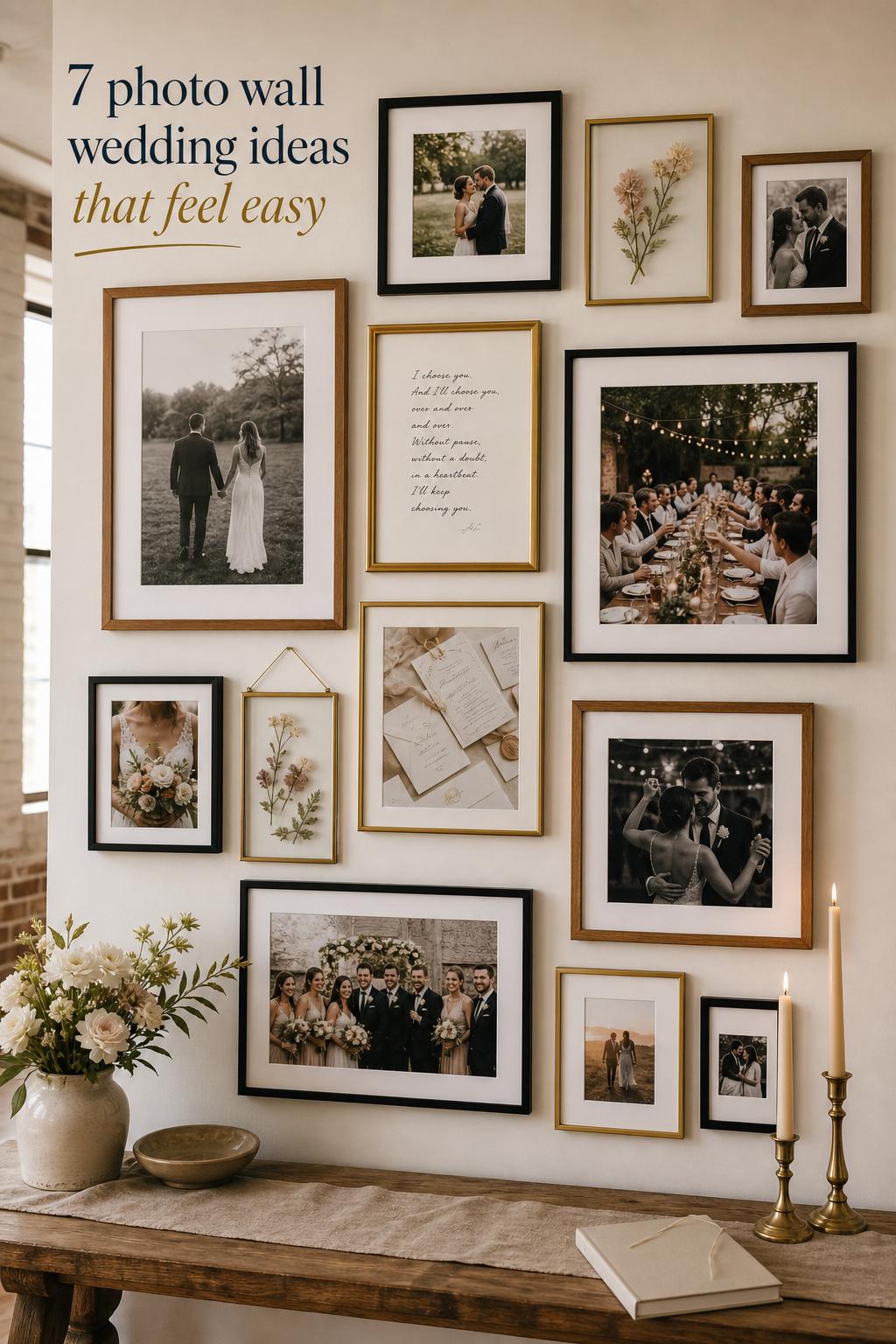
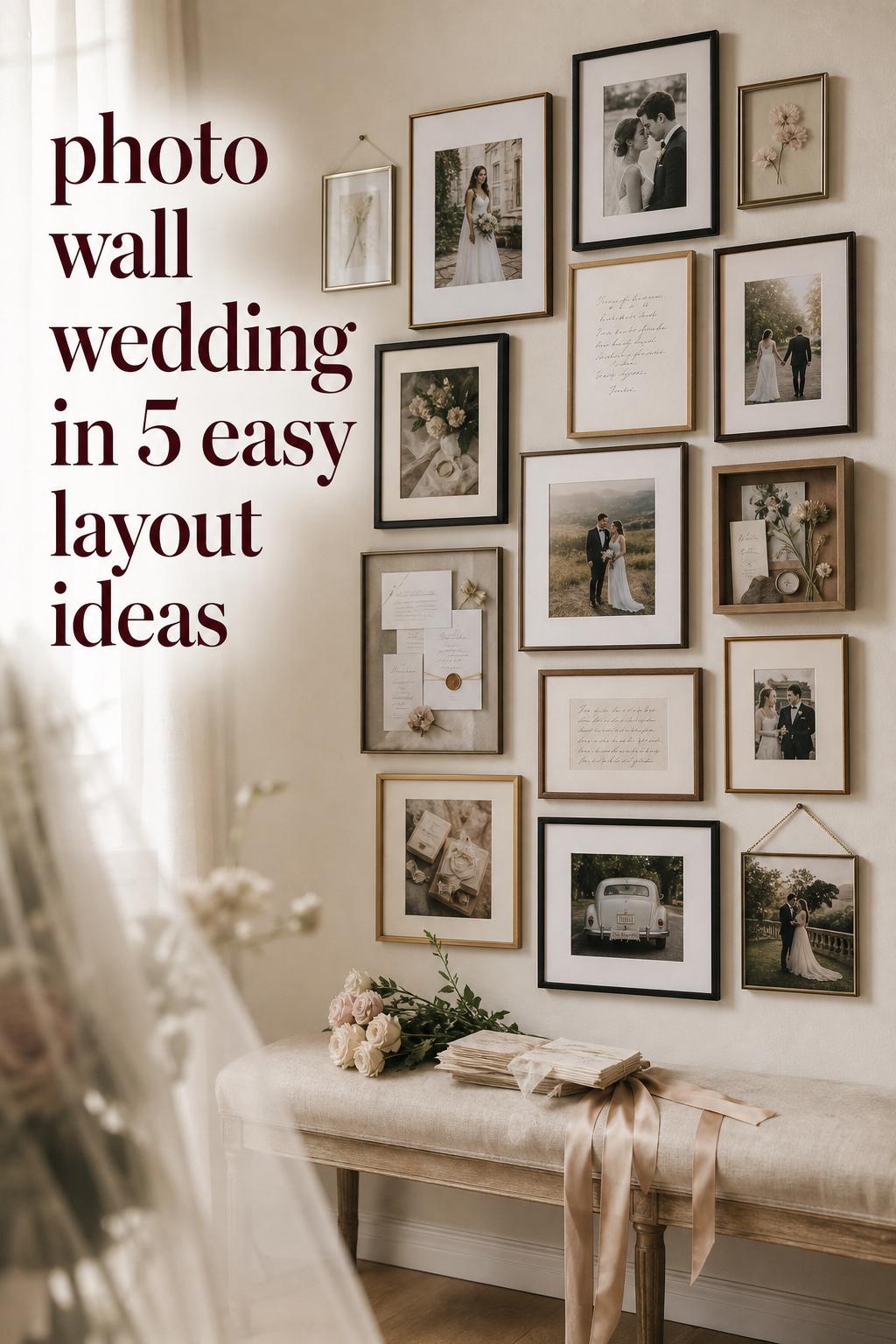
This arrangement places one large hero image at the center and surrounds it with smaller supporting photographs and keepsakes. It feels layered and editorial, especially if you combine portrait photography with framed paper pieces or shadow box elements.
Best for: couples who have one unforgettable image they want to feature prominently. It also suits mixed-media walls where the wedding is represented by more than photography alone.
- Use the largest image for the strongest emotional moment.
- Place detail shots nearby so the wall has visual texture.
- Frame paper keepsakes separately so they feel intentional, not tucked in as filler.
- Keep spacing consistent even when sizes vary.
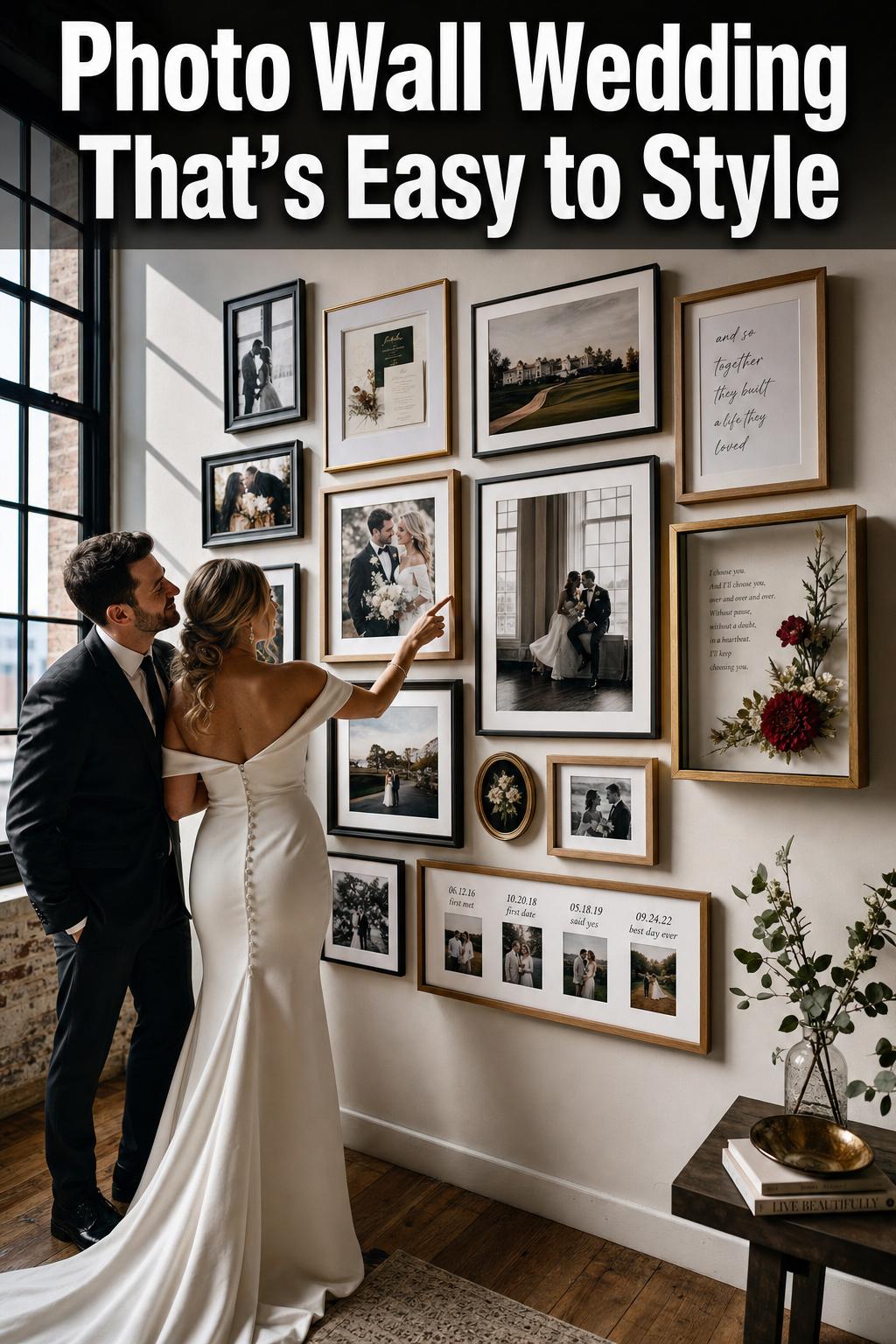
Choosing frames, finishes, and display materials
Frame choice changes the mood of a wedding gallery wall more than many couples expect. The frame is not just a border. It signals whether the display feels modern, traditional, airy, eclectic, or romantic. It also affects how the wall relates to the room or venue around it.
Classic frame styles: black, brass, and natural wood
Classic black frames create contrast and structure, making them especially effective in a clean grid or timeline. Brass brings warmth and a more decorative finish, while natural wood tends to feel softer and more organic. Retail collections from Minted, Crate & Barrel, and Anthropologie show how much these finish differences matter when you are trying to match the wall to your wedding style or your home afterward.
Best for: black frames suit modern and city-inspired weddings; brass often pairs well with romantic or refined décor; natural wood works well with rustic, vintage, and softer neutral styling.
Common mistake to avoid: mixing too many finishes without a plan. Variation can work, but random combinations usually make the wall feel pieced together rather than curated.
Floating frames and shadow boxes for keepsakes
If you want to include non-photo elements, specialty frames are worth considering. The Artifact Uprising Float Frame is especially relevant when you want a lighter, more elevated presentation, while shadow box styles help when you need depth for pressed florals, invitation suites, or layered paper elements.
Why it works: these frame styles allow the wedding wall to move beyond photographs and become a memento wall. That makes the display more personal, and it reflects how many couples actually preserve their memories.
Real-life styling tip: if you are framing vows excerpts or invitation paper, make sure they visually support the photos rather than compete with them. One or two framed paper pieces often have more impact than several small ones scattered throughout.
Digital frames and print displays
Printed walls and digital displays each solve different problems. Printed photos give a permanent, tactile look and tend to feel more architectural. Digital frames like the Aura Walden Digital Frame offer flexibility and rotation, which is useful if you want to update images for anniversaries or show a broader set of memories without enlarging the wall.
Best for: printed displays are stronger when the wall itself is meant to be a design statement. Digital frames work well when space is limited or when you know you will want to refresh images often.
What to consider before choosing: if your goal is a wedding reception backdrop, printed or mounted images usually read better at a distance. If your goal is an evolving home display, a digital frame can complement the printed wall rather than replace it.
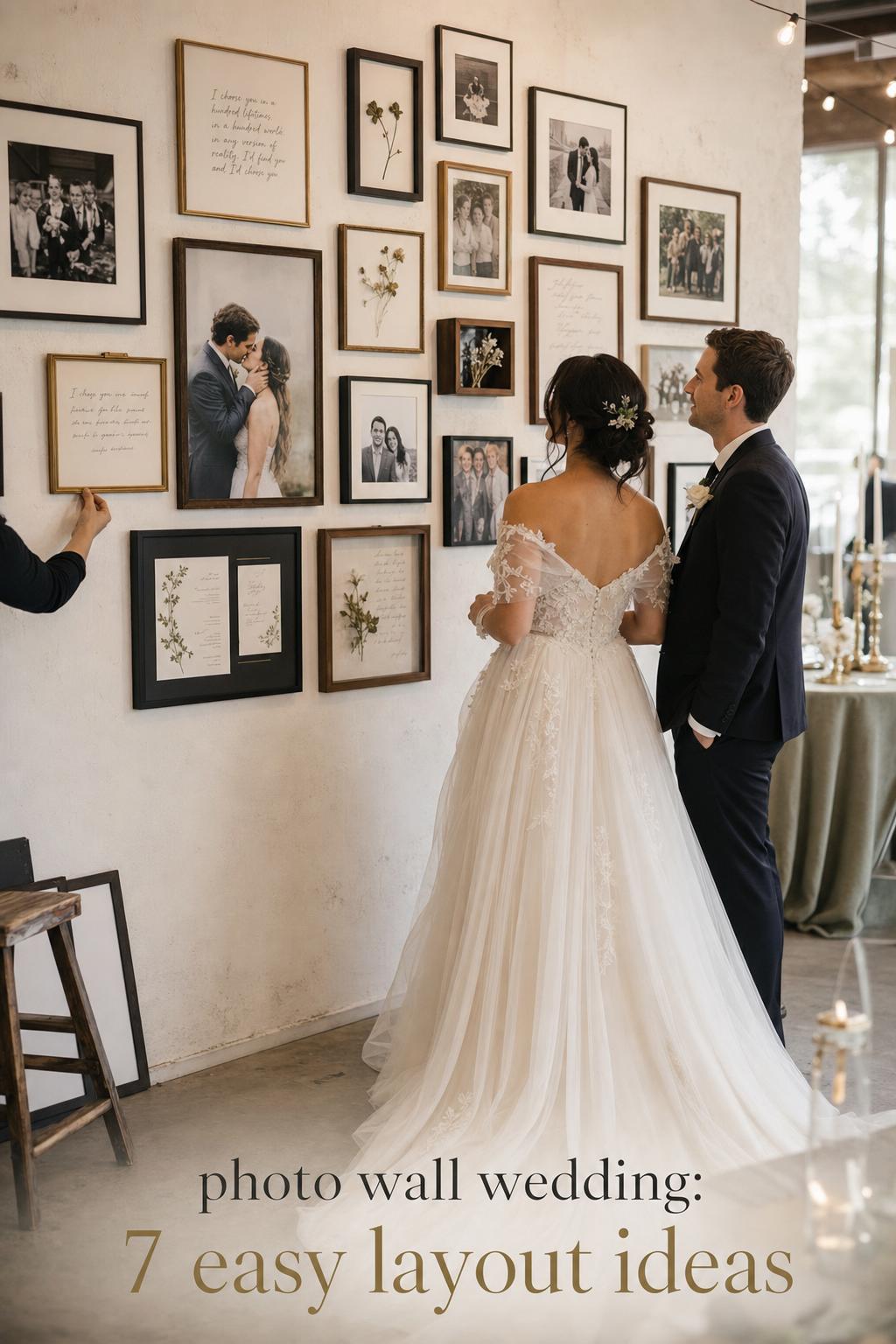
How to curate photos and keepsakes that feel cohesive
The most compelling wedding walls are edited, not exhaustive. A common mistake is trying to include every favorite image. The result can feel crowded and emotionally flattened because nothing gets the emphasis it deserves. Curation means selecting photos that each play a role.
Build a balanced photo mix
A strong wall usually combines portraits, candid moments, and detail shots. Portraits bring emotional focus. Candid moments add movement and honesty. Detail photos, such as rings, florals, stationery, or table settings, give texture to the story and prevent the arrangement from feeling repetitive.
Best for: every wedding style, because this mix creates balance regardless of whether your aesthetic is rustic, modern, whimsical, or vintage.
- Use portraits as anchor points.
- Place candid images where you want energy and movement.
- Include a few detail shots so the display reflects the full wedding design, not only faces.
- Avoid placing too many similar poses next to each other.
Add vows, invitations, and pressed florals carefully
Vows excerpts, invitations, and pressed florals appear in the strongest wedding picture wall examples because they deepen the emotional story. These elements work especially well if the couple values the sentimental side of wedding planning and wants the display to preserve more than photography.
How to make it work: choose one meaningful line from the vows rather than an entire page of text. Frame the invitation suite if it has design value and ties into the wedding’s overall palette. Use pressed florals in one or two places so they feel like keepsakes, not filler.
Budget tip: if custom framing every keepsake is not realistic, prioritize one hero memento frame and let photographs carry the rest of the wall.
Create color cohesion through editing
Color consistency matters more than couples often realize. A wall can include both color and black-and-white photography, but the transition needs intention. If some images are warm, others cool, and others heavily saturated, the arrangement may feel visually unsettled.
Why it works: cohesive editing helps separate emotional storytelling from visual noise. The viewer notices the moments rather than the mismatched processing.
Common mistake to avoid: choosing images one by one based only on sentiment. Always step back and judge the collection as a group.
Placement decisions that make or break the wall
A wedding photo wall can be beautifully designed and still fail if it is placed poorly. Scale, wall height, spacing, and the surrounding room all influence whether the final display feels effortless or awkward. This matters whether the wall is going into a home entry, above a sofa, along a staircase, or inside a venue.
Start with eye-level anchoring
A practical rule used across gallery wall guidance is to anchor the display around eye level, roughly 57 to 60 inches from the floor. This gives the arrangement a natural center and helps the wall feel connected to the room rather than floating too high.
Best for: almost any residential setup and many reception spaces where guests will view the display standing up.
Real-life styling tip: couples often hang a photo wall too high because they are thinking about the top edge, not the visual center. Mark the center first, then build outward.
Keep spacing disciplined
Spacing of about 1 to 2 inches between pieces is a useful guide for keeping a gallery wall cohesive. Wider gaps can make the wall look disconnected, while overly tight spacing can make individual images feel cramped.
Why it works: consistent gaps create rhythm. Even if the frame sizes vary, spacing gives the wall a sense of order.
Mock the wall before hanging
Top-performing guides consistently emphasize mock layouts for a reason. Testing the arrangement on the floor or planning it carefully before installation saves time, reduces wall damage, and helps you catch imbalances before they become expensive mistakes.
- Measure the full wall area first.
- Arrange all pieces on the floor in the exact dimensions available.
- Check how the layout looks from several feet away.
- Only then begin hanging or using adhesive systems.
Common mistake to avoid: ordering frames first and measuring later. The wall should determine the arrangement, not the other way around.
Venue, backdrop, and lighting: where a photo wall wedding display works best
Not every wall in a venue is a good wall. A photo wall wedding installation should suit the architecture, traffic flow, and lighting conditions of the space. This is where planning becomes less about inspiration and more about decision-making.
Modern lofts, rustic spaces, and romantic interiors
In a modern loft, a clean grid with black frames tends to feel intentional because the structure echoes the architecture. In a rustic setting, natural wood frames or a softer mixed-size arrangement often feels more at home. In romantic interiors, brass finishes or floating frames can bridge the line between formal décor and memory display.
Thematic styling also matters. Waldo Photos highlights themes such as rustic, modern, whimsical, and vintage, and those same themes should guide wall choices. A whimsical wall can handle a more playful layout, while a vintage direction may benefit from softer finishes and mixed media.
When a flower wall is the better choice
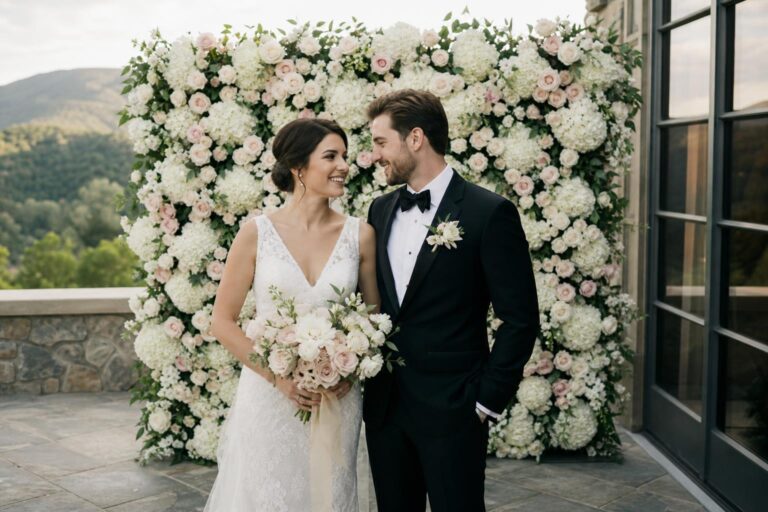
Sometimes what couples want is not a memory wall but a striking decorative backdrop. In that case, a flower wall may be the better fit. Floral walls are strongly associated with ceremony and reception décor and work particularly well when the priority is photo opportunity, not storytelling. They also integrate easily with broader wedding styling.
A photo wall and a flower wall are not interchangeable. A flower wall functions mainly as décor and backdrop. A wedding gallery wall functions as décor, memory display, and personal narrative. Knowing which role you actually need can save money and help avoid a disconnected design plan.
Lighting can change the entire effect
Natural and artificial lighting affect how prints read in person and in event photographs. A wall placed in a dim corner may be emotionally meaningful but visually lost. A display placed where glare hits glass constantly may become difficult to enjoy.
How to make it work: choose a wall with enough visibility for guests to actually engage with it. If the wall is meant to function as a backdrop, make sure the surrounding lighting supports photographs rather than creating harsh reflections.
Common mistake to avoid: planning the wall in isolation without checking the room at the time of day when guests will see it.
Ideas that work for different budgets and wedding styles
One reason wedding photo wall ideas remain popular is that they scale well. A small and thoughtful display can feel just as personal as a large installation. The key is choosing the format that gives the most impact for your budget instead of trying to imitate a larger concept with fewer resources.
For a tighter budget
A smaller grid, a heart collage, or a simple photo tile arrangement often delivers the clearest value. Mixtiles and similar tile-based concepts are especially appealing when couples want a clean installation without committing to extensive hanging hardware. Canvas prints from a brand like 365Canvas can also work when the goal is visual impact without a more layered framing budget.
Best for: first apartments, smaller receptions, and couples who want something meaningful but manageable.
Budget tip: spend on the most visible pieces first. A strong anchor image and a few cohesive supporting prints usually do more than many smaller, lower-impact pieces.
For a more premium keepsake wall
A premium wall usually combines high-quality frames, varied scale, and at least one keepsake element such as vows or florals. Brands like Artifact Uprising, Minted, Crate & Barrel, and Anthropologie naturally enter the conversation here because each suggests a slightly different finish and styling direction.
Best for: couples who want the display to function as long-term home décor, not only a wedding project.
Why it works: the wall feels integrated into the home and less temporary. That matters if you are investing in a visual story you want to revisit for years.
For couples who want flexibility after the wedding
Digital options and changeable layouts are ideal if you know your display will evolve. A digital frame from Aura or a photo tile system can make updates easier, especially for anniversaries. This is one of the most practical paths for couples who love the idea of a wedding wall but do not want the arrangement to stay frozen forever.
Common mistake to avoid: choosing a highly fixed arrangement if you already know you will want to add new memories later.
Designer-inspired direction and style cues
Some of the most useful wedding gallery wall advice comes from the way designers think about curation rather than from the wall products themselves. Interior designers Nadia Watts in Denver, Colorado, and Brittny Button of Button Atelier in Los Angeles, California, are both associated with the idea that a wedding wall should tell a story instead of simply fill space. That is an important distinction.
From a styling perspective, this means asking a few practical questions before buying anything. What is the emotional center of the display? Is the wall primarily décor, memory preservation, or both? Will the arrangement live in a modern room, a layered traditional interior, or a transitional space? Those answers help you choose between symmetry and looseness, between black frames and natural wood, between a float frame and a simpler mat, and between a permanent printed wall and a more adaptable digital display.
Real-life styling tip: if your room already has a strong design identity, let the wedding wall echo it. Couples often assume wedding memories should stand apart from everyday interiors, but the most successful walls feel like they belong exactly where they are placed.
Shopping paths that make planning easier
Once you know your layout and story direction, shopping becomes much simpler. The main categories are frames and mats, print or tile formats, and digital display options. Keeping those categories separate helps prevent overspending on pieces that do not actually solve your design problem.
- For curated frame collections: Minted, Crate & Barrel, Anthropologie.
- For elevated specialty framing: Artifact Uprising, including the Artifact Uprising Float Frame.
- For rotating digital display: Aura, especially the Aura Walden Digital Frame.
- For no-nail or low-commitment wall formats: Mixtiles photo tiles, Gallery Wall Kits, and Canvas Tiles.
- For canvas-focused inspiration: 365Canvas.
How to make it work: shop only after you decide whether your wall is meant to feel structured, layered, casual, or flexible. The wrong product can still be high quality and yet not fit the project.
Practical planning notes couples often overlook
Wedding walls tend to start as an emotional idea, but they are easier to execute well when treated like a design project. That means thinking not just about images, but also about wall space, installation method, room function, and how the display will be used after the wedding.
- Check whether the wall is mainly viewed up close or from across the room.
- Consider whether guests need space in front of it for photos.
- Think about whether the wall should transition easily into home décor after the wedding.
- Choose a format that fits your willingness to hang, rehang, or update the display.
- Remember that fewer, better-chosen images often create a stronger emotional result.
This is also where style and practicality meet. A wall can be romantic without being fussy, and modern without feeling cold. The best photo wall wedding ideas are the ones that reflect the couple honestly while still working beautifully in the room they are meant to live in.
A wedding wall that keeps telling the story
Long after the bouquet is gone and the cake has been served, certain details still hold their shape in memory. A wedding photo wall gives those details a place to remain visible: the look, the paper, the flowers, the people, the sequence of the day. Whether you build a crisp grid, a flowing timeline, a heart collage, or a layered memento wall, the most successful display is the one that feels both emotionally true and practically well planned.
If you choose carefully, your wall becomes more than a décor feature. It becomes a way of living with your wedding story, not just remembering it once in a while.
FAQ
How many photos should I include in a wedding photo wall?
The right number depends on your wall size and layout, but the most important rule is not to overcrowd the display. A small grid may look strongest with a limited number of carefully chosen images, while a timeline wall can handle more if the spacing stays consistent and the story remains easy to follow.
What is the best layout for a wedding gallery wall?
A clean grid is usually best for a polished, modern look, while a timeline works best for storytelling. A heart collage feels more decorative and romantic, and an anchor image with supporting shots is ideal when you want one hero photograph to lead the wall.
Can I create a wedding photo wall without nails?
Yes, couples often use no-nail solutions such as photo tiles and wall kits, especially when they want a lower-commitment installation. Mixtiles is one of the best-known options in this area, and it is especially useful for rental spaces or for couples who want to adjust the layout later.
Should I use printed photos or a digital frame?
Printed photos usually work better when you want the wall itself to be a lasting design feature, while a digital frame is more practical if you want flexibility and regular image rotation. Many couples combine both by creating a printed gallery wall and adding a digital frame such as the Aura Walden Digital Frame nearby.
What keepsakes can I add besides photos?
Popular additions include vows excerpts, invitations, and pressed florals. These pieces work best when they are framed intentionally and used sparingly so they support the story rather than overwhelm the photographs.
How high should I hang a wedding picture wall?
A practical guideline is to anchor the visual center of the arrangement around 57 to 60 inches from the floor. That keeps the wall at a comfortable viewing height and helps it feel properly placed in the room.
How much space should I leave between frames?
Most gallery wall guidance points to about 1 to 2 inches between frames. This keeps the arrangement cohesive without making it feel cramped, and it is especially important when mixing frame sizes.
Can a wedding photo wall work as event décor at the reception?
Yes, especially if you want a personal backdrop or a display that encourages guests to interact with your story. It works best when the wall is placed in a visible area with supportive lighting and enough room for guests to gather without blocking traffic.
What is the difference between a flower wall and a photo wall wedding display?
A flower wall is mainly a decorative backdrop, while a wedding photo wall is both décor and storytelling display. If your priority is preserving memories and sharing the arc of the day, a photo wall is the better choice. If your priority is visual impact and floral styling, a flower wall may suit the moment better.
Can I reuse my wedding gallery wall for anniversaries?
Yes, and some of the most practical wall formats are designed for that. Timeline layouts, digital frames, and changeable tile systems are especially easy to update over time, which makes them a smart choice if you want the display to grow beyond the wedding itself.