Wedding Photo Backdrop Ideas That Feel Fresh and Refined
Some of the most beautiful wedding photo backdrop ideas fall apart the moment they meet a real venue. A floral wall that looked dreamy on a screen can feel too heavy for the room, a lighted backdrop can glow harshly in photos, and a stylish photo booth setup can create a traffic jam if guest flow is ignored. What should feel like a romantic focal point often becomes one more decision tangled up in budget, lighting, installation, and timing.
This is why couples often feel pulled in two directions. They want a backdrop that feels memorable, personal, and camera-ready, but they also need something that works with the ceremony, the reception, the venue architecture, and the way people actually move through the space. The best backdrop is not simply pretty. It supports the mood of the wedding, photographs well, and functions gracefully from the first portrait to the last guest snapshot.
This guide brings those decisions into focus. Instead of treating backdrops as decoration alone, it looks at how floral walls, greenery installations, fabric draping, starry lights, minimalist panels, and photo booth backgrounds actually perform in real weddings, so you can choose a design that feels cohesive rather than stressful.
Why this wedding challenge happens
A wedding backdrop has to do several jobs at once. It may frame the ceremony, anchor portraits, support a photo booth, and visually connect with everything from bouquets to signage. That sounds simple until practical constraints appear. Venue walls may not suit the color palette, outdoor spaces can shift with weather and light, and indoor ballrooms often need a different approach than a garden or a rustic barn. Even a strong design idea can feel disconnected if it ignores the setting around it.
Turn wedding inspiration into a plan you can actually follow.
Zarellea brings your guest list, budget, vendors, and day-of details into one shared space — so no beautiful idea gets lost in the shuffle.
Lighting is one of the biggest reasons backdrop choices become confusing. A backdrop that feels soft and romantic in person may read flat in photographs. A reflective or metallic look can add energy, but if it is not balanced with the rest of the décor, it can dominate the frame. MIHIPHOTO Booth and Sunset both point toward a reality many couples only discover late in planning: photo flow and lighting cues shape the success of a backdrop just as much as the design itself.
Budget pressure adds another layer. Many couples compare DIY wedding backdrop ideas for photo booths with rental options, only to realize the lower-cost route may demand more setup time, more labor, or more risk on the day. Photographer To GO emphasizes style and budget together for a reason. A backdrop is not just a product decision. It is also a timeline decision, a logistics decision, and a photography decision.
There is also the issue of cohesion. The Knot, Prairie Hive, FixThePhoto, and Peek-A-Booth all highlight very different ideas, from quilt-inspired and Polaroid-style installations to floral walls, balloon arches, fabric drapes, and LED stars. The variety is exciting, but it can also lead couples to combine too many concepts at once. The result is often visual clutter rather than a clear focal point.
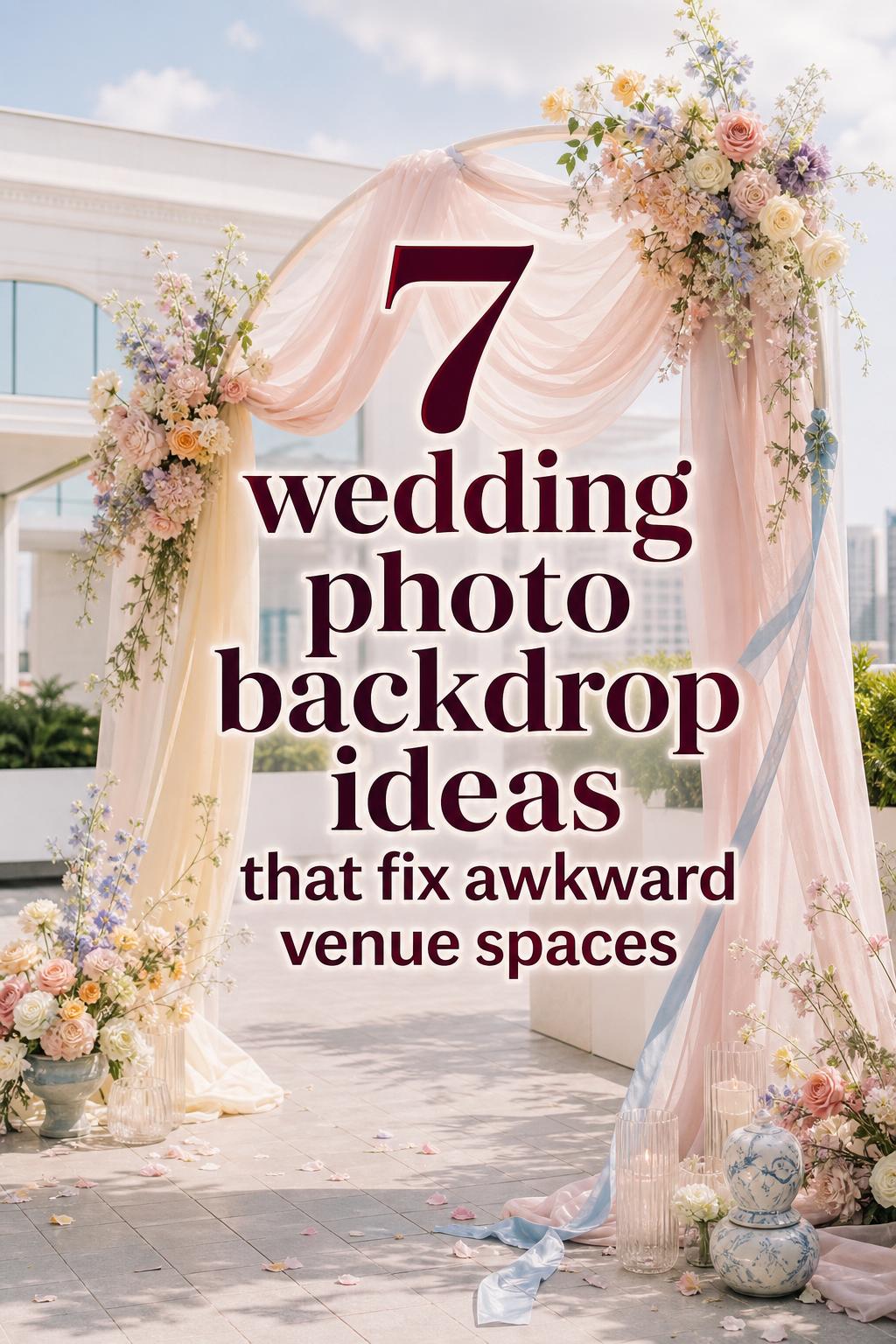
The styling principles that make a backdrop work
The strongest wedding backdrops are built around one clear visual role. They either create romance, add texture, shape the ceremony frame, or invite guest interaction through a photo booth moment. When a backdrop tries to do everything at once, it usually looks overdesigned. When it supports one purpose clearly, it feels intentional and luxurious.
Texture matters more than excess decoration. Floral walls and greenery backdrops appear across many wedding sources because they naturally add depth, softness, and dimension in photos. Fabric draping works for the same reason. Velvet, chiffon, tulle, and sequined surfaces create mood without requiring too many competing elements. A thoughtful material choice often does more for the final image than adding extra props.
Backdrops also need to respect movement. A ceremony backdrop is viewed from a distance and should frame the couple without distracting from the moment. A photo booth backdrop is viewed close up and needs enough space for guests to gather comfortably. FotoFete Philadelphia, Captured Celebrations in Los Angeles, and Alba Backgrounds all connect backdrop success to compatibility with guest interaction, not just color coordination.
Finally, the best choices align with the wedding theme rather than chase novelty. Rustic, boho, glam, minimalist, romantic, and editorial styles can all work beautifully, but they need a backdrop archetype that supports them. A clean monochrome panel may suit a modern reception, while a flower wall or greenery installation can soften a garden ceremony. Thoughtful alignment always feels calmer than trend mixing.
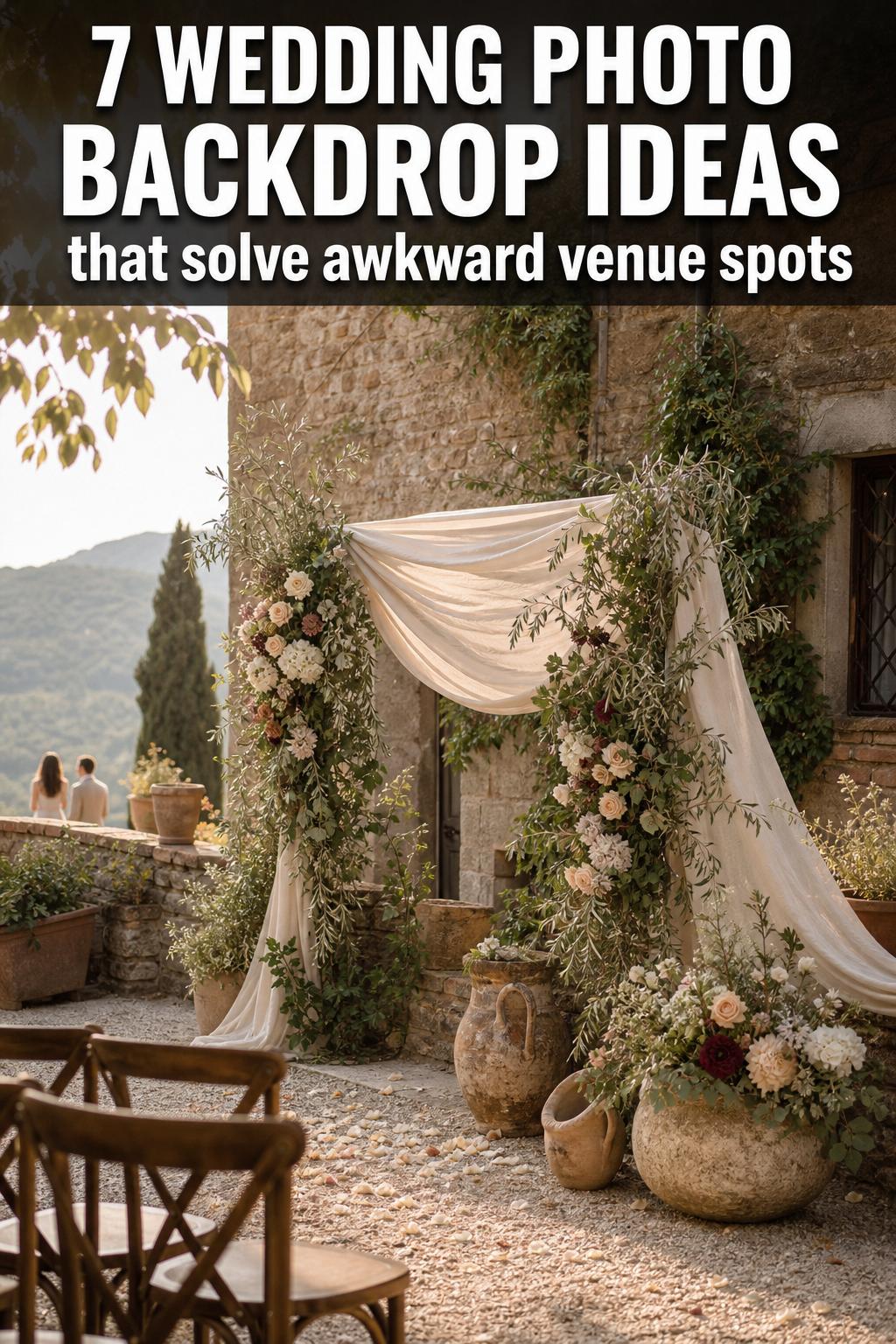
Wedding solution: use floral walls and greenery installations when the space needs softness
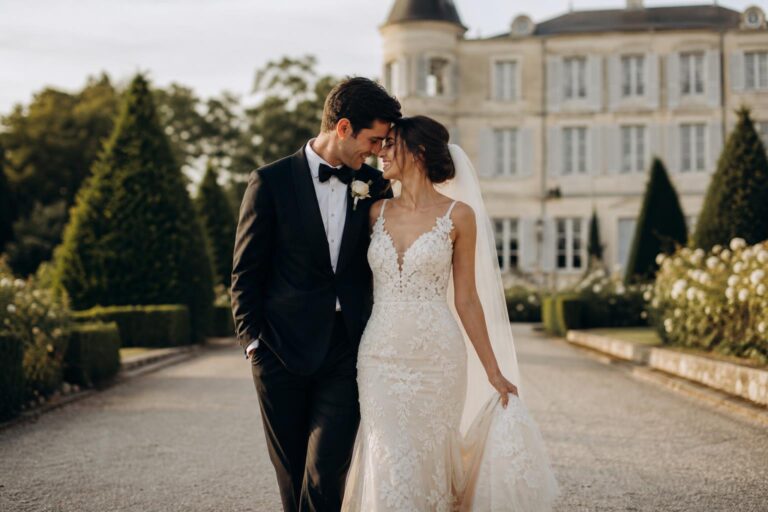
Many venues feel visually hard in photographs even when they are lovely in person. Blank walls, architectural lines, or wide ceremony areas can leave couples looking small in the frame. This is where floral wall backdrop ideas and greenery backdrops solve a real problem. They create visual fullness behind the couple or guests, making portraits feel layered rather than empty.
Floral walls and greenery installations work especially well when you want romance without complicated styling. Roses, peonies, ivy, and eucalyptus are repeatedly connected to this look because they bring texture and softness. A flower wall can become the focal point for portraits, while a greenery backdrop can feel lighter and more adaptable across ceremony and reception spaces. Alba Backgrounds and Peek-A-Booth both position these styles as reliable, high-impact choices because they coordinate easily with broader wedding décor and photo booth setups.
The emotional result is immediate. Instead of a backdrop feeling like an add-on, the entire scene feels dressed. Couples tend to look more anchored in the frame, guests naturally gravitate toward the spot for photos, and the wedding atmosphere becomes more immersive. This is one of the simplest ways to make a venue feel intentionally styled rather than merely decorated.
What photographs best
Floral walls and greenery usually photograph best when the palette is controlled. Too many flower colors can compete with attire and bouquets, while a tighter scheme creates a polished image. If the wedding already has detailed florals elsewhere, a greenery backdrop can provide relief and still look lush.
Wedding solution: choose fabric draping and textured panels when you need flexibility
Sometimes the challenge is not a lack of beauty, but a lack of adaptability. Couples may need one backdrop that works for a ceremony, then later supports a photo booth or portrait corner. Hard-built installations can be harder to reposition or re-style. Fabric backdrop ideas solve this by offering movement, softness, and strong visual coverage without requiring a fully immersive set.
Chiffon, velvet, tulle, sequined panels, and other textured fabrics create atmosphere in different ways. Chiffon feels airy and romantic, velvet adds richness, and sequined finishes can bring glamour to a reception-oriented setting. Photographer To GO and Alba Backgrounds both point toward the practical value of material choice, because the same color can feel dramatically different depending on texture. Fabric draping also helps tie together venues that need visual cohesion, especially if the architecture itself does not support the wedding style.
When done well, fabric draping feels elegant instead of temporary. It softens hard corners, adds depth to photos, and creates a composed backdrop for key moments without demanding the cost or complexity of a fully floral installation. It is especially reassuring for couples who want a romantic effect but need something more budget-conscious or easier to coordinate than a flower wall.
Best fabrics or materials
- Chiffon for a light, airy ceremony look
- Velvet for depth and a richer, moodier atmosphere
- Tulle for softness and layered texture
- Sequined or metallic fabric for glam photo booth moments
- Paper, vinyl, or acrylic for a cleaner, more graphic finish
The right material depends less on trend and more on the emotional tone you want the space to hold. A soft fabric backdrop often feels timeless because it supports the people in front of it rather than competing with them.
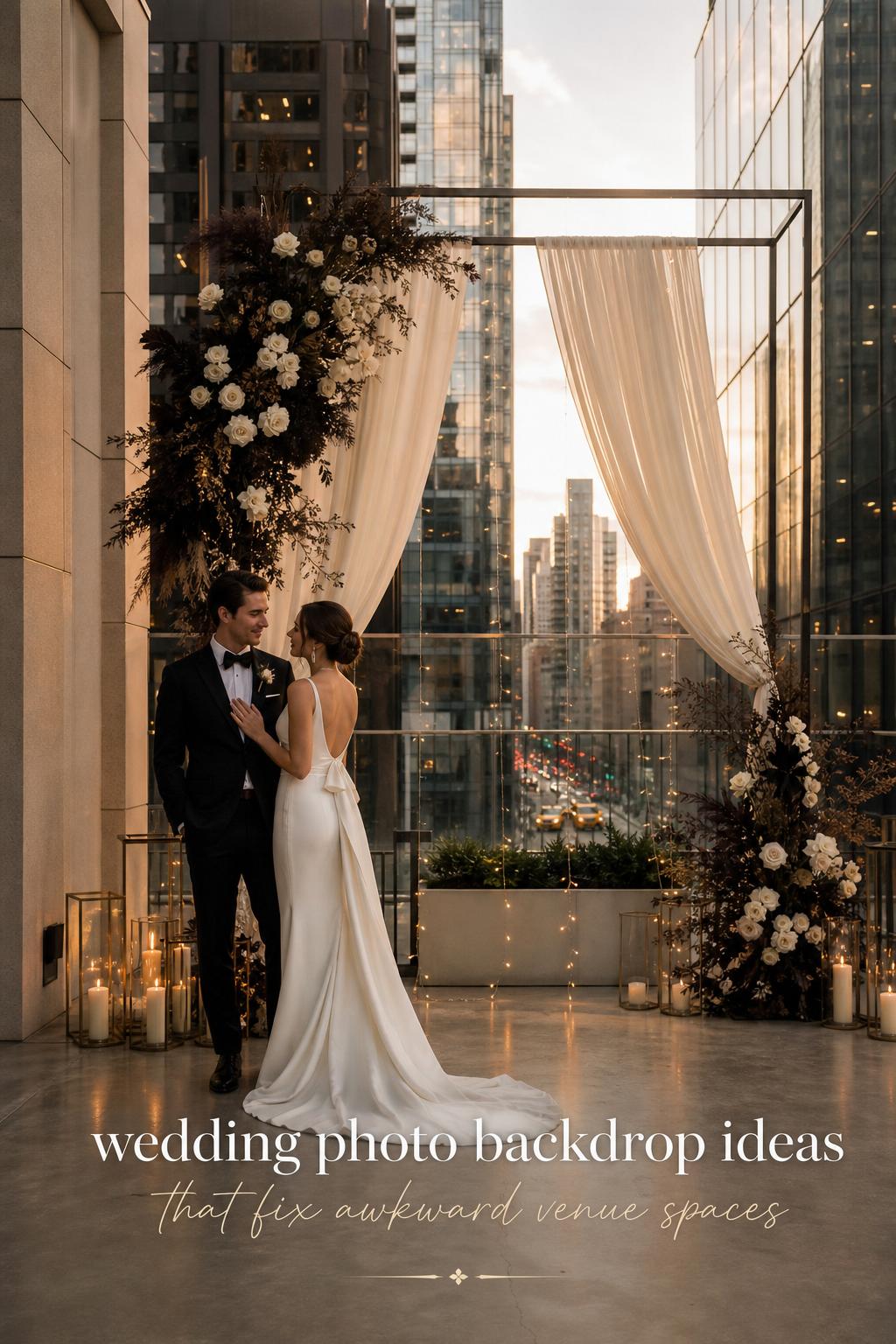
Wedding solution: use lighted and starry backdrops when the venue needs atmosphere after dark
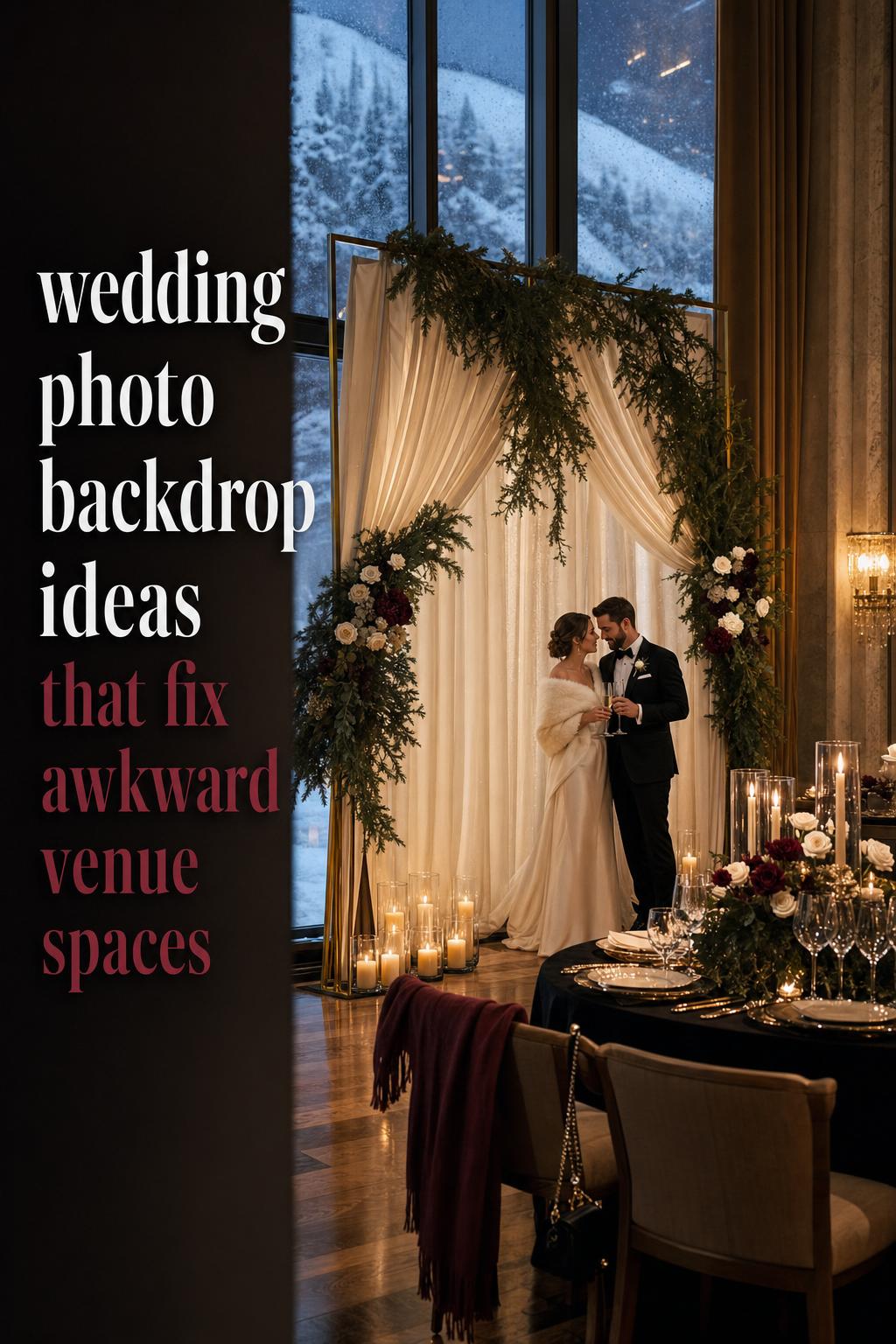
Even a beautifully styled backdrop can lose its impact once the light changes. This is especially true during receptions, evening ceremonies, or indoor events where natural light fades and the room becomes dependent on artificial lighting. Couples who overlook this often end up with a backdrop that looked wonderful during setup but disappears in photos later.
Fairy lights, LED-inspired star backdrops, and softly lit panels help a backdrop stay present as the day transitions. Prairie Hive and FixThePhoto both highlight starry and hanging-light ideas because they create depth and mood without requiring dense decoration. The key is to think of lighting as part of the backdrop itself, not as something separate. A lighted backdrop can add warmth, support evening portraits, and make a photo booth area more inviting. For couples considering this route, color temperature and light placement matter because the effect should feel romantic rather than harsh.
Visually, this kind of backdrop creates one of the most memorable shifts in atmosphere. The space begins to feel cinematic and intimate, especially as guests move from formal ceremony energy into a more celebratory reception mood. It also reduces the common frustration of having a lovely design that vanishes once the room gets darker.
Lighting tips
Layered light is usually more flattering than relying on one glowing element. A backdrop with fairy lights or LED star details tends to feel more balanced when the surrounding venue lighting still offers enough visibility for portraits and guest movement. Warmth creates romance, but function still matters.
Wedding solution: go minimalist and modern when the venue already has strong architecture
Some spaces do not need more decoration. They need restraint. In a contemporary venue, rooftop, mansion setting, or polished ballroom, an overly detailed backdrop can fight with the architecture instead of enhancing it. Couples often mistake minimal for plain, then add extra flowers, signs, panels, and props until the focal point becomes visually confused.
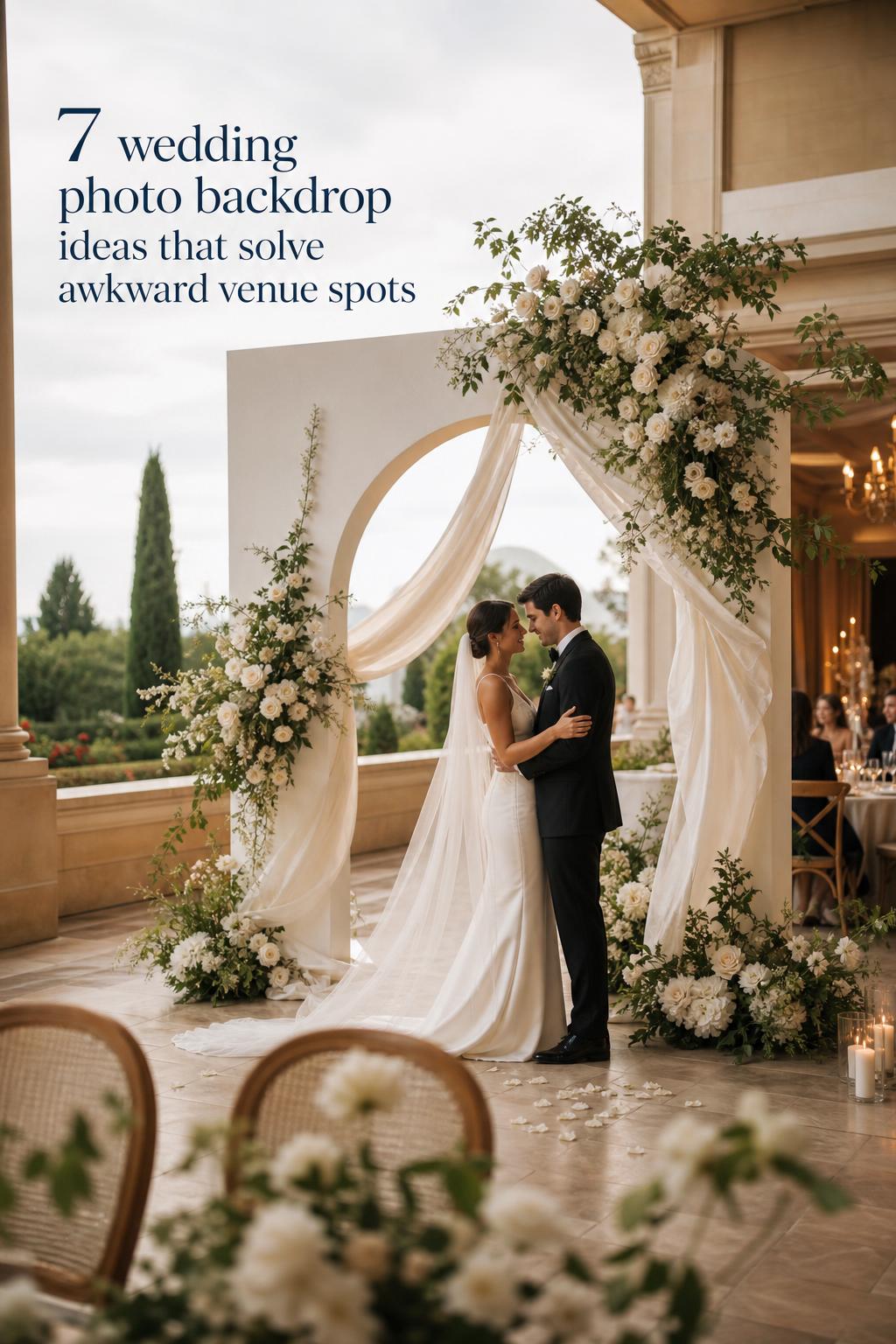
A minimalist backdrop solves that by using clean lines, monochrome palettes, metal arches, or simple structured panels. This approach appears in modern backdrop discussions because it allows the venue and the couple to remain central. A restrained structure with thoughtful color coordination can feel more expensive than a crowded installation. It also supports editorial-style wedding photography, where composition and clean framing matter.
The result is calm confidence. Instead of trying to impress through quantity, the backdrop creates clarity. Portraits look deliberate, the ceremony framing feels architectural, and the overall wedding design reads as cohesive rather than overworked. For couples drawn to modern styling, this often becomes the most timeless choice.
Wedding solution: make the backdrop personal with thematic or story-driven details
A backdrop can feel beautiful but emotionally generic if it has no relationship to the couple. This happens often when a design is chosen only because it is trending. It may photograph well, yet still feel disconnected from the wedding story. That disconnect can be subtle, but guests notice when a backdrop feels like décor for any event rather than this event.
Story-driven backdrops solve this through selective personalization. The Knot highlights customization through DIY approaches, Polaroid aesthetics, and themed booth concepts, while Captured Celebrations connects creative backdrops to wedding aesthetics and local talent in Los Angeles. Custom quotes, map-inspired designs, heritage references, signage, and travel motifs can all work, provided they fit the wider style of the wedding. The most effective personalized backdrop is not the loudest one. It is the one that adds meaning without sacrificing visual balance.
Emotionally, these details change how the backdrop is experienced. It becomes more than a photo station or ceremony frame. It becomes part of the memory architecture of the day. Guests understand the personality behind it, and the couple gets images that feel less interchangeable and more reflective of who they are.
How to make the wedding feel more personal
- Use custom signage only if it matches the wedding’s overall tone
- Choose one narrative element, such as travel, heritage, or a quote, instead of several
- Let props support the backdrop, not overwhelm it
- Keep colors tied to the existing palette so personalization still feels cohesive
Backdrop materials, costs, and the real DIY versus rental question
One of the most stressful parts of choosing a backdrop is deciding whether to build it yourself or rent a professional option. The lower upfront cost of DIY can be appealing, especially for photo booth backdrops, but that savings can disappear quickly if assembly takes too long, transportation becomes difficult, or the final result does not photograph as expected.
Rental options usually offer more predictability in finish and installation, which is why so many brand-led wedding backdrop articles connect inspiration directly to products or services. Peek-A-Booth, Alba Backgrounds, FotoFete Philadelphia, and MIHIPHOTO Booth all operate in ways that naturally blend design ideas with practical setup support. DIY works best when the design is simple, the materials are manageable, and the couple has enough time to test the look before the wedding. Rentals tend to make more sense when the backdrop is large, heavily styled, or central to major photography moments.
The reassuring truth is that not every backdrop needs to be elaborate to feel elevated. A well-executed fabric panel can outperform an ambitious but rushed DIY build. Thoughtful decisions usually read more beautifully than expensive ones made in panic.
Budget-conscious alternatives
- Choose greenery instead of a full floral wall if you want softness with less visual weight
- Use draped fabric panels for ceremony framing and reuse them for portraits later
- Create one strong photo booth background rather than multiple smaller stations
- Prioritize texture and lighting before adding extra props
What couples usually overlook: photo flow, guest flow, and placement
A backdrop can be gorgeous and still function poorly. This is often the hidden issue behind disappointing wedding photos and awkward guest experience. If a photo booth backdrop is placed in a tight passageway, guests hesitate to use it. If a ceremony backdrop is positioned without considering angles, the photographer may struggle to capture balanced images. If the backdrop sits where people naturally queue for drinks or move between spaces, the whole design can start to feel like an obstacle.
Placement should always reflect how the wedding unfolds in real time. MIHIPHOTO Booth’s emphasis on photo flow is especially useful here. Couples should consider where guests will enter, pause, mingle, and gather for photos. A backdrop meant for portraits benefits from a little breathing room. A booth setup needs enough distance to comfortably frame groups. A ceremony backdrop should support the aisle and not visually crowd the couple during key moments.
When placement is right, the backdrop begins to feel effortless. Guests interact with it naturally, the photographer gets cleaner compositions, and the design contributes to the event rhythm instead of disrupting it. This kind of ease is often what makes a wedding feel polished.
Venue compatibility notes: matching backdrop ideas to the setting
Not every wedding photo backdrop idea suits every venue. A rustic barn usually welcomes greenery, florals, and soft fabric draping because those materials complement warmth and texture. A ballroom can carry glam crystal-inspired panels, metallics, or a dramatic floral installation more easily. A garden setting often benefits from a floral arch or greenery frame that feels integrated with the surroundings rather than imposed on them.
Outdoor versus indoor decisions matter as well. Outdoor backdrops need to account for weather, wind, and shifting shade. Indoor backdrops often need more attention to lighting and wall integration. Research around venue archetypes repeatedly points to the same principle: the backdrop should not ignore the environment. It should complete it. This is one reason generic inspiration can be misleading. What looks stunning in one setting may feel forced in another.
If you are feeling overwhelmed, simplify the decision by asking one question: does this backdrop echo the venue, or is it fighting it? That answer often leads you to a more confident choice than chasing what is most dramatic online.
Weather backup ideas
For outdoor weddings, it helps to have an indoor-friendly version of the backdrop plan in mind. Fabric panels, greenery elements, and movable signage are generally easier to adapt than a highly specific outdoor-only installation. A flexible plan preserves the mood even if the location shifts.
Three real-world styling directions couples can actually use
Rustic barn with a greenery wall
In a barn venue, the challenge is often balancing rustic character with enough softness for portraits. A greenery wall with eucalyptus and ivy creates a fresh focal point without overwhelming the wood tones. It also pairs easily with floral accents, signage, or a nearby photo booth. This works because it respects the venue texture while adding polish.
Glam ballroom with crystal or metallic-inspired panels
A ballroom can absorb more shine and structure, but it still needs restraint. Textured panels with metallic or sequined finishes, supported by flattering light, can create a formal photo area that feels celebratory rather than flashy. This direction is especially strong for receptions, where guests are already dressed for a more elevated atmosphere.
Garden ceremony with a floral arch
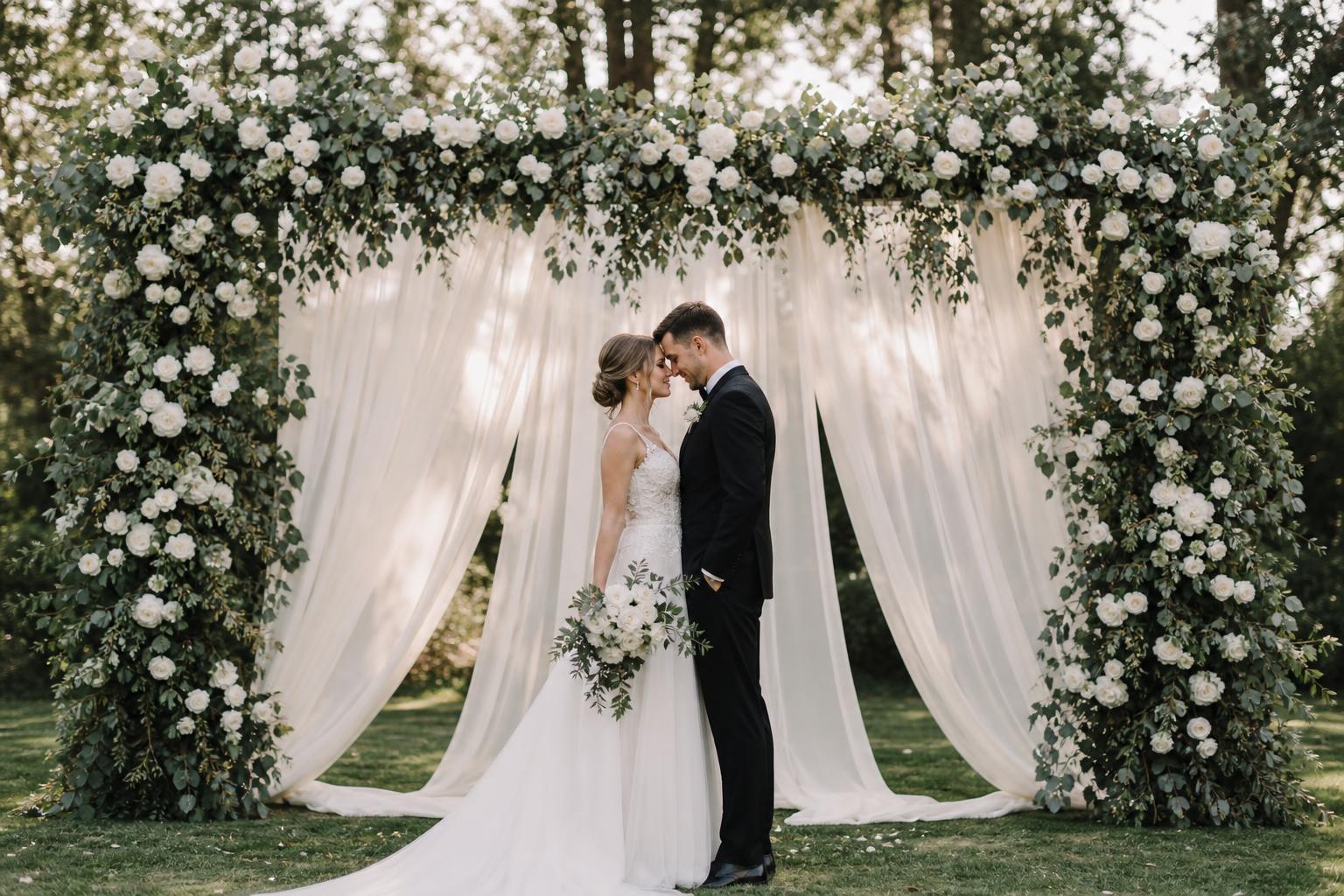
In a garden setting, a floral arch often works better than a heavy wall because it frames the landscape instead of blocking it. Roses, peonies, and controlled greenery help the ceremony feel dressed while still allowing the surroundings to participate in the image. It is a romantic solution for couples who want softness without losing the natural context.
Common mistakes that make this harder
- Choosing a backdrop before considering venue size and layout
- Using too many themes at once, such as mixing rustic, glam, and modern elements together
- Ignoring lighting changes between ceremony and reception
- Adding props and signage until the background feels busy
- Focusing only on inspiration images instead of guest movement and photography angles
- Assuming DIY is always easier or cheaper
These mistakes are common because couples are trying to solve several design problems quickly. The fix is not perfection. It is editing. A backdrop becomes more powerful when fewer decisions are competing inside it.
The simplest way to elevate the look
If you want a backdrop to feel more luxurious without making it more complicated, focus on three things: one strong material, one clear color story, and one defined purpose. That may mean a greenery backdrop for portraits, chiffon draping for the ceremony, or a lighted panel for the photo booth. Luxury often comes from coherence, not abundance.
This is also where recognized wedding voices and brands become helpful reference points. The Knot leans into variety and personalization, Sunset highlights Instagrammable floral moments, Prairie Hive emphasizes ceremony-elevating designs, and FixThePhoto shows how backdrop ideas can map to different themes. The underlying lesson is consistent: the best wedding backdrop ideas are the ones that support the experience of the day, not just the image of it.
Backdrop success checklist
- Decide whether the backdrop is for the ceremony, portraits, a photo booth, or multiple uses
- Match the style to the venue before choosing materials
- Consider lighting conditions for both day and evening
- Choose a palette that connects with florals, attire, and signage
- Review whether DIY or rental makes more sense for your timeline
- Plan placement around guest flow and photography angles
- Keep one backup option if the wedding is outdoors
- Edit out anything that adds clutter without improving the experience
A well-chosen backdrop does more than fill a wall or frame a photograph. It creates visual confidence, supports guest interaction, and helps the wedding feel composed from every angle. Once you begin thinking about it that way, the decision usually becomes much easier.
FAQ
How do I choose between a ceremony backdrop and a photo booth backdrop?
Start by deciding which moment matters most visually and logistically. A ceremony backdrop should frame the couple and support the setting from a distance, while a photo booth backdrop needs close-up texture, enough room for groups, and easy guest access. If one design must do both, fabric draping, greenery, or a versatile floral installation usually works better than a highly specific theme piece.
What are the most versatile wedding photo backdrop ideas?
Floral walls, greenery backdrops, and fabric draping are the most versatile because they suit many wedding styles and photograph well in both portrait and guest-photo settings. They also adapt more easily to different venues than highly themed or overly decorative setups.
Is a floral wall always the best choice for wedding photos?
No. A floral wall is strong when the space needs softness and visual fullness, but it can feel too heavy in some settings or unnecessary in a naturally beautiful garden venue. In those cases, a floral arch, greenery installation, or minimalist backdrop may feel more balanced.
Should I DIY my wedding backdrop or rent one?
DIY works best when the design is simple, the materials are manageable, and you have time to test the finished look before the wedding. Rental is often the better choice for larger or more central backdrops because it reduces setup stress and usually offers a more polished result, especially for photo booth or ceremony focal points.
What backdrop materials photograph best?
Materials with visible texture usually photograph best because they add depth without overwhelming the people in front of them. Chiffon, velvet, tulle, greenery, florals, and softly lit surfaces tend to create a more dimensional result than flat backgrounds, especially when lighting is considered early.
How far in advance should I plan my wedding backdrop?
Plan it early enough that it can be coordinated with the venue, photography priorities, and overall décor palette, rather than treated as a last-minute add-on. Backdrop decisions affect lighting, layout, rentals, and timing, so they work best when made as part of the broader styling plan.
How can I make a backdrop feel personal without making it look busy?
Choose one story element and let it lead. A custom quote, map-inspired detail, heritage reference, or curated signage can add meaning, but using several at once often creates clutter. Personalization feels most elegant when it is selective and aligned with the wedding’s color palette and style.
What should I do if my venue has difficult lighting?
Choose a backdrop that holds shape and texture even when the light changes, such as greenery, florals, layered fabric, or a softly lighted design. If the event moves into the evening, fairy lights or starry details can help maintain atmosphere, but the backdrop should still work with the existing venue lighting rather than depend on one dramatic effect.
Can I reuse my backdrop for more than one part of the wedding?
Yes, and this is often one of the smartest planning choices. Fabric draping, greenery installations, and some floral designs can move from ceremony framing to portraits or a photo booth area later, which helps stretch the design budget while keeping the wedding visually cohesive.