Groomsman Photo Ideas for a Natural Wedding
The most memorable wedding party photos rarely happen by accident. The best groomsman photo ideas feel relaxed, look intentional, and fit the rhythm of the day without pulling the groom and his friends away from the celebration for too long. Whether the mood is classic, playful, candid, or fashion-forward, the strongest images usually come from a simple combination: coordinated attire, a clear shot plan, a backdrop that suits the wedding style, and a photographer who understands how to guide group dynamics without making everyone look stiff.
Groomsmen photos do more than fill a gallery. They tell part of the wedding story: the anticipation of getting ready, the bond between the groom and his best man, the group energy before the ceremony, and the visual impact of suits, ties, boutonnières, and carefully chosen details. If you are deciding which groomsman photo ideas to include in your timeline, it helps to think beyond inspiration alone. The right photos should work for your venue, your budget, your personalities, and the amount of time you realistically have on the wedding day.
Why groomsmen photos deserve real planning
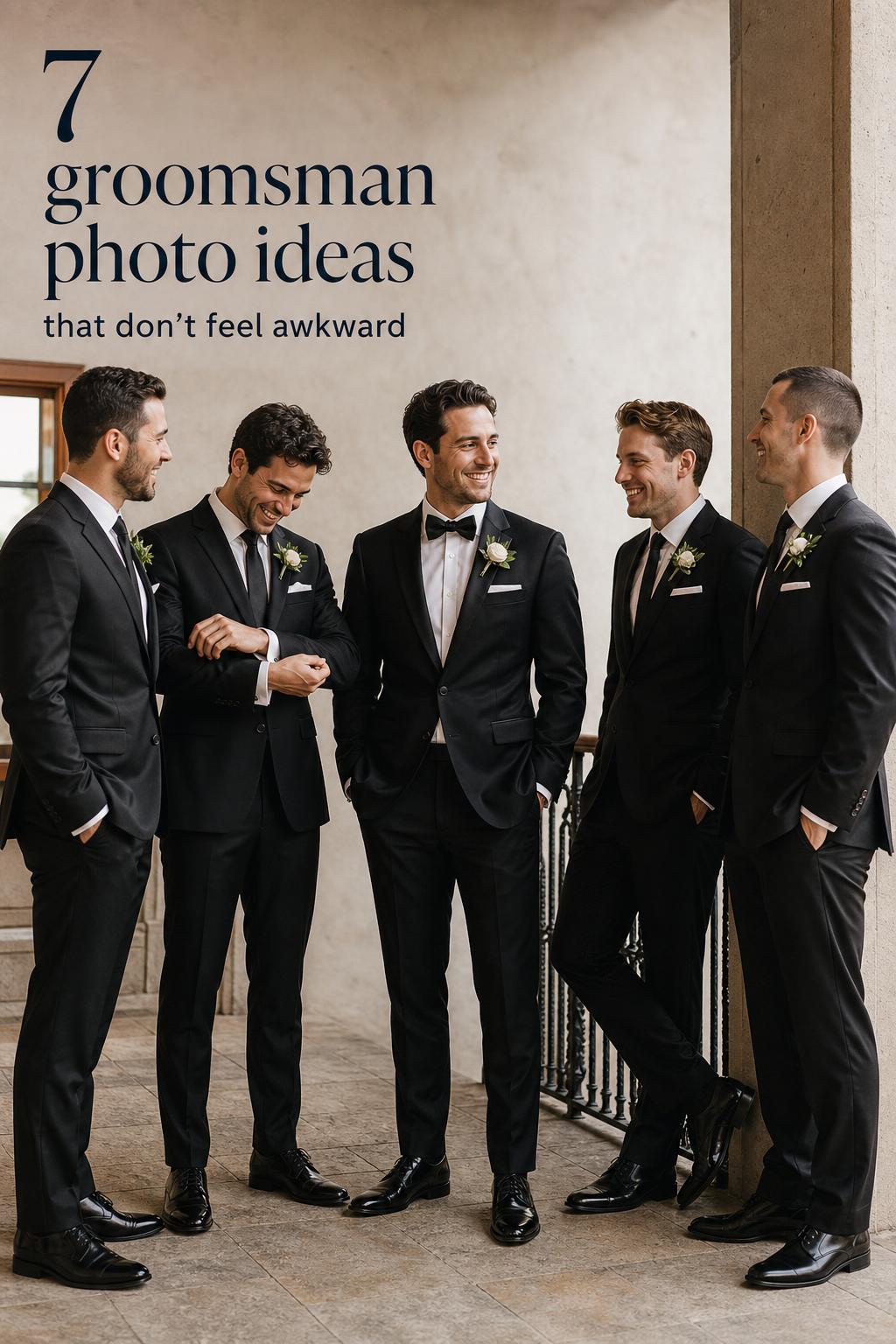
Wedding party portraits often move quickly, which is exactly why they need structure. Without a plan, this part of the day can turn into rushed group shots in a dim room or a random series of poses that do not match the overall wedding aesthetic. When these images are planned well, they balance formal portraits with candid moments, highlight the groom’s closest people, and create visual continuity with the rest of the wedding photography.
Best for: couples who want a gallery that feels cohesive rather than pieced together. This matters especially for weddings with a defined style, such as modern minimalist, rustic barn, outdoor garden, hotel ballroom, seaside, or urban city celebrations.
Turn wedding inspiration into a plan you can actually follow.
Zarellea brings your guest list, budget, vendors, and day-of details into one shared space — so no beautiful idea gets lost in the shuffle.
Why it works: the groom and groomsmen already have natural chemistry, so they do not need overly complicated concepts. A few well-chosen setups usually photograph better than a long list of disconnected ideas.
How to make it work: decide in advance how much of the gallery should feel formal and how much should feel candid. A balanced approach often works best: one set of classic portraits, one set of movement-based shots, one or two detail images, and a few spontaneous interactions.
Budget tip: if your photography coverage is limited, prioritize the photo ideas that can be captured in the same location with minimal setup changes. That protects your timeline and often produces more relaxed expressions.
Common mistake to avoid: leaving all decisions until the photographer arrives. Even an excellent photographer works more efficiently when the couple has already thought through attire coordination, location options, and the mood they want.
Real-life styling tip: ask the best man to help gather jackets, ties, boutonnieres, and any accessories before the photo session starts. Small delays with missing items can eat up the portrait window faster than most couples expect.
Start with the getting-ready story
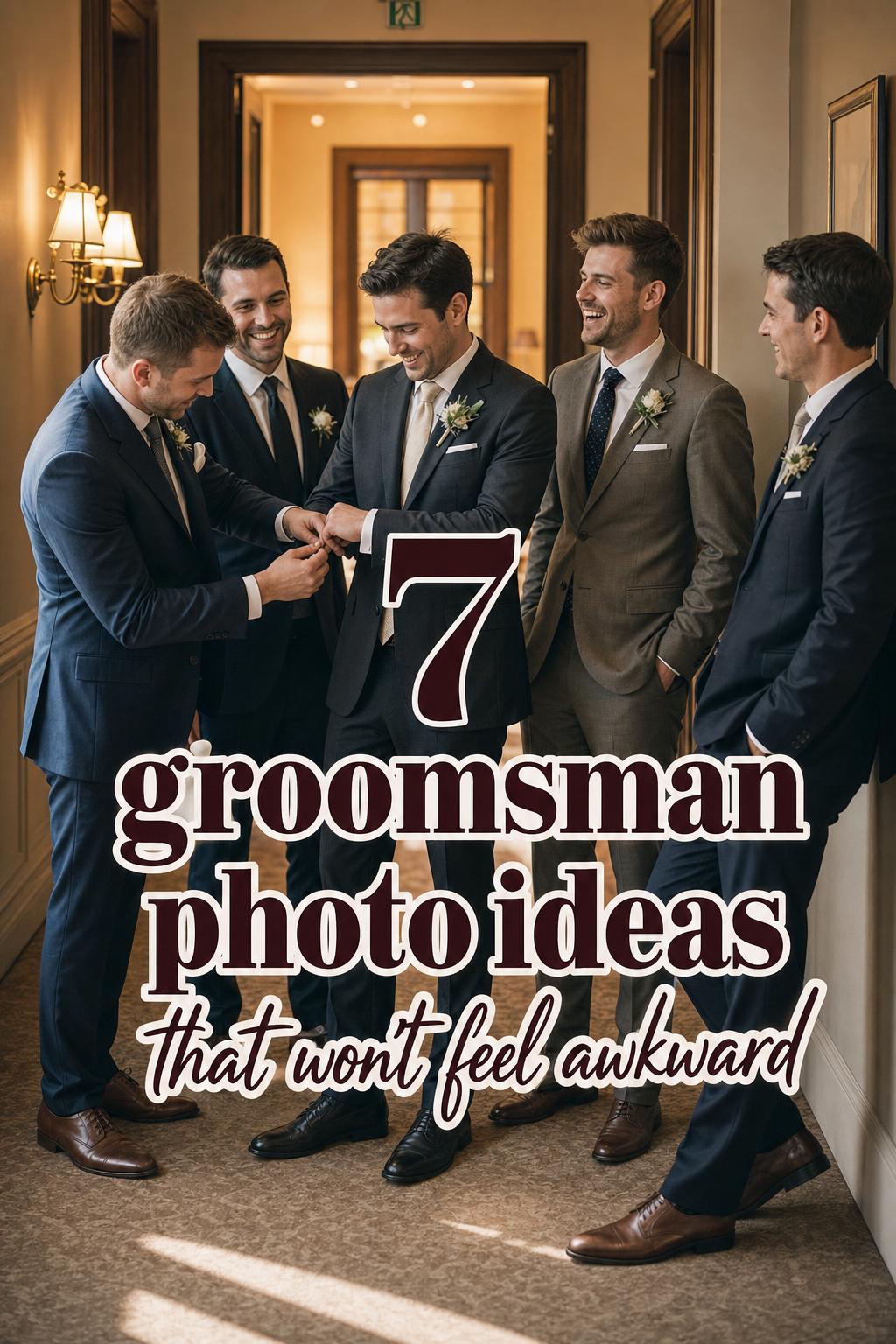
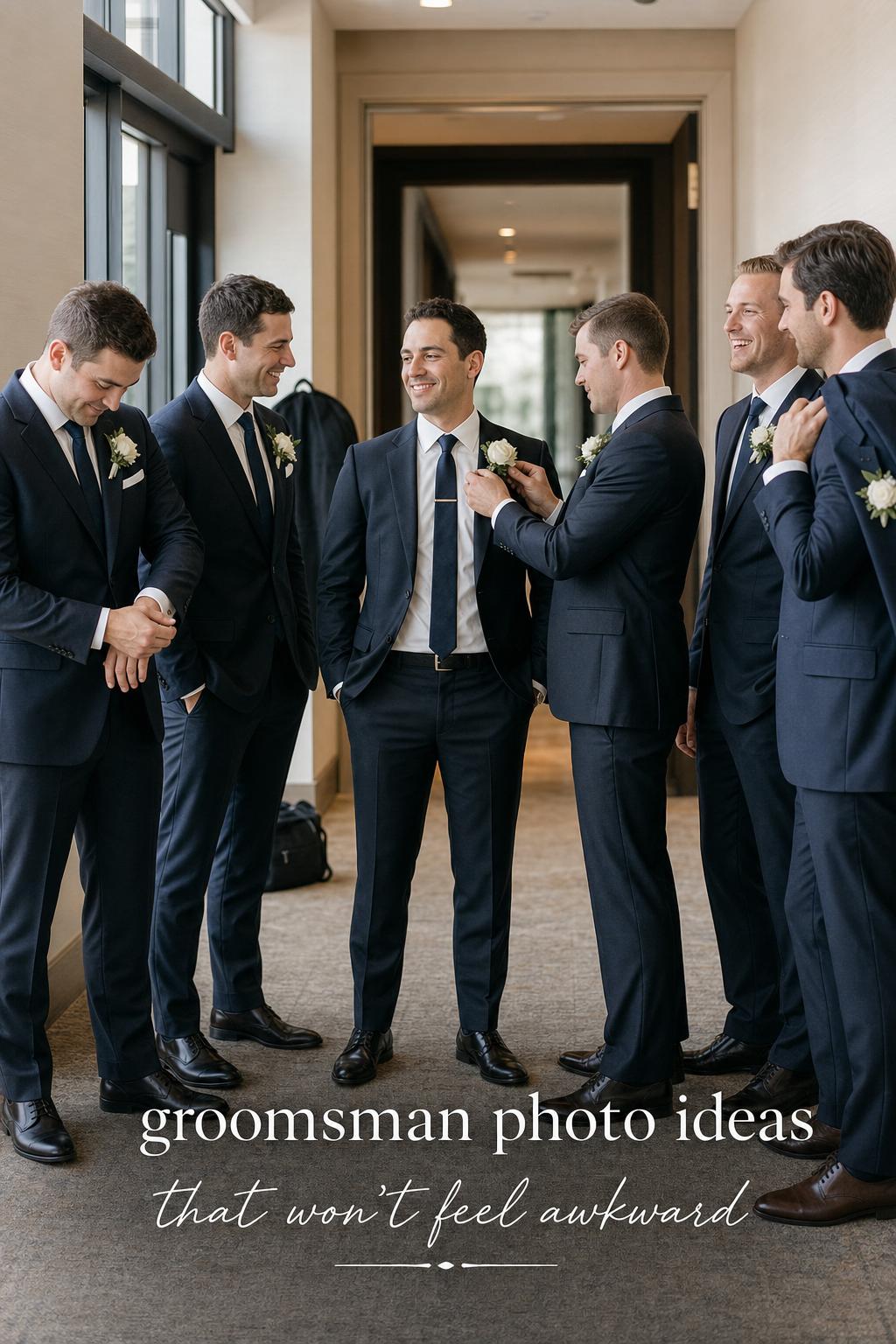
Some of the most effective groomsmen photo ideas happen before anyone lines up for formal portraits. Getting-ready shots add context to the day and soften the transition into posed photography. They also help the groom and groomsmen ease into being photographed, which often leads to better expressions later.
Buttoning jackets and adjusting ties
This is one of the simplest ideas, but it consistently works because it gives everyone something to do with their hands. The groom in the center while his groomsmen straighten a tie, button a jacket, or adjust cufflinks creates a natural, layered frame. It also puts suits and accessories into focus without making the image feel like a retailer campaign.
Best for: hotel rooms, prep suites, and indoor wedding mornings where the group is already dressed but not yet heading to the ceremony.
Budget tip: choose the neatest area in the prep space rather than upgrading to a larger room just for photos. A clean wall, doorway, or uncluttered window area is often enough.
Common mistake to avoid: photographing this in a crowded or messy room. Bags, food containers, and extra hangers can distract from the image.
Accessory detail photos with personality
Detail shots are not only for the couple’s rings or invitation suite. Accessories such as ties, boutonnières, cufflinks, and suit details can anchor the visual style of the groomsmen gallery. A close-up of coordinated details also helps connect wedding party fashion to the rest of the day’s design.
Best for: weddings where attire coordination is part of the overall concept, including color palette-driven celebrations and more fashion-focused wedding styles.
How to make it work: keep the accessories grouped with intention. If the groomsmen are wearing coordinated ties and boutonnières, make sure they are properly pinned and straight before the photographer moves in for close shots.
Real-life styling tip: boutonnières often rotate or droop after being pinned quickly. Check each one immediately before the close-up shots instead of assuming they all still look neat.
The groom with his wedding party before the ceremony
A quiet standing portrait in the prep space, hallway, or outside the venue is one of the most useful images in the gallery. It captures anticipation without asking for a big performance. The mood can be serious, relaxed, or lightly conversational depending on the wedding style.
Why it works: before the ceremony, clothing is still crisp, energy is focused, and there is often a natural sense of momentum in the room. That gives the image emotional weight without needing props.
Classic groomsmen portraits that never feel dated
Not every wedding party photo needs a joke or a dramatic setup. Classic group shots remain essential because they age well, work in albums, and give families the polished portrait they often expect. The key is choosing a setup that looks composed without becoming rigid.
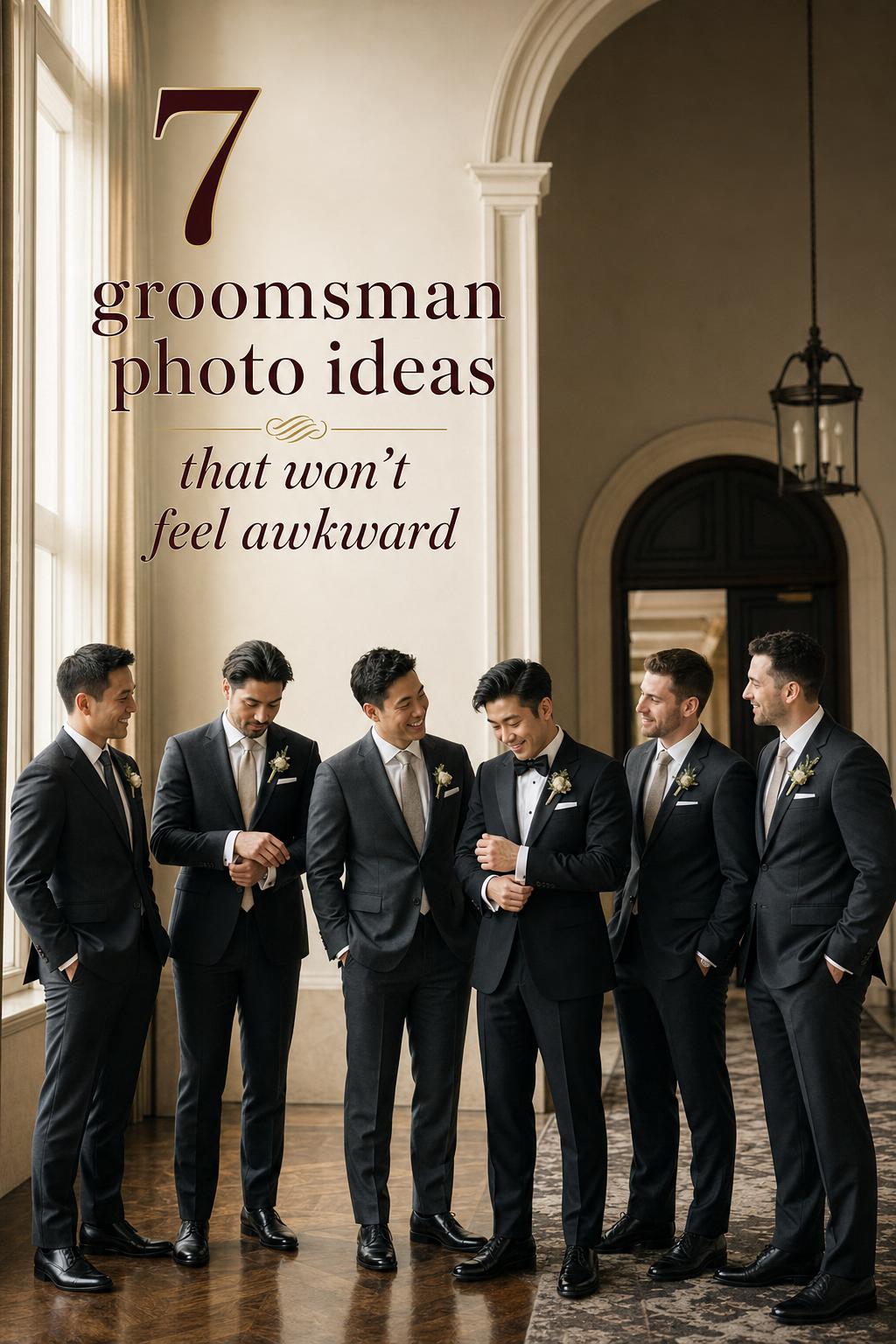
The groom centered with the group symmetrically framed
This is the foundation portrait for most wedding party galleries. The groom stands in the center, with groomsmen arranged evenly on either side. A clean wall, doorway, staircase, or architectural feature works especially well because the backdrop reinforces balance.
Best for: formal weddings, hotel ballroom celebrations, historic venues, and couples who want one dependable portrait for printing and framing.
How to make it work: pay attention to spacing. If the group stands too close, the image feels cramped. Too far apart, and the group loses visual unity. Coordinated stance and jacket buttoning also matter more in a symmetrical shot.
Common mistake to avoid: mixing very casual body language with a highly formal composition. If the setup is structured, the posture should support that mood.
The straight-on lineup
A lineup portrait has a slightly editorial feel and works particularly well when attire is a visual priority. This is where coordinated suits, ties, and accessories earn their place. Retailer-inspired styling approaches, including the kind of polished outfit coordination associated with fashion-focused wedding content from brands like Kennedy Blue and guidance similar to Plan A Wedding’s attire planning approach, translate very well into this setup.
Best for: couples who invested in a unified look for the groom and groomsmen and want the clothing details to read clearly in photos.
Budget tip: if you cannot style every accessory to perfection, focus on the elements that are most visible in group portraits: jacket fit, tie alignment, boutonnières, and shoe consistency.
The staircase or doorway portrait
Using a staircase or doorway creates natural depth without needing much decoration. It is one of the most practical groomsmen poses for photos because the architecture does part of the composition work. Stairs can help stagger height, while a doorway creates a clean frame around the group.
Best for: historic venues, hotels, and indoor locations with attractive built-in backdrops.
Common mistake to avoid: forcing too many people into a narrow entryway. If the group looks squeezed, the background stops helping and starts competing.
Real-life styling tip: on stairs, ask everyone to angle their feet consistently. Small inconsistencies in leg position become surprisingly noticeable in wide group shots.
Movement-based shots that bring the group to life
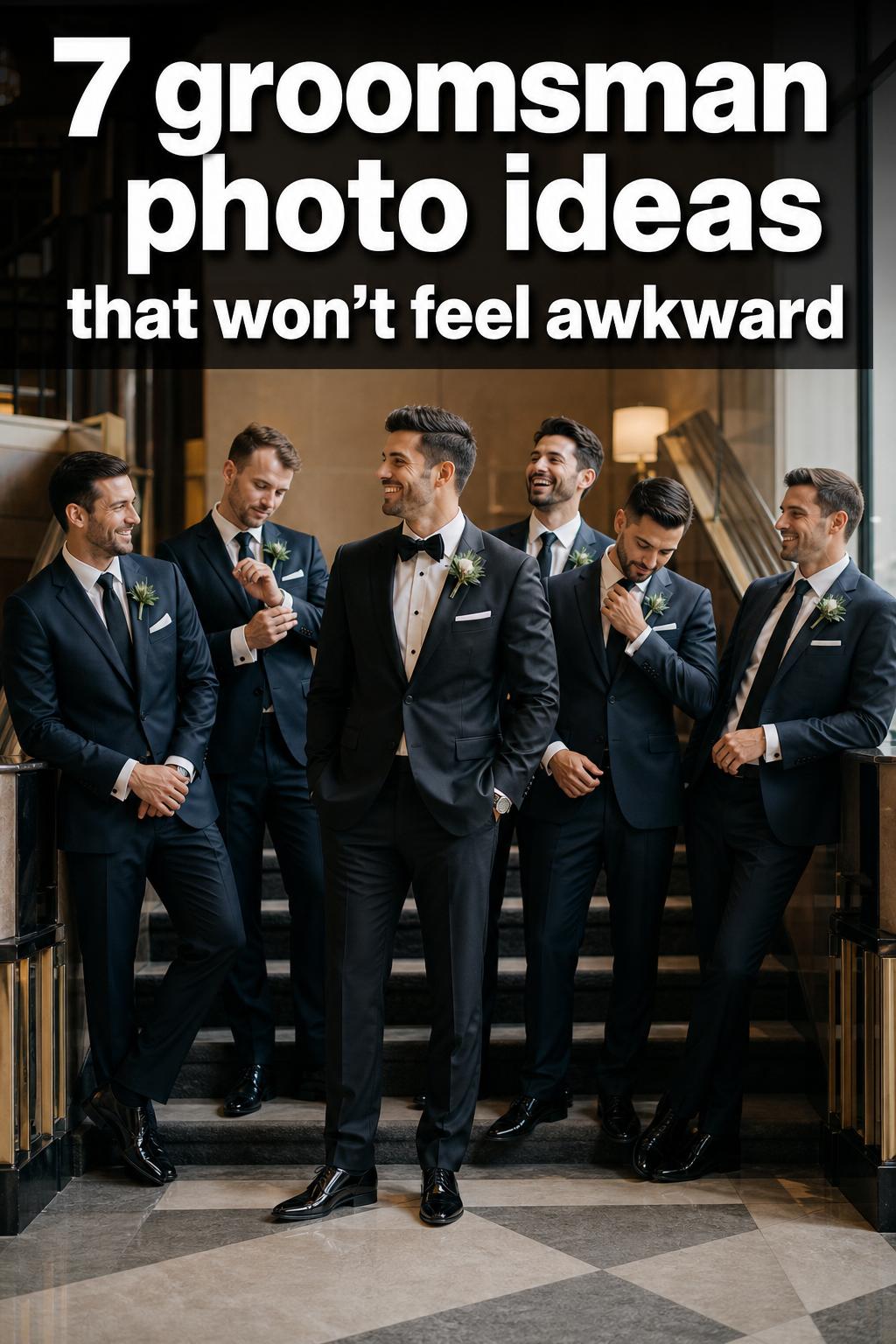
Some of the strongest wedding party photography ideas come from motion. Movement breaks stiffness, especially for people who feel awkward in posed portraits. These images also bring variety to the gallery and work well alongside more formal shots.
Walking toward the camera
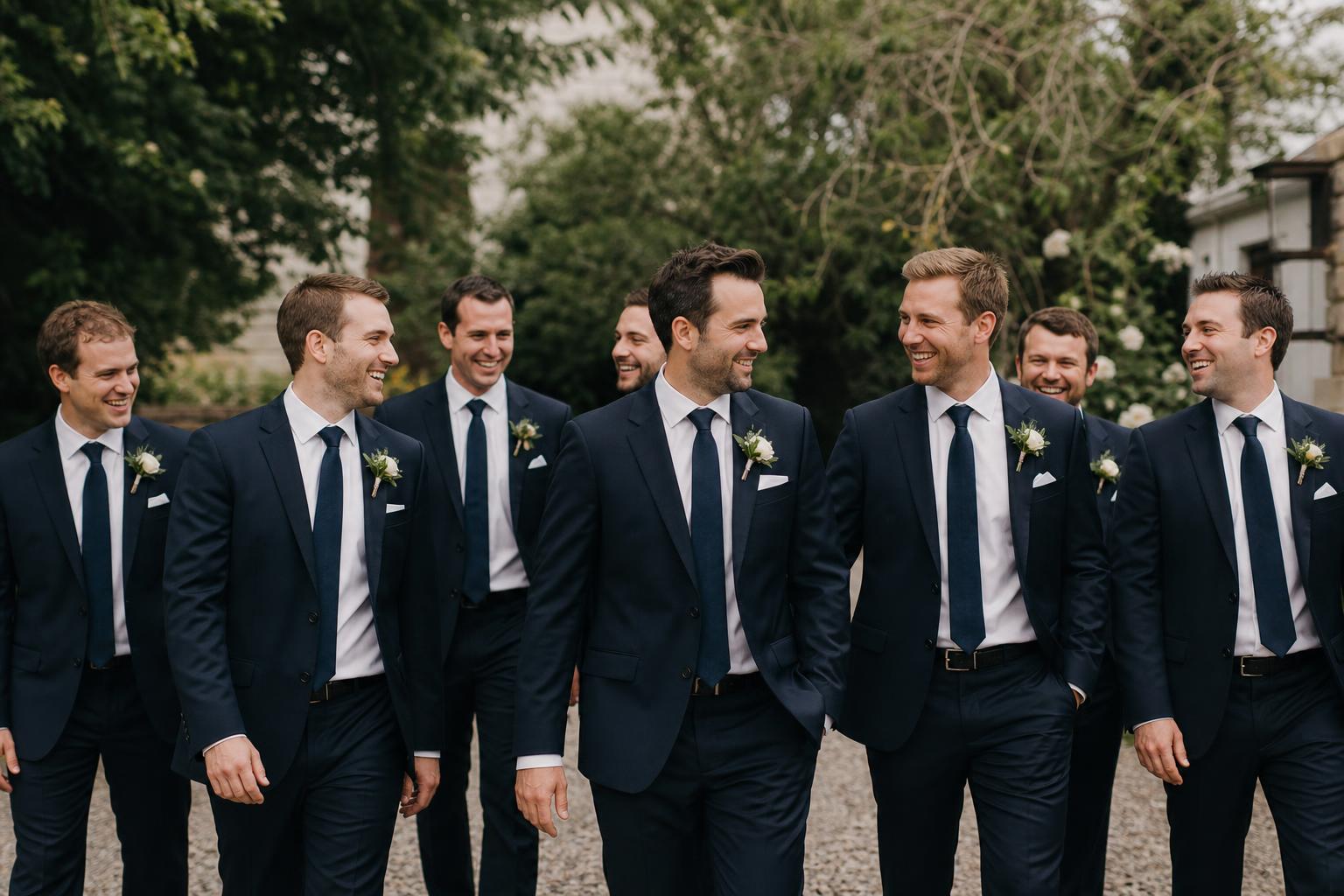
This is one of the most reliable fun groomsmen photo ideas because it feels natural and requires very little acting. The groom and groomsmen simply walk together, ideally at an easy pace, while talking or looking ahead. It can feel confident, relaxed, or slightly cinematic depending on the setting.
Best for: outdoor paths, city sidewalks, venue driveways, garden walkways, and spacious hallways.
Why it works: motion gives hands and posture a purpose, which reduces stiffness. It also creates a more candid look even when the shot is planned.
How to make it work: avoid asking everyone to march in sync. A natural walking rhythm usually photographs better than over-coordinated steps.
Walking away for a relaxed editorial feel
A back-view or partial-turn walking shot can be useful when the venue has a strong setting worth featuring. It places the wedding party in the environment rather than treating the location as an afterthought.
Best for: venues with scenic grounds, urban skyline views, seaside paths, or a distinctive approach to the ceremony space.
Common mistake to avoid: choosing this shot in a cluttered service area or parking lot just because it is nearby. If the backdrop matters, it needs to be intentional.
Small interactions instead of forced candids
When couples ask for candid groomsmen shots, what usually works best is lightly directed interaction. The photographer might prompt a conversation, a shared laugh, or a quick exchange with the best man rather than waiting for random moments. This keeps the image lively while still feeling believable.
Best for: groups that already have easy chemistry and do not need much direction.
Real-life styling tip: candid-style shots are easier after one or two formal portraits. Once the group knows the photographer’s rhythm, expressions usually loosen naturally.
Playful concepts that still suit the wedding
Humor has a place in wedding photography, especially when it reflects real group dynamics rather than internet trends copied without context. The most successful playful images still look connected to the wedding day. They feel like the group, not like a separate photo shoot dropped into the middle of the timeline.
Reactions around the groom
A classic playful setup places the groom in a calm pose while the groomsmen react around him with exaggerated admiration, mock surprise, or celebratory energy. It is lighthearted without needing extra props, and it works especially well if the groom is comfortable being the center of attention for a minute.
Best for: lively wedding parties, less formal receptions, and couples who want at least one image that feels clearly different from standard portraits.
Common mistake to avoid: pushing the joke too far so the image turns chaotic. The groom should still remain visually readable as the focal point.
Props used with restraint
Props can work, but they need a reason. WeddingWire-style humor-driven inspiration often shows how props can inject personality, yet the strongest results come when the item fits the tone of the group and does not overshadow the people in the frame. Simple signs, hats, or minimal prop moments can be effective if they are quick to use and easy to remove.
Best for: casual weddings, themed celebrations, and couples who know the group enjoys a more relaxed tone.
Budget tip: borrow or reuse props rather than buying a large set for a single shot. One well-chosen item is usually more effective than several novelty pieces.
Common mistake to avoid: planning too many prop-based images. They can date more quickly than classic portraits and often take longer to organize than expected.
Playful ideas need consent too
Any prank-style or exaggerated concept should be comfortable for everyone involved. This matters not only for the groom, but for every member of the wedding party. Group humor lands best when no one feels singled out or pressured into a pose that clashes with their comfort level.
Why it works: trust makes photos look relaxed. If someone feels uneasy, that tension usually shows on camera.
Real-life styling tip: if you want a funny shot, mention it before the wedding day rather than surprising people during portraits. A quick heads-up prevents awkward hesitation when time is limited.
Attire decisions that change the entire gallery
Coordinated clothing is not only a fashion choice. It directly affects how cohesive the photos feel. Articles focused on groomsmen attire, color palettes, and styling repeatedly point to the same idea: visual unity helps portraits look intentional. That does not mean every groomsman must look identical, but the group should clearly belong together.
When matching works best
Fully coordinated suits and ties often photograph best in formal group portraits and lineup shots. Matching works especially well in modern, classic, or hotel-based weddings where a clean, polished result is the goal.
Why it works: the eye reads the group quickly, which keeps attention on expressions and composition rather than on outfit inconsistencies.
Common mistake to avoid: coordinating color but overlooking fit. Even the best palette loses impact if jackets pull, trousers break unevenly, or ties sit at different lengths.
When variation looks better
Some weddings benefit from slight variation in attire, especially if the dress code is less rigid or the wedding style is more relaxed. The key is keeping one or two anchors consistent, such as suit color, tie family, or boutonnière style. This approach can feel more natural in outdoor, rustic barn, or destination-style settings.
Best for: weddings that want cohesion without a highly uniform look.
Budget tip: if full outfit matching is not realistic, invest in consistency where the camera notices most. Shared ties, boutonnières, or jacket color can unify the group even if some other elements differ slightly.
Color palette and backdrop should work together
Attire choices and backdrops should support each other. Dark suits against a dark interior can feel heavy if there is not enough separation, while lighter or more contrasting surroundings can help the group stand out. In outdoor settings, coordinated attire often reads more clearly because natural backgrounds provide texture without overwhelming the clothing.
Real-life styling tip: before finalizing groomsmen outfits, think about where portraits will likely happen. A strong outfit choice on its own may not deliver the same result once placed against a dim prep room or a heavily patterned venue wall.
Choose backdrops with the venue in mind
Many groomsmen photo ideas become much stronger when matched to the right venue type. The setting should not feel random. Even a simple portrait gains depth when the backdrop reflects the wedding atmosphere.
Hotel ballroom and prep-suite weddings
Hotels often provide practical options: hallways, lobby corners, staircases, and prep spaces. The strongest hotel photos usually rely on structure and styling rather than on complicated concepts. Clean backgrounds, straight lines, and symmetrical posing tend to work especially well here.
Best for: formal weddings, winter weddings, and couples who need weather-proof portrait options.
Common mistake to avoid: assuming the prep room alone will carry the gallery. Even in a hotel, it is worth identifying at least one secondary backdrop such as a hallway or architectural feature.
Outdoor garden and venue grounds
Garden spaces, open lawns, and outdoor paths work especially well for walking shots, candid interaction, and looser group arrangements. The atmosphere is often less formal, which helps groomsmen relax. These spaces also give more flexibility for composition.
Best for: spring and summer weddings, outdoor ceremonies, and couples who prefer softer, more natural wedding party photography.
Budget tip: use the venue grounds you already have instead of adding rentals or décor for portraits. Natural setting and good spacing usually do enough.
Rustic barn and textured venue settings
Rustic barn venues and textured backdrops can make straightforward portraits more visually interesting. Wood, stone, and weathered architectural surfaces often pair well with both classic and candid groomsmen poses. The main consideration is keeping the photo from becoming too visually busy.
How to make it work: if the background has strong texture, simplify the pose. A clean arrangement often balances a more detailed setting.
City and destination-inspired settings
Urban skyline areas, seaside locations, and historic venue surroundings are underused compared with more generic wedding party backdrops, but they can make the gallery feel much more specific to the day. A city setting works well for editorial lineup shots and walking portraits, while seaside or destination-style settings pair naturally with looser, candid images.
Best for: couples who want the wedding location to be part of the story rather than just the place where the ceremony happens.
Common mistake to avoid: selecting a scenic backdrop that takes too long to reach. If travel interrupts the timeline, the stress may show in the photos.
Lighting and composition choices that improve every group shot
Even the best pose can fail in poor light or a weak composition. Across wedding photography resources, one pattern is clear: strong groomsmen photos depend on practical fundamentals just as much as on creative concepts. This is especially true with groups, because uneven lighting or awkward spacing becomes more visible when multiple people share the frame.
Use clean light before chasing complicated ideas
If you have to choose between an elaborate setup and good light, choose the light. Soft, even lighting helps suit details, facial expressions, and skin tones read more cleanly. In indoor situations, simple light support such as reflectors or softboxes can help if the photographer uses them, but the easiest starting point is often just positioning the group in the best available natural or balanced light.
Why it works: wedding party portraits need consistency across faces and clothing. Uneven lighting can make one side of the group disappear or create unnecessary editing challenges later.
Give the group shape
Good composition is rarely about a perfect straight line alone. Slight changes in height, angle, and spacing can keep a group portrait from looking flat. Staircases, staggered placement, or subtle turns of the body can create depth without making the image feel too stylized.
Real-life styling tip: if one pose keeps looking stiff, ask some of the groomsmen to shift weight to one leg instead of standing fully square to the camera. That tiny change often makes the group look less rigid immediately.
Retouching should refine, not rewrite the moment
Post-processing and retouching can polish a strong image, especially when small distractions, uneven tones, or minor background issues need attention. Services and educational resources that focus on editing, such as Retouching Labs and FixThePhoto, point toward a useful principle: editing supports the photograph, but it does not replace good posing, lighting, or composition.
Best for: final gallery refinement, especially for formal portraits and detail-driven images.
Common mistake to avoid: expecting editing to solve avoidable on-site issues such as poor spacing, crooked ties, or cluttered backgrounds.
A practical shot list couples can actually use
Instead of trying to recreate every trending pose, build a compact list that covers mood, fashion, interaction, and setting. This gives the photographer enough structure while leaving room for spontaneous moments.
- One getting-ready shot of the groom with his groomsmen
- One accessory or attire detail photo featuring ties, boutonnières, or cufflinks
- One classic centered portrait with the groom
- One full-length lineup portrait that shows the suits clearly
- One walking shot toward the camera
- One candid interaction with the best man or full group
- One venue-based portrait using a staircase, doorway, garden path, or outdoor backdrop
- One playful shot if it genuinely suits the group
Best for: couples who want variety without losing too much time between the ceremony and reception.
Budget tip: a focused list is especially useful when you have shorter photography coverage. It helps prevent spending too much time on lower-priority images.
How to adapt groomsmen photo ideas to different wedding styles
The same pose can feel entirely different depending on the wedding aesthetic. This is where thoughtful planning matters most. Rather than choosing photos in isolation, connect them to the atmosphere you want the whole day to carry.
For modern minimalist weddings
Lean into clean backgrounds, symmetrical portraits, and straightforward posing. Focus on fit, spacing, and a restrained color palette. Avoid overloading the gallery with props or highly exaggerated expressions that break the streamlined look.
For romantic garden weddings
Use more movement and interaction. Walking shots, relaxed conversation, and softer portrait arrangements tend to fit the atmosphere better than rigid lineup poses alone. Outdoor light and natural background texture will do much of the visual work.
For rustic or relaxed celebrations
Let the environment shape the gallery. Textured doors, barn exteriors, and open grounds can support a mix of classic and playful images. Keep the posing confident but not overly formal so the photos do not feel disconnected from the venue.
For more polished city weddings
Editorial lineup shots, walking portraits, and architectural backdrops usually feel strongest. If the location includes a skyline or strong city lines, use them with intention rather than as a quick background detail.
Planning around comfort, inclusivity, and real group dynamics
The most successful wedding party photos do not ask everyone to fit one narrow idea of how a groomsman should look or pose. Different body types, comfort levels, and personal styles all affect what will photograph well. A good plan respects those differences while still keeping the group visually cohesive.
Why it matters: when people are physically comfortable, they stand better, move more naturally, and look more like themselves. That is not only an emotional benefit. It improves the images in practical ways.
- Choose poses that allow slight variation in stance rather than forcing identical posture for every person.
- Make sure attire fits properly before the wedding day so no one is tugging at a jacket throughout portraits.
- Use a mix of formal and candid concepts so different personalities have moments that feel natural.
- Check in before any humorous or staged shot so no one feels pressured into the joke.
Real-life styling tip: if one groomsman is visibly less comfortable being photographed, place him in a setup that gives him a role, such as adjusting the groom’s jacket or walking with the group. Action often feels easier than standing still under attention.
Sharing, displaying, and getting more value from the photos
Once the wedding day is over, groomsmen photos continue to matter. They often appear in albums, framed prints, social posts, and shared galleries. That makes it worth capturing a mix of orientations, moods, and crop-friendly compositions. Some wedding tech and sharing-focused platforms, including WedPicsQR-style approaches, reflect a wider trend: couples want photos that are easy to share, not just beautiful in a long-form gallery.
Best for: couples who care about both keepsake value and practical sharing with friends and family.
How to make it work: ask the photographer to include at least one polished group portrait, one casual horizontal shot, and one image with enough breathing room for social-friendly cropping. That gives you more flexibility later without changing the portrait session dramatically.
Common mistake to avoid: focusing only on novelty shots. The playful image may get shared first, but the classic portrait is usually the one that lasts in albums and framed displays.
Tips for keeping the session efficient on the wedding day
Even excellent groomsman photo ideas can become frustrating if they are poorly timed. Wedding party portraits work best when they feel organized but not rushed.
- Photograph detail items before everyone starts moving between locations.
- Assign the best man to help gather the group quickly.
- Choose one indoor backup spot if weather may shift your plan.
- Keep playful or prop-based ideas until after the core portraits are finished.
- Match the number of photo concepts to the actual time in your schedule, not to the length of your inspiration board.
Why it works: the smoother the process feels, the more relaxed the expressions tend to be. Efficiency is not only about saving time. It directly affects the mood in the images.
Bringing it all together for a gallery that feels personal
The strongest groomsmen photos usually combine three things: a clear understanding of the wedding style, a realistic timeline, and a set of ideas that fit the actual group rather than a generic trend. A formal hotel wedding may call for polished lineup portraits and staircase compositions. A garden celebration may come alive in walking shots and candid interaction. A city wedding may feel most convincing with sharp attire, architectural lines, and movement through the location. None of these approaches is automatically better. The right one is the one that supports the day you are truly planning.
As you narrow down your favorites, think less about collecting the highest number of poses and more about capturing the rhythm of the wedding party honestly. The groom with his best man. The final adjustment of a tie. The confident group portrait. The shared laugh before the ceremony. Those are the images that usually stay meaningful long after the trend cycle moves on.
FAQ
What are the best groomsman photo ideas to prioritize if time is limited?
If your timeline is tight, focus on one getting-ready shot, one classic centered portrait with the groom, one full-length lineup, one walking shot, and one candid interaction. That combination gives you variety without requiring too many location changes or complicated setups.
Should groomsmen photos be posed, candid, or both?
The strongest galleries usually include both. Posed portraits give you polished, dependable images for albums and prints, while candid or lightly directed moments add energy and personality. A balanced mix tends to feel the most complete.
How do we make groomsmen photos look cohesive?
Cohesion usually comes from three choices: coordinated attire, a small number of well-matched backdrops, and a clear mood for the session. Even if the group is not dressed identically, shared elements like suit color, ties, or boutonnières help the photos feel intentional.
Are funny groomsmen photos worth including?
They can be, as long as they suit the group and do not replace the classic portraits. One or two playful images often add personality, but they work best when everyone is comfortable with the concept and the humor does not derail the timeline.
What locations work best for groomsmen photos?
Strong options include prep suites, hallways, staircases, doorways, garden paths, venue grounds, rustic architectural features, and city backdrops. The best location is usually one that fits the wedding style, has clean composition, and does not require extra travel during a busy part of the day.
How important is attire for wedding party photos?
Attire matters a great deal because it affects how unified the group looks in every frame. Fit, tie placement, boutonnières, and overall coordination often have more impact on the final result than couples expect, especially in formal portraits.
Can groomsmen photos work well in small indoor spaces?
Yes, if the space is chosen carefully. A clean wall, doorway, hallway, or uncluttered corner can work very well for classic portraits and getting-ready shots. The key is removing distractions and avoiding overcrowded compositions.
Do we need props for creative groomsmen photos?
No. Props are optional, not essential. Many of the best creative groomsmen photos rely on movement, interaction, composition, and styling rather than on extra objects. If you do use props, keep them minimal and relevant to the group’s personality.
How can we make sure everyone feels comfortable in the photos?
Choose a mix of formal and action-based poses, confirm outfit fit before the wedding day, and avoid surprise joke shots that put someone on the spot. People usually photograph best when they know what is happening and do not feel forced into a performance.
What is the biggest mistake couples make with groomsmen photos?
One of the most common mistakes is trying to fit too many ideas into too little time. That often leads to rushed movement between locations, uneven styling, and fewer strong images overall. A shorter, well-planned list usually produces a better gallery.