Wedding Jewelry Ideas for Bride: Styling Fixes
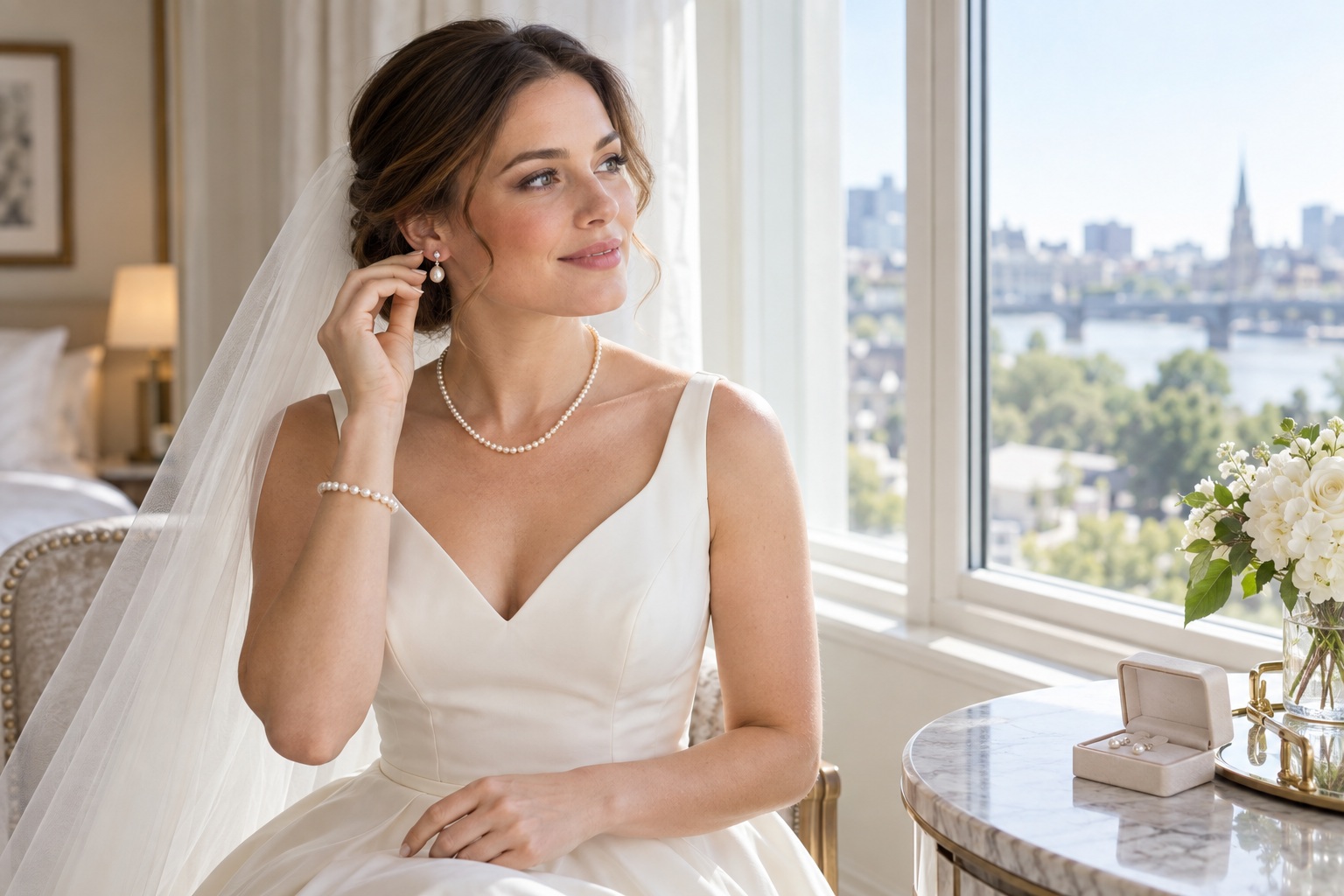
You can love a pair of earrings, a necklace, and a bracelet separately, then put them on with your wedding dress and feel that something is off. The problem is often not the jewelry. It is the relationship among the pieces, the neckline, the veil, and the hairstyle you will actually wear. A beautiful accessory can sit at the wrong height, disappear beneath hair, pull attention from a detailed bodice, or simply feel uncomfortable after an hour.
These wedding jewelry ideas for bride styling start with that real outfit problem. First, identify what the gown already says. Then choose one jewelry piece to lead, give every other piece a quieter role, and test the complete look while moving. You can wear pearls, colored stones, modern metal shapes, family jewelry, or almost no jewelry at all. The useful question is whether each item adds something you want when it meets the dress, not whether a bridal checklist says you should own it.
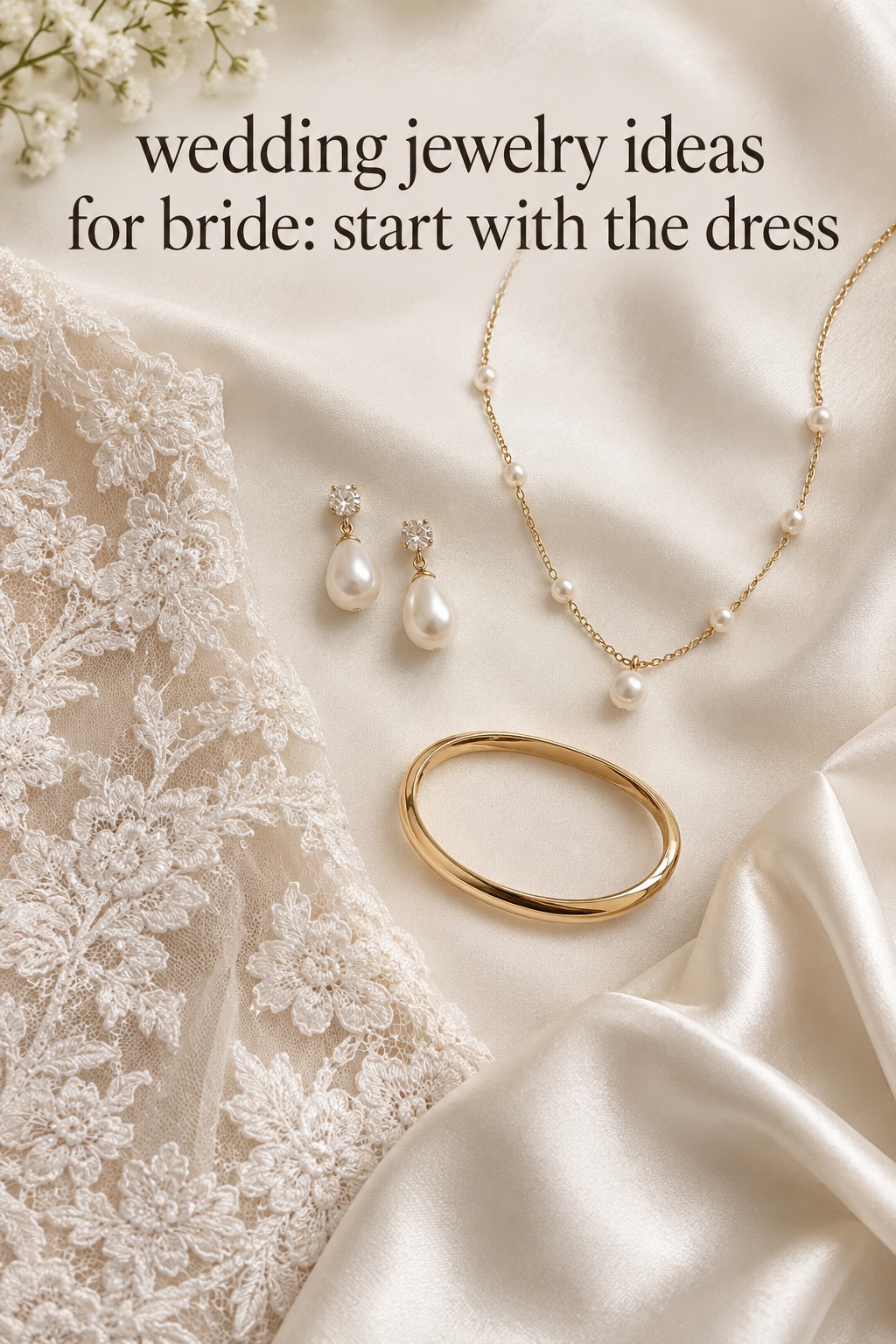
Why the jewelry feels wrong even when each piece is beautiful
Before shopping, put on the gown or study clear fitting photographs from the front, side, and back. Mark the strongest feature near your face. Is it an open neckline, a sculpted collar, sparkling straps, dense lace, or an embroidered sleeve? Then notice what your hair and veil will cover. A necklace can look perfect against a plain fitting-room dress but compete with a veil edge and crystal-trimmed bodice later. The conflict only appears when all of the parts are together.
Three problems account for many difficult looks. The first is competition: two or three prominent pieces all ask for attention in the same small area. The second is placement: a pendant falls onto the neckline, an earring ends exactly at a high collar, or a bracelet sits against a heavily embellished cuff. The third is movement: an earring touches the shoulder when you turn, a necklace catches in illusion mesh, or a bracelet slides over the hand while you hold flowers. A styling decision needs to solve both appearance and wearability.
Turn wedding inspiration into a plan you can actually follow.
Zarellea brings your guest list, budget, vendors, and day-of details into one shared space — so no beautiful idea gets lost in the shuffle.
Decide what you want the eye to notice first. It may be the dress’s neckline, your face, a pair of earrings, a family necklace, or a bracelet beside your rings. Give that feature space. If the gown has a highly worked neckline, earrings or a bracelet can supply sparkle without laying another line across the embroidery. If the gown is sleek and plain, a more expressive necklace or earring may give it the character you want. This is a choice about emphasis rather than an instruction to dress minimally.
Keep a quick record of your options: lead piece, supporting piece, item to skip, and reason. For example, “pearl drop earrings lead; slim bracelet supports; skip necklace because the lace collar is already a focal point.” That note is more helpful at a future fitting than a board full of unrelated product photos. It also keeps you from purchasing a piece simply because it looks bridal in isolation.
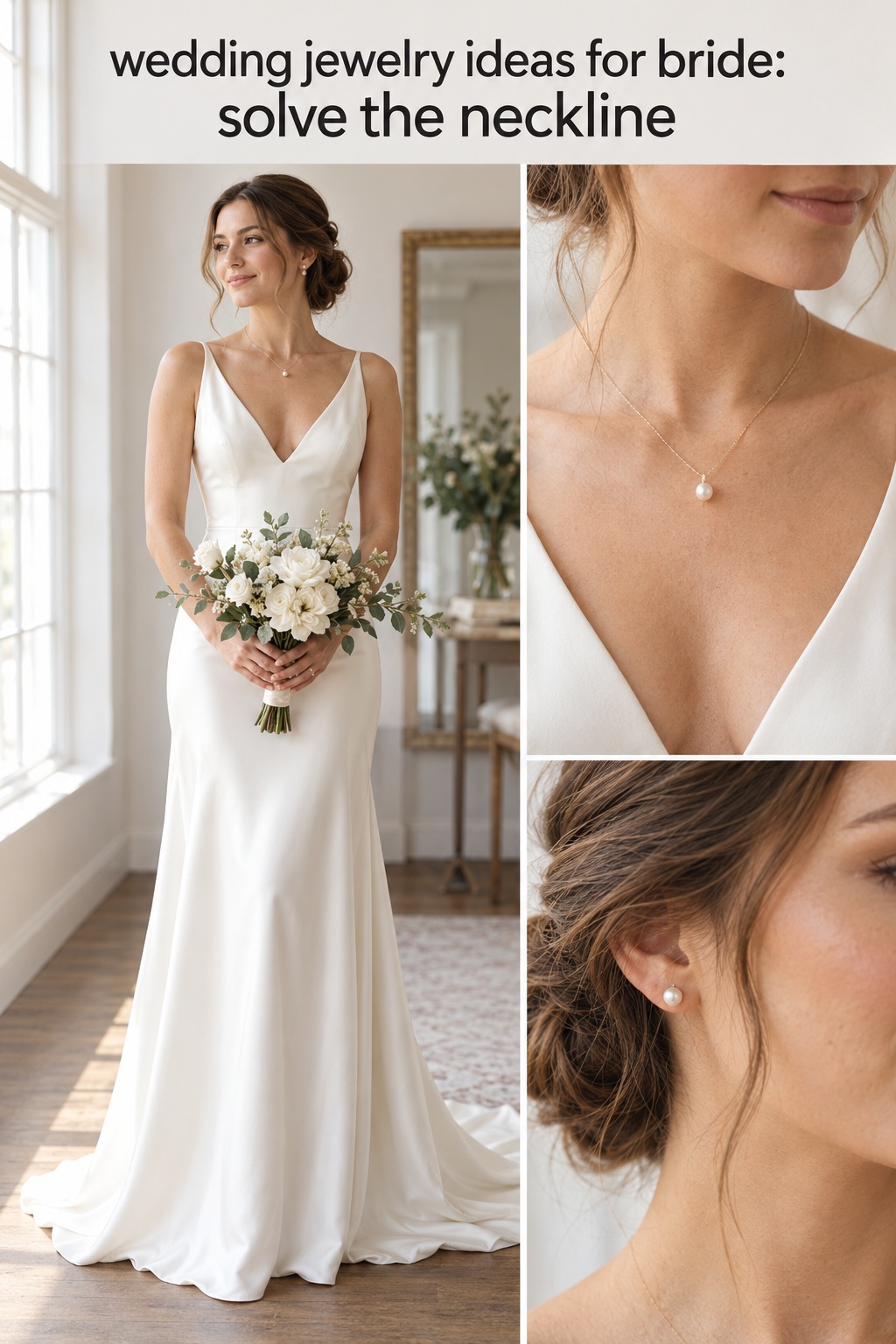
Fix the neckline and necklace conflict
Neckline charts are useful as starting points, but the actual depth, width, trim, and fabric matter more than the neckline’s name. A short pendant can look beautifully centered in one sweetheart gown and awkwardly touch another. A V-neck can support a pendant that echoes its line, a short necklace that sits above it, or no necklace at all. The Knot’s guide to jewelry with wedding dresses recommends balancing the neckline with the rest of the outfit, while its focused V-neck guide offers several different necklace lengths. Treat the possibilities as things to try, not a universal formula.
If your neckline is open and simple
A strapless, wide scoop, or clean square neckline leaves room for a necklace to be seen. Try one necklace at a time: a short strand, a small pendant, or a bolder piece if the bodice itself is restrained. Look at the whole silhouette from a few steps away. Does the necklace create a deliberate focal point, or does it cut the open area into awkward sections? If the necklace is the lead piece, smaller earrings can keep the upper body from feeling crowded.
Leaving the neckline bare is also a complete styling decision. With a sculptural pair of earrings, the open space can frame your face and the dress shape. This is especially useful if you plan to add a veil, cape, or detachable sleeve for the ceremony. A bare neckline does not mean the look lacks effort; it can make the chosen accessories easier to see.
If you have a V or plunge
Try two contrasting directions before deciding. One is a pendant or delicate drop that follows the V without landing on the fabric. The other is a short chain or collar that sits clearly above the deepest point. The best result depends on the V’s width, the position of any illusion panel, and your own proportions. Take a front photograph at normal standing distance rather than judging only in a mirror close-up. A necklace can look centered up close but vanish once the entire dress is in frame.
If there is illusion mesh, be especially attentive to contact between chain, setting, and fabric. A piece that repeatedly catches is not worth preserving for the sake of a planned image. Try earrings as the lead instead. This solution may also keep the plunge line clean if the neckline itself is what attracted you to the gown.
If your dress sits high on the neck
A high neck, bateau, halter, or heavily embellished illusion collar already creates a strong upper edge. Earrings are often the easier place to add interest because a necklace may have too little open space or may sit directly on detailed fabric. You can try a necklace if you love one, but assess whether it has a clear place and whether it stays there when you move. It should appear intentional, not squeezed into a gap.
Consider the back as well as the front. A high-front gown with an open back changes what guests see as you walk and during portraits. A back necklace is one possible accent if the dress, veil, and hairstyle leave space for it, but it needs a fitting with the complete look. If it twists, catches or competes with a dramatic back detail, skip it. Your dress can be the jewelry moment in that view.
If lace, beading or a shaped collar is the star
Separate visual detail from open skin. A sweetheart outline covered with embroidery does not offer the same calm space as a plain sweetheart bodice. A chain can vanish against lace or snag on surface decoration. In these cases, use a small earring to bring light near the face, or place your lead accessory at the wrist if the sleeves allow it. This is where the specific dress should overrule a broad neckline chart.
Choose earrings around hair, veil and dress detail
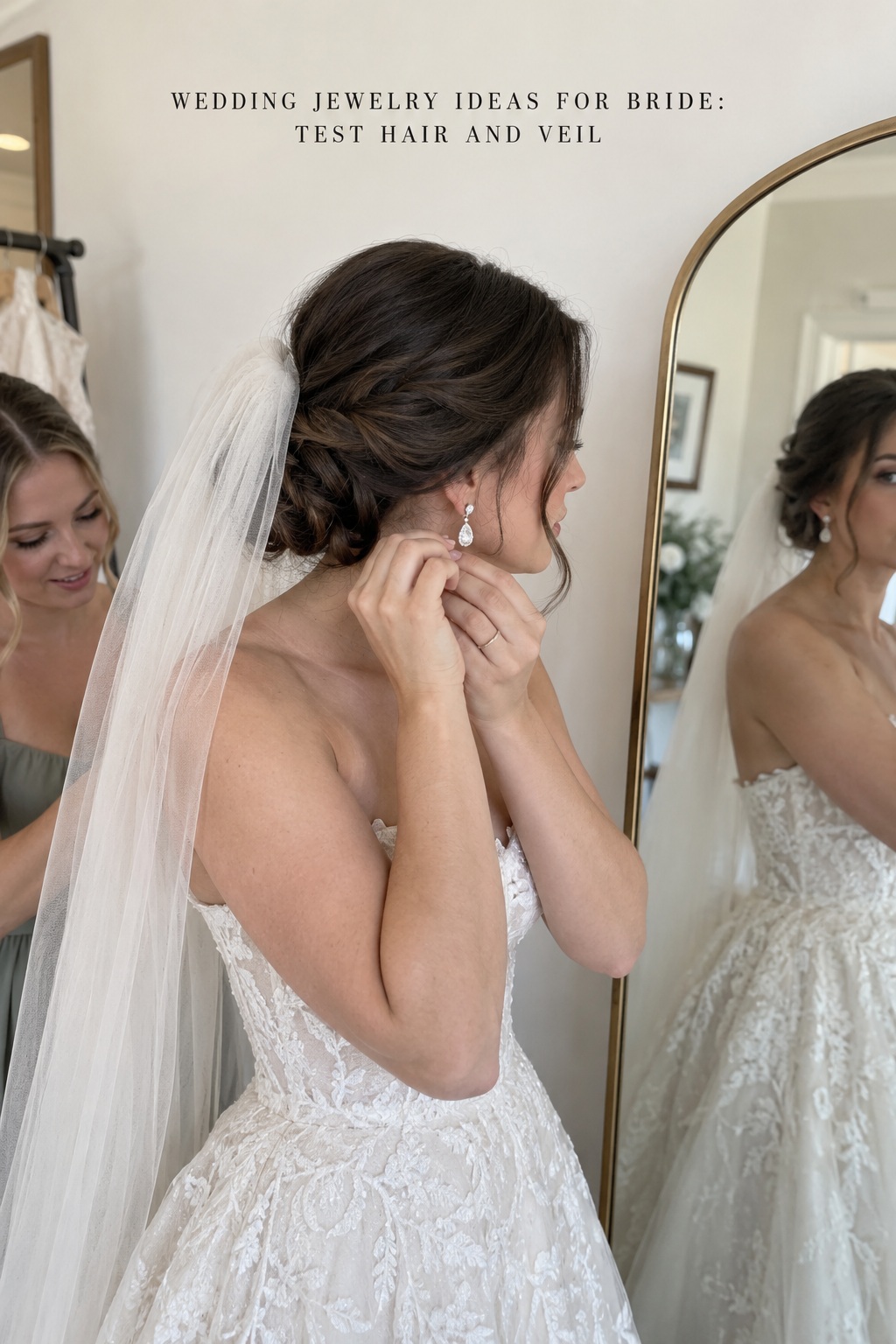
Earrings sit where guests look when they speak with you, but their effect changes with your hairstyle. A stud may be completely hidden beneath loose hair. A long drop may swing into a high collar or brush a shoulder. An updo can reveal an earring’s full shape, while a side part may expose one earring more strongly than the other. Try earrings after the hair plan is reasonably settled, or at least try them with your hair arranged in a similar volume and direction.
Start with visibility. If hair will cover both ears, try a slightly larger but light-feeling earring, a shape with movement, or an option that you can see beneath the hair from the front. If the hair is fully up, a small stud or pearl drop can still be expressive because nothing hides it. If the dress neckline is very ornate, look for a shape that echoes one detail without repeating every motif. A full set of matching floral earrings, floral necklace, floral comb, and floral dress trim can feel more literal than you intended.
Then test the veil or hair accessory. Put it on and remove it as you plan to do during the day. Check whether the comb catches an earring, whether the veil edge runs across a sparkling drop, and whether an earring remains visible under sheer tulle. The Knot’s bridal accessories checklist treats jewelry, hairstyle and hair accessories as connected choices. That is a useful practical reminder: a jewelry trial without the veil can miss a conflict that appears at the ceremony.
You can also plan a small change between ceremony and reception, but do not turn it into a complicated costume switch unless you enjoy that process. Changing a stud to a drop after removing a veil may be enough. Keep backs and spare components together, name where the second pair will be stored, and check that the switch can happen with your hairstyle intact. If one pair works across both parts of the day, that is a simpler and equally intentional solution.
Comfort matters here more than a photograph of the earrings on a model. Wear a candidate pair for enough time to learn whether it pulls, tips forward, brushes your neck, or gets caught in hair. Hold a phone to your ear, hug someone, turn your head, and try a few dance movements. Earrings that demand constant adjustment will distract you, even if they looked ideal for the first five minutes. A lighter-looking design is not automatically lighter on the ear, so test the actual pair.
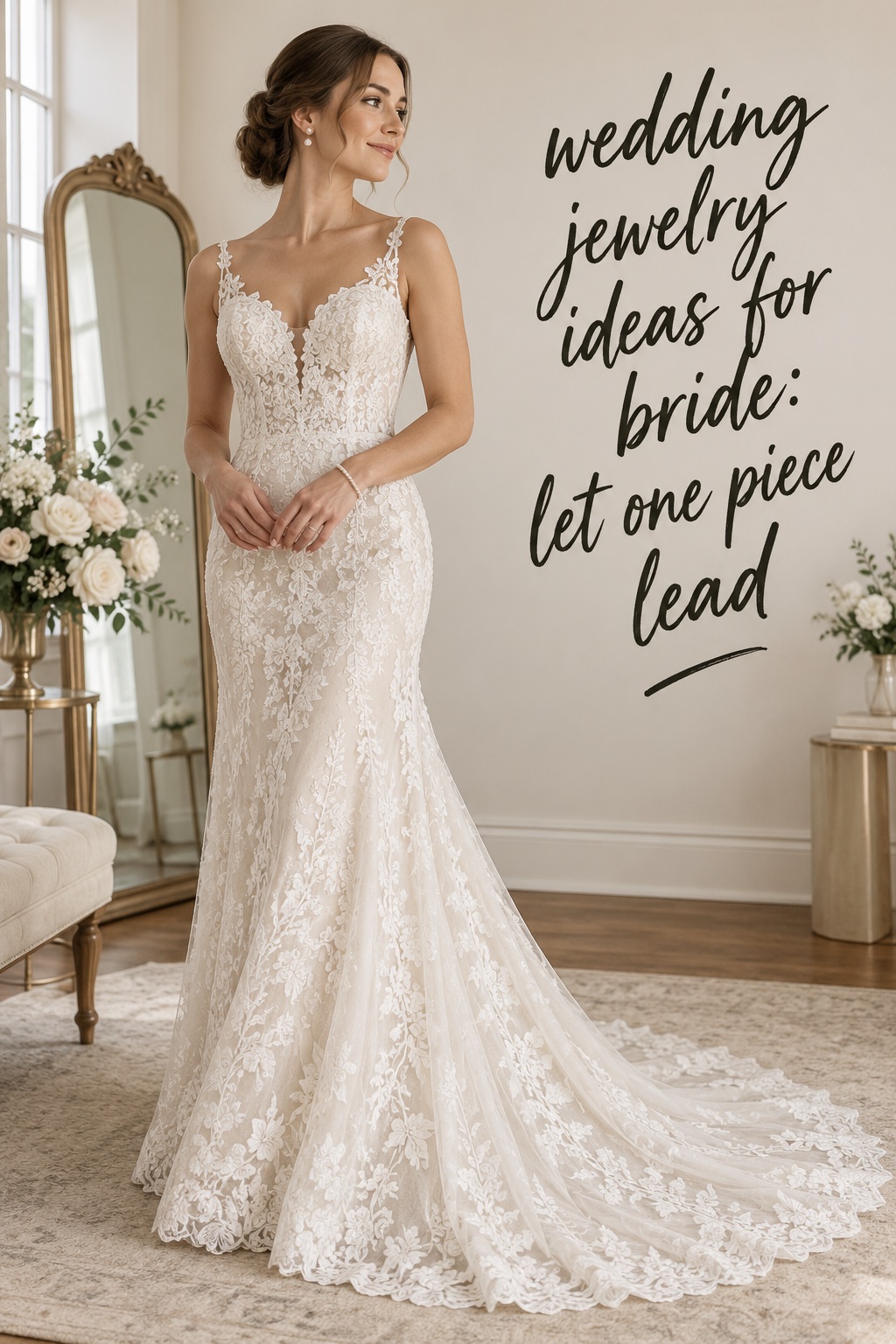
Build a complete look with one lead piece
Once the necklace and earrings are settled, decide whether a bracelet adds anything. A bracelet can be a lovely supporting detail when the wrist is visible, especially beside a simple sleeve or bare arm. It can also compete with elaborate cuffs, snag delicate fabric, or slide into the hand while you hold a bouquet. A ring stack may already provide the hand-level detail you want. Use a bracelet because you like its contribution, not because it is the third item in a set.
Do not assume all metals must be identical. An heirloom piece may use a different tone from your rings and still look deliberate if another detail connects them, such as a shared pearl, shape, or scale. Conversely, identical metal color will not rescue pieces that compete in size and style. Put the items together on your body, not just on a tray. The dress, skin, hair, and lighting are part of the composition.
Look one: a sleek gown with statement earrings
For a clean satin column or crepe dress, start with sculptural earrings or luminous pearl drops. Leave the neckline bare so the dress line remains crisp. Add a fine bracelet only if it is visible and comfortable. If a veil is planned, check whether the earrings can be seen through it and whether the veil edge lands at the same height as the earrings. This look uses restraint to give one chosen accessory presence.
The mistake to watch for is adding a necklace simply because the neckline is open. If you love the earrings most, let them lead. You can photograph the look with and without a necklace during a fitting and compare it at full length. Often the right answer becomes obvious once the entire silhouette is visible.
Look two: an embellished bodice with quiet shine
For a lace or beaded gown with detailed straps, choose an understated earring that repeats one aspect of the trim, such as a pearl tone or a small clear sparkle. Skip a necklace if it cuts across the detailed area. A plain bracelet may work if the sleeve ends above the wrist; otherwise the gown and rings may already supply enough detail. This combination gives the dress room to do its intended work.
The common error is trying to match every decorative feature with a corresponding jewelry piece. A beaded dress does not require a beaded earring, beaded necklace, and beaded hair comb. Choose one connection, then stop. The result usually feels more controlled than a perfect set assembled from several competing objects.
Look three: a simple V-neck with a personal necklace
If a family pendant or meaningful necklace is central to your plan, build the look around it. Test its exact chain length with the dress and adjust the length if needed. Use small earrings that do not repeat the pendant’s full visual weight. A bracelet can be omitted unless it carries its own meaning or fills a clear visual gap. The personal piece becomes the focus without forcing the rest of the outfit to imitate it.
If the pendant sits against the neckline or drops into the bodice, try a shorter setting or a different chain before rejecting it. If it still fails, consider wearing it in a less visible way, perhaps for the rehearsal dinner, or choosing it for another part of the wedding day. Sentimental importance and visual compatibility both matter; you need not force them to agree in one exact position.
Look four: a high neckline with a bracelet and hair detail
For a high neck or bateau dress, leave the neck clear and let a pair of earrings or a hair piece draw attention upward. If the sleeves are simple and the wrist is open, add a bracelet with a secure fit. When the gown has long embellished sleeves, skip the bracelet and rely on earrings or a discreet hair accent. The right version depends on how much decoration the dress already carries.
This is a useful reminder that jewelry does not have to occupy every available part of the body. Two well-placed accents can feel finished. A necklace that sits over fabric can be beautiful in some designs, but it needs an intentional contrast and a test for movement. Do not add it solely because a bare neck feels unfamiliar in the fitting room.
Look five: a second-look change without a new set
If you change from a formal ceremony dress into a simpler reception outfit, keep one anchor piece across both looks. The same earrings can connect the outfits, while a removable necklace changes the emphasis. Or retain a bracelet and switch to a brighter earring once the veil is gone. Plan the change in advance with photographs of both complete outfits and one small pouch for the components.
Avoid buying two unrelated sets before seeing whether one or two pieces can travel between looks. Repetition can make the change feel purposeful rather than as though the bridal styling restarted. Just check clasps and earring backs so the switch can happen quickly and securely.
Run a real-world jewelry trial
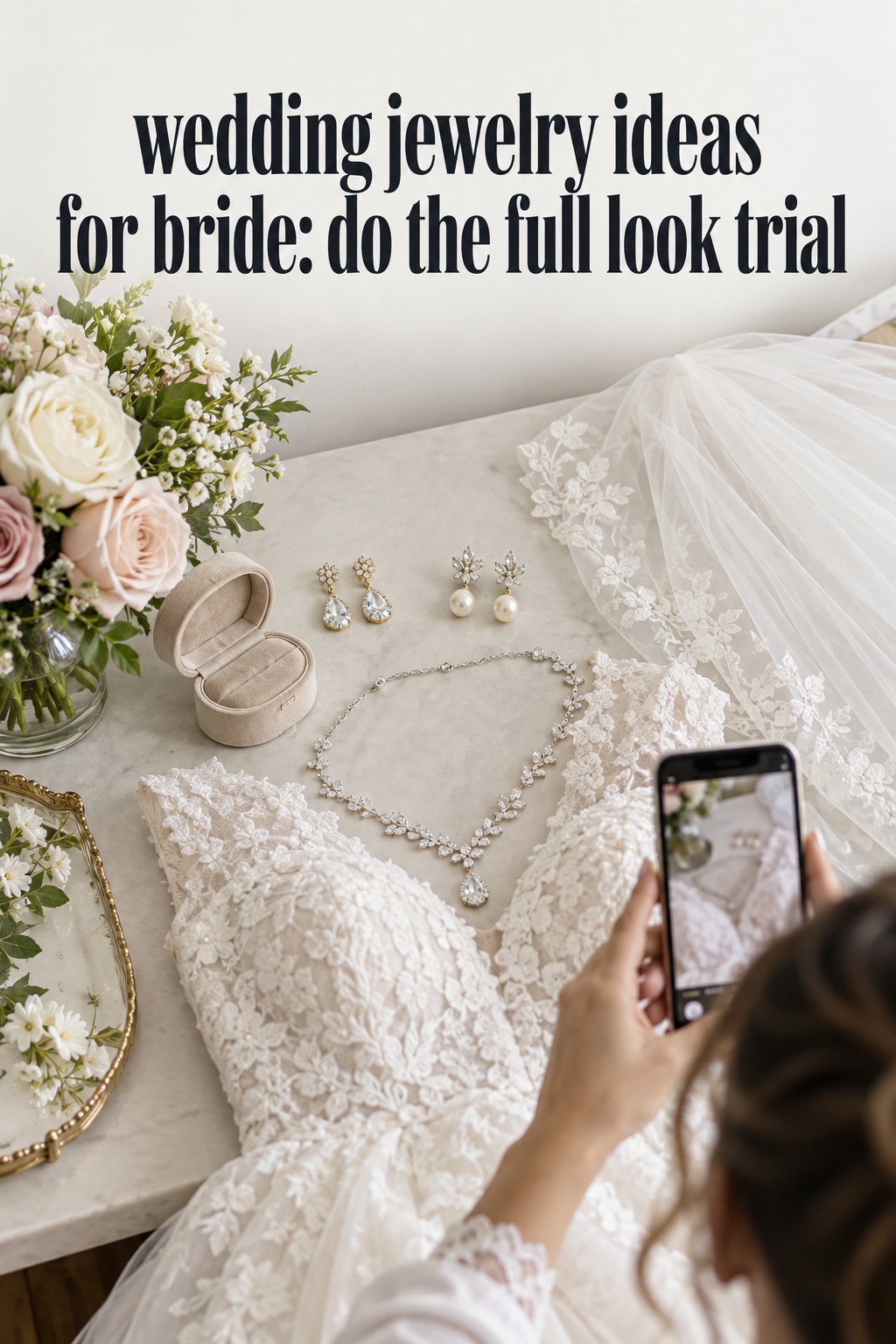
A jewelry trial is the final answer to a styling question that a product photograph cannot settle. Bring the actual gown or a close fitting approximation, the planned hairstyle volume, veil or hair accessory, and every jewelry candidate. If the gown is still being altered, repeat the check after the neckline and sleeve fit are final. A small shift in where fabric sits can change how a necklace or bracelet behaves.
Take three kinds of photographs: full length from a normal viewing distance, upper-body portraits from front and side, and a close view of any potential contact between jewelry and fabric. Use ordinary daylight or the kind of indoor light the venue will have as well as the bright fitting-room mirror. Do not judge only by a cropped image of one earring. The goal is to see whether the look reads coherently at the scale guests and photographs will show it.
Spend a few minutes moving. Sit, stand, hug, turn, raise your arms, hold a bouquet-shaped object, and move a veil on and off. Ask whether any piece catches, twists, drops out of sight, or needs repeated correction. Test the bracelet against the sleeve and the necklace against any illusion panel. If a piece causes trouble, try changing its position or fastening; if the issue remains, choose another option. A comfortable choice can free you to focus on the day rather than the jewelry.
Also decide who will keep each piece before you put it on. Use a small case with separate spaces for earrings, backs, necklace, bracelet, and any reception swap. List the pieces on the getting-ready note so nothing is left at home or misplaced during photographs. If something is borrowed or an heirloom, agree on its return plan. These details are not glamorous, but they protect the choice you made so carefully.
Finally, edit the look one last time. Remove one item and look again. If you miss it, put it back. If the outfit feels clearer, leave it out. The right jewelry combination can be one meaningful necklace, one pair of earrings, or several quiet pieces. It should support the bride you actually are and the dress you actually chose.
Sources and methodology
This guide reviewed ten US-English pages about bridal jewelry, dress necklines, accessories and styling. The linked articles support the central points that gown shape and hairstyle affect jewelry choices. Where sources offer different necklace pairings for a neckline, the recommendations here use a fitting-room test rather than treating one pairing as a rule. Product examples and prices were not used to determine the advice.
FAQ
Does a bride need a necklace with a strapless dress?
No. A strapless dress offers space for a necklace, but statement earrings and an open neckline can make a complete look. Try both versions with the dress and veil, then compare full-length photographs rather than choosing from a neckline chart alone.
What jewelry works with a V-neck wedding dress?
A pendant that follows the V, a short necklace sitting above it, or earrings without a necklace can all work. The width, depth, trim and any illusion panel change the result. Test the exact piece at the right chain length and check that it does not touch or snag the fabric.
Should wedding earrings match the necklace?
They can share a material, color or design cue without being a matching set. If the necklace is visually strong, quieter earrings often leave it room. If earrings lead, a small necklace or no necklace may be more balanced. View them together with the gown.
Can I wear mixed metals as a bride?
Yes, if the mix looks intentional to you. Compare the pieces on your body with the gown, rings and hair accessories. A shared shape, stone or scale can connect different tones. You do not need to replace a meaningful piece solely to make every metal identical.
Should I wear a bracelet with long sleeves?
Only if it has a clear place and stays comfortable. A bracelet can disappear under a sleeve, compete with a decorated cuff, or catch fabric. Try it with the final sleeve fit and movement. Skipping it is a sensible option when the dress and rings already create hand-level detail.
How do I choose earrings when I will wear a veil?
Test the earrings with the veil in place and during removal. See whether they remain visible, catch on tulle or combs, or align awkwardly with the veil edge. Choose a pair that works for both ceremony and reception, or plan one simple switch with the backs and storage arranged in advance.
When should I make the final jewelry decision?
Make it after the dress neckline, sleeve fit, hairstyle and veil plan are sufficiently settled for a realistic trial. Recheck any piece that touches fabric after final alterations. Leave enough time to adjust a chain, clasp or earring choice if the full outfit reveals a problem.