Green Wedding Cake Shades: Emerald Glam to Soft Sage
Green wedding cake style showdown: emerald glam vs sage romance (and where dark green fits)
The moment a green wedding cake enters the room, it doesn’t just sit on a dessert table—it sets a tone. Sometimes that tone is candlelit and dramatic, the kind of evening reception where the cake feels like a jewel. Other times it’s soft and botanical, like an outdoor ceremony where every detail leans into greenery, gardens, and calm. Because “green” is a whole family of shades and finishes, couples often talk about emerald and sage as if they’re interchangeable, then discover they create completely different wedding moods.
This style breakdown compares two of the most requested aesthetics for wedding cakes green—emerald glam and sage romance—then places “moody” dark green wedding cake ideas in context (because a wedding cake dark green can read as modern, luxe, or natural depending on texture and accents). You’ll learn how ombre, watercolor, metallic finishes, naked and natural styling, gold accents, and botanical details like greenery and orchids shift the whole look, even when the color is technically still “green.”
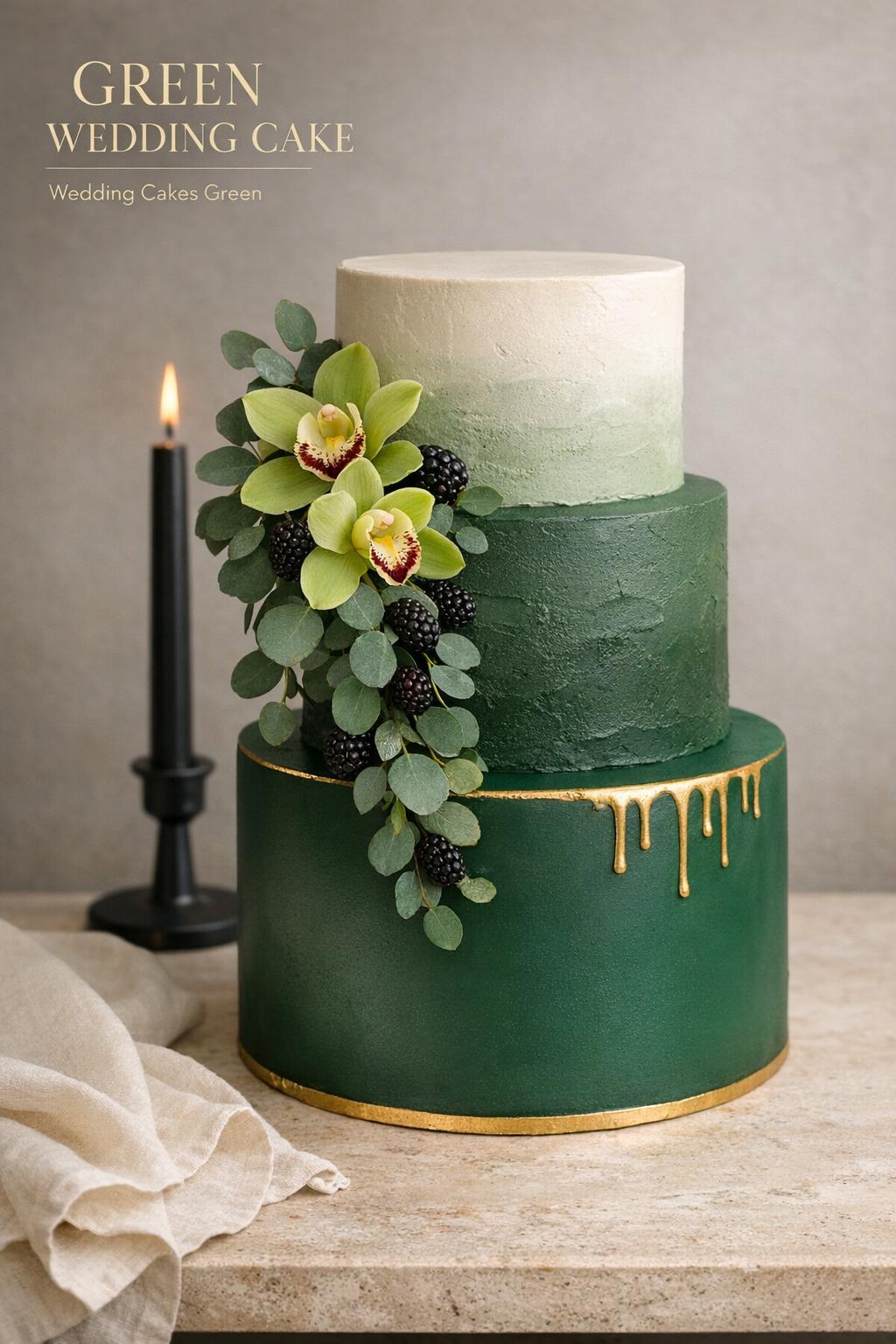
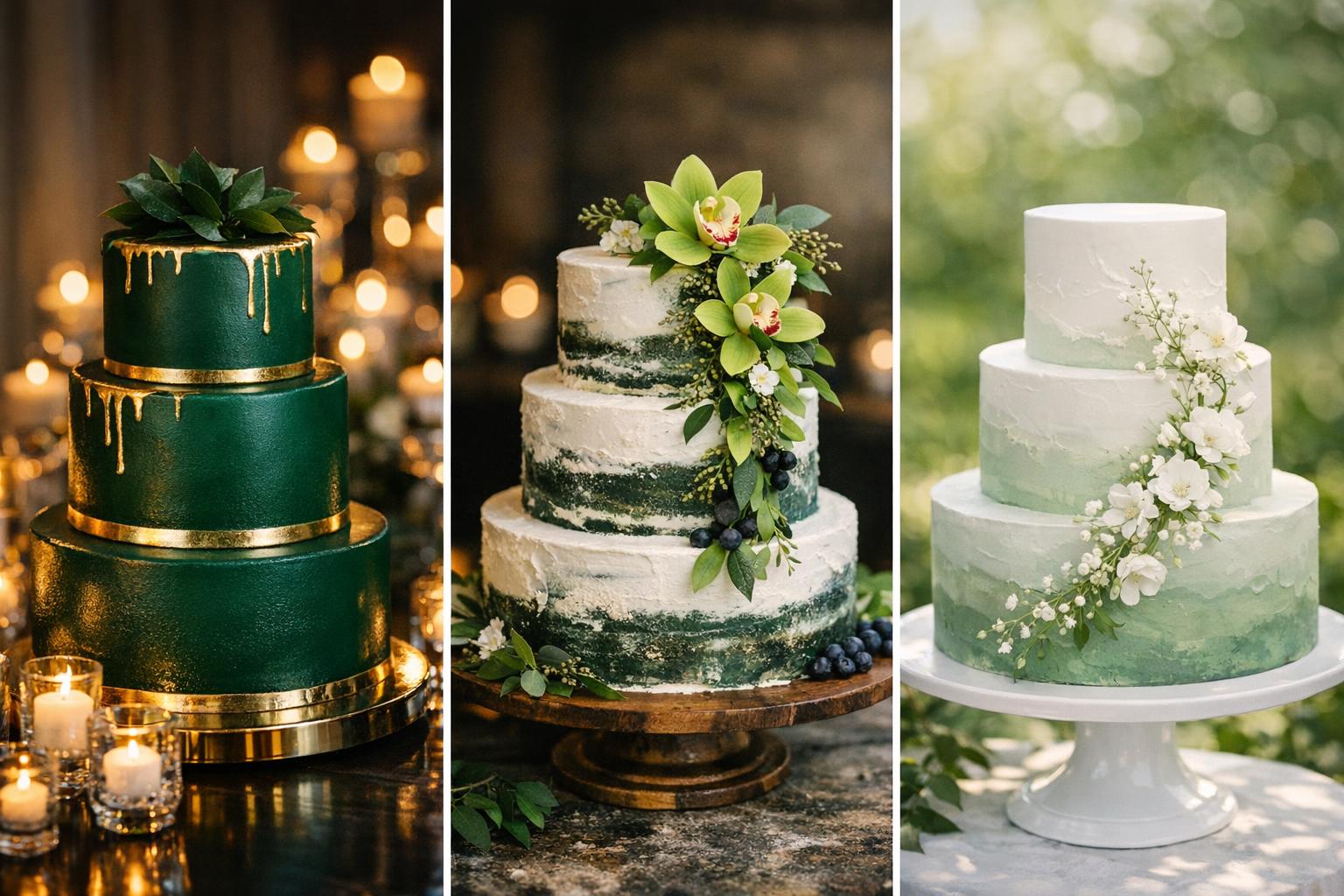
Along the way, we’ll translate the most-loved real-wedding directions—green with gold accents, green ombré, textured white with green orchid cascade, and green cake with gold drips and berry garnishes—into practical planning guidance: how to choose a finish, how to balance flowers versus paintwork, and how to make your cake feel intentional with the rest of your wedding palette.
Style overview: emerald green cake glamour
An emerald green cake style is the “statement piece” approach. It tends to feel formal and intentional, often photographed like a centerpiece at a reception. In real weddings, this look frequently leans into high-contrast pairings—green with gold accents, green with crisp whites, or deep tones that read as rich under evening lighting.
Turn wedding inspiration into a plan you can actually follow.
Zarellea brings your guest list, budget, vendors, and day-of details into one shared space — so no beautiful idea gets lost in the shuffle.
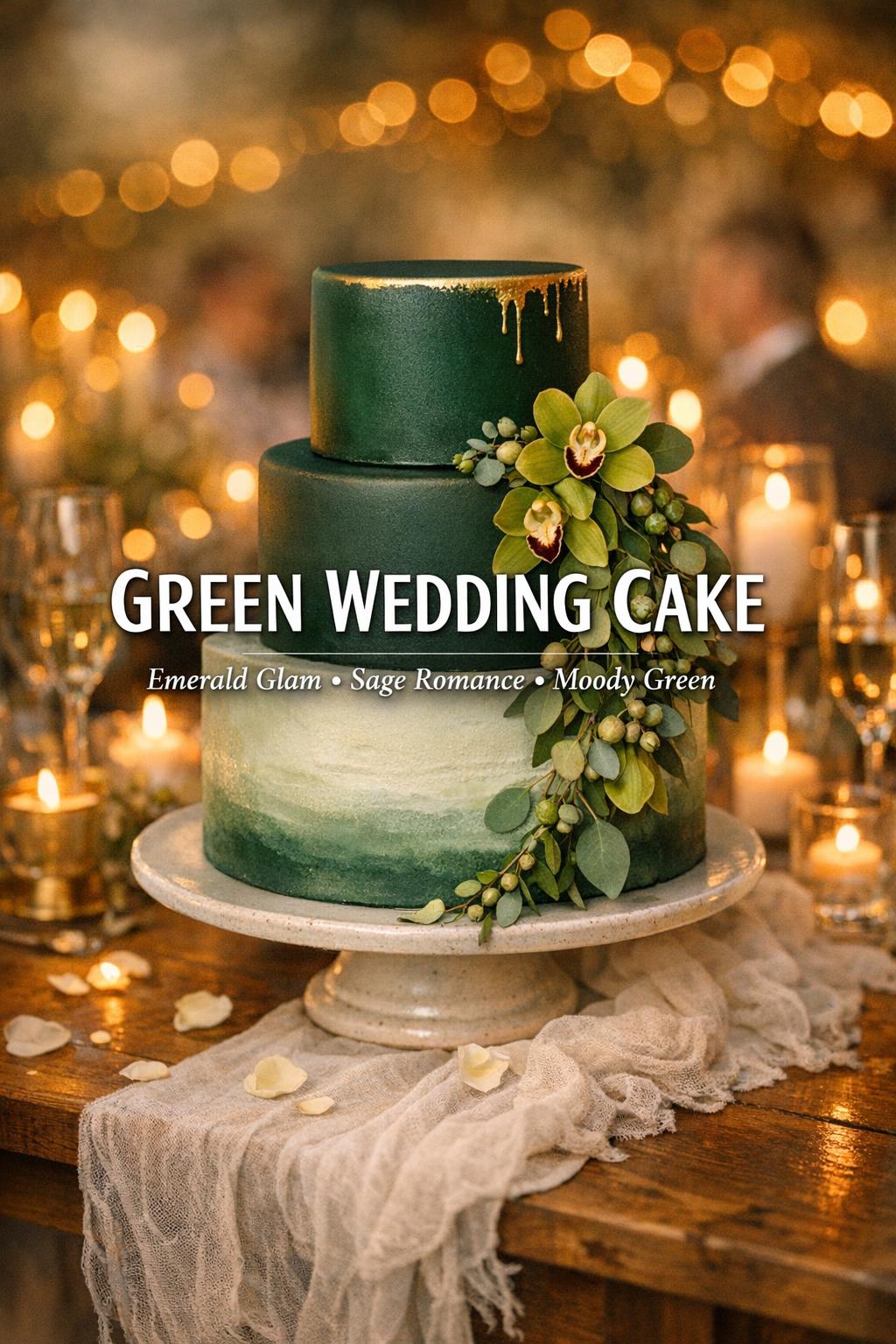
Defining characteristics
Emerald is typically presented with clean lines, saturated color, and finishes that hold their shape. The most common design language includes metallic details (especially gold), controlled gradients (ombré), and sleek surfaces that make the shade look bold rather than muted.
Silhouette and structure
Emerald glam works best when the structure looks deliberate: tiers that feel balanced, edges that look sharp, and spacing that gives decorative elements room to breathe. Even when the design includes organic details—like berries or greenery—the underlying shape usually stays refined, so the overall impression remains elegant.
Color palette and mood
Emerald sits on the jewel-toned end of the spectrum: confident, saturated, and “night-out” romantic. When couples search dark green wedding cake ideas, they’re often imagining this same family—greens that can look almost forest-deep in photos, especially next to gold accents or bright white textures.
Textures and finishes you’ll see most
The emerald direction is often built through smooth finishes (to show off color purity), metallic touches, and controlled techniques like ombré. It can also be expressed through painterly approaches—watercolor greens—so long as the overall look still reads as elevated rather than rustic.
Style overview: sage cake wedding romance
A sage cake wedding aesthetic is softer and more nature-led. While emerald says “centerpiece,” sage tends to say “part of the landscape”—a cake that belongs beside greenery, garden florals, and airy décor. This style often overlaps with botanical wedding cake ideas, where the green feels like an extension of leaves, stems, and outdoor light.
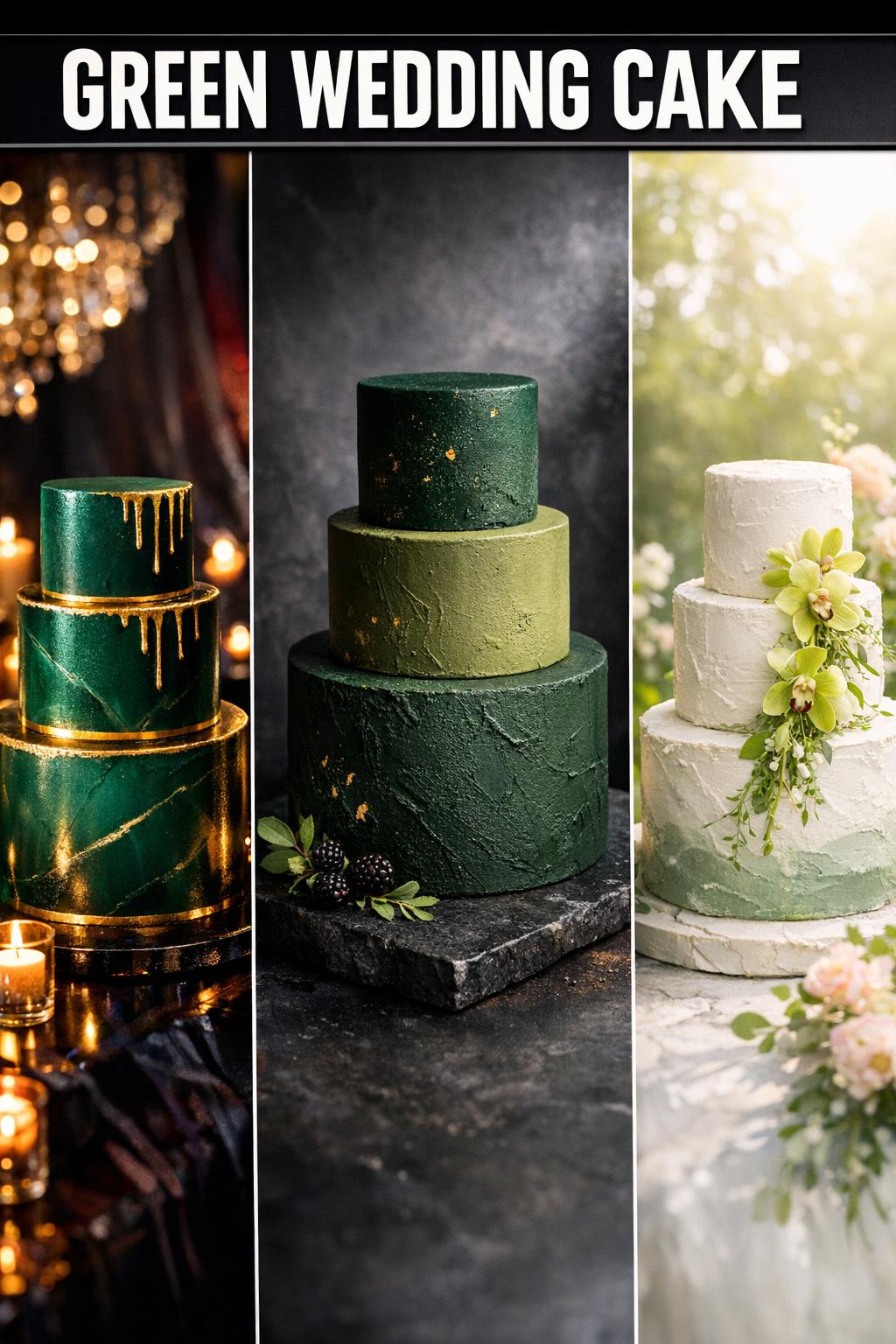
Defining characteristics
Sage is typically shown as muted, calm, and romantic. The green may appear as watercolor washes, gentle ombré transitions, or small accents against white. Even when the cake is technically “green,” it often includes plenty of negative space so the overall mood stays light.
Silhouette and structure
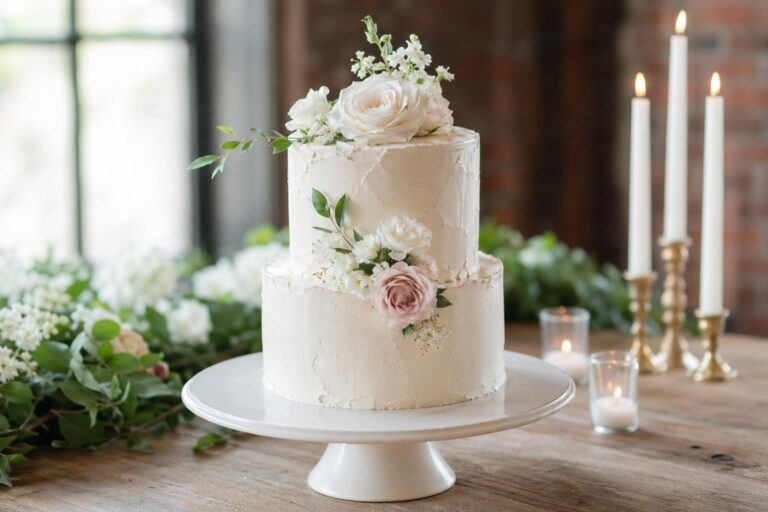
Sage romance works beautifully with softer silhouettes—tiers that feel less severe, edges that look hand-finished, and designs that welcome organic details like greenery or floral cascades. A classic example in real-wedding imagery is a textured white wedding cake with green orchid cascade: the green isn’t a full-coverage color; it’s a botanical moment.
Color palette and mood
Sage pairs naturally with whites and botanical tones. In photos, it reads as daylit, fresh, and gentle—ideal for ceremonies and receptions that lean garden, natural, or quietly modern. If emerald feels like evening, sage often feels like late afternoon, sunlight, and soft linen tablescapes.
Textures and finishes you’ll see most
Sage-forward cakes often rely on texture: buttercream movement, subtle ridges, or a naked and natural approach. Metallic finishes can appear, but usually in a restrained way so the overall look remains romantic rather than flashy.
Why these styles get mixed up (and how to tell them apart quickly)
Emerald and sage get grouped together because they share the same anchor color: green. On Pinterest boards and real-wedding galleries, you’ll also see the same core design motifs repeated across shades—ombré, watercolor, botanical greenery, metallic accents—so it’s easy to assume the difference is minor. In practice, the shade and finish change everything: formality, how the cake photographs, and whether your florals feel like the main character or a supporting detail.
A simple way to separate them is to ask what’s driving the design: is it the color itself (emerald glam), or is it nature and texture (sage romance)? When color is the star, the cake tends to be bolder and more structured. When botanical mood is the star, the cake tends to be softer, more textured, and more integrated with greenery and flowers.
Key differences: emerald vs sage cake wedding aesthetics
1) Color intensity and contrast
Emerald green cake designs rely on saturation and contrast—green that reads decisively green in a photo, often framed by gold accents or crisp whites. A sage cake wedding look relies on softness: green that can appear misty, herbal, or gently washed on, especially when used in watercolor or light ombré.
2) Finish: sleek statement vs textured romance
Emerald is often best served by smooth surfaces, refined edges, and accents that look intentional (like gold drip detailing). Sage is often most charming when texture is visible—think buttercream movement, naked and natural styling, or a textured white base where green appears in floral elements, greenery, or painted strokes.
3) How botanicals show up
In emerald glam, botanicals tend to be curated and minimal—greenery placed to frame a tier, or berries used as a garnish against a dramatic green and gold backdrop. In sage romance, botanicals can feel more abundant and “garden-led,” like a floral cascade (including orchids) that looks as if it naturally fell into place.
4) Level of formality
While both can be formal, emerald green often reads more evening-ready and luxe because of its depth and frequent use of metallic finishes. Sage typically reads more daytime and airy, even when the cake is tiered and traditional, because the color is quieter and the textures are more organic.
5) The role of gold accents
Gold accents are the fastest “formality dial” for green. Emerald with gold accents becomes unmistakably glamorous—especially with gold drips. Sage with small gold details can still feel romantic, but it shifts toward a more modern, polished direction. If you’re torn, deciding how much gold to use is often easier than choosing the exact shade of green first.
Where “wedding cake dark green” truly belongs: the third lane between emerald and sage
Not every couple wants jewel-toned emerald or soft sage. A wedding cake dark green—especially in forest-leaning tones—creates a moodier, more contemporary feel, and it’s also the easiest way to make green feel dramatic without relying on heavy décor. This is where dark green wedding cake ideas shine: they can be minimalist in shape yet emotionally rich in photos.
The key is understanding that “dark green” isn’t a single style; it’s a shade choice that can be rendered in multiple techniques. A dark green ombré can feel modern and clean, while dark green watercolor can feel artistic and romantic. Add gold drips and it leans glamorous; add greenery and orchids and it leans botanical.
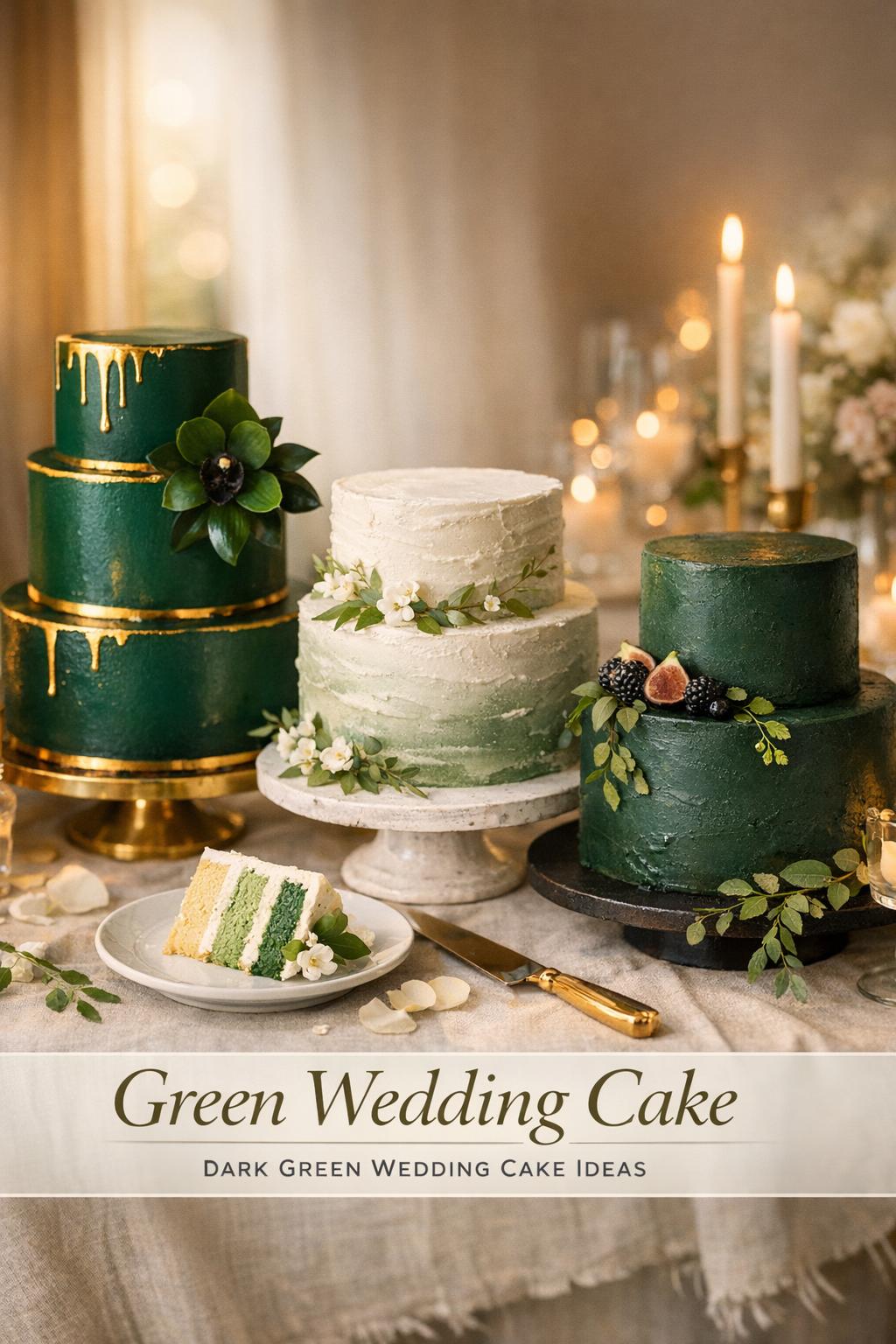
Visual style breakdown: ombré, watercolor, metallic, and naked finishes (and what they communicate)
Most green wedding cake inspiration falls into a handful of visual techniques. Couples often focus on the shade first, but in real weddings the technique is what makes the cake feel modern, classic, or natural once it’s placed in a venue with specific lighting and décor.
Green ombré cake: the clean, modern gradient
A green ombré cake uses a gradient effect—light-to-dark or dark-to-light—to create depth without needing extra décor. This is one of the most versatile looks: emerald ombré reads sleek and contemporary, while sage ombré reads soft and romantic. In real-wedding contexts, ombré often pairs well with simple greenery accents and modern, clean styling because the gradient becomes the visual interest.
Green watercolor cake: painterly romance
Watercolor greens feel like a wash of color rather than a solid coat. This technique naturally supports botanical wedding cake styling because it echoes the variation you see in leaves and plants. Mint green watercolor and sage watercolor lean light and airy; deeper watercolor can support a wedding cake dark green vision while still feeling artistic, not heavy.
Metallic finishes and gold drip details: instant glamour
Metallic finishes—especially when paired with green—shift a cake into a more elevated, evening-ready mood. A green wedding cake with gold drips is a clear style statement: it’s bold, celebratory, and designed to photograph as a focal point. If you love the idea but worry it could overpower a softer wedding design, consider using gold accents more sparingly—thin edging, small metallic touches—so the green remains the main story.
Naked and natural green cakes: effortless, botanical, and real-wedding friendly
Naked and natural green cakes tend to rely on softer finishes and organic styling. They’re often paired with greenery, leaves, and florals for a garden mood. This approach is especially helpful when you want wedding cakes green to feel integrated with the wedding environment—outdoor venues, greenery-heavy décor, or receptions where the cake table is styled with plants and flowers rather than shiny décor.
Botanical styling: greenery, orchids, and the “cake-as-floral-installation” approach
Green cakes have a natural advantage: they can blend seamlessly with plants, leaves, and florals, or they can be used as contrast against white textures. Many couples love botanical integration but aren’t sure how much is too much. The secret is to decide whether your botanicals are accents or architecture.
Green orchid cascade on a textured white cake
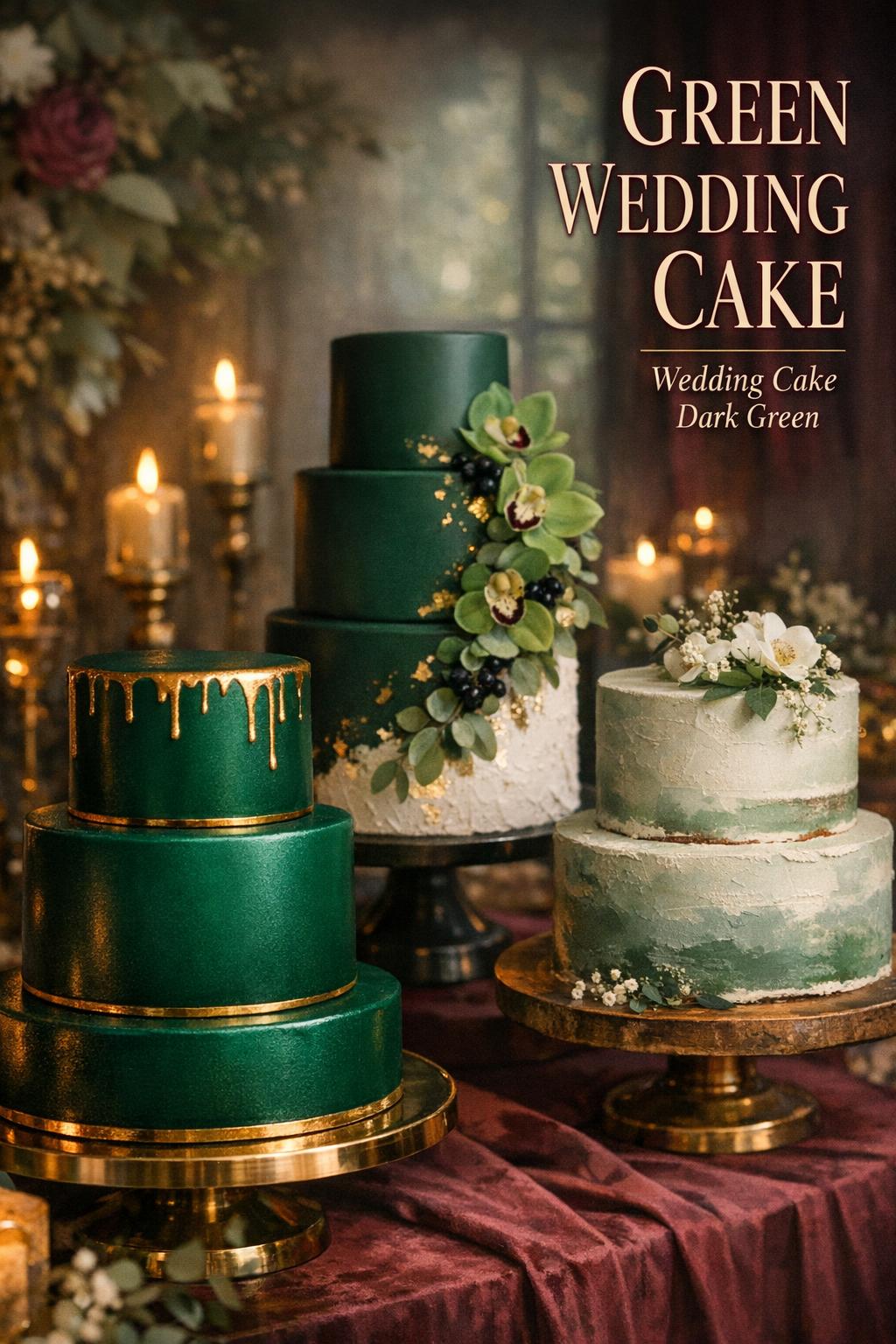
A textured white wedding cake with a green orchid cascade is a beautiful example of botanical architecture: the green shows up as an intentional floral element, not as a full-coverage color. This is ideal when your broader palette is light (white-forward) but you still want a clear nod to green wedding ideas. It also creates a memorable silhouette in photos because the cascade draws the eye down the tiers.
Greenery accents vs full botanical coverage
Greenery accents—small leaf clusters, minimal stems, a few botanical touches—work best for emerald or dark green cakes where the color is already strong. Full botanical coverage (more abundant greenery and flowers) often suits sage romance and naked/natural finishes, where the overall mood is airy and garden-like.
- Choose accents if your cake has gold drips, metallic finishes, or a deep emerald tone that you want to keep visually clean.
- Choose abundance if your cake is textured, watercolor, or sage-forward and you want the cake to feel like part of a larger floral story.
Green + gold vs green + berries: two ways to make the color feel intentional
Once you pick a shade, the next decision is what “companions” the green will have on the cake table. Two of the most recognizable directions in real weddings are green with gold accents and green with berry garnishes. Both create contrast, but they communicate different moods.
Green with gold accents: formal, sculptural, and camera-ready
Green with gold accents is the classic emerald glam pairing. Gold drip detailing turns a green wedding cake into a celebratory statement, especially when the design is clean and the tiers are structured. This pairing often works best when your overall wedding styling includes other refined elements—metallic hints, structured décor moments, and a reception that leans polished.
Green with berry garnishes: romantic contrast with a slightly playful edge
A green wedding cake with berry garnishes brings in color contrast and texture without shifting the cake into full metallic glam. Berries also create a “freshly styled” look—great for couples who want a real-wedding feel rather than a showroom-perfect finish. This direction can complement both emerald and dark green, especially when you want the cake to feel warm and inviting on the dessert table.
Tips from the planning side: choosing a green wedding cake that survives real wedding conditions
Design boards can make every cake look easy. The day itself is different: you’ll have venue lighting, photography angles, a timeline, and guests moving through the space. A green wedding cake is especially sensitive to environment because green reads differently depending on light and surrounding décor.
Tips for shade selection that photographs well
If your ceremony and reception are heavy on natural light, sage and watercolor greens can look luminous and romantic. If your reception is in deeper, moodier lighting, emerald and wedding cake dark green tones hold their presence and won’t wash out. If you’re using an ombré technique, ask yourself where you want the darkest part of the gradient—near the base for grounded drama, or near the top for a lighter, floating look.
Tips for matching your cake to florals and greenery
Botanical styling can either harmonize or compete. If you’re planning abundant greenery and flowers on the cake table, a sage cake wedding direction with texture usually blends best. If your florals are already bold in shape (like a strong orchid cascade), consider keeping the cake color simpler—textured white with green orchids is a perfect example of letting the florals be the green moment.
Tips for deciding between buttercream, fondant, and “naked and natural” looks
Couples often fall in love with a photo without realizing the finish is the entire mood. Smooth finishes create a more formal impression and make emerald and dark green look crisp. Textured finishes feel romantic and help sage look intentional rather than faint. Naked and natural styling reads relaxed and botanical, but it’s most successful when the overall wedding design supports that organic feel.
Outfit-style comparisons—translated for cake: how the same wedding vision shifts by style
Think of these comparisons like styling the same couple in different aesthetics: the “silhouette” is your tiers, the “fabric” is your finish, and the “accessories” are gold accents, berries, greenery, and orchids. Here’s how the logic changes depending on which green lane you choose.
Example comparison: modern ballroom romance
Emerald glam approach: a structured emerald green cake, potentially with gold drip details, keeps the look formal and evening-ready. The green acts like a jewel-toned anchor that reads immediately as intentional in photos.
Sage romance approach: a soft sage ombré or sage watercolor keeps the mood lighter and more delicate. Add greenery accents rather than heavy metallics so the cake feels like a romantic extension of floral styling rather than a stand-alone statement.
Example comparison: garden ceremony with a reception under soft light
Emerald glam approach: keep emerald controlled—perhaps as ombré rather than full coverage—so it doesn’t overpower the garden setting. Gold accents can work, but consider restraint so the cake still belongs outdoors.
Sage cake wedding approach: lean into texture and botanicals. A naked and natural green cake with greenery and floral touches will look effortless in the setting, and a textured white base with a green orchid cascade can feel especially romantic in garden photography.
Example comparison: a dramatic, fashion-forward evening reception
Wedding cake dark green approach: choose a deep green tone with a sleek finish and minimal clutter. If you love metallic energy, gold accents or a gold drip can turn the cake into a high-impact centerpiece.
Softer alternative: if you want drama without heavy shine, use dark green watercolor with clean tier structure. It keeps the mood artistic, not overly formal, and still photographs as a statement.
Choosing your lane: a decision checklist for wedding cakes green
When couples feel stuck between emerald, sage, and dark green wedding cake ideas, it’s usually because they’re trying to decide everything at once: shade, finish, flowers, and accents. This checklist helps you separate the decisions so you can commit with confidence.
- Start with mood: jewel-toned glam (emerald), garden romance (sage), or modern drama (wedding cake dark green).
- Pick a technique: ombré for clean modernity, watercolor for painterly romance, metallic for luxe sparkle, naked/natural for organic ease.
- Decide your accent category: gold accents (polished), berry garnishes (fresh and romantic), or botanicals like greenery and orchids (garden-led).
- Balance with your florals: if florals are dramatic (like a cascade), keep the cake finish simpler; if florals are minimal, the cake can carry more design.
- Think about the venue’s light: softer greens glow in natural light; deeper greens hold presence in moodier reception lighting.
Inspiration, curated: green wedding cake ideas by finish and accent
Instead of treating inspiration as an endless scroll, it helps to group ideas into families you can actually describe to a baker or cake designer. Below are multiple, distinct approaches drawn from the most common real-wedding directions—each one a clear style choice, not just a different photo.
Emerald green cake with gold drips (bold glam)
This is the signature “green with gold accents” moment: emerald or deep green tiers finished cleanly, with gold drip detailing that frames the cake like jewelry. It’s ideal when you want the cake to feel like an evening centerpiece and when your reception décor can support a polished focal point.
Green wedding cake with gold drips and berry garnishes (glam meets freshness)
Adding berry garnishes softens the formality of metallics. The berries bring texture and a styled-yet-natural feel, which can be especially helpful if you love the drama of gold but don’t want the cake to feel overly “perfect.” This hybrid is also a smart bridge between emerald glam and more organic wedding design choices.
Green ombré wedding cake (modern gradient)
A green ombré wedding cake is one of the easiest ways to make green feel intentional without relying on heavy décor. Choose an emerald gradient for a modern, fashion-forward look, or a sage gradient for a softer romantic mood. Keep greenery accents minimal so the ombré reads clearly in photos.
Textured white wedding cake with green orchid cascade (botanical elegance)
This is for couples who want a white-forward cake but still want green wedding ideas to show up in a breathtaking way. The texture on the white tiers adds dimension; the green orchid cascade becomes the signature visual. It’s romantic, timeless, and fits beautifully into botanical styling.
Naked and natural green cakes (garden ease)
Naked and natural styling fits couples who want wedding cakes green to feel relaxed and earthy. Use greenery and subtle floral touches to make the design feel intentional. This approach shines when your venue and décor already lean botanical—so the cake feels like it belongs rather than trying to compete.
Mint green watercolor and sage metallic (soft with a modern edge)
Mint green watercolor reads airy and romantic; sage with a hint of metallic finish reads modern and refined without going full gold-drip glam. Both are ideal when you want a gentle green presence that still feels special in close-up photos and dessert-table styling.
What couples often overlook: common green cake styling mistakes (and how to avoid them)
Green is surprisingly sensitive to context. The same shade can feel botanical in one setting and heavy in another, especially when paired with florals and metallics. Most “regret” moments happen when the cake’s design language doesn’t match the wedding’s overall styling philosophy.
Mistake: mixing too many hero details
Gold drips, heavy greenery, bold watercolor, and a strong ombré gradient can all be beautiful—but if they’re all on the same cake, the eye doesn’t know where to land. Decide what the hero feature is: the green shade, the metallic accent, or the botanical cascade.
Mistake: forgetting the cake table is part of the design
A green wedding cake rarely stands alone; it sits among linens, florals, and lighting. If your cake is dark green, give it breathing room with simpler décor so it feels intentional rather than visually crowded. If your cake is sage and subtle, make sure the table styling doesn’t wash it out—texture and botanical elements help it read on camera.
Mistake: treating “green” as one shade across everything
Greenery, orchids, painted strokes, and frosting rarely match perfectly—and that’s a good thing. The most romantic botanical wedding cake moments often come from variation: layered greens that feel natural, not overly coordinated.
Sustainability and sourcing: making “green wedding” mean more than a color
For many couples, a green wedding cake is also a chance to reflect eco-friendly wedding values. While inspiration galleries often focus on visuals, planning a more sustainable wedding cake typically comes down to practical decisions: ingredient sourcing, packaging, and waste minimization. These choices don’t require a specific aesthetic—you can apply them to emerald glam, sage romance, or wedding cake dark green styles.
Tips for eco-friendly wedding cake planning
Start by asking your bakery or cake designer what sustainable pastry practices they can support. Couples often find that the most meaningful changes are the least visible: choices around sourcing and packaging that don’t alter the cake’s beauty.
- Ask whether ingredients can be sourced locally (when feasible) to align with farm-to-table wedding priorities.
- Discuss packaging and delivery materials, and whether options exist to reduce waste.
- Plan cake servings realistically so you’re not managing excessive leftovers at the end of the reception.
If sustainability is central to your celebration, treat it like any other design priority: communicate it early, so it’s integrated into the vendor plan rather than added as an afterthought.
Flavor profiles and dietary considerations that fit green-themed cakes
Color gets the attention, but flavor is what guests remember. Green-themed cakes often pair naturally with flavor directions that echo the palette—pistachio, matcha, and pandan-inspired options are frequently associated with green cake ideas. These flavors can support either an emerald statement or a sage romantic look, depending on how the exterior is finished.
Flavor-forward green cake ideas (and how they match style)
If you want your cake to feel cohesive inside and out, consider matching the mood of the design to the feel of the flavor: a bold emerald exterior pairs nicely with distinctive, memorable flavors; a sage watercolor exterior often feels right with softer, subtly aromatic profiles. The goal isn’t to be literal—it’s to make the experience feel intentional from the first photo to the first bite.
Dietary accommodations: vegan and gluten-free planning
Many couples also need guest-friendly dietary options, including vegan and gluten-free requests. The most seamless approach is to plan these needs alongside your design technique. For example, if you’re set on a specific green finish (like watercolor or ombré), discuss with your baker how that finish will be achieved across any dietary variants so everything still looks cohesive on the dessert table.
Real-wedding mindset: how to talk to your cake designer or bakery about green
Green is nuanced, and the fastest way to end up with a cake that feels “almost right” is to describe it only as “green.” In real weddings featured by major wedding planning publications like The Knot, green cakes are almost always defined by a style phrase: emerald green cake, green ombré wedding cake, green with gold accents, naked and natural, textured white with green orchid cascade.
A simple language framework that works
When you meet with a baker, describe your cake in three layers: shade, technique, and accent. This keeps the conversation clear and prevents the design from becoming a mix of competing ideas.
- Shade: emerald, sage, mint, or wedding cake dark green.
- Technique: ombré gradient, watercolor wash, metallic finish, textured buttercream, or naked and natural.
- Accent: gold accents (including gold drips), berry garnishes, greenery, or a floral cascade (such as orchids).
If you’re using inspiration from a real-wedding gallery, note what you’re borrowing: “the green with gold drip detail,” “the ombré fade,” or “the orchid cascade.” That specificity is what turns inspiration into a plan.
When to choose emerald, sage, or dark green wedding cake ideas (by wedding setting)
Choosing between these styles is less about rules and more about fit—fit with your venue, your lighting, your floral direction, and how you want the reception to feel when guests first walk in. Below is guidance that couples find practical when narrowing a design direction.
Choose emerald glam when you want the cake to be the centerpiece
Emerald is ideal when you want a statement moment: a cake that feels like it belongs in the center of the room, especially with gold accents or gold drip detailing. It suits receptions that feel polished and intentional, and it tends to photograph with high impact.
Choose a sage cake wedding style when you want romance that blends with the florals
Sage shines in settings where nature is part of the story—garden ceremonies, greenery-heavy décor, and receptions styled with botanicals. A textured finish or watercolor technique can make the cake feel integrated with the rest of the wedding design, rather than separate from it.
Choose wedding cake dark green when you want modern drama without extra décor
Dark green wedding cake ideas work beautifully when you want mood and depth, but you don’t necessarily want a lot of florals or metallics. A sleek dark green or dark ombré can carry the entire look, with minimal greenery or a restrained accent like berries.
Bringing it all together: blending emerald and sage without creating confusion
Some couples genuinely love both aesthetics: the richness of emerald and the softness of sage. The most successful blends keep one lane as the “base” and let the other show up as a detail. For example, a sage watercolor foundation with a controlled gold accent can feel modern and romantic; an emerald base with a botanical orchid or greenery moment can feel luxurious without becoming too severe.
The guiding principle is clarity. Pick one primary technique (ombré, watercolor, metallic, textured, or naked and natural), then layer in one accent family (gold, berries, or botanicals). That’s how you get a cake that looks like it belongs to your wedding—not just a collection of ideas.
FAQ
What’s the difference between an emerald green cake and a sage cake wedding style?
Emerald green cake designs typically read bold, saturated, and formal—often paired with gold accents or sleek finishes—while a sage cake wedding look is softer and more botanical, usually expressed through texture, watercolor washes, gentle ombré, and greenery-forward styling.
Which green wedding cake styles work best with gold accents?
Gold accents are most naturally aligned with emerald and deeper greens, especially in designs featuring gold drip detailing, because the contrast looks polished and intentional; sage can also pair with subtle gold, but it typically works best when the metallic is restrained so the overall mood stays romantic rather than overly glam.
How do I choose between a green ombré wedding cake and a green watercolor cake?
A green ombré wedding cake feels cleaner and more modern because the gradient is controlled and graphic, while a green watercolor cake feels more painterly and romantic; if you want a minimalist statement, ombré is often easier to read in photos, while watercolor blends beautifully with botanical décor and greenery.
What are popular dark green wedding cake ideas that still feel wedding-appropriate?
A wedding cake dark green can feel elegant when the design stays focused—such as a sleek deep-green finish, a dark green ombré, or a dark watercolor wash—then balanced with one clear accent like gold drips, berry garnishes, or a small amount of greenery rather than multiple competing statement details.
Can I do a green wedding cake that’s mostly white?
Yes—one of the most classic approaches is a textured white wedding cake with green accents, such as a green orchid cascade, where the green appears through floral design and botanical styling rather than full-coverage frosting.
How do berry garnishes change the look of a green cake with gold drips?
Berry garnishes add a fresh, styled texture that softens the formality of gold drip detailing, making the overall design feel a bit more organic and real-wedding friendly while still keeping the glam impact of green with gold accents.
What should I ask my bakery or cake designer if I want an eco-friendly wedding cake?
Ask about practical sustainability choices that don’t change the look—such as whether ingredients can be sourced locally when feasible, what packaging and delivery materials are used, and how they recommend planning quantities to minimize waste—so your green wedding cake reflects eco-friendly values as well as color.
Are there green cake options for vegan or gluten-free guests?
Yes, vegan and gluten-free green cake variants are commonly requested, and the key is to plan them alongside the design technique you choose (like ombré or watercolor) so any dietary accommodations still match the main cake’s look and feel on the dessert table.
How can I describe the exact green I want so it matches my wedding palette?
Instead of requesting “green,” describe your choice using a shade plus a technique and an accent—such as “emerald with gold accents,” “sage watercolor,” “green ombré,” or “textured white with a green orchid cascade”—because that combination tells your designer how the green should look, behave, and photograph in a real wedding setting.