Why Boutonnieres Wedding Styling Feels So Polished
On a wedding day, the smallest floral detail can quietly hold the whole look together. In a boutonnieres wedding story, that detail sits close to the heart: on the groom’s lapel, on the jackets of groomsmen, and sometimes on fathers, ring bearers, or other honored members of the wedding party. A boutonniere may be small, but it carries style, symbolism, and practical decisions about color, season, comfort, and photography. Choosing one well means thinking beyond a single flower and considering how it relates to the bouquet, the attire, the venue, and the mood of the celebration.
The most useful way to approach wedding boutonnieres is to treat them as part of a full floral and fashion plan. The best boutonniere is not simply the trendiest one. It is the one that suits the wedding theme, fits the season, works with the groom’s outfit, lasts through the event, and feels intentional next to the bridal bouquet. From classic roses to modern greenery, from rustic dried elements to minimal single blooms, there is a wide range of directions to consider carefully.
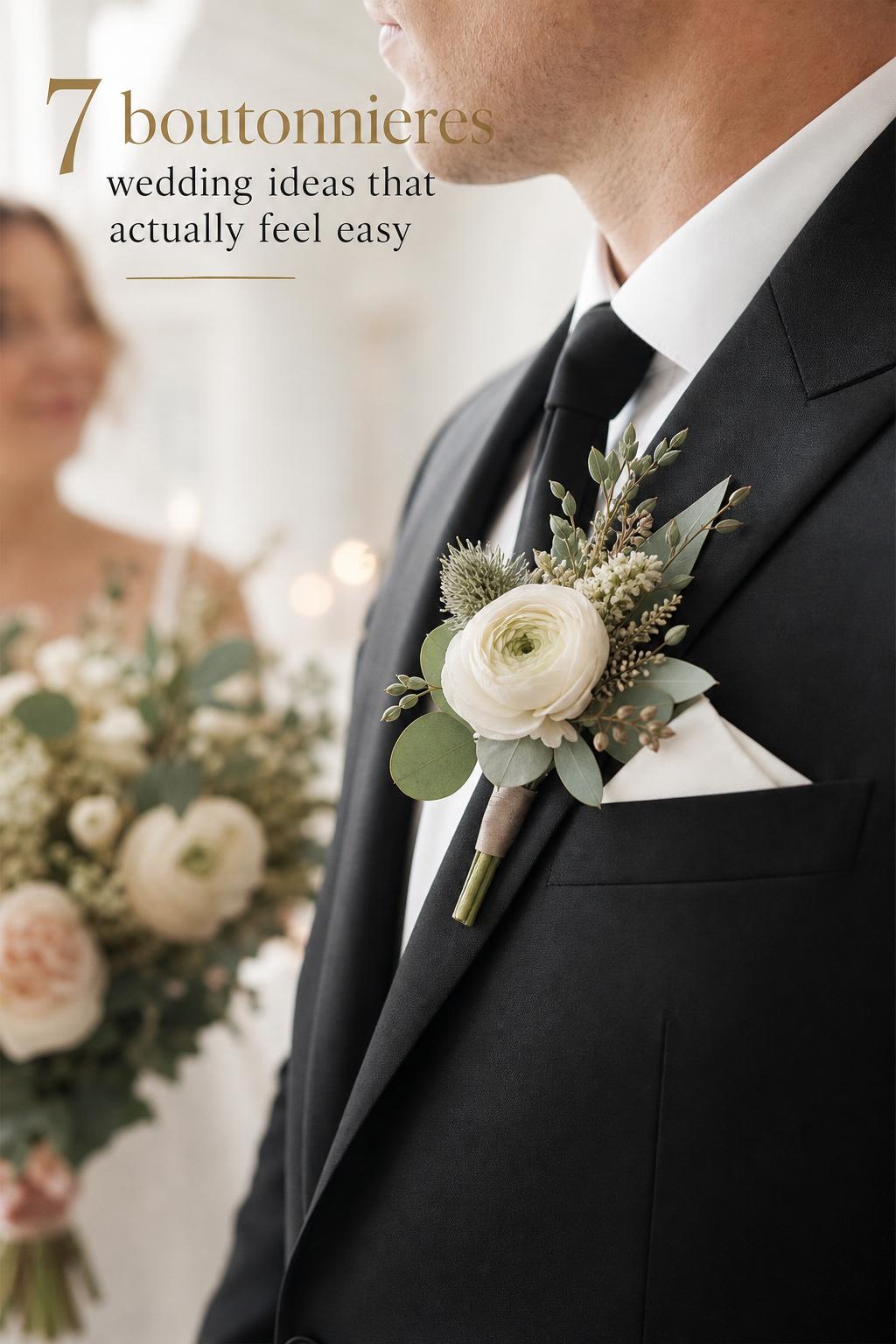
What a boutonniere means in a wedding setting
A boutonniere, sometimes referred to as a buttonhole flower or floral lapel flower, is a small arrangement worn on a jacket lapel. In modern wedding use, it is most closely associated with the groom and groomsmen, though it may also be worn by fathers of the bride and groom, ring bearers, or other key participants. Its purpose is both visual and personal: it connects the wearer to the floral story of the day while distinguishing roles within the wedding party.
That role matters in practice. Wedding florals often appear in clusters: bouquets, boutonnieres, corsages, and larger ceremony or reception flowers. The boutonniere becomes the most visible floral element in menswear, so it needs to echo the wedding palette without overwhelming the suit or tuxedo. A boutonniere should feel proportional, easy to wear, and clearly related to the rest of the floral design.
Turn wedding inspiration into a plan you can actually follow.
Zarellea brings your guest list, budget, vendors, and day-of details into one shared space — so no beautiful idea gets lost in the shuffle.
Best for: couples who want the floral design to feel cohesive from portraits to the reception entrance. Why it works: the boutonniere creates an immediate visual link between attire and flowers, especially in close-up photography. How to make it work: start with the wedding palette and bouquet first, then scale down to the lapel. Budget tip: keep groomsmen designs simpler than the groom’s boutonniere to control costs while preserving a coordinated look. Common mistake to avoid: choosing a boutonniere in isolation, without checking how it looks next to tie color, pocket square, bouquet, and jacket fabric. Real-life styling tip: pin a sample boutonniere onto the actual suit fabric before finalizing it, because white, blush, ivory, sage green, and navy can shift noticeably depending on the textile.
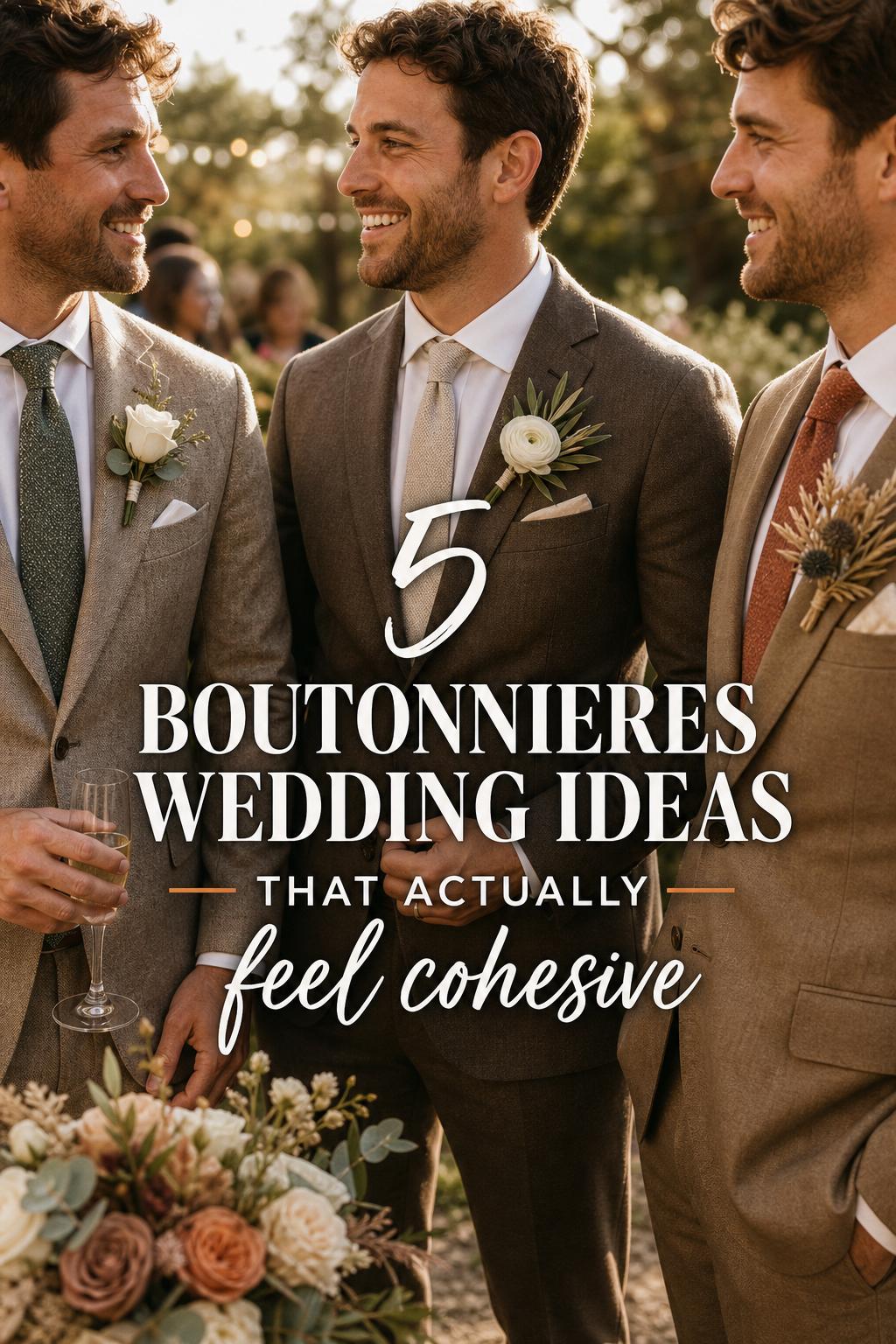
How wedding media and floral inspiration shape boutonniere choices
Many couples begin with image-driven inspiration from wedding platforms and editorial brands such as The Knot, Zola, Martha Stewart Weddings, and Inside Weddings. These sources often highlight real weddings, styled galleries, and practical floral guidance. They are especially useful for seeing how boutonnieres read in photographs, how they differ between the groom and groomsmen, and how season or theme changes the mood of the floral design.
What these galleries reveal most clearly is that successful boutonnieres are rarely random. A classic wedding may feature roses, ranunculus, and greenery in a restrained palette. A rustic wedding may lean into thistle, seed heads, twine, or dried botanicals. A more modern direction may use monochrome greenery, architectural blooms, or minimal single-flower styling. The consistent lesson is that the boutonniere works best when it follows the visual language already established elsewhere in the wedding.
Choosing a style direction before choosing flowers
One of the easiest ways to narrow your options is to choose a style category first. Instead of starting with an individual bloom, begin with the overall feeling you want the wedding party to project. This avoids a common planning problem: selecting flowers that are individually attractive but visually disconnected from the attire, venue, or bouquet.
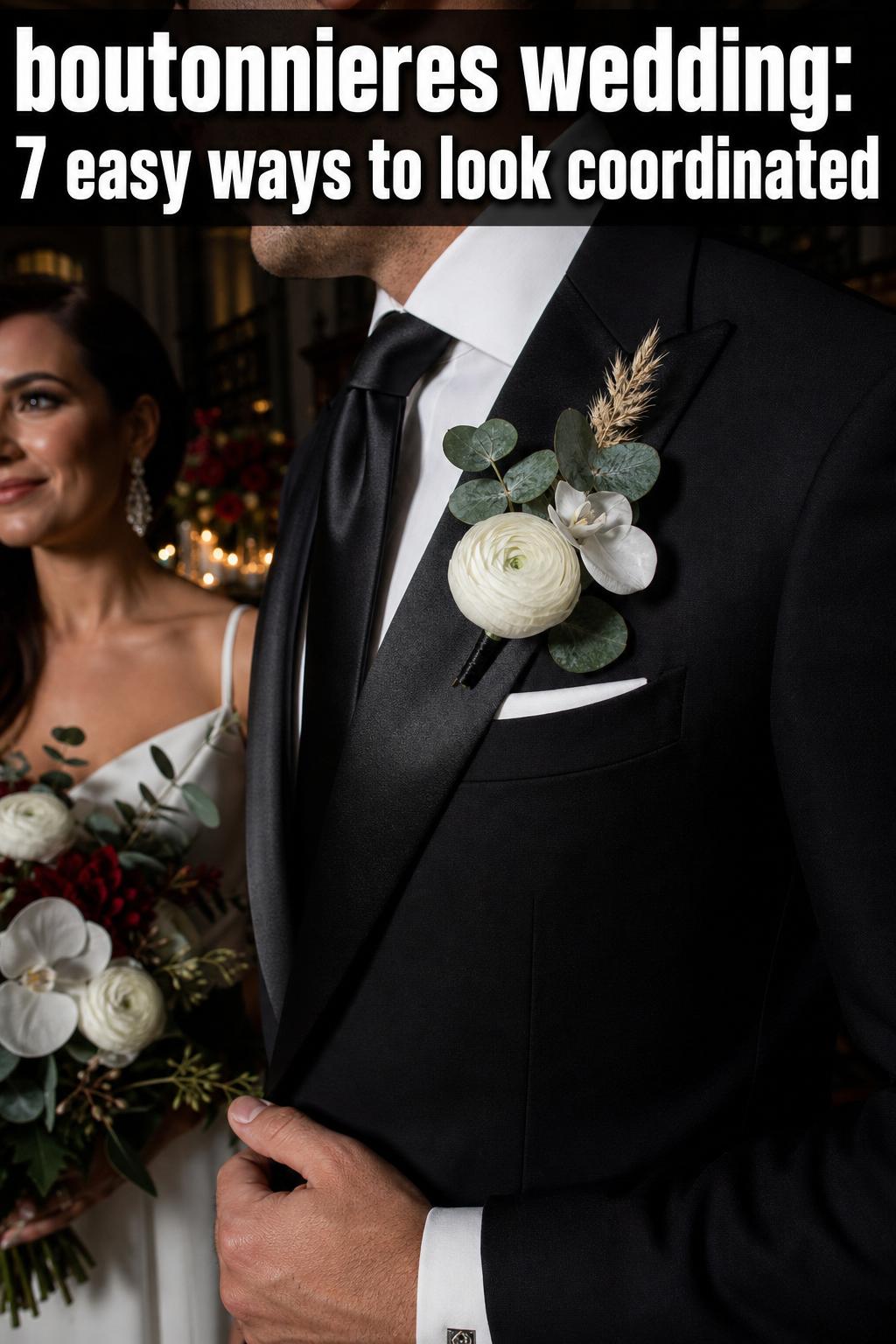
Classic wedding boutonnieres
Classic styles usually rely on familiar wedding flowers such as roses, spray roses, baby’s breath, or ranunculus paired with soft greenery. White, blush, and ivory are common color directions because they coordinate easily with formalwear and bridal florals. This style works especially well for ballroom weddings, church weddings, and celebrations where the couple wants timeless portraits instead of a strongly trend-driven look.
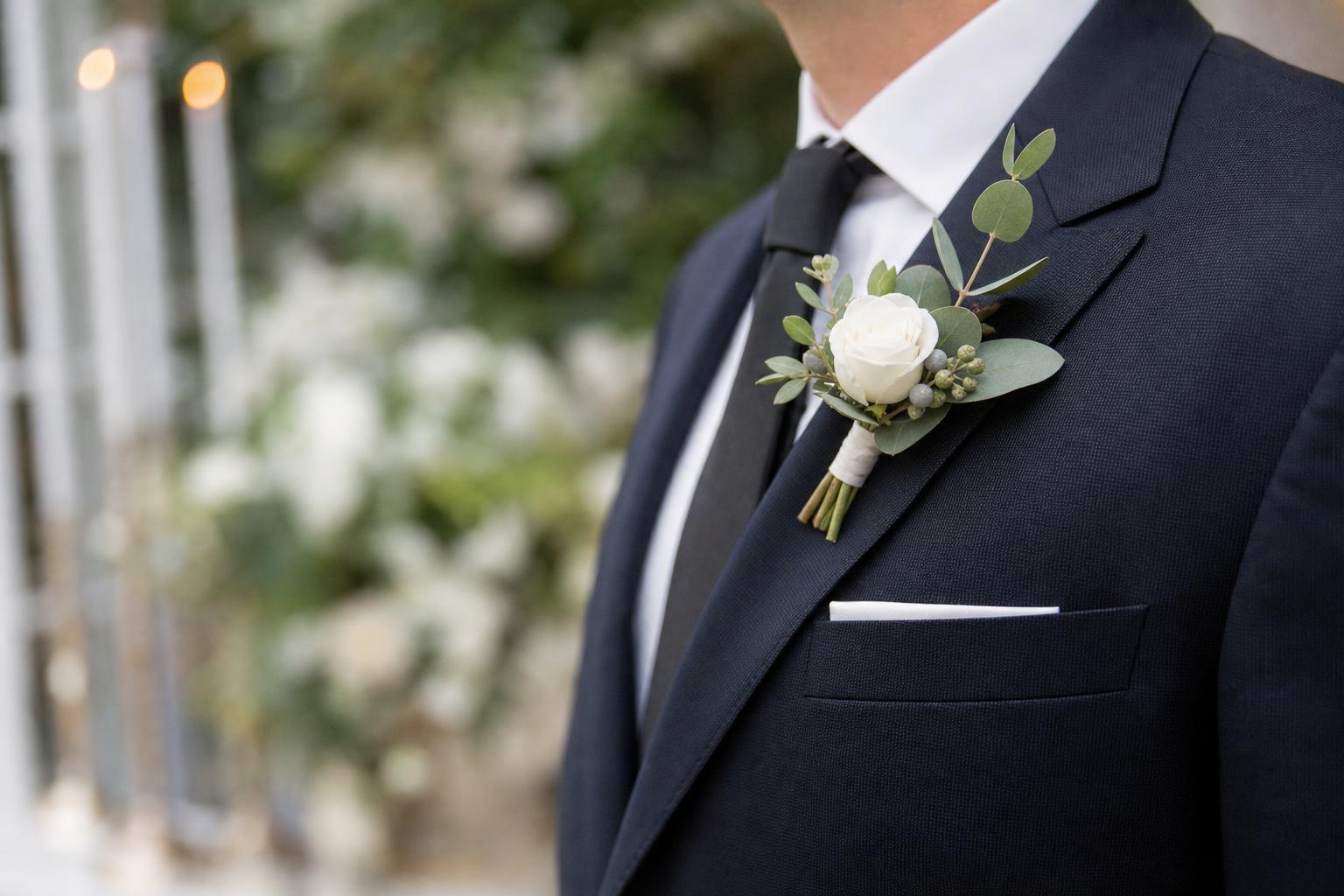
Best for: traditional weddings, black-tie settings, and couples using elegant floral palettes. Why it works: classic flowers photograph clearly and usually pair well with bouquets. How to make it work: keep the scale neat and compact so the boutonniere looks polished rather than bulky. Budget tip: reserve the most refined focal bloom for the groom and use a simpler version for groomsmen. Common mistake to avoid: adding too many filler elements, which can make a classic boutonniere look busy. Real-life styling tip: on darker jackets such as navy, a light bloom with a little greenery gives more definition in photos than an all-green design.
Modern wedding boutonnieres
Modern boutonnieres tend to be cleaner in line and stronger in shape. Monochrome greenery, protea, orchid influences, or architectural styling can all sit in this category, sometimes accented with metallic details. The look is less about softness and more about structure, editing, and contrast. If the wedding aesthetic is contemporary, urban, or fashion-forward, this direction can tie the lapel floral directly to the overall design.
Best for: city venues, minimalist celebrations, and couples who want a more editorial feel. Why it works: modern designs stand out without relying on a large number of flowers. How to make it work: limit the palette and choose one strong botanical idea rather than several competing ones. Budget tip: a single distinctive bloom with thoughtful greenery can make a stronger impact than a larger mixed arrangement. Common mistake to avoid: combining modern structure with overly rustic materials, which can make the look feel undecided. Real-life styling tip: if the suit has a strong texture or pattern, keep the boutonniere especially pared back so the lapel does not look crowded.
Rustic and boho wedding boutonnieres
Rustic and boho styles often bring in texture first. Thistle, wheat, seed heads, dried botanicals, wax flower, twine, and softer greenery such as eucalyptus can all create a more relaxed floral story. These styles are often well suited to barn weddings, garden settings, outdoor receptions, or celebrations that lean into natural materials and a less formal mood.
Although rustic and boho are often grouped together, they do not have to look the same. Rustic tends to feel more grounded and earthy, while boho can look a little looser and more expressive, sometimes with wildflower-inspired textures or feather-like movement. The key is to make sure the boutonniere still feels refined enough for wedding attire.
Best for: outdoor weddings, relaxed venues, and couples using natural color palettes. Why it works: textured florals connect especially well to landscape-driven venues and informal styling. How to make it work: repeat at least one material or botanical from the bouquet so the boutonniere feels connected, not separate. Budget tip: dried elements can help stretch the floral budget while still creating visual depth. Common mistake to avoid: making the boutonniere too wide or fragile for movement during the day. Real-life styling tip: if the ceremony is outdoors, ask for a design that sits tightly bound rather than loosely airy, because wind can make delicate textures look untidy before portraits begin.
Luxury and minimal lapel flowers
Luxury and minimal may sound opposite, but they often share one principle: intentional restraint. Luxury boutonnieres may feature orchids, peonies, garden roses, or refined metallic pins, while minimal styles may use one bloom, a clean line of greenery, or a single elegant accent. In both cases, the design relies on confidence and clarity rather than abundance.
Best for: highly curated weddings, intimate formal events, and couples who want polished portraits. Why it works: edited floral choices feel sophisticated and let premium flowers or strong styling details stand on their own. How to make it work: coordinate carefully with lapel width, tie style, and bouquet scale. Budget tip: a minimal boutonniere can still look elevated if the chosen bloom is fresh and well proportioned. Common mistake to avoid: assuming “luxury” means larger. Oversized boutonnieres can look awkward on formalwear. Real-life styling tip: minimal styles are especially effective when the bouquet already carries more visual complexity, because they prevent the floral story from feeling repetitive.
Season changes everything: spring, summer, autumn, and winter planning
Seasonal thinking is one of the most practical ways to make boutonniere decisions. It influences flower availability, color palette, comfort, and durability. A design that feels fresh and sensible in spring may struggle in peak heat, while a winter look can often handle richer tones and more structured materials. Planning by season also helps the boutonniere feel naturally connected to the rest of the wedding environment.
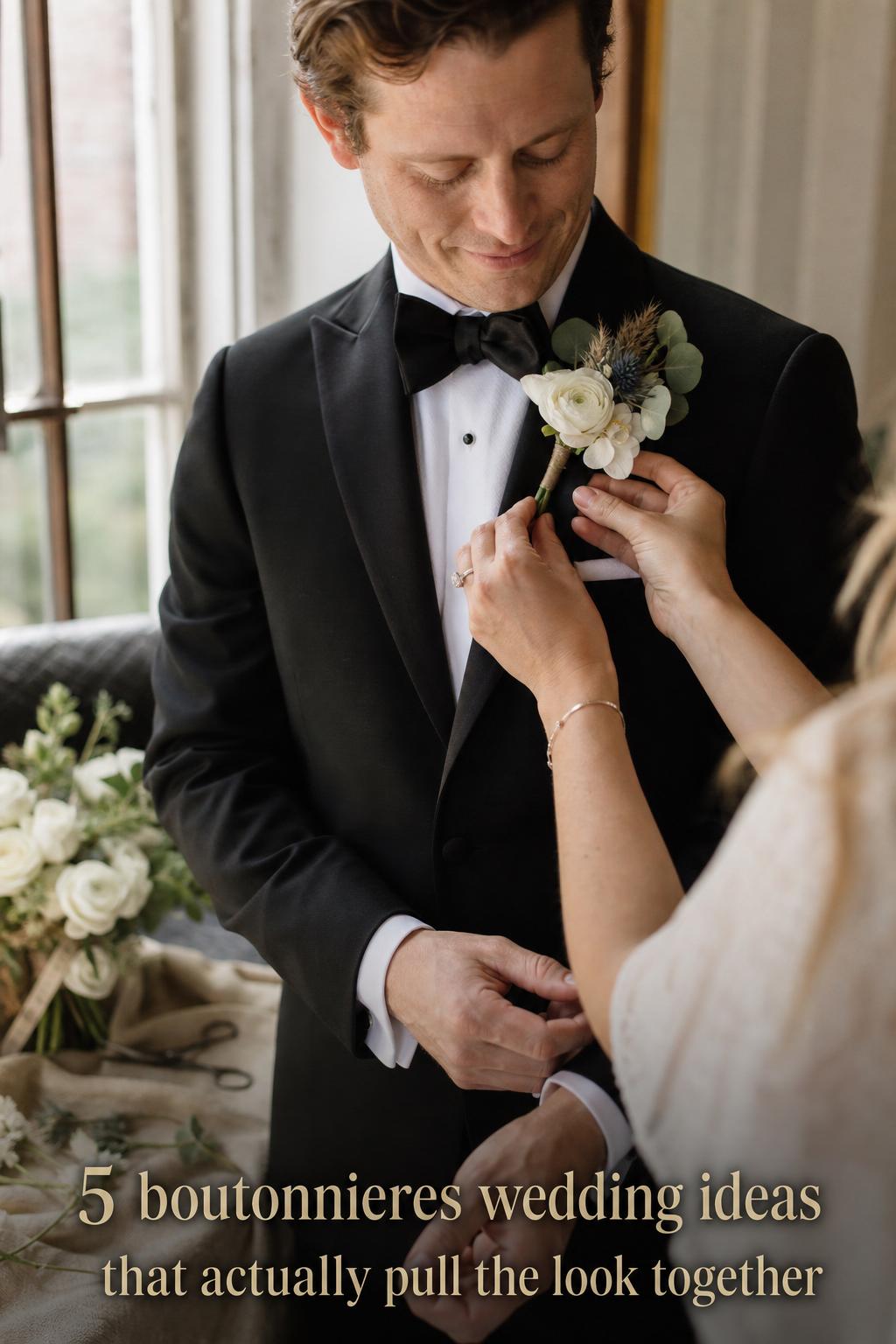
Spring wedding boutonnieres
Spring often invites softer color stories and fresh, romantic flowers such as peony, ranunculus, and anemone. This is a good season for blush pink, ivory, and sage green combinations, especially if the wedding is in a garden or a venue with abundant natural light. Spring boutonnieres tend to pair well with bouquets that have movement and layered petals.
Best for: garden weddings, daytime ceremonies, and romantic floral styling. Why it works: spring florals feel naturally in step with the season rather than forced against it. How to make it work: choose one focal flower and keep the supporting greenery soft and controlled. Budget tip: use the same spring flower family across bouquets and boutonnieres for a cohesive look without introducing too many separate floral components. Common mistake to avoid: overloading a small boutonniere with delicate petals that bruise easily during hugs and handling. Real-life styling tip: if portraits are scheduled before the ceremony, keep spring boutonnieres cool until the last practical moment so they stay crisp for close-up shots.
Summer wedding boutonnieres
Summer weddings often call for flowers and materials that can hold up better through heat and longer outdoor celebrations. Sunflowers, billy balls, greenery, and hypericum can support brighter or more vivid summer palettes. Summer boutonnieres also need practical planning around transport, timing, and how long they will be worn before the reception begins.
Best for: outdoor ceremonies, destination-feeling celebrations, and lively color palettes. Why it works: stronger shapes and durable materials often read well in bright light. How to make it work: keep the design compact and avoid too many fragile pieces. Budget tip: summer color can come from one accent flower rather than a large mixed cluster. Common mistake to avoid: selecting a boutonniere for color alone without considering how it handles heat. Real-life styling tip: ask the florist or coordinator to distribute boutonnieres just before the ceremony rather than hours earlier, especially for outdoor events in full sun.
Autumn wedding boutonnieres
Autumn naturally supports richer texture. Thistle, dried accents, seed heads, and earthy greenery can sit beautifully alongside deeper seasonal palettes. If the wedding venue already carries warm wood, brick, or landscape tones, autumn boutonnieres can help the wedding party look connected to the setting without needing large floral statements.
Best for: rustic venues, outdoor-to-indoor weddings, and textured styling. Why it works: autumn materials often create shape and depth even in smaller designs. How to make it work: balance texture with one clear focal element so the boutonniere still feels intentional. Budget tip: a few dried or textural accents can add dimension without requiring a premium bloom for every piece. Common mistake to avoid: making every boutonniere identical if the groom needs a bit more distinction. Real-life styling tip: in autumn light, boutonnieres with a slight tonal contrast to the suit photograph better than all-brown or all-muted combinations.
Winter wedding boutonnieres
Winter styles often benefit from stronger shape, cleaner structure, and palettes that feel crisp or dramatic. Greenery-led designs, white florals, or richer luxury touches can work particularly well when paired with formal suits or tuxedos. Winter weddings also make room for a more edited, elegant look that reflects the season’s mood.
Best for: evening weddings, formal receptions, and tailored menswear. Why it works: winter attire often has more visual weight, so a defined boutonniere can hold its own. How to make it work: keep the flowers fresh and the wrapping refined, especially if metallic accents are part of the design. Budget tip: a minimal winter boutonniere can feel expensive when paired with a strong tuxedo and disciplined color palette. Common mistake to avoid: using a boutonniere so dark or green-heavy that it disappears on the jacket. Real-life styling tip: test winter boutonnieres under indoor lighting as well as daylight, because warm reception lighting can reduce contrast and detail.
Matching the boutonniere to the bridal bouquet without copying it exactly
The strongest boutonniere and bouquet pairings are related, not identical. A boutonniere should borrow the bouquet’s logic: perhaps its focal flower, a secondary bloom, a greenery type, or the overall color story. It does not need to become a miniature bouquet. In fact, when couples try to shrink the whole bouquet into a lapel flower, the result often looks too heavy and loses the clean line that menswear needs.
If the bridal bouquet features roses and ranunculus in blush and ivory, the groom’s boutonniere might use one rose or ranunculus with a little greenery. If the bouquet includes protea or orchids in a modern composition, the boutonniere can echo that direction with a smaller structural element. If eucalyptus appears in the bouquet, repeating it subtly in boutonnieres can tie the floral design together across portraits and ceremony styling.
- Match by focal flower when the bouquet has one dominant bloom.
- Match by color palette when the bouquet is more mixed or textural.
- Match by greenery when the wedding style is minimal or nature-led.
- Match by mood rather than exact ingredients when the bouquet is large and expressive.
Best for: couples who want the floral design to feel coordinated across all wedding photos. Why it works: visual repetition creates harmony without making every piece look copied. How to make it work: choose one or two bouquet references for the boutonniere, not five. Budget tip: using a secondary bouquet flower in boutonnieres can be more cost-conscious than using the bouquet’s main premium bloom in every piece. Common mistake to avoid: forcing every bouquet element into the boutonniere. Real-life styling tip: when reviewing floral mockups, place the boutonniere next to a bouquet sample and a suit swatch at the same time; that side-by-side check catches imbalance quickly.
Who wears a boutonniere, and how to differentiate roles gracefully
In many weddings, the groom’s boutonniere should be slightly distinct from those worn by groomsmen. This distinction can be subtle: a different focal flower, a fuller stem treatment, or a small variation in color. Fathers of the bride and groom may wear boutonnieres that coordinate with the wedding palette but are simpler than the groom’s. A ring bearer, if wearing one, usually benefits from an especially small and lightweight design.
This is one of the easiest places to make the wedding party feel organized rather than uniform in a flat way. The groom needs visual emphasis in portraits. Groomsmen should look coordinated with him, not interchangeable with him. The same principle applies to other honored family members. Small floral distinctions help communicate role without requiring a separate style for every individual.
- The groom: usually the most distinctive boutonniere in the group.
- Groomsmen: coordinated versions with slightly reduced complexity.
- Fathers: polished, simple styles connected to the overall palette.
- Ring bearer: scaled-down design for comfort and proportion.
Best for: weddings with multiple male-presenting attendants or family roles to distinguish. Why it works: subtle differentiation helps portraits read clearly and supports the structure of the wedding party. How to make it work: set a floral hierarchy early with your florist or planner. Budget tip: simplify all non-groom boutonnieres using the same greenery and one supporting bloom. Common mistake to avoid: giving every person a completely different design, which can make the wedding party look visually fragmented. Real-life styling tip: ask the photographer to note who is wearing which boutonniere variation, because this helps when arranging detail shots and family portraits quickly.
Wearing, pinning, and preserving: the part couples often underestimate
A well-designed boutonniere can still look wrong if it is pinned poorly. Position, angle, and security all affect how it appears in motion and in photos. Practical guidance matters here just as much as style. Boutonnieres should sit neatly on the lapel, feel secure without damaging the jacket, and stay upright through the ceremony, portraits, and greeting line.
DIY-minded couples may also want to understand the mechanics behind assembly. Floral wire, pins, ribbon, and supportive wrapping materials all influence whether the boutonniere keeps its shape. Gardens Illustrated and floral education sources often highlight that the construction process matters as much as flower choice. The design has to survive transport, handling, and wear.
- Keep stems tightly bound so the boutonniere holds its form.
- Use pins carefully so the design sits upright rather than tilting outward.
- Store boutonnieres cool before the ceremony to support freshness.
- Transport them in a way that prevents petals and greenery from being crushed.
Best for: every wedding, but especially for outdoor events and long timelines. Why it works: even a simple boutonniere looks more polished when it is properly secured and fresh. How to make it work: assign one responsible person to distribute and pin boutonnieres shortly before they are needed. Budget tip: if you are investing in premium flowers, protect that investment with proper handling rather than spending more on larger designs. Common mistake to avoid: pinning boutonnieres too early in the day and leaving them exposed to heat, friction, or repeated handling. Real-life styling tip: keep a small emergency kit with extra pins and ribbon near the getting-ready area, because boutonniere repairs are usually simple if caught early.
Materials beyond fresh flowers: ribbons, dried botanicals, and non-floral options
Fresh flowers may be the traditional choice, but they are not the only direction worth considering. One notable gap in many wedding boutonniere conversations is materials. Ribbons, wire, pins, twine, dried botanicals, pressed flower influences, succulent-forward accents, and other non-floral lapel adornments can all offer useful alternatives depending on the season, style, and budget.
These alternatives are especially relevant for couples who want a more personalized or less conventional wedding look. A dried botanical boutonniere may suit a rustic autumn wedding better than a delicate fresh bloom. A minimalist non-floral accent can work in a modern setting. Hybrid designs with greenery and one non-traditional material can also bridge the gap between classic wedding expectations and a more personal style statement.
Best for: couples seeking personalization, sustainability-minded planning, or styling that differs from standard fresh-flower formulas. Why it works: alternative materials can improve durability and better match certain themes. How to make it work: make sure the texture still feels appropriate next to formalwear. Budget tip: mixing dried and fresh materials can create impact without requiring premium fresh blooms in every boutonniere. Common mistake to avoid: choosing non-floral materials that feel costume-like rather than wedding-appropriate. Real-life styling tip: whenever using twine, ribbon, or metallic accents, compare them directly against the suit fabric and tie so the finish feels intentional rather than accidental.
Sustainability and local sourcing deserve a place in the conversation
Couples increasingly want wedding choices that feel thoughtful, and boutonnieres are no exception. Seasonal florals, local farms, and sustainable floristry approaches can all shape a smarter floral plan. This does not mean every boutonniere must look rustic or highly alternative. It simply means asking practical questions about availability, seasonality, and material choices before making final decisions.
Seasonal sourcing often supports a more natural look because the chosen flowers fit the time of year. It can also simplify coordination across bouquets, boutonnieres, and other floral pieces. Biodegradable materials and reduced reliance on unnecessary extras may also suit couples who want the wedding to feel more grounded and less wasteful.
Best for: couples planning with seasonal awareness or trying to keep floral choices more intentional. Why it works: seasonal and locally informed decisions often produce more coherent styling and can reduce unnecessary complexity. How to make it work: ask your florist to recommend flowers and greenery that naturally suit your wedding month. Budget tip: local and in-season choices can help avoid overpaying for a look that is fighting the calendar. Common mistake to avoid: choosing a highly specific inspiration image without checking whether its flowers align with your season. Real-life styling tip: when discussing sustainability, ask about both the flowers and the mechanics of the boutonniere, including ribbon, wrapping, and support materials.
A dress-code lens: when the boutonniere should step forward and when it should stay quiet
One of the most underused planning filters is dress code. A boutonniere should not only match the flowers; it should also respect the level of formality in the clothing. In black-tie weddings, a clean, elegant boutonniere often works better than a loose, heavily textural design. In semi-formal weddings, there is typically more room for color, rustic detail, or softer styling. The key is proportion and tone.
This matters because lapel florals sit directly on tailored clothing. If the wedding party is wearing sharp formalwear, the boutonniere should support that precision. If the attire is more relaxed, the floral design can soften accordingly. This is often where couples accidentally create tension: pairing a highly rustic boutonniere with very formal tailoring, or placing a luxury bloom on a relaxed suit without enough connection to the rest of the styling.
Best for: couples refining the difference between formal, semi-formal, and relaxed wedding aesthetics. Why it works: dress-code awareness keeps the boutonniere from feeling visually out of place. How to make it work: review the boutonniere next to the actual jacket, not just the floral proposal. Budget tip: the cleaner the tailoring, the less the boutonniere needs to do to make an impression. Common mistake to avoid: overdecorating the lapel when the suit already has visual presence. Real-life styling tip: for black-tie attire, a smaller boutonniere with stronger definition usually appears more elevated than a larger arrangement with multiple textures.
How boutonnieres read in photographs and real wedding galleries
Real wedding galleries from platforms like The Knot and Inside Weddings show something couples often overlook: boutonnieres are seen most often in close-up moments. They appear in getting-ready images, first looks, ceremony portraits, family groupings, and candid hugs. That means texture, contrast, scale, and freshness all matter more than couples expect.
A boutonniere that looks appealing from a distance may disappear in photos if it matches the jacket too closely. One that is too large may distract in portraits, especially when viewed near the bouquet. This is why visual planning should include the photographer’s perspective. Boutonnieres are not just worn; they are documented repeatedly throughout the day.
- Choose enough contrast against the suit or tuxedo.
- Keep the design small enough to look elegant in close-up portraits.
- Coordinate with the bouquet so the two floral pieces look related in couple photos.
- Prioritize freshness if portraits are scheduled before the ceremony.
Best for: couples who care deeply about wedding photography and detail shots. Why it works: a boutonniere that reads clearly in photos contributes to a more finished wedding album. How to make it work: ask the photographer or florist which flowers and colors tend to show up best on camera. Budget tip: a single bloom with contrast can photograph more effectively than a larger mixed boutonniere. Common mistake to avoid: choosing all-green boutonnieres on dark jackets without testing visibility. Real-life styling tip: if your venue is in a major market such as New York, Los Angeles, or Chicago where editorial-style photography is common, detail-driven boutonniere styling becomes even more noticeable in the final gallery.
Practical planning notes for different budgets and wedding scales
Boutonnieres can be planned generously or efficiently, but they should always be planned intentionally. For smaller weddings, couples may choose more personalized boutonnieres because the guest count and wedding party are limited. For larger weddings, consistency and budget control often matter more. The best approach depends on where florals sit in the broader wedding priorities.
If flowers are central to the wedding vision, investing a little more in a distinctive groom boutonniere and coordinated party designs may make sense. If the floral budget is tighter, simplify rather than dilute. A restrained boutonniere with one good flower and clean wrapping usually looks better than a larger arrangement built from too many competing low-impact parts. Rental versus purchase may also come into the conversation for some couples, especially when considering alternatives or pre-made pieces.
- Invest in the groom’s boutonniere first if you need a clear floral priority.
- Keep groomsmen versions simpler but related.
- Use one recurring greenery or flower across the entire wedding party for cohesion.
- Focus spending on freshness, proportion, and handling rather than size alone.
Best for: couples balancing inspiration with a realistic floral budget. Why it works: floral hierarchy helps preserve quality where it matters most. How to make it work: decide early how many boutonnieres are truly needed and for whom. Budget tip: use tiered designs rather than identical premium pieces for every member of the wedding party. Common mistake to avoid: adding extra boutonnieres late in the planning process without accounting for style consistency. Real-life styling tip: keep a written list of every boutonniere recipient and their role so nothing gets missed during floral delivery and setup.
Personal storytelling through a lapel flower
One of the most meaningful directions in wedding styling is using the boutonniere to support the couple’s story. This does not require a dramatic concept. Sometimes it is as simple as choosing a flower family that appears throughout the wedding, selecting a style that reflects the venue, or using textures that connect to a broader romantic, boho, modern, or luxury atmosphere. The boutonniere becomes part of the narrative rather than an isolated accessory.
This is also where less traditional choices can feel especially right. A couple planning a city wedding may prefer a minimal boutonniere with strong lines. A countryside celebration may feel more authentic with dried textures and eucalyptus. A formal evening reception may call for a quieter, more refined lapel flower. The best wedding styling decisions often feel emotionally true because they are consistent, not because they are complicated.
Planning tip: if you are struggling to choose between several boutonniere ideas, describe your wedding in three words first, such as classic, romantic, and formal or modern, minimal, and tailored. Then remove any boutonniere idea that does not support those words. This simple filter often makes the decision much easier and keeps the floral design coherent across the day.
Glossary of flowers and terms couples see often
Certain flower names appear repeatedly in wedding boutonniere inspiration, and understanding their role can make planning easier. Roses and spray roses are often used for classic wedding styling. Ranunculus tends to support romantic and refined looks. Anemone can add contrast and seasonal character, especially in spring. Protea often leans modern or statement-making. Orchid details can suggest a cleaner luxury mood. Eucalyptus and other greenery help connect boutonnieres to bouquets and larger wedding florals. Thistle, wheat, wax flower, seed heads, and dried botanicals usually support rustic or boho styling.
Other useful terms include buttonhole flower, which is often used as a synonym for boutonniere, and corsage vs boutonniere, a comparison many couples encounter when planning floral pieces for different members of the wedding party. Knowing this terminology can help when speaking with florists, browsing galleries, or comparing ideas across platforms like Zola, Martha Stewart Weddings, The Knot, Flower Icon, Ling’s Moment, Confetti & Roses, and Gardens Illustrated.
Final thoughts on choosing wedding boutonnieres with confidence
The most memorable wedding flowers are rarely the ones chosen in a rush. A boutonniere may be one of the smallest floral pieces in the celebration, but it carries a surprising amount of visual responsibility. It sits beside tailored clothing, appears in nearly every portrait, and quietly connects the groom and wedding party to the larger floral story of the day.
When you choose with season, attire, bouquet, role, and setting in mind, the decision becomes much clearer. Whether your wedding feels classic and formal, rustic and relaxed, modern and minimal, or romantic and garden-inspired, the right lapel flower will feel as though it belongs there from the first look to the last dance. That is usually the goal worth trusting: not the busiest boutonniere or the boldest trend, but the one that makes the whole wedding look more complete.
FAQ
How long do wedding boutonnieres last in heat?
Heat can shorten the life of delicate flowers, so boutonnieres generally hold up best when kept cool and pinned on shortly before the ceremony. Compact designs and sturdier materials usually perform better in summer than soft, fragile blooms with many exposed petals.
What size should a wedding boutonniere be?
A wedding boutonniere should be scaled to the lapel and the formality of the outfit, usually looking best when it is neat and compact rather than oversized. If it competes with the tie, lapel, or pocket square, it is probably too large.
Should the groom’s boutonniere match the bridal bouquet exactly?
No, it usually works better when the groom’s boutonniere complements the bouquet rather than copying it exactly. A shared flower, greenery type, or color cue creates a stronger and more wearable result than trying to miniaturize the entire bouquet.
Do groomsmen need the same boutonniere as the groom?
Groomsmen usually wear coordinated boutonnieres, but the groom’s should be slightly more distinctive. That difference can come from one focal bloom, a fuller design, or a subtle color variation that helps him stand out in photos.
Can non-floral materials be used in a wedding boutonniere?
Yes, non-floral and hybrid options such as dried botanicals, ribbons, twine, or succulent-forward accents can work well when they suit the wedding style. The key is making sure the texture still looks intentional next to formalwear and connects with the rest of the wedding design.
Who typically wears boutonnieres at a wedding?
The groom and groomsmen are the most common boutonniere wearers, but fathers of the bride and groom, ring bearers, and other honored participants may wear them too. The floral design is often adjusted slightly by role so the wedding party looks coordinated without everyone appearing identical.
What flowers are commonly used for wedding boutonnieres?
Common choices include roses, spray roses, ranunculus, anemone, orchids, protea, and greenery such as eucalyptus. Rustic and boho styles may also include thistle, wheat, wax flower, seed heads, or dried botanicals for added texture.
How do I choose a boutonniere for a black-tie wedding?
For black-tie weddings, a smaller and more refined boutonniere usually works best. Clean structure, restrained color, and a polished finish tend to suit formal tailoring better than loose, highly textured, or oversized designs.
Are seasonal wedding boutonnieres worth planning around?
Yes, planning around the season helps with flower choice, color harmony, and practicality. Seasonal boutonnieres usually look more natural within the wedding setting and can make it easier to coordinate with the bouquet and the broader floral plan.