Wedding Flowers Centerpieces: Fix Every Tabletop Problem
Beautiful wedding flowers centerpieces can still create a frustrating reception if they block conversation, disappear in the room, or cost more than expected. The problem is rarely that you chose the wrong flower. More often, the centerpiece is solving the wrong visual or practical need. A tall arrangement may look dramatic in an inspiration photo but interrupt sightlines at dinner. A low cluster may feel elegant on a six-foot banquet table but look lost on a large round. A mix of every flower you love may photograph as busy instead of abundant.
This problem-solution guide helps you diagnose the table before you choose the recipe. You will match scale to the guest experience, choose a format that suits your table shape and venue, build a flower plan that feels intentional, and control cost without making the room feel unfinished. Use the ideas as a brief for your florist, a shopping plan for DIY work, or a way to decide which saved images are genuinely useful.
Diagnose the centerpiece problem before choosing flowers
Start with the table, not the flower catalog. Write down the table shape, length or diameter, number of guests, linen color, chair style, room size, ceiling height, lighting, and what guests need to do while seated. They will eat, talk across the table, pass shared dishes, read menus, take photos, and sometimes stand to greet people. A centerpiece that looks impressive but makes those actions awkward is not a successful design.
Next, decide what the flowers need to fix. A bare ballroom may need height and repetition so the room feels finished. A charming garden venue may need only a few deliberate arrangements because the landscape already provides atmosphere. A long dinner table may need a visual rhythm that leads the eye from one end to the other. A small restaurant reception may need compact pieces that leave room for plates, glassware, and conversation. The same floral recipe cannot do all four jobs equally well.
Turn wedding inspiration into a plan you can actually follow.
Zarellea brings your guest list, budget, vendors, and day-of details into one shared space — so no beautiful idea gets lost in the shuffle.
- If guests need to see across the table, choose low arrangements or raise the flowers well above eye level.
- If the room feels empty, repeat a simple centerpiece language instead of buying one oversized arrangement for every table.
- If the tables already have patterned linens or bold place settings, edit the flower palette and let the vessels provide structure.
- If the reception is outdoors, plan for wind, heat, water access, uneven surfaces, and arrangements that will not tip.
- If photography is a priority, check how the centerpiece looks from the entrance, the head table, and a seated guest’s perspective.
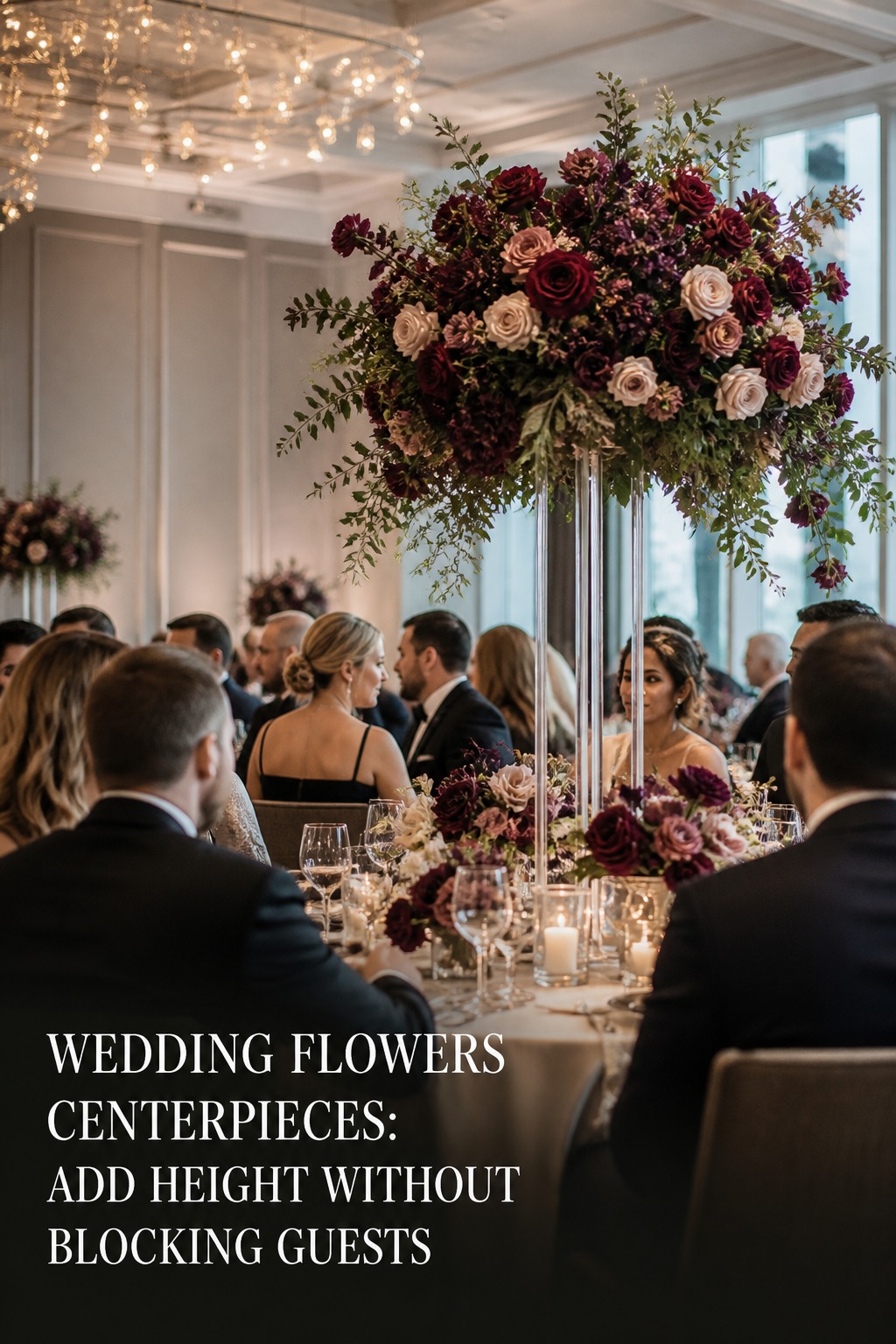
Height is the first decision because it changes how people experience one another. A low centerpiece usually keeps the table socially open. For a seated dinner, many florists aim for a compact arrangement below the natural eye line, although the exact height depends on the table, chairs, and the people using it. An elevated design can also work when the flowers are lifted above faces and the base is stable. The uncomfortable middle ground is often a tall, wide arrangement that occupies the exact zone where guests want to make eye contact.
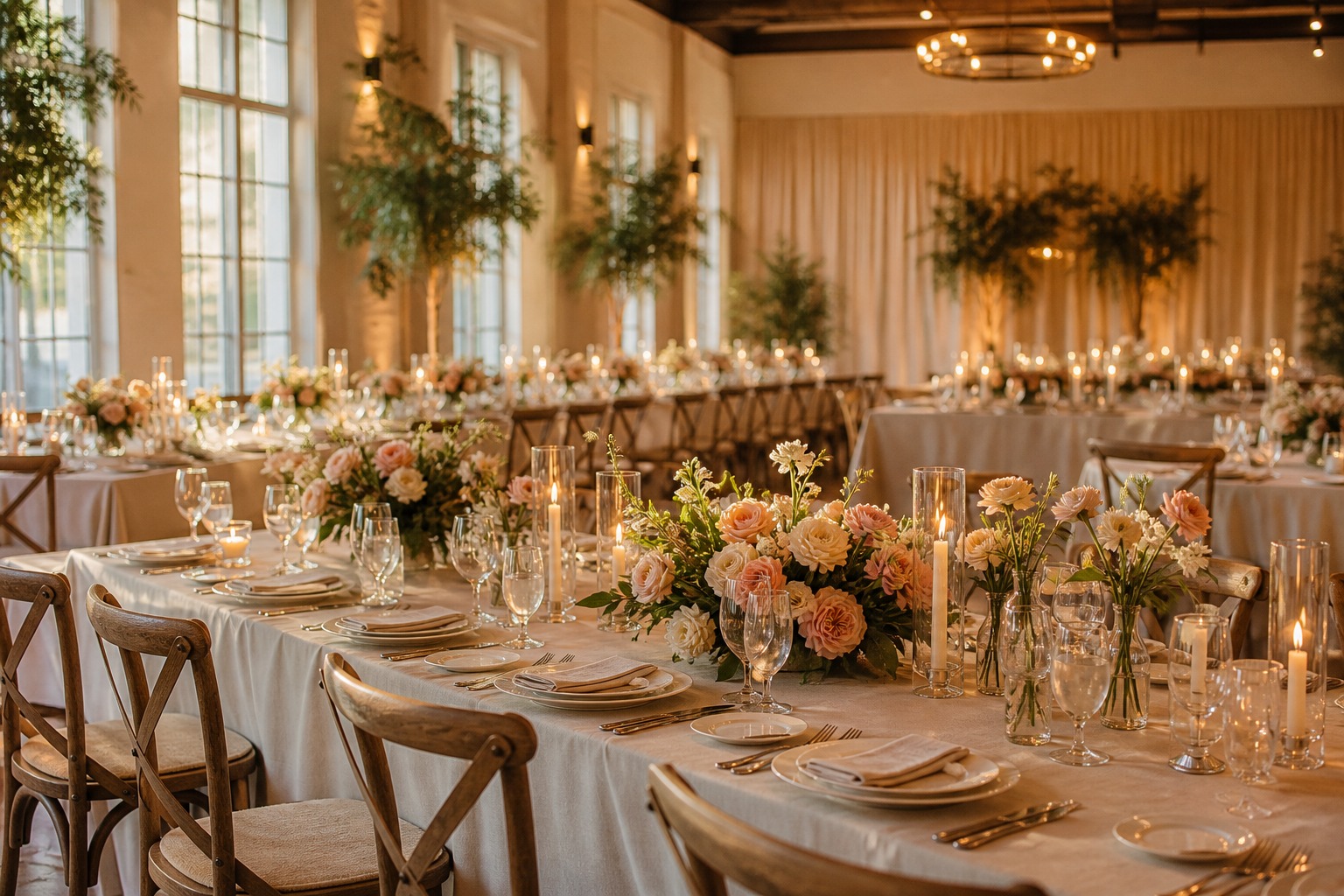
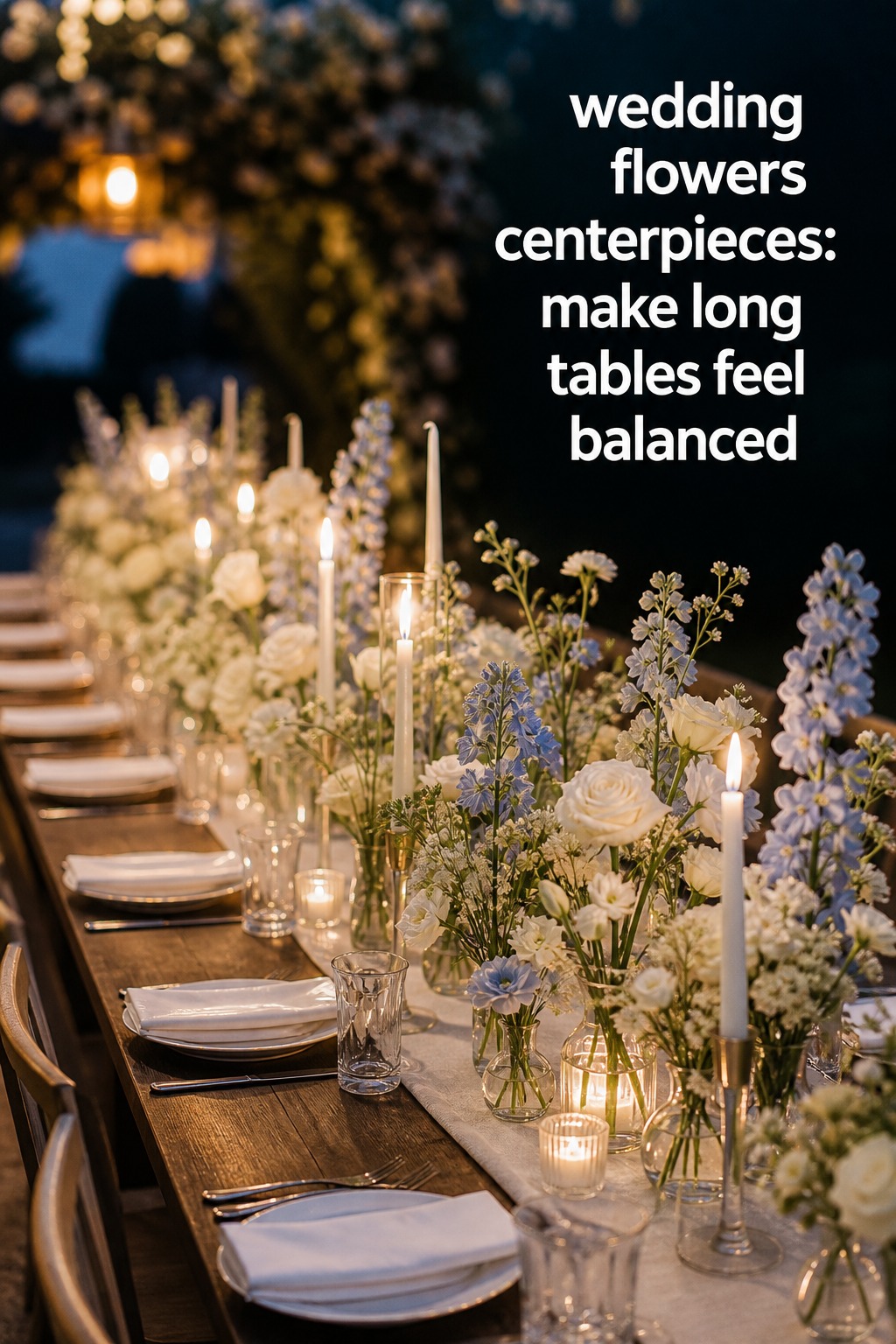
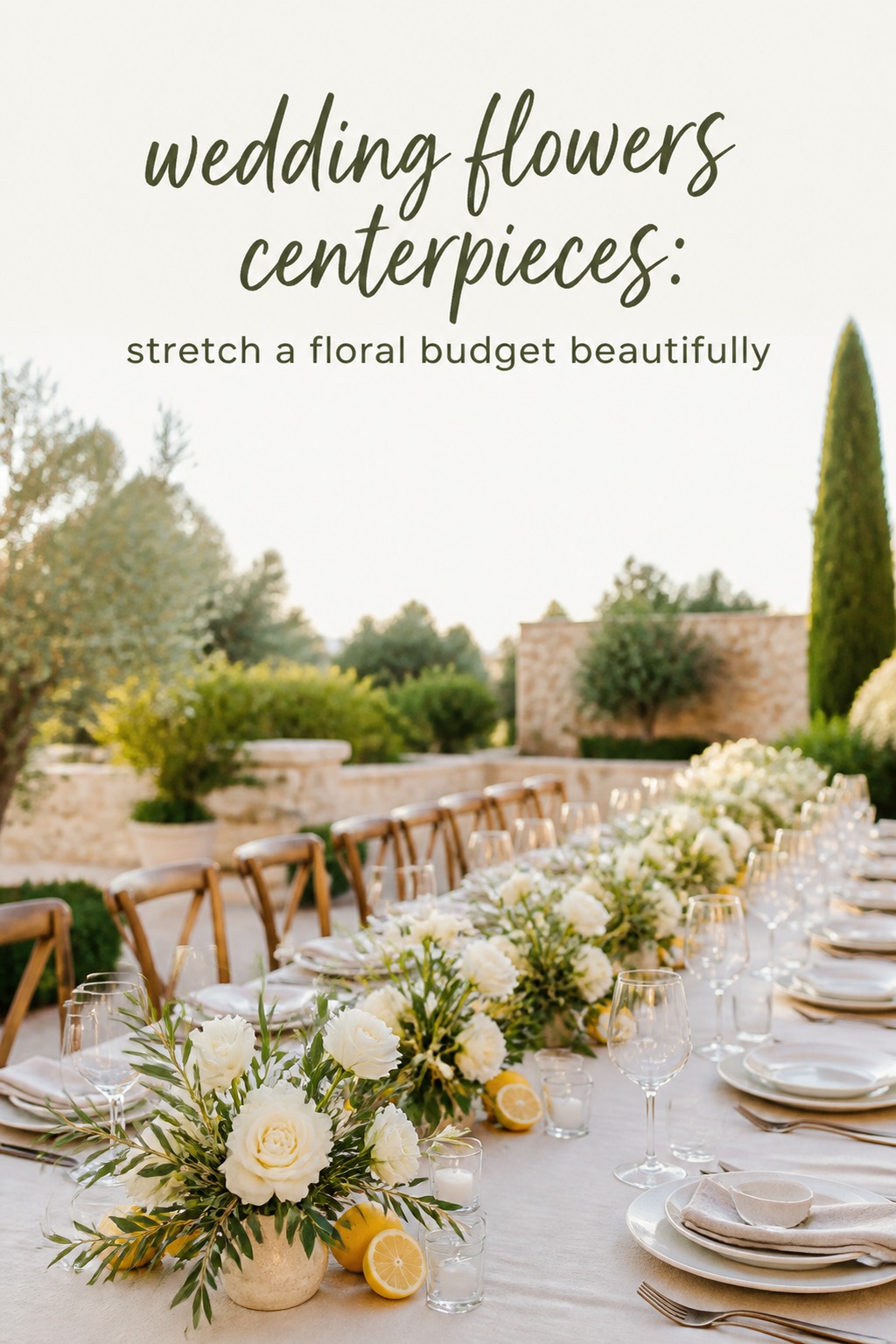
Table geometry matters just as much. On round tables, one central design gives the eye a clear anchor, while a cluster of small vessels can create a softer, more flexible version of the same idea. On long rectangular tables, one centerpiece in the middle can look stranded. Use a sequence of arrangements, bud-vase groups, candles, or a narrow floral runner so the design has an intentional beginning, middle, and end. Leave enough negative space for place settings rather than treating the entire tabletop as a flower bed.
Finally, look at the room in the light guests will actually experience. White flowers can be luminous in daylight and disappear beside pale linens under cool reception lighting. Deep red or plum flowers can look rich by candlelight but need lighter foliage or reflective vessels to keep them from becoming a dark mass. Bring a venue photograph, a linen swatch, and a sample of your tableware to the florist consultation. Color should be judged in relationship, not in isolation.
Choose a centerpiece format that solves the table’s real needs
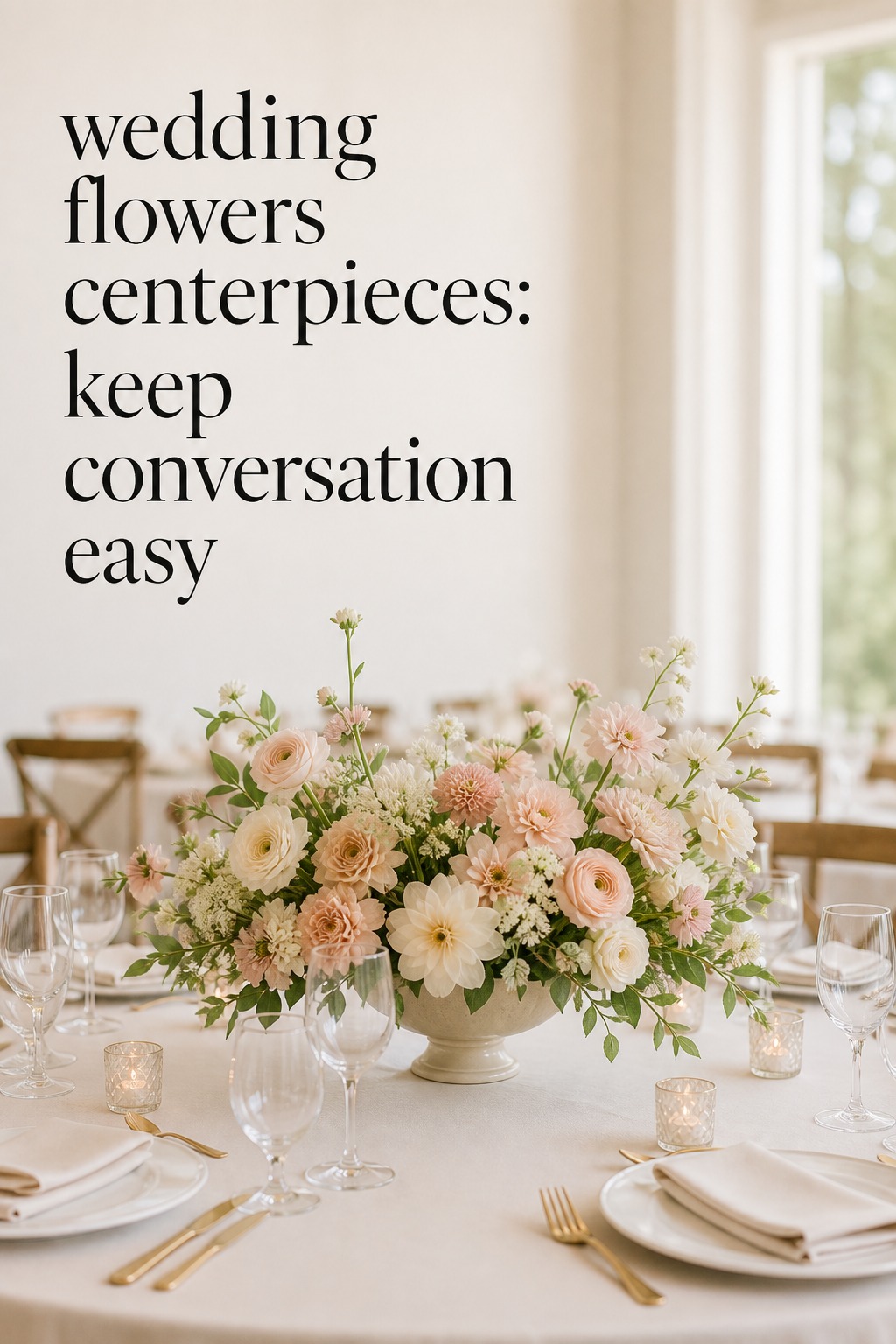
Once you know what is not working, select a format. A low compote is a reliable choice when you want a generous floral presence without blocking conversation. Its shallow, footed vessel gives the arrangement a clear footprint and makes a loose, garden-inspired shape possible. Keep the width proportional to the table. A centerpiece should feel substantial enough to register from across the room but not so broad that it crowds the plates or forces guests to reach around it.
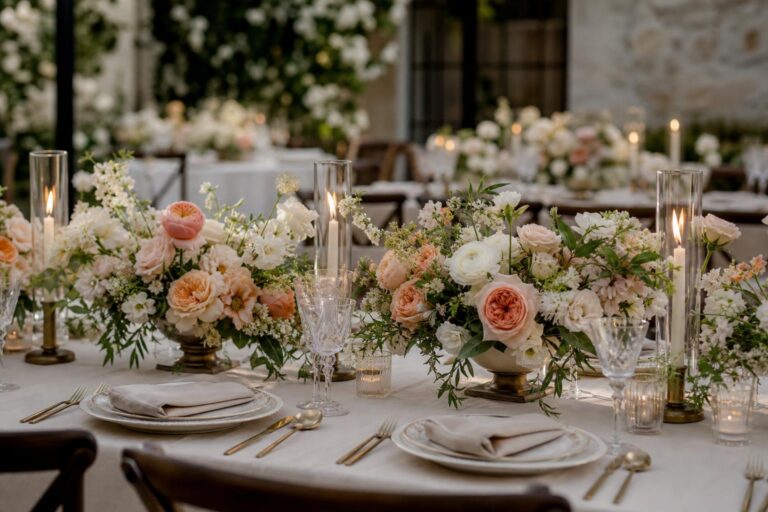
Bud-vase clusters solve several problems at once. They are easy to distribute along a long table, can be scaled up or down by adding vessels, and allow you to repeat a palette without making every arrangement identical. Use three to seven small containers in varied heights, then connect them with candles, fruit, ribbon, or a few loose stems. The key is grouping. Scattering single vases randomly can look accidental; creating a visual family makes a small flower count feel deliberate.
A narrow garland or floral runner works when the table should feel immersive. Keep it light enough to preserve place-setting space and break the line occasionally with candles or open areas. A continuous garland can be flower-heavy, labor-intensive, and difficult to move after dinner, so ask whether a series of connected clusters would create the same effect with more flexibility. On a rectangular table, this format can be especially effective because it follows the table’s natural direction.
Elevated centerpieces are useful for a large room, high ceilings, or a formal reception that needs vertical energy. They also keep flowers above the social zone when the arrangement is designed carefully. Confirm the height and base with the venue, and test the stability of the stand before the wedding day. The design should not sway when a nearby table is bumped. Clear glass, slender metal, or a simple pedestal can make the flowers feel suspended, but the mechanics must be as considered as the silhouette.
Non-floral accents can be the solution when a couple wants texture without paying for dense blooms. Candles, potted herbs, fruit, branches, ceramic objects, colored glass, books, or small framed details can share the table with flowers. These elements are most convincing when they support the same visual idea. A Mediterranean dinner might use citrus, olive branches, and terracotta. A winter table might use evergreens, taper candles, and stone vessels. The goal is not to replace flowers randomly but to give the centerpiece a richer material language.
- Choose low compotes for conversational dinners and a lush, garden-forward feeling.
- Choose bud-vase clusters when you need flexibility, repetition, or an approachable budget.
- Choose a runner when the long table itself should become the main visual line.
- Choose elevated designs when the room needs height and the social zone must remain clear.
- Add non-floral details when texture, theme, or budget matters as much as bloom quantity.
Do not force the same centerpiece on every table if the room has different zones. A sweetheart table can carry a more detailed arrangement because it is seen close up. Guest tables may use a simplified echo. A long head table can use a low line of flowers, while cocktail tables need compact pieces that will not be knocked over. Shared colors, vessels, or one repeated flower are enough to make the reception cohesive. Variation is a design tool when it follows a clear rule.
Consider the afterlife of each format, too. Bud vases are easy to move to a bar, lounge, or welcome table. Large compotes may need two people and a dedicated destination. Garlands can be repurposed only if the containers and water sources have been planned. Ask your florist or coordinator to map the move before approving the proposal. A centerpiece that looks beautiful for six hours and then has nowhere to go may not be the best use of the budget.
Build a flower recipe that looks intentional, not overworked
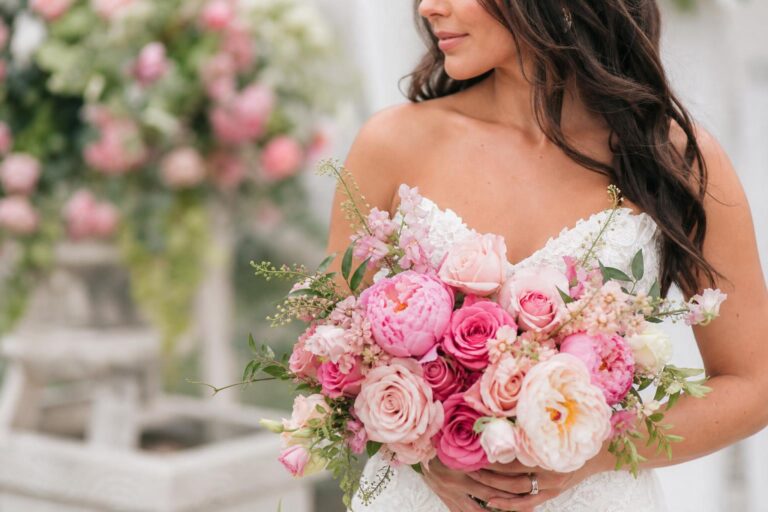
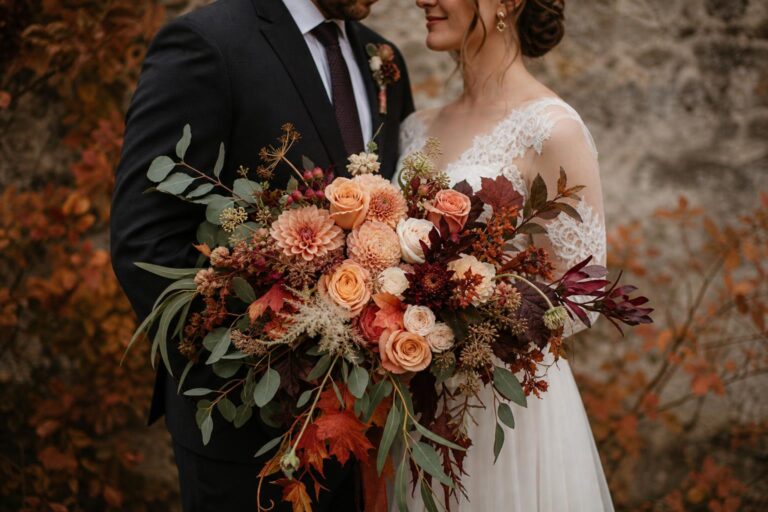
A good flower recipe has roles. Choose a dominant color or flower family, a supporting note, a small accent, foliage, and a neutral or material that gives the eye a rest. This does not mean every table needs an exact 60-30-10 formula. It means you decide what reads first and what plays backup. A palette of blush, peach, cream, and soft green may feel romantic and airy. A palette of burgundy, plum, dusty rose, and dark foliage may feel dramatic. Both become more polished when one idea leads.
Texture keeps a limited palette from looking flat. Combine rounded forms such as roses, dahlias, or hydrangeas with line flowers, airy fillers, branches, grasses, or trailing elements. You do not need every category in one arrangement. Two or three contrasting shapes are usually enough to create movement. If every bloom has the same round head and every stem is cut to the same height, even an expensive arrangement can look stiff. If every element is loose and delicate, the centerpiece may lack a visual anchor.
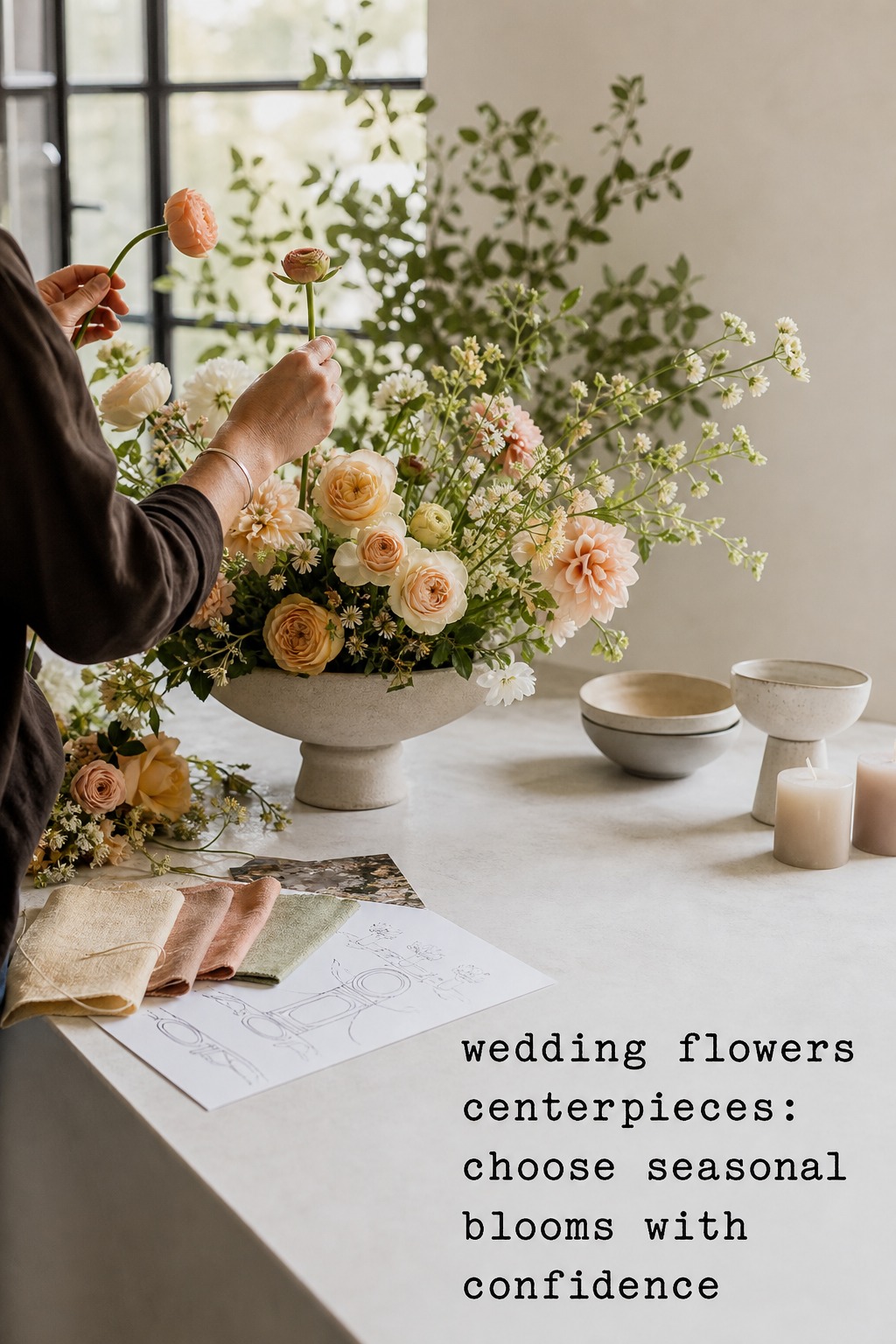
Seasonality is a design advantage, not merely a limitation. Instead of asking for one exact flower, describe the color, size, texture, and feeling you need. Peonies, garden roses, ranunculus, dahlias, tulips, hydrangeas, orchids, and local seasonal stems each bring a different silhouette and price. A florist can protect the design by substituting a bloom with a similar role. If you insist on an exact variety outside its season, you may pay more for a weaker result or receive something that does not match the original expectation.
Use repetition to make mixed centerpieces feel connected. Repeat one accent flower in every arrangement, keep the same vessel family, or use the same foliage throughout. Then allow small changes in shape or proportion. For example, every table might include white roses and olive branches, while some arrangements add blush dahlias and others use pale blue delphinium. This looks collected rather than copied. It also makes the plan more resilient if a particular stem arrives in a slightly different size.
Vessels are part of the recipe. A glossy ceramic bowl can make loose flowers feel contemporary. A silver compote can push the same palette toward formal. Clear glass keeps a small arrangement visually light, while colored glass turns the container into a deliberate accent. Keep the table surface in mind: a delicate arrangement on a busy patterned linen may need a calmer vessel, while a plain table can support a stronger shape. If you are renting vessels, confirm their actual dimensions and condition rather than designing from a tiny catalog photograph.
- Choose a hero color or shape, then give it enough space to be recognized.
- Use one or two texture contrasts instead of adding every available flower type.
- Ask for seasonal substitutes that preserve color, scale, and movement.
- Repeat a flower, vessel, foliage, or accent across the room to create cohesion.
- Review the recipe against linens, glassware, menu cards, and reception lighting.
When a centerpiece feels busy, remove before you add. Start by taking out the least important color or flower category. Then check whether the arrangement has a focal point and enough breathing room. When it feels sparse, add height, foliage, candles, or repetition rather than automatically adding more varieties. A small group of one flower type can look more intentional than a crowded mix, especially on a modern or minimalist table.
Give the florist a brief that explains the problem you are trying to solve. Say, “We want guests to see across the table and the room to feel warm,” or, “We love a garden look but need a design that can move after dinner.” Include the venue, date, guest count, table plan, budget range, and a short set of labeled inspiration images. Point out what you like in each image: the low shape, the color transition, the airy edge, the vessel, or the candlelight. This is more useful than asking for a copy of an arrangement from another venue.
Fix the budget and logistics before the wedding day
Floral quotes vary because centerpieces are not priced only by guest count. The flower recipe, arrangement size, vessel rental, labor, delivery, setup, strike, mechanics, season, and travel all matter. A long garland may use more labor than a series of simple clusters. A tall design may require a rented stand and careful installation. A flower that looks inexpensive at a grocery store may require many stems to create a full professional arrangement. Ask for an itemized proposal so you can see which choice is driving the total.
The safest budget strategy is to create a priority order. Decide whether the greatest visual return comes from guest tables, the head table, the ceremony, the welcome area, or personal flowers. Protect the one or two moments you will remember and simplify the rest. A concentrated run of strong centerpieces usually looks more designed than a plan that spreads a small amount of flower thinly across every surface. Candles, fabric, fruit, and reusable vessels can extend the atmosphere without pretending to be flowers.
- Use seasonal flowers and let the florist substitute by role rather than insisting on one variety.
- Choose a smaller number of flower types and buy enough of them to create visual mass.
- Use greenery for structure and movement, but do not assume greenery is always cheaper once labor is included.
- Repeat rental vessels and a simple centerpiece shape instead of commissioning many unrelated designs.
- Ask whether ceremony arrangements can move to dinner, the bar, or the lounge without damaging them.
- Confirm delivery, setup, breakdown, rental return, and repurposing charges in writing.
DIY can be beautiful, but it needs a realistic schedule. Choose a format that can be made in batches, such as bud-vase clusters or single-flower arrangements. Confirm where flowers will be stored, who will process the stems, how many people will assemble the pieces, and how the arrangements will reach the tables. Make a test centerpiece at the actual scale. It will reveal whether the vessel is stable, the recipe is full enough, and the table still has room for dinnerware.
Freshness and mechanics are part of the design. Ask how the flowers will be hydrated, when they will arrive, and which blooms are sensitive to heat or wind. Outdoor arrangements may need heavier containers, hidden weights, shade, or a later setup time. Candle rules can affect the entire table plan. Some venues allow only enclosed flames; others require specific holders or prohibit open fire. Share the final design with the venue before ordering rentals so a beautiful plan does not fail an event rule.
Run a final guest-experience test before the wedding. Sit in several seats and check whether people can see one another, read the menu, reach their glass, and photograph the table without a centerpiece filling the frame. Walk into the room from the guest entrance and see whether the arrangements create rhythm. Check the head table from the dance floor and the centerpieces from the photographer’s likely positions. Small changes to spacing or height can improve the entire reception without adding a single flower.
The best wedding flowers centerpieces do not ask guests to admire them at the expense of the evening. They make the room feel like itself, give dinner a sense of occasion, support photographs, and leave enough space for people to be together. If you diagnose the table first, choose the format second, and build the flower recipe around the real constraints, inspiration becomes a plan. That is what makes a centerpiece feel effortless.
FAQ
How tall should wedding flowers centerpieces be?
For a seated dinner, choose a low design that keeps faces and conversation visible, or raise a tall arrangement clearly above the social zone. Test the actual vessel and flower width at the table because chairs, guests, and room lighting change how height feels.
How many flowers do I need for wedding centerpieces?
There is no reliable number based on guest count alone. Stem needs depend on the centerpiece format, flower size, desired fullness, table dimensions, and how much foliage or non-floral detail you use. Ask for a recipe by arrangement rather than guessing from the number of guests.
What are the most affordable wedding flower centerpiece ideas?
Seasonal flowers, bud-vase clusters, single-flower groupings, reusable vessels, and carefully placed greenery can help. The biggest savings usually come from reducing labor and choosing a format that creates impact with repetition, not from choosing the cheapest individual stem.
Should centerpieces be the same on every table?
No. They should share a visual rule, such as the same palette, vessel family, accent flower, or foliage. Varying the shape or scale can make the room feel more natural, especially when you have round guest tables, a long head table, and smaller cocktail tables.
How can I keep wedding centerpieces from blocking conversation?
Use low arrangements, narrow footprints, or tall designs that sit well above eye level. Test the table from several seats, not only from a standing viewpoint. Leave space for glassware and plates, and confirm that the arrangement will not spread outward as flowers open.
Can wedding flowers centerpieces be reused after dinner?
Yes, if the move is planned in advance. Bud vases can go to a bar or lounge, while some compotes can decorate a sweetheart table or welcome area. Confirm who will move them, where they will go, and whether water, containers, staff, and venue access are included.