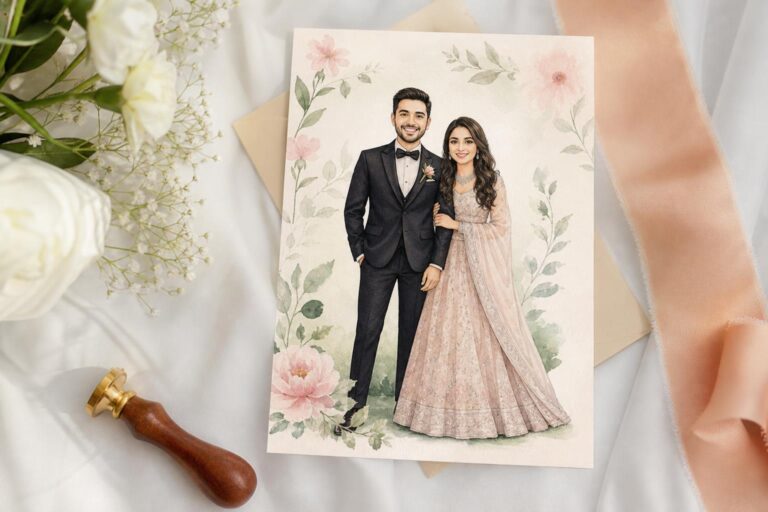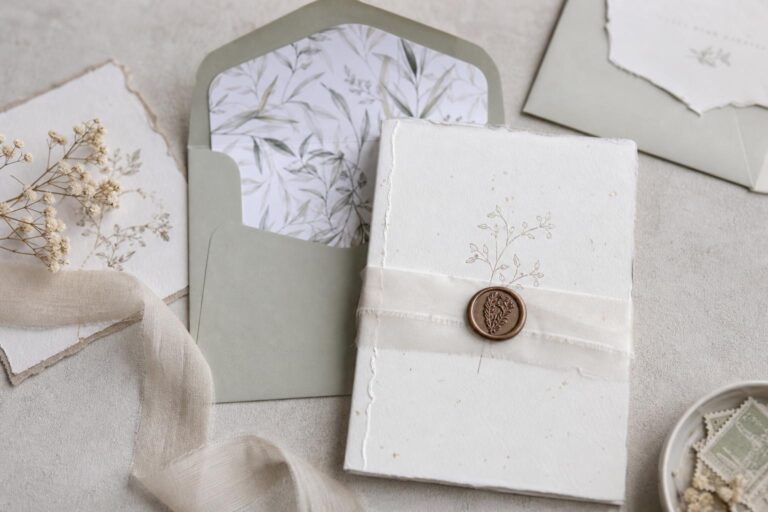
DIY Wedding Invitations That Feel Polished and Personal
Beautiful diy wedding invitations promise something very personal: a first glimpse of your celebration that feels like you. In practice, though, invitations often become one of the earliest places where wedding style and wedding logistics collide. A design that looks charming on a screen can become difficult to print, expensive to mail, awkward to assemble, or stressful to finish on time.
That is why this decision can feel unexpectedly emotional. Couples want their invitation suite to set the tone for the wedding, reflect their budget, and still feel polished enough to send with confidence. The challenge is not simply making something pretty. It is creating wedding invitations that look cohesive, print well, work with envelopes and postage, and arrive in guests’ mailboxes as intended.
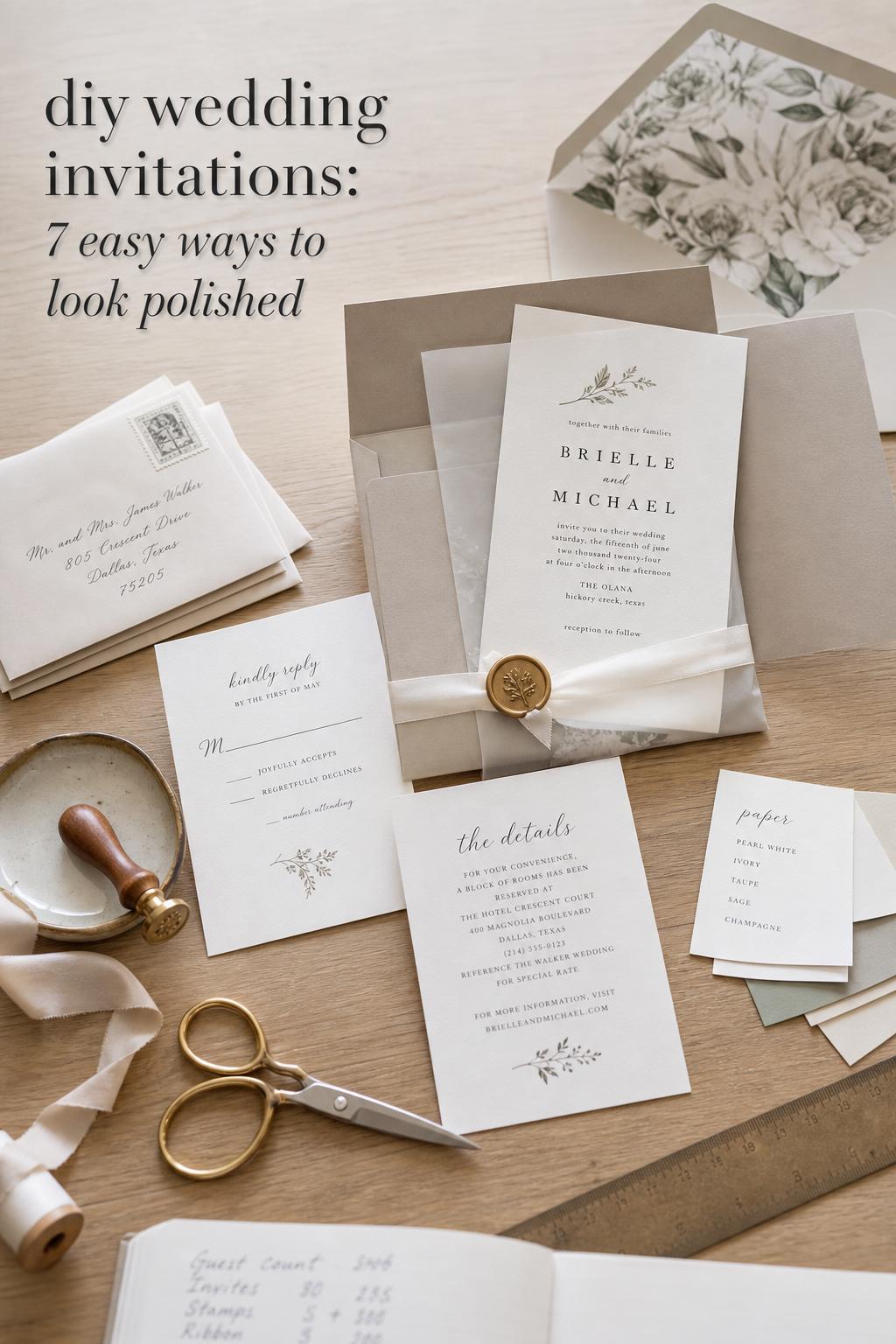
This guide is designed to help you solve that problem with clarity. Whether you are considering printable wedding invitations, a template-based suite, a layered pocketfold, vellum accents, or a semi-DIY approach, the goal is the same: to create diy wedding invitations that balance beauty, practicality, and peace of mind.
Why this wedding challenge happens
Invitations sit at the intersection of design, materials, timing, and budget. Unlike many wedding details, they are not only decorative. They must communicate clearly, survive printing, fold or layer correctly, fit envelopes, and move through the mailing process without damage. A style choice that feels romantic in theory can create real problems once cardstock, finishes, and printing methods enter the picture.
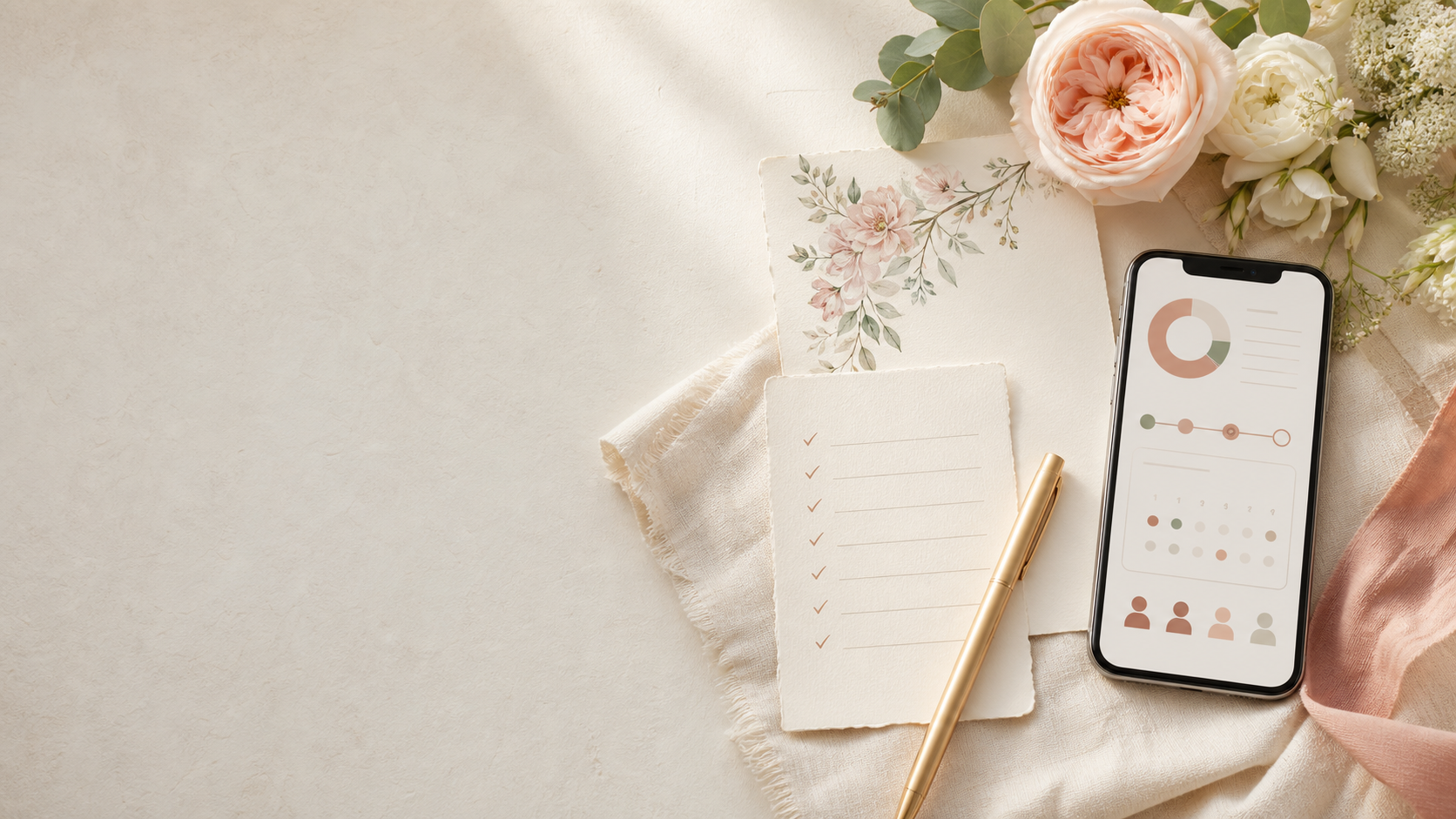
Turn wedding inspiration into a plan you can actually follow.
Zarellea brings your guest list, budget, vendors, and day-of details into one shared space — so no beautiful idea gets lost in the shuffle.
Budget pressure adds another layer. Many couples explore handmade wedding invitations because they want budget wedding invitations without losing personality. That instinct makes sense, but diy does not automatically mean easier or cheaper. Costs shift depending on guest count, templates, paper, envelopes, pockets, printing services, and the amount of labor involved in assembly and addressing. A flat one-layer card has a very different workflow from a 6 x 9 three-layer invitation or a 5 x 5 gate folio pocket format.
There is also the emotional weight of first impressions. Invitations often become the visual beginning of the wedding story. Couples want them to signal romance, formality, or a specific style direction, whether that is vintage, whimsical, modern, or layered and textural. When too many ideas compete at once, the suite can feel cluttered. When practicality is ignored, a beautiful concept can turn into a rushed project the week before mailing.
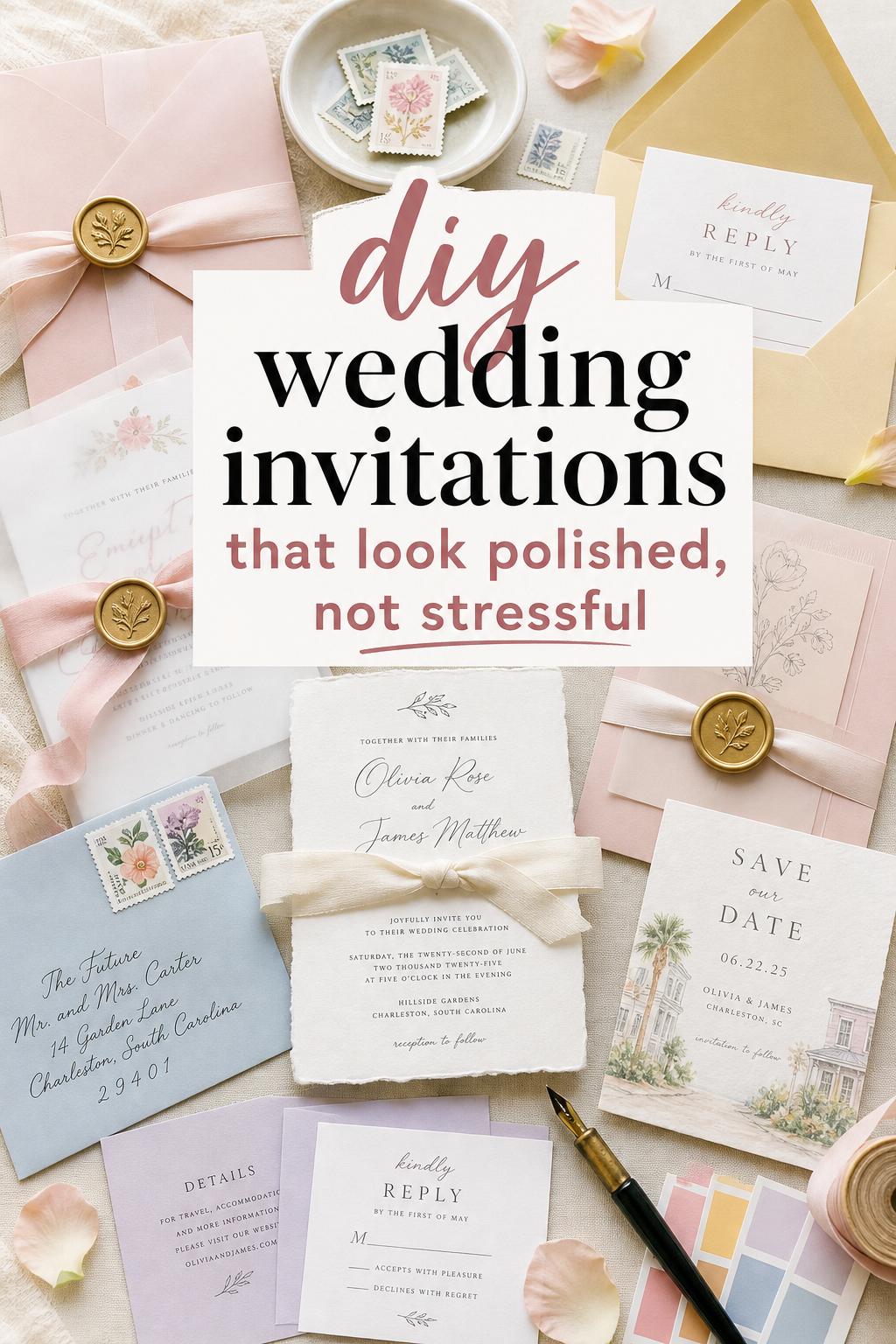
The core principles that make diy invitations work
The most successful diy invitation suites usually follow a few quiet principles. They are visually intentional, technically realistic, and planned backward from the mailing date rather than forward from a mood board. That balance is what separates a meaningful project from an overwhelming one.
- Choose a format that matches your time, not just your taste.
- Let templates support the design instead of fighting them with too many custom changes.
- Match cardstock and paper choices to the printing method from the start.
- Prioritize readability and guest clarity over decorative excess.
- Leave room in the timeline for proofs, printing errors, assembly, and addressing.
- Treat envelopes, postage, and mailing as part of the design process, not an afterthought.
These principles work because wedding invitations are a complete system. Design, materials, printing, finishing touches, and mailing all influence one another. If one part is out of balance, the entire experience feels harder than it needs to be.
Why couples choose diy invitations in the first place
There are good reasons diy wedding invitations continue to appeal to couples across the United States. Cost is one of them, especially when comparing simple template-based suites with more expensive professional custom work. According to wedding cost references cited in wedding planning content, budget awareness is a major part of invitation decision-making, and that matches what many couples already sense intuitively.
Control matters just as much. A diy route gives you a chance to shape the typography, colors, motifs, and layering in a way that feels specific to your wedding. That can be especially meaningful if you care about having invitations that connect naturally with the overall event aesthetic rather than feeling generic or disconnected.
Creative freedom is the emotional reward. A vellum overlay, a pocketfold insert, a gate folio structure, or a printable flat card can all express different moods. The invitation stops feeling like a stock product and becomes part of the atmosphere you are creating for guests. That said, freedom works best when it stays within realistic boundaries. The strongest diy projects are not the most complicated ones. They are the ones that are thoughtfully chosen.
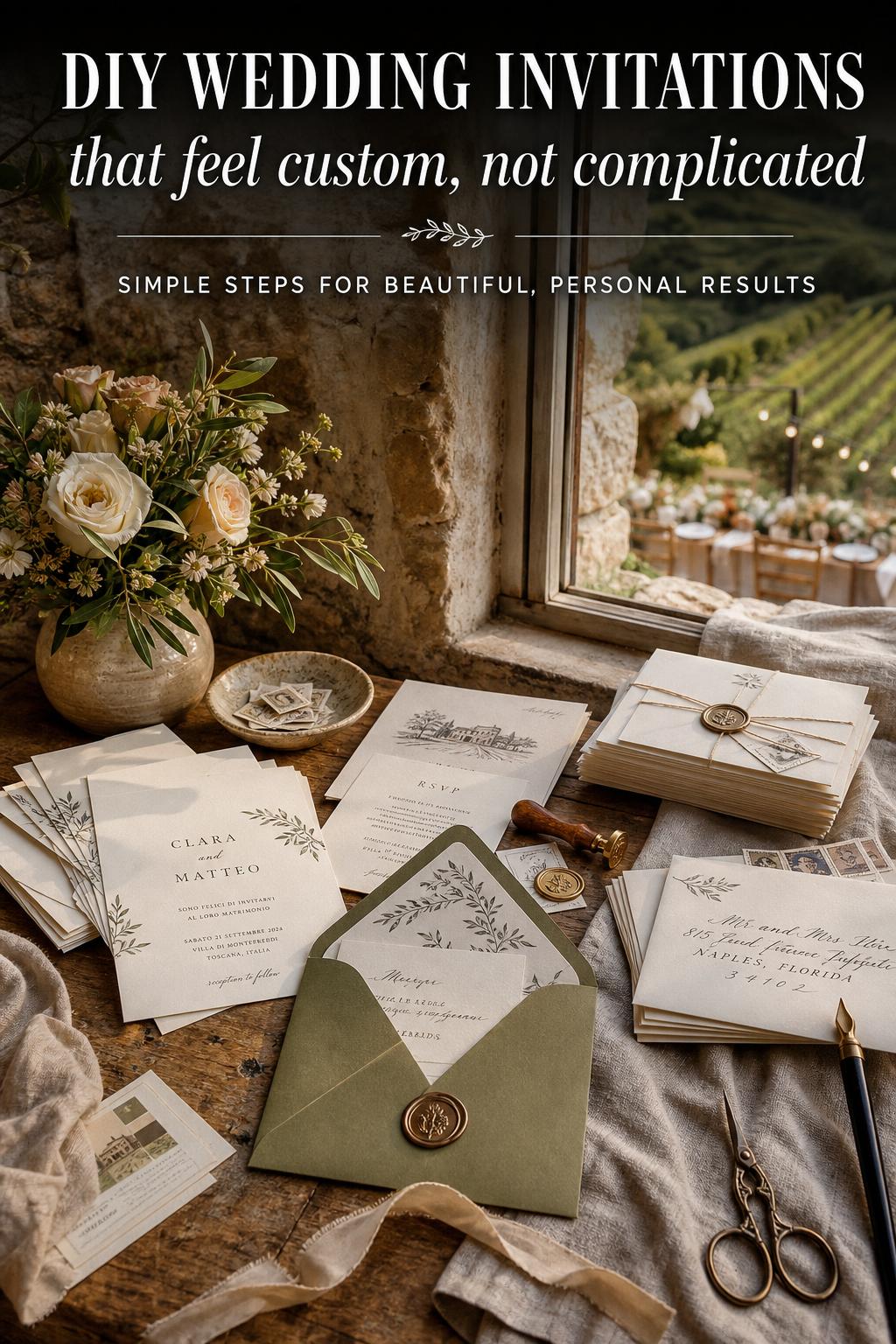
Planning from concept to mailbox
One reason couples get overwhelmed is that they think of invitations as a single task rather than a sequence. In reality, the process moves through several distinct stages: choosing a format, selecting templates or artwork, proofing text, testing paper, printing, assembling, addressing, and mailing. Each stage deserves space.
A calmer approach is to work backward from the date you want guests to receive their invitations. That immediately clarifies how much complexity your project can realistically handle. A simple one-layer design is often manageable on a tighter timeline. A layered suite with pockets, vellum, and multiple inserts needs more time because every piece multiplies assembly and mailing decisions.
A practical invitation workflow
- Define your guest count and format first.
- Select a template-based design or decide if custom artwork is truly necessary.
- Review all wording before you invest in paper or printing.
- Test one sample on your chosen cardstock or paper.
- Decide early between home print wedding invitations, professional printing, or a hybrid workflow.
- Schedule time for assembly, envelope selection, and addressing.
- Mail a finished sample to yourself if you want to check how it travels.
This workflow reduces emotional friction because it replaces guesswork with sequence. It also helps couples see where semi-DIY options may be the wiser choice. If design feels exciting but printing and assembly feel draining, a hybrid route can preserve creativity without creating last-minute pressure.
Designing a suite that feels cohesive, not crowded
Many invitation problems begin with over-design. Couples understandably want the suite to feel special, so they add more motifs, more fonts, more finishes, and more layers. The result can look busy rather than elevated. A wedding invitation does not need to do everything at once. It needs to introduce the celebration clearly and beautifully.
Template-based design is often the easiest way to create that cohesion. Brands and hubs such as Zola and VistaPrint have built much of their invitation guidance around templates and customization because templates provide structure. They help couples control hierarchy, spacing, and consistency while still leaving room for personal style. For many people, this is the sweet spot between handmade and professional.
Template-based design vs custom artwork
Templates are ideal when you want a polished result with fewer technical decisions. They simplify alignment, sizing, and text placement, which matters when the invitations must move from screen to physical print. Custom artwork can be beautiful, but it introduces more variables and usually makes the project less forgiving. If you are new to invitation design, the most elegant choice is often not full customization but careful customization within a strong template.
That does not mean a template has to feel impersonal. Typography, color palette, motifs, and finishing touches can still create a suite that feels deeply tied to the wedding. A vintage direction might lean into vellum, soft textures, and classic wording. A whimsical suite may use playful layout details and lighter visual movement. A more formal event may suit layered cards or pocketfold structures that feel composed and orderly.
What couples usually overlook
Readability is part of style. Fonts that are too delicate, color combinations with weak contrast, or overly decorative layouts may look charming in a close-up photo but frustrate guests in real life. Clear hierarchy matters. Names, date, location, and response details should be easy to scan. Accessible design and legibility are not separate from aesthetics. They are what make the invitation feel refined and considerate.
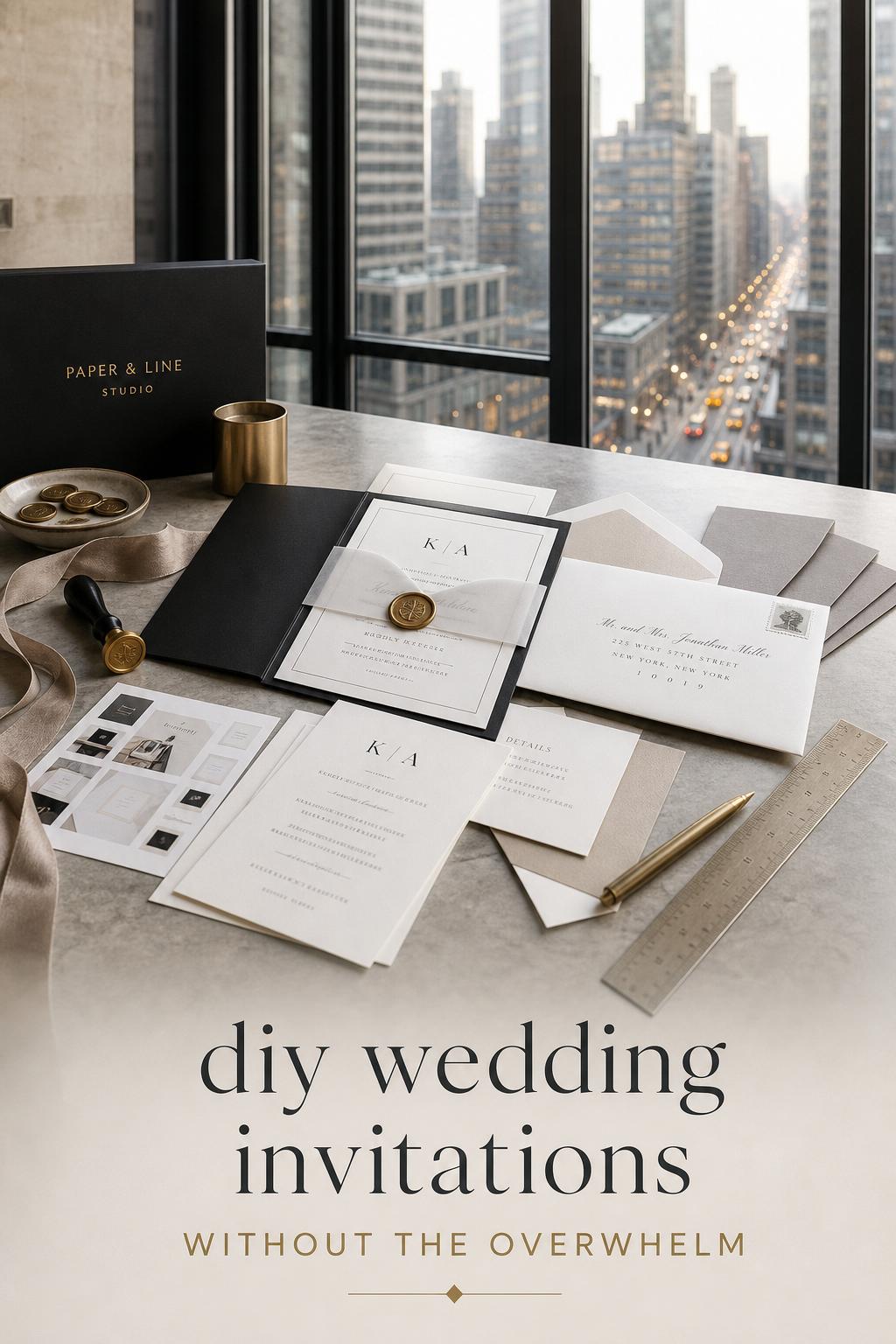
Materials that shape the final look
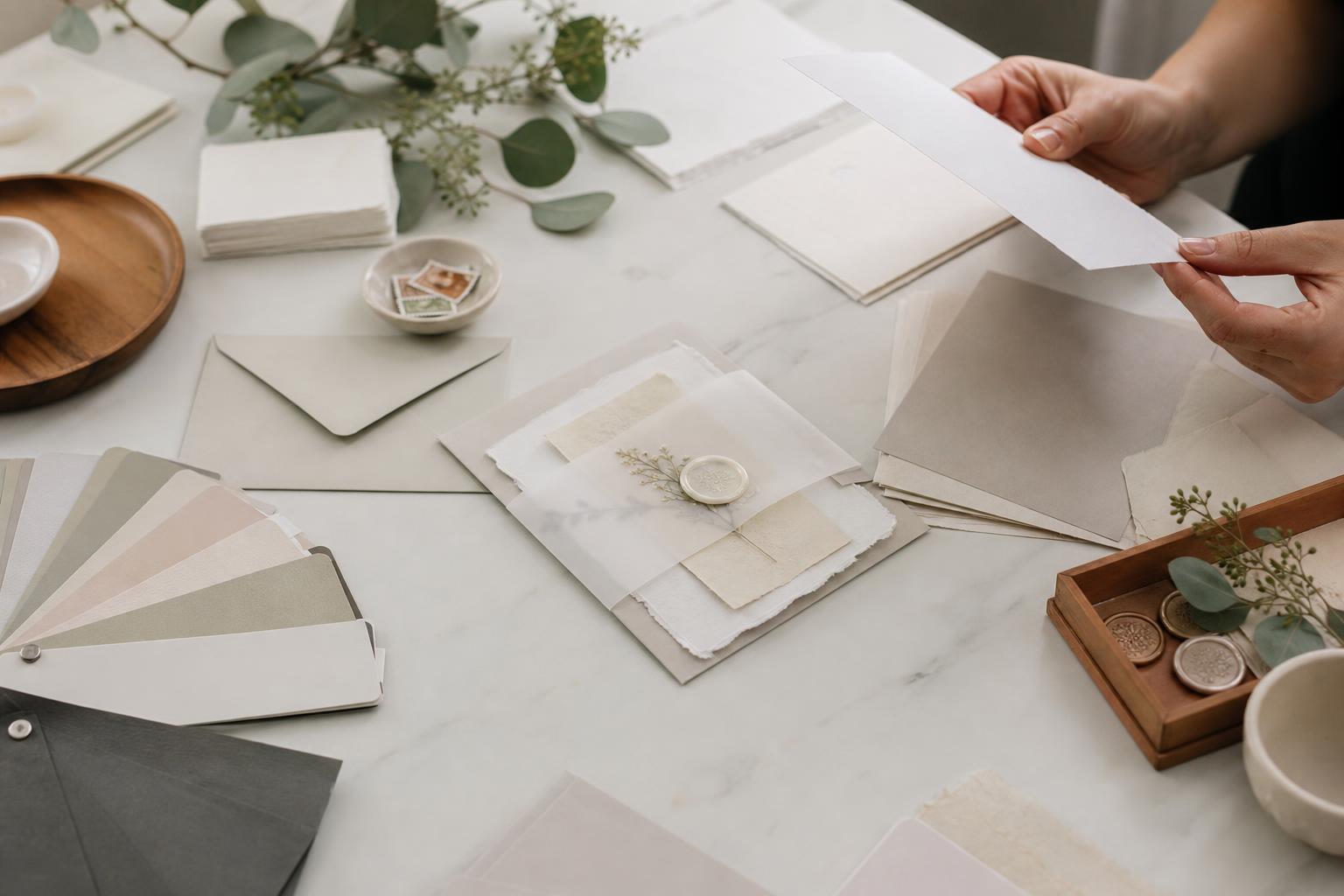
Paper and cardstock are not minor details. They define how the invitation feels in the hand, how it accepts ink, and whether the suite appears crisp or flimsy. Across wedding invitation advice, cardstock, paper, and envelopes appear repeatedly because they are foundational to both appearance and performance.
Heavier cardstock usually supports a more substantial, formal feeling, while lighter paper may suit inserts or softer styles. Finishes also matter. A simple card can look more elevated when the paper choice is intentional, and a complicated design can still feel underwhelming if the material feels weak. This is one reason diy invitations should be tested physically before a full print run.
Vellum, layers, and texture
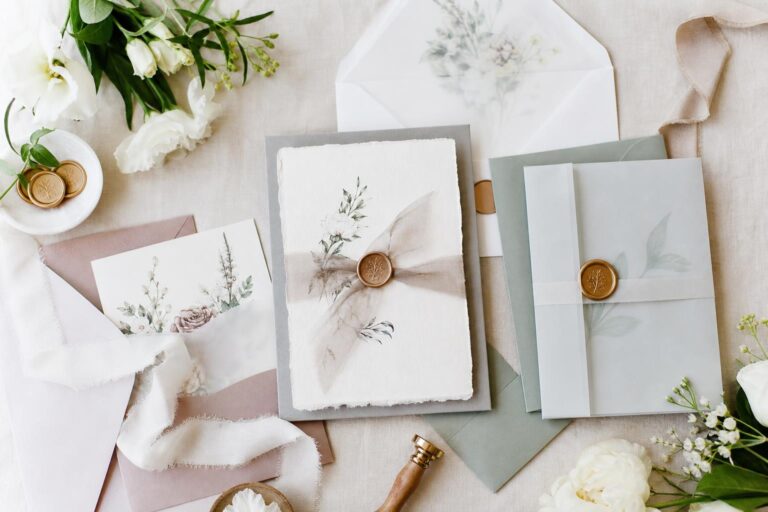
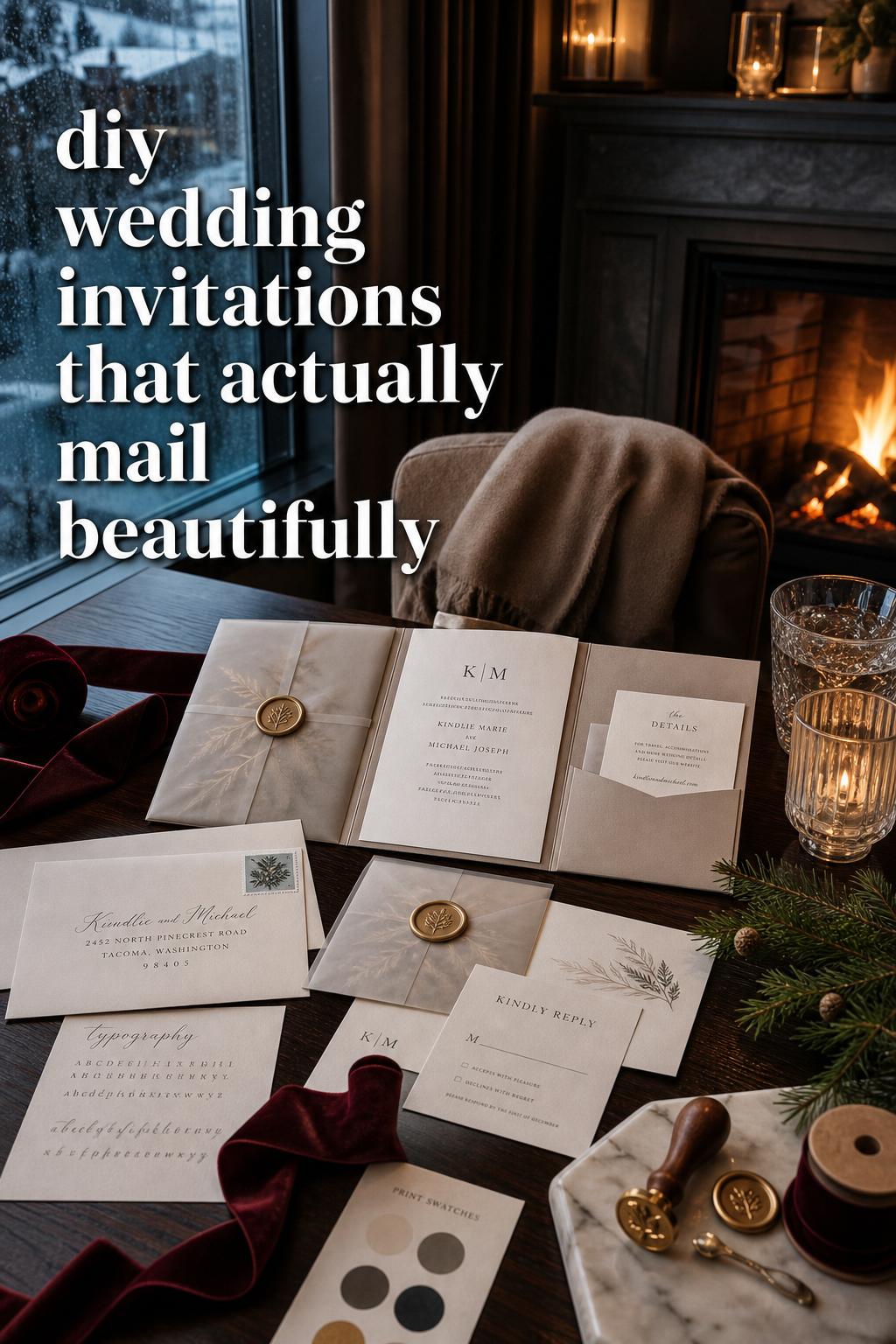
Vellum wedding invitations occupy a useful middle ground between minimal and ornate. A vellum layer can soften the suite visually and add a romantic, vintage note without requiring a fully complex structure. The material-specific focus seen in niche invitation resources makes sense because vellum changes the atmosphere immediately. It introduces translucency, softness, and a curated look that feels more editorial than plain cardstock alone.
Layering should still be intentional. If you use vellum, pockets, or multiple cards, make sure each layer has a clear role. A suite feels luxurious when every piece belongs. It feels cluttered when layers exist only to make the package seem bigger.
Printing decisions that affect quality and stress
Printing is where many diy invitation plans become real. The central choice is usually between home printing and professional printing, with a hybrid option in between. Anatole Wedding, Zola, and VistaPrint all emphasize versions of this decision because it determines quality control, cost per invite, timeline pressure, and how much troubleshooting you will need to handle yourself.
Home printing offers control and can work well for simpler printable wedding invitations, especially if the format is flat and the quantity is manageable. Professional printing often creates a smoother experience when you are using specialty papers, layering, or larger guest counts. A hybrid approach may involve designing the suite yourself and outsourcing the actual print run to a service or local print shop. That route often gives couples the best balance of personalization and reliability.
Why the print method should guide the design
A common mistake is choosing a design before considering how it will be printed. Some templates and finishes translate beautifully through professional services but become disappointing at home. Likewise, some straightforward one-layer formats are ideal for home printers because they reduce alignment, trimming, and handling issues. The right order is simple: decide the visual style, test the material, and confirm the printing method before finalizing the whole suite.
This is also where semi-DIY becomes especially attractive. If you want the creative involvement of diy but worry about color consistency, paper compatibility, or time, semi-DIY options reduce risk without removing your design voice.
Choosing the right invitation format for your wedding
Format changes everything. It affects cost, assembly time, guest impression, and mailing complexity. Product-driven invitation pages such as The American Wedding make this very clear by organizing options around sizes and structures: 5 x 7 one-layer invitations, 5 x 5 gate folio pocket invitations, 6 x 9 three-layer designs, and 6 x 6 two-layer or three-layer formats. These are not just aesthetic choices. They are workflow choices.
Flat and one-layer invitations
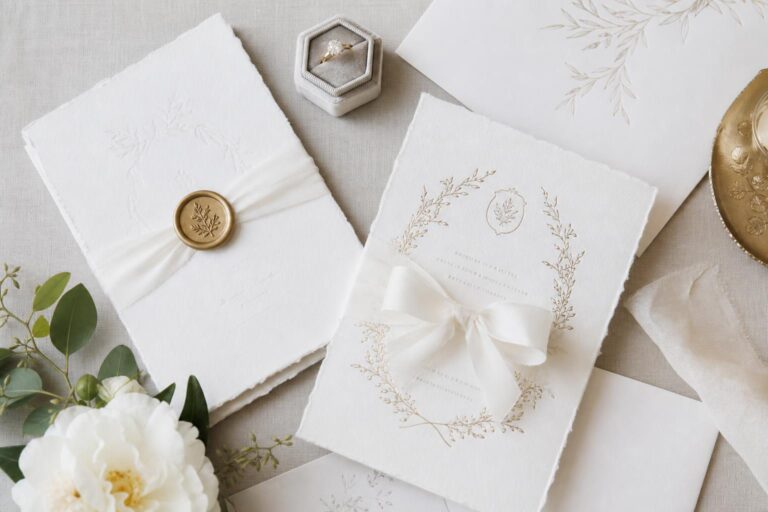
Flat cards are often the most practical solution for couples who want a clean, elegant result without assembly fatigue. They are easier to print, easier to proof, and typically easier to mail. If your priority is clear communication, controlled cost per card, and a simpler timeline, this format deserves serious consideration.
Pocketfolds and gate folio styles
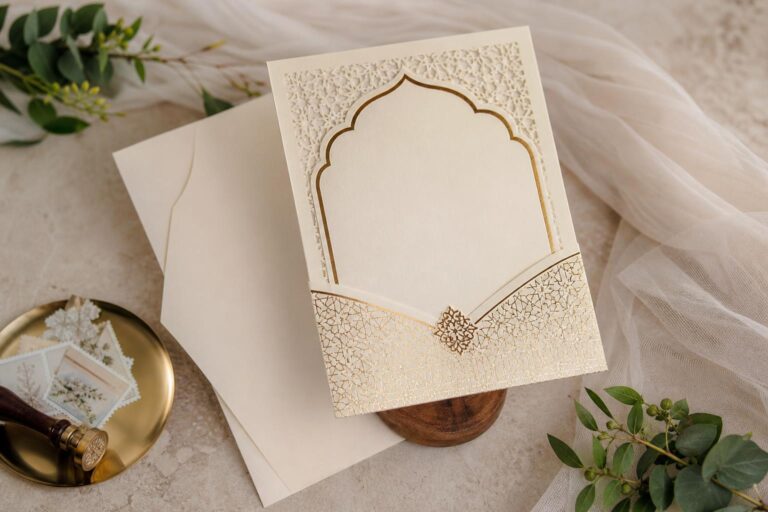
Pocketfold and gate folio invitations feel more structured and formal. They can help organize multiple inserts and create a composed presentation that guests experience as they open the suite. They are especially useful when you want the invitation to feel like a complete package. The trade-off is time. More structure means more assembly, more bulk, and more decisions about envelopes and mailing.
Layered invitations
Two-layer and three-layer invitations add depth and presence. They can elevate a relatively simple design by using contrast between cards or materials. The risk is overcomplication. If you choose layering, keep the visual language consistent so the suite feels intentional rather than crowded.
Envelopes, addressing, and postage are part of the design
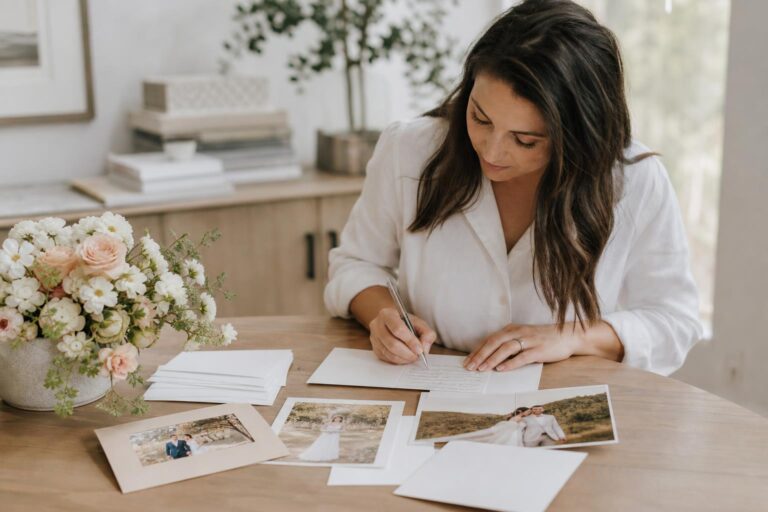
Envelopes are often treated as the final detail, but they shape the guest’s first physical impression and the practical success of the entire suite. Size, color, weight, and addressing method all matter. An elegant invitation can lose impact quickly if the envelope feels mismatched or if addressing becomes messy and rushed.
Addressing should match the tone of the suite and stay readable. This is also where regional variations and requirements can matter. Wedding invitation guidance that includes regional notes does so for a reason: standards and expectations around formatting, mailing, and timing can differ, and even within the United States, practical mailing considerations deserve attention.
Mailing optimization couples should plan for
- Choose envelopes after you confirm the final size and thickness of the invitation suite.
- Test a fully assembled sample rather than estimating postage from separate parts.
- Keep addressing style consistent with the formality of the event.
- Leave enough time for returned mail or address corrections.
What guests actually notice is not whether every invitation was handmade. They notice whether it feels clear, polished, and thoughtful. A neatly addressed envelope and a well-proportioned suite can feel more luxurious than a complicated invitation that arrives bent or overstuffed.
Wedding solution: use inspiration without losing direction
The problem with invitation inspiration is not lack of ideas. It is usually too many ideas. Galleries from DIY Joy, DIY & Crafts, BridalGuide, and personal blogs such as DoTellabelle can be genuinely helpful, but they can also pull couples in different stylistic directions at once. Vintage, whimsical, vellum, layered, minimalist, pocketed, printable, romantic; each can be beautiful, but not all belong in one suite.
The practical solution is to collect inspiration by category rather than by impulse. Save examples according to format, materials, typography, and mood. Notice what repeats. Do you consistently prefer clean flat cards, soft vellum layers, or a structured pocketfold? Once you identify that pattern, use it as your editing tool. This keeps the suite coherent and helps you select templates and materials that support one clear design language.
The visual result is a wedding invitation suite that feels composed from the first envelope to the final insert. Emotionally, this approach reduces second-guessing. Instead of wondering whether the invitations are doing enough, you begin to see that restraint itself can be what makes them memorable.
Wedding solution: choose semi-DIY when full diy starts to feel heavy
Many couples assume the only valid options are full diy or fully professional invitations. That binary creates pressure. If you love the idea of designing your own suite but dread trimming, assembly, or troubleshooting print quality, you may start the process with excitement and end it with frustration.
A semi-DIY route solves that elegantly. This might mean using customizable templates through Zola, VistaPrint, or another invitation provider, then personalizing the wording, colors, and details while leaving technical production to a print service. It can also mean designing at home and outsourcing only the printing. This is especially helpful when guest count is higher, the suite has multiple layers, or your chosen cardstock needs more precise handling.
The emotional result is often one of relief without compromise. You still feel ownership over the invitation style, but you avoid letting one wedding project consume your timeline. That balance is often what makes the final suite feel graceful rather than hard-won.
Wedding solution: design for legibility and inclusivity
A common invitation mistake is prioritizing visual delicacy over function. Light script on light paper, small type, crowded text blocks, or low-contrast color choices may photograph beautifully in styled images but become difficult for real guests to read. This can quietly weaken the guest experience before the wedding has even begun.
The practical solution is to treat accessibility as part of good design. Keep contrast strong enough that key details are easy to read. Use typography with clear hierarchy. If your wedding involves multilingual communication or more than one language, build that into the layout early rather than trying to squeeze it in later. This kind of thoughtful structure is especially important for printable and template-based suites, where space planning matters.
The result is an invitation that feels more welcoming and polished. Guests understand the details quickly, and the suite communicates care rather than confusion. Visually, clarity often reads as confidence. Emotionally, that confidence makes the whole wedding feel more considered.
Budgeting without losing the mood
Budget concerns do not ruin invitation style; unclear priorities do. Many couples spend more than expected not because diy is inherently expensive, but because the format, materials, and workflow were never fully aligned. Costs expand quietly through extra layers, specialty papers, reprints, upgraded envelopes, and underestimating the time involved.
A useful budgeting mindset is to think in cost per invite and cost per impression. A simple flat invitation on quality cardstock may create a stronger and more refined experience than a bulky layered suite assembled under stress. Product listings that show price per card by size and format are helpful because they reveal that every structural change affects both look and budget. A 5 x 7 one-layer card is not just cheaper because it is simpler; it is cheaper because it requires less of everything around it.
Budget-conscious alternatives that still feel elevated
- Choose one strong paper or cardstock instead of multiple decorative layers.
- Use a template with thoughtful typography rather than overcompensating with embellishments.
- Add a vellum detail selectively instead of building an entirely complex suite.
- Consider semi-DIY printing if home printing may lead to costly mistakes.
- Keep inserts purposeful so every card earns its place.
What makes this feel luxurious is not volume. It is coherence. When the invitation style, material, and printing method agree with one another, the suite looks more expensive than it may actually be.
How to keep diy invitations timeless
Timelessness in invitations usually comes from disciplined design rather than trend avoidance. A suite can feel modern, vintage, whimsical, or classic and still age well if the structure is balanced. The key is not chasing every attractive idea at once. It is choosing a visual center and letting the rest support it.
That might mean a clean one-layer invitation with elegant typography, a vellum overlay that softens the suite without overwhelming it, or a pocketfold that creates order for a more detailed wedding. Real-life DIY invitation stories and galleries are most useful when they show not just what looks pretty, but what holds together as a complete experience. Brides and couples often remember how their invitations felt to assemble and send just as much as how they looked in photos.
Common mistakes that make diy invitations harder
Most invitation problems are not design failures. They are sequencing failures. Couples make smart creative choices, but at the wrong moment or without enough testing. The good news is that these mistakes are avoidable once you know where tension usually appears.
- Starting with embellishments before the format and printing method are decided.
- Choosing complicated layered or pocket formats on a short timeline.
- Assuming diy is always cheaper than professional or semi-DIY production.
- Ignoring envelope selection until after the suite is complete.
- Using too many fonts, motifs, or color ideas in one invitation package.
- Skipping a printed sample before ordering or producing the full batch.
- Underestimating assembly and addressing time.
If any of these sound familiar, that does not mean the project is failing. It usually means the invitation suite needs simplifying. Thoughtful editing is often the most stylish move available.
Tools, templates, and resources worth considering
Couples approaching diy wedding invitations today have a wide range of support options. Zola and VistaPrint are often associated with template-driven customization and printing workflows. The American Wedding is useful for comparing sizes, structures, and pricing orientation. BridalGuide, DIY Joy, DIY & Crafts, and DoTellabelle offer idea galleries that can help clarify style direction. Do-It-Yourself Invitations is more portal-like, with options including printables and semi-DIY. Formal Invitations offers material-specific inspiration around vellum. Anatole Wedding provides broad guidance on tools, materials, common mistakes, timelines, and when diy may not be the right fit.
The best way to use these resources is not all at once. Use one source for inspiration, one for format comparison, and one for printing or templates. Too many open tabs often produce more confusion than creativity. A smaller, clearer resource set usually leads to better decisions.
When diy is not the best fit
There is no prize for doing the most work yourself. Diy invitations are a wonderful option when the process feels meaningful, the format fits your schedule, and the project supports your budget. They are a poor fit when the invitation suite is becoming a source of constant stress, when the timeline is too tight for testing and assembly, or when the level of complexity no longer matches your capacity.
If you are planning a larger guest count, considering multi-layer suites, or feeling uncertain about print quality, a semi-DIY or professional approach may serve you better. This is not giving up on your vision. It is protecting it. The invitation should set a beautiful tone for the wedding, not deplete your energy before the celebration even begins.
Thoughtful wedding style is rarely about doing more. It is about choosing what can be done well. When your invitation process reflects that, the finished suite feels calmer, more cohesive, and much more like the wedding you are actually trying to create.
FAQ
Are diy wedding invitations really cheaper than professional invitations?
They can be, especially for simpler formats such as one-layer or printable wedding invitations, but diy is not automatically cheaper in every case. Costs depend on guest count, cardstock, envelopes, templates, printing method, and how complex the suite becomes. A layered or pocketfold invitation can quickly narrow the savings if assembly, reprints, or mailing issues add up.
What is the easiest diy invitation format for most couples?
A flat or one-layer invitation is usually the easiest format to manage because it is simpler to design, print, proof, and mail. It also keeps costs and assembly time more predictable. For many couples, this format provides the best balance of elegance and practicality.
Should I print wedding invitations at home or use a professional printer?
Home printing can work well for straightforward designs and smaller quantities, while professional printing is often better for specialty papers, larger guest counts, or more complex suites. A hybrid or semi-DIY approach is a strong middle option if you want design control without taking on every technical step yourself.
What is a semi-DIY wedding invitation?
A semi-DIY invitation combines personalization with outside support. You might customize a template, choose colors and wording, or design the suite yourself, then use a printing service for production. This approach is helpful when you want the invitation to feel personal but do not want full responsibility for printing and assembly.
Are pocketfold and gate folio invitations worth it?
They can be worth it if you want a more structured presentation and have enough time for assembly and mailing logistics. Pocketfold and gate folio formats are especially useful when you need to organize multiple inserts. They are less ideal on a tight timeline or when keeping the suite simple is the top priority.
How do I make diy invitations look polished instead of homemade?
Start with a strong template, limit the number of fonts and decorative elements, choose paper or cardstock carefully, and test one printed sample before producing the full set. Clear text hierarchy, cohesive color choices, and clean envelope presentation usually make a bigger difference than adding extra embellishments.
Is vellum a good choice for diy wedding invitations?
Yes, vellum can be a beautiful choice when used thoughtfully. It adds softness and a romantic, vintage feel without requiring an overly complicated suite. It works best when it supports the design rather than becoming just another layer with no clear purpose.
What should I prioritize if my invitation budget is limited?
Prioritize clarity, good paper or cardstock, and a format you can complete confidently. A simple invitation that is well designed and well printed will usually feel more elegant than a complicated suite produced under pressure. If needed, reduce layers before you reduce readability or print quality.
What are the most common mistakes with diy wedding invitations?
The most common mistakes are choosing a format that is too complex for the timeline, skipping test prints, adding too many design elements, and leaving envelopes and postage decisions until the end. These problems usually create stress because they affect both the look of the suite and the mailing process.
When should I skip diy and hire help instead?
You should consider semi-DIY or professional help when your guest count is large, the invitation suite is highly layered, the timeline is short, or the project is becoming more stressful than satisfying. The best choice is the one that protects both your design vision and your peace of mind.