Romantic Western Wedding Cake Looks for Outdoor Receptions
The western wedding cake is often the moment your reception style becomes unforgettable: a little rustic, a little romantic, and unmistakably personal. But if you’re planning a country western wedding, you’ve probably run into a surprisingly tricky styling problem—how do you make “western” feel intentional and elevated, rather than like a themed party prop?
The challenge gets harder when you’re balancing a real wedding day’s practical demands: long hours, outdoor settings, heat, travel, cake delivery timing, and a room full of guests who will photograph the cake from every angle. Your cake has to look right with your décor, your venue, and your couple style—and it also has to stand up physically.
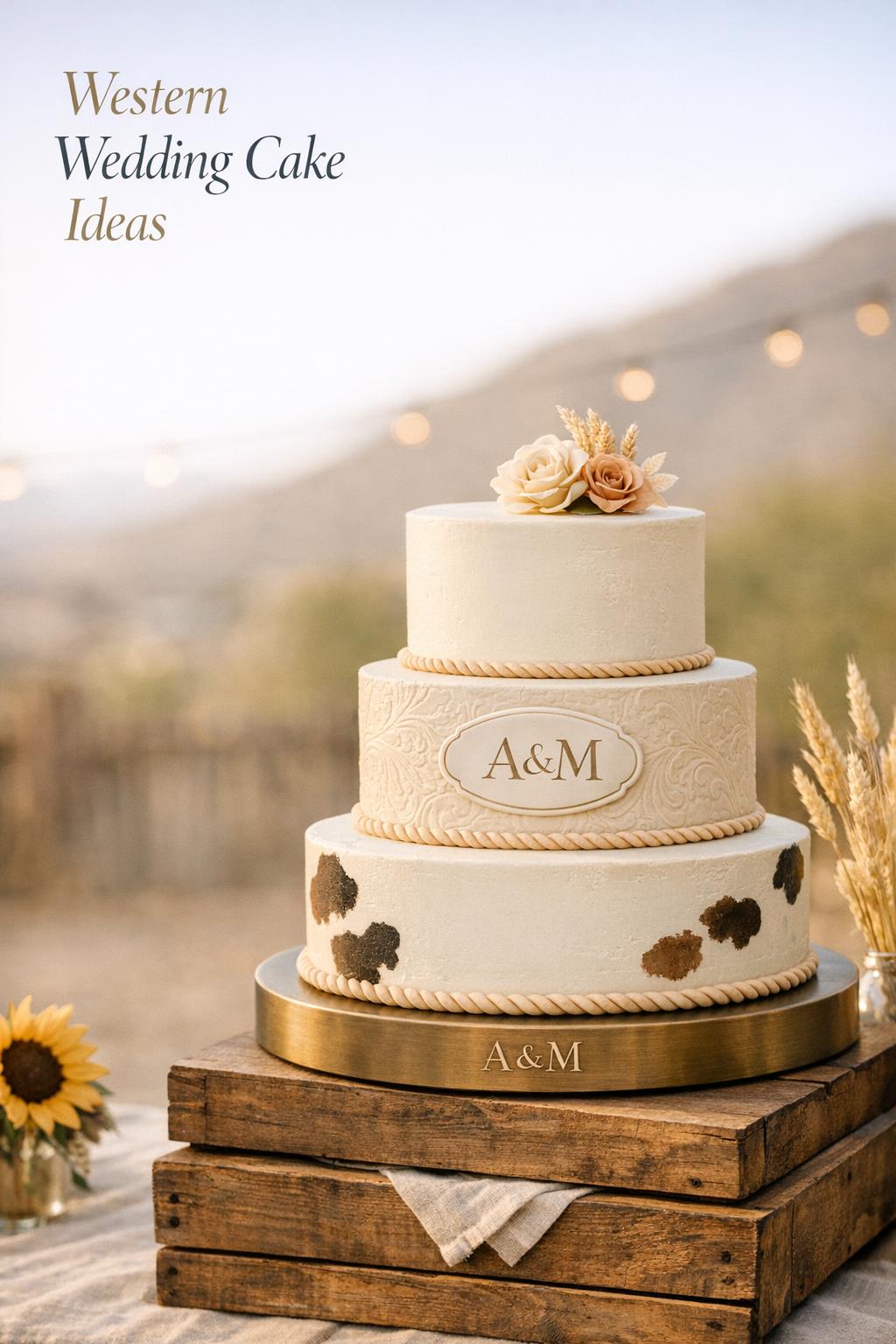
This guide solves that problem in a stylist’s way. You’ll get western wedding cake ideas you can actually use: a clear “motif language” (boots, leather tooling, rope borders, cow spots, rustic wood, sunflowers, wheat), how to choose buttercream vs fondant finishes, how to create a cohesive look with your cake stand and branding (like initials), and how to plan the details so your wedding cakes western vision holds together from the first photo to the last slice.
Understanding the styling challenge: making “western” feel romantic, not costume
“Western” is a broad aesthetic. One couple’s western wedding cakes rustic dream is soft and outdoorsy—sunflowers, wheat, buttercream textures, and a backyard feeling. Another couple wants crisp, iconic motifs like boot pillars, cow-spot piping, rope detailing, and a monogram front and center. The problem isn’t choosing one style; it’s making sure all the pieces speak the same visual language.
Turn wedding inspiration into a plan you can actually follow.
Zarellea brings your guest list, budget, vendors, and day-of details into one shared space — so no beautiful idea gets lost in the shuffle.
In real weddings, the cake rarely sits alone. It’s framed by the cake table, the cake stand (sometimes a rustic antique wooden box), surrounding décor, and the lighting of your venue. A birch wood-inspired cake in a mountain setting reads differently than a tooled leather-inspired cake displayed at a rustic DIY celebration. The more “specific” your western elements get—like boots and leather tooling—the more important it becomes to keep the rest of the styling calm and consistent.
Then there’s practicality. A multi-tier cake with detailed borders and sculptural décor has to survive transportation and setup. If you’re dreaming of a three-tier statement, you’ll make different decisions than you would for a two-tier buttercream design meant to serve around 80 guests. These are styling decisions—but they’re also logistics decisions.
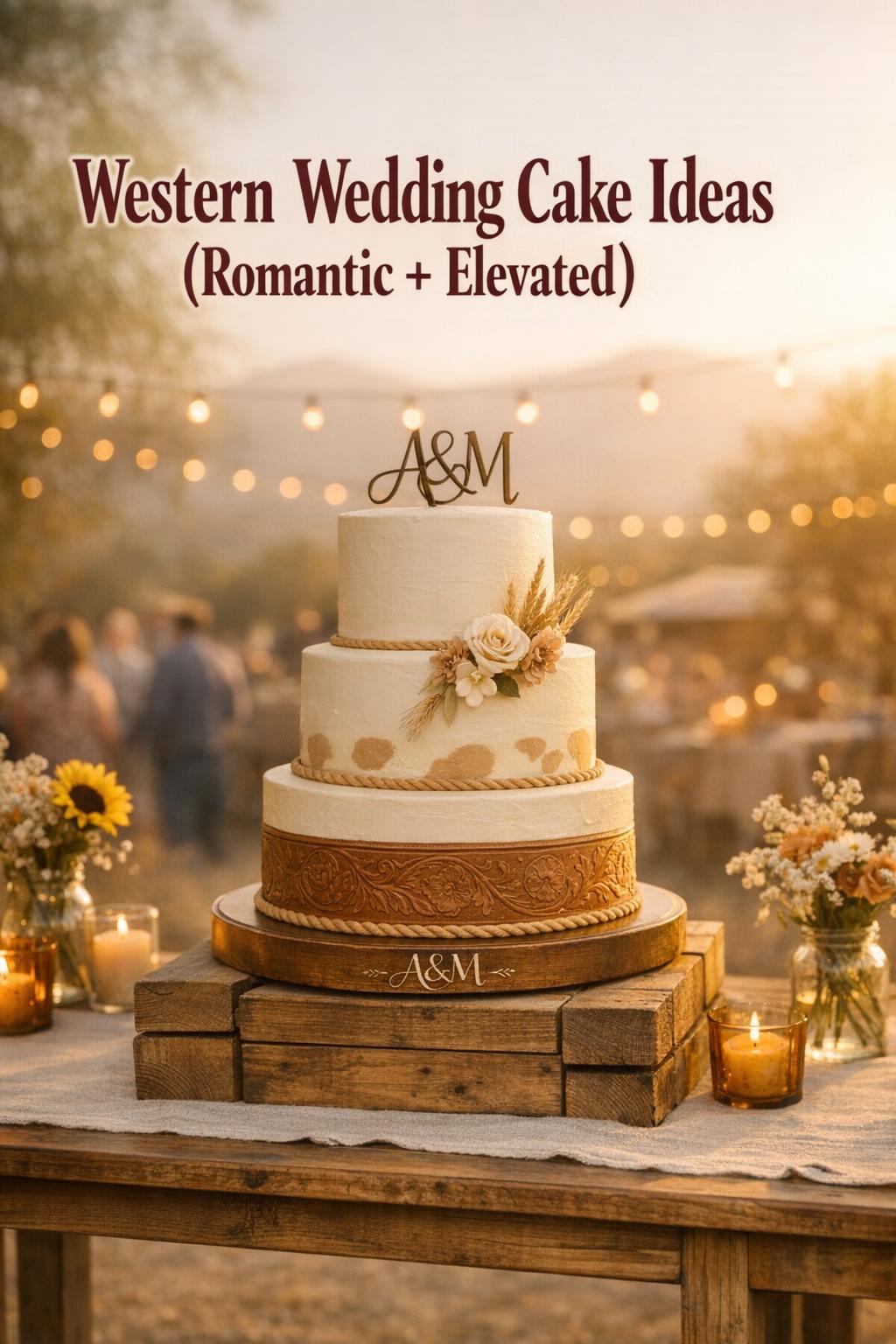
Key dressing principles (but for cake): the style logic that keeps your look cohesive
Think of your cake like the “outfit” your reception wears in country wedding pictures. It needs a silhouette (tier shape and height), a fabric (buttercream vs fondant finish), and accessories (boots, rope trim, sunflowers, wheat, branding). The most polished western wedding cake ideas follow a few principles that keep everything feeling curated.
- Choose one hero motif, then support it. A boot theme, a tooled leather texture, a birch wood effect, or cow spots can all be stunning—but competing hero motifs can make the cake feel busy.
- Repeat details in at least two places. If you use rope detailing on the tiers, echo that rope in the cake table décor or on the stand. If you use sunflowers and wheat, repeat them in your floral accents nearby.
- Balance texture with clean negative space. Western styles love texture—rope borders, leather-inspired surfaces, wood-grain effects. Keeping some smoother areas helps the cake read “wedding” instead of “craft project.”
- Let the stand and display finish the story. A rustic box stand, a birch-inspired base, or a branded cake stand with initials can be the difference between “nice cake” and “styled moment.”
- Match your finish to your environment. Buttercream can look romantic and handmade; fondant can look crisp and graphic. Choose what fits your venue vibe and your design’s complexity.
One of the most emotionally satisfying parts of wedding planning is seeing your story show up in small choices. A couple’s initials on the stand, for example, can turn the cake into a signature. Even a subtle nod—like a tooled leather pattern inspired by a magazine image—can make the cake feel like it belongs to you, not just to the theme.
Build your “western style vocabulary”: motifs that instantly read country western wedding
If you want wedding cakes western guests recognize immediately in photos, you need motifs that translate well on camera. Western styling works best when it’s built from a few consistent symbols and textures—especially ones that can be repeated in your décor, florals, and signage.
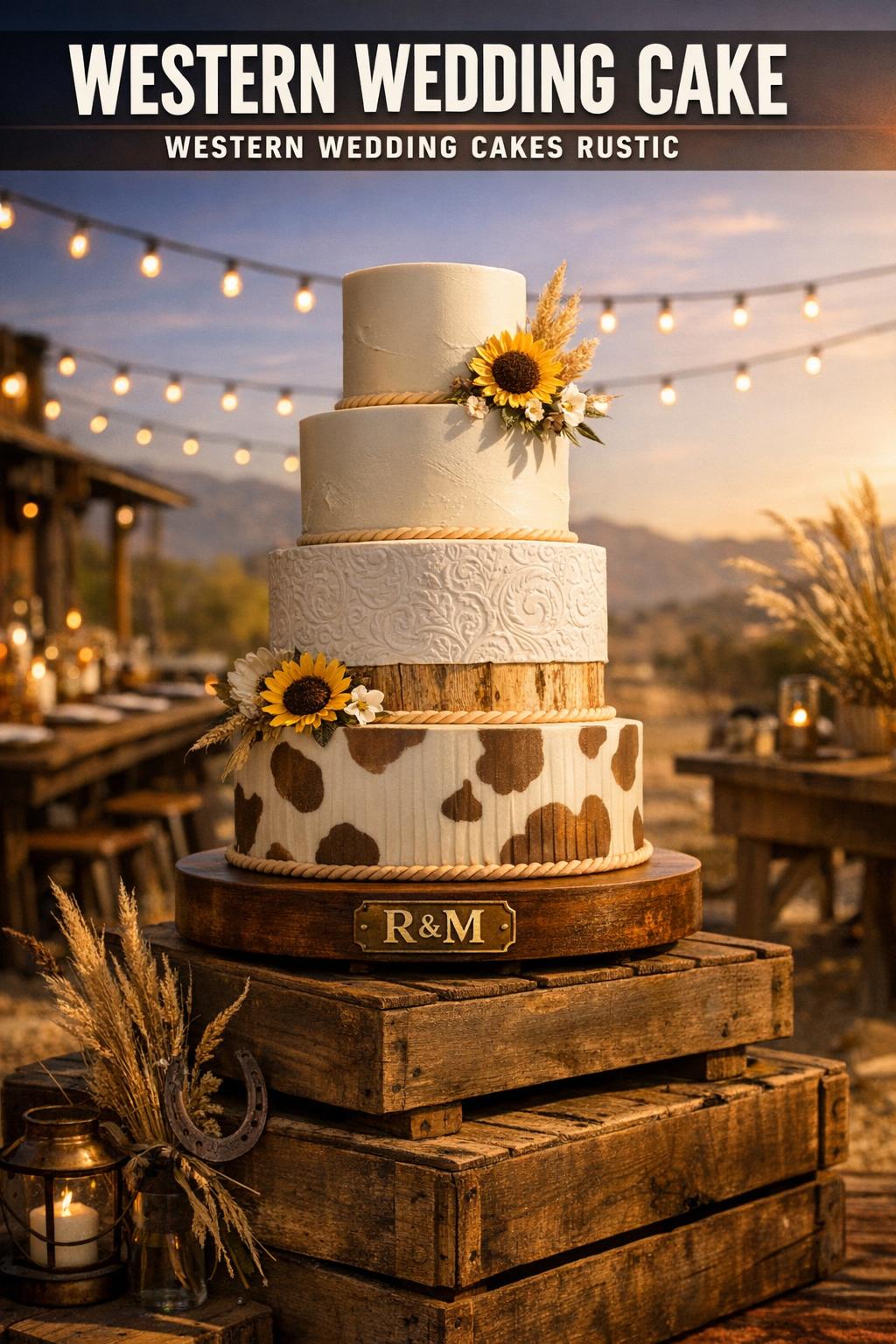
Boots, boot pillars, and boot-themed statements
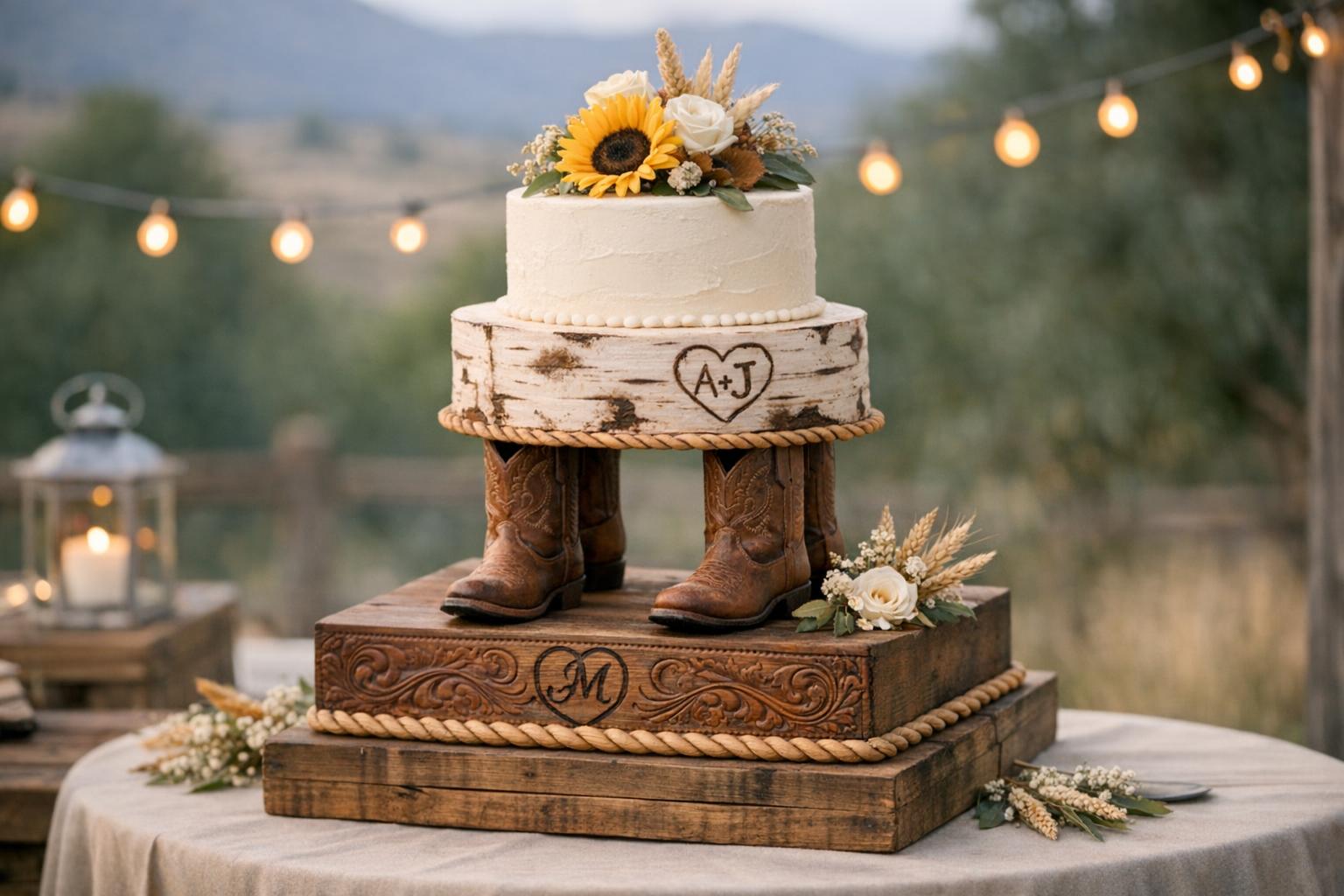
Boots are one of the clearest western signals you can put on a cake. Some designs use boot pillars—decorative boots that visually “support” tiers—to create a bold centerpiece. Boot motifs also work well when your reception includes other western touches, like rustic wood and rope textures, because the look stays grounded and cohesive rather than novelty-driven.
Where this motif shines: if you’re aiming for a playful-but-polished country western wedding look, or if your cake is meant to be a high-impact focal point in country wedding pictures. Where it can go wrong: if everything else is equally loud (multiple patterns, too many figurines), the boots can start to read like a costume accessory instead of a design choice.
Tooled leather texture: rustic, artistic, and surprisingly romantic
A tooled leather-inspired western wedding cake can feel deeply personal because it carries a handmade, craft-forward mood. In one real-wedding example, the cake design was inspired by a horse magazine image and brought to life by the bride’s aunt—exactly the kind of detail that makes guests lean in closer. That leather-tooled look pairs naturally with rustic backyard settings and DIY celebrations where warmth matters as much as polish.
To keep it romantic, soften the leather motif with organic accents like wheat and sunflowers. The contrast matters: leather texture gives structure; florals add tenderness. This is the kind of styling decision that looks intentional in photos and feels heartfelt in real life.
Rustic wood effects and birch-inspired styling
Birch wood-inspired cakes sit in that sweet spot between rustic and refined. They feel especially natural in outdoor or mountain settings, where wood textures don’t feel themed—they feel contextual. A western décor approach can also show up in the presentation: a rustic cake stand, an antique wooden box used as a base, or a clean monogram detail that gives the display a “signature” moment.
This style is an elegant choice when you want western wedding cakes rustic in mood but still wedding-classic in silhouette. It also plays nicely with calm palettes and natural florals, so your cake doesn’t compete with the rest of the room.
Cow spots, cow print, and rope borders: graphic western details that photograph well
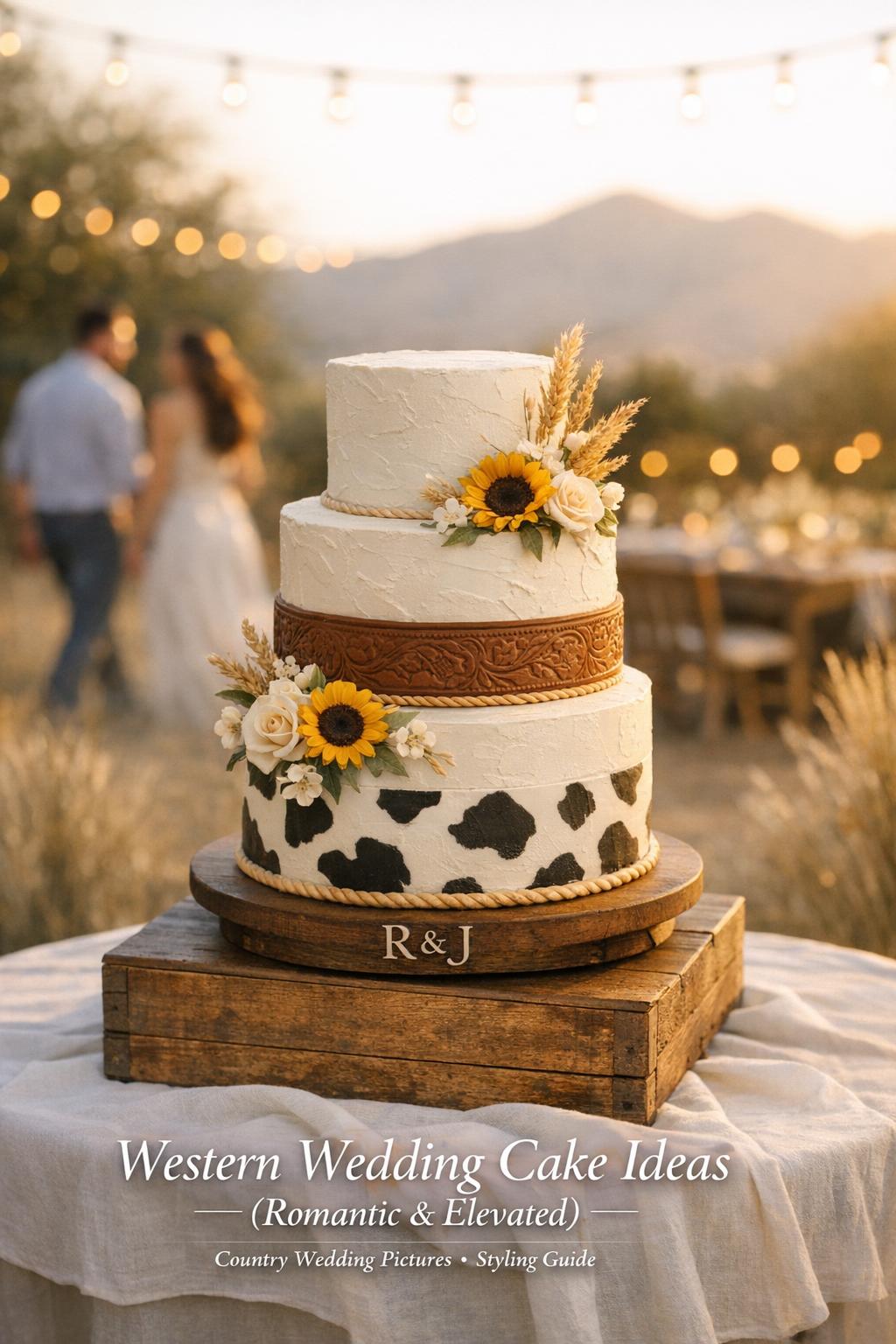
If you love a more graphic western look, cow spots on a middle tier can create instant personality—especially when paired with rope detailing around tier edges. These are high-contrast elements that show up strongly in country wedding pictures and help the cake read as “western” even from across the room.
The key is restraint. Cow spots plus rope borders plus boots can work, but only if the rest of the palette stays simple and the arrangement is symmetrical enough to feel planned. When in doubt, treat cow spots as the statement and let everything else support it.
Design toolkit: buttercream, fondant, gumpaste, and the “finish” that makes it believable
Most western wedding cake ideas live or die on texture. A leather-tooled pattern, a rope border, or a wood effect only looks convincing if the finish suits the level of detail. This is where choosing buttercream vs fondant becomes a styling decision—not just a baking decision.
Buttercream for warmth and handmade romance
Buttercream is naturally soft and welcoming, which makes it perfect for rustic, DIY, and backyard western weddings. It complements sunflowers and wheat beautifully, because those motifs already lean organic. Buttercream also works well when you want the cake to feel “made with love,” especially if the design is tied to a family story—like a relative creating the cake for the wedding.
Trade-off: extremely crisp edges and highly graphic patterns can be harder to achieve in buttercream, depending on the design. If your vision centers on sharp rope borders or precise cow-spot contrast, you may need to simplify the pattern or use a finish that supports cleaner lines.
Fondant for structured patterns and clean western graphics
Fondant is often chosen when you want the surface to look smooth, controlled, and precise—helpful for detailed textures like leather-inspired effects, or for designs that require clean separation between patterns. It’s also useful when you’re incorporating a monogram or initials prominently, because the background can be made more uniform.
Trade-off: fondant can read more formal and less “homemade.” If your wedding vibe is intentionally casual and intimate, you may want to balance fondant’s polish with warmer décor choices—like a rustic cake stand or softer floral styling.
Gumpaste details: sculptural florals and refined accents
Gumpaste roses are a classic example of how a western cake can still feel bridal. Sculptural florals add a romantic cue, especially on designs that include bold motifs like boot pillars or cow spots. When used thoughtfully, gumpaste becomes the “softening layer” that prevents a graphic western design from feeling too sharp.
Style note: if you’re already using sunflowers and wheat, keep gumpaste accents minimal so the floral story doesn’t feel mixed. The most elegant results come when all florals feel like they belong to the same world.
Outfit solutions (for your cake table): styled scenarios that solve real wedding constraints
Instead of thinking “what cake do I like?”, think “what cake styling solves my wedding day conditions?” Below are scenario-based western wedding cake ideas that work like outfit solutions: each one has a clear purpose, a cohesive visual, and a practical logic behind it.
Outfit solution: the DIY romance cake (tooled leather + sunflowers + wheat)
This look is for the couple who wants warmth and meaning. The hero motif is tooled leather texture—an artistic nod to western craft—balanced with sunflowers and wheat to keep the mood joyful and organic. It’s especially fitting for a rustic, backyard-style celebration where guests will feel close to the details and the cake can be a heartfelt centerpiece.
Why it solves the challenge: the leather motif says “western” without needing novelty props, while buttercream softness keeps the design approachable. If your cake is made by someone meaningful—like a bride’s aunt—it becomes part of the story you’ll remember, not just part of the décor.
Outfit solution: the mountain-rustic signature cake (birch wood styling + branded initials)
This is a refined western look that feels natural in scenic settings. The birch wood-inspired design brings rustic texture without leaning into cliché. Add a branding element—like initials displayed on the cake stand (a detail seen as “TLW” in a real-wedding display)—to create a signature moment that feels personal and styled.
Why it solves the challenge: wood texture reads clearly in photos, and branding makes the cake feel custom without adding visual clutter. It also integrates seamlessly with a rustic cake stand or antique wooden box base, which helps ground the cake in the overall reception design.
Outfit solution: the bold icon cake (boot pillars + cow spots + rope detailing)
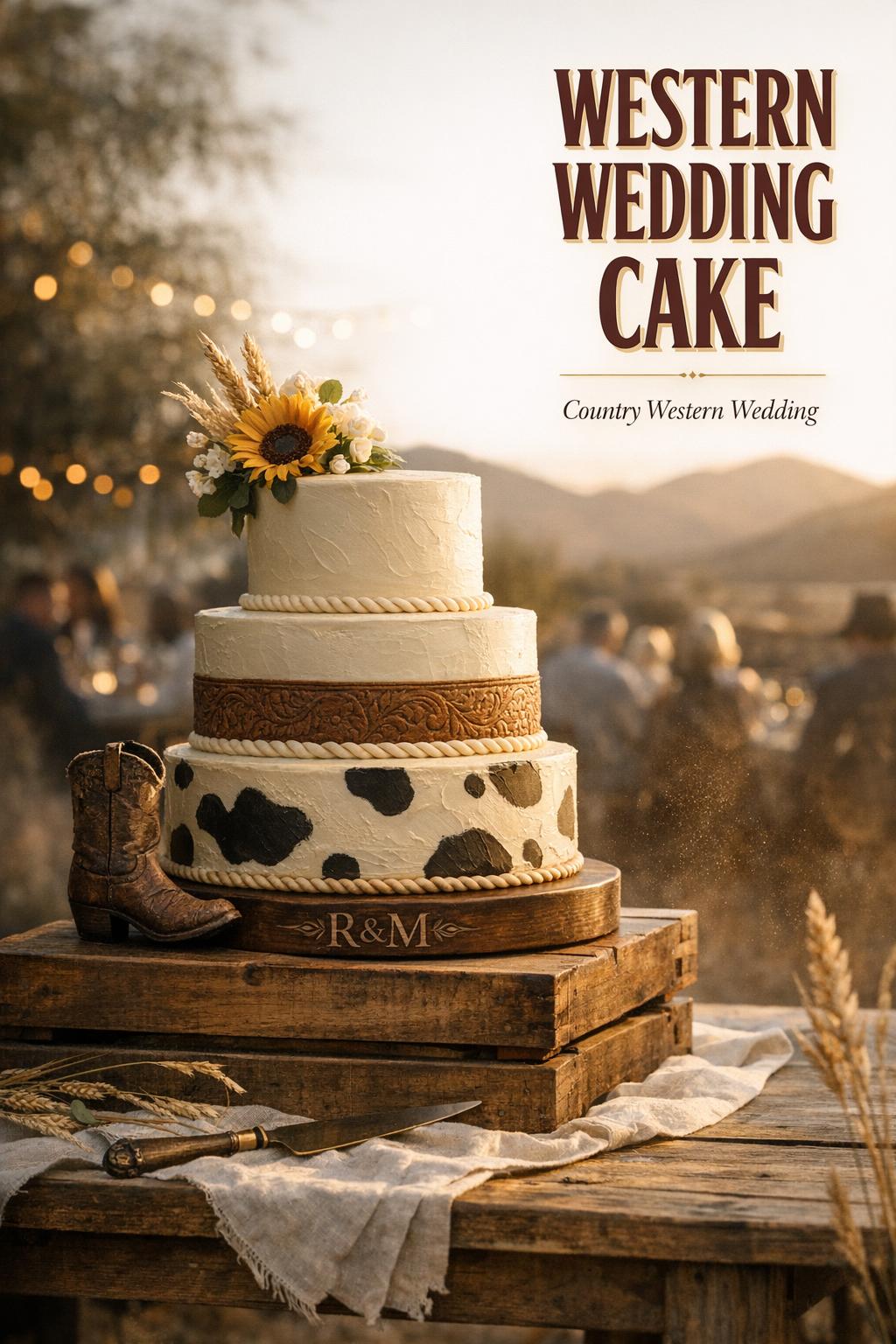
If you want wedding cakes western guests will talk about, go for iconic details: boot pillars that create a strong silhouette, a cow-spotted middle tier for graphic contrast, and rope detailing that frames each tier like a finished garment edge. This approach feels confident and celebratory—perfect when your wedding style leans playful, and you want the cake to be a photo magnet.
Why it solves the challenge: strong motifs read from far away, so the cake doesn’t disappear in a busy reception space. It also works well when you’re leaning into “country western wedding” energy and want your dessert to match that spirit without relying on dozens of smaller décor items.
Outfit solution: the simplified boot-theme cake (two-tier buttercream, boot décor as the focal point)
For couples who love western wedding cake ideas but prefer a cleaner look, a two-tier buttercream cake with a boot theme can be the perfect middle ground. It keeps the design focused—one motif, one story—and it’s well-suited to weddings where the cake is elegant but not oversized.
Why it solves the challenge: fewer tiers often means fewer stability concerns and less visual noise. If your guest count and serving needs align with a smaller cake (for example, a design intended to serve around 80), you’ll get the western mood without forcing an overly complex structure.
Planning your western wedding cake like a stylist: timeline, tastings, delivery, and display
A western wedding cake is as much a planning project as it is a design choice. Especially when you’re using detailed elements—boot pillars, rope borders, cow spots, or a realistic leather-tooled texture—you’ll want a workflow that protects your vision and reduces last-minute stress.
A realistic planning rhythm (that keeps your design cohesive)
- Consultation: bring 2–3 clear motif references (boots, leather tooling, birch wood, cow spots) and decide your single “hero” motif.
- Tasting and finish decision: choose buttercream vs fondant based on the level of graphic precision you need and the overall mood you want.
- Customization choices: confirm what will carry your personal “signature”—initials on the cake, a branded cake stand, or a monogram detail.
- Delivery and setup plan: decide who places the cake, where it will sit, and how the stand or antique wooden box display will be staged.
If you’re working with a bakery, remember that western details often require extra planning simply because they’re specific. A three-tier design with boot pillars and cow-spot piping is not the same workload as a smooth buttercream cake with a few sunflower accents. Your best results come from being honest about what matters most in photos—then allocating your budget and complexity to those elements.
Budget logic: what usually increases complexity
Even without quoting specific price ranges, you can plan realistically by understanding what typically drives cost and lead time: the number of tiers, the density of detailed decoration (rope borders around every tier, cow-spot patterning, leather-tooled textures), and any sculptural elements like boot pillars or gumpaste roses. If you’re trying to control spend, keep the silhouette classic and choose one high-impact motif rather than layering several.
Tip: if you want a strong “western” read but need to simplify, put the detail where cameras focus—front-facing monogram, a single statement tier, or a standout cake stand—and keep the remaining surfaces calmer.
Color, florals, and mood boards: making your cake match the room (and the photos)
The most beautiful country wedding pictures often share one secret: the cake doesn’t look “added on.” It looks like it belongs in the landscape of the day. To get that effect, think in mood-board terms—color palette, floral pairing, and texture repetition.
Color palettes that naturally suit a western aesthetic
Western styling often leans into grounded tones with a few memorable accents. Earth tones can support rustic wood and leather-inspired textures; denim blue can feel fresh and wearable; sunset orange can echo warm desert or late-day light. You don’t need every color—choose a base and one accent so the cake reads cleanly.
Floral pairing that feels western, not random
Sunflowers and wheat are especially effective because they reinforce rustic western décor without overpowering the cake’s structure. They also bridge the gap between “western” and “wedding,” adding softness to motifs like leather tooling or rope detailing. If your cake already has strong graphic patterning (like cow spots), keep florals simple and intentional so the overall look doesn’t become visually crowded.
Tip: style your cake table like a portrait. Give the cake breathing room, repeat one motif nearby (a small wheat bundle, a sunflower accent, or a rope-inspired detail), and let the stand—especially a rustic or antique wooden box—frame the whole moment.
Real-wedding inspiration you can translate into your own design
Sometimes the clearest way to choose is to see how real couples used western motifs in specific places—and why the cakes worked in those settings. The most helpful inspiration is the kind you can adapt, not just admire.
Las Cruces, New Mexico: a tooled leather cowboy cake with sunflower and wheat accents
In a rustic western wedding setting in Las Cruces, NM, a tooled leather cowboy western wedding cake became a personal centerpiece—made by the bride’s aunt and inspired by a horse magazine. The design’s power comes from its story: the texture isn’t only decorative; it’s meaningful. Sunflowers and wheat tie the look back to rustic warmth, making it feel welcoming rather than formal.
Takeaway: if you want a western cake that feels emotional and authentic, anchor the design in one craft-forward motif (like leather tooling) and soften it with natural elements that echo your décor.
Greer, Arizona: birch wood styling with western décor and a branded stand
In Greer, AZ, a birch wood-inspired wedding cake incorporated western décor accents and a branded cake stand featuring “TLW.” The detail that stands out is the presentation: the stand’s branding turns the cake into a signature piece, while the rustic styling supports a setting that naturally suits wood textures.
Takeaway: if you want your cake to look styled (not just decorated), design the display as carefully as the tiers. A monogram or initials can feel modern and personal—even in a western wedding—when it’s treated as a design element instead of an afterthought.
Albuquerque, New Mexico: a three-tier western cake that commits to the motif
A bold three-tier western wedding cake design offered by ABC Cake Shop & Bakery in Albuquerque, NM brings the iconic western elements forward: boot pillars, a cow-spotted middle tier, rope detailing, and customizable initials. The design shows how committing to a clear motif set can create a cake that reads instantly “western” without requiring extra explanation.
Takeaway: if your style is playful and you want a strong theme read, lean into a cohesive set of motifs (boots + cow spots + rope) and keep your supporting décor simpler so the cake remains the focal point.
Buying guide: how to choose a western cake vendor without losing your vision
Whether you’re commissioning a bakery design or recreating an inspiration style, the vendor decision affects everything: the finish you can achieve, the complexity you can safely transport, and how personalized your western elements can be.
What to look for in portfolios (beyond “pretty cakes”)
- Motif clarity: can they execute boots, rope borders, cow-spot patterning, or leather-inspired textures in a way that looks intentional?
- Finish consistency: do buttercream and fondant surfaces look clean and controlled, especially around edges and borders?
- Personalization options: can they incorporate initials or branding elements that feel integrated (on the cake or the stand)?
- Structural confidence: do their multi-tier designs look stable and thoughtfully assembled, especially if you’re considering pillars?
If you’re choosing between vendors or designs, bring your decision back to the same question: what do you want your guests to feel when they see the cake? Cozy and handmade? Crisp and iconic? Rustic and serene? Once you name the mood, it becomes easier to select the right materials, textures, and display pieces.
Tips for communicating your design clearly
Tip: describe your cake in “style sentences,” not just visual fragments. For example: “Birch wood-inspired tiers with a rustic stand and our initials on the display, plus subtle western décor accents.” Or: “Buttercream cake with a tooled leather cowboy texture, softened with sunflowers and wheat.” This helps a baker understand what’s essential versus optional, which protects your vision if adjustments are needed for stability or timing.
Tip: if you have a strong motif like cow spots, specify where you want it (a middle tier, for instance). Controlled placement is what makes a statement detail look editorial in photos rather than scattered.
Common mistakes that make western wedding cakes rustic look messy (and what to do instead)
Western style is charming because it’s textured and expressive—but those same qualities can tip into chaos if the cake design isn’t edited. Most “regret” moments come from trying to include every western symbol at once.
- Mistake: stacking too many hero motifs. Boots, cow spots, rope borders, leather tooling, sunflowers, wheat, and a big monogram can overwhelm the silhouette. Do instead: pick one hero motif, one supporting motif, and one softening element (often florals).
- Mistake: ignoring the cake stand and table. A beautiful cake can look unfinished on the wrong base. Do instead: decide early if the stand will be rustic (antique wooden box) or clean (branded initials like TLW), and style the table to match.
- Mistake: choosing a finish that fights the design. Very precise patterns can look less crisp if the finish isn’t suited. Do instead: match buttercream to organic, romantic designs; consider smoother finishes when you need graphic clarity.
- Mistake: treating personalization like an add-on. Initials can look stuck on if they’re not integrated. Do instead: plan branding as part of the composition—on the stand, as a centered emblem, or as a subtle accent that repeats elsewhere.
One more reality check: not every motif works in every setting. A birch wood look feels effortless in mountain-inspired styling, while a tooled leather design can feel most at home in a rustic DIY environment. The “right” cake is the one that looks like it belongs where you’re getting married.
A final styling checklist for country western wedding cake confidence
As you finalize your design, imagine the moment your photographer frames the cake: the room hums, the light is warm, and the cake table becomes a tiny stage. Your job isn’t to prove the theme—it’s to create a cohesive, romantic moment that feels like you.
- Choose one hero motif (boots, tooled leather texture, birch wood effect, cow spots).
- Decide your finish based on the look you want (buttercream warmth vs smoother, more graphic precision).
- Plan the display: cake stand, antique wooden box base, and whether initials/branding will appear (on the stand or cake).
- Repeat one or two details nearby for cohesion (rope accents, wheat, sunflowers).
- Confirm delivery and setup logistics early, especially for multi-tier designs or pillars.
When you approach wedding cakes western styling with this kind of intention, you don’t just get a pretty dessert—you get a focal point that holds your country western wedding atmosphere together, from first look to final dance, and in every frame of your country wedding pictures.
FAQ
What makes a western wedding cake look “western” without feeling like a costume?
A western wedding cake reads as western when it uses a clear motif language—boots or boot pillars, leather tooling-inspired texture, rope detailing, cow-spot patterning, rustic wood or birch styling—and balances those elements with wedding-soft details like buttercream warmth, clean negative space, and natural accents such as sunflowers or wheat.
How do I choose between buttercream and fondant for western wedding cake ideas?
Buttercream is ideal when you want a warm, handmade, rustic mood that pairs beautifully with sunflowers and wheat, while a smoother, more controlled finish is often better for crisp graphic motifs like cow spots, rope borders, and certain leather-inspired textures; the best choice depends on whether your priority is romantic softness or sharp pattern definition.
What are boot pillars, and when do they work best?
Boot pillars are decorative boot elements used as bold structural-style accents within a tiered design, and they work best when the cake is meant to be a statement centerpiece—especially for a playful country western wedding—while the rest of the décor stays simpler so the boots feel intentional rather than overly themed.
Can a rustic wood or birch-inspired cake still feel personal and custom?
Yes—wood and birch styling become highly personal when you treat the display as part of the design, such as incorporating initials or a branding detail on the cake stand (like a monogram) and pairing the cake with a rustic base or antique wooden box that matches the overall western décor accents.
How can I incorporate our initials into wedding cakes western styling without it looking forced?
The most natural approach is to integrate initials as a planned design element—either centered on the cake composition or displayed as part of the stand styling—so it feels like a signature detail (similar to branded stand ideas) rather than an extra add-on placed at the last minute.
What western wedding cakes rustic details photograph best in country wedding pictures?
High-contrast, clearly defined motifs tend to read best from a distance—cow-spot patterning, rope borders, and bold boot elements—while texture-driven looks like tooled leather or birch wood photograph beautifully up close, especially when paired with simple accents like sunflowers and wheat that frame the design without cluttering it.
How do I keep a cow-spot tier from overwhelming the whole cake?
Use cow spots as a single statement tier—often the middle tier works well—then keep the remaining tiers calmer with cleaner surfaces and limited additional motifs, so the pattern feels like a deliberate focal point supported by rope detailing or subtle initials rather than competing decorations.
What’s a practical way to plan a multi-tier western wedding cake with lots of detail?
Start by choosing your hero motif and confirming the finish that best supports it, then map where each detail will live (boots or pillars, rope borders, cow spots, florals, initials) and finalize a delivery and setup plan early, since intricate designs and tiered structures benefit from clear placement decisions and a reliable staging location for the stand and cake table.
Can I have a western cake look if I prefer a smaller, simpler cake?
Yes—a two-tier buttercream design can still feel distinctly western by focusing on one motif (such as a boot theme or rope detailing) and finishing the look with a styled display, like a rustic stand or a carefully framed cake table, which keeps the design cohesive while staying more minimal.