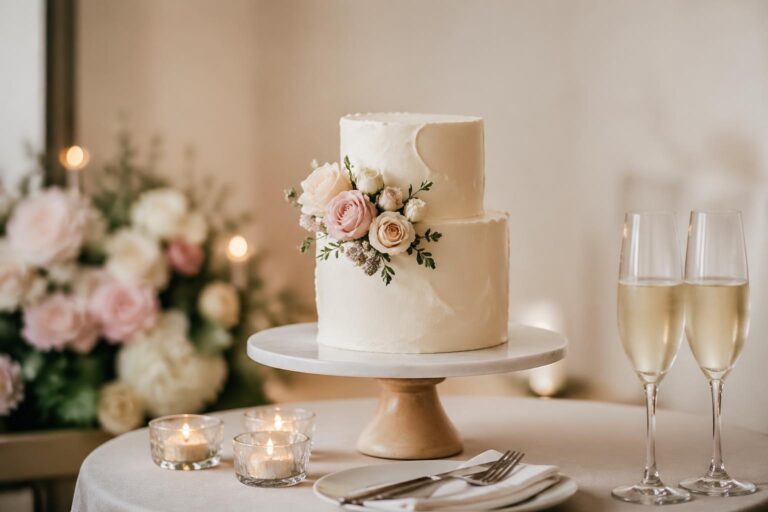
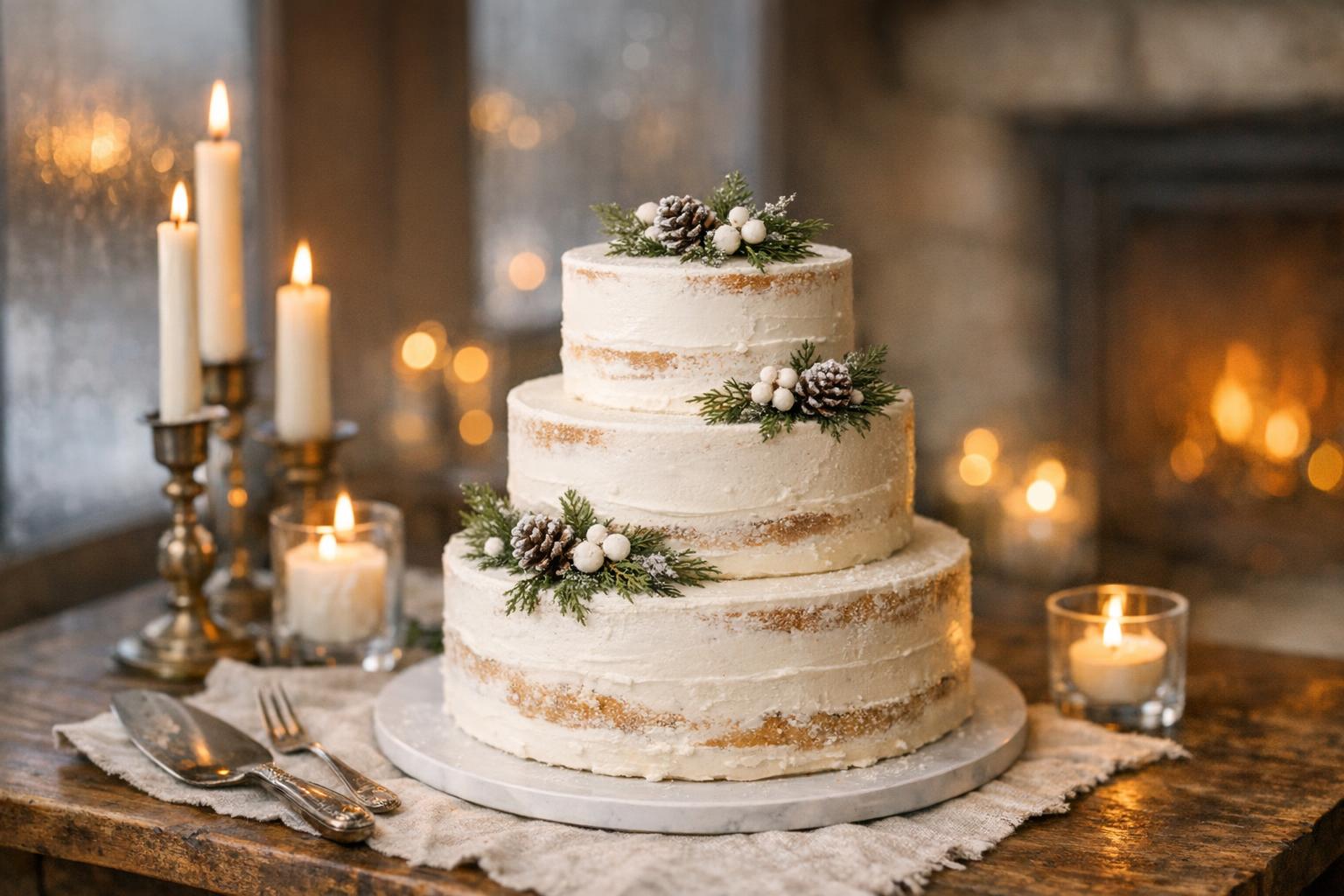
Winter Wedding Cake Ideas for Candlelit, Cozy Celebrations
A winter wedding cake is one of the few wedding details your guests will literally gather around—coats still on, cheeks pink from the cold, hands warmed by a drink—waiting for that first shared moment of sweetness. In winter, cake isn’t just dessert; it becomes part of the season’s atmosphere. It can echo the hush of fresh snow, the sparkle of candlelight, the comfort of evergreen scents, or the quiet glamour of a black-tie ballroom. And because winter brings practical considerations (temperature swings, heating indoors, travel, dry air), choosing the right design is as much planning as it is romance.
This guide is here to help you make confident choices—flavor, finish, color, and styling—so your cake feels like it belongs to your day, not like an afterthought you picked from a binder. You’ll find winter wedding cake ideas for every mood, from dramatic and modern to simple winter wedding cake designs that feel intimate and effortless, including winter wedding cakes rustic enough for a barn or lodge and elegant enough for a formal reception.
What makes wedding cakes winter-ready (beyond the pretty frosting)
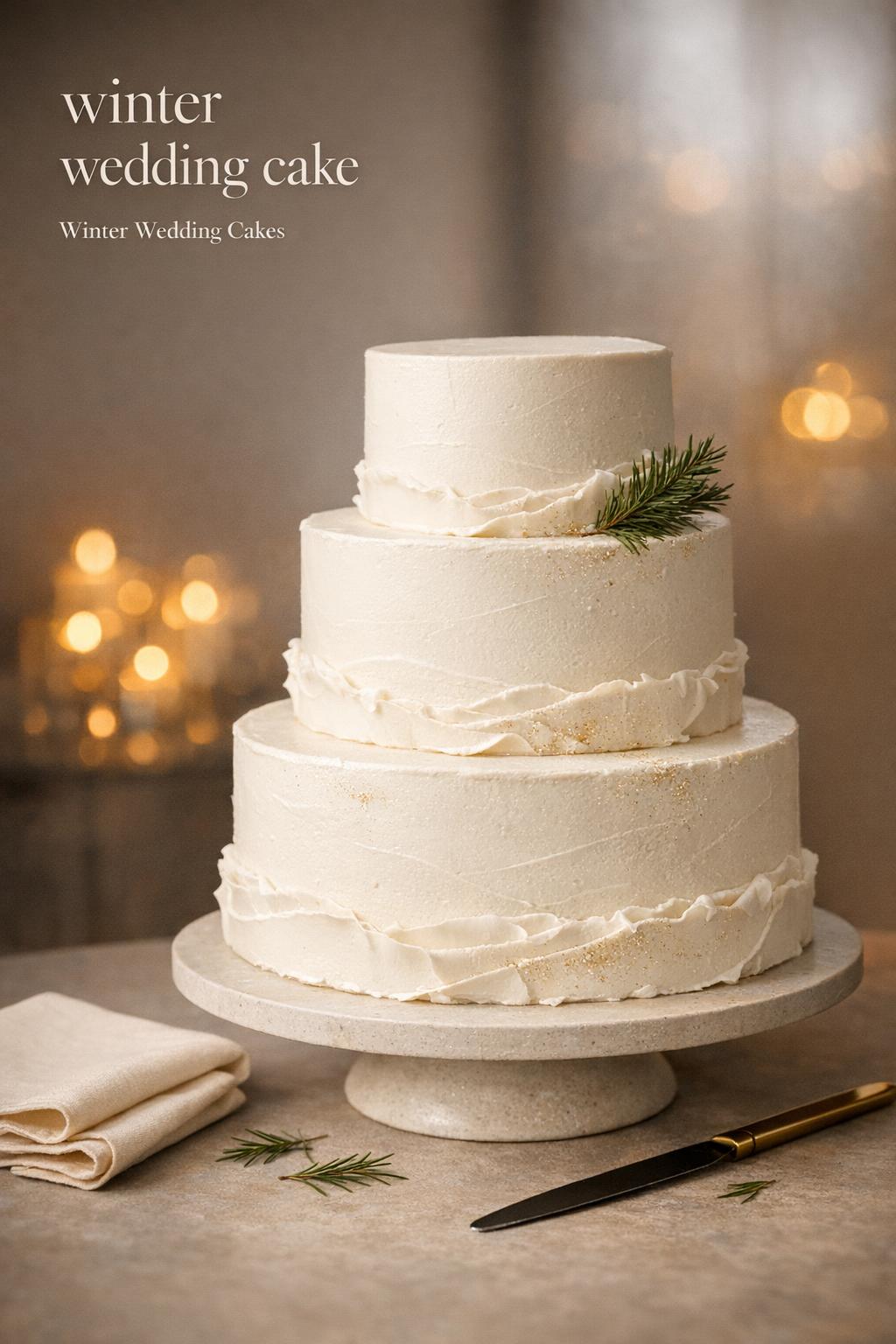
Wedding cakes winter celebrations call for are often chosen for how they feel as much as how they photograph. Winter naturally pushes weddings toward warmth, texture, and contrast—soft candlelight against crisp whites, velvet details beside evergreen, champagne bubbles next to hot coffee. A winter wedding cake works best when it supports that sensory story and holds up to the realities of the season.
The winter “comfort factor”: why guests remember these cakes
In colder months, dessert is experienced differently. Guests are more likely to crave cozy flavors and richer textures, and they’re also more likely to linger. That lingering matters: it means your cake’s look (how it sits on display) and structure (how it slices) become part of the flow of the reception, not a rushed moment between dances.

Turn wedding inspiration into a plan you can actually follow.
Zarellea brings your guest list, budget, vendors, and day-of details into one shared space — so no beautiful idea gets lost in the shuffle.
The season’s practical realities you should plan around
Winter can be kind to cake in some ways and challenging in others. Cooler air can help with transport, but heated indoor venues and dry air can impact finishes and freshness. Your best approach is to choose a design that looks intentional even if conditions shift—meaning stable structure, finishes that don’t require fragile perfection, and styling that complements your venue lighting.
- Think about transitions: cake may travel from cold outdoors to warm indoors.
- Consider display time: winter schedules sometimes run later, and cakes can sit longer before cutting.
- Plan lighting: winter receptions often rely on candlelight or low, warm lighting that changes how whites and metallics read.
Choosing a winter wedding cake style by the feeling you want
When couples get stuck, it’s usually because they’re choosing cake like a standalone object—“Do we like this design?”—instead of choosing it as part of a mood. Start with the emotional tone of your day. The right cake will then feel obvious: it belongs beside your florals, your table linens, your venue textures, and even your outfit silhouettes.
Snowy and romantic: soft whites, gentle textures, candlelit elegance
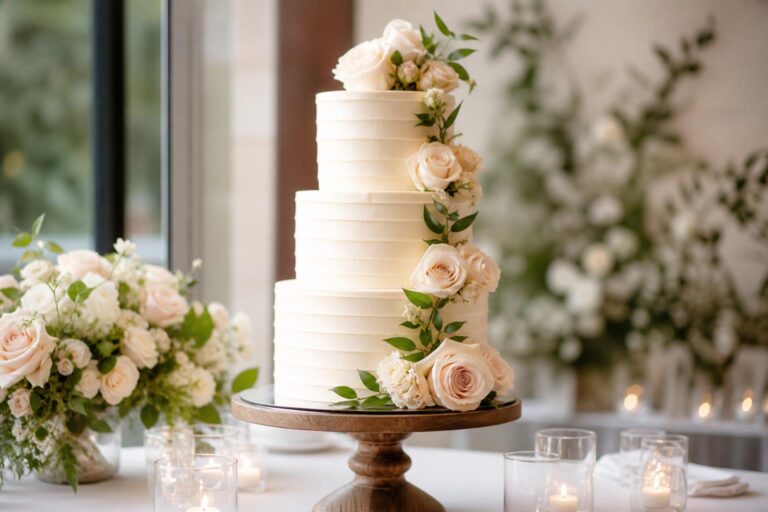
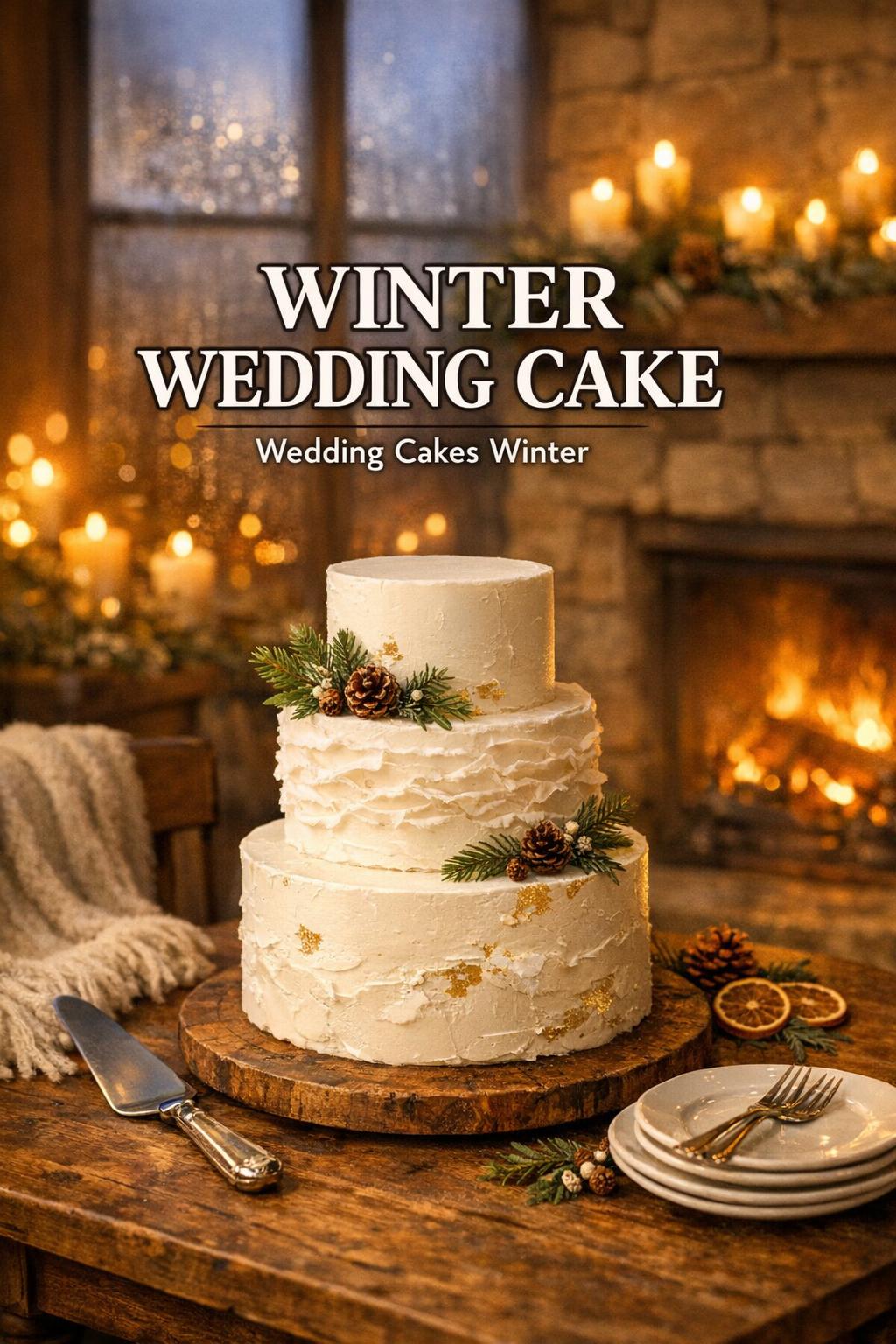
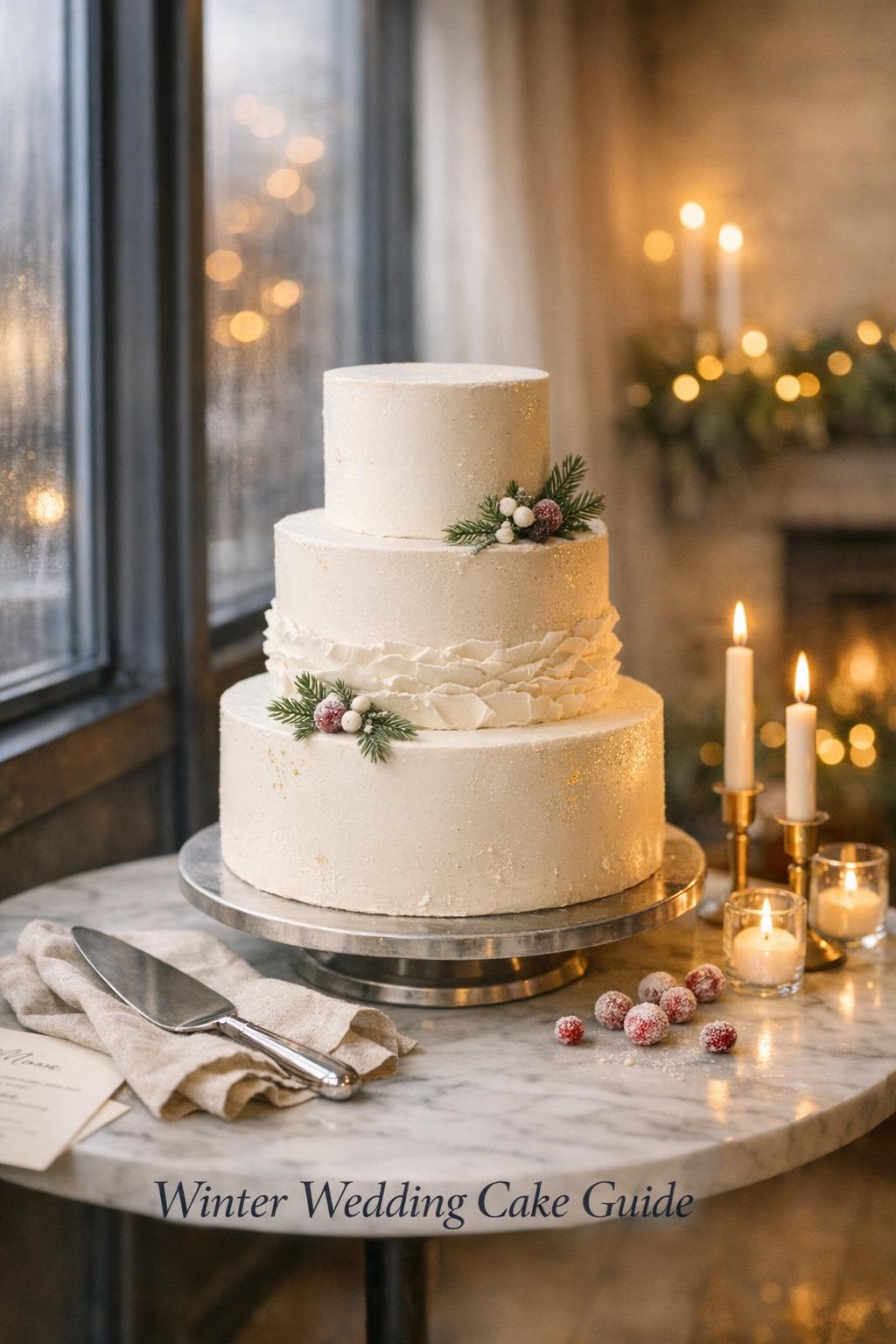
If your winter wedding vision includes soft lighting, timeless attire, and a ceremony that feels like it’s wrapped in quiet, consider a white-on-white cake with layered texture. Instead of relying on busy decoration, let detail come through in subtle dimension—smooth tiers paired with gentle ruffles, delicate piping, or a finish that catches light without looking flashy. This style shines at classic venues where candlelight does the work and photographs feel naturally luminous.
Evergreen warmth: natural textures and winter wedding cakes rustic
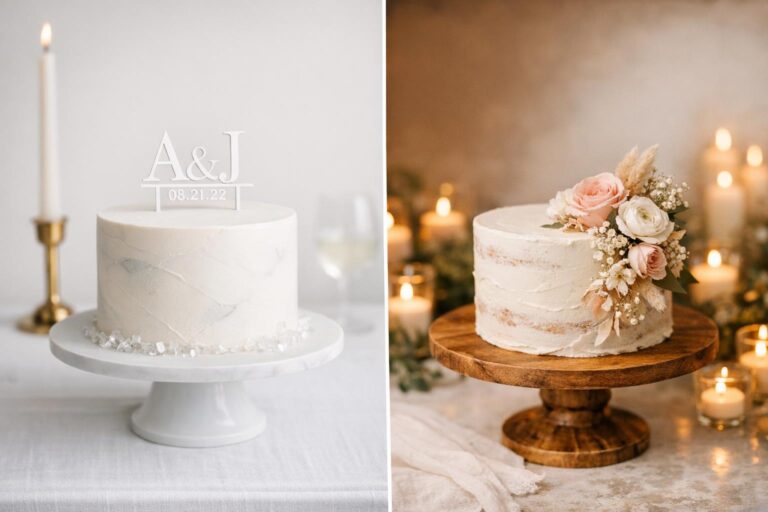
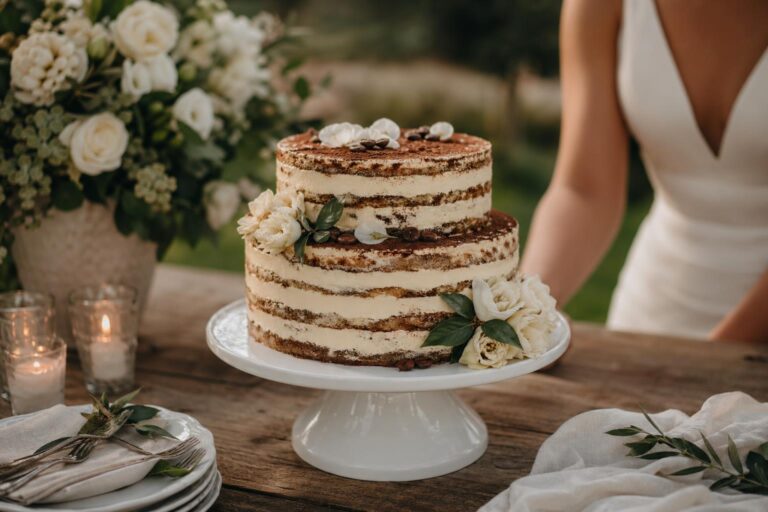
Rustic winter weddings often have a distinct sensory signature: wood, wool, fireplaces, greenery, and that relaxed warmth that makes guests feel instantly welcome. Winter wedding cakes rustic in style can lean into organic textures—semi-smooth frosting, subtle “naked” edges, or simple tiers accented with greenery-inspired styling. The goal is not to look unfinished; it’s to look intentional and grounded, like it belongs in a lodge, barn, or intimate countryside venue.
Modern winter: crisp lines, bold contrast, minimalist impact
For city venues, galleries, or modern ballrooms, winter is a perfect excuse to embrace contrast. Think clean silhouettes, sharp edges, and a controlled palette. Even a simple winter wedding cake can look striking if it’s designed around proportion and negative space—fewer elements, placed with confidence. In warm indoor lighting, minimal designs can read especially editorial and elevated.
Old-world holiday glamour: rich color, metallic touches, vintage energy
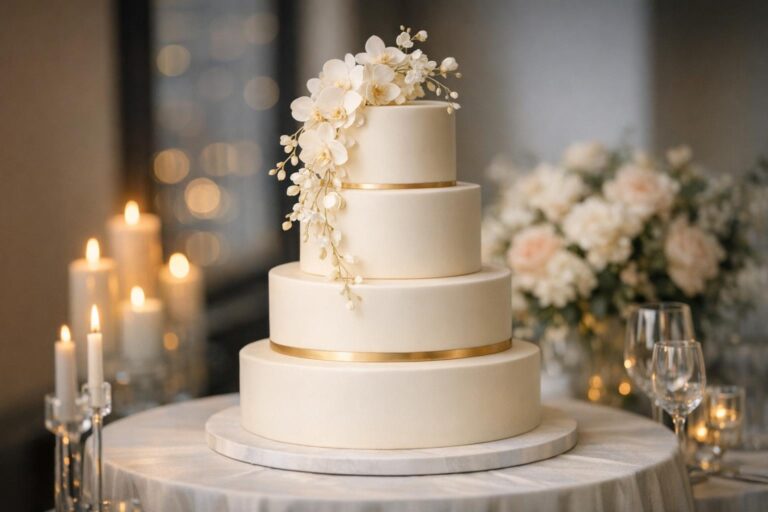
If your wedding lands near the holidays, you might want a cake that feels celebratory without becoming themed. The key is restraint: hint at the season through rich tones and soft shimmer, rather than overt seasonal motifs. A glamorous winter cake can echo your invitations, your bar menu, and your reception music—creating a cohesive “evening” feeling that’s romantic rather than literal.
Winter wedding cake ideas that translate beautifully in real venues
“Pretty in theory” isn’t enough; you need a design that holds up in the exact place you’re getting married. Wedding cakes winter receptions feature often sit near windows, fireplaces, busy service doors, or a dance floor that slowly warms the room. Below are winter wedding cake ideas framed by real venue conditions, so you can picture what will actually work.
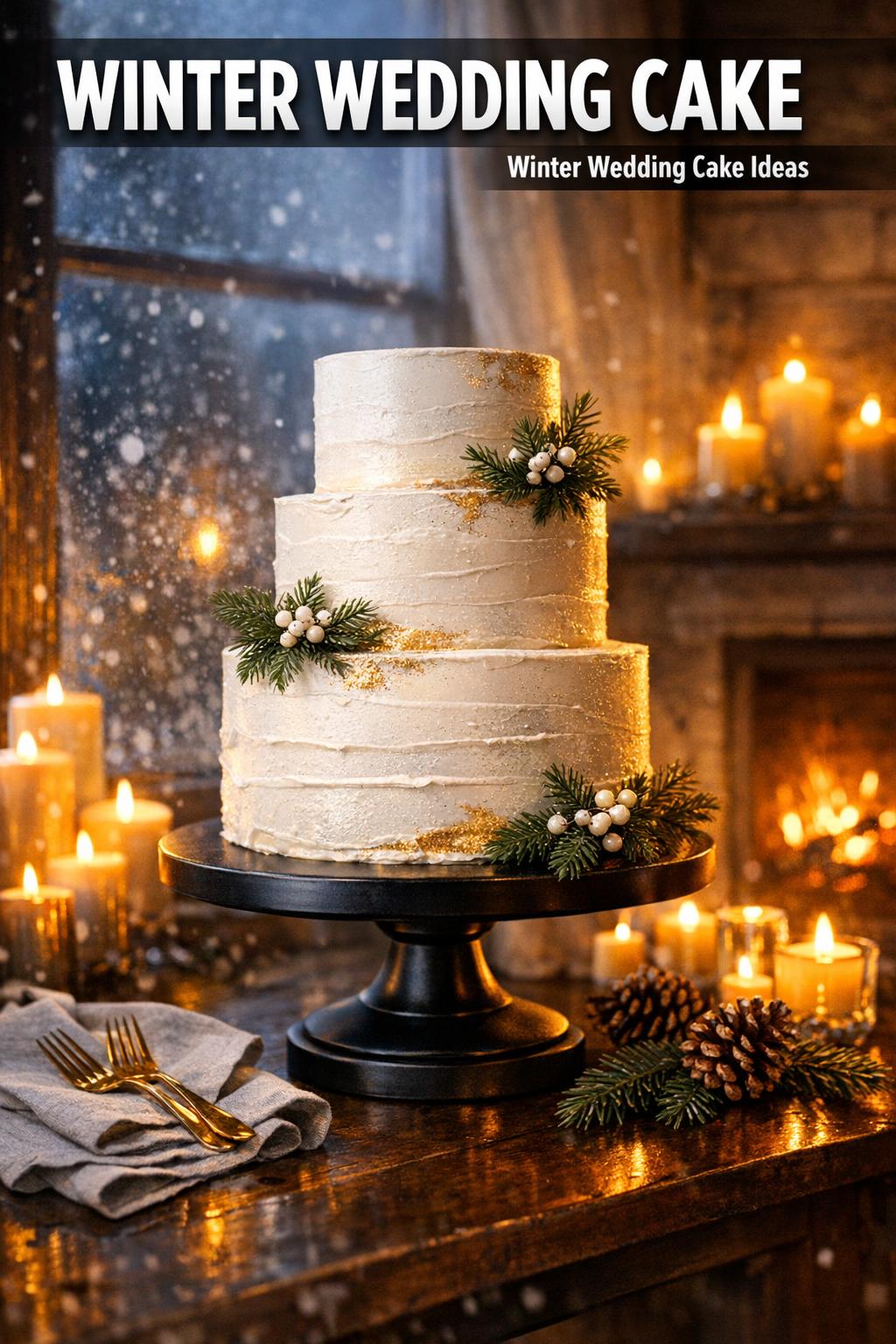
For a candlelit ballroom: drama without clutter
Ballrooms tend to have warm, golden lighting—beautiful, but it can make pure white details blend together. In this setting, add depth through texture or gentle contrast. A smooth cake with subtle detailing will read refined, and a slightly deeper accent (even just in the styling around the cake table) can keep it from disappearing into the glow. If you’re planning a formal cutting moment, make sure the cake looks elegant from a distance, not only up close.
For a lodge or barn: cozy styling that doesn’t look heavy
Rustic winter venues already bring strong textures—wood beams, stone fireplaces, layered linens. Your cake should complement that richness without competing with it. A simple winter wedding cake with a softly finished exterior and a restrained accent will feel intentional. The most flattering approach here is often “less but better”: a clean shape, a calm palette, and styling that fits the venue’s natural warmth.
For an intimate restaurant wedding: scale, height, and shareability
Restaurants can be magical in winter: the windows fog a little, the room feels close, and the celebration becomes deeply personal. In this setting, you don’t need towering tiers to create a moment. Consider a smaller cake that still has presence—either through height, a refined finish, or thoughtful styling. What matters most is how easily it serves and how it fits the flow of dinner service, especially if dessert timing is tight.
For a destination winter wedding: transport-first design choices
Destination winter weddings can be breathtaking, but cake logistics get more complex. If your cake needs to travel or be assembled on-site, choose a design that’s forgiving: fewer fragile elements, finishes that don’t require perfection, and a structure that can handle temperature transitions. The most memorable destination cakes often look effortless—like they belong to the landscape—rather than overly intricate.
Flavor and filling: how to make wedding cakes winter guests truly crave
In winter, flavor becomes part of the atmosphere. Guests arrive from the cold with different cravings than they might have at a summer wedding. Even if your design is minimalist, your flavor choices can bring the season to life—comforting, rich, and satisfying without feeling too heavy at the end of a long evening.
Pair flavor intensity with your reception style
Think about how your cake fits into the night. A formal, plated dinner might call for cleaner, more refined flavor profiles that don’t overwhelm. A relaxed rustic reception can handle bolder comfort flavors because guests often snack, mingle, and return for seconds. For wedding cakes winter menus, the most successful pairings feel consistent with the rest of the food and drink—especially if you’re serving coffee, tea, or after-dinner cocktails.
Texture matters more than you think
Cold weather can make guests crave softer textures and fuller mouthfeel. That doesn’t mean everything needs to be dense. The best winter cakes balance richness with lift—so each bite feels comforting but not exhausting. If you’re debating between multiple options, ask yourself: will this still taste lovely after an hour of dancing, when guests are ready for something sweet and grounding?
The color story: creating a winter palette that looks intentional in photos
Winter weddings often have dramatic lighting and strong environmental cues—dark evenings, reflective surfaces, and indoor warmth. Your cake palette should be chosen with that in mind. The “right” winter wedding cake isn’t only about choosing seasonal colors; it’s about choosing tones that will stay true in your venue’s lighting and complement your overall décor.
Soft neutrals for timeless romance
Neutrals in winter can feel especially romantic because they mirror the season’s quiet. Soft whites, creams, and gentle taupes look beautiful against greenery, dark wood, and candlelight. If you love the idea of a simple winter wedding cake, a neutral palette gives you that clean, calm feeling without looking stark.
High-contrast palettes for evening energy
If your reception is moody—dim lighting, jazz, late-night dancing—contrast can feel thrilling. Dark accents, deep tones, and crisp edges photograph strongly when the room is darker. This approach works particularly well for modern venues and couples who want their cake to feel like a design object, not just a dessert.
Warm tones that echo winter hospitality
Warm palettes feel inviting in winter because they visually “heat up” the room. Even subtle warmth—through styling choices, surrounding linens, or the finish of the cake—can make the display feel cozy and welcoming. The result is a cake that looks like it belongs beside warm drinks, long conversations, and the comfort of gathering.
Simple winter wedding cake decisions that still feel special
There’s a quiet confidence in choosing a simple winter wedding cake—especially when the rest of your day is already rich with detail: textured florals, layered outfits, twinkle lights, and a venue with character. “Simple” doesn’t mean plain; it means edited. It’s about making fewer choices and making them well.
Let shape and proportion do the work
A clean tiered silhouette reads elegant in winter because the season itself is visually structured—coats, long lines, tailored looks. If you want a cake that looks expensive without being ornate, focus on balanced tiers, neat edges, and a finish that looks polished in close-up photos.
Choose one “hero” detail and stop there
The easiest way to keep a simple cake from feeling underdesigned is to choose one statement detail. That could be a single texture technique, a subtle finish, or a carefully placed accent. Winter is the perfect season for this approach because the environment already provides drama; your cake can be calm and still feel powerful.
- One texture (smooth + one band of detail) rather than multiple patterns.
- One focal tier rather than decoration on every tier.
- One intentional cake-table styling choice rather than a crowded display.
Winter wedding cakes rustic: how to keep them elegant, not messy
Rustic winter cake design is often misunderstood. Couples sometimes worry that “rustic” means casual to the point of looking unfinished, or that it won’t feel formal enough for a wedding. In reality, winter wedding cakes rustic in style can be incredibly refined—because winter rustic is usually about texture, comfort, and natural beauty, not roughness.
Refined rustic starts with controlled texture
Instead of an uneven look, aim for a deliberate hand-finished texture—something that feels artisanal. The difference is intention: the frosting should look like it was designed to be that way, not like it was rushed. In photos, controlled texture reads romantic and cozy rather than chaotic.
Balance “organic” with at least one polished element
If your cake has an organic exterior, include a polished detail somewhere else to anchor it—clean tiers, a crisp silhouette, or a tidy presentation. This is especially important in winter because darker venues and warm lighting can make messy details look even messier. A little structure goes a long way.
Match rustic cake styling to the venue’s strongest feature
A lodge wedding might call for warmth and depth; a barn might call for clean simplicity to avoid visual overload. Look at your venue and identify the dominant texture—stone, wood, or fabric-heavy décor—and make sure your cake doesn’t fight it. The best wedding cakes winter rustic receptions feature feel like an extension of the room.
Tips for working with your baker (and avoiding winter-specific surprises)
Even the most gorgeous winter wedding cake ideas can fall flat if the planning details are vague. Winter adds a few common pressure points—tight delivery windows, unpredictable weather, and indoor heating—that are easiest to manage when you communicate clearly and early.
Tips: the questions that protect your cake design
- Ask how the cake will be transported and how temperature changes will be handled.
- Confirm where the cake will be stored at the venue before display (and whether that spot is near heat sources).
- Discuss display time and timing of final touches if the design includes delicate elements.
- Clarify who is responsible for cake table styling and setup, especially if your venue flips rooms or moves décor mid-event.
Tips: plan your cake-cutting moment like part of the evening, not a task
Winter weddings often feel more intimate because guests naturally cluster together. Use that to your advantage: schedule cake cutting when people are already gathered—after toasts, just before opening the dance floor, or as a cozy late-evening moment. A winter wedding cake looks especially magical when guests are nearby and the room is glowing.
Tips: keep your design realistic for your guest count and timeline
Ambitious designs can be beautiful, but winter schedules can be tight. If you’re hosting a larger guest list or a fast-moving reception, choose a design that serves efficiently and holds its look even if the timeline shifts. Practicality isn’t the opposite of romance—it’s how your day stays calm when the weather doesn’t cooperate.
Common winter wedding cake mistakes (and what to do instead)
Most cake regrets aren’t about taste—they’re about a mismatch between the cake and the day. Winter weddings have a particular rhythm: arrivals happen in waves, guests take longer to settle, photos happen in low light, and the room’s temperature changes as the night goes on. Avoid these common issues, and your cake will feel effortless.
Mistake: choosing a design that only looks good in bright daylight
Many winter receptions happen after dark or in warm, dim lighting. Designs that rely on ultra-fine details can disappear. Instead, build visual impact with texture, clear silhouette, and a focal detail that reads from across the room.
Mistake: forgetting that the cake table is part of the décor
A winter wedding cake can look underwhelming if it’s placed on a bare table in a dark corner. Treat the cake display like a vignette: lighting, backdrop, and spacing matter. If your venue is naturally moody, a small adjustment—placing the cake where guests naturally gather—can transform how it photographs and how it feels.
Mistake: going “rustic” without a plan for refinement
Rustic is a style, not a lack of style. If you love winter wedding cakes rustic in spirit, make sure there’s intentional structure: clean proportions, controlled texture, and a presentation that feels curated rather than casual.
How to tie your winter wedding cake to the rest of your wedding style
The most memorable wedding cakes winter couples choose don’t feel isolated. They echo the couple’s style—sometimes subtly, sometimes boldly. If you want your cake to feel like “you,” connect it to at least two other wedding elements so it becomes part of a consistent visual language.
Use your attire as a design cue
Winter bridal fashion often includes structured silhouettes, long sleeves, or textured fabrics. You can reflect that in your cake through clean lines, layered textures, or a finish that feels tailored rather than frilly. This creates a quiet harmony between what you wear and what you serve—an emotional detail guests may not name, but they’ll feel.
Let the venue lead the level of detail
A richly decorated venue may call for a simple winter wedding cake so the room doesn’t feel busy. A minimal venue can handle a more dramatic cake because it becomes a focal point. This is one of the most helpful planning rules: when something else is already loud (a grand room, intense florals, dramatic lighting), your cake can whisper. When the space is quiet, your cake can speak.
Coordinate with the dessert experience, not just the dinner menu
In winter, dessert is often paired with warm drinks and late-night conversation. Think about how guests will actually experience the cake: standing near the dance floor, sitting back down with coffee, or gathering close for a sweet pause. When you plan the cake as part of a dessert moment—timing, lighting, and comfort—it becomes a highlight rather than a formality.
Planning checklist: wedding cakes winter couples can order with confidence
Once you’ve chosen a direction—modern, rustic, romantic, or minimal—use this checklist to make sure your cake holds up beautifully on the day itself. Think of it as the behind-the-scenes planning that protects the magic.
- Confirm your venue’s display location, including nearby heat sources and traffic flow.
- Plan a realistic display window from setup to cutting, especially for delicate finishes.
- Align cake design with lighting conditions (daylight vs evening glow).
- Decide if you want a simple winter wedding cake or a more detailed statement—and ensure it matches your overall décor density.
- If you love winter wedding cakes rustic, choose one refined anchor element (clean shape, controlled texture, or polished presentation).
- Schedule cake cutting at a moment when guests are naturally gathered.
A final note on choosing the “right” winter wedding cake
The right cake is the one that fits your winter story. Maybe it’s a sleek, modern design that looks like it belongs in a candlelit city reception. Maybe it’s a rustic beauty that feels at home beside evergreen and wood. Or maybe it’s a simple winter wedding cake with quiet texture and a flavor that makes everyone pause mid-conversation and smile. However you choose, let your cake support the feeling you want to remember: warmth, intimacy, and a celebration that glows from the inside out.
FAQ
What makes a winter wedding cake different from cakes in other seasons?
A winter wedding cake is usually chosen to match colder-weather ambiance and indoor lighting, and it often needs to handle temperature transitions from outdoor air to heated venues while still looking polished on display.
Are simple winter wedding cake designs still impressive for a formal wedding?
Yes—simple winter wedding cake designs can feel especially elevated in formal settings when they rely on clean proportions, refined finishes, and one intentional detail that reads beautifully in warm, low winter lighting.
How do I choose between modern and winter wedding cakes rustic styles?
Choose modern if your venue and décor are sleek, minimal, or city-forward, and choose winter wedding cakes rustic if your setting includes natural textures like wood and stone; the best choice is the one that visually belongs in your space.
Do wedding cakes winter receptions require special planning for heat indoors?
They often do, because indoor heating and long display times can affect how a cake looks and holds up, so it helps to confirm storage location, display timing, and whether the cake will be placed near heat sources or high-traffic areas.
How can I make a winter wedding cake look good in dim, candlelit photos?
Prioritize a clear silhouette, visible texture, and one focal detail that reads from a distance, and place the cake where lighting is flattering so it doesn’t disappear into the warm glow of the room.
Is it better to choose an intricate design or a simpler one for a winter destination wedding?
Simpler designs are often more reliable for destination winter weddings because they’re more forgiving during transport and on-site assembly, especially when timing and temperature conditions can change quickly.
What’s the easiest way to keep winter wedding cakes rustic from looking messy?
Keep rustic details controlled and intentional, then balance them with at least one polished element—like clean tier proportions or a tidy presentation—so the overall look feels curated rather than casual.
When should we schedule the cake-cutting moment at a winter wedding?
Plan cake cutting for a time when guests are already gathered—such as after toasts or before dancing—because winter celebrations often feel cozier and more connected when everyone is close and the room is warmly lit.