Couture Small Wedding Cake Ideas for Modern-Romantic Vows
Small wedding cake ideas with a couture, intimate mood
The most memorable small wedding cakes don’t try to “look bigger.” They lean into intimacy the way a perfectly tailored outfit does—clean lines, intentional texture, and a few details that feel unmistakably you. In a candlelit ceremony room or a backyard reception strung with café lights, a petite cake becomes a style piece: a visual anchor for the cake-cutting moment, and a quiet luxury on the dessert table.
That’s why small wedding cake ideas are often the most fashion-forward. A single-tier buttercream cake with fresh flowers can feel as editorial as a minimalist gown, while a geode-inspired accent or gold leaf detail reads like jewelry—tiny, but impossible to ignore. The mood can swing from modern minimalism to garden romance to playful “cute small wedding cakes” energy, all without needing a towering centerpiece.
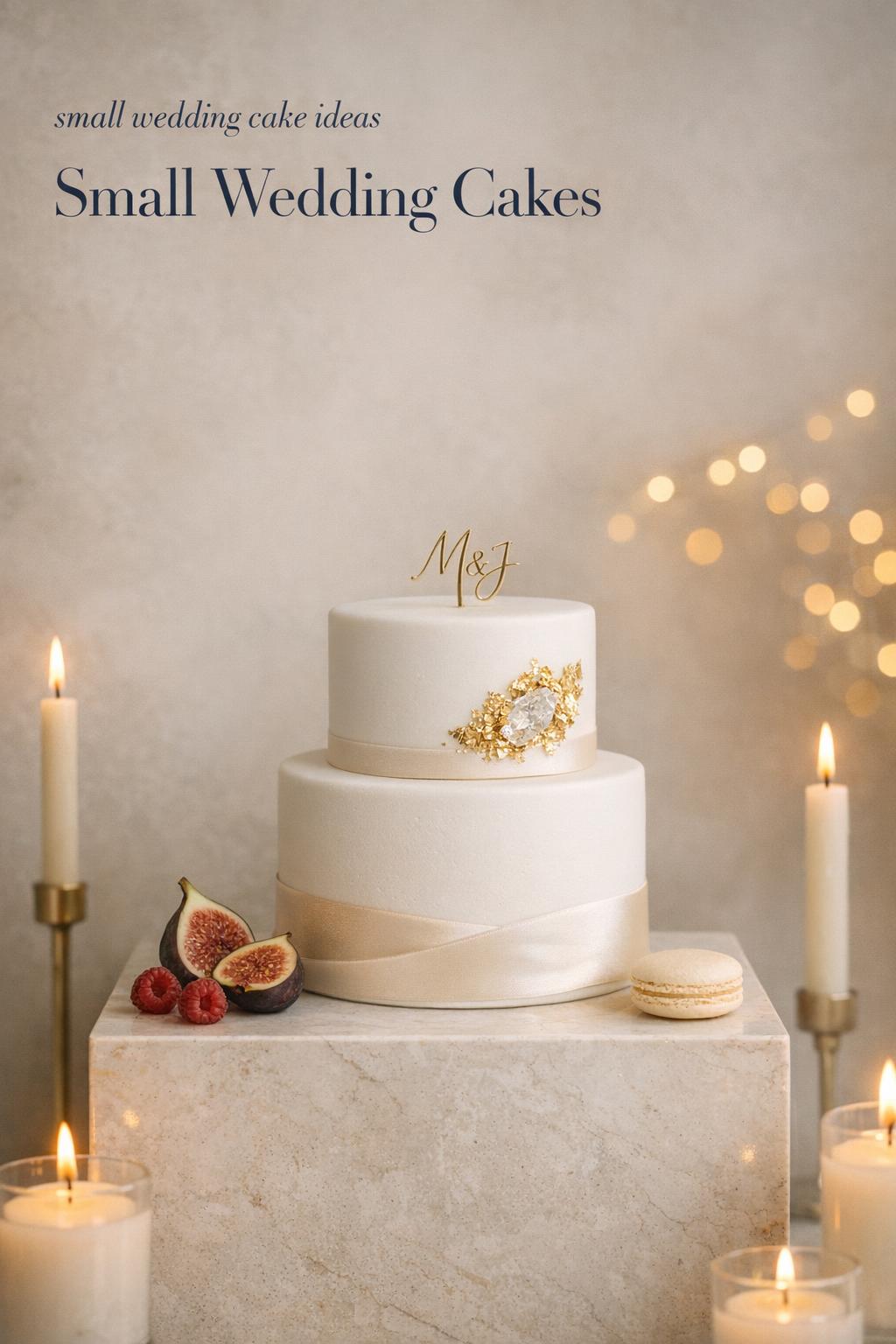
This guide curates small wedding cakes like a wedding stylist would curate looks: each “cake look” is a complete aesthetic with finishes, toppers, and a planning note on when it works best. You’ll find simple wedding cake options, wedding cake ideas 1 tier couples can actually use, mini wedding cakes for individual servings, and simple cake decorating wedding touches that photograph beautifully and travel well.
Why small wedding cakes feel so right for modern celebrations
Small wedding cakes shine because they match the way many couples are celebrating now: intimate guest lists, curated design, and a desire to put intention into every detail. A petite cake can be a statement without feeling overdone, especially when it’s styled with a few “high-impact, low-scale” elements—like a monogram topper, ombre buttercream, or macarons arranged with the precision of a dessert-table accessory.
Turn wedding inspiration into a plan you can actually follow.
Zarellea brings your guest list, budget, vendors, and day-of details into one shared space — so no beautiful idea gets lost in the shuffle.
They’re also flexible. If you’re serving other desserts, mini bundt cakes, or mini individual wedding cakes alongside a small cutting cake, you don’t have to compromise on the moment. You still get the photos, the ritual, and the romance—just with a size that fits the room and the vibe.
From a practical planning standpoint, small wedding cakes make it easier to customize: buttercream textures, fondant ribbons, floral crowns, chocolate ganache drips, metallic accents, and even geode/crystal-inspired detailing all read clearly on a smaller canvas. The design choices become sharper, not busier.
The style vocabulary: finishes and details that define “small, but mighty” cakes
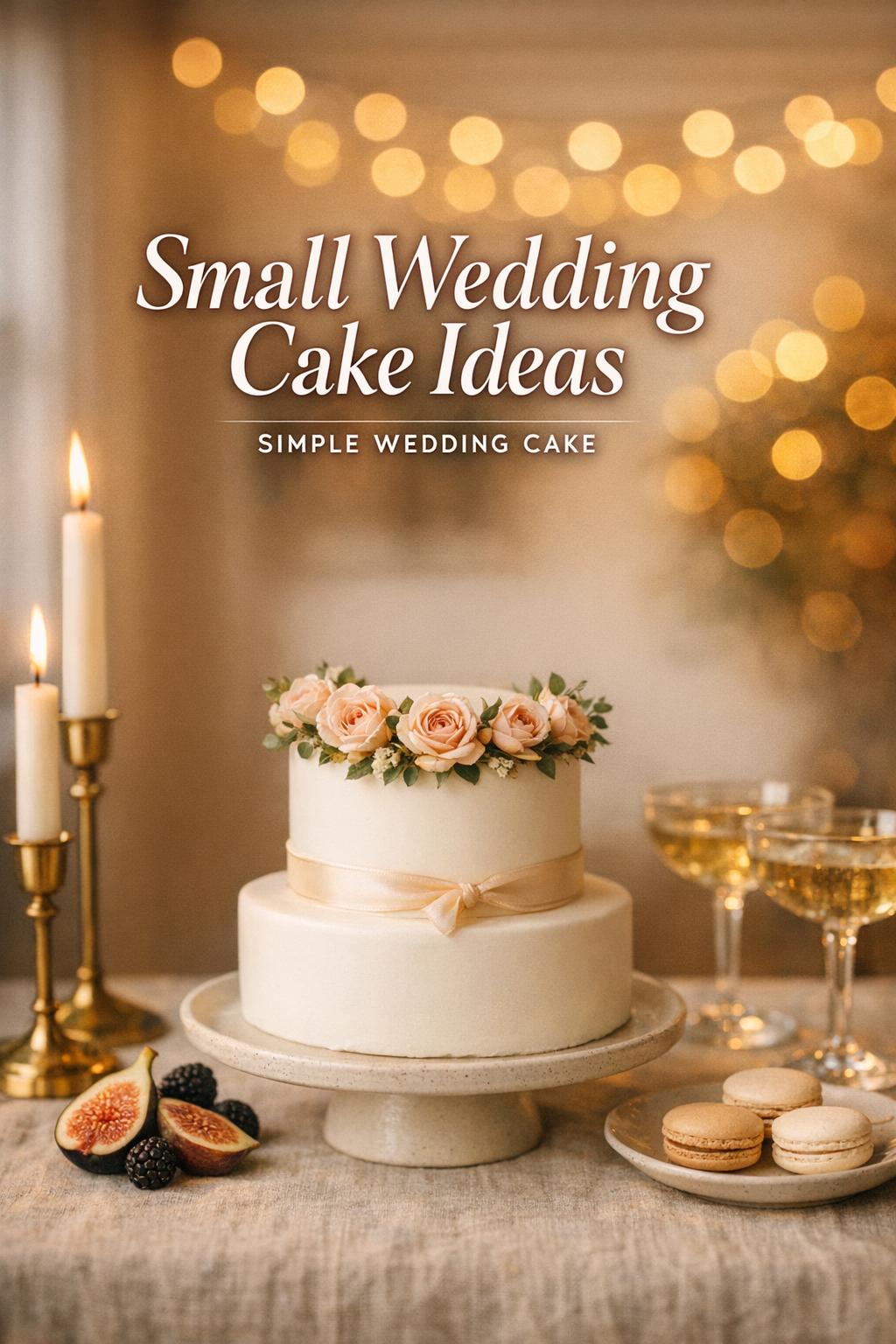
Before you choose a specific design, it helps to know the few core “fashion categories” of small wedding cakes—the equivalent of silhouettes and fabrics in bridal style. Most top small wedding cakes build their identity around a finish (buttercream, fondant, naked/semi-naked), then add one defining accessory (flowers, monogram topper, macarons, gold leaf, or a metallic/geode accent).
- Buttercream textures: soft, romantic, and forgiving; great for watercolor and ombre looks.
- White fondant: crisp, minimalist, and ribbon-ready; perfect for subtle metallic touches.
- Naked or semi-naked: natural, seasonal, and effortless; pairs beautifully with fruit and greenery.
- Glam accents: gold leaf, metallic drips, geode/crystal motifs for a luxe focal point.
- Toppers and edible styling: monogram toppers, floral crowns, edible flowers, and macaron-decorated edges for personality.
As you read the looks below, notice how each one uses a consistent finish plus one signature element. That’s the secret to keeping a simple wedding cake from looking plain: you’re not adding more—you’re choosing better.
Look: clean minimalism in a simple wedding cake (white fondant + ribbon)
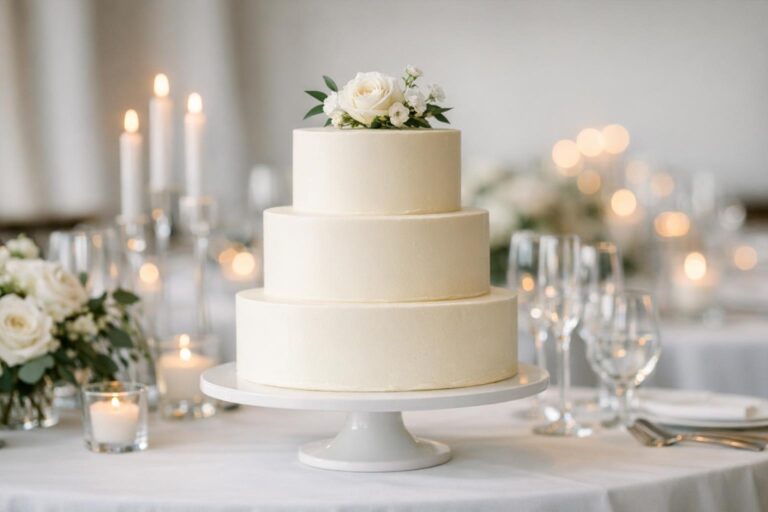
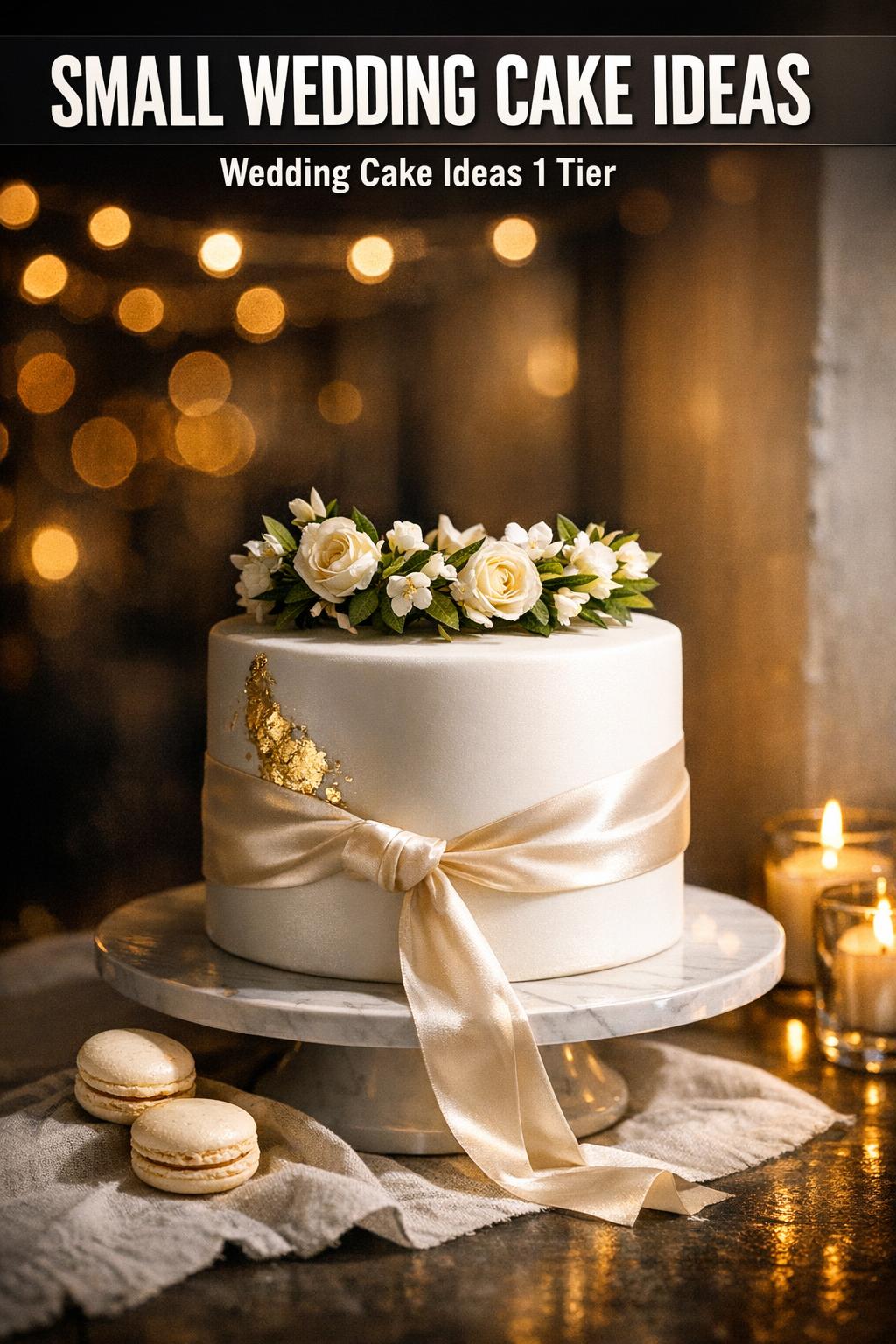
This look is the bridal equivalent of a minimalist slip dress with impeccable tailoring. A smooth, simple white fondant exterior creates a calm, modern mood—especially for city ceremonies, gallery-style venues, or intimate celebrations where every table detail is curated.
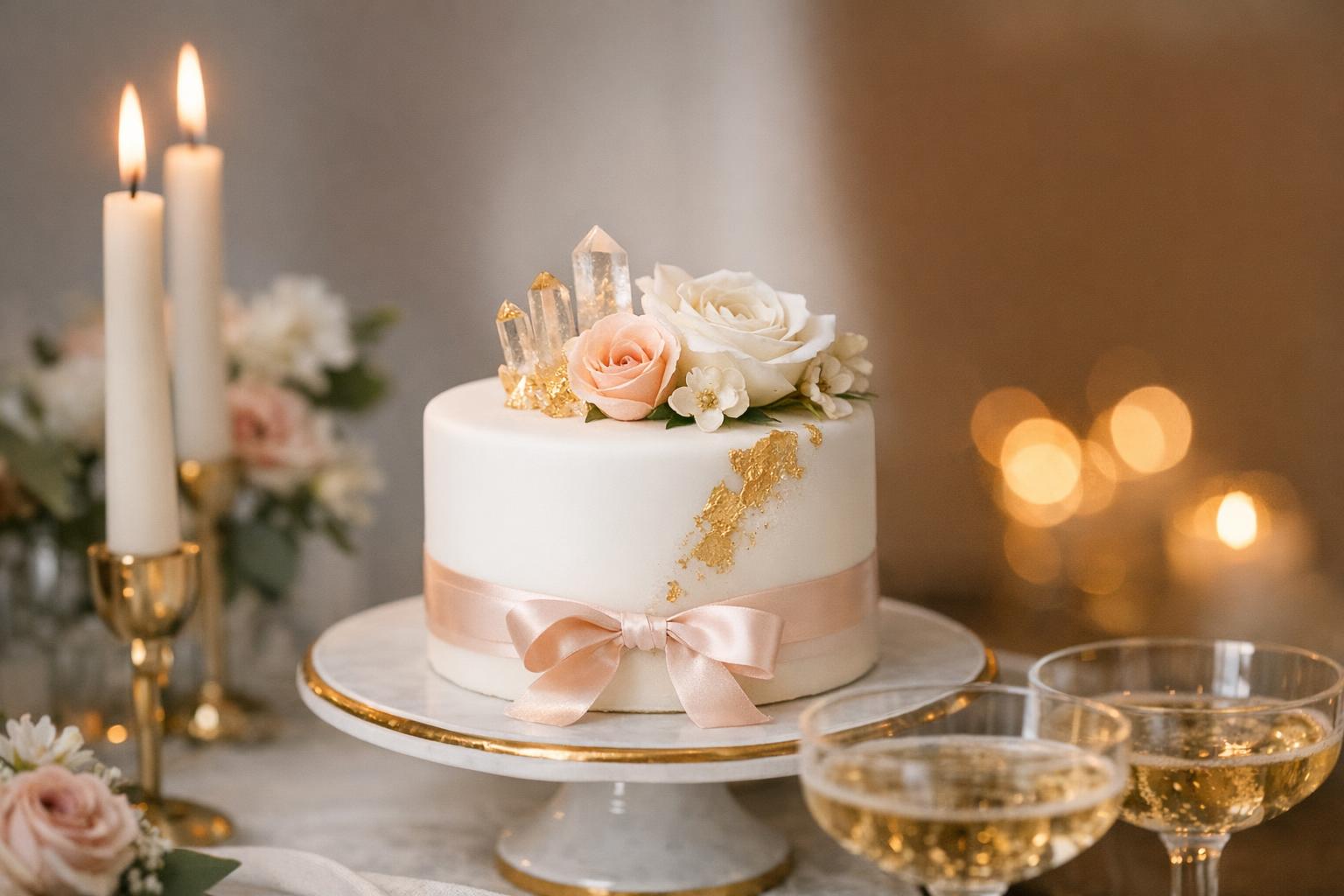
The silhouette stays classic: a petite round cake (often a one-tier statement) finished with white fondant and a neat ribbon. If you want a barely-there hint of drama, add a small metallic touch—think a whisper of gold leaf accents that reads like fine jewelry rather than sparkle.
- Finish: white fondant
- Accent: ribbon wrap, subtle metallic touch (like gold leaf)
- Best for: modern minimalist, clean palettes, formal portraits
Styling insight: minimalist fondant works best when the rest of your tablescape has texture—linen, candles, soft florals—so the cake feels like an intentional “blank canvas” rather than an afterthought. This is a strong direction for couples searching for wedding cake ideas 1 tier that still feel elevated.
Look: garden-romantic buttercream with fresh flowers
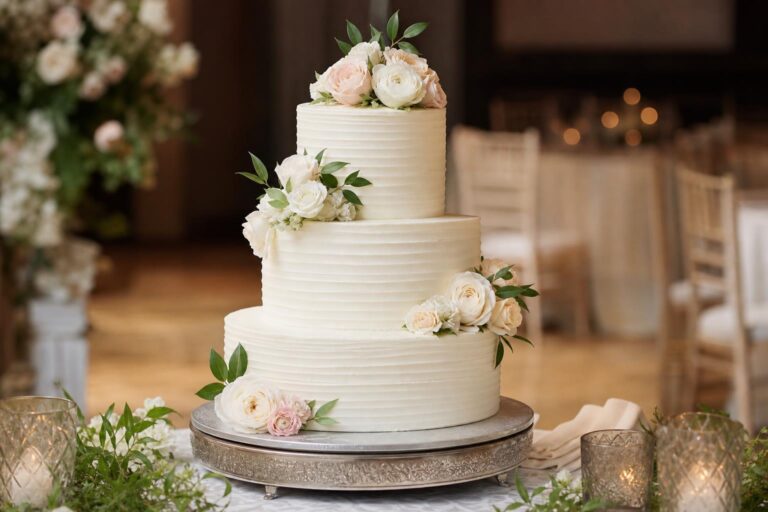
If your wedding mood is airy, fragrant, and gently romantic, a single-tier buttercream cake with fresh flowers is the easiest way to make a small cake feel like it belongs in the center of your story. It photographs beautifully during the cake-cutting moment—soft, dimensional, and naturally celebratory.
The finish is where the romance lives: buttercream with light texture (not overly polished) so the florals feel “grown,” not placed. Fresh flowers can be arranged as a small spray, a side cluster, or a delicate crown. This is also one of the most approachable simple cake decorating wedding directions because the décor does so much of the work.
Styling insight: on a small cake, flowers should be scaled like a bouquet for a petite frame—intentional and balanced. Too many blooms can overwhelm the silhouette; a single focal cluster creates a couture effect.
Look: naked cake with seasonal fruits (effortless, organic, intimate)
A naked cake (or semi-naked version) with seasonal fruits has a relaxed confidence—like a soft, undone updo paired with a simple dress. It’s a natural fit for outdoor ceremonies, rustic receptions, and intimate weddings where the venue already provides warmth and character.
The appeal is the honesty of the layers: sponge and filling peeking through, topped with fruit that feels fresh and real. Seasonal fruits can be arranged in a loose cascade or a small crown. Because the finish is intentionally less formal than fondant, the fruit becomes your “accessory,” adding color and a sense of place without needing elaborate decoration.
- Finish: naked or semi-naked
- Accent: seasonal fruits
- Best for: rustic, natural, boho-leaning, backyard receptions
Styling insight: naked cakes feel most intentional when the fruit palette is restrained. Choose a few complementary tones rather than many colors—small wedding cakes look more editorial when the styling is curated.
Look: ombre watercolor buttercream (soft drama without the height)
Ombre and watercolor buttercream finishes are for couples who want romance with a modern edge. The gradient reads like fabric—tulle or silk—moving from one shade to the next. On a petite cake, this finish feels artistic, and it creates “big impression” energy without needing multiple tiers.
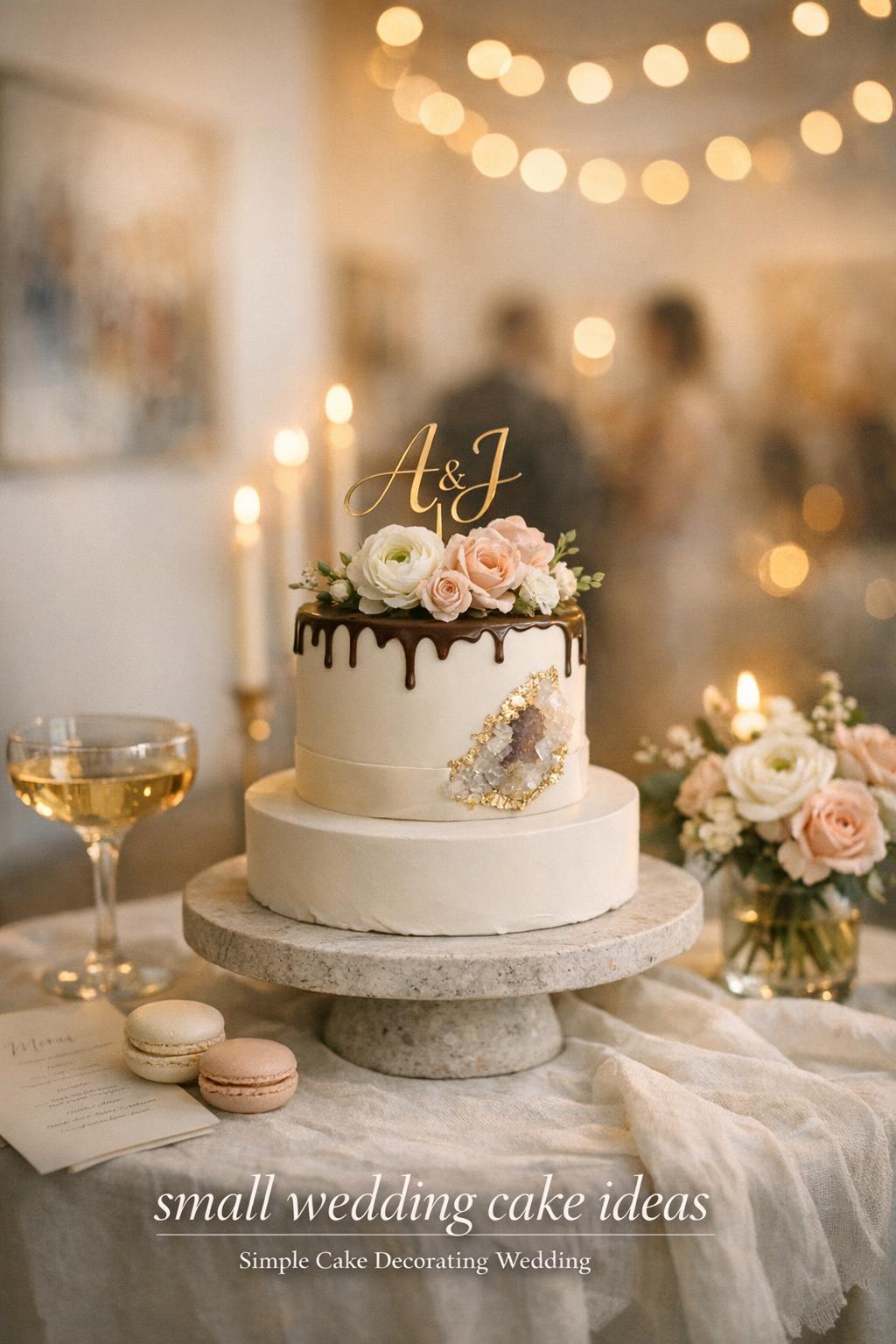
The silhouette is usually simple—one-tier or a small two-tier—so the finish can be the star. Buttercream is the ideal medium here because it can be blended softly, giving you that dreamy wash of color. If you’re choosing a palette for an intimate wedding, this look is a subtle way to echo bridesmaid tones, florals, or table linens.
Styling insight: watercolor and ombre finishes pair best with minimal toppers. A small floral touch or a clean monogram keeps it from becoming visually “loud.” For couples wanting cute small wedding cakes that still feel refined, this is the sweet spot.
Look: chocolate ganache drip on a small round cake (moody, modern, irresistible)
A chocolate ganache drip brings a rich, slightly dramatic mood—like a sleek evening look in a darker palette. It’s confident and indulgent, especially for receptions that lean modern or intimate dinners where dessert feels like part of the main event.
The design relies on contrast: a small round cake with a smooth base (often buttercream), finished with a controlled ganache drip. The drip is the “statement accessory”—it adds movement and shine, making a petite cake feel bold and intentional. You can keep the rest of the styling simple so the texture reads clearly in photos.
Styling insight: the best drips look deliberate, not rushed. On small wedding cakes, a restrained drip pattern feels more luxe than heavy dripping. If your overall aesthetic is minimalist with a twist, this can be your signature detail.
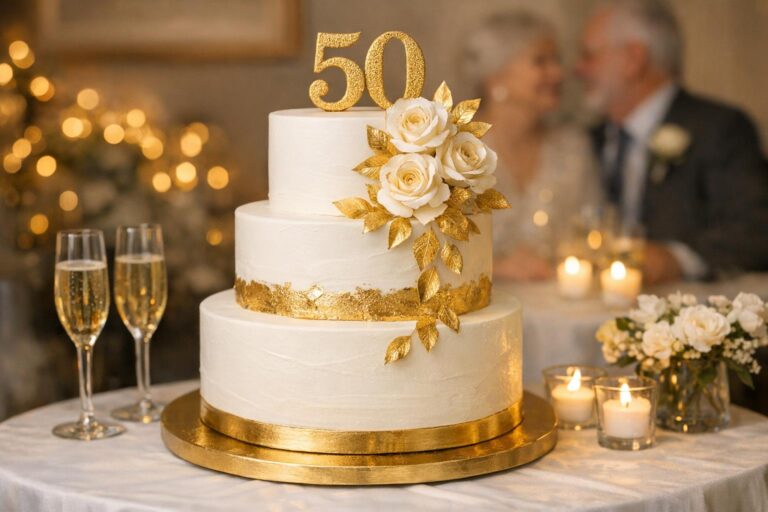
Look: two-tier with gold leaf accents (quiet luxury, scaled perfectly)
Sometimes the mood calls for a little glamour—nothing oversized, just a glint that catches candlelight. A small two-tier cake with gold leaf accents is the cake equivalent of wearing one perfect piece of jewelry. It’s refined, romantic, and especially effective for evening receptions.
Because the cake is petite, the gold leaf can be used sparingly: a few accents across one tier, a delicate sweep at the edge, or a clustered detail that feels intentional. Pair it with a clean finish—fondant or smooth buttercream—to keep the look polished.
- Finish: smooth buttercream or fondant
- Accent: gold leaf accents
- Best for: glam-minimalist weddings, candlelit receptions
Styling insight: gold reads best when it’s not competing with too many other metallic elements on the table. If your décor already includes metallics, keep the cake’s gold leaf more restrained so it feels cohesive.
Look: geode and crystal-inspired detailing (luxe edge on a petite canvas)
Geode cake styling—often described with crystal or stone-inspired accents—brings a modern, artistic edge. It’s a perfect option when you want a small cake to feel like a sculptural centerpiece, especially in contemporary venues or weddings with metallic accents and clean lines.
On a small cake, geode details work best as a single focal moment: a “cutaway” style accent or a clustered crystal look that sits to one side. This is one of those designs where restraint elevates everything; the contrast between a calm base finish and a striking geode motif is what makes it feel special.
Styling insight: geode-inspired looks can feel heavy if paired with busy toppers. If you want personalization, choose one simple element—like a monogram topper—so the overall silhouette stays fashion-forward and clean.
Look: macaron-decorated petite cake (Parisian sweetness, dessert-table charm)
A macaron-decorated petite cake reads playful and polished at once—like a romantic outfit with a whimsical accessory. This is a beautiful direction for couples who want the cake to feel like part of a broader dessert table story rather than a standalone monument.
The design is simple: a small cake with macarons arranged around the base, stacked as a topper accent, or placed in an intentional ring. Because macarons are already visually distinctive, the cake itself can stay clean—smooth buttercream or a lightly textured finish works especially well.
- Finish: buttercream (smooth or lightly textured)
- Accent: macarons
- Best for: romantic dessert tables, chic micro celebrations
Styling insight: macarons are an accessory with volume. Keep their color palette aligned with your wedding tones for a cohesive look; a small cake benefits from deliberate color repetition more than dramatic variety.
Look: monogram topper and personalized details (modern heirloom energy)
Personalization is what turns a simple cake into your cake. A personalized monogram cake topper can feel like an heirloom detail—clean, contemporary, and emotionally meaningful—especially during intimate ceremonies where guests notice the small things.
This look pairs with almost any base: a simple wedding cake in white fondant, a buttercream finish with soft texture, or even a petite cake with metallic accents. The monogram becomes the focal point, and it works beautifully for wedding photos because it reads clearly without needing extra décor.
Styling insight: monograms shine when the surrounding elements are edited. If you’re also adding flowers, keep them smaller and let the topper own the vertical space—especially important for wedding cake ideas 1 tier where every inch matters.
Look: floral crown topper on vanilla sponge (soft, sweet, storybook)
A floral crown cake topper creates a storybook mood—romantic and gently whimsical, perfect for garden weddings or daytime receptions. On a small cake, the crown effect feels celebratory without becoming over-the-top, like a delicate headpiece that finishes the whole look.
Often styled on a vanilla sponge base, this look leans light and classic. The florals can be fresh or sugar-like in spirit, arranged as a ring that frames the top. Pair it with buttercream for a soft finish, or fondant if you want a more structured, polished edge.
Styling insight: crowns work best when the flowers have a consistent scale. Think of it like building a bouquet: a few focal blooms, then smaller supporting details—never a crowded top.
Look: mini bundt cakes with glaze drizzle (cozy, cute, and guest-friendly)
Mini bundt cakes with a glaze drizzle bring a warm, welcoming mood—like a relaxed reception where everyone feels at home. This style fits couples who love the idea of individual servings without losing the charm of a wedding dessert moment.
Visually, bundt cakes offer built-in texture, and the glaze drizzle adds a soft sheen that reads beautifully on a dessert table. You can still include a small cutting cake for the tradition, but the minis make serving feel effortless and personal—especially for intimate celebrations.
Styling insight: the key to keeping minis from feeling casual is presentation. Treat them like a curated accessory set—lined up with consistent spacing and a cohesive palette. This is one of the easiest ways to get “cute small wedding cakes” energy without complicated decorating.
Look: mini individual wedding cakes with edible flowers (sweet, personal, and photo-ready)
Mini individual wedding cakes feel like the most intimate gesture—each guest receives a tiny celebration of their own. The mood is romantic and thoughtful, especially when finished with edible flowers that echo your bouquet or tablescape.
This style is often positioned as “easy and adorable,” and it genuinely can be: a simple buttercream texture, a small topper detail if you wish, and a single edible flower per cakelet. Butter Be Mine is closely associated with mini cakes in this space, and the concept fits couples who want wedding desserts to feel personal and approachable.
Styling insight: with individual minis, repetition becomes your design tool. A consistent finish across all cakes creates a cohesive visual identity, while small variations in edible flowers can add a gentle, garden-like realism without looking messy.
Look: whimsical themes that still feel wedding-elegant (succulents, bunny charm, and playful motifs)
Not every wedding aesthetic is classic romance. Some couples want a wink of personality—whimsical motifs that reflect their story while staying polished enough for a wedding album. Small cakes make this easier: the whimsy is contained, intentional, and styled like a statement accessory rather than a costume.
Ideas in this lane include succulent-covered cakes for a modern botanical feel, a bunny cake for playful charm, or theme-driven décor that nods to your wedding style. The trick is choosing one motif and pairing it with a clean base finish so the design reads “curated,” not chaotic.
Styling insight: if you’re doing a themed cake, keep the rest of your dessert table more minimal. That contrast is what makes the theme feel intentional—like letting one standout piece be the focal point of an outfit.
Key pieces for the small-cake aesthetic (the “capsule wardrobe” approach)
If you’re torn between too many small wedding cake ideas, simplify the decision the way a stylist simplifies a wardrobe: choose a base, choose a hero detail, and choose one supporting accent. You’ll get a cake that feels cohesive from every angle.
- Base finish: buttercream, fondant, or naked/semi-naked
- Hero detail: fresh flowers, monogram topper, geode/crystal motif, ganache drip, or macarons
- Supporting accent: ribbon, gold leaf accents, subtle texture, or a small floral crown
This “capsule” method is especially helpful for small wedding cakes because the scale magnifies every choice. When each element has a purpose, the final look feels expensive and intentional—even if your approach is simple cake decorating wedding style.
Flavor and filling strategy for small wedding cakes (classic, seasonal, and unique)
Most inspiration lists focus on visuals, but flavor is part of the experience—especially at intimate weddings where guests are close enough to notice every bite. With a small cake, you can choose a crowd-pleasing direction that feels familiar, or lean into something more “signature,” knowing the cake is a moment rather than the only dessert.
Crowd-pleasing classics that match almost any design
Classic flavors pair well with the most common small-cake finishes because they don’t compete with décor. Vanilla sponge, for example, supports floral crowns, fresh flowers, and minimalist fondant looks without adding visual-theme expectations. Red velvet is another recognizable direction often featured in inspiration, and it fits both romantic and modern styling depending on how you finish the exterior.
Seasonal, local feeling without overcomplicating the plan
Seasonality shows up most clearly in naked and semi-naked cakes with fresh fruit, because the styling literally changes with the produce you choose. If you want your cake to feel aligned with the time of year, let the fruit (and your floral accents) do the seasonal storytelling while keeping the structure of the cake simple.
Unique combinations, handled with a “small-cake” mindset
A petite cake is a great place to be a little bolder—because the commitment is smaller. If you’re considering a distinct flavor direction, keep the exterior design restrained (minimalist fondant, a clean buttercream finish, or a single dramatic accent like a metallic drip). That balance keeps the overall aesthetic cohesive, even when the interior feels personal.
Toppers, accessories, and personalization that actually photograph well
On small wedding cakes, toppers and accessories function like jewelry: they finish the look, set the tone, and show up in every close-up photo. The most reliable choices in this category are monogram toppers, floral toppers, and clean theme-driven motifs—especially when paired with a controlled finish like fondant or smooth buttercream.
Monogram and custom toppers
A monogram topper is one of the simplest ways to make a cake feel bespoke. It’s especially effective for wedding cake ideas 1 tier because it adds height and a focal point without adding a second tier. Keep the surrounding décor edited so the letters read clearly and don’t visually tangle with flowers or fruit.
Theme-driven décor (whimsical to modern)
If your wedding includes playful details—succulents, a bunny motif, or a specific decorative style—treat it like a single statement piece. A small cake can carry whimsy beautifully when it’s intentional: one motif, one placement, one clean finish. The result looks curated rather than novelty.
Dessert table styling and to-go moments
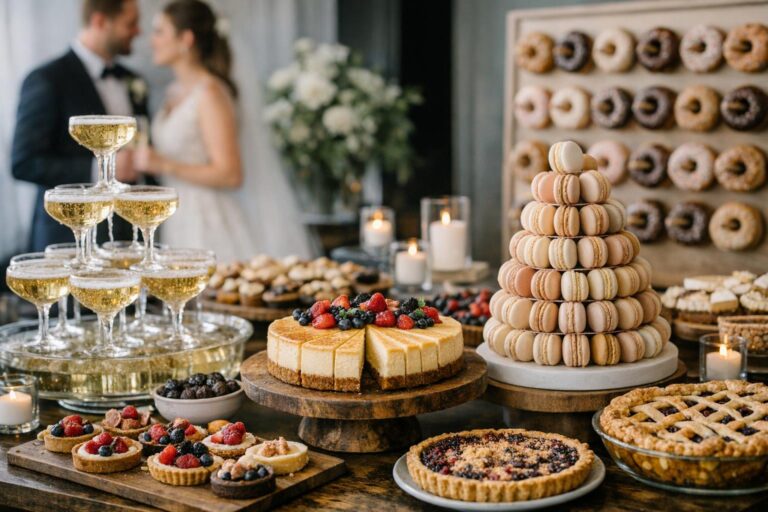
Small wedding cakes often live in a larger dessert-table world: macarons, mini bundt cakes, and mini individual wedding cakes can all be styled alongside a cutting cake. The visual cohesion matters. Repeating one element—like buttercream texture across items, or a consistent floral palette—makes the table feel designed, not assembled.
Practical planning: sizing, tiers, and the “10–40 guest” reality
Most couples searching for small wedding cakes are planning in an intimate range—often somewhere between 10 and 40 guests—and want clarity on whether a petite cake can serve everyone. The honest answer: it depends on whether your cake is the only dessert and how you want the cake-cutting to feel. Many couples choose a small cutting cake for photos and tradition, then supplement with mini cakes or additional desserts for ease.
Wedding cake ideas 1 tier: when one tier is enough
A one-tier cake works beautifully when your guest count is truly intimate, when you’re serving other desserts, or when you want the cake to function as a styled symbol rather than a full-service dessert solution. One-tier designs also let you invest in finish quality—smooth fondant, detailed buttercream texture, or a clean ombre—because the “canvas” is smaller.
When a petite two-tier makes sense
A small two-tier cake is the sweet spot for couples who want a more traditional silhouette without committing to a tall, formal structure. It’s ideal for looks like gold leaf accents, minimalist fondant with ribbon, or a buttercream finish topped with a floral crown—designs where proportion and vertical balance enhance the visual story.
Tip: if you’re unsure, decide based on your priorities. If your top priority is the photo moment and design impact, go smaller and invest in the finish. If your priority is serving every guest from the cake alone, you may need a slightly larger format or a supplemental dessert plan.
Simple cake decorating wedding tips (so “simple” still feels special)
Simple cake decorating wedding choices are only risky when they look accidental. The goal is “edited,” not “unfinished.” Small wedding cakes, in particular, reward couples who pick one focal point and let negative space do the rest.
- Choose one hero texture: buttercream texture, smooth fondant, or naked layers—don’t mix all three.
- Scale your décor: one petite floral cluster reads more luxurious than multiple crowded accents.
- Repeat a detail: if you use gold leaf on the cake, echo metallic accents subtly in the tablescape.
- Keep toppers legible: monogram toppers look best with clean space around them.
- Design for the camera: a ganache drip, ombre finish, or macaron ring reads instantly in photos.
For a quick confidence check, step back and ask: would this design still look intentional if you removed one element? If the answer is yes, you’ve likely found a balanced, stylish direction.
Where to find inspiration and how to communicate your cake “look” to a baker
Couples often collect dozens of images, then struggle to describe what they truly want. A better approach is to name your cake look using clear, shared vocabulary: “single-tier buttercream cake with fresh flowers,” “simple white fondant cake with ribbon,” “naked cake with seasonal fruits,” or “small round cake with chocolate ganache drip.” These phrases translate well because they focus on finish + detail—exactly how most designs are built.
If you’re browsing inspiration sources, you’ll notice certain style languages repeating across popular wedding sites and idea catalogs. Bells Of Joy is known for clearly labeled concepts like ombre watercolor buttercream, macaron-decorated petite cake, gold leaf accents, and personalized monogram toppers, while Pretty Designs highlights a wide range of visual themes (including red velvet, succulent-covered cake, and bunny cake). The Fabled Vows leans into “big impression” styling with motifs like geode and metallic accents. MicroWED Collective frames small wedding cakes as design statements, often emphasizing toppers and detail work.
Tip: when you share inspiration, include one image for shape, one for finish, and one for topper/decor. That keeps the conversation practical and prevents mismatched expectations.
Mini cakes and dessert-table styling: the modern way to serve small wedding cakes
There’s a reason mini wedding cakes keep showing up in intimate wedding planning: they solve the serving question without sacrificing style. A small cutting cake can be your ceremonial centerpiece, while mini individual wedding cakes, mini bundt cakes with glaze drizzle, and macaron-accented desserts fill out the table with abundance.
This approach also lets you express multiple aesthetics in a controlled way. Your cutting cake might be minimalist white fondant with a ribbon, while the minis carry the softer romance—edible flowers, buttercream textures, or seasonal touches. The table still feels cohesive because the palette and finishes repeat, just like styling a bridal party with complementary looks rather than identical dresses.
Butter Be Mine is a recognizable brand connected to mini cakes, and their “easy and adorable” framing captures why this trend works: it feels personal, it’s approachable, and it turns dessert into a guest experience rather than just a slice served quickly and forgotten.
Common small-cake styling mistakes (and how to avoid them)
Because the scale is smaller, design choices are less forgiving. The most common mistake is crowding: stacking too many ideas on one petite cake—flowers plus macarons plus metallic drip plus topper—until nothing reads clearly. The cake stops feeling curated and starts feeling busy.
Another frequent issue is mismatched formality. A rustic naked cake with fruit can feel out of place in an ultra-minimalist setting unless the rest of your décor supports that organic vibe. Likewise, a highly polished fondant cake can look too formal if your wedding is intentionally casual and nature-forward. The fix is simple: pick the cake finish that matches your venue mood first, then add one accessory detail that reflects your personality.
Tip: if you’re unsure whether your design is cohesive, describe it in one sentence. If you can’t, it may be trying to do too much.
Visual inspiration mini-gallery (describe these looks to your baker)
Use these “ready-to-say” phrases as a lookbook. They’re intentionally specific so you can communicate clearly and keep your planning calm.
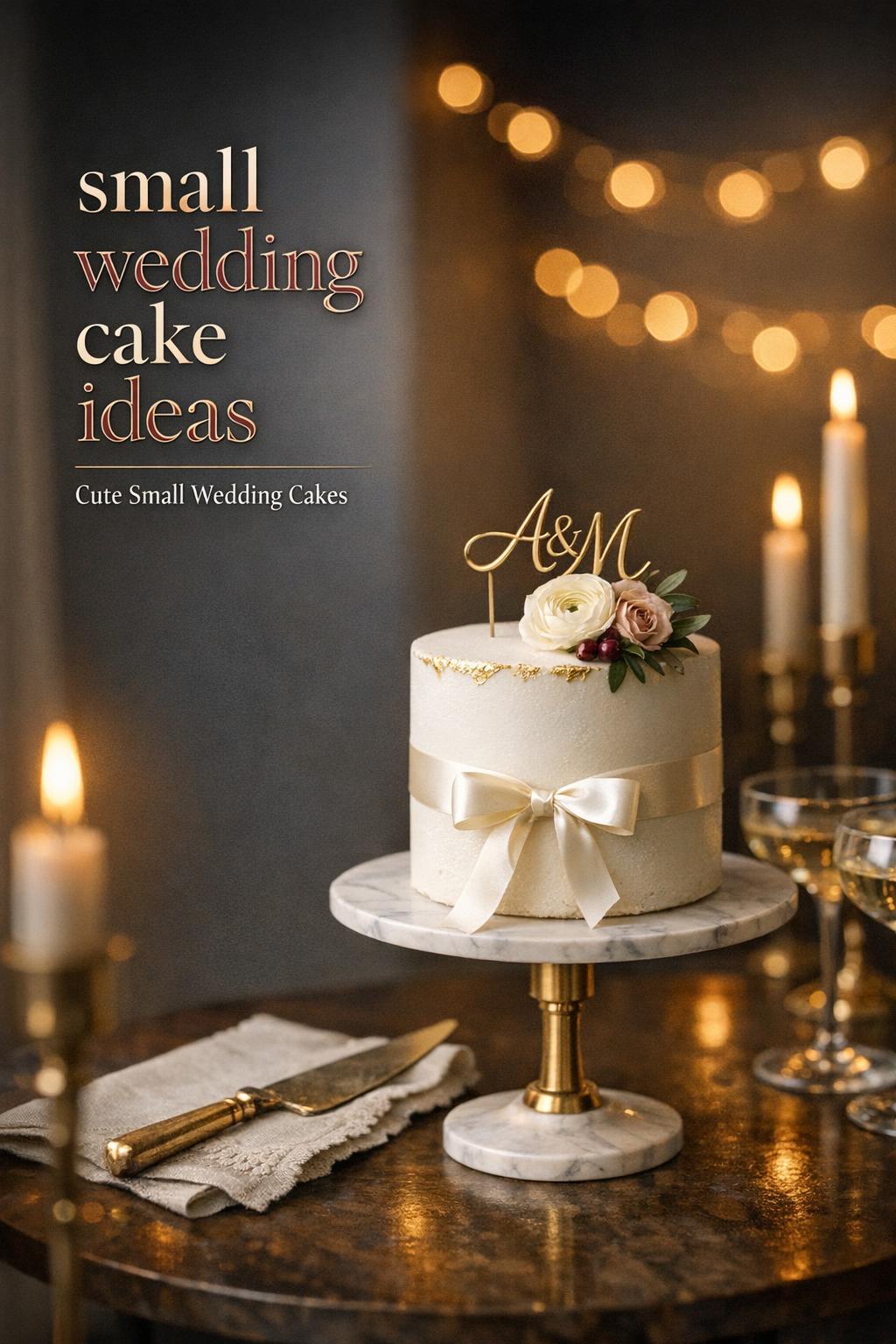
- Simple wedding cake in smooth white fondant with a ribbon wrap and a small monogram topper.
- Single-tier buttercream cake with fresh flowers arranged as a side cluster for garden romance.
- Naked cake with seasonal fruits styled in a restrained palette for an organic, intimate mood.
- Petite two-tier with gold leaf accents for quiet luxury and evening candlelight.
- Small round cake with a controlled chocolate ganache drip for modern, moody elegance.
- Macaron-decorated petite cake with smooth buttercream for chic dessert-table styling.
- Ombre watercolor buttercream finish on a one-tier statement for soft, artistic drama.
- Geode/crystal-inspired accent on a clean base finish for a sculptural, modern focal point.
- Mini bundt cakes with glaze drizzle arranged in tidy rows for a cozy, guest-friendly spread.
- Mini individual wedding cakes with edible flowers for a personal, romantic serving style.
Each of these works as a standalone design, but they also mix beautifully across a dessert table when you keep the palette consistent and repeat one signature element—like buttercream texture or floral styling.
FAQ
Do small wedding cakes serve all guests?
They can, depending on your guest count and whether the cake is your only dessert. Many couples choose a small cutting cake for the photo-and-tradition moment, then add mini individual wedding cakes, mini bundt cakes, or a dessert table so every guest is served comfortably without needing a large tiered cake.
What are the best wedding cake ideas 1 tier for an intimate wedding?
The most reliable one-tier looks focus on a strong finish plus one signature detail, such as a simple white fondant cake with ribbon, a single-tier buttercream cake with fresh flowers, an ombre watercolor buttercream finish, or a small round cake with a chocolate ganache drip.
What counts as “simple cake decorating wedding” style without looking plain?
Simple decorating looks intentional when it’s edited: one consistent finish (buttercream texture, smooth fondant, or naked layers) and one focal element (monogram topper, floral crown, gold leaf accents, macarons, or seasonal fruits). Keeping negative space around the focal detail is what makes “simple” feel elevated.
How do I choose between buttercream, fondant, and naked cake finishes for small wedding cakes?
Buttercream is ideal for soft texture and artistic finishes like ombre or watercolor; fondant creates a clean, minimalist surface that pairs beautifully with ribbon and subtle metallic touches; naked or semi-naked cakes feel organic and seasonal, especially when styled with fresh fruit.
Are mini wedding cakes a good alternative to one larger cake?
Yes—mini wedding cakes are a popular way to keep the celebration intimate and guest-friendly. Many couples use a small cutting cake for the ceremony moment and serve mini individual wedding cakes (often finished with edible flowers) so everyone gets a personal dessert without the logistics of slicing and plating a larger cake.
What decorations make cute small wedding cakes look intentional in photos?
Details that read clearly at a small scale include a monogram topper, a floral cluster or floral crown, a controlled ganache drip, a macaron border, and small metallic touches like gold leaf accents. The key is choosing one focal element so the design doesn’t look crowded.
What’s the easiest way to communicate a cake design to a baker?
Describe your cake in a simple formula: shape and tiering (one-tier or small two-tier), finish (buttercream, fondant, or naked), and one main accent (fresh flowers, seasonal fruits, monogram topper, macarons, gold leaf, geode/crystal-inspired detail, or ganache drip). Sharing one reference image for each of those categories keeps expectations clear.
Can I mix a small cutting cake with a dessert table without it feeling mismatched?
Yes, and it often looks more curated when you repeat a few design cues across items. For example, pair a minimalist fondant cutting cake with mini bundt cakes and macarons in the same palette, or match buttercream textures and edible flowers across mini individual wedding cakes so the whole table feels cohesive.