Blonde Bridesmaid Hair: A Photo-Ready Style Checklist
Blonde bridesmaid hair can look very different from one person to the next. A cool platinum bob, warm honey waves, fine highlighted hair, and thick natural curls do not need the same style simply because they share a color family. The best reference is one that helps you picture your own hair with the dress, accessories, and photography plan, not a photo that happens to be blonde.
Use this checklist to move from inspiration to a clear salon brief. You will note your current shade and texture, choose the silhouette that suits the outfit, test whether twists or accessories show up against your color, and review the look in photographs before the wedding morning. It works whether you prefer an updo, a half-up style, or loose hair. Each step helps you keep the parts you like and adapt anything that does not fit your hair or comfort.
Prepare before choosing a hairstyle
Start with the hair you will actually bring to the wedding. Note your current length, density, natural texture, part, fringe or face-framing layers, and how your hair usually behaves after several hours. Blonde hair might be natural, highlighted, balayaged, tinted, or a blend of light and darker sections. Those differences affect how a twist, braid, curl, or accessory reads, so the useful reference is the one closest to your real color placement and texture.
Take a quick photo of your hair in ordinary daylight, from the front, side, and back. Do not use a filter or a fresh salon blowout if you normally wear it air-dried. The goal is to show the stylist how your roots, mid-lengths, and ends relate to one another. A warm blonde with deeper roots may show a braid differently from an all-over pale blonde. A cool, very light shade may make small details less distinct in bright light, while darker blonde or bronde sections can create visible variation inside a twist.
Turn wedding inspiration into a plan you can actually follow.
Zarellea brings your guest list, budget, vendors, and day-of details into one shared space — so no beautiful idea gets lost in the shuffle.
Write down what you like about wearing your hair. Perhaps you often wear a soft wave, prefer hair off your neck, enjoy seeing your natural curls, or feel most confident with a side part. Also note what you do not want: a very tight hairline, extensions, excessive teasing, or a style that needs frequent touch-ups. A clear preference can save time and help the stylist recommend something you will feel comfortable wearing all day.
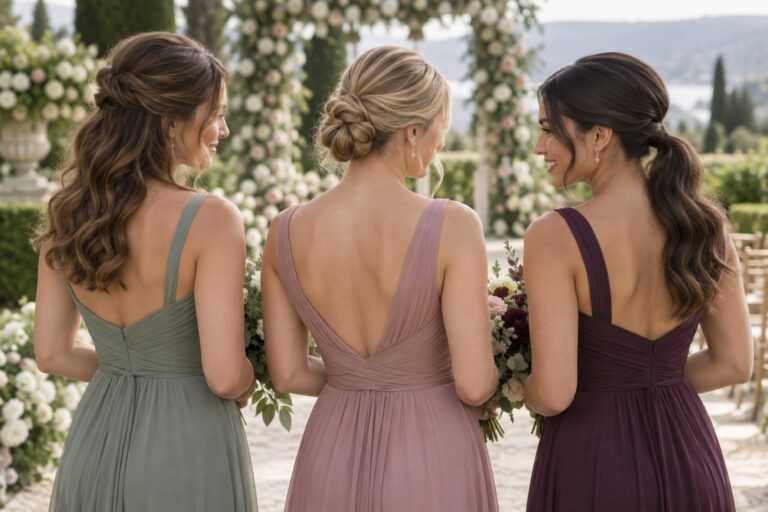
Gather a photo of your dress from the front and back, plus pictures of your earrings, necklace, veil, or hair accessory if you have them. The neckline and back details can change which parts of the hair should remain visible. A low-back dress may benefit from a shape that leaves the back open, while a high neckline might feel balanced with the hair raised or gently swept aside. You do not need to follow a strict rule. You simply want to see the whole outfit together before the trial.
Ask about the wedding-day schedule and location. An outdoor ceremony, a long gap between ceremony and reception, or a humid afternoon may affect the finish you choose. These conditions matter for every hair color, but they can be useful prompts when you are deciding how much structure or movement you want. Make a note of whether the style must last without an on-site stylist and whether a veil or accessory will be added or removed during the day.
Use this blonde bridesmaid hair checklist
1. Choose a silhouette that matches your comfort
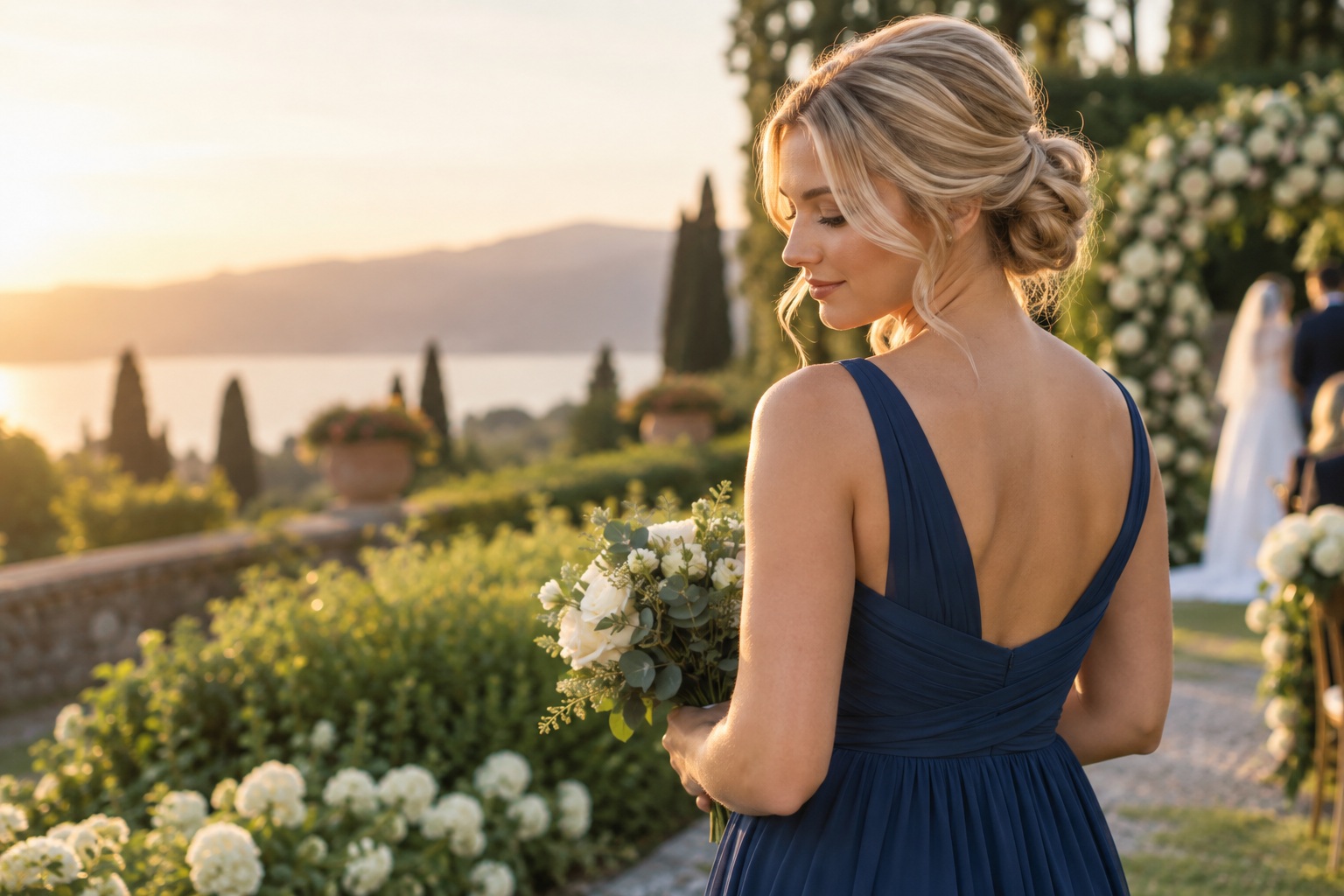
First decide whether you want your hair mostly up, partly up, or down. This is about how you like to wear it, not a test of which silhouette is more formal. If you rarely wear your hair fully up, try a half-up twist or a loose low bun before committing to a tightly smoothed style. If hair on your neck distracts you, an updo can create a cooler, lighter feeling. If your length is important to you, a half-up shape may show it while keeping some strands away from your face.
Bring one or two examples of the silhouette you like, rather than a large folder of unrelated looks. A stylist can usually adapt the height, part, or amount of face-framing detail more easily when the reference has a clear point. If you like the bun shape in one picture and the soft fringe in another, say exactly that. It is more helpful than asking for a full copy of two different people’s hair.
2. Match the reference to your shade and color placement
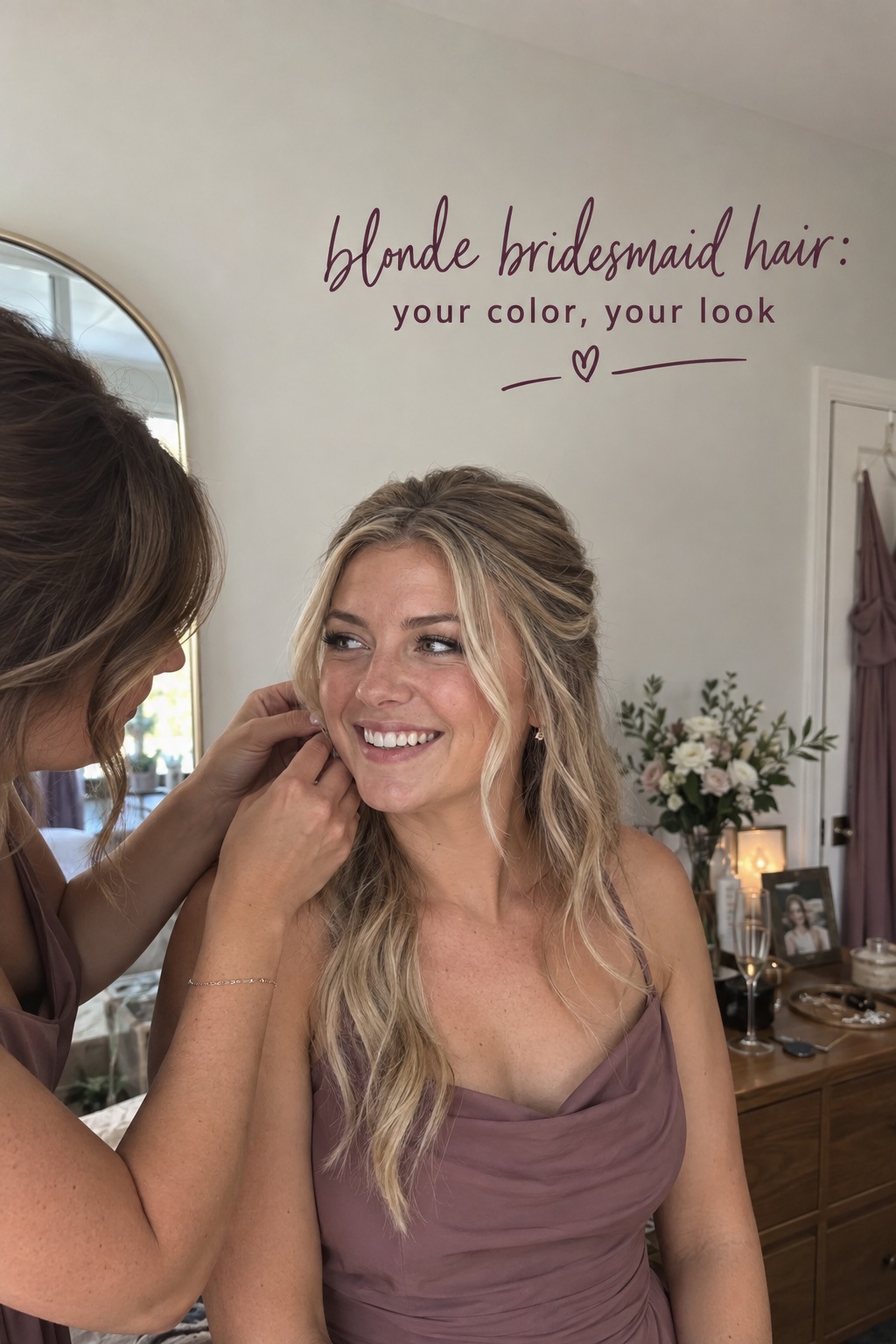
Compare the reference photo with your own hair in three places: roots, mid-lengths, and ends. Look at whether the model has a similar overall depth, highlights near the face, dimension through a braid, or a darker base that peeks through a pinned style. The aim is not to match a precise blonde label like ash, beige, or golden. Salon color names can mean different things, and photos can shift under lighting. You want to know whether the image shows the kind of contrast and texture you like.
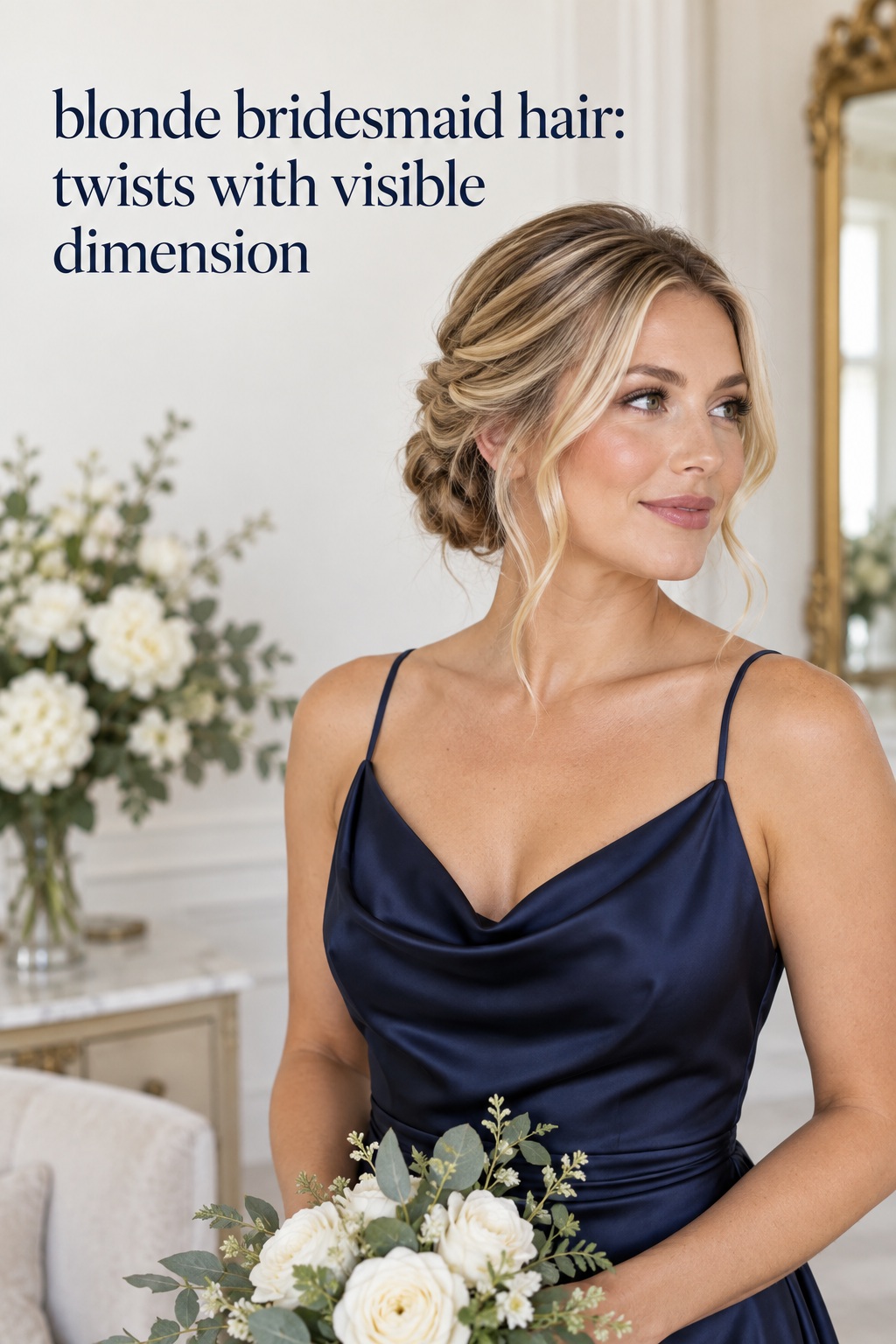
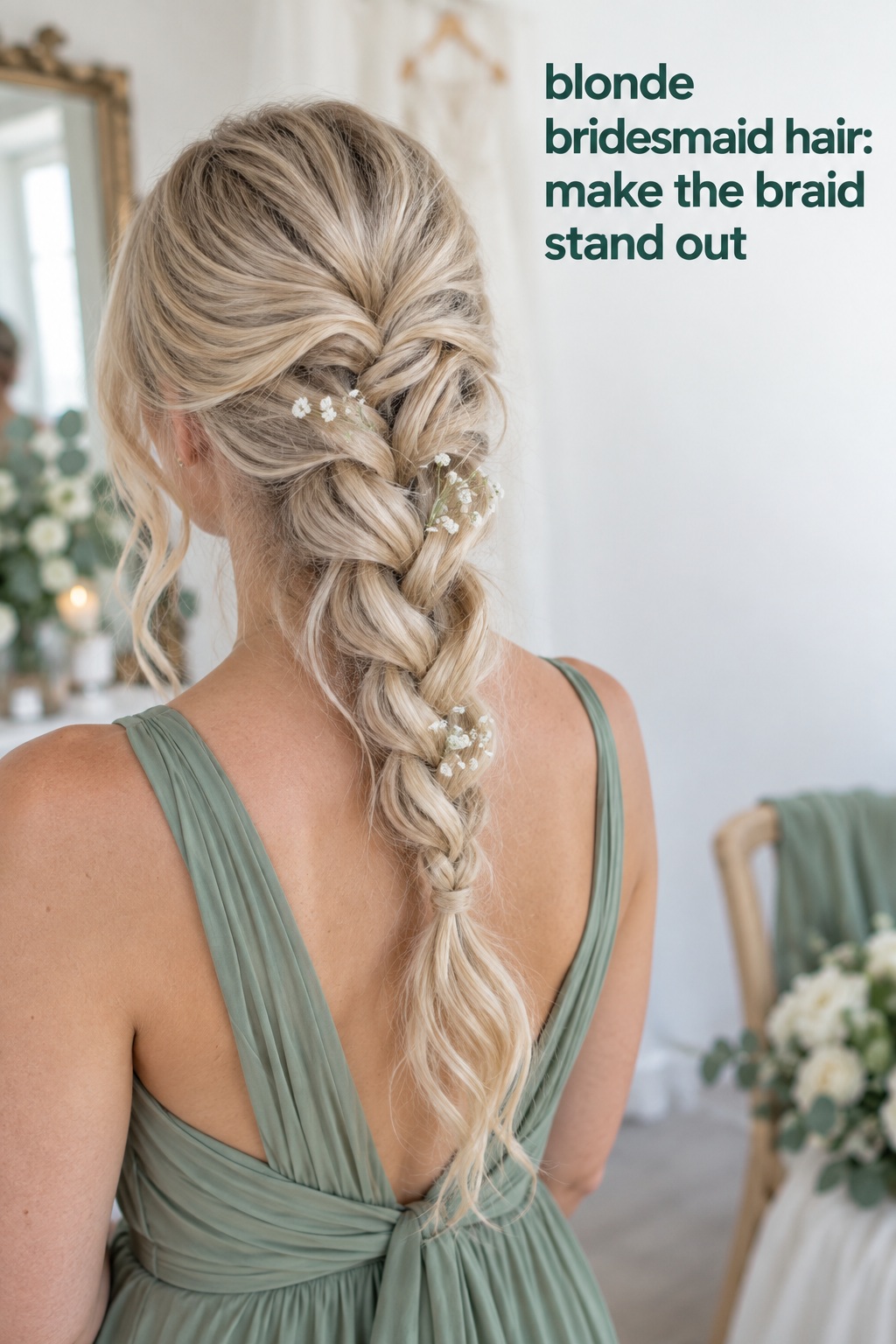
If your hair has highlights or lowlights, search for references where the color variation is visible inside the shape. Twists, braids, and curled sections can reveal the different tones as the hair crosses over itself. A smoother, one-piece finish may read more as a single silhouette. Neither result is better. Decide whether you want the pattern of the hairstyle to be obvious, or whether a clean overall shape matters more than seeing every strand detail.
If your roots are deeper than the ends, find at least one reference with similar placement. A braid that starts close to the crown may look different when the root area is darker than the blonde lengths. Likewise, a half-up style may show a clear contrast between the gathered section and the loose hair. Share your daylight photo with the stylist so the consultation is based on the pattern of your color, not only a generic blonde inspiration image.
3. Check how the detail will show in photos
A hairstyle can look intricate in a close salon mirror and much simpler in a full-length picture. Take a photo from several feet away and look at the overall outline first. Then zoom in to see whether the braid, twist, or accessory is still visible. If the detail disappears, it may need a larger shape, a different placement, or more contrast with the surrounding hair. This does not mean the detail must be dark or dramatic. It means its size and location should suit the distance and lighting of the photos.
Ask the photographer or wedding planner whether most portraits will happen in direct sun, open shade, indoor window light, or evening light. A very bright background can make pale blonde strands blend into the scene, while a darker or busier backdrop can make a smooth style harder to distinguish. During the trial, step near a window and also take a photo in the room’s ordinary light. Those simple checks tell you more than repeatedly inspecting the style under the salon’s brightest mirror lamps.
Try the planned part and face-framing pieces with your usual expression. A section that seems soft when you look down may fall across your eyes when you smile or turn to speak. Blonde pieces near the face may catch the light in a photo and appear brighter than they do in person. If that is not the effect you want, ask the stylist to change the direction or width of the section, or tuck it more securely. Keep the adjustment subtle enough that the hair still looks like yours.
4. Choose accessories for visibility and balance
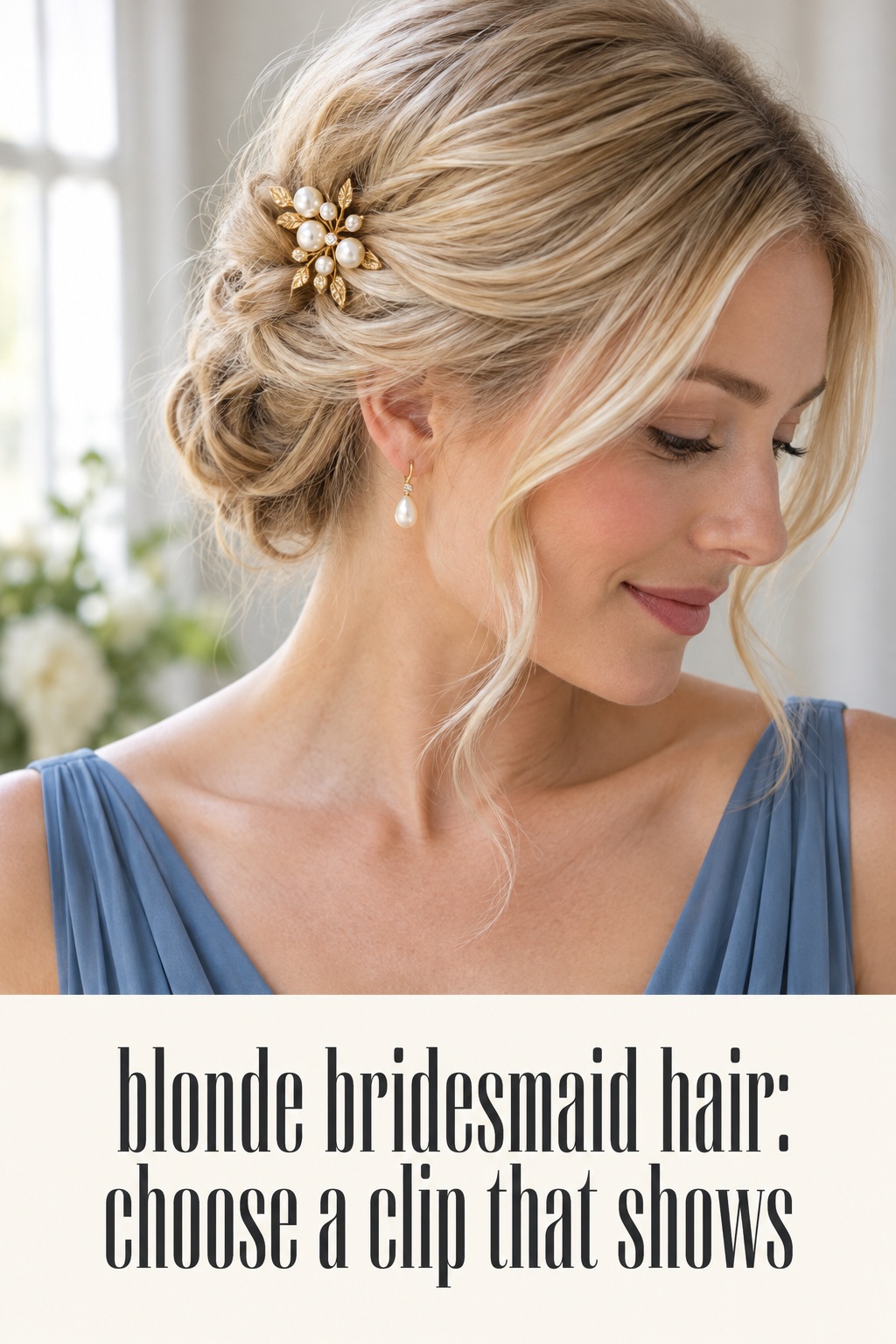
A hair accessory should be visible enough to feel intentional, but it does not need to dominate the hairstyle. On very light blonde hair, a pale pearl or clear crystal can blend into the hair, especially in bright light. You might choose a larger outline, a warm or cool metal that echoes your jewelry, or place the accessory over a twist where it has a clearer background. On darker blonde or bronde hair, a pale pearl may create gentle contrast. Test it in your own hair rather than deciding from a product photo.
Look at the accessory next to the dress fabric and your earrings. Gold, silver, pearl, crystal, ribbon, and floral pieces each create a different visual weight. If your earrings are already bold, a smaller comb may keep the face and hairstyle balanced. If the dress is simple and the hair is pulled away from the face, one noticeable clip can provide a focal point. A match does not require every metal to be identical. The finish should feel considered when you see the complete outfit.
Check how the accessory attaches. A heavy comb may need a stable section to grip, while a small pin can be placed inside a braid or twist. Ask the stylist to demonstrate how the accessory will be secured and removed. If you will take off a veil after portraits, the hairstyle should remain finished when the veil comes out. Bring the exact piece to the trial, since a look-alike clip can have a different weight, tooth shape, or balance.
Accessories should respect your texture and routine. If you wear curls or coils, ask where the piece will sit so it does not flatten a section you want to show. If your hair is fine and slippery, the stylist can test an anchor that holds without placing all the weight on one spot. If your hair is very thick, the accessory may need a stronger base. The same ornament can behave differently on different hair, so comfort and stability are part of the decision.
5. Decide how much texture and volume you want
Blonde hair does not automatically need extra volume or curls. Choose a finish based on your density, natural pattern, and personal preference. A brushed wave can create a soft outline, while a smooth low bun can let the dress and earrings stand out. A defined braid can make the structure visible, and a loose curl can add movement. Ask for the amount of volume in plain terms, such as “a little lift at the crown” or “keep the shape close to my head,” rather than relying on vague words like glamorous or romantic.
If your hair is fine, it may help to photograph the style from the back before deciding whether you want more fullness. Do not assume extensions are necessary. Ask the stylist to show the shape using your own hair first and explain what an extension would change. If extensions are already part of your routine, bring them to the trial and confirm that their shade blends with your roots and ends. A close color match in a product listing may not appear the same under natural light.
If your hair is thick, curly, or naturally wavy, you can choose to preserve its texture, stretch it, or blend it with a different finish. Tell the stylist what you prefer before the trial. Bring examples of people with a similar pattern and density, because a reference on very fine, straight hair may not show the same structure on your head. The goal is a shape that works with your hair and styling choices, not to make every blonde look behave alike.
6. Build a reference board with three clear jobs
Keep your board small. Choose one image for the silhouette, one for a detail such as a braid or wave, and one for the outfit or accessory relationship. Add a short note under each picture: “I like the low placement,” “show the highlight pattern,” or “keep one side away from the earring.” The note helps the stylist understand what matters if your hair cannot reproduce every part of the reference exactly.
Choose at least one reference with similar length and color placement. Then add another image only if it contributes a different detail. If all your photos show long, very thick, cool blonde hair and yours is a warm shoulder-length bob, the board may set unrealistic expectations. Instead, collect a silhouette that suits your length and a separate close-up that shows the accessory or texture you like. You can borrow an idea without asking the stylist to copy a whole look that was built for different hair.
A small board also helps you communicate what is optional. Mark the parts you would happily change, such as accessory size or curl tightness, and the parts you want to preserve, such as a center part or natural root depth. This turns inspiration into a practical brief. It also gives you a way to compare two possible styles without treating the decision as an all-or-nothing choice.
Worked examples for common blonde hair situations
Cool, pale blonde with a simple satin dress
If your hair is very light and the dress is also pale, start by checking contrast in full-length photos. A loose low bun or smooth half-up shape can create a distinct outline without adding a dark accessory. If you want a pearl clip, test a piece with a visible edge or a little metal detail so it does not disappear against both the hair and dress. Keep the hairstyle’s main shape readable from the back and side, and use only as much volume as feels natural to you.
For a trial, photograph the hair against both a light wall and a darker background. A twist that blends into a cream backdrop may still be easy to see against foliage or a wood-paneled interior. The photos help you judge placement rather than making you change your hair color. If the accessory disappears, move it to a more visible curve of the bun or choose a piece with a stronger outline.
Warm blonde or honey highlights with a floral dress
Warm blonde hair may pick up golden light outdoors, while floral fabric already has several colors and shapes. A soft wave, braided detail, or low twisted style can add definition, but choose one focal point so the overall look stays clear. If you wear a flower in your hair, compare the flower color with the print and bouquet. A single bloom may be enough when the dress is detailed. If the outfit is quiet, a small cluster can create a more noticeable accent.
Ask the stylist to show how the highlights move through a braid or twist. The different tones can make the pattern more visible as sections overlap. A photo from behind will reveal whether the braid looks full and connected or whether one part seems to disappear. If it feels too busy next to the print, simplify the accessory rather than abandoning a hairstyle you like.
Bronde or darker roots with blonde lengths
A shadow root or darker base can give a gathered style a visible starting point. A half-up twist may show the transition between roots and lighter lengths, while a low bun may mix both shades together. Decide whether you want the color placement to be part of the design. If you do, ask for the shape to reveal a few transitions near the crown or sides. If you would rather keep the color subtle, choose a smoother shape and let the overall silhouette lead.
Take a trial photo from the angle where the root area and bun meet. This can help the stylist adjust how tightly the hair is gathered and where the twist begins. You do not need to schedule a color change just to make a hairstyle work. If you are considering a color appointment, talk with your colorist early enough to understand the upkeep and how the change may affect the style trial.
Short blonde bob or fine shoulder-length hair
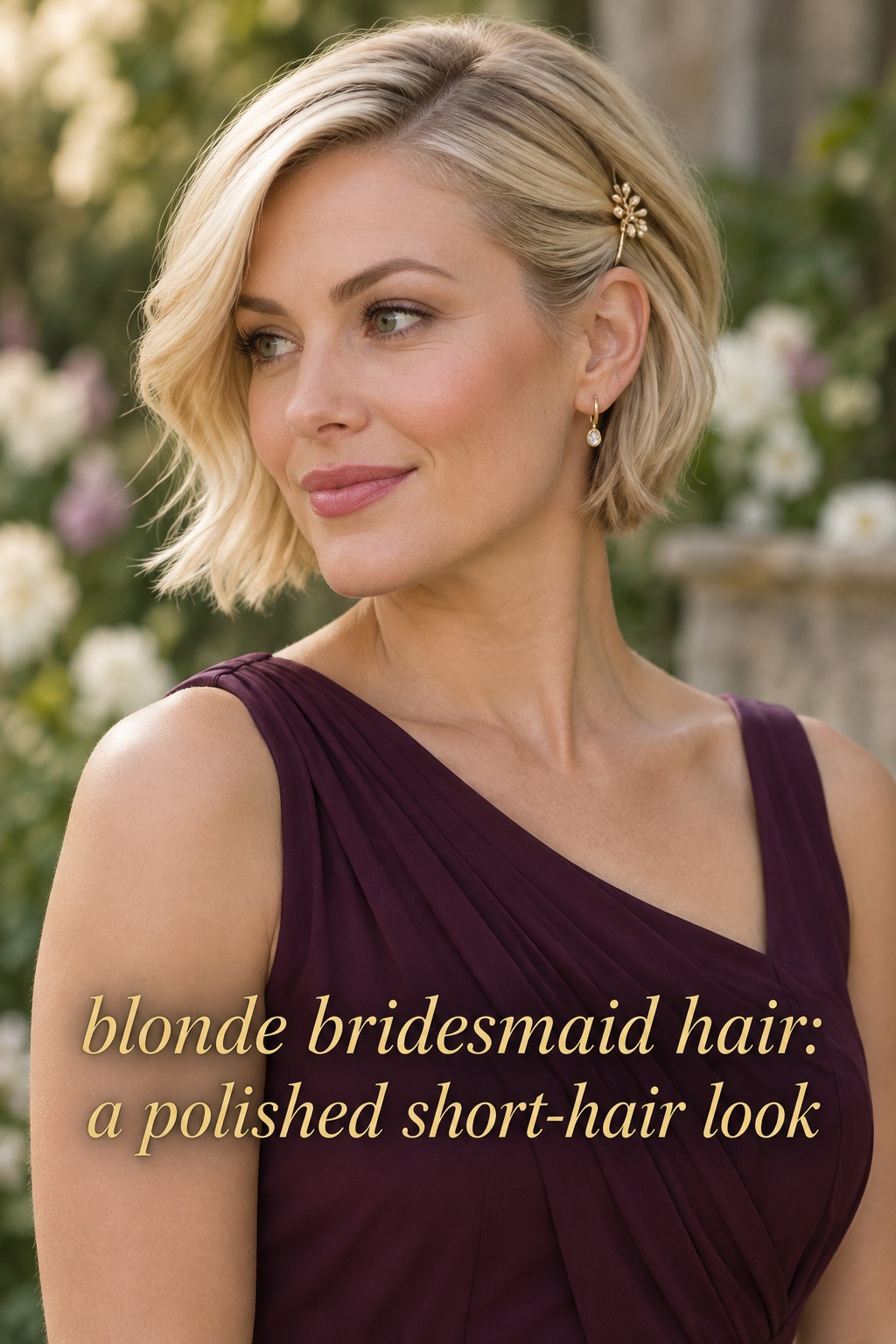
A bob or fine shoulder-length cut can still have a polished wedding finish. You might use a side tuck, a small pinned twist, a shaped blowout, or a half-up detail that does not depend on gathering every strand. Choose close-up references that show a similar length. Long-hair examples can still inspire the accessory or part, but the construction should be adapted to your cut instead of forced into a bun that needs more length.
Test any pins or clips at the trial. A small ornament may be more visible on a short cut because there is less hair around it, while a very delicate piece can disappear against pale blonde strands. Try the accessory close to the ear, above the nape, or at the gathering point, and see which placement looks balanced beside your earrings and neckline.
Final review before the wedding morning
At your trial, bring the dress photo, the exact accessory, and your three-image reference board. Tell the stylist which part of the style is most important to you and what you are flexible about. Take front, side, and back photos in natural light, then take one from several steps away. Check that you can see the hairstyle’s shape and that the accessory appears at the size you expected. If the style only reads from one close angle, consider a small change in placement or structure.
Wear the style for a while if your schedule allows. Sit, stand, turn your head, hug someone, and check whether any piece pulls or falls forward. Notice if the bun feels heavy, if the clip catches, or if your hair starts to irritate your neck. A photo cannot tell you whether a style is comfortable. Your trial gives you time to adjust the anchor, the amount of hair left out, or the accessory before the event.
Write down the preparation instructions the stylist gives you. Some hair types behave better when washed the day before, while others need a different routine. Follow the instructions intended for your own hair rather than adopting a general rule from a social post. If you use a regular product or protective method, mention it at the appointment so the stylist can plan around it. Avoid trying an unfamiliar treatment close to the wedding without first talking to a professional who knows your hair.
Pack only the touch-up items your stylist recommends. A few matching pins or a small comb may be useful, but you do not need to carry a full styling station. If you will have no stylist at the venue, ask one person to hold the items and show them the simple adjustment that might be needed. A good plan should take a few minutes, not require rebuilding the entire hairstyle between ceremony and reception.
Before you leave the trial, check the look with your dress color and jewelry one more time. The hairstyle does not have to match the bridesmaids exactly. If the party has a shared accessory or formality level, keep that detail while adapting the shape to your own hair. Broad galleries such as The Knot’s bridesmaid hairstyle guide and stylist galleries can help you find a starting point, but your own trial photo is the most useful final reference for how your chosen look comes together.
FAQ
What hairstyles work well for blonde bridesmaids?
Updos, half-up styles, waves, braids, and polished short cuts can all work. Choose based on your hair length, texture, outfit, and comfort. Color is one part of the reference, not the only factor.
How do I choose a hair accessory for blonde hair?
Test the accessory in your hair and next to your dress and jewelry. If a pale piece blends into very light blonde hair, try a clearer outline, a different placement, or a contrasting metal detail.
Should blonde bridesmaid hair be curled for a wedding?
Only if you like that finish and it suits your hair. A smooth bun, braid, straight style, or natural texture can also look polished. Use your trial to see how the shape photographs and feels.
Which blonde hair references should I bring to a stylist?
Bring one image with a similar length and color placement, plus separate references for a silhouette or detail you like. Add notes about what you want to keep and what can change.
How can I make a braid or twist visible in photos?
Check it in a full-length photo and in more than one lighting condition. If the pattern blends into the background, the stylist can adjust its size, placement, or surrounding shape.
Should I change my blonde color before being a bridesmaid?
You do not need to change your color for a hairstyle. If you already want a color appointment, discuss timing and upkeep with your colorist so there is time to see how the color looks before the style trial.
Do blonde bridesmaids need darker hair accessories?
No. The accessory should be visible enough for your preference and balanced with the dress. Pale pieces can look subtle, while a metal edge or a different placement can help them show against very light hair.
What should I take to a bridesmaid hair trial?
Bring a dress photo from the front and back, your planned jewelry or hair accessory, and a small reference board. Include an everyday photo of your hair so the stylist can see its normal length, tone, and texture.
Final thought
A strong blonde bridesmaid hair plan is less about choosing the most elaborate reference and more about making a few clear decisions. Match the image to your own color placement, check details at photo distance, test accessories with the outfit, and use a trial to confirm comfort. With that checklist, your finished style can feel polished, personal, and recognizably yours.