Simple Bridesmaid Hair: A Mix-and-Match Capsule
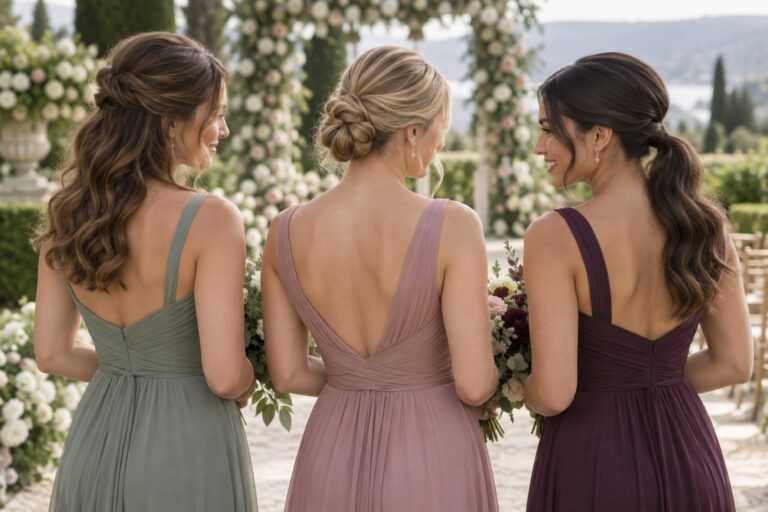
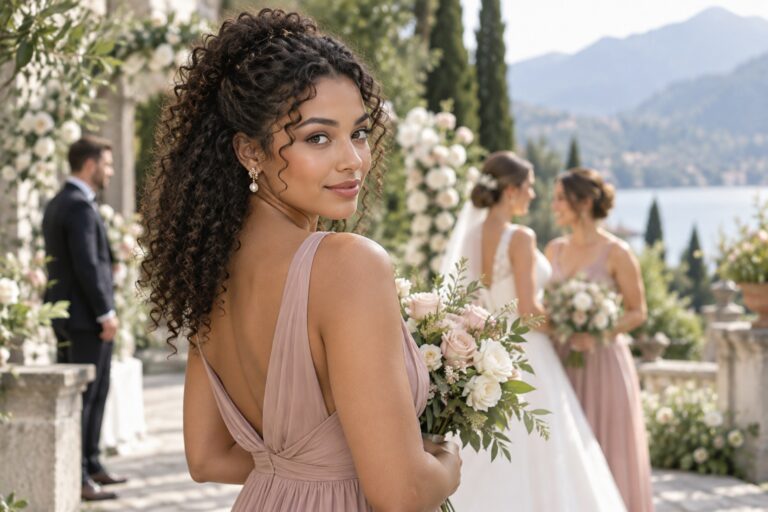
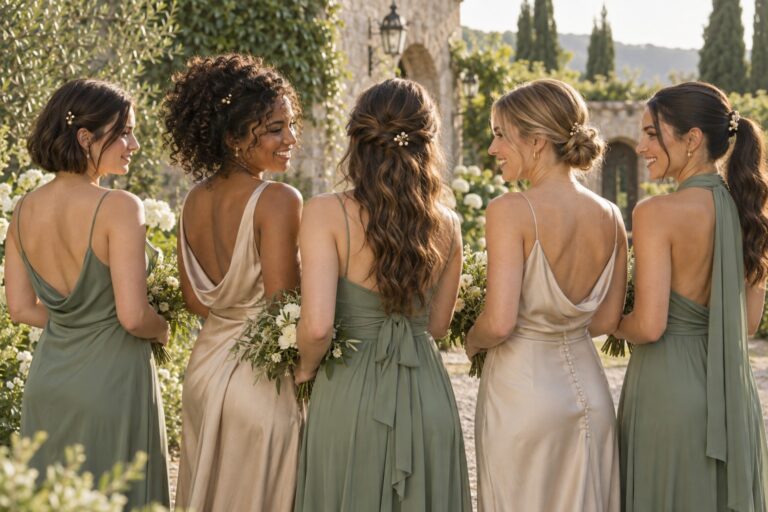
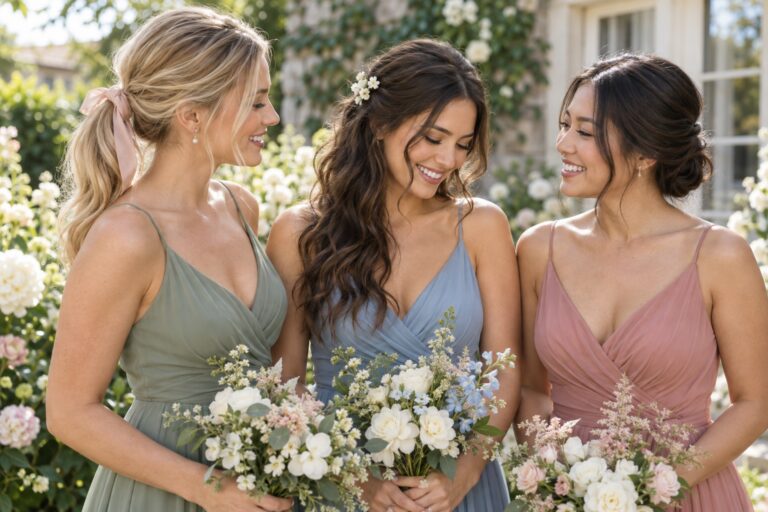
Simple bridesmaid hair works best when everyone has a clear direction, but nobody has to force her hair into a shape it will not hold. Start with three easy foundations: hair worn down with one side pinned back, a soft half-up twist, and a low ponytail or bun. Then choose one small detail the group can share, such as a side part, a pearl pin, or a softly textured finish. Each person can adapt the foundation to her own length and texture while the group still feels considered in photos.
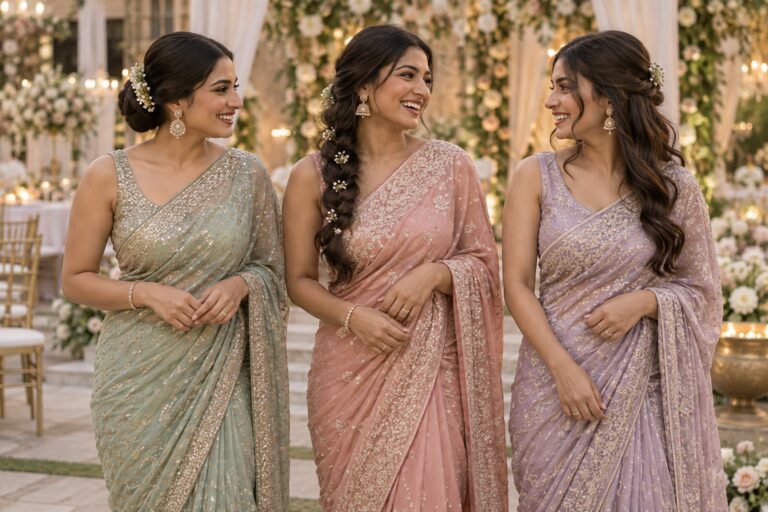
This capsule is useful when the bridal party includes different cuts, curl patterns, styling skills, or comfort preferences. It keeps the reference board manageable, gives a stylist a practical brief, and leaves room for each bridesmaid to look like herself. Think of the shapes below as starting points, not rules. A smooth bob, natural coils, and long waves can share a design cue without sharing identical hair.
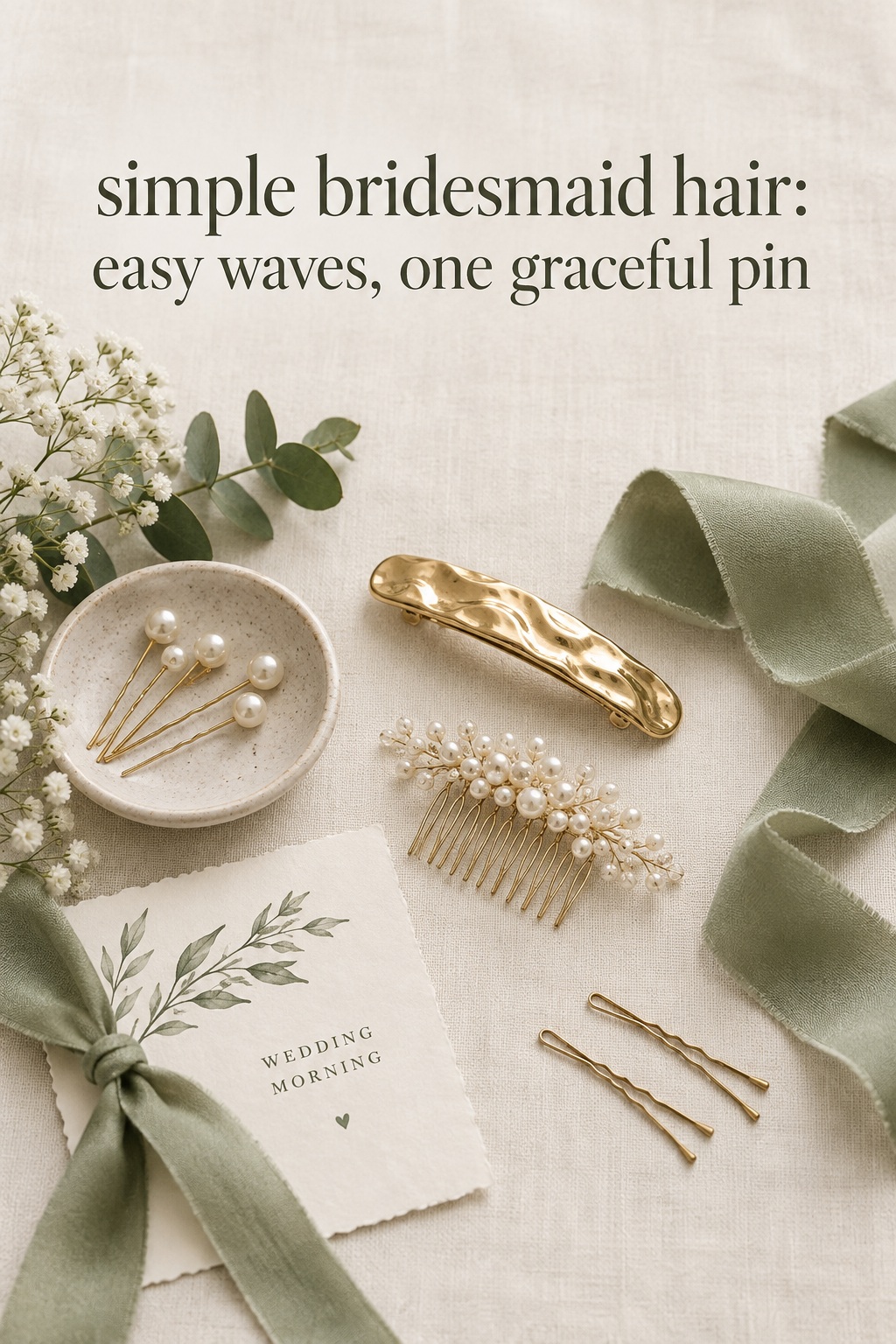
Build a simple bridesmaid hair capsule from three foundations
A capsule needs a small number of repeatable shapes that can be adjusted without learning a complicated technique. These three foundations cover hair worn down, partly secured, and gathered at the nape. Choose the one that fits each person before discussing accessories or extra detail.
1. Wear it down with a face-clearing pin
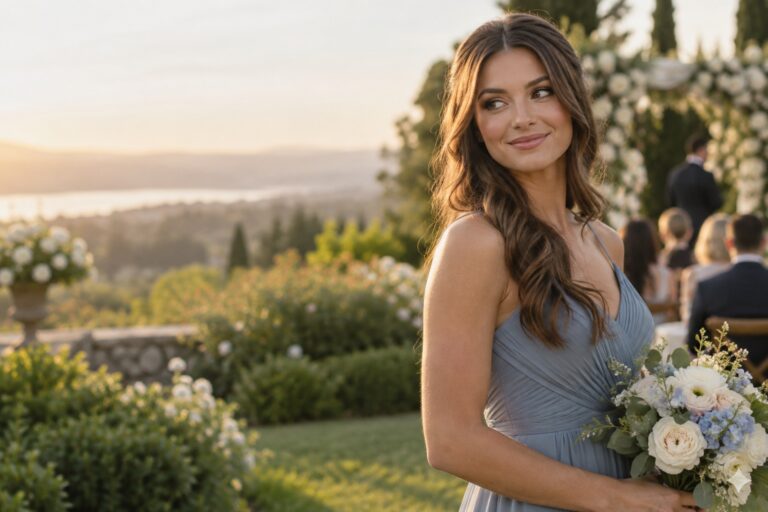
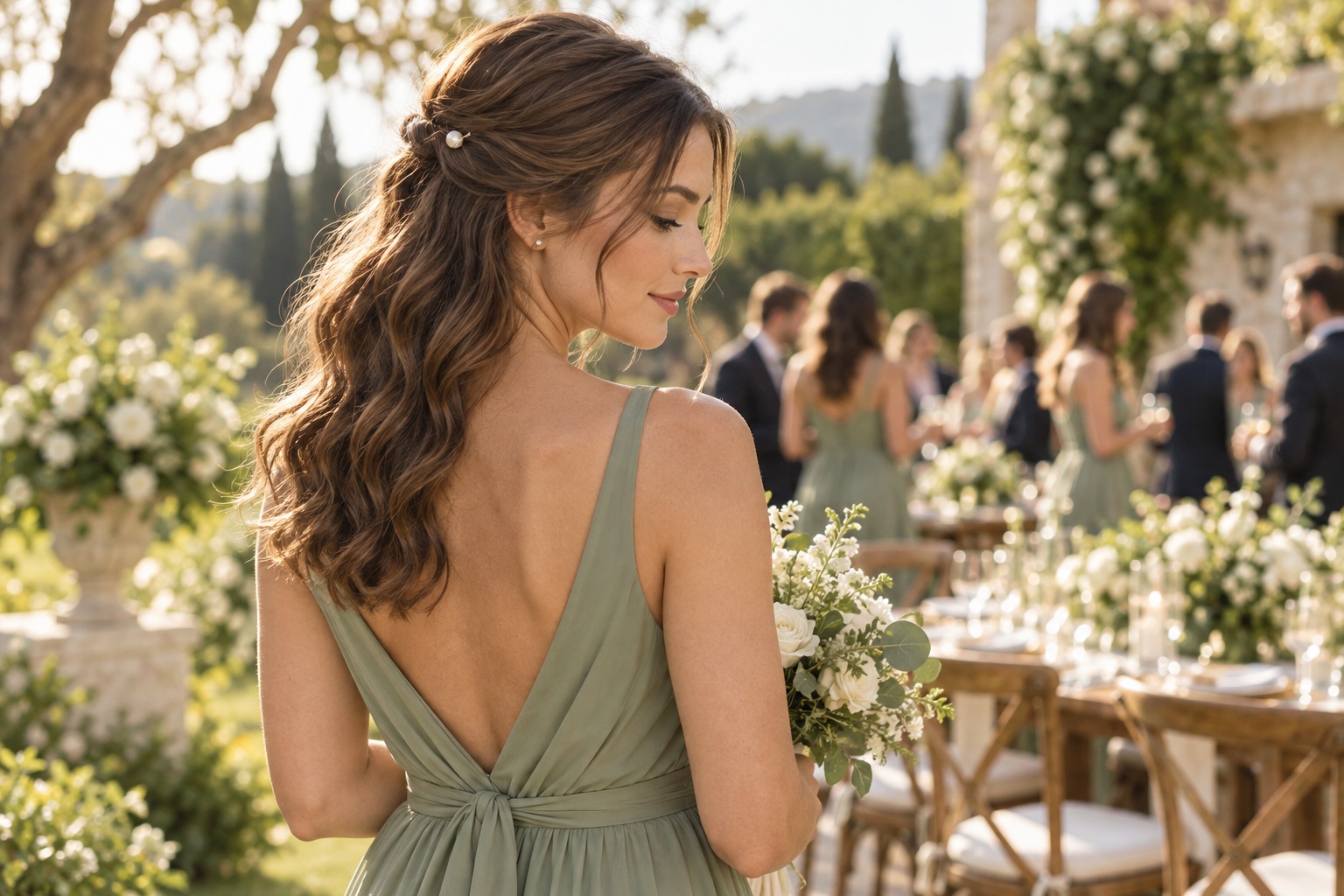
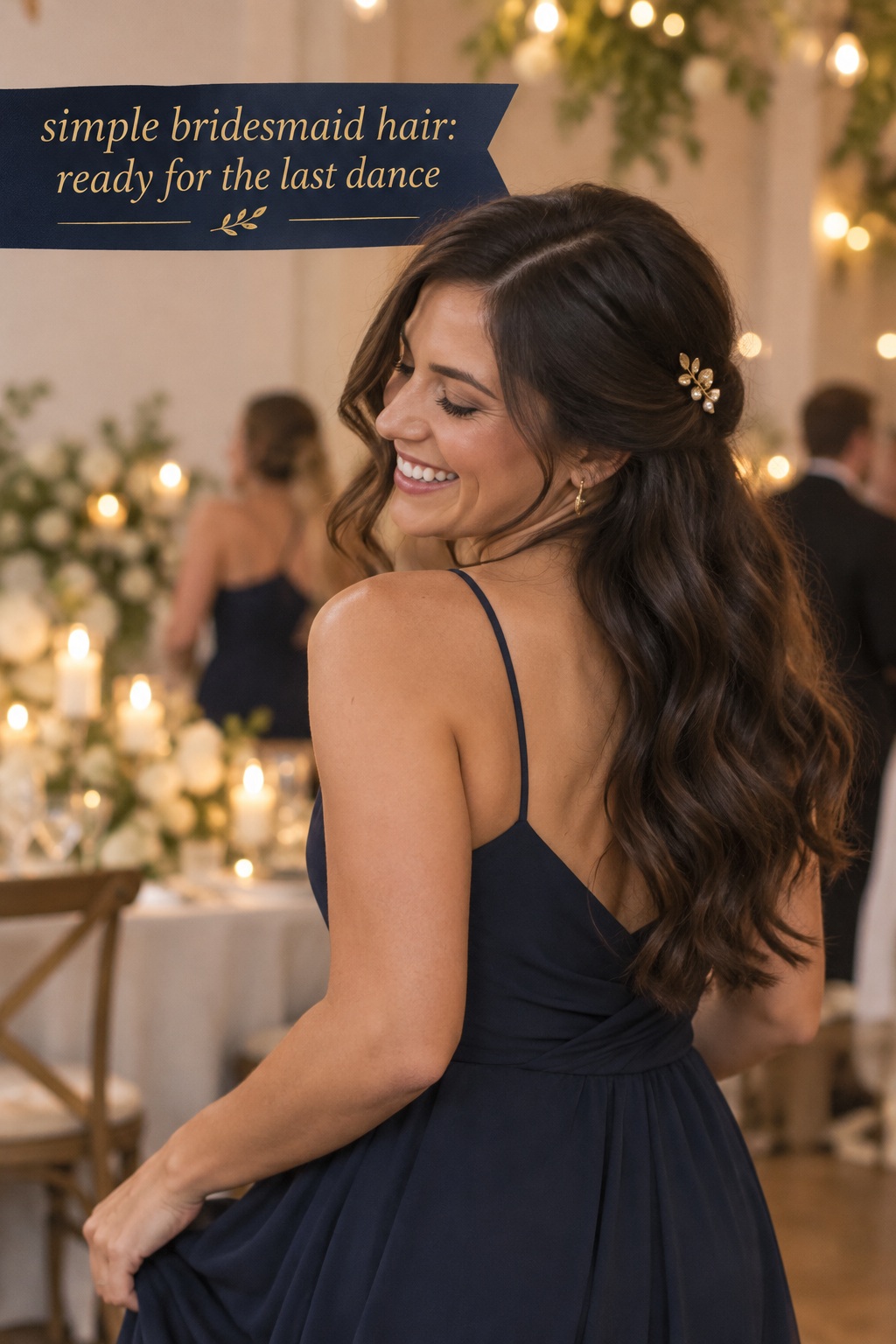
Keep the natural silhouette and move only one small section away from the face. A side part with a discreet pin, a brushed wave tucked behind one ear, or a short bob with a polished finish can all follow this idea. The styling effort can stay low: smooth or define the hair as preferred, place the pin where it will not press against the head, and check that the detail is visible from the front and side.
Turn wedding inspiration into a plan you can actually follow.
Zarellea brings your guest list, budget, vendors, and day-of details into one shared space — so no beautiful idea gets lost in the shuffle.
This is the easiest foundation for a bridesmaid who usually wears her hair down or does not want to spend the day checking an updo. It can also be the most comfortable choice for short cuts that cannot be gathered securely. If the wedding look needs a little more formality, coordinate the finish or pin with the party rather than adding several new techniques.
2. Sweep the front into a soft half-up twist
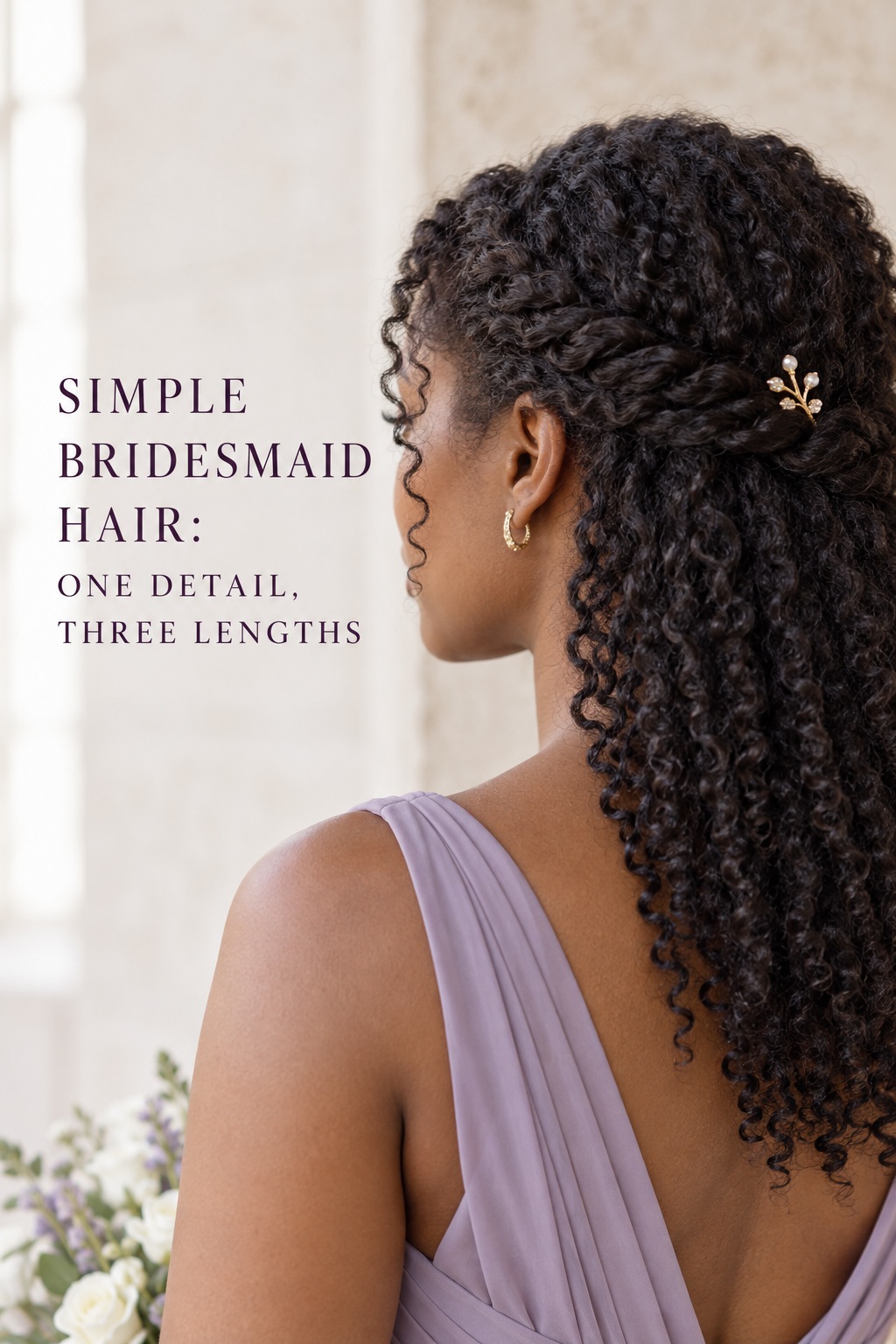
Take a small section from each temple, twist or smooth it back, and secure the meeting point with pins or a small clip. Leave the rest of the hair in its preferred texture. This shape clears some hair from the face while keeping length visible, which makes it a useful middle ground for a party with different preferences.
Keep the sections modest. Pulling back too much can make the top feel tight and can expose short layers that will not stay pinned. On shorter hair, use a single side twist or crossed pins rather than trying to gather a large half-up section. On longer hair, a small elastic hidden with a strand can make the anchor neat without adding a bulky accessory.
3. Gather the hair into a low ponytail or bun
A low gather creates a tidy outline while leaving room for texture. It can be a simple ponytail, a looped pony, or a small bun secured at the nape. Choose the version based on the amount of hair and the person wearing it. A fine ponytail may look best left visible, while a thicker length can make a comfortable bun without padding or extensions.
Use an elastic that grips without pulling, then add pins only where the shape needs support. A low ponytail can be finished by wrapping a narrow strand around the elastic. A bun can stay soft rather than perfectly smooth, with a few natural pieces left out if that feels familiar. These are small refinements, not extra requirements.
Professional wedding stylists often recommend choosing a look that fits hair texture, length, neckline, and the day’s conditions instead of expecting a reference photo to work unchanged for everyone. The Knot’s bridesmaid hairstyle guidance supports treating these foundations as adaptable choices. The goal is to choose a shape each person can wear comfortably from ceremony through reception.
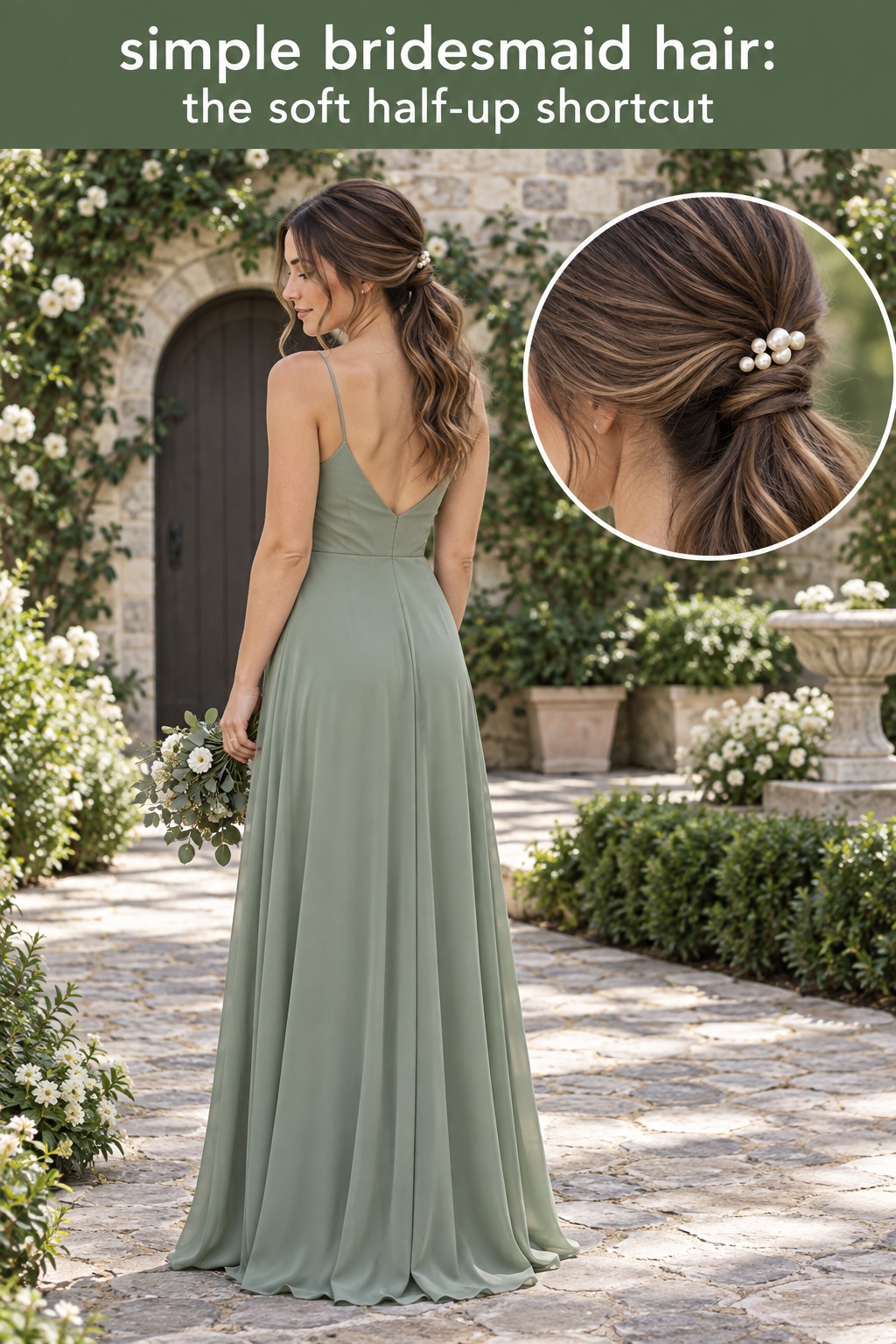
Coordinate the group with one shared cue
Choose one visible detail to repeat, then let the foundation vary. This gives the group a visual connection without requiring matching curls, identical parts, or the same amount of hair. A shared cue should be simple enough to show up in a group photo and comfortable enough that each bridesmaid will keep it in place.
Pick a cue that works with the hair, not against it
- A matching pin: Use the same small pearl, metal, or floral pin on a pinned-back section, half-up twist, or bun. Placement can change with the cut.
- A shared part: A soft center or side part can unify the front view when everyone prefers to wear hair down. Keep personal parting preferences if a forced change feels uncomfortable.
- A common finish: Agree on touchable texture, a smooth crown, or softly defined natural texture. The actual product and technique can vary by person.
- A ribbon or color note: A narrow ribbon can wrap a ponytail or tie around a braid. Use it only where there is a secure place to attach it, and keep the scale understated.
One cue is usually enough. Repeating an accessory, braid, curl pattern, and part all at once can turn a flexible plan into a uniform that takes longer to create. If the dresses already include strong details, a simple finish may be all the coordination the group needs.
Give each person a choice within the shared direction
Offer two or three approved foundations instead of a single exact photo. For example: wear it down with the pin, choose the half-up twist, or gather it low. Ask each bridesmaid which option feels most like her and whether she has a preferred level of hold. This is more useful than sending a board full of unrelated inspiration and asking everyone to infer the plan.
For a cohesive group, keep the overall finish at a similar level of formality. A polished low bun can sit beside soft waves if both look intentional and use the same pin. A highly structured updo may feel out of place next to everyday texture, so agree on the mood before deciding on exact shapes. WeddingWire’s bridesmaid hair ideas similarly emphasize complementary formality rather than identical hairstyles.
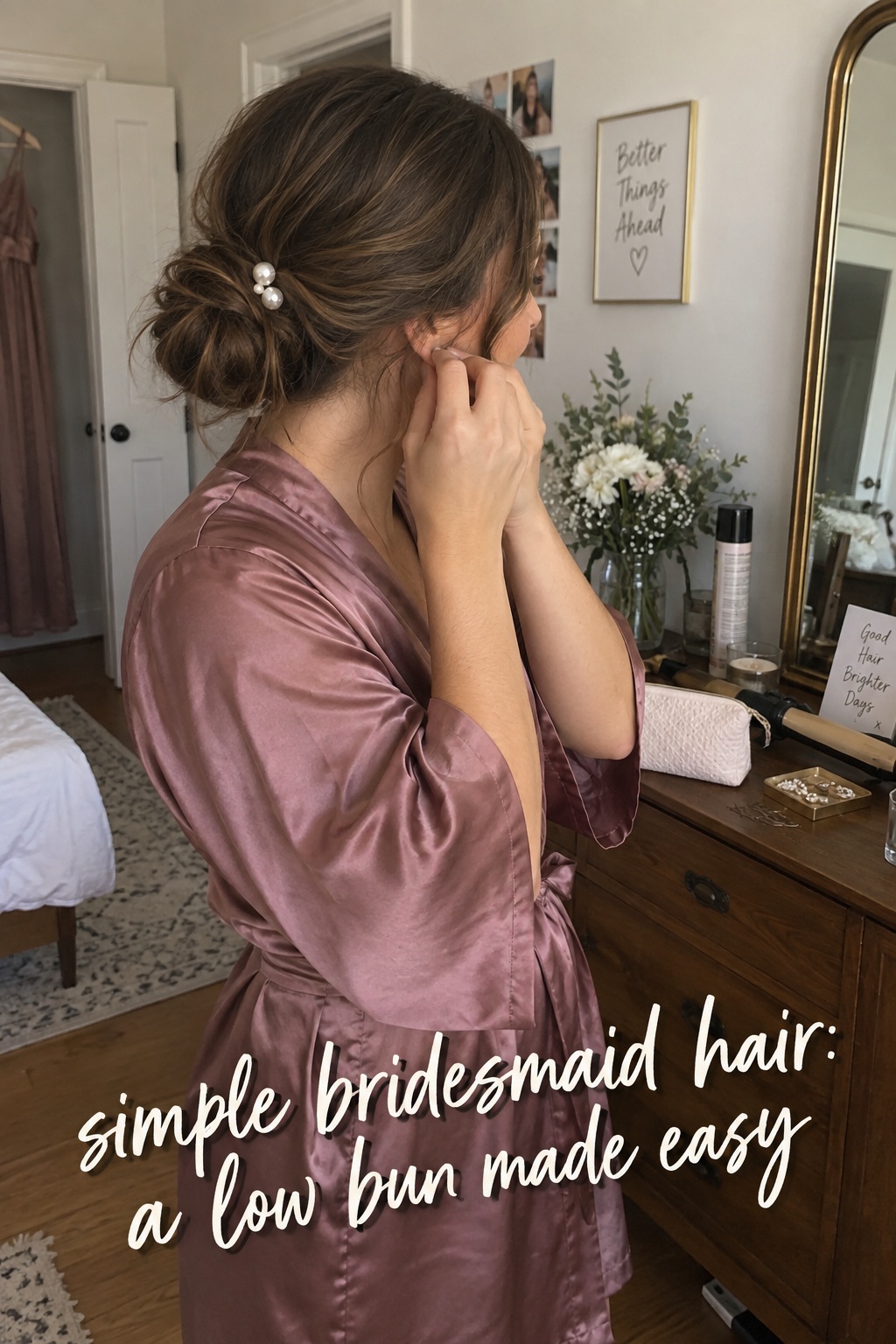
Adapt simple bridesmaid hair to length, density, and texture
The same foundation can look different on different hair. Before choosing a reference, note three things for each person: where the hair falls, how much of it there is, and what it naturally does. Length tells you what can be gathered. Density affects how large a twist or bun will look. Texture and curl retention help determine whether to define, smooth, or leave the hair closer to its usual state.
Short cuts: make the front or finish the feature
A pixie, crop, or chin-length bob does not need to imitate a long-haired bridesmaid. Use the face-clearing pin foundation, a small side twist if the front length allows it, or a clean finish that highlights the cut. A barrette should sit in a section that can hold it; if it slides, use a discreet pin or skip the accessory. Avoid planning a ponytail or bun that depends on lengths that are not there.
For a short bob, a soft bend at the ends or a smooth shape can look complete without additional decoration. For a crop, a little definition at the crown may be the whole style. Let the shared cue appear in the clip, part, or finish so the shorter cut remains part of the group rather than a special case that needs extensions.
Medium lengths: keep the anchor small
Shoulder-length hair often supports all three foundations, but a low bun may be small and layers may escape a half-up twist. A low ponytail, crossed side pins, or a half-up section secured close to the head can be easier than adding extra volume. If the ends flip or curl naturally, let that become part of the finish instead of forcing every strand into a long wave.
For layered cuts, test the front pieces once before the wedding. If they fall out when the person moves her head, adjust the section size or switch to a face-clearing pin. A style that looks neat while standing still but needs constant re-pinning is not a useful simple option.
Long lengths: use less hair in each secured section
Long hair gives more choices, but more length also adds weight to twists and ponytails. Keep half-up sections light, and use enough pins to anchor a low bun without making it tight. If the hair is heavy, a low ponytail may be more comfortable and easier to refresh than a large updo. Keep the ends soft or gather them only as much as the person prefers.
When a long style is worn down, a single pinned section can keep it off the face without committing the full length to curls. This is especially helpful when a bridesmaid already likes her hair straight, wavy, or naturally curly. The wedding look can come from a clean finish and shared accessory rather than a full restyle.
Fine, thick, straight, wavy, and coily hair need different anchors
Fine hair can lose grip under a heavy clip or large section. Choose a lighter pin, a smaller twist, or a low ponytail with a secure elastic. Thick hair may need sectioning and a few more pins, but the answer is not automatically a tighter style. Keep anchors comfortable and distribute the hold across more than one pin when needed.
Straight hair may need a small amount of texture at the anchor point to help pins stay put, while wavy hair can often use its own movement. For coily or tightly textured hair, preserve the preferred texture and choose a shape that works with its usual preparation. Ask the person how she normally wears and maintains her hair, then use a reference with a similar texture. Do not assume a curl pattern should be changed for the wedding.
If someone’s hair does not hold a curl, do not make curls the foundation of her look. Choose a twist, defined natural texture, or sleek low gather instead. The most useful reference photo shows comparable length and texture, not simply the same dress or accessory.
Keep the styling kit small and useful
A small kit is easier to share and less likely to slow down the getting-ready schedule. Start with the tools required by the chosen foundations, then add only what solves a specific need. There is no reason to buy a new tool for every look if several people can use the same pins, comb, or finishing product.
- Sectioning clips and a comb: Helpful for creating clean sections before a twist or low gather.
- Bobby pins in useful shades: Pick pins that blend with each person’s hair and use the size that holds without poking.
- A few reliable elastics: Choose snag-free elastics suited to the amount of hair being gathered.
- One shared accessory: Buy or provide only the pins, clips, or ribbons that match the agreed cue.
- A flexible finishing product: Use a product familiar to the wearer and appropriate for the finish. A heavy spray is not automatically stronger in a helpful way.
- A small touch-up pouch: Keep spare pins, elastics, and the accessory in one labeled place for quick adjustments.
If a professional stylist is working with the group, ask what to bring before purchasing anything. If the bridesmaids are styling their own hair, share a short list rather than a shopping board. A simple updo tutorial from Ogle School demonstrates a twist-and-tuck technique using an elastic and pins; its quick bridesmaid hairstyle examples are useful as a technique reference, but the right tools still depend on each person’s hair.
Adapt the capsule to the venue and the day
A hairstyle has to work in the conditions where it will be worn. For an outdoor ceremony, consider breeze, heat, humidity, and how long the group will be away from a mirror. A gathered or half-up foundation can keep some hair away from the face, but comfort and the wearer’s experience with her own hair should lead the decision. For an indoor formal event, a down style can still look polished if the finish and accessory feel intentional.
Choose the hold level before the product
Decide whether the style needs to stay almost unchanged or whether small movement is welcome. A sleek bun usually calls for a smoother finish and more secure anchors. A soft wave or half-up twist can allow movement. The person wearing the style can say how much product feels comfortable; avoid applying unfamiliar products on the wedding morning.
If the day is likely to be warm or humid, a style with some secure structure may be easier to manage than loose hair that keeps sticking to the face. That does not mean every bridesmaid needs the same updo. Each person can choose the foundation that feels manageable, with the group cue doing the coordinating.
Make the dress neckline one input, not the whole decision
A higher neckline or detailed back may look clearer when hair is partly or fully gathered. An open neckline can pair easily with hair down or half-up. Treat this as a styling option rather than a rule. A bridesmaid’s comfort, hair behavior, and preferred silhouette still matter, and the dress will be visible in photos even when some hair falls over it.
Check the hairstyle with the actual dress if possible. Notice whether a low bun rests against a collar, whether long hair covers a back detail, and whether a clip competes with earrings. A quick mirror check can prevent adding an accessory that catches on fabric or presses against the head when the wearer sits back.
Plan the wedding-morning order and a simple stylist brief
Good coordination is mostly clear information sent early. A group chat can hold a one-page brief with the shared cue, the three foundation options, a reference for each option, and any timing details. Ask each person to reply with her chosen shape, approximate length, and anything the stylist should know about her usual routine. That gives the stylist a realistic starting point and lets self-styling bridesmaids prepare without guessing.
Use a short brief that answers the practical questions
- What is the shared cue: accessory, part, or finish?
- Which foundation is each person choosing: down, half-up, or low gather?
- What reference image shows a similar hair length and texture?
- Will the person style her own hair or sit with a stylist?
- Does the person prefer a soft feel, stronger hold, or minimal product?
- What time should the style be finished, and who has the touch-up pouch?
Send references that are specific, not aspirational. Include one photo of the front and one of the back if the detail matters. Add a note about what you like in each image, such as the low placement, a soft front section, or a small clip. This helps prevent the common misunderstanding where the stylist copies the model’s entire look when the group only wanted the accessory or silhouette.
Leave space for a final comfort check
Before everyone leaves the getting-ready room, ask each bridesmaid to turn her head, smile, sit, and move her shoulders. Check for tight pins, loose sections, an accessory that catches, or hair that falls across the face. Take a quick front and back photo in ordinary room light so each person can see what the style looks like beyond the mirror angle.
Pack the small touch-up pouch where someone can find it without interrupting the schedule. Include only the same useful basics: a few pins, an elastic, and any shared accessory that might need resetting. The aim is not to preserve every curl perfectly, but to keep the overall shape comfortable and intentional through the day.
Simple bridesmaid hair mistakes that add unnecessary work
Simple hair becomes complicated when the plan depends on everyone having the same length, texture, tools, or patience. Avoiding a few common traps keeps the capsule easy to use and makes the group feel more relaxed.
- Copying one photo literally: Choose a reference for its useful detail, then adapt the shape to the wearer’s own hair.
- Making curls the only option: If curls do not last for someone, choose a different foundation instead of adding more product and time.
- Overloading accessories: One shared cue is enough to connect the group. Check that every clip is comfortable and secure.
- Choosing the shape before asking the wearer: Invite each bridesmaid to select from a small set of options and mention any comfort concerns.
- Trying a new technique on the wedding morning: If someone is styling herself, test the shape once beforehand or choose a familiar style.
- Forgetting how the style feels: A pin that hurts or a ponytail that pulls is not a successful look, even if it photographs well.
- Buying products without a clear reason: Check with the stylist or wearer first, and avoid unfamiliar formulas on the day.
A flexible plan can still be polished. Keep the number of foundations small, share one detail, and let the wearer choose how her hair behaves within that framework. When everyone knows the plan in advance, the wedding morning has fewer decisions and more room for the celebration.
FAQ
What is the easiest bridesmaid hairstyle to do yourself?
A side part with one section pinned back is often the easiest because it changes only a small part of the hair. A half-up twist or low ponytail can also be manageable if the wearer has practiced it and the hair holds the anchor comfortably. Choose the style the person already knows how to maintain.
Can bridesmaids wear different hairstyles and still look cohesive?
Yes. Agree on one shared cue, such as a matching pin, part, ribbon, or level of finish, and let each person choose a suitable silhouette. Keeping a similar level of formality can make different shapes feel connected without making them identical.
What simple bridesmaid hair works for short hair?
A polished bob, textured pixie, side part, or one small pinned-back section can look wedding-ready without extensions. Pick an accessory that can attach securely to the actual cut, and use the shared group detail in the pin or finish if the hair cannot be gathered.
How do you make bridesmaid hair last through dancing?
Start with a shape the wearer knows her hair can hold, secure it with comfortable anchors, and avoid relying on unfamiliar products. A low gather or pinned-back section may be easier to refresh than a style that depends on every curl staying in place. Keep spare pins and an elastic nearby for small adjustments.
Should all bridesmaids have the same hair accessory?
They can, if the accessory fits each person’s style and attaches comfortably. The same type or color of pin can be placed differently in a bob, twist, ponytail, or bun. If one accessory does not work for every hair type, repeat a color or finish instead.
How should bridesmaids prepare for a hair appointment?
Follow the stylist’s instructions about washing and drying, and share a reference that matches your length and texture. Mention how your hair usually behaves, what products you prefer, and whether you want a soft or secure finish. Confirm the timing and bring the agreed accessory if the stylist does not provide it.
What should a bride tell the group about hairstyles?
Share the wedding’s general mood, one coordinating detail, a few approved shape options, and any appointment timing. Invite each bridesmaid to choose the option that works for her hair and comfort. Clear choices are easier to follow than a long board of unrelated inspiration.