Winter Wedding Dress: Choose the Right Style
Choosing a winter wedding dress is less about finding the heaviest fabric in the store and more about matching the dress to the full day. A bride may need a gown that feels elegant in a cold ceremony, comfortable during photos, and easy to move in at the reception. A guest or bridesmaid has a different job: follow the dress code, respect the couple’s color guidance, and stay warm between parking, venue doors, and outdoor portraits. The best choice balances all three realities.
This guide compares the decisions that make the biggest difference: your role, formality, venue, fabric, sleeve construction, silhouette, and outer layer. Use the comparison points to narrow the field before you shop, then use the fitting checklist and FAQ to avoid a beautiful dress that becomes uncomfortable after twenty minutes outside.
Start with role, dress code, and venue
The first winter wedding dress decision is not color or sleeve length. It is the role you are dressing for and the setting where the outfit will be judged. A bridal gown, bridesmaid dress, and guest dress can all be winter-appropriate, but they cannot follow the same rules. The bride usually has the widest creative range, while attendants and guests must read the invitation and wedding-party palette first.
Bride: prioritize movement and the ceremony plan
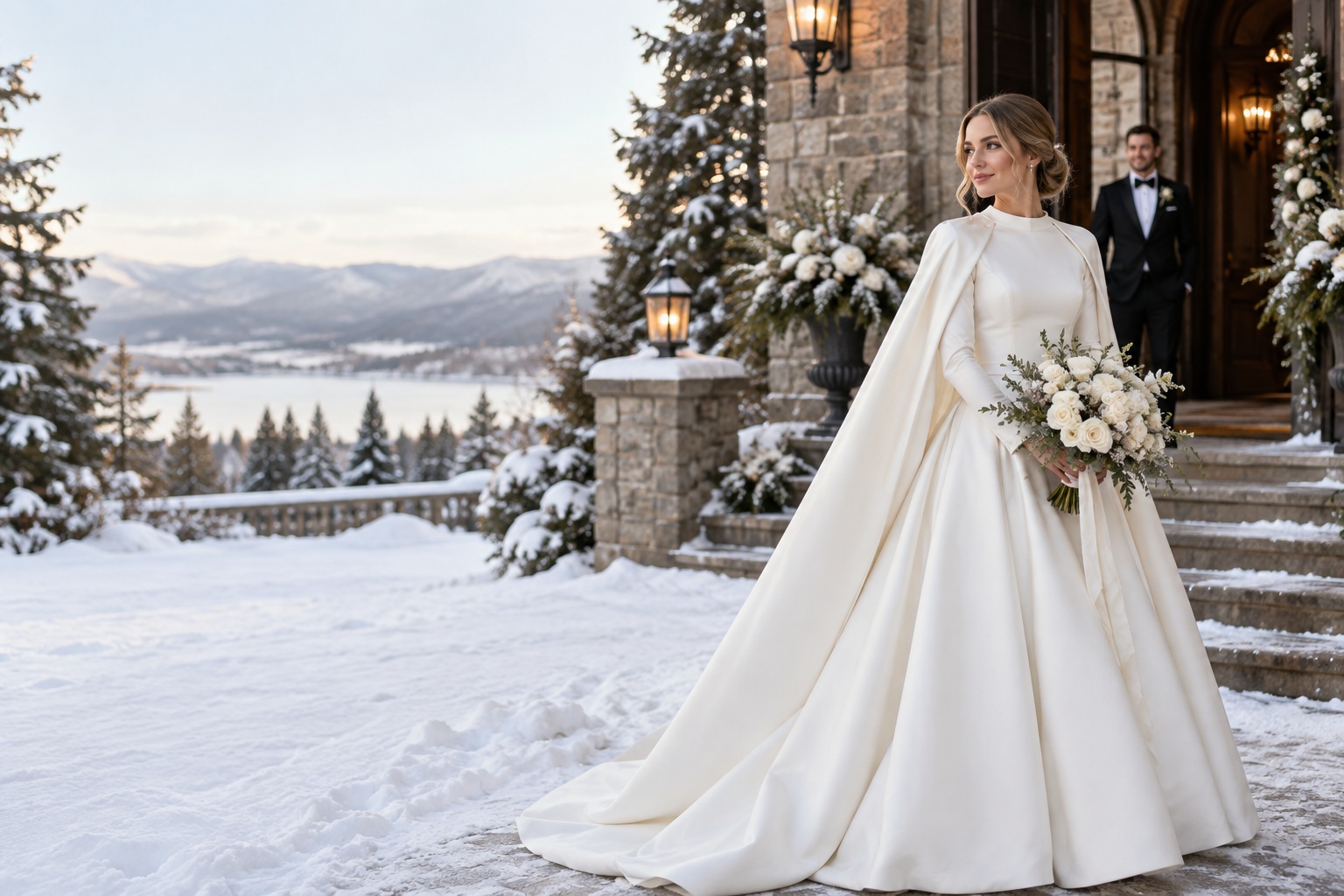
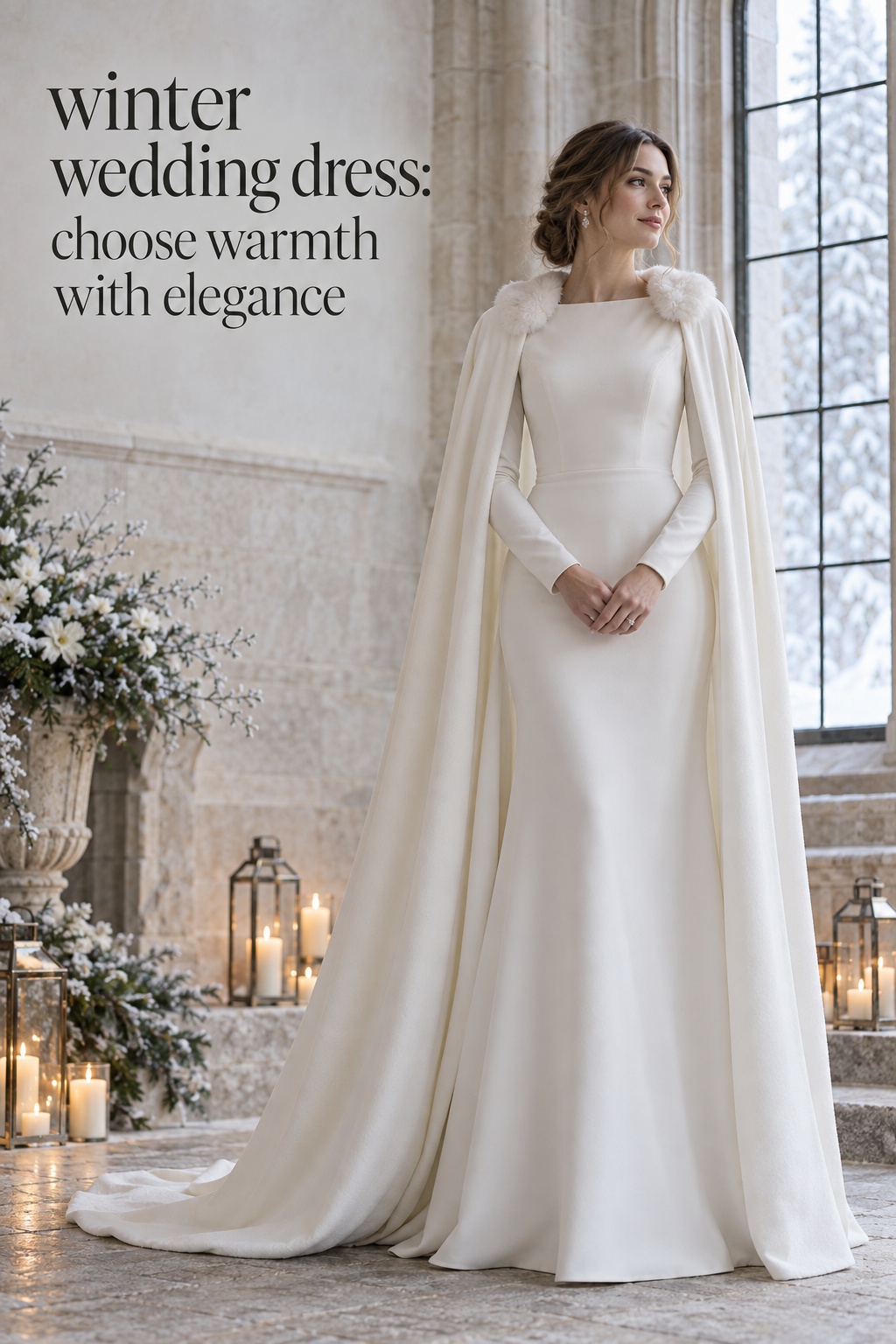
For a bride, ask how much time will be spent outdoors and whether there is a separate reception look. If the ceremony includes snowy photos, a long-sleeve gown or a structured cover-up can be more useful than a strapless dress with a thin wrap. If the venue is warm and the outdoor portion is brief, detachable sleeves, a bridal jacket, or a cape can provide a visual winter statement without forcing you to wear a heavy gown all evening.

Turn wedding inspiration into a plan you can actually follow.
Zarellea brings your guest list, budget, vendors, and day-of details into one shared space — so no beautiful idea gets lost in the shuffle.
Think about the practical moments that photographs capture: walking from the car, holding a bouquet with gloves, sitting during the ceremony, and dancing after the coat comes off. A winter wedding dress should let you lift your arms, step over snow or uneven ground, and sit without pulling across the hips. These details sound ordinary, but they determine how relaxed you look.
Bridesmaid: coordinate warmth without losing individuality
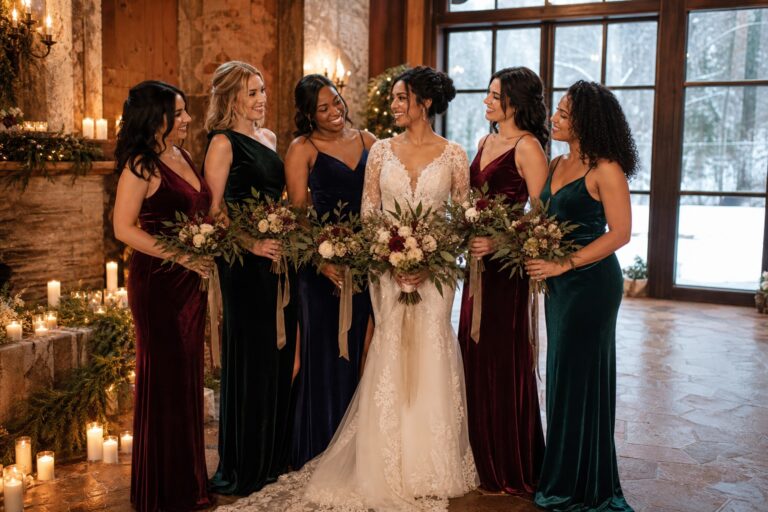
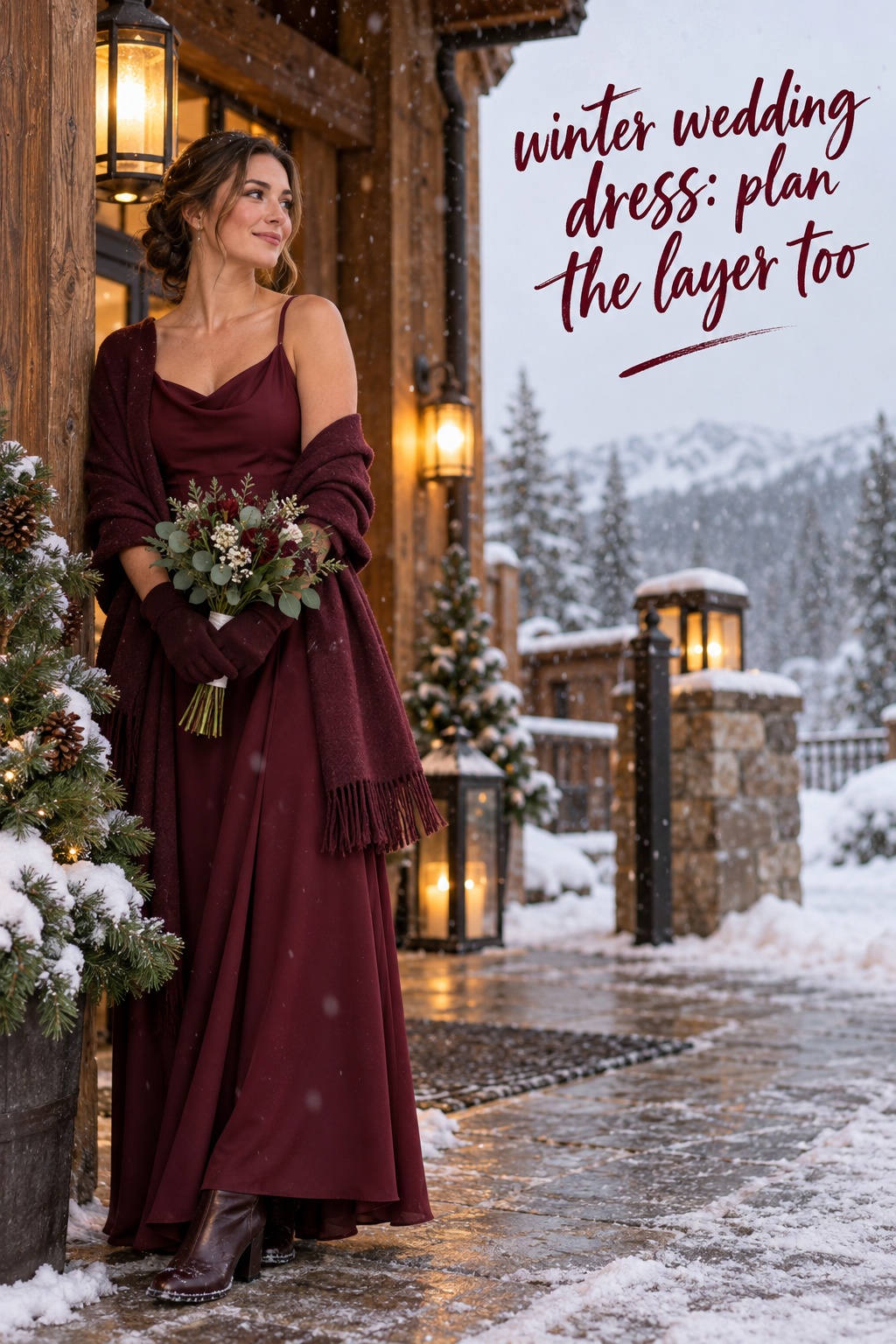
Bridesmaid dressing is a coordination problem. The dress must fit the couple’s color plan and formality, but winter conditions may require a wrap, coat, tights, or closed shoes. Ask whether the couple wants identical outer layers or simply a shared color family. A velvet dress in the approved shade may need no extra texture, while a lighter satin dress may need a matching shawl or tailored jacket to look intentional in arrival photos.
Confirm the hem and shoe plan before alterations. A floor-length dress can hide practical footwear, but it can also drag through wet sidewalks. A midi or tea length makes movement easier and can look polished with a refined boot. If the ceremony is outdoors, the group should agree on a warm layer that will not create a random mix of black puffers and unrelated coats.
Guest: let the invitation set the boundaries
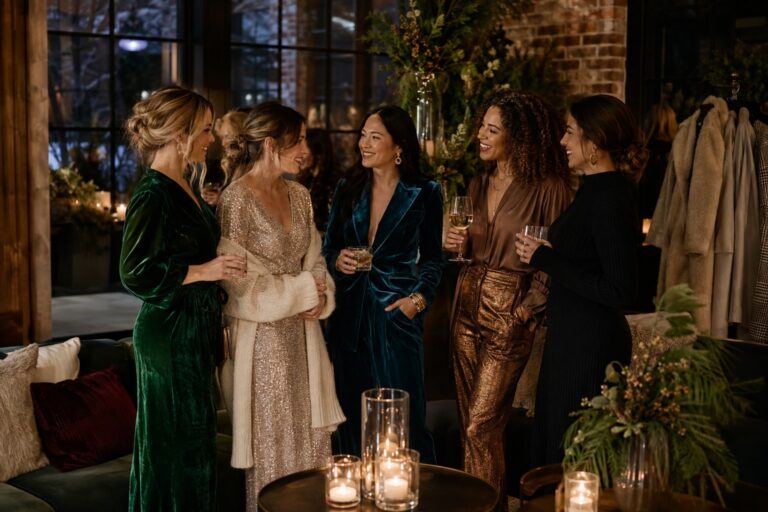
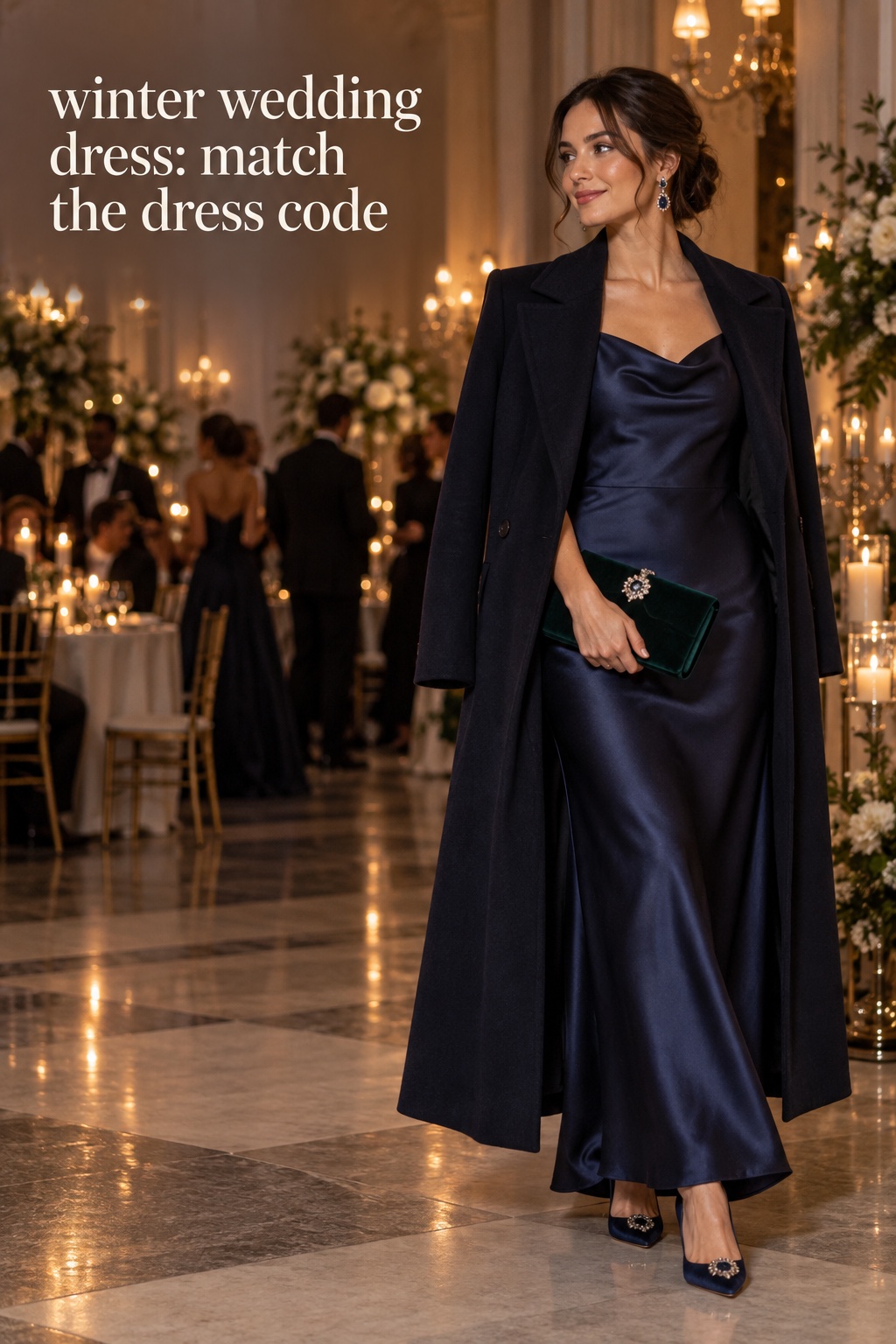
Guests should begin with the dress code, time of day, and venue. Black tie usually calls for a floor-length gown or an exceptionally polished formal dress. Formal or black-tie optional allows a long dress, a refined midi, or a tailored jumpsuit if the invitation permits alternatives. Cocktail gives you room for a shorter hem, but winter texture, elegant hosiery, and a proper coat keep the look from feeling like an ordinary party outfit.
Do not use the season as an excuse to ignore the couple’s preferences. Winter jewel tones are useful, but white, ivory, and pale bridal shades remain risky unless the couple specifically says otherwise. If the invitation names a palette, choose a dress that supports it and put your personality into the shape, jewelry, bag, or shoes.
Compare winter-friendly fabrics and sleeves
Fabric changes warmth, drape, photographs, and how easily a dress accepts an outer layer. Sleeve construction changes the visual weight of the gown and how much insulation you gain. Compare these choices by the kind of winter you are actually facing, not by a label that simply says winter collection.
Velvet: the richest choice for a guest or attendant
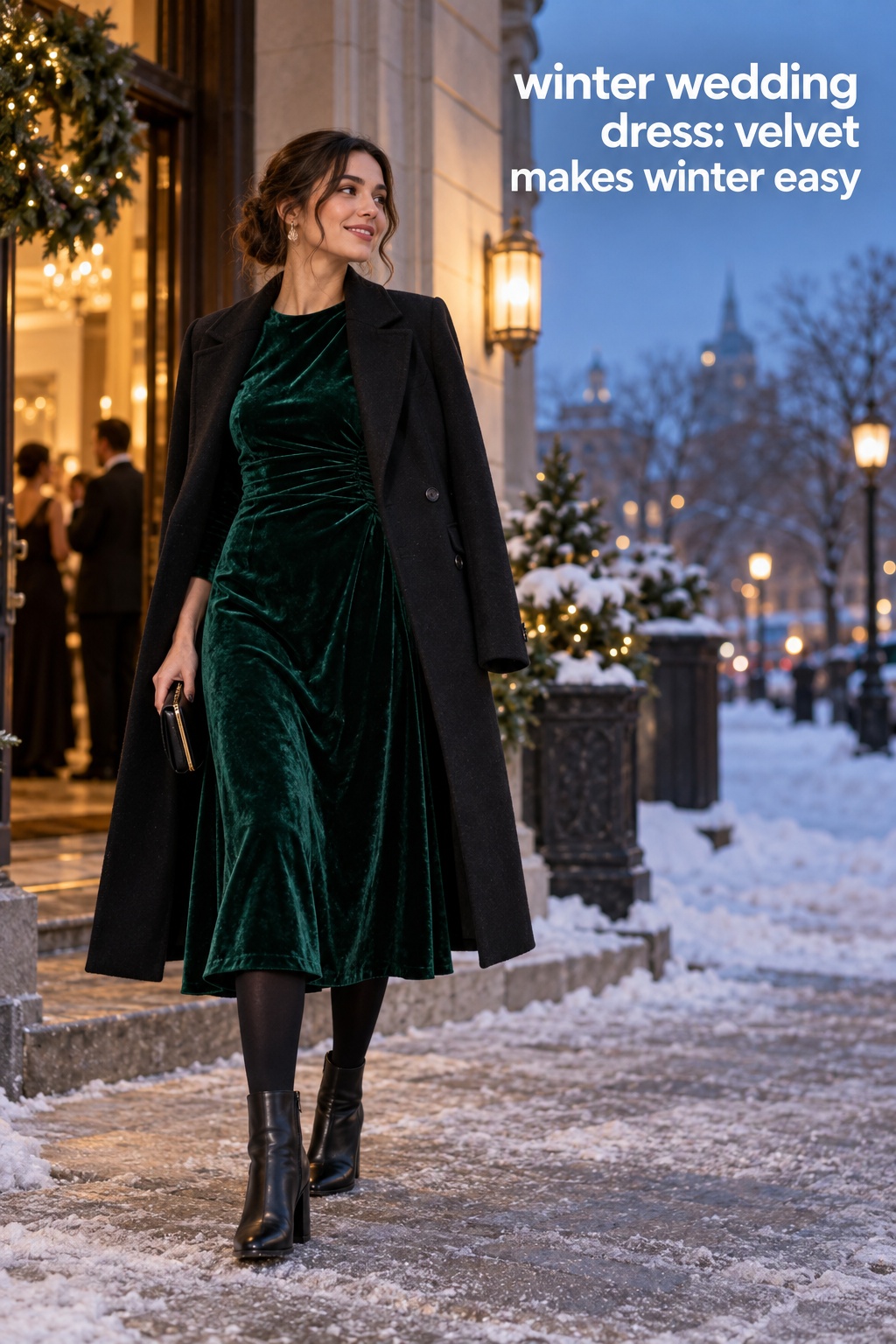
Velvet has visible depth, feels substantial, and looks especially natural at evening weddings. It suits jewel tones such as emerald, burgundy, navy, and plum, and it can carry simple jewelry because the fabric supplies the interest. Velvet is usually a strong choice for guests and bridesmaids who want warmth without adding many layers. The trade-off is weight and care: test how the nap photographs, make sure the lining moves smoothly, and check that the dress does not catch on a rough coat.
Satin and silk: elegant, but dependent on the layers
Satin and silk bring light reflection and a fluid line, which makes them beautiful for formal weddings. They do not automatically provide warmth, so pair them with a lined bodice, opaque or sheer hosiery, a tailored coat, or a formal wrap. A silk slip dress can work in winter when the underlayer and outer layer are deliberate. Avoid piling a bulky sweater over a bias cut unless the dress has enough structure to support it.
Because satin shows bumps and static, wear the exact undergarments and hosiery you plan to use at the event. Walk, sit, and photograph the dress before committing. A small amount of ease at the waist is often more valuable than choosing a size that looks perfect while standing still.
Crepe and Mikado: structured options for a bridal gown
Crepe creates a smooth, modern line and can be comfortable in fitted or column silhouettes. Mikado has more body and a subtle sheen, so it works well for ball gowns, A-lines, and architectural details. Both fabrics can feel more substantial than chiffon, especially when the gown is lined. They still need a plan for hands, shoulders, and the route between indoor locations.
Long sleeves: choose construction, not just coverage
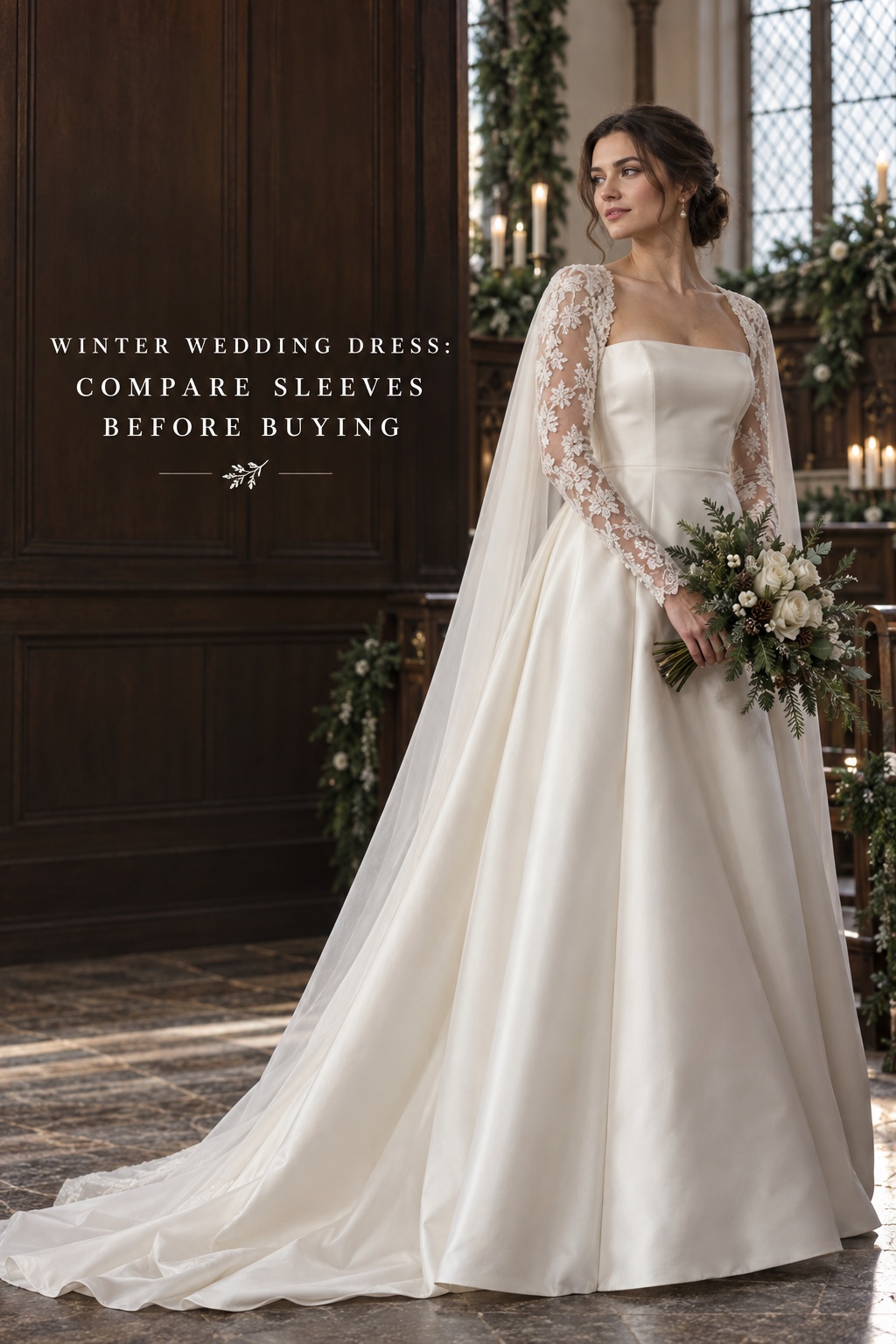
Illusion lace and sheer tulle sleeves look romantic and provide visual coverage, but they are not the same as insulation. Fitted crepe, knit, or lined sleeves feel warmer. Bishop sleeves add drama and movement, yet their volume may need a roomier coat. Detachable sleeves give you a useful two-look option, while a fitted sleeve is simpler when you want to put on a jacket without changing the whole silhouette.
- Choose illusion lace when romance matters more than true insulation.
- Choose lined or crepe sleeves for a colder ceremony and longer outdoor photos.
- Choose detachable sleeves when you want a dramatic ceremony look and a lighter reception look.
- Choose a bridal jacket or cape when the dress is strapless but the arrival layer must feel designed.
- Choose a sleeveless gown only when the coat, wrap, or venue plan genuinely solves the warmth problem.
Match silhouette and layers to the weather plan
A winter wedding dress should not be chosen in isolation from its layers. The coat, cape, wrap, tights, and shoes appear in the moments before the ceremony and may stay on for travel or photos. Start with the silhouette, then select the layer that protects it instead of flattening it.
A-line and ball gown: preserve the skirt volume
A-line and ball gown shapes already create a strong outline. A short bridal jacket can define the waist, while a cape or full-length coat can cover the skirt without making it look squeezed. Avoid a narrow coat that catches on tulle or creates a tight horizontal line across the widest part of the skirt. If you are a guest in a fuller midi dress, choose a clean cropped jacket or a coat with enough room to keep the hem moving.
Column and sheath: use a long, uninterrupted line
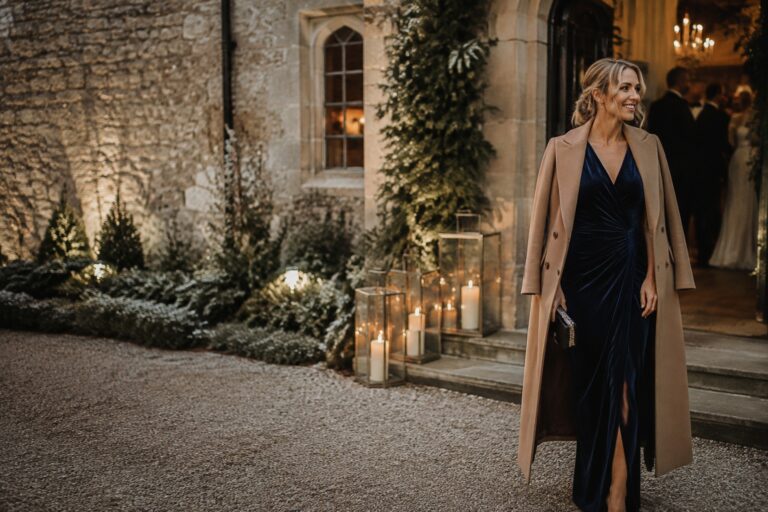
Column and sheath dresses benefit from long coats, sleek capes, and vertical scarf lines. A short puffer can make a narrow dress look disconnected unless the wedding is deliberately casual. Keep the layers smooth and choose boots or shoes with enough visual weight for the length. For guests, a long velvet or crepe dress with a tailored wool coat creates a formal line that works from curb to cocktail hour.
Slip and bias cut: control friction and shine
Slip dresses need careful underlayers. A smooth camisole, fitted long-sleeve top, or lightweight thermal layer can add comfort, but bulky knits often distort the bias line. Use a narrow belt only if the fabric can support it, and choose a coat with a clean front. Anti-static preparation, a full slip, or carefully tested hosiery can prevent the dress from clinging during a long evening.
Choose the best winter wedding dress for each situation
Once you understand fabric and silhouette, compare the outfit by situation. The right winter wedding dress for a cathedral ceremony may be too warm for a heated ballroom, while the ideal guest dress for a city venue may fail at a mountain lodge. These formulas keep the decision specific.
Indoor formal wedding with short outdoor photos
Choose the fabric and silhouette that best express the dress code, then add a refined arrival layer. A long-sleeve crepe gown, velvet midi, or satin dress with a lined bodice can work well. Add a wool coat, cape, or wrap for the walk from the car and remove it for the ceremony if the room is warm. Closed-toe shoes are optional when the outdoor route is brief, but a polished boot can be a sensible travel shoe.
Outdoor ceremony or snowy photo plan
Here warmth becomes part of the styling. Brides should consider lined sleeves, a cape, a bridal coat, or a second look. Guests and bridesmaids can use velvet, wool blends, long sleeves, opaque tights, and weather-resistant boots before changing into dressier shoes inside. Build in gloves and a warm scarf if you will wait outside. A beautiful dress is not a success if the wearer is visibly shivering in every photograph.
Black-tie evening reception
Choose a floor-length gown or formal dress in velvet, satin, crepe, brocade, or a richly finished fabric. Keep the outer layer equally intentional: a wrap, cape, opera coat, or long tailored coat reads more formal than a casual parka. Jewel tones, deep neutrals, and metallic accessories work well, but let one element lead. If the dress is highly textured, keep the coat and jewelry quieter.
Destination wedding with travel between venues
Pack the dress with the route in mind. A wrinkle-resistant crepe, lined velvet, or substantial jersey may be easier than delicate silk if you are flying. Wear or carry a coat that works with the outfit, and choose shoes you can walk in across wet pavement. Brides may want a ceremony gown plus a lighter reception outfit. Guests can bring a compact wrap and a backup pair of hosiery because small failures become expensive when the event is far from home.
Fit, shop, and style without last-minute compromises
Winter dressing rewards testing. A dress that fits in a warm fitting room can behave differently over hosiery, under a coat, or while you are carrying a bouquet. Bring the actual layers to the final fitting, and judge the outfit as a complete system.
Shop in the right order
- Confirm the role, dress code, venue, and outdoor exposure.
- Choose the fabric and silhouette before getting attached to a trend.
- Test the base layers, hosiery, and undergarments with the dress.
- Select the coat, cape, wrap, or jacket before final alterations.
- Choose shoes for the real route, then add a dressier change if needed.
- Schedule a movement test: walk, sit, raise your arms, and hold a bouquet or clutch.
For a bride, also test how the train and bustle behave in a coat or cape. For a bridesmaid, check whether the approved color still looks right under the outer layer. For a guest, take one final look at the invitation before buying accessories. Dress code changes are rare, but venue details and weather forecasts can change the layer you need.
Fix the most common winter styling mistakes
The first mistake is choosing a summer-weight dress and hoping jewelry will make it seasonal. The second is adding too many unrelated textures: velvet, faux fur, sequins, chunky knit, and glossy satin can compete. The third is treating the coat as an emergency item. If it appears in arrival photos, it is part of the look. Choose its length, color, and neckline with the dress in front of you.
Another mistake is buying warmth without checking proportion. A bulky sweater over a full skirt can erase the waist, while a short jacket over a long column can create an awkward break. Replace one thick layer with two thin layers, keep one clear focal point, and check the outfit from the side. Winter elegance is usually a matter of controlled volume.
FAQ
What is the warmest fabric for a winter wedding dress?
Velvet, lined crepe, Mikado, wool blends, and substantial jersey generally feel warmer than chiffon or unlined satin. Warmth also depends on the lining, sleeve construction, hosiery, and outer layer. For very cold conditions, choose the dress with a plan for thermal underlayers and a weather-protective coat rather than relying on fabric alone.
Are long sleeves enough for an outdoor winter ceremony?
Not always. Sheer lace and illusion mesh provide coverage but little insulation. If you will stand outside for more than a few minutes, add a lined bridal jacket, cape, coat, warm tights, gloves, and suitable shoes. Ask whether the venue provides heaters and plan for the actual route between car, ceremony, photos, and reception.
Can a satin dress work for a winter wedding?
Yes. Choose a lined or structured satin dress and pair it with hosiery, a tailored coat, elegant wrap, or cape. Keep the accessories controlled so the shine remains intentional. Test static, wrinkles, and the coat fit before the event, especially if the dress is cut on the bias.
What should a guest wear over a winter wedding dress?
A wool coat, velvet cape, polished wrap, dressy jacket, or formal opera coat can work, depending on the dress code. Match the formality and length to the dress. A long coat suits a formal gown, while a cropped jacket can define a cocktail or midi dress. Avoid an unrelated casual coat if it will appear in arrival photos.
What shoes are practical with a winter wedding dress?
Choose closed-toe pumps, block heels, dressy boots, or weather-resistant shoes based on the route and venue. A refined boot can be more practical than a sandal for snow or wet sidewalks. If you want a delicate reception shoe, bring it as a change and keep the travel shoe polished enough for photographs.
How do I make a winter wedding dress look less bulky?
Use thin, close-fitting underlayers, keep only one oversized element, and select a coat with clean vertical lines. Define the waist when the dress and sweater allow it, or let a column silhouette remain uninterrupted. Smooth hosiery, the right bra, and a fitting that includes the coat can remove more bulk than simply taking off a layer.