Winter Wedding Guest Outfit: 9 Easy Ways to Stay Warm
A winter wedding guest outfit has one job beyond looking beautiful: it needs to work in real weather. You may walk across icy pavement, wait outside for portraits, sit in a chilly ceremony space, and then spend several hours in a warm reception room. The best look is not simply a pretty dress with a random coat thrown over it. It is a small, coordinated system that respects the invitation, the venue, your comfort and the photographs.
Start with the dress code, then choose a winter-friendly fabric, a useful layer and shoes that can handle the journey. Velvet, satin, crepe, jacquard, wool blends and substantial knits give an outfit more presence than a thin summer fabric. Deep color, polished texture and thoughtful proportions make warmth feel intentional. Use the ideas below to build a complete look instead of shopping for one isolated piece.
Why a winter wedding guest outfit works best as a system
Cold-weather dressing becomes easier when every piece has a clear role. Your base outfit should meet the dress code. Your second layer should keep you comfortable during arrivals, photographs and transitions. Your shoes should be elegant enough for the venue but stable enough for the ground outside. Accessories should finish the look rather than compete with it.
Turn wedding inspiration into a plan you can actually follow.
Zarellea brings your guest list, budget, vendors, and day-of details into one shared space — so no beautiful idea gets lost in the shuffle.
This approach also prevents the most common winter guest problem: buying an outfit that looks right indoors but fails everywhere else. A strapless satin dress may be lovely for dinner, but it needs a layer that does not crush the neckline. A long gown may be formal enough for black tie, but it should be hemmed for the shoes and tested on stairs. A cocktail mini may work for an evening party, but opaque tights and a polished coat can make it feel more seasonally considered.
Use the invitation as your first filter
Read the exact wording before choosing a silhouette. Black tie usually points toward a floor-length gown, a refined formal jumpsuit or a very elevated evening look. Formal attire allows a gown, a sophisticated midi or a dressy jumpsuit. Cocktail attire welcomes a polished midi, a tailored mini with tights, a chic one-piece or dressy separates. Semi-formal is slightly lighter, but still needs a deliberate finish. Casual does not mean everyday errands clothing. A knit dress, a skirt and elegant sweater, or tailored trousers with a beautiful blouse can be right when the venue supports it.
Match the outfit to the venue and the clock
An evening hotel wedding can carry more shine, darker color and stronger jewelry than a daytime restaurant celebration. A barn or mountain venue may reward boots, textured fabrics and a shorter hem that will not drag through wet ground. A city ceremony may make a sleek coat and practical transit shoes especially valuable. Check whether the event includes outdoor vows, a shuttle, a long walk between locations or photographs in the snow. Those details should influence the outfit before you buy anything.
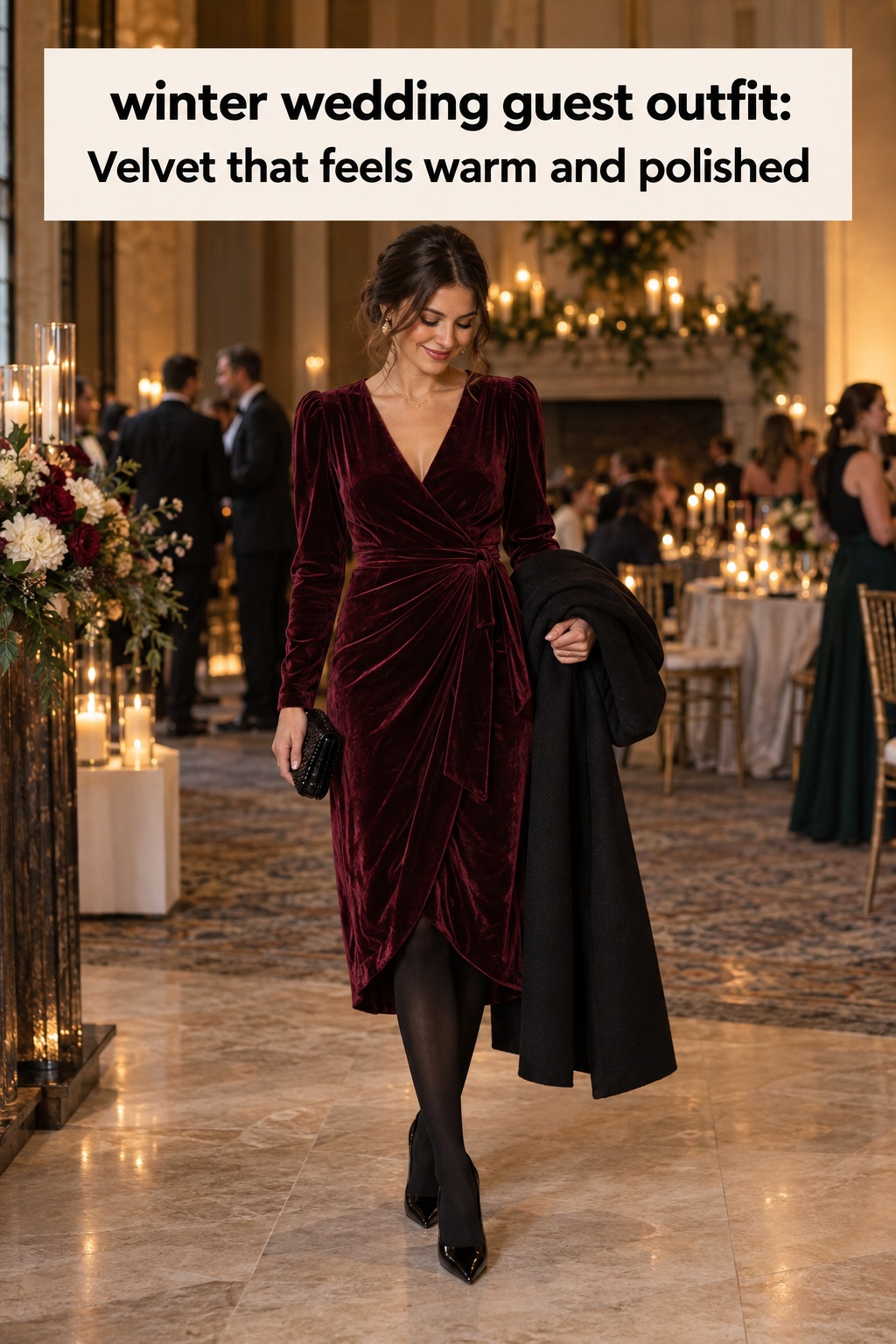
Choose your winter wedding guest outfit by dress code
There is no single perfect winter wedding guest outfit. The right answer changes with formality, time of day and setting. The formulas below give you a starting point, then leave space for your own color and personal style.
Black tie: a gown or a formal jumpsuit with a true evening finish
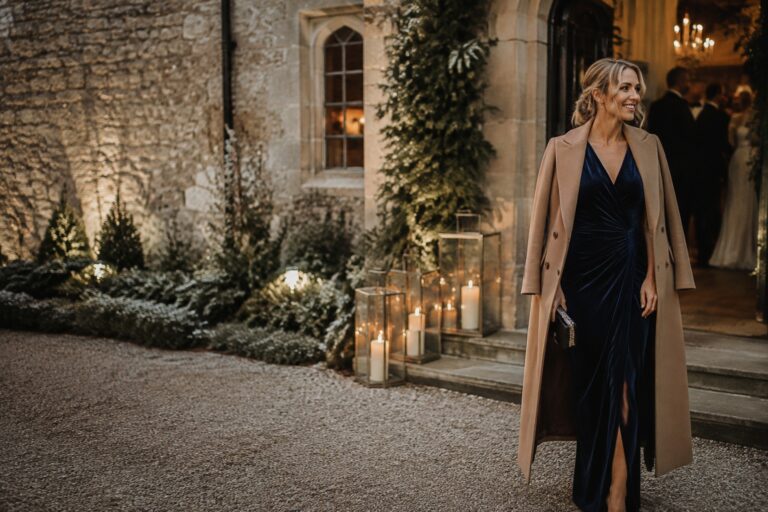
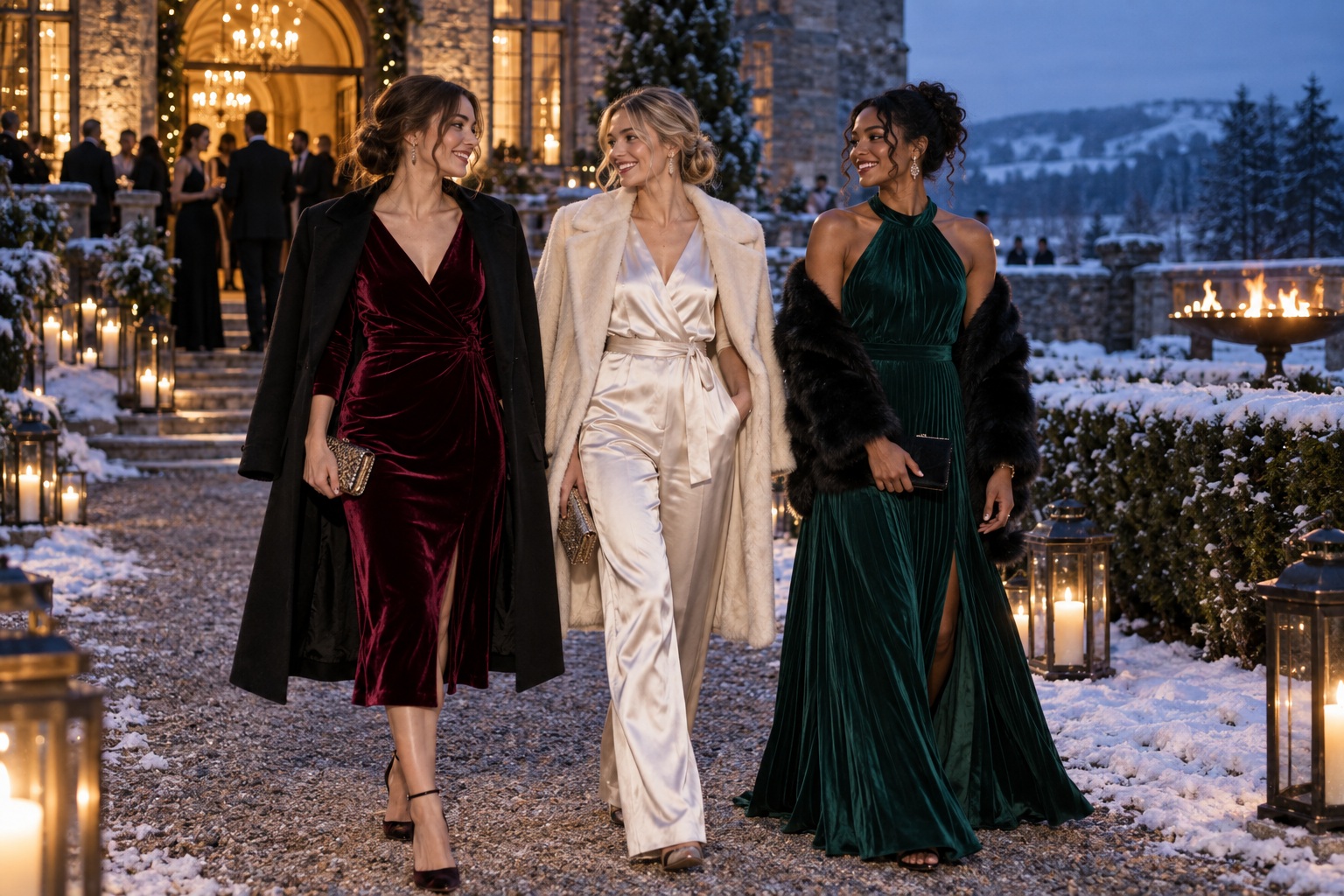
For black tie, begin with a floor-length silhouette in velvet, satin, silk, crepe or another fabric with enough weight to look luxurious. A long-sleeve velvet gown is naturally suited to winter and photographs beautifully in candlelight. A satin gown with a sculptural neckline can feel formal without relying on glitter. If you prefer trousers, choose a wide-leg jumpsuit with a defined waist, fluid drape and elegant jewelry. It should read as eveningwear rather than office suiting.
- Color: midnight navy, emerald, garnet, deep plum, chocolate brown or black with texture.
- Layer: a long wool coat, velvet cape or formal wrap that does not fight the gown’s proportions.
- Shoes: closed-toe pumps or a slim heeled boot hidden under the hem.
- Accessories: one strong element, such as crystal earrings, a satin clutch or a sculptural cuff.
Keep the outer layer intentional. A casual puffer can make a formal look feel unfinished, even if it is practical. Wear the warm coat for travel if necessary, then keep the elegant layer ready for arrival photographs and the ceremony. If you are likely to stand outside, bring discreet warming accessories rather than adding bulky layers that change the line of the dress.
Formal: let texture do the work
Formal winter weddings give you room to choose between a gown, a refined midi, a column dress or a tailored jumpsuit. This is where texture can make a simpler silhouette feel special. A long-sleeve crepe dress gains polish from a jeweled shoe and a clean coat. A velvet midi can feel richer than a more complicated dress in a thin fabric. A satin slip dress works beautifully with a velvet stole, a tailored blazer or a longline coat that gives the look structure.
For a daytime formal event, consider navy, forest green, muted berry, slate blue or warm taupe. For evening, black, garnet, emerald and deep sapphire are dependable. Metallic accessories can lift a dark palette, while a tonal bag and shoes create a quieter, modern finish. Avoid anything that looks too bridal, including white, ivory or a very pale champagne dress unless the couple has clearly indicated that it is welcome.
Cocktail: build a celebratory outfit around the hemline
A winter cocktail outfit can be a jewel-tone midi, a sequined dress with long sleeves, a velvet wrap dress or a tailored jumpsuit. The easiest way to make a shorter hem feel warm and polished is to add tights and a closed-toe shoe. Sheer black tights keep the line light, while opaque tights add more insulation and work well with a velvet mini or a structured knit dress.
If you wear a print, look for a moody floral, a small metallic motif or a restrained geometric pattern rather than a bright summer print. Finish with a compact clutch, earrings that catch the light and a coat that lands at a flattering point on the leg. A cropped jacket works well with a fuller skirt, while a longer coat can balance a fitted dress.
Semi-formal or casual: keep the base simple and the finish deliberate
For semi-formal attire, try a satin or crepe midi, a wrap dress with long sleeves, a knit skirt with a dressy top, or tailored trousers with a softly draped blouse. A polished sweater dress can work for a casual winter wedding when it is paired with refined shoes, a belt and a structured coat. Choose materials that look intentional in photographs. A smooth ponte, brushed knit, jacquard or heavier crepe will usually read more occasion-ready than a thin jersey.
Casual does not require you to abandon color. Soft neutrals, navy, burgundy, olive and warm brown can feel seasonal without becoming costume-like. Add one festive detail, such as a metallic shoe, a satin bag or a textured earring. The goal is relaxed polish, not a holiday party costume.
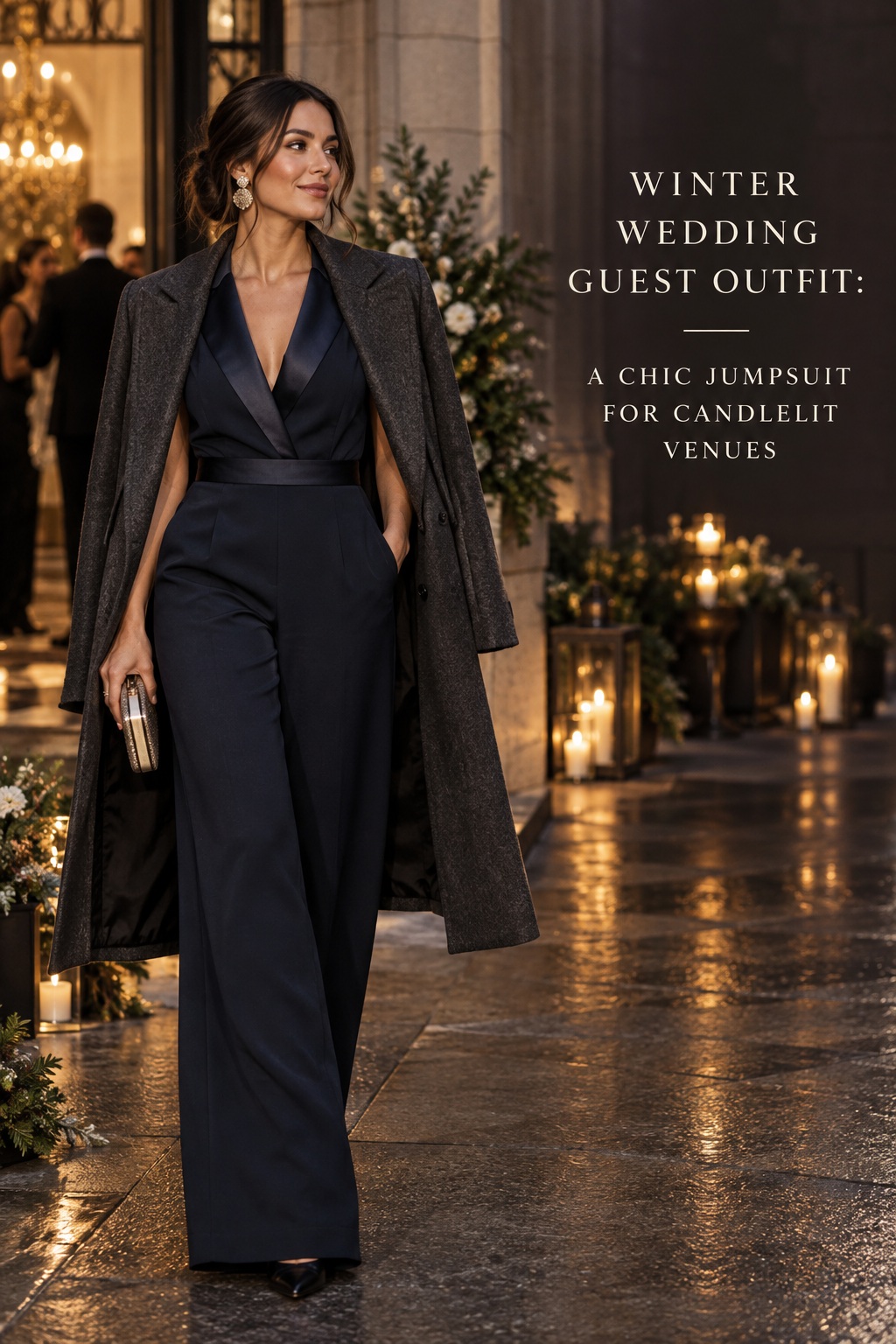
Build warmth into the look without losing the silhouette
Layering is where a good winter wedding guest outfit becomes a great one. Choose layers that can be removed, carried or rearranged as the temperature changes. The layer should support the shape of the base outfit, not hide it completely.
Choose the outer layer by dress length
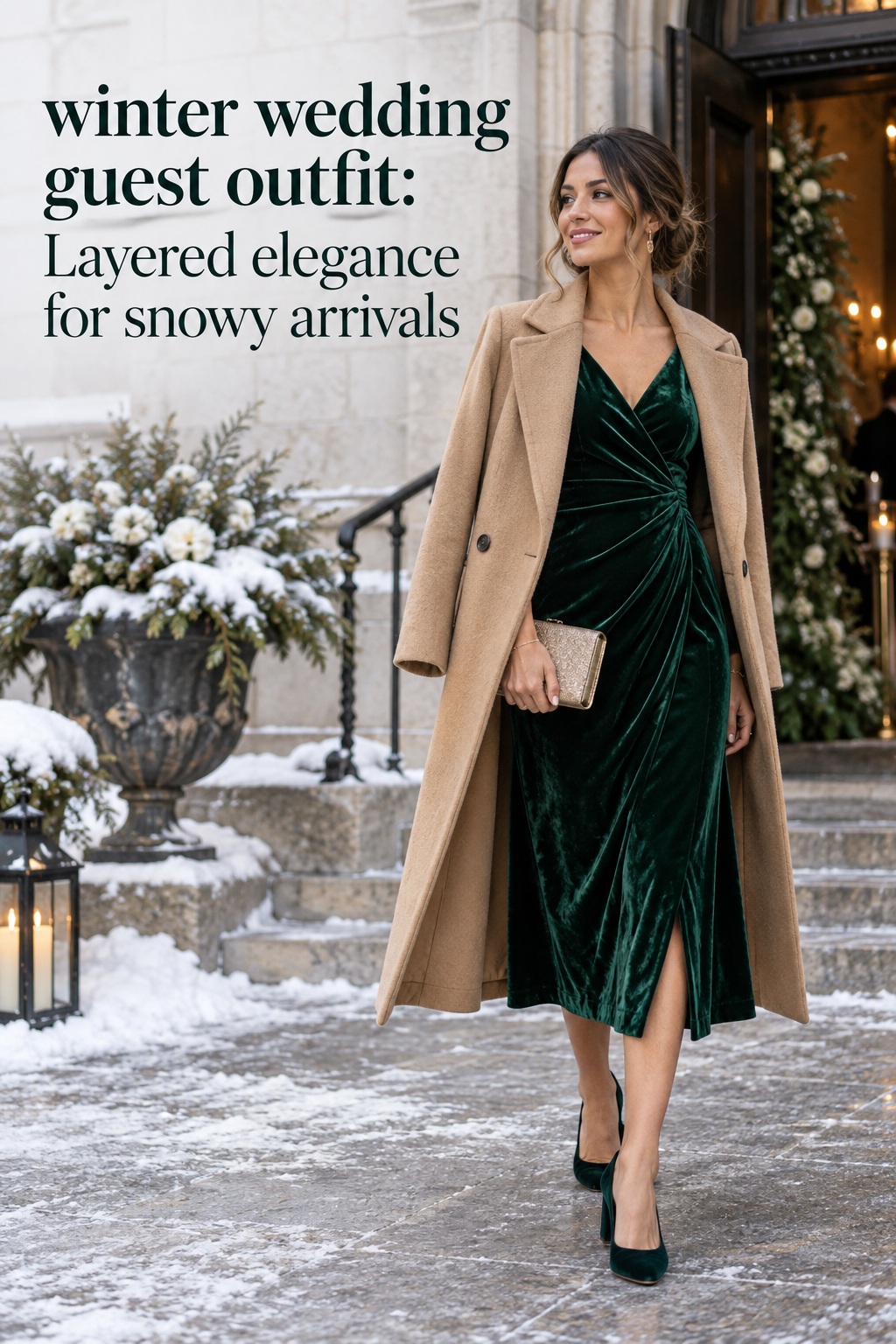
A floor-length gown pairs naturally with a long wool coat or a dramatic cape. A midi dress can take a knee-length coat, a tailored wrap or a cropped faux-fur jacket depending on the shape of the skirt. A mini looks balanced with a coat that is at least as long as the dress, especially when you are walking outdoors. Match the coat’s formality to the invitation. Clean tailoring looks elegant almost everywhere, while a soft stole can add romance without adding bulk.
Use hosiery and base layers strategically
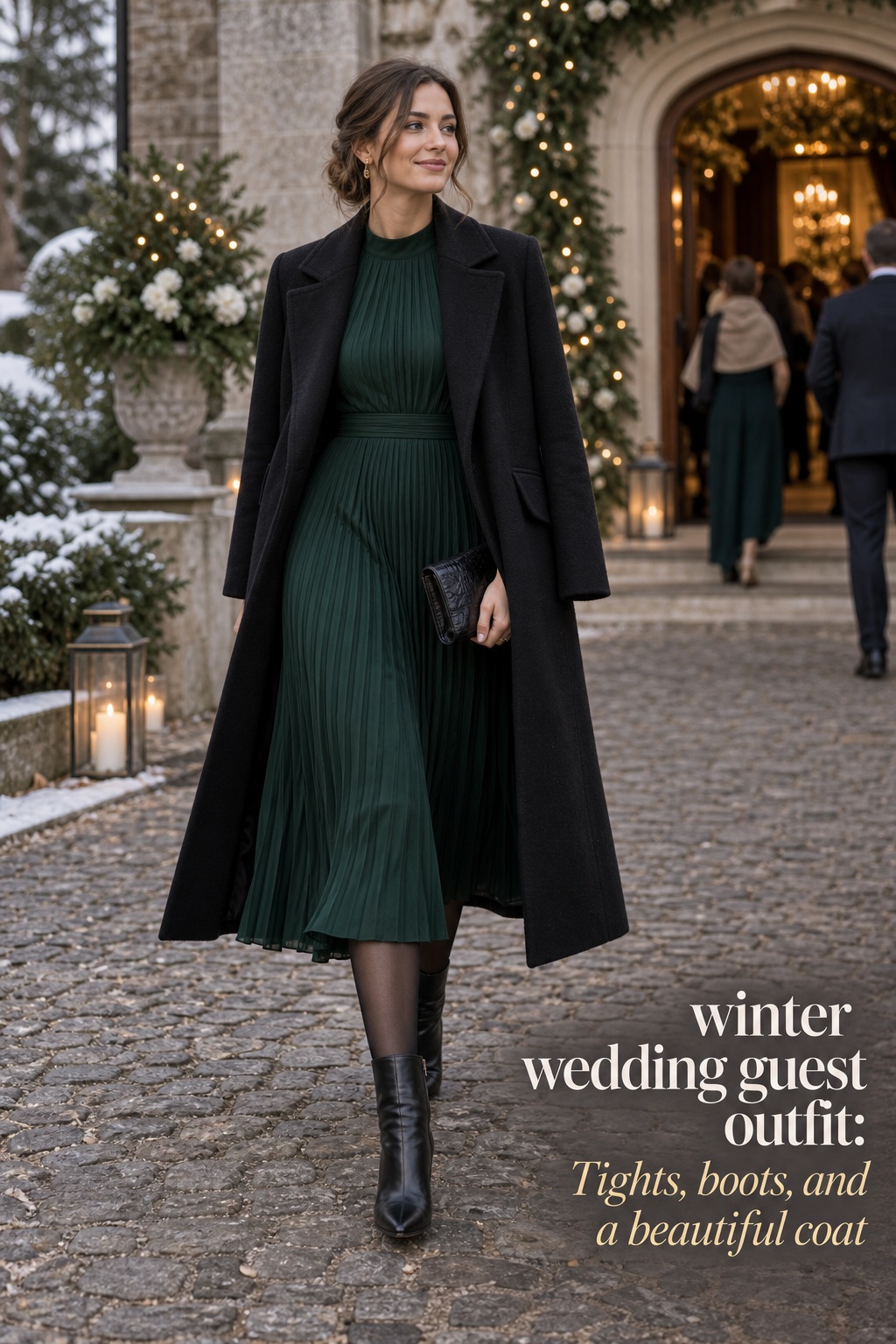
Tights are one of the easiest ways to adapt a favorite dress to winter. Black tights are dependable with dark shoes and dresses, while tonal tights can create a longer line with navy, brown or burgundy. Test them with the dress before the event. Static, visible seams and a waistband that rolls under a fitted dress can distract you all evening.
For extra warmth, try a smooth base layer under a looser dress or jumpsuit. Make sure it does not show at the neckline, cuff or hem. Bring the actual underlayer to your fitting, because it can change the drape and the amount of room you need through the arms. If your outfit is sleeveless, a slim long-sleeve layer can work for a more relaxed venue, but it should look like a deliberate styling choice rather than an emergency solution.
Plan two pairs of shoes when weather is uncertain
Do not force your ceremony shoes to handle slush, salt and long outdoor walks. Wear weatherproof boots for transit and change into dress shoes at the venue. A low block heel, closed-toe pump or dressy ankle boot is often more useful than a very thin stiletto when the ground is uneven. Under a long dress, a heeled boot can disappear while keeping your feet warmer. Under a midi, a sleek boot can become part of the outfit.
Pack a small shoe bag, blister patches and a compact umbrella if rain or snow is likely. Check the venue’s flooring and stairs before choosing a slippery sole. A wedding guest should be able to walk into the ceremony, move through cocktail hour and dance without constantly managing her shoes.
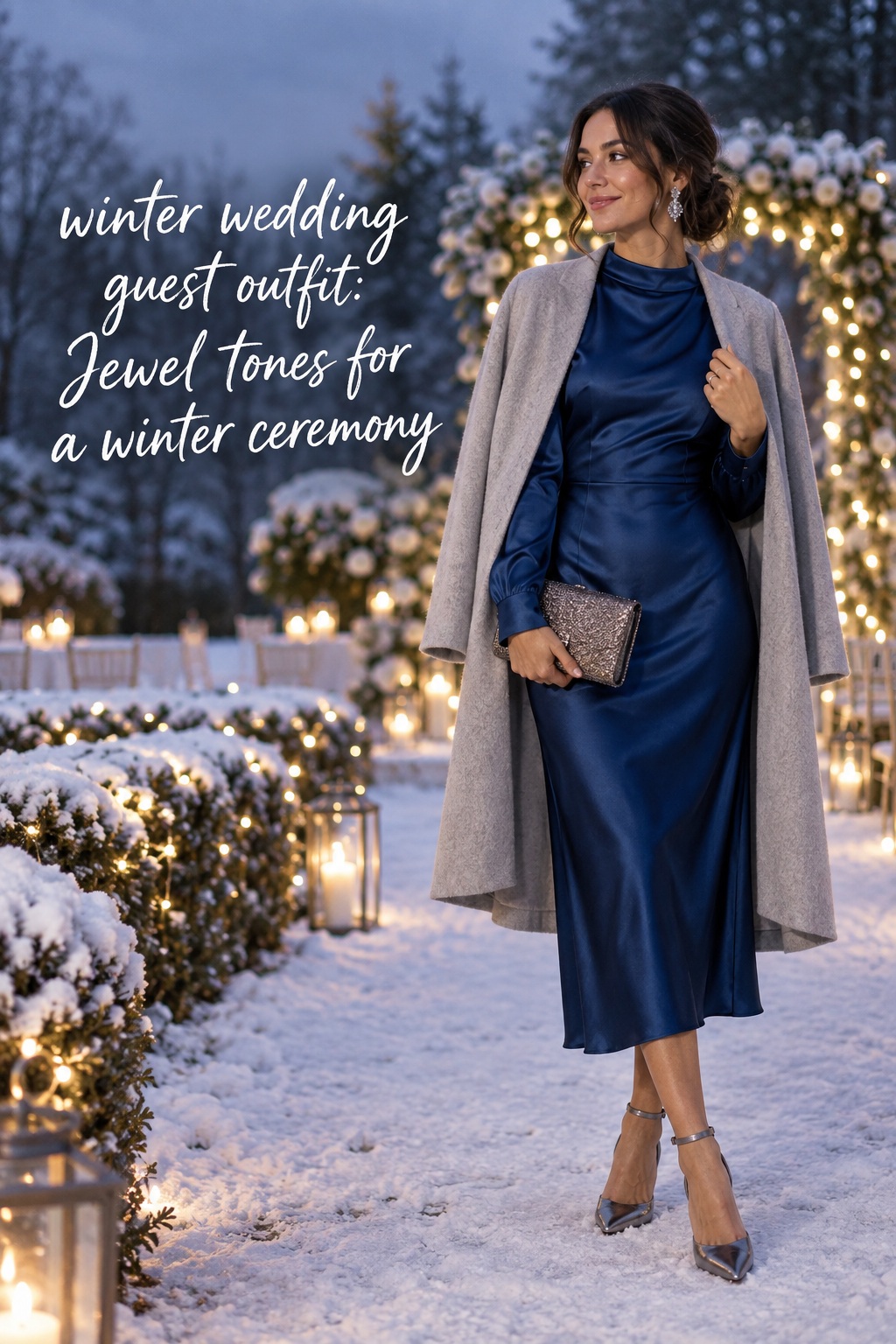
Finish the outfit with winter-aware color and accessories
Winter color does not have to mean only black. Jewel tones, deep neutrals and subtle metallics reflect the season while keeping the outfit celebratory. Let the fabric guide your accessories. Velvet already has depth, so it may need only polished metal and a simple clutch. Satin catches light, so matte shoes or a structured coat can add balance. A beaded dress may call for quieter jewelry.
Reliable winter color combinations
- Emerald velvet with black shoes, gold earrings and a camel or black coat.
- Garnet satin with warm metallic jewelry, sheer tights and a deep brown clutch.
- Navy crepe with silver earrings, pewter shoes and a charcoal wrap.
- Chocolate brown with champagne accessories and a soft ivory coat, as long as the outfit does not read bridal.
- Black with texture, such as velvet, beading or satin, plus one colorful bag or jeweled accent.
These combinations are starting points, not rules. If you love a brighter shade, keep the silhouette refined and make sure the color fits the wedding’s mood. If the invitation names a palette, follow it thoughtfully without trying to match the bridesmaids exactly.
Choose accessories that solve a small problem
The best accessories add beauty and usefulness. A cashmere stole warms your shoulders during toasts. A structured clutch holds a phone, lipstick and fashion tape. A small pair of earrings can brighten a high neckline without competing with it. A belt can define the waist of a sweater dress or coat. A lint roller is valuable with velvet, and fashion tape can rescue a shifting neckline.
Keep the bag small enough to carry comfortably and large enough for the essentials. Winter coats, wraps and gloves already create visual volume, so too many accessories can make the look feel crowded. Choose one focal point and let the rest support it.
Try on the complete look before the wedding
A final rehearsal is the simplest way to avoid a stressful wardrobe surprise. Put on the dress, underlayer, tights, shoes, coat and accessories at the same time. Check the look in daylight and in warm indoor light. Take a few photos from the front, side and back. Look for visible straps, coat gaps, a hem that catches under the heel or jewelry that disappears against the fabric.
- Walk up and down stairs, then sit in a chair without pulling the dress into an uncomfortable position.
- Raise your arms and move your shoulders to check sleeve and coat mobility.
- Test the hem on the exact shoes you will wear.
- Dance for two songs to find slipping straps, tight waistbands or shoes that pinch.
- Pack a practical layer, weather shoes and a small repair kit.
- Confirm the outfit feels appropriate for the ceremony, reception and any outdoor photographs.
When those checks are complete, your winter wedding guest outfit should feel polished without demanding constant attention. That is the real test. You want to remember the vows, conversation and dancing, not the fact that your coat never worked with your dress.
FAQ
Can I wear black to a winter wedding?
Yes. Black is especially effective for evening winter weddings when the fabric has texture or shine. Choose velvet, satin, crepe, beading or a strong silhouette, then add a celebratory detail such as colorful earrings, a metallic clutch or a jewel-tone coat. Avoid an overly casual all-black outfit unless the invitation is relaxed.
What coat should I wear over a winter wedding guest outfit?
Choose a tailored wool coat, elegant cape, dressy wrap or refined faux-fur layer that supports the dress code and the hemline. Long coats work well with gowns, while shorter coats and wraps can balance cocktail and midi dresses. If you need a practical weather coat for travel, bring a separate dressier layer for arrival photos and the ceremony.
Are tights appropriate for a winter wedding?
Absolutely. Sheer or opaque tights can make a short or midi dress more comfortable and seasonally appropriate. Match the tights to your shoes or dress when you want a longer visual line, and test them in advance for static, comfort and visibility under the fabric.
Can I wear a jumpsuit instead of a dress?
Yes. A tailored jumpsuit in velvet, satin-back crepe or another elegant fabric can work for formal, cocktail or semi-formal celebrations. Choose a defined waist, polished shoes and evening accessories. For black tie, select a fluid wide-leg shape with a refined neckline so the outfit carries the same presence as a gown.
What should I wear to an outdoor winter wedding ceremony?
Build warmth into the outfit from the beginning. Try a long-sleeve dress or jumpsuit, tights, a tailored wool coat or cape and closed-toe block heels. Wear weatherproof boots during transit and change inside if needed. Bring gloves, a compact umbrella and a layer that can stay on during photographs without hiding the main outfit.