Winter Wedding Inspo: A Modern Celebration Plan
At four in the afternoon, the last blue light is already fading beyond the windows. Inside, the room is beginning to glow. A coat is draped over the back of a chair, someone is warming their hands around a mug, and the first candle catches in a glass votive beside a winter branch. Nothing is shouting holiday party. The room simply feels close, considered, and alive. That is the best kind of winter wedding inspo: not a costume, but a mood with a point of view.
Winter can make a celebration feel cinematic because the season naturally creates contrast. There is cold air outside and warmth inside, bare branches against soft fabric, early darkness against candlelight, and a reason for guests to gather rather than drift between spaces. The challenge is turning that atmosphere into decisions that still feel personal. This guide follows the visual story from the first impression to the last dance, with ideas for palettes, attire, flowers, lighting, ceremony details, reception design, and comfort.
Begin with the scene, not a shopping list
Before you save another centerpiece or order a ribbon sample, imagine the first ten minutes of the wedding. Where do guests arrive? What do they see before they find their seats? Is the ceremony happening under a darkening sky, in a stone room, beside a fireplace, or under a clear tent? What should the space feel like when everyone has taken off their coats and the music begins?
These questions are more useful than choosing a theme because they give you a sequence. A couple marrying in a city restaurant might want a polished winter evening with black tailoring, burgundy flowers, brass details, and candlelight. A couple marrying at a mountain lodge might prefer cream wool, cedar, smoky glass, dried grasses, and a menu that feels generous after a day outside. Both are winter weddings, but they tell different stories.
Turn wedding inspiration into a plan you can actually follow.
Zarellea brings your guest list, budget, vendors, and day-of details into one shared space — so no beautiful idea gets lost in the shuffle.
The strongest winter wedding inspo also respects the venue. If the room has beautiful wood beams, do not cover them with a forest of props. If the ceremony has tall windows, let the changing daylight become part of the design. If a restaurant already supplies warm pendant lights, use them as the ambient layer and spend the decor budget on tables, flowers, or a single ceremony installation. A visual idea becomes believable when it belongs to its setting.
Three questions that reveal your point of view
Ask what you want guests to remember visually, what material should appear more than once, and what should never appear at all. Your answers might be candlelit tables, velvet ribbon, and no snowflake decor. Or they might be an icy palette, sculptural branches, and no red. These boundaries make inspiration easier to edit and keep the event from becoming a collection of unrelated pretty things.
It is also worth deciding how much winter you want. Some couples want the season to be obvious through evergreen, berries, and warm layers. Others want only a quiet reference in the light and texture. Neither approach is more correct. A subtle winter wedding can feel especially modern when the season appears through atmosphere rather than literal symbols.
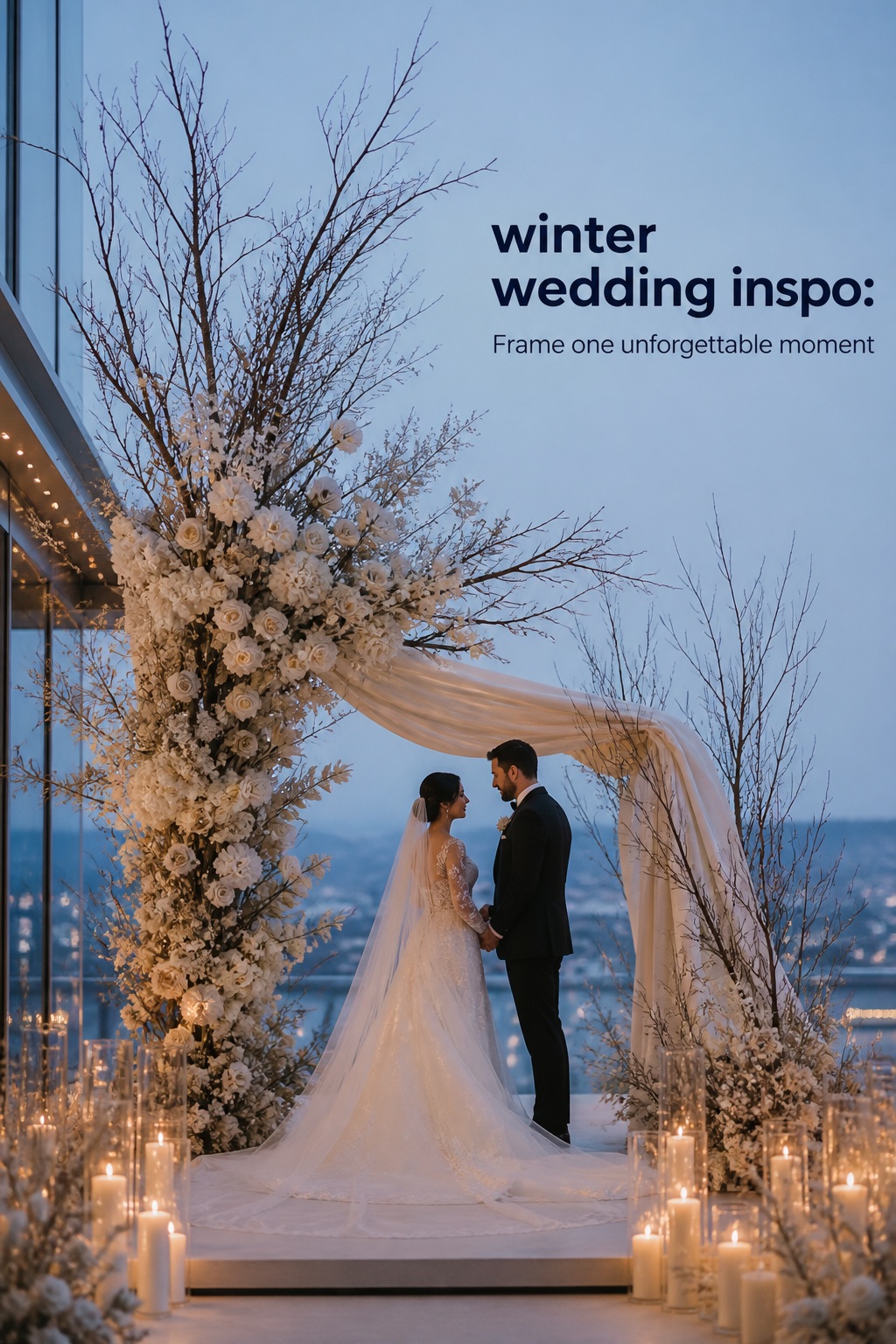
Choose a winter mood that still feels like you
A palette is not the whole design, but it is a useful emotional shortcut. Recent wedding inspiration repeatedly returns to jewel tones, silver, gold, copper, evergreen, charcoal, cream, and soft winter blues. The most personal result comes from combining those ideas with your venue and your normal taste, then deciding which color is allowed to lead.
Warm and intimate
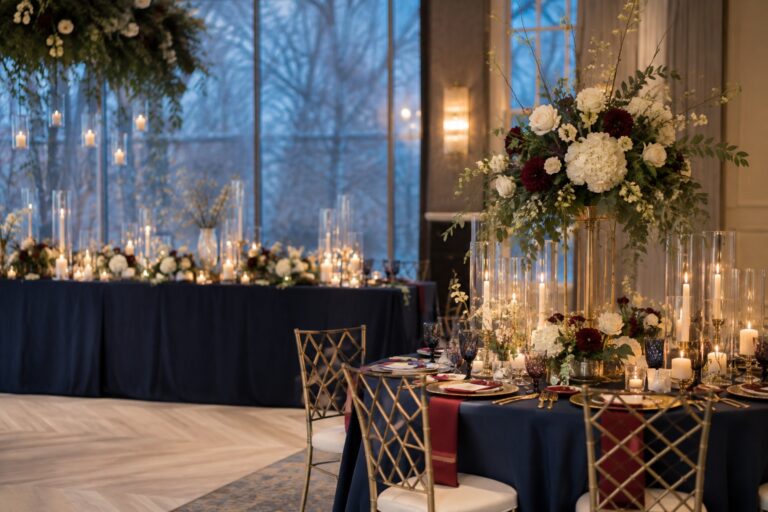
Picture burgundy, deep green, tobacco, ivory, and antique brass in a room lit by amber candles. This direction suits an evening ceremony, historic building, restaurant, or lodge. Use the deeper shades in small, deliberate doses: a velvet napkin, a ribbon on the bouquet, a menu border, or a few taper candles. Let ivory flowers and natural greenery keep the palette from feeling heavy.
Cool and luminous
For a lighter winter mood, layer true white, soft gray, icy blue, silver, and clear glass. This can look beautiful in a greenhouse, gallery, ballroom, or bright tent. The secret is adding a warm counterpoint. Candlelight, honey-toned wood, cream rather than stark white, or one brushed-gold detail will make a cool palette feel inviting after sunset.
Natural and textural
Cedar, pine, eucalyptus, bare branches, stone, wool, dried grasses, and woven materials create a winter story without relying on glitter or ornaments. Keep the palette close to nature with cream, sage, charcoal, brown, and muted berry. Refined glassware and consistent candleholders can make the look feel elevated enough for a formal reception.
Graphic and modern
Choose charcoal, white, one metallic, and a strong silhouette. Imagine black taper candles, sculptural branches, white flowers, ribbed glass, and stationery with generous negative space. This direction works when the architecture already has presence. Instead of filling every surface, make shape and spacing part of the design.
To avoid a Christmas look, choose seasonal materials before seasonal symbols. Evergreen, candlelight, winter berries, frost-inspired glass, velvet, and bare branches can all feel distinctly winter without turning the ceremony into a holiday display. If you love Christmas, include it intentionally through one repeated element, such as a particular ribbon, a small ornament favor, or a warm drink station. The problem is not using a holiday reference. The problem is using every reference at once.
- Choose one leading color, one supporting neutral, and one metal.
- Repeat two or three materials in at least three guest-facing areas.
- Use one visual accent for personality, not five competing accents.
- Check your palette in both daylight and evening light before finalizing it.
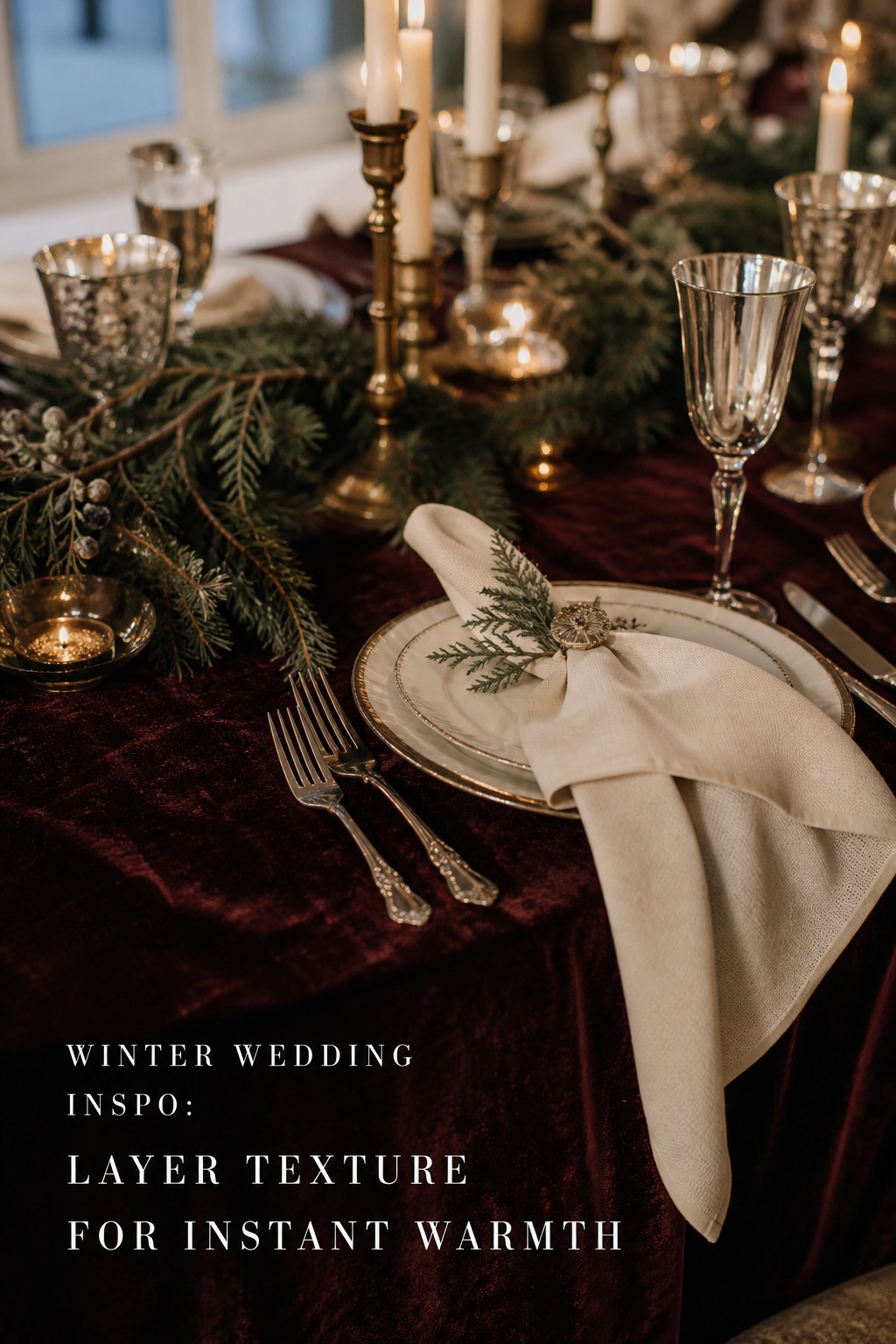
Let attire and flowers carry the same conversation
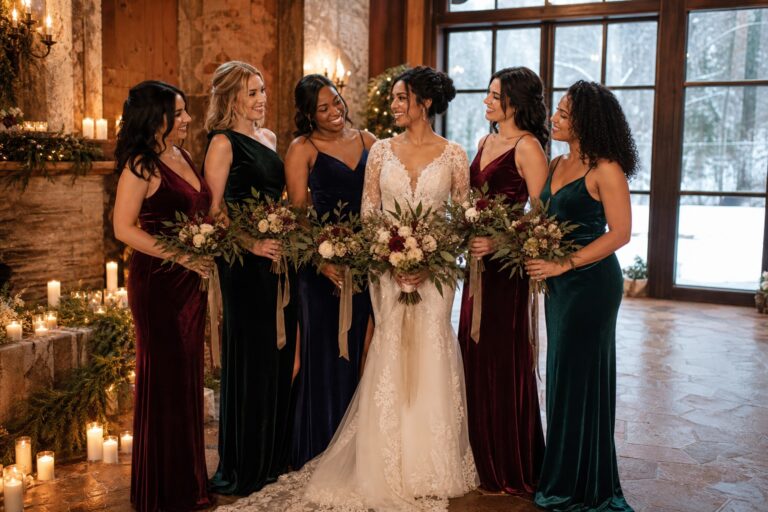
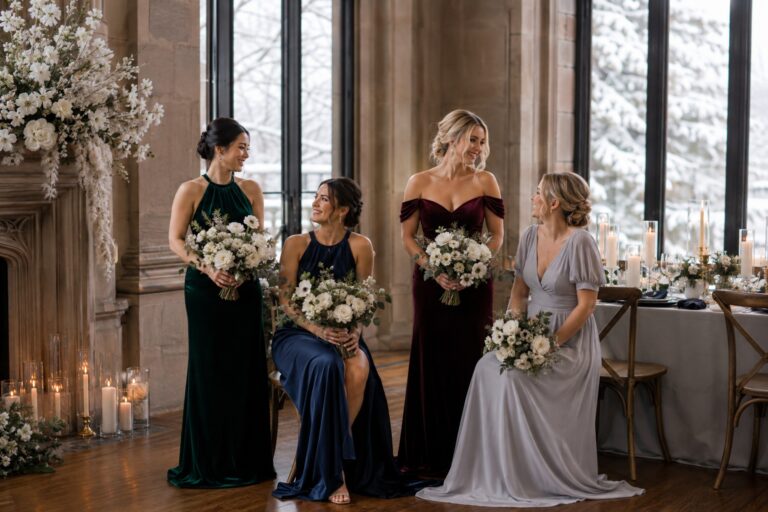
Winter wedding inspo feels cohesive when fashion and florals seem to belong to the same world. That does not mean matching bridesmaid dresses to bouquets or asking every guest to wear jewel tones. It means repeating the same idea in different forms. A velvet bridesmaid dress might echo a velvet ribbon. A charcoal suit might reappear in stationery ink. A silver hair accessory might quietly connect to glassware and candleholders.
Build the bridal look in layers
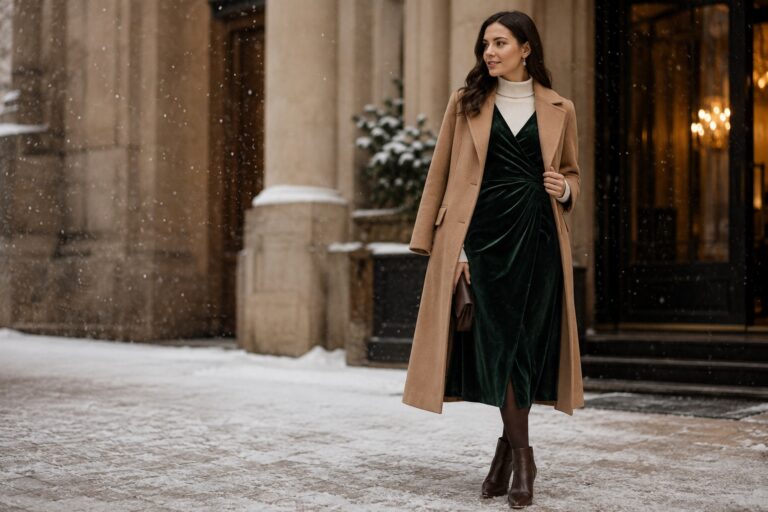
A winter bridal outfit can have more than one chapter. A long-sleeve gown, a removable jacket, a tailored coat, a cape, a cashmere wrap, or a beaded topper can change the silhouette between ceremony and reception. The most useful layer is one that looks intentional in photographs and can be removed without disturbing the dress, hair, or bouquet.
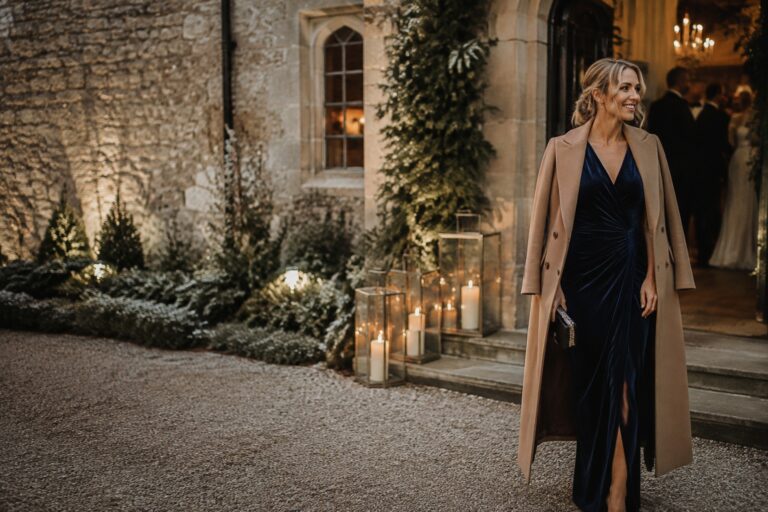
Think about the actual route of the day. If portraits happen outdoors, the coat is part of the story rather than an inconvenience. If you will move from a heated room to a windy terrace, secure fastenings matter. If a cape trails behind you, confirm that it will not catch on chairs or make stairs difficult. Romance is easier to enjoy when the outfit can move.
Style the wedding party through texture
Velvet, satin, crepe, wool suiting, corduroy accents, and long sleeves naturally read as cold-weather choices. You can keep the wedding party from looking over-coordinated by choosing a color family and allowing small differences in silhouette. Emerald, navy, burgundy, chocolate, black, and muted blue all photograph beautifully, but the right choice depends on skin tones, venue light, and the formality stated on the invitation.
Accessories are an easy place to tell the same story. A narrow ribbon, a simple metallic shoe, a polished coat, a warm scarf for outdoor portraits, or a pocket square in the floral accent can connect the group. Avoid making practical layers look like emergency additions. Share the plan early so everyone can arrive with outerwear and footwear that feel considered.
Choose flowers for shape as much as color
Winter flowers do not have to be white, and winter greenery does not have to look rustic. Ask your florist to think in terms of silhouette, movement, and finish. Bare branches can create height. Evergreen can provide a dark line beneath pale flowers. Winter berries can add a small note of color. Anemones, hellebores, roses, ranunculus, orchids, and dried elements can move the design in different directions depending on availability in your region.
Use the bouquet as the clearest expression of the couple’s style. A loose bouquet with trailing ribbon feels different from a compact, architectural shape even if both use ivory flowers. At the reception, repeat only the most important ingredients. A few stems in the bar arrangement, the same berry tone on the cake table, or one branch at the seating chart is enough to make the design feel connected.
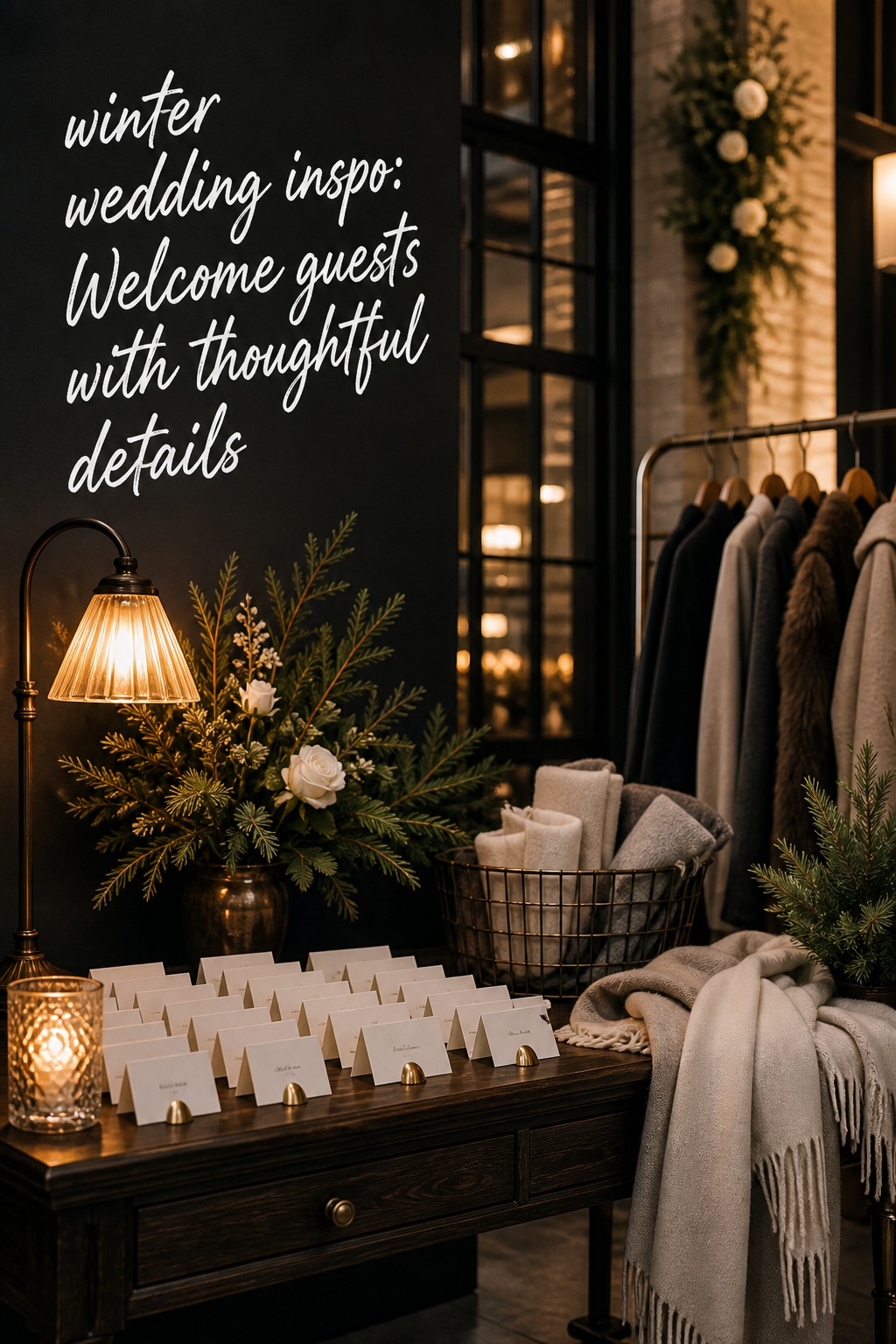
Design the ceremony as the emotional center
The ceremony does not need the most decoration, but it needs the clearest point of focus. Guests should know where to look, and the couple should feel that the setting supports the meaning of the moment. In winter, the focal point can be a floral arch, a fireplace, a pair of trees, a view through tall windows, a draped structure, or simply a carefully framed architectural feature.
Try a partial installation instead of covering the entire backdrop. Flowers clustered on one side of an arch can feel more modern than a symmetrical wall. A line of candles can draw attention to a fireplace without competing with it. Bare branches can frame a window and let the outdoor landscape remain visible. Less decoration can create more atmosphere when the negative space has a purpose.
Aisle details that do not block the story
Small clusters at the start of every few rows, protected lanterns, loose greenery, or a soft runner can guide the eye without making the aisle difficult to walk. Check the width with the venue and wedding party in mind. Winter footwear, long dresses, and coats can make a narrow route feel even tighter.
If the ceremony is outdoors, make comfort visible before guests need to ask. Offer blankets or wraps in a beautiful basket, place heaters where permitted, protect candles from wind, and provide a dry surface. Let the program or welcome sign explain the weather plan clearly. Guests are more relaxed when they understand how long they will be outside and where they can warm up.
Plan a graceful transition to the reception
The end of the ceremony is an opportunity to reuse the design. Move aisle arrangements to the bar, transfer arch flowers to the sweetheart table, and use ceremony candles around the cake or lounge area. Tell the florist and coordinator this is part of the design from the first planning meeting. A reusable installation can look generous while keeping the overall plan focused.
Make the reception feel like a warm second act
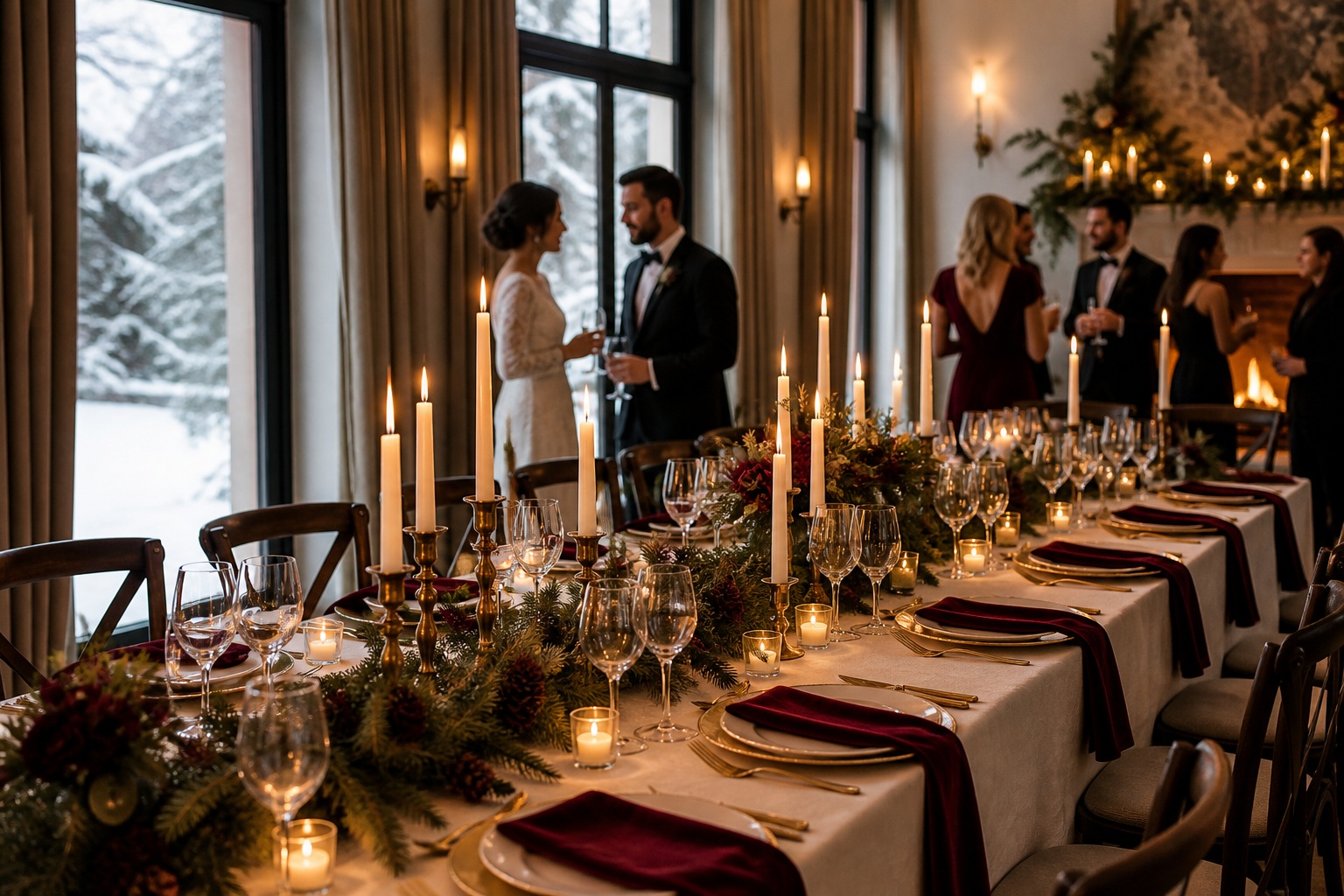
When guests enter the reception, give them one clear visual transition. It might be a room washed in warm light, a long table covered in textured linen, a fireplace surrounded by greenery, or a bar glowing with copper and amber glass. The opening impression should echo the ceremony while becoming more social and generous.
Use lighting as the room’s invisible architecture
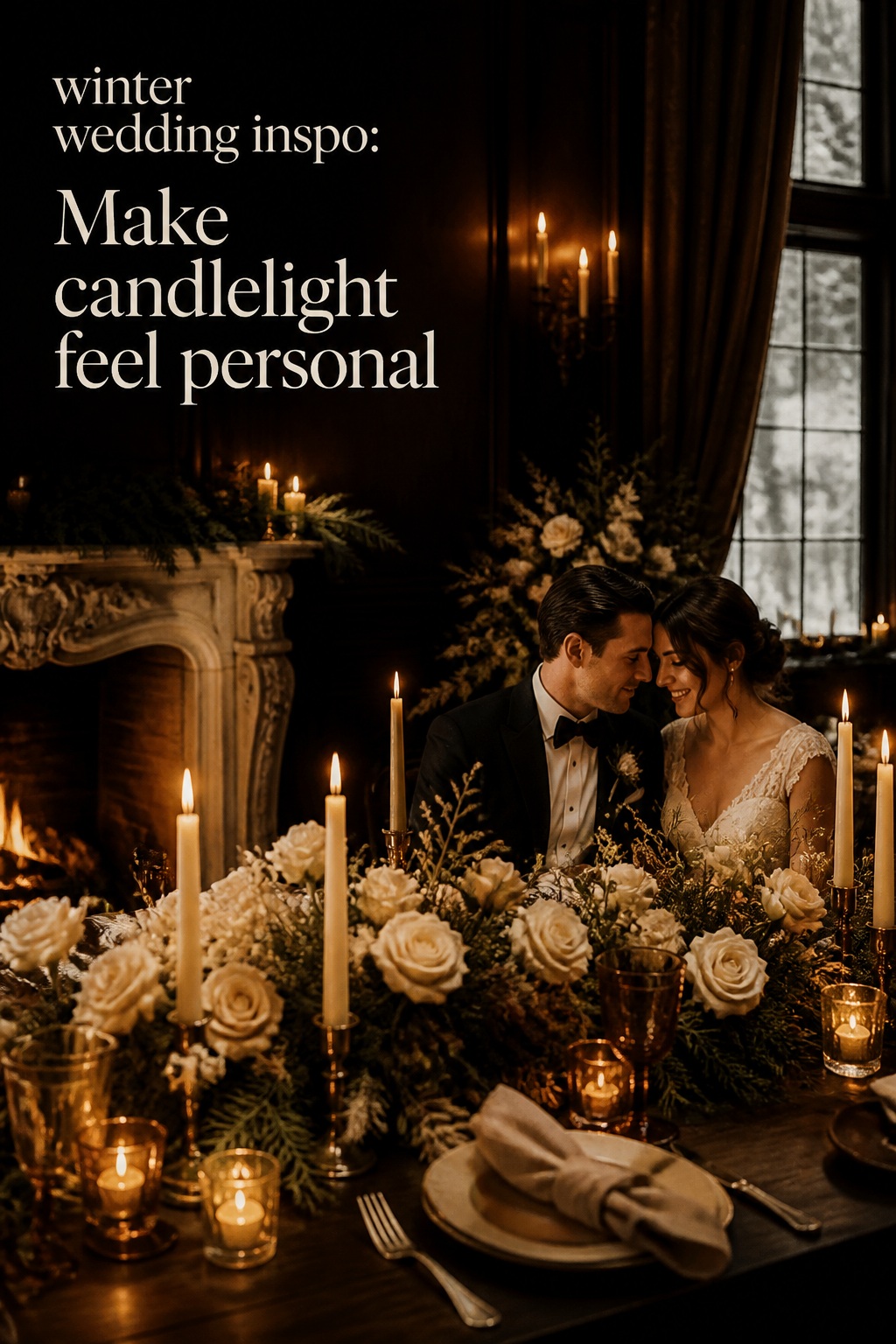
Layered lighting is often the most effective winter decor choice. Ambient light lets people navigate. Focused light helps guests read menus and notice flowers. Candlelight, lamps, string lights, and small points of glow create intimacy. Ask what the venue already includes, whether overhead fixtures can be dimmed, and whether open flame is allowed. If it is not, quality LED candles inside glass can still create warmth.
Vary candle heights, but keep the arrangement safe and conversational. Low votives, a few tapers, and protected pillars can give the table rhythm. Keep loose foliage away from flame, check clearance from fabric, and assign someone to light or switch on the pieces. A beautiful tablescape should never depend on a rushed safety decision.
Let the table surface do more work
Winter tables become memorable through contrast. Pair a matte linen with shiny glass, a glossy menu with a natural wood table, velvet ribbon with brushed metal, or pale flowers with dark vessels. A table does not need a tall centerpiece if the surface already has layers. Give guests enough space to eat, pass dishes, and see one another. Conversation is part of the atmosphere.
Repeat one small detail consistently across the reception. It could be a napkin fold, a colored taper, a paper edge, a ribbon knot, or a miniature evergreen sprig. Then give the couple’s table a little more presence with fuller flowers, a fabric backdrop, or a stronger line of candlelight. This hierarchy keeps the room coordinated without making every table identical.
Give guests a reason to linger
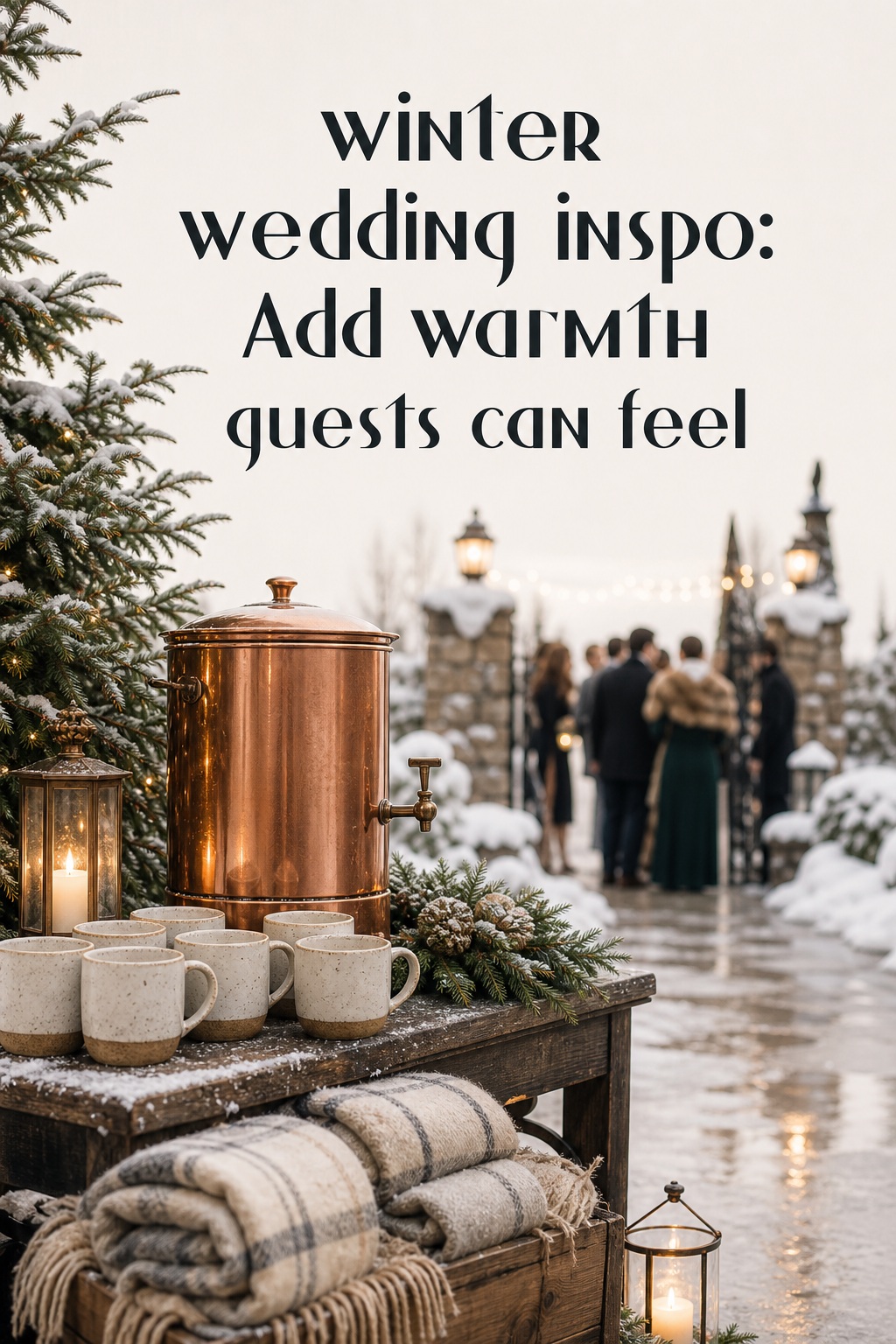
Winter invites thoughtful hospitality. A hot chocolate or cider station, a small lounge with wool throws, a coat check that is easy to find, or a late-night soup course can feel more memorable than another decorative sign. The point is not to make the wedding rustic. The point is to respond to the season in a way that feels generous.
Even the practical areas can belong to the visual story. Use the same palette for the seating chart and drink menu. Place blankets in baskets that echo the table materials. Add a small lamp to the welcome table. Choose non-slip mats and keep cords out of walking paths. Guests may not name these details, but they will feel the difference between a room that is merely styled and one that has been thoughtfully prepared.
Keep the inspiration beautiful and workable
The best winter wedding inspo survives contact with a real calendar, venue rules, delivery window, weather forecast, and budget. Before you approve a look, ask where each item will be stored, who will set it up, how it will be moved, and what happens if the outdoor plan changes. These are not boring questions. They protect the mood you are trying to create.
- Spend first on atmosphere: prioritize lighting, the ceremony focal point, table linens, and one meaningful guest comfort feature.
- Rent what is bulky: candleholders, lounge furniture, arches, lanterns, specialty linens, and large vessels are often easier to return than store.
- DIY what is repeatable: place cards, ribbon ties, menus, simple favors, and candle groupings are manageable when the plan is documented.
- Reuse by design: choose flowers, draping, lanterns, and candles that can move from ceremony to reception.
- Build a weather version two: decide in advance how the ceremony, portraits, guest arrival, and comfort plan change if wind, rain, or snow arrives.
Make a short visual brief for every vendor. Include the leading colors, materials, what should feel absent, and three or four reference words such as intimate, luminous, tailored, or natural. A mood board filled with unrelated images can confuse a team. A concise brief gives them room to interpret the idea while preserving its identity.
Finally, look at the design from a guest’s actual height. Can they see across the table? Is the menu readable in evening light? Is the coat check obvious? Is the path dry? Does the ceremony focal point still look good when people are seated? Winter celebrations photograph beautifully, but they are experienced in motion. The room has to work for bodies, not only for still images.
A memorable winter wedding is not defined by snow, red velvet, or a dramatic cape. It is defined by a clear emotional temperature. The outside world feels crisp, the inside world feels warm, and every decision supports that contrast. Start with the scene, choose a point of view, repeat a few materials, and let comfort become part of the design. That is how inspiration becomes a celebration that feels unmistakably yours.
FAQ
What colors work best for a winter wedding?
Popular winter directions include burgundy, forest green, navy, plum, charcoal, ivory, silver, gold, copper, soft gray, and icy blue. Choose one leading color, a supporting neutral, and one metal so the palette feels intentional rather than crowded.
How can I create a winter feeling without making the wedding look like Christmas?
Focus on candlelight, texture, evergreen, bare branches, winter berries, velvet, wool, metallic details, and early-evening atmosphere. If you use a holiday symbol, repeat one accent with restraint instead of combining ornaments, glitter, red, green, and snowflakes everywhere.
What should a bride wear to stay warm at a winter wedding?
Consider a removable jacket, tailored coat, cape, cashmere wrap, long sleeves, or a beaded topper. Choose a layer that complements the dress, photographs well, and allows you to move safely between indoor and outdoor locations.
Which flowers are good for a winter wedding?
Depending on your location and date, options may include evergreen, cedar, eucalyptus, bare branches, berries, roses, anemones, hellebores, ranunculus, orchids, dried grasses, and seasonal white blooms. Ask your florist for reliable substitutes so the design does not depend on one unavailable flower.
How can I make a winter wedding reception feel cozy?
Use layered warm lighting, textured linens, candles or warm LED alternatives, soft seating, natural materials, and a comfortable food or drink moment. Keep pathways clear, make coat storage easy to find, and offer blankets or heaters for any outdoor portion.
How do I plan an outdoor winter ceremony for guests?
Provide a dry, safe walking surface, a clear weather backup, warm drinks, wraps or blankets, heaters where permitted, and a concise ceremony timeline. Tell guests what to expect and make the route into a heated space easy to understand.
What is the most important winter wedding decoration to budget for?
Lighting is often the highest-impact investment because it shapes the entire room and appears in photos throughout the evening. After lighting, prioritize the ceremony sightline, table surfaces, and one guest comfort feature that fits your celebration.