Bridal Guest Dresses: What to Wear Without Stress
Choosing bridal guest dresses can feel oddly high stakes. You want to look festive in photographs, respect the bride, and feel comfortable from the first welcome drink through the last dance. At the same time, the phrase bridal guest dresses can describe several different occasions: a bridal shower, engagement party, rehearsal dinner, welcome party, or the wedding itself. Each event has its own level of formality.
The simplest way to solve the problem is to stop shopping by dress alone. Start with the event, then use the invitation, venue, time, season, and practical demands to narrow the choice. The best look is not necessarily the most dramatic one. It is the dress that reads intentional, works with the setting, and lets you participate without constant adjusting.
Diagnose the Event Before You Choose the Dress
Most outfit mistakes happen because a guest begins with a color or silhouette before confirming what kind of celebration she is attending. Bridal guest dresses need context. A soft floral midi may be perfect for a daytime shower and too casual for an evening rehearsal dinner. A satin column dress may look beautiful at a hotel dinner and feel out of place at a backyard brunch.
Read the invitation for the clearest clues
Look for an explicit dress code first. Black tie, formal, cocktail, semi-formal, dressy casual, garden, and beach each create a different starting point. If there is no dress code, treat the invitation as a collection of clues. Formal wording, a plated dinner, and a ballroom usually point toward a more polished look. A casual graphic invitation, a daytime start, and a home or park venue usually allow a relaxed dress or dressy separates.
Turn wedding inspiration into a plan you can actually follow.
Zarellea brings your guest list, budget, vendors, and day-of details into one shared space — so no beautiful idea gets lost in the shuffle.
Do not ignore the event name. A bridal shower is often daytime and celebratory, while a rehearsal dinner can lean cocktail or formal. An engagement party may be anything from a restaurant gathering to a casual house party. If the wording is unclear, asking the host or a member of the wedding party is more considerate than guessing and arriving uncomfortable.
Let the venue and time set the formality
Venue is one of the most reliable formality signals. A country club, luxury hotel, private dining room, or elegant restaurant usually supports a refined midi, a tailored maxi, or a sophisticated jumpsuit. A garden, winery, backyard, or beach invites lighter fabrics, movement, and practical shoes. The time of day matters too. Daylight celebrations tend to suit bright colors, prints, cotton, linen blends, chiffon, and polished but unfussy silhouettes. Evening events can carry satin, crepe, velvet, deeper colors, and more defined tailoring.
Build in the season and the weather
Season is not only a color decision. It affects fabric weight, sleeve length, layering, footwear, and how long you can comfortably stay outside. For summer, look for breathable cotton, linen blends, viscose, lightweight chiffon, or unlined silk alternatives. For fall and winter, consider velvet, crepe, satin with a layer, heavier jacquard, or a long-sleeve dress with an elegant coat.
- Daytime garden or brunch: floral midi, printed wrap dress, polished sundress, or dressy jumpsuit.
- Restaurant or country club: refined midi, softly tailored maxi, satin dress, or sleek separates.
- Evening cocktail: a defined neckline, elegant mini or midi, jewel tone, black dress with festive accessories, or dressy jumpsuit.
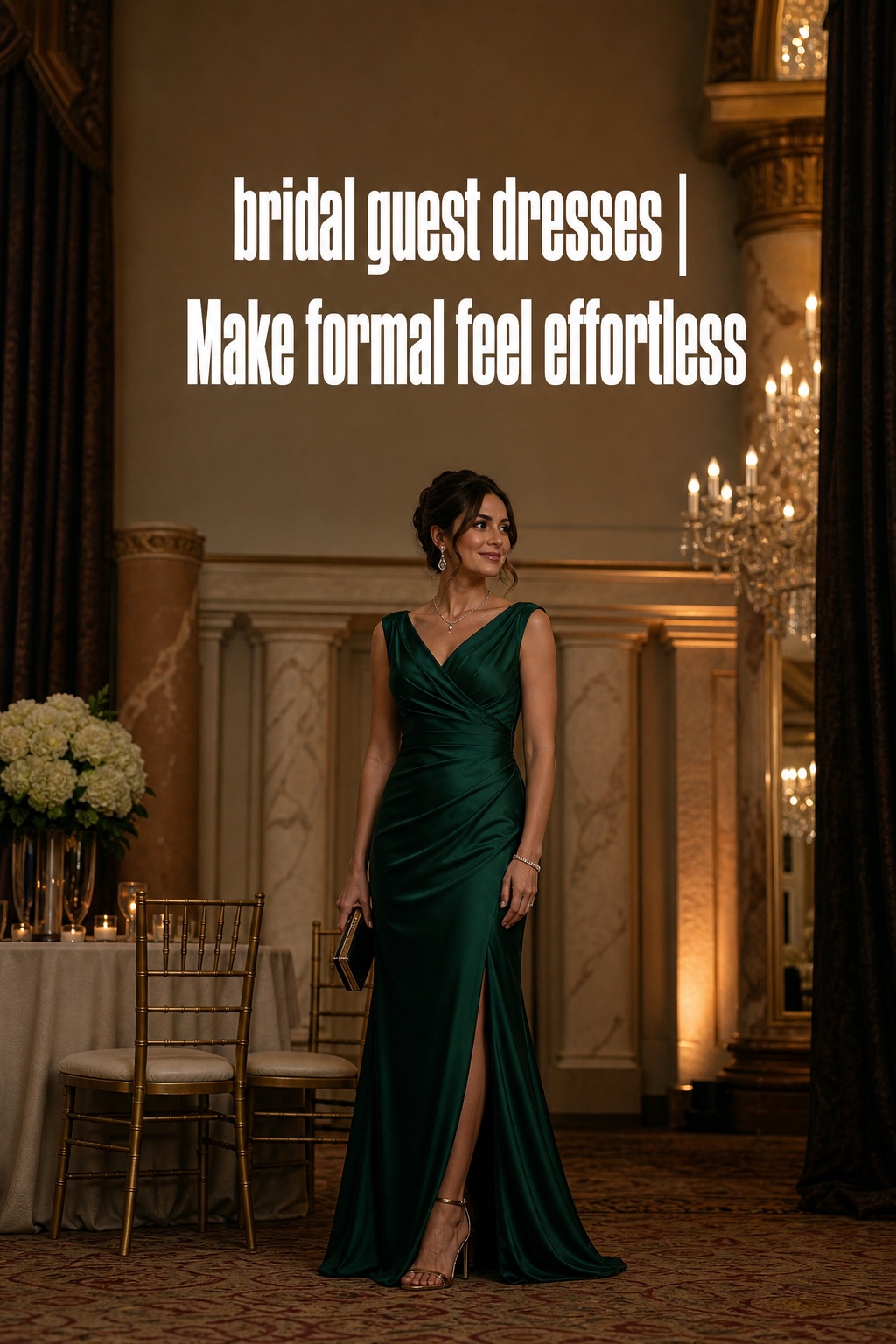
- Formal or black tie: floor-length gown or an especially refined long silhouette in a substantial fabric.
- Beach or outdoor ceremony: breathable fabric, secure straps, movement, and shoes that can handle sand or grass.
Solve the Etiquette Worries Before They Become Outfit Problems
Etiquette questions often make shopping harder than it needs to be. The goal is not to disappear. It is to show that you understood the occasion and left the spotlight where it belongs. A few clear rules make bridal guest dresses much easier to evaluate.
Handle white, ivory, and very pale colors carefully
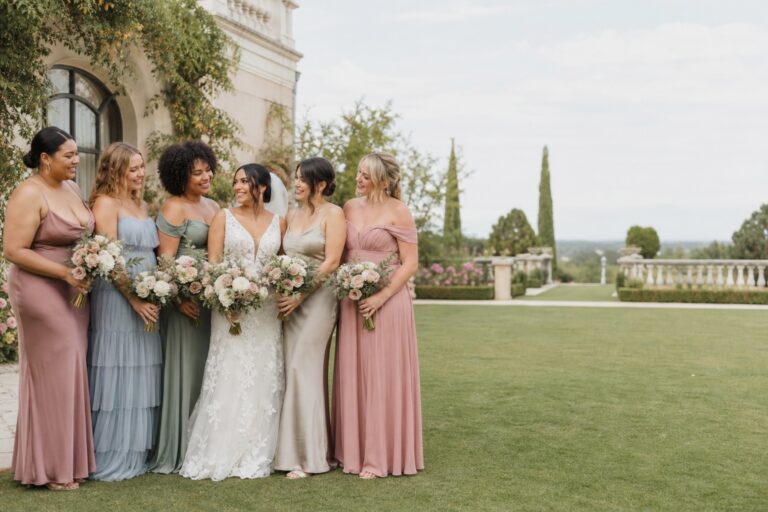
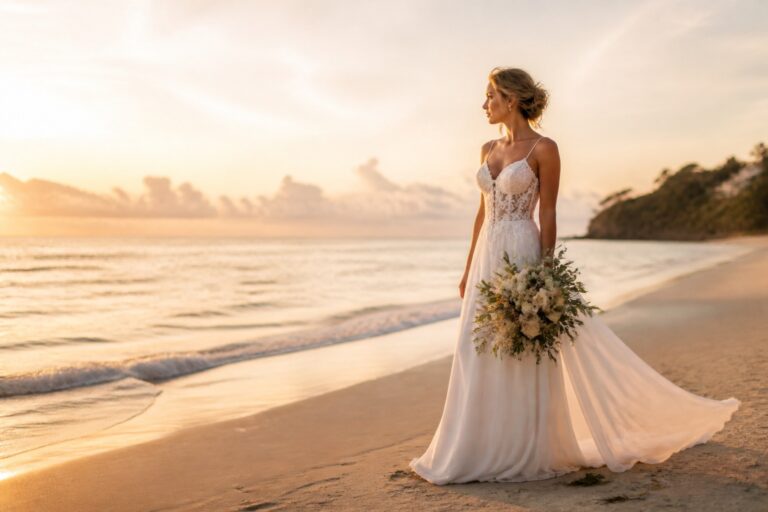
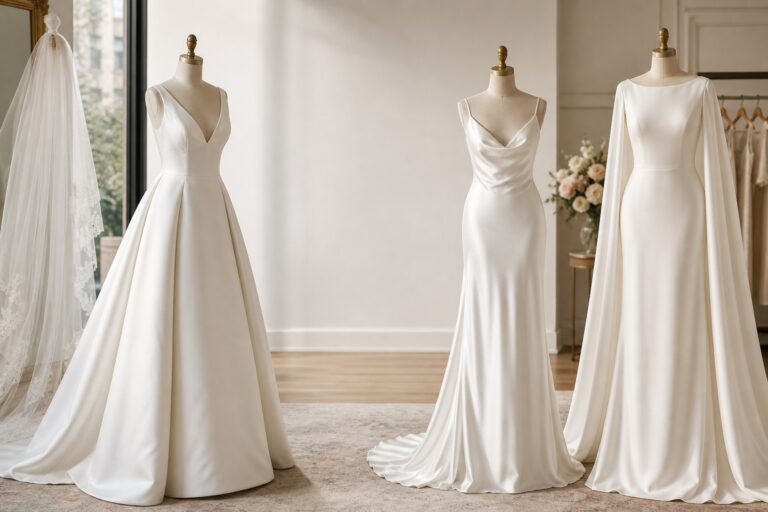
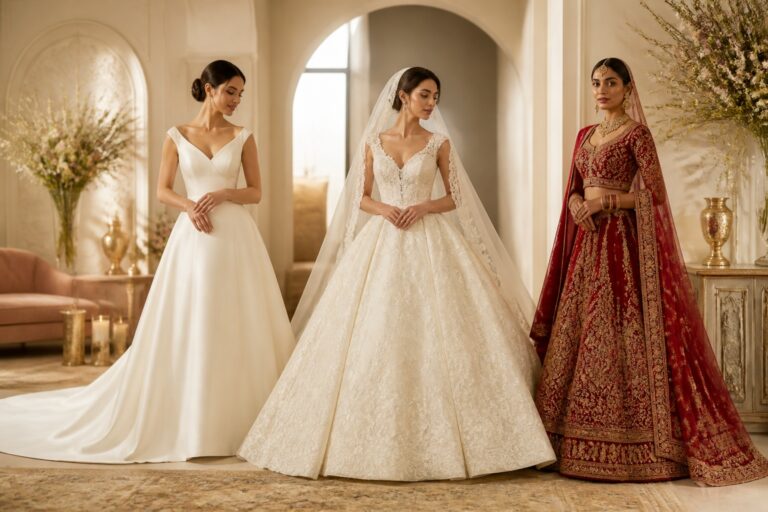
For most bridal events and weddings, avoid a solid white, ivory, or champagne dress unless the couple has specifically requested an all-white dress code or the bride has approved it. This includes dresses that look bridal because of their color combined with lace, a train, corset seaming, a veil-like overlay, or elaborate white embellishment. A colorful print with a pale background is a different situation, but if the overall effect looks bridal, choose another option.
There is no need to avoid every light shade. Butter yellow, dusty blue, soft green, lavender, blush, and a print with several colors can look festive and distinct. If you are unsure, send a photo to the bride or host. A quick question prevents an awkward outfit decision.
Use black with intention
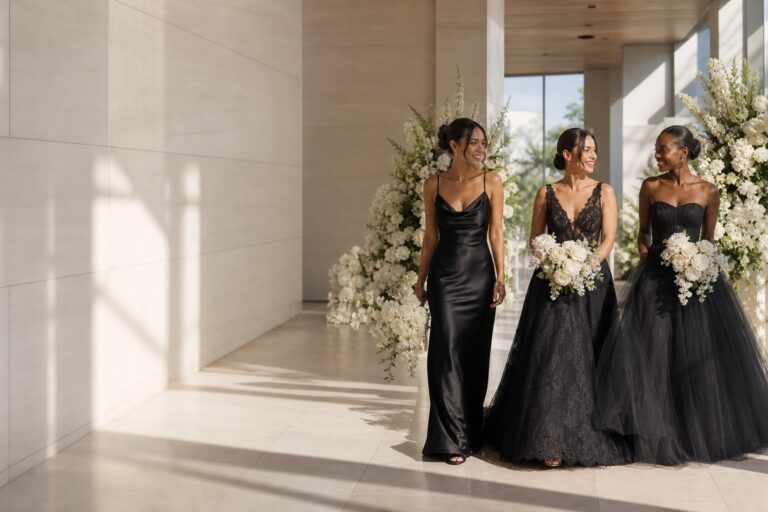
Black can be perfectly appropriate for a wedding or rehearsal dinner, especially in cities, at evening venues, or for cocktail and formal dress codes. The styling makes the difference. Choose a fabric and finish that feel celebratory, then add color through shoes, a bag, earrings, a wrap, or a lipstick shade. A lightweight black dress can also work for a warm setting, while a heavy black fabric may feel uncomfortable outdoors in the sun.
Check the bridesmaid color and the cultural context
Wearing the exact bridesmaid color is not always a serious mistake, but avoiding it can help you feel more at ease and prevent confusion in photographs. Ask the couple or wedding party if the palette is easy to learn. If the celebration follows cultural or regional traditions, follow the couple’s guidance rather than relying on a generic internet rule. Color symbolism, coverage, and expectations can vary widely.
Stay festive without looking like the bride
Avoid a train, dramatic bridal corset, veil-like tulle, head-to-toe white, or a gown that looks designed for a ceremony aisle when you are attending as a guest. This does not mean your outfit must be plain. A saturated jewel tone, a vivid floral, sculptural earrings, an elegant neckline, or a beautiful texture can make the look memorable without competing with the bride.
Choose a Dress Foundation That Matches the Setting
Once the event is clear, choose one dependable dress foundation. The right foundation solves most styling decisions before you add accessories. These options cover the situations that create the most uncertainty.
The floral or printed midi for daytime celebrations
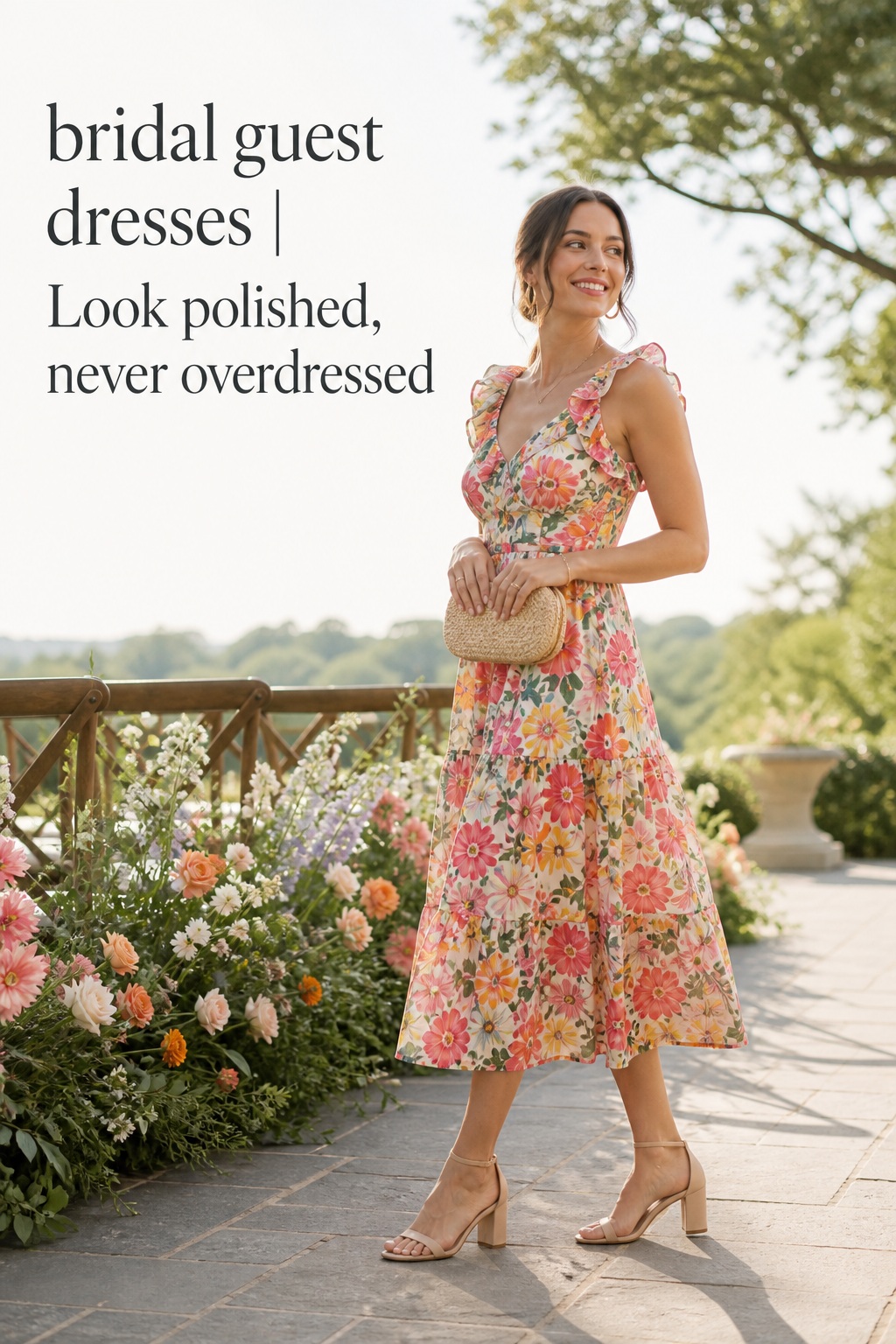
A floral midi is one of the most useful bridal guest dresses for showers, garden parties, daytime weddings, and relaxed rehearsal dinners. Choose a print with enough contrast to photograph well. A wrap, fit-and-flare, shirt dress, or softly gathered waist can look polished while allowing you to sit, move, and eat comfortably. For a cooler day, add a cropped jacket, neat cardigan, or tailored coat instead of a casual hoodie or oversized denim layer.
The jewel-tone cocktail dress for evening
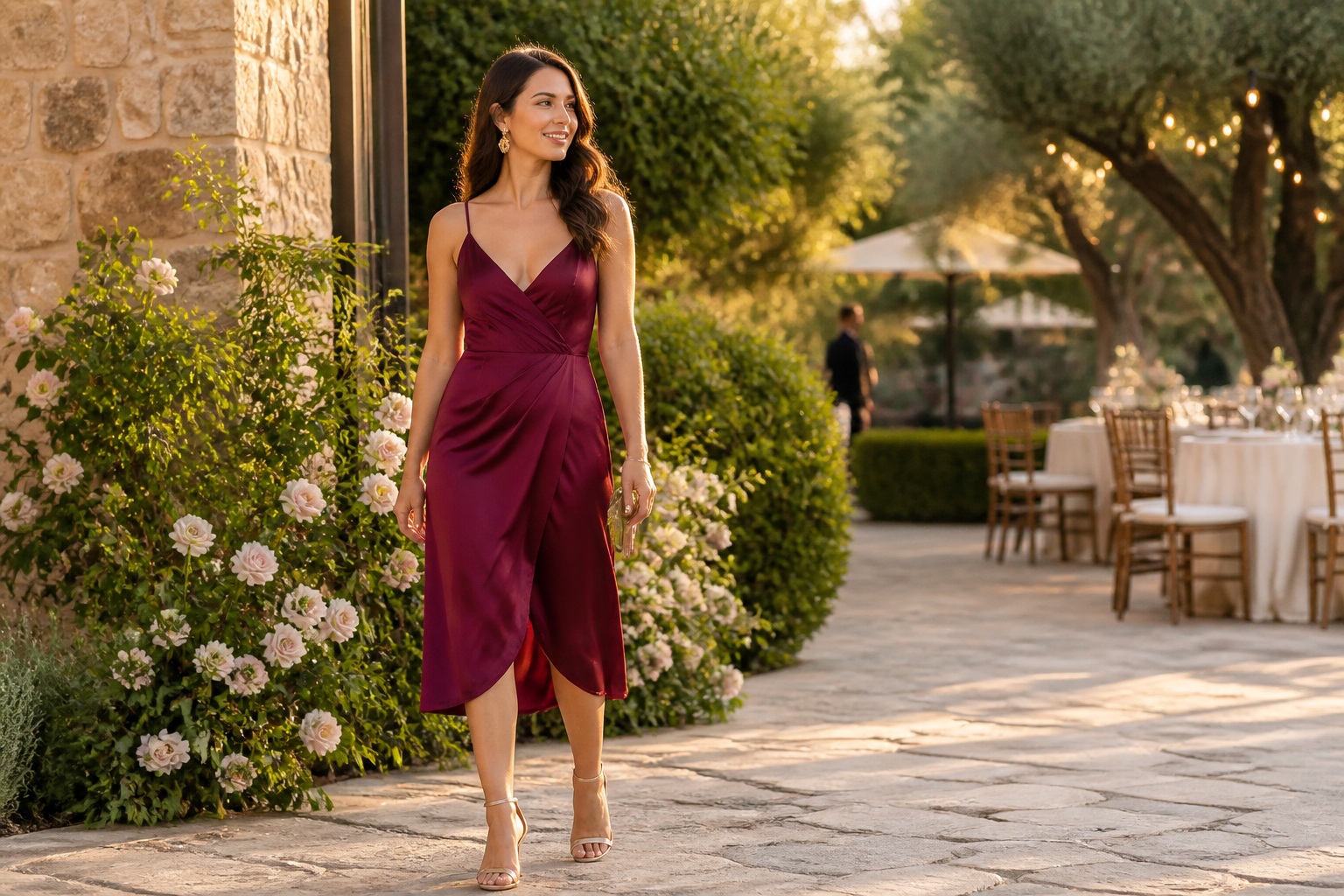
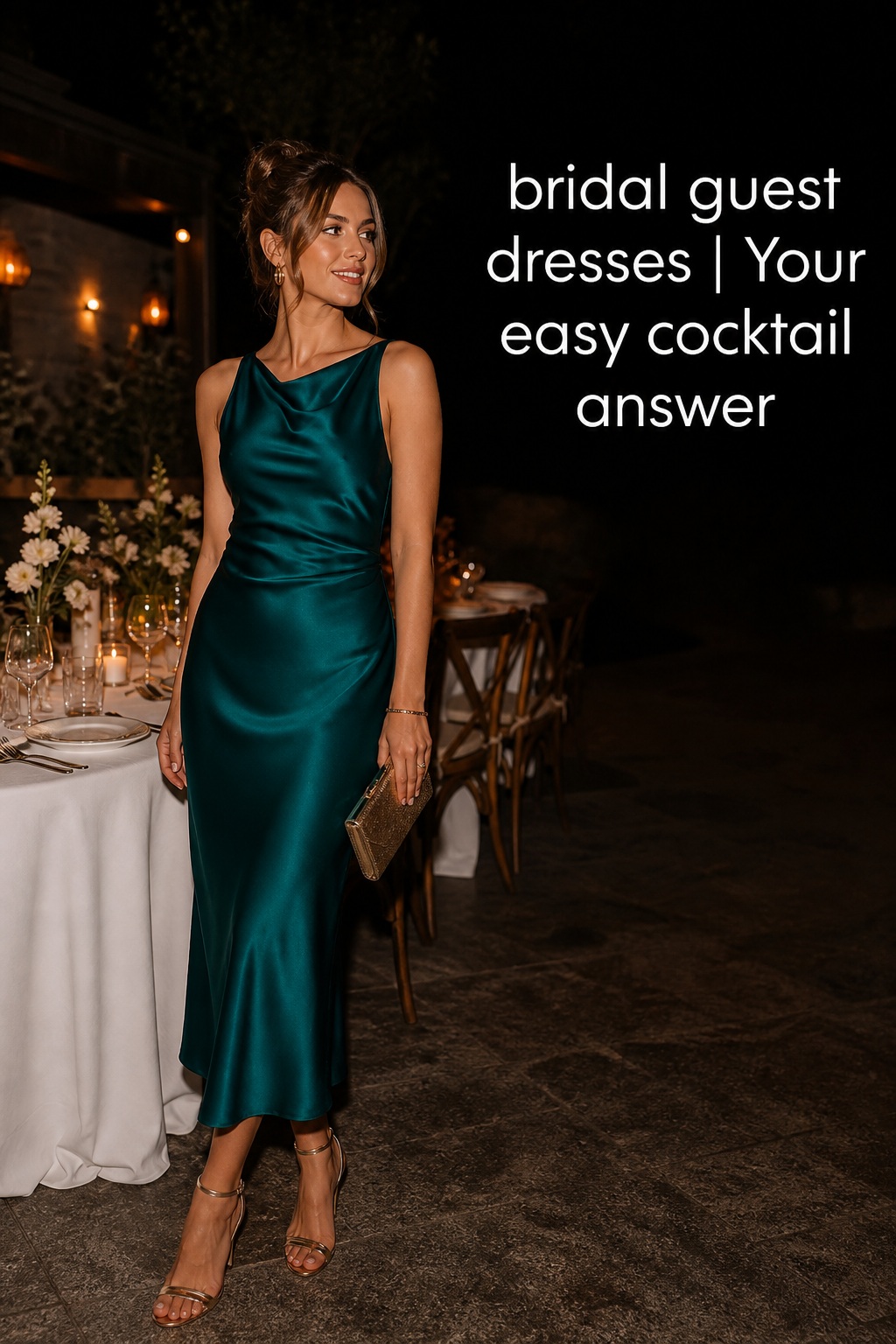
Emerald, sapphire, ruby, plum, teal, and deep rose create instant occasion energy without relying on sparkle. A jewel-tone midi in satin, crepe, or a controlled stretch fabric works for a restaurant, cocktail hour, evening shower, or rehearsal dinner. Keep the accessories clean if the dress has a strong neckline or drape. If the dress is simple, use earrings or a textured bag to make it feel more special.
The tailored maxi for formal or outdoor elegance
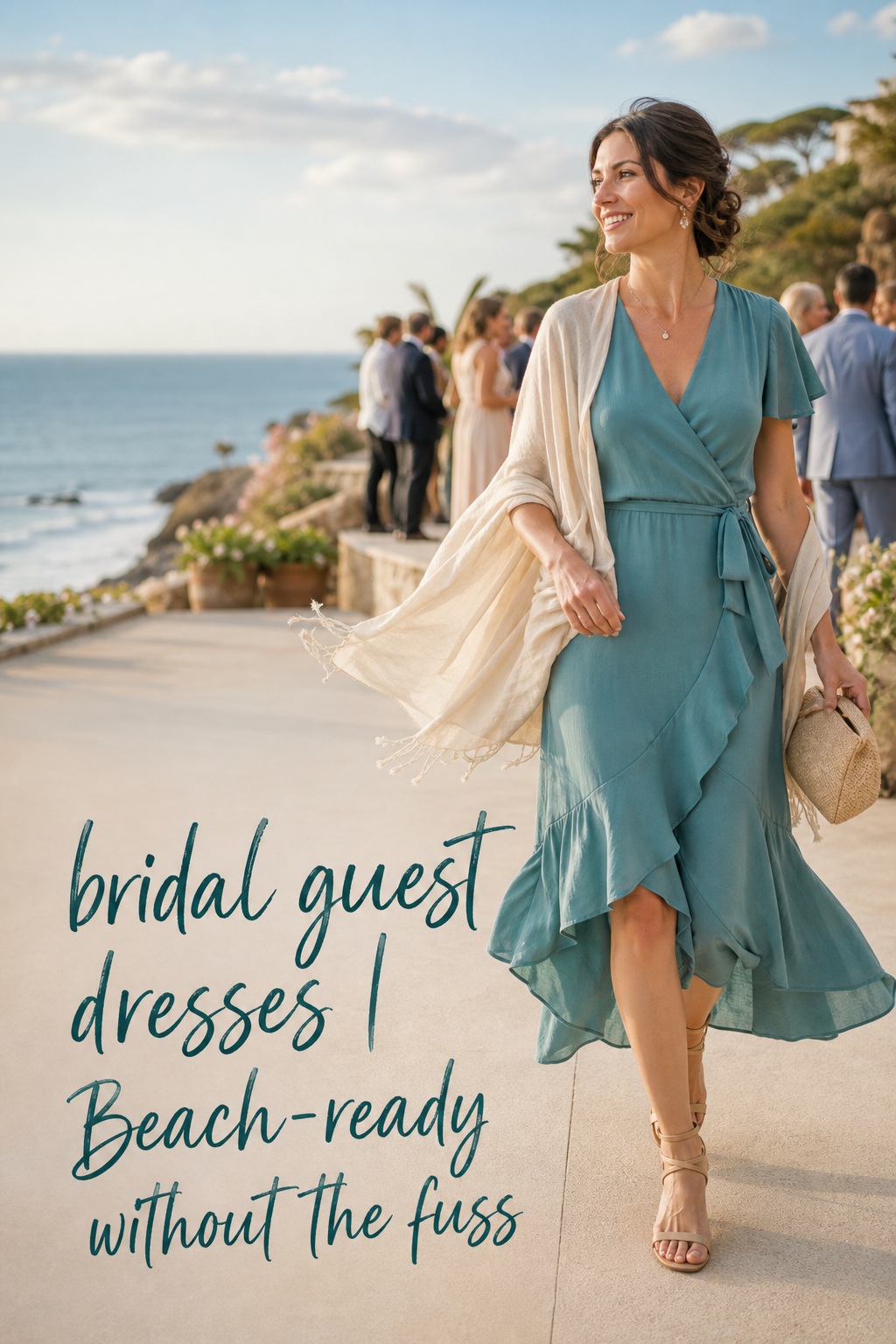
A maxi dress can be casual, formal, or somewhere between. Fabric, tailoring, and accessories determine the message. For black tie, look for a long silhouette with a refined neckline and enough structure to hold its shape. For a countryside or beach celebration, choose a fluid maxi in a breathable fabric and skip a hem so long that it drags across grass or sand.
The jumpsuit or coordinated set when dresses are not your thing
You do not have to wear a dress to look appropriately dressed. A tailored jumpsuit, wide-leg trousers with a refined top, or a coordinated skirt set can be a strong choice for a rehearsal dinner, cocktail event, or modern wedding. Look for fabrics with drape, a clear waist or strong shoulder line, and a hem that works with your shoes. A jumpsuit also gives you practical coverage for dancing, travel, and outdoor movement.
The elevated day dress for a flexible wardrobe
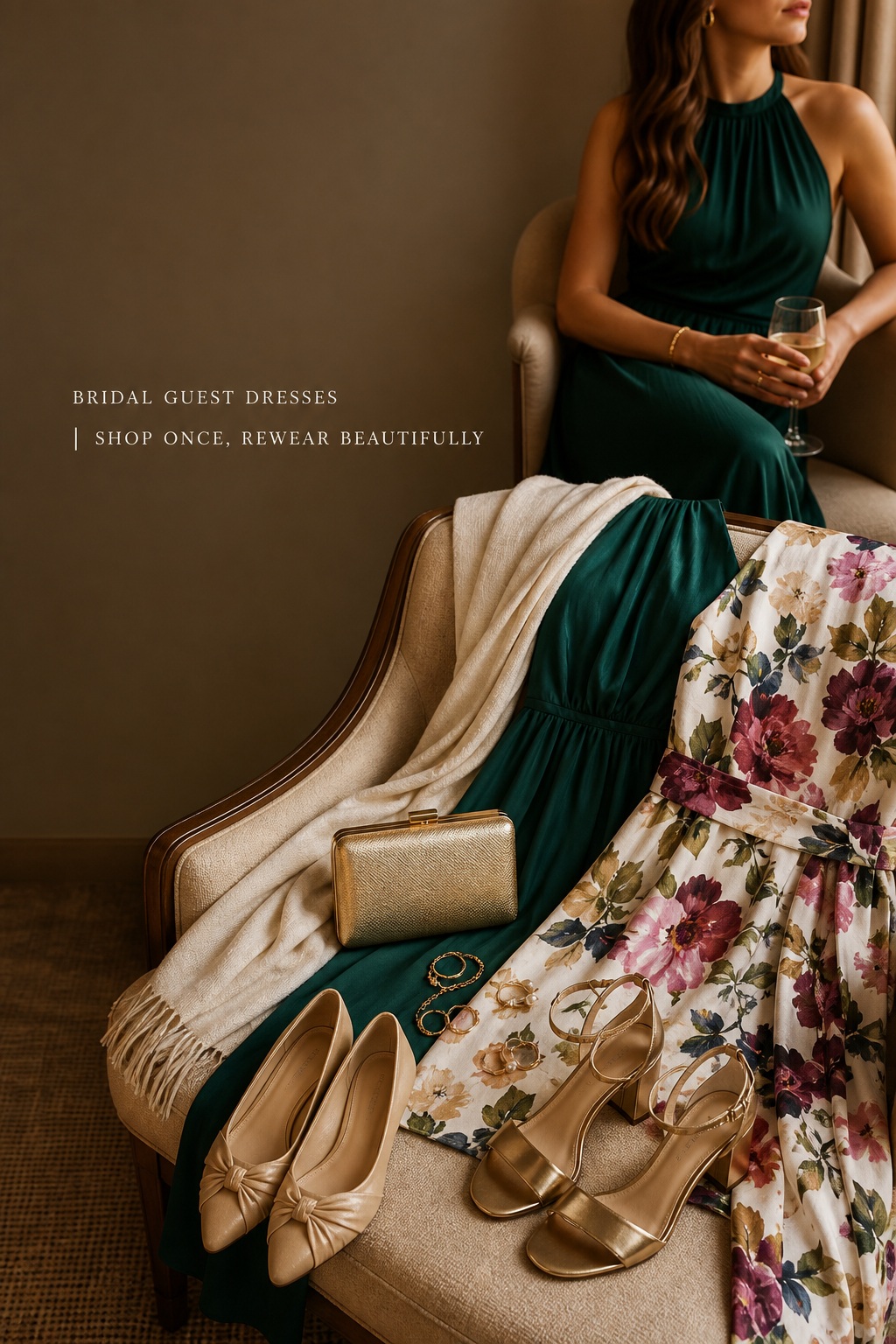
If you attend several celebrations each year, buy a dress that can change its level of formality. A simple midi in a distinctive fabric can move from bridal shower to rehearsal dinner with a shoe and jewelry change. Choose a silhouette you already know you enjoy wearing, then upgrade the fabric, color, or finish. Familiar proportions are often more flattering and more comfortable than a trend you have never tried.
Fix Comfort, Fit, Weather, and Styling Problems
The most beautiful bridal guest dresses fail if they make you tug, sweat, freeze, or worry about an accidental reveal. Treat comfort as part of polish. A guest who can move naturally always looks more confident in photographs.
Test the dress as if the event were already happening
Before committing, sit in the dress, walk up stairs, raise your arms, bend slightly, and take a few steps at the pace you would use on a dance floor. Check whether the neckline stays in place, whether the hem catches under your shoes, and whether the fabric becomes transparent in direct light. If you need shapewear, try the exact undergarment before the return window closes. Seamless shorts, a supportive bra, or fashion tape can solve small issues, but they should not be required to keep an impossible fit together.
Choose shoes for the ground, not only the photograph
Thin stilettos are not the only way to look dressed up. Block heels, low sculptural heels, dressy flats, embellished sandals, and polished boots can all work when they match the formality. For grass, cobblestones, sand, or a long outdoor reception, a stable heel or elegant flat is usually the smarter choice. Break in the shoes before the event and carry blister protection in your bag.
Plan for temperature changes
Outdoor ceremonies and indoor receptions often have different temperatures. Bring a layer that looks intentional with the dress: a cropped jacket, fine knit, silk scarf, shawl, or tailored coat. For winter, coordinate tights and outerwear with the dress rather than treating them as afterthoughts. For summer, choose breathable construction and avoid a lining that traps heat.
Make the fit decision from your real body, not an old size
Formalwear sizing varies dramatically between brands and fabrics. Measure yourself close to the purchase date and compare those measurements with the garment’s chart. Pay attention to bust, waist, hip, and length, not just a single number. If you are between sizes, a simple silhouette with alteration potential may be a better purchase than a heavily structured dress that cannot be adjusted. Look for retailers with useful size ranges, petite or tall lengths, and clear return policies.
Use a Repeat-Wear Shopping Plan Instead of Panic Buying
A good bridal guest dress should earn more than one appearance. Before buying, imagine at least three ways to wear it: the original event, a different wedding season, and a non-wedding occasion. This encourages better fabric, better fit, and more practical color choices. It also prevents the common mistake of purchasing a dress that photographs well online but has no place in your real wardrobe.
Example one: one floral midi, three settings
For a daytime shower, style a floral midi with woven sandals, small earrings, and a light bag. For a garden wedding, switch to block heels, a structured clutch, and a fine wrap. For a rehearsal dinner, add metallic earrings, a sleek heel, and a more polished hairstyle. The dress stays the same, but the accessories change the level of formality.
Example two: one jewel-tone dress, two seasons
Wear an emerald midi with metallic sandals and a compact bag for a summer restaurant celebration. In fall, add a tailored coat, closed-toe heels, and sculptural gold jewelry. The color remains strong in both seasons, while the surrounding textures make it feel appropriate.
Example three: one jumpsuit, different levels of polish
A solid jumpsuit can handle a modern shower with flats and a colorful bag, then move to an evening rehearsal dinner with pointed heels, a cuff bracelet, and a tailored blazer. For a wedding, confirm that the fabric and cut meet the dress code, then keep the accessories refined and the hem perfectly altered.
- Confirm the event, venue, time, season, and dress code.
- Remove white, ivory, bridal-looking details, and likely bridesmaid colors from consideration.
- Choose a silhouette you can sit, walk, eat, and dance in.
- Check the fabric in daylight and test the dress with the exact undergarments.
- Match shoes to the ground and bring a purposeful layer.
- Plan at least two future outfits before you buy.
- Keep the invitation and return deadline until the outfit is fully tested.
FAQ
What are the best bridal guest dresses for a daytime shower?
A floral midi, polished sundress, printed wrap dress, or dressy jumpsuit usually works well. Let the venue and invitation decide whether the finish should be casual, smart casual, or semi-formal, and avoid solid white or ivory unless the host says otherwise.
Can I wear black as a bridal guest?
Yes, black can work for many weddings and bridal events, particularly in the evening or at cocktail and formal venues. Make it feel festive with the right fabric and colorful or polished accessories, and consider regional or cultural expectations.
Can I wear a white floral dress to a wedding?
A colorful floral print with a pale background may be acceptable, but avoid anything that reads mostly white or looks bridal. If the design includes lace, tulle, a train, or ceremony-style details, choose a different dress or ask the couple.
What dress length is safest for a bridal guest?
A midi is the most flexible starting point for semi-formal, cocktail, garden, and daytime celebrations. A maxi can work from casual to formal depending on its fabric and tailoring, while a shorter dress is best when the invitation and venue support cocktail or casual dressing.
How can I avoid matching the bridesmaids?
Ask the couple or wedding party whether there is a distinctive bridesmaid color. If you cannot find out, choose a print, texture, or color family that is clearly different from the wedding palette. Matching is not always a serious etiquette issue, but avoiding it can make group photos less confusing.
What should I wear to an outdoor bridal event?
Choose a breathable dress or jumpsuit, a secure neckline, and shoes that can handle grass, sand, gravel, or cobblestones. Bring a layer for temperature changes and test the hem before the event so it does not drag or collect dirt.
How do I make one bridal guest dress work for more than one event?
Start with a versatile silhouette in a distinctive but wearable color. Change the formality through shoes, jewelry, bag, hairstyle, and outer layer. A floral midi can become more formal with metallic accessories, while a simple jewel-tone dress can feel daytime-ready with flats and a light cardigan.