Bridal Getting Ready Outfit: Wedding Morning Checklist
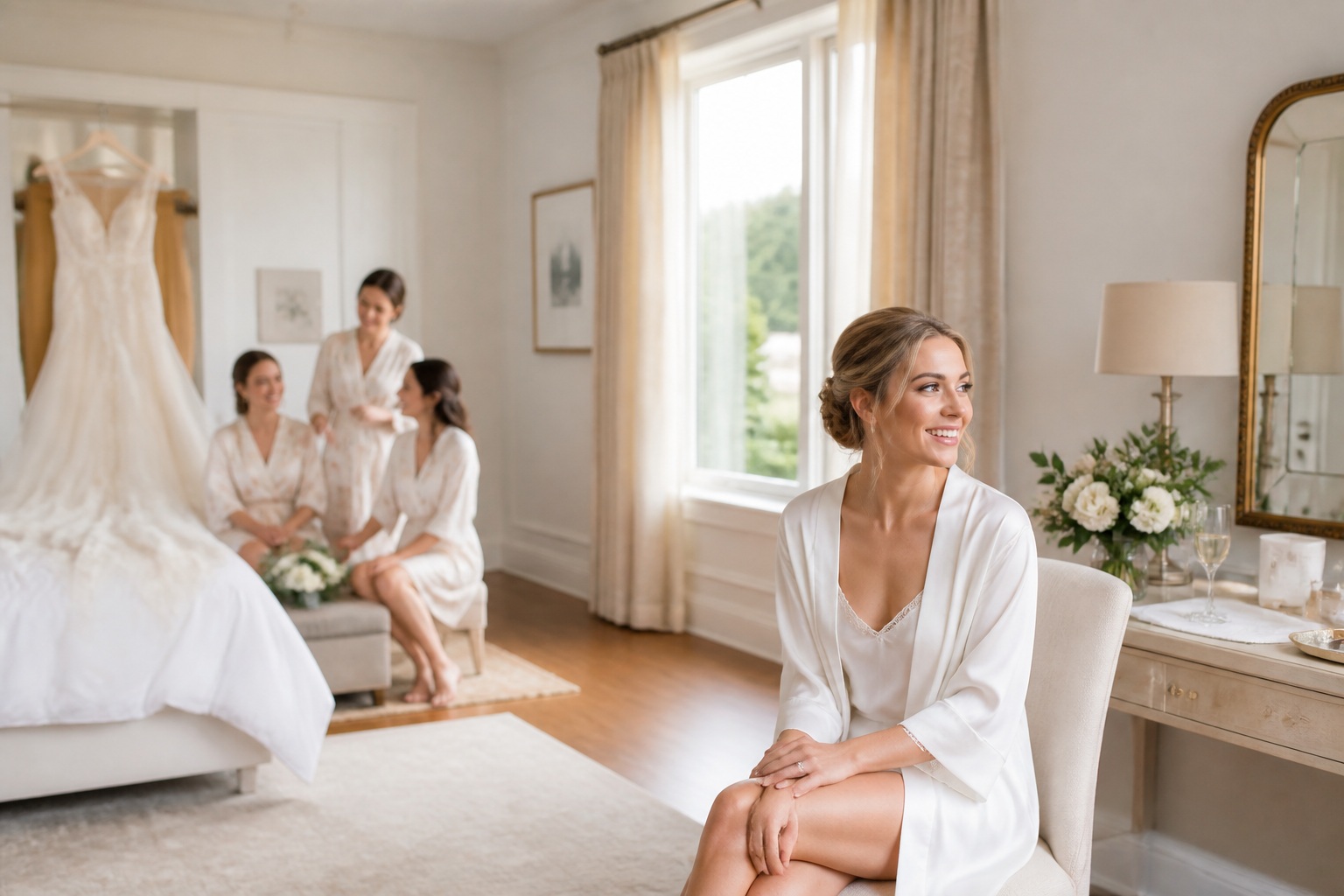
A bridal getting ready outfit has to do more than look pretty in one photograph. It should support breakfast, hair and makeup, hugs, movement, changing, and the practical details that fill the hours before the ceremony. Use this checklist to choose a look that feels like you, photographs beautifully, and can be removed without disturbing your finished hair or makeup.
Start with the morning schedule, then choose the right level of coverage, fabric, warmth, and coordination. Robes, button-down pajamas, slip dresses, rompers, and everyday separates can all work. The strongest choice is the one that fits your actual venue and comfort level rather than a trend you feel obliged to copy.
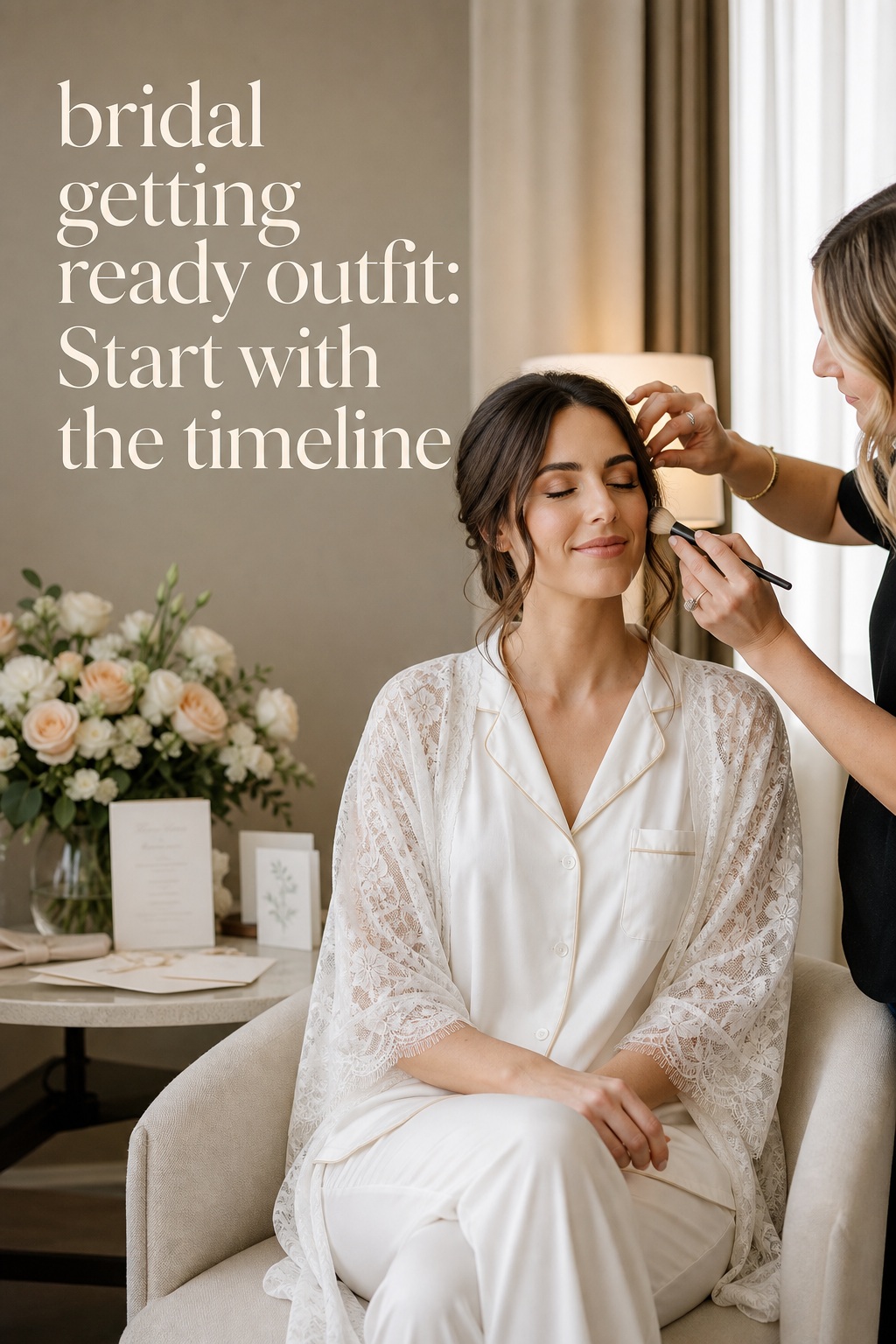
Preparation: Set the Conditions Before You Shop
Before you compare colors and fabrics, write down where you will get ready, who will be in the room, and when the photographer and beauty team will arrive. A private hotel suite, a family home, a salon, and a destination villa each create different outfit demands. Think about stairs, travel, outdoor photographs, shared bathrooms, and the room temperature. A garment that feels effortless in a quiet bedroom may be less useful when ten people are moving around a small suite.
Begin with the beauty schedule
If your hair and makeup will be finished before the wedding dress goes on, avoid anything that must pass over your head. Button-front pajama tops, wrap robes, front-zip rompers, and wide-opening dresses are reliable choices. A sweater may be comfortable, but it can pull across a finished hairstyle. A fitted camisole can leave makeup marks or require more help than the morning allows.
Turn wedding inspiration into a plan you can actually follow.
Zarellea brings your guest list, budget, vendors, and day-of details into one shared space — so no beautiful idea gets lost in the shuffle.
Ask your stylist when the outfit should change. Some brides stay in their getting-ready clothes through most of the appointment and then change after a final touch-up. Others plan a short portrait window in a more fashion-focused outfit. Knowing the timing helps you decide whether you need all-day coverage or only a beautiful layer for photographs.
Plan for temperature and movement
Wedding rooms can be chilly early in the day, then warm once several people, lights, and styling tools are inside. Cotton, modal, linen blends, and breathable silk are useful in warm conditions. Long sleeves, knit layers, brushed fabrics, and full-length pants make more sense for winter or a drafty venue. If you will travel between locations, consider the temperature in both places.
Test the outfit while sitting, leaning forward, reaching, walking, and using the bathroom. A robe that looks elegant while standing may gape in a makeup chair. Shorts may be comfortable in a private room but less comfortable when family, vendors, and a photographer are present. Choose a hem, neckline, and closure that let you move without constant adjusting.
Decide what the camera will see
Getting-ready photography includes wide room scenes, seated beauty images, detail photographs, group portraits, and candid moments. Choose pieces that work from more than one angle. A clean collar, stable waistband, neat sleeve, and controlled sheen often look better than a dramatic garment that twists, slips, or reflects every light. Steam the outfit and keep it away from breakfast, drinks, and makeup.
- For close portraits: choose a flattering neckline and one intentional detail such as lace, piping, embroidery, or texture.
- For group images: decide how you will stand out without requiring identical clothes.
- For seated photos: check coverage, belt placement, shorts length, and whether buttons stay closed.
- For detail images: prepare a hanger, slippers, jewelry, hair clip, and any meaningful accessory.
Do not shop only from one inspiration photograph. Ask whether the image was made in similar lighting and with a similar pose. A practical outfit that stays polished for several hours usually creates more natural photographs than a delicate piece that makes you self-conscious.
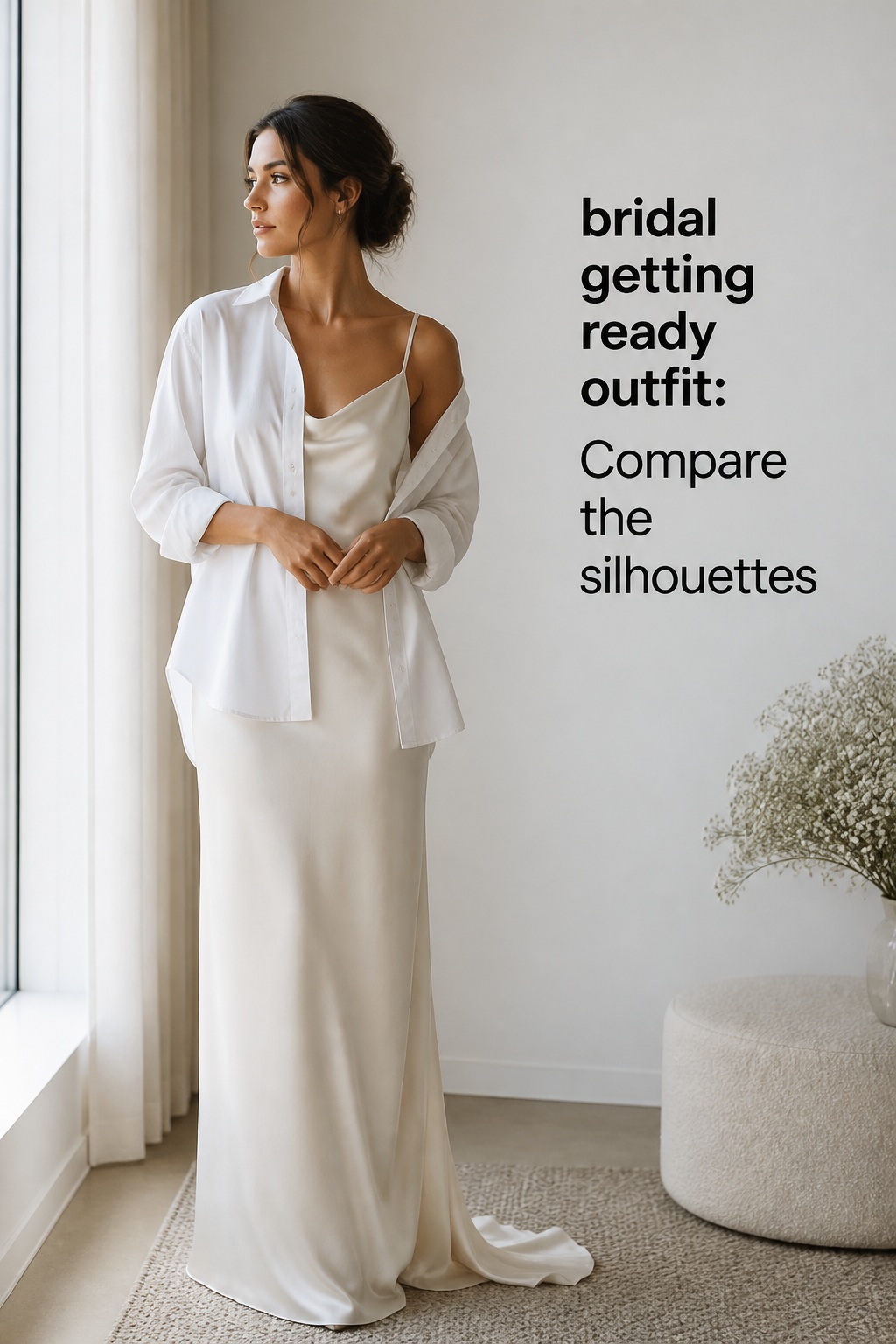
Decision Checklist: Compare the Main Outfit Formats
Each outfit format solves a different problem. Robes are easy to remove, pajama sets offer coverage, slip dresses create a more fashion-led line, rompers stay secure, and everyday separates can be the most personal and reusable. Compare them by comfort, coverage, changing, weather, photographs, and what you will do with the garment afterward.
Robes keep beauty appointments simple
A robe opens completely, slips on quickly, and can be removed without touching your face or hairstyle. Satin, silk, lace, cotton, waffle, velvet, and knit versions create different moods. A soft robe suits a relaxed morning, while a long lace or velvet robe can make a stronger portrait. If you want the classic bridal image, a robe is the most direct route.
Check the actual coverage instead of trusting the product photograph. Some bridal robes are very short, narrow, or made with a belt that loosens when you sit. If that would make you uncomfortable, add a camisole and shorts, a slip, or a full pajama set underneath. A robe can be your photo layer while you wear something more secure for the rest of the morning.
Button-down pajamas balance comfort and polish
Button-down pajamas are often the easiest all-morning compromise. They stay in place better than a robe, offer coverage in group photos, and open from the front after hair and makeup. Shorts and short sleeves suit a warm room, while pants and long sleeves work for colder weather. Contrast piping, a small print, or a subtle monogram can make them feel special without making them disposable.
Test buttons across the chest, the waistband while seated, and the opacity of pale fabric in both daylight and artificial light. Smooth satin can photograph beautifully but may slide or trap heat. Cotton and modal often feel easier for long appointments. If attendants have different body shapes, offer options rather than assuming one cut will suit everyone.
Slip dresses create a softer bridal silhouette
A slip dress, chemise, or cotton nightgown feels closer to bridal fashion than ordinary sleepwear. An ivory slip with a lace robe reads romantic. A blue, floral, or pastel dress can carry a meaningful color or suit a garden and destination setting. The continuous silhouette works well in portraits and can be styled with jewelry, a cardigan, or a light robe.
Pay attention to straps, neckline, and removal. A dress that falls off one shoulder may become annoying while you lean over for makeup. Choose a wide neckline, back opening, or front closure if the dress must come off after glam. Try the change in advance and check that the fabric will not catch on earrings or a veil.
Rompers provide security without a separate waistband
A romper can feel more secure than a short robe while still offering easy movement. It is useful if you will walk between rooms, sit on the floor, or travel from a hotel to a venue. Look for front buttons, a front zip, or a generous back opening. A wrap style can be flexible, but test it while seated so the closure does not shift.
Do not overlook bathroom access. A complicated back closure becomes frustrating when the morning is busy. Choose breathable fabric and enough length to sit naturally. If the romper is heavily personalized, ask whether you will truly wear it again. A simple cotton, linen, or modal version can work long after the wedding.
Everyday separates may feel most like you
You do not need a garment labeled bride. A soft button-down shirt with lounge pants, leggings, drawstring trousers, or shorts can look neat and feel natural. An oversized linen shirt, matching knit set, cardigan with wide-leg pants, or favorite pajama set may be more comfortable than white satin. This is also considerate when attendants have different budgets and preferences.
Use one shared element if you want visual cohesion. The group might wear soft neutrals, a range of blue tones, matching slippers, or similar silhouettes in different fabrics. The bride can stand out with ivory, a longer layer, a distinct texture, or one meaningful accessory. Coordination should support the photographs, not turn the morning into a costume requirement.
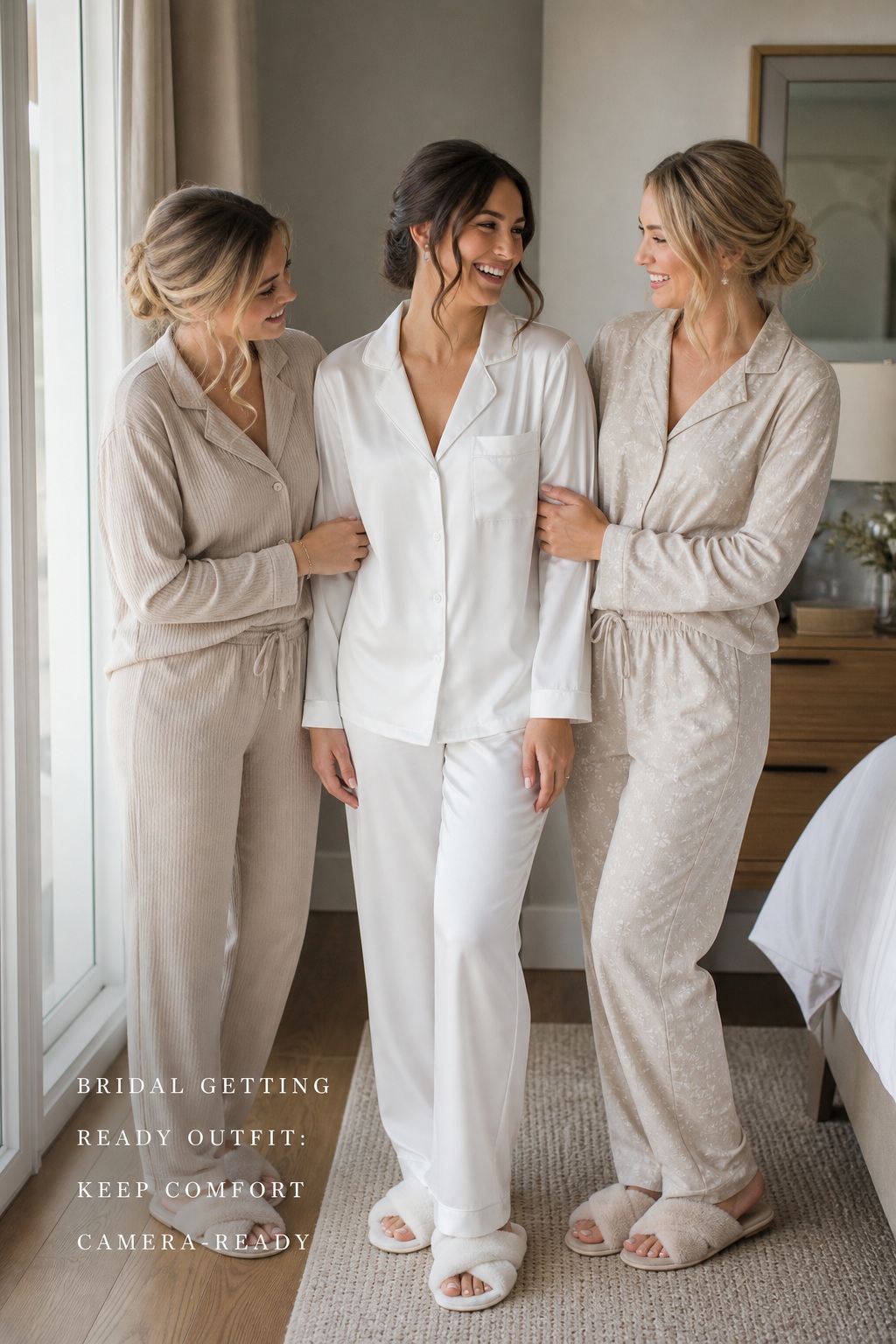
Worked Examples: Match the Outfit to the Morning
Once you understand the formats, build a specific outfit around your venue, season, and preferred mood. These combinations are starting points rather than rules. Adjust the fabric, length, color, and coverage to suit your body and your schedule.
Classic hotel suite: ivory pajamas and a photo robe
Start with ivory button-down pajamas in cotton, modal, or softly brushed satin. Add a lace, silk, or velvet robe for a short portrait window. Simple slippers, small earrings, and a neat clip complete the look. This gives you coverage during the appointment and a visibly bridal layer when the photographer arrives.
Use cream, champagne, and soft beige if stark white feels flat under hotel lighting. Hang the clean pieces before the morning begins and assign someone to protect them from food and drinks. If the room will be crowded, keep the pajama set on and use the robe only when you want a more styled image.
Modern editorial morning: a minimal slip and sharp layer
Choose a simple slip in ivory, pearl, pale gray, or a muted color. Add an oversized shirt, clean robe, cropped cardigan, or architectural wrap. The interest comes from shape and texture rather than decoration. A single sculptural clip or piece of jewelry can make the result feel intentional without competing with the wedding dress.
Wear the layer for hair and makeup, then switch into the slip for a controlled portrait window if the silhouette is delicate. Test the straps and neckline under the exact room lighting. This approach creates a fashion moment while keeping the practical part of the morning comfortable.
Cozy winter morning: long pajamas and a knit wrap
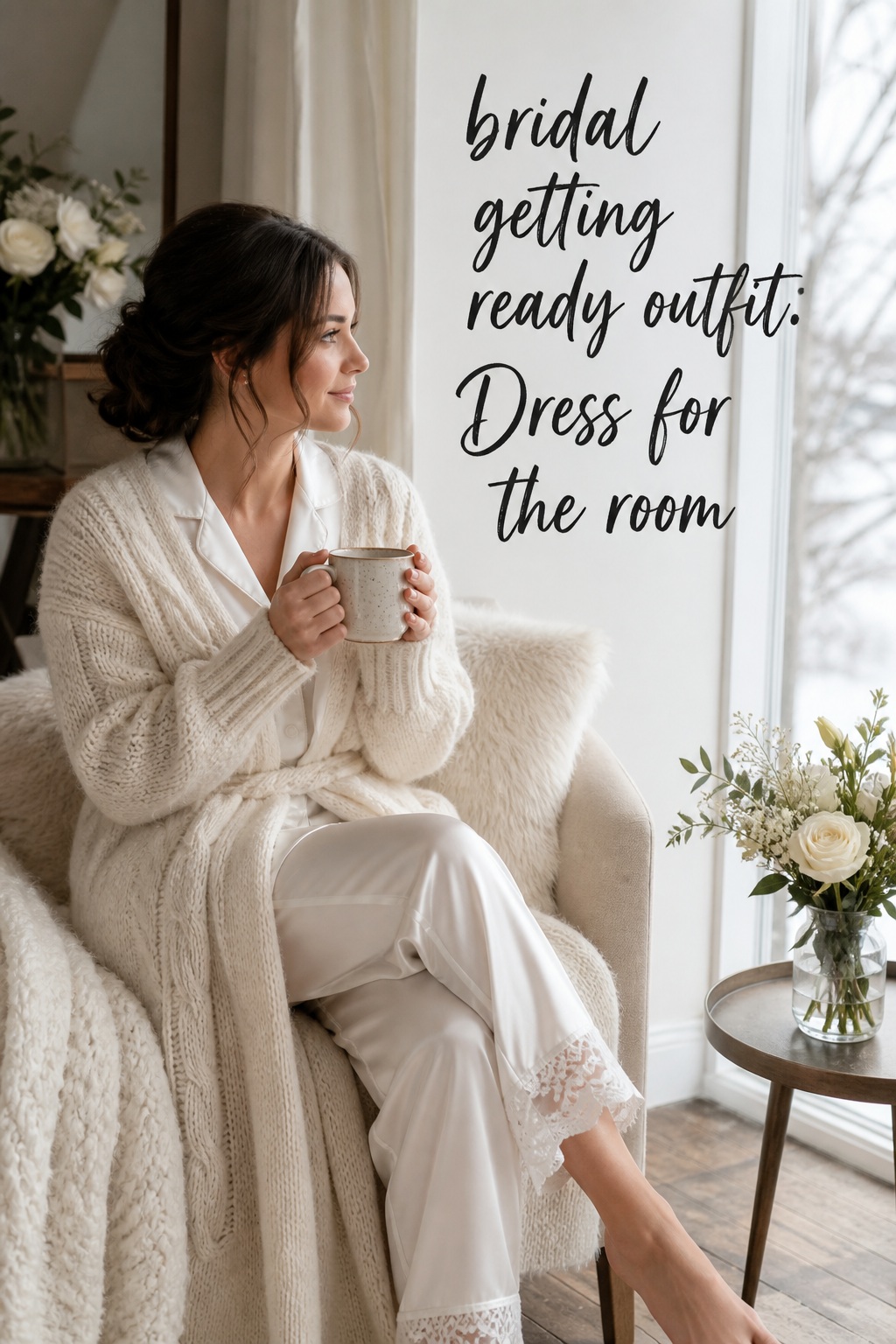
For a cold season, try long pajama pants, a button-front top, a knit robe, warm socks, and slippers. Oat, dusty blue, soft sage, or berry can feel seasonal without overwhelming the room. A cardigan or wrap may be more useful than a thin satin robe if you will stand near a window or travel outside.
Avoid bulky layers that leave marks beneath the dress. Remove the thickest piece early enough for a final beauty check. If the warm accessory is part of your visual story, photograph it before putting it aside. Comfort is valuable, but the outfit should not make the final change slow or complicated.
Summer or destination wedding: breathable cotton or a romper
Choose cotton, linen, bamboo, or lightweight modal for a warm destination. A romper, tank-and-shorts set, or loose sundress can help you stay comfortable around hot tools and a crowded room. Add a pale print, blue accessory, delicate piping, or small embroidery rather than heavy satin if you want a bridal note.
Pack the outfit in a breathable garment bag and check how it looks in strong daylight. If it wrinkles easily, plan to steam it at the venue. A relaxed cotton set can photograph beautifully near a window when it fits well and has one polished detail.
Modest or mixed-company morning: full coverage with a soft finish
If you prefer more coverage, choose a button-front midi dress, long-sleeved pajama set, secure kaftan, or soft shirt with full-length pants. These options are useful when family, vendors, or a large group will share the room. Ivory, cream, a delicate fabric, or one beautiful robe layer can still make the look feel bridal.
Ask attendants privately about coverage and comfort instead of assuming everyone wants a short robe. Offer equivalent choices within the same palette. Photographs look more natural when people can sit, reach, and laugh without worrying about whether their clothing will shift.
Final Review: Test, Pack, Coordinate, and Change Smoothly
The final review should happen before the wedding week. Put on the exact outfit, sit in a chair, bend forward, walk, use the closure, and remove it as though your hair and makeup were complete. This reveals problems a mirror cannot: a belt that loosens, a button that pulls, a hem that rides up, or a fabric that catches on jewelry.
Order early and check the real fit
Allow time for delivery, alterations, washing, steaming, and a replacement. Try the outfit with the undergarments and bra solution you expect to wear. Examine pale fabric beside a window and under warm indoor light. Wedding-day clothing should let you breathe, sit, and reach without pulling at the chest, waist, or shoulders.
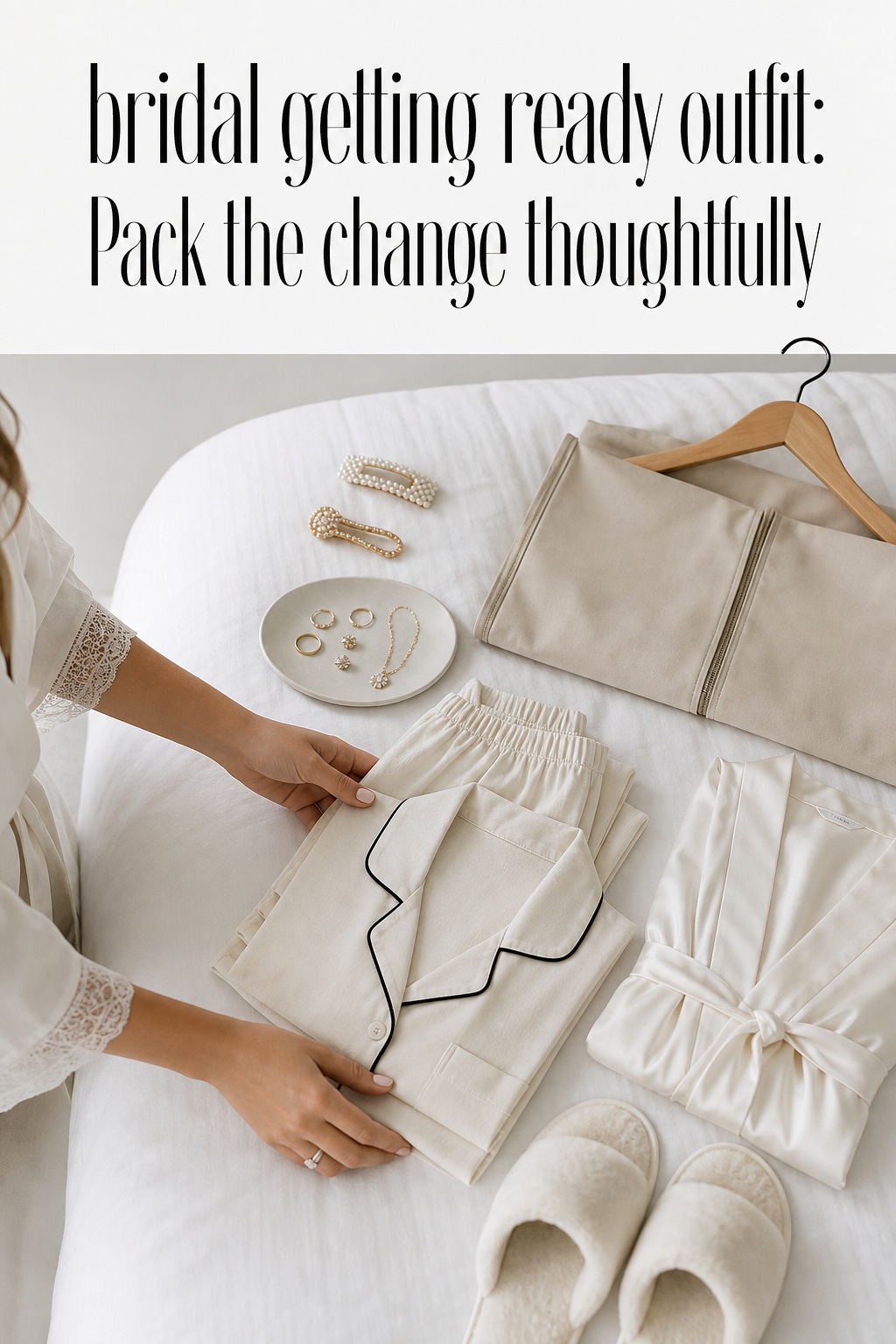
Pack a compact getting-ready kit
- the outfit, robe or layer, plus a backup top if the room gets warm
- comfortable undergarments that will not leave visible lines
- clean slippers or shoes for photographs
- a steamer or confirmed wrinkle-release plan
- a hanger, garment bag, safety pins, fashion tape, and stain remover
- a headband or clips to protect finished hair
- jewelry and one meaningful accessory stored separately
Keep the kit together in your personal bag and tell your maid of honor or photographer where it is. A clean place to hang the outfit improves both the morning and the detail photographs. If you are traveling, do not put it in checked luggage or leave it in a hot vehicle.
Coordinate without forcing a uniform
Matching robes can be cheerful, but they are optional. If you buy attire for attendants, share the cost and sizing information early, and choose pieces they can wear again. You can also ask everyone to bring a neutral button-down, soft set, or robe within a defined color range. The bride can stand out through ivory, length, texture, or one distinctive accessory.
Protect the transition into the dress
Leave time for a bathroom break, a final makeup check, and any undergarment adjustment. Open the outfit fully before the dress arrives. If the gown must pass over your head, follow the stylist’s method and use a clean protective cloth when needed. Have shoes, jewelry, veil, and perfume ready before the final portrait window.
The most successful bridal getting ready outfit is the one that lets you be present. If you love a robe, wear one. If pajamas feel unlike you, choose a shirt, dress, or loungewear set that feels natural. Comfort is not separate from style: it is what allows you to move freely, enjoy your people, and look relaxed in the photographs.
FAQ
What is the best bridal getting ready outfit?
The best bridal getting ready outfit is comfortable, easy to remove without disturbing hair or makeup, suitable for the room temperature, and secure enough for photographs. Button-down pajamas, covered robes, easy-opening slips, rompers, and neat separates can all work. Your schedule and comfort matter more than a specific trend.
Should a bride wear a robe or pajamas while getting ready?
A robe is easiest during hair and makeup because it opens fully. Pajamas usually provide more coverage and stay in place better for group photos. Many brides use both, wearing pajamas for most of the morning and adding a robe for portraits.
What should I wear under a bridal robe?
Wear a camisole with shorts, a pajama set, a slip, or comfortable undergarments, depending on the coverage and support you want. Sit down while testing the robe because it may open or shift more than expected. Choose layers that will not leave marks beneath the wedding dress.
Can I wear a regular shirt and pants as my getting-ready outfit?
Yes. A button-down shirt with lounge pants, leggings, or shorts can be practical and personal. Make sure the top opens fully and looks neat if it appears in photographs. Shared colors, textures, or accessories can make everyday pieces feel intentional.
Do bridesmaids have to wear matching getting-ready outfits?
No. Matching outfits are optional, and different coverage needs, sizes, temperatures, and budgets may make identical robes uncomfortable. Create cohesion with a color range, similar fabrics, matching slippers, or one common accessory. Ask about comfort before purchasing anything.
How do I protect my hair and makeup when changing?
Choose a button-front, wrap-front, zip-front, or wide-opening garment and avoid pull-over pieces after styling. Practice the removal method, keep jewelry away from hair, and leave time for a final touch-up. A headband or clips can help protect the finished style.
How can I reuse my bridal getting ready outfit?
Choose cotton, modal, linen, washable silk, knit, an oversized shirt, or a simple slip that you would enjoy at home or on your honeymoon. Avoid heavy branding if you want repeat wear. Before buying, ask whether you would choose the garment without a wedding date or bridal wording.