Satin Bridal Gowns: How to Choose Your Best Fit
Satin bridal gowns can look almost identical in an online photo, yet feel completely different when you try them on. One may hold a sculptural ball-gown skirt, another may skim the body like liquid, and a third may have a softly matte surface that looks modern rather than glossy. The useful question is not simply whether you love satin. It is which satin, construction, silhouette and styling combination will support your wedding day.
Think of your gown as the center of a small capsule wardrobe. The fabric sets the mood, the silhouette controls movement, the neckline and sleeves frame your face, and the accessories finish the proportion. This guide helps you build that capsule step by step, so you can compare gowns in a boutique with clearer priorities and fewer distractions.
Essential Building Blocks for Satin Bridal Gowns
Start with the fabric name, but do not stop there. Satin describes a weave structure, not one single fiber or finish. Silk satin, polyester satin, acetate satin, duchess satin, charmeuse and crepe-back satin can all appear under the broad label satin bridal gowns. Their weight, shine, drape, breathability and response to movement may be very different.
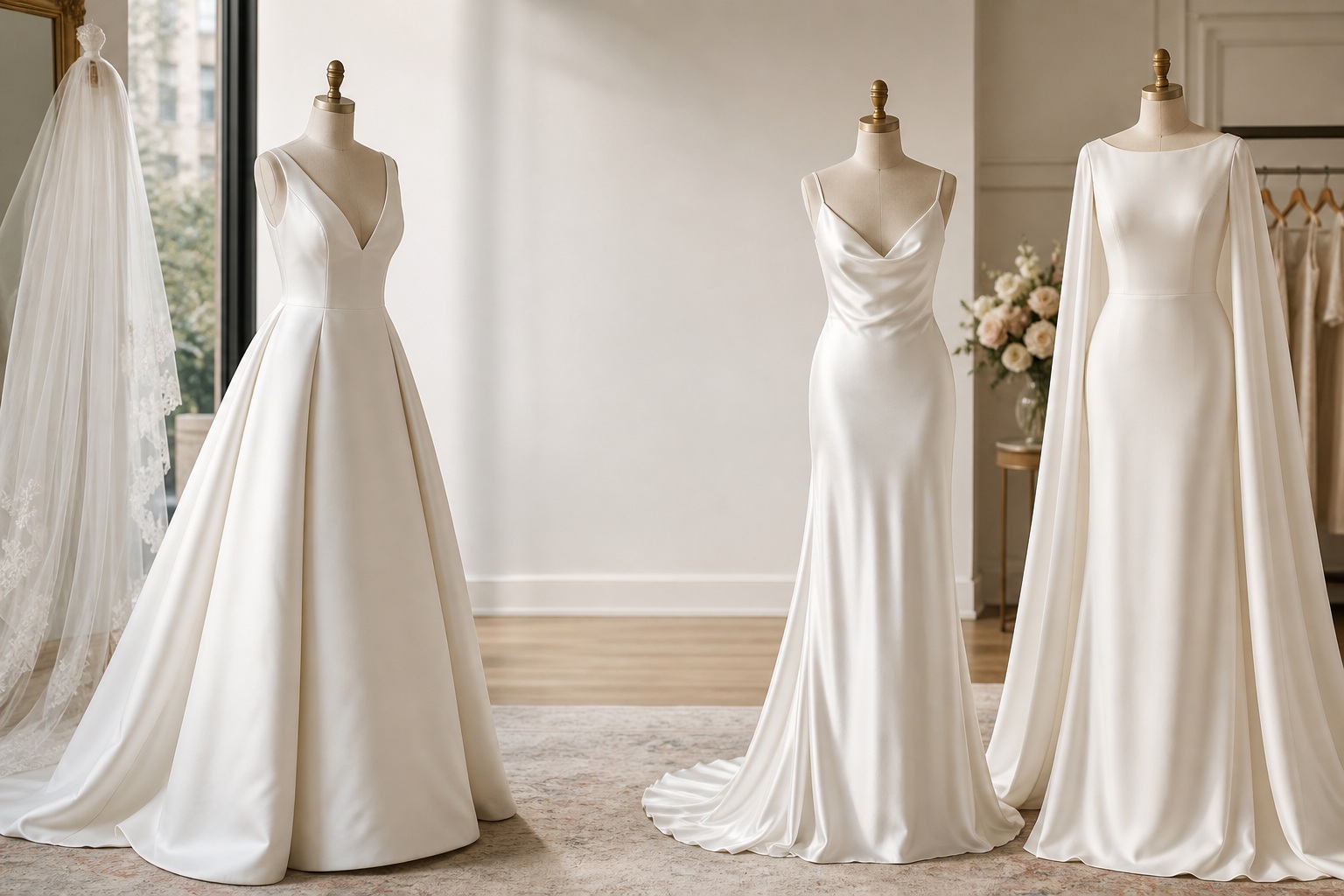
Duchess satin is a strong option when you want a formal, composed shape. It has enough body for an A-line skirt, ball gown, sculpted waist or clean train. It often has a refined sheen rather than a highly reflective gloss, but the exact finish depends on the fiber and manufacturer. Because it holds a shape, it can make a simple design feel substantial without lace or heavy beading.
Turn wedding inspiration into a plan you can actually follow.
Zarellea brings your guest list, budget, vendors, and day-of details into one shared space — so no beautiful idea gets lost in the shuffle.
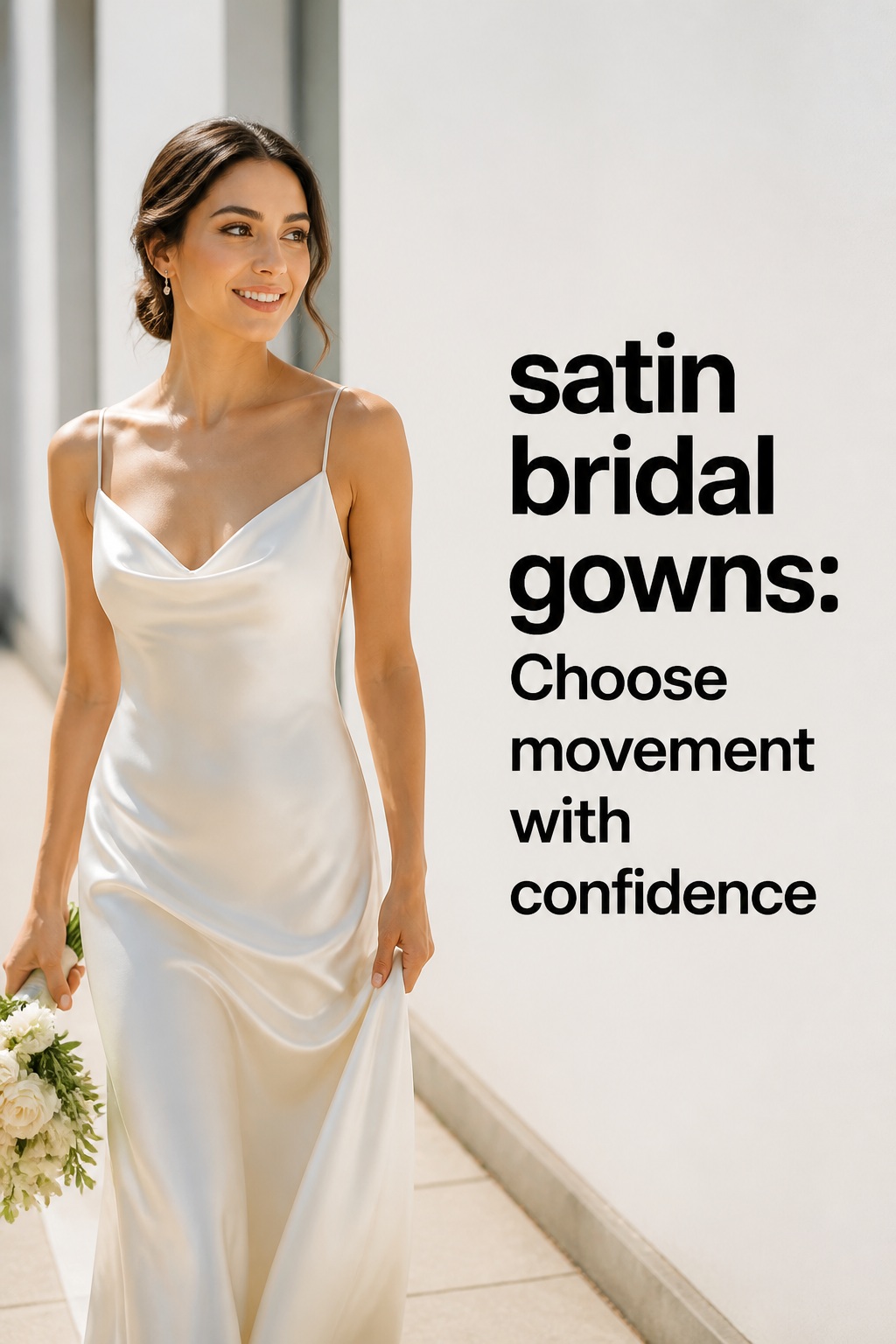
Charmeuse is lighter and more fluid. It is associated with slip dresses, bias-cut gowns, softly draped necklines and a body-skimming line. That movement can look beautiful in portraits, but it also reveals more of the body and may show wrinkles, seams or fit issues. A charmeuse gown should be judged while walking, sitting and turning, not only while standing in a mirror.
Crepe-back satin offers two useful surfaces: a satin face and a matte crepe reverse. Designers can use the contrast inside one gown, at cuffs, on a draped panel or as a subtle detail. Mikado is not technically identical to satin, but bridal boutiques often discuss it alongside satin because it has a structured woven body and a controlled, contemporary sheen. Treat each sample as its own fabric rather than assuming the category tells you everything.
- Choose structure when you want a defined waist, architectural skirt, clean pleats or a train that keeps its shape.
- Choose fluidity when movement, a relaxed line, soft draping or a minimalist slip silhouette matters most.
- Choose a balanced weight when you want a polished gown that can move from ceremony to reception without feeling heavy.
- Check the lining because a smooth inner layer can change comfort, cling, opacity and how easily the gown slides over shapewear.
- Inspect construction including boning, cups, waist seams, zipper or corset closure, hem finish, bustle points and the support built into the bodice.
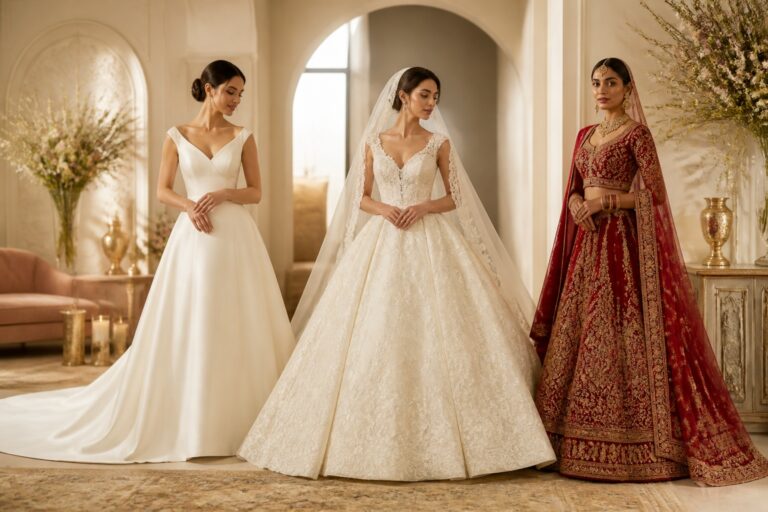
Next, pair the fabric with a silhouette. An A-line is a flexible starting point because it lets structured satin create shape while leaving room for walking. A ball gown uses the fabric’s body for ceremony-scale drama. A column or sheath works well with a smoother, lighter satin when you prefer a long uninterrupted line. Fit-and-flare can be striking, but it requires careful support and movement testing around the hips, knees and seat.
Also consider the scale of the wedding. A very simple satin column can look intentional at city hall, on a beach or in a modern gallery. The same gown may need a dramatic veil, overskirt or jewelry change for a large ballroom. A duchess satin ball gown can fill a cathedral beautifully, but it may need a bustle plan and a reception adjustment if you want to dance comfortably.
Build Complete Satin Bridal Gown Combinations
Once you understand the fabric and silhouette, create two or three complete combinations instead of collecting isolated details. A gown may have a neckline you love but the wrong level of shine, or a perfect fabric with a train that does not suit the venue. Looking at the whole capsule makes those trade-offs easier to see.
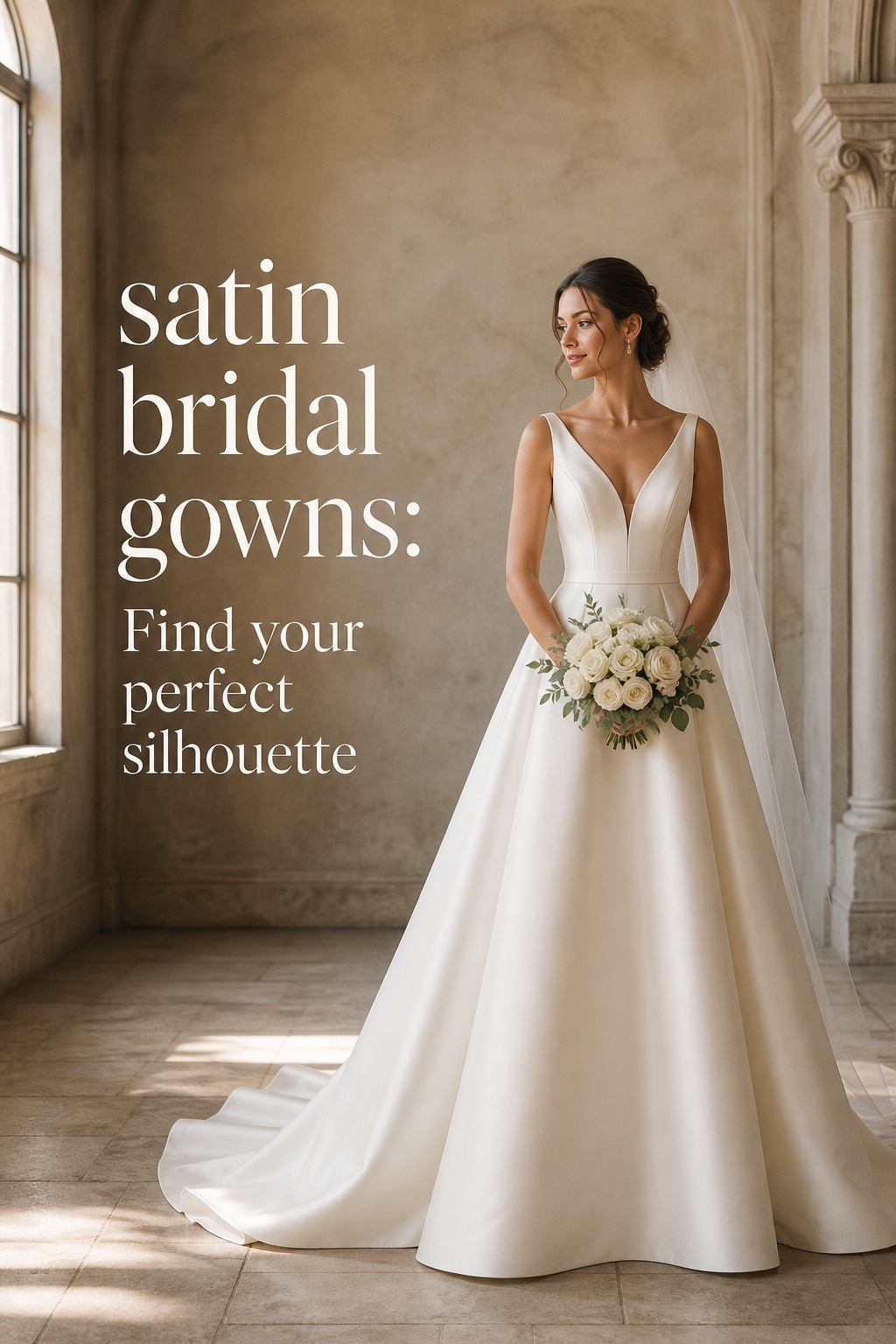
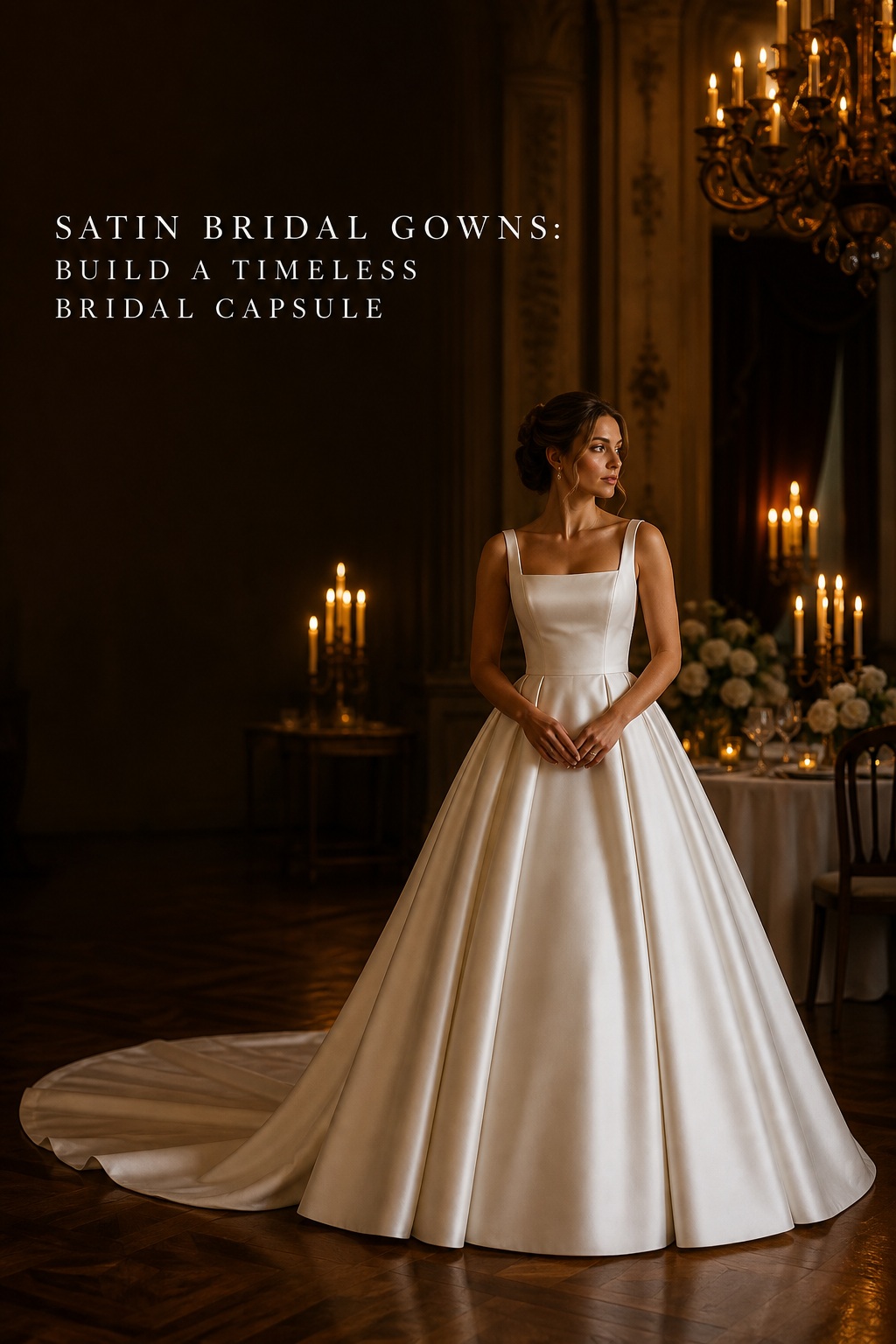
For a timeless ceremony combination, try a structured satin A-line or ball gown with a bateau, square or modest V-neckline. Add a cathedral or chapel veil, restrained earrings and a bouquet with a clear silhouette. Keep the jewelry polished but not overly busy. The clean surface of satin gives small details room to register, so you do not need embellishment everywhere.
For modern minimalism, choose a column, sheath or softly tailored A-line in matte satin, crepe-back satin or silk satin. A sculptural earring, pointed shoe and short veil can sharpen the look. If the gown is very plain, look for quality in the cut, seam placement, lining and drape. Minimalism works when the construction is visible through precision.
For romantic movement, consider charmeuse or a lighter satin with a cowl, draped back, bias cut or softly gathered skirt. Balance the fluid gown with one defined accessory, such as a pearl drop, low bun, fingertip veil or ribbon-wrapped bouquet. Avoid adding several competing soft details. The gown should remain the moving element, while the accessories create a calm frame.
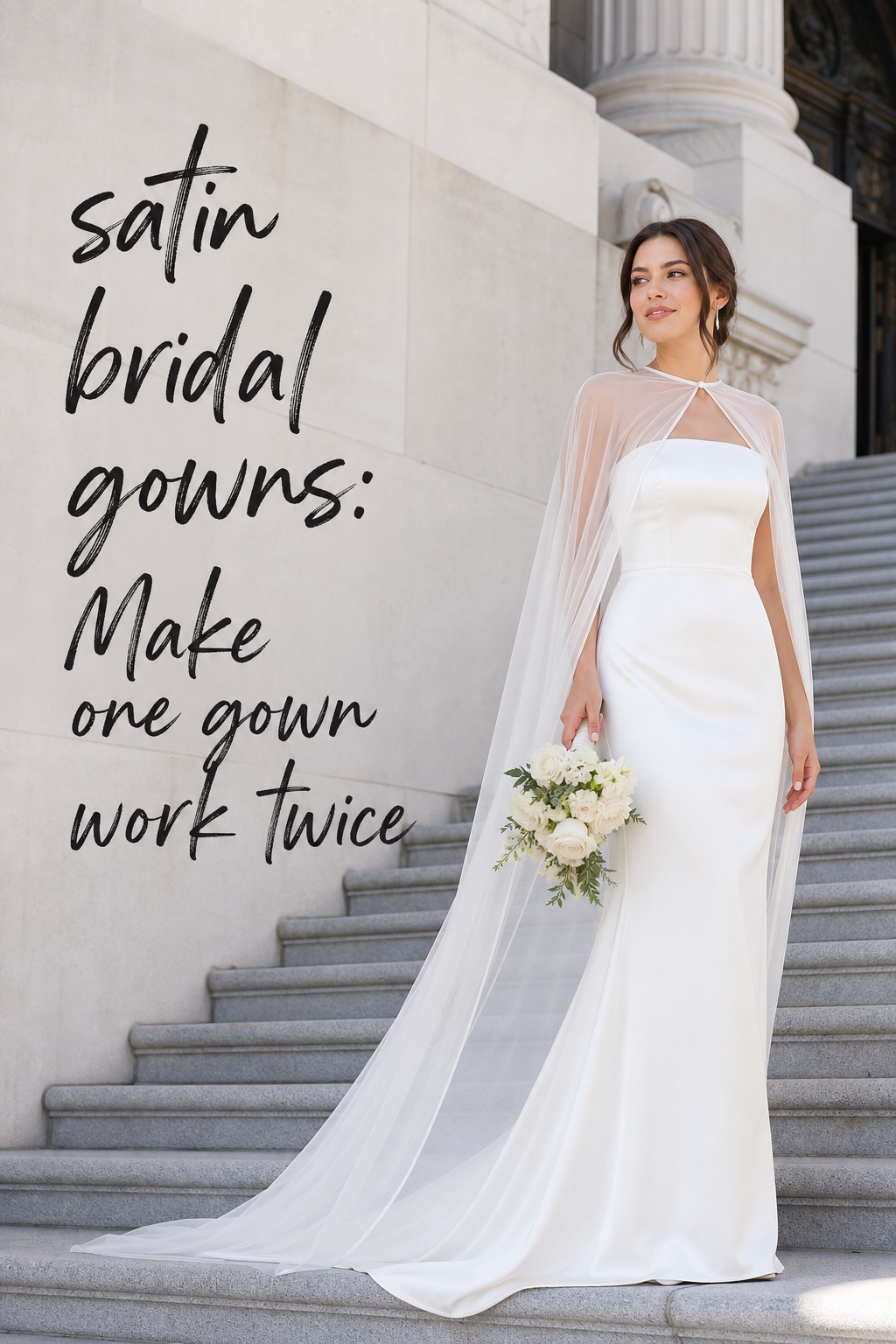
For a two-look capsule, begin with a clean base gown and add one removable layer. A detachable overskirt can give a column or fit-and-flare gown ceremony volume. A removable bow, cape, sleeves or jacket can change the neckline and proportion for dinner. Before choosing a transformation, test how it attaches, whether it wrinkles the satin, and where it can be stored safely during the reception.
- Neckline: square and bateau necklines emphasize clean architecture; sweetheart softens structure; a V-neck can lengthen the front line; a cowl supports a fluid mood.
- Sleeves: fitted sleeves can make a satin gown feel formal, while detachable sleeves or a sheer layer add flexibility without committing the whole day to one temperature.
- Train: sweep and chapel trains are easier for many venues; cathedral trains create ceremony drama but require attendants, bustle planning and clear travel paths.
- Veil: choose a length that either echoes the train or deliberately contrasts with it. A clean satin gown can carry a plain veil, lace edge or subtle pearl detail.
- Bouquet: a rounded bouquet complements structured gowns, while an airy, asymmetrical or trailing shape can echo fluid satin movement.
- Jewelry: use one focal area. If the neckline is the statement, keep the necklace simple and let earrings or a bracelet do the finishing work.
Color deserves a place in the combination. Ivory, soft white and bright white do not appear the same against every skin tone, venue wall or lighting setup. Ask to see the gown near a window and under the boutique’s indoor lights. Photograph the fabric without flash, then look at the image at small size. Satin can reflect a highlight that makes a bodice look brighter than the skirt, especially when the panels face different directions.
Finally, match your undergarments and shoes to the actual design. Bring the height of the shoes you expect to wear, or use a pair with the same heel. Try the bra, shapewear or support garment that will be worn under the gown. Smooth satin may show a line that a textured fabric would hide, and a close-fitting bodice may feel different once the wedding-day underlayers are included.
Set Buying Priorities Before You Order
Before ordering satin bridal gowns, write down three non-negotiables and three flexible preferences. Your non-negotiables might be comfortable movement, a covered back and a budget ceiling. Flexible preferences might be sleeve length, exact shade or the type of train. This prevents a beautiful detail from quietly taking priority over the experience you want to have.
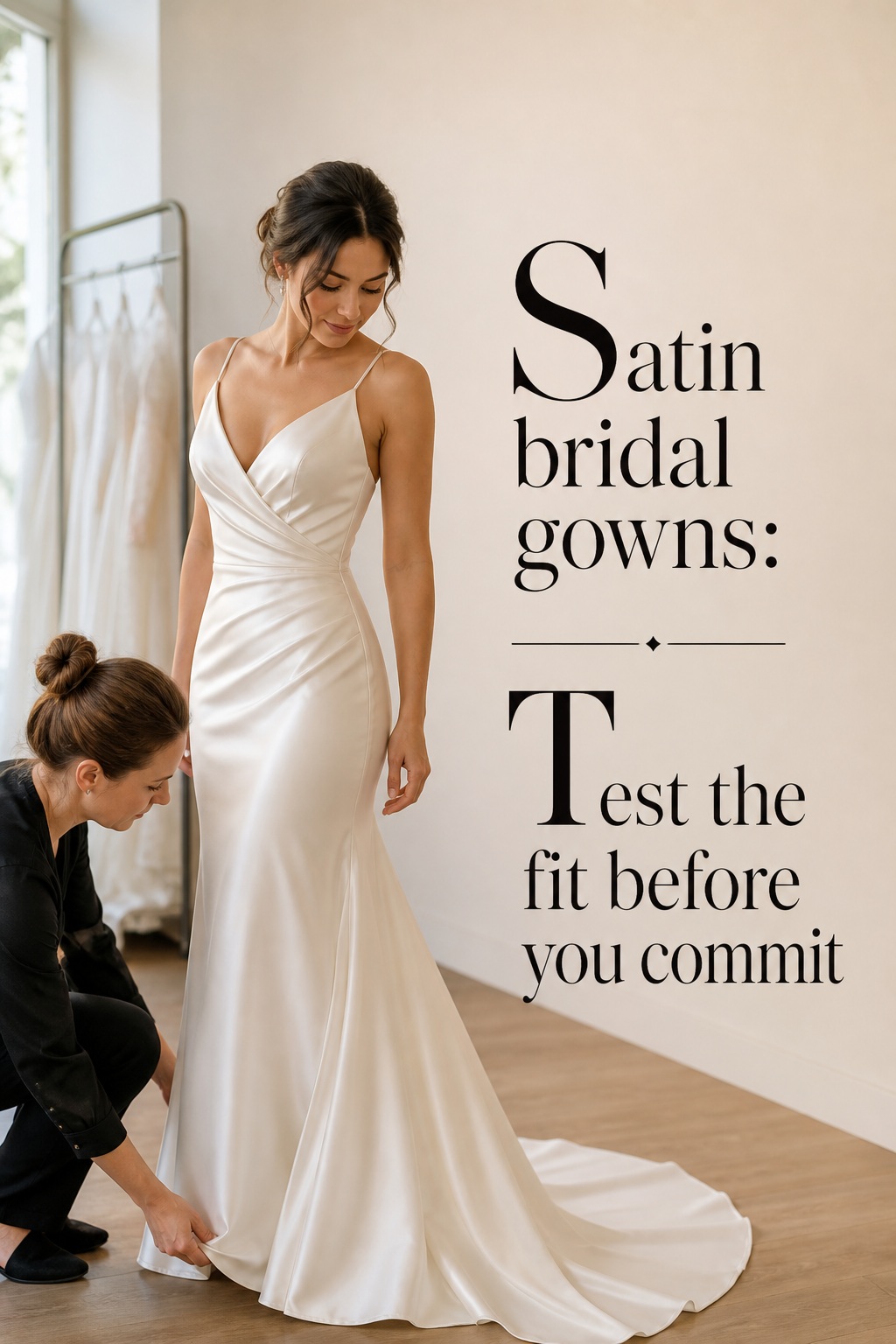
Fit comes first because satin does not forgive uncertainty in the same way as a heavily textured lace or layered tulle. Check the bust, waist, hip and shoulder areas while you stand naturally. Sit in the gown. Walk up steps if the boutique allows it. Raise your arms as if hugging someone, hold a bouquet, turn your body and take a few dance steps. Look for pressure, gaping, pulling and fabric that catches between your legs.
Ask exactly what alterations are realistic. A hem is common, but changing a neckline, adding sleeves, reshaping a bodice or moving a train can require more fabric, structure and labor than expected. Satin also shows needle marks, pressing errors and uneven seams, so choose an experienced bridal alterations professional. Ask whether the gown arrives with bustle points and how many bustle positions your train will need.
- What is the fiber content, fabric weight and finish of the satin?
- Is the gown lined, and is the lining breathable enough for the venue and season?
- What support is built into the bodice, and can it be adjusted without changing the gown’s shape?
- Which parts can be altered, and what changes would be difficult or expensive?
- How will the gown be bustled, transported, steamed and stored before the ceremony?
- What is included in the quoted price, and which accessories or customizations cost extra?
- What is the production timeline, and how much time is reserved for fittings, corrections and final pressing?
- What care is recommended if the gown is marked during the ceremony or reception?
Budget for the whole capsule, not only the gown label. Include alterations, bustle work, a veil or hair accessory, shoes, undergarments, jewelry, garment transport and professional cleaning or preservation if that matters to you. A lower-priced gown with extensive structural changes may not be less expensive than a better-fitting gown that needs only standard alterations.
Photography is another buying priority. Request photos from several angles, including the back and side. Ask how the surface looks in direct sun, open shade, indoor window light and a dim reception setting. A glossy satin can create beautiful highlights, while a reflective panel may pull attention away from the face. A skilled photographer can work with this, but the gown still needs a finish and construction that make you feel confident.
Care for the gown begins before the wedding. Keep it in the breathable garment bag recommended by the boutique, away from moisture, pets, food and direct heat. Do not iron satin casually at home. Ask who will steam it, how close to the ceremony that will happen, and what emergency kit is appropriate for the specific fiber. On the wedding day, assign one person to handle the train and another to carry a clean cloth or towel for outdoor transitions.
Adapt Satin Bridal Gowns to Season and Venue
Satin can work in every season when the weight, lining and styling match the conditions. For winter, duchess satin, mikado or a heavier structured finish can feel appropriate in a historic venue, church or candlelit ballroom. Add a tailored cape, long sleeves, closed shoes or a velvet accessory if warmth matters. Plan a clear route between the car, ceremony and reception so the hem is not exposed to unnecessary moisture.
For spring, a lighter A-line, clean sheath or soft satin skirt can feel fresh with a short veil, pearl accents or a bouquet with seasonal color. Spring weather is variable, so a removable jacket, wrap or sleeves may be more useful than a heavy permanent layer. If the ceremony is outdoors, ask how pollen, damp grass and wind will affect the fabric and train.
For summer, prioritize breathability, lining, support and movement. Charmeuse or lightweight satin may feel less visually heavy, but a close-fitting gown can still be warm. Look for a neckline and sleeve plan that lets air move, and check whether the venue has air conditioning. A shorter reception bustle, detachable overskirt or second dress can protect both comfort and the gown’s shape.
For fall, satin looks especially effective with warm ivory, candlelight, deep florals and tailored accessories. A simple gown can feel seasonal through a velvet ribbon, dramatic earrings, a colored shoe or a bouquet with rust, plum and foliage. Avoid choosing a fabric only because its color feels autumnal. Make sure the weight and lining still suit your venue and movement needs.
- City hall: choose a midi, sheath, tailored A-line or streamlined full-length gown with easy movement and a compact accessory capsule.
- Garden: consider a sweep train, stable lining, practical shoes and a bustle that keeps the hem clear of grass and gravel.
- Beach: favor lighter construction, a shorter train or a fluid gown, and test wind, sand and walking before the final fitting.
- Historic chapel: structured satin, a chapel or cathedral veil and a defined train can match the scale, provided the aisle and attendants can manage them.
- Ballroom: use satin’s shape and reflection strategically, with enough texture or accessory contrast for the gown to read under artificial light.
Venue light should influence the final decision. Bright white satin can blend into a pale room, while a warm ivory may photograph more softly. Colored uplighting can change the appearance of both white and ivory. Bring a venue photo to the appointment, but also ask how the room will be lit during dinner and dancing. A dress that is perfect in a fitting room may need a different veil, jewelry scale or bouquet color to remain distinct in the reception photographs.
Your final capsule should have a practical plan for transitions. Decide who carries the garment bag, who manages the train, where a detachable layer will go, and whether the bustle can be fastened quickly. Tell the photographer when you want full-length portraits, movement shots and back views. Satin bridal gowns reward thoughtful preparation because the clean surface makes the details visible, from the elegant line of a train to a rushed alteration or wrinkled panel.
FAQ
Are satin bridal gowns flattering on every body type?
Yes, but the best result depends on the type of satin, lining, construction and silhouette. Structured satin can create a defined shape, while fluid satin follows the body more closely. Try several cuts, move naturally and choose the gown that supports your proportions and comfort rather than relying on the fabric name alone.
What is the difference between duchess satin and charmeuse?
Duchess satin is generally heavier and more structured, making it useful for A-lines, ball gowns and sculpted details. Charmeuse is lighter and more fluid, making it common in slip, bias-cut and draped gowns. The exact behavior varies by fiber and manufacturer, so compare physical samples and try the gown while walking.
Do satin bridal gowns photograph well?
They can photograph beautifully because the surface creates controlled highlights and a clean, polished line. Very reflective satin may show bright hot spots, while matte satin may look more even. Ask for photos in several lighting conditions and check whether the fabric’s shine supports the mood you want.
Which silhouette works best with satin?
An A-line is a versatile choice because satin can define the waist while leaving room to move. Duchess satin suits ball gowns and structured skirts, while charmeuse suits column, sheath and bias-cut shapes. Fit-and-flare can also work well, but it needs careful support and movement testing at the hips and knees.
How should I accessorize a simple satin wedding gown?
Start with the neckline and the gown’s level of structure. A clean veil, sculptural earrings, a pearl detail, a defined bouquet or a removable cape can add interest without competing with the fabric. Choose one focal area, then keep the remaining accessories controlled so the gown’s cut remains visible.
How far in advance should I order a satin bridal gown?
Follow the boutique’s production timeline and add time for shipping, multiple fittings, alterations and final pressing. Custom changes, sleeves, structural adjustments and elaborate trains may require extra planning. Ask for a written delivery date and avoid building your schedule around the most optimistic estimate.
Can I wear a satin bridal gown for an outdoor wedding?
Yes, if the fabric weight, train and footwear suit the location. Choose a manageable train, plan a bustle, test walking on the likely surface and protect the gown during transport. For hot weather, prioritize a breathable lining and a design that allows comfortable movement.