Why A Simple Wedding Ring Feels Timeless Now
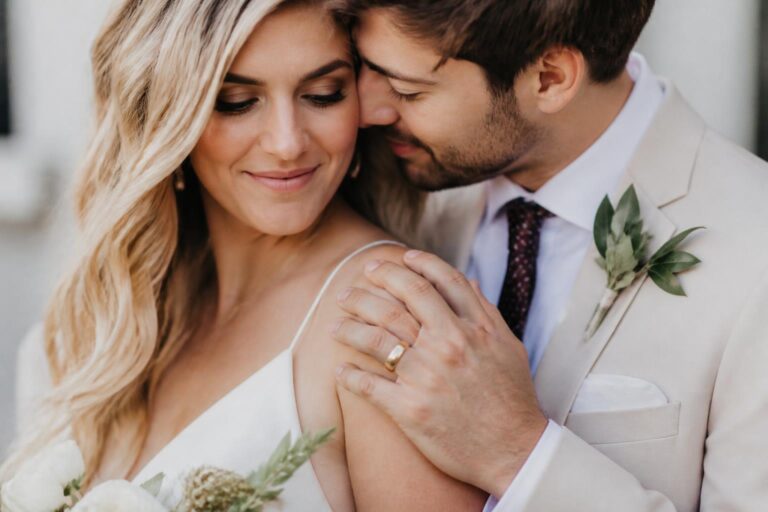
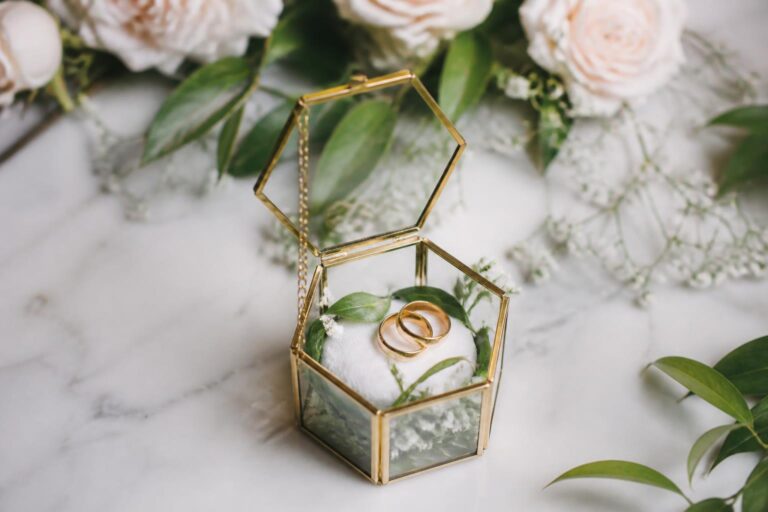
A simple wedding ring has a quiet kind of beauty. It does not ask for attention with heavy embellishment or ornate detail, yet it often becomes the piece worn most faithfully through every ordinary morning and every milestone that follows. In a wedding world filled with sparkle, a plain band in gold or platinum can feel especially romantic because it is so clear in its intention: timeless, wearable, and deeply personal.
This minimalist wedding band aesthetic suits couples who want their jewelry to feel elegant without looking overworked. It belongs just as naturally at a city ceremony as it does at an intimate garden celebration, and it works for brides, grooms, and partners who value comfort, restraint, and lasting style. The appeal is practical as much as visual: a simple ring pairs easily with engagement rings, moves through daily life with ease, and rarely feels tied to one passing trend.
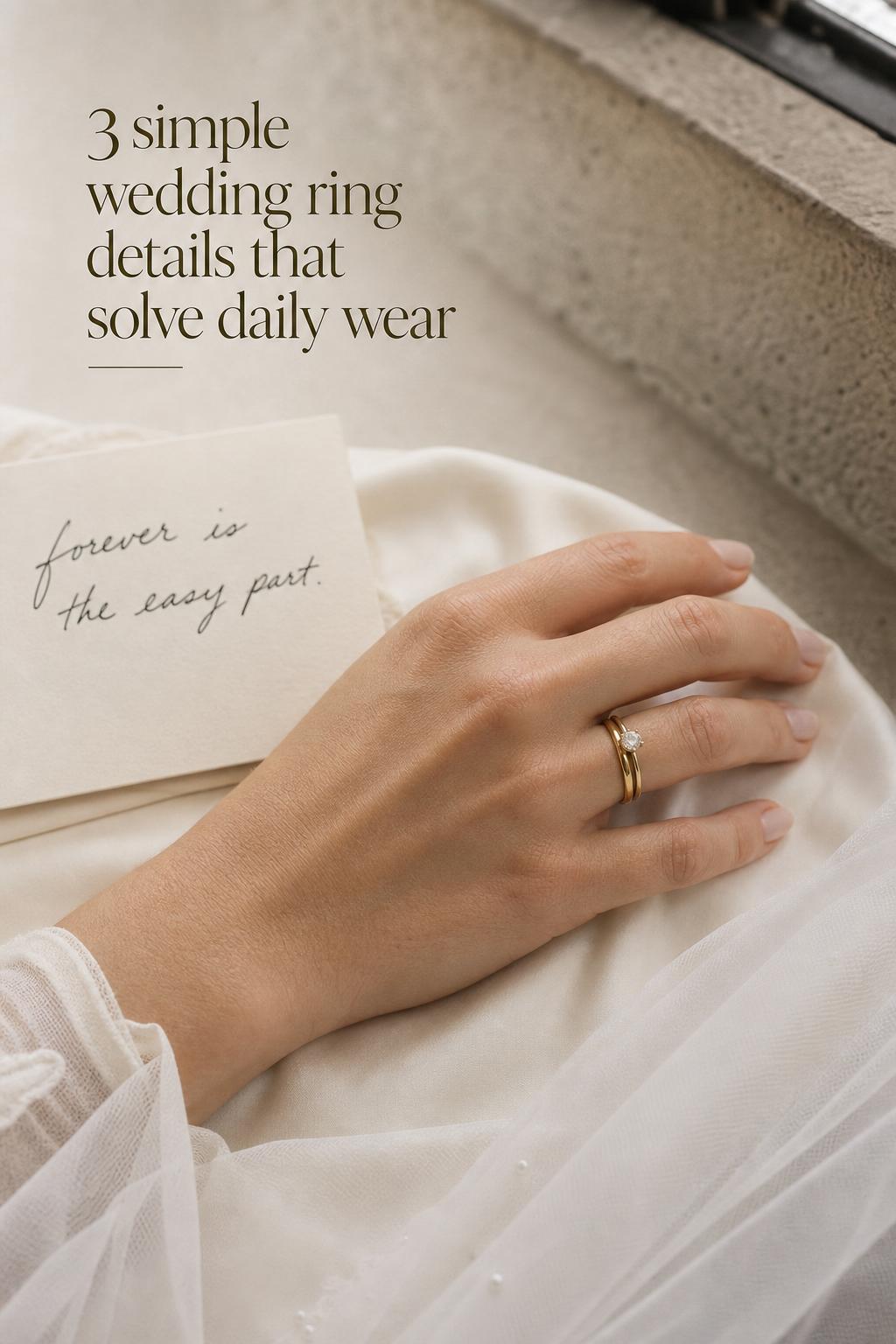
What follows is a detailed guide to understanding the visual language of a simple wedding ring, choosing the right metal, width, profile, and finish, and styling this understated look in a way that feels intentional rather than plain. If you are trying to decide between a 2mm band and a 4mm one, polished or satin, flat or domed, classic or comfort-fit, this guide will help you shape a wedding ring choice that feels both beautiful and lived in.
What defines this aesthetic?
The simple wedding ring aesthetic is built around clean lines, balanced proportion, and a sense of permanence. Visually, it leans toward unembellished surfaces, classic silhouettes, and finishes that enhance the metal rather than distract from it. Yellow gold, white gold, rose gold, and platinum sit at the center of this look, while shapes such as flat, domed, curved, and comfort-fit give the ring its character without taking it out of the minimalist category.
Turn wedding inspiration into a plan you can actually follow.
Zarellea brings your guest list, budget, vendors, and day-of details into one shared space — so no beautiful idea gets lost in the shuffle.
The color palette is restrained by nature because the metal itself becomes the visual story. Warm yellow gold feels traditional and softly luminous. White gold and platinum read cooler and more tailored. Rose gold introduces a romantic note while still staying within the understated world of minimalist jewelry. Polished finishes create a brighter, more formal effect, while satin or matte surfaces soften the ring and make it feel more modern and subtle.
In terms of mood, this aesthetic should communicate ease, confidence, and longevity. It works best when the ring looks considered but not overstyled. That is why details like width, fit, and profile matter so much. A very slim 2mm band can feel delicate and refined, while a 3mm or 4mm ring often brings a stronger visual anchor. The effect is never about excess. It is about choosing a piece that feels effortless on the hand and coherent with the rest of your wedding style.
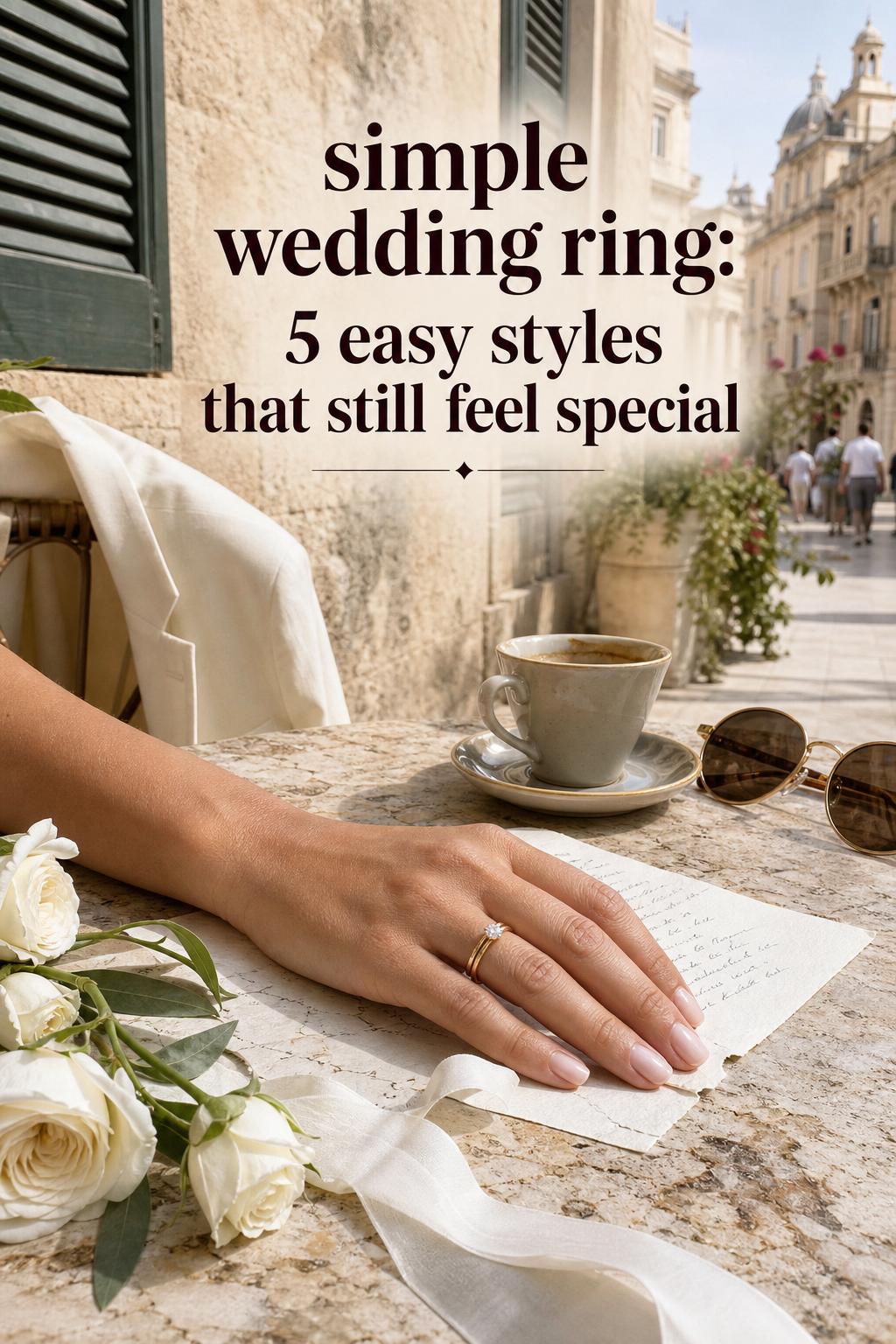
The foundation of a timeless ring choice
What “simple” really means in wedding jewelry
In wedding jewelry, simple does not mean thoughtless. It usually refers to a ring with minimal ornamentation, a clear silhouette, and a focus on material, shape, and wearability. A plain wedding band, a classic wedding ring, and a minimalist wedding band all live within this space. Some are completely smooth and polished. Others include subtle curvature, beveled edges, or a satin finish that adds texture without changing the essential clean look.
This is why many leading U.S. retailers present simple wedding rings as classics. Brands such as Brilliant Earth, Blue Nile, Glamira, Temple & Grace, Ritani, and LoveWeddingBands all frame the category around timelessness, comfort, and easy pairing. Even when collections are split into women’s bands, men’s bands, plain bands, or matching sets, the central idea remains the same: a ring that can sit beautifully alongside an engagement ring or stand entirely on its own.
The styling lesson here is subtle but important. A simple ring succeeds when its proportions are intentional. Without that, minimalism can look generic. The right width, the right finish, and the right profile turn a plain band into something elegant and specific.
Why this look keeps returning
There is a reason understated bands continue to anchor so many wedding ring collections in the United States. They move easily across personal styles. A bride with a solitaire engagement ring may want a polished curved band that sits close and quiet beneath the center stone. A groom may prefer a 6mm yellow gold band with a strong, uncomplicated line. Another couple may choose matching platinum comfort-fit bands because they value durability, a cool-toned finish, and a clean modern mood.
A simple wedding ring also adapts well to real life. It can feel elegant at the ceremony and still practical months later at work, while traveling, or during everyday routines. That versatility is a large part of its beauty. Instead of demanding a special occasion, it becomes part of the wearer’s daily visual identity.
Materials that shape the mood
Metal is the heart of a minimalist ring because there are fewer decorative elements competing for attention. In a simple design, the metal tone, surface finish, and weight carry almost all of the visual impact. That makes the decision feel more meaningful, and also more practical.
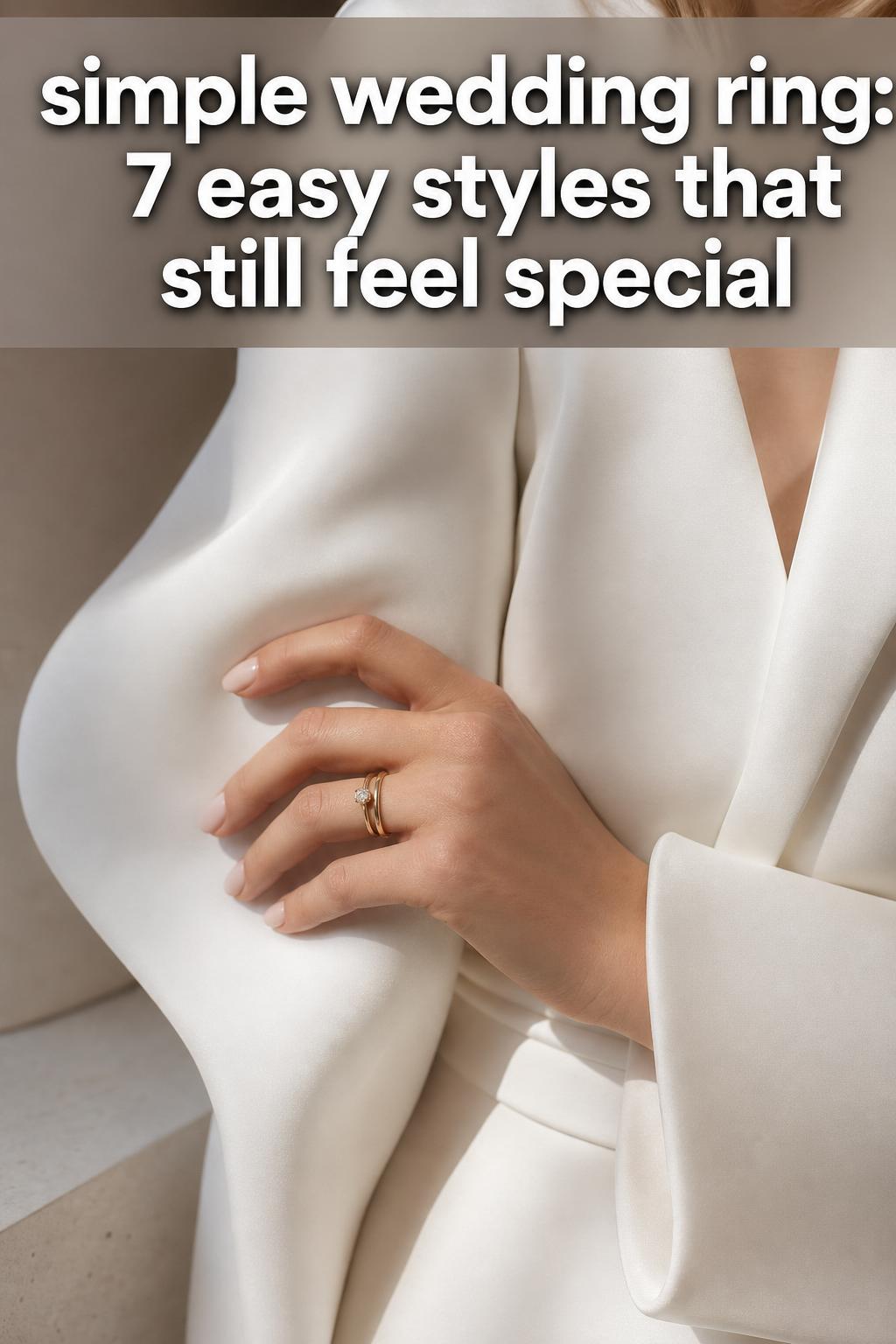
Yellow gold: warm and enduring
Yellow gold remains one of the clearest expressions of the classic wedding band. It feels traditional without being old-fashioned and brings warmth to a clean, plain shape. In a polished finish, yellow gold has a soft glow that suits formal wedding styling beautifully. In satin, it feels slightly more relaxed and contemporary. Whether chosen in a slim 2mm silhouette or a wider 6mm band, it gives a simple ring emotional familiarity.
For couples drawn to a timeless ceremony aesthetic, yellow gold often feels especially right. It pairs well with both polished bridal styling and a more intimate, pared-back celebration. The practical advantage is its broad versatility in simple designs. The one thing to watch is finish: if you want the ring to feel crisp and bright, polished is usually the better fit; if you prefer a softer mood, satin creates a quieter presence.
White gold and platinum: cool, refined, and modern
White gold and platinum are often favored by couples who want a minimalist wedding band that reads sleek and clean. Both work particularly well with engagement rings that already carry a cool-toned setting, and both suit the tailored feel of flat, domed, or comfort-fit profiles. In many simple ring collections, platinum is positioned as a premium classic because its understated look aligns so naturally with minimalist design.
Platinum can feel especially beautiful in a simple wedding ring because the metal itself has presence. It does not need ornament to look substantial. White gold creates a similar visual effect, but the decision between the two often comes down to budget, preference, and how much weight or solidity you want the ring to communicate. For many buyers, this is less about trend and more about how the ring sits emotionally within the rest of their wedding jewelry.
Rose gold and understated romance
Rose gold brings a softer, more romantic interpretation to the simple ring aesthetic. It still feels minimal, but the tone adds warmth and a gentle vintage-inspired glow. In a plain curved band or slim comfort-fit profile, rose gold can make a minimalist style feel more personal and tender. It is especially appealing when the overall wedding vision leans intimate rather than dramatic.
The key with rose gold is keeping the rest of the design restrained. Too many visual changes at once can weaken the calm effect that makes a simple wedding ring so appealing. A smooth profile, clean edge, and one considered finish usually create the most elegant result.
A note on 14k and 18k choices
Many shoppers compare 14k and 18k options when choosing a gold wedding band. In a simple ring, that decision matters because there are so few extra details to distract from the feel of the metal. If you are comparing collections from retailers such as Brilliant Earth, Blue Nile, Glamira, or Temple & Grace, it helps to focus on how the ring will be worn every day, how warm or rich you want the color to appear, and how the band will pair with existing jewelry.
That kind of measured comparison is often more useful than chasing the most luxurious-sounding option. Minimalist jewelry asks for clarity. The best choice is usually the one that aligns with your wear habits, visual preference, and budget rather than the one that simply sounds more impressive.
How width, profile, and fit create the look
Two rings can share the same metal and still feel completely different because width, profile, and fit shape how the band reads on the hand. This is where a simple design becomes highly personal. Minimalism does not erase individuality; it reveals it.
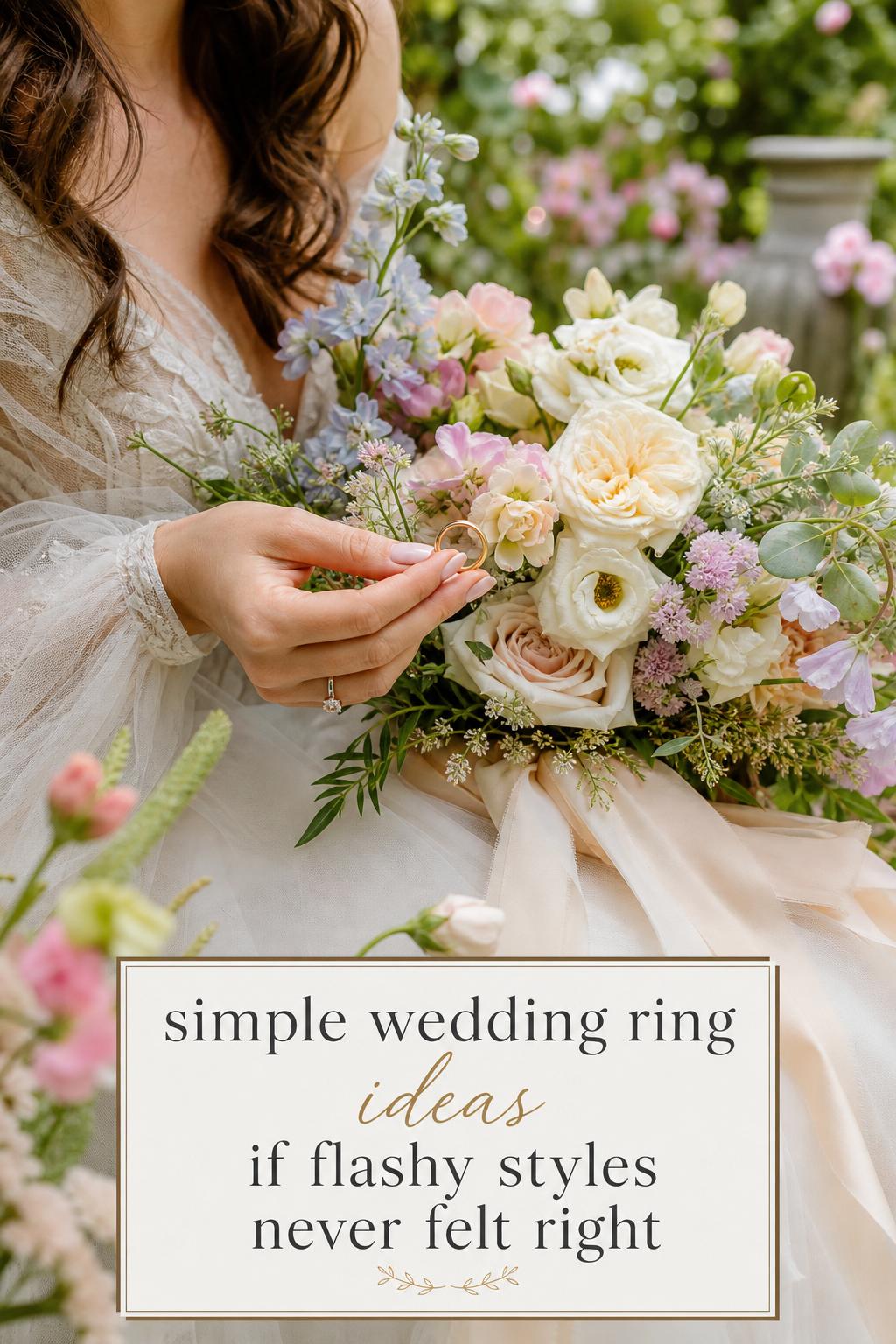
The delicate elegance of a 2mm band
A 2mm wedding band has a soft, refined presence. It often works beautifully for those who want the ring to feel light, subtle, and easy to stack with an engagement ring. In women’s collections, this width appears frequently because it sits neatly alongside solitaire and halo styles without creating visual heaviness. The silhouette is graceful and low-key, which makes it ideal for a wedding look centered on gentle polish rather than statement styling.
The practical note is that a very slim band depends on proportion. If your engagement ring already has significant visual presence, a 2mm simple band can create elegant balance. If worn alone, however, some people may prefer a 3mm width for slightly more visual substance. Neither is better in a universal sense. The right choice depends on whether you want the ring to whisper or quietly anchor the hand.
The balanced middle ground of 3mm and 4mm rings
A 3mm or 4mm simple wedding ring often feels like the most versatile middle ground. It has enough width to stand on its own but still reads elegant and restrained. This is one reason these widths show up repeatedly in plain women’s wedding bands, classic collections, and comfort-fit styles. They work across different wedding aesthetics, from modern city ceremonies to more traditional celebrations.
Visually, these widths tend to suit both polished and satin finishes very well. A domed profile softens the silhouette, while a flat one makes the ring feel more graphic and contemporary. If you want a band that transitions smoothly from wedding day photographs to daily wear, this width category is often where function and beauty meet most easily.
Flat, domed, curved, and comfort-fit profiles
Profile is one of the most overlooked parts of choosing a simple ring, yet it changes the entire aesthetic. A flat profile has a crisp, modern line. A domed band feels softer and more traditional. A curved ring is often chosen to sit more neatly against an engagement ring. Comfort-fit bands are shaped for easy daily wear and are especially common in classic men’s and women’s collections from Blue Nile, Ritani, and similar retailers.
If your goal is a minimalist look that still feels luxurious, comfort-fit is often worth considering because the beauty of a simple ring is inseparable from how it feels over long hours. A ring that looks perfect but never quite settles comfortably on the hand can lose its charm with time. Practical elegance matters here more than almost anywhere else in bridal jewelry.
- Choose a flat profile for a cleaner, more modern mood.
- Choose a domed profile for a classic and softer silhouette.
- Choose a curved band when pairing closely with an engagement ring matters.
- Choose comfort-fit if daily wear and ease are top priorities.
When a simple band meets an engagement ring
Pairing a simple wedding ring with an engagement ring is one of the most important styling decisions in the category. Because the band is understated, every detail becomes visible. The width relationship, metal tone, and profile should feel coherent, even if the two rings are not perfectly identical.
Look: polished harmony with a solitaire
A solitaire engagement ring often creates the most natural setting for a minimalist wedding band. The mood is clean, elegant, and balanced, with the center stone remaining the focal point while the plain band supports it quietly. This pairing works especially well when the wedding aesthetic is refined and uncluttered, such as a formal city ceremony, an intimate indoor celebration, or a modern classic wedding with a restrained palette.
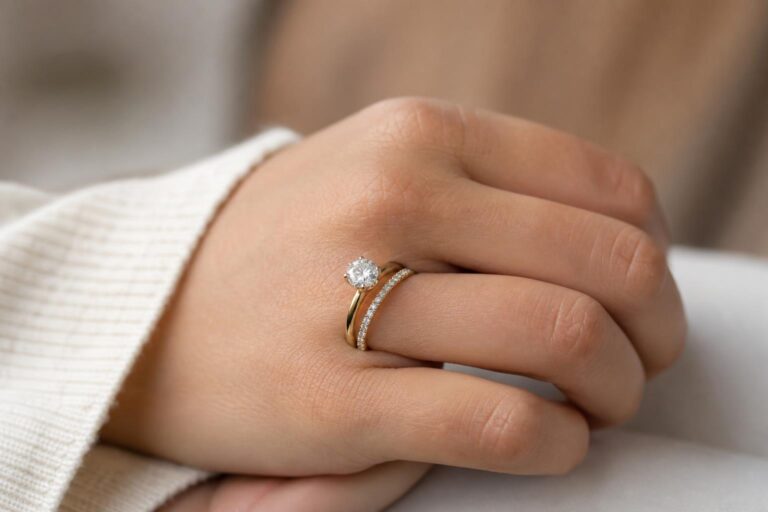
A polished yellow gold or platinum curved band usually feels most seamless here. The smooth finish mirrors the clarity of the solitaire, while a slim 2mm or 3mm width helps the stack sit neatly and avoid visual competition. If the engagement ring already has a tailored setting, a comfort-fit profile can soften the overall effect and make the combination easier to wear all day.
Why it works: the beauty comes from restraint. The simple wedding ring should not try to imitate the engagement ring’s focal point. It should echo its metal, respect its proportions, and keep the overall silhouette calm. The common mistake is choosing a band that is too wide or too textural, which can break the quiet elegance of the pair.
Look: soft stacking beside a halo or vintage-inspired ring
A halo or vintage-inspired engagement ring usually carries more visual detail, so the wedding band needs even more discipline. The mood in this pairing is romantic rather than plain, but the simple band is what keeps the stack from feeling crowded. It acts almost like visual space, giving the engagement ring room to remain expressive.
A thin curved band in white gold, rose gold, or platinum tends to work beautifully because it follows the shape of the engagement ring without interrupting it. Satin finishes can also be lovely here when the engagement ring is very bright, since the softer surface creates contrast without becoming a distraction. The result is layered, but still coherent.
How to recreate the look: match first for silhouette, then for metal. Many shoppers focus only on color, but the contour of the band often matters more. If the rings do not sit comfortably together, the stack can look accidental rather than intentional.
Look: the stand-alone statement of a plain band
Not every wedding story includes an engagement ring, and a simple wedding ring worn alone has its own powerful beauty. The silhouette feels honest, calm, and complete. This interpretation often suits couples who want the wedding jewelry to reflect a minimalist lifestyle, a practical daily routine, or a less traditional ring journey.
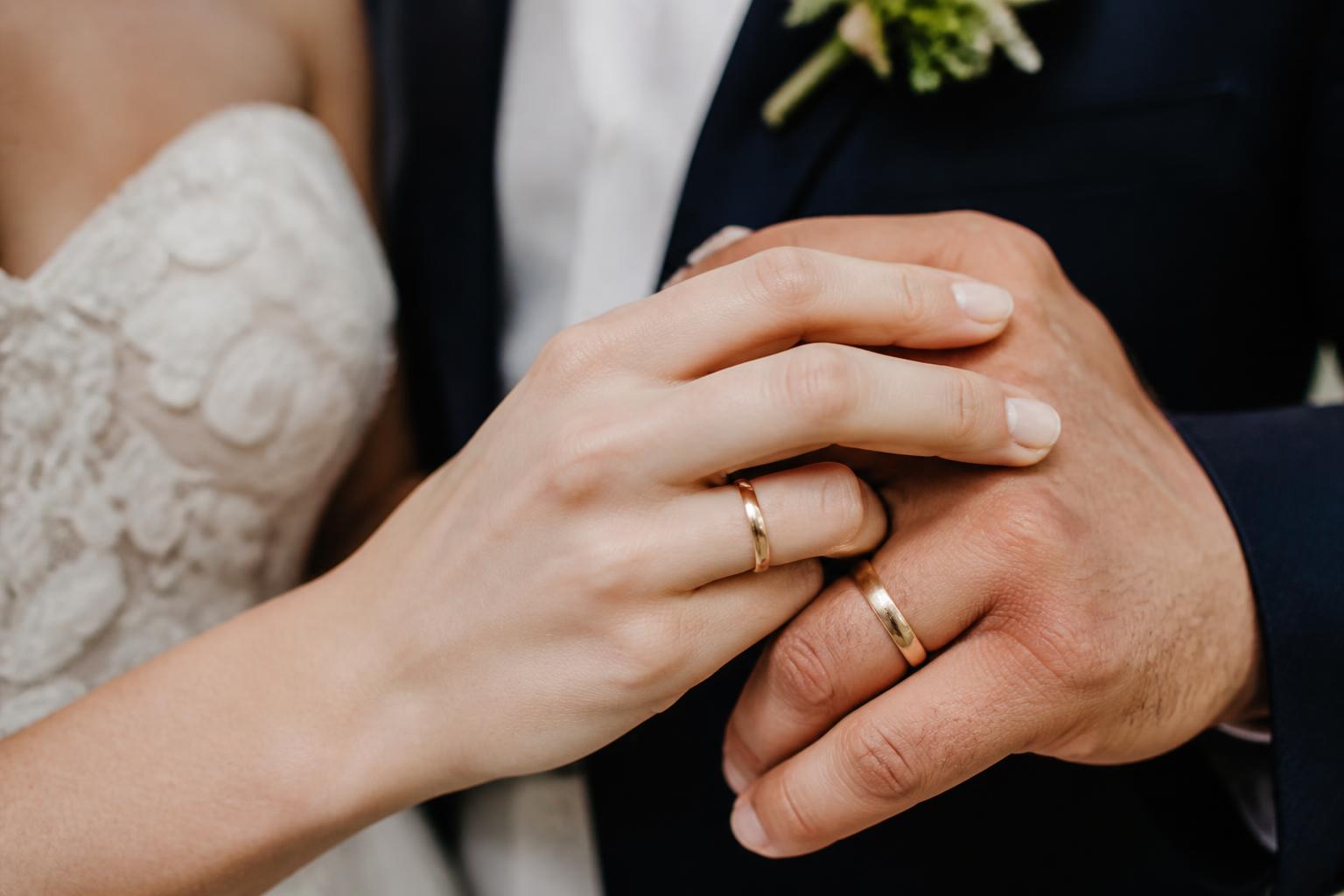
A 3mm, 4mm, or even 6mm plain band in yellow gold or platinum creates a stronger visual identity when worn alone. Domed and flat profiles both work, but they communicate different moods. Domed bands feel classic and familiar. Flat bands feel cleaner and slightly more architectural. A polished finish reads more formal, while satin offers subtle texture that keeps the ring visually grounded.
Best for: couples who want their ring to feel timeless without requiring a matching bridal set. This is also a practical choice for those who prefer low-maintenance styling and want the wedding band to remain elegant in every setting, from office wear to weekend travel.
Styles within “simple” that still feel distinct
Minimalist does not have to mean identical. Within the simple wedding ring category, there are subtle design directions that change the mood without leaving the understated aesthetic. These variations are often where buyers find a ring that feels personal rather than merely plain.
Look: satin-finish minimalism
A satin-finish ring has a softened glow that feels modern, calm, and quietly luxurious. The silhouette remains simple, but the surface diffuses light instead of reflecting it sharply. That makes the band feel especially elegant for couples drawn to an understated wedding atmosphere rather than a high-shine, highly formal one.
This look works beautifully in platinum, white gold, or yellow gold, especially in widths from 3mm to 4mm where the finish has room to register. The texture is subtle enough to stay minimalist, yet distinctive enough to keep the ring from disappearing. Paired with a tailored wedding wardrobe or a contemporary ceremony setting, it feels thoughtful and refined.
What to avoid: adding too many other design features at once. Satin already gives the ring character. If you combine it with multiple shape changes, the simplicity can start to lose its clarity.
Look: polished classic with beveled or clean edges
There is a different energy in a polished band with a crisp edge. The ring feels more defined, almost tailored, while still staying inside the classic wedding band world. This style often appears in both men’s and women’s collections because it delivers simplicity with slightly more structure.
A white gold or platinum band with polished surfaces and a clean edge can feel especially suited to urban weddings, formal receptions, and couples who favor modern lines in their overall style. Yellow gold gives the same structure a warmer, more traditional character. The beauty is in that slight precision. It makes the band feel intentional without making it decorative.
Why it works: clean edges sharpen the visual identity of an otherwise plain ring. If your personal style tends to be streamlined, this can make a simple wedding ring feel more aligned with the rest of your wardrobe and daily jewelry choices.
Look: softly curved romance
A softly curved wedding band brings a gentle, romantic quality to minimalism. The ring still looks plain from a distance, but the shape softens the effect and often makes it easier to pair with an engagement ring. This style feels particularly graceful in women’s simple wedding ring collections and works well for brides who want minimal jewelry that still feels tender and bridal.
Rose gold and polished yellow gold are especially beautiful in this silhouette, though platinum can make it feel cooler and more modern. The curve should feel subtle rather than dramatic. That is what keeps the mood elevated and timeless.
A practical guide to budgets and value
One of the most common misconceptions about minimalist rings is that simple automatically means inexpensive. In reality, pricing often depends on the same factors found throughout the category: metal choice, width, finish, profile, and retailer. Because there are fewer visual distractions, quality is easier to notice, so budgeting thoughtfully matters.
When comparing options across U.S. retailers such as Brilliant Earth, Blue Nile, Glamira, Temple & Grace, Ritani, LoveWeddingBands, or broader retail platforms like Walmart listings, it helps to think in tiers rather than searching for one universal price. A slim polished gold band will typically sit in a different bracket than a wider platinum comfort-fit ring. Rings with customization options, warranty features, or extensive return support may also reflect those service layers in the overall buying experience.
The smartest budget approach is to decide which feature matters most to your daily wear. If comfort matters most, prioritize fit. If the ring will be worn alone, width may matter more. If pairing with an engagement ring is the focus, profile and metal match may deserve more of your attention than anything else. Value in a simple wedding ring is not about adding features; it is about choosing the right essentials.
Tips for shopping with clarity
- Compare rings by metal, width, and fit before comparing by appearance alone.
- Ask whether the ring is meant to stand alone or sit beside an engagement ring.
- Review warranty, returns, and sizing support, especially when shopping online in the U.S.
- Do not assume the thinnest band is always the best value if daily wear comfort is the priority.
Care, maintenance, and long-term wear
A simple wedding ring is often chosen for longevity, so care matters not just for appearance but for satisfaction over time. The good news is that plain bands are generally straightforward to maintain because there are fewer design elements to complicate cleaning and wear. At the same time, every finish tells wear differently. A polished band may show surface changes more readily, while satin textures may evolve in a softer, more diffused way.
Maintenance also intersects with the realities of daily life. Couples who work with their hands, travel frequently, or want a ring that can move easily from wedding day to every weekday should think about care early. This is one reason policies such as warranties, service support, and return options appear so often on brand collection pages. They are not just retail extras. They are part of the long-term ownership experience.
If you are choosing between two similar simple bands, aftercare can be the deciding detail. A ring should feel emotionally meaningful, but it should also feel manageable. Practical confidence is part of what makes a minimalist choice so enduring.
Style tip: make minimalism look more expensive
In a plain band, every small detail becomes visible. A ring tends to look more elevated when the finish suits the profile, the width suits the hand, and the metal tone feels consistent with any engagement ring or everyday jewelry worn beside it. Minimalist style is rarely improved by random additions. It usually looks strongest when the core design is clean and the supporting choices are disciplined.
How different couples wear the same aesthetic
The beauty of this category is that one visual language can support very different wedding stories. A simple ring can feel bridal, tailored, romantic, practical, or quietly bold depending on how it is interpreted. These are not rigid rules, but they illustrate how the same aesthetic can shift with context.
Look: classic bride, polished ceremony
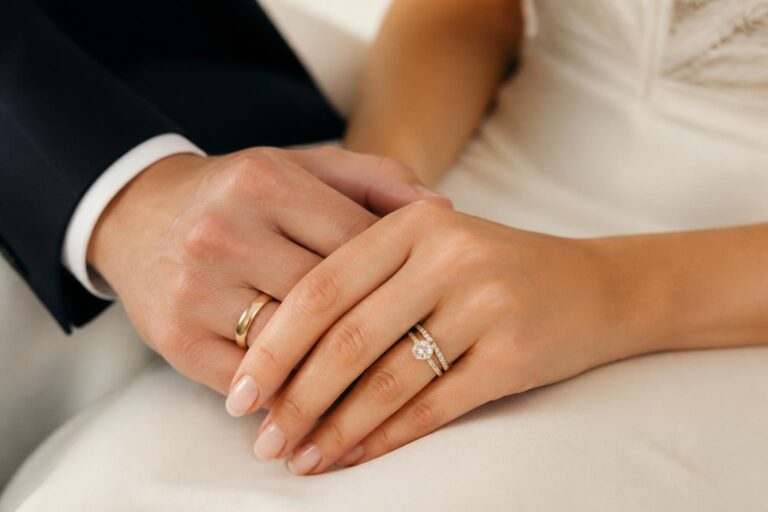
The overall impression here is luminous and restrained. The ring is not trying to compete with the gown, flowers, or the intimacy of the ceremony. Instead, it supports a wedding look built on elegance and calm. This interpretation often suits a polished yellow gold or platinum band with a domed profile and a refined width, especially when paired with a solitaire engagement ring.
The key pieces are visually simple: a smooth polished finish, a 2mm or 3mm silhouette, and a profile that feels soft against the hand. The ring belongs in this aesthetic because it mirrors the logic of classic bridal styling: fewer elements, but each one chosen with care. The mood is formal without feeling rigid.
The styling insight is to let the ring echo the wedding’s larger mood. If the ceremony vision is timeless and uncluttered, a highly detailed band can interrupt that harmony. A simple wedding ring keeps the emotional focus where it belongs.
Look: modern couple, city minimalism
This version feels sharper and more architectural, with cleaner edges and a cooler overall tone. It suits courthouse weddings, urban receptions, and couples who prefer a contemporary visual identity. The ring still sits firmly in the simple category, but the atmosphere is more tailored than romantic.
A flat or comfort-fit platinum or white gold band, often in a 3mm, 4mm, or slightly wider silhouette, creates this effect beautifully. Satin finishes work especially well because they maintain a minimalist surface while reducing glare. The result is understated but confident, ideal for someone who wants the ring to feel current without losing the permanence expected of a wedding band.
Best for: couples who want everyday wearability and a ring that feels aligned with a modern wardrobe. The practical lesson is that shape does much of the work here. Clean geometry can make a plain ring feel striking without adding decoration.
Look: quiet romance with soft warmth
Some simple bands carry a softer emotional note, especially in rose gold or warm yellow gold with a curved or gently domed silhouette. The mood is intimate, tender, and lightly nostalgic. It works beautifully for smaller celebrations, garden settings, and wedding styling that values warmth over drama.
A narrow curved band or polished rose gold comfort-fit style creates this feeling without leaving the minimalist world. There is no need for embellishment because the softness comes through color and contour. The ring feels personal and wearable, with enough warmth to read romantic in close moments such as hand-held photographs and ceremony exchanges.
How to recreate the look: focus on warmth and shape rather than shine. A soft profile often carries more romance than an overly glossy finish.
Look: everyday strength in a men’s plain band
The men’s side of the simple wedding ring category often leans into durability, comfort, and straightforward design. The silhouette is stronger, but the mood remains minimal. This is where plain men’s wedding rings in platinum, gold, cobalt, or other material variations are often presented as reliable daily pieces rather than highly styled accessories.
Collections from Temple & Grace and Ritani, for example, reflect this emphasis through men’s simple bands with comfort-fit profiles and practical width options. A 4mm or 6mm polished or satin band in yellow gold, white gold, platinum, or cobalt creates a clean line that feels grounded and lasting. The simplicity is what makes it masculine in a very modern sense: clear, unfussy, and wearable.
Why it works: men’s minimalist bands tend to look best when the finish, width, and profile feel cohesive. If one element becomes too dramatic, the ring can move away from the understated strength that makes this category so appealing.
How to build this aesthetic without overbuying
A simple ring is often part of a larger minimalist wedding vision, but that does not mean every choice has to be stripped down. The easiest way to build this look well is to identify the core mood first. Do you want classic warmth, cool modern polish, soft romance, or daily-wear practicality? Once that is clear, your ring decisions become easier because every detail can support that one direction.
Start with three essentials: metal tone, width, and profile. Those choices determine most of the final effect. Finish comes next, followed by any pairing considerations with an engagement ring. If you are shopping across multiple U.S. retailers, keep your comparison framework consistent. A 3mm polished yellow gold comfort-fit band should be compared to similar rings before you start evaluating wider satin platinum styles. That discipline keeps the process calm and makes the outcome more satisfying.
Key pieces for this aesthetic
- A plain gold or platinum band with a clearly defined width
- A profile choice that supports your lifestyle, especially comfort-fit for daily wear
- A finish that matches the mood of your wedding style, usually polished or satin
- A curved option if your engagement ring requires a close, harmonious fit
- Reliable sizing, returns, and care support from the retailer
Common mistakes that weaken the look
Because a simple wedding ring is understated, small mismatches become more visible. The most common mistake is treating minimalism as if no styling thought is required. In reality, plain bands rely on precision. A ring that is too narrow for the desired effect, too wide for the engagement ring beside it, or finished in a way that clashes with the overall mood can feel off even if each individual detail seemed appealing at first.
Another mistake is shopping by trend language alone. Words such as classic, simple, plain, and minimalist are often used interchangeably across retailers, but the actual products can vary significantly. A domed polished band from Blue Nile may create a different visual impression than a satin flat ring from Glamira or a comfort-fit men’s style from Ritani. Looking closely at profile and finish is far more helpful than relying on category names.
It is also worth avoiding a mismatch between the ring and the life it will be worn in. If long-term comfort matters, do not ignore fit. If pairing matters, do not choose purely on isolated beauty. The most successful simple wedding ring choices are the ones where aesthetics and daily use support each other.
A quick reference for choosing with confidence
If you are narrowing down options, think of the decision as a visual formula. Warm metal plus polished finish plus domed profile creates a more traditional classic wedding band mood. Cool metal plus satin finish plus flat profile creates a more modern minimalist effect. Slim width plus curved shape supports engagement ring pairing, while medium or wider widths often make the strongest stand-alone statement.
This kind of structure can be especially helpful when comparing collections from Brilliant Earth, Blue Nile, Glamira, Temple & Grace, LoveWeddingBands, or Ritani. Although each retailer presents the category in its own way, the core principles remain stable: metal, width, profile, finish, fit, and how the ring will actually be worn. Once those are decided, the shopping process usually becomes much less overwhelming.
A beautiful simple ring rarely depends on novelty. It depends on coherence. When the design, the comfort, and the wedding vision all point in the same direction, the result feels effortless in the best sense of the word.
FAQ
What is considered a simple wedding ring?
A simple wedding ring is usually a plain or minimally detailed band with a clean profile, understated finish, and classic materials such as yellow gold, white gold, rose gold, or platinum. It may be flat, domed, curved, or comfort-fit, but it stays focused on shape and wearability rather than ornament.
Is a simple wedding ring a good choice for everyday wear?
Yes, that is one of its strongest advantages. A simple wedding ring is often chosen because it feels comfortable, versatile, and easy to pair with daily life. The best everyday option depends on your preferred metal, width, and fit, especially if comfort-fit styling is important to you.
What width is best for a simple wedding band?
The best width depends on whether the band will be worn alone or beside an engagement ring. A 2mm band often feels delicate and stack-friendly, while 3mm and 4mm widths tend to offer a balanced look that works well both alone and in a set. Wider styles such as 6mm can create a stronger stand-alone statement, especially in men’s bands.
Should I choose a polished or satin finish?
Choose polished if you want a brighter, more formal, and traditional look. Choose satin if you prefer a softer, quieter, and slightly more modern feel. Both finishes work well in minimalist designs, but they create different moods, so the decision should reflect your overall wedding style and how you want the ring to read in daily wear.
How do I pair a simple wedding ring with an engagement ring?
Start by considering profile and fit before anything else. A curved band may sit more naturally beside certain engagement rings, while a slim polished or comfort-fit style often works well with solitaire settings. Matching metal tone helps, but silhouette and how closely the rings sit together usually make the biggest difference.
Are simple wedding rings only for women?
No, simple wedding rings are a major category for both women and men. Women’s collections often emphasize slim widths and pairing options, while men’s collections frequently highlight wider plain bands, comfort-fit profiles, and durable everyday wear. The aesthetic is shared, even when the proportions differ.
What metals are most common for simple wedding rings?
The most common metals are yellow gold, white gold, rose gold, and platinum. These materials appear repeatedly in simple and classic wedding band collections because they suit plain, timeless designs and work well across polished, satin, flat, domed, and comfort-fit styles.
Do simple wedding rings cost less than detailed rings?
Not always. While the design may be minimal, price still depends on the metal, width, fit, finish, and retailer. A wider platinum comfort-fit band can cost more than a slimmer gold ring, even though both are simple in style. The best way to judge value is to compare similar specifications rather than assuming plain means low cost.
What should I check before buying a simple wedding ring online?
Review the metal, width, profile, finish, sizing details, and how the ring is intended to be worn. It is also wise to check return policies, warranty support, and care guidance, especially when ordering from U.S. retailers. Those details are an important part of long-term confidence in a ring you plan to wear every day.
Can a simple wedding ring still feel special?
Absolutely. A simple wedding ring often feels special because its beauty comes from clarity rather than decoration. The right metal, width, fit, and finish can create a band that feels deeply personal, visually timeless, and easy to love long after the wedding day itself.