Why a Wedding Ring With Name Feels So Personal
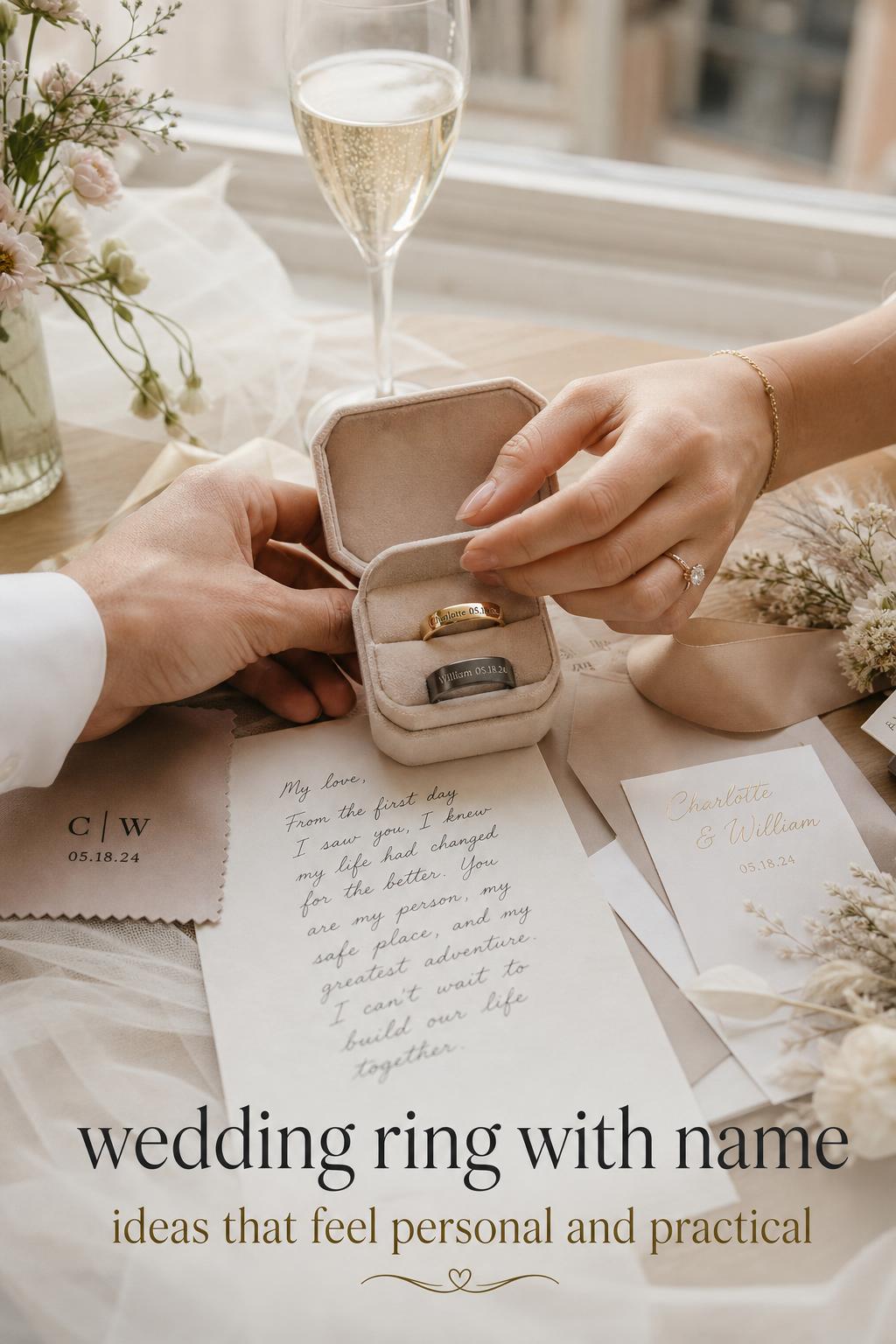
Some wedding details are seen by every guest, while others are carried quietly through the entire day and long after it. A wedding ring with name belongs to that second category. Whether the name is engraved inside the band, wrapped around the outside, or designed into the ring itself, this choice turns a standard band into something more intimate and more specific to the couple wearing it. It is not only about personalization. It is about deciding how your names, date, or shared words will live with the ring through daily wear, photographs, travel, resizing questions, and the passing of years.
For couples planning a wedding in the United States, the search for an engraved wedding ring often starts with style and quickly becomes a practical decision about material, font, durability, budget, and where to buy. Luxury names such as Tiffany & Co. and Gabriel & Co. approach personalization through fine jewelry craftsmanship and interior engraving, while retailers such as Walmart, 25 Karats, Little King Jewelry, Hanover Jewelers, MoissaniteRings, Provence Gems, and Names4ever show how broad the category has become, from gold bands to tungsten rings to wrap-around name designs. The right choice depends on how you want the ring to look, how you live day to day, and what kind of meaning you want your band to carry.
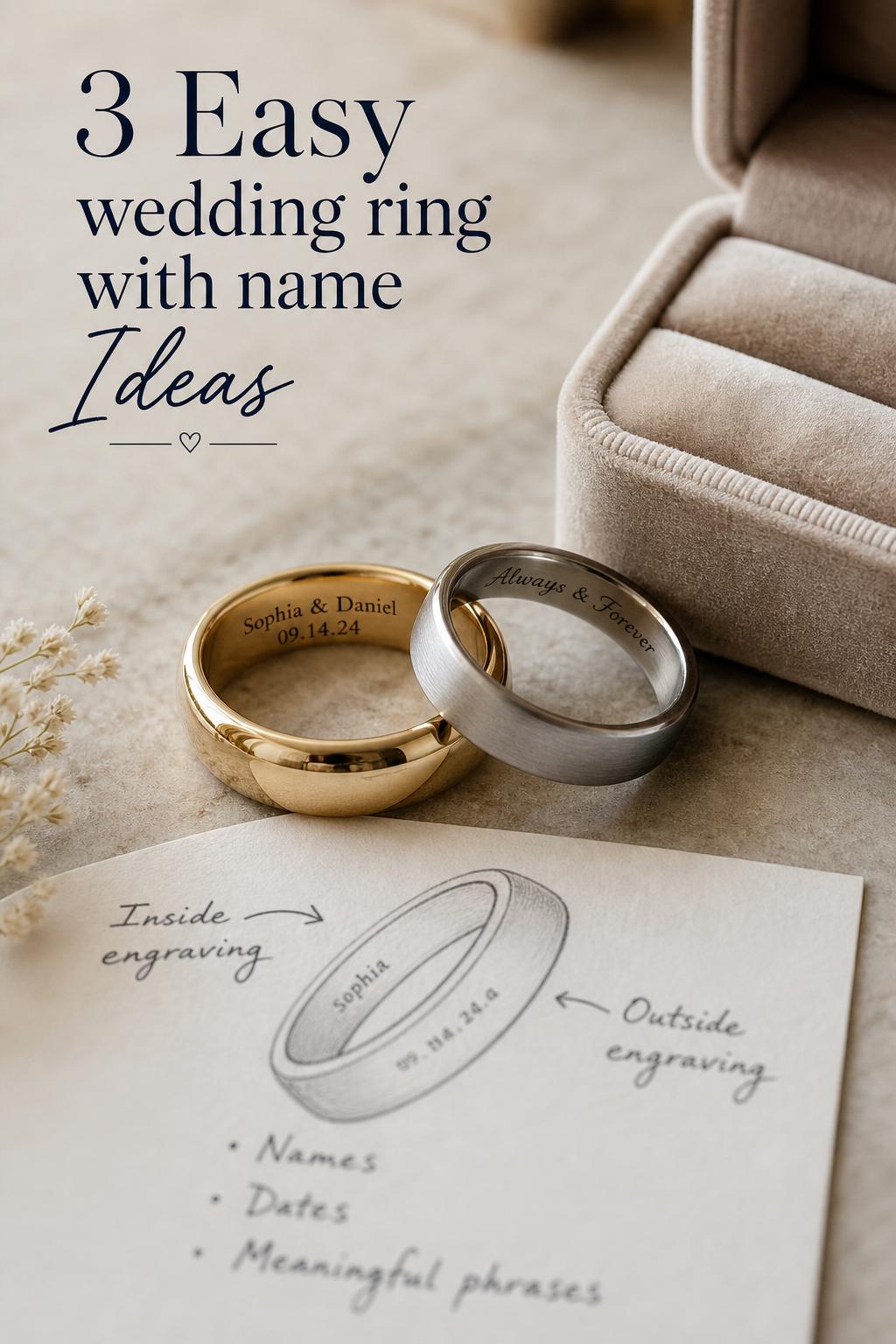
Why a name on a wedding ring feels different from standard engraving
A lot of wedding bands can be engraved, but a name-based ring creates a stronger sense of identity than a generic inscription. A date marks a milestone. Initials keep things minimal. A full name, by contrast, makes the ring feel directly tied to one person or to the relationship itself. That can be especially meaningful for couples who want their bands to reflect not just the ceremony, but the daily reality of being married.
This idea works especially well for intimate weddings, vow renewals, and celebrations where personal storytelling matters more than formal tradition. It also suits couples who are blending classic wedding style with a modern personalized detail. In practical terms, a name engraving works because it gives a plain band emotional weight without changing how easy it is to wear. A simple interior engraving can keep the outside of the ring timeless, while an outside-name design can turn the band into a visible signature piece.
Turn wedding inspiration into a plan you can actually follow.
Zarellea brings your guest list, budget, vendors, and day-of details into one shared space — so no beautiful idea gets lost in the shuffle.
The main mistake to avoid is choosing the concept before deciding how visible you want the personalization to be. Many couples say they want a wedding ring with name, but what they actually mean can vary: one partner may want a discreet name inside the band, while the other imagines a visible name design on the outside. Make that decision early, before you start comparing brands and materials, because it affects almost every other choice.
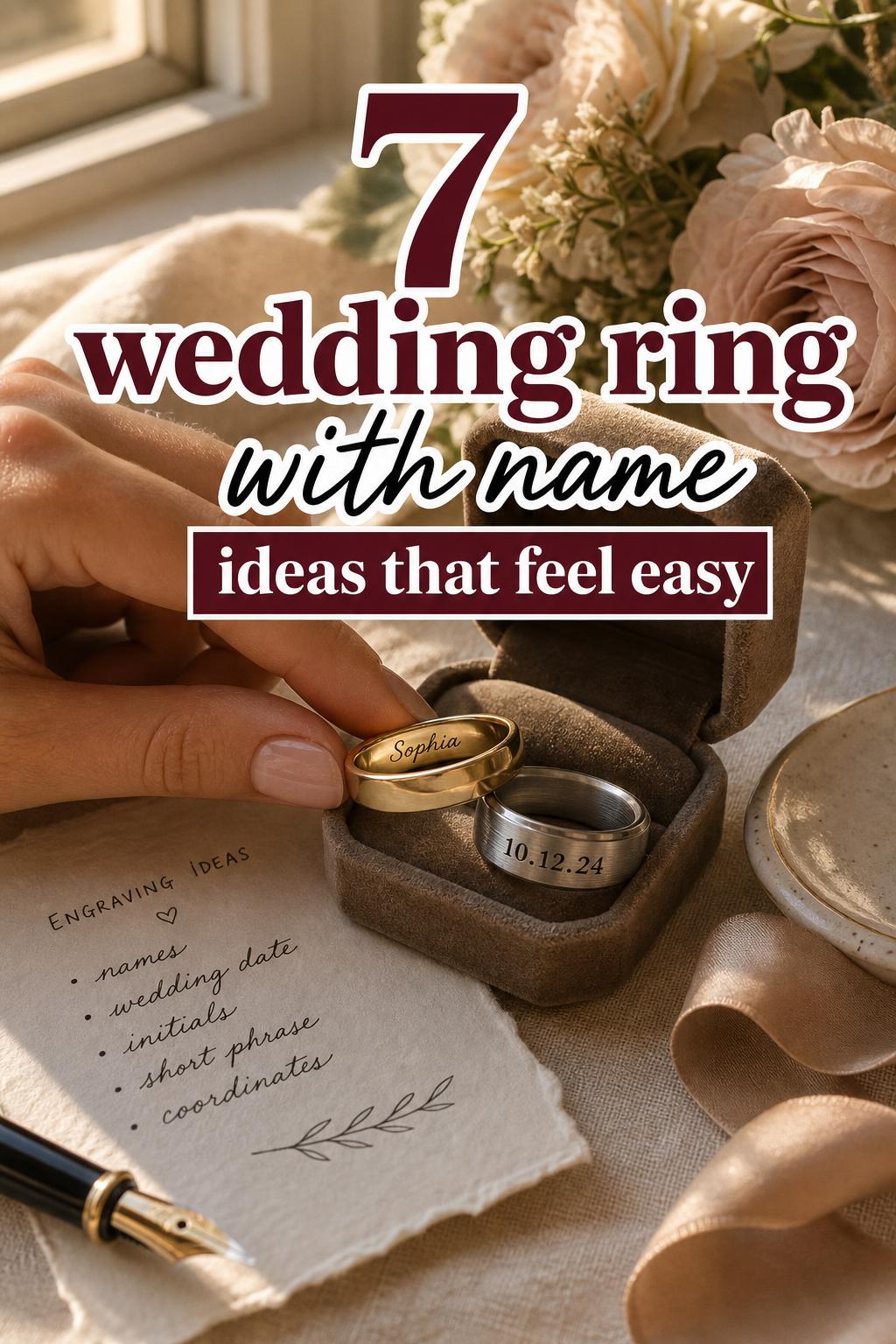
The first big decision: inside engraving or outside name design
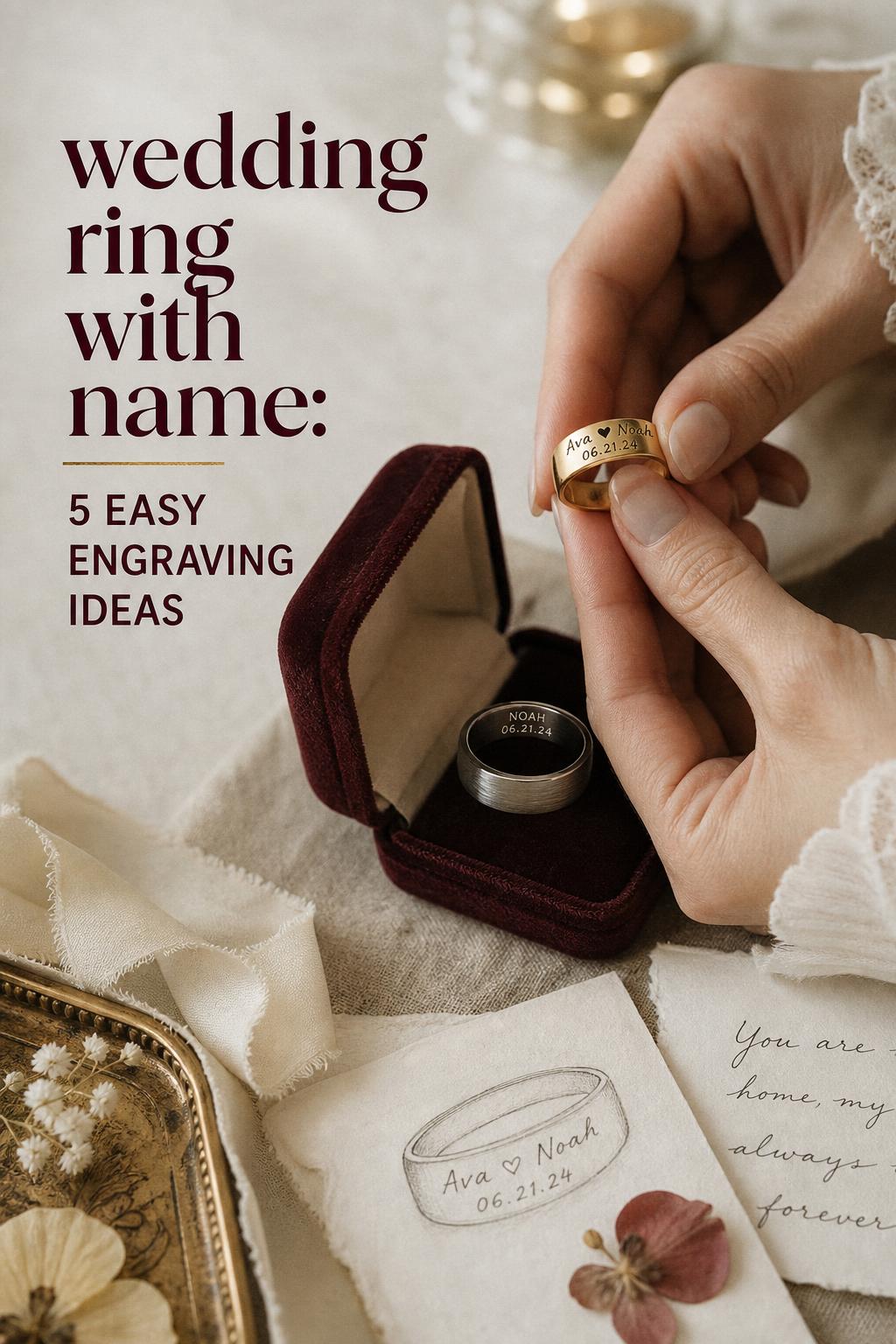
The phrase “name on a ring” can describe two very different styles. Inside engraving places the name, date, or short message on the inner surface of the band. Outside personalization makes the name part of the visible design, either engraved on the exterior or formed into the ring in a more decorative way. Both approaches are popular, but they suit different wedding styles and different comfort levels.
Inside engraving for a classic wedding look
Inside engraving is the most versatile option and appears across major engravable wedding ring collections from brands such as Tiffany & Co. and Gabriel & Co. It preserves a clean exterior, which makes it a strong choice for formal weddings, black-tie settings, traditional church ceremonies, and couples who want the ring to coordinate easily with engagement rings or other jewelry. It also tends to feel more private, which many couples prefer.
Best for: classic, minimalist, luxury, and traditional wedding aesthetics. It is also practical if you want the engraving to be meaningful without becoming the main visual feature in every close-up photo. For couples planning a refined reception or a timeless bridal wardrobe, interior engraving usually blends more naturally with the rest of the styling.
Outside engraving for a visible statement
Outside engraving or a visible name design makes the personalization part of the ring’s appearance. Names4ever and MoissaniteRings reflect this direction with name-focused rings, while Provence Gems explores the idea through a rotatable name wedding ring. This style can feel more contemporary, more expressive, and sometimes more fashion-forward than interior engraving.
Best for: modern weddings, smaller ceremonies with a highly personal feel, or couples who want the band itself to become part of the visual story. It can work particularly well in engagement photos or detail shots because the personalization is immediately visible. The tradeoff is that exterior text and design need more thought around readability, finish, and long-term wear.
How to choose between them
- Choose inside engraving if you want a timeless exterior and private meaning.
- Choose outside engraving if the ring is meant to show personalization every day.
- Choose a design-led name ring if you want the name to function as part of the band’s style, not just its message.
- Match the engraving location to your wedding aesthetic: interior tends to feel more formal, exterior more expressive.
Real-life styling tip: before finalizing an outside engraving, ask to see how the name reads in a straight-on product image and in an angled close-up. Rings are small, curved surfaces, and a design that sounds striking in theory can become harder to read once worn.
Materials change everything: how metal affects durability, feel, and appearance
Two rings can carry the same name engraving and still perform very differently over time because the material changes how the inscription looks and how the ring wears. Across current engraved wedding ring options, tungsten, gold, platinum, silver, and gold-over-silver styles appear repeatedly. This is where many couples either make a smart long-term choice or focus too heavily on appearance alone.
Tungsten for a modern, durable-feeling band
Tungsten appears often in personalized product pages, including designs from Little King Jewelry and Hanover Jewelers. It suits couples who prefer a substantial, contemporary look and want a material often associated with durability and modern finishes such as brushed or gunmetal styles. It pairs naturally with visible engraving, handwriting-inspired text, and bold fonts.
Best for: modern industrial venues, minimalist weddings, and couples who want a strong, clean-lined ring rather than a delicate one. Tungsten also works well if one partner wants personalization but not a traditional gold-band look. The key planning point is visual tone: a gunmetal or brushed tungsten ring feels very different from a polished gold band, so be sure it fits the rest of your wedding styling.
Gold for a traditional wedding band with customization flexibility
Gold remains central in custom engraved options, especially in pages like 25 Karats, where 14k and 18k gold are part of the customization conversation. Gold is often the easiest fit for couples planning a timeless wedding or coordinating wedding bands with existing engagement jewelry. It also suits both classic inside engraving and more decorative personalization.
Best for: formal ceremonies, heritage-inspired weddings, and couples who want a ring that feels clearly bridal rather than trend-driven. If your wedding palette leans romantic, classic, or luxury, gold usually integrates more naturally than industrial-looking metals. A polished gold finish also tends to complement soft lighting and detailed photography well.
Platinum and silver in the broader engraved ring conversation
Platinum and silver are part of the broader material comparison for engraved name rings, especially when couples are weighing cost, feel, and durability. Silver-based offerings also appear in more affordable retail interpretations, such as product variants tied to Walmart. For some couples, that makes a personalized ring feel more accessible without giving up the emotional idea behind it.
Best for: couples balancing personalization and budget, or those who want a cooler-toned metal look. The practical consideration here is not just color. It is how the ring fits your daily life, your spending priorities, and whether you want to invest more in the material itself or in the design and engraving details.
A quick budget-minded material framework
- Choose gold if you want a classic wedding band feel and are prioritizing traditional bridal styling.
- Choose tungsten if you want a modern aesthetic and a strong visual presence at a lower style risk than an ornate design.
- Look at silver-based or gold-over-silver options if budget matters more than brand prestige.
- Compare the engraving style with the metal finish, not just the base material.
Budget tip: if personalization is your top priority, it may make more sense to choose a simpler band in a material you like and spend on the engraving or name design rather than paying for decorative details that do not add emotional meaning.
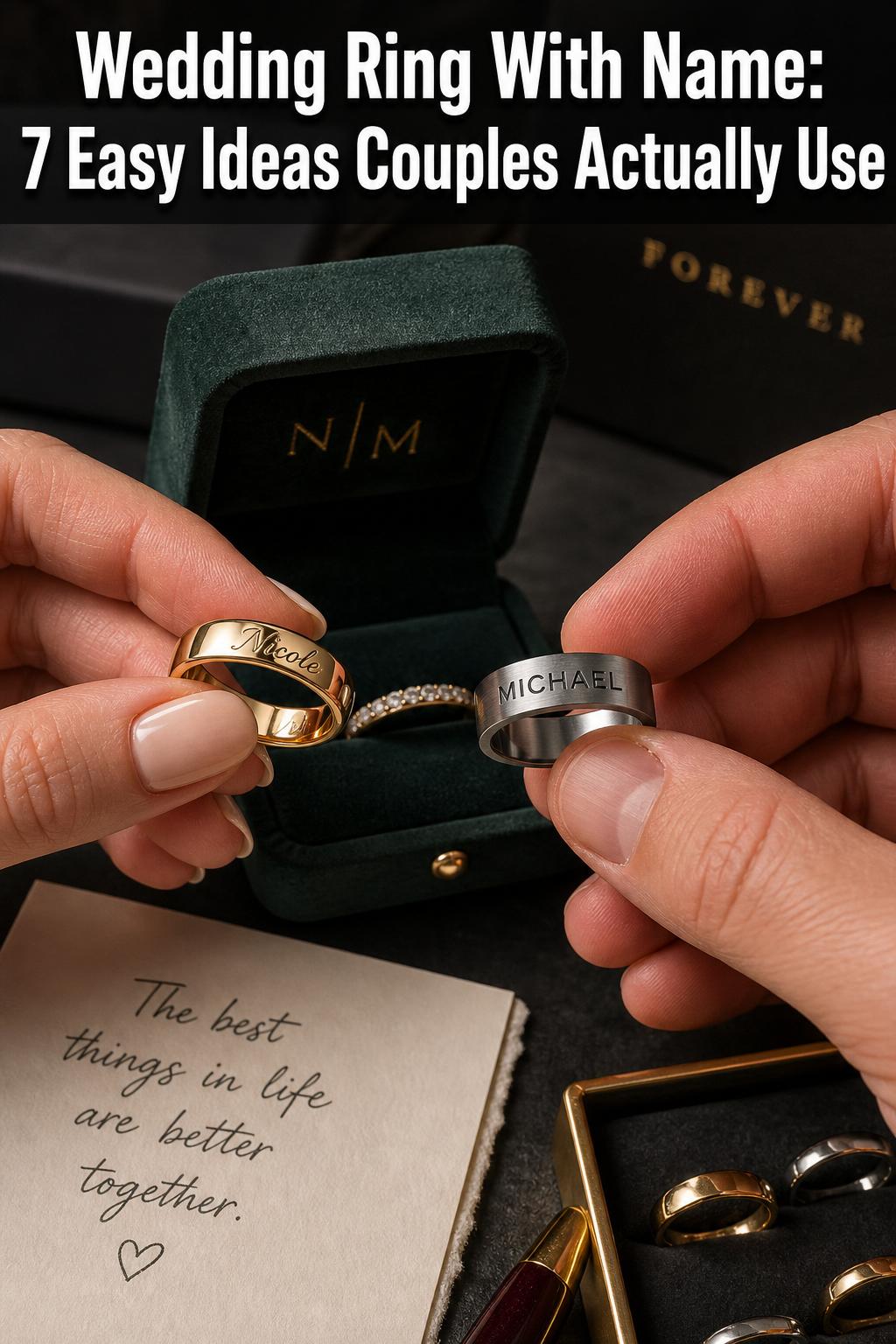
Font, script, and handwriting: the small design choice that changes the ring’s personality
Most couples start by choosing the text, but the font often determines whether the finished ring feels elegant, modern, playful, or difficult to read. Across current products, script, handwritten, block, cursive, and specific named styles such as the “Wizard Font” treatment seen at Hanover Jewelers all show how much the visual tone can shift even with the same inscription.
This part of the process works best when you think about the ring as part of your wedding style, not as a separate object. A handwritten engraved domed tungsten wedding band from Little King Jewelry gives a very different impression than a polished gold band with a discreet interior script engraving. One feels expressive and personal in a visible way. The other feels private and refined. Neither is better. They simply tell different stories.
Script and cursive for a softer, romantic direction
Script and cursive engraving styles suit romantic weddings, softer color palettes, and couples who want the ring to feel intimate rather than graphic. They are especially effective for first names, short phrases, and inscriptions that are emotionally driven. The caution is readability. On a narrow band or a highly curved surface, an ornate style can lose clarity.
Block or printed fonts for legibility
Block and printed styles tend to read more clearly, especially for longer names, combined names and dates, or exterior engravings. They suit minimalist weddings and modern settings, and they are often easier to evaluate before purchase because what you see in the preview is closer to what you will get in real wear.
Handwritten styles for a distinctly personal feel
Handwritten engraving is one of the strongest ways to make a wedding ring feel individual. It is especially meaningful for couples who want the inscription to feel like a keepsake rather than a standard customization option. It works beautifully for intimate weddings, vow-focused ceremonies, and gift-style ring presentations, but it should be chosen carefully with the material and width of the band in mind.
Common mistake to avoid: choosing a delicate script because it looks romantic on screen without checking how it will appear at the actual size of the ring. A wedding band is a very small surface. Ask yourself what matters more: mood or clarity. For many couples, the best answer is a font that gives a little of both.
What should the ring actually say?
The inscription itself is where style meets commitment. The most common choices in this category are a full name, initials, a wedding date, or a short phrase. Each has a different practical effect on appearance, privacy, and how quickly the message communicates meaning.
Full name
A full name feels direct and unmistakable. It works well when the ring is intended to feel highly personal or when the name itself is central to the design, as with wrap-around and visible name rings from retailers such as MoissaniteRings and Names4ever. It is best for couples who want the personalization to be obvious and emotionally specific.
Initials
Initials are more understated and often work better on narrow bands or in minimalist settings. They are useful when you want engraving but do not want the text to dominate the ring. For couples planning sleek, modern, or highly edited wedding aesthetics, initials often feel more aligned with the overall look.
Date
A date is one of the most classic choices and fits naturally with interior engraving. It is a strong option if you want a piece that marks the wedding day without turning the ring into a visible name statement. Many couples also combine a name with a date if the space and design allow.
Short phrase
A short phrase can feel deeply personal, but it should be chosen with care. On a ring, every character matters. A phrase that is too long or visually crowded can lose elegance quickly. If your heart is set on words rather than names, keep the phrase short, easy to read, and suited to the width of the band.
Tip from a planning perspective: decide whether your ring inscription is meant to be visible in daily life or meaningful mainly to you and your partner. That one question can simplify nearly every decision about text length, font style, and placement.
Where to shop and how different brands approach personalization
The market for an engraved wedding ring is wide, and the right place to shop depends on whether you value luxury branding, straightforward customization, specialized materials, or a more affordable entry point. Understanding how different retailers and brands position their rings can save time and help you compare options more realistically.
Tiffany & Co. and Gabriel & Co. for a fine-jewelry approach
Tiffany & Co. and Gabriel & Co. represent the polished fine-jewelry side of engravable wedding bands. Their focus leans toward craftsmanship, materials, finishes, and interior personalization rather than novelty. These are strong options for couples who want the confidence of an established jewelry brand and a wedding band that still looks classic even with customization.
Best for: formal weddings, luxury venues, and couples who want their bands to feel aligned with traditional fine jewelry. This route usually makes the most sense when the ring is part of a broader jewelry story, such as matching an engagement ring or maintaining a consistent metal and finish across bridal pieces.
25 Karats for customized gold-focused options
25 Karats is useful for couples who know they want customization and want to weigh gold type, finish, pricing, and production expectations more directly. This kind of retailer often suits shoppers who are less focused on prestige branding and more interested in a ring built around their exact engraving and material preferences.
Little King Jewelry and Hanover Jewelers for tungsten and font-driven style
Little King Jewelry and Hanover Jewelers are especially relevant if you are drawn to tungsten bands, handwritten engraving, brushed finishes, or named font styles. They serve a very specific slice of the market: couples who want personalization to shape the appearance of the band, not simply sit inside it.
Walmart for accessible personalization
Walmart reflects the mass-market side of personalized name rings, including product lines such as Vow & Forever. This kind of option can be practical for couples on a tighter budget, for a second ring, or for those who want to test whether a visible name ring style feels right before making a larger investment.
MoissaniteRings, Provence Gems, and Names4ever for concept-led name rings
These retailers lean more strongly into the idea of the ring as a name design object. Personalized wrap-around name rings, rotatable name wedding rings, and outside-name options create a different experience from a standard engravable band. They are often the better fit when the name itself is meant to be central to the look.
- Choose a fine-jewelry brand if you want a classic band first and personalization second.
- Choose a customization-focused retailer if your engraving details matter as much as the ring itself.
- Choose a design-led name ring seller if the visible name is the feature you care about most.
- Choose mass retail if budget and convenience matter more than exclusivity.
Budget tip: compare the ring base, engraving option, and any material upgrade separately. Sometimes the most expensive option is paying for branding when what you really want is a specific engraving style or metal finish.
How to fit the ring into the wedding itself, not just the jewelry box
A personalized ring should support the feel of the wedding, not compete with it. Couples often spend so much time choosing the engraving that they forget to ask how the ring will function during the ceremony, in photographs, and within the overall aesthetic of the day. This is especially important when the ring has an exterior name design or a visible specialty font.
For a black-tie or traditional ceremony, an interior engraving is often the easier choice because the outside of the band remains visually clean. For a modern city wedding, an industrial loft reception, or a smaller celebration built around personal details, a tungsten band with handwriting or visible name engraving may feel more integrated into the wedding style. For intimate weddings, where guests often notice close-up details more readily, exterior personalization can feel more deliberate and more expressive.
Season matters too. In bright summer light, polished finishes and crisp fonts tend to read more clearly in photography. In lower-light evening receptions, a subtle inside engraving may not be visible in photos at all, which is fine if the ring is for private meaning rather than public display. If your photographer is planning detail images, let them know in advance whether the engraving is inside or outside so the shot list can reflect that.
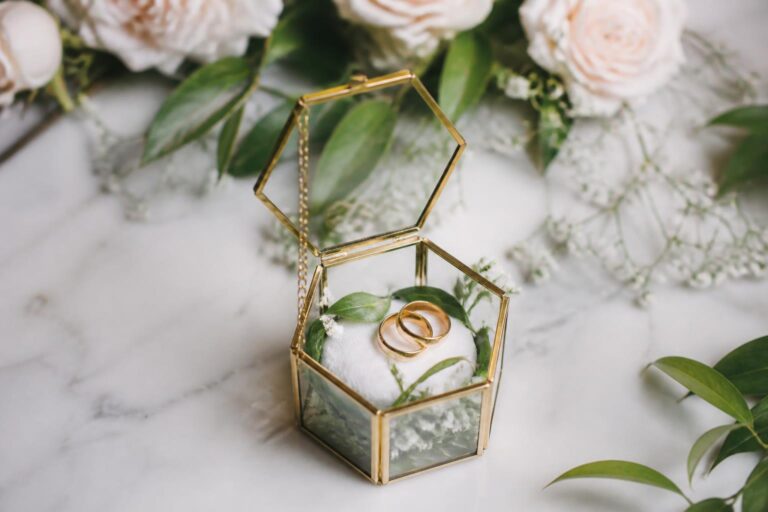
Real-life styling tip: if your ring box opens during the ceremony or in flat-lay photos, place the ring so the engraved feature you care about most is immediately visible. A personalized ring can disappear in photographs if it is positioned like a standard unengraved band.
Practical concerns couples often overlook
The romantic part of a name ring is easy. The practical side is where a good decision becomes a lasting one. A wedding ring is not a display item. It is worn while traveling, working, washing hands, opening boxes, and moving through ordinary life. That is why care, maintenance, and even future changes matter at the buying stage.
Resizing and future adjustments
Before ordering, ask how resizing may affect the engraving. This matters most if the inscription is inside the band and positioned close to the edges, or if the visible design relies on exact spacing. The more the customization is integrated into the structure of the ring, the more important it is to understand what happens if size changes later.
Wear over time
Different finishes and engraving placements may show wear differently. That does not mean one choice is wrong. It means couples should consider whether they want a ring that keeps the personalization hidden and protected inside, or one that displays it externally as part of the ring’s look every day. Exterior details naturally ask more from the design because they are always visible.
Care and restoration mindset
Engraved rings benefit from routine care, especially if the inscription is meant to remain crisp and legible. If you are buying from a brand-led jeweler such as Tiffany & Co. or Gabriel & Co., check what kind of service or guidance is offered around finishes and maintenance. If you are buying from a specialized retailer, make sure care instructions are clear before ordering.
Common mistake to avoid: treating the engraving as an afterthought and only asking about care once the ring arrives. If a name or message is the reason you chose the ring, then preserving that detail should be part of the purchase decision, not an after-purchase surprise.
A few realistic ring scenarios that help clarify the best choice
Sometimes the clearest way to decide is to picture the ring in real use. Here are a few common scenarios couples face when choosing a personalized wedding band.
The couple planning a formal ballroom wedding
A polished gold band with an inside engraving is usually the strongest fit here. It keeps the exterior elegant in photographs, coordinates well with formal attire, and lets the personalization remain intimate. A retailer or brand focused on classic fine-jewelry craftsmanship, such as Tiffany & Co., Gabriel & Co., or a gold customization specialist like 25 Karats, may align best with this vision.
The couple having a smaller, personal city wedding
A tungsten ring with a handwriting-inspired engraving or visible font detail may feel more connected to the tone of the day. This type of wedding often makes room for details that feel less formal and more identity-driven. Little King Jewelry or Hanover Jewelers may appeal more here, especially if one partner wants the ring to feel contemporary and clearly customized.
The couple balancing meaning and budget
An affordable personalized option, including mass-retail offerings such as Walmart, can still carry strong emotional value if the material, sizing, and engraving details are handled carefully. For these couples, the smartest move is usually choosing a clean, readable inscription and avoiding overcomplicated design elements that may not improve the ring’s long-term wear.
The couple who wants the name to be the design
This is where concept-led retailers such as MoissaniteRings, Provence Gems, or Names4ever become more relevant. If the name is meant to be visible and central, standard engravable bands may feel too restrained. The key is to evaluate readability, band shape, and whether the design still feels wearable beyond the wedding day.
One often-missed detail: names, scripts, and cultural considerations
Not every name fits neatly into a standard engraving preview. Some couples want accents, non-English spelling, or a script style that reflects family identity or cultural preference. This area is not deeply addressed by many sellers, which means it deserves extra attention during the buying process. If the exact spelling, character shape, or script matters to you, do not assume every retailer handles it equally well.
This matters most for multilingual couples, culturally blended weddings, or families using naming traditions that do not fit a simple block-font format. In those cases, clarity and communication with the seller are more important than choosing the broadest product catalog. A ring can be personalized in theory and still fail in practice if the name is not represented correctly.
Tip: if your engraving includes accents, unusual spacing, or a script style that carries cultural meaning, confirm the exact final text and layout before production begins. That extra step can matter more than choosing a more expensive base ring.
What experienced planners would tell you before you place the order
The best personalized rings are usually the ones that make one clear promise and keep it. They are not trying to be luxury, statement, sentimental, trend-driven, and highly ornate all at once. They know whether they are meant to be classic and private or visible and expressive. That clarity makes the final piece feel more confident and more wearable.
- Match the ring’s personalization style to the overall tone of the wedding.
- Pick the text before the font, and the font before the finish.
- Ask how production timing works if your wedding date is close.
- Think about daily wear, not just ceremony photos.
- Keep the inscription short enough to stay legible and intentional.
Why this works: couples often feel overwhelmed because personalized jewelry combines emotional meaning with technical decisions. Breaking the choice into order of priority makes the process calmer and helps avoid expensive changes later. Start with meaning, then placement, then metal, then font, then finish.
In the end, a wedding ring with name succeeds when it feels natural on your hand and true to the relationship it represents. Whether you choose a polished gold band with an interior engraving from a fine-jewelry house, a tungsten ring with handwritten text, or a visible name design from a specialist retailer, the most lasting choice is the one that suits both your wedding day and the life that comes after it.
FAQ
Is an inside engraving better than an outside name design for a wedding ring?
It depends on the look you want. Inside engraving is usually better for a timeless, classic wedding band because the exterior stays clean and formal, while an outside name design is better if you want the personalization to be visible and part of the ring’s style every day.
What materials are commonly used for a wedding ring with name?
Common options include tungsten, gold, platinum, silver, and some gold-over-silver styles. Tungsten often suits modern engraved designs, while gold is a strong choice for traditional wedding bands and interior engraving.
Can I put a full name on a wedding band, or should I choose initials?
You can choose either, but the right option depends on the ring width, font, and whether the text is inside or outside the band. A full name feels more personal and direct, while initials usually work better for a cleaner, more understated look.
Which brands are known for engraved or personalized wedding rings?
Well-known options in this space include Tiffany & Co., Gabriel & Co., 25 Karats, Little King Jewelry, Hanover Jewelers, MoissaniteRings, Provence Gems, Walmart, and Names4ever. Each serves a different part of the market, from luxury fine jewelry to design-led name rings and affordable personalized options.
Are handwritten engraving styles a good idea for wedding rings?
They can be an excellent choice if you want the ring to feel especially personal, but they need careful review for readability. Handwritten styles often work best when the band is wide enough and the material and finish support clear engraving.
Does a personalized wedding ring work for formal weddings?
Yes, especially if the personalization is engraved inside the band. That approach keeps the ring elegant and traditional from the outside while still giving the couple a meaningful private detail connected to the ceremony.
What should I ask before ordering an engraved wedding ring?
You should ask about engraving placement, font options, text limits, production timing, sizing, and how future resizing or care might affect the inscription. These details matter just as much as the ring’s appearance, especially if the engraving is the main reason you are choosing that band.
Are name rings a good option for couples on a smaller budget?
Yes, because personalization is available at several price levels, including mass-market retailers such as Walmart and specialized online sellers. If budget is a concern, focus on a clear design, suitable material, and readable engraving rather than paying extra for unnecessary decorative features.
Can I use non-English spelling or special characters in a name engraving?
In many cases, yes, but you should confirm the exact spelling and layout with the seller before production. This is especially important for names with accents, cultural naming conventions, or scripts that need precise formatting.